If life resembles a rollercoaster,
with ups, downs, head-banging turns—
entered for free, no real way off—
life bests physics in several ways:
faster, ever-faster, ka-chunk,
ka-chunk, kachunkachunka chunk,
until sound blurs, sights blur,
horizons collapse to this car,
this seat, these hands gripping
this bar. Life masters sending
your ride both uphill, downhill,
simultaneously. Life's car
travels quicker but on ever-
shortening track seemingly; you
crest one climb just moments after
you started a downhill stretch.
You begin to realize this speed
increase means your ride's end
will occur sooner than you
thought. Your youthful panting to
"just get to eighteen," "once I've
got steady work," "can't wait to
have kids," "can't wait 'til those
kids leave," "geez, if only I were
retired," now seems incredibly
foolish. Mentally straining to
get older yielded to its reality.
Now no strain's required. I wish...
no...no more wishing...just
stay here, be here, live here.
Here.
74/100 100 poems in 100 days…
…and if life seems to speed up, it’s seen even here. Didn’t I just post my 60th poem? How can I be on the verge of being 75% through this challenge?
Wake. Decide to rise.
Contort around cats,
exit bed. Pee. Assemble
morning wardrobe:
T-shirt, jams, special
slippers, topped by
cardigan or flannel
(basement's cold).
Grab phone, glasses,
water. Walk quietly
to kitchen—wife still
sleeps. Begin making
coffee: short cup from
machine or one-cup
drip depending on time.
Feed cats, open side blinds.
Coffee in hand, head
downstairs. Confirm
number of beers, head
into study. Benny eagerly
dancing around my
ankles, awaiting moment
I sit in rose-colored
Queen Anne chair. He
starts his own ritual,
circling in back of the chair,
slinking 'round chair-leg,
wall, bookcase until once
again in front, promptly jumps
to footstool, then lap.
Protect myself with two
layers from kneading claws.
Benny settles. Sip coffee.
Reach for daily devotional
guide: "Give us this day,..."

Hearing my wife rise
directly above us, Benny
heads upstairs. I finish
contemplating, praying,
follow him up. Greet her,
re-greet Benny, head for
shower to start my day.

Ritual begins unraveling
at that point, threads from
worn fabric of every day
separating into this day's
possibilities. Peculiar how
day's end holds its own
ritual as if transiting into,
away from consciousness
demands ceremony.
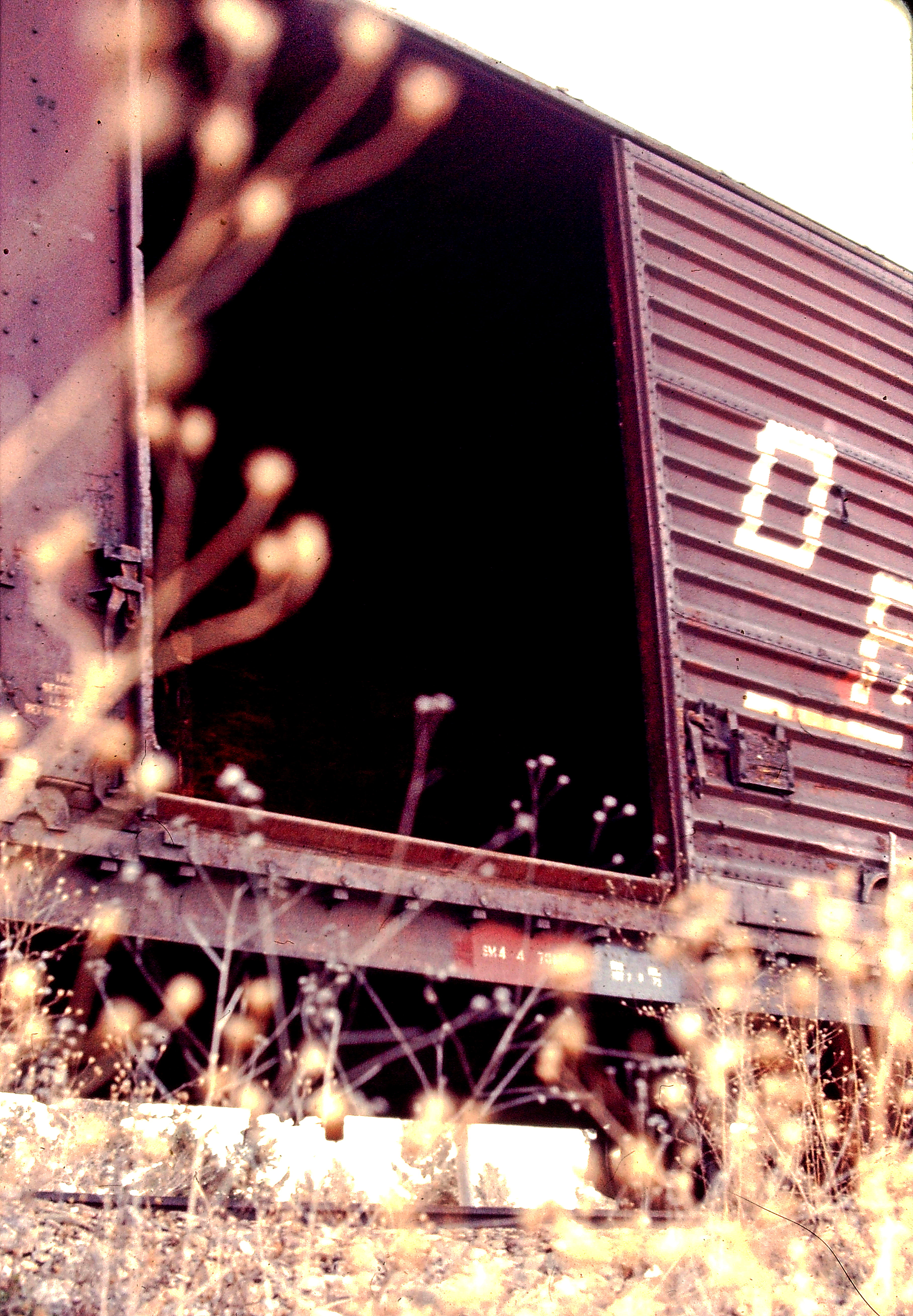
Hopped a freight, saw gang in Thompson
Falls, flatcar next track over. They liked
my car better, took it by force. No, wait...
Hopped freight into someone else's car,
who pushed me out again without my
knapsack, broke my leg, or...
I remember: clinging to moving car, one
hand desperately grabbing a handle,
slipped, lost my legs while those
startled drivers waited, watched,
horrified behind barricades. Or
did the speed freak sipping Mickey's
Big Mouths not drop me off, but
instead mug me miles from home?

Eloquently, asked blond Orphan Annie
out when snow bounced like Styrofoam.
Followed her eastward to Midwest. Sat
bouncing one child after another while
she conducted services at her church.
Or did we split angrily over my lack
of faith? I can never remember.

My epileptic buddy seized while training
for his bicycle road race, hit his head,
died. Knowing he didn't take his meds,
dedicated my life to medical counseling,
patient support/advocacy. Died early,
stress from lack of success, debt.

Indulged whim to own motorcycle.
Pretending to slalom along Woods Creek,
hit gravel, slid into oncoming lane,
already occupied by one-ton pickup.
Or did I just slide right over the edge,
mangling my body, my hopes for
being energetic weekly news reporter?

Did my heart burst when I snorted
Black Beauties? Or did I die after
doing same with PCP disguised
as so-called cannabinol? How 'bout
that time "chocolate mesc" turned
out to be rat poison, not placebo?

Millions of me's live in my memories,
branched from events gone right,
events gone wrong, events gone
different. When my editor ended
my career for once again failing
to put "ly" on adverbs. When my
employer marketed my database,
fame, money, a new career following.
When I got hired in Southern
California instead of upstate
New York. When my wife died
from cancer instead of lived.
70/100 100 poems in 100 days
Every one of those branching events could have happened, the only speculative one being the one about getting fired for not using “ly” on adverbs—although an editor/publisher could have ended my teaching career before it started when upon learning I intended to teach journalism he laughed and said, “You?”
I did indeed hop a freight while in college. There was a sinister looking bunch of guys on a flatbed. There could have been a guy in my car. I did hang on gamely when I tried to mount a moving freight car now way too high due to a raised railbed. After getting off of the freight, a tweaked out guy picked me up in a Roadrunner around midnight.
I did have a crush on that young woman in college, but too insecure, I didn’t ask her out. I speculated on her future career.
My epileptic buddy fortunately had his seizure on the dormitory floor, not while he was out training for the race. He’d stopped taking his meds.
I did slide right into the oncoming lane of traffic. It was a lonely road. I righted the bike, got back into my own lane.
Uh….yeah I did do those substances as described. The capsules at the end only had chocolate in them, not mescaline.
The rest is self-explanatory.
It’s interesting to me how I think about all of the ways my life could’ve gone wrong, only rarely think how it could’ve gone differently, and not at all how something could have gone right instead of how it went down. Does that make me a glass-half-full kind of guy? Or do some of us innately focus on good things instead of bad ones?
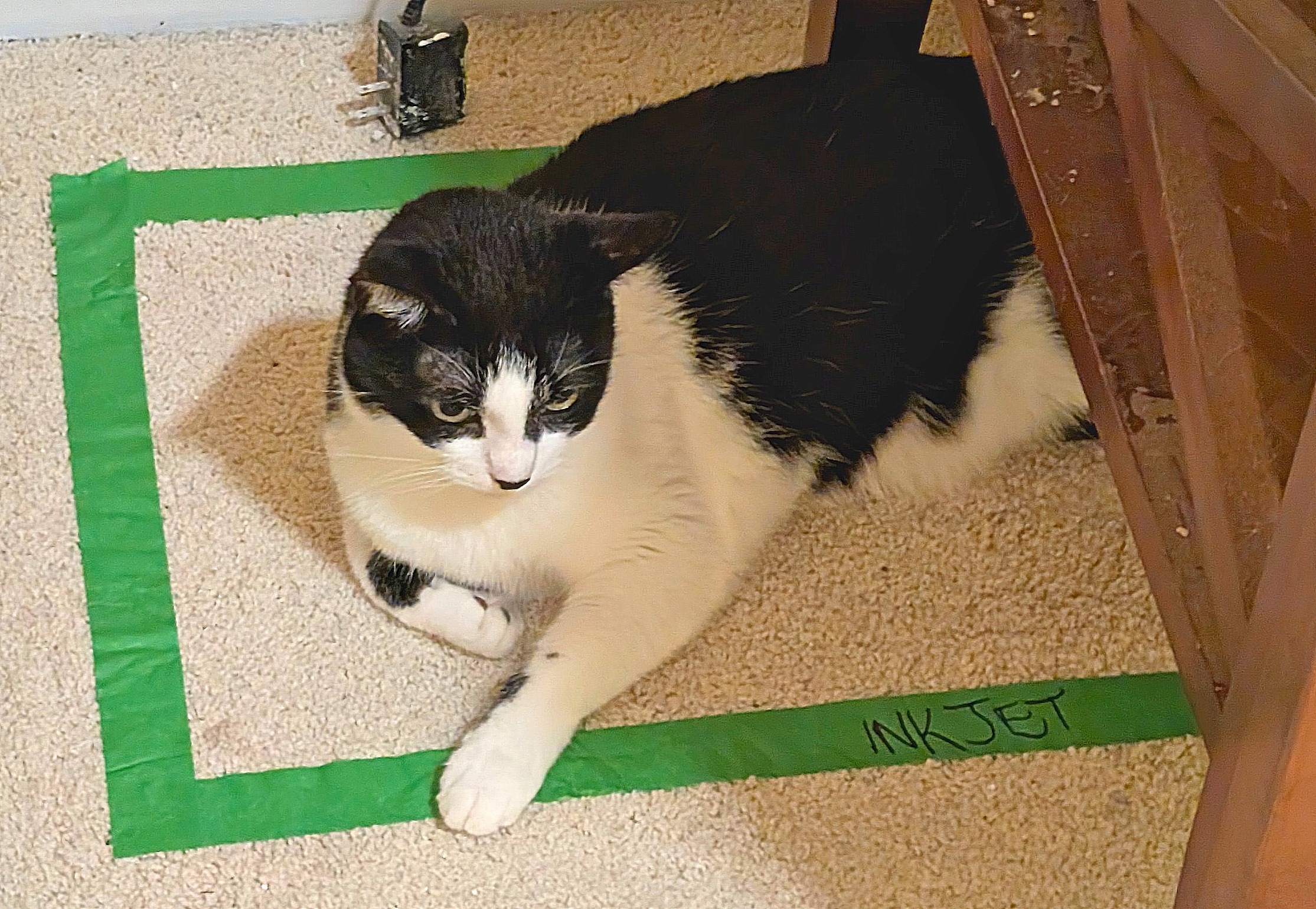
Benny is as sure of his genius as he is that he currently resides in a box.
My cat knows exactly how everyone
should behave. He fails to understand
his clear vision isn't clear to us.
Eleven years yet endlessly he
chastises us for our transgressions,
failing to enact his instructions,
breaking his long-established norms, rules.
          *          *          *          *          *
It's ironic we watched that show on
failure of genius, then I followed
by failing to understand you. It
seems so clear to me, terms precisely
stated, precisely used. Why do I
fail constantly? Each time sound bites play
repetitiously leaving me to
analyze what went wrong, who failed whom,
oblivious to the simpler fact:
not everyone understands my rules.
Chastising them works no better for
me than it works for my cat. Now who
thinks he's a genius? My cat's quite sure.
And they prayed to the gods who
brought the cool water, the wetness
which didn't burn. They defied mother's
warnings to stay away from water,
to stay indoors, to stay safe.

It never rains in California, or
snows in Seattle, except when
it does. My father rails yet from
his grave against the wetness of
"the coast." Everyone, everywhere
loves where they live "because it
has all four seasons" but disregard
none would agree what those seasons
should look like or if they exist(ed)
at all. Kids play baseball in snow,
football during extreme heat
warnings. My childhood home
fills with smoke every time I
visit—never during my childhood.
My front yard struggles to under-
stand why rain drowned months
of drought yet six weeks later, they
thirsted again. We think ourselves smart
with only vague notions of
weather's history, its background, its
vagaries, its fickle obstinacy
toward being pinned down.
Strip "climate change" of its
political charge, what's left?
Surety. Things have changed...but...
did this wheel always spin? Did we
merely boost it? Ask my grandparents
during the Dust Bowl. Ask my great-
grandparents during winters when
my grandparents greeted our world.
Ask me. This feels different. This
feels "not normal." This smacks of
Apocalyptic Event (movie to follow).
A blogger I follow received a three-month sabbatical and noted while he had grand plans, he found it more grand to ease into the “mundane” activities of playing and reading with his children, taking walks, traveling, visiting his parents, and such. He seemed a little surprised by this.
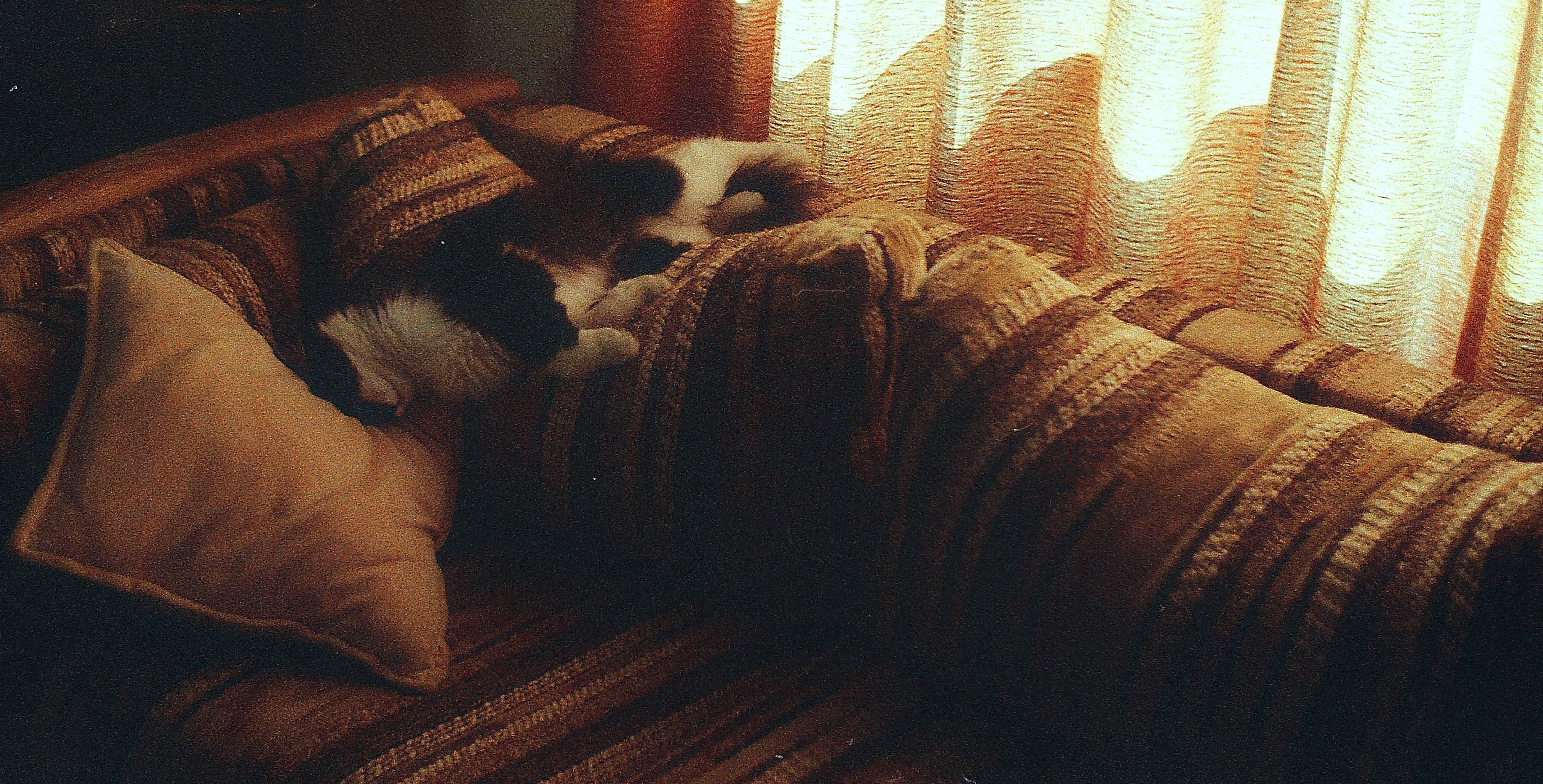
In non-summer months, the cats didn’t have to share the couch with me. 1984.
Teachers pant for June more, you lovely
little monsters. Adult nerves handle one
question every few seconds poorly—three,
simultaneously uttered, become background
noise to our crumbling sense of purpose.

First day:
lie on the couch
oriented, right hand
reaching books,
water, coffee.
Sleep when it occurs.
Open door policy
for cats, who wander,
wonder at this new
couch denizen.
Ignore phone calls.
Feel the throbbing
subside in feet which
bore all for eight hours,
one hundred eighty days.

Second day:
wander house
wander yard
wonder why they
look different. See
things to do. Know
their time has come.
Slide back to your
classroom, retrieve
forgotten things. Hide
if people come in.

Days three to seven:
attempt to forget each
day's name. Forget instead
all those things from Day Two.

Ease into being, doing for
its own sake. Mind ascends
to philosophy, theory, to
next-year-will-be-different,
dwells in growing visions
of daily perfection, ignores
realities learned before.

August:
Take joy in planning,
attacking a new year.
Feel like Superman
putting things back
together. Laugh.

Teachers pant for August more,
you whining recalcitrants. Our
dreams rebuilt, our minds alert,
our souls recharged—we're ready
to grapple once again. Ready to
push summer back into its closet.
67/100 “One hundred poems in one hundred days!” (but my sense of time is fluid) two-thirds to being there
Whither my dither?
And from whence? It
comes from focus, from
obsession, from lack
of limits on myself.
Grabbing issues, tick-like,
never to let go until they're
drained dry. Resembling
mad scientists in old
movies, eyes-a-poppin'!
Discussions become
arguments; paying bills
sends me on trips into
financial rabbit-holes
where accountants fear
to tread. My mind, honed
razor-sharp cuts anything
in its path. Too bad if it's
me, too bad if it's you.
Something seems near-
guaranteed to blow.
Comfort or habit? Can't
tell, but it promises
familiarity, which
brings confidence
(deserved or not).
66/100 “One hundred poems in one hundred days!” (but my sense of time is fluid) two-thirds to being there
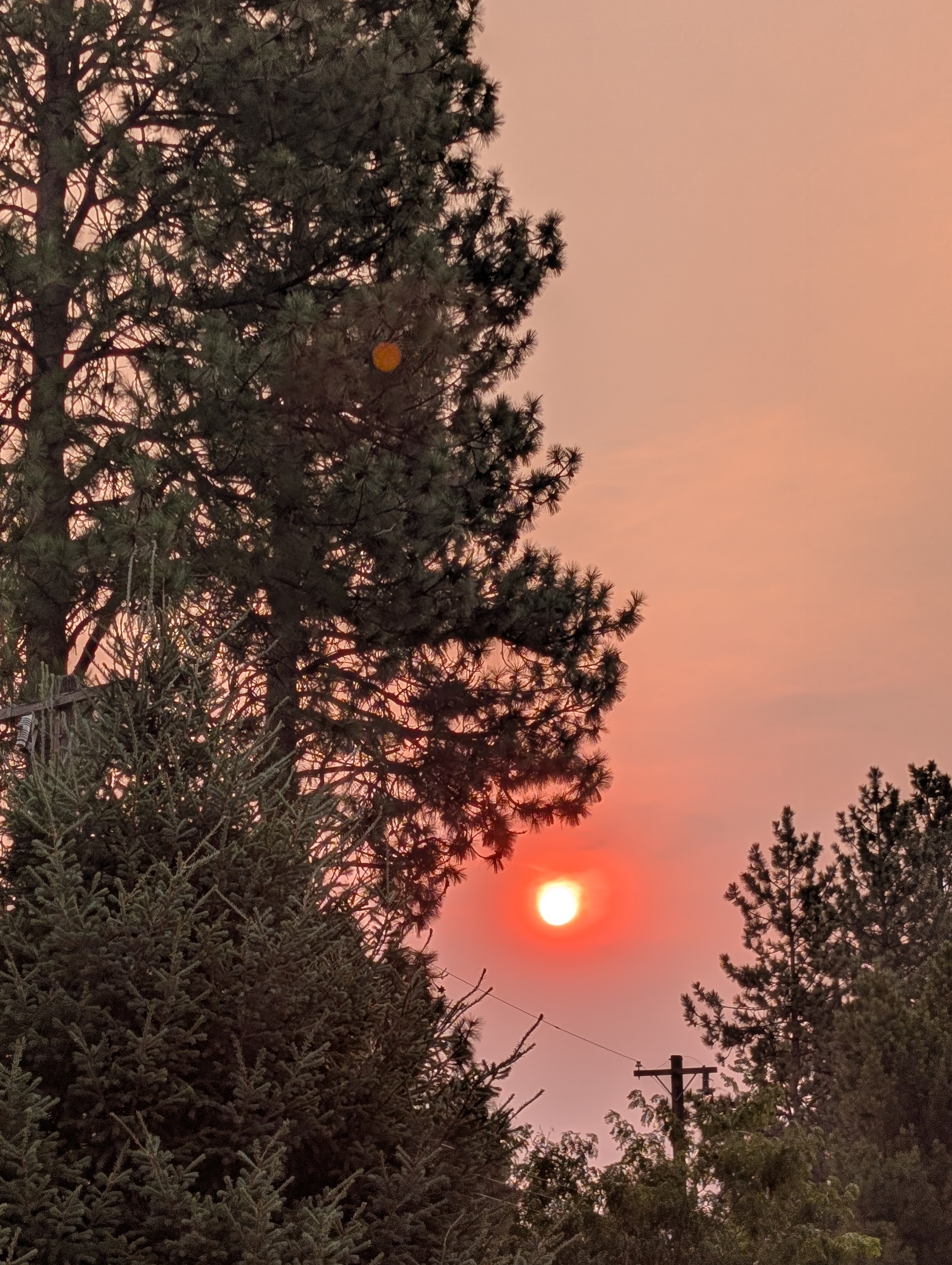
Unretouched photo from an hour after dawn, August 8th, 2026, in northern Spokane, WA, where three wildfires burned uncontrollably.
Ninety-nine:
French bread hot,
water steaming for
each loaf's crusty,
chewy finish.
Traveling inside
cool comfort,
knowing this
cannot last forever.
"Hot enough for you,"
quips farmers market
vendor, blue eyes
twinkling beneath
weather-lined, browned
forehead supporting
white buzz cut.
"Yes, but barely,"
my clever retort.
He laughs, takes my
money, knowing which
one of us will soon
be walking across
hot, radiating blacktop
back to his car.
65/100 “One hundred poems in one hundred days!” (but my sense of time is fluid)
Wow, got home from first choir practice of the season and forgot to post my already-written poem. At least this gives me a chance to spruce it up.
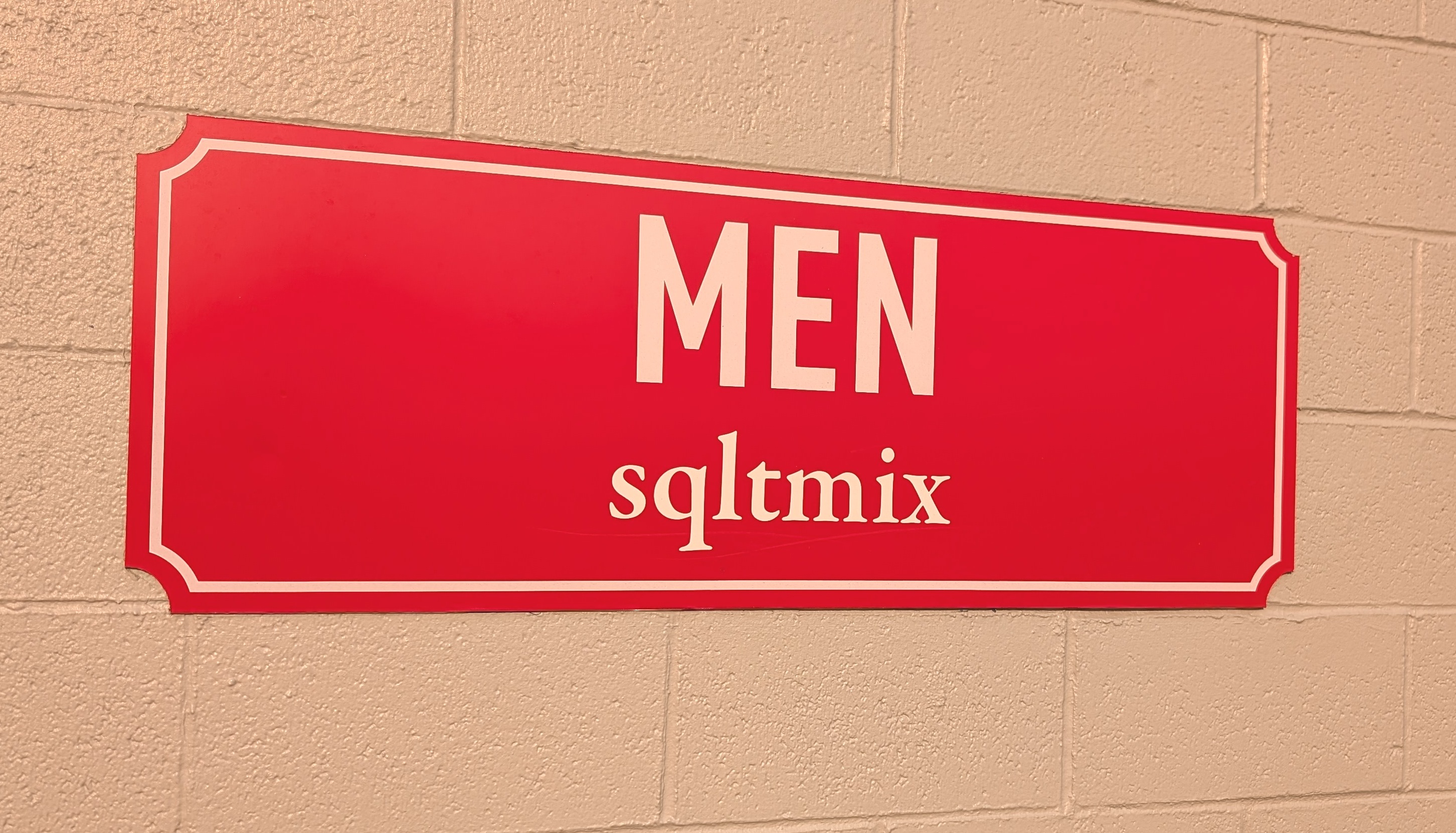
Restroom sign at Spokane Indians’ Ballpark. August 2026.
Fool me at all
Fool myself, shame
on me. Listen!
Listen to my Muse
who infuses spirit,
wrenching right from
wrong, meaning out
of nonsense. That
still, small voice
yields more than all
those shouts banging
around my mind.
Pray, pray for each
moment, each small
touch to break through
every moment
every day.
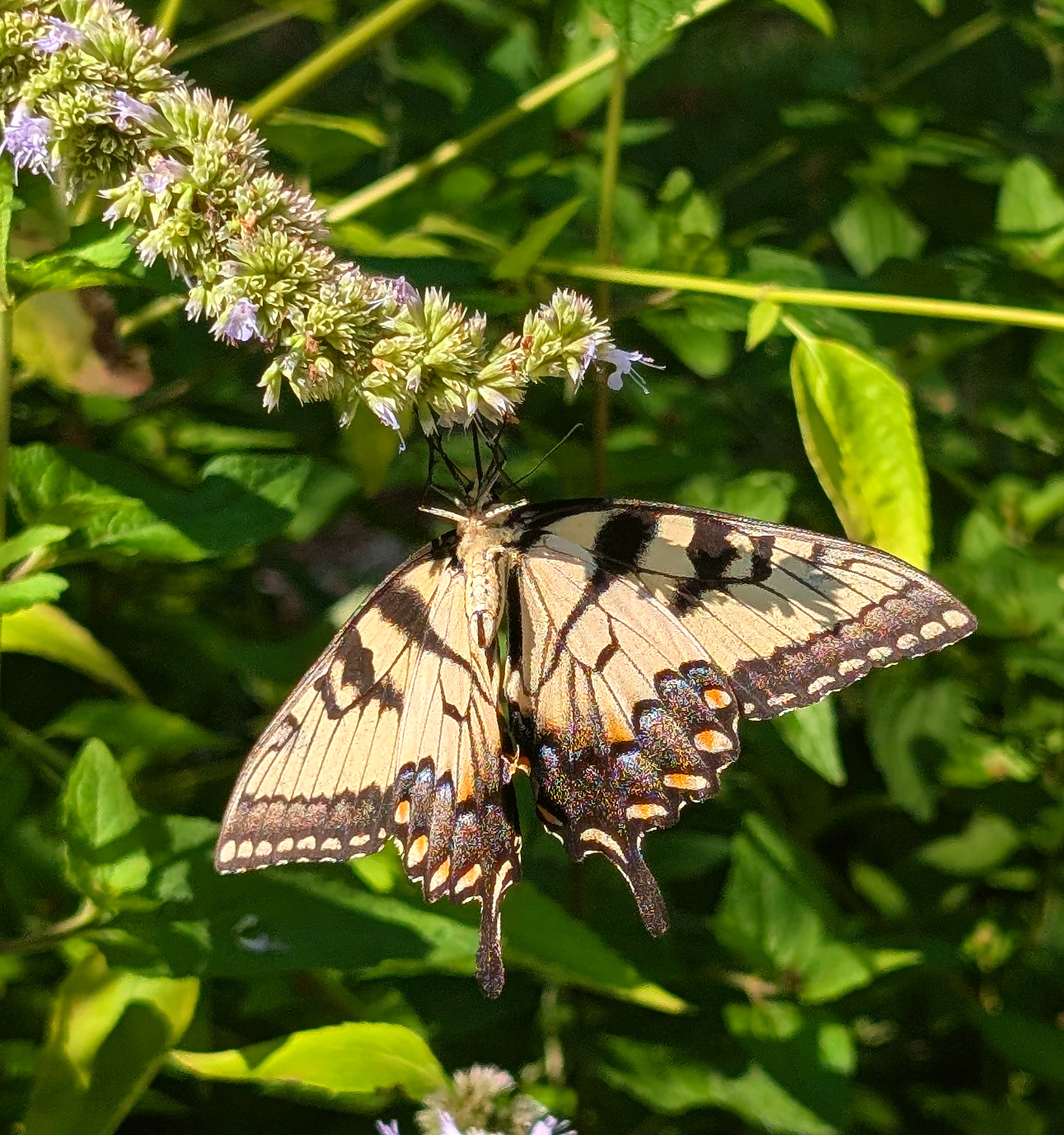
Eastern Tiger Swallowtail butterfly, likely female, on Anise Hyssop. September 2026.
One of my new favorite plants is the anise hyssop. Anise hyssop grows to about four feet with long flower clusters at the end of each upward branch. These clusters each have what looks like about 100 flowers. The large one in the photo above has approximately 50 clusters. (I had to count them for a pollinator study I participated in.) The weight and height of the branches causes them to bend a bit, making them look like a flower arrangement to me. The flowers don’t bloom all at the same time, but over the past two seasons ours has peaked in late June through mid-July, after which some of the flowers begin to do whatever propagation chores the plant must do.
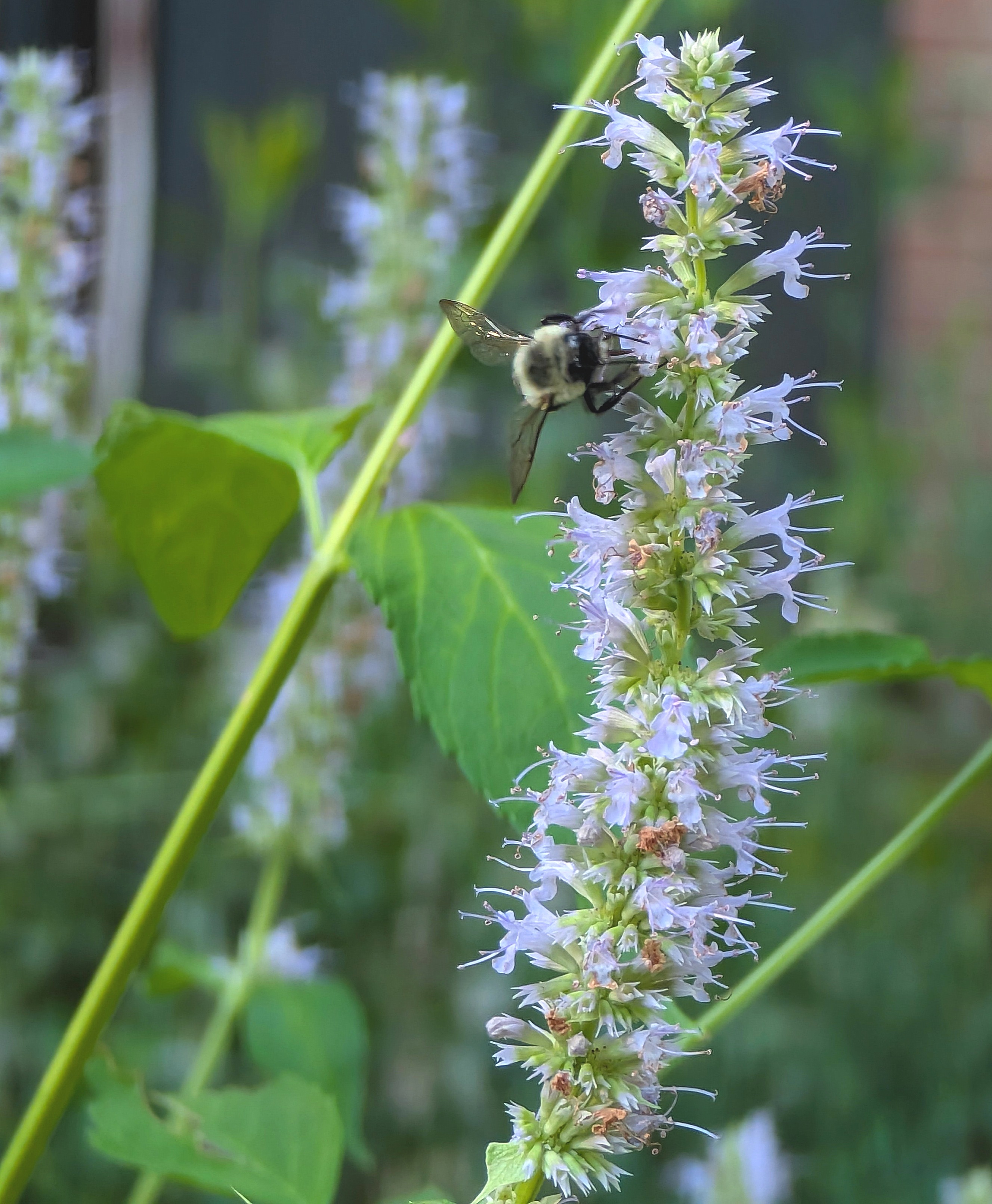
Same bee, different photo from July’s. Note more flower clusters in the background. July 2026.
The hyssop attracts many pollinators. I participated in the Great Southeastern Pollinator Count two weeks ago, choosing this plant because it had so many flowers. I counted mostly Eastern bumblebees and a little wasp about a half inch in length. Others included a very small bee, ants, another kind of insect I’ll just call a beetle, and the biggest dang wasp I’ve ever seen! I looked it up, and I’m sure I saw a Great Black Wasp. I’ve seen three different maximum lengths ranging from 1.4-2.0 inches. I swear it was about 2.0 inches in length. Absolutely huge.
Yesterday I saw our lone species of hummingbird here in the SE United States, a ruby-throated one, also checking out the hyssop. It seemed to prefer the similar-looking flowers of the obedient plant quite near me. And both yesterday and today the several hyssop plants in our yard have been caught the attention of Eastern Tiger Swallowtail butterflies.
When I began the census count, I lamented to my wife that most of flowers have long past their peak. I expected to find few pollinators compared to June-July. The purple coneflowers have lost all their petals; the spiky centers remains, attracting goldfinches to the seeds, not pollinators to the pollen. Similarly, the black-eyed Susans and Indian blanket flowers have mostly disappeared.
But strangely (to me), the hyssop seems to have popped out more flowers! Over the past three days bees, most of the Eastern carpenter variety, have been madly jumping on the hyssop flower clusters. From a distance they’re visible by watching the ends of the stalks bouncing up and down in a non-existent breeze. And then there’s the apparent delight some butterflies have taken in finding yet more flowers on the hyssops.
We need to keep trying, keep putting out those flowers of attraction. It makes a difference. Perhaps “carpenter bees” aren’t your thing. Perhaps you dislike benign-but-huge “wasps”. No matter. Our purpose is to flower. Let the rest take care of itself.