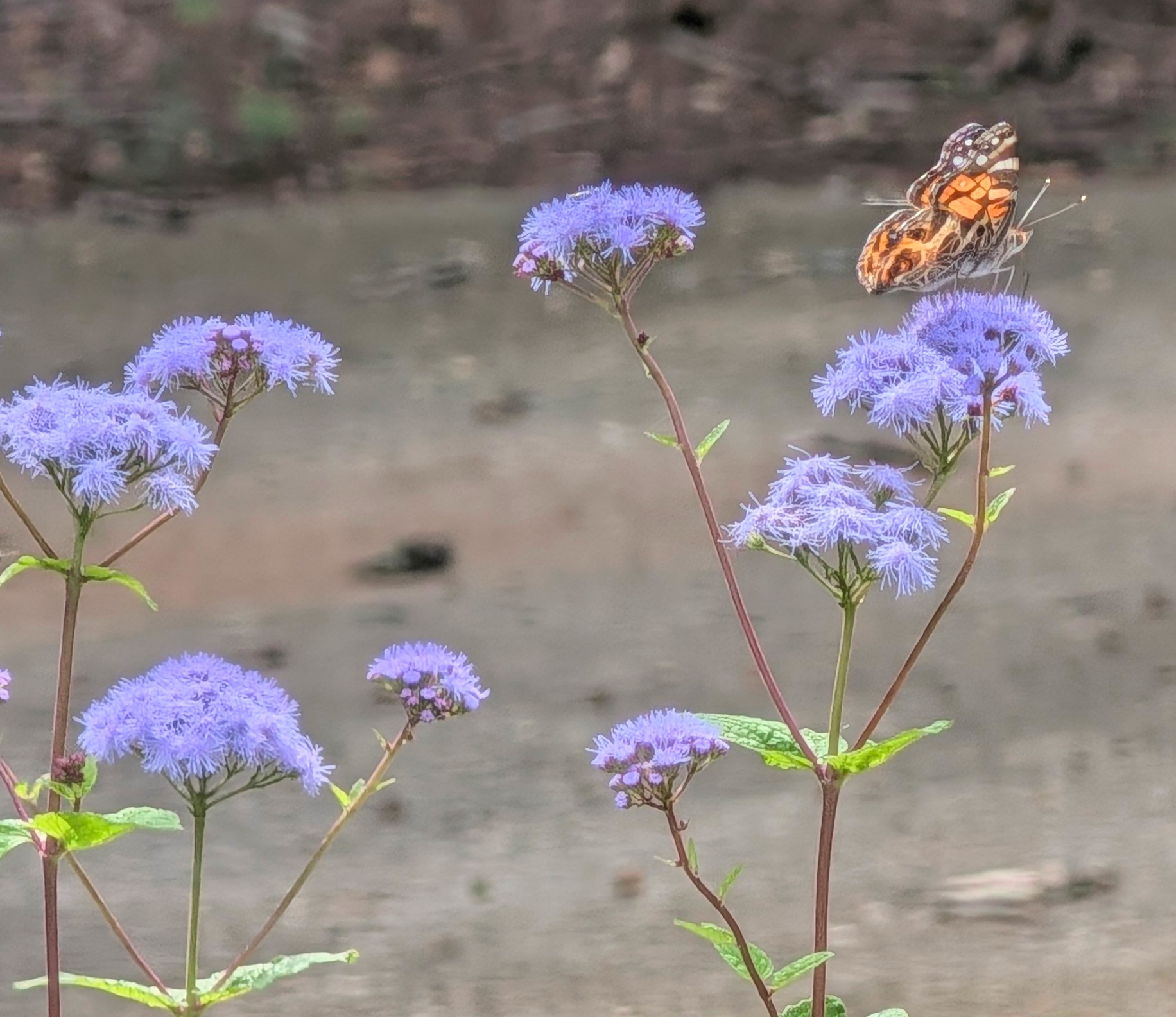
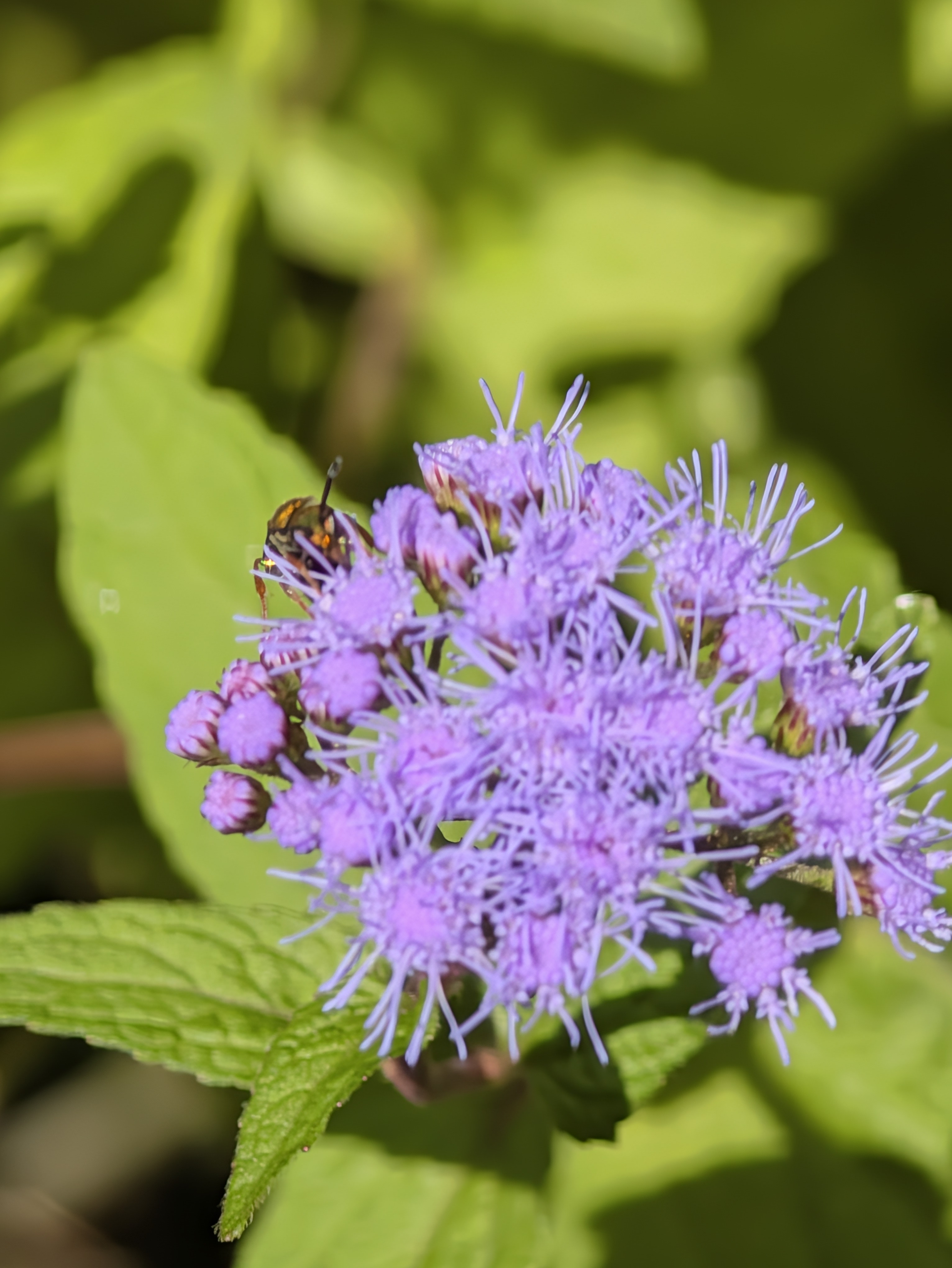
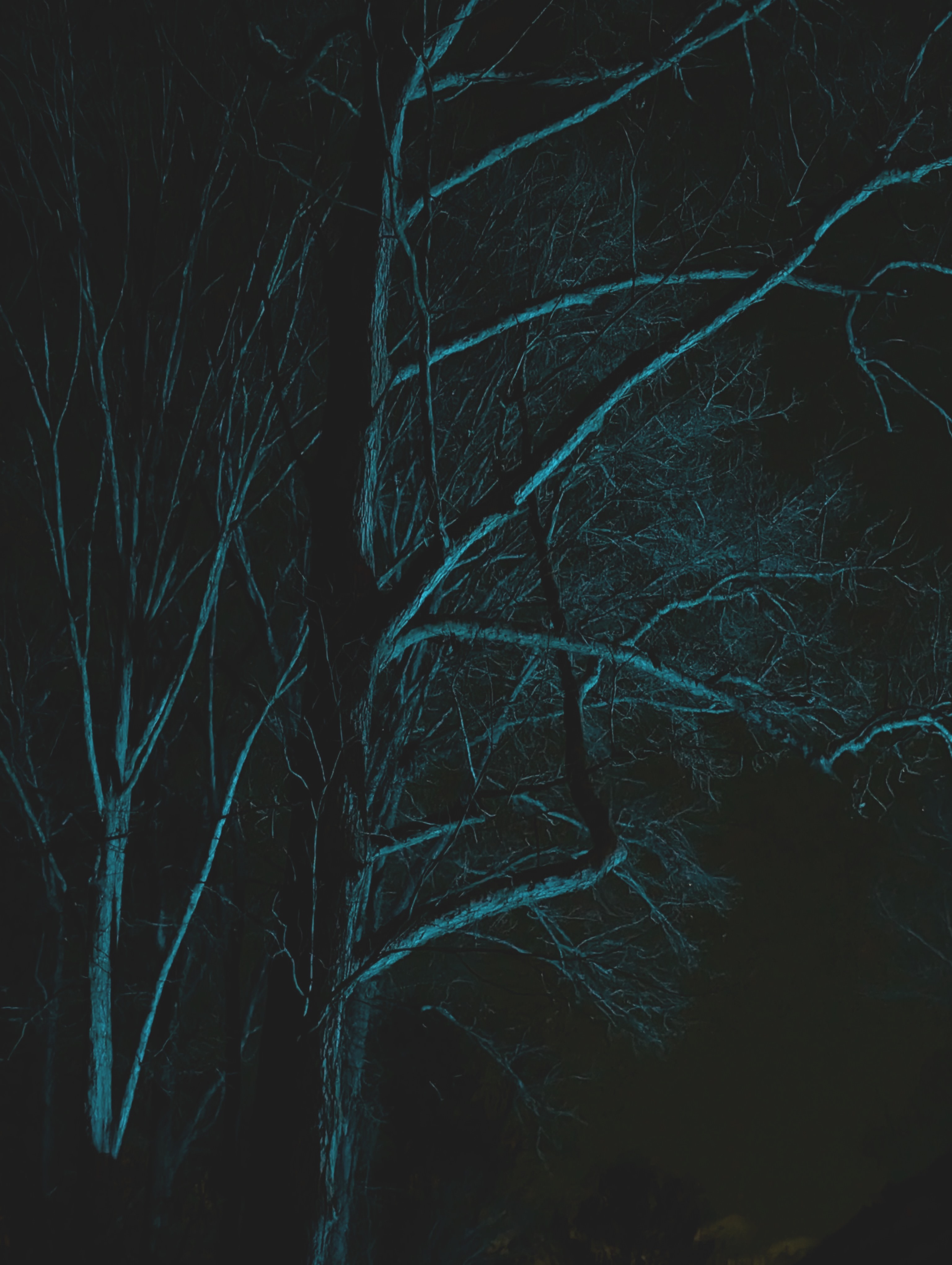
Ghosts, slipping treelike through forests populated by people looking just like they once did. Slowly dissolving, windborne gossamer, 'til people look through them. Haunting not others, but themselves with each mirror-ward glance. Remembering when they treated ghosts similarly, in youthful vibrancy.
I’m just not going to make a poem today. My brain feels so scattered, I think the only thing holding it together is my skull. Heat? Maybe. More likely the increasing difficulty with being older and watching the world change into something we envisioned only not like this. (non sequitur? no.) Life now resembles a city’s marathon, only you’re not in the race anymore, in fact, you’re not even on the sidewalk watching. You’re up in your apartment looking down and saying, “I wonder what they’re doing down there?”
In lieu of posting nothing, I took a walk around the yard.
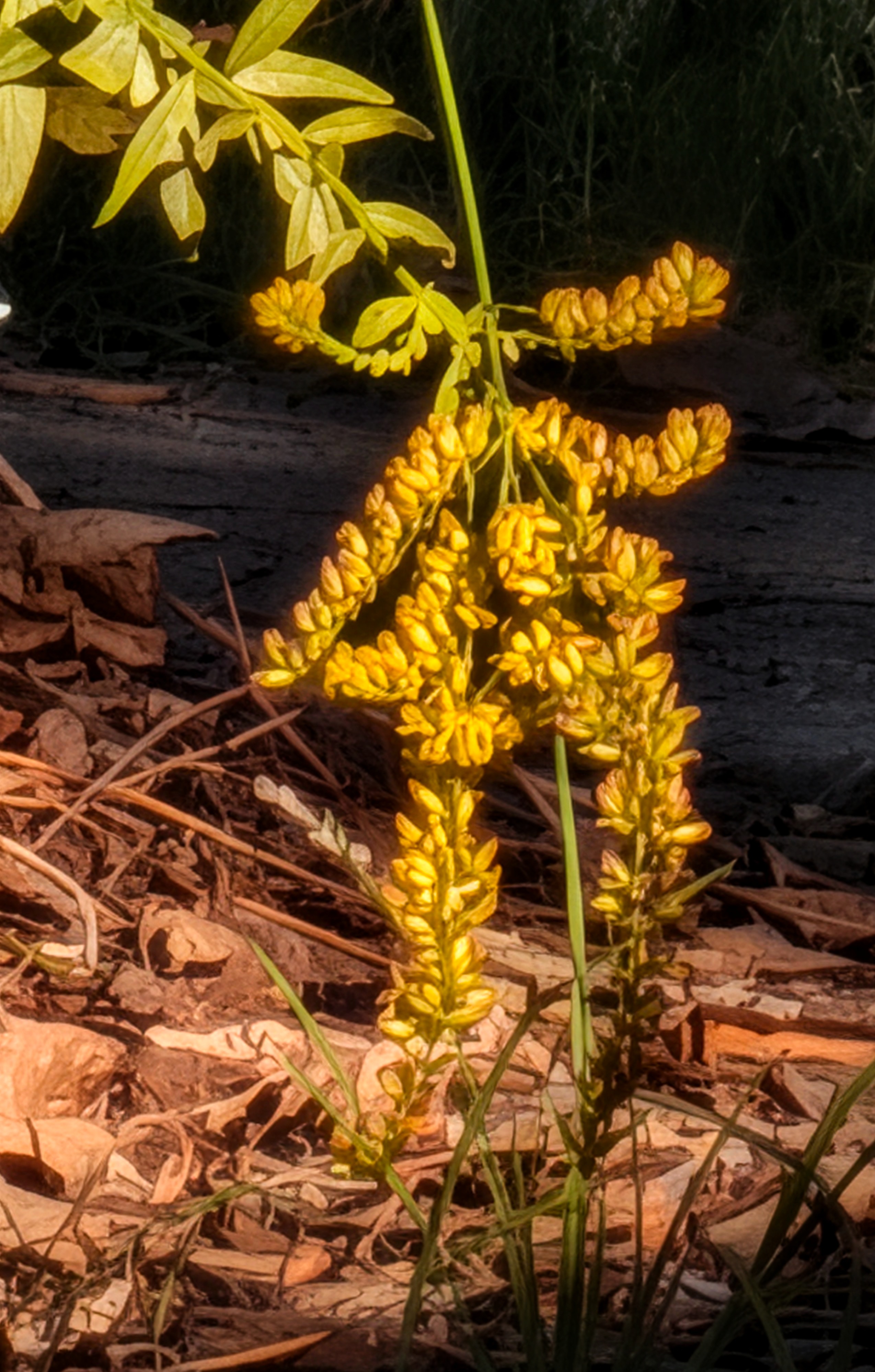
Lovely, ubiquitous goldenrod. Prime suspect in my investigation into the dermatitis which has cropped up again. July 2026.
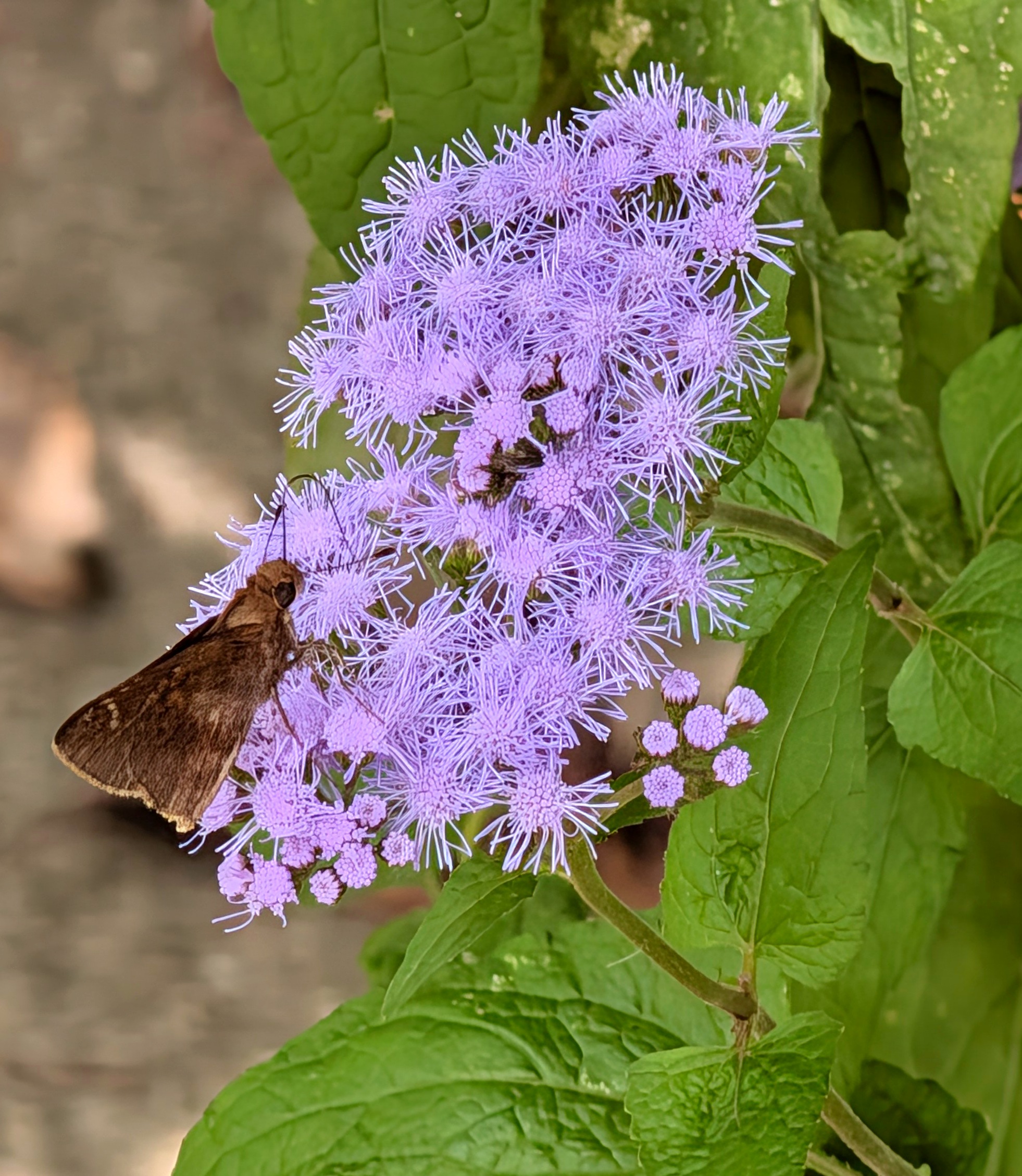
One of the few remaining non-natives. Couldn’t bring myself to rip out what amounts to a mailbox decoration. July 2026.
Our purple coneflowers typically droop starting this time of year, but pounding rain a week ago didn’t help. Good thing these guys were tied up beforehand. That’s mountain mint in the background. July 2026.
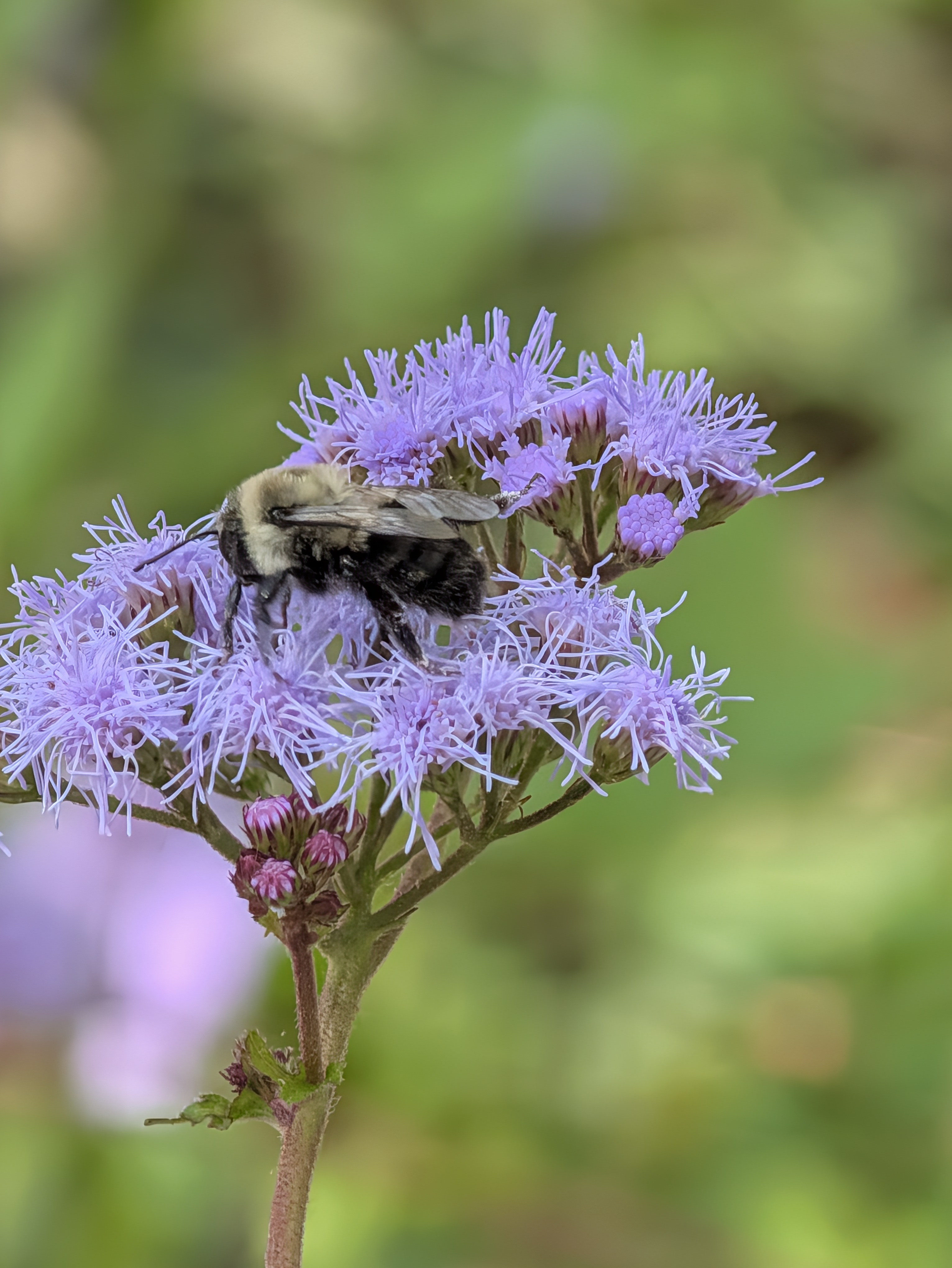
Our yard now represents a pollinator’s dream. Here an eastern bumblebee (I think) heads off for the next blooming sprig of anise hyssop. July 2026.
One of the strangest plants: rattlesnake master. Is it called that because of the thorned, sword-like leaves? Or the spiky flower-balls? It didn’t flower last year, nor did it come close to growing over six feet tall as it has this year. July 2026.
There you have it. Perhaps my melancholy intro will produce a poem later tonight. Time to get down to the pub.
A friend from the blogosphere is publishing 100 poems in 100 days. I’ve decided to at least try to do that, and I’m going to try to catch up with her by publishing multiple poems per day for a week or so. While in Scotland just about 30 days ago, riding along in a tour bus, I marveled at the ubiquitous sheep and the beautiful landscape out the window.
In Southern Scotland
Sheep dot grassy fields, Their sides shagging wool. Clouds scud through skies, Like inverted sheep, woolly sides down. Dark ones Sprinkle naturally holy water: Priests of nature, they Remind all—sheep, cows, Tourists in buses—of our Divine brotherhood.
A funny thing happened on the way to this post a week ago: all three monitors started blinking on and off rapidly for 20 seconds and then my video driver software said it had crashed. Since I thought I had installed it only two months previously, I swore and deleted said software… Not a good idea. After rebooting I had only one monitor functioning and it displayed smaller fonts/icons and a fuzzier image. Turns out I had only updated the driver a couple months before. Two days later I’m humming along with three glorious monitors again, but not enough time in each day to complete this post. Wherewith…
After experiencing Edinburgh, Scotland, and England’s Lake District on our recent tour of the United Kingdom, we headed toward Llandudno Bay, Wales. Just before we arrived, though, we took in the Bodnant Garden, a National Trust property near Conwy and Llandudno Bay. The five generations of one family developed it, and Henry McClaren donated it. I got that from Wikipedia mostly, and would recommend a quick tour over to that page because the photos capture it very well. It’s 80 acres present all sorts of habitat from well-manicured English garden to “nearly wild” and has exotic species like the American sequoia. (Hey, it’s exotic there.) We started walking in a summery rain shower but the sun soon overcame it; we regretted layering for rain as we sweated our way into a steep gully and back out.
The McClaren mansion. The family still lives there…on occasion. Bodnant Garden, Wales. June 2026.
Seemed to be a lot of locals enjoying a Sunday afternoon in the garden. Bodnant Garden, Wales. June 2026.
The couple above were gazing into the gully (when not gazing into each other’s eyes, I presume). If they had turned around they would have seen…
Bodnant Garden, Wales. June 2026.
The light varied. As we descended into the gully, cut by a fast-moving stream, it grew dark—not because the clouds had obscured the sun, but because the foliage had. As we walked along the stream, it got lighter. We found some old stone buildings, repurposed into a refreshment center. We however needed to head back to our bus and Llandudno.
In the past 50 years or so, a “walk around the block” has a different meaning. Streets meander, dead end, and lead to yet another meandering street, not to the nearest arterial. Thus, a walk around the block entails much more walking! With my brother in town, I chose to walk to a nearby park, Wooten Meadow. If my measurements are correct, the around-the-block part equaled roughly two miles. Add in the stroll through the park to make it 2.5 or so. Regardless, we had a fine time in this very small park which locals once knew as a horse pasture, according to my friend who grew up here.
Tucked alongside a bustling arterial, one sees the remnants of the horse pasture:
Wooten Meadow Park, Raleigh, NC. May 2026.
Half of the open area of the park is shown above. It’s not a large park. A figure-eight path leads one beside ponds which serve to handle high water during heavy rainfall when Hare Snipe Creek overflows its banks.
Wooten Meadow Park, Raleigh, NC. May 2026.
At the back of the meadow (middle left in the first photo) we discovered an unpaved trail which led into the woods. Spying a park bench, we gained assurance we were allowed to be there. No other people followed us, nor did we see any ahead of us. We saw instead several bucks sprouting antlers.
A non-concerned buck across Hare Snipe Creek. Wooten Meadow Park, Raleigh, NC. May 2026.
Further into the brush away from Hare Snipe Creek. Wooten Meadow Park, Raleigh, NC. May 2026.
Half of “the block” remained, so we headed toward home.
What I believe is a Regal Moth becoming… Next to a Blue Mistflower “becoming”. April 2026.
Two weeks ago I’m walking the path along the front of our house when movement in the dead leaves caught my eye. I saw an amazing insect squirming around, kind of walking in little circles. Examining the photo, I figured it to be a moth with wings not yet dry and fully erect. Regal Moth was the closest I could come (only having a photo of a female). The wing markings don’t seem to be correct, but they might change when they are fully deployed.
Florida Red-bellied Turtle (or Red-bellied Cooter?) with male Anhinga. February 2026.
When I think of the Everglades National Park’s Royal Palm Visitor Center I immediately see two visions in my mind: a parking lot full of vultures and Anhingas. The first vision includes a non-identified carcass suspended from a lamp pole which supposedly kept the Black Vultures from eating the rubber off of your car’s windshield wipers. The second one looks like this:
Male Anhinga at Royal Palm Visitor Center. March 2010.
I snapped this photo on our previous visit to the ‘Glades in 2010, printed it out when we got home, and admired it for some years after. It represents what I like about southern Florida in general and the Royal Palm Visitor Center in particular: a person can get very close to many remarkable birds, reptiles, and amphibians. Here are some from our recent trip, which like the first one, didn’t disappoint…
Female Anhinga with fish. February 2026.
We had barely arrived to the center when we watched a female Anhinga stab a fish. She then spent five minutes or more attempting to figure out how to get it off of her beak without losing the fish altogether. She did eventually succeed. The photo looks strangely colored because I heavily tweaked the contrast parameters to bring out the fish.
A beautiful Peters’s Rock Agama. February 2026.
Sadly, the photo above shows a gorgeous male Peters’s Rock Agama. Sad because it’s an invasive species from Africa that’s out-competing local lizards. Yes, there are two S’s because it’s named after a biologist named Peters. He’s perched atop a rock wall bordering the walking area outside the center itself. In other words, it only took a bit of telephoto and my being ready to snap the shot when he stopped for a second. They’re skittish.
In the center of the walk visitors can access several viewpoints around a large, lily pad-choked pond. Surveying the pond, one can pick out alligators here and there…
Lily pads with gator. Royal Palm Visitor Center, Everglades National Park. February 2026.
Sharper eyes spot turtles…
Everglades National Park. February 2026.
And running across the lily pads are the most striking little birds! Behold, the Purple Gallinule:
Purple Gallinule (adult). Bright yellow legs not shown. Everglades National Park. February 2026.
When birds abound I tend to ignore the rest of my photographic subjects. I apologize to myself, and I promise to make something of a few of those photos which haven’t made the cut this time. To carry on, though: I had a good time “stalking” this Green Heron in an attempt to get a shot where it held still.
Green heron. Everglades National Park. February 2026.
One benefits in several ways when a visit to the Everglades occurs in the so-called winter months. It’s usually warm enough for shirt sleeves; mosquitoes have disappeared; manatees congregate in the warmer waters near the shore where people can see them (sorry, no good photos of those, I’m afraid); and in late February and March young fledglings have been born. This striking set of shots caught me by surprise. I’ve never seen a family of Anhingas before. Frustratingly, they were located across the pond and partially hidden in the branches of the trees. I don’t usually publish out-of-focus photos but this old man couldn’t get the shot at that zoom level with no tripod/monopod or grip.
Female Anhinga with juvenile. Everglades National Park. February 2026.Female Anhinga with two fledglings. Everglades National Park. February 2026.Female Anhinga and juvenile. Everglades National Park. February 2026.
As we left the pond and headed back to the parking lot, I looked for the little gator we’d seen on our way out. Only three to four feet long, it had found refuge in a shallow bit of water no large alligator would deign to look at. It had disappeared, found its way elsewhere just as we planned to do. Will I visit again? Unsure. There are so many places to go in the world. It had been 16 years since our previous visit; 16 more years and I’ll be looking at my 88th birthday (Lord willing). Tough to say.
Small alligator in a few inches of water. Everglades National Park. February 2026.
View from Shark Valley Visitors Center, Everglades National Park. There are two alligators in this photo. February 2026.
Technically we re-entered the Everglades National Park at the end of our day in the Big Cypress National Preserve, stopping at the Shark Valley Visitors Center at the end of the afternoon. We didn’t want to take the tram ride to the actual Shark Valley viewing tower, which left us little to do there. Another hour brought us to Homestead, FL. I discovered a Cuban restaurant next door which delighted me a great deal. But first, where are those alligators in the photo above? Look up that slough in the center of the photo. On the far bank? Just above the light-colored shoreline? Here’s a zoomed in photo:
Alligators at Shark Valley Visitors Center. February 2026.
We hit up the Cuban restaurant for breakfast, easily besting the hotel’s “continental” offering, then headed to what I still regard as the heart of the Everglades—the Ernest F. Coe and Royal Palm Visitor Centers and the road which leads deeply through the park until it reaches Flamingo where one can stare southward at the Florida Keys. We arrived just as the Coe center opened then headed southward.
Huevos rancheros, Cuban-style: plantain pancake under the egg and a fruited salsa atop. February 2026.
After spotting a half dozen or so school buses in parking lot, we decided to visit Royal Palm at the end of our day, on the way back out of the park. Quietly spotting wildlife with a hundred or so elementary students alongside (we checked) seemed to be mutually exclusive. We stopped at some of the major sights on the way south, a few on the back out.
A juvenile heron. Not sure which one. Looks like a Black-crowned Night Heron, but those don’t have the yellow/orange beak. Closest I can come would be a Tricolored Heron but it doesn’t seem to be quite like this patterned brown. February 2026.
Small drainage creek at the Pa-Hay-Okee Lookout Tower, Everglades. February 2026.
My wife spotted a heron jumping in and out of the darkness of a creek at Pa-Hay-Okee Lookout (left and above). I needed a telephoto to see what she was talking about!
We spotted a barred owl at the Mahogany Hammock walk. While watching him (nearly positive this was a male), we were treated to a call-and-response with an owl we couldn’t locate. This apparently is classic barred owl behavior between a male and female. A sharp-eyed teenager pointed out a snail which I had difficulty locating even after she had described the location. Other attractions at this stop included huge root systems seen from underneath because hurricanes had blown them over in the past.
Barred owl at Mahogany Hammock. February 2026.
Tree snail at Mahogany Hammock. Approximately two inches. Everglades, February 2026.
We arrived at Flamingo a bit tired. Thankfully the best thing to do there involved sitting and staring at the shallow waters leading out to the Keys—unless you wanted to take a boat charter which we had done in the past. We spotted an osprey flying back and forth over the shoreline waters, and we saw the near-ubiquitous flock of White Ibises. Then we drove north again.
A stylized view of the Keys. Flamingo, Everglades. February 2026.
Osprey at Flamingo, Everglades. February 2026.
We turned around and drove north toward the Royal Palm Visitors Center, hopefully now without the youngsters. Royal Palm deserves its own post, however, so we’ll bring this to a close.