I’m having a little difficulty with the rhythm of the final lines, but it’s worth sharing at this point.
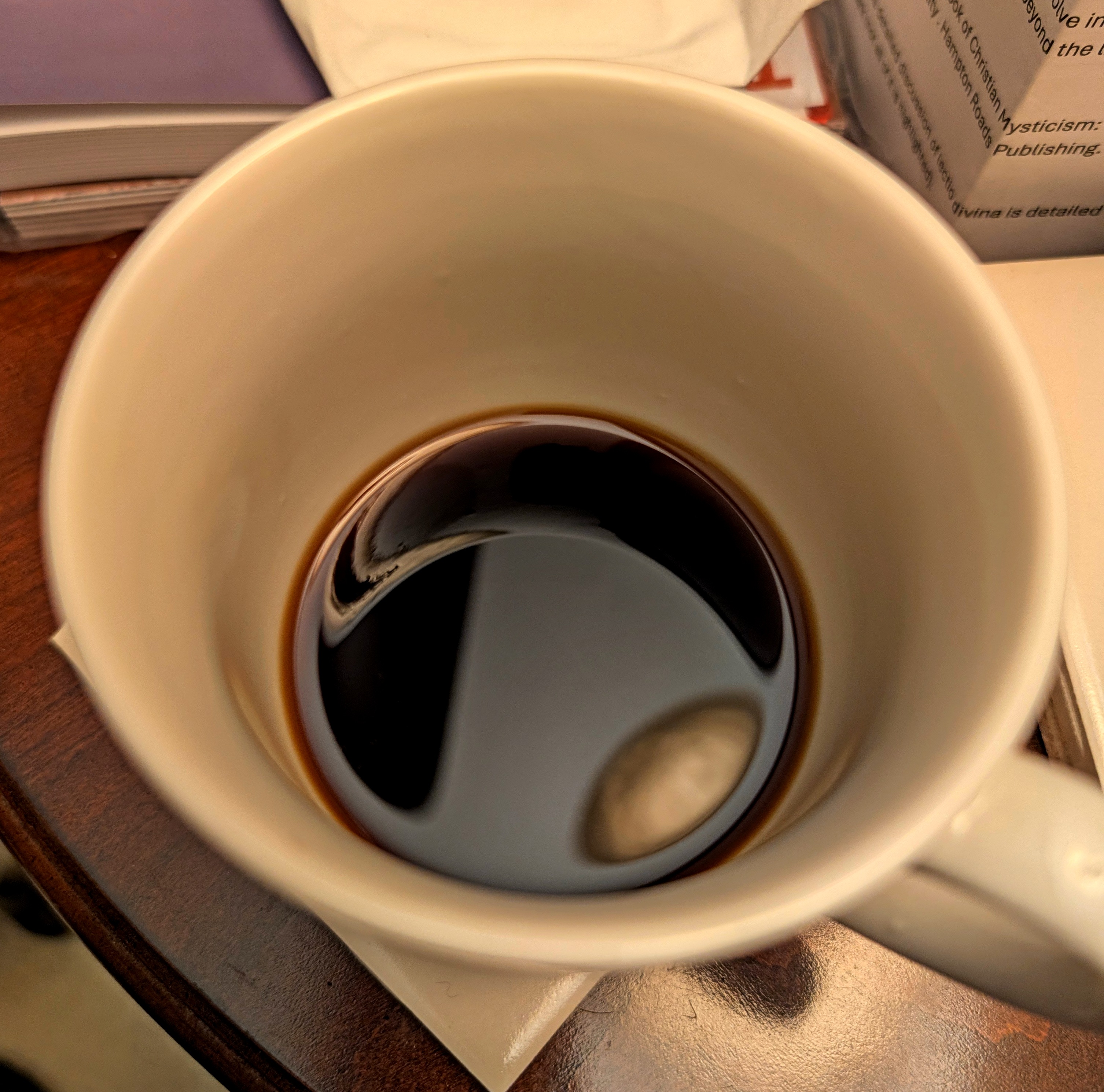
The eye of my coffee cup stares at me.
Columbian farmers peer out of inky liquid.
Buyers bought these beans to profit from
our concentrated wealth, our insatiable desire.
How many hands dried it, bagged it, moved it
to warehouses? To docks? To ships through ports?
Even here, where processes reverse, where bags
leave pallets like children from orphanages:
once again care and love infuse the beans.
Pallets become small roasted batches. Batches
become a collection of one-pound bags, sold
to households...To me, where the eye of my coffee
asks, "Is this the best way to show love? Is this
the best way to transfer wealth? To care for
our planet? Where will your ephemeral concern
land next? What will I need to do next week
to satisfy you? How may I please you,
master?
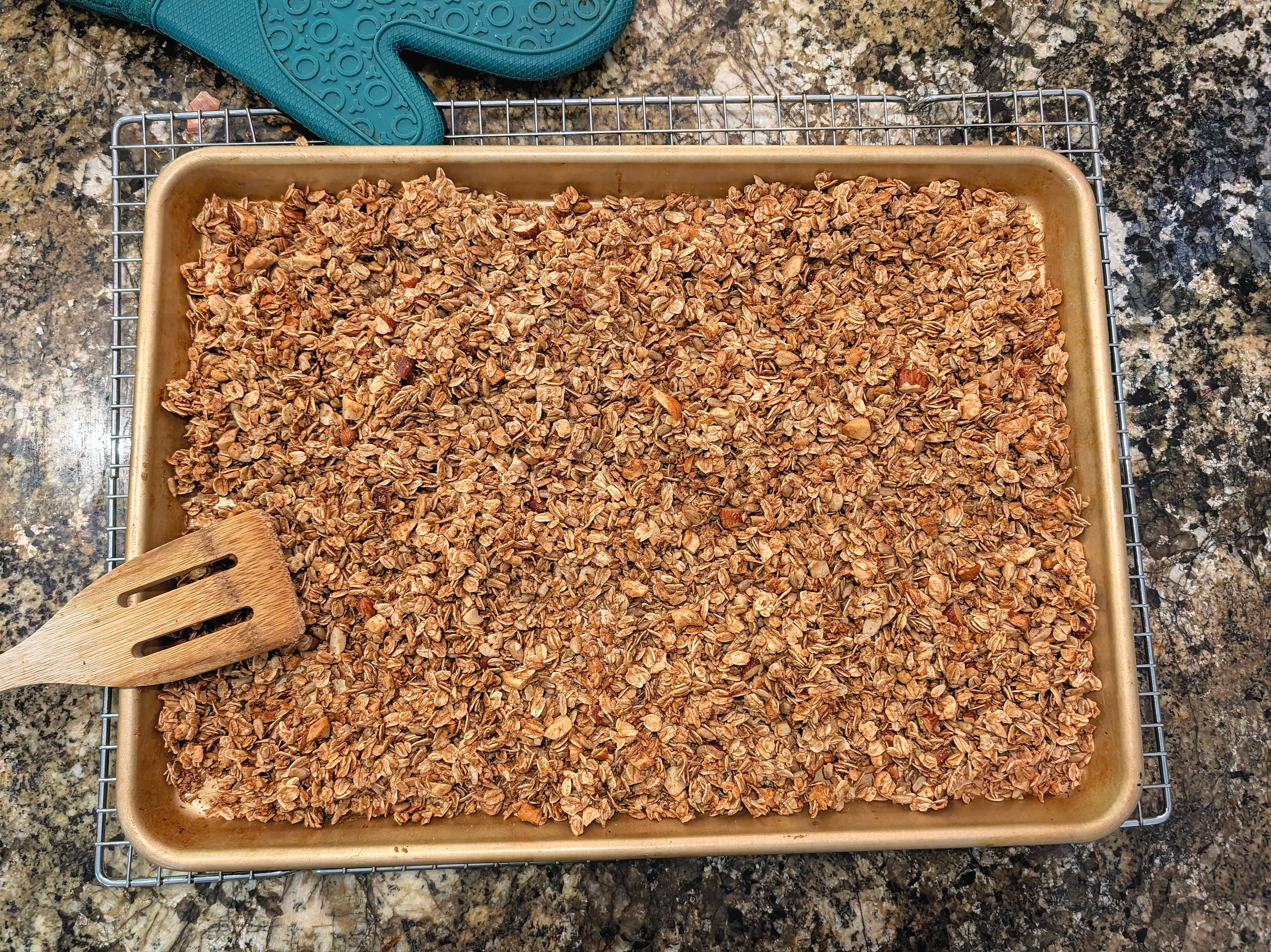
I sure love homemade granola! So easy, too. Can’t figure out why I took nearly a half year to replenish our inventory of the stuff. October 2026.
Here are some quotes I’ve been saving up. Inspiring, frivolous, hopefully entertaining:
I am never more generous than when I split open an avocado, see that it’s perfect, and agree to share half with my husband.
Mia Leimkuhler in The New York Times
There’s a book called 222 Cemeteries to See Before You Die by Loren Rhoads. Makes me wonder if there isn’t a cemetery tour or something after you die. If there isn’t such a thing, there should be…
Me
Music is the reward for being alive.
Jorma Kaukonen (guitarist/singer, founding member of Jefferson Airplane and Hot Tuna)
I can’t possibly be this ancient. I haven’t had enough time to prepare myself to be this old.
The father of Martin Hesp on or near his 67th birthday. M. Hesp is a British journalist and blogger
When you come to Philly [to play baseball], you forget about nutrition. You eat the cheesesteaks in the visiting clubhouse.
Freddie Freeman (Atlanta Brave and LA Dodger)
I literally don’t have even 25% of the time I need every day to do what I want and what must be done to function in society. (If at 72 I don’t function in society, they will take me away and put me in a home.) I am not one of those persons spoken of in the semi-famous quote, “Millions long for immortality who don’t know what to do on a Sunday afternoon.” In any one moment I can plan four days’ worth of things to do in the next four hours. This means I’m always under a bit of tension because everywhere I look I see things I “want” to do but haven’t touched (or even begun) in the four years since the idea first occurred…or six…or twelve…or longer. Life’s mundane ways are interfering with my life.
There’s supposedly a Turkish saying, “No matter how far down the path you’ve traveled, if you discover it’s the wrong one, turn back.” I read it one day in my Franklin Planner, sometime between 1997-2001. It’s resonated for the decades since, but it’s losing its impact now that I’m over 70. There are a few paths that cannot be retraced at this age. I would still be recovering that lost distance when I moved to ‘the home’ preparatory to dying. Example: I’ve purchased houses poorly throughout my life, fixating on what would make it closer to perfect but not realizing I was not capable of doing those things. The house we live in now is almost certainly the last one. We set out to get a house with the master bedroom on the main floor along with laundry facilities. The overarching premise was to avoid stairs. We achieved the stated goal: bedroom and laundry are on the main floor. But the house has a basement which now holds our freezer, the beer fridge, my office, the library/study, and a rec room. In short, I spend large chunks of every day downstairs, and I need to go up and down those stairs every time I want a beer, need to get something out of the freezer, need to do anything on my computer, or heck, empty a cat box.
Yet since I was a teenager I’ve dreamed of a one-story Spanish-style house which from above would look like a capital U. The base of the U would house the common rooms, one wing would hold the master bedroom suite and personal office/hobby space (plus laundry services), and the third wing would house spare bedrooms. I have never come close to purchasing such a home in the fifty years since I thought of it.
And that’s just one! I guess I have regrets or at least questions, all of them related to what were you thinking?
In a book I read about being a Philadelphia sports fan, there’s a quote which explains them quite well. I’ve lost the book and can’t quite remember the title, but the quote goes something like this:
In Philadelphia the glass is not only half empty, it’s got a cigarette butt in it and a lipstick stain on the rim.
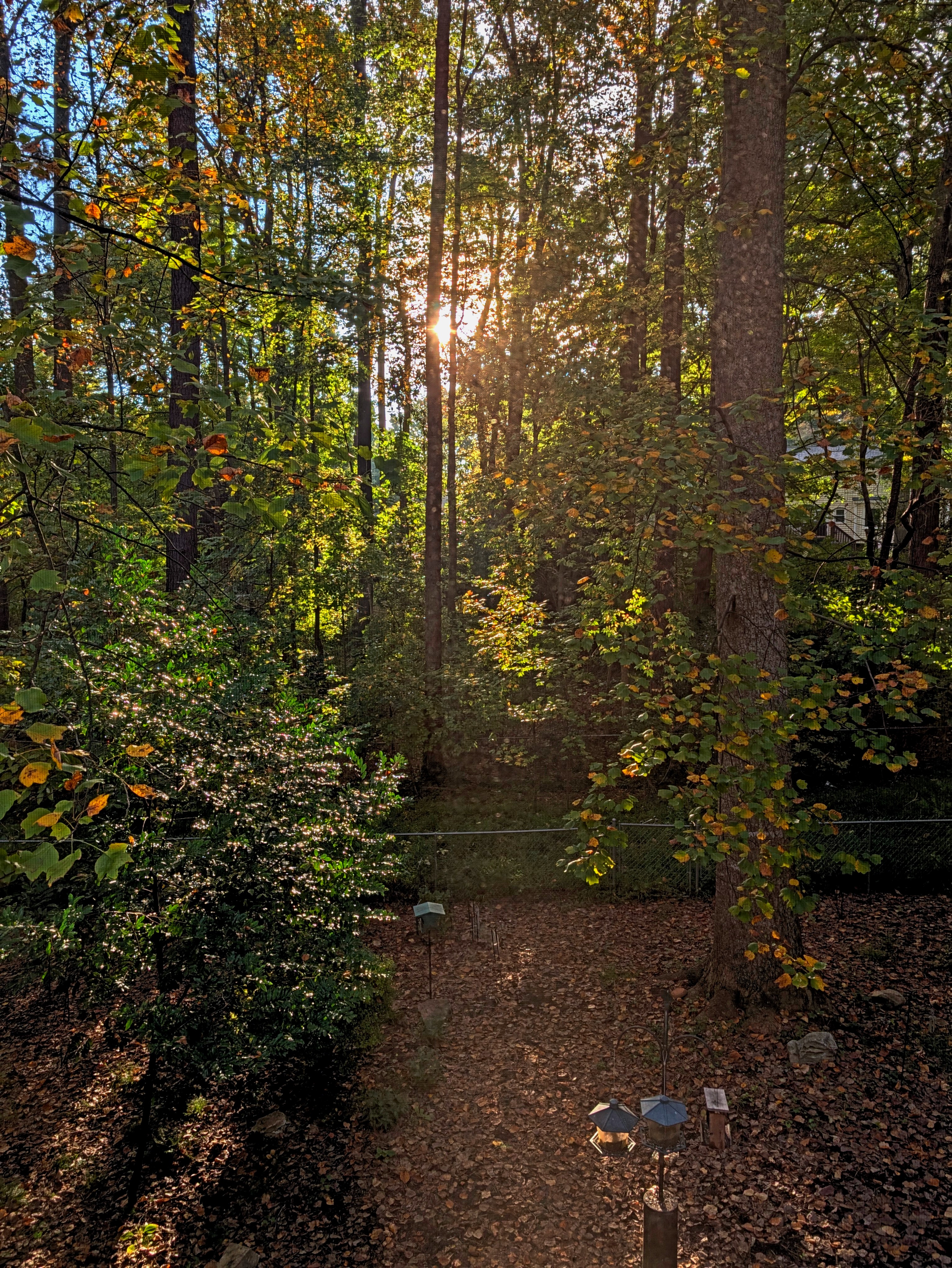
I always believe my house faces west and backs onto east, but it isn’t so. Therefore we arrive at this point where nearly a month after the equinox the sun shines directly into the house through the door to the deck—Thursday the 15th—and I realize we’re looking southeast, not east. It’s momentarily saddening, but how can one be sad when the day opens like this and fulfills its promise to deliver near-90° temperatures?
Yes, that’s a lot of dirt down there. Not very green is it? That’s actually what a natural forest looks like around here, more or less. This fall and next spring we’ll be filling it in with some more plants, but mostly this is it. Soon the yellowing leaves on the tulip poplars (one at the right in the photo) will carpet the ground. The Carolina cherry Laurel keep its leaves—it’s an evergreen.
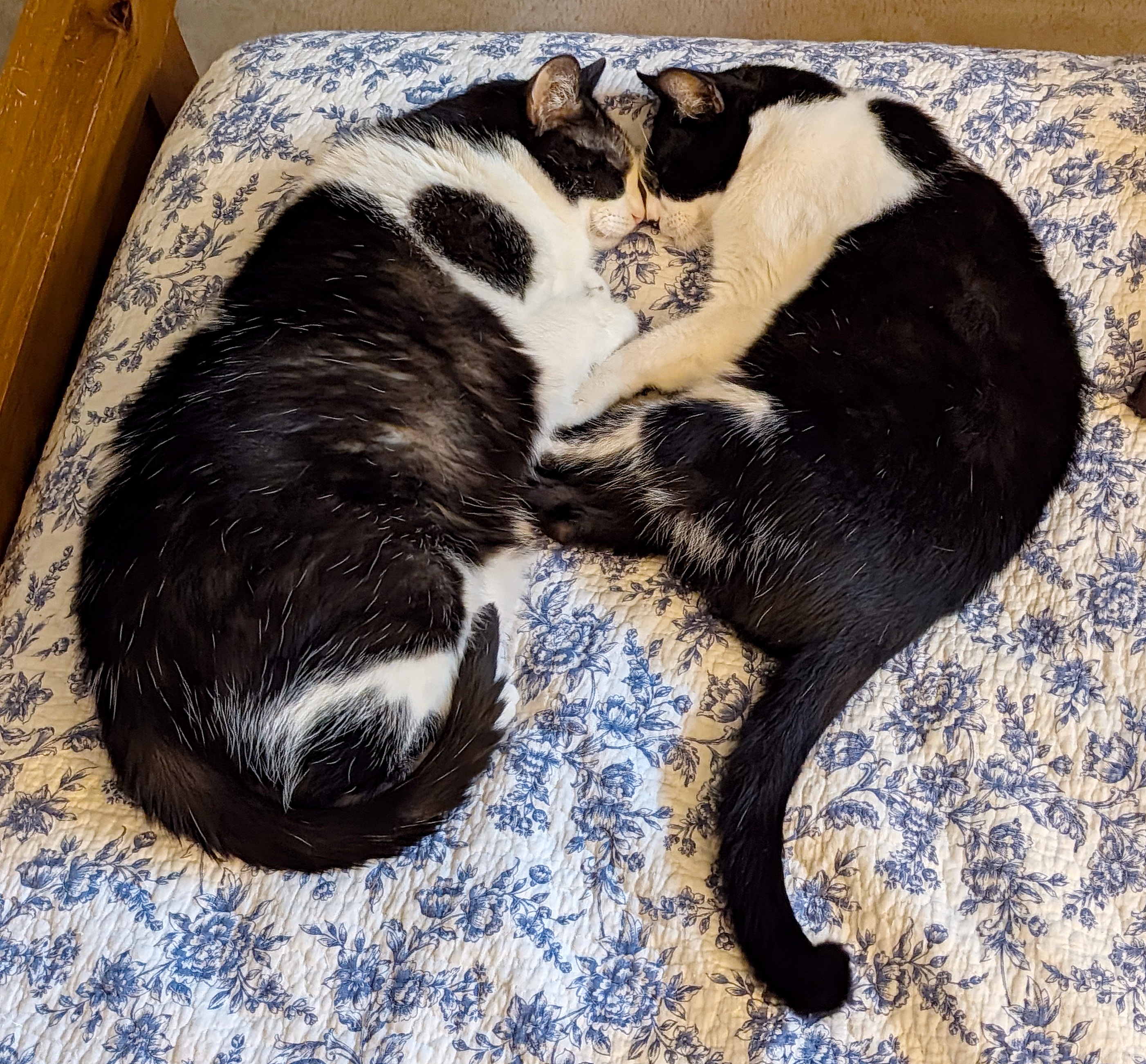
Charlie (left) likes to sleep with his brother Benny. Sometimes Benny lets him. October 2026.
It’s been an unpleasant shock to realize our cats are well into their 15th year, with a birthday occurring sometime around March 2027. Unpleasant because they’re older already than all but one of the other ten cats who have lived with me since I was but 24 years old. (I wonder what it’s like when your littermate never leaves you?)
I had thought to wait another day or two for the Poem Post-Mortem (which sounds pretty cool if you say it aloud). I had a lot of reactions in the final ten days or so, and I see no reason to wait. In no particular sequence, here are some reactions of this author…
It actually got easier in a way when I got into it. In reviewing at random over the course of the writing (July 7 to October 8), I noticed that somewhere around one-third of the way in, between poem 31 and 35, the subjects seemed to suggest themselves more easily. They acted like shy faerie folk who don’t know what to make of the giant human at first. Were there any ‘good’ poems in the first 33? I guess. I’m much more pleased with the ones over the final third.
I became more surprised at what words showed up. In particular, Daymare(Oct 1) popped in from who-knows-where. All I did was think, “I’d like to write something more ‘image-ry’ like the ones Bridgette does.” Fine, mission accomplished, but from where did the image come?
I surprised myself also by sticking with it. My general attitude toward life has been, “when the going gets tough, get going,” in the sense of go work somewhere else, go do something else. “Life’s too short to keep [insert what I don’t want to do].” Yet I cracked the ends of both radii in my arms only two weeks in and kept right on writing. I traveled for two weeks yet wrote poems #35 through #49. I contracted the flu Type A on September 24 and kept right on writing. I must credit Bridgette with that, mostly, because she kept writing through her time sucks and bodily aches.
More people are interested in reading my poems than my prose. My blog readership increased about 100%, and my followers rose about 10%-20%.
In the beginning I mined poems written long ago when I railed inside at the perceived shortcomings of the people running my places of employment. (I still think I was partially right, but over the two to three decades I accumulated those poems, I learned two things: there are more paths to the goal than you think; and oftentimes the goal you think you’re working toward is not the goal your management is working toward.) Those poems in my opinion remained stilted, as if I tried to breathe life into a corpse but only succeeded in creating a zombie.
I have a peculiar knack to take a popular tune from my younger days and spontaneously craft new words for it on the fly. I sing these to my wife who rarely is amused by it. I’m rather proud of the fact I can create rhymes and mimic the meter of the original tune, but then I’m a borderline narcissist. This talent(?) helped in writing poems, particularly when I decided to rhyme them.
When I lowered my expectations my poems rose in quality.
I have a strong urge to publish a poem today! Resisting.
I thought as I got into this a little bit that it might be fun to rework the better poems and churn out a chapbook. I still might, but I’m thinking more that I will be working some poems on the side for submission to poetry websites. There are plenty. A new blog I follow, zumpoems, has this list of more than 4000 places which will accept submissions.
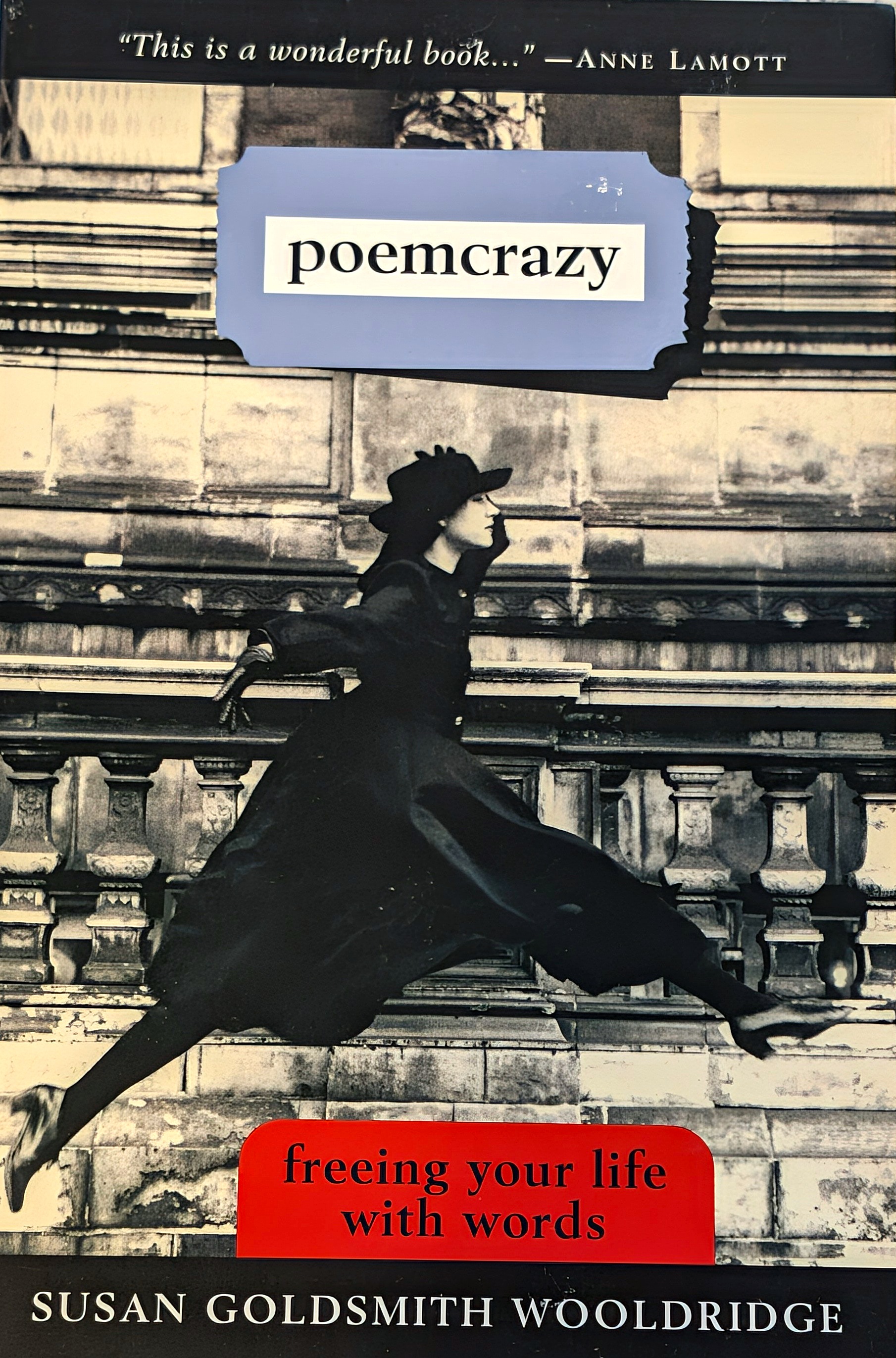
About the photo: I’ve carried that book around for about 30 years (published 1996), even though by then I had given up on my dream of actually earning a living from my creative writing. I never liked it that much. Pulling it from the to-be-donated pile, I thumbed through it today and I’m much more inspired by its suggestions and insights. Like so many things in my life, poetry came to me when I quit trying to be a poet.
And the poets down here don’t write nothing at all, they just stand back and let it all be…
On July 7th I caught up to the fact that writing friend Bridgette had embarked on one of her #100 jaunts, this time with poetry. I decided to join and wrote a couple a day until I caught up. (Somewhere along the line my poem number equaled the date in July.) It became both easier and more difficult. I think I’ll do a full download in a day or two, but today, the knowledge that the finish line has been crossed is exhilarating. I feel pretty good about it, and as I’m just regaining my energy after a lengthy battle with the flu, it’s good timing.
Here's to a century of poems! To the angelic Muse who inspired where human thought faltered. To pain examined, to sorrow freed, to joy remarked and justly praised.
Here's to blather, whimsey, musicality, studious lexical construction, obstinacy, dread. To sheer, stubborn perseverance. To posturing, to pretense, to ego filled and deflated.
Here's to subjects barely scratched and to those wrung dry. To daily forays into unknown spaces, led on by Trust, by Belief, by extra- ordinary Chutzpah, by Faith.
Here's to allowing oneself to learn by doing or perhaps by not-doing— by re-examining the Done and separating it from the Not Done (the fantasy following us forever).
Here's to Attitude! To Meekness, to Gracious Acceptance when your best garners nothing, but your mediocrity reaps praise beyond your understanding.
Here's to not understanding your own poem yet thinking you can critique someone else's. To mighty draughts of Ego sipped daily at a keyboard altar.
As with any history, this one lumbers past its usefulness. One hundred created anythings seems remarkable enough. Why bother rehashing the hashed?
Tomorrow marks the 100th poem, the end of a poetic journey which seemed much longer back in July. Thus, today is the penultimate day, and I just can’t get over what to me is a ridiculously pompous word.
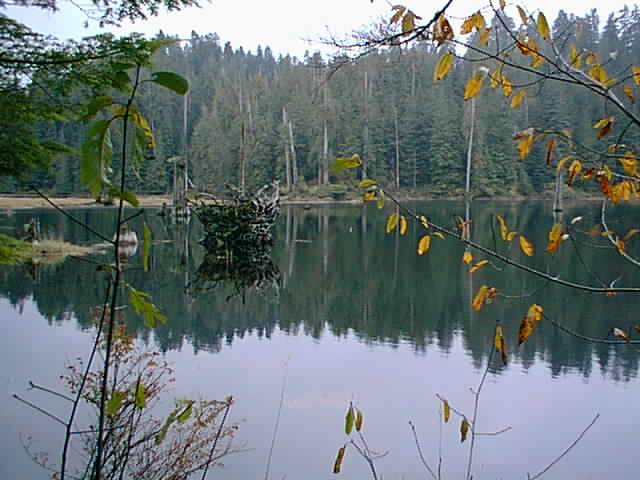
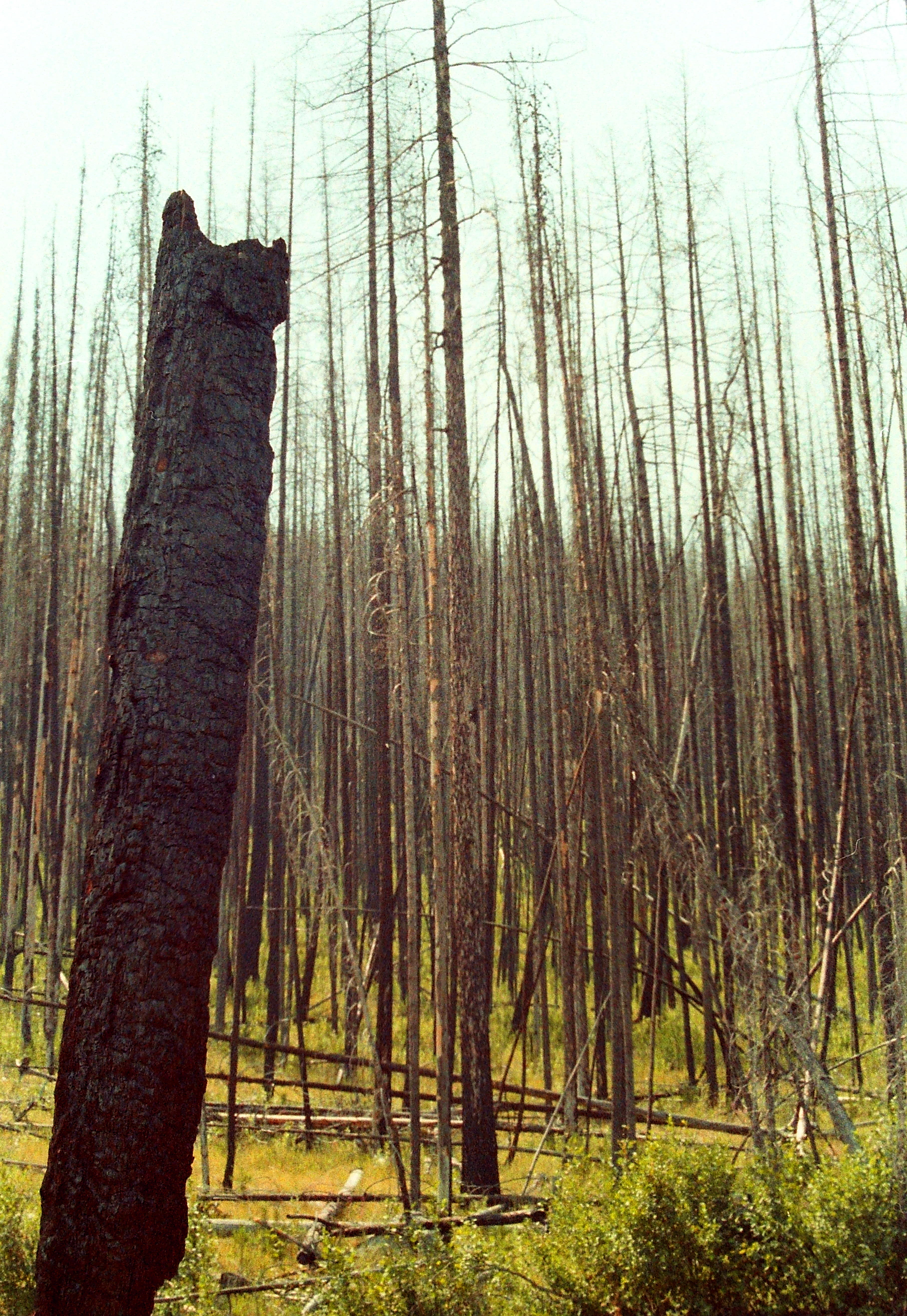
Is this the penultimate day? Will green sprout imminently? Or is this the penultimate day to the penultimate day, or is it…oh, heck, we’re all penultimate in some way. Washington State, August 1994.
Once again we trot you out,
presager of triumph, crier for
others, never cried for. Sound
your trumpet! Herald 'The End'!
Tomorrow we shall rejoice,
we shall party, we shall bask
in the well-turned, diligent
task. Today, though, we need
someone to set up the tables,
the chairs. Thanks again—
your check's on the counter.
I wrote this on the penultimate
day of your penultimacy.
Couldn't be bothered to
mark the unremarkable.
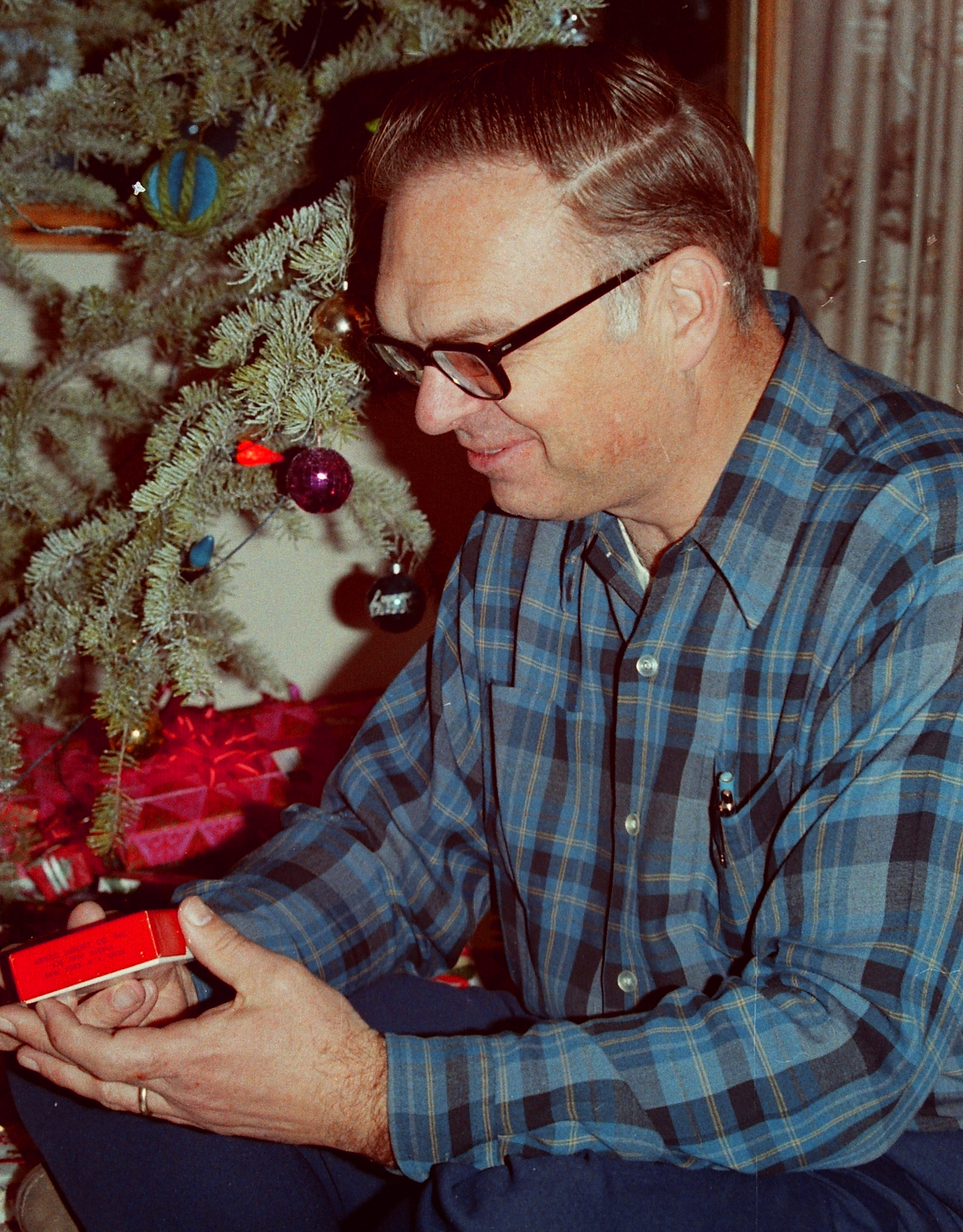
What could be blue in this small box? (Note blue pencil.) December 1971.
Today I'll wear blue to honor my father:
jeans, a perfectly medium blue shirt,
blue socks—and unlike him, I'll even
thread a blue belt around my waist
and my sneakers shall be blue. He
would not approve or understand
belts, shoes which weren't leather.
Such a cheery man! Why fixate on
blue, the color of sadness, brooding,
moping, the heart's coldness? Yet,
he painted his room blue too. When I
wanted to know him better, I would
open his closet, walk my fingers through
his clothes: blue, blue, blue, blue.
I remember when quite small his
'modern' patterned shirt, pink bars
set on black. Where did that man go?
Back then did he hide his blue heart?