Yards

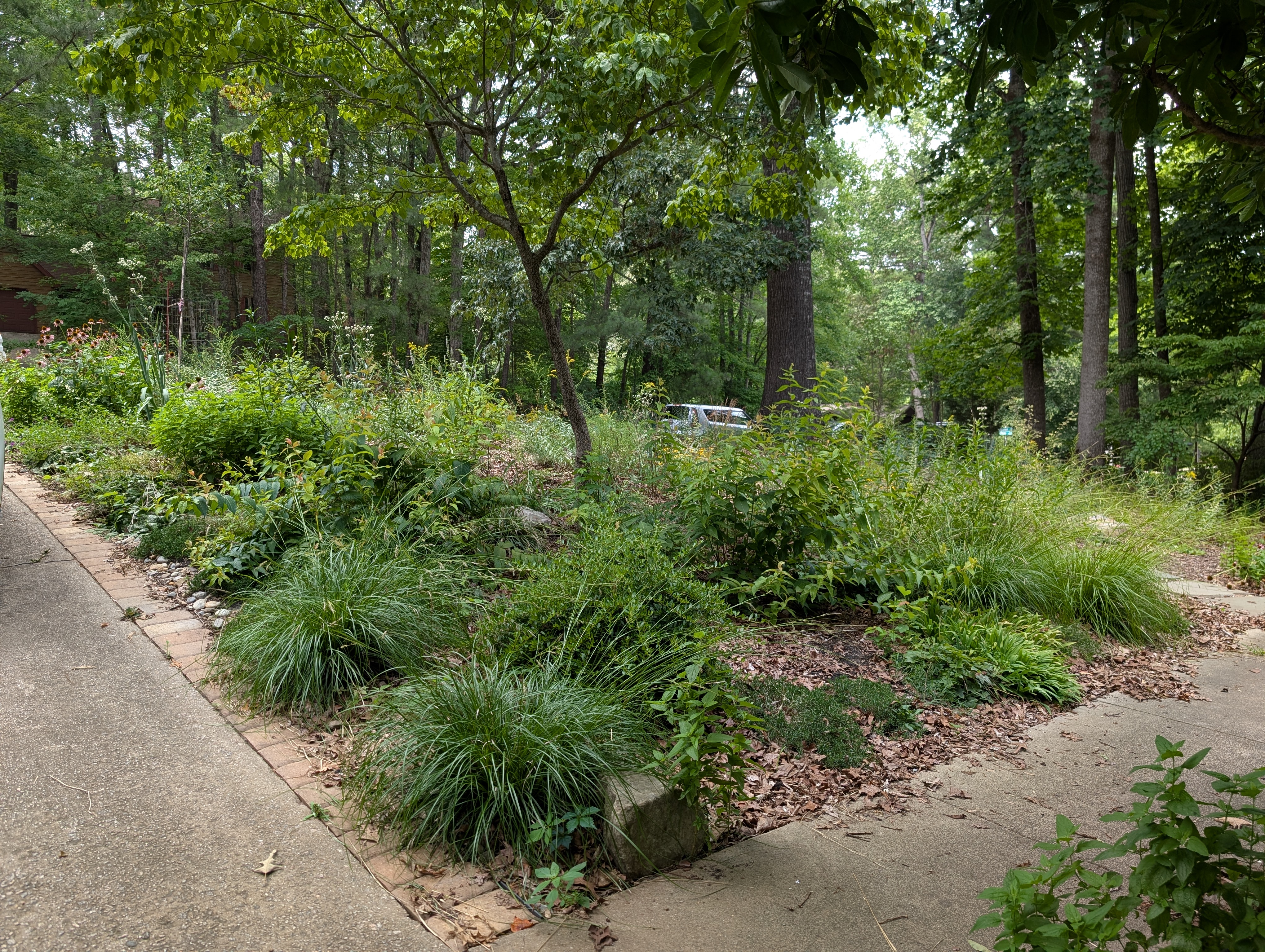
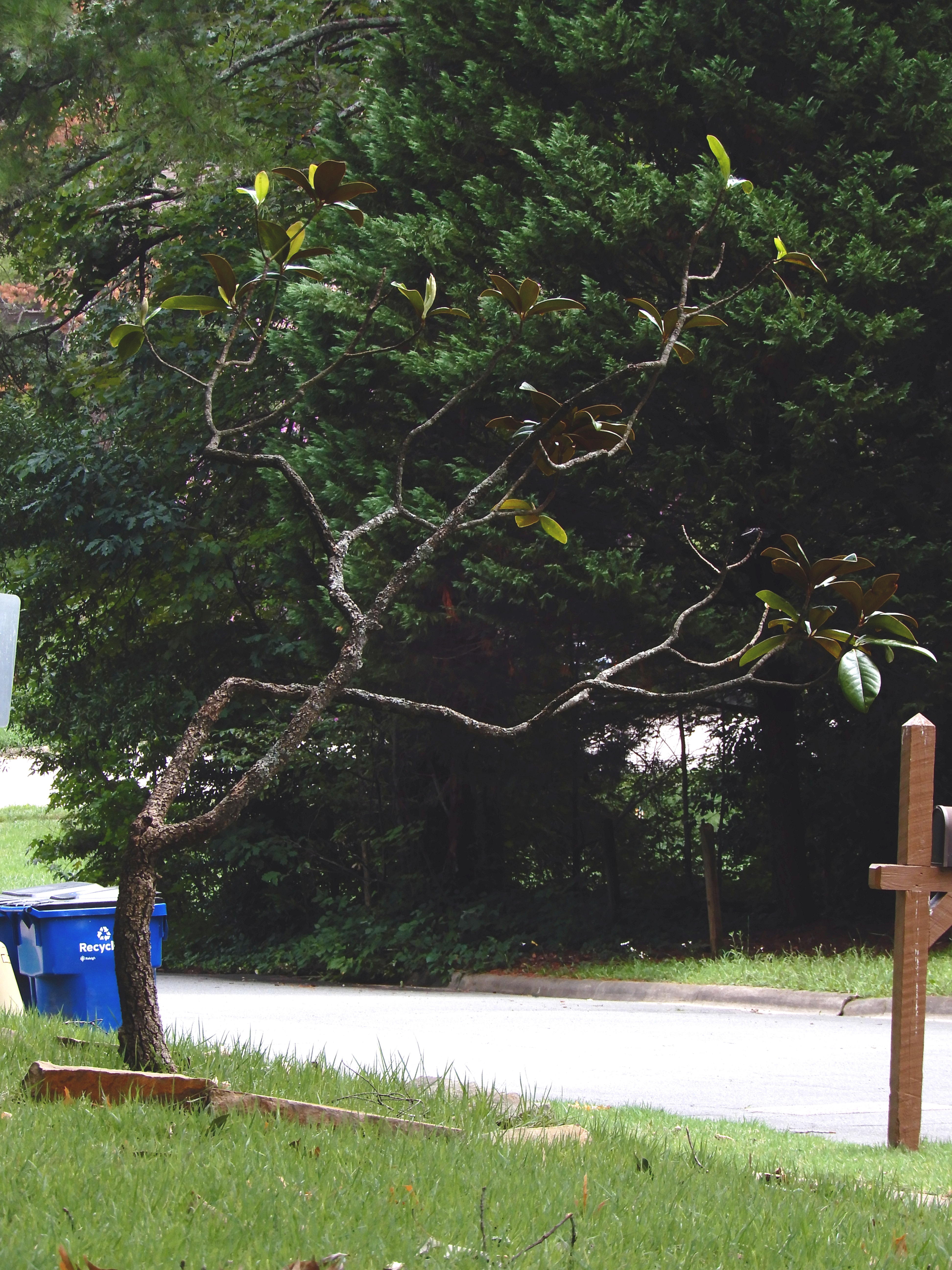
Our front yard. July 2026.
We live secret lives hiding
behind masks of mutual
pleasantries as we walk
our dogs, stretch our legs,
work quietly in our yards.
But these yards keep secrets
poorly. They reveal us to our
world more clearly than
we could ourselves.

Eastward my neighbor's
carefully curated lawn,
shrubs, flowers give way to
substantial but well-contained
wildness, trees, vines, anything
which chooses to grow there.
"He bites off no more than
chewable, this one," says
his yard. "He values order,
beauty, ornamentation.
His dogs bark freely—why not?
They come when he calls, they
serve him. Who needs more?"
I cannot see his front yard:
perhaps something deeper?
I think not; well-maintained in
back means more so in front.

Southward lies bare minimum.
Years ago, ten or more, she
planted irises 'round her
mailbox. Nothing else blooms, front
or back, which can be seen from
street or another's yard.
In back lies one small patch
of grass, some flowering trees.
Hidden deeply in vine-shrouded
solitude lurks her tool shed,
never visited, never needed.
Twice each month she brings
in mowers to keep her lawn
in check. She limps to deck,
to her car. I surmise once
someone else lived with her
who took more interest.

Northward lies ambition,
community, family. Just
prior to pandemic's pause,
its yard under new management,
benches appeared around
one fire pit. Party lights
dangled between trees,
firewood racks popped up
along their back fence,
which received repairs
inside one year. Next they
tore off rotten wood, remade
their basement, attached
two decks amazing for their
sturdiness, their beauty.
"When Jesus comes back,
those decks will still be there,"
he told me. No lawn appeared
in back after previous residents
let chained dogs wear it down.
Instead, frisbee golf came. Camping
gear occupied some space.
Everything about it screams
"Family! Friends! Comfort!"

Here? Our yard underwent
metamorphosis as I allowed
'natural' grass to grow unchecked
until I realized its invasive
nature. Then, shaggy
unkemptness gave way
to nothing-but-garden.
Its haphazardly located plants
reveal how poorly my dreams
get realized. Our back yard,
torn asunder by summer's
torrents, reveals how ill-
conceived our landscaper's
plans, leaving nothing but
soil to wash away...while
revealing my trust in what
others promise me. Now,
unwanted green strangers
laugh at me: "Go ahead,
pull us up! We have more
numbers, more patience
than you. We will prevail."
And so they shall. My yard
says, "Good intentions,
poor follow-through. Perhaps
some sense of romance."
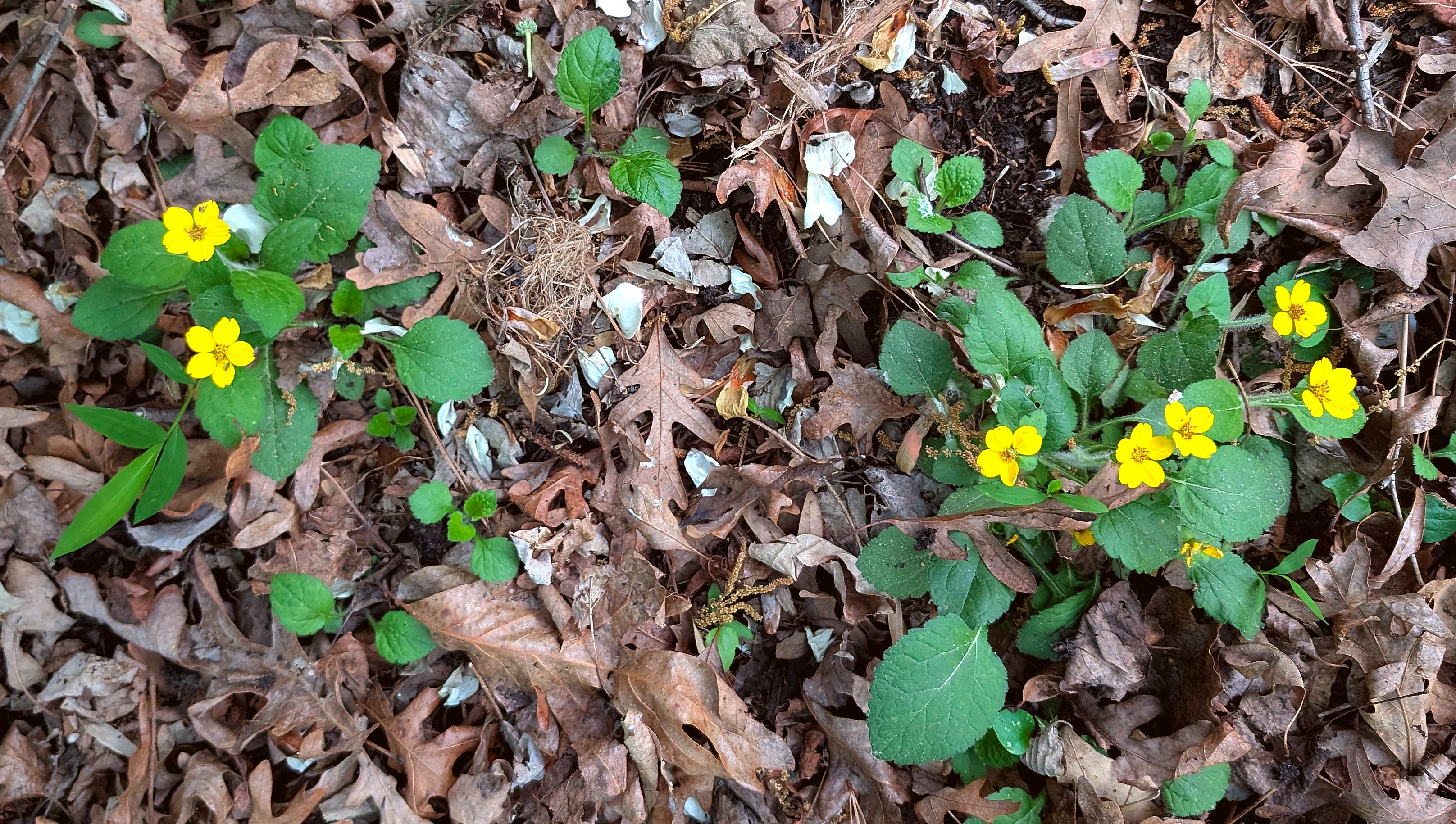
Green and gold (that’s its name) in our back yard. April 2026.

27/100

a mid-day walk

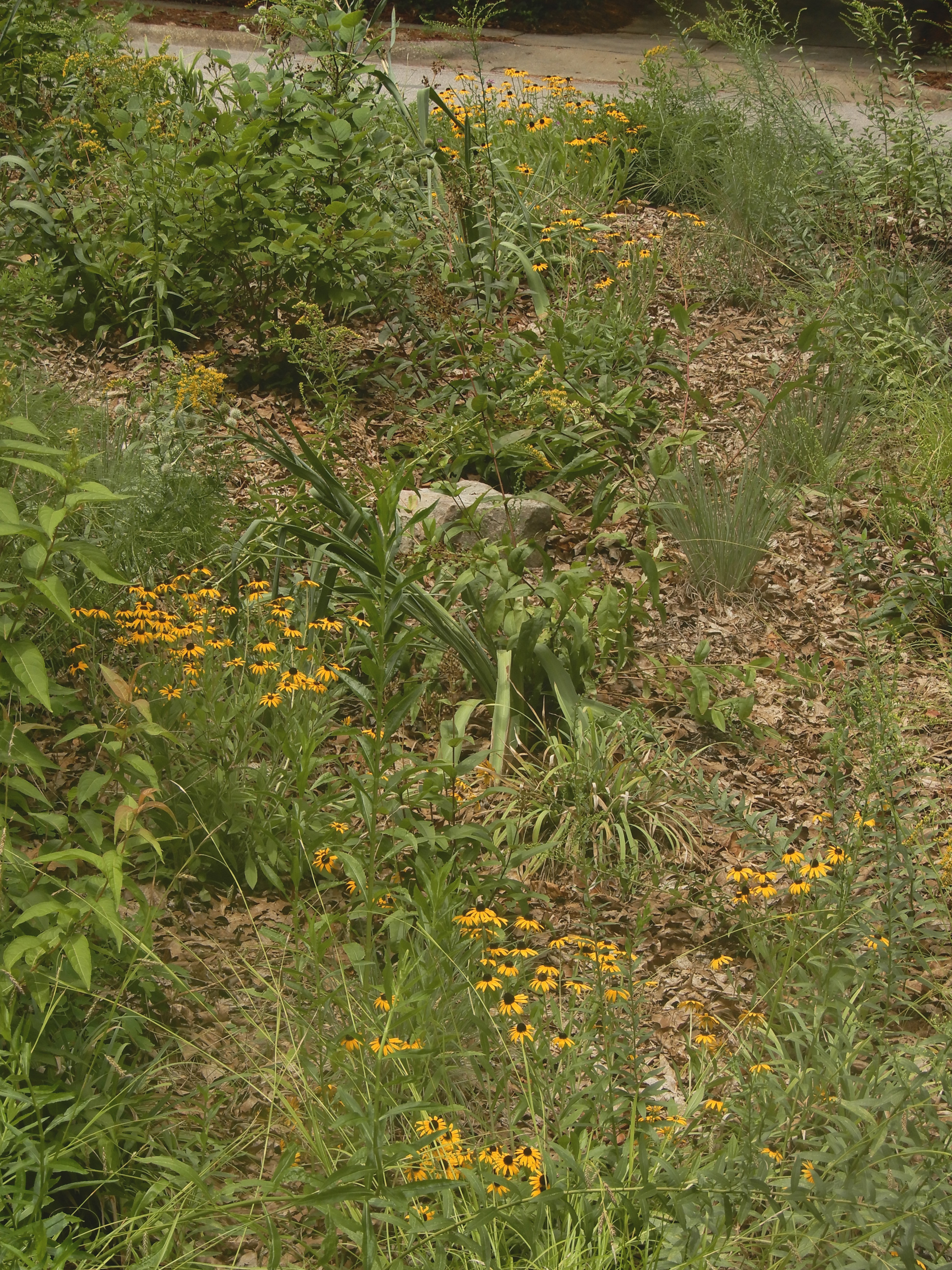
Every major city seems to have a botanical greenhouse where tropical conditions have been created to foster the growth of orchids, bromeliads, and such—or “July” as a resident of the American South might call it. I left just past noon today for a 25-minute sojourn around the neighborhood. When I returned, our weather gauge reported a temperature of 81.1°F and a relative humidity of 88.8% (now registering an even 89.0% 30 minutes later). Lighting was poor: completely overcast, the sun approaching its zenith. That’s okay. My poetry attempts have been poor today, also. This is my second try, the first being filed in the “maybe-it-can-be-saved” bin. This really isn’t poetry, more poetic prose, artfully arranged—unless it’s true what a friend said, that poetry is what I say it is!


Every Southerner learns gradual 
acceptance of sweat, wears loose
garments, overlooks each other's
spreading stains. "Only mad dogs"
indeed. Why walk now? Surely
my Fitbit will multiply steps
taken in such weather?

Escaping my climate-
controlled cocoon,
black-eyed susans cry
welcome. They're sprinkled
beside rattlesnake master,
goldenrod, butterfly
weed. Abiding our warmth,
humidity humbly, they
suggest I follow their lead.
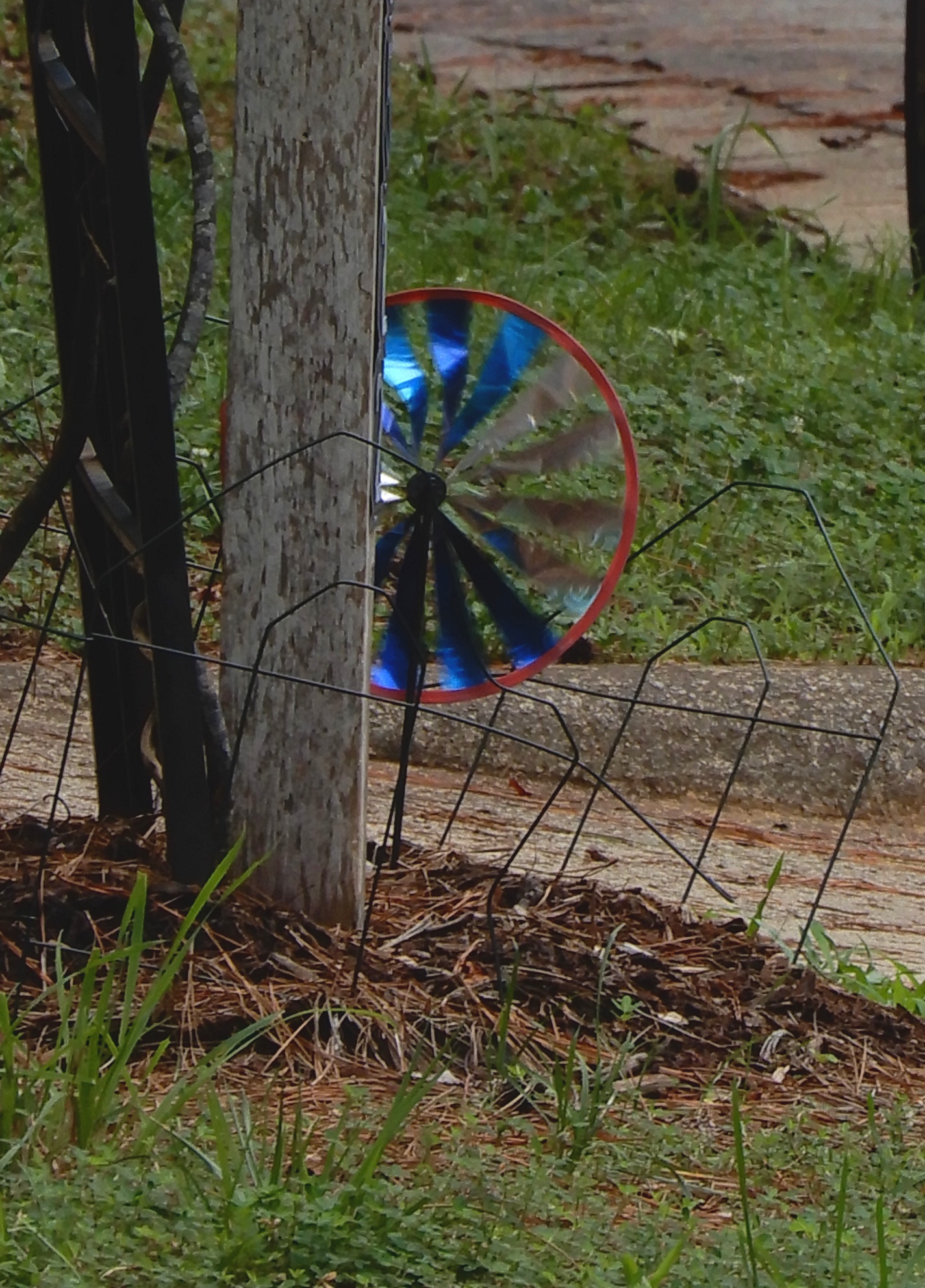
Minutes later brings one
patriotically-colored
whirligig, neglected,
spinning madly with each
new breath of hot air,
much like my country
does these days. Inured
to these new great divides,
I just see [whirligig;
patriotic
] as I pass.
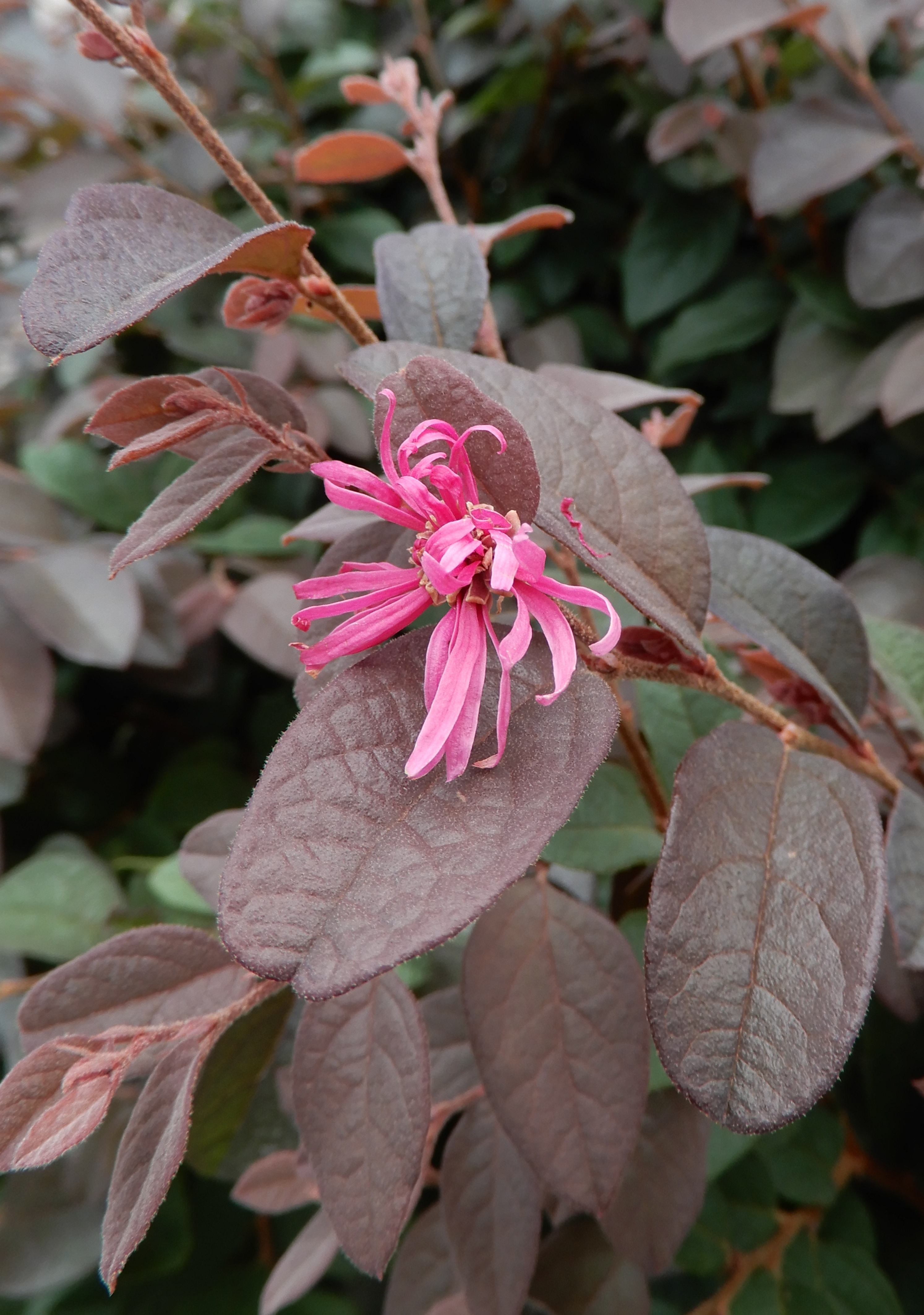
One neighbor's mailbox
decoration swings madly
with each puff of air. Its
caretaker keeps it small:
Chinese fringe flower
usually towers twenty feet.
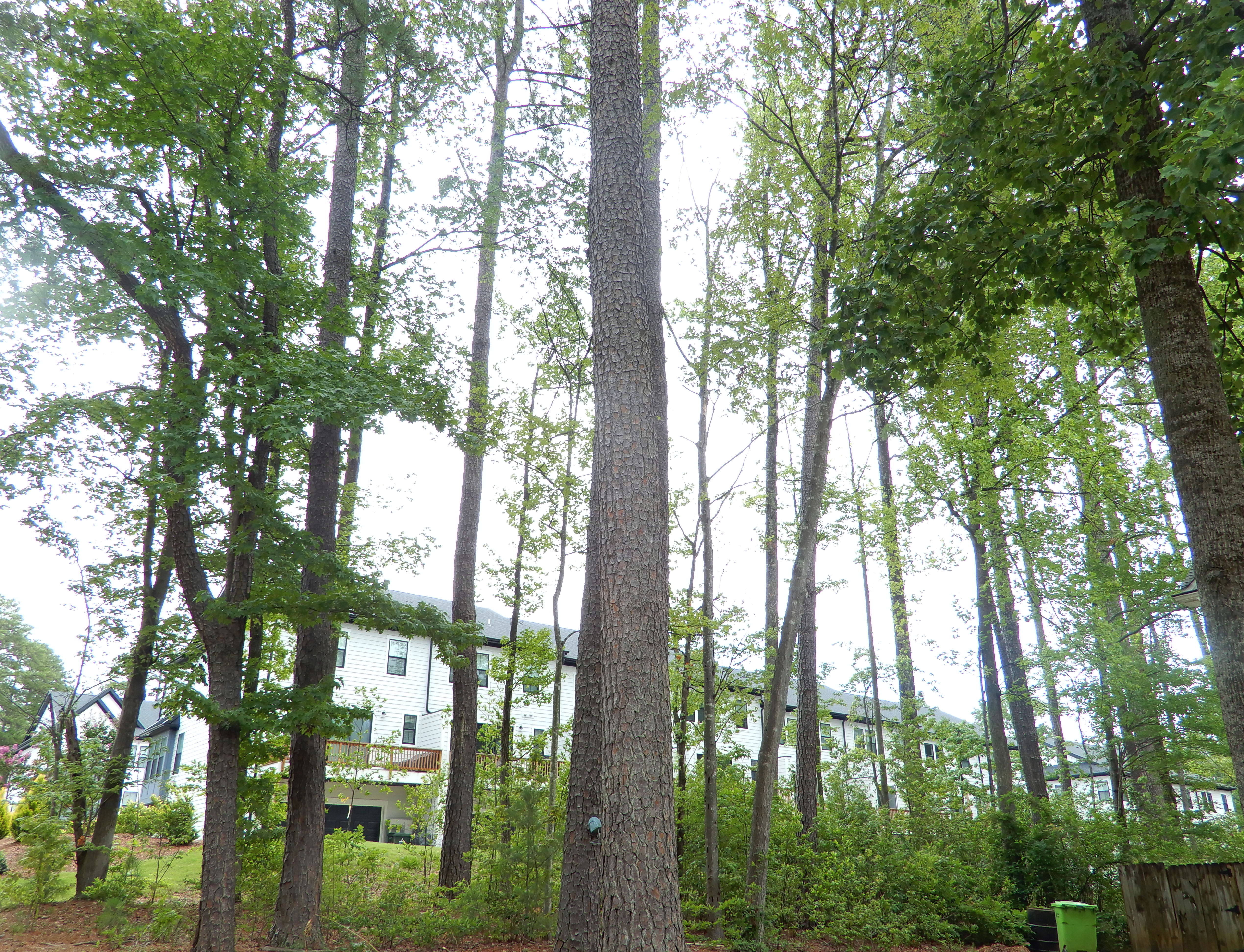
Where once I wandered scrub
woods (leftover nature long
subdued), newer years brought
townhouses, all units clad
in ubiquitous white,
(accented with charcoal trim!)
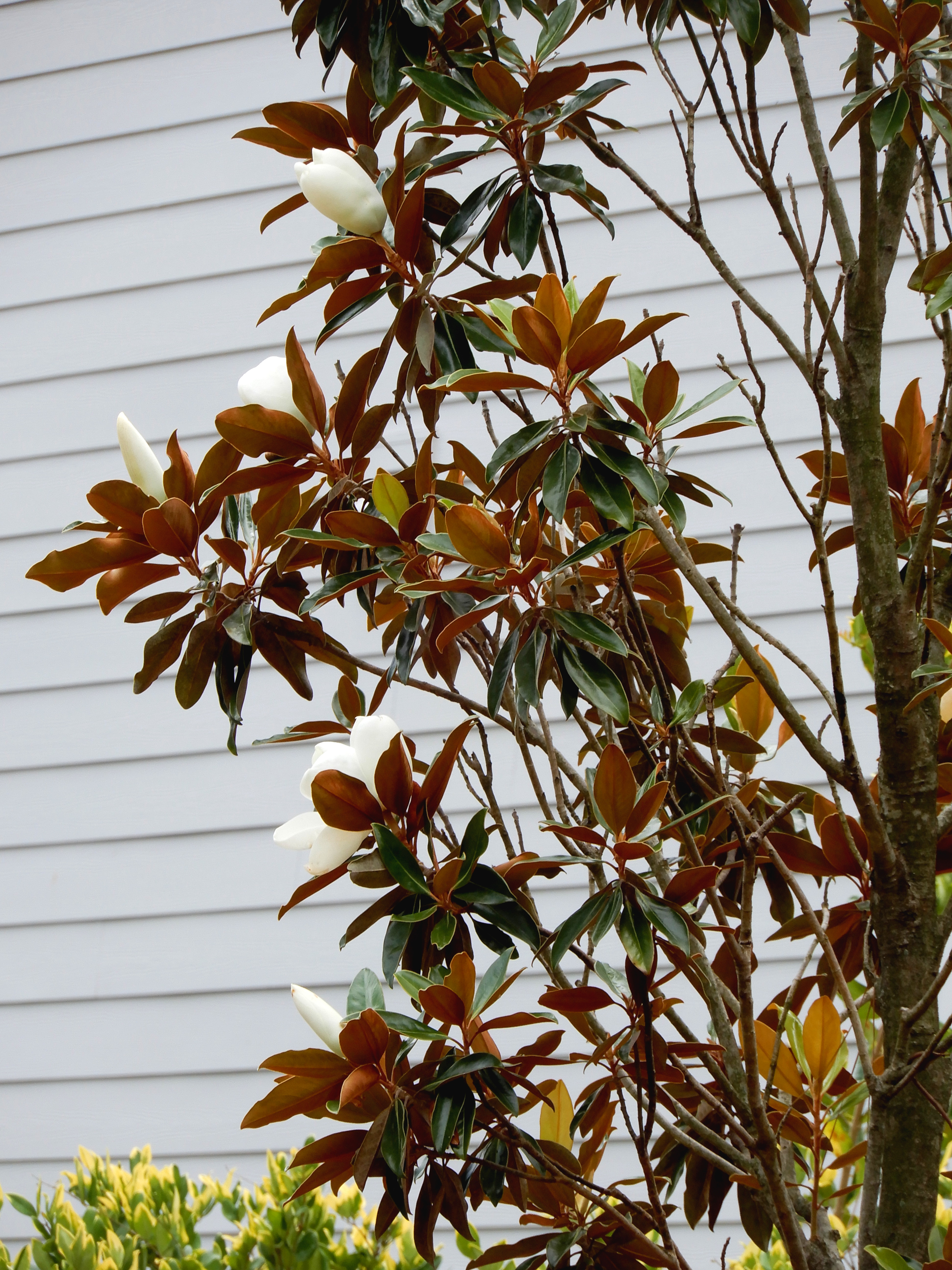
Townhouses get
young magnolias,
crafted ever-so-
perfectly by your
local nursery, while
everyone else
nurtures what
such abnormal
specimens become.
Headed homeward I give
friend Crow midday greetings,
reflect upon our tree-bound need
for vegetables in front
(sunlight dictates placement),
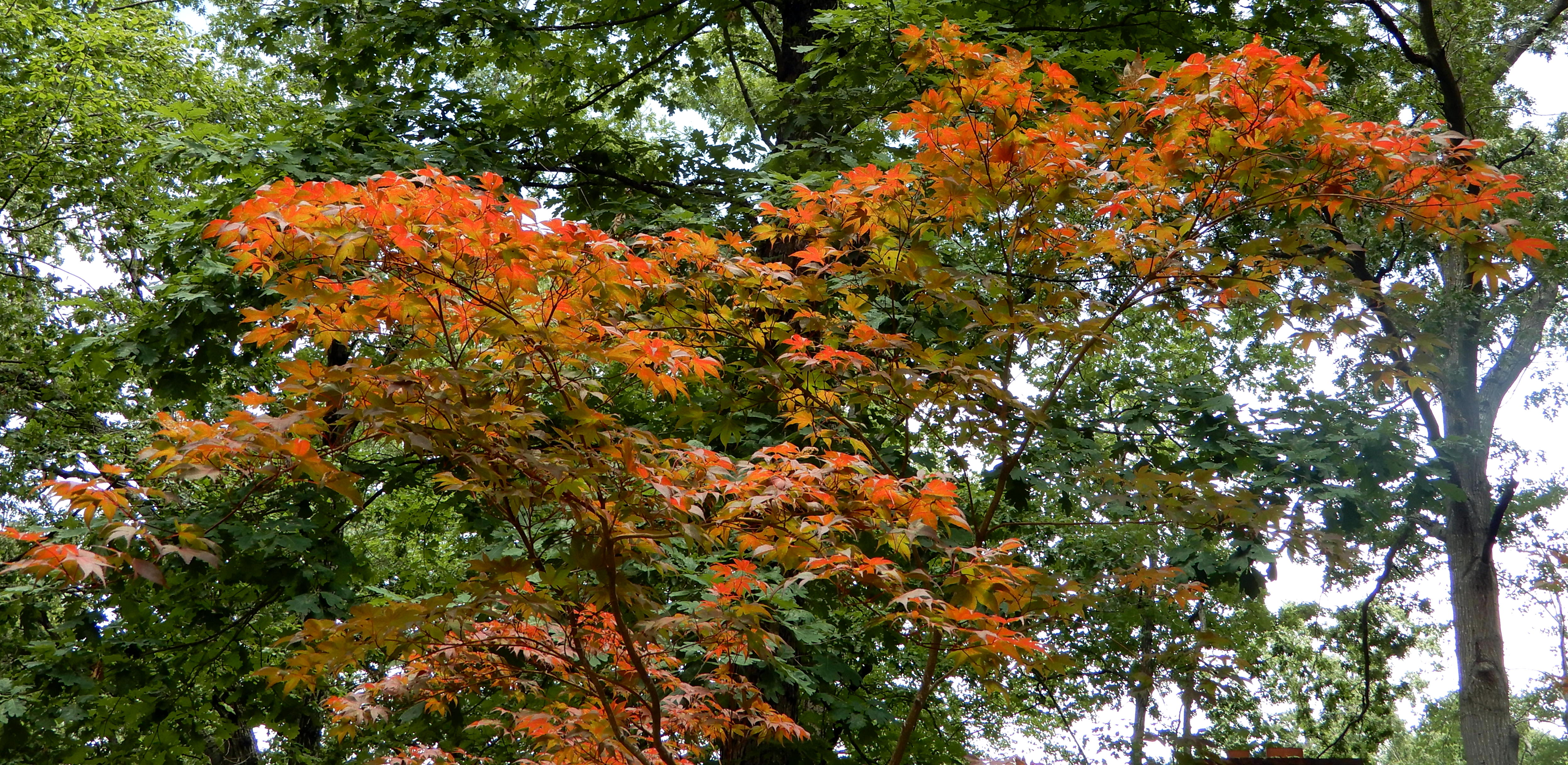
admire still-red maple leaves,
register my soaked T-shirt:
its limit of three-quarters mile,
exceeded by my four.

18/100

Failing, with photos

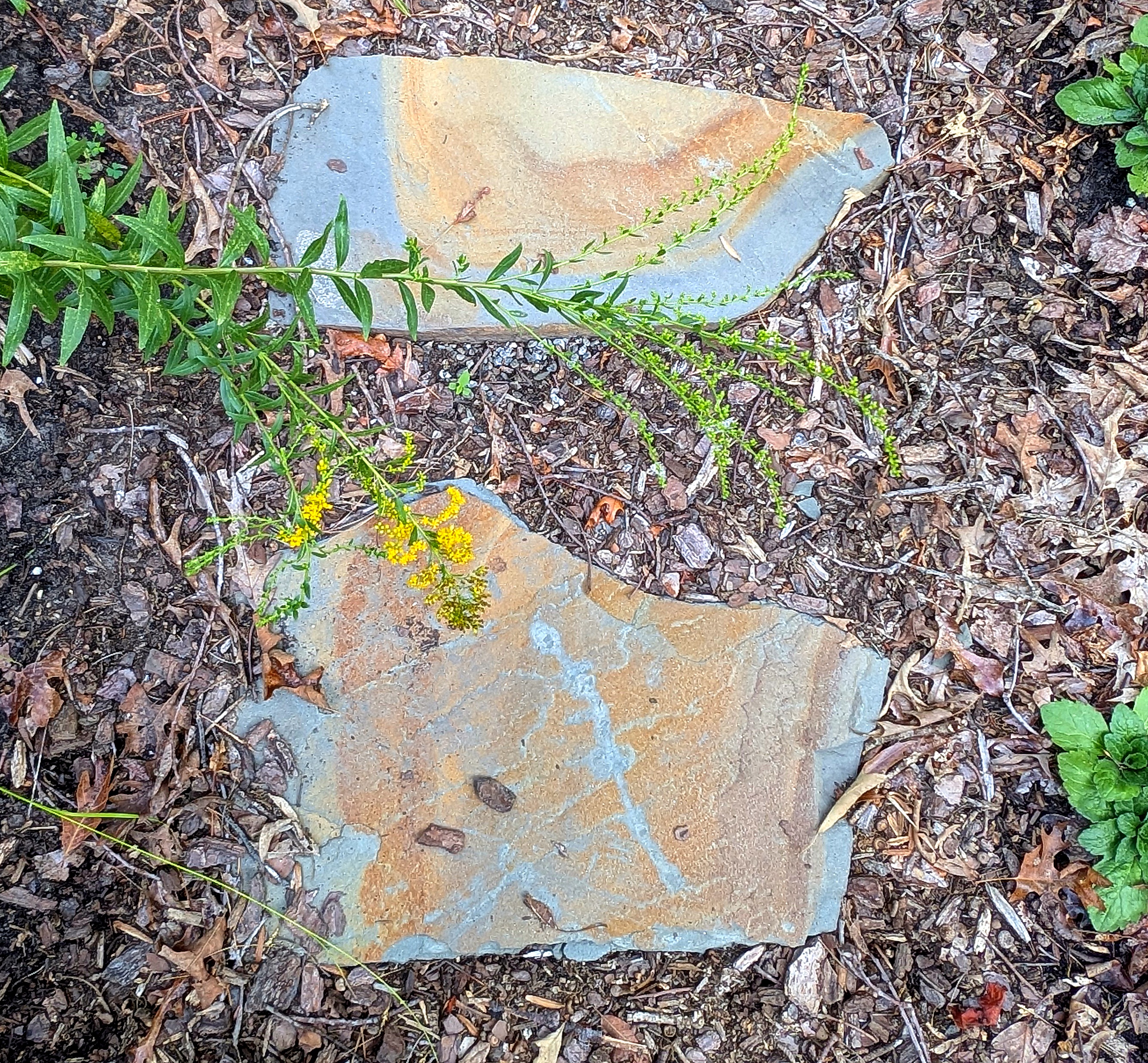
Front path, with goldenrod. July 2026.

I’m just not going to make a poem today. My brain feels so scattered, I think the only thing holding it together is my skull. Heat? Maybe. More likely the increasing difficulty with being older and watching the world change into something we envisioned only not like this. (non sequitur? no.) Life now resembles a city’s marathon, only you’re not in the race anymore, in fact, you’re not even on the sidewalk watching. You’re up in your apartment looking down and saying, “I wonder what they’re doing down there?”

In lieu of posting nothing, I took a walk around the yard.

Lovely, ubiquitous goldenrod. Prime suspect in my investigation into the dermatitis which has cropped up again. July 2026.
One of the few remaining non-natives. Couldn’t bring myself to rip out what amounts to a mailbox decoration. July 2026.
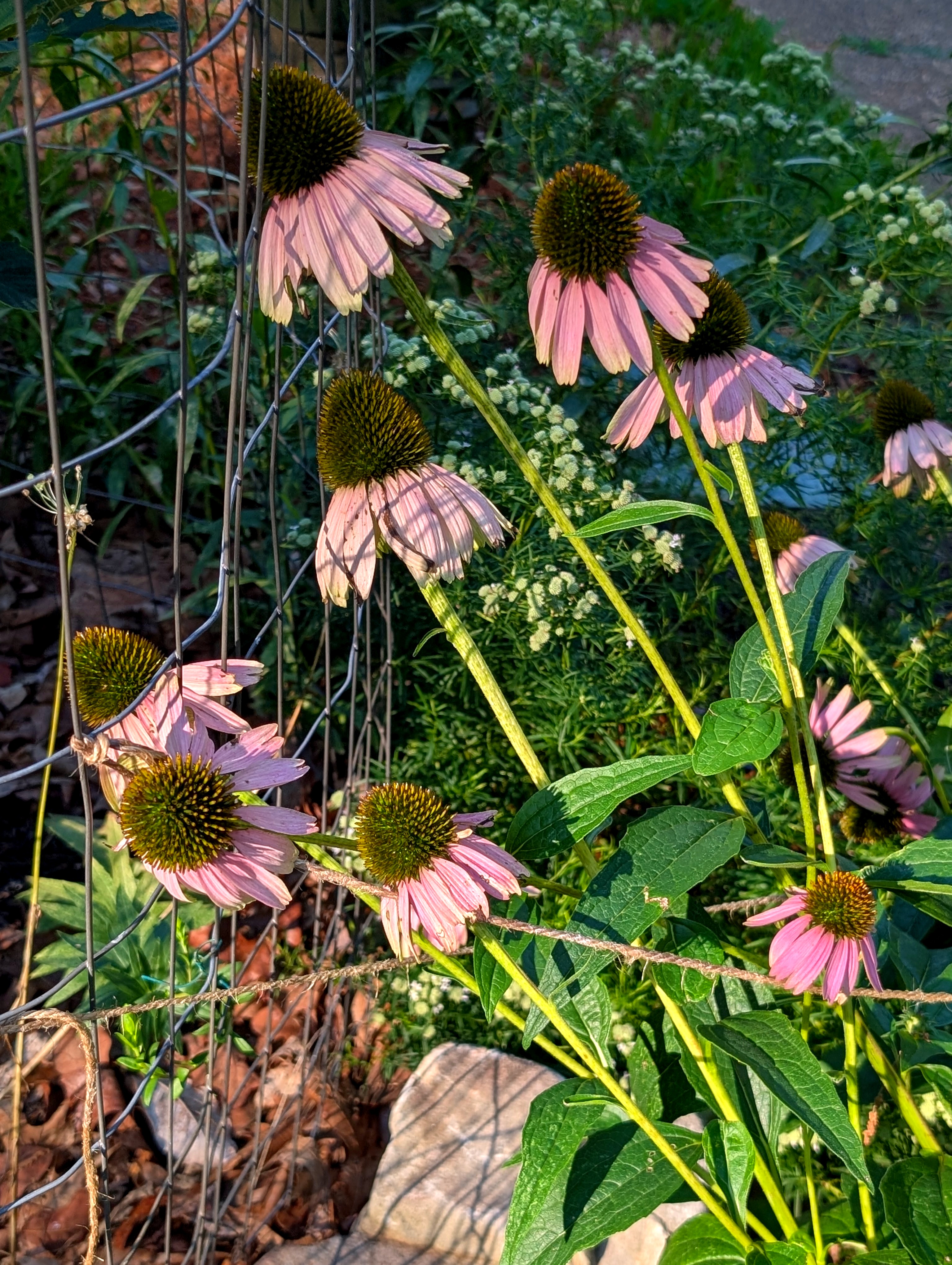
Our purple coneflowers typically droop starting this time of year, but pounding rain a week ago didn’t help. Good thing these guys were tied up beforehand. That’s mountain mint in the background. July 2026.
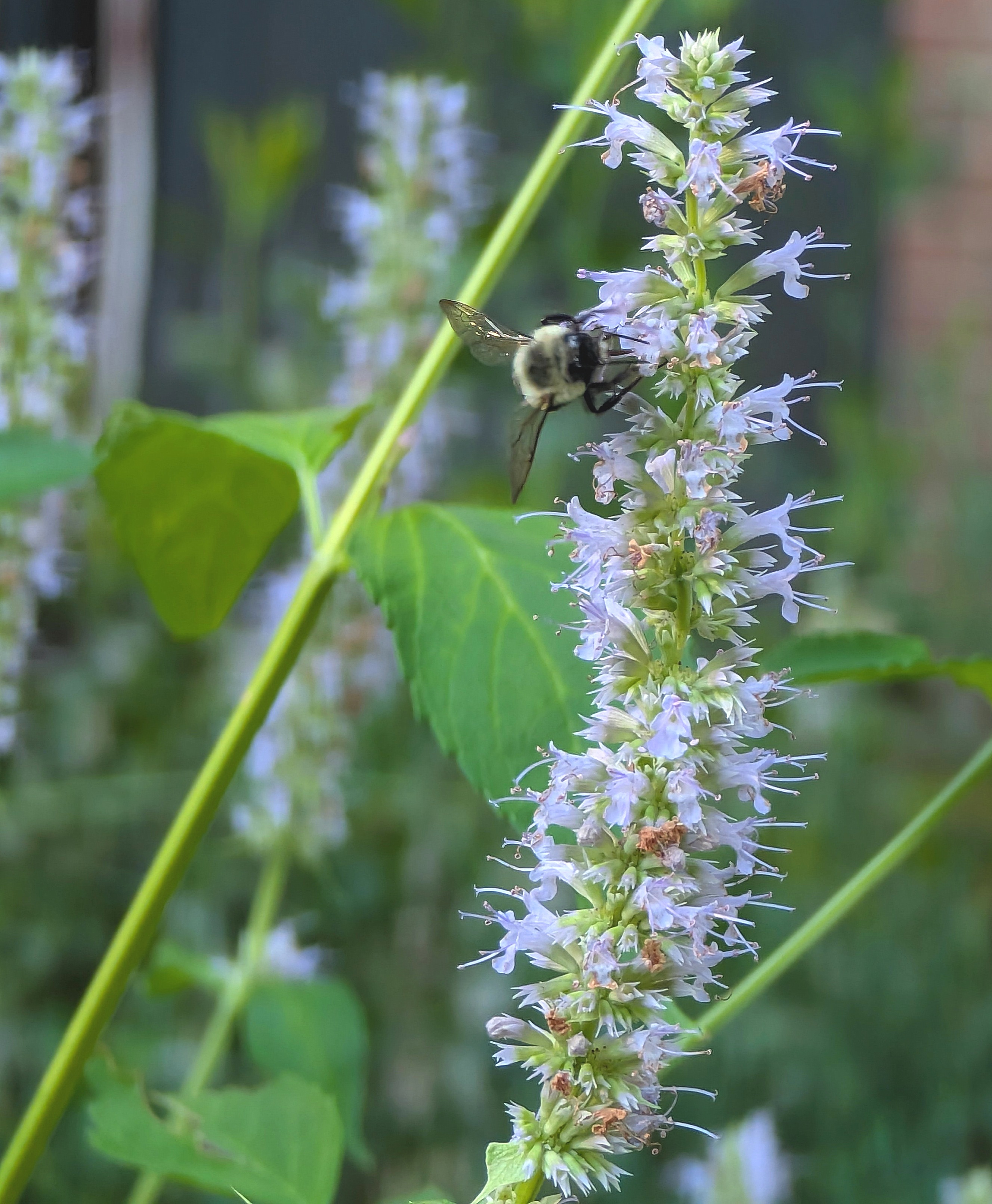
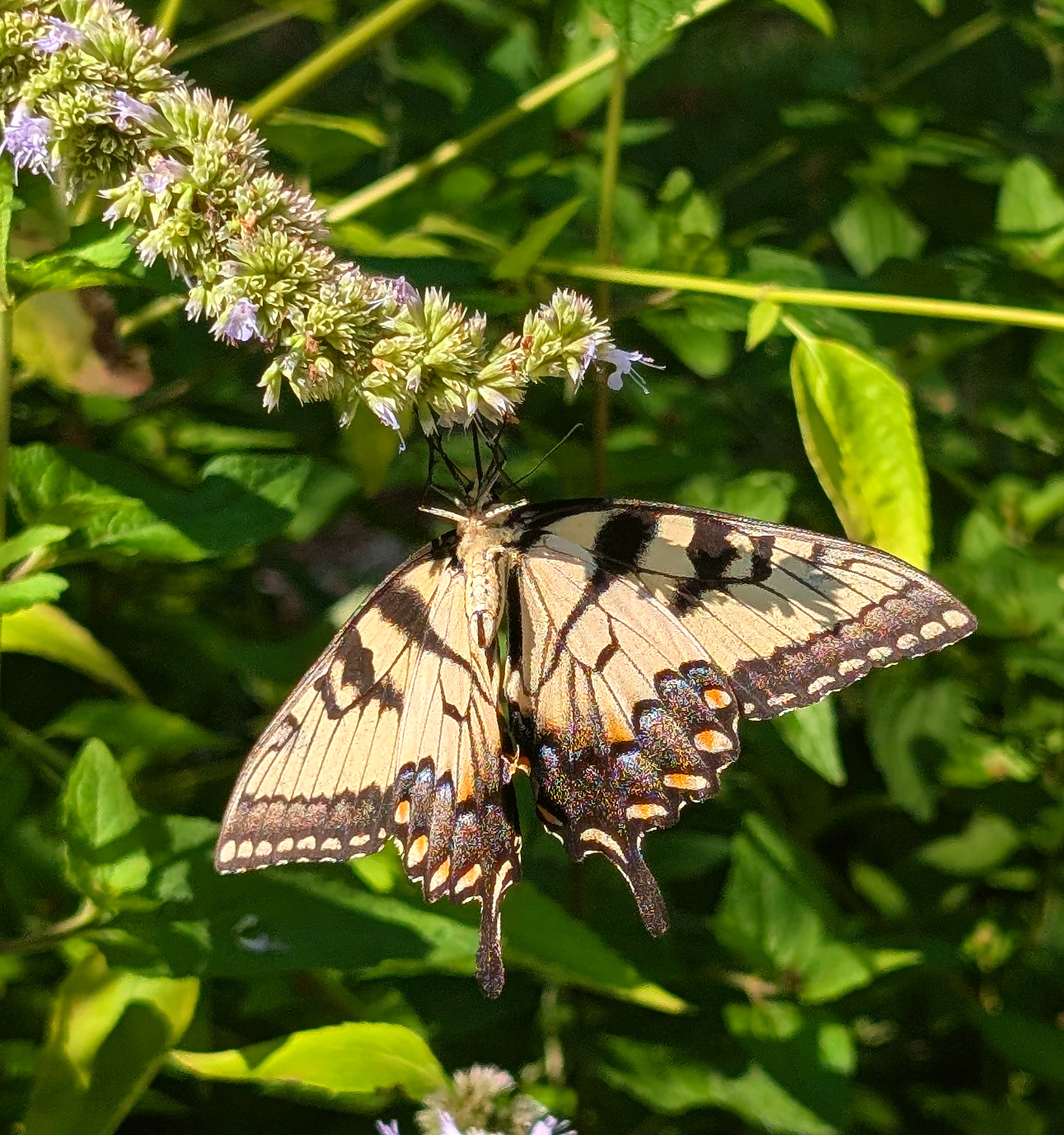
Our yard now represents a pollinator’s dream. Here an eastern bumblebee (I think) heads off for the next blooming sprig of anise hyssop. July 2026.
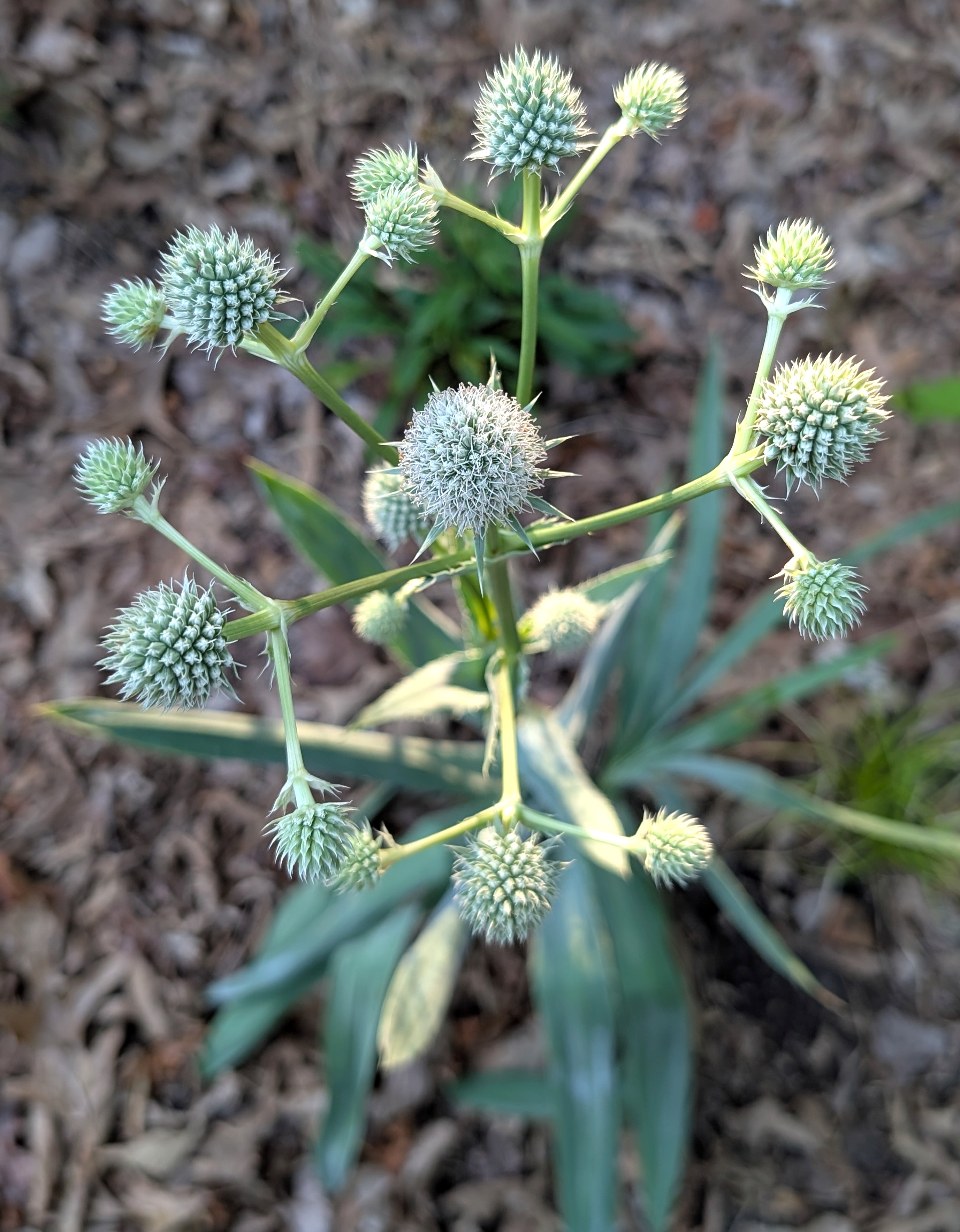
One of the strangest plants: rattlesnake master. Is it called that because of the thorned, sword-like leaves? Or the spiky flower-balls? It didn’t flower last year, nor did it come close to growing over six feet tall as it has this year. July 2026.

There you have it. Perhaps my melancholy intro will produce a poem later tonight. Time to get down to the pub.

The New Year (in the rearview mirror)

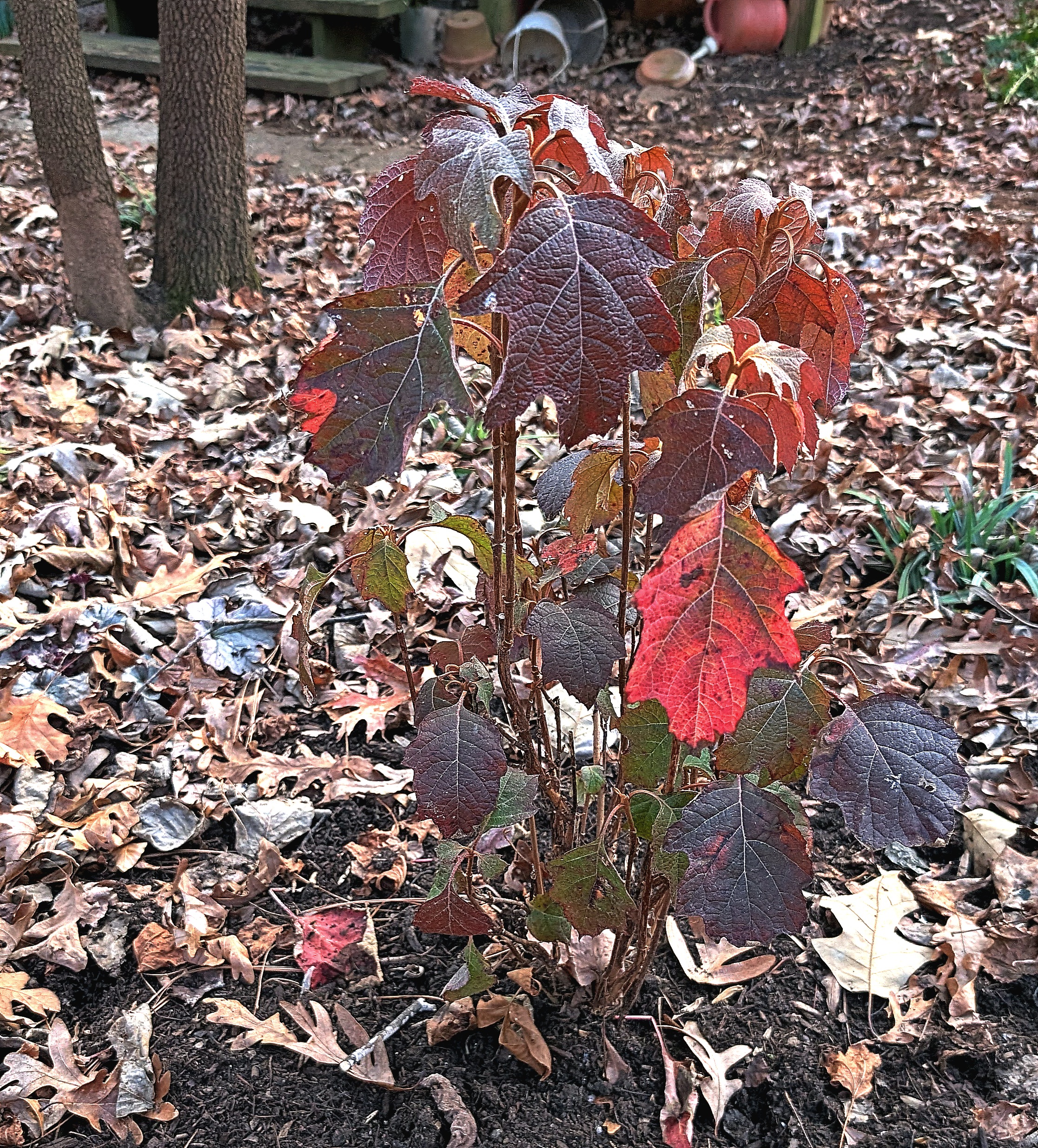
One of my favorite plants: an oak leaf hydrangea. We had several of these planted in our backyard to replace the one killed by the squirrels. It sat under our bird feeder, and the squirrels used it to attempt an ascent to said feeder. Though a hydrangea, the leaves resemble the shape of oak leaves and turn such glorious colors in the fall. January 2026.
My spiritual development received a boost, oddly enough, when my friend Dennis died in December and his passing was memorialized in mid-January. Every Sunday morning our choir rehearses in a small chapel off of our narthex, and in that chapel are lovely stained glass windows. We attempt to do more than sing; we attempt to listen to the words and the intent of the music so as to impart an inspiring message to the congregants. January 2026.
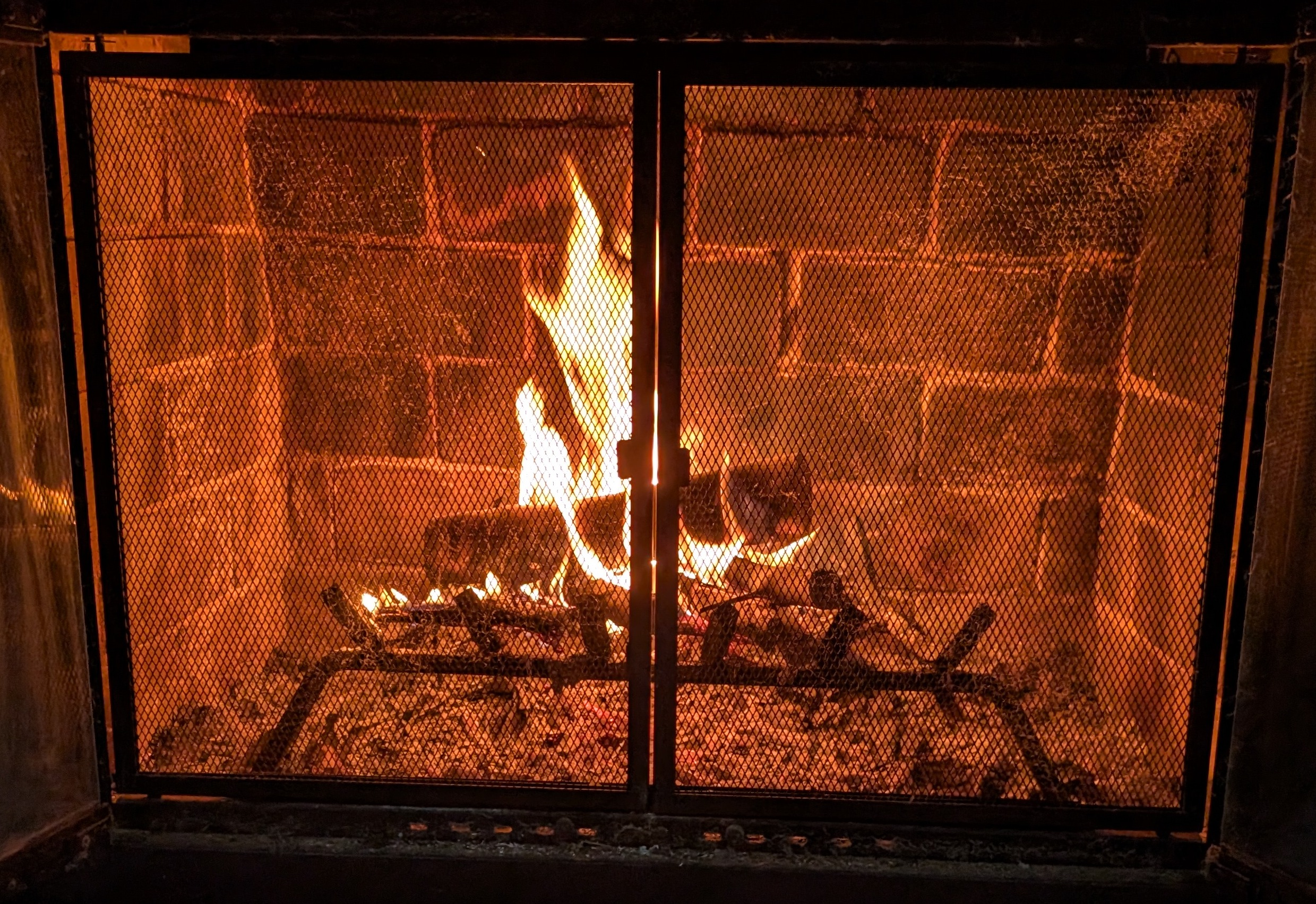
January (and February!) brought some pretty cold temps to North Carolina, and we warmed many a time to fires. An ‘illuminating’ moment with a friend informed me that I could be using the TWIGS IN MY YARD to start fires! I had laboriously been shaving slivers of tinder off of oak quarters, and the oak was running out. What a great life lesson! January 2026.
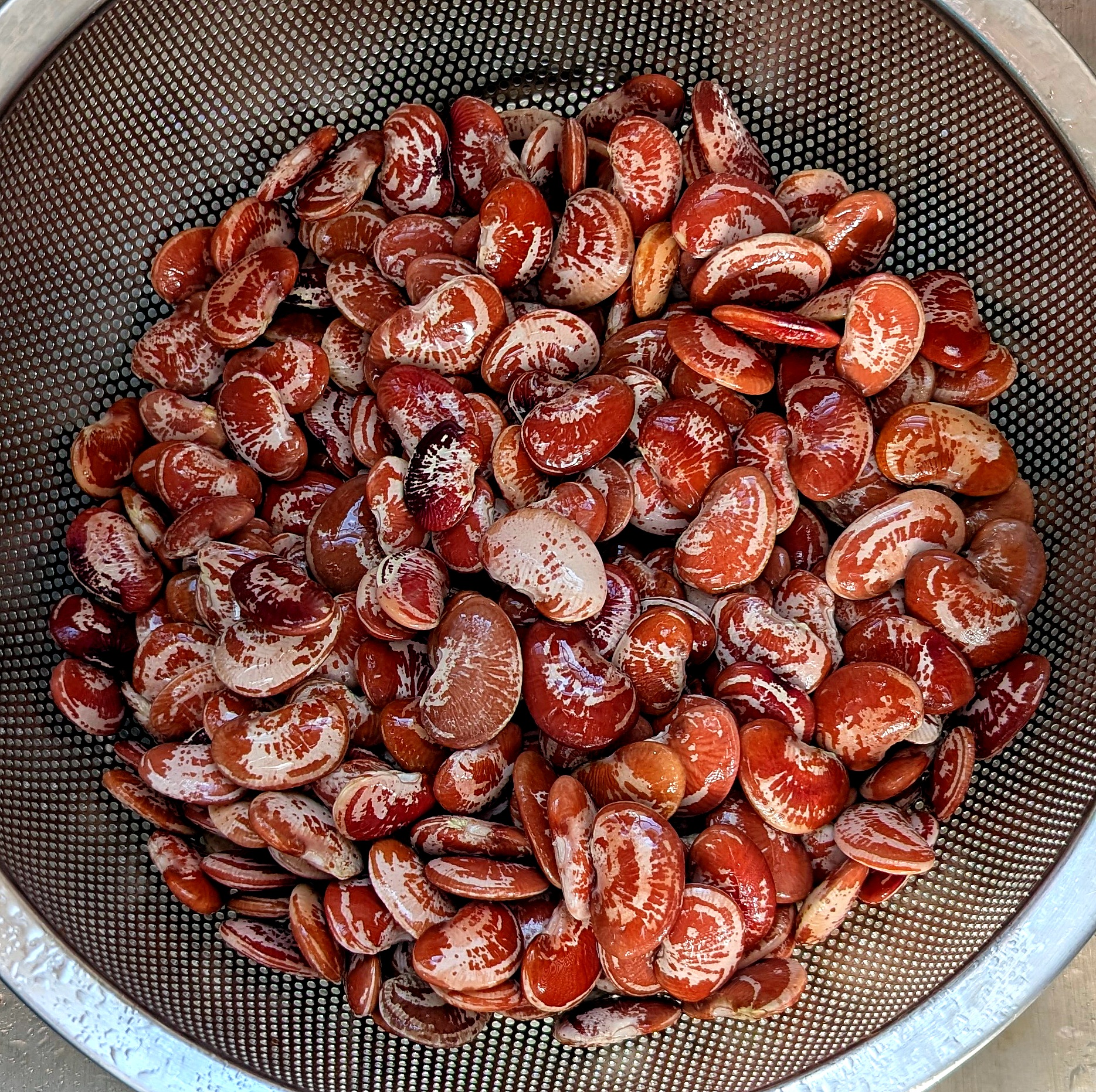
A spontaneous purchase from Rancho Gordo (please check it out if you like the taste of good legumes) led me to Christmas Lima beans. I cooked them on January 20th despite being in a fever from some weird viral thing that was neither Covid nor flu. When you soak the beans, you have to cook them. They found their way into a cabbage and bean soup, and more uses are planned. January 2026.
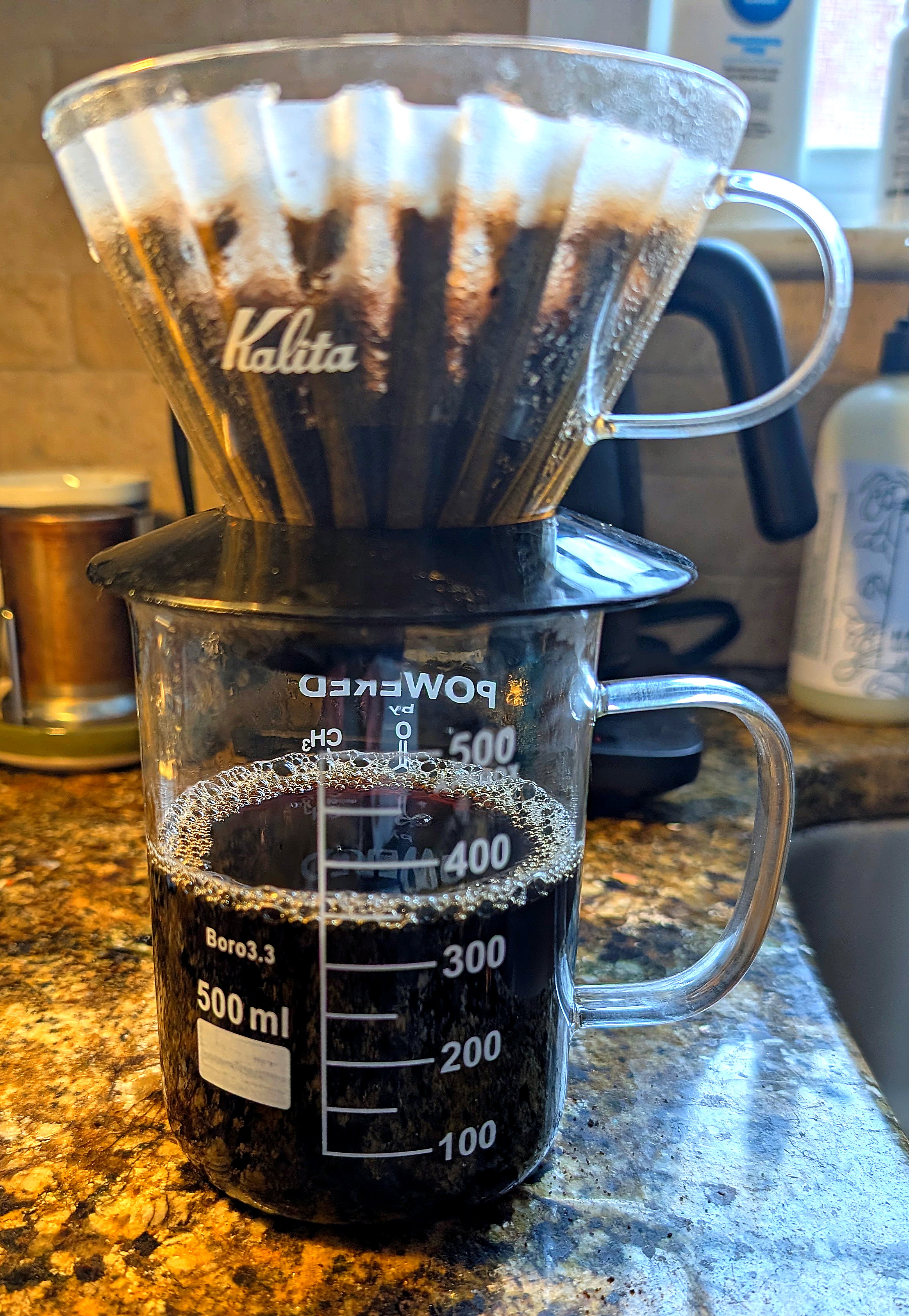
When the going gets cold, the cold get caffeinated: the morning ritual captured. Once in a while I use a more automated version (a Nespresso machine) but this is the normal routine. After being gifted this mug, I now have an accurate scale to tell me when I should stop letting the water drip through the coffee grounds. January 2026.
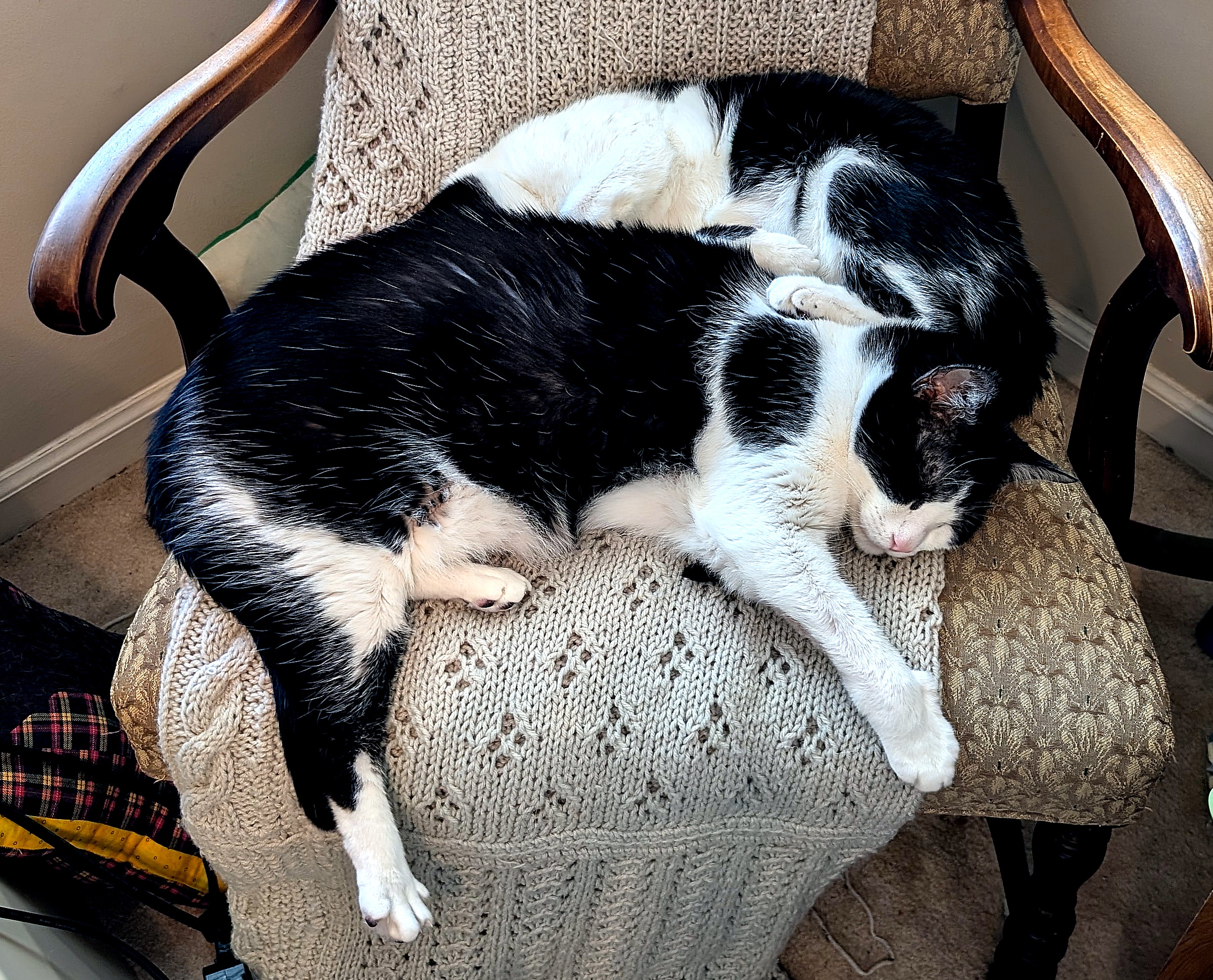
As always, cats know best. Hunker down and wait for spring. Benny might have thought he had the chair to himself (that’s him in the rear) but Charlie had other ideas. January 2026.

Today in the garden

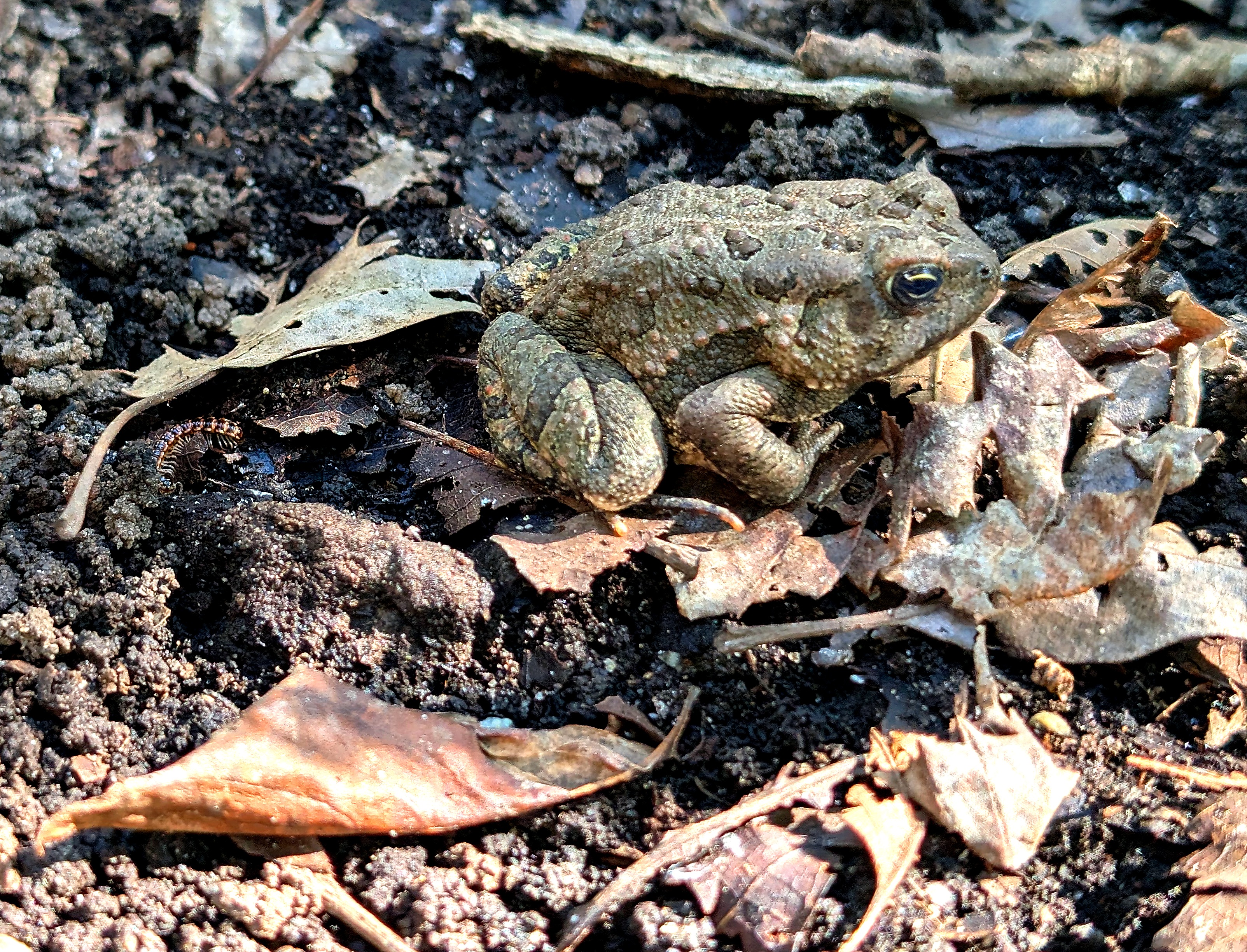
While weeding something moved, just a bit, and I spied this Southern toad. I haven’t seen one around this house since we moved in over 8 years ago, but saw them regularly at our former house on a pond. Pretty lethargic—it’s a nocturnal creature. September 2025.

One month ago today we woke in our own bed after flying in from Belgium the night before. Only now am I catching up to yardwork, which these days consists of staying ahead of the interlopers in our all-natives garden covering the front yard and hacking away at plants in the back before they can seed. Their days are numbered: two weeks from now we hope to start the replanting of the backyard. I question, at times, why we paid so much to plant perennials which should natively grow here but there ya go. A complete and pleasant shock has been seeing the blue mistflowers explode in size and coverage. These beautiful and late-blooming plants had for years volunteered amid the purple coneflowers I’ve showcased many times on this blog. Most of them were taken out to facilitate the new landscaping plan, but the architect of that plan instructed his crew to transplant as many as possible. Given that it was a week into October, he also sprinkled any seed heads he encountered. I think the much better soil helped them out a little bit:

This bank of blue mistflowers looked reasonably modest in size when we left for Europe on August 7, 2025. They’ve now taken over this segment of the yard, overwhelming several plants underneath them. September 2025.
Detail from a much larger photo of another bank of the blue mistflowers, showing how small flowers form much larger clusters. This photo is unretouched except for a slight amount of sharpening I added to see the flower petals better. September 2025.

I had to transplant two which ‘volunteered’ at the edge of the walkway to our front door and by doing so, obstructed most of the sidewalk. One withstood the shock and has many buds on it. The other has stood with severely wilted (but green!) leaves for almost four weeks. I keep telling it, “hang in there! You don’t need to bloom! Just live!”

Mild

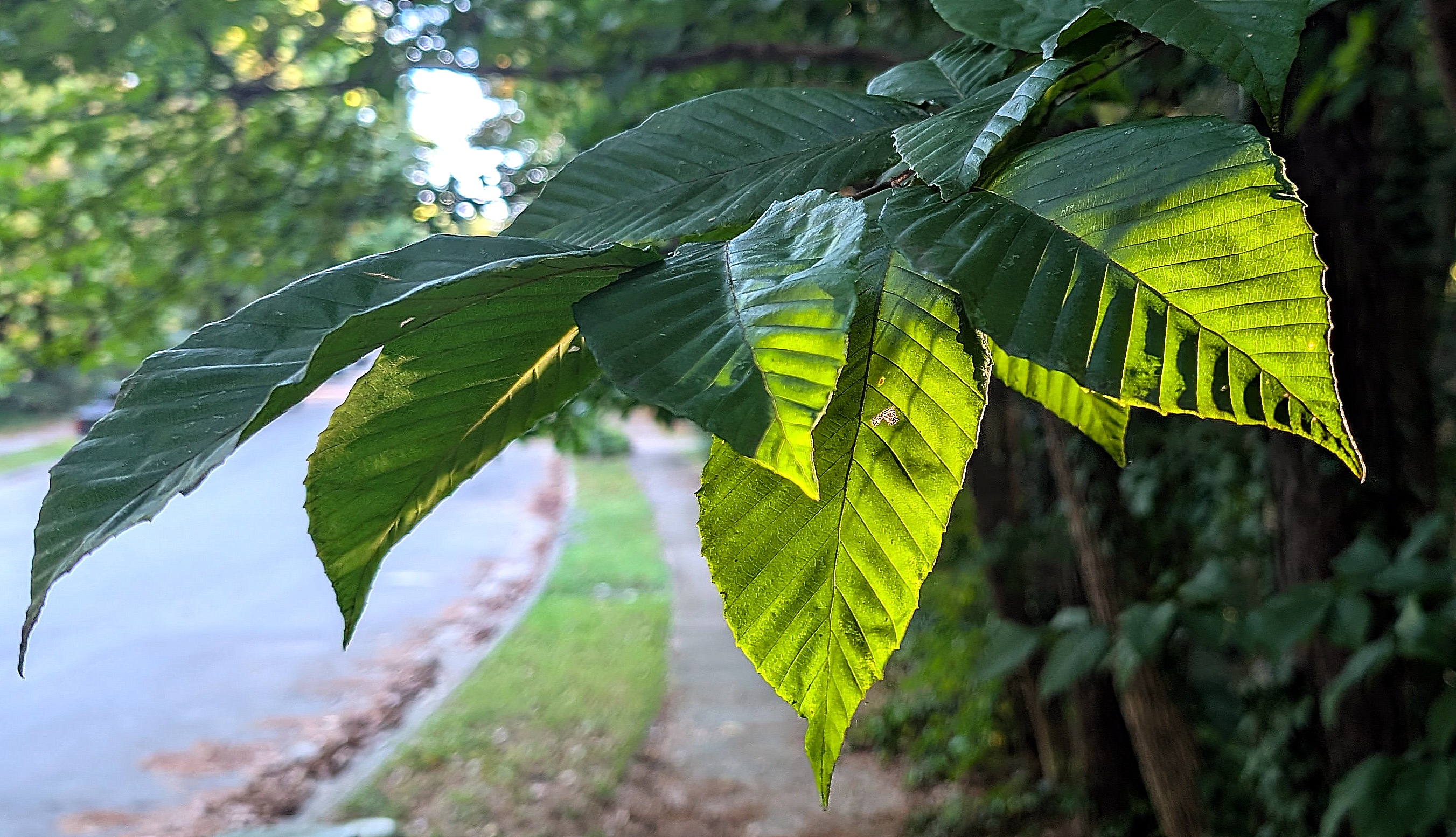
Morning sun strikes leaves of American (Carolina) beech–at least that’s what my plant ID app says. The temp was cool but not brisk around 8:00 a.m. September 2025.

Our weather this summer has been a bit topsy-turvy to me. June’s usual onslaught of highly humid, hot days which normally starts after my birthday on the 8th, arrived instead in the final days of May. July, a month that has seen weeks-long streaks above 100 was hot again but avoided the triple-digits. The official high temps, nevertheless, hit the 90’s every day but two, and we started to collect our normal rainfall (in fact, a little extra).

August, though, should have continued the hot weather and brought some brushes with tropical storms. Instead, the month opened with a high or 86, then 79, and high temps stayed in the 70’s six more days after that. We collected over 5.33 inches of rain in the first 11 days. The entire month easily bested our normal rainfall total 7.99 inches versus 4.71 inches. We saw the 90’s only once, on the 17th, when the thermometer got to 92 while we were in Belgium. The weirdness continued when the humidity broke weeks early—usually it’s the second week of September—and overnight lows descended into the 60’s and 50’s never to rise above 70 again as I write this on the 12th.

As mentioned, September normally sees the departure of high humidity and the extension of lovely days in the 80-85 degree range. Instead, we started with lows in the 50’s and high’s in the 70’s except for a four-day streak of 84-94. Things dry out in the rainfall department normally, too, with the usual rainfall being about two inches. We’re on pace for that.

Even the tulip poplars think it’s weirder. Normally they start to get stressed in July and drop a lot of yellowed leaves. This year, only a smattering fell then and continued through August. When the way cooler temps of September came, they acted as if we’d crossed the equinox, nights were getting crisper, and large numbers began to fall: not yellowed this time but a leathery brown. IT’S NOT FALL YET, I want to scream at them, but by most measures we are crossing that threshold now, not in early to mid-October per my observation of usual.

I had thought the broad strokes of climate changes meant an accented version of our normal curve: hot months would be hotter, cold months would be a little more mild, and we would see more rainfall here in the American Southeast. I did NOT expect we would just take all the normal readings, throw them in a hat marked “Your Weather,” and pull them out randomly!

At least the blossoms have come out on the roses of Sharon, but they are later this year. Contrary to the wishes of my native plants landscaper, I will not be removing all of these beauties, aggressive invaders though they be. (Honestly, they’re growing under a porch, behind the garbage bins, anywhere and everywhere.)

Rose of Sharon. September 2025.

Ninebark

Summer wine ninebark. May 2025.

This spring has been a joy, watching our newly planted front yard bring forth blossoms we’ve never seen before. The one above, about the size of a standard marigold, tucks in by the front porch. Demure, perhaps, but eventually it can grow to small tree height if not pruned.

Neighborhood walks

Every day walkers march past our house. They pass every ten minutes or so in the early morning, then dwindle. When summer brings 80+ degrees by mid-morning, accompanied with 80% relative humidity, “only mad dogs and Englishmen” will attempt a walk. Some walk to exercise dogs which have seemingly conducted a PR campaign to make sure every house has at least one. Some walk because they like it. (You can tell: they appear to be in good physical shape, they walk on a regular schedule, they seem to enjoy it.) Others walk because someone told them to–perhaps a doctor, a spouse, their conscience, a good friend, or one of the ubiquitous self-help gurus on the internet. We suspect one elderly gentleman walks three times each day to regulate his blood sugar. My father-in-law did that for many years, and managed in that endeavor to postpone insulin shots for more than a decade.

For several weeks I’ve joined them on this circuit, up and down this short stretch of street, oddly reminiscent of a treadmill laid out in a short course of concrete. I’ve learned by leaning into this as a practice (as opposed to “an exercise program”). Sometimes, I walk more slowly, listening to my muscles, my fortitude, walking within the boundaries of what is possible. Sometimes I push my pace exuberantly, reveling in my ability at 70 to suck oxygen into my lungs quickly enough to maintain this rapid pace, thrilled that EXERCISE can still be a part of one’s life.

Today I melded the two, yielding to an inner desire to go slower, not for physical reasons but to focus on the incremental occurrences which blow by me normally. Today….

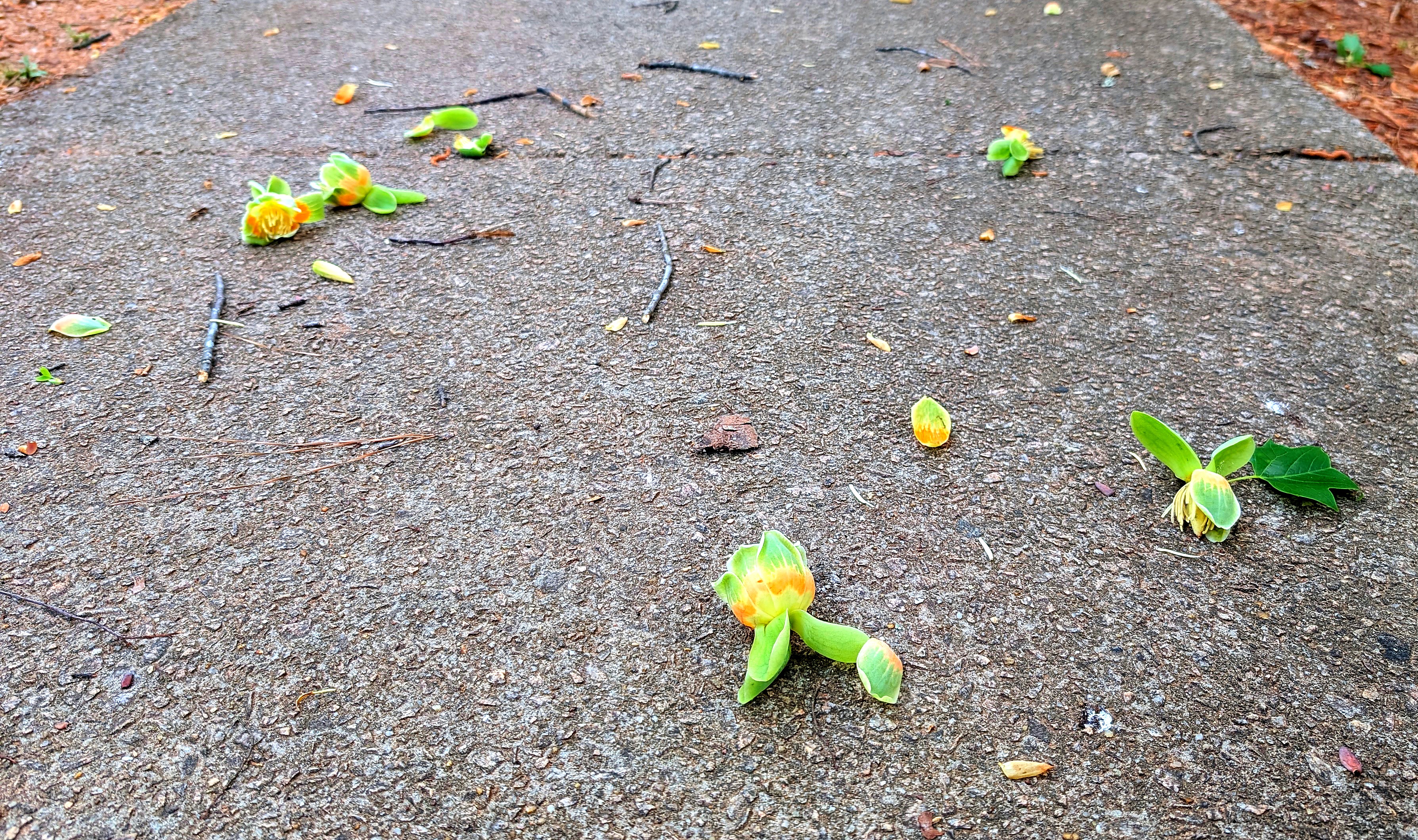
I noticed how rapidly tulip poplars have dropped their blossoms. Apparently a quick flowering gets consummated as rapidly. Their flowers no longer being necessary….

Tulip Poplar flowers. Raleigh, NC. April 2025.

It’s trash day and with it, yard waste pickup day. Reflecting the beginning of the spring/summer interface, we see sights such as these…

Overfull yard waste containers. Raleigh, NC. April 2025.

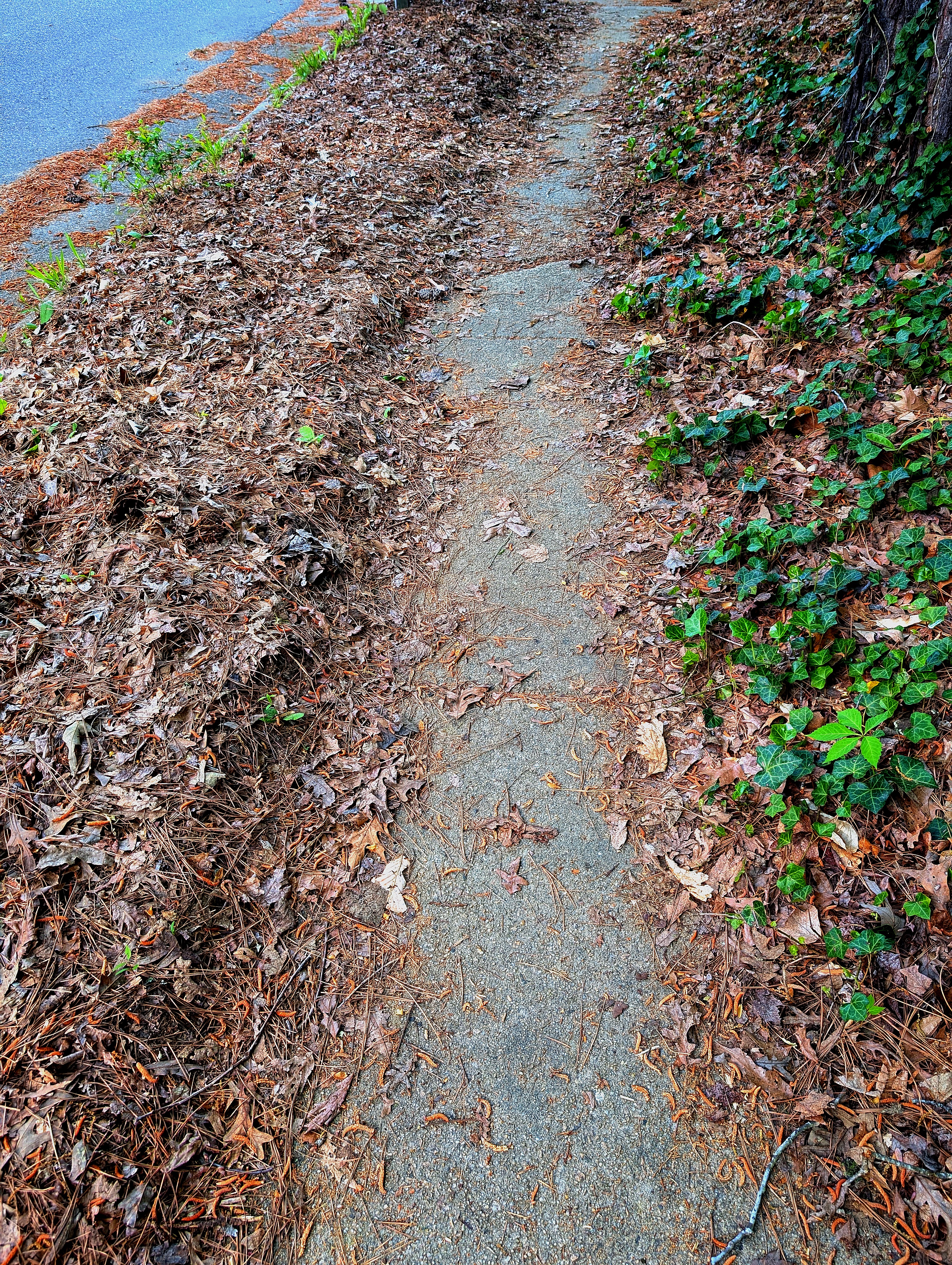
Circling at the block’s end, I encounter my across-the-street neighbor’s sidewalk. Older than me, quite likely in his 80’s, he maintains his large corner lot minimally. Those of us who pass make our own paths through the accumulation of leaves he does not clear:

Spring in Raleigh, NC. April 2025.

Many sights beckon, but one cannot stop every few feet to snap photos. (Not if one desires to arrive home and brew tea before one’s spouse arrives at the kitchen.) At the “modern” end of the three-block length of our street, where a developer with more cachet than aesthetics decided “hey, a boulevard would be nice,” said boulevard is filled with ornamental trees which have no right to be here. This is a Chinese snowball tree, on the backside of its blooming peak:

Chinese snowball tree. Raleigh, NC. April 2025.

One of the delights of continuously walking a circuit lies in encountering familiar sights suddenly made new. How does one walk past a plant daily without focusing on what it is? Suddenly it blooms, saying, “Take notice! Look at me!” I did not use my plant identification software on this, and I don’t know what it is. It looks rose-like, but obviously it isn’t. A mystery to be solved for another day:

A plant. A beautiful plant. Another day. Raleigh, NC. April 2025.

And one notices the fire ants have established many beachheads in the sidewalk crevices.

Fire ant colony. Raleigh, NC. April 2025.

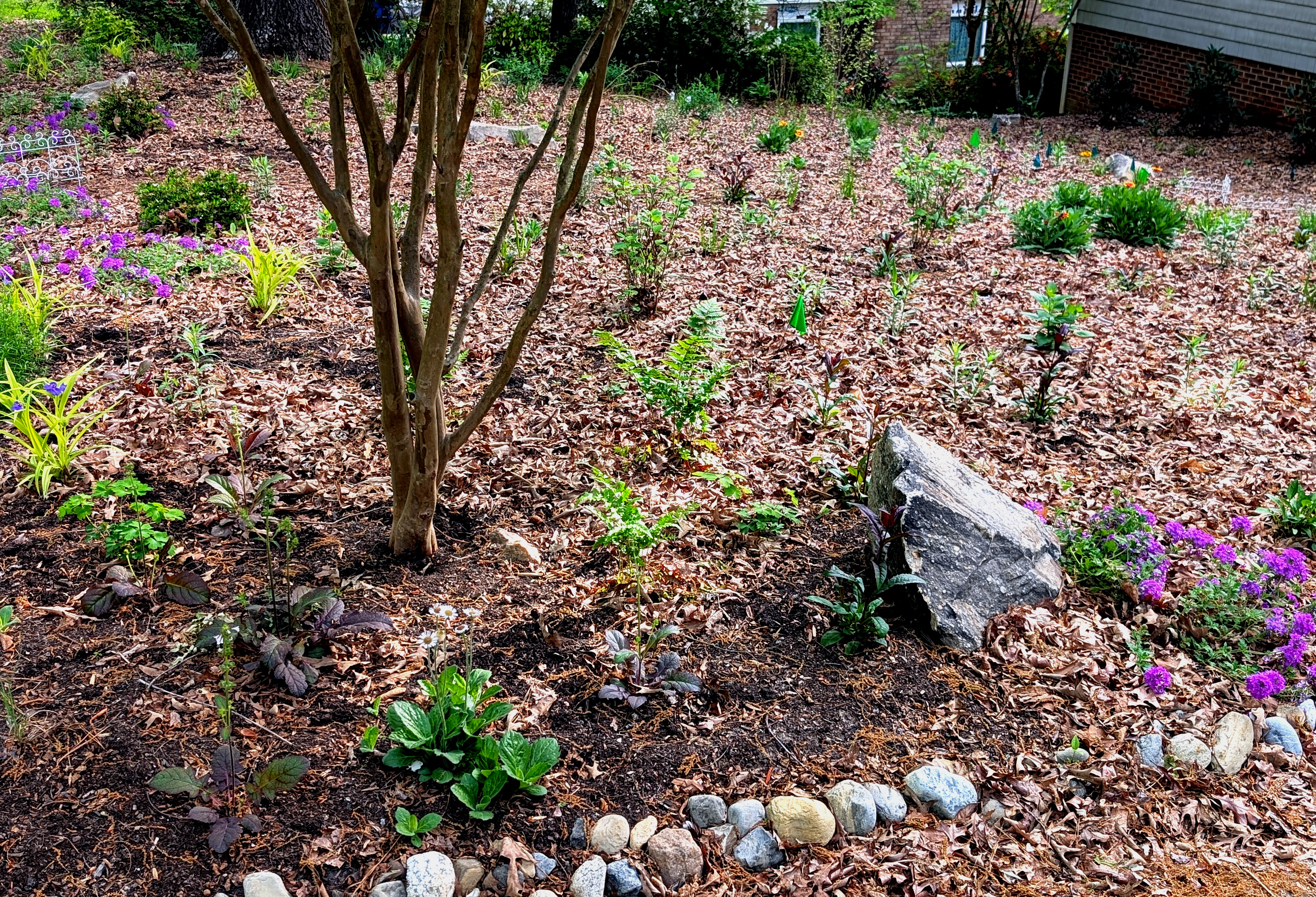
Finally, arriving at the start point, one marvels at the stark contrast of a natural environment composed of native plants that have flowered vociferously in the past weeks.

Our front yard, six months after its installation. Raleigh, NC. April 2025.
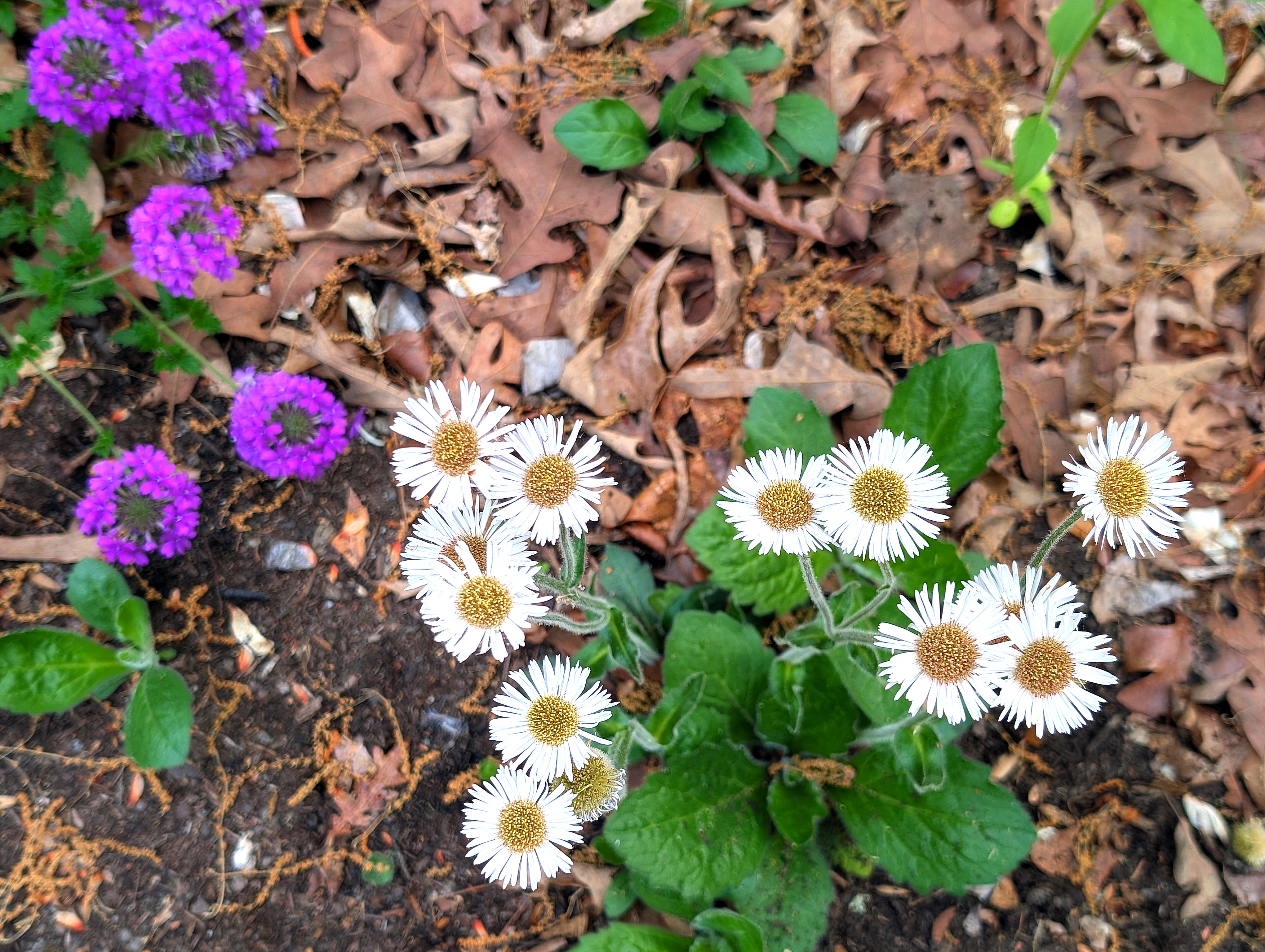
Mock vervain (I think) on the left, Robin’s plantain on the right (a cultivar of fleabane). Raleigh, NC. April 2025.

Watching a specific environment over time delivers meaning which a one-time walk through a park does not. The tide and ebb of the seasons, the minor changes in foliage, the calls of the birds as they cycle through a mating season, the feel of the air as less humid air gives way to summer–all of this imprints the incremental passage of time on one’s psyche.

Fall, y’all

Like so many things in the American South, the arrival of autumn takes its own sweet time. I should say “fall” also because at two syllables, both of which have a “u” in them, “it “autumn” just seems a bit pretentious here. Our first inkling summer is nearing its end (besides a simple look at the calendar) occurs when “someone turns the humidity off” as a former boss of mine put it. (He was from Michigan.) Humidity levels build quickly in early June, and by mid-month your A/C chokes on the amount of water it’s removing from your indoor atmosphere. Around Labor Day a similarly rapid decline in humidity takes place. It seems even quicker than the ramp up because the lack of humidity means heat no longer lingers around all night, ready to leap into action at dawn. Instead of staying in the high 60’s and low 70’s suddenly one’s body registers temps that are downright cool at dawn. What follows seems like a coda to the summer, a time of 72-80 degree weather, mostly sunny weather, and dawn temperatures in the low 50’s.

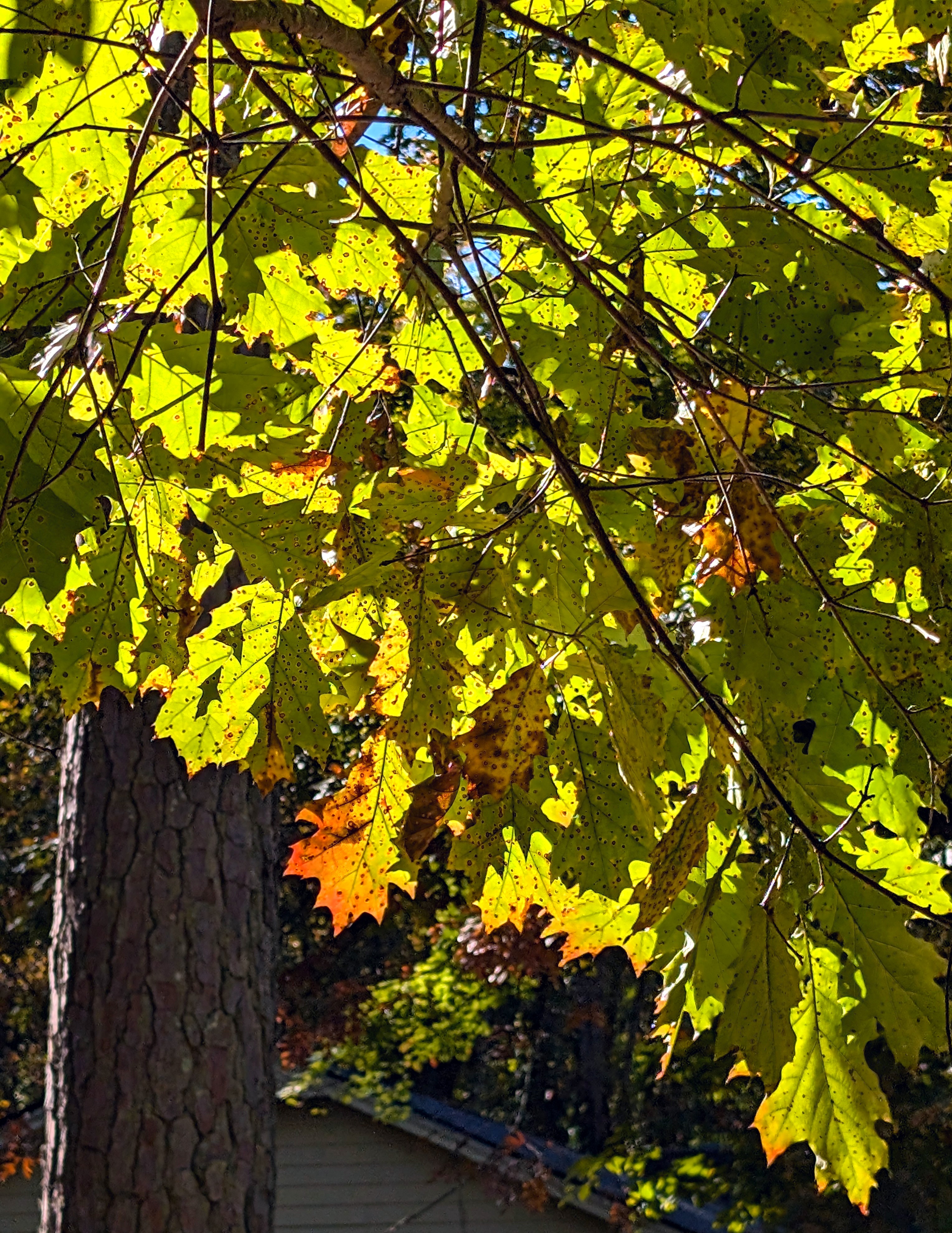
For me fall can be said to be truly here when leaves start to turn color. Except for stressed trees and shrubs, this usually occurs around the second to third weekend in October. Even then it’s a slow, drawn out affair. This cluster of leaves seemed representative to me. We’re in the last week of October, and the trees reluctantly turn various colors dependent on species.

Fall in Raleigh, NC. October 2024.

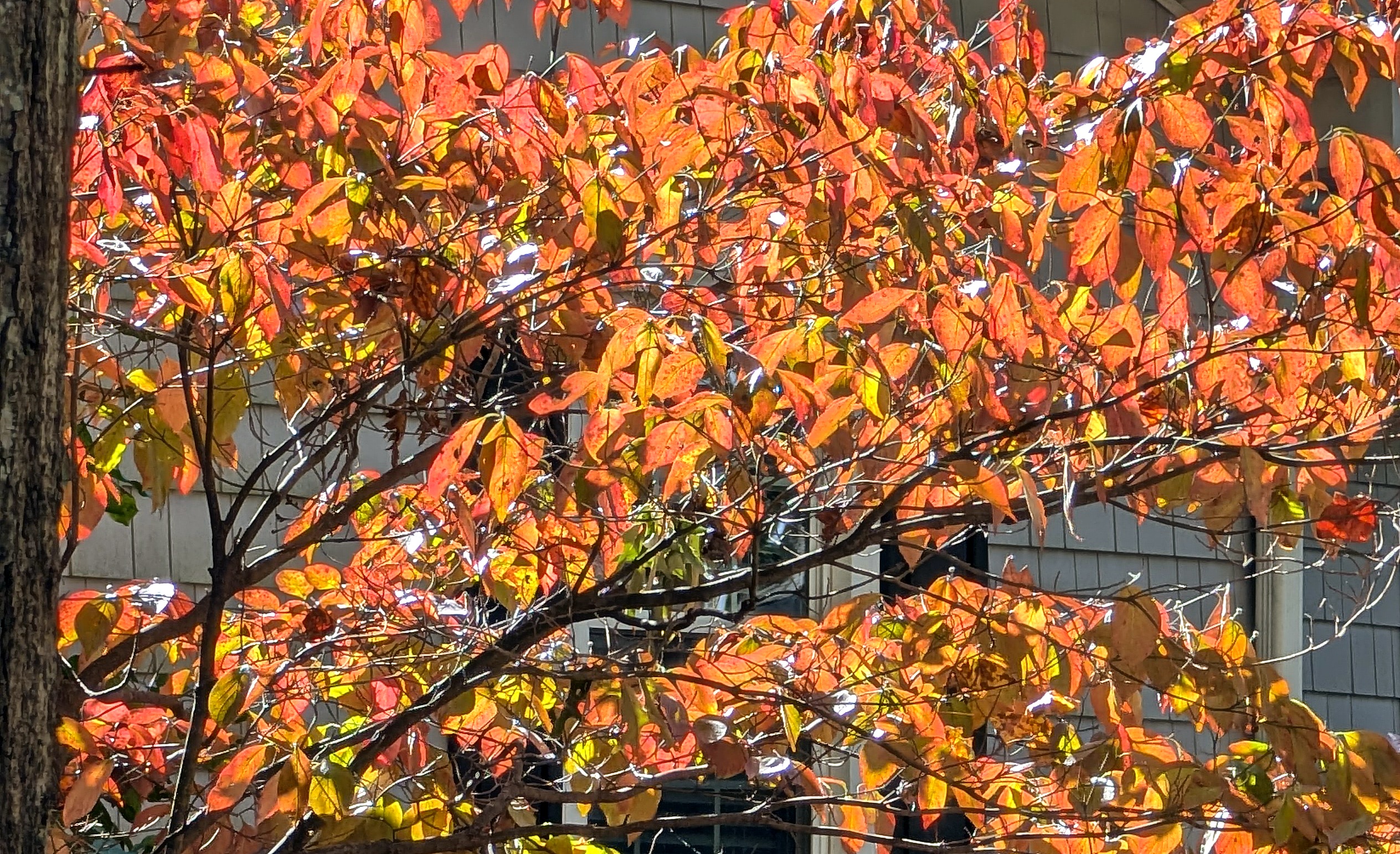
We arrived home Monday after a quick dash north for a wedding, when I realized, “Hey the dogwood is really turning color.” One of the first to herald spring with its blossoms, and one of the first to leaf out, it’s also one of the first to say, “Nope, gettin’ a mite too cold. Goodbye.”

Front yard dogwood. Shaded trees in back a more dusky red. October 2024.

And finally this photo to illustrate the sadness of invasive species. The Virginia creeper is native to central and eastern North America. It knows that it’s fall here. The English ivy isn’t native to North America at all. The latter will hang around nearly all winter, and in milder winters I believe I haven’t seen it turn colors at all. It chokes out most undergrowth if allowed, and it adds weight to trees if allowed to proliferate. It creates an eco-desert.

Tree with ivy and creeper, L foreground; tree with mostly ivy center. October 2024.

Sunny memories

Garden sunflower, July 2014.

I gardened better ten years ago. My beginning consulting years actually weren’t about consulting–I hired out contractually. Technically, I earned more than I had as a manager in a pill manufacturing plant, but it was tough to compare. On the one hand, individuals working freelance pay all of their own Social Security and Medicare. On the other, I got paid for every hour I worked, unlike being a manager when 50 and 60-hour weeks occurred. The best perk in 2014? A strict you-can’t-work-over-40-hours-per-week limit. Free to work those hours flexibly, I usually rolled into Friday with 36, meaning I took off around noon. Nice Friday afternoons with my wife, time to run those errands that need to occur during a business week, and time to tend the garden haphazardly.

I don’t like to garden much but I’m entranced with the idea you can grow things, especially useful things like food for humans or birds. The sunflowers were for the finches. Didn’t work at that well, and in 2015 I started real consulting, traveling all over the country and beyond. Ah well. At least I can pay to have someone else do it now.