Without noticing suddenly
you cannot easily pull your
sweatshirt over your head.
Each morning you perform athletic
routines getting into your pants.
Rising from chairs, your muscles
will cry out. Sleeping will bring
rest but also body-wide tightness
driving you prematurely from bed.
Every step you take becomes fraught:
you'll concentrate on each one (if
you know what's good for you),
relearning how to walk. Climbing
steps will be similar as you
wonder alternately how you
could confuse distances which
rise regularly before you, and
how you ever did it when younger.
"Lift with your legs" no longer
something preached by your
health-and-safety officer, but
your new mantra for avoiding
three days' bedrest. Concentrating,...

...you become a true zen master,
without trying—as the sutras say.
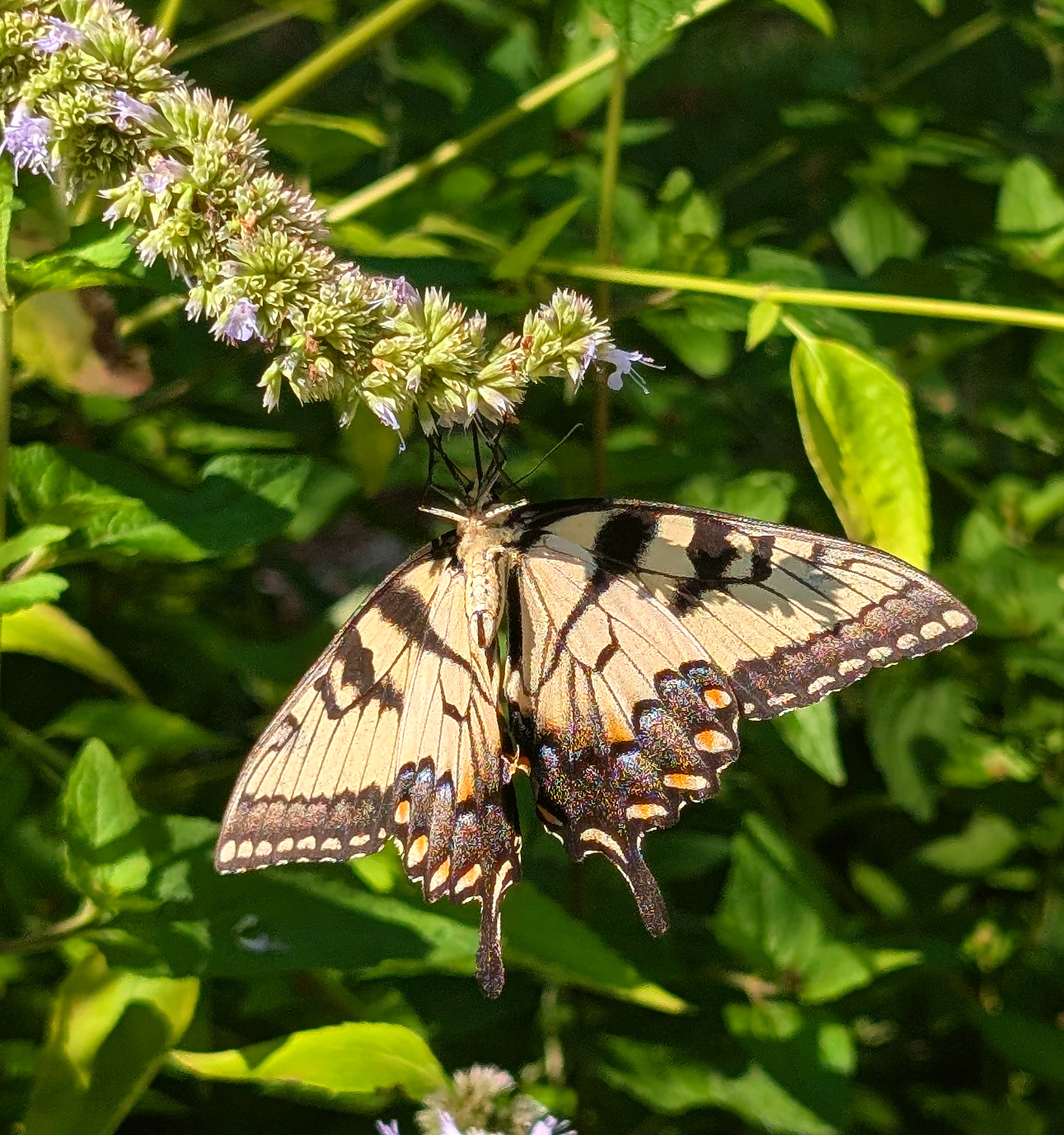
Eastern Tiger Swallowtail butterfly, likely female, on Anise Hyssop. September 2026.
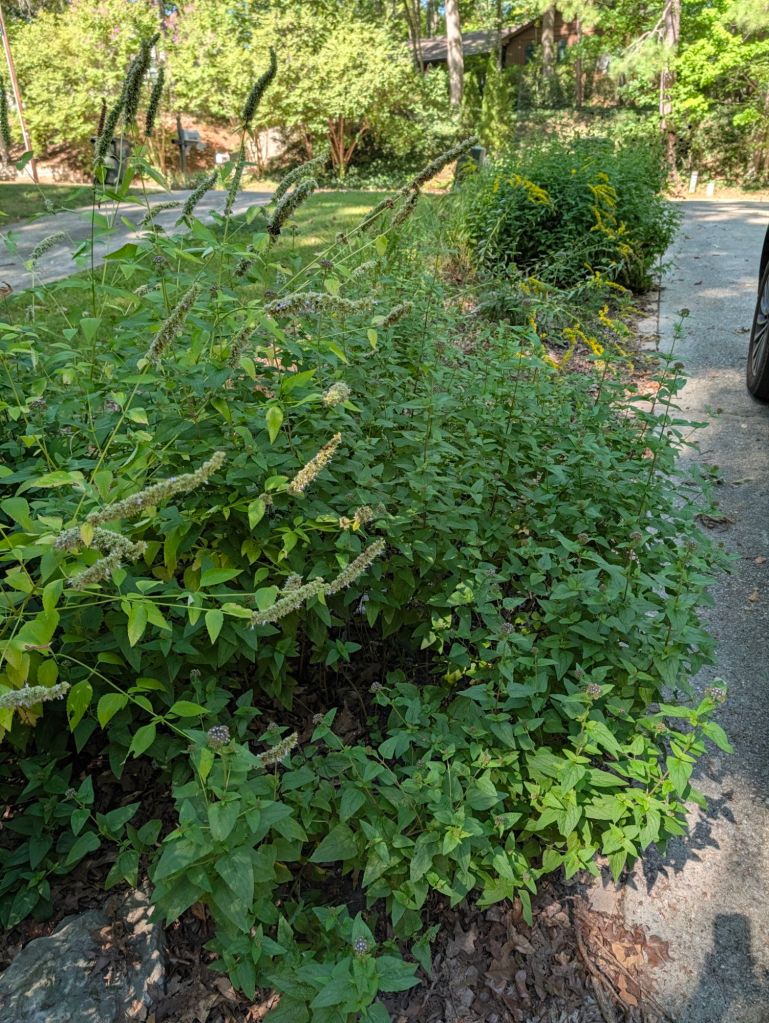
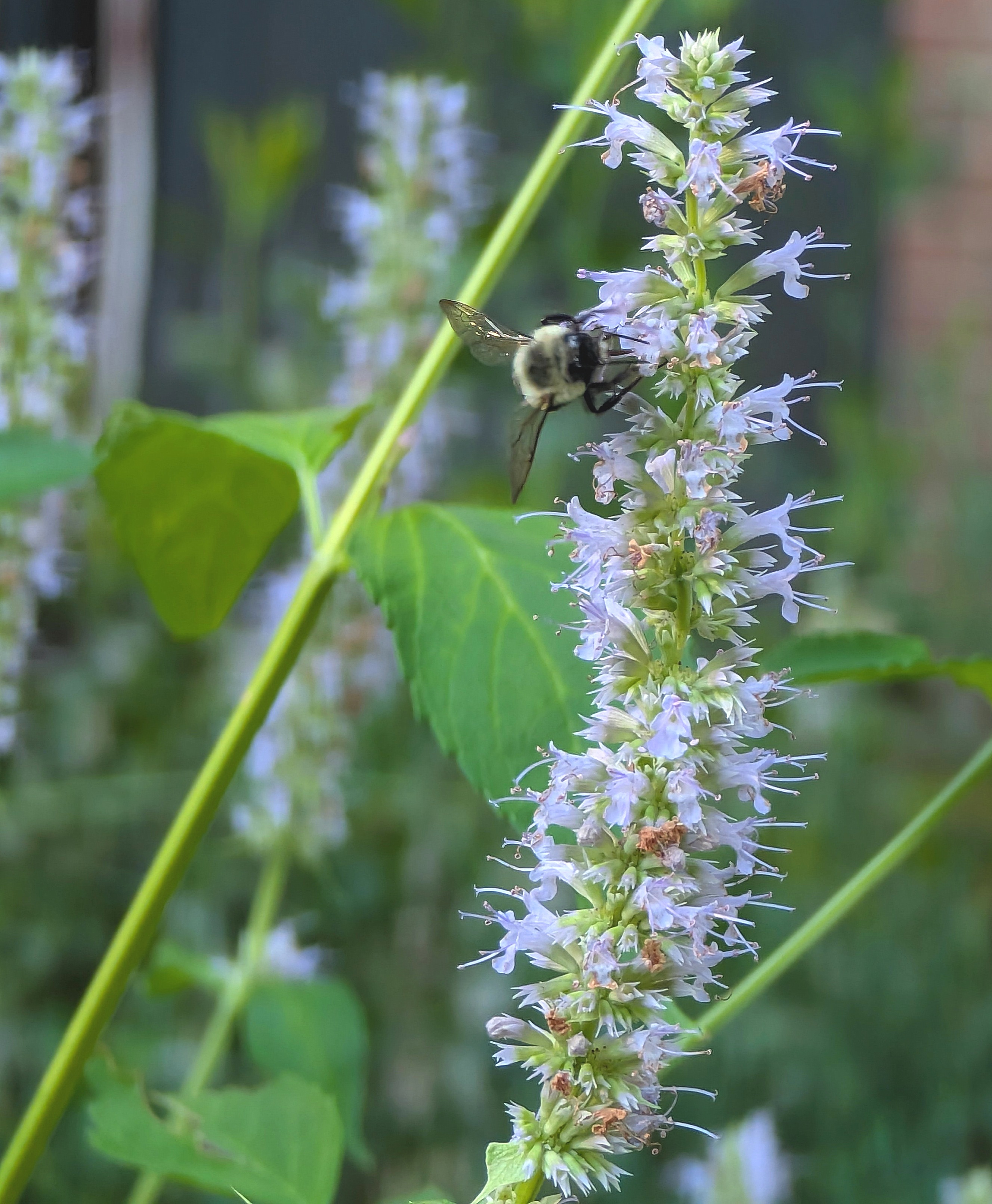
One of my new favorite plants is the anise hyssop. Anise hyssop grows to about four feet with long flower clusters at the end of each upward branch. These clusters each have what looks like about 100 flowers. The large one in the photo above has approximately 50 clusters. (I had to count them for a pollinator study I participated in.) The weight and height of the branches causes them to bend a bit, making them look like a flower arrangement to me. The flowers don’t bloom all at the same time, but over the past two seasons ours has peaked in late June through mid-July, after which some of the flowers begin to do whatever propagation chores the plant must do.
Same bee, different photo from July’s. Note more flower clusters in the background. July 2026.
The hyssop attracts many pollinators. I participated in the Great Southeastern Pollinator Count two weeks ago, choosing this plant because it had so many flowers. I counted mostly Eastern bumblebees and a little wasp about a half inch in length. Others included a very small bee, ants, another kind of insect I’ll just call a beetle, and the biggest dang wasp I’ve ever seen! I looked it up, and I’m sure I saw a Great Black Wasp. I’ve seen three different maximum lengths ranging from 1.4-2.0 inches. I swear it was about 2.0 inches in length. Absolutely huge.
Yesterday I saw our lone species of hummingbird here in the SE United States, a ruby-throated one, also checking out the hyssop. It seemed to prefer the similar-looking flowers of the obedient plant quite near me. And both yesterday and today the several hyssop plants in our yard have been caught the attention of Eastern Tiger Swallowtail butterflies.
When I began the census count, I lamented to my wife that most of flowers have long past their peak. I expected to find few pollinators compared to June-July. The purple coneflowers have lost all their petals; the spiky centers remains, attracting goldfinches to the seeds, not pollinators to the pollen. Similarly, the black-eyed Susans and Indian blanket flowers have mostly disappeared.
But strangely (to me), the hyssop seems to have popped out more flowers! Over the past three days bees, most of the Eastern carpenter variety, have been madly jumping on the hyssop flower clusters. From a distance they’re visible by watching the ends of the stalks bouncing up and down in a non-existent breeze. And then there’s the apparent delight some butterflies have taken in finding yet more flowers on the hyssops.
We need to keep trying, keep putting out those flowers of attraction. It makes a difference. Perhaps “carpenter bees” aren’t your thing. Perhaps you dislike benign-but-huge “wasps”. No matter. Our purpose is to flower. Let the rest take care of itself.
The older I get (and others I presume), the more difficult it becomes to fight against the tide of habit. For a borderline obsessive-compulsive, it’s extra hard.
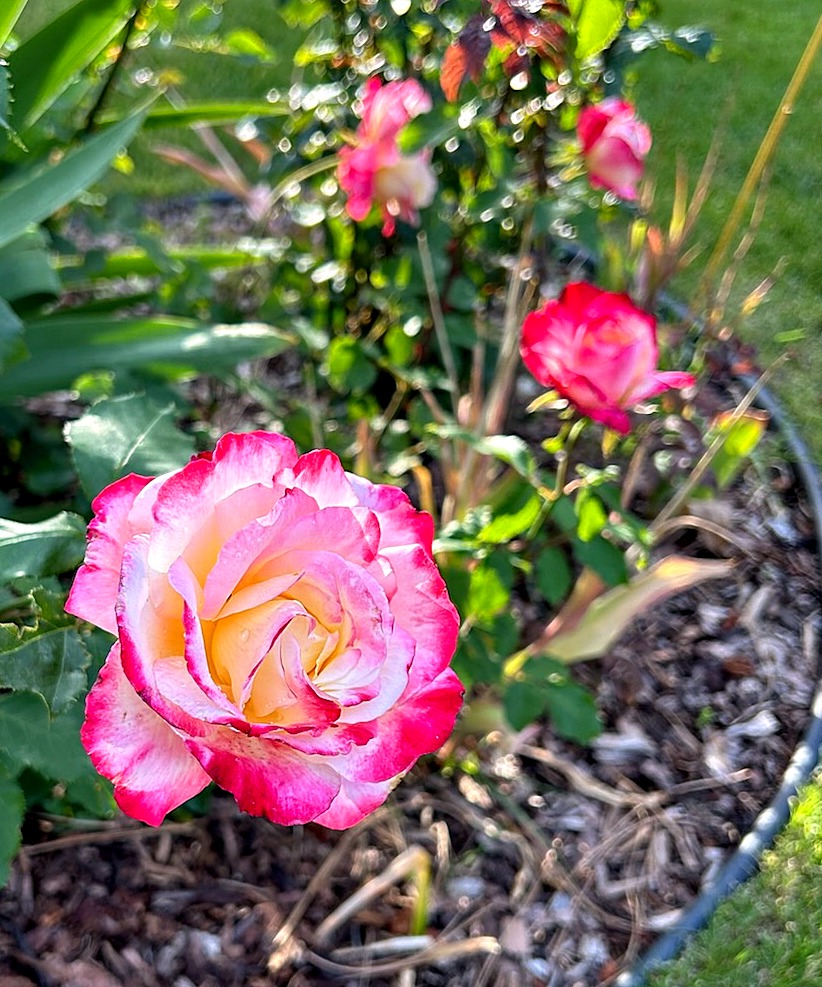
My father’s rose, transplanted. July 2024.
Habits beget habits,
rituals, rituals.
Unfortunately,
predictable.
Grasp inspiring
spark, informer of
our ruts. Use its
spark, its flame,
burn away time's
accumulated dross.
Re-enter one's
original intent,
one's sincerity,
one's honesty.
Live there.
We live secret lives hiding
behind masks of mutual
pleasantries as we walk
our dogs, stretch our legs,
work quietly in our yards.
But these yards keep secrets
poorly. They reveal us to our
world more clearly than
we could ourselves.

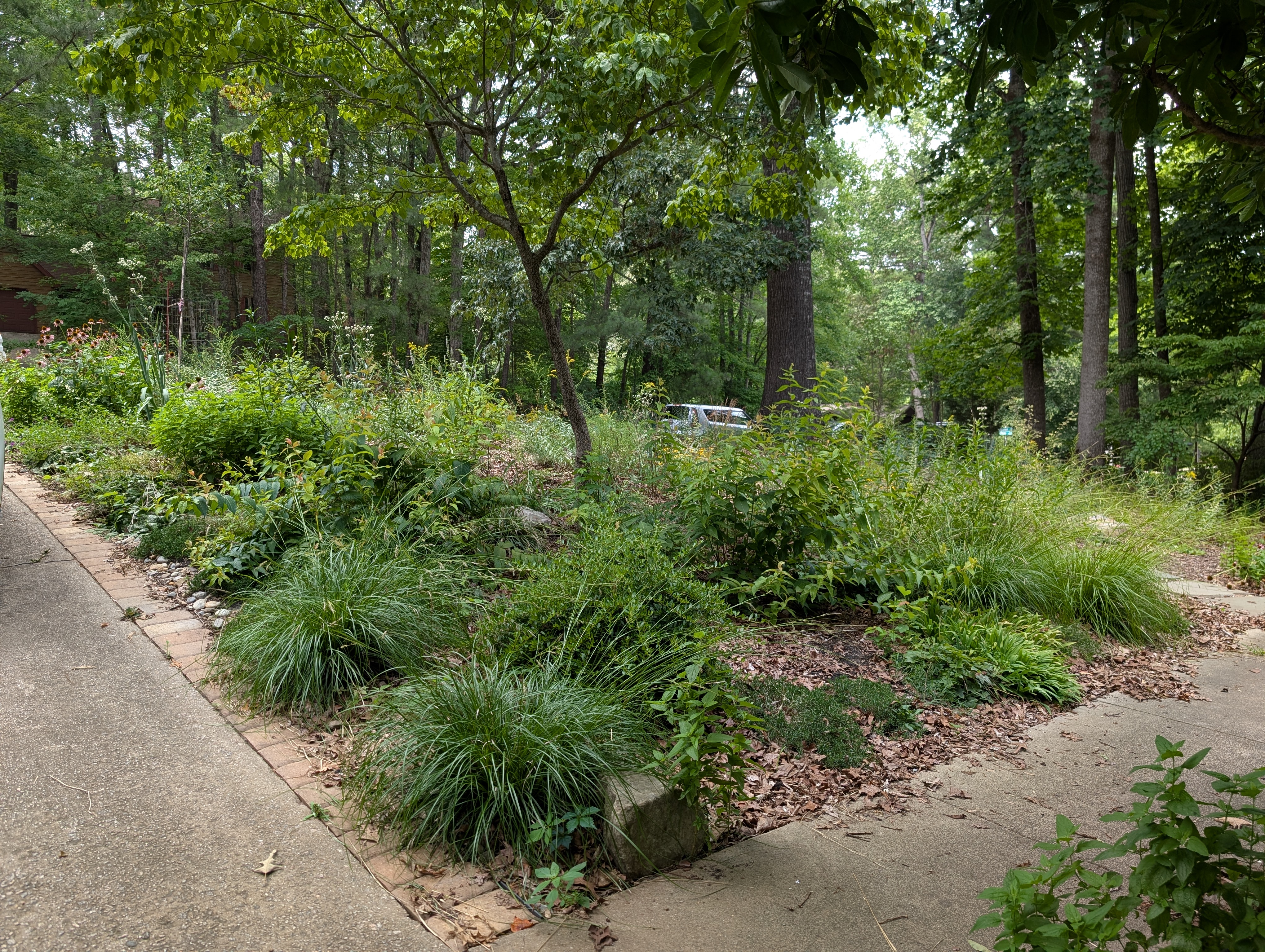
Eastward my neighbor's
carefully curated lawn,
shrubs, flowers give way to
substantial but well-contained
wildness, trees, vines, anything
which chooses to grow there.
"He bites off no more than
chewable, this one," says
his yard. "He values order,
beauty, ornamentation.
His dogs bark freely—why not?
They come when he calls, they
serve him. Who needs more?"
I cannot see his front yard:
perhaps something deeper?
I think not; well-maintained in
back means more so in front.

Southward lies bare minimum.
Years ago, ten or more, she
planted irises 'round her
mailbox. Nothing else blooms, front
or back, which can be seen from
street or another's yard.
In back lies one small patch
of grass, some flowering trees.
Hidden deeply in vine-shrouded
solitude lurks her tool shed,
never visited, never needed.
Twice each month she brings
in mowers to keep her lawn
in check. She limps to deck,
to her car. I surmise once
someone else lived with her
who took more interest.

Northward lies ambition,
community, family. Just
prior to pandemic's pause,
its yard under new management,
benches appeared around
one fire pit. Party lights
dangled between trees,
firewood racks popped up
along their back fence,
which received repairs
inside one year. Next they
tore off rotten wood, remade
their basement, attached
two decks amazing for their
sturdiness, their beauty.
"When Jesus comes back,
those decks will still be there,"
he told me. No lawn appeared
in back after previous residents
let chained dogs wear it down.
Instead, frisbee golf came. Camping
gear occupied some space.
Everything about it screams
"Family! Friends! Comfort!"

Here? Our yard underwent
metamorphosis as I allowed
'natural' grass to grow unchecked
until I realized its invasive
nature. Then, shaggy
unkemptness gave way
to nothing-but-garden.
Its haphazardly located plants
reveal how poorly my dreams
get realized. Our back yard,
torn asunder by summer's
torrents, reveals how ill-
conceived our landscaper's
plans, leaving nothing but
soil to wash away...while
revealing my trust in what
others promise me. Now,
unwanted green strangers
laugh at me: "Go ahead,
pull us up! We have more
numbers, more patience
than you. We will prevail."
And so they shall. My yard
says, "Good intentions,
poor follow-through. Perhaps
some sense of romance."
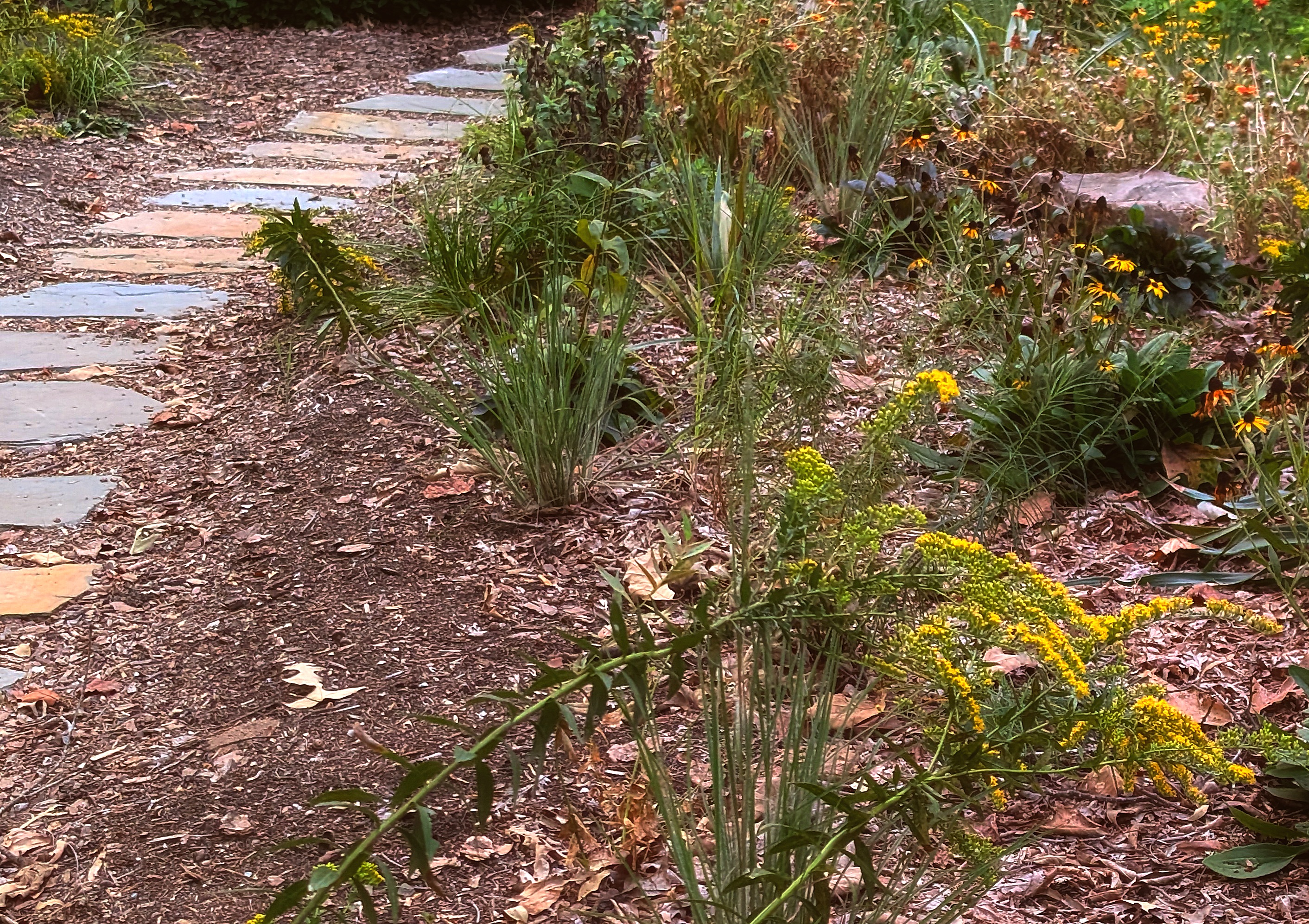
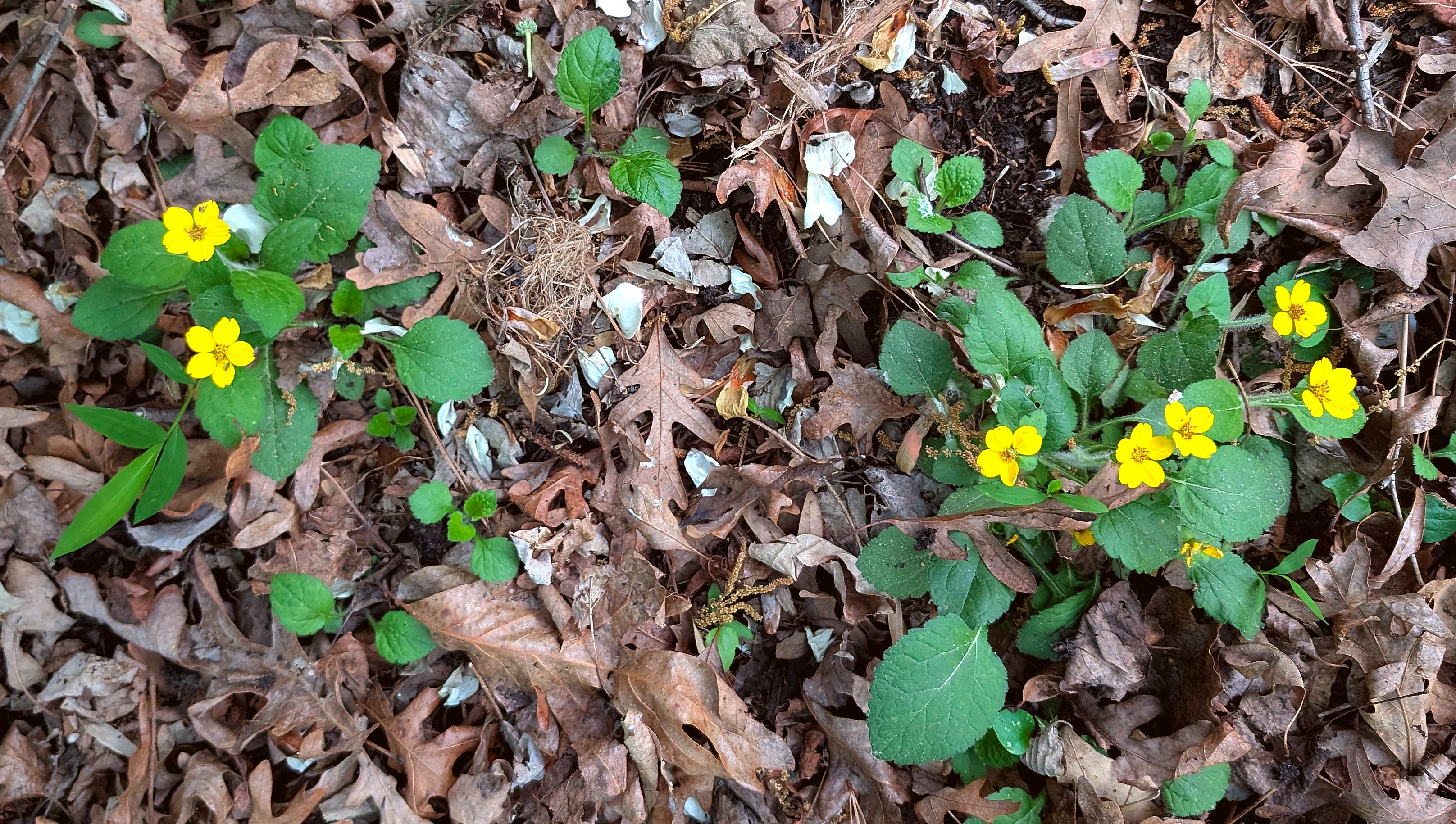
Green and gold (that’s its name) in our back yard. April 2026.
20/100 I’m writing a poem a day (sometimes two), and now I’m 20% there. It’s causing me to rethink poetry and my approach to it, when and how I’ve written it in the past.
Every major city seems to have a botanical greenhouse where tropical conditions have been created to foster the growth of orchids, bromeliads, and such—or “July” as a resident of the American South might call it. I left just past noon today for a 25-minute sojourn around the neighborhood. When I returned, our weather gauge reported a temperature of 81.1°F and a relative humidity of 88.8% (now registering an even 89.0% 30 minutes later). Lighting was poor: completely overcast, the sun approaching its zenith. That’s okay. My poetry attempts have been poor today, also. This is my second try, the first being filed in the “maybe-it-can-be-saved” bin. This really isn’t poetry, more poetic prose, artfully arranged—unless it’s true what a friend said, that poetry is what I say it is!
Every Southerner learns gradual
acceptance of sweat, wears loose
garments, overlooks each other's
spreading stains. "Only mad dogs"
indeed. Why walk now? Surely
my Fitbit will multiply steps
taken in such weather?

Escaping my climate-
controlled cocoon,
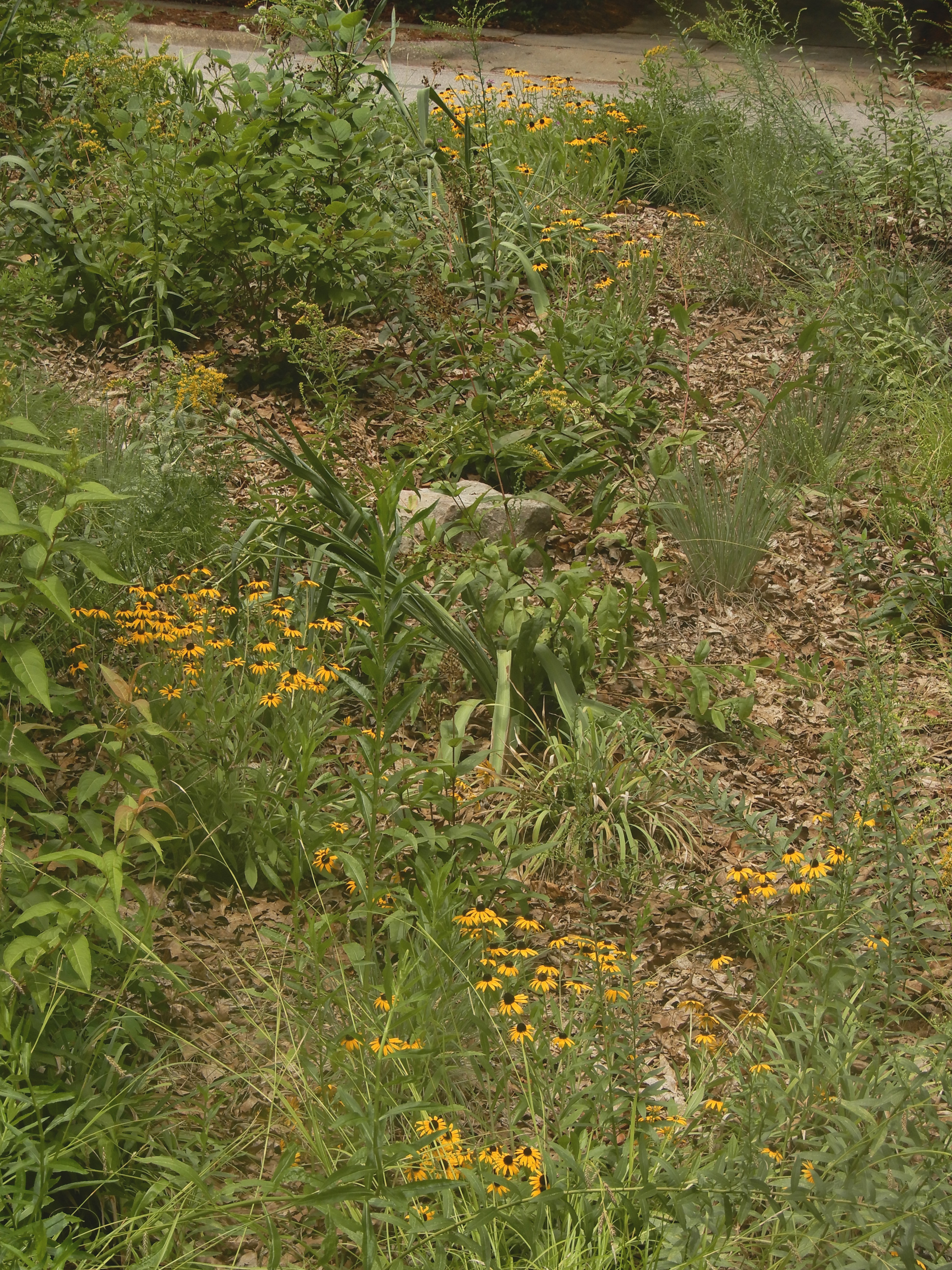
black-eyed susans cry
welcome. They're sprinkled
beside rattlesnake master,
goldenrod, butterfly
weed. Abiding our warmth,
humidity humbly, they
suggest I follow their lead.
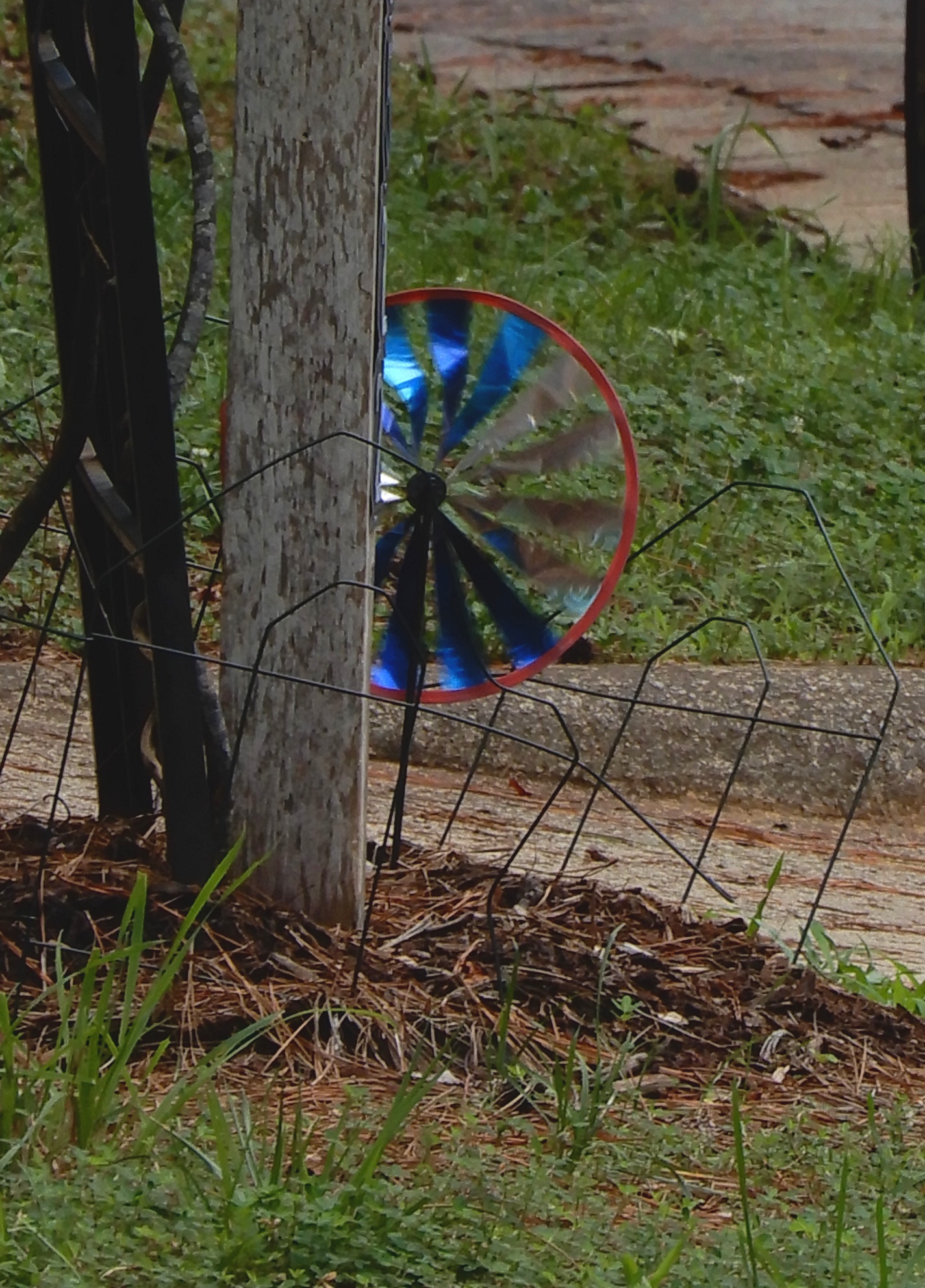
Minutes later brings one
patriotically-colored
whirligig, neglected,
spinning madly with each
new breath of hot air,
much like my country
does these days. Inured
to these new great divides,
I just see [whirligig;
patriotic] as I pass.
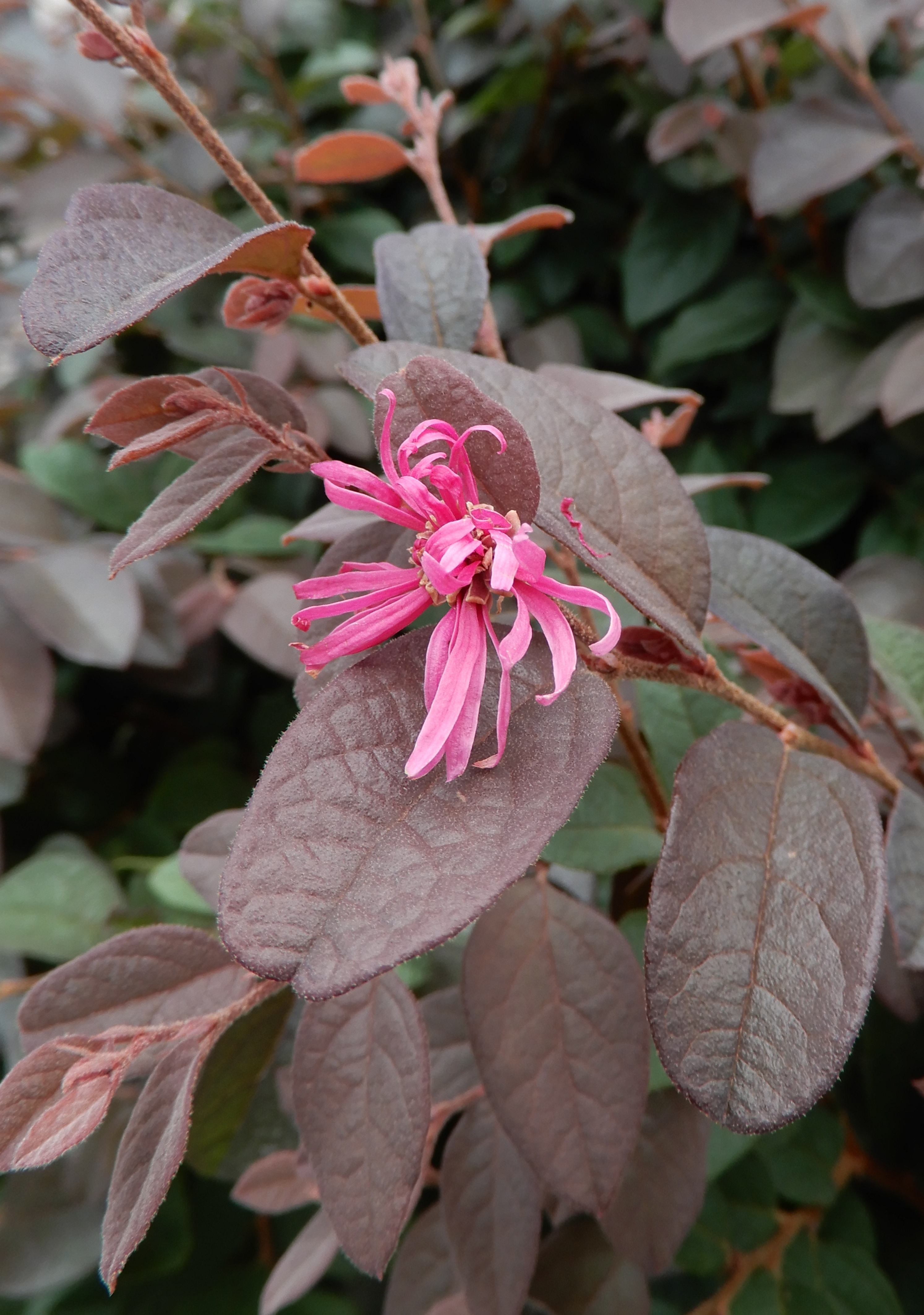
One neighbor's mailbox
decoration swings madly
with each puff of air. Its
caretaker keeps it small:
Chinese fringe flower
usually towers twenty feet.
Where once I wandered scrub
woods (leftover nature long
subdued), newer years brought
townhouses, all units clad
in ubiquitous white,
(accented with charcoal trim!)
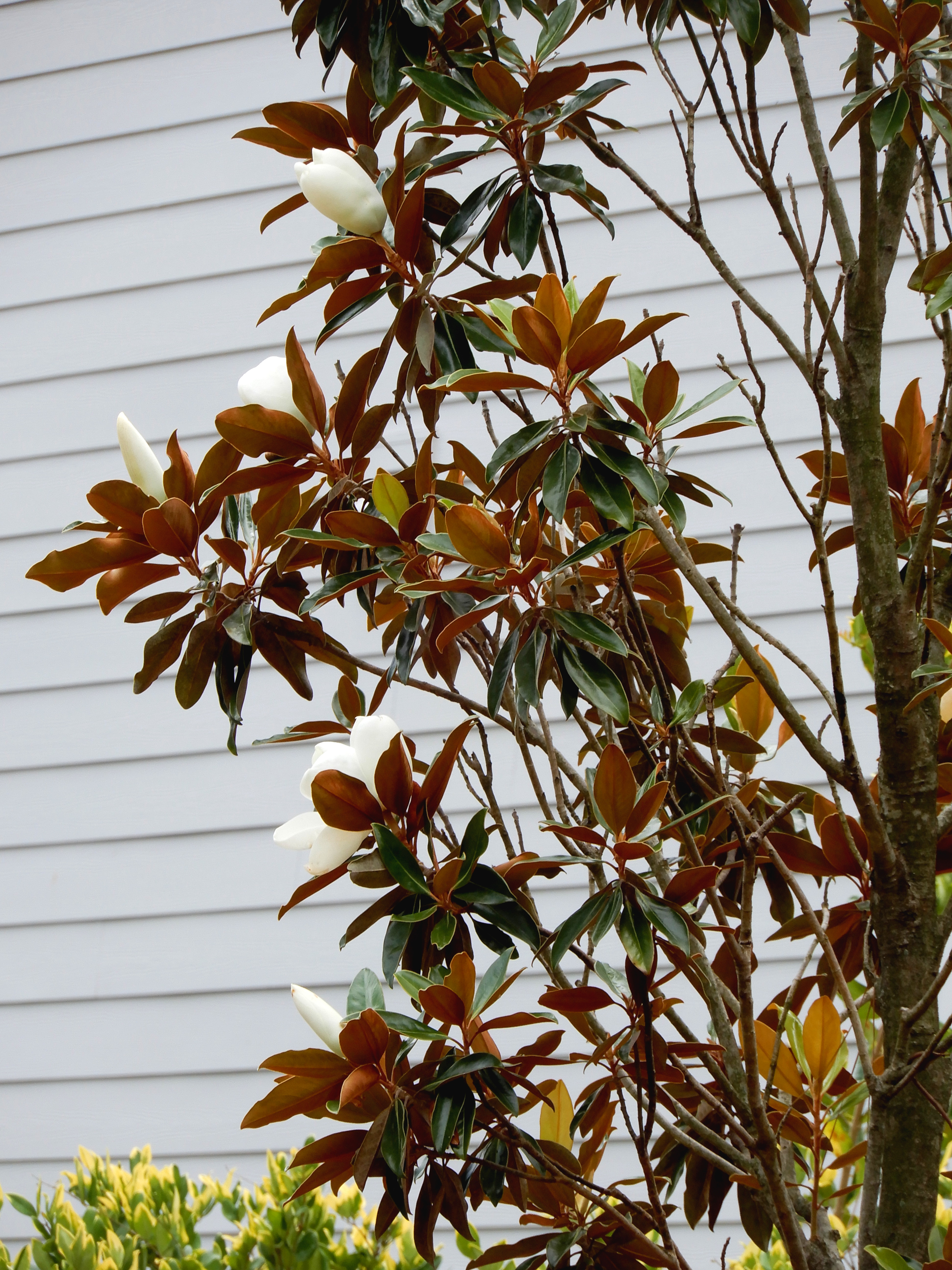
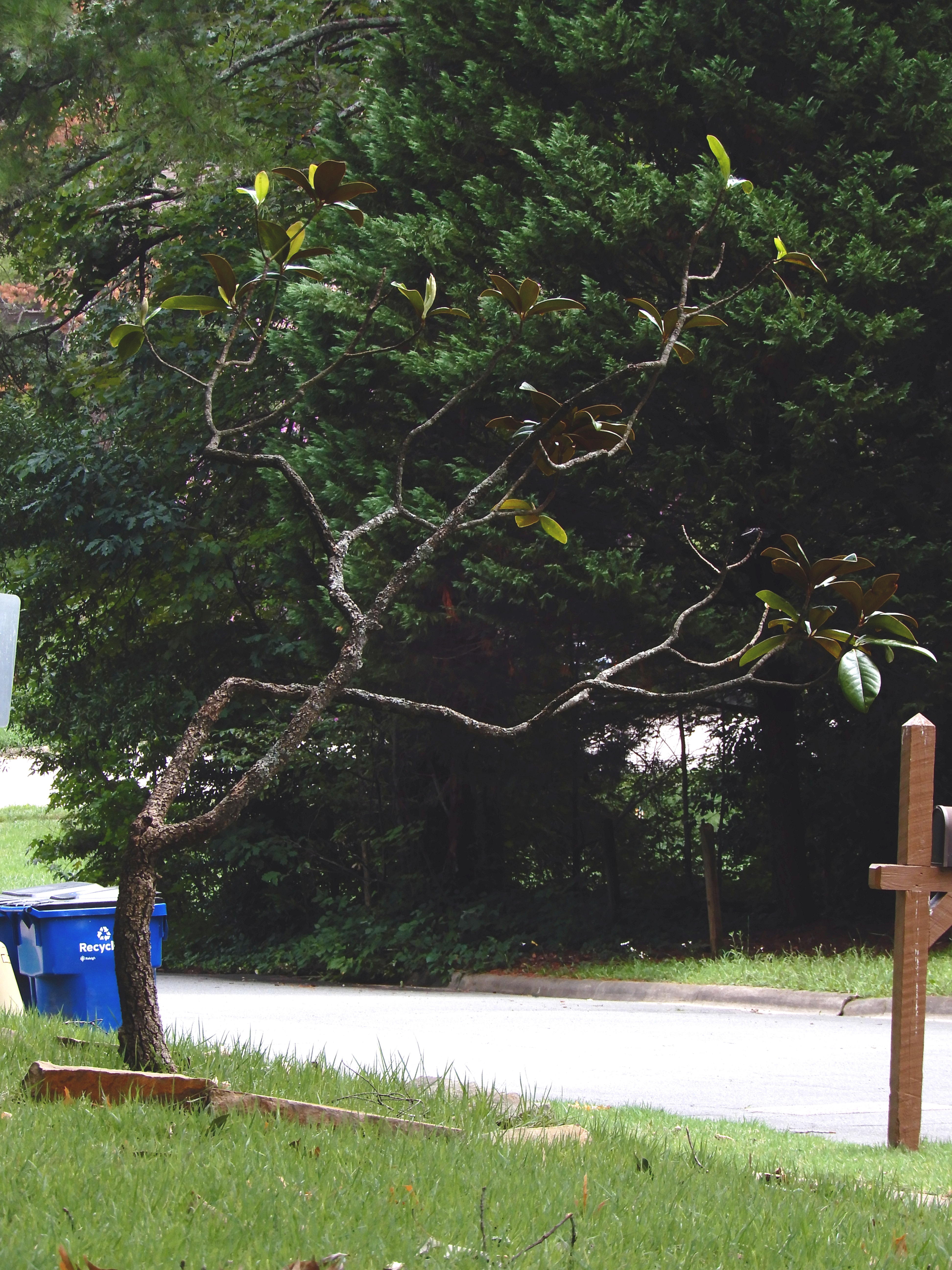
Townhouses get
young magnolias,
crafted ever-so-
perfectly by your
local nursery, while
everyone else
nurtures what
such abnormal
specimens become.
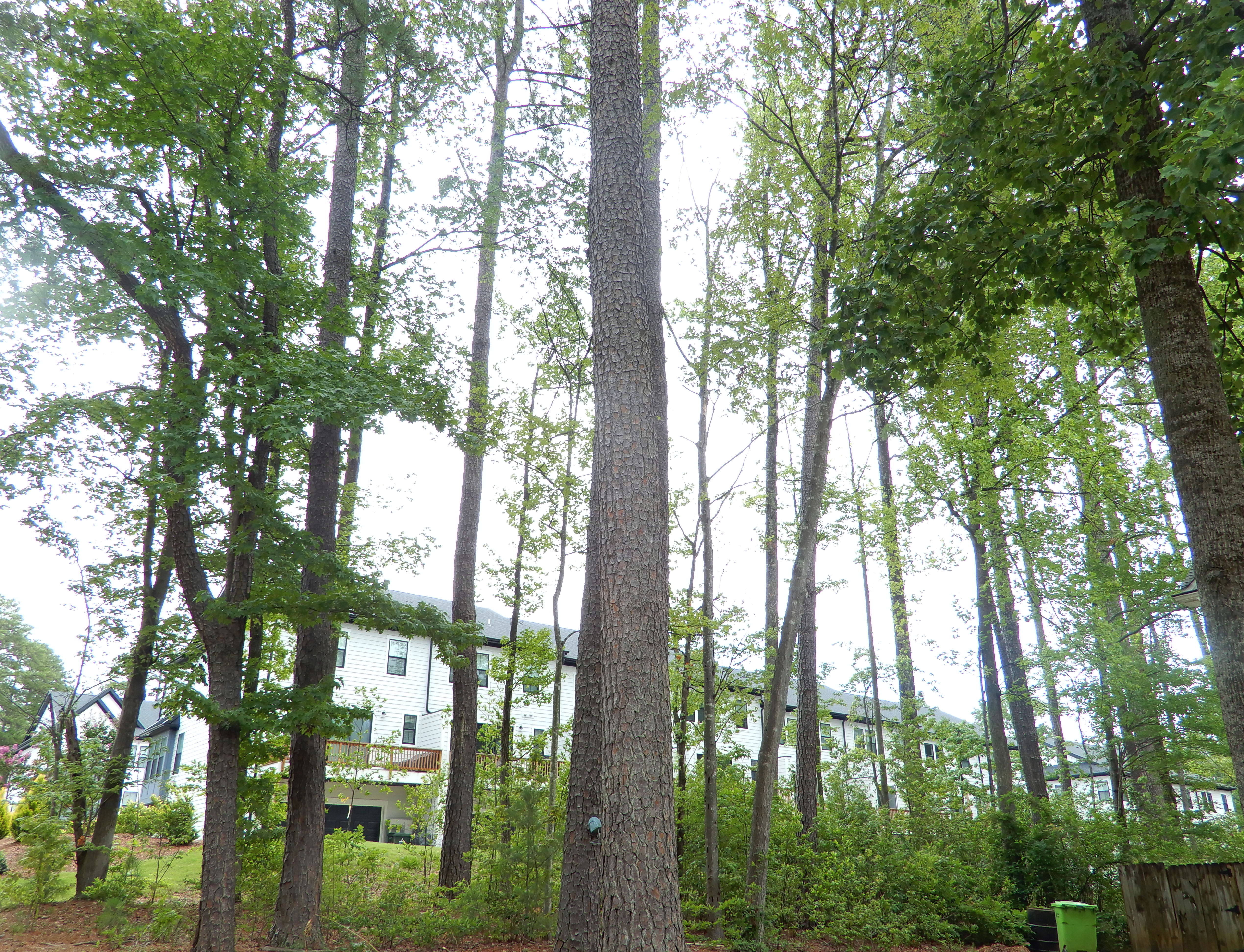
Headed homeward I give
friend Crow midday greetings,
reflect upon our tree-bound need
for vegetables in front
(sunlight dictates placement),
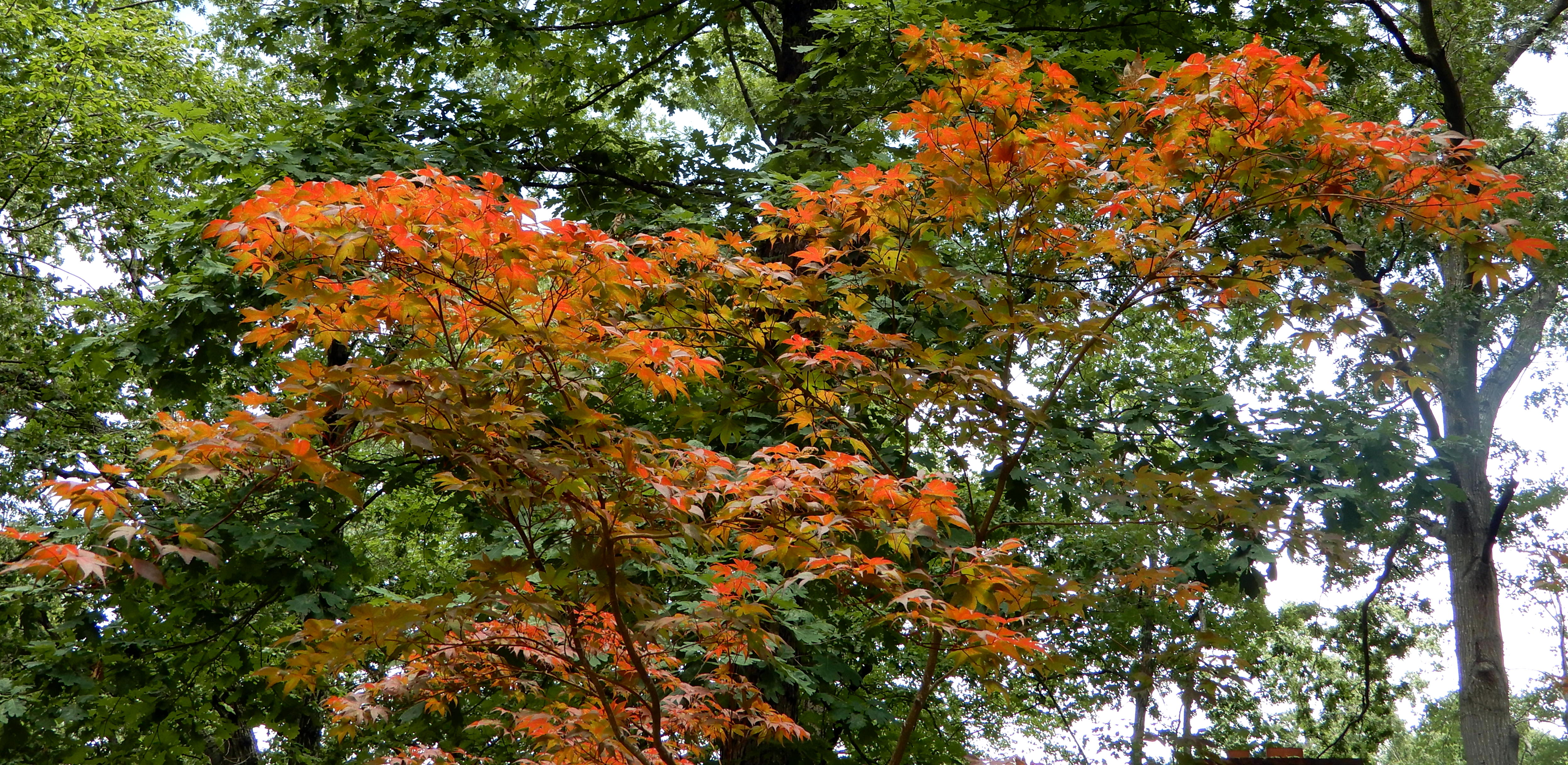
admire still-red maple leaves,
register my soaked T-shirt:
its limit of three-quarters mile,
exceeded by my four.
Ghosts, slipping
treelike through forests
populated by people
looking just like they
once did. Slowly
dissolving, windborne
gossamer, 'til people
look through them.
Haunting not others,
but themselves with
each mirror-ward glance.
Remembering when
they treated ghosts
similarly, in
youthful vibrancy.
I’m just not going to make a poem today. My brain feels so scattered, I think the only thing holding it together is my skull. Heat? Maybe. More likely the increasing difficulty with being older and watching the world change into something we envisioned only not like this. (non sequitur? no.) Life now resembles a city’s marathon, only you’re not in the race anymore, in fact, you’re not even on the sidewalk watching. You’re up in your apartment looking down and saying, “I wonder what they’re doing down there?”
In lieu of posting nothing, I took a walk around the yard.
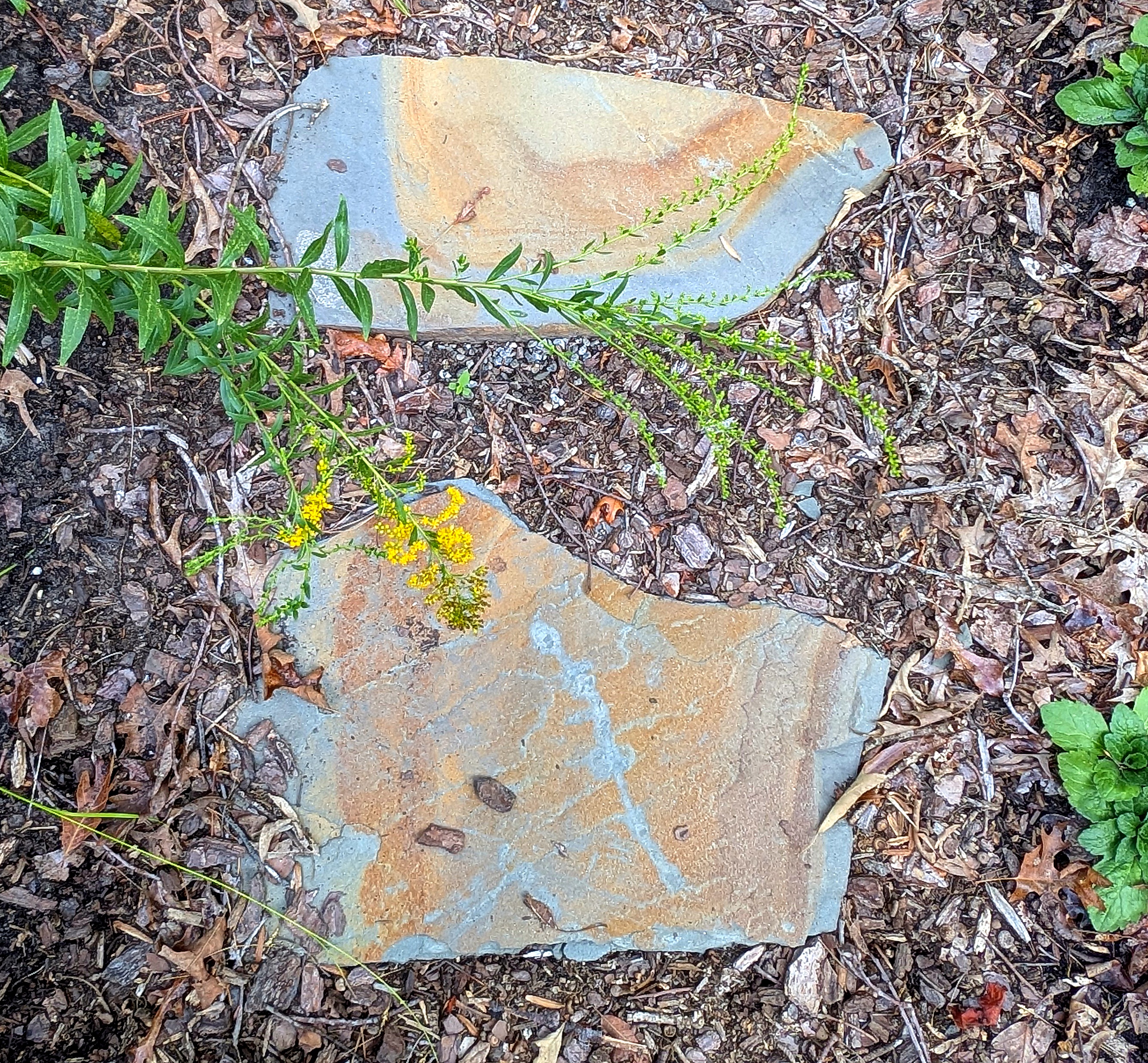
Lovely, ubiquitous goldenrod. Prime suspect in my investigation into the dermatitis which has cropped up again. July 2026.
One of the few remaining non-natives. Couldn’t bring myself to rip out what amounts to a mailbox decoration. July 2026.
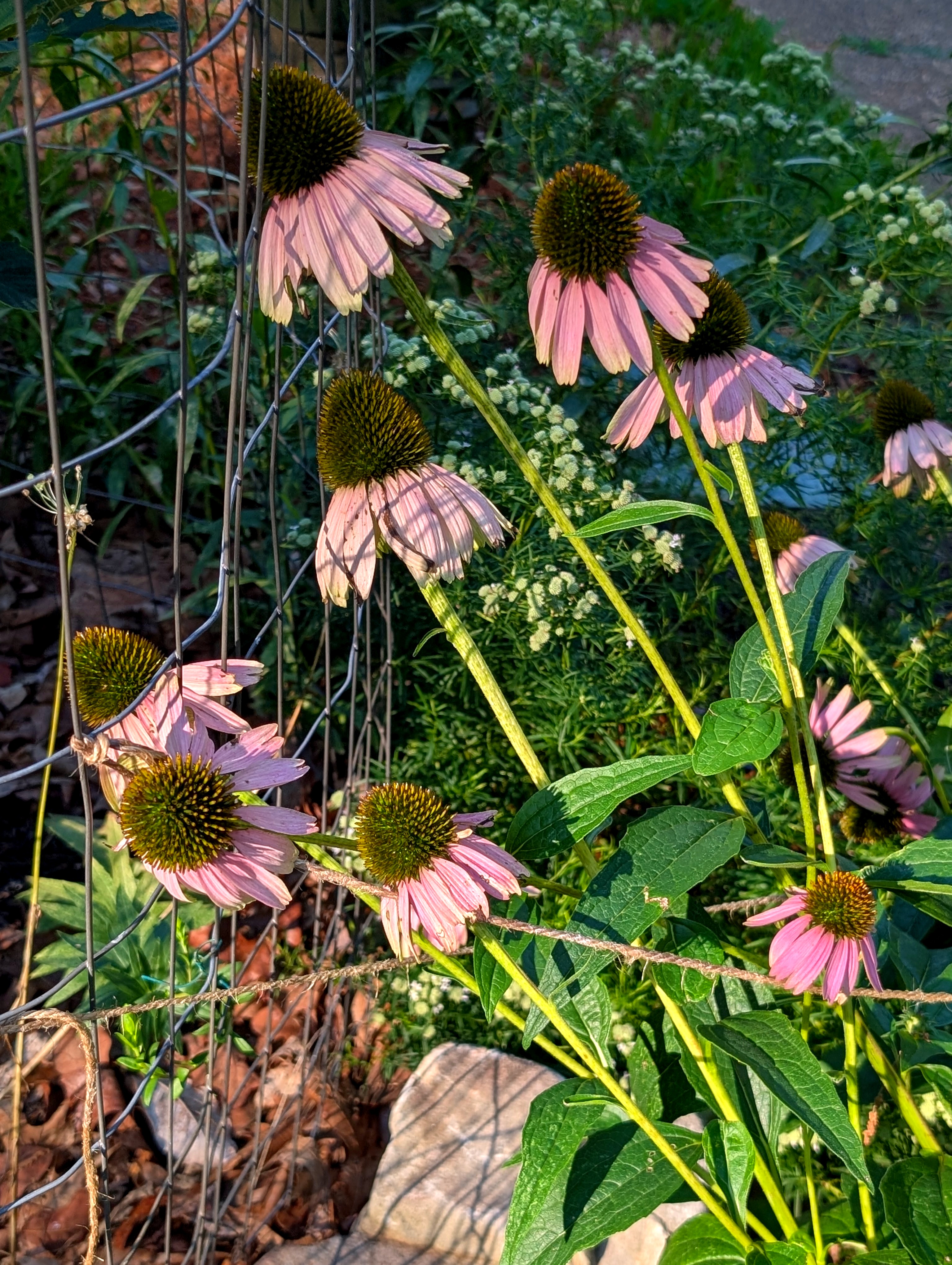
Our purple coneflowers typically droop starting this time of year, but pounding rain a week ago didn’t help. Good thing these guys were tied up beforehand. That’s mountain mint in the background. July 2026.
Our yard now represents a pollinator’s dream. Here an eastern bumblebee (I think) heads off for the next blooming sprig of anise hyssop. July 2026.
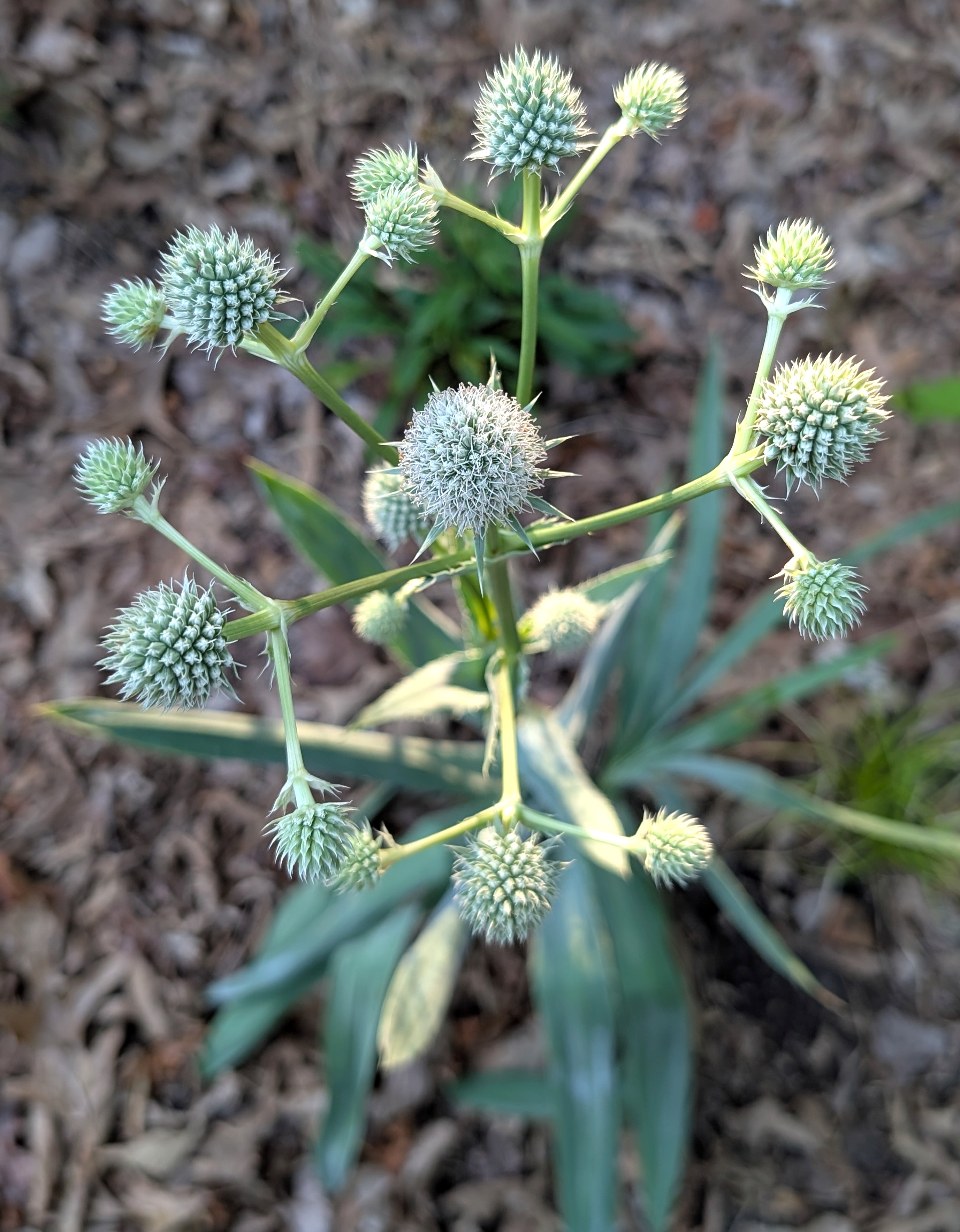
One of the strangest plants: rattlesnake master. Is it called that because of the thorned, sword-like leaves? Or the spiky flower-balls? It didn’t flower last year, nor did it come close to growing over six feet tall as it has this year. July 2026.
There you have it. Perhaps my melancholy intro will produce a poem later tonight. Time to get down to the pub.
A funny thing happened on the way to this post a week ago: all three monitors started blinking on and off rapidly for 20 seconds and then my video driver software said it had crashed. Since I thought I had installed it only two months previously, I swore and deleted said software… Not a good idea. After rebooting I had only one monitor functioning and it displayed smaller fonts/icons and a fuzzier image. Turns out I had only updated the driver a couple months before. Two days later I’m humming along with three glorious monitors again, but not enough time in each day to complete this post. Wherewith…
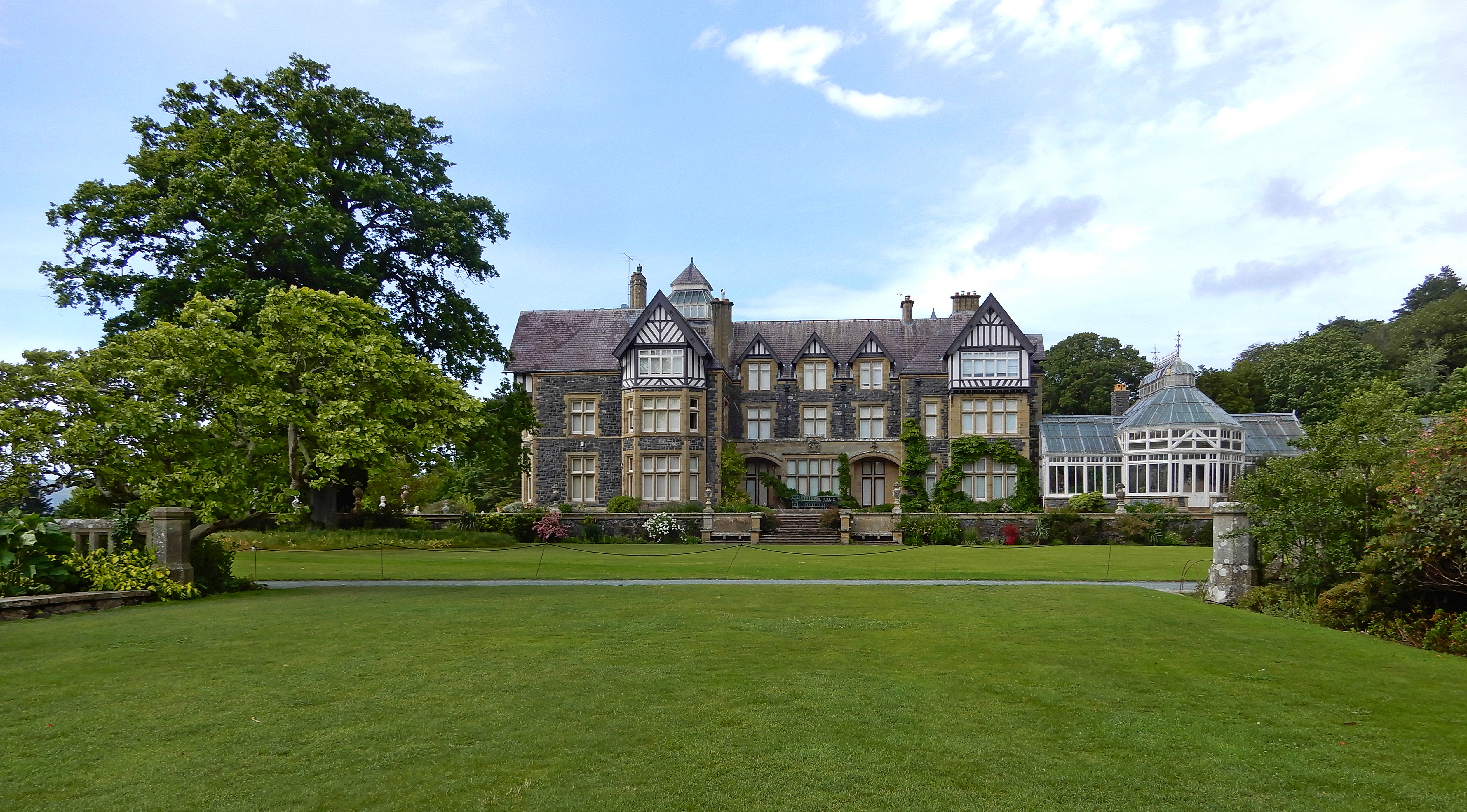
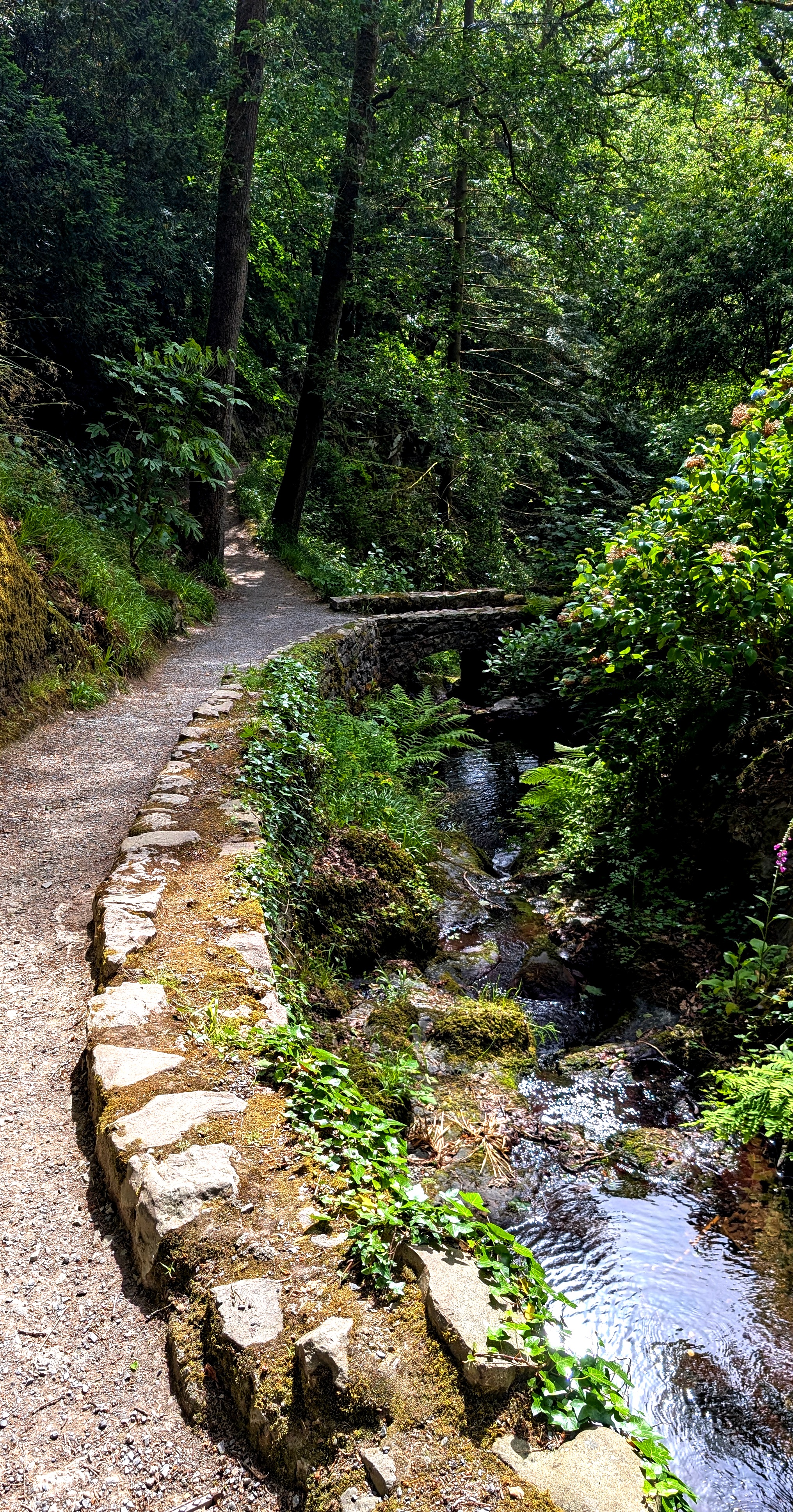
After experiencing Edinburgh, Scotland, and England’s Lake District on our recent tour of the United Kingdom, we headed toward Llandudno Bay, Wales. Just before we arrived, though, we took in the Bodnant Garden, a National Trust property near Conwy and Llandudno Bay. The five generations of one family developed it, and Henry McClaren donated it. I got that from Wikipedia mostly, and would recommend a quick tour over to that page because the photos capture it very well. It’s 80 acres present all sorts of habitat from well-manicured English garden to “nearly wild” and has exotic species like the American sequoia. (Hey, it’s exotic there.) We started walking in a summery rain shower but the sun soon overcame it; we regretted layering for rain as we sweated our way into a steep gully and back out.
The McClaren mansion. The family still lives there…on occasion. Bodnant Garden, Wales. June 2026.
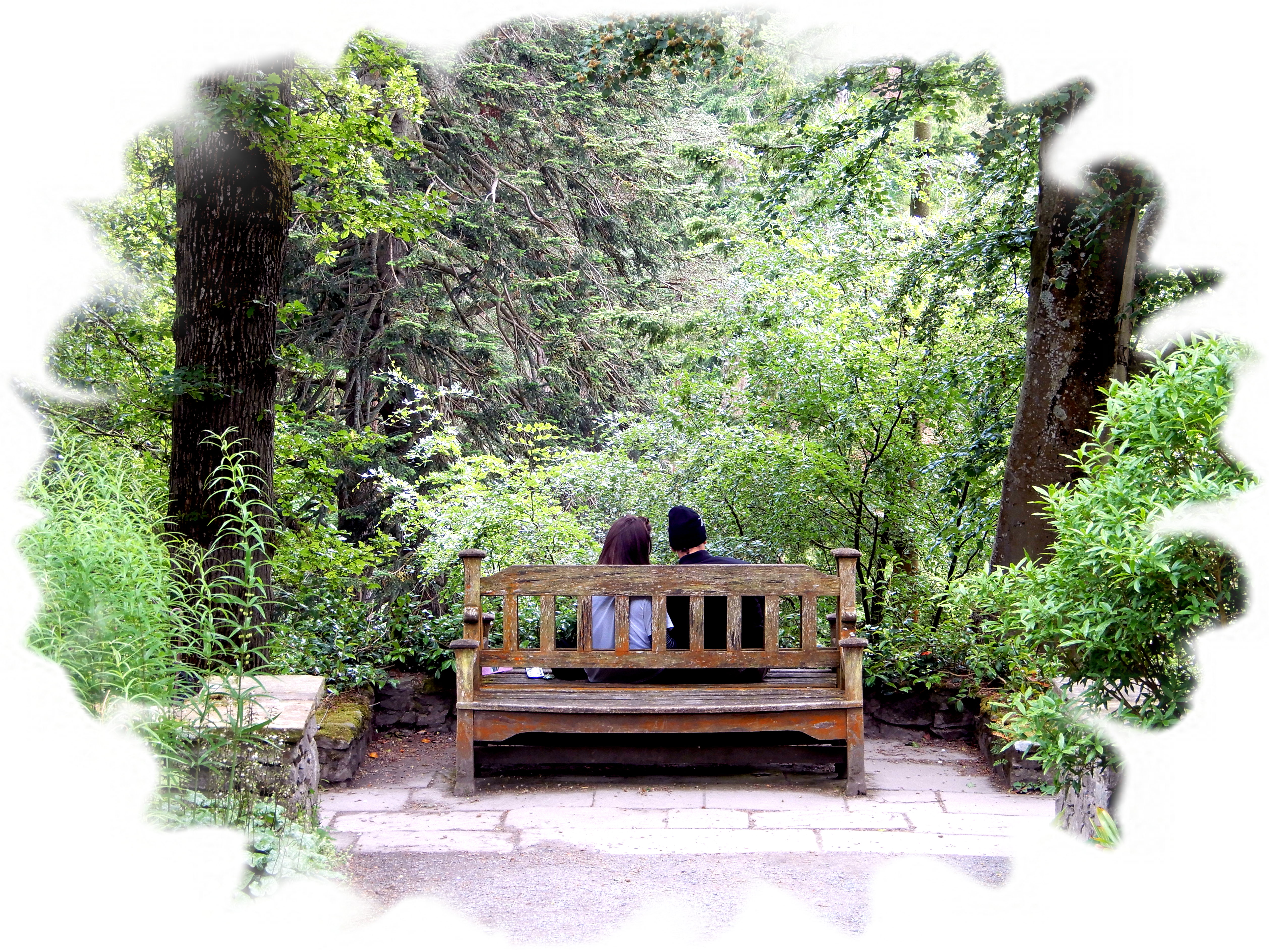
Seemed to be a lot of locals enjoying a Sunday afternoon in the garden. Bodnant Garden, Wales. June 2026.
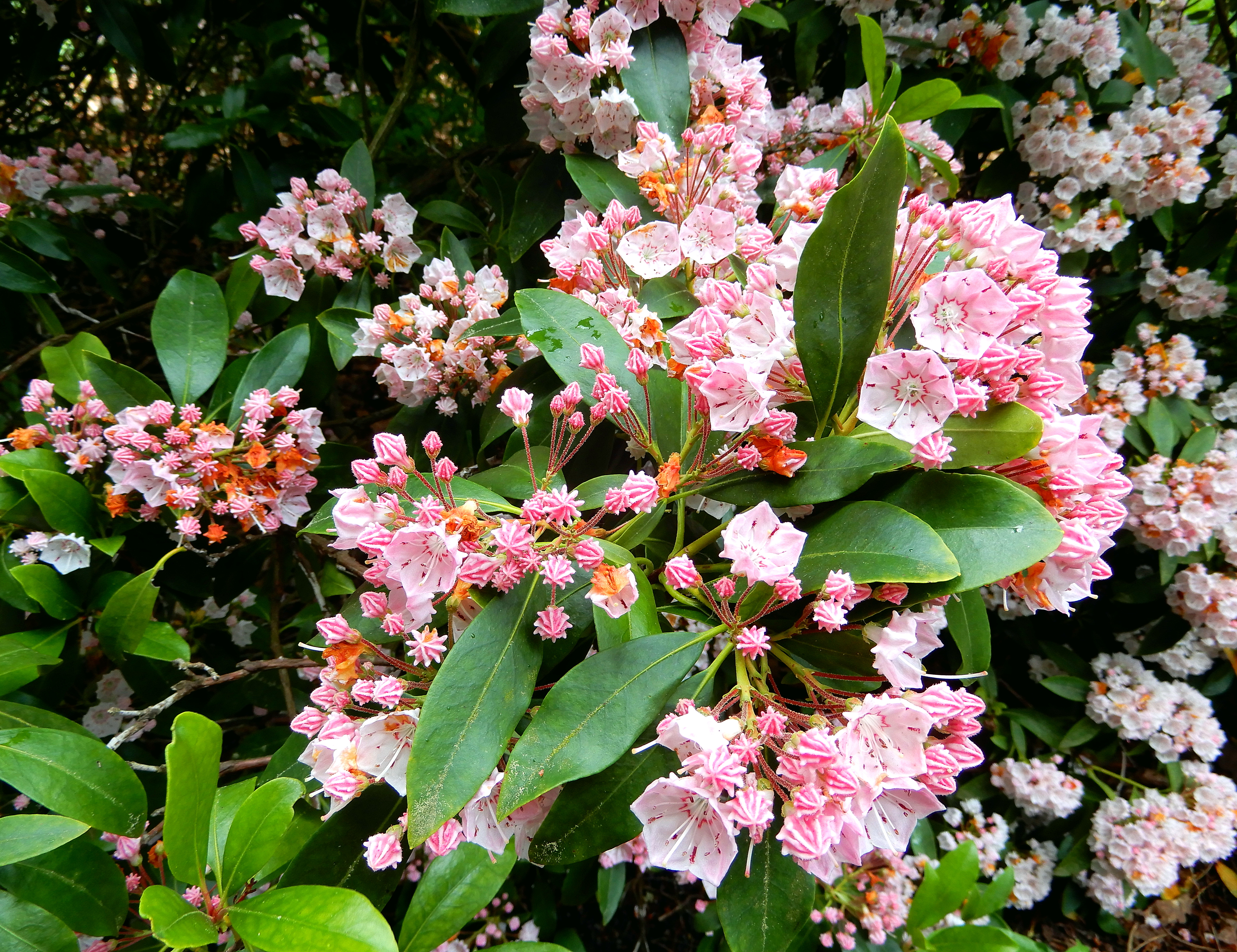
The couple above were gazing into the gully (when not gazing into each other’s eyes, I presume). If they had turned around they would have seen…
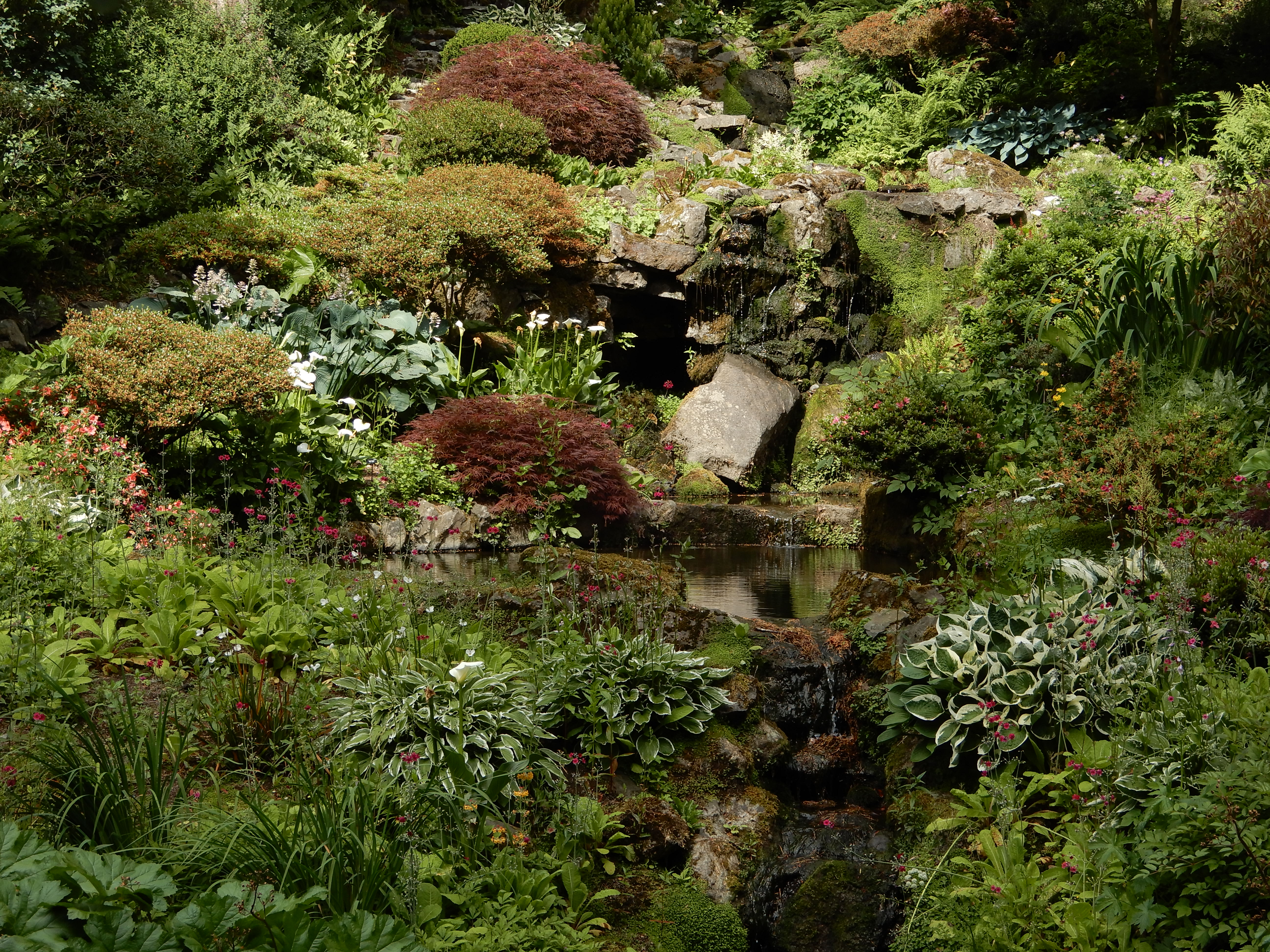
Bodnant Garden, Wales. June 2026.
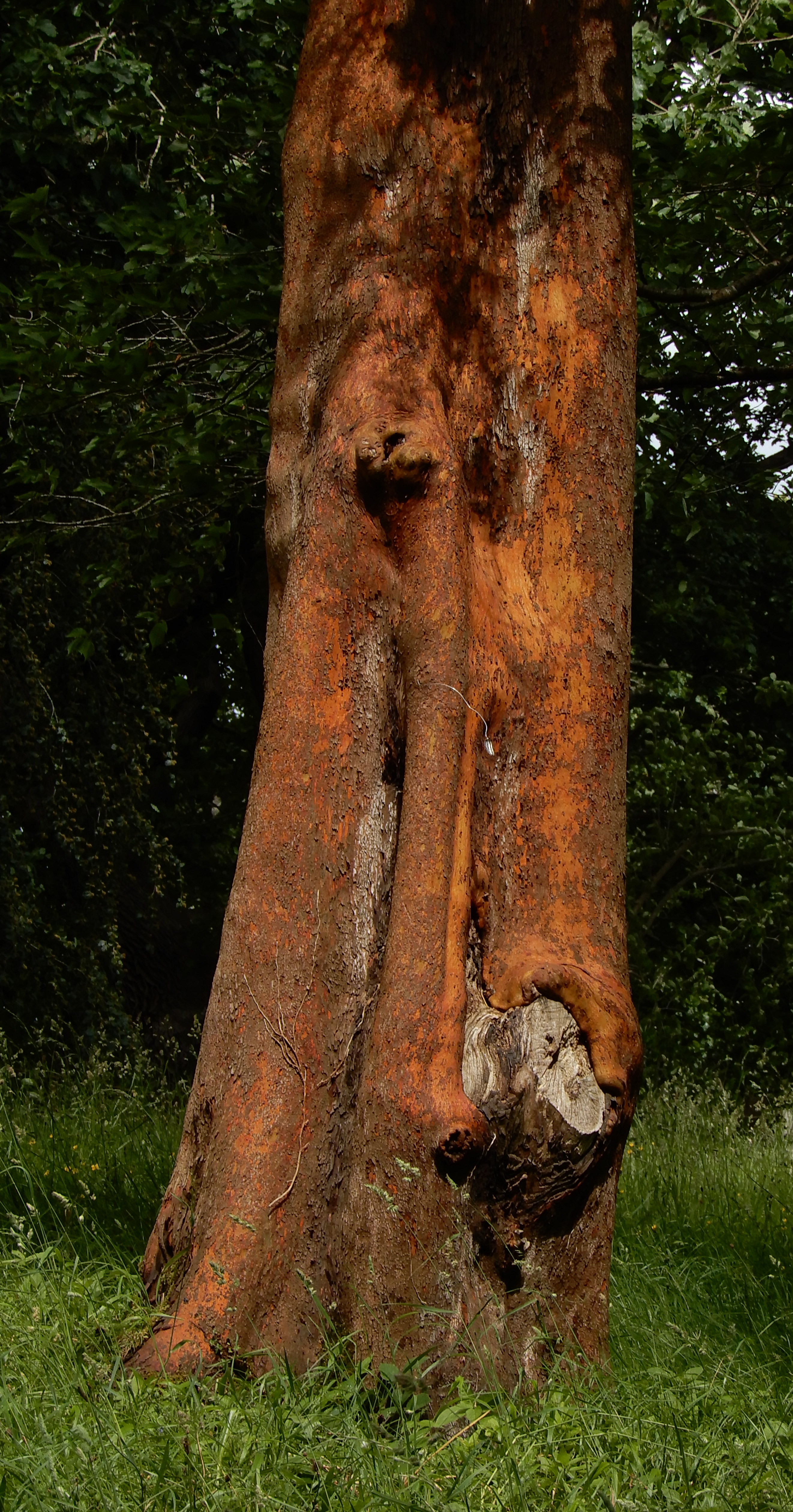
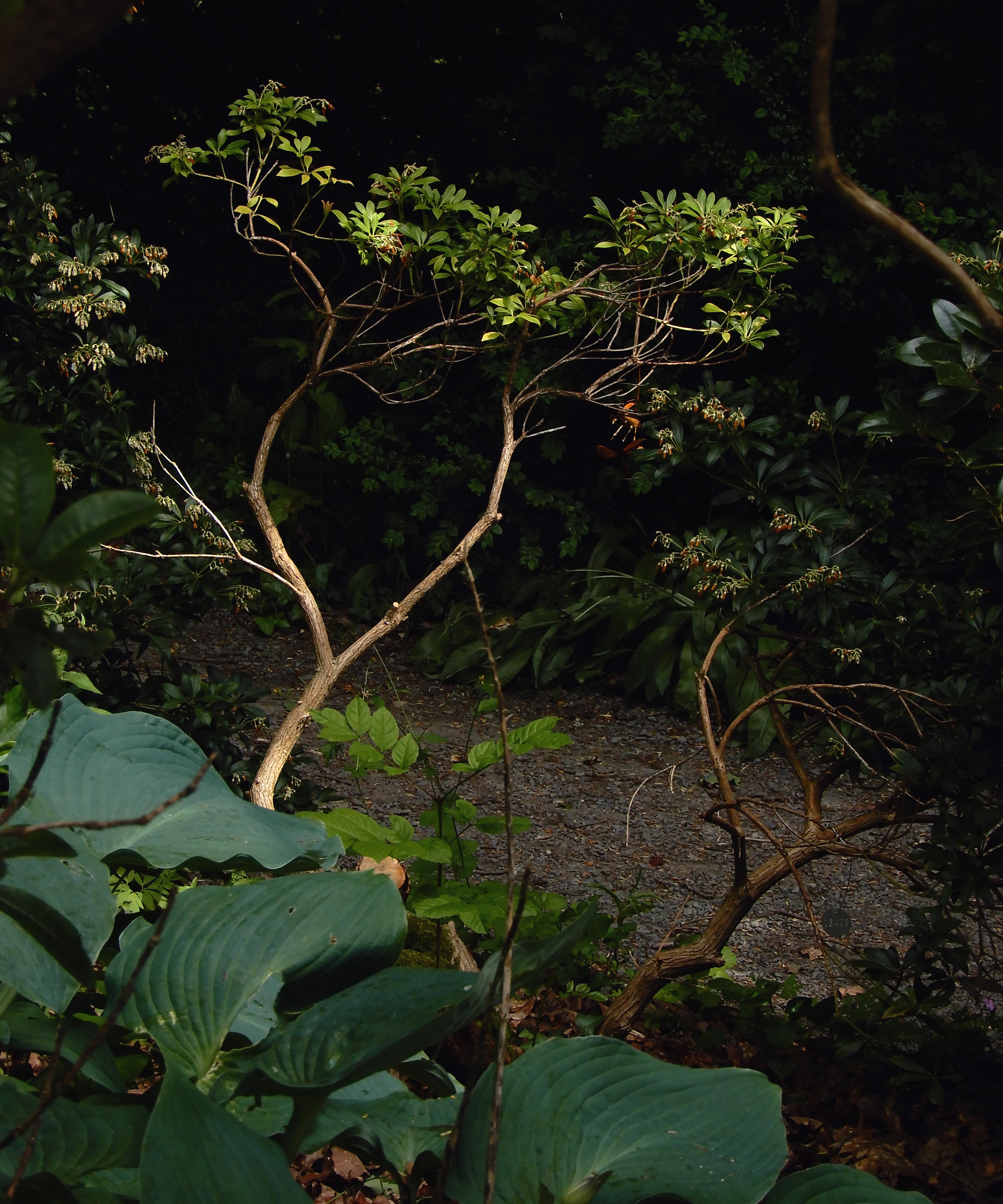
The light varied. As we descended into the gully, cut by a fast-moving stream, it grew dark—not because the clouds had obscured the sun, but because the foliage had. As we walked along the stream, it got lighter. We found some old stone buildings, repurposed into a refreshment center. We however needed to head back to our bus and Llandudno.