Book sadness

August 2026

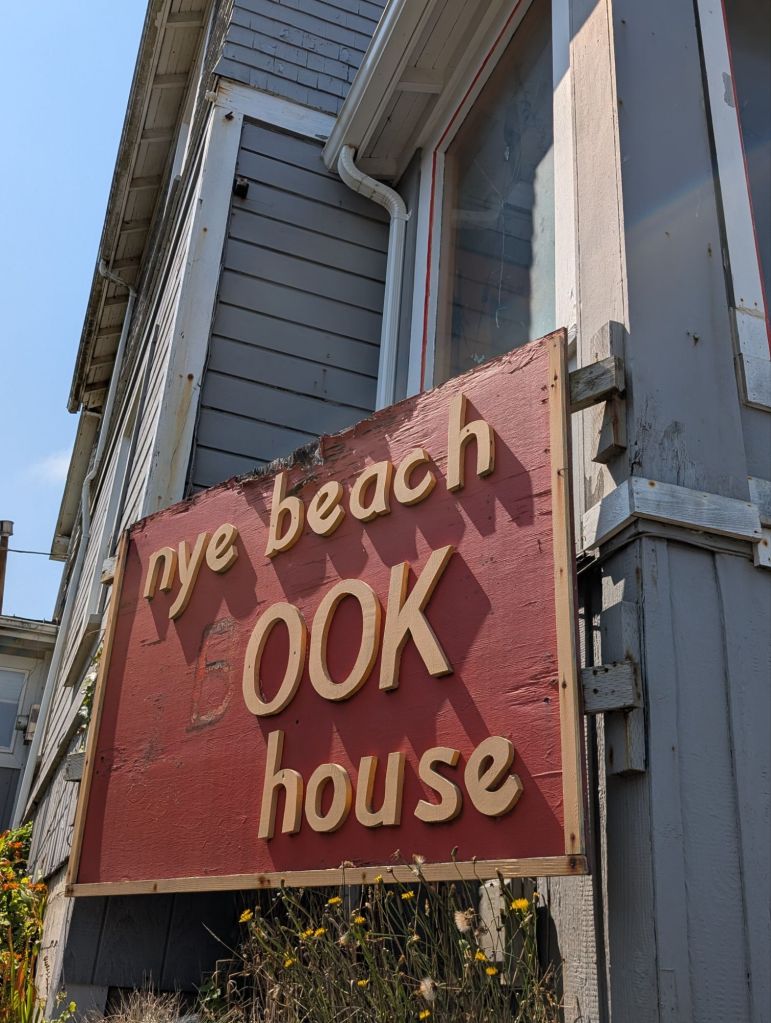
In 2011 I had one of the most serendipitously good book-buying experiences of my life. Perhaps it was aided by occurring in the middle of a family vacation I had arranged. My little family (parents, brother, niece, and wife) had gathered in a vacation rental on a bluff just north of Newport, OR, overlooking the Pacific Ocean. On a typically rainy day in early October we trotted from shop to shop in the Nye Beach district. Seeing a quaint bookstore, I headed up the stairs.

Inside, a multi-leveled converted house crammed full of books greeted us. I purchased four wonderful books, used. For very little money I bought:

  • The Book of Bob, by Paul Chasman, easily the weakest book of the four, but highly enjoyable nevertheless. “In the beginning, Bob didn’t plan to start a religion; it just happened.” That’s the opening line. Written during the two George W. Bush administrations, it takes a swipe at them, but mostly it pokes fun at the craziness of American society and religion, of course.
  • Buddenbrooks: The Decline of a Family by Thomas Mann. What a fantastic introduction to Thomas Mann! And fittingly, it was his first novel. Primarily chronicling the decline of a wealthy north German merchant family—images of which still reside in memory, popping out on occasion—it also gives a great portrait of the wealthy in Hamburg in the middle decades of the 1800’s. Though it was published 125 years ago, it reads “more modern” when compared to other authors publishing 1880-1925.
  • Anna Karenina by Leo Tolstoy, translated by Richard Pevear and Larissa Volokhonsky. The translators won the PEN/Book-of-the-Month Club Translation Prize for this work. Their comment was: “In their version, Anna Karenin becomes a surprising rediscovery…..Pevear and Volokhonsky may truly be said to be the reinventors of the classic Russian novel for out time.” Seeing this on the back cover and knowing it had received good press, when I saw it for ridiculously low price….
  • Shadow Country by Peter Matthiessen. It’s difficult to say how much this book has impacted me. I tumbled for Matthiessen’s The Snow Leopard in the very early 1980’s, and when I read Killing Mr. Watson sometime in the late 1990’s or early 2000’s, I just got captured by this vague, tenuous storyline which fictionalizes a real historical event: the killing of Edgar “Bloody” Watson by a posse of his neighbors in 1910 in Florida’s Ten Thousand Islands. Imagine encountering this book and discovering two things: Matthiessen had actually written a trilogy about this event through the 90’s and then collected them into one volume, which he rewrote, condensing them to this one volume. I felt like I’d struck gold. In the second volume of the story, Watson’s son’s story is told from adulthood (with flashbacks) as he attempts to figure out his father’s tumultuous life which led to his death. In the final installment, Watson’s story is told from his point of view, childhood to his demise. With each volume we get a richer understanding of the conflicting points of view which collided there in southern Florida. The best fiction illuminates without overtly preaching, and this trilogy leaves us wondering how guilty Watson was, though understanding how he could have provoked his own killing. Unfortunately I did several things which led to me not having this book in my library anymore. I loaned the trilogy to a very good friend, but ve-e-e-r-r-ry slow reader. That was 11 years ago. Last year I donated the original book, Killing Mr. Watson to a local bookstore dealing in used books. Then, just three weeks ago, I visited my slow-reading friend who offered the book back to me (unread), but I mentally mistook this book for the one-volume story and told him to keep it. Oh well.

Five days after I mistakenly left a cherished book in another’s hands, I had the opportunity to revisit the Nye Beach Book House where I had bought these wonderfully received books. Sadly, I found it had closed only ten months before.

I know where all but the most outstanding independent booksellers are headed. Too much of what they offered can be easily handled online. I buy 95% of my books to be delivered to the Kindle app. I might be 72, but the ability to make the text bigger, to look up an unknown word just by highlighting it, and to mark passages and be able to find them again is just irresistible. Yes, there is an aesthetic plus to a physical book, but when I occasionally read them these days, I feel hampered by the inability to do those things an e-book can do. But…I thought a store like Nye Beach Book House would survive, especially given its touristy location in Newport, OR.

But readers like me, more than young readers, must shoulder the bulk of the blame. As I’ve just described, I have many positive reasons to read an e-book, and few to read a physical book. Physical books require light and that’s an issue when I’m sitting in bed trying to drag the bedside lamp ever-closer. I’ve tried those so-called ‘book lights’ and hated them all. Physical books require me to hold them. I currently have lifting restrictions on both arms due to break the radius in both of them. Minor things: it’s easier to lose your place in a physical book—whoops, the bookmark just fell out, or, I just dropped the book; I worry about bending the pages; some are printed poorly.

FWIW, my unread book status is just five books short of 400. But of those, we must note (with embarrassment) that only 262 are not “reference” books of which the vast majority are cookbooks. My library cataloging program, LibraryThing, has many strengths, but doing a complicated Boolean search doesn’t seem to be among them. We’ll have to take an educated guess and say that there are about 130 physical books I’ve tagged “to read” (or perhaps I’ve encountered and said, “nah’). Will I read these when e-books present so many positives? Yes. I just read Hamnet a physical book gifted to me by the same person who now holds my treasured Shadow Country. I’m reading a thick, thick Lord of the Rings which holds all six ‘books’ and which I’ve not read for over 40 years. I think the physical books I own will get read at a slow but steady pace, but I’m old enough to know there will be unread ones. I recently bought a book in physical form from a local arborist and native plant enthusiast. It looked too beautiful to encounter electronically.

And there’s where an e-library falls flat. I’ve purchased books which purport to reproduce the original’s photographs and illustrations, but it’s seldom if ever been as good as I know the physical book must have been. Additionally, how can I impress visitors with my vast and well-read habits! I submit:
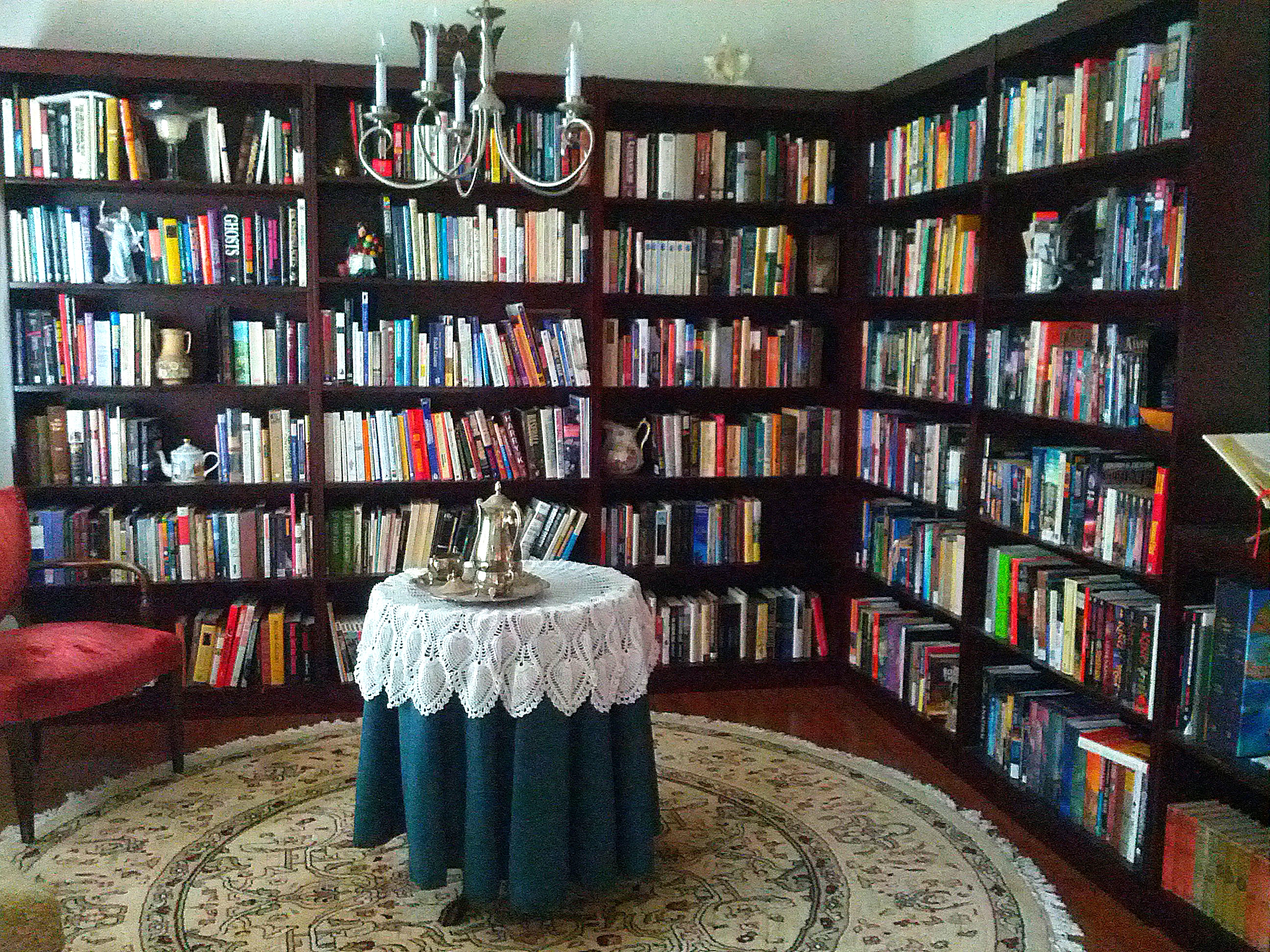
The peak of my library. Many books were left behind, some of these have departed, and few have joined. July 2012.

A well deserved shout out

I follow few blogs (he said, cringing at the fact about 150 follow his). One that I follow, belatedly, catching up to its posts when I can, is from Ben East, until recently a member of our country’s foreign service. I’m not sure what though it might have been U. S. Aid. It’s not important. What is important is that he wrote a book about some super-notable people who started in the Peace Corps and went on to distinguished careers in foreign service.

Around the time Ben published his book, he wrote this post which really hits home to the writers among us. I urge you to read it if you consider yourself a writer, even if you’ve written little.

I’ll be shouting out a couple of other blogs in the near future. Ciao for now.

Bibliophilia: books about books

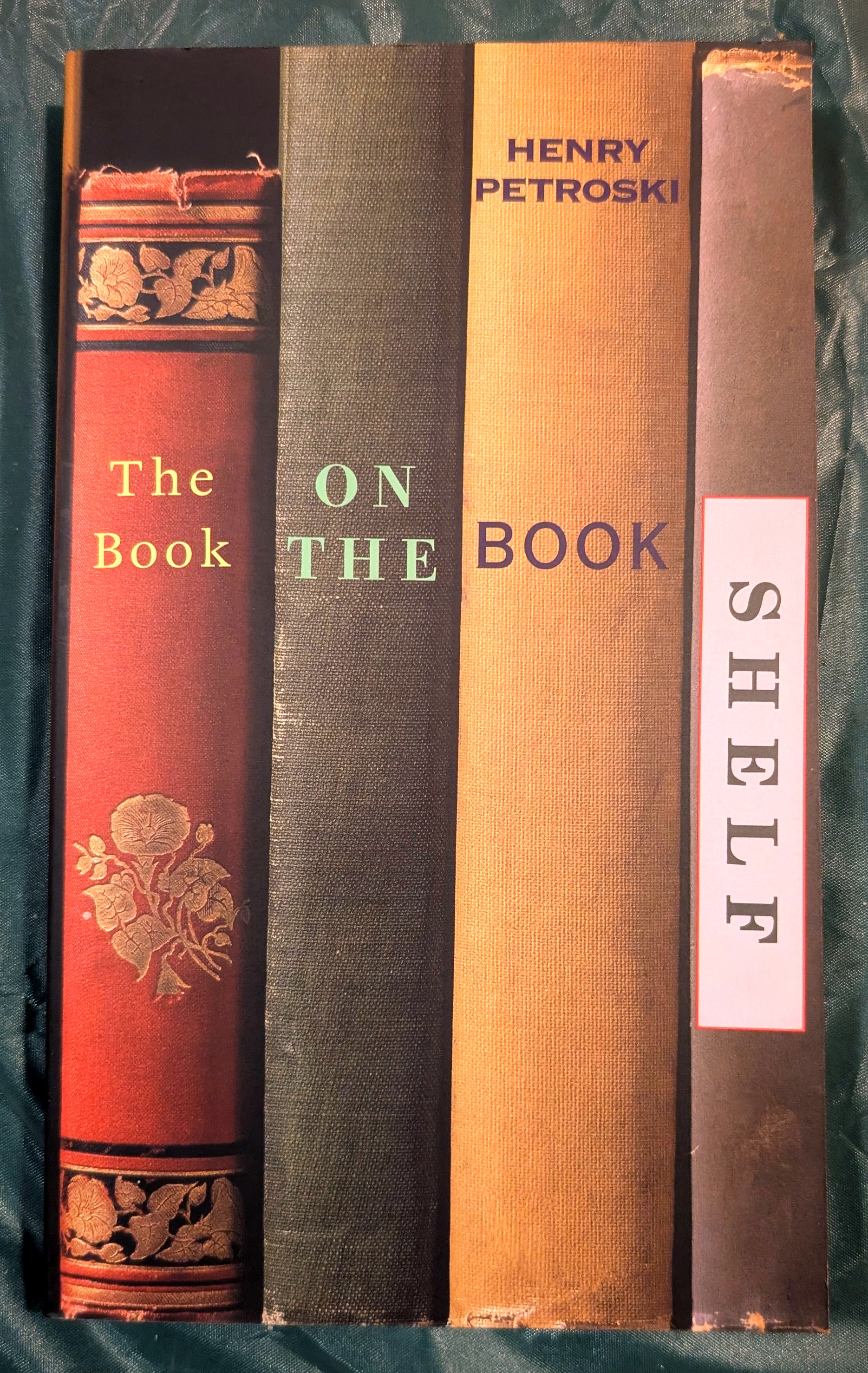
The cover to The Book On The Shelf

People who truly, truly love books, love books about books. One of the most unique of these appears above. Henry Petroski’s book The Book On The Bookshelf traces the history of books from their earliest inception as scrolls through the Middle Ages when they were chained to the shelf, and proceeds in its history to the present day. It’s a lovely read. Petroski winds up the book with a chapter about bookshops, another on the shelving of books, and a final one about the care of books.

The phrase “books about books” includes those about reading them. My original photo for this Bibliophilia subplot is repeated here:

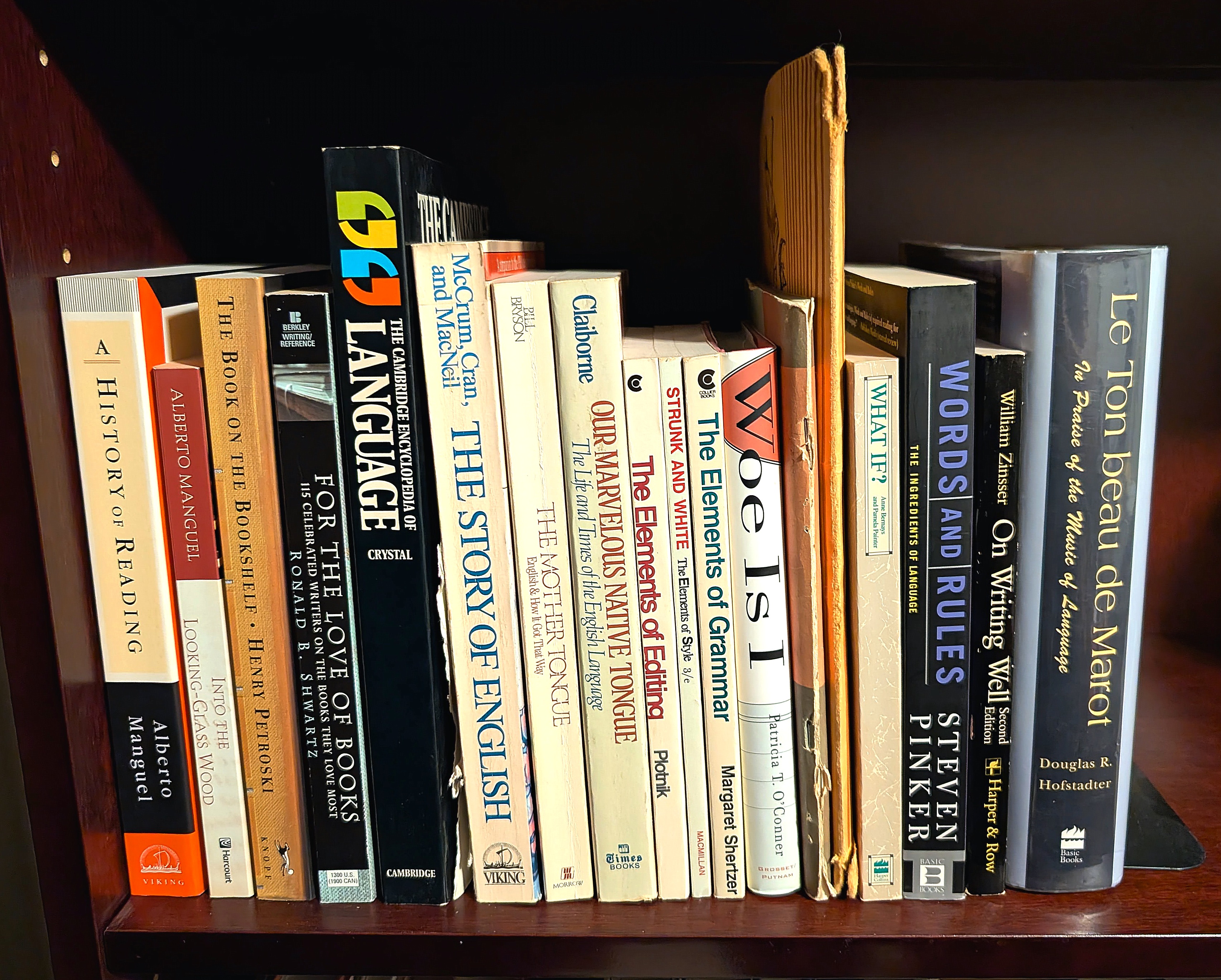
Books about books, language, grammar, and linguistics. July 2025.

In the semi-arbitrary manner I use to organize my bookshelves, books about books (and reading them) precede those which address English and languages. Alberto Manguel, an Argentine-Canadian writer (and translator, editor, essayist, and director of the National Library of Argentina) has two entries, both wonderful. A History of Reading celebrates the reader. With chapters such as “Being Read To” and “The Missing First Page” Manguel explores all of the aspects of the author-reader experience. Manguel divides the book into two sections: “Acts of Reading” and “Powers of the Reader”. I particularly liked this second section with its chapters of “The Author as Reader” and “The Book Fool”.

Manguel’s other book, Into The Looking-Glass Wood contains essays about books and reading. These range more widely than his History of Reading. Essays include reviews, reactions to other authors, browsing for books, essays about wordplay, and other more wide-ranging topics.

Ronald B. Shwartz’s book For The Love Of Books gets included here, simply because it’s on the shelf, and I can’t bear to part with it despite its shortcomings. I’m not one for the types of books which sample a range of acclaimed artists about a certain topic. This book gets the subtitle “115 Celebrated Writers On The Books They Love Most”. Yeah, so? What makes their opinion better or even equal to the critic for the New York Times Review of Books? Or any literature professor at dozens of highly regarded universities? Or, frankly, me? Regardless, I succumbed when I saw the authors cited include Joyce Carol Oates, Michael Ondaatje, John Irving, Bruce Jay Friedman, Doris Lessing, Norman Mailer, Witold Rybczynski, Kurt Vonnegut, John Updike, and Gay Talese. (Actually…I’m not sure I’ve ever completed this book! It still captures my imagination, and thus, it remains on my shelves.)

There you have it, books about books. If we can happily descend into the depths of books about books, how dare we deplore those who delve into the backgrounds of various oeuvres such as Tolkien’s Lord of the Rings? A nerd is a nerd is a nerd…

Book review: Watering Words

Watering Words: 52 Short Stories by Bridgette Kay.
Self-published 2025. ISBN: 979-8-218-58862-5

Artists differ from most of the rest of humanity. Artists tap emotions and experiences others prefer to hide or, at best, to reveal carefully to select individuals and audiences. Unlike the careful revelation practiced by most, artists display their work on the public walls like graffiti in subways. Wedged between “For a good time, call ###” and obscenities, the artist inserts a portrait, often rooted in pain or struggle and rendered in words, brushstrokes, sculpted metal, or other media. Where most humans rush to clothe their naked feelings, the artist drops such obscurations to the ground and invites the errant passerby to look, but more than that, to judge. This is how they differ: they invite comment upon creations rooted in their own psyches, their own souls.

Humans hurt. We all hurt. We bear our wounds heroically, badly, simperingly, stoically, resentfully, and sometimes all of these and more depending on the time of day. Authors live with the uncomfortable knowledge that their wounds, their innermost thoughts, beliefs, prejudices, emotions, and most of all, memories, will bleed out—must bleed out—onto the pages they write, an emotional, psychic wound which perversely will not staunch without being exposed. It’s analogous to being handed a bite bar and hearing, “this is gonna hurt but you’ll thank me later.” Authors bleed out into their words and wait for the comments, but in truth, their healing began when the words gelled, the pages were printed, and the books displayed.

Commenting in any manner on such courageous behavior feels wrong. There cannot be a wrong way “to art.” As a teacher of English, though, I learned there exist many wrong ways to connect with an audience. And ultimately, anyone who publishes a book expects an audience to react to it. I’ve followed Kay’s blog Bridgette Tales for several years. Her personal revelations in that space represent why blogs need to be written. Done honestly and well, a blog sends joy and pain and struggle and hope out to the world, asking only to be heard. In the process, blogs show others, “Look! I hurt like you, love sunsets like you, see little clumps of moss like you, and I revel in it, even the painful stuff.” They build the global community. It came as a relief, then, when I discovered the stories were actually good. I’ve seen many a near-breathless author hand me something with excitement in their eyes and words, only to find upon reading it that the author hadn’t a clue either about constructing a story or writing one.

Don’t read Watering Words expecting John Cheever. These stories are not “high literature”—they instead represent what most readers look for: engaging stories with whimsy, a little magic, humor, and told with style. These stories speak less to the human condition than to one human’s condition. As one who has followed her blog, I see the pain, longing, fears, insecurities, joy, laughter, righteousness, sadness, glee, and maturity I’ve sensed in her near-daily posts. Two of the early stories stand out.

In the first story, “Waiting For The Bus”, every author will resonate with Kay’s personification of all those fears and excuses with which we keep ourselves from writing. The narrator’s ultimate triumph echoes Kay’s, I’m sure. And in “Final Goodbye” I invest my supposition that Kay writes of a home in her past (at least symbolically). I detect references to tragedies mentioned on her blog, but leave them for others to discover.

Read this book. Read it not for “high” literature but for “hi” literature: an author reaching out and saying, “Here I am. I’m saying it as best, as entertainingly as I can. Do you see me? Do you feel the same?

“Do your wounds match mine?”