Tonight
Our cheap Monet poster
mounted on Styrofoam--
bowed, faded, purchased for
$2 at a garage sale,
displayed for three years,
neglected for eight—
finally found purpose again
covering Ethernet cabling
which carries premium network
signals from one room to another.
As I walked across it, I said,
"Sorry, Claude. Such becomes of genius."
Charlie, seen here two weeks into his stay with us, and letting us know that warm laundry out of the dryer is for sleeping and nothing else. January 2016.
A MOTHERS DAY GREETING
by Susan Pilcher

The cat blinked once,
The cat blinked twice,
'I love you, Mom.
That should suffice.'
Benny adds, “…and luggage…luggage is for sleeping also.” May 2021.
To those who face the frailties of life and to those who have transitioned elsewhere…
We're marching to our deaths at birth
Then unaware of Life's propose.
Plans made, plans dashed, let's laugh with mirth
As march we must to last repose.

When first we view our life's true end,
Made real by year, yet not by day,
We vow to hoard, vow not to spend
More time in idleness, in play.

Not 'til our bodies tell us true,
Our end looms close, looms real,
Do we admit, "I wish I knew–
Please, one more spin around your wheel."

This knowledge brings its own reward,
Knits us to others suff'ring too.
As I face down my ailments hard,
I understand how so do you.
In the past month one of my blogosphere contacts has died, and another faces a tough cancer battle. Here in the physical world a good friend struggles to walk, a second puts on a good face as her husband remisses into cancer, a third breathes slightly easier that her sister didn’t die last week, and our closest friends both battle mystery ailments. On a personal note, sciatica has said, “Remember me? I think I’m gonna stick around this time,” and my blood pressure has decided to ignore all my meds. I really can’t think of one good reason for the fact I want to grab every single person between 40 and 60 and declare insistently to their startled face, “WAKE UP! QUIT WASTING YOUR TIME! DO WHAT YOU WANT, DO WHAT YOU MUST, BUT FOR GOD’S SAKE QUIT DOING WHAT YOU DON’T WANT, WHAT YOU KNOW IS WRONG FOR YOU!!” Yeah, I wouldn’t have listened to me either. I don’t really have regrets. It’s just the shock with how quickly it changed in the past five years. There’s no way to prepare for it–but for some reason, perhaps the shock, I want to turn around a tell someonehow I never realized what this was going to be like. Sure, I’ve seen folks navigate these years, but for some reason I never saw the road that connects I’m Okay Right Now with I Am Really Old And About To Die. And I really wish I had.
I’ve come to believe everyone thinks in pictures, even if they don’t know it. By adulthood some of us go on autopilot, our connection to the pictures, images, emotion-movies cemented so far in the foundation-concrete of our makeup that we know only words anymore.
Creativity demands turning away from the words and toward the pictures. Visual creatives, you live here. Connect your hands to your pictures. We wordsmiths, though, must act as our own interpreters, must turn our backs on the pictures while remembering them, must translate the pictures into words.
At least, that’s how it works for me. When it works for me. (The rest of the time I just wander among the pictures and say to myself, “sure, I’ll remember this for later.”)
I took my tumble into poetry when I returned to college in 1981 for an English Education degree after four years spent writing and editing weekly newspapers. We were required to pick one of three concentrations: Literature, Composition, or Linguistics. While we were expected to take classes in all three areas, the majority of our coursework would occur in the concentration we chose for our major. I already possessed a degree in Communications (with a concentration in Journalism), so I chose Literature. It seemed to be the most useful choice between that and Linguistics. I don’t recall how many courses in poetry I took; I presume it was two plus I had a class in Shakespeare. (As part of my Communications degree I also had taken a course in Medieval Literature which is as much poem as prose, in my opinion.)
I remember my poetry professor as a grandfatherly figure: white hair, thick glasses, dressed always in a button-down shirt and a thin cardigan sweater. He wasn’t pedantic; rather he sought to lure us in to the beauty of poetry, slowly instilling an appreciation for the nuances which one poem achieves perhaps a bit better than another. He taught the meaning of the word “scansion” and how to do it. He taught us the formal structures of historic poetic forms, such as the various forms of sonnets. I distinctly remember he appreciated but ultimately relegated to B-status the poems of Henry Reed (“Lessons of the War: I: Naming of Parts“) and A. E. Housman (“Terence, This is Stupid Stuff“). He attempted to relate a continuum where doggerel existed on one end and truly sublime, great poetry existed on the other. “There is a difference between verse and poetry,” he insisted.
A while back I wrote a poem about why I don’t often write rhymed poems. Too many of the poems I read online from those who fancy themselves poets barely nudge the needle from where it pegs at “doggerel”. It’s down here at this end of the spectrum where we read “cowboy poems” and such. Rhymed poetry doesn’t have to be doggerel or its cousin, trite whimsy. I hope my poem might exist in the middle ground, somewhere between a clerihew and Housman’s “Terence”. Here’s the beginning of the latter:
"Terence, this is stupid stuff:
You eat your victuals fast enough;
There can't be much amiss, 'tis clear,
To see the rate you drink your beer.
My barely informed opinion about rhymed poetry? Look to Shakespeare who crafted his poems to specific rhyme schemes, with specific metric schemes which must scan appropriately. Another, more modern poet who understood how to write a poem which rhymed is Robert Frost. Here’s an example, to be discussed below:
Locked Out
(As Told to a Child)

When we locked up the house at night,
We always locked the flowers outside
And cut them off from window light.
The time I dreamed the door was tried
and brushed with buttons upon sleeves,
The flowers were out there with the thieves.
Yet nobody molested them!
We did find one nasturtium
Upon the steps with bitten stem.
I may have been to blame for that:
I always thought it must have been
Some flower I played with as I sat
At dusk to watch the moon down early.

(as transcribed from Robert Frost: Collected Poems, Prose, & Plays [The Library of America])
Is this a great poem? No, but Frost tells a small tale easily, conversationally, with rhymed words. He warns us in a sense by titling it “as told to a child” and keeps the central thoughts of the poem simple. And what’s this? He chooses not to rhyme the very last line? Doesn’t that just punch it up all the more? Great poets reveal their hand even when the poem isn’t truly great. Looking deeper, I’m reminded how just as adults get nuances out of ‘children’s cartoons’, we gather meaning in passing from lines like the first three lines. A child would take it simplistically, but we consider the symbolism of locking up all that is natural outside of ourselves, of shutting ourselves off from beauty, of starving the fair flowers of our existence from the light of our presence. Frost uses the tenth line (“I may have been to blame for that”) to zing us with a perfect iambic (dah-DAH) tetrameter (four of ’em). To my mind, it hurries us through the line as if the narrator feels a bit guilty that his inadvertent playing with a flower has been used to invoke a threat of thieves to a small child.
Those are just a few thoughts which occur to me in looking at this poem again after first reading it about a week ago. Look, I understand we’re not all four-time Pulitzer Prize winners. But can’t we at least try? Must we succumb to “My boyfriend left me/I’m feeling blue/I’ll leave the country/Now that we’re through”? Just as a prose thought can be made meaningful by converting it to poetry, consider if your poem isn’t so mundane it ought to be simply stated as prose. Making four lines rhyme A/B/A/B shows about as much skill as photographing a sunset and thinking you’re a great photographer just because you captured a glorious sight made-to-order.
I applaud the poets I read online who use blank, free-form verse yet hew to ideas of tune, rhythm, compression, precise word choice, and who frankly have something worthy to say. We can’t realistically dream we’re rhymers like Frost, or poets laureate like Stanley Kunitz, or poets-for-the-ages like Dante Alighieri. But…we can try.
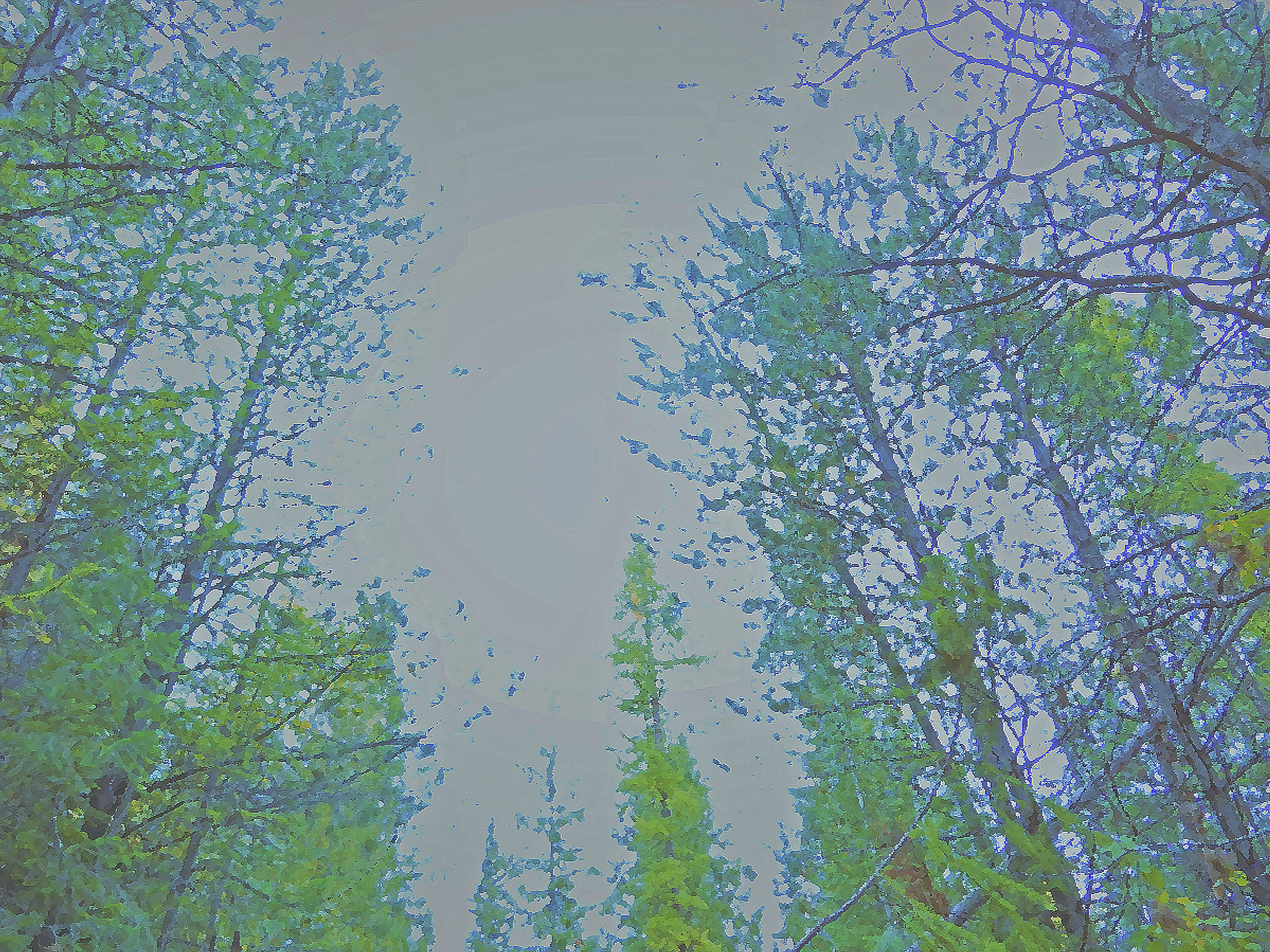
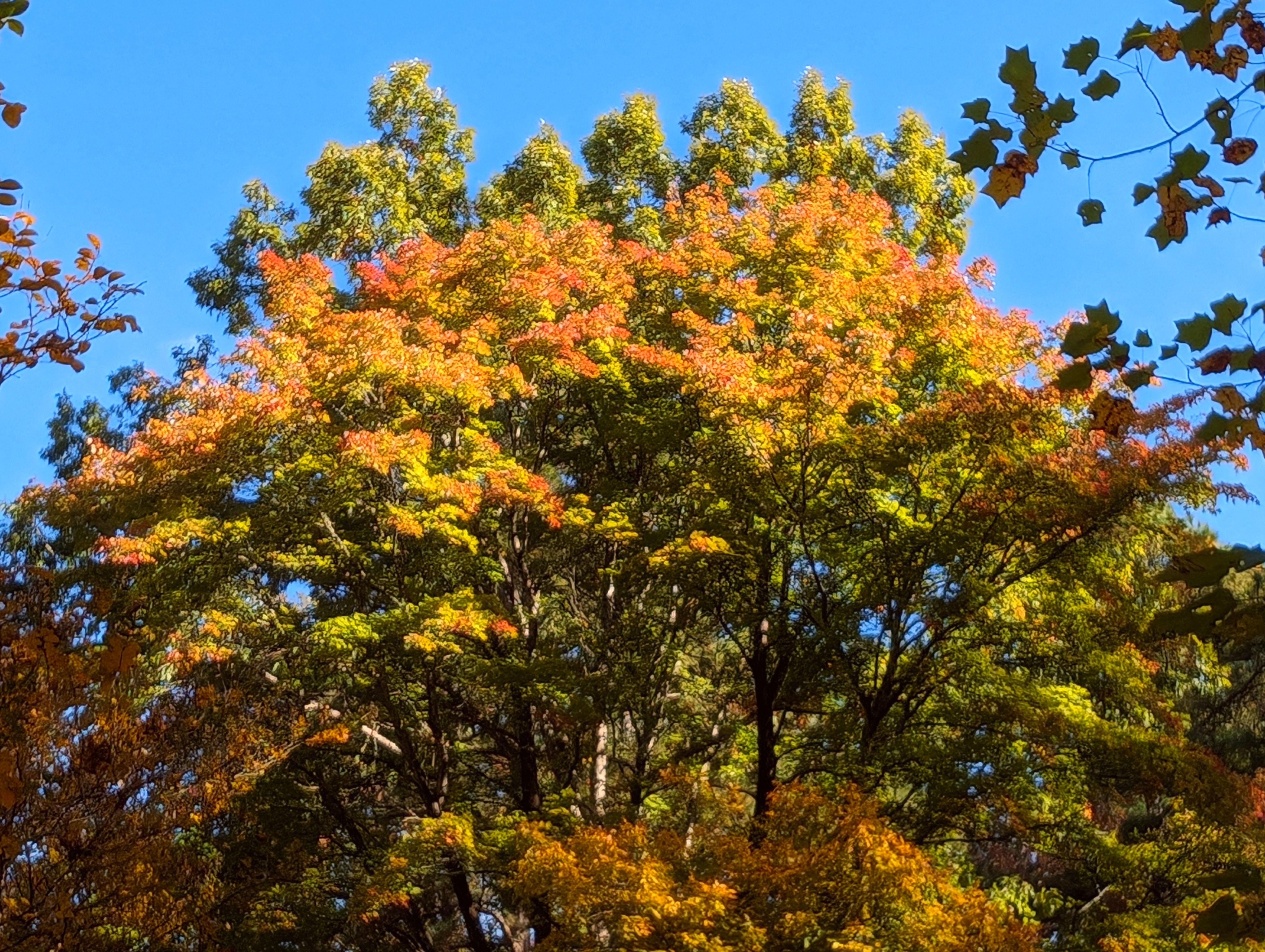
The trees blushed last night,
embarrassed they're leaving so
soon, like those party guests who
upon seeing John sit at the piano while
another round gets ordered, reach
quietly for their coats, murmuring,
"we have an early morning"...






 all the voices in my head