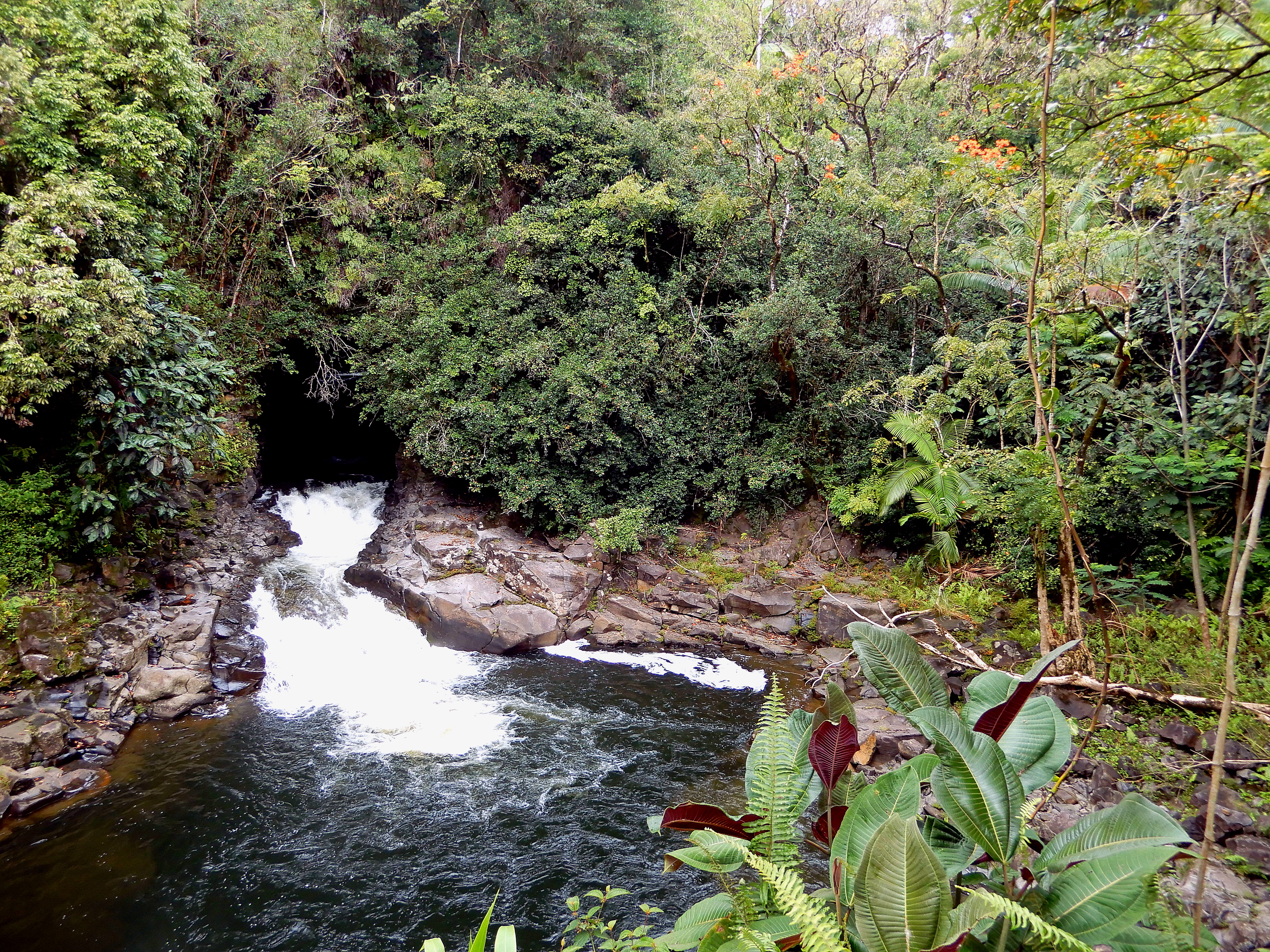
Today trains run down
Thurmond's rails laid with
promises we thought
included us, made
us integral to
those trains, controlling them.
Those trains controlled us.
Today, trains still run
through Thurmond, still
sound horns at crossings
where tourists gape their
tourist-gapes, where grass
reclaims what we wrested
from this steep slope.
Us? We melted into
America: most to
nearby towns, some to
Cincy or places
far-flung like bits of coal
escaping from tenders
serving locomotives.
Stocks dove mortally,
banks failed. Ours held on:
two years, five years...
then closed or left. Our
hotels burned, fell down.
Yet tightly we clung
to traditions learned.
Progress ushered steam
engines into history.
Their coal waited uselessly
beside steel tracks. It
heated our homes, true,
but offered nothing more:
we couldn't eat coal.
We sought regular
meals elsewhere, hungry.
Federals bought up what
we never owned anyway.
Thurmond's landed stayed,
profited, found new cows
from which to milk money.
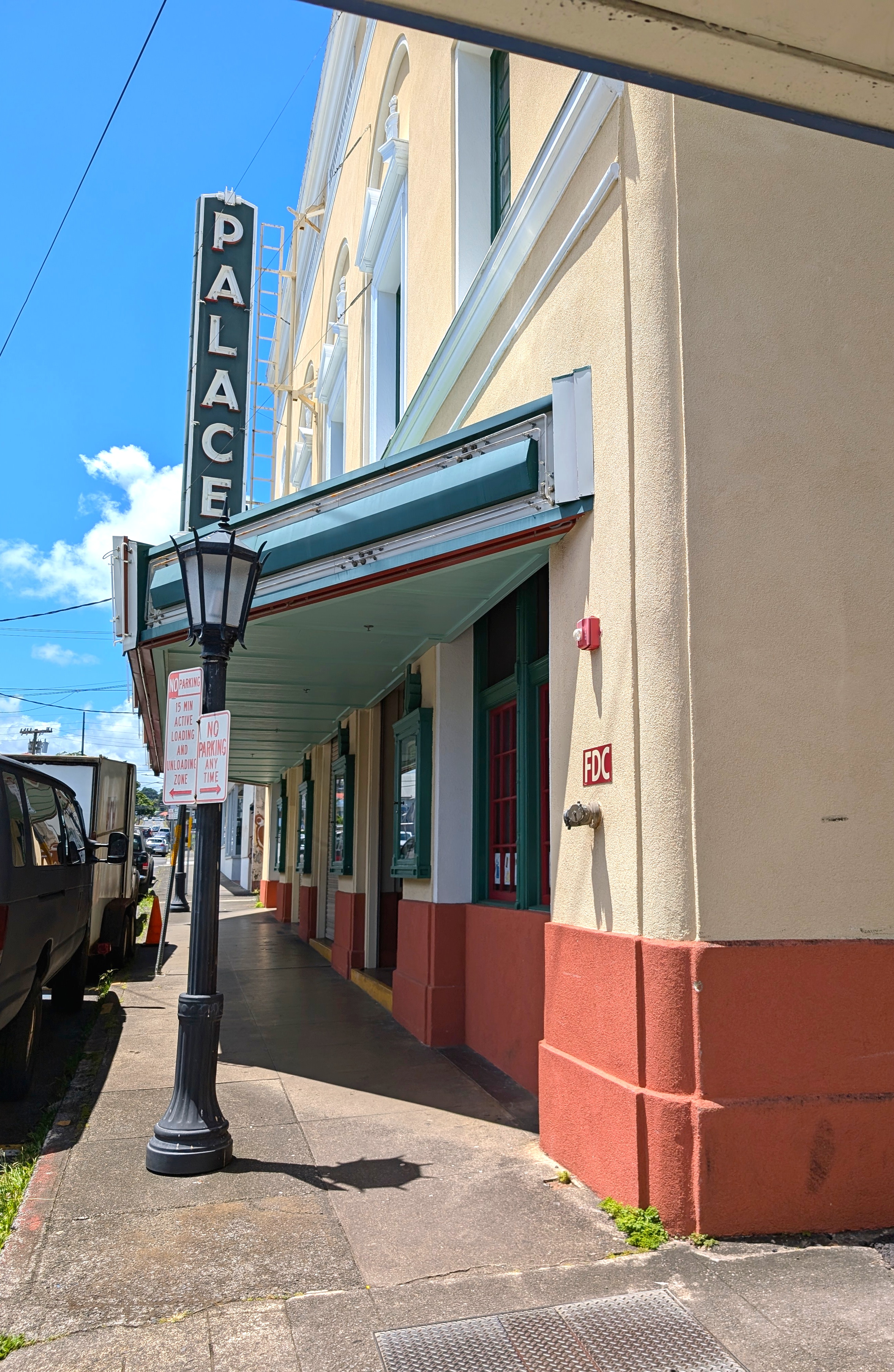
(All photographs were taken in Thurmond, WV, July 2023. Though Thurmond dried up after steam engines ceased to ply the lines–the last one in the early 1950’s–a few persons hung on. In 2020, the population was five.)
This morning we visited New River Gorge National Park & Preserve. We had only a few hours, though, and this park lends itself to a segmented number of visits: there are four distinct areas, none connecting to the other. We chose the Thurmond area where an abandoned town thrived through the early 1900’s then slowly withered away as steam-powered trains no longer needed West Virginia coal.
Here’s what once was a thriving bank:
The bank looks out to a pair of still-in-use railroad tracks–we had to wait for a freight before crossing to this main street of the town–and then to the New River, barely glimpsed through the trees.
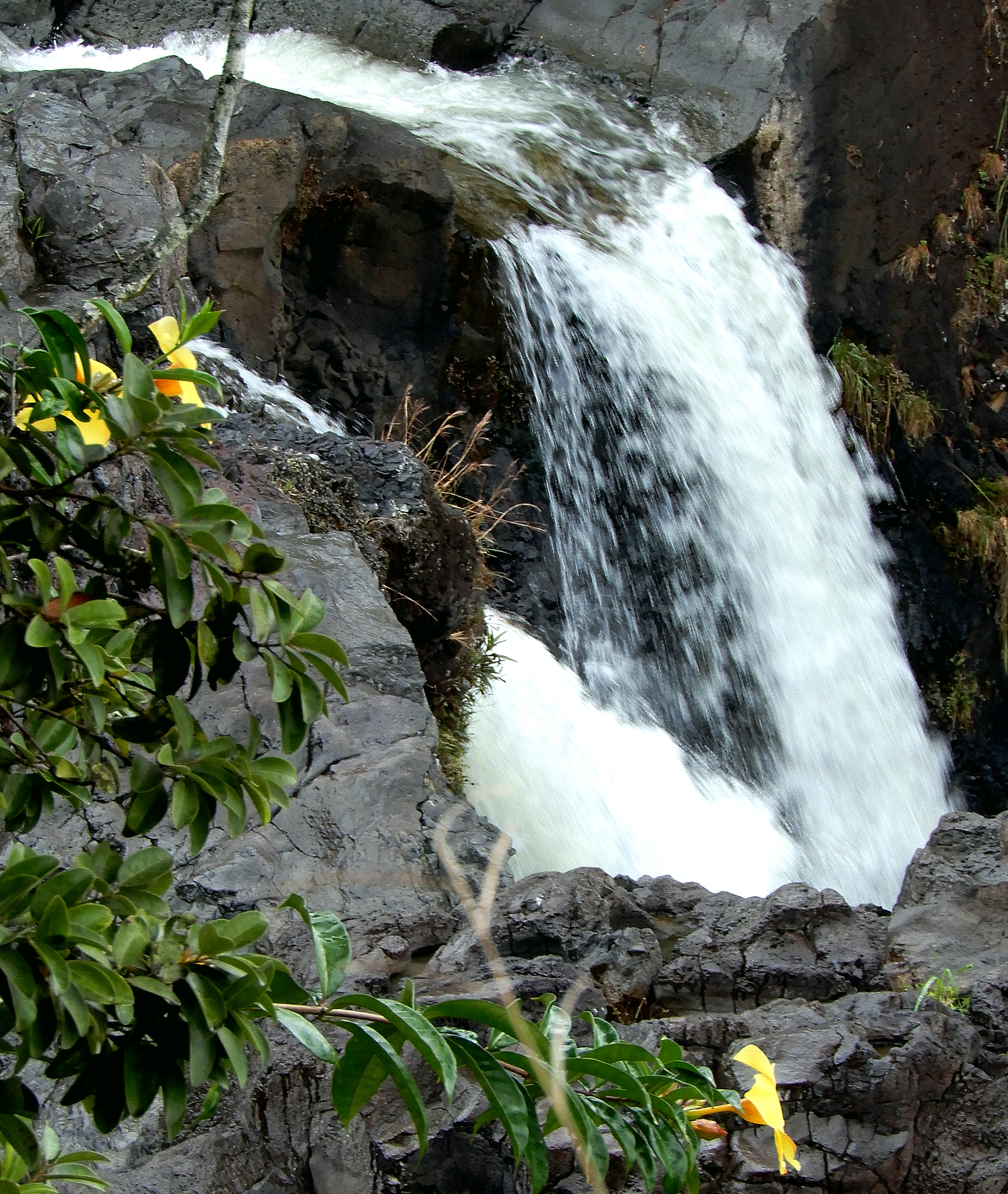
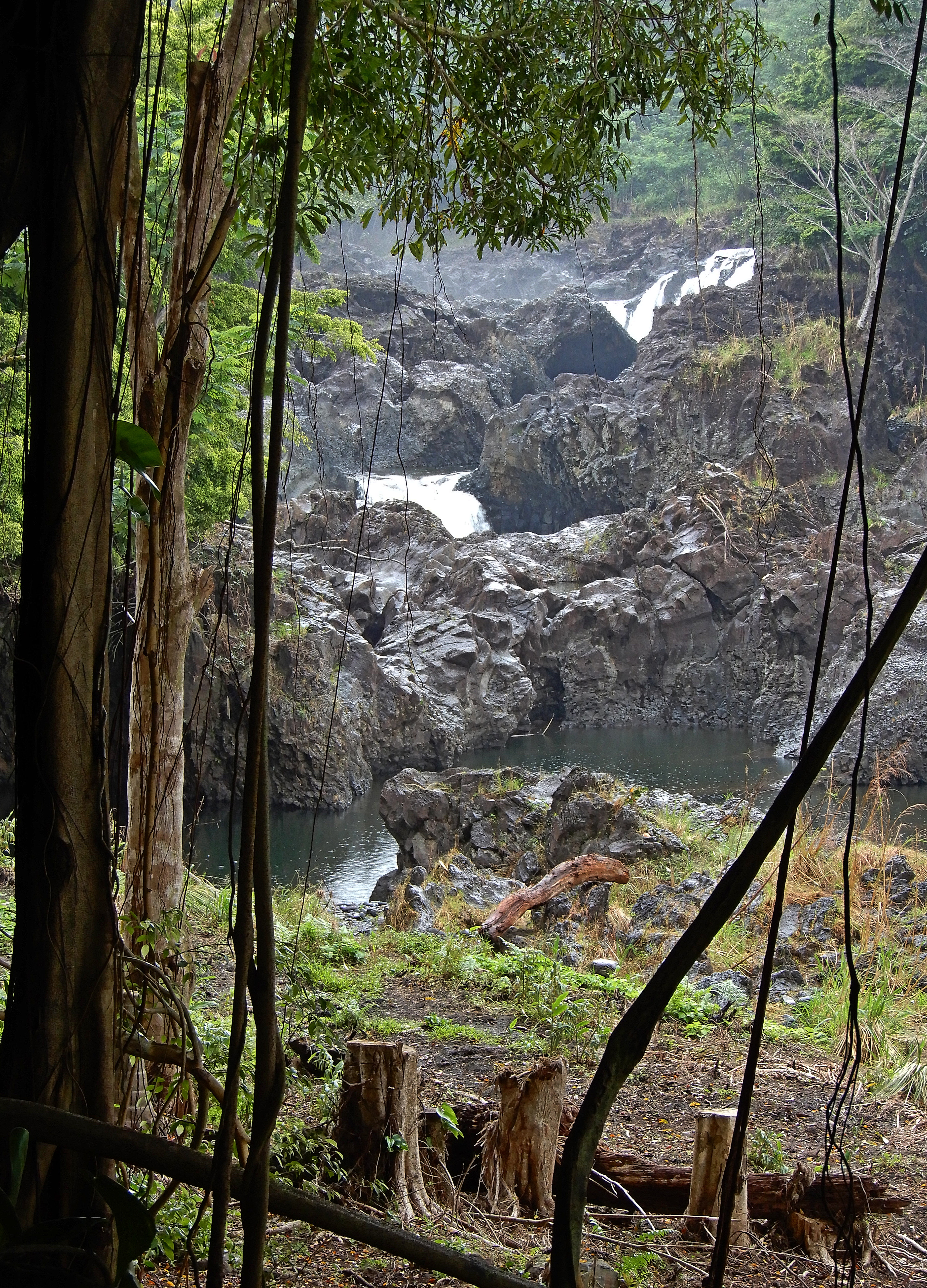
On the way back we stopped at a vehicle turnout beside Dunloup Falls to lunch on the leftover steak from dinner last night, stuffed into some soft rolls (also from dinner):
We then pointed our vehicle along the canopied road, joined the USA’s interstate system and motored to Cincinnati.
Fog at the mouth of the Columbia River sets a standard for fog. Fog defines where Oregon and Washington share its outlet to the Pacific. It also defined my nascent and up-to-then non-existent career as I drove to Ilwaco, WA, and my second job interview of that early weekend in December 1977.
Car-less at that point of my life, my folks loaned me a 1968 Ford Galaxie 500. Though only nine years old, one could see already why it had been handed down. I piloted this coffin on wheels toward the southwestern tip of Washington through a typically drizzly early winter day in the western part of the state. “Man, talk about wet!” I muttered. At the same time I thought this, I drove my 1968 Ford Galaxie 500 into a fog bank. Until that point of my life–all 23 years of it–I don’t think I had ever realized what the phrase “bank of fog” meant. Within 100 yards I drove from a gray, drizzly day into a shroud of bright nothingness. I could barely make out the highway signs along the shoulder of the road.
How had I gotten here?
Simple. In mid-December 1977 I found myself in imminent need of a job. The University of Washington School of Communications planned to foist me on society with a degree. I had trained, in a mediocre fashion, for a job as a reporter. I realized I wouldn’t get any top-tier jobs at the dailies of Washington State, Idaho, Oregon, and I wasn’t plugged into destinations further away. (No Internet, no networking skills, no time spent learning about how to get jobs pretty much anywhere.) The state association of independent weekly newspaper publishers had to do. For one thing, the association headquartered itself in Seattle just a couple miles from the University campus. I figured, correctly as it turned out, they would be desperate (in a relative sense). Our corner of the US hadn’t experienced the stagflation of the Carter Administration, and talented graduates don’t seek jobs with weekly newspapers. Neither do most graduates want to head to the hinterlands to report about social teas, high school sports, and local city council meetings. It sounded easier, and I was all about easy, then and now.
Shortly after finishing my final final, I traveled to my parents’ home in Spokane. Once there, I gorged on home cooking, spoke to them as little as possible, and grabbed their old Ford for some serious job hunting.
My first stop that early December weekend was in Moses Lake, afairly strange place if you’re from outside of the state. To us it merely offered a respite in the cross-state drive. I met a married couple who owned and managed two newspapers. One was a weekly in Ritzville, WA, which is a small farming-oriented community at the northern edge of the Palouse wheatfields where it enjoys a location on the main east-west corridor through the state, I-90. They also published a paper in Cle Elum, but I do not remember if it was the Miner Echo or the Northern Kittitas County Tribune. I tend to think it was the former.
The owners were salt-of-the-earth, don’t-give-me-shit small business owners in a small community, a class of person I soon was to become deeply knowledgeable about. They didn’t make the job sound attractive. And they offered $125 a week. (Keep that figure in mind.) I told them I was interviewing elsewhere, and I would let them know. Notice they offered me a job on the spot. My alarm was sounding, but not loudly: I had kinda figured this wouldn’t be extremely difficult. A theme of my life to that point, and for a goodly part of my life from thereafter, was to flow into the path of least resistance.
This was a Saturday. I continued after the interview to drive westward, arriving at my dorm sometime in the late afternoon. (What a “thrill” to park a car in the student garage like all the kids that had more money than I did!) On Sunday I got myself up at a non-student, responsible hour, got in the car again, and headed to Ilwaco where an interview at the Chinook Observer awaited me.
My encounter with the fog bank said, “Welcome to Ilwaco.” It continued, growing more dense as I got into town. I found the office and parked outside. Upon knocking on the door, I was met by a pasty-complexioned man who owned the paper. He seemed ill at ease, hesitant, insecure. I immediately wondered how a man could own a weekly newspaper, the klaxon of any community, the polestar of community ire, and have a personality like this. We had a milquetoast interview and he offered me my second job in two days, also at $125/week. He seemed upset when I said I already had one offer on the table and another interview pending.
The Skykomish River near Monroe, WA, at dawn. There is a river there. And trees on the far bank. Almost as foggy as the mouth of the Columbia River near Ilwaco. Sometime in 1979 or 1980.
On Tuesday two days later I headed to Monroe, WA. Only 15 miles east of Everett and about 30 miles from my dorm in Seattle, Monroe was the gateway to the North Cascades via US Highway 2. Tuesdays, I learned later, was publication day which meant that the paper was being “put to bed” while I interviewed with the owner. I omit his name in case I say something which might get me in trouble.
This interview started out weird and stayed weird. The antithesis of the Ilwaco publisher faced me. He’d served as motorcycle courier in World War II in Europe, and he carried that hard-bitten attitude with him. He revered John Wayne. He kept Cutty Sark in his desk drawer. He ended the interview thusly: “So…I can start you at $150 per week. When can you start?” I trotted out my now-practiced “well-I-have-other-offers-on-the-table” speech and he said, “Well, call them and tell them you’ve accepted this position!” I was caught off guard. He asked, “Do you want this job or not?” I thought (quickly) about $25 more per week. He was offering $7800 per year. In 1977 more than 25% of Americans earned less than this. I was young. Earning less than the median American ($13,572) didn’t sound that awful. I would be working as a reporter. I told him yes, I would give those others a call. He said:
“We’ve got phones, I’ve got an extra office. You can call from there.”
So I wound up on a Tuesday in mid-December sitting in what was definitely not an office but more a glorified cube (and would soon become my cube), calling the other two publishers and telling them that I had accepted an offer elsewhere.
Because we were at this point looking at the issue which would come out right before Christmas, we agreed it would make the most sense for me to arrive right after Christmas and start work on Monday the 27th. I got in the old Ford Galaxie, drove to my dorm, cleaned it out, and drove to Spokane. I celebrated Christmas with my family, including my brother, home from a separate university in the state.
On Sunday the 26th I drove across the state for the fourth time that month, the old Galaxie towing a U-Haul trailer with all my possessions. I got to my mother’s childhood home in Seattle very late afternoon, when it was dark. There my grandparents bequeathed me a chair and some other odds and ends, some of which–like the chair–I own to this day, more than 40 years later. I pulled into the parking lot for the Monroe Motel later that evening, checked in, and reported to work the next morning.
Fog defines my entire job interviewing process and my newspaper work thereafter. I’d no idea what I really wanted to do other than write. I couldn’t discern which job sounded better until the last publisher just plain told me. I stumbled through my first year until I managed to trust that all those empty inches would somehow be filled by Deadline Day. Less than four years later I drifted into something else.
Four Sundays have passed since last I posted, and more than a month since anything of significance graced (?) this blog. Let’s catch up and be witty about it (I hope). In mostly reverse order….
Red oak with tree trimmers. Raleigh, NC. June 2023.
In the photo above a local tree-trimming service prepares to limb the dead branches out of this fine red oak in our front yard. Most of the branches overhang the street or sidewalk and thus pose a safety risk for anything/anyone who happens to be beneath them. I could try to describe where they are in that photo, but only one is distinct. It’s in the upper, left-center of the photo, a dark silhouette against the light green pines behind it. No, not that one. The one snaking down away from it. In all, the two-man crew lopped four main branches and about a half dozen minor ones. The thick end of the branches measured six to eight inches, and I got a nice box of firewood out of it all. This company has given up cutting trees down (losing 30% of their revenue stream in the process), focusing instead on maintaining the health of the ones we still have on this planet. Further, they offer to return your yard to a natural meadow state (for a pretty hefty fee), something we are seriously contemplating. They use organic, natural substances for maintaining shrubs and trees. They help support the native plants and help eradicate or tame the non-natives. I’m pretty stoked about it–if we go the full makeover route, I may give them free advertising by mentioning their name!
Backyard bird feeding station #2. Raleigh, NC. June 2023.
“Month of Sundays” continues: I’m embarrassed to put up such a mundane photo, but I’ve yet to take any good ones. Last Sunday we sat to enjoy this new bird feeding station erected the day before. The squirrel/raccoon baffle works, at least for squirrels anyway, and by including mealworms in the feeder on the right I’ve managed to entice the bluebirds to feed once again. (Haven’t seen them since I quit offering mealworms about nine months ago–long and boring story.) I’m excited to use a Nikon app to link my camera to my phone and take photos of the birds without being anywhere near either them or the camera. It should be good. (It may not work at all, but permit me my optimism.) Installing this pole system proved serendipitous: the same day I planned to install the new pole system, I found the nice, squirrel-proof feeder which normally sits on the pole in the background nearly torn off, likely by something big, like a raccoon, perhaps a possum. Three of four nut-and-bolt fasteners were gone, and it hung sideways by the final remaining one.
Makin’ tortilla chips. May 2023.
Not exactly another Sunday back: the penultimate day of May I spent preparing what I call Deconstructed Nachos. It starts with taking all those fading tortillas which we never can keep up with and turning them into chips. We had several avocados at peak ripeness; they became guacamole. Some heirloom beans (Buckeyes, I think) from Rancho Gordo received the Mexican-flavored cooking I favor, using a recipe from a book I’ve carted around for 45 years. Using the same cookbook, I turned them into a bean dip. Then we just dip the chips instead of piling the ‘stuff’ on top of the chips. Sometimes I’ll make a picadillo, but we skipped it this time, and indeed skipped the melted cheese on top. Goodbye May! You were delicious!
In the past two months there has been baking….
Poppy rolls from the book From Scratch by Michael Ruhlman, baked in a cast iron skillet. They held lots of shredded pork and coleslaw and were dressed with Lexington BBQ sauce. May 2023.Hearth bread from The Bread Bible by Rose Levy Beranbaum. May 2023.
There was altogether wa-a-a-ay too much of this…
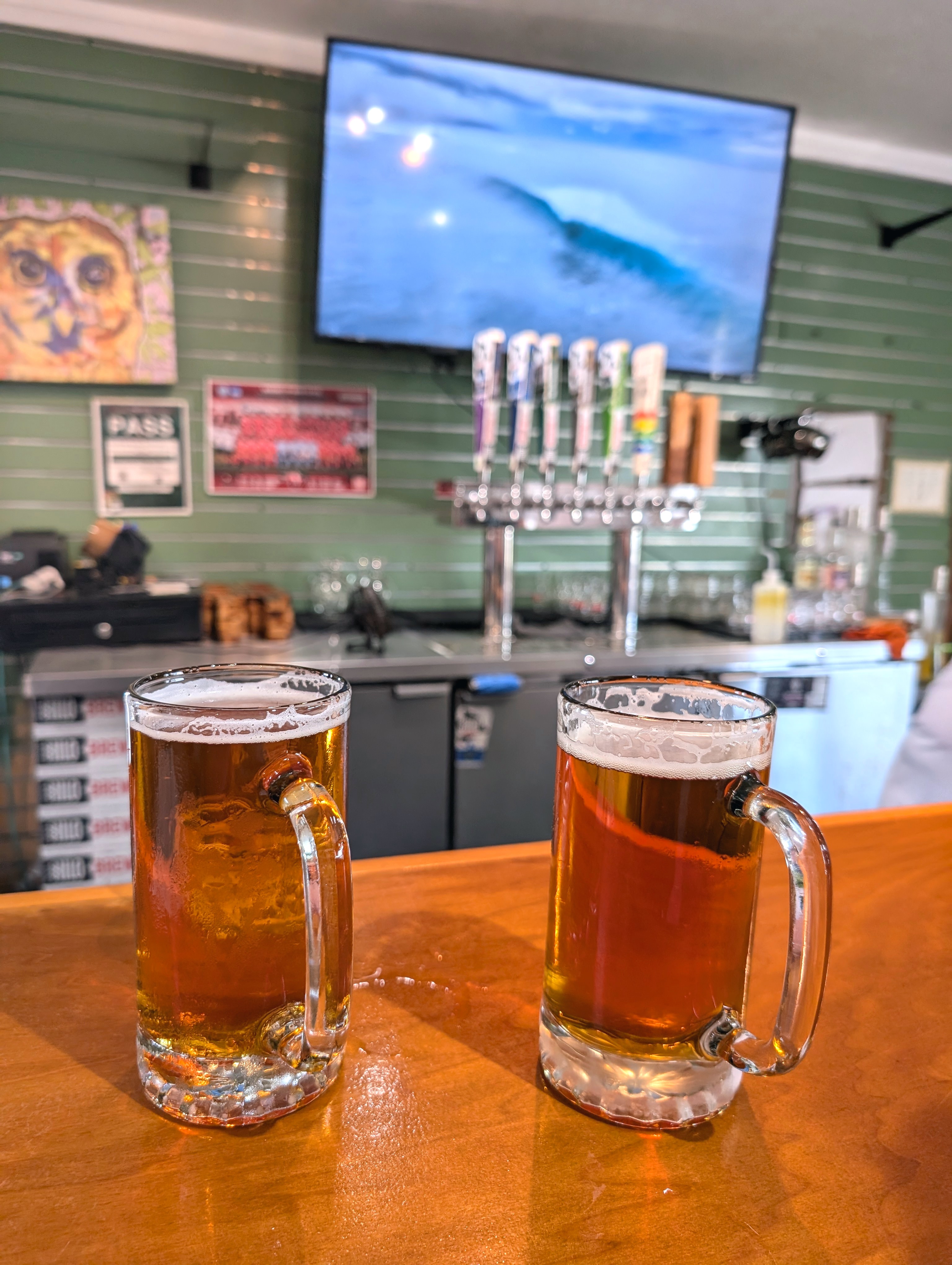
A fine grain-and-hop concoction in one of the new Teku glasses purchased from Victory Brewing Company in Downingtown, PA. I’m thinking it’s a Belgian-inspired brew from Haw River Farmhouse Ales. May 2023.
…and too little walking and exercising. If there had been more, perhaps I would have encountered more of these while walking….
Deer crossing where the City of Raleigh has built a drainage pipe under the road just north of our house by a couple hundred yards. This allows an unnamed creek to flow to Haresnipe Creek. May 2023.
I’ve now marked the first ten days of my 70th year on this planet. I’d like to think it’s time to get serious, but why start now? Seriously, I need less serious and more lighthearted enjoyment. Apologies for a rambling travelogue through my past two months. We’ll get back to Serious Stuff again. You’ll see.
Cannonballs at the Tryon Palace, New Bern, NC. May 2009.
or, “To all who run toward the open field”
Not all are called to priesthood;
...to teach,
...to heal,
...to defend,
...to right wrongs,
...to lead,
...to agitate,
...to write
The Great American Novel.
Some of us pursue
not purpose but
meaning in being,
in "job well done",
in talents exercised,
in immediate
gratification for
problems solved,
purposes fulfilled, in
greasing wheels for
others, serving those
we do not know to
accomplish what we also
do not know. To add one
rock to the pyramid
being built by us all.
Yesterday there was snow again and wind froze ribs on top of the drifts along the hillsides; sun shone through the copper grass that grew above the snow on Saint Joseph’s hill, and it looked as if the snow was all on fire. There were jewels all over the junk the brothers dumped out there where the old horsebarn used to be. A bunch of old worn-out window-screens were lying about and they shone in the sun like crystal.
Merton, Thomas. The Sign of Jonas (p. 317). Houghton Mifflin Harcourt. Kindle Edition.
People telling you about their pet cats and dogs can bore one more efficiently than even those who haul out photos of their grandchildren, worn from months of friction in back pocket wallets. Singular tales do exist, however. John Steinbeck’s Travels With Charley leaps to mind, and of course Jack London made his name with a tale about a dog, though certainly not his pet dog. More recently I choked up when I read Gwen Cooper’s Homer’s Odyssey very accurately subtitled A Fearless Feline Tale, Or How I Learned About Love and Life with a Blind Wonder Cat.
With this in mind, I viewed a recent comment on this blog with trepidation. It can be summed up as “more cat photos!” and my initial reaction somewhat remains: this space isn’t for memes, political screaming, or cute cat photos. But there was one singular cat…and so the author succumbs…
This is a story about Wolf the Cat, as different from most cats as her name: companion, roommate, best friend, zen master, and a being who made the most of a physical challenge for most of her life.
At the beginning of 1978, having pried a degree from the dons at the University of Washington and snagged a newspaper reporter/editor/photographer job in the foothills of the North Cascades, I began to live in responsible society. Two months in, I adopted a gorgeous white cat with blue eyes. Natasha’s pelt could have been marketed in a high fashion boutique. She demonstrated an independent nature, spending large amounts of time outside. (Times were different then; most cats went outdoors.)
Natasha at rest. Sometime in 1978, probably April-June. Monroe, WA.
Natasha, or Tasha as I came to call her, only sets our stage for the true star, her daughter Wolf. After a few months of frequent sorties to who-knows-where, Tasha began to show the swelling belly of pregnancy. Six months after she arrived to live with me, she littered. She obviously had consorted with a similar solidly-colored cat, but black. Three of the five kittens were white like their mother, with one black smudge on the tops of their heads in varying amounts: one had just a few hairs, one had a small fingertip’s worth, and one had more of an adult’s thumbprint. The most purely white one was delivered three months later to a friend in Walla Walla, who called her Powder…because, well, The 70s. Of the final two, one was all black, striking, and mischievous. I called him Shiva the Destroyer based on his habits, and gave him to my brother about a half year later. Shiva promptly revealed he was a she, littered on the middle of my brother’s matrimonial bed, and Shiva soon found herself and her litter at the local animal shelter.
And then there was this nondescript gray tabby, a commoner among the gorgeous and highly born. Because this kitten had a fuzzy overcoat of lighter gray and looked a little jowly, it reminded me of a wolf, so I called her Wolfrydda, a completely made-up attempt at Norski-ness. It was Wolf on the vet records and in my mouth–so what indeed was her name? Wolf showed a precociousness that captivated me. She always wanted to be with me, climbing up the side of my couch to get to me even though she could barely walk.
Wolf and her siblings deeply annoyed Tasha, whose maternal instincts were minimal. When Tasha had weaned her progeny, they didn’t leave–so Tasha did. I saw Natasha every four or five days until I found her weeks later, dead on the side of our country road.
Wolf and Shiva, Fall of 1978. Monroe, WA.
Wolf proved every bit as companionable as she first indicated. By the time she died almost 20 years later, we had been through a lot together. She had advised me, entertained me, put up with me, and shown me through her quiet approach to life how I probably should have lived myself. But I’m getting ahead of myself. Wolf calmly accepted life as it came at her, much like the zen masters I read about later. If a chest of drawers had one left open, she slept there. Or the waterbed was good, and being covered up seemed even better:
Always aware, always calm. Wolf the Zen Master. January 1980, Monroe, WA.
At one year she gave birth to a litter of four anemic kittens who all died. Wolf spent the week crying in the bathroom where I had put the kittens in a box directly under the ceiling heat lamp. By February 1980 she had littered again, four again, a black one, two gray tabbies, and an odd beige one with caramel-colored tabby markings. The two tabbies stayed, but one, Noko Marie, died. I suspected the vet who had spayed her. (Hold that thought; we’ll return to it momentarily.) The other tabby grew into a big lug and into his name: Frank N. Stein.
About six months later Wolf disappeared for three days. I spent mornings, lunchtimes, and after work hours standing on my apartment’s little patio, whistling the special Wolf whistle, and scouring the large rocks a few feet beyond the edge of that patio which prevented erosion on the steep slope lying below. On the third day I saw her, hopping oddly from rock to rock as she laboriously climbed the hill with what turned out to be a broken right rear leg. She had gone across the road at the bottom of the hill, perhaps to get to the creek on the other side. Her luck ran better than her mother’s, and with a cast on her leg a few hours later, I headed back to work. That night I couldn’t find her until I looked on the top of the refrigerator. Somehow, with a newly applied cast on one of her jumping legs, Wolf had climbed onto the seat of a kitchen chair, then to its back, balanced herself there and leapt to the counter (three to four feet). Once on the counter she had dragged herself past the sink to where the refrigerator rose and again had leapt with only the one leg to get to the top of the fridge.
Two weeks later I took her to the vet to check on the leg. He unwrapped the cast, examined her, and rewrapped the garish pink stretch tape over the casting material. In a couple of more weeks I noticed the tip of the cast was wet. Back to the vet we went. The vet discovered a gangrenous leg and admitted he had likely wrapped the cast too loosely in a mistaken effort to give her a little more comfort. The cast had turned and cut off the blood supply to the leg. The leg would have to be amputated or Wolf would need to be put down. It didn’t seem to be much of a decision. Wolf was barely over two years old, and had demonstrated over the past four to five weeks she could get around quite well dragging her right leg behind her. I figured it would be easier for her at that point not to have the leg versus the cast. The vet said he felt badly about it and wouldn’t charge for the amputation! Back then I was naïve; I would not be as nice today. Since he wasn’t getting any money for the operation, he said he was going to do it after hours and did I want to watch and/or assist? I said “sure” and found myself that evening holding up a furless leg that looked remarkably like a chicken leg/thigh you buy at the grocer’s while the vet used a large pair of side-cutters to snap through the bone.
Wolf educated me over the next year with what was possible. We moved across the state only two months later, and Wolf discovered a new favorite spot in a tree beside the driveway. This tree grew as one trunk to approximately five feet and then shot many branches straight up from there. It thus formed a natural nest. One night I came home from work and found her there, staring at me eye to eye, five to six feet up. I figured at that point she could ramble around outdoors without too much fear. She had taken to sticking close to home after the accident, and she always spent the night indoors. Smart cat. I wish I had listened to her more.
In mid-1981, six months after our move, I met a woman allergic to cats. She gave herself shots which seemed to work a bit, but extended time around my two cats (Frank was still in the picture), and she would start suffering. Wolf neither hated nor liked her–tolerated would be more accurate. Within two months this woman helped me decide to quit being a reporter/editor, go back to college, earn a teaching degree, and join her in the teaching ranks. I found a cheap apartment in Spokane, WA, but it didn’t allow pets. Pressed for time, I convinced my parents (who also lived in Spokane, just ten minutes from the apartment) to take in Wolf for a year. They had never had cats in their adult lives, and they had a dog, something Wolf hadn’t encountered before. Despite this, they agreed, and a few weeks later–after living in my car for a day while I attended classes–Wolf went to her new, temporary home. To get away from the dog she learned within the first hour to jump with that one rear leg to a small basement window four or five feet above the tallest furniture. The dog was lazy, and after his initial curiosity, he let her be. (Frank is another tale for another time, when I feel like confessing a poor decision.)
Enduring my parents and their dog. Sometime between Sept 1981 and August 1982. Spokane, WA.
After ten months I earned a degree in English Education, August 1982, grabbed Wolf, and moved in with my woman friend now living in a small lake cabin with a small dog. We married in 1983, moved to a small city in the mountains of Washington, and over eight years we welcomed four more cats into our house. In 1990 we moved to a new, bigger house, dropping Dolly with a friend. Three days after the move, Cooper disappeared. Suddenly we weren’t a 5-cat family, but only a 3-cat one. My wife laid down a new rule: cats in the basement at night. The rule lasted until she moved out ten months later, taking the dog and Petunia with her.
Four years and counting. Livin’ the lake life. Late 1982. Diamond Lake, WA
Wolf, Calvin, and I spent a year rattling around the 4000 square foot house. I met a different woman which gave me the pretext I needed to upend my life. The cats and I moved to a Philadelphia suburb.
Nearing 14 years: supervising the mover (me). June 1992. Colville, WA.
Wolf spent her time, per usual, under the seat of the Ryder rental truck I had procured for the move. Calvin ate tranquilizers and sat in a cat carrier the whole time we were in the truck. Occasionally Wolf would perform recon, hopping across the dash and then spending just enough time on top of Calvin’s carrier to annoy him, before she retreated to her under-seat abode. In Philly I intended “to become a freelance writer”. Such was not to be. I did, however, let my fling die away and in 1994 met a lovely woman who to this day keeps sticking around for no good reason I can fathom. Wolf liked her. Calvin spent most of his time outdoors and didn’t care.
Shortly after our marriage in 1995, we lost Calvin in the middle of an overnight December snowstorm when he insisted he needed to go outside exploring. (Another sin on my cat balance sheet.) My focus on the missing Calvin prevented me from noticing Wolf’s increasing lethargy. A Friday trip to the vet didn’t net much of a diagnosis; on Monday morning she couldn’t hold her head up while sitting on my wife’s lap. A second trip to the vet (and a diagnosis from a more competent vet) revealed a bad failure of her kidneys. They were flushed with large infusions of saline water twice that week, and Wolf The Miracle Cat bounced back as good as ever.
Eventually I convinced my new wife to move back to Spokane. Wolf joined us on a pillow on the middle console. We moved into a rented house complete with swimming pool. By this time, nearing her 19th birthday, she spent most of her time at the new house on top of a stack of deconstructed cardboard boxes from our move. The sun shone there most of the day.
In May 1998 we moved her one last time to a house we bought there. Wolf had been complaining of something for a week or so before the move. She worsened just a week or two after the move, and we learned her kidneys were failing again. A few tries at jump-starting them with fluids failed, and we decided to stop the pain in mid-June, just a couple months short of her 20th birthday.
Along the way I appreciated this cat more and more. She benefited by being my first real feline companion–Natasha had disappeared far too quickly and been too standoffish to claim that role. She liked rock and roll: playing one of my favorite albums, The Who Live At Leeds, at full volume not only didn’t disturb her, it caused her to climb up in my lap and enjoy the tunes! She enjoyed sleeping right on top of me (or my bed partner), which made me thankful for her light weight. She had a two-toned purr, with a high-pitched note above the customary low, growly one. When purringly happy she would drool, just one drop which would sit at the tip of her muzzle. She exhibited calm, patience, and live-in-the-moment wisdom. (I once watched her sit at the corner of the house waiting for a couple sparrows to work their way down the side of house toward her. She knew this was the only way a three-legged cat could hunt them. She missed anyway.) After losing her leg at the age of two, we moved five times from 1981-1990. I moved her five more times from 1992 until her death almost exactly six years later. She took it in stride, so much so that I’ve been shocked since then to have a cat stress out over moving. Throughout it all I never felt I was in charge; I felt I had a roommate who just happened to keep moving with me.
If I had listened to this cat, I would not have married when I did in 1983. I would have become far less upset about life’s tribulations. I would have accepted the bad with the good, and learned to not grasp either. To this date, almost 25 years since Wolf died, no other cat has quite captured her spot in my heart. I doubt that one will. I’m nearing 69. The years run together now. First time events, like meeting such a cat, become less and less prevalent. No matter how much I try, I can’t quite connect with my cats like I did this one. Maybe the right one just hasn’t appeared. Maybe they just don’t come but once in a life.
This profile seems abysmally truncated to me, long as it must have seemed to the reader. I covered a decade in one paragraph! (1982-1992) I had thought, “hey, from time to time I’ll tell tales of the others, but I’m not sure how I could. Everything would seem downhill after Wolf.
Should Opening Day be a national holiday? Of course! When I pulled a salary working in the corporate world, I burned one personal day every year to sit on my couch and enjoy game after game. When we lived in the Pacific Time Zone, this became even better: games started at 10 a.m. and carried throughout the day until bedtime. Go Phillies!