I’ve just finished entering my latest e-book purchases into my preferred library cataloging software, LibraryThing. Entering new books into the library brings joy, frustration, smug self-satisfaction, and fills me with an urgency for and desire to read. I’ve noted before my acceptance for “owning” books which I will never read, that in essence I spend minor amounts of money to reserve a book, for it to sit on my bookshelves real or electronic, to tantalize me and inspire me to read. But why?
Today I’ve 422 unread books. I suppose I’ll live another 20 years. That’s 21 books per year, and frankly I’ve disappointed myself with my slow pace of late. (On the other hand I’ve read 661 books on those shelves. I’m still ahead, right?) The combination of time remaining and still to be read has changed my reading habits. No longer do I tolerate and read mediocre books. I give them a suitable audition then cruelly call “Next!” to them. The definition of mediocre has changed too. No longer does this word represent quality, but rather suitability: perfectly respectable books which just don’t grab me get tossed aside. A good example is Ben Okri’s The Famished Road winner of the Man Booker Prize for literature in 1991. It purported to be the type of book I like, a meaningful fiction filled with magical realism. Yet it became tedious (likely by design) as I endured dream-chase sequences again and again. Finally, after a much longer audition than planned (four weeks), I read a plot summary and realized little of note was going to happen which I hadn’t encountered already. Goodbye, Mr. Okri. Thanks for the entertainment.
I’ve gone through a spate of this. Gore Vidal’s Inventing a Nation proved a sad disappointment after reading Burr and Lincoln, two other books in his loose series on American history. Though I peer dimly through the decades since I read Washington, D.C., from the same series, I remember it with admiration also.
I’ll use a random number generator to select ten unread books from my library to illustrate some points. But first let’s confess to liking some of the children less than others: books are categorized as “To read” but the ones I really want to read also sit in the “To read ASAP” category. Books to consider for my next read get special billing: “The Short List” whose members change with the whims of this reader.
Our first candidate is Gap Creek: The Story of a Marriage by Robert Morgan. It interests me little. I didn’t purchase it (my wife did), it boasts of inclusion in Oprah’s Book Club–not a kiss of death, but smacking of the detraction of populism for sure–and, sadly, because it is a physical book. Nearly all of my books of interest now are e-books, a whole ‘nother topic for ‘nother day. In its favor? According to The New York Times, it’s a “Notable Book” written by a professor of English, and this blurb from the New York Times Book Review intrigues: “At their finest, his stripped-down and almost primitive sentences burn with the raw, lonesome pathos of Hank Williams’s best songs.” (Let us pause and thank the NYT Book Review for properly writing the singular possessive form of Williams.) Chances of being read before I die? Around 25%.
Book #2: A Handbook to Literature assembled by C. Hugh Holman. Another physical book, likely picked up at a garage sale in the 1980s. This is not an anthology of literature as one might suspect from the title, but instead a type of reader’s encyclopedia. In this digital age, virtually superfluous. The fact I own Benet’s Reader’s Encyclopedia kills any chance I would have of reading anything in this book. (Why is it still on my shelf?)
Book #3: Empires of the Word: A Language History of the World by Nicholas Ostler. It promises to dish out a history of all of “the world’s great tongues”. I remain equally an amateur linguist and student of literature. It sounds interesting but one must consider the reading menu. Chances I read it? About 25%.
Book #4: Northanger Abbey and Persuasion from the Oxford Illustrated Jane Austen, volume five. Intellectually I want to say, “sure, I’ve read Jane Austen.” In truth I never have. Just didn’t get assigned in college courses, didn’t break through certain barriers I had as a youth when I read just about anything, and now fights against so many more modern and personally relevant books. On the other hand, I’ve read books from the 1800s to great enjoyment. Why not Austen? I don’t know. We’ve got the entire six volumes of it, plus I snagged Sanditon as an e-book. The chance I’ll read this particular book instead of Pride and Prejudice or Sense and Sensibility or Emma? Pretty much zero.
Book #5: Between Two Worlds (The Lanny Budd Novels Book 2) by Upton Sinclair. Tellingly, I react with, “Oh. That book.” Based on a well-written blurb once, I started collecting the entire 11-book series whenever one would be offered on sale. It seemed like a good idea. Not until I had all eleven did I read book one, World’s End. How disappointing. It made me want to cry or hit someone because instead of writing a story, Sinclair wrote a narrative about a story. Don’t tell me; show me. I’m still trying to figure out how this series could ever be considered as highly as it apparently was about 75 years ago. Chances of being read? 1%, based on the perception that “maybe book two is better than book one…even though I bailed on book one before I was done with it.”
Book #6: Antimony by Spider Robinson, a science fiction anthology of his short stories. I enjoyed reading his Lady Slings the Booze, but he has a tongue-in-cheek style of writing which is clever, not good. Watching someone settle for the easy, quick, and stereotypical would bother me now. The chances I’ll read a bunch of his short stories? About 10%.
Book #7: Writing Down Your Soul: How to Activate and Listen to the Extraordinary Voice Within by Janet Conner. It’s the first book here marked “to read ASAP” because it’s Amazon review quotes at the top, “I am a writer. Today I write.” This grabbed me when I couldn’t ignite this writing life. Now that I’ve done so (thank you, WordPress), I’m kinda turned off by this book. The author “discovered how to activate a divine Voice by slipping into the theta brain wave state…while writing.” Yeah, no. I’m out. And I’m dropping the ASAP designation.
We’re down to the final three contenders and nothing much to show for it…but here’s one at #8: The Ghost Road (Regeneration Book 3) by Pat Barker. The first book in this series, Regeneration, was nominated for the Booker Prize. Ms. Barker felt she had been typecast as a feminist writer so she undertook this trilogy about the First World War. It purports to weave history and fiction with doses of poetry, to throw real and fictional characters into the mix, and to address how war can be terrible yet valuable all at once. I’ve categorized it “To read ASAP”, and I’m looking forward to reading it, 100%.
At #9 we have…a quite intriguing book: My Grandmother Asked Me to Tell You She’s Sorry: A Novel by Fredrik Backman, translated from Swedish by Henning Koch. This is another “read ASAP” book. In this book Backman imagines a “different” 11-year-old girl who connects only with her crazy grandmother. Grandmother dies, leaving letters apologizing to people she has wronged. The granddaughter carries out her grandmother’s wish to have these delivered and experiences the connection between real and fable, experience and stories. I made that up, obviously since I’ve never read it, but I feel as if I have in an abstract sense. I yearn to read the details which underpin this story’s arc. Chance I’ll read it? 100%
Here we are at #10: New American Short Stories 2: The Writers Select Their Own Favorites edited by Gloria Norris. I can tell this physical book has sat on my shelves for 30-35 years as I’ve moved nearly a dozen times. Will I read it? The chances are a bit less than 50% because I’m not a big fan of short stories anymore unless they’re illustrative of a great writer.
There you have it. As a 27-year-old I was challenged by a professor well past her retirement age to consider the judgment of time regarding the “greatness” of an author and of a work. I slowly came around to her idea as I put more years behind me–I know several works which smacked of greatness back then now seem merely good. That’s not to disparage them, but they seem embedded in their time, incapable of providing the illuminating experience which truly great works command. Some recent (past 100 years) authors exist there already: Jose Saramago, Carson McCullers, Italo Calvino, Lawrence Durrell, Jim Harrison, Ernest Hemingway, and Gabriel Garcia Marquez to name but a few. Some contemporaries–F. Scott Fitzgerald, Donald Harington, Hortense Calisher, Annie Proulx, Neal Stephenson, John Irving, and the just mentioned Fredrik Backman–must wait until the jury renders its verdict, likely not in my lifetime. We read, though, for our own enlightenment, our own enjoyment, and our own sense of needing to connect with more than we are. We write for those same reasons. We need make few, if any, excuses for reading or writing the works which will do that for us.
Opening Day 2012, Philadelphia vs Pittsburgh in Pittsburgh. Phillies win 1-0. One of 81 unsatisfactory wins that season.
[Part three of my Baseball Fan Trilogy. Parts one and two detail the general world of Phillies Phandom and then my development into one, respectively. All hyperlinks to Wikipedia will go instead to mirror site Wikiwand. Be forewarned.]
What does one do when he finds himself obsessed with a sport? How did this happen? How can a non-athletic sort explain to himself, let alone others, how he’s accepted the cognitive dissonance caused when his obsession for a sport coexists with his disdain for the jocks he’s encountered throughout his life? (And how much does this explain other such dissonant aspects of his reality?)
I wish I could tell you. Others have found themselves in similar traps: the accommodations are acceptable but one realizes escape remains impossible. We therefore tell our fellow captives what wonders our trap displays, how surely it transcends all other traps, about the beauty it exhibits and instills, how ultimately this trap must be an allegory for heaven…anything to justify dancing around our living rooms (with or without audience) when our chosen team sends a little white ball a few hundred feet and ignites an improbable run to a championship meaningless to anyone outside of the trap.
One of our more prominent captives, George F. Will, took a shot at explaining what the basic participants–managers, pitchers, batters, fielders–think about when they apply their talents to the game. His words continue to be quoted by the obsessed, one to another.
One of the best baseball wordsmiths, Thomas Boswell, wroteHow Life Imitates The World Series in 1982, although in truth it collects columns he wrote prior to that for The Washington Post. If George Will is a dry-as-dust baseball intellectual (who also wrote for The Post but as a political pundit), then what are we to make of his quote on the cover of Boswell’s book? “The thinking person’s writer about the thinking person’s sport.” Those words set a high bar. Boswell clears it. His very first entry in the book is “This Ain’t a Football Game. We Do This Every Day.” Deeply down the rabbit-hole by the time I read the book, you will have to pretend to understand my thrill at its first sentences:
“Conversation is the blood of baseball. It flows through the game, an invigorating system of anecdotes. Ballplayers are tale tellers who have polished their malarky and winnowed their wisdom for years. The Homeric knack has nothing to do with hitting the long ball.
“Ride the bush-league buses with the Reading Phillies or the Spokane Brewers or the Chattanooga Lookouts, and suddenly it is easy to understand why a major league dugout is a place of such addictive conversational pleasures.”
He had me with that last sentence. I’ve watched the Reading Phillies, the Double-A affiliate for the Philadelphia Phillies. I grew up in Spokane. I’ve been unable to confirm Boswell’s contention that a team there ever bore the name “Brewers” since the Spokane Indians were founded for the 1903 season and have been the Indians ever since. But look what just happened. Boswell and I now have a conversation going on, even though he doesn’t know I exist. It starts with a common love for baseball.
Boswell in his column announcing he wouldn’t cover the 2020 World Series due to worries about Covid-19–he was 72 at the time–wrote that he decided to remain a journalist with The Post due to covering the dramatic game six of the 1975 World Series where Carlton Fisk hit an historic home run. “Where would I be today if Fisk’s ball had gone foul?”
Where indeed? We understand, Mr. Boswell, those of us down this same rabbit-hole of a trap. I started digging ever deeper into the tunnels about 20 years ago when I readMoneyball: The Art of Winning an Unfair Game by Michael Lewis. Though entertaining, the movie does little justice to the deeper tropes of the book. In the book, Lewis expertly relates how eventual Oakland Athletics General Manager Billy Beane attempts for years to explain to himself how he could have had such promise that the New York Mets drafted him in the 1st round (23rd overall), yet he flamed out with little to show for all those predictions of greatness: he played regularly only one year in the majors (1986) with a few plate appearances in five other years 1984-1989. His career batting average was .219 with a fielding percentage to match.
During that same time he played with Darryl Strawberry who the Mets drafted #1 overall in the same year they took Beane at #23. Theoretically the two should have enjoyed a friendly rivalry, spurring each other on to the big leagues. In actuality, Strawberry got there a year earlier than Beane. Strawberry played regularly as soon as he entered the majors, and played from 1983-1999 with eight appearances in the All-Star game. Beane had his one “good” year in 1986, when Strawberry earned his third trip to the All-Star game.
Beane deduces that the scouts basically screwed up when they thought he possessed talents anywhere near Strawberry’s. He learned of the nascent movement to quantify baseball more with advanced statistics when Sandy Alderson, Sr., handed him a pamphlet from Bill James one of if not THE pioneer of sabermetrics. And then he…ah, but there I go down the rabbit-hole again. Sorry.
Early in my baseball initiation I read Prophet of the Sandlots: Journeys with a Major League Scout by Mark Winegardner. Winegardner follows Anthony “Tony” Lucadello who scouted for over 50 years, first for the Chicago Cubs and then for the Philadelphia Phillies and–wait what? The Phillies? Okay, I’m in. A great piece of irony occurs when the book details Lucadello’s pursuit and signing of Mickey Morandini, but the book’s appendix doesn’t list him on its list of Lucadello signees who played in the majors. Why? Because Morandini, who starred at second base for the 1993 National League Champion team, didn’t make the Phillies until 1990, the same year the book was published. Lucadello signed 52 players who made it to the majors including Ferguson Jenkins and Mike Schmidt. The description about how he finds, nurtures, and convinces Morandini to sign with the Phillies justifies the cost of the book.
Most baseball books do one of two things: they explain the aspects of the game or they serve to record for posterity’s sake the great teams and individuals of the game. A few overlap between the two, such as Men At Work mentioned previously. A few, though, do neither. They illuminate the soul. I purchased Baseball As A Road To God: Seeing Beyond The Game by John Sexton in hopes of illumination. I left the book educated, provoked, but ultimately unsatisfied. I mention it here to show the lengths to which baseball fans who are also erudite readers find themselves pursuing to satisfy their urges. Sexton taught (still teaches?) a course at New York University on the same subject as the book. He writes about the shared aspects between baseball and religion. I saw the similarities. I didn’t see how baseball gave me a road to God in the Buddhist sense of many paths/one goal. But the 4.5 star rating on Amazon indicates many have found the book worthy.
More often baseball aficionados like to read about the nooks and crannies of the sport. One such book is Dan Barry’s Bottom of the 33rd: Hope, Redemption, and Baseball’s Longest Game. For those who know little of baseball, a regulation game is nine innings long. Both teams get a chance to bat against the other, the visiting team going first in the top half of the inning. The home team follows in the bottom half. If, however, the score is tied at the end of nine innings, the two teams keep playing. Baseball does not tolerate ties (except when it does, albeit rarely). A Triple-A game between the Pawtucket Red Sox and the Rochester Red Wings started on a Saturday prior to Easter Sunday 1981, and it seemed neither could score on the other–wait that’s not true! Both teams scored one run in the 21st inning! Baseball’s participants adhere to the game’s rules with the same religious fervor as those attending Easter Sunday services. Because no one could raise the league’s commissioner–the only person allowed to suspend the game–they played on. And on. And on. When it ended around dawn the next day, the teams had played nearly four games’ worth of innings. Future stars Cal Ripken, Jr., and Wade Boggs were players in the game. Future manager Bruce Bochy also was there.
Since Jim Bolton’s Ball Four, baseball books written by former or active players tend to be much more jocular and comically entertaining. Former relief pitcher Dirk Hayhurst has written four such books. The first, The Bullpen Gospels: Major League Dreams of a Minor League Veteran, remains the best from the standpoint of providing both entertainment and insight. In it, Hayhurst gives us his anecdotal account of being part of a Triple-A bullpen, hoping one day to play in the majors. I constantly think about his description of a sudden, late-season callup from the Portland Beavers to the San Diego Padres–not for his description of the play but for his Oh-My-God reaction to all the perks major league players get. Hayhurst spent all of 39 and one third innings in the majors, or approximately six innings longer than that Triple-A game in Pawtucket a quarter century prior. Somehow he managed to parley his constant conversation into a commentary role on several broadcasts.
In the same vein but more parochial liesThe 33-Year-Old Rookie: How I Finally Made It to the Big Leagues After 11 Years in the Minors by Chris Coste. The novelty of a player languishing in the minors for over a decade yet never appearing in the majors at any time seems unbelievable to anyone who follows the sport. Few would stick it out that long, for one. However Coste played catcher, a coveted position making him instantly more valuable than just about anyone else on that Triple-A team. Relief pitchers with any promise have been called up long before their 33rd birthday. Starting pitchers have been converted to relief pitchers (see last sentence). Position players have been let go to clear the way for younger, more promising players. Coste pigheadedly played in independent leagues from 1995-1999, which is just crazy. To the best of my knowledge no one has ever made it into the Major League Baseball system of minor leagues by spending five years in independent ball right out of high school or college. Coste, however, managed to get signed by the Pittsburgh Pirates in 1999, briefly, but wound up playing independent ball again that year. In 2000 he latched onto the Cleveland system, playing AA and AAA. In 2003 he moved to the Boston system, in 2004 to the Milwaukee system. In 2005 he signed with the Phillies, playing AAA in Scranton-Wilkes Barre. Scranton-Wilkes Barre now hosts the Yankees’ AAA club but was affiliated with Philadelphia at the time. And in 2006 he got “the call”.
Adding to the book’s value, Coste just didn’t make it to the majors at age 33, but when he got there he stuck there. This never happens for a backup player called to fill a minor gap at age 33, yet alone for a player who spent 1995-2005 just scratching his way toward yet another AAA assignment. Adding an extra layer of enjoyment: when Coste joined the major league club, he backed up starting catcher Mike Lieberthal the long-time symbol for futility for the Phillies. Lieberthal was the backup catcher for 1994-1996 right after the team went to the World Series, and then guided the pitching staff through 2007, the first year the team again tasted the postseason. Coste continued with the team in 2007 and 2008 when Carlos “Chooch” Ruiz solidified his claim to the dirt behind home plate (edging out the unlucky Lieberthal who retired). In 2008 Chooch helped lead the Phillies to their first Championship in 28 years. For a Phillies fan, this book is like being told you’re getting a triple-fudge chocolate cake and then seeing it’s iced with the richest frosting imaginable AND IT HAS ALCOHOL-INFUSED BON BONS ON TOP! (Well, at least for this Phillies fan.) Coste was traded to Houston in mid-2009 and that year was the end of his major league appearances. Want some extra ganache on top, Phillies Phan? Coste attended Concordia College in Morehead, MN, just across the river from Fargo, ND. My father had many close relatives living in or near Fargo, and his mother graduated from Concordia. My best friend in high school attended Concordia. Ah, sweet serendipity!
If we spend time going through my entire bookshelf of baseball books, it will be like those times you got stuck in a promising bar only to allow the bar’s resident know-it-all bore you tears because he promises you free drinks: a terrible price to pay for only mild enjoyment. Let’s just mention one more. My most recent baseball read occurred this year and takes its place alongside some of the best I’ve read: The Baseball Whisperer: A Small-Town Coach Who Shaped Big League Dreamsby Michael Tackett. The subject matter nearly overpowers the author’s skills to tell it, but transports nonetheless. The book profiles Merl Eberly who coached a summer college league in Clarinda, Iowa. College summer leagues serve two purposes: (1) young players getting ready to enter college or just beginning their college baseball careers often need some extra work–or to showcase their abilities; and (2) college leagues use wooden bats where the colleges (and high schools prior to them) have provided only metal bats for their players. Metal’s makes getting hits easy; wood…not so much. In the middle of cornfields and nowhere, Eberly guided and developed many young players. Among them were future stars Ozzie Smith (15-time All-Star and Hall of Famer) and Von Hayes (1989 All-Star and a Phillie when the team went to the World Series in 1983). Tackett’s ticket into the story occurred when his son wanted to play for Eberly. The Iowan coach may resemble a small-town John Wayne–and Clarinda is only a 90-minute drive from John Wayne’s hometown of Winterset–but his compassion tempers his strict, disciplinarian approach. There were moments I wiped tears from my face, but I will not spoil it for you. As MLB.com stated, “Field of Dreams was only superficially about baseball. It was really about life. So is The Baseball Whisperer… with the added advantage of being all true.”
I’ve failed to capture the elusive spiritual, pulse-of-life truth baseball holds forth for the seeker willing to dive deeper than comparing statistics or reading yesterday’s scores. To those such as myself, joy may be found on Little League and high school diamonds; pulses will quicken when we hear a horsehide-covered hardball strike a leather glove at 90-some miles per hour or hear that same ball meet a loosely swung round piece of wood; irrespective of having watched a game, we will dive delightedly into someone’s scorebook of it which bears esoteric notations known only to initiates; or our anticipation will leap when we hear our team’s signature sound bite of music blare from the TV, announcing another game getting ready to begin. These things remain elusive. Lao Tzu describes it best in the opening to the Tao:
The Tao that can be told is not the eternal Tao. The name that can be named is not the eternal name.
This inability to fully communicate our forays into the mystic joy of baseball lies at the heart of one of my fellow captives in this rabbit-hole trap, and one of Major League Baseball’s commissioners. Professor of English Renaissance literature, president of Yale University, and seventh Commissioner of Major League Baseball, A. Bartlett Giamatti explained it this way:
[Baseball] breaks your heart. It is designed to break your heart. The game begins in the spring, when everything else begins again, and it blossoms in the summer, filling the afternoons and evenings, and then as soon as the chill rains come, it stops and leaves you to face the fall all alone. You count on it, rely on it to buffer the passage of time, to keep the memory of sunshine and high skies alive, and then, just when the days are all twilight, when you need it most, it stops.”
[translation of Tao Te Ching by Gia-Fu Feng and Jane English, copyright 1972. Giamatti’s quote from “Take time For Paradise: Americans and Their Games”]
[Warning: hyperlinks to Wikipedia articles actually go to Wikiwand which mirrors the site and provides a much lovelier interface. If you don’t want to go there–don’t click the hyperlink.]
I love baseball. Sure, I might catch a few games when Gonzaga University’s basketball teams (a hometown darling) tweak the noses of the big universities yet again in March Madness. I might watch the Kentucky Derby, just because my mother and her mother always did. There’s a chance I’ll watch 30 minutes of professional American football–and of course, the Super Bowl is a great excuse for culinary excess, beer, and oh, those commercials! But baseball has captured me with its elegance, mystery, nuance, precision, intelligence, definability, and history. It has mirrored my life, informing it. In return, Life has given me a greater appreciation for the game.
When you’re a fan….you buy merchandise!
Baseball transcends simple sport. It rewards fans who can appreciate nuance and bores fans who cannot. It combines the cerebral approach of chess with occasional, all-pieces-in-motion excitement like that of soccer (football), basketball, or hockey. But before a ball is put in play, baseball proceeds at a pace where the informed fan can appreciate where fielders position themselves for this pitch, how the batter might greet that selfsame pitch, and then allows one to thoroughly examine how the pitcher delivers that pitch from the windup through the catcher’s reception of it.
In childhood, I thought I liked following sports. Given the perspective of age, I realized sports photography grabbed me more than the sports themselves. The first years of the 70’s swept away these shallow roots. Sports, associated with conformism and militarism back then, fell from my favor. I read books about rockets, aliens, sexual revolution, wizards, hobbits, and crazed soldiers in various wars and psychiatric wards. We marched against The War, watched women burn bras, contemplated world peace–surely just around the corner once The Revolution occurred–and contemplated global annihilation “if we failed”. I indulged my enjoyment of competition by watching my brother run competitively. I stayed in touch with athletics when I volunteered to be a manager for the wrestling and track teams because it freed me from the otherwise compulsory attendance in physical education classes.
I attended no football games in college nor any other sport. I jumped into the Real World as a reporter/editor of a weekly newspaper, photographing the local high school’s various sports for a half hour or so, then leaving because my boss told me to: “Don’t let them get used to thinking you’re going to cover the whole of anything.”
I left newspapering, earned another degree, this time in English Education, and sought employment as a secondary teacher of English. Inexperienced teachers without the desire to coach a sport were not in high demand. It took nearly a year to get a steady job, and even then it occurred only because the principal of the junior high and its head teacher, both on the hiring committee, argued that my potential in the classroom outweighed my lack of interest in coaching.
At the same time I was hired, the school district also hired my (somewhat) opposite: a two-sport coach with no compunctions about taking on a third sport. He taught social studies (that would basically be history for you non-Americans). The district placed him at my junior high school; I taught beside him nearly all nine of my teaching years. This teacher, RP, opened my eyes to several things. First, he was intelligent, and frankly, that was not the stereotype of the typical small town sports coach. Many of the coaches did their best to perpetuate the stereotype of the dumb jock: I won’t relate all of the stories about GG because even reducing the name to initials doesn’t adequately hide who it was. Suffice to say he thought he looked good with all those gold chains hanging around his neck.
RP however perked up when I bragged about never being defeated at Trivial Pursuit and said, “Oh ho, Pilcher, I’ll take that bet!” It wasn’t a bet, but the next time we had a staff party, there we both were. I can’t remember his status, but I was three and half sheets to the wind–I played better drunk because then I didn’t overthink. I would guess he either was sober or had sampled just a few light beers. Oddly, I can’t remember who won, which means he probably did. We both acknowledged the other as a worthy intellectual opponent. RP was “a character” but that part of him will be a writing topic for another day. What he did for me occurred in 1989 when he touted the business advantage of investing in baseball cards. I can’t believe in persons not knowing what these are, but I can conceive it. Therefore for the ignorant: baseball cards are (to quote Wikipedia) “a type of trading card relating to baseball, usually printed on cardboard, silk, or plastic….Baseball card production peaked in the late 1980s.” (More about their history here.)
Oh, and did it peak. For a dollar or two one could buy a pack of cards which might have one card in it worth tens or even hundreds of dollars due to the crazed demand. Baseball cards were the Bitcoin of their time; it was like the lottery for little kids and speculators both.
Baseball cards with the magic of their beautiful photography capturing a moment of baseball prowess rekindled my love of sports photography. The cards also sparked an interest in the game. Soon I had purchased George F. Will’s just-published bookMen At Work: The Craft of Baseball, still one of the finest books written for understanding the nuances of the game. I gobbled it up when a vicious virus laid me out for a few days at home.
Just three years later, I chucked teaching to indulge my fantasy of writing, and I moved to Philadelphia. I arrived at the right time to fan my beginning baseball interests, which could not be indulged in out-of-the-way Colville, Washington, tucked near the borders with Canada and Idaho. There I had no team to follow, to cheer on. Seattle’s team, the Mariners, established in 1977 while I still attended the University of Washington, played badly and in 1990-1992 it still played badly. Besides, 300 miles with an intervening mountain range dampens one’s feeling for “your local team”.
Ah, but Philadelphia possessed a major league baseball team, and not just that, one of the very first, established in 1883! It had a sad history of losing, mostly, including 1992, the year I arrived. But the year after I arrived in Philly, the team that finished 1992 in last place captured magic and found themselves in the playoffs. (Amphetamines are strongly suspected, but hey, let’s not besmirch some loveable characters.) I raced out to buy a new color TV to replace my 20-year-old one. I cheered. I shouted. Macho Row rewarded me by playing all the way to the World Series…where a walk-off home run by Toronto’s Joe Carter in Game 6 clinched the championship for Toronto. It was a three-run homer served up by the closer, Mitch “Wild Thing” Williams. Sorry, non-baseball fans, but I’m not going to explain all the rules and terms–suffice to say a homer run (“homer”) is not good if the other team gets one. Ahead by one run at the time, the Phillies lost the game by two. There is no bigger gut-punch in sports than to be two outs away from winning a game only to serve up a home run which not only ends the game with a loss for your team but also wins the championship for your opponent. To this day, nearly 30 years later, just sit in the Phillies’ ballpark and mutter “that damn Joe Carter.” You will have instant friends, bonding over the shared pain.
I fell deeply in love with the Phillies that year. They burned their brand into my hide, injected their drug into my veins, played their Lucy-holding-the-football to my Charlie Brown. My journey to true fandom started there. I’m glad I didn’t know what a fluke that 1993 season was: the next year Macho Row reverted to its 1992 form, sitting fourth out of the five teams in the National League East when the Major League Baseball Players Association mercifully went on strike, ending the season in August.
From 1994 through 2000 I did what fans do: I followed games; I read about them in the Philadelphia press (aided by the newly introduced World Wide Web); I watched the few games I could, aided by satellite TV; and the Phillies slowly, slowly indoctrinated me about the customs and mores of fandom. One cannot usually make a living as a fan: I drifted into “real” work when the writing thing went bust, writing business reports in pharmaceutical manufacturing. Just as with the Phillies and baseball, I learned most of the basics and some the nuances about my new career.
By 2001 the Phillies had installed their third manager since the magic of 1993. From this lesson of sport, I learned life’s employment situations are ephemeral. In 1997, recently married, I had carted my bride back to my hometown in eastern Washington State. (You always have to add the word “state” for anyone born in the northeastern United States; otherwise they assume you mean the nation’s capital.) Now in 2001, I looked nationwide, found a job in upstate New York, and we moved back into the same time zone as our beloved Phillies.
Promises, promises: for four years the Phillies promised more than they delivered. Maybe I believed their press too much. A typical day started with me connecting the computer to the internet via a dial-up connection. (squeek, squarl, kweeeeeeeee-quchchchchchchchch) I would open each Phillies story in the Philadelphia Inquirer in a separate browser window. This would take time to load, so I’d start making the morning lattes. About the time I had steamed and frothed the milk, I would cycle through those browser windows, hitting “print” each time. This gave me time to pull the espresso and complete the lattes. Then my wife and I would settle before breakfast, me reading the latest stories about the Phillies.
By 2004 I realized I was a square peg in a round hole where I was working. I saw too that many in baseball might be the right guy but with the wrong team. I looked for a new job, and the Phillies looked for a new manager. They succeeded; I did not. In 2005 Charlie Manuel assumed control of those on-field decisions. After that season ended, I learned that my services were no longer needed where I worked–a layoff included me. Luckily I already had lined up an interview which led to a new state, a better job, etc., etc.
And in 2006 things looked up. My wife and I learned we should have been living in the South of the United States many years before we actually got there. The Phillies dumped their general manager at the same time and brought in Pat Gillick, a guy with a proven track record of winning. He predicted they would contend in 2008. He was right, although in 2007 the Phillies made every fan salivate when they managed to get to the postseason–only to get bounced immediately by the Colorado Rockies in a three-game sweep.
In 2007 my employment decision turned. The FDA responded to reports about our company site and showed up to perform a “for cause” inspection. These never end well. We received a Warning Letter to shape up or else. By 2008 a workforce of about 125 had experienced 17 firings and a half dozen more left voluntarily. I labored through this as the Phillies in 2008 trailed the Mets heading through August, just as they had in 2007. And just like 2007, the Mets graciously choked by playing 22-17 to the Phillies’ 27-12. It wasn’t as dramatic as 2007, but the teams had been close. By dropping six of their final nine games, the Mets finished three games behind the Phillies.
Then wonder of wonders, the Phillies rode that magic carpet all the way to the World Series and beat the Tampa Bay Rays for the championship…and in the middle of the Series, I accepted a new job to escape my own version of a losing season.
Pat Gillick resigned, mission accomplished. For the rest of my life as a corporate lackey–as a new, less-promising GM took over–the Phillies performed well but slid backward step by painful step. In 2009 they won more games than 2008 and returned to the World Series but lost to the New York Yankees. In 2010 they won even more games than 2009 and lost to the San Francisco Giants in the NL Championship Series–no World Series trip that year. In 2011 they assembled a wonder team and won 102 games. A troubling sign, however, occurred in early September. The team’s victories pointed to it setting a club record for total wins, but beginning on September 11th, the team finished 8-12. They played a spirited Division Series with the St. Louis Cardinal, going all five games, but in the final inning of the final Game 5, their star first baseman, Ryan Howard, sprinted toward first base and tore his Achilles tendon halfway there. You can’t run without an Achilles tendon. Just like that, the “run” was over. Philadelphia didn’t return to the postseason until this year (2022).
In 2012 the Phillies’ GM thought he could retool in a minor way and get further in the postseason. Unlike the Phillies, I realized retooling my career was not an option–I had cycled through three different roles for my current employer and none were good. My cog-in-the-machine job would get me nowhere. Embarking on eight years of consulting, I learned to evaluate organizations by looking at various companies in stress. (Companies rarely call consultants when things are going well). I could see the same signs of dysfunction in the Phillies too. The team spent 2012 and 2013 denying they had a deep problem, similar to my clients who wanted the superficial blemishes covered up rather than healing the causes for them. By 2014 the well-meaning ineptitude of the Phillies (symbolized by the GM who had run the team since the beginning of 2009) became apparent. They were stuck in one gear, spinning their tires in the mud. I too was stuck in the mud of an absolutely terrible employment assignment. It convinced me at the beginning of 2015 to seek a different contract agency, just as the Phillies chose to dump their GM at the end of the 2015 season.
My career cycled through good and bad, but the bad beat the best days of “regular” employment. Consulting let me dive fulltime into analytics–clients loved it. And the Phillies dove into analytics too. Their new GM, Matt Klentak, hired around the same time, unfortunately didn’t know what the heck he was doing–a perfect example of having a good concept without knowing how to make it happen. After stumbling along with the manager he inherited (Pete Mackanin), he hired an analytics fanboy in Gabe Kapler for the 2017 season. Kapler also didn’t know what he was doing–he’d never managed a team before. As the team entered the spring training portion of the season, I completed a 15-month assignment which reinforced that I had the chops to hang with “the big boys” in my industry. I had learned novel approaches to problems can sometimes clear a logjam of we-can’t-do-that problems. Unfortunately for the Phillies, it worked for me but not for them. Kapler made amazingly boneheaded decisions, learning on the job so that he could move on to the San Francisco Giants and earn Manager of the Year in 2021.
Opening Day, 2021.
By that time, I had learned hiring solid performers and the occasional superstar would quickly pull a damaged company out of the spiral which led to the sewer of “thanks for trying”. Similarly, the Phillies signed Bryce Harper, Jean Segura, and J. T. Realmuto prior to the 2019 season. But the Phillies managed an 81-81 record, missing a winning season yet again, and Kapler was out.
Everything changed in 2020, and I don’t mean the pandemic. My mother died at the end of the 2019 postseason. The Phillies hired Joe Girardi the day she died. Less than two months later the Phillies hired a new GM, Dave Dombrowski. Saddled with a new manager, Dombrowski decided to figure it out before making wholesale changes. And then came 2020, the year everything was upside down.
I retired at the end of 2019. No need to work: my final years of work built a bit of financial comfort and my inheritance took care of the rest. Baseball might as well not have happened in 2020 (but we’re glad it did). In 2021, Dombrowski began to evaluate the team in earnest. At the end of that season he made sweeping changes, some of which will be felt for years. He dumped everyone in charge of player development. He reorganized things. He hired a new hitting coach, the same one who had been successful in Washington, D.C., where Bryce Harper had played.
And then he signed a slugging All-Star, Kyle Schwarber. And then he signed Nick Castellanos. Suddenly the Phillies looked (potentially) good. At the same time, the psychic blows of having the final parent die combined with the bunker mentality of the pandemic lessened. At the end of 2021 “free movement about the country” seemed even more possible. The few trips taken in 2021 seemed to be a promise of things to come. And then came 2022.
If anything, 2022 should go down as the unsatisfactory second act to 2021. Covid still scourges. Free movement about the country didn’t translate to free movement about the world. And the Phillies started the baseball season 22-27, a sad commentary on the talent assembled during the offseason by Dombrowski. And then came a “miracle” for Phillies fans. The Philadelphia had come to be known as a very loyal organization to its top employees over the past 50 years. Managers, GM’s, and presidents weren’t “fired”–they were “reassigned to special advisor” status. But on June 3rd of 2022, the Phillies fired manager Joe Girardi.
Seasons can transcend one’s existence. Throughout this piece I’ve attempted to draw a comparison to my personal life, just as all sports fans attempt to relate the performance of ‘their’ team to their own existence. There is no comparison in my life to what the Phillies have done this year. After firing Girardi less than a week before my birthday, they’ve played relaxed and more importantly, they’ve played winning. They’ve parleyed that from a barely-in-the-playoffs third wildcard seed to a berth in the National League Championship Series which starts tomorrow.
I don’t know if most persons can trace an arc to their lives through the ups and downs of a professional sports team. I do. But nothing compares to this year. This team shouldn’t have succeeded after being an afterthought one-third of the way through the season. Even after they played their way into serious consideration for a wildcard berth, no one with a modicum of sanity thought they would contend beyond the very first round. Instead they’ve quickly vanquished the St. Louis Cardinals in the Wild Card round, and dumped the Atlanta Braves with little difficulty.
All bets are off in retirement. You become a bystander without a distinct connection to society’s day-to-day rhythms. Though you have 40-50 years of experience, few value it. Thus, the Phillies and I part ways a little bit. Will I still thrill to their success? Absolutely! Will they do things which more and more mystify me? Very probably. My father-in-law remains a Phillies fan. He’s been one all of his 90-year-old life. He decries the “new” approach of taking walks instead of swinging (something which is now at least 25 years old). He complains about the superimposed box which shows the strike zone when a pitch comes in.
I look forward to being the recalcitrant fan he is.
Matt Vierling in Spring Training, 2022. Tampa, FL.
In their penultimate Spring Training game this year, the 2022 Phillies traveled a few miles to the Yankees’ ballpark in Tampa. We were there. This weekend the Phillies’ ride through the postseason could very well end after one more Spring Training game, 162 regular season games, and six postseason games. A good ride.
Part two of my baseball odyssey and paean is drafted but not ready. This photo will have to suffice.
Phillies-Yankees, Spring Training at George Steinbrenner Ballpark in Tampa, FL. April 2022.
The Philadelphia Phillies just won Game 1 of the National League Division Series for Major League Baseball. A bowl of peanuts in their shells sat in my lap and a cool (not cold) Yuengling Traditional Lager beside me was refilled many times. This piece of writing appears to be too long for a comfortable read, so I will break it into three parts. (I think; it’s still in progress.) Even then this writing won’t get very close to touching the central mystery of why a non-sports fan wholeheartedly follows a sports team which plays 162 games each year hoping to qualify for a championship playoff season which can contain as many as 22 more games (in this year’s format). This piece of pieces can only address that topic in a roundabout way.
Being a baseball fan is a beautiful thing. Being a Phillies fan (or Phan as we say) is exquisite torture. Philadelphia is one of the oldest clubs in Major League Baseball, having entered MLB in 1883. People may claim various ages for the older teams based on the club’s creation versus when it joined what has become Major League Baseball. When it comes to heartbreak, “loveable losers”, and futility, Philadelphia stands shoulder to shoulder with the Chicago Cubs and the Boston Red Sox, two kindred fanbases to the Phillies’. Philadelphia won its first World Series Championship in 1980, 97 years after it started competing. Though seven to nine years older (depending on how you count it), the Cubs won its first championship in 1907, a scant 33 years after club inception. Boston won a championship only two years after it was founded in 1901! By 1918 the club had won five championships, so we have to take all that crying about “a World Series drought” from 1918 to 2004 with a grain a salt. Sure, it was 86 years which is absolutely a long time, but let me again state: the Phillies went 97 years without EVER winning the championship! Fans who were children when the club was formed grew up, had children, grandchildren, great-grandchildren, great-great-grandchildren, and DIED without ever knowing the joy of watching their team win a championship! Additionally, the Phillies competed in the World Series only twice (1915 and 1950) before finally winning it. Between 1918 and 2004, Boston’s Red Sox competed four times (1946, 1967, 1975, and 1986). The Cubs, who won the World Series in 1908 and not again until 2016 (108 years, longer than the Phillies’ drought) nevertheless competed in the Series in 1910, 1918, 1929, 1932, and 1945, all after winning it, as noted, in 1907.
Countless writers have chronicled the beauties of baseball, and many others have extolled how wonderful it can be to follow the Phillies. Phillies fans are as knowledgeable about the sport as those in Cincinnati and St. Louis, as passionate as those in any city, as long-suffering more than any other fans, and at times as boorish as those in Boston and New York City. Unlike the latter two cities, however, Philly fans do not hate with impunity but for cause. The aged and now threadbare tale that Philly fans booed Santa Claus–which no doubt will be resurrected once again on Friday when the NLDS moves to Philadelphia–neglects to mention that the original actor hired to play Santa Claus got so drunk he couldn’t perform, so a fan in the stands was talked into playing the part. He was skinny, didn’t have a suitable beard and was given no padding to make him look appropriate. Just as they are savvy sports fans, Philadelphia fans also can evaluate a cheap substitute Santa when they see one: they booed. Booing Santa is a far cry from the Mets fans who hurled D-batteries at the Phillies one year. (This paragraph may have offended some fans from different cities. Kindly read the Rules of Engagement about unsuitable comments.)
Philadelphia’s Phillies passed 10,000 losses a few years ago. As of October 11, 2022, the team’s historical record in the regular season is 10,022 wins and 11,187 losses. A large chunk of those losses occurred in the first half of the 20th century when the team set a club record once with 111 losses for a season which held only 154 games. Most recently the team has struggled to be relevant despite fielding teams from 2018-2021 which promised more than they delivered. It couldn’t win more games than it lost until 2021 when it won one game that set its record at 82-80 instead of 81-81. This year (2022) it won only five more games than last year, 87-75, but with an expanded field for the postseason this qualified them to play in the wild card round. In the 11 years since the Phillies last appeared in the postseason, the club has jettisoned: five managers, two mid-season; two general managers; and one president of baseball operations, a position which didn’t exist when the 11 years started.
Losing is an integral component to being a Phillies fan. Despite that, let’s focus on winning. In a somewhat surprising showing, the Phillies won the best-of-three Wild Card round this year, sweeping the St. Louis Cardinals in two games. We use the word “somewhat” because the Phillies did beat the Cardinals four times in the six games matchups these teams had this year. Now they take on the Atlanta Braves and have just won the first game of that five-game division series. The Braves are last year’s World Series champions, look as good or better this year, stack up much better against the Phillies, and have the theoretical advantage that they didn’t have to compete last weekend. They are more rested and thus started the series with their two best pitchers lined up for the first two games. This means at least one of them will be able to come back in the fifth and final game should there be one in the best-of-five series. Philadelphia started its #3 pitcher, Ranger Suarez today. He was overmatched but somehow held things together.
And somehow…the Phillies won. Yet the feeling of futility lingers.
A quote I cannot find right now says this: “Most define the glass as being half full or half empty. In Philadelphia the glass is not only half empty, but it has a cigarette butt in it and a lipstick stain on the rim.” You who have lived in Philly appreciate the truthfulness of this. Victory not only never seems imminent, a six-run lead (as we had today) seemed to be not enough to my Philly-born wife. Was she right? The Phillies bled five runs and won the game 7-6, not what would be expected when the score was 7-1. Pessimists exist in every fanbase, but not all fanbases are built of pessimists. (Reference any team based in Seattle, the home of hopefulness.)
Being a Phillies fan brings certain pluses. No mascot in baseball or any sport rivals the Philly Phanatic. A civic pride, displaced for those who have relocated, invests in the Phanatic. We savor our relationship with the Phanatic as we savor the hometown band who “makes it”. (Don’t talk to me about Grunge from the ’90s. It obviously reflected the Pacific Northwest’s take on modern music.) To appreciate the Phanatic, one needs to see video of the Tommy Lasorda encounters, the multiple appearances of the Phanatic’s mother, the short-length feature of the Phanatic this year saving the Fourth of July, and singular encounters that are too specific to recount. Any club affectation which can take the fans’ minds off of the losing season deserves commendation.
To be a Phillies fan, however, means to accept all sorts of craziness. As the country approached the 2000’s, the Pennsylvania legislature granted both the Pirates and the Phillies a guarantee of matching funds to build a ballpark in the vein of the Oriole’s Camden Yards. The Pittsburgh Pirates accomplished their process in quick time, opening the current PNC Park for the 2001 season. In Philadelphia, meanwhile, the city council carped about this and that, attempted to assuage all constituents and constituent ethnicities, and finally managed to locate a site–oh miraculous of coincidences!–near the old site in South Philly. Their ballpark opened only THREE years after Pittsburgh managed to open theirs.
In Philadelphia, loyalty means something. The Phillies’ organization values loyalty. It’s both commendable and stupid. From the Bill Giles era, starting 1984, the Phillies have done some things extraordinarily well and others things extraordinarily stupidly. If one uses the “loyalty” yardstick, some of these things become more easily understandable. From that time through 2020, the Phillies, though partly giving control to people like Matt Klentak, held the reins of loyalty close. GM’s and presidents were not fired, they were “reassigned” to advisory roles.
This has been a far more detailed dive into baseball and the Phillies than many readers would’ve wished. If you’re still here at his point, you might just be a baseball fan. Tomorrow the Phillies take on the Braves for the second game of the NLDS this year. If the Phillies win (it’s a coin toss), then there will be only one game (maybe) in Philly before they again hit the road for the NL Championship Series, likely in Los Angeles. It’s entirely conceivable that the Phillies, who are completing two weeks of road games on October 12th, could drop into Philadelphia for only one game in front of the fans, not to return until the third, fourth, and (maybe) fifth games for the seven-game National League Championship series. If the Phillies are swept in four, Phillies fans, who last saw their team on September 25th, will have seen their team only three times in the postseason before their team is washed out of it. Three games from a postseason, championship contender between September 25th and October 22nd–four weeks.
the author in better days. note his mind fragmenting like leaves in the breeze.
First, last, and I guess always, I am a reporter. If given facts I can spin them, quickly, making gold where others see dross. As Will Sonnett said, “No brag. Just fact.” Combined with a natural inquisitiveness, a need to understand what I was looking at/hearing, a need to make sense of things, it all served me well. I used these skills to write important documents for drug manufacturers when I knew only a little science and even less engineering. Asking questions make you seem intelligent, it seems, at least if they’re intelligent questions. (Yes, Virginia, there are stupid questions.)
For that reason, I’m redirecting this blog. The poems and essays won’t disappear, but I will write more frequently if I indulge my many ideas playing across my mind, ideas which don’t fit neatly into the holes for “essay” or “poem”.
I spent my teenaged years with a significant amount of time at the kitchen table just talking with my mother. She liked to talk. I like to talk. When the conversation turned to “what are you thinking for your future?”, my response was, “Ideally, I would have a job where I could just talk like this and make money from it.”
I partially achieved that when I graduated from college (finally–it took an “extra’ 18 months) and started working as a news editor/reporter on a weekly newspaper. I listened, I wrote, I published, I basked in the glory…or rather, I got paid a paltry wage that seemed a gift from heaven. After moving to another paper, though, I realized, “hey, I don’t really like going out to find things that people are saying or worse, aren’t saying but we really would like to know. I want to just say things from the heart of me, from inside. I don’t want to have to go find it.” Truthfully, going out there and trying to drum up stories seemed like work.
So I went into teaching. That was great. Except that I realized after nine years…I don’t really love kids, not like my fellow teachers said they did. It was a great run, taught me a lot about being assertive and ‘out there’, gave me a great background in labor issues when I negotiated the collective bargaining agreement with the school district’s administrators (or later, lawyers), but in the end I just accepted that as much as I liked TALKING for six or seven hours a day, this wasn’t my gig.
I decided to realize my dream of being a freelance writer, i.e., a writer who writes what he wants and somehow makes a living at it. I had no idea how to do that, and basically learned over 15 months that I had absolutely no discipline to do this for a living. I entered the business world, used my skills at writing, analyzing, and computing to make a very successful career. But…..
Writing manufacturing process assessments and standard operating procedures (SOP’s) didn’t permit the craziness to get out. I found minor ways to let it out, but they were limited. Some semi-anonymous vice-president isn’t interested in my poem about the reality deep in my hidden soul. After more than a decade of this, Facebook seemed okay for this sort of thing, at least a little….
Pissing away my writing skills on Facebook festered like a chancre. I harbored the desire to write. After this, after that, I started this blog in September 2021. Now, a year later, I realize the need to write WEIGHTY STUFF just isn’t there, not in the sense that it’s going to happen here on a regular basis. Maybe it’s the lack of discipline thing again. Accordingly, ….
I’m repurposing this blog. It will be the lengthy post I could never do on Facebook, the chattiness that drives my wife crazy, the off-the-cuff observations that might not have any substantial exposition. What is written may fuel the more substantial things which will appear also.
One piece of writing has been sitting for twenty days at this point, waiting to be born. If I worked solidly at others, that wouldn’t be an issue, but that’s not what is happening. The piece of writing I reference had a timeliness which said “publish me quickly”. That hasn’t happened, and now it needs to rewritten. I need to keep priming the pump with whatever is on my mind, even if it’s not sufficiently weighty or well-written. I need to be chatty again.
Volumes in the Schuyler House, Albany, NY. September 2004.
I’ve just been perusing my library. (I curate it through LibraryThing, not GoodReads or the like. It’s an obsessive need to categorize every ‘thing’. I have mentioned this before. ) I’ve periodically jettisoned books which I presume I will no longer want, yet approximately 1500 books remain. Of these, 422 are unread. Another couple dozen are in various stages of being read: books I put down but mean to pick up again; books which are anthologies of marginal interest; but mostly books which are collections of works by favorite authors of which I have read but one of the works.
More importantly, of those 422 books, I have tagged 72 of them as “to read ASAP”. So, one in six. I do not read quickly. I subvocalize which slows down the reading pace but makes it more enjoyable for me. I don’t subvocalize when studying because I get bored with required texts no matter how interesting. It’s amazing how quickly you can work through a nonfiction text when you are just trying to get the gist out of it. This actually is the reason I rarely read works about sociopolitical topics. They state their case in the first few pages and one can just scan the rest of the work to see the supporting arguments–it only takes 15-30 minutes. But back to the library, and my point…
Due to this subvocalizing habit, I (sadly) read only 12-20 books each year. Books which are “good for me” but not written well take longer because late in the evening when I am most likely to read, they fail to capture my interest. Then too, my devotion to computers and smartphones has rewired my brain such that I expect instant gratification from a book. I generally have a rule to read at least 50 pages of a book before bailing on it. With Umberto Eco’s Foucault’s Pendulum I gave it 100 pages since it was so incredibly long. (And I’m glad I did.) Lately I’ve had to increase all books to 100 pages because I lack the focus I once had. Right now I’m reading The Cold Millions by Jess Walter. I was ready to bail after 50 pages, but now I’m into it and will finish. But so what? There are those 422 books…
When I peruse the titles of those books, particularly the ASAP list, I want to read them all. NOW! The next book in Donald Harington’s collected works? Absolutely! Lawrence Durrell’s semi-travel-oriented work Prospero’s Cell? I must!“I can’t finish his autobiography without reading what he wrote at that point of his life!” Pat Barker’s Regeneration trilogy? I’ve been waiting years to read that! But what about the nearly one dozen unread books I have by Jim Harrison? Or the half dozen José Saramago books which I haven’t read yet? And how about what is likely the final book of Gabriel Garcia Marquez which I will ever read? What about all those one-offs that sound so good, which friends have recommended, which critics laud, which any literate person would have read by now?
I need that Matrix thing plugged into the back of my head to enjoy them all, NOW, before my literary ambitions explode within me. I need a thousand-track brain. Except…
Just because there are 422 books representing perhaps as many as 35 years’ worth of reading at my tortoise-like reading pace, and just because I have but 20-25 years remaining on this mortal coil, why should I worry about checking all those books off of the list? Isn’t there joy in the anticipation of pleasure? Doesn’t it heighten the overall enjoyment?
Some highly literate person, a writer and reader–I cannot bring his name to mind nor find it in my books–had just moved to a new house in Paris. The move consisted mostly of boxes and boxes of books. One of the movers asked, “My goodness, have you read all of these books?” And his reply was perfect:
“Of course not! That’s why they’re there.”
For us, the literate and always-reading, an optimistic, pleasurable future is measured in the books we’ve yet to read. As with so many things in life, not jumping to a hasty decision to read them as soon as we hear about them has helped us to avoid the casual, gee-I-wish-I-hadn’t-done-that feeling which marks the impetuous commitment romantics make with each new date. The elderly professor who guided my Junior Colloquium gently disabused me of my first choice of study for the colloquium: “Well, Steinbeck is an acceptable choice, but don’t you want to choose an author whose reputation is undisputed at this point?” This was 1982. Steinbeck wrote The Grapes of Wrath in 1939. I was 28 years old, and I didn’t understand that my advisor had actually lived through the events described in Steinbeck’s book. She had been about my age when Steinbeck published it. We settled on Machiavelli’s The Prince and the Discourses. I’ve taken her lesson to heart. Works which speak to generations, which command respect, which make a forceful commentary on human existence need decades to be sorted out.
I could whittle down the list to an acceptable number for the remaining years I have left, leaving a bit of room for books which enter my universe day to day. But I don’t want to “tidy up my affairs” before the end of my life. I want to leave a messy, tangled knot of good intentions and half-finished projects, and that includes my reading list(s). I want on my deathbed to say, “shit, I never got to read…..!” followed by an explosion of titles. I would like the names of these books to be whispered with urgency as I expire. I want to be still in the process of living.
During my adult years I developed a letter-writing habit. Perhaps it was always there, instilled by people who could count on nothing so much as a letter. Phones were problematic. Nothing else existed for communication except telegrams–“someone better be dying or sending us money”–or an in-person visit. Obviously one didn’t jump in the car and drive 285 miles across the state just to discuss the weekly news, find out the latest on your cousin’s marriage, or to shoot the breeze. (I’ll admit that in college on several occasions I more or less did the latter: I would pick up and travel a couple hundred miles or so just to say “hi” to the family, and as a young man I would routinely drive dozens of miles on a whim late in the afternoon to catch a dinner in a nearby city or visit a girlfriend or somesuch.)
Ultimately no other communications medium served the role of the letter–certainly not telephones. During the first ten years of my life (into the early-1960s), my family paid only for party-line phone service. When you picked up the phone, if someone was talking, you just put the receiver back on the cradle of the desktop-model black telephone. In addition to scrimping on telephone charges by having a party line, my parents learned from their parents that one didn’t make long distance calls on whims, one didn’t linger on long distance calls when they were made, and one didn’t call collect except in the most dire of emergencies. Today’s ubiquitous carrying of a smartphone makes one instantly available. Today our calling plans include the costs of everything–long distance, calls between carrier systems, voice mail, the addition of extra lines, and the ability to download data to our handheld computers. It makes the concept of the desk-bound black telephone seem a relic from further back in the past than just 50 or 60 years.
Habitually writing a letter, though, became ingrained into me even as others my age leaned into the idea that long distance phone calls could be made more often. I’m sure the phone company (there was but one no matter where you lived) made it easier somehow, with a calling plan or discounts or something. My family wrote. It hadn’t been a long time since letters were the only form of communication other than telegrams (see above). My grandparents were born just as telephones were being introduced to the world. It took many years for telephone lines to be strung to all the corners of rural America. One wrote, and one wrote often. Young men with reputations to uphold stayed at the Young Men’s Christian Association (YMCA) where they were encouraged to “write your mother”. My parents undoubtedly had access to telephones in their homes–especially my mother since her father worked for the telephone company. Beyond the house, in the dormitories and fraternities/sororities of college, and perhaps even as new graduates, they didn’t have their own telephones. Letters sufficed.
I remember the letters from my father’s parents (mostly his mother) which arrived weekly. Grandma would type them on thin onion-skin paper so that she could put carbon paper between two pieces of paper and thereby make a copy as she typed. One would be sent to my father, her elder son, and one to my uncle, the younger son. To be fair, grandma would alternate pages of the carbon with originals because the carbon copy was fuzzier. A three or four page letter would alternate between black (original) and blue (copy) pages. That was a lot of news! Grandma believed in not wasting the paper. Margins were about 1/4 to 3/8 of an inch all the way around; the letters were single-spaced.
My mother’s parents were less frugal. My grandfather’s employment entitled them to lower-cost telephone service, and my grandmother was more likely to pick up the telephone to communicate, usually on a Saturday morning. I know this seems to negate what I wrote earlier, but this was an exception due to Grandpa’s privileged employment status. These calls were not frequent: no more than two per month. I believe my grandfather wrote his only daughter occasionally, putting pen to paper longhand like many people did, writing cursively.
My parents thus inculcated letter-writing into me, a habit which has not been broken these 50 years since I left home. Our communications became much more frequent and regular with the advent of email. For the last 15-20 years of their lives, my parents would email a letter to my brother and me, usually on a Saturday. My brother and I would each respond to that letter with our own, and the weekly news would be transmitted. In the two years since my mother died and left us to our own devices, my brother and I continue to send the weekly weekend emails, although we also use texting for shorter notes. It pains me to see this skill die out as younger people today disdain email entirely and communicate in other, more terse formats. After thousands of years the letter appears to be dying out as a common form of communication between friends and family members. This rewiring of our brain and of society does not bode well. Humans, never great at believing the best about strangers, have retreated into communication silos out of which we had only recently been attempting to break.
I doubt I will see the next evolution in communications between friends and family members unless someone comes up with a method to visit one another in person easily and on a whim, a la the transporter we see in our sci-fi stories. The face-to-face video calls (FaceTime, et al) would seem to bridge the gap between letters and that instantaneous travel. It will have to do. I don’t see the point: an emailed letter is more convenient because it doesn’t demand that I drop everything to answer it. The video call won’t permit me to derisively laugh at the foibles of others (without their knowledge), encourages me to make sure my bladder is empty, doesn’t let me study the words to make sure I understand what the sender wants me to understand, and gives me nothing to refer back to an hour later. On the other hand they permit the sharing of laughter, of music, of certain sights which might be within the range of the device. Ultimately, though, the video call remains a “call” and not a literary device–and for that reason I mourn its seeming demise.
As I do near daily, I’ve been perusing the sale books on Kindle (thoughtfully curated for me by two purveyors who I presume must get a cut). Ivan Doig, an author of the Pacific Northwest and the northern tier through Montana, has a book there today, Winter Brothers: A Season at the Edge of America. Unlike most of his books, this one is nonfiction, described as a long-distance dialog between the author and a 19th century American named James Gilchrist Swan. Swan wrote, in Doig’s estimation, about 2.5 million words in his daily diary entries spanning four decades. Doig caught my parents’ eye several decades back, and they bought several of his works. They also made time to go to his readings at Auntie’s bookstore in Spokane, WA, where they lived. The more frequently I see Doig’s works highlighted in this e-book missives, the more I regret not taking the books with me when my brother and I settled up their estate after our mother died in 2019.
But this book evoked other feelings and led to these sentences. Intrigued by the book’s premise, I read the sample of it provided by Amazon. The simple manner in which Doig details how he came to write the book brought a pause. Doig describes first how his encounter with Swan and his diaries led Doig to think he would need to write about it. He found later that the man’s couple dozen careers and other numerous interests couldn’t be contained to the short format of a magazine article, Doig’s then stock in trade. He eventually spent three winter months along the coasts of the Strait of Juan de Fuca and Puget Sound, stomping around Swan’s environs as he read the diaries. Doig carried on a diarist-to-diarist conversation with Swan and thus the book was born and published in 1980. (I am taking some license here since I’ve only read the sample online.)
Doig’s ease and compulsion to write fascinates, irritates, motivates, and ultimately frustrates me. At 68 I still pursue the dream that One Day I Will Be A Writer. I have spent half my lifetime failing at that, another half ignoring it, and this past year I’ve attempted to resuscitate this dream which will not die. All of this is despite the evidence that I lack the one thing that would define me as A Writer in my own eyes: writing, on a regular basis; writing, because I had to; writing because there were sentences and paragraphs and chapters which must be written down to get them out of my head. I simply have shown myself time and again that I much prefer other things to writing. I lack the self-discipline to do it, despite having the discipline to do such things as track my daily alcohol consumption for the past ten years, to sing in choirs, to act in plays, to watch hours of television every day, to cook, oh my god, to cook.
This seeming lack of will to consummate a stated dream came to a head in 1992 when, needing a fresh start after a divorce–“if you’re a writer, why aren’t you writing,” she said–I quit teaching English to 13-year-olds (a near-pointless occupation in my opinion) and headed across the continent to Philadelphia. There, I told myself and dozens of others, “I will be a writer!” I rented an apartment that was not cheap, my first mistake. It was around the corner from a woman I was dating, my second mistake. When the checks from my former school district ran out, I cashed out my teacher’s pension. This may or may not have been mistake from the Life Dream perspective, but it definitely was a mistake from the financial perspective: it cost me 10% in penalties but it was enough to live on for a year. (Nine years of teaching for one year’s income. Seems inherently wrong.)
I took a part-time job as a proofreader for business correspondence in an attempt to stretch the pension withdrawal further. This proved to be a mistake because I had to do it from 4 a.m. to 7 a.m. which in turn caused me to invert my daily cycle. I had a beer and ate dinner around 8 a.m., then went to bed. I woke at 2 to 3 in the afternoon, ate breakfast, took care of personal business, and attempted to write for a few hours while waiting for my love interest to get back from giving dance lessons to the bored. This usually occurred around 9 to 10 p.m., so I would then find myself drifting off to sleep again around midnight, only to wake at 3:30 a.m. and repeat the whole thing. It left me in a mental daze, partly because the job devolved into only three days a week (Monday-Wednesday-Friday), and I would attempt to return to a normal cycle the rest of the time. I also joined a choral group at the local community college and began classes to join the Roman Catholic Church. These activities impacted the odd schedule too. Looking back, I see that I developed a lingering depression of sorts, not deep, but enough to kill any initiative to do anything. Throughout my life I’ve repeatedly quit activities that required one to hustle a job. Why I thought it would be different this time, I do not know.
I have pictured myself as a writer since I was 13 years old. My language arts teacher one day barked out, “Pilcher! Where’d you learn to write?” When I told him it mostly came from my parents and their love of language, he said, “You should consider writing for a career.” Boom. I was screwed from that point forward. Despite a continual set of data from my schools regarding suitable careers for my talents and preferences (as indicated by now-dubious tests), I persisted in thinking I would be a writer. Not just any writer, but a writer of fiction. High school brought a two-year sojourn into journalism and caused me to apply to the University of Montana for its then-renowned School of Journalism. I began having second thoughts after I was accepted but while still in high school. I had returned to “creative writing” as we called it then. For reasons that will be detailed elsewhere, I spent my entire freshman year of college without ever entering the School of Journalism either academically or physically (to the best of my recollection). With no idea what I really wanted to do–where was my drive to be a writer then?–I dropped out of college to build up cash for another stab at it. And no, I didn’t write in the 15 months I spent working before re-entering college. This time I wasn’t going to be a writer, but a recording engineer…until I switched majors to radio-television news. Not liking the idea of doing that for a living, I attempted to build my own major out of R-TV news and Economics, which would’ve caught the eye of any college advisor of the past 30 years, but back then did not. I dropped out of college again and attempted to write short stories. I did not write many, finished fewer, and none were good.
After five months of this I said to myself, “If you don’t get your ass back in college for real, you’re never going to get a degree. Just get a journalism degree. If you’re on deadline, you have to write.” I enrolled in yet a third institution (the University of Washington), got the degree, and went to work for a weekly newspaper in the Puget Sound area. There I took photographs, sold a little advertising, wrote enough news to fill five or six pages every week, pasted it all together, and drove it to the printer’s shop every Tuesday morning. After three years I moved across the state and did more or less the same thing except in a more professional setting. Within nine months I had gained an editorial position (pretty much doing the same thing except with more pages to fill), had met the woman who became my first wife, and quit to get a teaching degree. I disliked that reporting required you to go out and find the news. I disliked much more that I had to sell ads on the side. Too much hustling. My fiancée taught. “We can have summers off together.” Sounded good to me.
Which brings me full circle. How can one regard oneself as a writer but not write? I’ve known speed junkies who dashed out drivel and thought they had written the beginnings of the next Great American Novel. I’ve known persons who write anecdotal stuff similar to a bad holiday newsletter, publish it on Facebook, and get a few hundred responses all saying, “you should publish this! It’s so good!” I know a person right now who labors mightily to write about his encounters in Christian spirituality. He has about three or four readers who actually leave comments, and he acknowledges my writing skills compared to his. But in my eyes, he is A Writer, and I am not.
Doig’s simple explanation of knowing he needed to write something represents exactly what has been missing for my past 50 years: a compelling, primal need to write, an urge or urgency which drives one to write. I’ve had this need only when teachers assigned papers or when a new week’s blank pages of newsprint caused my stomach to clench up all those years ago. In my later years I wrote business reports and standard operating procedures. It was in the business world of all places where I recognized a need to write. Now that I have retired, so too have my incentives.
I envy the Doigs of the world. Perhaps, just perhaps, I can find the elusive desire to capture words my soul commands must be captured. Until then I will continue to wait for the occasional spark, such as the one which prompted this.
There are at least 15 different collective nouns for robins, most of which seem to refer to actual European robins, not the thrushes Americans call robins. I like blush. I watched a group feast on leftover apples one morning, orange on orange, then discovered the robins across the street where they had gone to refresh themselves.
January 2020, Spokane, WA
This occurred two months after we held my mother’s funeral. When not watching robins, I spent bittersweet time wallowing in the memories of my parents, my relationships with them, and growing up with my younger brother–in short, my familial life–while I sorted through the accumulations of two lifetimes. The word “wallow” serves better than “savor”: the latter implies a taking in, a controlled appreciation, a distinction between myself and the memories; the former captures my headlong dive into the totemic magic and power of objects which transports one involuntarily to other places in time and space. “Wallow” accurately conveys being in the memories, one with them as they washed over me, a miniscule little man leaping into a snifter filled with rare cognac, voluntarily giving up all control, at times wondering if he will drown. Nevertheless these memories, like the cognac, provided a warming experience within and without.
Each object could open a trapdoor in my emotions, sluicing me downward, backward in time to feelings and events held in thrall by the fallibility of my memory: the coaster my mother brought back from Spain when my father fulfilled her lifelong dream of going there…
Wooden coaster, Spain.
…the footstool which sat in my maternal grandparents’ living room until it sat in my parents’ living room and now sits in my library…
Footstool, circa 1920s
…the pen and ink reproduction of Lake Quinault Lodge in Olympic National Park where my parents visited with the dearest friends of their later years…and where I introduced my wife to the magic of the Washington State temperate rainforest…and where we in turn visited with our dearest friends…
Lake Quinault Lodge, Olympic National Park, Washington State, USA
New doors opened, new memories were made: discovering via a piece of masking tape on the bottom of a teapot that a tea set which sat in our house for decades once belonged to my great-grandmother, who died over a half century ago…
Bavarian tea set, early 1900s
…that my maternal grandmother had been a flapper, wearing this dress…
Flapper dress with handsewn beadwork, 1920s
…that my mother appeared to save every letter I wrote to her throughout my life…that my father was both more obsessed with record-keeping than I had suspected and less organized about it than I had thought…that my brother was very artistic in elementary school as evidenced by all of our school papers having been preserved by my mother.
When I acted in community theater, I read Impro: Improvisation and the Theatre by Keith Johnstone. After the typical introduction and notes sections, Johnstone presented four sections, the final of which was entitled “Masks and Trance”. I likely do Johnstone an injustice here, but what I’ve taken away from the section is that objects can possess an actor if the actor permits it. Further, the same object will induce similar acting performances from two different actors. Masks in this sense do not need to be facial coverings, although much of Johnstone’s work was with traditional comic or character masks which cover the top half of the face. The Charlie Chaplin Tramp costume represents a mask. Chaplin is quoted from his autobiography as saying this about what happened after he chose baggy pants, a tight jacket, a false moustache, a cane, and big shoes: “…I had no idea of the character. But the moment I was dressed, the clothes and make-up made me feel the kind of person he was. I began to know him, and by the time I walked on the stage he was fully born…with the clothes on I felt he was a reality, a living person. In fact he ignited all sorts of crazy ideas that I would never have dreamt of until I was dressed and made-up as the Tramp…For me he was fixed, complete, the moment I looked in the mirror and saw him for the first time, yet even now I don’t know all the things that are to be known about him.”
Johnstone speaks intuitive truth, which I experienced as I sorted my parents’ possessions. Though I had little knowledge of the various tea cups and sets my mother collected, a simple reference to her own grandmother triggered the three-generational appreciation for fine china, pottery, and the allure of the Orient for them. I could feel it, not just appreciate it. Similarly, seeing the dress (suit) my mother wore on the first day of her honeymoon created in me the feeling of pride, joy, anticipation, and love for my father which she felt as he took the photograph of her I had seen so many times growing up. Perhaps I leapt to make connections where none existed. Perhaps I merely stitched together disparate memories when I looked at the diamond ring my father commissioned to repurpose his mother’s wedding ring. Perhaps it reflects only the deductive approach of a historian, not the inductive episodes I’ve described here. Perhaps…
That objects carry weight and meaning seems unavoidably true. To dismiss them, to clear them away from one’s life because they represent “clutter”, to periodically get rid of things simply because “I ought to”, to focus only on life experiences–certainly this has a minimalist, zen allure to it, but it ultimately represents a negation of the physical. When the important aspects of one’s reality exist only in the mind, then another may question, “Why are you here then?” This attitude and that question sum up for me the problem with certain Christian scriptures which seem to advise us to dismiss the world as secondary. Likewise the Buddhist notion that life is but illusion avoids the simple fact that we must walk through this illusion until death. To repeat: why are we here then?
Most of those objects I sorted through have moved on to others’ hands. Like a death from one thousand cuts, I could not transport the contents of a 2600 square foot house to mine. Ignoring marital discord, it simply defied the laws of physics, and it represented a serious challenge to my fiscal state to transport them across the United States. Except for select items, photos must stand in to stimulate my memories now. But I still haven’t captured the magic, the hold these things have on me. Where are the words to describe what I feel when hold a small little lockbox made from metal, fashioned to look like a suitcase from the 1940s, and scarcely large enough to hold a pack of cards? I can tell you how I held this in my hands over the course of my childhood and listened to the coins inside slide around. I can tell you my father threw a few coins in it from time to time, coins which represented singular things to him. I don’t even know why some of the coins were there. What made a particular nickel so important? I even can attempt a description of my young feelings as I looked at a representational suitcase and saw things that suitcases did not have to the best of my young knowledge: straps to tie it up and hold it together; images of stickers from all the major cities and countries where the suitcase theoretically had been; a putty gray-green color accentuated by tan for the faux leather at the edges and on the belts securing it together. I can describe how I would take a little odd-shaped key to unlock the box to view those coins, but how can I convey to you how I still can feel what I felt then at the age of ten simply by holding the case in my hands? How I can see my father at 40 instead of 80? I can picture where it was tucked in the top drawer of his chest of drawers, underneath the white handkerchiefs he always carried in his suits–until he didn’t. I see the arrangement of the furniture in my parents’ bedroom in 1965. I feel the lumpiness of the awful-colored shag carpet rug alongside the bed. It never really stops. I can continue to describe the bedroom, the events which happened there, which trigger other events, other items–because I am at that moment living there-then not here-now.
Am I too old to envision a different way to relate to objects? In 75 years, 100 years will someone like me fondly recall the cumbersome approach to non-fungible tokens (NFTs) his grandparents had, and how he still cherishes them in the virtual vault where he stores them? I think not. Just as archeologists delicately brush dust from clay tablets and vases, so too do we mentally brush the cobwebs of time aside to relive those times we held these objects. In just the same way that we gaze on those ancients artifacts in museums, so too do we mentally consider the displays we’ve built in our mind of all those objects we couldn’t hang onto–and we’ll experience true joy to have a small little museum ourselves, maybe just a part of a shelf, maybe one room of our house, where we can look at the salient objects which invoke these magical feelings in us, feelings we cannot articulate fully, memories we can only share with others who hold them too.
Memories can bring a cascade of others until we are possessed. Sometimes it only takes a blush of robins to trigger them.


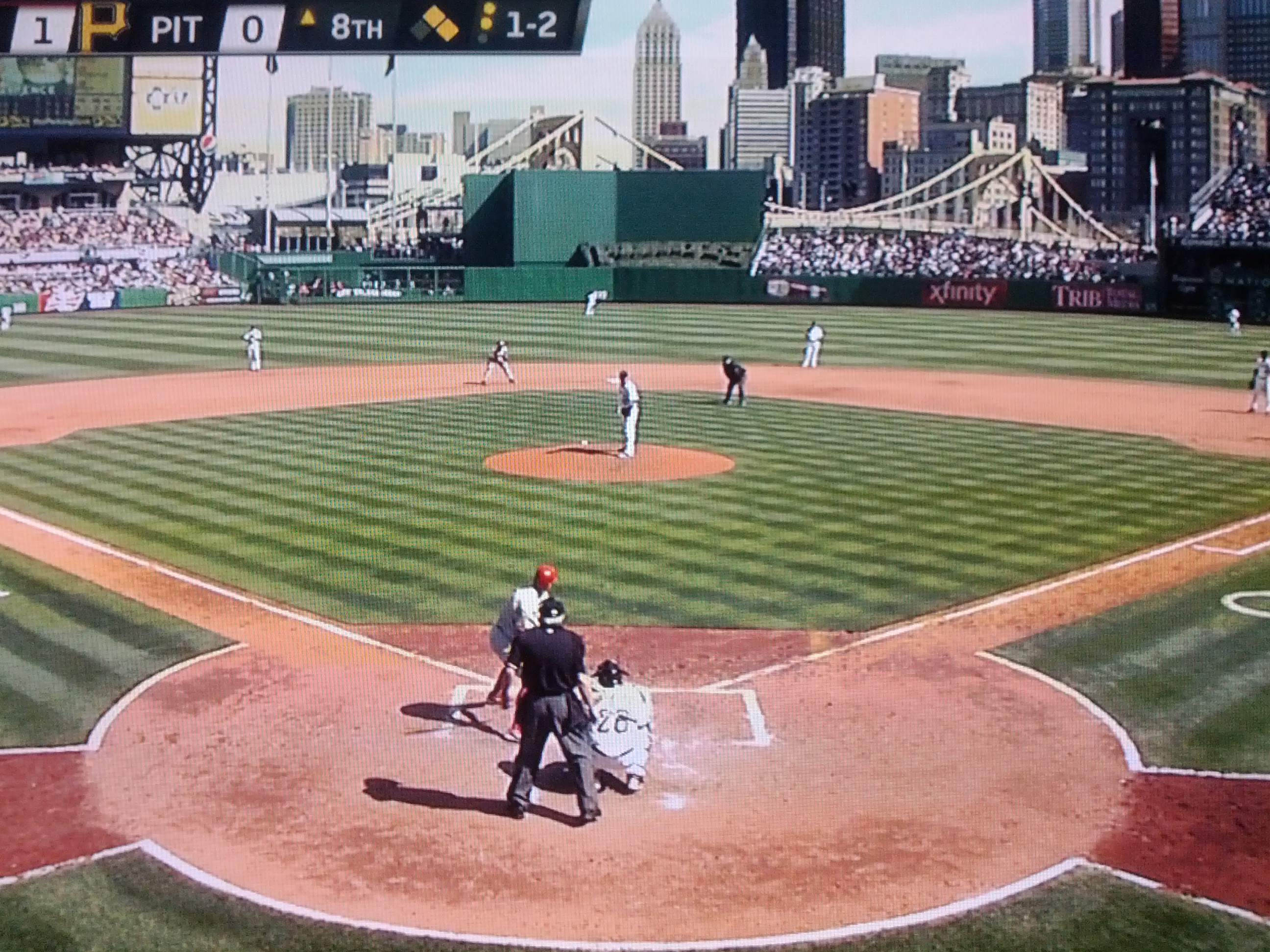

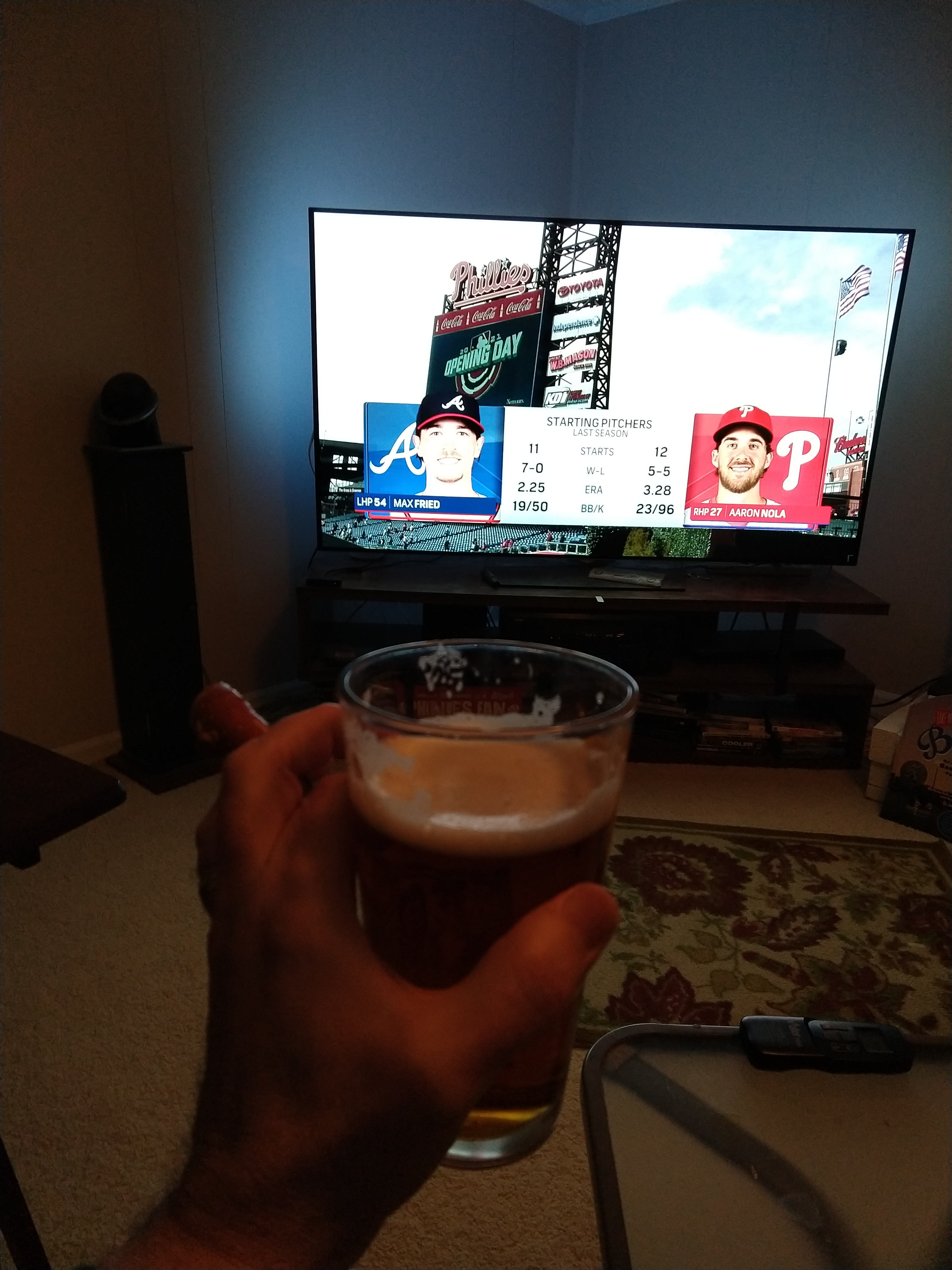
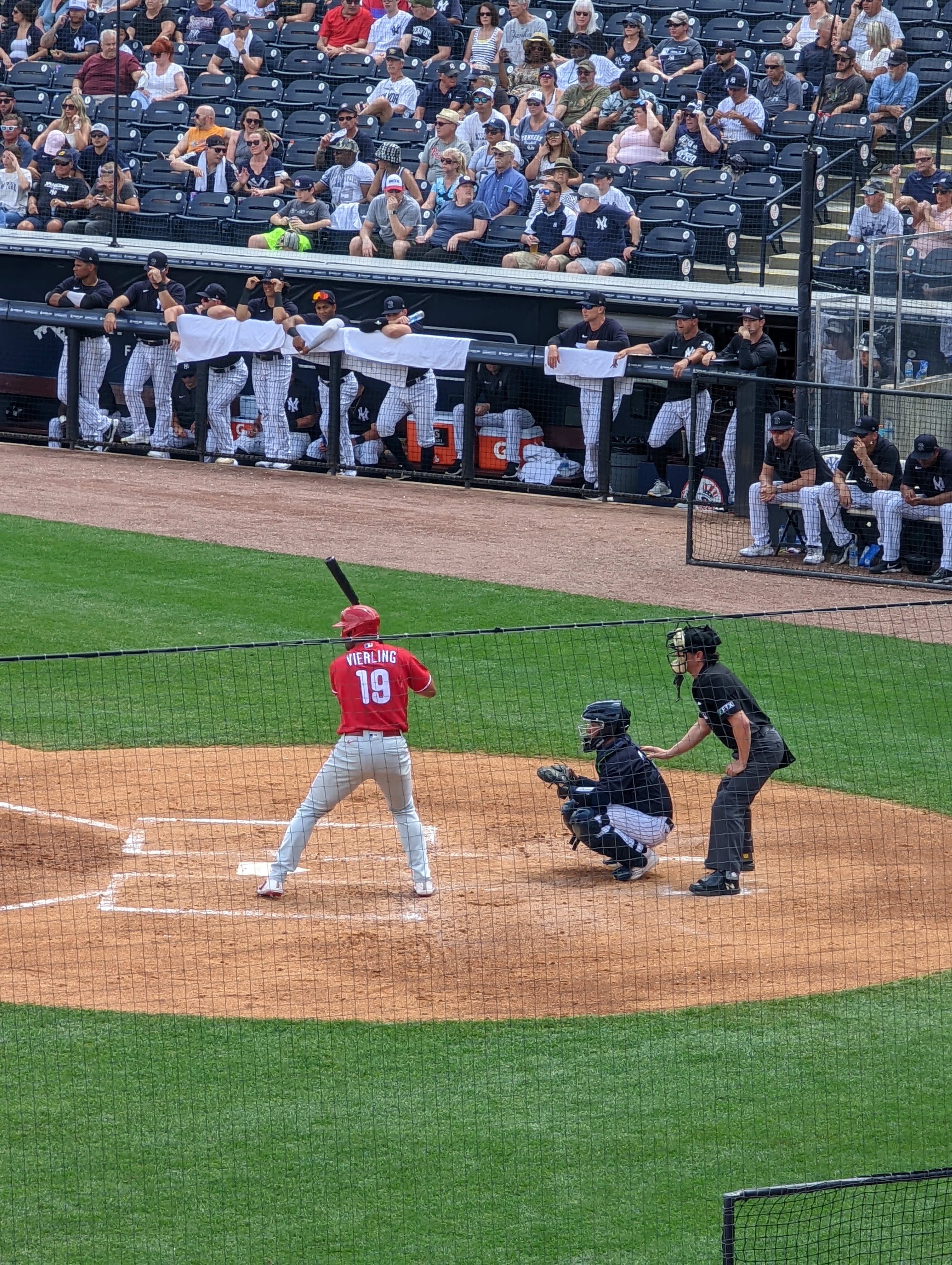
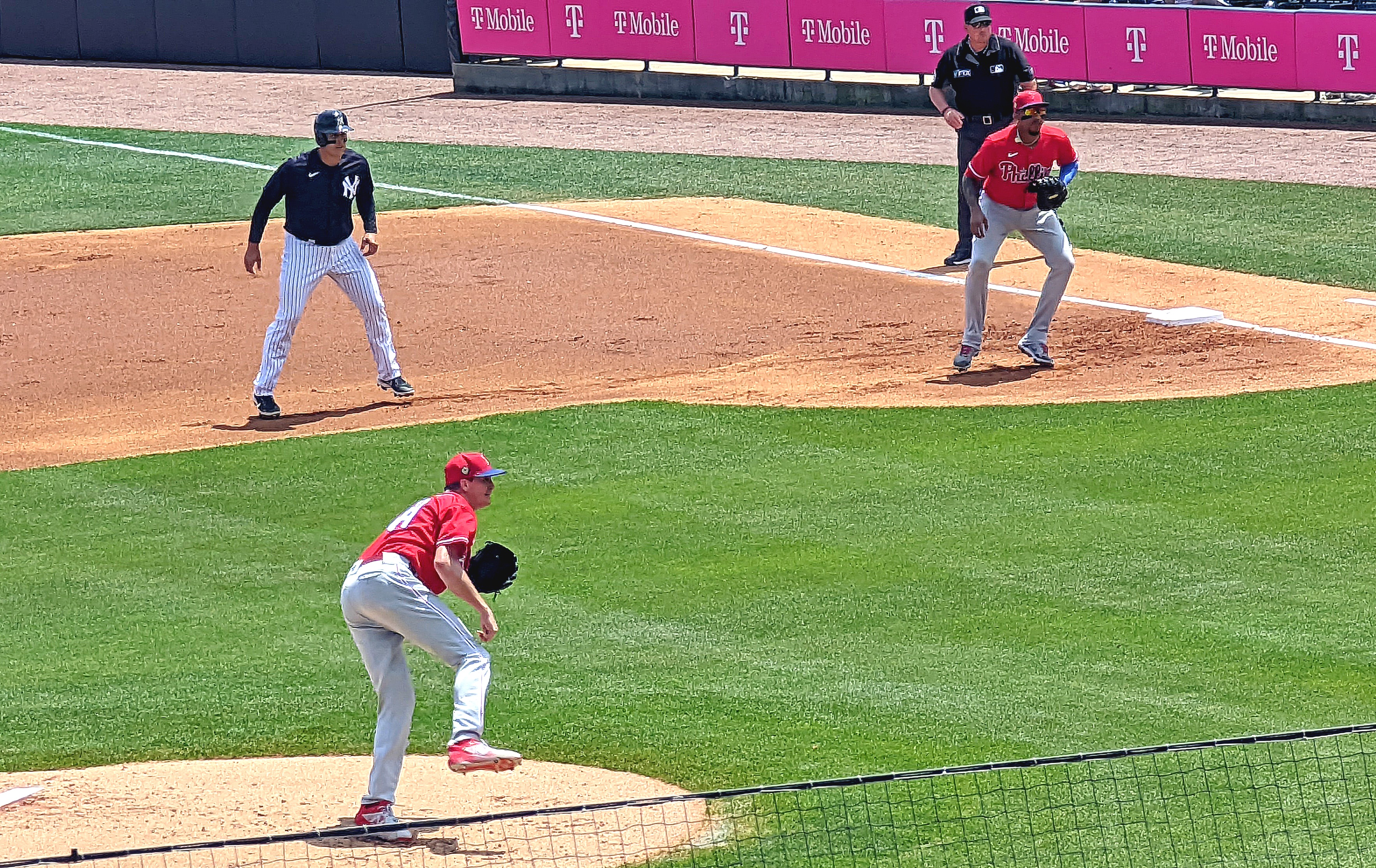


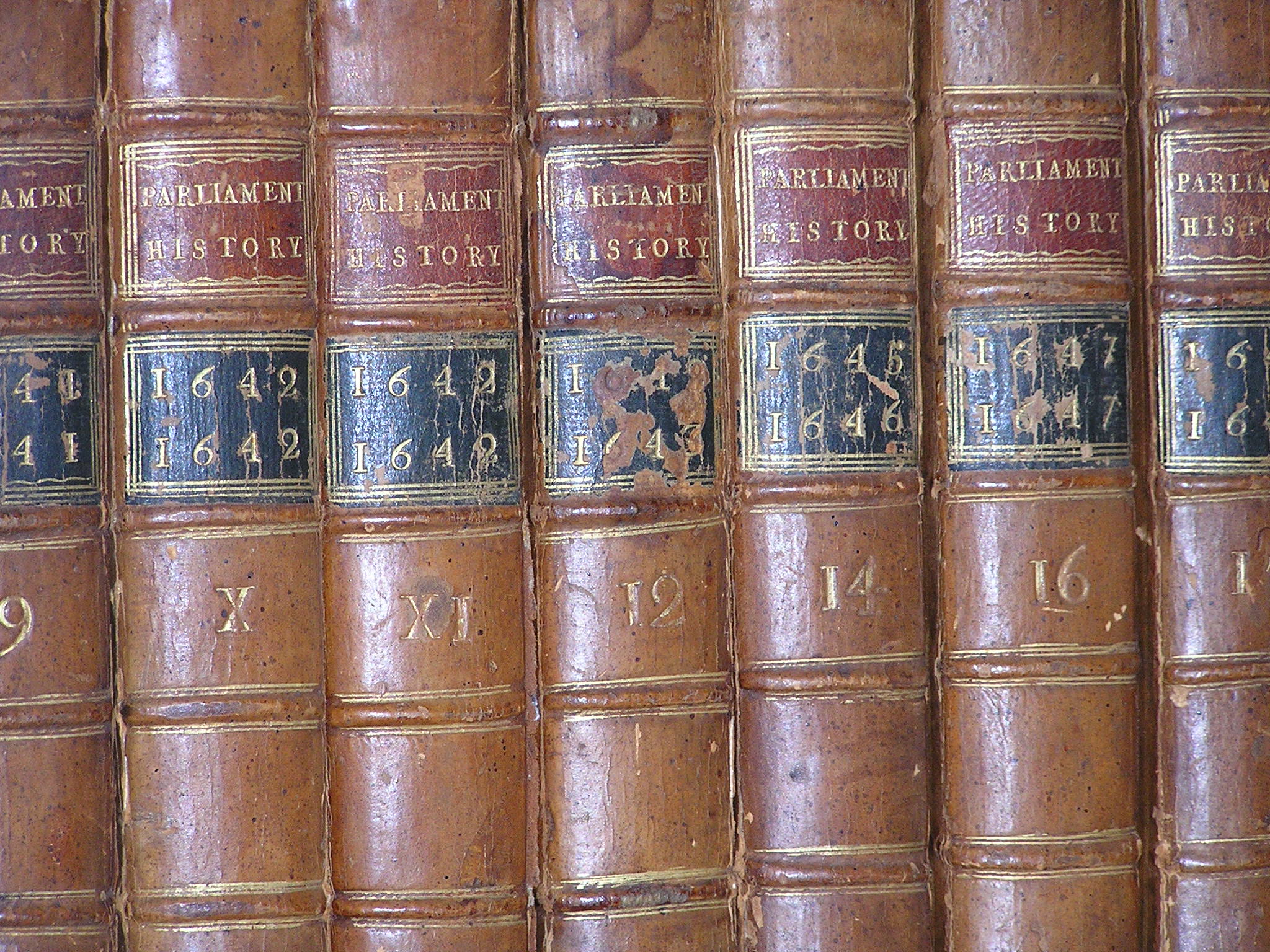






 all the voices in my head