Lettuce count two ten

[I wish there were a photo here. There isn’t because all the good photos I have about poor usage of written English are owned by someone else who likely would sue me. But, hey, we’ve illustrated the use of the subjunctive verb conjugation! That’s cool, right?]

In my email every day I receive a list of books which can be purchased in electronic format from Amazon for $1-$4. Each book is described in only two or three sentences, just enough to hopefully entice you to read the full description on Amazon and then buy the book. [See Caveats below regarding split infinitives.] Today a description of the book Girl by Alona Frankel contained this opening sentence:

In this “impressionistic memoir,” a world-renowned children’s author and illustrator offers a “truly moving and bravely rendered” account of her time as a Polish Jewish girl hiding as a Gentle in Nazi-occupied Poland (Kirkus Reviews).

A “Gentle”? Surely you meant “Gentile”?

Every day–not everyday as may be written ignorantly–I read something where the author and/or the author’s editor have recorded their ignorance of the written English language. After noting for several years how these blemishes have crept into what I consider to be prestigious sources–New York Times anyone?–I’ve decided to record all of the offenses, rating them similar to a fact-checking site. Not all offenses are equal. We will consider the source and the egregiousness of the error.

Time out for my GUM Guidelines. Grammar is how we know words mean something. “Ball he red the threw,” confuses a speaker of English because it’s out of order: “He threw the red ball.” Don’t go all Noam Chomsky on me. My definition will suffice for our purposes. Grammar is not class-based. Usage refers to the accepted way of saying something. People who say “don’t nobody know nuttin’ but me!” are deemed ignorant by the people who say “nobody knows anything except for me!” Usage is class-based. Mechanics refers to how spoken language is rendered in print. It’s a convention, neither class-based nor non-class-based. As a society we have come to an agreement that words will be written a certain way…until they aren’t. As such, mechanics change over time. Mechanics refer to punctuation, capitalization, spelling, and the like. Okay, back to our tirade of the day.

Me

At the bottom of the heap I will place graffiti, notes from friends and relatives, and other signs posted in haste. Everyone of us and every one of these examples have been written on the fly, often by persons who somehow passed through school while they regarded English classes as the scheduling version of a roulette wheel. Who knows where the ball will land? Maybe they were lucky on a certain day when final exams were given. Maybe the teachers just didn’t want to try teaching them one more time. Regardless, we can hardly damn ignorance when it’s being spray-painted on the side of a building or dashed off in haste on the back of a grocery store sales receipt. Occasionally one of these haste-lays-waste mistakes will crop up in what we read. We will sigh and rate these a 1.

Next up we encounter those who labor with the English language–and I want to emphasize “labor”. [See Caveats below for punctuating quotation marks.] People with only a passing knowledge of how to write English can find themselves employed in jobs demanding continual use of those non-existent/woefully lacking talents. In these days of electronic word processing, I suspect they often don’t write the English, they just copy and paste it from somewhere else. This copy-and-paste existence demands editing skills but ultimately the failure to catch errors, i.e., to edit your own writing or someone else’s is exactly what we’re concerned with here. We’re not dissing people for not measuring up to Shakespeare, Hemingway, or the adroit use of language we read in the work of so many fine authors. We’re taking these writers to task for how they symbolically render their thoughts into print. At this level, one up from the ignorant, they should know better–but they don’t. That’s why we will rate these a 2 and not higher.

Unlike the previous group, many persons do write professionally. They might not consider it the defining talent for their profession, but it commands an integral part in it. I’m thinking of the people who design and render web pages, paralegals who draft documents all day, people who work in advertising or real estate, and those who write blogs or newsletters or for small town newspapers (to name only a few). These people generally should know better. At the very least, they should know when they don’t know better and take the time to figure out whatever is perplexing them. (Actually, I’m probably kidding myself. They likely think they do know how that particular phrase should be written, that particular word spelled. It never crosses their mind to check it.) Perhaps most egregious, these are the people who ought to be able to question the suggestions from autocorrect, check the spelling of the underlined words, and turn on grammar checkers to parse their work. When they don’t, we must hold them more accountable. We will rate the lazy and purposefully ignorant a 3.

Finally, we come to the no-excuses group. These folks have climbed to the top of the writing pyramid. They write for the most prestigious news organizations, for literary reviews, for think tanks, for professional journals. They write books. They edit books. These people not only represent the best writers of English, they are monitored by those who set the standards of the language itself. The more frequently intelligent writers spell the word gel as “jell,” the more dictionaries will list it as an acceptable spelling. Although this is how the mechanics of written language change, it should happen slowly, and it should happen with intent. In the first years of this century I started writing “e-mail” as “email” because I figured it was headed thataway and wanted to hurry it along. I argued with co-worker and fellow purist, citing the words such as to-morrow to bolster my position. He served a useful purpose by objecting. If we unilaterally accept new spellings when one or two people obstinately use them, we start heading toward spelling chaos. Therefore, those who speed up the pace of change through sheer ignorance should not be rewarded with the support of dictionaries. At the top of the heap we should demand better. We will rate these erring standard-bearers with a 4, our highest rating.

We’re only halfway. Not all errors are equal. We can sum these up more rapidly.

We’ll deliver a gentle admonishment for missing apostrophes (some of them), plain typos, and mistakes which indicate the writer/editor willingly caved to the masses even when those masses don’t know what they’re talking about. We’ll rate them 1.

Mix-ups which appear to be a general miss by the autocorrect, those which don’t change the meaning of the writing (much), those which generally seem to be based more on haste than ignorance get a slap on the wrist and the advice to “slow down!” We rate these errors with a 2.

Ignorant errors which change or obfuscate the intended meaning must result in stronger reactions, but in the face of the difficult we need to be flexible. In writing about an online class did the author say the learners “tuned into learn”? I won’t go into details why it should be “tuned in to learn” because this error has become ubiquitous and I’ll have plenty of opportunities to explain it later. And I’m willing to admit I might deserve to be put in this group for the previous paragraph where I didn’t capitalize the S when I wrote “slow down!” My defense is that I didn’t think it appropriate to put a comma after the word “to,” and commas before quotations indicate they’re being used to set off independent clauses…so if this isn’t an independent clause but only a phrase…eh, that’s where my mind takes me. I have a reason, and I hope, nay, believe I’m right. However, I can see the argument that says the two word imperative does represent an independent clause. You see how complex this can be? Let’s not condemn these ignorant mistakes made in the face of English’s complexity with our full force. We’ll rate these errors a 3 only.

Some errors provoke the response, “That’s just wrong! How could THAT get into print?” Setting aside the skill level of the writer, we look at the error and evaluate it from a standpoint of how easy it would be to get it right, presuming the writer knew enough to figure it out. Sadly, these are the ones I see more and more. I would like to say that a 4 isn’t nearly as common as a 2 or a 3, just as most writers will fall into the 2 and 3 level in our first set of standards. No, errors seem to be at best evenly distributed from 1 to 4. Too many are grievous and demand a 4.

While the above rating scales for the actor and the act will be applied somewhat subjectively, the final scale will be totally, purely subjective. I’m going to add 0, 1, or 2 points for how much it pisses me off! A good example would be this screenshot from a local TV station’s newscast a number of years ago:
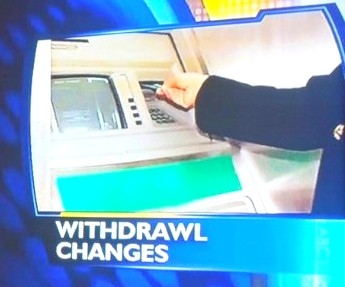
Photograph of local news story about changes coming to ATM’s in the Raleigh, NC market. Circa 2012.

This one would get a “0” because it amuses me. We live in North Carolina, so of course it’s withDRAWL instead of withDRAWAL! (And by the way, I had to check how to spell withdrawal–it’s what responsible writers do.) Most of the time this type of error in all caps and prominently displayed on the screen of a TV station in the 41st largest city in the USA would rate a “2” because at the time I captured this photo, they routinely were making horrible typographical errors like this. The station broadcasts to the Cary-Durham-Raleigh area which contains more than 1.5 million people. Apparently they fired the person who kept making these errors because they became few and then disappeared altogether.

Which brings us back to the email which set me off this morning. Clicking through to Amazon, I note that the word Gentile is spelled correctly at the top of the book’s description. Therefore I presume some low-level clerk hurriedly typed the description directly from the Amazon page. Much less likely but plausible: it was copied and pasted from Amazon, then Amazon corrected its mistake afterward. The clerk-level role is a 2. The error is grievous, though, one which should have been caught by all but the most ignorant person–apparently no one ever looked at what had been typed. The error is a 4. And because it’s so obviously wrong, it pissed me off a great deal, so I’m throwing a 2 at it. This error rates a total level of 8 out of 10 on the Reader’s Horror scale.

The Caveats:

  • I have a highly subjective and not terribly consistent approach to how I italicize words versus putting them in quotation marks (single or double). Generalized, when I talk about something symbolically I italicize it; when I am quoting from something I use double quotes. When I want to indicate ‘air quotes’ I use single quote marks.
  • Also, I stand with William Safire that only a fully quoted independent clause should have ending punctuation inside the quotation marks.
  • I don’t give a rat’s posterior about split infinitives. If I notice I’m doing it and if I can flip the words around to avoid it and still sound natural, I’ll rearrange the words. The abhorrence of split infinitives comes from Latin teachers. Latin verb infinitives cannot be split (as in the Romance languages), which led them to regard English infinitives as one word. Your eyes can tell you this isn’t true. It wonderfully represents the beautiful fluidity of English, and its ability to totally disregard (hah!) the silly Latin rule. The phrase “totally to disregard” is at once more awkward and slightly different in meaning.
  • Similar to split infinitives, I don’t overly worry about prepositions at the ends of clauses. If I can easily switch the sentence around, I will. Winston Churchill is famous for being accused of ending a sentence with a preposition and replying, “Madam, that is an accusation up with which I will not put.”
  • At 70 my opinions tend toward the conservative end of the scale but I started out liberal once. I surmise I’m somewhere in the middle at this point.

pictures & creativity [a non-poem]

I’ve come to believe everyone thinks in pictures, even if they don’t know it. By adulthood some of us go on autopilot, our connection to the pictures, images, emotion-movies cemented so far in the foundation-concrete of our makeup that we know only words anymore.

Creativity demands turning away from the words and toward the pictures. Visual creatives, you live here. Connect your hands to your pictures. We wordsmiths, though, must act as our own interpreters, must turn our backs on the pictures while remembering them, must translate the pictures into words.

At least, that’s how it works for me. When it works for me. (The rest of the time I just wander among the pictures and say to myself, “sure, I’ll remember this for later.”)

Honor Thyself

Maybe my purpose simply lies in imitating Charlie: hang out at the bar and drink a half gallon dry? May 2024.

I’ve several pieces of writing sitting on the shelf in a to-be-born state. Some even sit at the front edge of the shelf, just waiting to be taken down, polished, exhibited. This beckons now, however. It underpins the others.

I’ve too often settled for what I can do instead of striving for what I want  to do. This blog and its recent lack of activity exemplifies that. There exist but a handful of activities which bring me as much pleasure as posting photos, essays, poems, and other pieces of writing here. Why the weekslong gaps?

At the age of 13, as inchoate as any such a creature, I became focused by two things: my Language Arts teacher said (using a bit of poetic license), “Damn, Pilcher, you can write! You should consider being a writer!” The other event occurred in the same year when a partner and I debated some topic which I now forget in front of the entire 8th grade class, all 300-400 of us. I got a glimmer into my innate bent toward logic and reasoning, both inductive and deductive. Our duo lost the 8th grader vote, but we won the teacher vote, similar to winning  the electoral college but losing the popular vote. I considered myself a Writer and a Debater from that point forward. I did not know they were sometimes mutually exclusive.

In high school my teachers redirected my interest in writing. I learned they placed little emphasis on writing creatively, focusing instead on the expository writing of the essay, the critique (book reviews), and the like. Can one function in society where business letters rule the day? (At least they did then. If those teachers could only see today’s society…alas, most are dead.) I therefore looked to the available outlets, enrolled in Journalism, and joined the school paper (an elective class). In my senior year the two points of view in C. P. Snow’s The Two Cultures collided. All that expository writing reached new heights when Senior Humanities brought me the two-hour essay as a substitute for a test. But…the loosening of curricular philosophies brought me the elective of Creative Writing. Suddenly I wanted to go back to the latter. Yet already I had applied to the University of Montana because it had an excellent School of Journalism.

To shorten this up: I did attend the U of M, but enrolled in an experimental education program instead of journalism. I spent one year there. There followed a year of earning money, a two-year stint at a regional college learning to be a recording engineer—no, wait, a radio-TV newsman—no, wait, a weird combo of that with Economics—before I enrolled in journalism (again) at the University of Washington, determined to make my way in that field because, “if I don’t focus on something, I’ll never do anything!” And I did work in newspapering for almost four whole years.

Pause. This supposedly promised to be about how he couldn’t focus his desire to write into the pursuit of WRITING. He settled for what came to hand, taking the path of least resistance, doing what he appeared to be reasonably talented for. Compress the next twelve years: convenience and aptitude led to a ten-year teaching gig. Divorce and early-onset midlife crisis led to One Last Attempt to Be A Creative Writer. It failed in less than a year. (Insert all the comment you want; I/we know our psyche. I/we did what seemed necessary to maintain mental health.) Through a series of events which defy a bad Hollywood script, I wound up analyzing data and writing scientific reports for the world’s largest pharmaceutical manufacturing company at that time. I did well. I spent a quarter century at it, eventually as a consultant, and retired.

WAIT! WTF? I THOUGHT THIS PROMISED SOMETHING ABOUT HONOR AND ALL THAT?

What is honoring thyself? Youth #1 has innate talents for playing baseball, thinks “I really like buying and selling stuff” but goes into baseball because his/her innate talent take them that way. They succeed as expected, then coast for the rest of life realizing passive income from the insane amount of money earned as a ballplayer. They neglect to build a business empire based on that initial desire to be a capitalist. Youth #2 loves baseball despite having mediocre talent at playing it. He/she works every waking moment for years to make this dream come true. They are drafted into professional baseball, succeed despite what their projected ceiling is, and spend the rest of their life in baseball as a coach or a manager or a consultant developing young talent.

Which one honors themselves? The one who leaned into their innate talent? Or the one who ignored who-knows-what talent to pursue a dream? Youth #1 drifted into baseball on talent. Youth #2 ignored talent to pursue a dream which consumed the remainder of their life.

And for the religious among us, which one is pursuing their God-given path? Youth #1 made the most of their innate talent. Not #2.

How can I be nearing 70 years on the planet and still wonder which one of these I am, and what the answer is to that question about honor?

When I volunteer to write a database/listing application for my church choir, am I fulfilling my innate talent, or am I defaulting on my dream? Ditto for ditching teaching to write business reports that pretty much anybody could write. To make it more mundane, when I derive great joy and satisfaction in planning a set of weekly menus, selecting good recipes, and cooking them, am I dodging my greater dream, my greater desire to Be A Writer?

Is Being A Writer just an ephemeral dream, a wisp of wanna in a wind of reality?

Deep down I think I fear that though I have a talent for crafting language, I have nothing to say with it. I need to be explaining something, reacting to something, pontificating upon something. (I’m doing it now.) Avoidance mechanism or recognition of doing what I truly want to do? I fear it’s a bit of both.

I intended to end this with a promise about upending my approach to the day, the week, my life. To declare, “I will write FIRST, I will read FIRST, and only then will I tackle the mundane!” (“Dear, have you emptied the cat boxes yet?”) I cannot do that. I’m sitting here thinking about the monks with writing skills who eschewed them to pray aloud and work the fields. Of soldiers skilled in various practical skills who instead served on the front lines. Of women (and a few men) who gave up promising careers to raise children. What is a Calling and what is a desire?

In the end I come back to this: you have done what you wanted to do at the time. If more high school guidance counselors—do they still have those?—had told this to their junior and senior clients, a lot more of them would have been able to pursue what they were drawn to. I know I would have.

There will be no end to this piece. Not until I reach my death bed and give you the answer, and likely not even then.

Frivolous Friday

The piece I wrote last night isn’t quite ready, my tasks outpaced my time available, and I really want something to be posted. Ergo….

THOSE WHO DAWDLE MUST STAND ON CURB

I guess the two on the curb are crossing guards. May 2024, Raleigh, NC.

One of the best blues-rock live albums of my lifetime: “LIVE” FULL HOUSE by J. Geils Band, released 1972. “Whammer Jammer, lemme hear ya, Dickey!” and Mister Magic Dick on the lickin’ stick takes off with some serious Southside harmonica work. (YouTube also has a 1979 video of the band performing this onstage–worth it for Magic Dick’s bush of hair alone.)

Ideas I will never write (feel free to steal):

  • I was only hunting moonbeams/But my eyes got in the way
  • The scariest monsters don’t lurk under your bed. The scariest ones climb into bed with you and pretend to love you.
  • “He’ll worry all about the bugs on the windshield but not about the car coming at him in his own lane.” Not sure where that is from. Was it me?
  • Many people will travel the world on a regular basis but will be unfamiliar with the land and culture within a 300-mile radius of where they live.
The oak-leaf hydrangea has recovered from the complete devastation of the squirrels two years ago. Though only one stalk remains, it has leaves on it as big as a small dinner plate, and this lone but lovely bloom cluster. May 2024.

Blog Blockers: #1, Analysis

Guilt motivates, terrifies, handicaps, and depresses us. It informs, too. My guilt about not posting more than weekly here tells me I want to write more, photo more, pour myself into creative pursuits more than I have been. It also informs me other things must carry higher levels of guilt which trump my Creativity Guilt. Taking on a project, though, motivates me. Therefore, I’m tasking myself to write daily/frequently about what’s blocking the blogging.

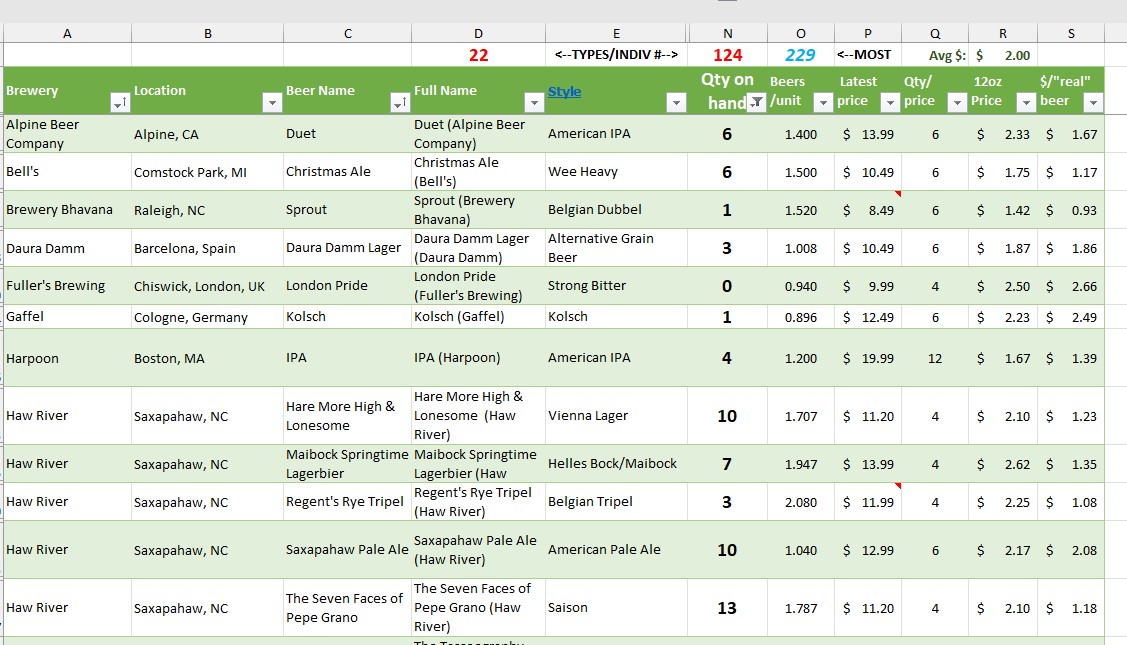
A partial inventory of our beer fridge. April 28, 2024.

Take a look at that spreadsheet screenshot above. One would think I created it to keep track of the approximately 22 kinds of beer in the beer fridge. Sigh. I wish it were so, and it remains a side benefit of the real reason I created it: that “Beers/unit” (Column O) feeds another sheet in the same workbook which is used to calculate how much I drank yesterday. Every morning for the past decade I make a short entry in my Health Log, maintained in Microsoft Excel. These days it’s simple: record my weight, make sure the meds I took yesterday is complete and accurate, and write 3-6 sentences about my general health mental and emotional. Examples? Life’s slings and arrows manifested as aching hips, arthritis starting to develop in my fingers, whether my collapsing ankles have caused any more ligament damage, and the condition of twitchy back. Lately it gives a couple terse lines about what happened yesterday, a sort of bulleted journal entry. I began adding these more and more in retirement.

More consistently than anything else, this log daily has tracked my ongoing battle to Not Drink So Much. It unflinchingly has recorded for the past decade the exact amount of beer I drink (I don’t drink wine or hard liquor anymore). It has done so with graphs illustrating rate of consumption, with 7-day and 14-day moving averages, with tables that project how much more the next beer will cost me, with histograms–and not one bit of it has made much of a difference in my rate of consumption. I had thought simple awareness would make a difference, much like cigarette smokers are told to record how and when they smoke. Awareness has made no difference whatsoever, even when I have done it in real time, as I’m drinking. The snippet of the calculating worksheet is shown below. Columns D, E, and F are the ones which look to the inventory sheet, multiplying the Beers/unit by the quantity drunk.

How to calculate a medically-defined beer. April 2024.

Columns A and B record odd-quantity beers, which usually occur when ordering at restaurants. I’m not going to go into all the calculations for what a medical beer is; you can see the definition at the top there and do the math yourself. Although I quit (finally) graphing the daily intake, I still list it in the health log entry. And now the beer-rating sheet gets maintained all the time. Filter the quantity on hand to ignore “0” and you can narrow the 400+ beers to a handy beer list to print out for when your wife says, “What’s in the fridge?”

This isn’t a cry for help. It illustrates the premise of the introduction: setting up these interlocking worksheets takes time. There are five other worksheets in this spreadsheet file that I’m not describing. And this is but one application. There’s a monster financial one which I think I could’ve sold back in the day I roamed the country as a self-employed consultant and needed to keep track of hours, rates, contracts, bills, accounts receivable, and how they drove our personal budget and finances. I just updated a Google Sheets app to plan music for our weekly masses and to show our choir what the music will be for a given Sunday–hymn numbers, responsorial psalm number, and the name of the anthem. It’s not a listing tool, like electronic paper. It requires the music director to pick the liturgical name of a given mass (such as the 5th Sunday of Easter) which then causes the application to pick the correct psalm information. The choir list looks to the planner. The printout for the cantor to use is driven from the planning sheet and the liturgy sheet. And etcetera for other things in my life.

In short, I analyze. I might read some political thing about the imbalance of power inherent in the two-US Senators-from-every-state part of the Constitution and go down a rabbit hole to compare the ratios of state populations in 1792 versus 2020 just to see if they’re markedly different or not. (I stopped myself on that one, thank goodness.) I might spend two or three hours to make some points about baseball like I did 18 months ago on this blog. This stuff happens all the time, and….

That’s one reason I don’t get to my writing like I think I want to.

the peony’s promise

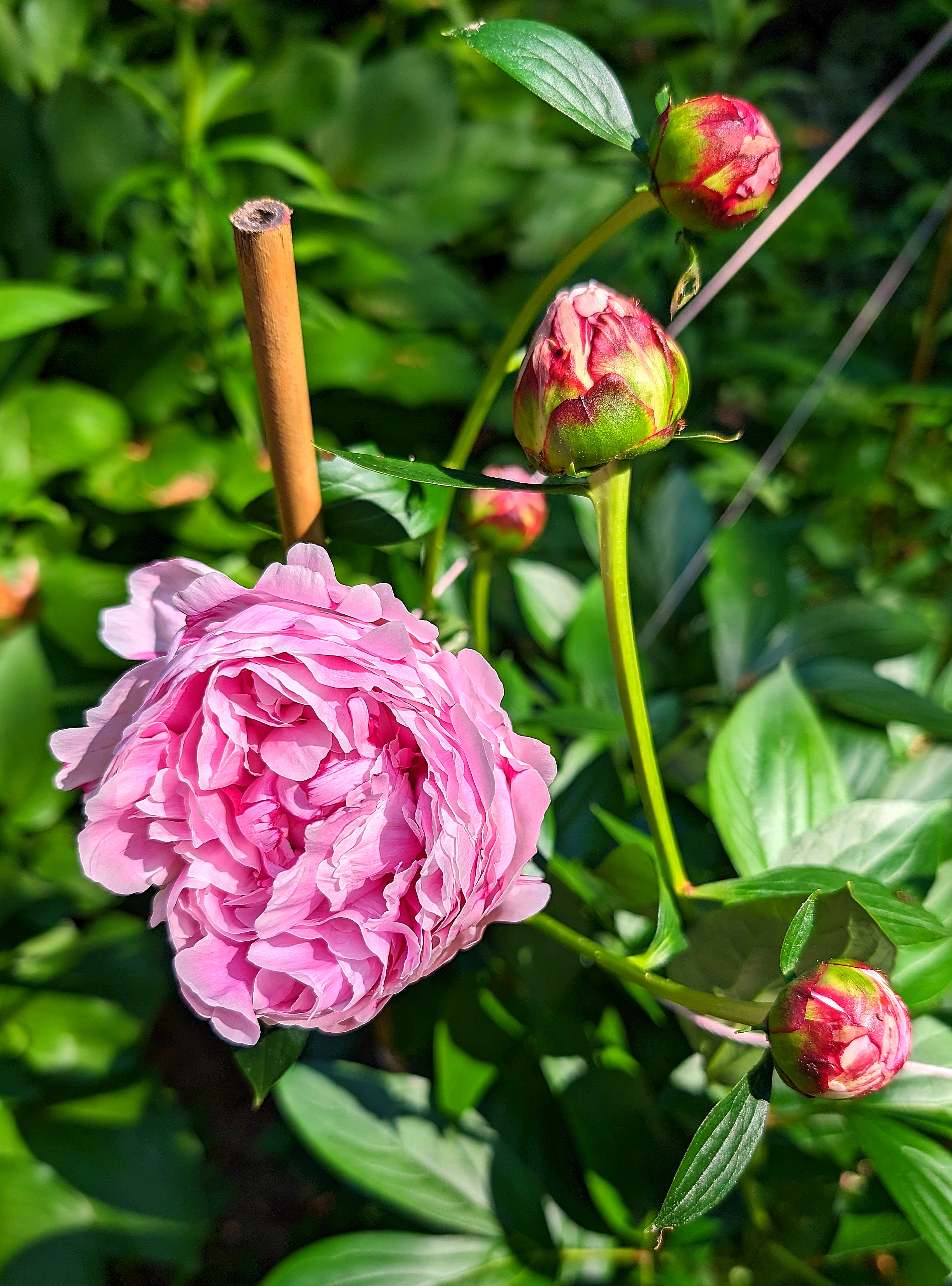
Pink peony. May 2024.

Symbolically, this peony represents why I haven’t been posting. It’s two days ago, I’ve got about 30-45 extra minutes in the late afternoon, and I think, “Hey, I better get that peony tied up before it blooms, and for sure before those hard rains hit that are forecast for tonight.” My two peonies will fall right to the ground as soon as they bloom fully. The rain didn’t materialize, but this photo, taken yesterday, shows many blooms are on their way and it’s supposed to rain tomorrow “for sure” and…you get the idea. The idea that I could instead get something posted never entered my mind.

I wrote a very lengthy essay last weekend the first of a series to explain from various points of view explaining what I think is more important than writing. Though sober (a good way to write!), I left it overnight to review in the morning, and decided at that point it just was too personal. My desire to be a writer and accept that a writer needs to write where the words will take him conflicts with my desire to be liked by at least a few people and with my desire to not expose every piece of my soul and psyche.

There won’t be many posts in the near future either, but I keep saying I’m ‘going to do better’ and maybe this time I mean it. Hey, I finally started going back to the gym after a six-month hiatus, didn’t I? And that’s for something I don’t really want to do!

Compound prepositions

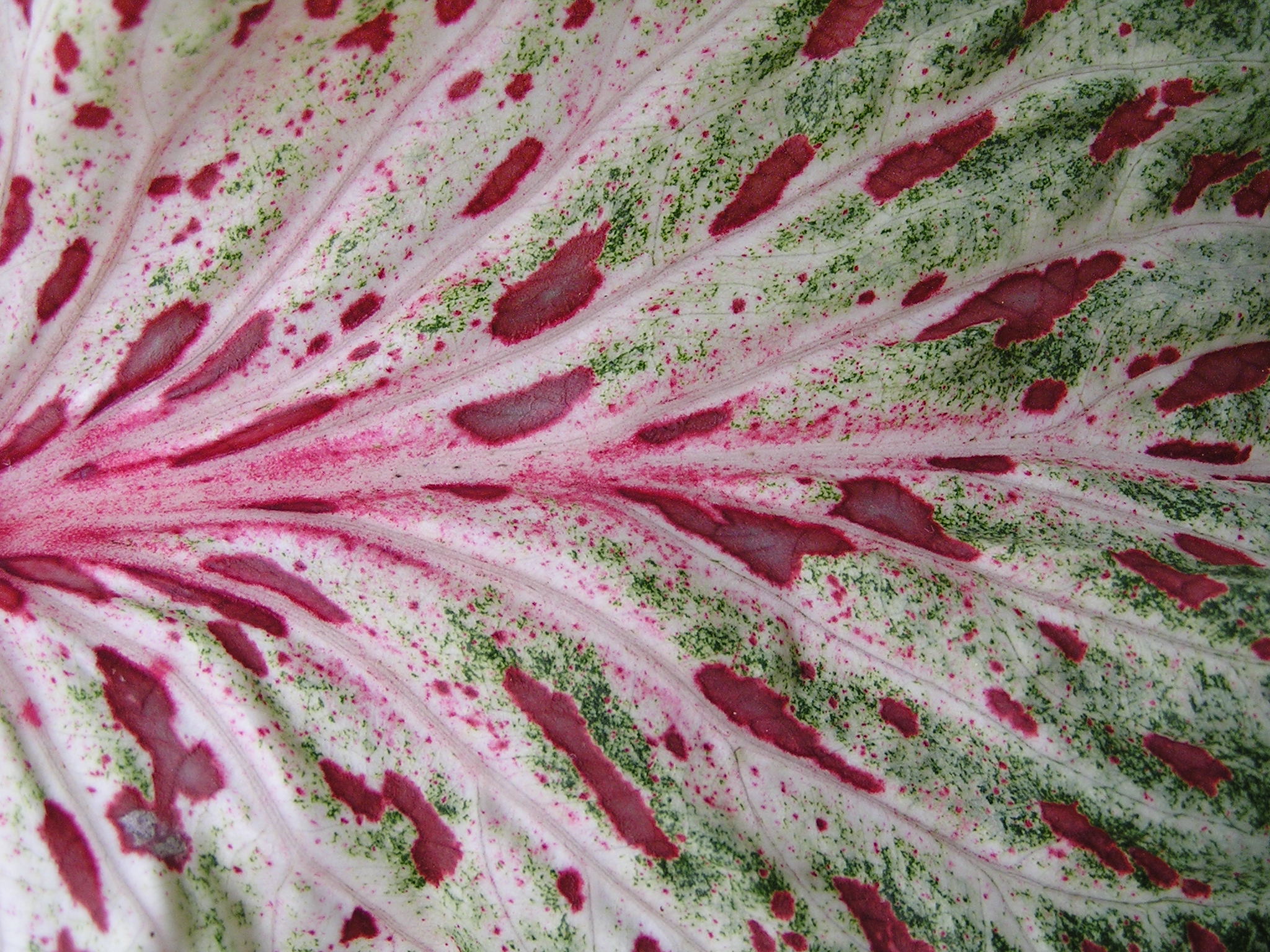
A plant’s leaf. In North Carolina. At Biltmore. May 2007.

Today’s photograph has about nothing to do with today’s topic, but I’ll try: some folks think (or rather don’t think) about how some things don’t belong together in all cases. Red and green for instance. On this plant it’s a natural thing. At Christmas it evokes the symbolism of holly and green leaves and all that. In July it says, “Who’s this freak that thinks it’s Christmas?” Today we’re going to talk about people putting words together which don’t belong together.

For newcomers to this blog: Once upon a time I taught English to 8th graders. Once upon a time I took a graduate-level course in grammar, most of which consisted of diagramming sentences. I killed that class–most of my fellow students were returning teachers who clustered around me after the final to learn how I had diagrammed the sentences on the test, even though these were sentences which we’d already diagrammed in homework assignments. I’m not bragging, merely establishing my credentials for the next paragraph.

There’s a grammatical distance between “on to” and “onto”. The latter one is a preposition. The first one, however, is an adverb followed by a preposition. Or some would say it’s a compound preposition. I disagree, but it’s debatable. What’s not debatable is when you put them together as if they’re one word but they shouldn’t be. Here:

  • Ken wants to turn his audience on to prepositions.
  • The turtle hauled himself onto the log.

“Onto” indicates position. In the first sentence you can see I am not trying to physically turn my audience and put them “onto” a preposition. Children, pets, and occasionally a frisky adult will get onto the furniture. A lace hem might be sewn onto a dress.

Prepositional phrases usually come in a three-word format of preposition-article-object/noun, and they’re often strung together one after the other. Here’s one: Susan got out of the bed, put her pajamas in the clothes hamper, and made her way to the shower. I boldfaced the prepositions. (If you’re really into the stuff, that’s a compound predicate where the subject “Susan” has three verbs to go with it, “got”, “put”, and “made”. It has direct objects, “pajamas” for the first verb phrase and “way” for the third. This looks really cool when you diagram it, but let’s hold that thought for now.)

Why am I doing this? Who gives a rodent’s rear? Here’s the deal: I see at least one writer who doesn’t know how to use prepositions, homophones, or those tricky complement/compliment words every morning when I read my news. I read (in this sequence) MLB.com to see if there are Phillies stories; The Athletic for Phillies stories and general baseball news; the Washington Post, primarily for the comics, but some headline always snags my attention; and the New York Times. All of these sites command highly respected writers. One assumes there are editors, at least a few. How is it something as basic as this can’t be understood by some of the top writers in the country? To wit:

She turned her father into the police. Perhaps she did, but only in her mind (parents behaving like cops sometimes). Dad never joined the force, though, and she has no magic wand to turn him into the police. She turned him in. To the police. See? Separate words.

Note to grammarians: yeah, I know this isn’t grammar. It’s not even usage. It’s mechanics and those are a slippery thing. Fifty years from now what I’m saying will be as anachronistic as railing against tomorrow because it’s supposed to be to-morrow indicating the link to its linguistic past, to the morrow. I don’t care. I will hasten e-mail by typing email wherever I can, which I did in the 1990s and 2000s. I will type awhile even when the algorithms in the software says “no-o-o-o!” I’ll even type alright because I think it’s alright. (And I wonder if anyone under 50 or 60 wonders what the heck I’m talking about.)

I will not give in to compound prepositions. (See what I did there?) There is meaning contained in the words the heathen are stringing together, and those meanings change when you join the two into one. I hope you’re turned into frogs. Or is it turned in, to frogs? I hope the latter, and that said frogs will thwwpt! your face with their tongues for eternity.

Look, I’m all about breaking rules. You need to know the rules before you can break them, though. Picasso said that, more or less. If you just ignore the fact rules exist, you’re just a hellion-without-a-clue.

And now for that diagramming I promised. I’m afraid that nearly 42 years later I have not kept every assignment but I kept the quizzes and the final. Below is the last page of the final. It’s a ditto, so the questions are faded quite a bit. (“Ditto”–look it up. They were as much fun to make as it was typing on a manual typewriter: every mistake basically was uncorrectable.) We can discuss this below in the comments. The little blue zero means no mistakes. Grant Smith, the chair of the department and teacher of the course (Eastern Washington University) graded this stuff like golf is scored: mistakes were 0.5, 1.0, and 1.5 point mistakes, and the more you got, the lower your grade. Thus, the highest score possible was “0”. (And another day, children, we’ll discuss why I put the period outside of the quotation marks. You may background yourselves by reading William Safire.) By the way, at 28 years of age I already exhibited the anal qualities which now circumscribe my life. Those lines look nice and straight because I used a 6-inch ruler on all of my assignments and on my quizzes and tests.

Why I can’t blog

…or “the dog ate my post”

Moon over my parents’ garden. January 2020.
  • We’ve had two (or is it three?) cold fronts move through. Friday’s came through late afternoon. The past two mornings have featured wind chills in the single digits. No big deal for a lot of folks, but in North Carolina the weather-folk told us to stay indoors. Apparently they either never lived in the north, or they realize many of us down here never have. Regardless, my fingers are too cold to type, my brain is too cold to think. I can’t blog.
  • I’m having a crisis with the beer fridge. I want it to chill the beer no colder than 40 degF, preferably 42. It’s giving me 32 on the middle shelf, and I’ve got the thermostat turned up as far as I can without turning it off. (Hmmm, unless it’s backwards–maybe it’s as cold as it can go…) I need to find an external controller. I don’t have time to blog.
  • My choir director headed to England for a week last Sunday. Texts me at 4:35 a.m. Tuesday to ask me if I’ll introduce the guest organist performing a concert that very night at our cathedral. Of course, it was past 9:30 in London. I said yes. It sucked up half an afternoon (for doing things I would have done near dinnertime), and all of an evening, plus it left me a zombie on Wednesday when I got home late, couldn’t get to sleep, and stayed up to midnight “to relax with a nightcap”. I can’t think, I can’t blog.
  • Shortly after that Tuesday text, I’m showering and realize, “crap, I’ve got a blood draw this morning!” Just in time to get dressed and go. (Rule: When it’s a fasting blood draw, schedule it early.) I can’t remember my appointments, let alone remember to blog.
  • Thursday we attended a luncheon meeting about forming a seniors group at our church. If you want to see some visual humor, take a look at the car parking skills for a bunch of 65- to 90-year-olds. I can’t blog. I’m still looking for a parking spot. I’ll blog when I do.
  • I rose at 4:44 a.m. today to get myself going for a 7 a.m. mass where I was the scheduled cantor. I’m a bass. It normally takes until noon to get my voice warmed enough to hit middle C. I did it today in less than two hours. I think I strained something. I can’t blog.
  • I finished Roger Daltrey’s autobiography early in the week. Roger revealed that one of my top bands fit the definitions “irresponsible miscreants” and “jackasses”. Removing my admiration left me emotionally untethered. I can’t blog.

Or maybe it’s just that planning some very special vacations to Europe and points beyond, getting my profligate ways under control, dealing with life’s vagaries (bills, groceries, cat vomit, completely unscheduled propane deliveries), and trying to figure out how to exercise, meditate, study scriptural sources, pay bills on a near daily basis, cook, read for pleasure, write (outside of the blog), and still find time to be a husband to my wife–all of that takes more time than the day has granted me. The blog sits too far down the list. (Saint Frances de Sales, patron saint of writers and journalists, pray for me.)

Rhyme time

St. Lawrence Seaway, NY. September 2005.

I took my tumble into poetry when I returned to college in 1981 for an English Education degree after four years spent writing and editing weekly newspapers. We were required to pick one of three concentrations: Literature, Composition, or Linguistics. While we were expected to take classes in all three areas, the majority of our coursework would occur in the concentration we chose for our major. I already possessed a degree in Communications (with a concentration in Journalism), so I chose Literature. It seemed to be the most useful choice between that and Linguistics. I don’t recall how many courses in poetry I took; I presume it was two plus I had a class in Shakespeare. (As part of my Communications degree I also had taken a course in Medieval Literature which is as much poem as prose, in my opinion.)

I remember my poetry professor as a grandfatherly figure: white hair, thick glasses, dressed always in a button-down shirt and a thin cardigan sweater. He wasn’t pedantic; rather he sought to lure us in to the beauty of poetry, slowly instilling an appreciation for the nuances which one poem achieves perhaps a bit better than another. He taught the meaning of the word “scansion” and how to do it. He taught us the formal structures of historic poetic forms, such as the various forms of sonnets. I distinctly remember he appreciated but ultimately relegated to B-status the poems of Henry Reed (“Lessons of the War: I: Naming of Parts“) and A. E. Housman (“Terence, This is Stupid Stuff“). He attempted to relate a continuum where doggerel existed on one end and truly sublime, great poetry existed on the other. “There is a difference between verse and poetry,” he insisted.

A while back I wrote a poem about why I don’t often write rhymed poems. Too many of the poems I read online from those who fancy themselves poets barely nudge the needle from where it pegs at “doggerel”. It’s down here at this end of the spectrum where we read “cowboy poems” and such. Rhymed poetry doesn’t have to be doggerel or its cousin, trite whimsy. I hope my poem might exist in the middle ground, somewhere between a clerihew and Housman’s “Terence”. Here’s the beginning of the latter:

"Terence, this is stupid stuff:
You eat your victuals fast enough;
There can't be much amiss, 'tis clear,
To see the rate you drink your beer.

My barely informed opinion about rhymed poetry? Look to Shakespeare who crafted his poems to specific rhyme schemes, with specific metric schemes which must scan appropriately. Another, more modern poet who understood how to write a poem which rhymed is Robert Frost. Here’s an example, to be discussed below:

Locked Out
(As Told to a Child)

When we locked up the house at night,
We always locked the flowers outside
And cut them off from window light.
The time I dreamed the door was tried
and brushed with buttons upon sleeves,
The flowers were out there with the thieves.
Yet nobody molested them!
We did find one nasturtium
Upon the steps with bitten stem.
I may have been to blame for that:
I always thought it must have been
Some flower I played with as I sat
At dusk to watch the moon down early.

(as transcribed from Robert Frost: Collected Poems, Prose, & Plays [The Library of America])

Is this a great poem? No, but Frost tells a small tale easily, conversationally, with rhymed words. He warns us in a sense by titling it “as told to a child” and keeps the central thoughts of the poem simple. And what’s this? He chooses not to rhyme the very last line? Doesn’t that just punch it up all the more? Great poets reveal their hand even when the poem isn’t truly great. Looking deeper, I’m reminded how just as adults get nuances out of ‘children’s cartoons’, we gather meaning in passing from lines like the first three lines. A child would take it simplistically, but we consider the symbolism of locking up all that is natural outside of ourselves, of shutting ourselves off from beauty, of starving the fair flowers of our existence from the light of our presence. Frost uses the tenth line (“I may have been to blame for that”) to zing us with a perfect iambic (dah-DAH) tetrameter (four of ’em). To my mind, it hurries us through the line as if the narrator feels a bit guilty that his inadvertent playing with a flower has been used to invoke a threat of thieves to a small child.

Those are just a few thoughts which occur to me in looking at this poem again after first reading it about a week ago. Look, I understand we’re not all four-time Pulitzer Prize winners. But can’t we at least try? Must we succumb to “My boyfriend left me/I’m feeling blue/I’ll leave the country/Now that we’re through”? Just as a prose thought can be made meaningful by converting it to poetry, consider if your poem isn’t so mundane it ought to be simply stated as prose. Making four lines rhyme A/B/A/B shows about as much skill as photographing a sunset and thinking you’re a great photographer just because you captured a glorious sight made-to-order.

I applaud the poets I read online who use blank, free-form verse yet hew to ideas of tune, rhythm, compression, precise word choice, and who frankly have something worthy to say. We can’t realistically dream we’re rhymers like Frost, or poets laureate like Stanley Kunitz, or poets-for-the-ages like Dante Alighieri. But…we can try.

Nothing to hear here

No soundtracks…well, OK, I reacquainted myself with The Black Keys, El Camino and Delta Kream. I won’t be posting regularly for a short while–this is the beginning of my holiday-panic season. It begins with procrastinating my very first task: writing the stories to go into my holiday newsletter. As a former reporter/editor and swelled by my self-image of Writer, my newsletter is a real NEWS-letter. As one of my wife’s sisters said, “I like your guys’ newsletter. Everyone else writes long paragraphs about how wonderful their lives and family are. Yours has things like ‘our cat died’.”

Page one (of four) looked like this in 2022: