Back to the ‘Glades

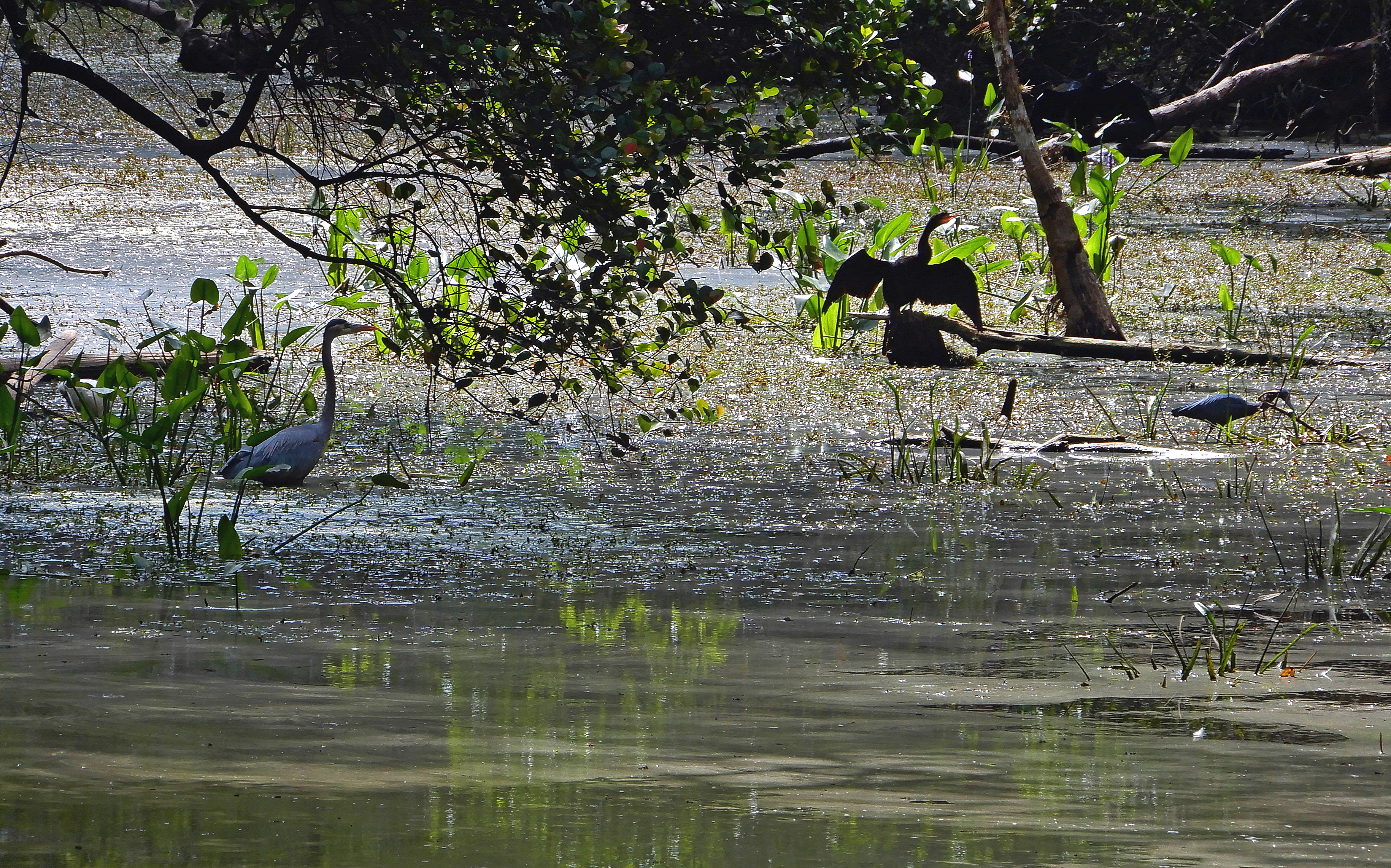
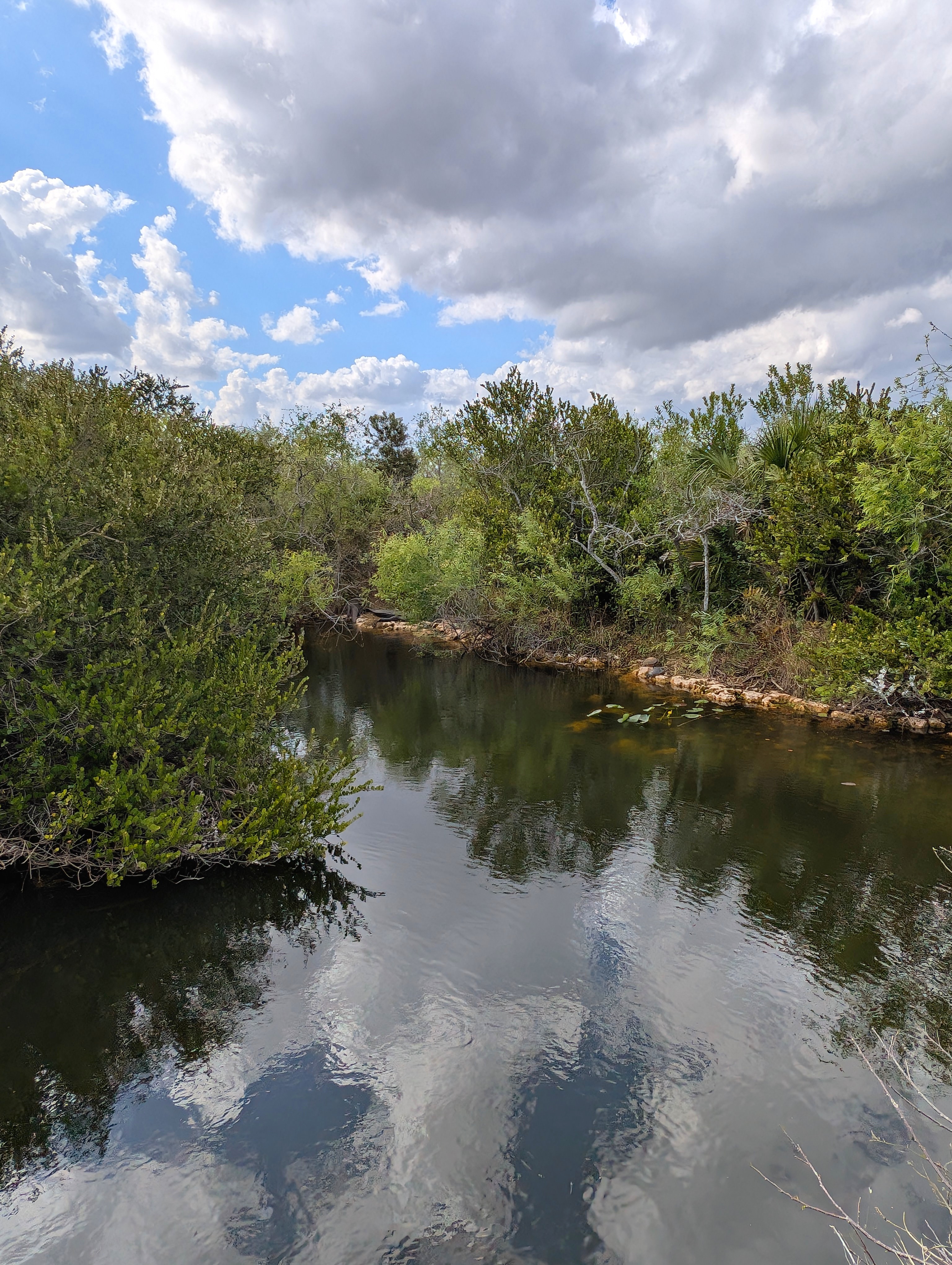
View from Shark Valley Visitors Center, Everglades National Park. There are two alligators in this photo. February 2026.

Technically we re-entered the Everglades National Park at the end of our day in the Big Cypress National Preserve, stopping at the Shark Valley Visitors Center at the end of the afternoon. We didn’t want to take the tram ride to the actual Shark Valley viewing tower, which left us little to do there. Another hour brought us to Homestead, FL. I discovered a Cuban restaurant next door which delighted me a great deal. But first, where are those alligators in the photo above? Look up that slough in the center of the photo. On the far bank? Just above the light-colored shoreline? Here’s a zoomed in photo:
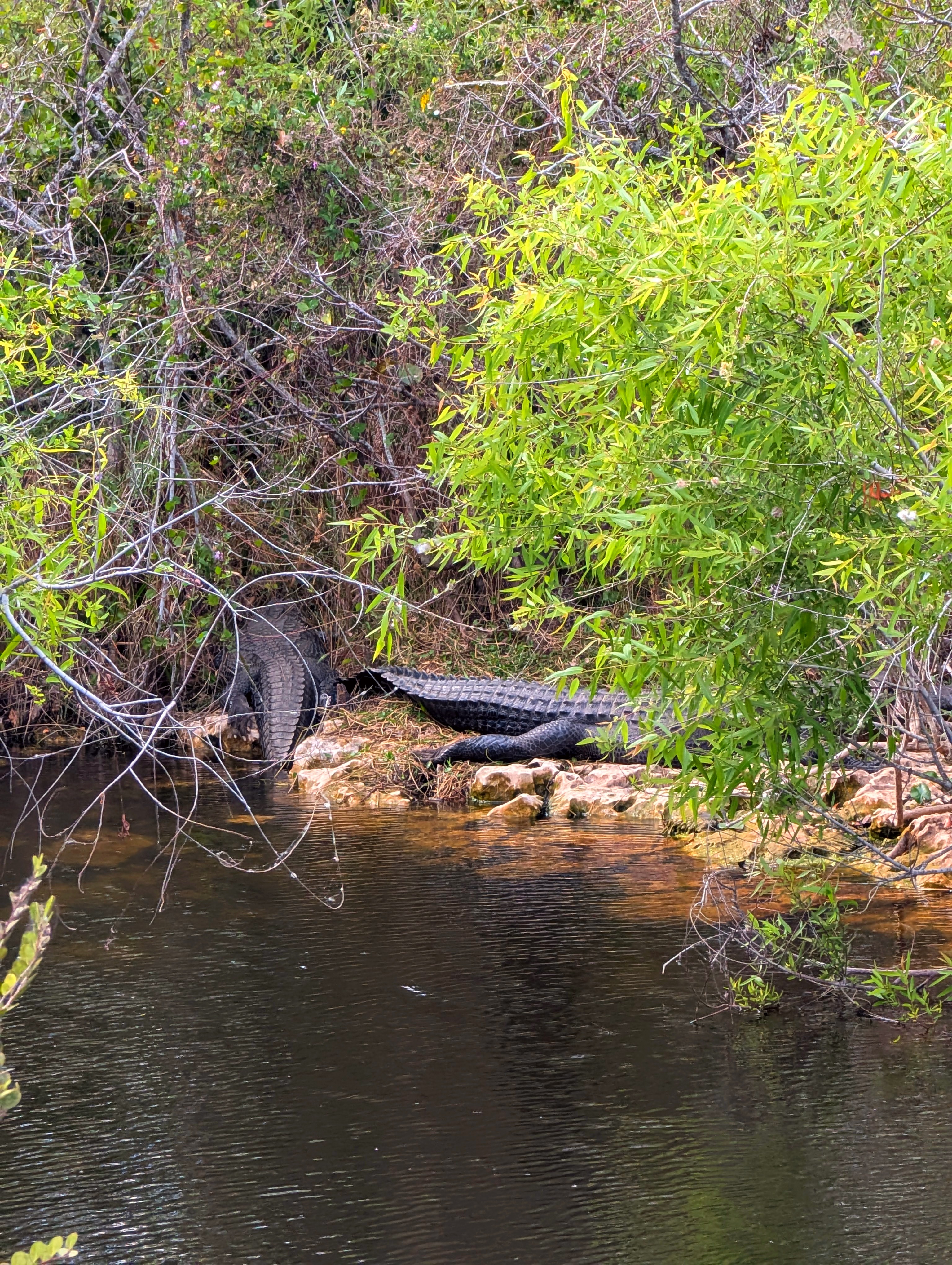
Alligators at Shark Valley Visitors Center. February 2026.

We hit up the Cuban restaurant for breakfast, easily besting the hotel’s “continental” offering, then headed to what I still regard as the heart of the Everglades—the Ernest F. Coe and Royal Palm Visitor Centers and the road which leads deeply through the park until it reaches Flamingo where one can stare southward at the Florida Keys. We arrived just as the Coe center opened then headed southward.
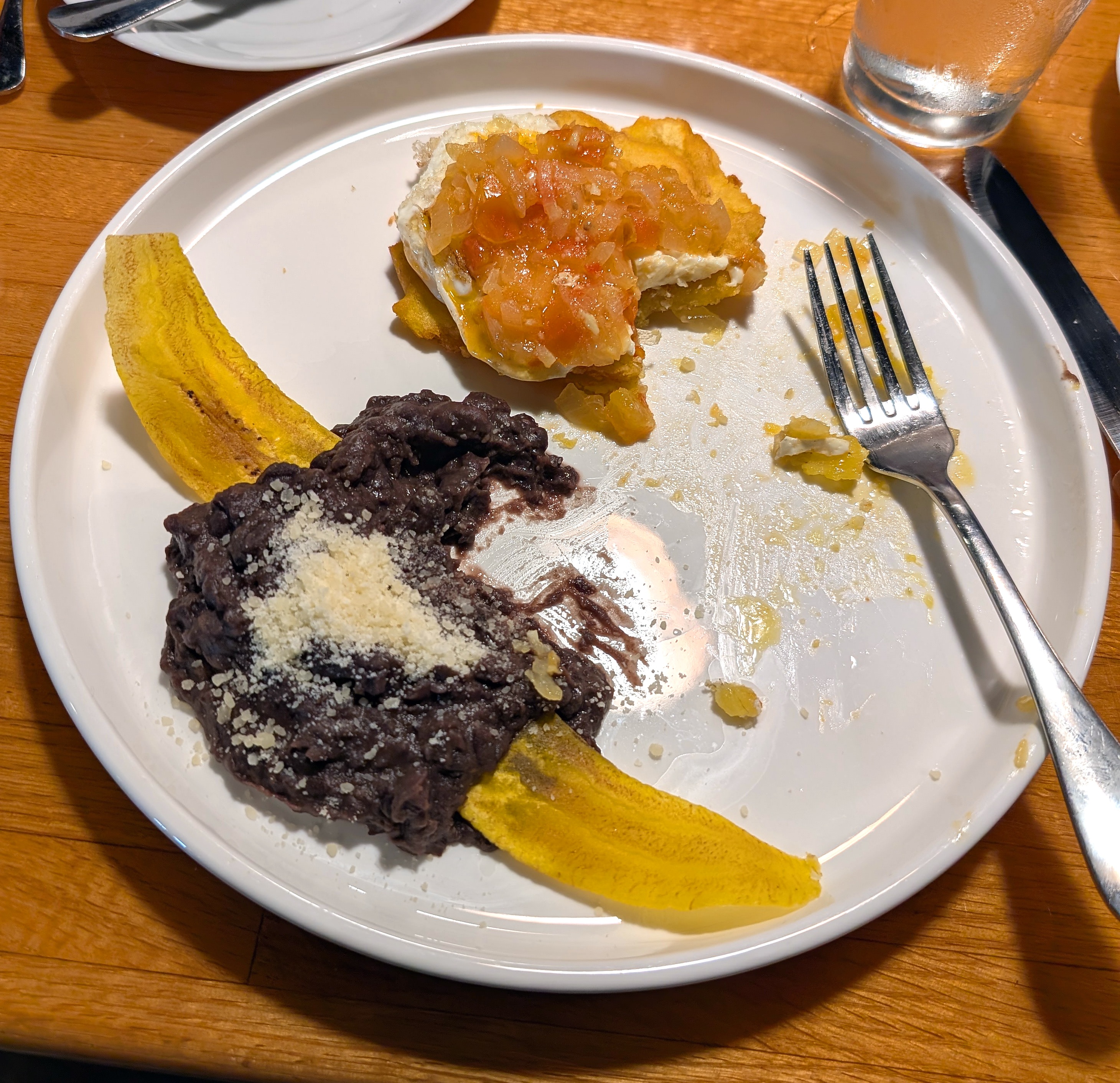
Huevos rancheros, Cuban-style: plantain pancake under the egg and a fruited salsa atop. February 2026.

After spotting a half dozen or so school buses in parking lot, we decided to visit Royal Palm at the end of our day, on the way back out of the park. Quietly spotting wildlife with a hundred or so elementary students alongside (we checked) seemed to be mutually exclusive. We stopped at some of the major sights on the way south, a few on the back out.
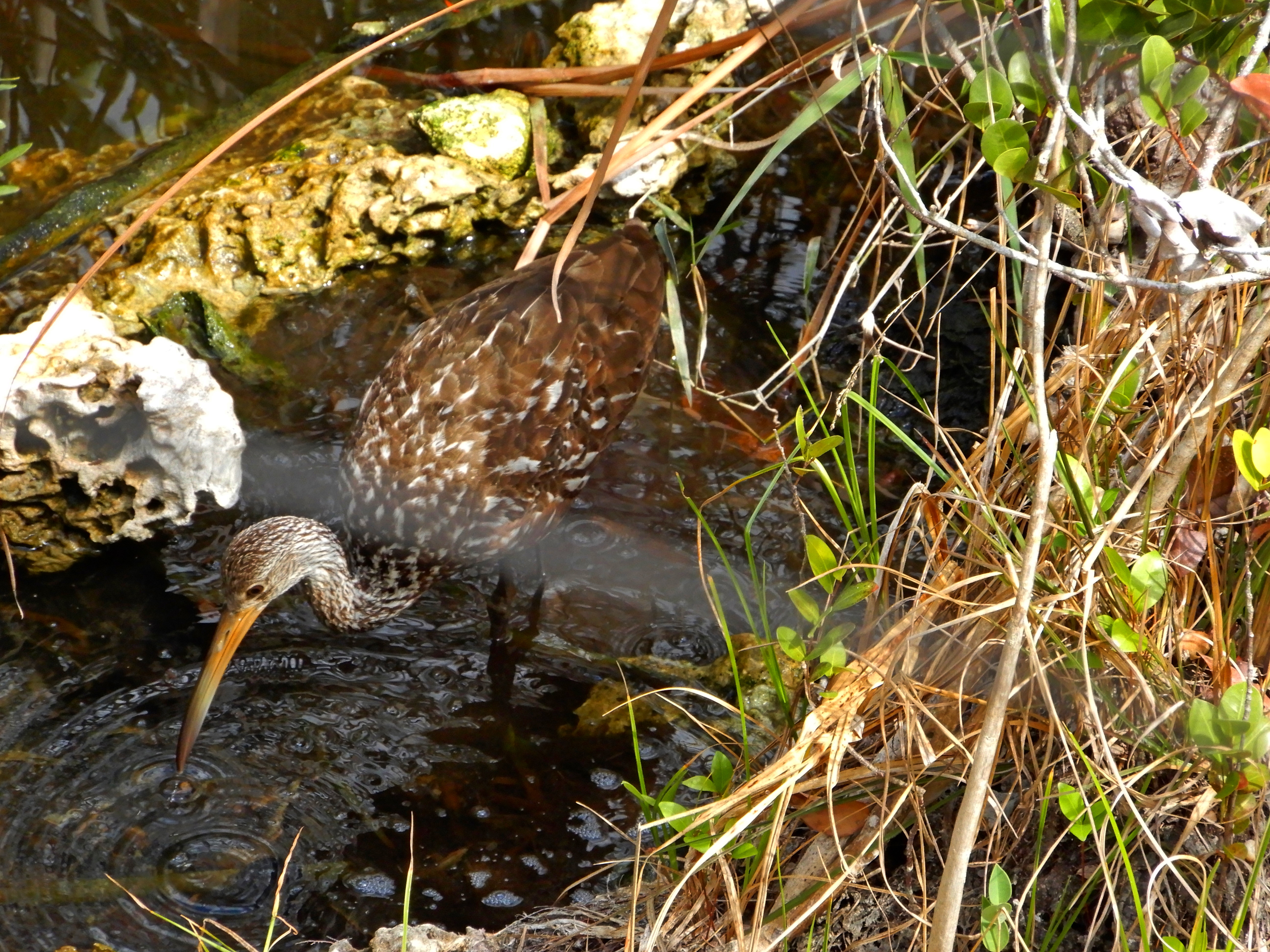
A juvenile heron. Not sure which one. Looks like a Black-crowned Night Heron, but those don’t have the yellow/orange beak. Closest I can come would be a Tricolored Heron but it doesn’t seem to be quite like this patterned brown. February 2026.
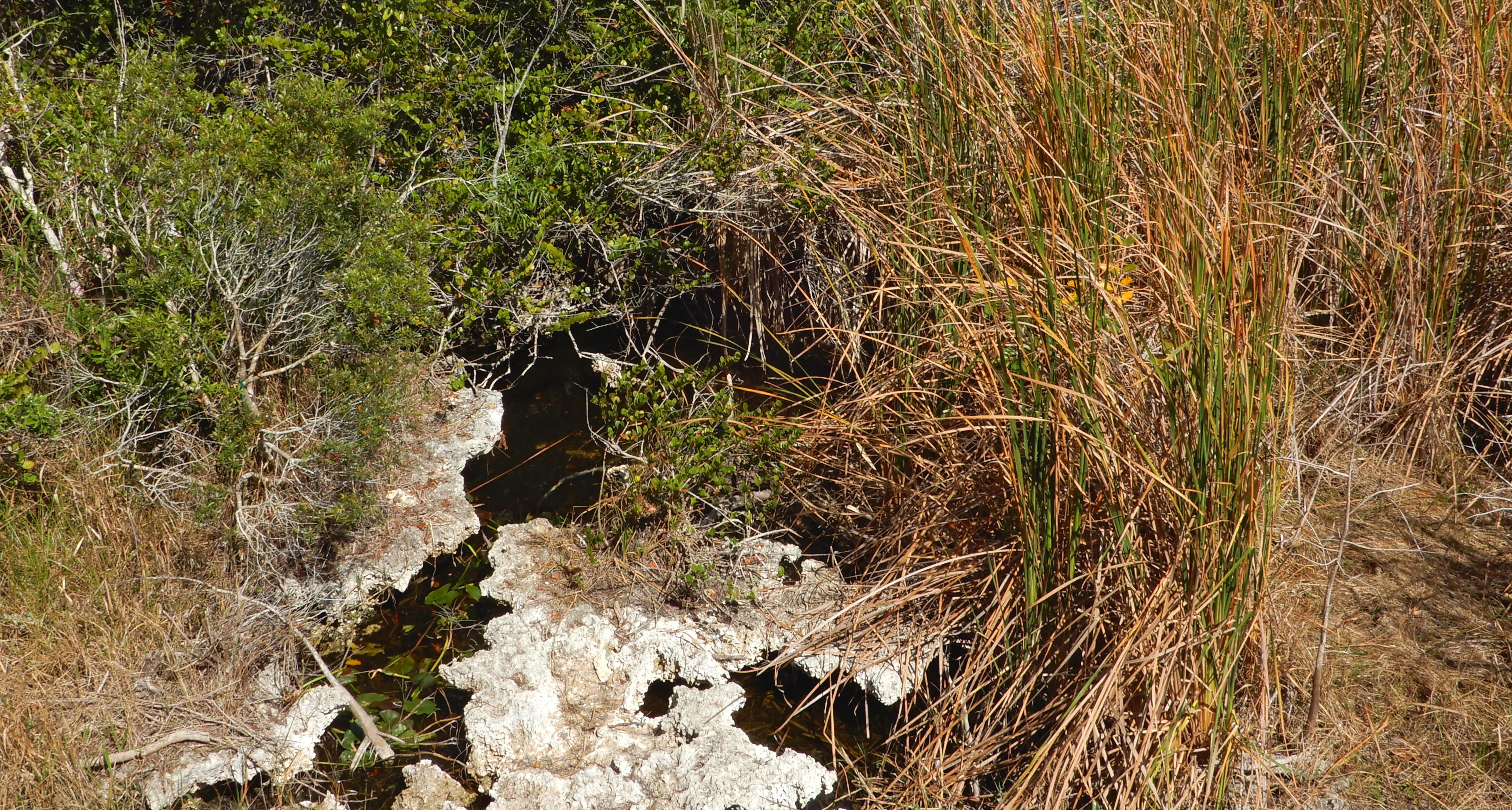
Small drainage creek at the Pa-Hay-Okee Lookout Tower, Everglades. February 2026.

My wife spotted a heron jumping in and out of the darkness of a creek at Pa-Hay-Okee Lookout (left and above). I needed a telephoto to see what she was talking about!

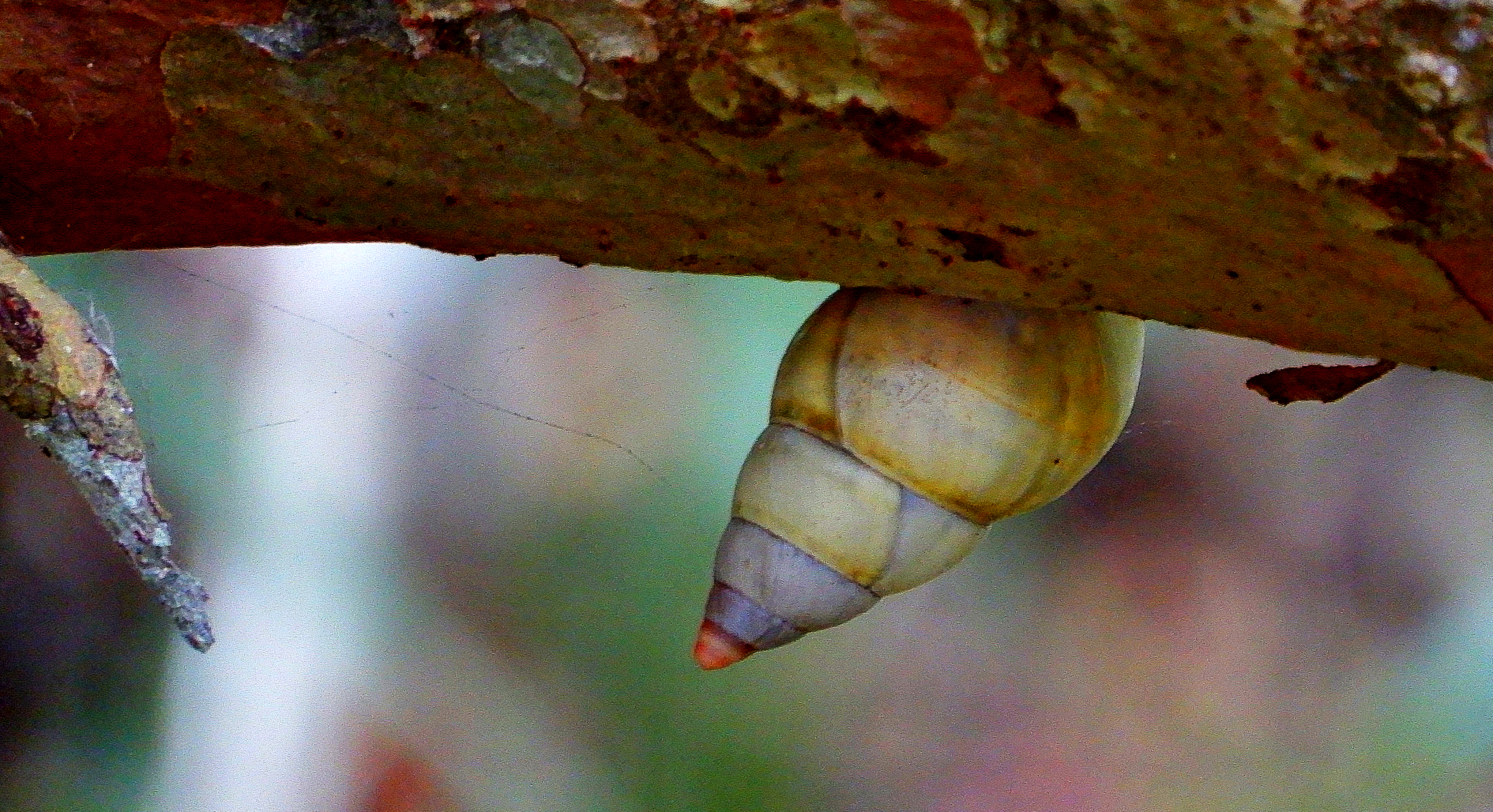
We spotted a barred owl at the Mahogany Hammock walk. While watching him (nearly positive this was a male), we were treated to a call-and-response with an owl we couldn’t locate. This apparently is classic barred owl behavior between a male and female. A sharp-eyed teenager pointed out a snail which I had difficulty locating even after she had described the location. Other attractions at this stop included huge root systems seen from underneath because hurricanes had blown them over in the past.
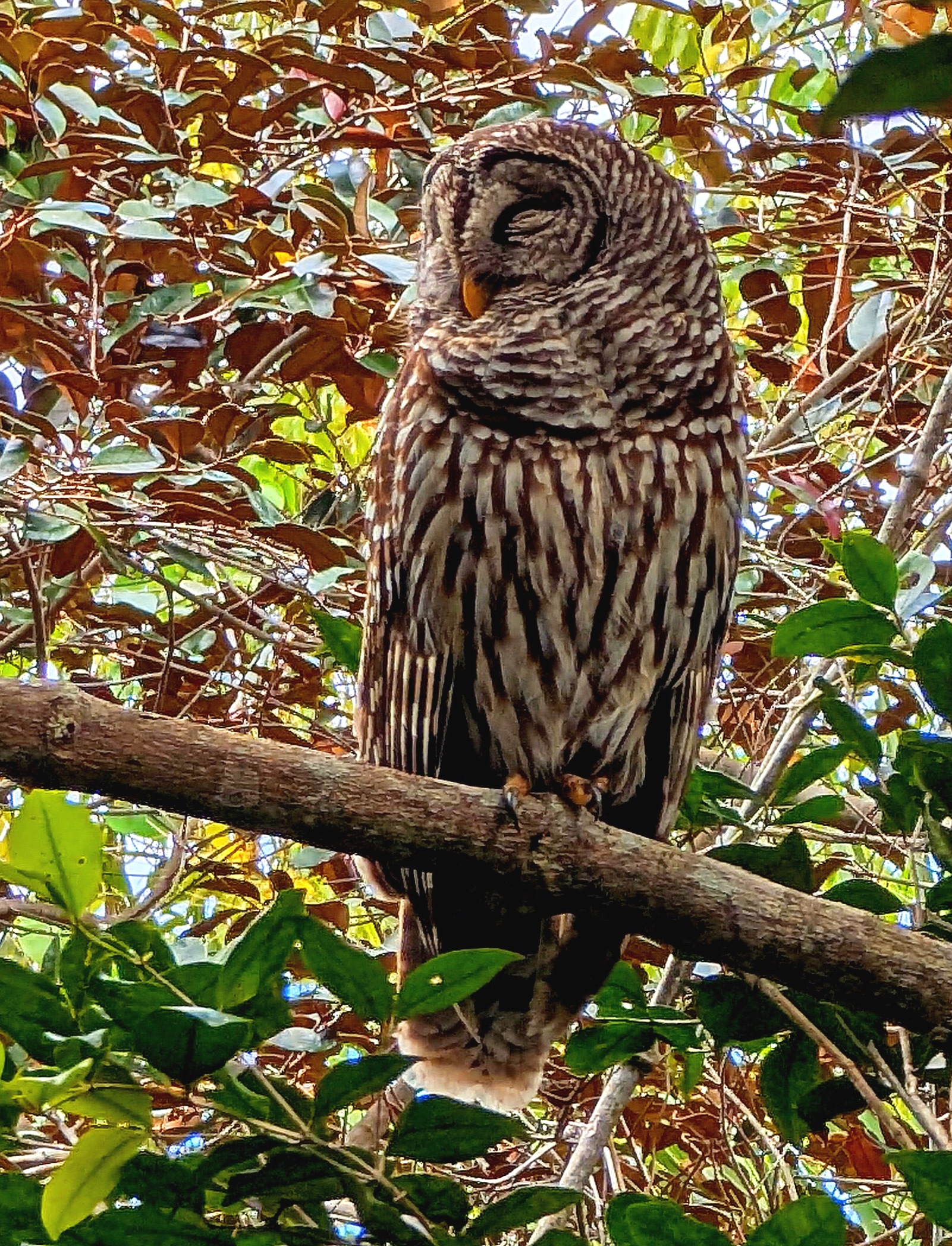
Barred owl at Mahogany Hammock. February 2026.
Tree snail at Mahogany Hammock. Approximately two inches. Everglades, February 2026.

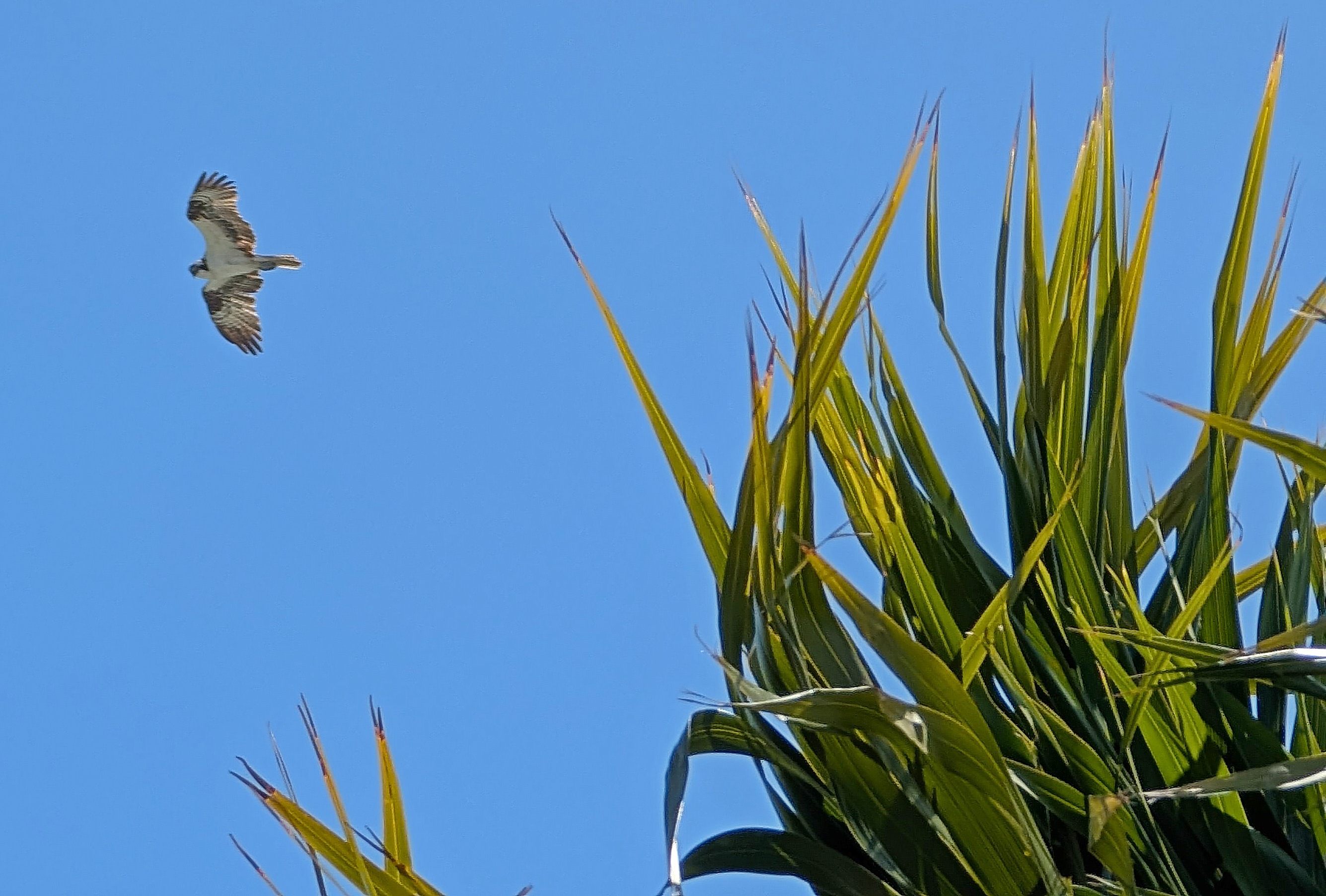
We arrived at Flamingo a bit tired. Thankfully the best thing to do there involved sitting and staring at the shallow waters leading out to the Keys—unless you wanted to take a boat charter which we had done in the past. We spotted an osprey flying back and forth over the shoreline waters, and we saw the near-ubiquitous flock of White Ibises. Then we drove north again.
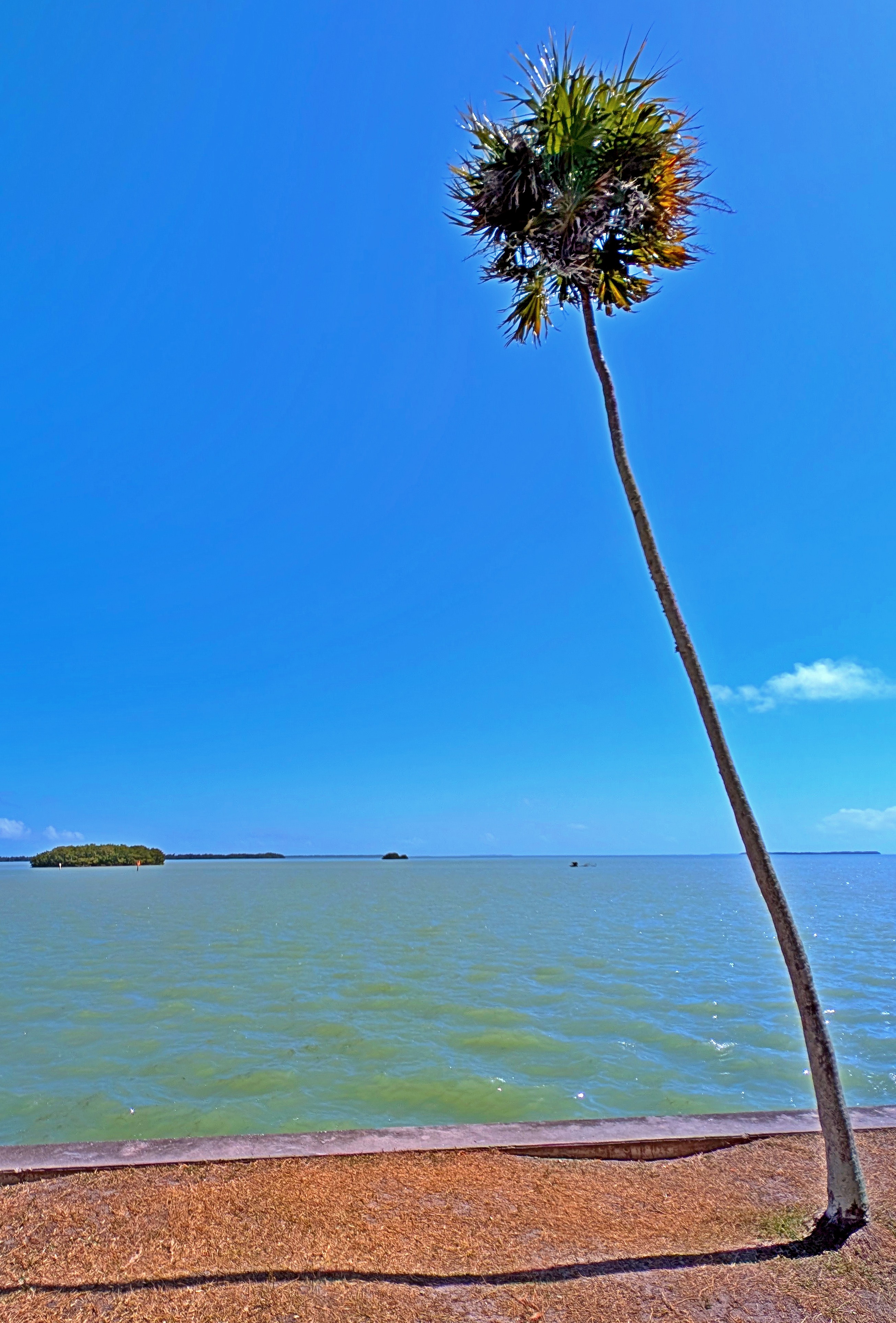
A stylized view of the Keys. Flamingo, Everglades. February 2026.
Osprey at Flamingo, Everglades. February 2026.

We turned around and drove north toward the Royal Palm Visitors Center, hopefully now without the youngsters. Royal Palm deserves its own post, however, so we’ll bring this to a close.
Big Cypress National Preserve

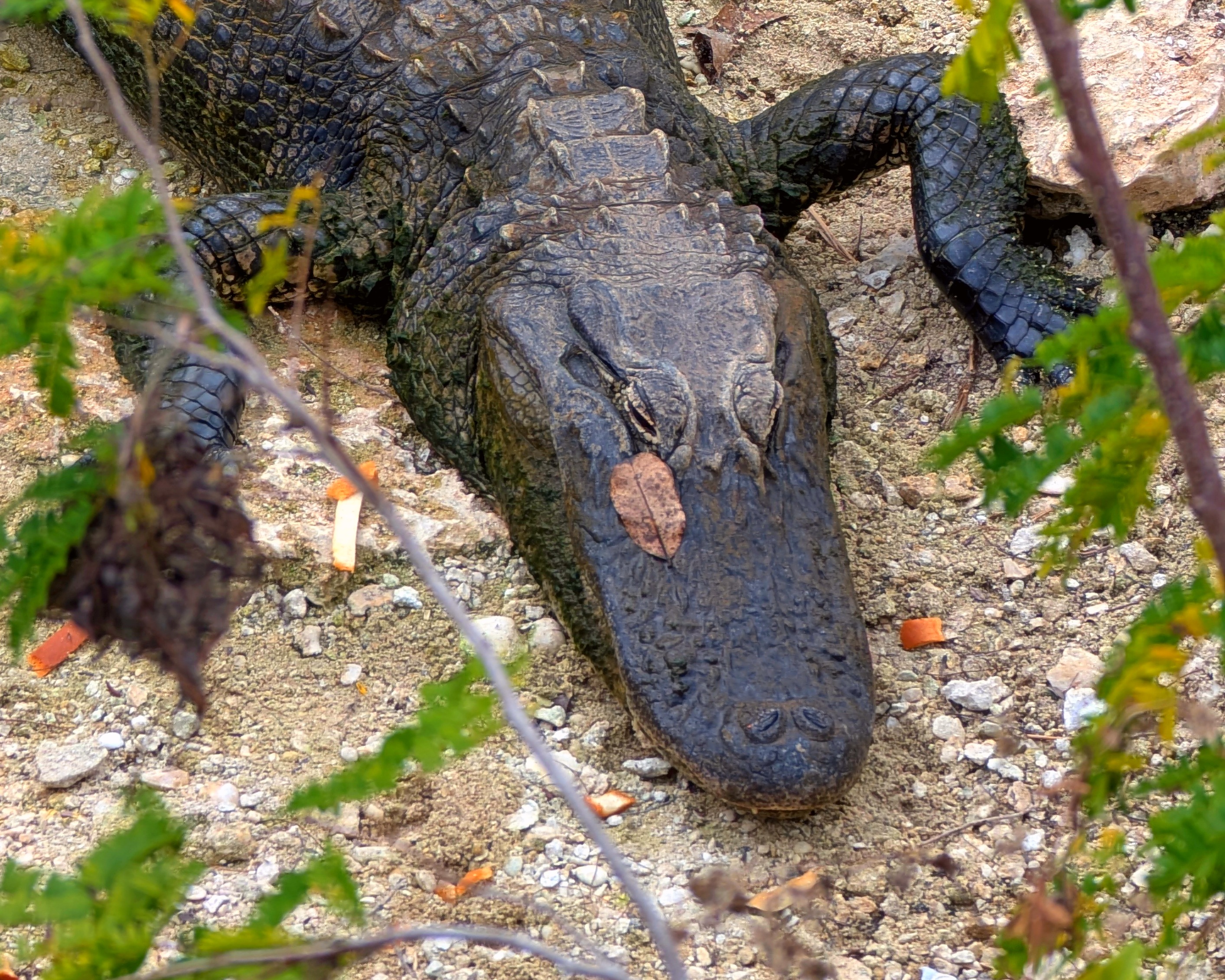
Ever had a day when it’s too damned much trouble to brush a leaf off of your face? (Yeah, I’m having one today.) Oasis Visitor Center, Big Cypress National Preserve. February 2026.

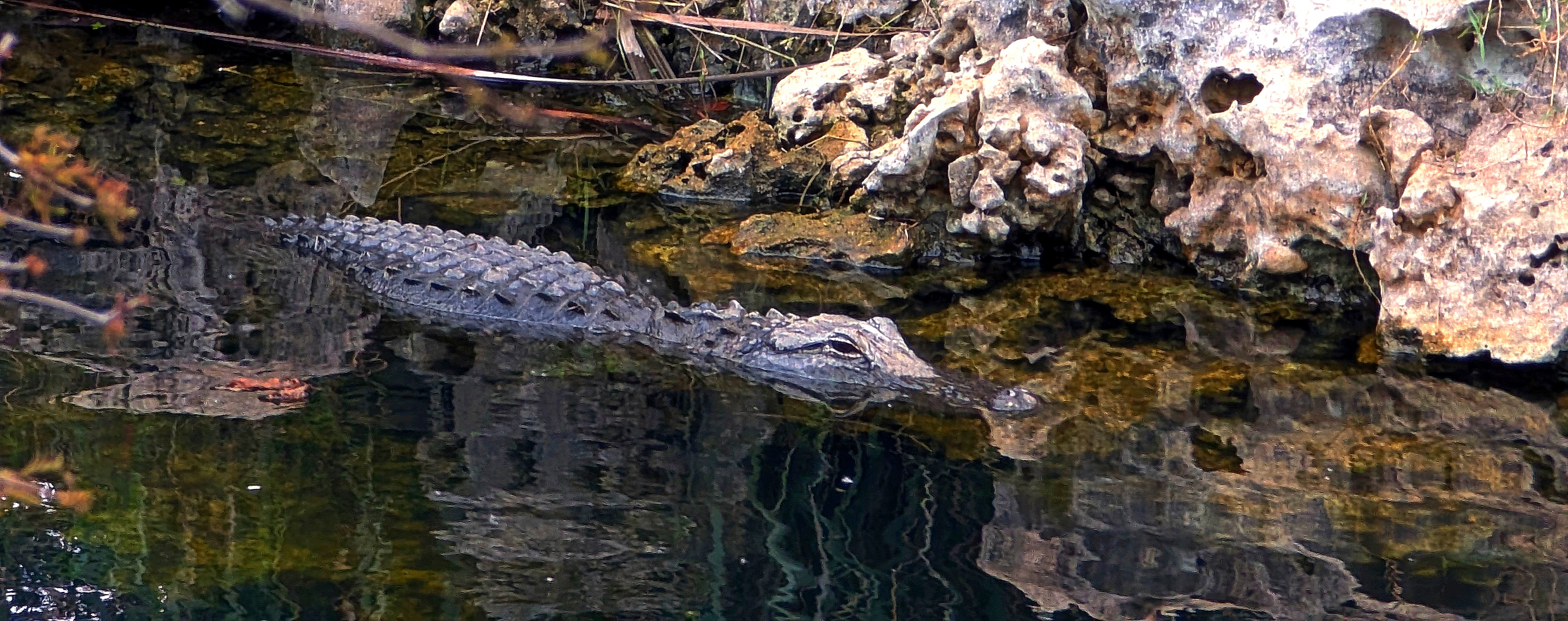
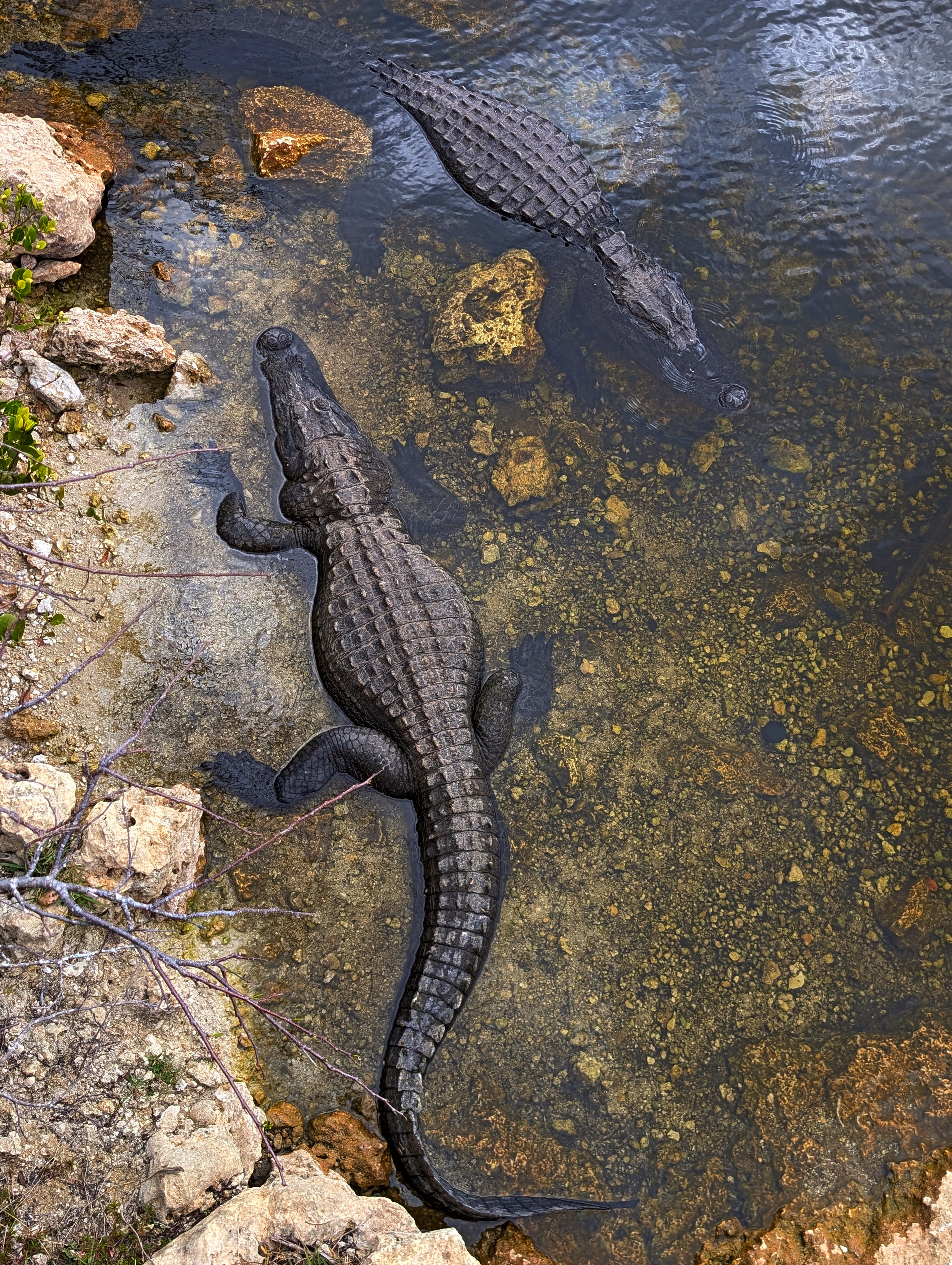
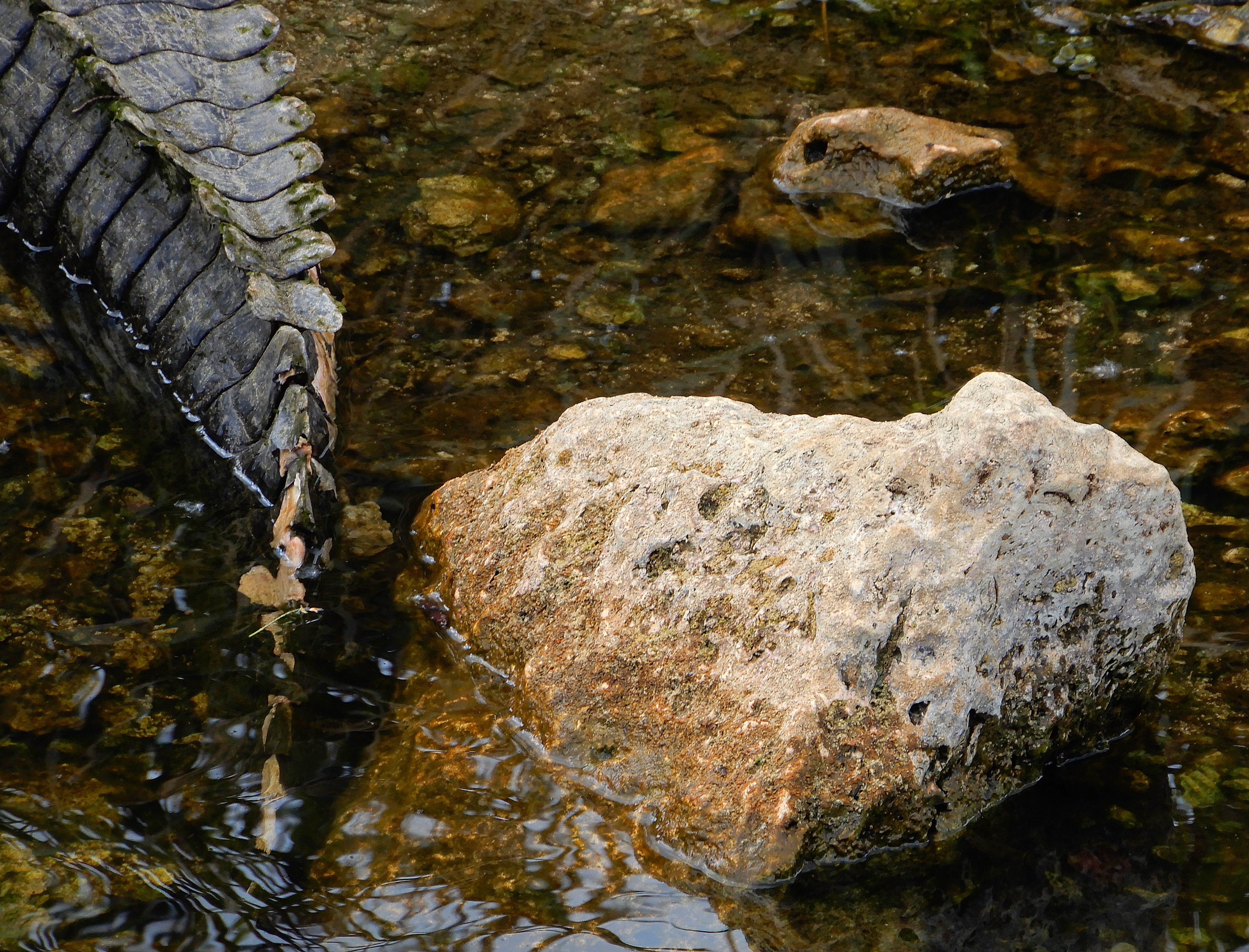
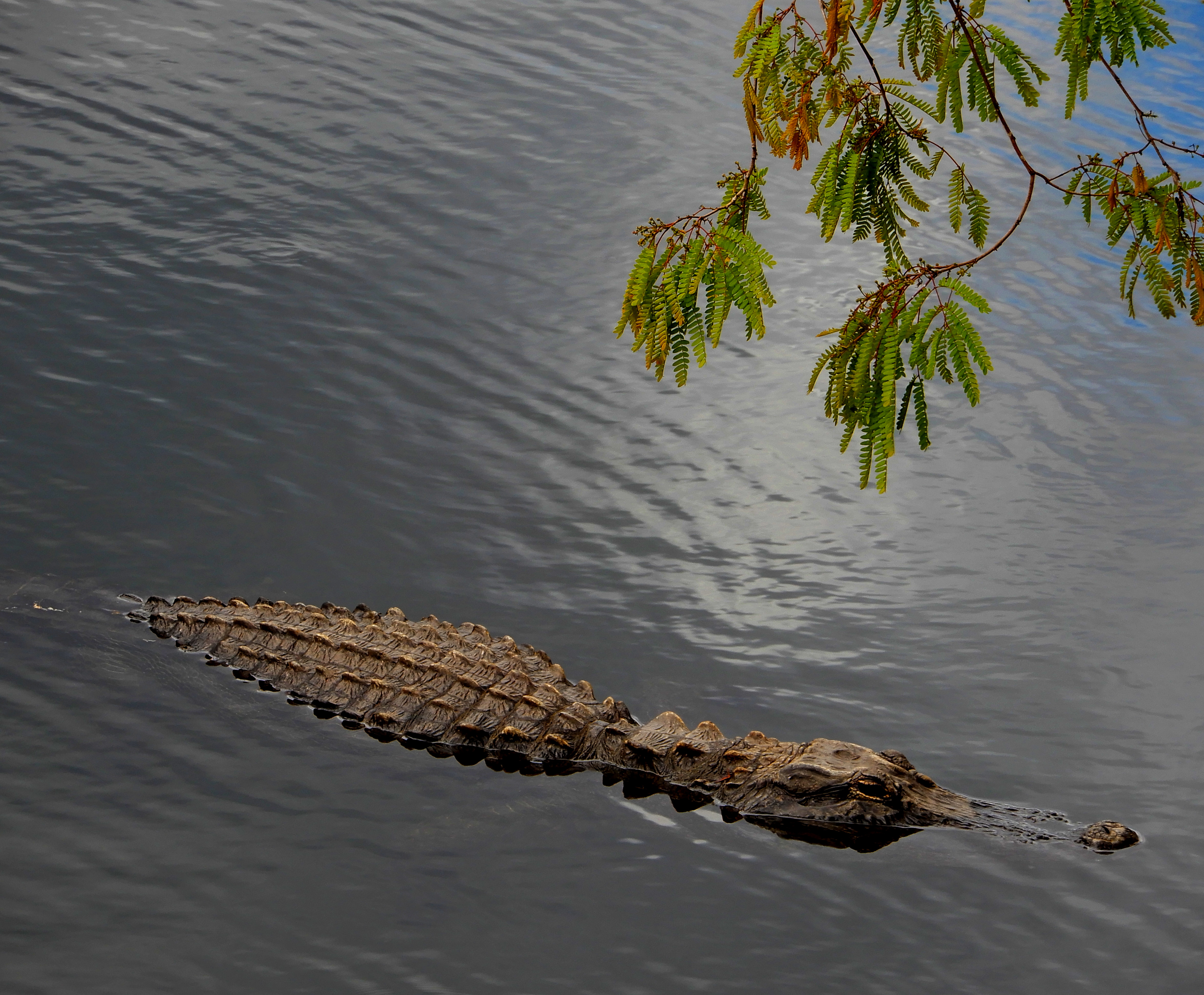
One of oddities about some of the Everglades-area areas for observing nature lies in the feeling one isn’t so much looking at Nature but more that one is looking at a ditch into which some Nature just happened to fall. The Oasis Visitor Center to the Big Cypress National Preserve on US-41 has a largish ditch running parallel to the highway. No more than 15 feet wide and likely much less, it delights the gator-gapers and folks like me who don’t mind looking at big reptilian laze-abouts who don’t offer much of a challenge to the person seeking them out. Here are a few to illustrate my point:

“I don’t care if you can see me. I’m just judging how close you are…and how slowly you move.” Oasis Visitor Center, Big Cypress National Preserve. February 2026.

Alligator with rocks. Oasis Visitor Center, Big Cypress National Preserve. February 2026.

Stilllife with gators. (Redundant.) Oasis Visitor Center, Big Cypress National Preserve. February 2026.
Implication. Oasis Visitor Center, Big Cypress National Preserve. February 2026.

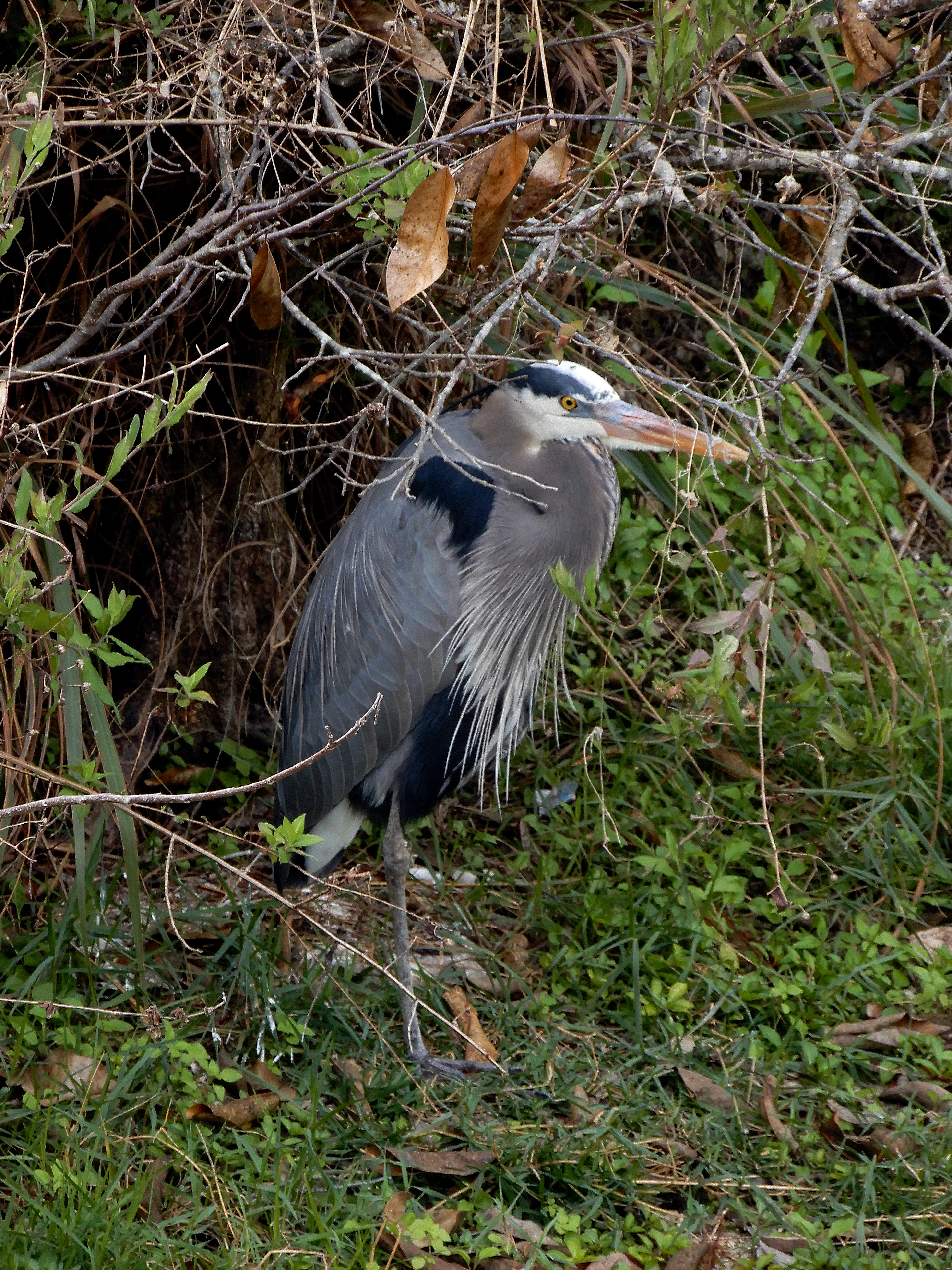
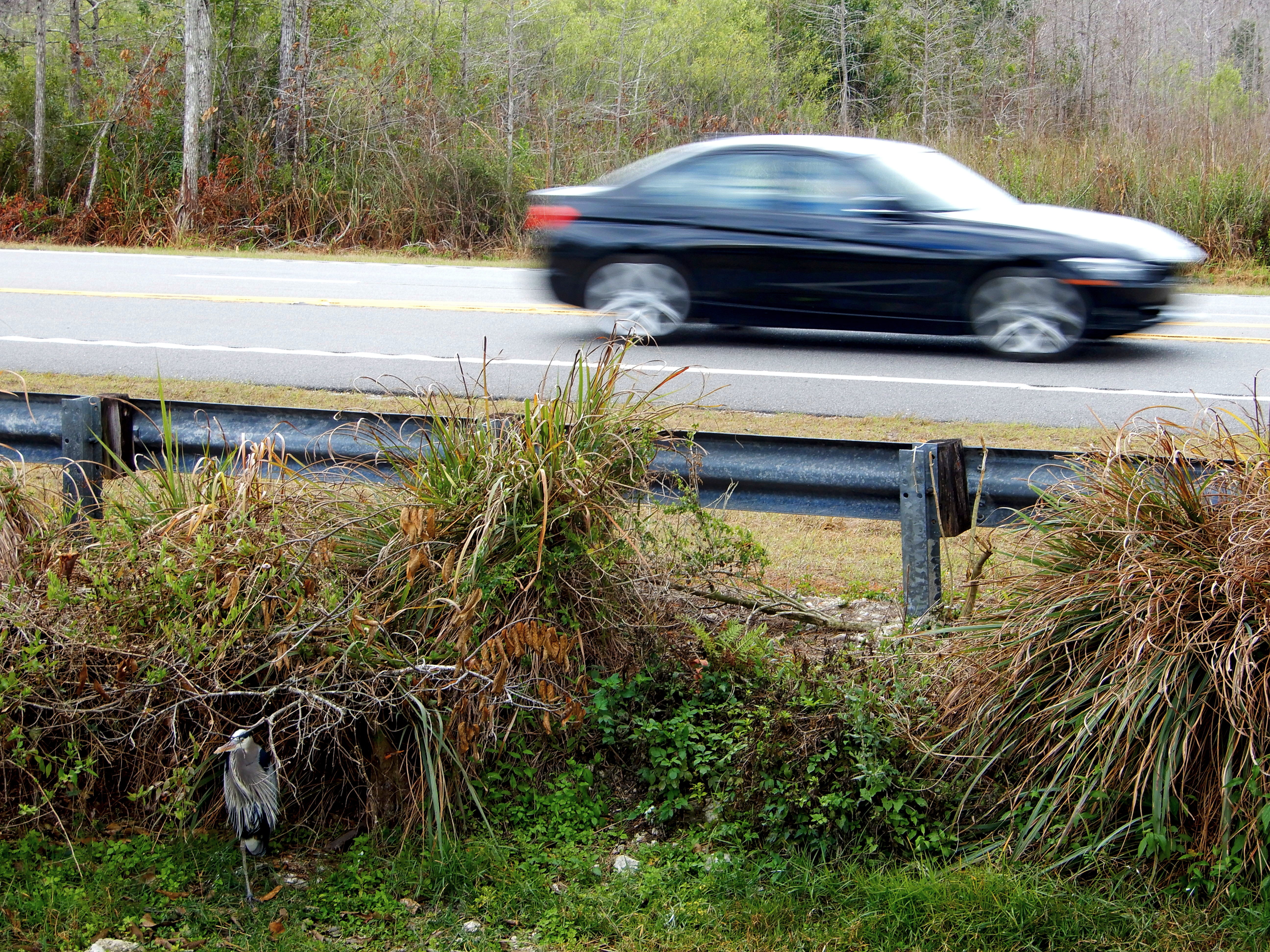
Lest one think the only denizens of this ditch were the alligators, I present some other residents. On the far side of said ditch stood a Great Blue Heron in full breeding plumage. He didn’t seem to mind the nearby highway.

Great Blue Heron. Oasis Visitor Center, Big Cypress National Preserve. February 2026.
I trust guardrails less than this heron. Oasis Visitor Center, Big Cypress National Preserve. February 2026.

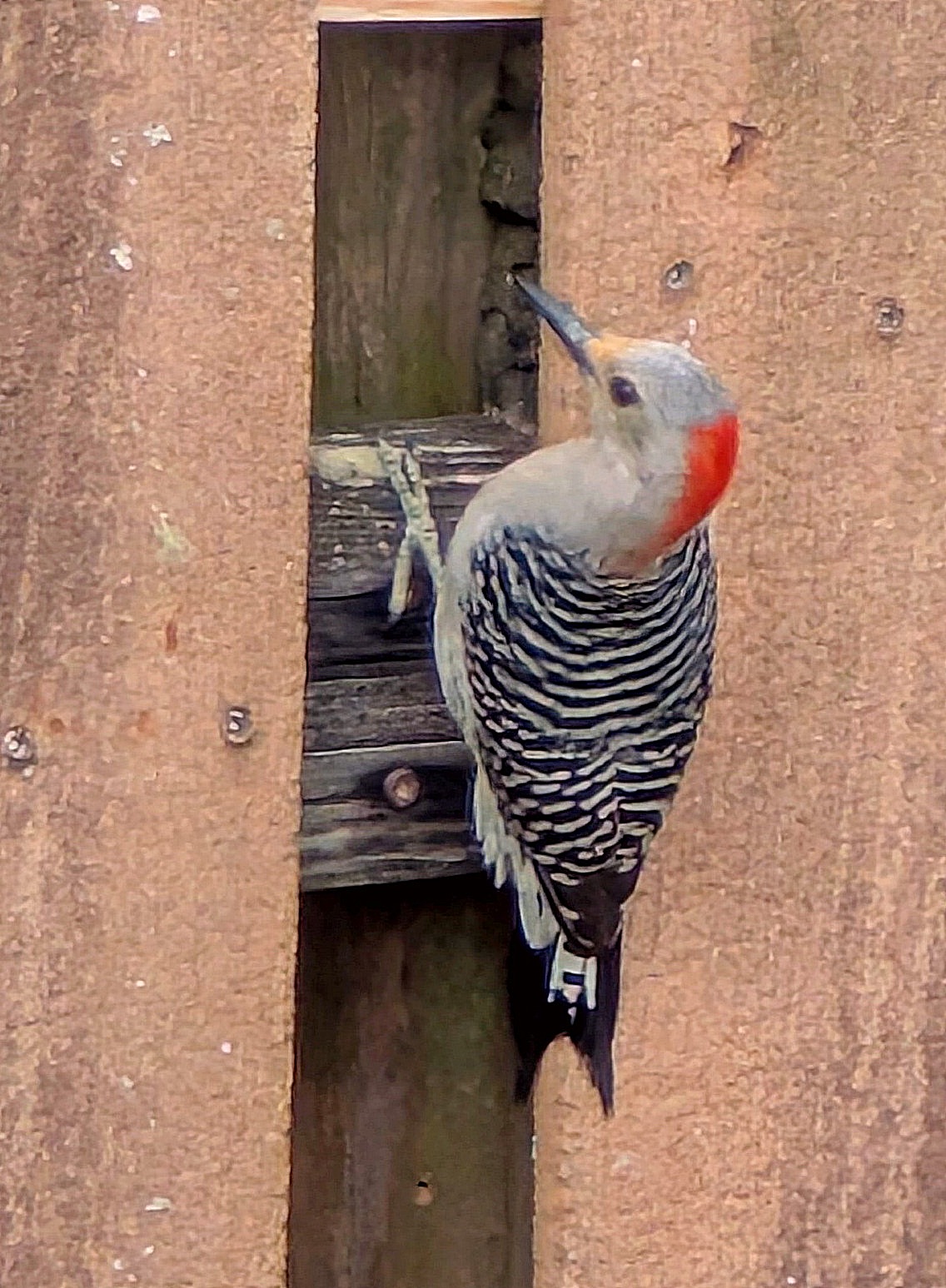
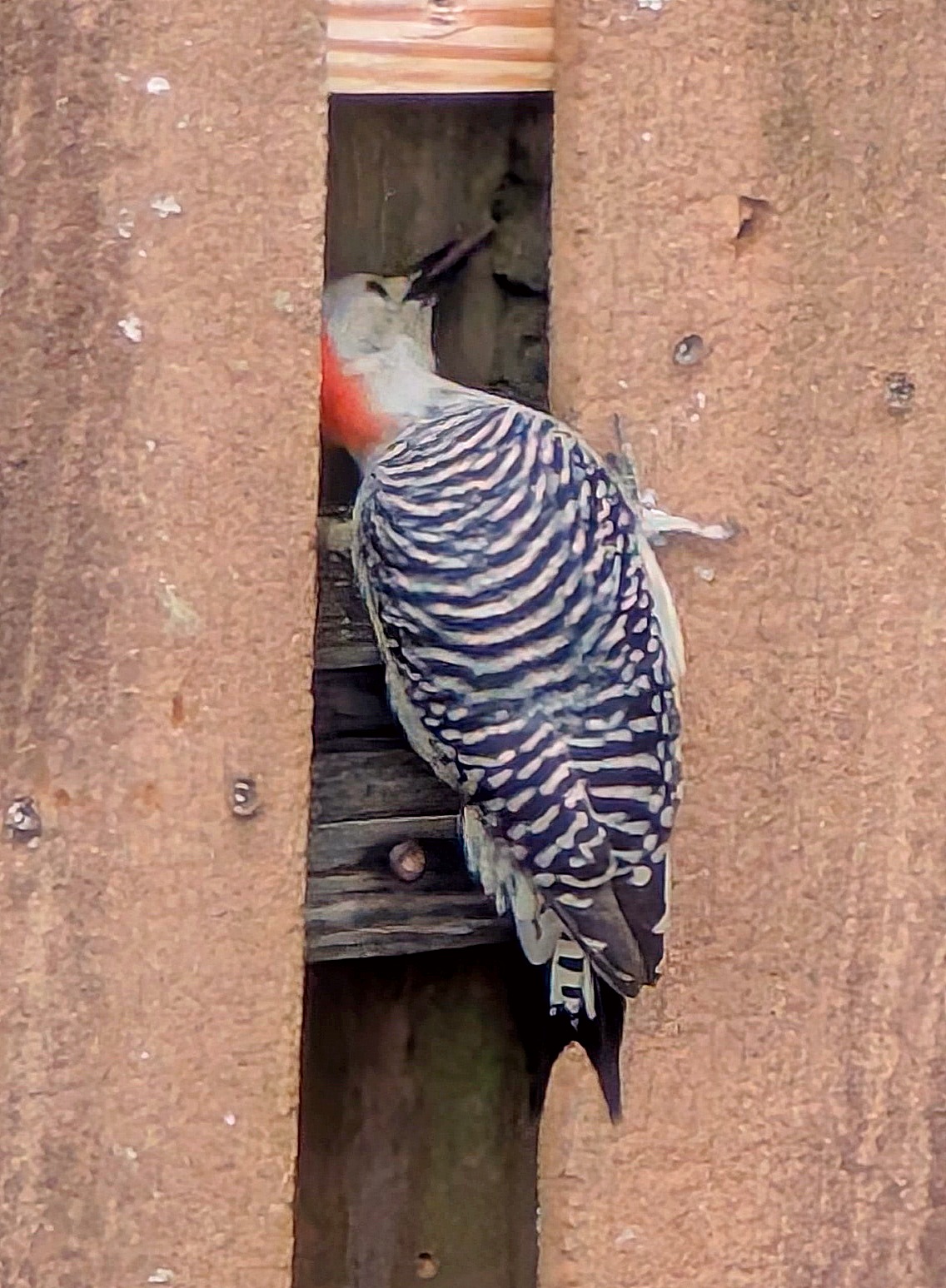
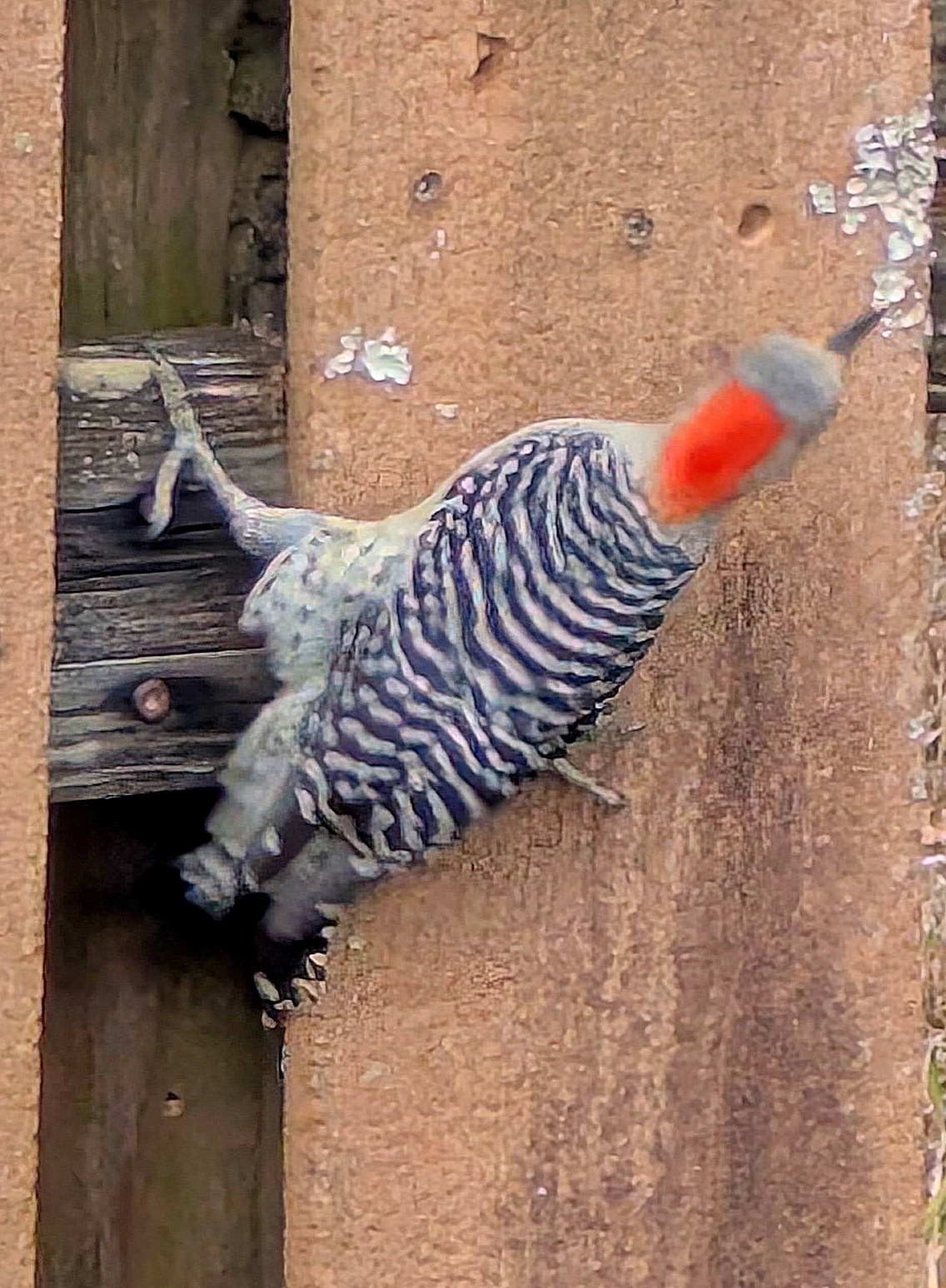
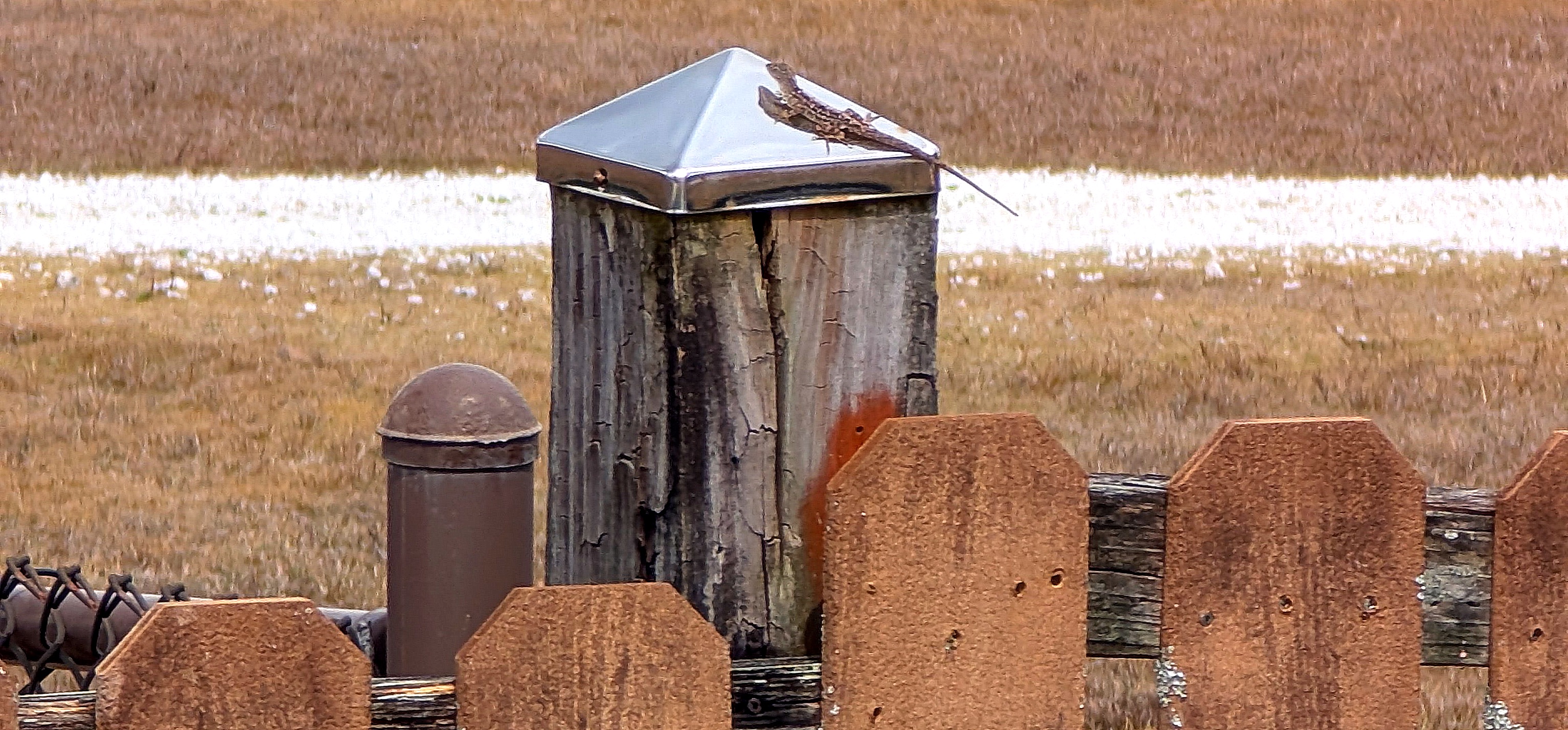
Turning back toward the Visitors Center proper, another birding couple pointed out a Red-bellied Woodpecker which frustratingly couldn’t locate a lizard. Said lizard had moments before been on the fence but had since retreated to the top of the fencepole.

I wonder how a lizard knows it’s much safer at the top of the pole? He waited until the woodpecker finally left, then returned to his original position.

Leaving the Oasis Visitors Center, we backtracked four miles to the turnoff for the Big Cypress Loop Road Scenic Drive. We’d been told the road was rough “but you’ll be okay in your SUV” but really any vehicle could take this road except for perhaps a tiny thing like a Fiat or Smart Car. Suspension would be the main issue here, since the road consists of hard-packed dirt, rocks, and a LOT of dust. Driving slowly through the first miles, we had watery land on either side of the raised roadway. This boded well:

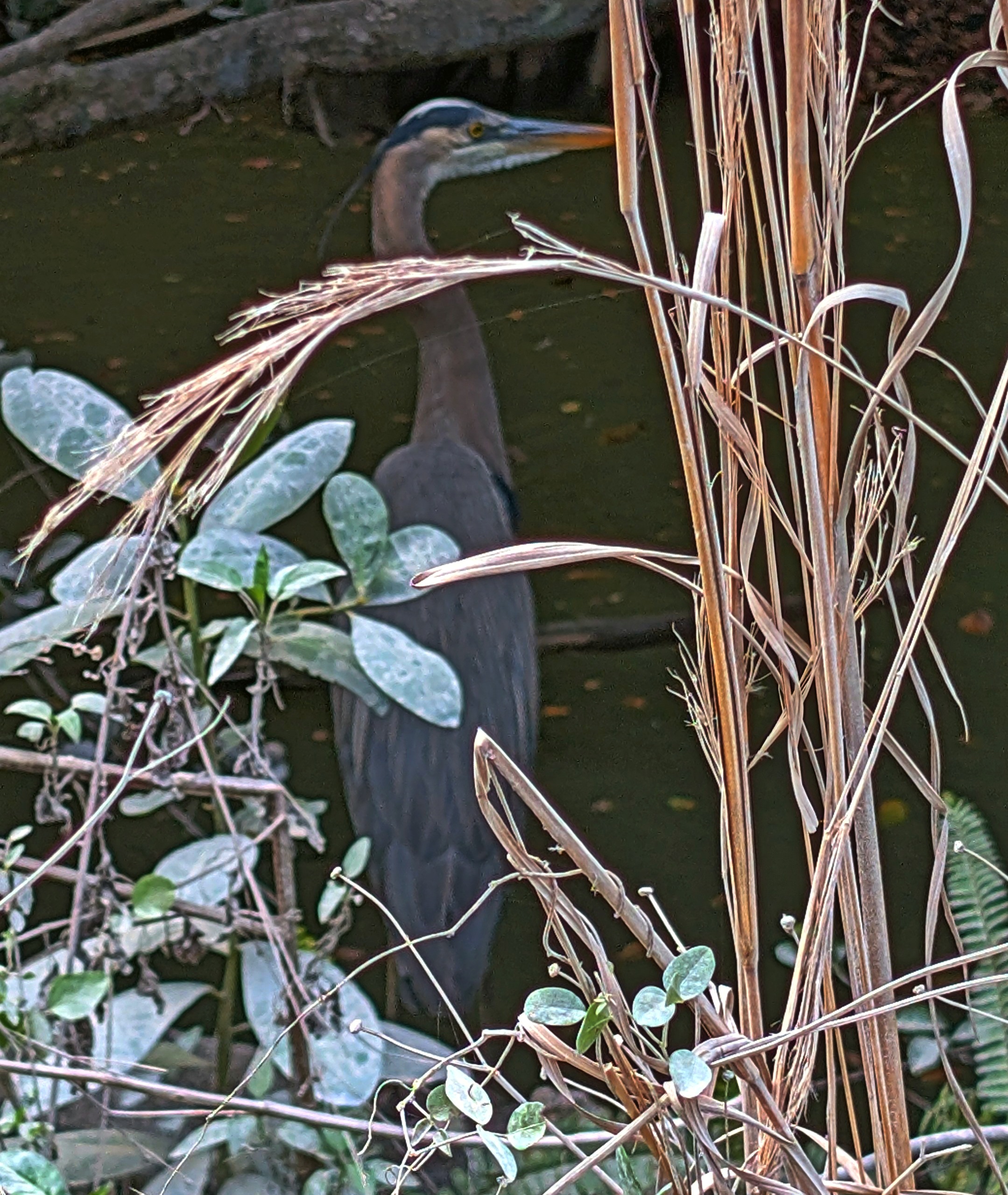
Great Blue Heron. Big Cypress National Preserve. February 2026.
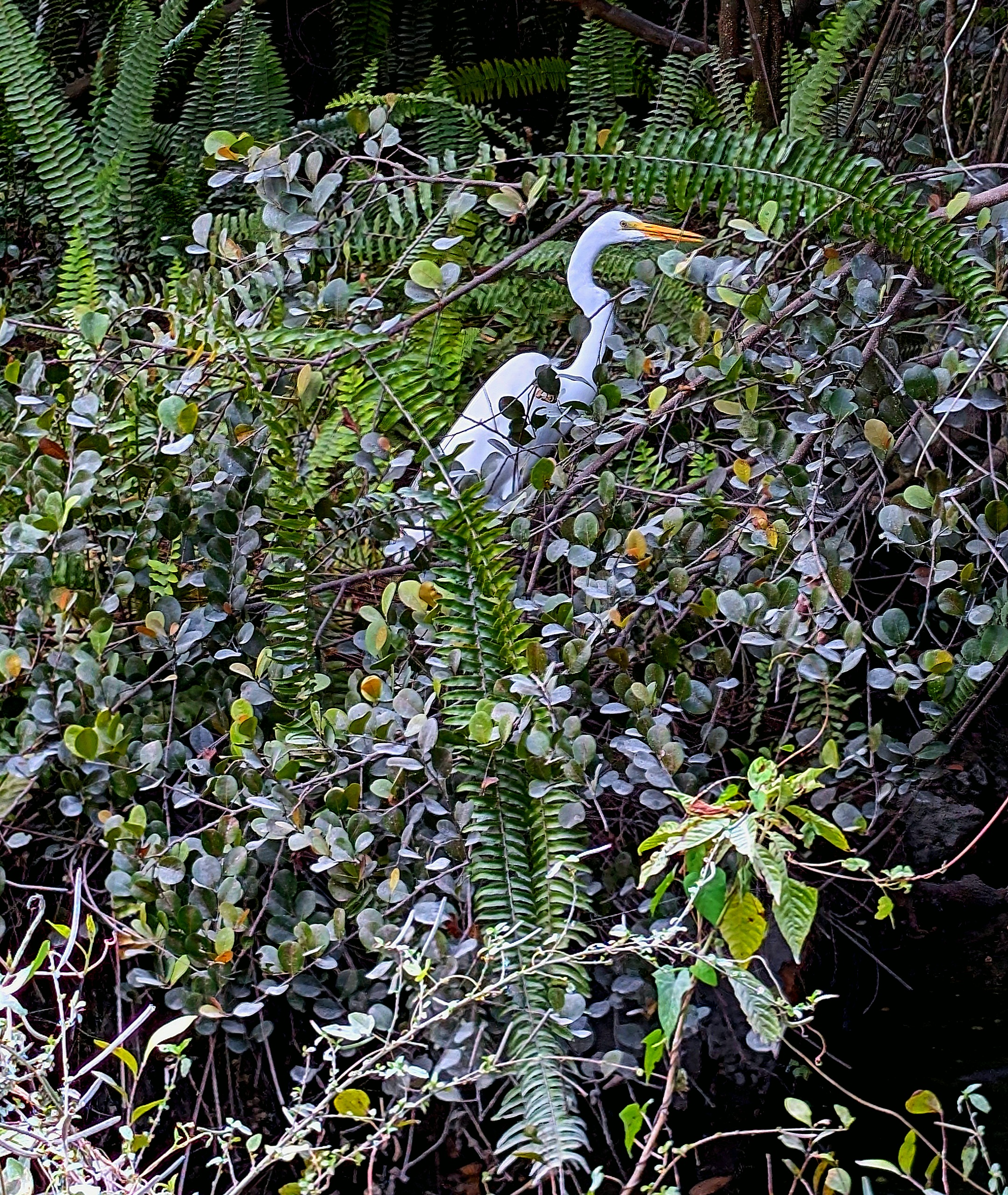
Great Egret. Big Cypress National Preserve. February 2026.

…and then we hit the birding jackpot…a waterway on both sides of the road, darkened by overhanging limbs from a variety of trees and such. Numerous birds congregated there.

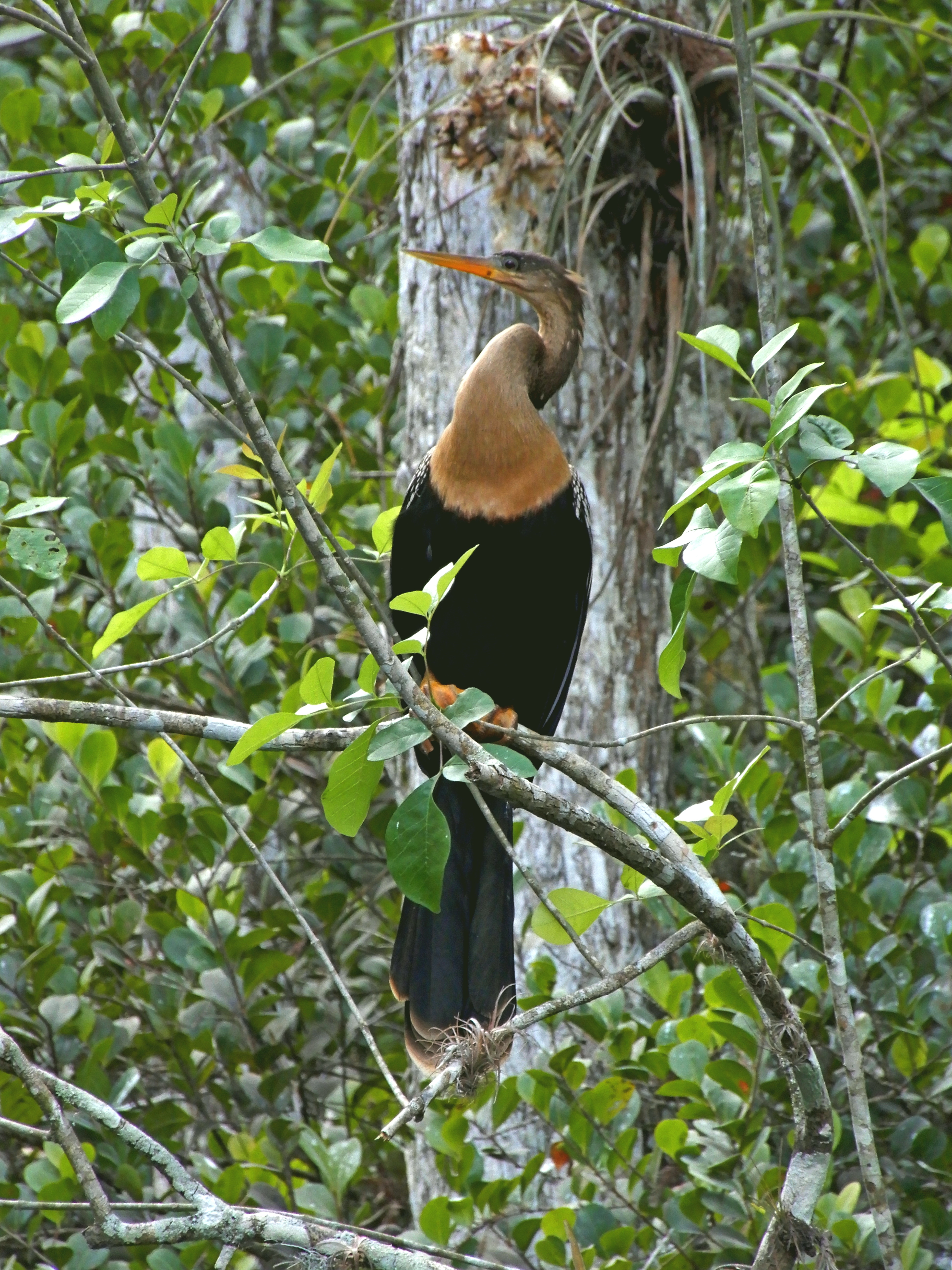
A female Anhinga surveys the swamp…or maybe the nearby males? Big Cypress National Preserve. February 2026.

The wetlands stretched into the distance on the right side of the road where we spotted the Anhinga. We saw several male Anhingas, two or three species of egrets, and tri-colored herons.

An Anhinga dries its wings in the center while two Tri-colored Herons, left and right, work the shallow waters for prey. Big Cypress National Preserve. February 2026.

Turning to the left side of the road, a largish bit of standing water showed many birds. The Wood Stork eluded a sharply focused photo, but the others cooperated.

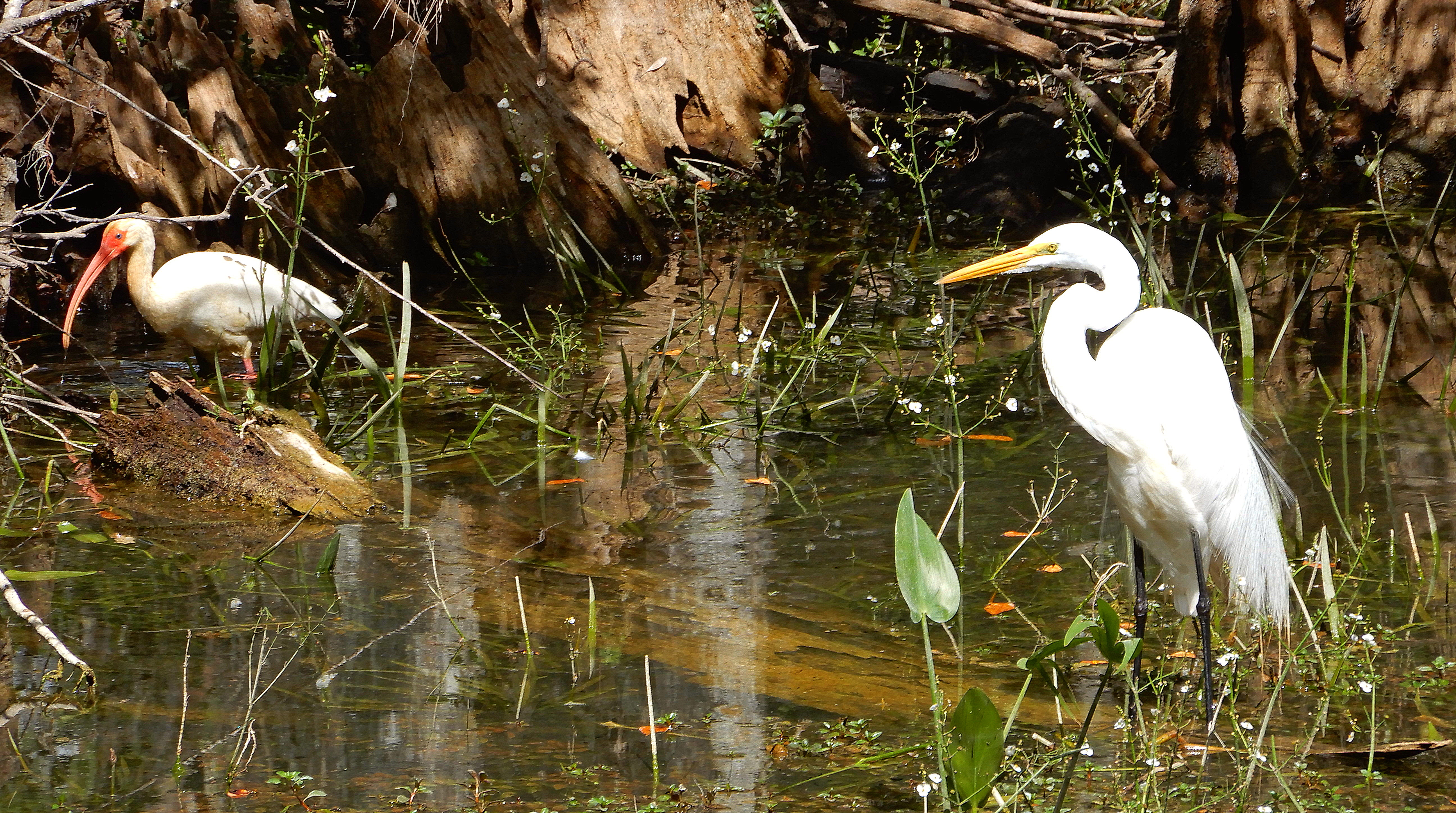
A Great Egret watches a White Ibis. Big Cypress National Preserve. February 2026.

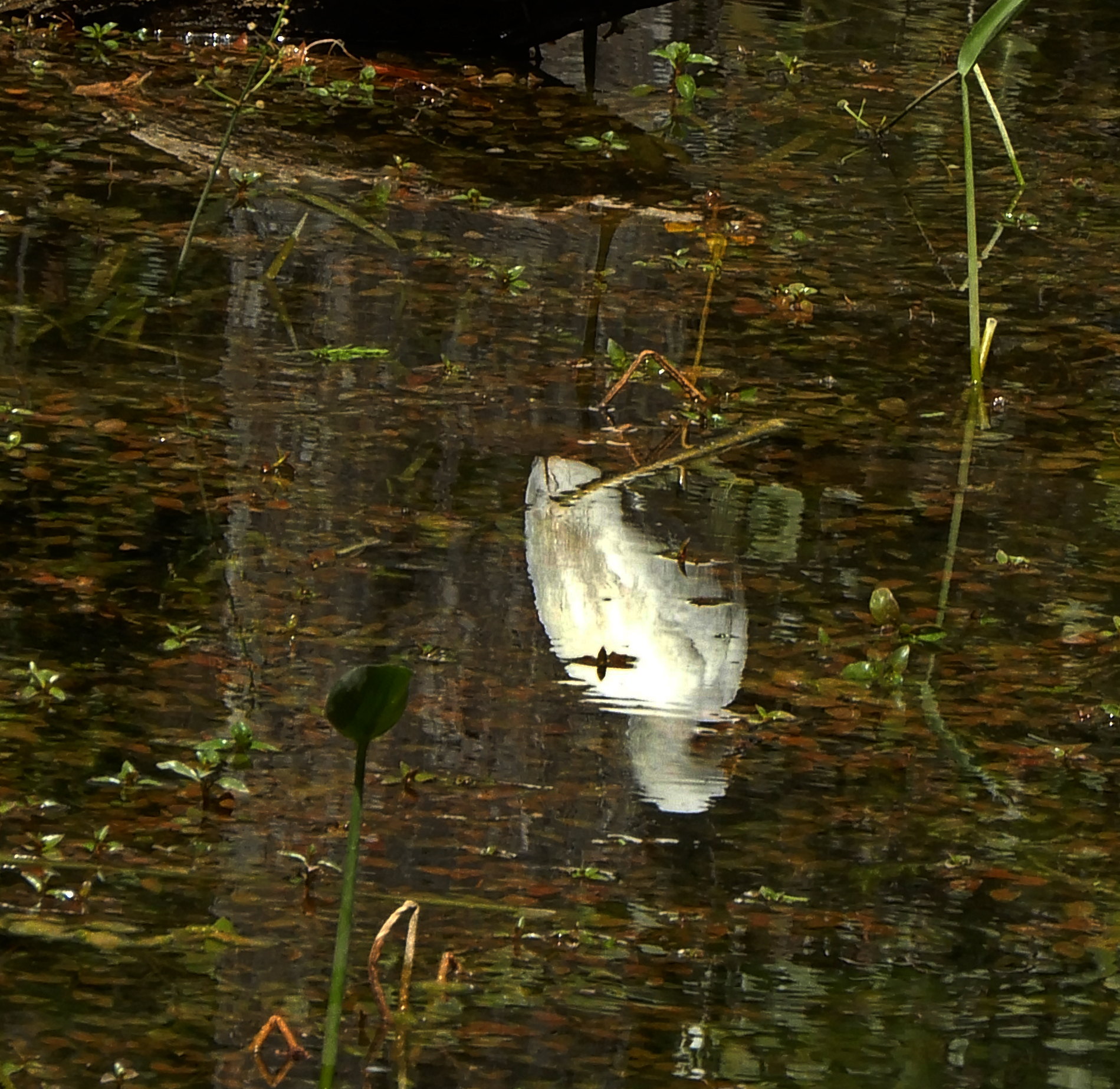
Ultimately my impressions far exceeded my ability to capture them….

White Ibis, reflected. Big Cypress National Preserve. February 2026.

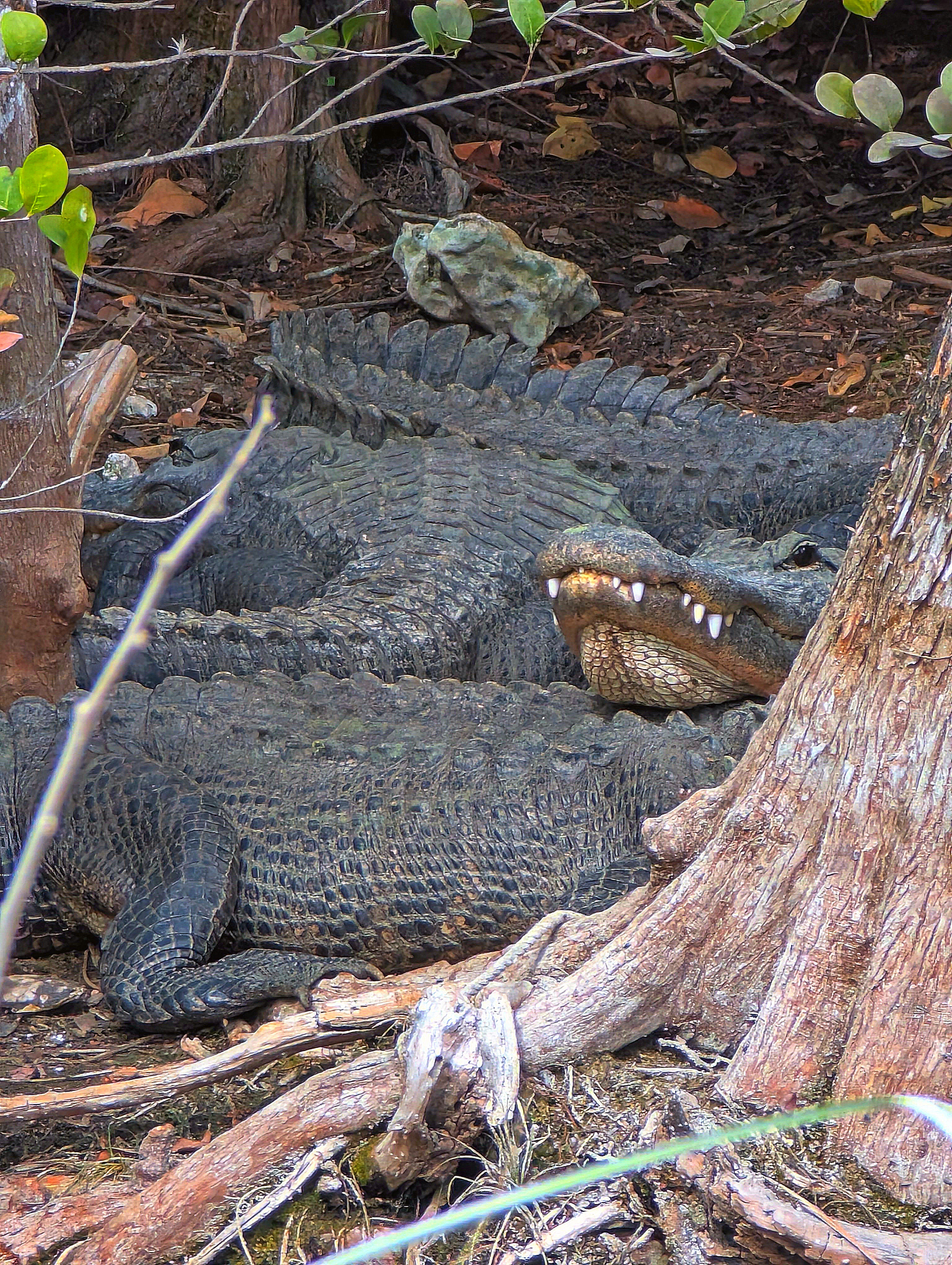
While two other cars of bird-loving folks like us spent time photographing and watching these avian wonders, a large vehicle pulled up and stopped. It seemed the driver wanted something so I walked over. I cannot remember what the vehicle was, but I had to look up, and I mean UP! Either a jacked 4-wheeler or something in its ballpark. The driver lowered his window and asked what we were looking at. “Gators?” he said emphatically. I replied that no, we were looking at birds. He said, “oh” in a disappointed way, raised his window and pulled around us, heading up the road to find “gators”. I wondered why he took this out-of-the-way road when gators hung around the ditches of every road in southern Florida. They jump out of pools and eat pet dogs, and they loll in copious numbers on slopes of I-75 where anyone driving through Alligator Alley could see several hundred. Then again, to be fair, the birds I thought were so interesting mostly could be seen at any reservoir in any typical Florida housing development. Who’s the idiot? As we left the scenic loop, I hoped the guy managed to stop and look around as he left Big Cypress. If he had, he might have seen the “elusive” alligator:

They’re just so gosh-darned difficult to spot! “Wish I could see me some ‘gators!” Big Cypress National Preserve. February 2026.

Cinco de Mayo visitor

Eastern box turtle. May 2025.

Monday as we sat down to breakfast, my wife noticed a guy putting something on the parking strip in front of our house. I stepped out to see what he was doing, which turned out to be moving a box turtle off of the heavily traveled street. The turtle had been close to our side of the road, so he moved it along. Box turtles have five sub-species; at first this one looked to be a Gulf Coast one, strange as that may sound here in North Carolina, but I found photos of the Eastern which resemble this one. Apparently the shell wears as they age, and the shells will become the lighter, golden color seen in the pattern on the shell above. They fairly easily live to be 100 years of age.

Wondering “why the heck is a turtle up here about a full block and uphill from where there’s a creek?”, I learned something. Box turtles hang out in moist forests and wet meadows/pastures. I would like to think transforming our front yard from grass to a meadow facilitated this little visitor, but who knows? I do wish, however, I had just watched him/her from afar because I went back out five to six minutes later, and it had disappeared. I searched diligently around our front yard, near parked cars, even back on the other side of the street, but nope–gone. I worried. Drivers looking for a short-cut found our supposedly residential street a few years ago which makes it highly hazardous to slow-moving turtles. Heck, it’s become highly hazardous to humans. Despite a posted speed of 25 mph and that it’s only three blocks long, cars routinely hit 45 mph. I hope the turtle likes our yard and decides ranging from there to the drainage swale behind our property will be its new home. It’s safer and nicer.

Our new front yard at slightly over six months of age. This photo taken the final Monday of April 2025. Many of the taller red-brown plants in the middle (foxglove beardtongue) have since flowered. The purple ones are rose mock vervain.