Time-foolery

[In our continuing series, Cranky Old Man Yells At Clouds, today we again tackle the tough Time issue. For other time-rants, see here and here.]

“Upon This Altar” — manipulated photograph. October 2024.

This morning, November 3rd, 2024, I rose at 6:16 a.m. according to our two bedside clocks. Dressing and walking to the kitchen, I noted the analog kitchen clock concurred, as did the digital clock on the stove (except when the now-failed crossbar made an “8” look like a “0”). For some reason the microwave got confused and reported the time actually was two hours and 50 minutes prior. All of these timepieces and presumably the clock on the deck, the clock in the guest bedroom, and the clock on the fireplace mantel backed the majority opinion: 6:16 a.m.

My cellphone, however, said I had risen earlier–it was still prior to 5:30 a.m. It reflected the common and legal opinion that an extra hour had appeared overnight during which no time passed. For the rest of 2024, time would be measured on Standard Time.

This clock conflict didn’t bother me. It’s been dark for weeks when I rise. The sun rose today approximately 90 minutes after I did, and it did the same yesterday. My wife and I ate breakfast about an hour later than we usually do on a Sunday, but our breakfast times are flexible these days, and we’re not going to church because we’re still quarantining due to Covid. My day so far has run its course normally, and the only effect of this time change will be making sure we tune into our church services at a specific time which the kitchen clocks would say is 11:30 a.m., but my connected clocks (phone, desktop computer, etc.) will say is 10:30 a.m.

You could argue my cavalier approach to this time change results from my retired state, and you would be partially correct. Few things happen at set times in my day anymore. But even when my day revolved around “getting to work” and “catching a plane,” I’ve looked at time as a voluntary measurement. I don’t need to order my life by it. For nearly 30 years I have rarely used an alarm clock to make myself get up at a certain time. They exist primarily as safety nets to make sure I don’t oversleep, and usually the mere act of setting a morning alarm will suffice to wake me just prior to the nasty thing interrupting my sleep. I mention all of this not to brag about how wonderfully I deal with time, but to explain a relationship to it which causes me to blow a few gaskets twice a year.

Each year about this time we’re subjected to some of the lamest reportage, critical thinking, and general common sense that we see all year–except for the commensurate period in late winter/early spring when it rears its foolish head and reverses its so-called logic (sometimes). I’m talking about all the nonsense you’ll read about Leaping Forward in time when we go to Daylight Saving Time, and when we Fall Back to Standard Time on the first weekend in November.

“Fall” — manipulated photograph. October 2024.

I’m not talking about the ill effects many people report from the shift in timekeeping. These effects align with everything we know about a body’s rhythms and the general circadian rhythms of most creatures on this planet. One shouldn’t wonder that attempting to stick to a personal schedule which has been artificially shifted an hour would have an impact on the person attempting it. No, what I’m talking about are all the inane things said about Time when earnest people lose their literary way. Here’s an example written by a presumably respected reporter for the New York Times on November 2, 2024, in a morning newsletter I received:

I know, it’s just one hour. How one spends it or doesn’t is hardly determinative of whether they’re making the most of their time on earth. But the scarcity of daylight this time of year does make every hour feel that much more valuable.

from the New York Times Morning Brief — author’s name omitted for decency’s sake

Making the most of your time means you’re looking at Time as a Real Thing, something which can be rationed like oats or good whisky or the chocolates in a one-pound sampler. You’re looking into the future and saying, in essence, “this hour coming up is a gift and I have to be sure to spend it wisely.” Okay, let’s just set aside the easily demonstrable fact that none of us lives in the future. “Now” is now, it’s always now, and focusing on the future remains an efficient method for not living mindfully in the present. Regardless, most of do make plans. We’ll give Ms. Kirsch a pass on this one. We’ll also let her unpack with her therapist this need to do something with that extra hour. Perhaps her parents raised her to “make something of herself”? I’ve succumbed to this state of mind many a time, but I’ve found great satisfaction in being what I am.

Instead, let’s consider the statement at the end, the one about daylight’s scarcity making each hour feel more valuable. Huh. Daylight hours are valuable, nighttime’s aren’t? I was unaware I cannot do anything when the sun sets. I guess overachievers everywhere violate some social norm when we rise 90 minutes prior to the sun and write things like this. More seriously, you can perhaps feel a certain pressure to use this extra hour for some purpose, but predicating that pressure on the sun’s daily appearance ties two things together which have nothing to do with each other. In New York City, where I believe she lives from other things she has written, the sun will be in the sky ten hours and 19 minutes today. Yesterday it lingered for three more minutes. This process has been happening so gradually, one wonders exactly when this “scarcity of daylight” made its presence known. After the vernal equinox? When the author realized in late August that sun shone for only twelve minutes more than half the day, but in June it had done so for more than three hours? (All measurements here are based on Manhattan in 2024 as recorded on timeanddate.com.) This so-called scarcity of daylight doesn’t seem to have bothered her too much a week ago when it was all of about 20-25 minutes more than it will be today.

White oak in fall. October 2024.

No, I have little empathy for a person who feels this extra hour represents something mildly momentous and not to be taken lightly. She opens with the idea of just sleeping an extra hour–“sleep as much as you need to!” I want to shout–adding that as she sets her clocks back on Saturday evening, she will anticipate “that brief moment of confused excitement tomorrow when I wake and check the time: It’s 7, no wait, it’s actually 6!” Putting aside the fact that this undercuts the beginning of the very same sentence–you just said you’re setting the clocks back, so you can’t look at 7 and think it’s 6!–I will grant her the idea of an extra hour on this weekend motivates me too, but not as if it represents some life-changing moment. Rather it’s analogous to the feeling I get when a surprise rain shower eliminates a plan to work in the yard and thereby grants me an hour or two to do something unplanned. But immediately after the quote above, she writes a sentence which buried within it contains what I think might be a common belief which is just plain wrong:

As we enter the final two months of the year, thoughts naturally turn to how we’re filling our days. [same source]

I hope I’m reading that incorrectly. Why do one’s thoughts turn “naturally” to this? (Mine don’t.) Has it something to do with the End of the Year, another silly time construct? Is it because we’re approaching Christmas and other holidays, many of which have an element of self-examination? It seems to imply our author thinks November and December are the darkest months, coming as it does on the heels of lamenting the scarcity of daylight. No, no, you poor, benighted columnist. Today, Nov. 3, 2024, is 48 days prior to the winter solstice. Another 48 days after the solstice will be February 7, 2025. Ignoring that the solstice really isn’t the shortest amount of daylight in the year all the time–that’s intermediate temporal mechanics; we’ll get to that in our next course–you won’t see a speck more daylight for 96 days! That’s a lot more scarcity than just two months. It’s three with a handful of days left over.

Buried in another paragraph, our writer brings out one of the bigger fallacies about changing the clocks: that somehow having an hour “moved” to the evening or morning will have a meaningful impact on one’s life. See if you can spot it:

“Every first Sunday in November, I contemplate becoming a different, better person, one who gets up one hour earlier to meditate or exercise or meal-prep. I could be the person who spends an hour journaling, or fixing a large, healthy breakfast or taking the dog for a brisk walk in the cold dark. ” [same source]

If you get up one hour earlier, it’s just one hour earlier in the same day. It’s coming from somewhere. Are you going to bed earlier in the evening? Or are you cheating yourself out of an hour’s sleep? Are you going to tell your employer you’ll be in the office one hour less so that you can have a full evening, a decent night’s sleep, and still start a meditation practice before breakfast each day? I suspect, however, our author thinks that somehow an extra hour has ‘appeared’ in the morning. “Look, y’all, I used to get up right now according to the clock, but right now is only 5:30 a.m., not 6:30 a.m. I’ve got an extra hour! Yippee!” (Insert reference to Spinal Tap and “turning it up to 11.”)

Let’s bring this diatribe to a close. Let’s all try to realize daylight lessens from summer solstice to winter solstice, and that each day’s length mirrors another on either side of the solstice (either solstice, it doesn’t matter). Every day, every moment, moves the same: the length of the sun’s presence above the horizon added to the length of its absence always runs about 24 hours (if you absolutely must measure it). When we live artificially in the Timescape instead of the reality of the Dayscape, we suddenly think “Oh, I’ve lost an hour,” in March and “Oh, I’ve gained an hour,” in November, but really, truly nothing has changed. Let go of that desperate grip on Time. It’s okay. You won’t fall. You’ll still be here…just like always.


On the Seventh Day of Christmas…

…it turns out to be New Year’s Eve (every time), so we turn from symbolic seven’s and instead offer you up a NYE photo from the end of 2006. That’s Cole exhibiting the disdain I feel for such things as ushering out a year with a party. It’s about as logical as saying “hooray!” when you use a 12-inch ruler to measure something that’s just a bit over 12 inches or when a 10,000-meter runner completes a lap. On the other hand, any excuse for a party, right? Ours will start and end early. I just hope to catch at least an hour or two of Andy and Anderson before I conk out. I took the 7 a.m. mass as cantor this morning, so the chances of making midnight seem slim. “Blow the noisemaker, Cole! C’mon, dude, it’s a party!” (In actuality, Cole, an FIV-positive cat, was just starting his turn into poor health. Everything started failing in 2007, and he went to the catnip fields in the sky on the next NYE.)

Cole the cat. New Year’s Eve 2006 into 2007.

Bogue Sunset

Bogue Sound sunset. Thanksgiving 2022.

I hope I didn’t post this last year, but I’m too busy to check right now. [Well, I checked a week later, and I did publish it last year just after Thanksgiving 2022…but it was edited slightly differently. Oh well.] Our friends’ family owns a place on Bogue Sound, a portion of the Intracoastal Waterway on the shores of North Carolina. When my friend is down there, he habitually walks to the end of the dock to capture the sun’s rising, no matter the time of day. Each evening he watches and captures images of it as it leaves the sky. This reminds me of a movie with Harvey Keitel (can’t remember the name of it) where every day he walks across a busy NYC street and shoots a photo of his deli to place in a growing library of scrapbooks. It’s a form of time-lapse photography, but on a different scale. In my friend’s case, I think it’s less “time-lapse” and more a capture of the moods invoked by each unique astronomical event. When I’m down there, I more or less attempt the same thing, except my body sometimes refuses to rise around 0500!

Black Friday hodgepodge #2

[don’t think I’ll get to #3…]

Charlie understands the ubiquity of Black Friday, every day of the year. This is Charlie ticking one of the boxes on his “to do” list. Black Friday, November 2023.

Black Friday is Un-Leap Day. Unlike February 29th which is Leap Day and disappears three-quarters of the time, Black Friday always comes around, promising a beautiful day of absolute disassociation with reality. Not for me streets, crowds, stores, obligatory family walks in the park, online shopping, chores, responsibilities, or anything that smacks of “have to” and “well, I really should.” Black Friday for the past 40 years means I have a day where Conventional Reality doesn’t exist. It is a day of nothing, a day of meandering in a mental (and sometimes physical) sense.

Black Friday is to Fridays what Black Holes are to holes. They both suck up time like a temporal vacuum cleaner and spit it out. I’ve no idea where Black Holes spit their time, but I know that Black Fridays spit it out onto The-Saturday-After-Thanksgiving, the day when life begins to engage me again.

Black Friday gets echoed by New Year’s Day, but I can’t totally disengage on NYD. Its ridiculous premise that something new is beginning grabs me every time, makes me believe I should be resetting my life, cleaning out files, organizing my bills, planning how I will be a better person in the coming 365 days (or 366, yes, I know Leap Day, there, there). Both Black Friday and NYD invite introspection, or at the very least, the last grasp at annual goals still unmet–but only in a laissez faire manner.

One strives little on this day. Breakfast is leftover pie from yesterday. Dinner reruns the big turkey thing of the day before. All food in-between consists of noshing all of Thanksgiving Day’s appetizers, crudités, snacks, etc., before turning to that leftover Halloween candy or the box of chocolates someone forgot to take with them when they left yesterday’s feast. Beer makes an early appearance…or not. It doesn’t matter. It’s Black Friday.

Yes, the same glass as at the beginning of the year. It’s a favorite, particularly when holding Chimay Grande Reserve. Thanksgiving Day, November 2023.

Retirement, reality, time, and other important things

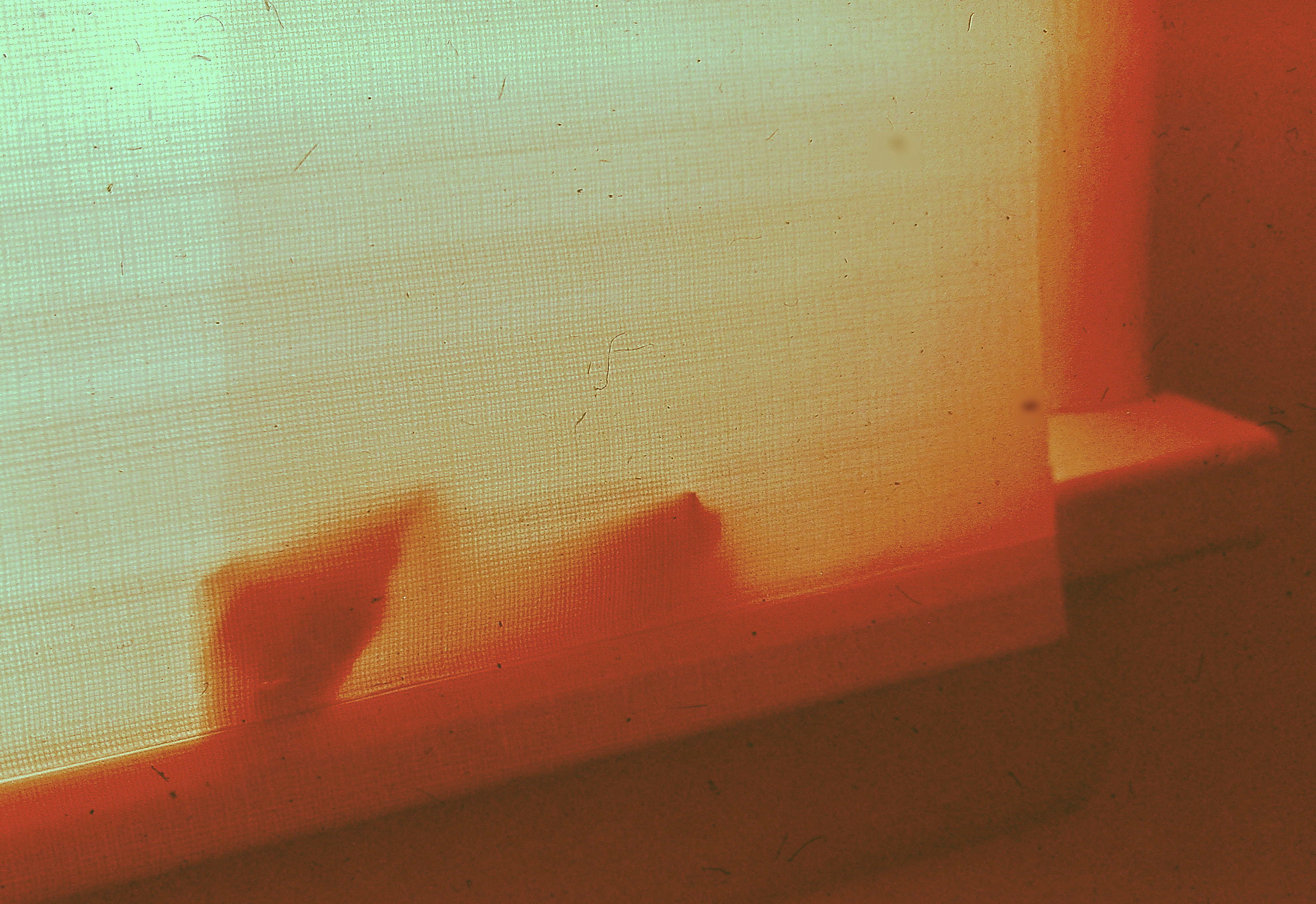
Window treatment. Chester, MT. April 1977.

One of the nicest things about retirement occurs every morning. The alarm doesn’t go off–not that it sounded much in the past 25 years–and I lie in bed debating about getting up or rolling over for a bit more ‘driftology’ (the study of drifting through my inner time and space). Usually five minutes proves I won’t be dropping back into sleep. I quietly slide out of bed; leave my sleeping wife to her dreams; grab some clothes, my cellphone, my glasses, and the glass of water sitting on my bedside stand; and I walk to the kitchen to start the morning ritual. I avoid the weakening spot on the bedroom floor near my side of the bed, the one which squeaks loudly. Similarly, I walk closely to the wall as I pass the living room, again avoiding the creaking spots in the floor. In the kitchen I put on my morning clothes in the dark. They’re a completely inappropriate fashion statement proclaiming “hey, it’s warm.”

Sometimes Benny, one of our two nearly-identical black-and-white cats, accompanies me. The rest of the time he trots out a few minutes into my routine. I’m made aware of his presence by a gentle body slam against my calves. Despite having started the morning coffee ritual, I’ll stop and feed him. He likely isn’t hungry but why not? Returning to the ritual: coffee filter wetted, cup warmed, grounds measured, and when the water boils, a gentle dribble coaxes the coffee’s blooming. Then a steady pour fills the filter holder. After years of this I usually pour just the correct amount of water to fill the cup.

While these steps play out I’ve downed a glass of water to quench dehydrated cells, and I’ve opened kitchen blinds to prepare for the day. Regardless of standard or “daylight saving” time, very little light comes in these now-opened blinds, unless we’re near the summer solstice: on Retired Saving Time I wake at the slight lightening of the pre-dawn sky regardless the time. Birds will have just started their chirping in the spring. The sun will have become more insistently bright near the summer solstice. Nearing the winter solstice I might beat the sun to rising.

How to convey the calm of living rhythmically? Of waking at first light? Of eating a midday meal when hungry, regardless if it’s 11:30 a.m. or 2:30 p.m.? Of going to bed when tired, never caring if it’s 8:30 p.m. or 11 p.m.? The day becomes a physical meditation. Divorced from it, I can turn into a snarly bear, but being in tune with it resembles breathing at the steady, resonating rate synchronous with All Being.

In 1995 or 1996 I removed the watch from my wrist and never returned it. I turned off the morning alarm. Though I benefitted from a corporate job back then which allowed a laissez-faire approach to the start of the workday, I’m pretty sure I would have done this even had I been a shift worker. The slight tension induced in knowing there’s no alarm served to wake me with plenty of time to tackle morning matters; it proved far preferable to waking 25 minutes before the alarm was due to go off only to lie there cursing because I couldn’t get back to sleep and “why bother anyway”. In retirement this natural rhythm has extended to the whole day, but the slight tension doesn’t wake me anymore.

Coffee in hand, my day officially begins with reading. It may be the Morning Briefing from the New York Times. It might be the comics. It might be baseball, more specifically anything written overnight about the Phillies. Recently, during Lent, my morning read has been The Sign of Jonas, the journals of the Trappist monk Thomas Merton. This last requires turning on a light since it is a physical book, not something on my tablet or cellphone. For that reason my reading necessarily takes place downstairs where a light can illumine without bothering my sleeping wife. Benny benefits too: when I comfortably settle in front of a fire downstairs or in an old wing-backed chair in our library, Benny gets to jump up for a morning petting session. (If I’ve happened to have decided on reading material on my computer, he’ll happily claim my lap there, too.) Reading becomes a bit challenging with a cat squirming around, kneading and delivering headbutts. Soon he settles down and allows me to continue my study of Merton, my inquisitive plunge through data at my computer, or the latest take on This Stuff Really Matters (Today).

Henry Clay Mansion, KY. July 2014.

Because I’ve moved to the rhythm of the day for nearly 30 years, I alternate between chuckling or muttering in irritation when people rant about jumping forward to Daylight Saving Time or falling back to Standard Time. Time–being but a mental ruler imposed by humans upon our perception of past, present, and future–doesn’t exist. Every day we are reminded how a group of people living through the same events do not experience it in the same way, do not remember it in the same way, and will sometimes seek to rewrite those events to suit a particular purpose. To put it in someone else’s words:

What usually happens is that, once scientists have worked out their equations [for a Grand Unification Theory], time is nowhere to be found. And if it’s not part of the fundamental fabric of the universe, how do we know it’s not something we’ve invented to explain what we don’t understand?

Javier Yanes on BBVA OpenMind

In most senses I don’t care if it exists or not. Hours, minutes, and the clocks which measure them indisputably resemble rulers, nothing more. Just as that tree on the hill doesn’t get any closer if I declare I’m a foot closer to it (while not moving my feet), I don’t perceive time appearing or disappearing because we move to DST. Just as retirement has brought a detached view of the working world (and many other matters), so too has it altered my perception of time. (Time as a malleable substance?) Stereotyped jokes show us older folks forgetting the day of the week with regularity. Is this any wonder when time doesn’t exist? If I stop using a tape measure to measure how far I travel, am I assailed when I lose touch of my sense of distance? I can still walk from Here to There, can’t I?

[Which sparks a possible and humorous but too truthful dialog:

“Do you know what day it is, Mr. Pilcher?”

“Yes.”

“Would you tell me?”

“Yes.”

“What day is it Mr. Pilcher?” (a bit of exasperation now)

“It’s today.”

“And what day is ‘today’, Mr. Pilcher?” (more than a bit of exasperation now)

“It’s always today. I don’t understand your question.”

“What DAY of the WEEK is it, Mr. Pilcher?”

“Gee, I’m sorry if I annoyed you. I have no idea what day of the week it is. It’s a day between Sunday and Sunday; I go to church on Sunday, and I didn’t go to church today.”

(lengthy pause while Mr. Pilcher’s treatment plan is revised to indicate he is losing his marbles)]

My paternal grandfather spent many minutes and hours staring out of windows in his later years. He at times seem befuddled. He also showed he was sharp as a tack when it came to philosophical and existential questions. He had studied theology and led congregations for decades. Staring out of a window came with the territory, especially when composing this week’s sermon. While the need to write sermons disappeared in retirement, the window-staring did not. Did this indicate a dissociative mind? Doubtful. More likely old habits outlived their usefulness. So too my need to keep track of every hour of the day, every day of the week. I never did, much. Why should I be punished for that? I wouldn’t be punished for a deteriorating sense of distance; why a deteriorating sense of time?

I would argue my rising with the predawn light, moving through the day totally in touch with what needs to be done Now, whether it be eating, my taxes, planning meals, pruning shrubs, reading books, attending a doctor appointment on time, or going to bed when tired keeps me in a meditative state. Retirement provides extra incentive to be in touch with the here and now. I shouldn’t be penalized because I’ve approached a more natural state of being, I should be admired or at the very least respected. Instead, I feel the need to document how my memory of many things has been tenuous throughout my supposedly ‘with it’ years. I have never  been able to tell you what I have to do today. As a reporter in my late 20s, I would drive to work oblivious of what stories I had to run down that day. As a teacher in the years that followed, I had only a fuzzy idea of what I had to teach that day, usually because I had planted the seed in my brain the night before: “you have to get to school quickly to print that test you’re giving today.” Ask me on Monday what the lesson plan for Thursday will be, and you would have received a panicked look. In the corporate world where each day’s list of to-do’s varied quite a bit, I had no idea what I would do that day until I looked at the task list. (Bless you Franklin planners for focusing me the idea of A, B, and C tasks.)

And now? How do I prove to those who will judge my mental competence that I have never been able to remember what I have to do today? That I’ve marched through many a day thinking it was Thursday, only to be reminded continuously “no, it’s Wednesday”? When my mother neared the end of her life, she was subjected to many a judgement like this. When she microwaved a throw pillow because she thought she could warm it up and use it on her sore neck, her dramatically shocked visiting nurse felt that Mom was ‘losing it’. Well, somewhat, yes, I concurred. “But Mom has always had a tenuous grasp of the physical sciences including those which govern a microwave. Just because it wasn’t marked “microwavable” on the throw pillow shouldn’t totally count against her. After all, she had several microwaveable neck pillows which she did put in the microwave each night–and they didn’t have “microwavable” on some tag attached to them, because they were handmade by the good ladies at her church. Should she have responded to the smoke filling the room? Yeah, probably. Then again, my wife should have reacted to the smoke filling our house that night in midwinter 2002 when the furnace’s chimney had decomposed, and I came home to a house filled with smoke and a wife merrily preparing my dinner. Losing your marbles doesn’t occur when you misplace the bag of marbles. You lose one here, one there, never noticing the slightly lighter bag you’re holding.

Our perception of time varies from person to person, and time’s but a human construct. Our perception of reality–whatever reality is according to the popular philosophers of the day–varies even more. We should be judged on who we are and who we were, not on who someone wants us to be. Want to scare yourself? Pretend you’re the plaintiff in a court hearing to prove that you are mentally incompetent. My guess? You can’t prove you’re competent right now! Good luck when you’re 80.

God forbid I should be denied my mornings with Benny, coffee, and reading material simply because someone says I need to stay in bed longer, or get into a shower, or do anything else I don’t want to do. “Oh Lord, I pray my ability to perceive how I’m being treated matches how I’m being treated.”