A funny thing happened on the way to this post a week ago: all three monitors started blinking on and off rapidly for 20 seconds and then my video driver software said it had crashed. Since I thought I had installed it only two months previously, I swore and deleted said software… Not a good idea. After rebooting I had only one monitor functioning and it displayed smaller fonts/icons and a fuzzier image. Turns out I had only updated the driver a couple months before. Two days later I’m humming along with three glorious monitors again, but not enough time in each day to complete this post. Wherewith…
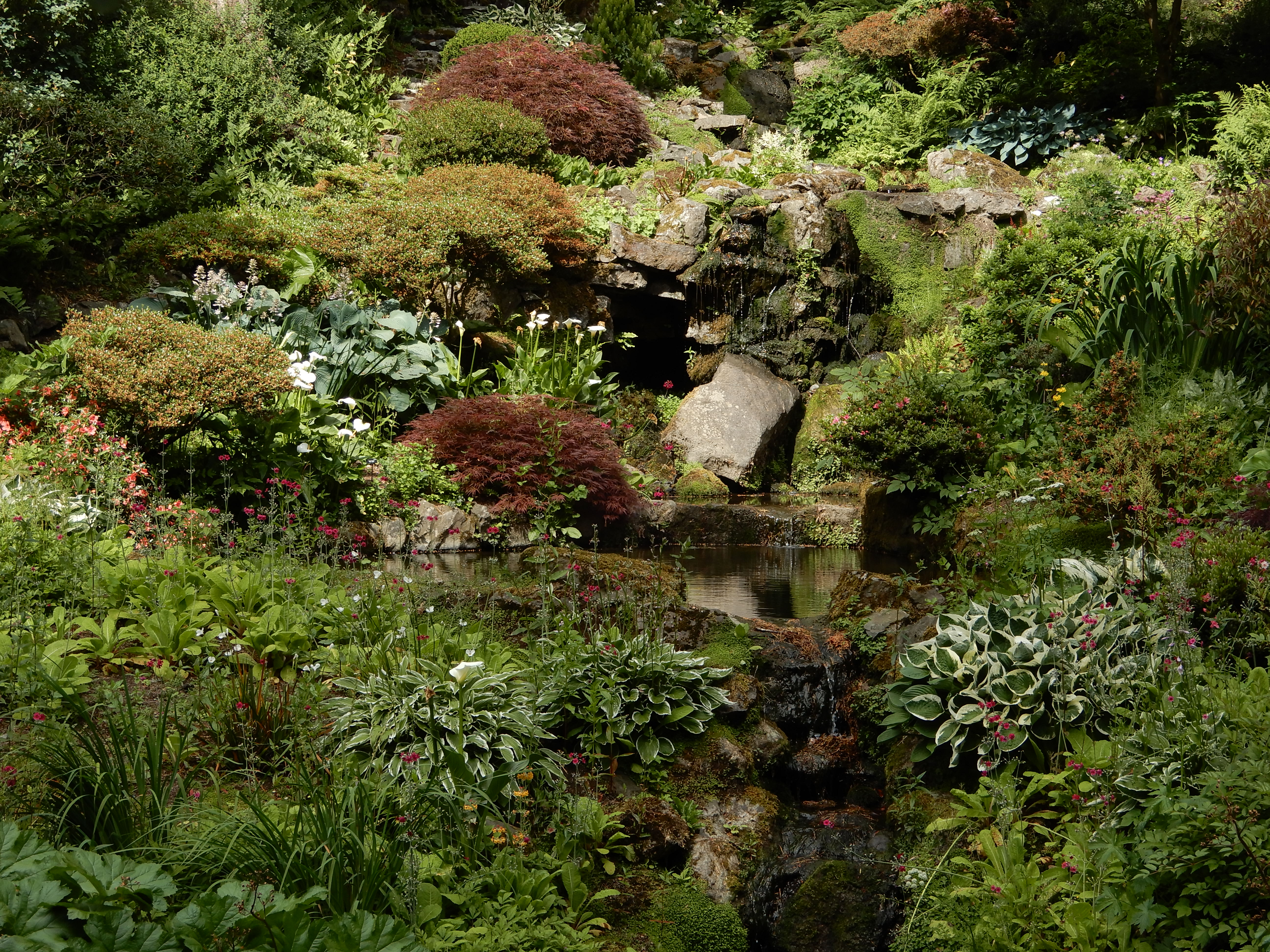
After experiencing Edinburgh, Scotland, and England’s Lake District on our recent tour of the United Kingdom, we headed toward Llandudno Bay, Wales. Just before we arrived, though, we took in the Bodnant Garden, a National Trust property near Conwy and Llandudno Bay. The five generations of one family developed it, and Henry McClaren donated it. I got that from Wikipedia mostly, and would recommend a quick tour over to that page because the photos capture it very well. It’s 80 acres present all sorts of habitat from well-manicured English garden to “nearly wild” and has exotic species like the American sequoia. (Hey, it’s exotic there.) We started walking in a summery rain shower but the sun soon overcame it; we regretted layering for rain as we sweated our way into a steep gully and back out.
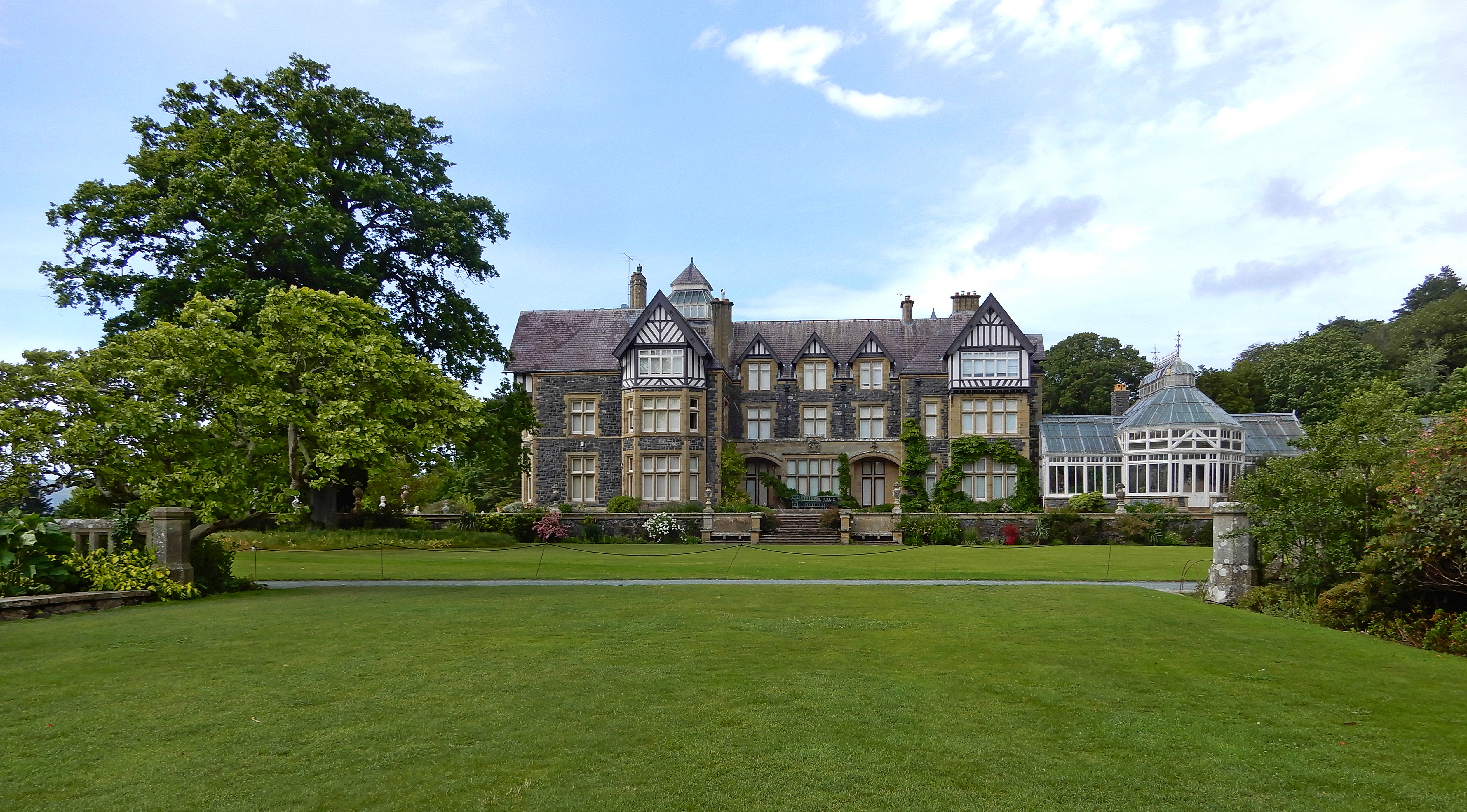
The McClaren mansion. The family still lives there…on occasion. Bodnant Garden, Wales. June 2026.
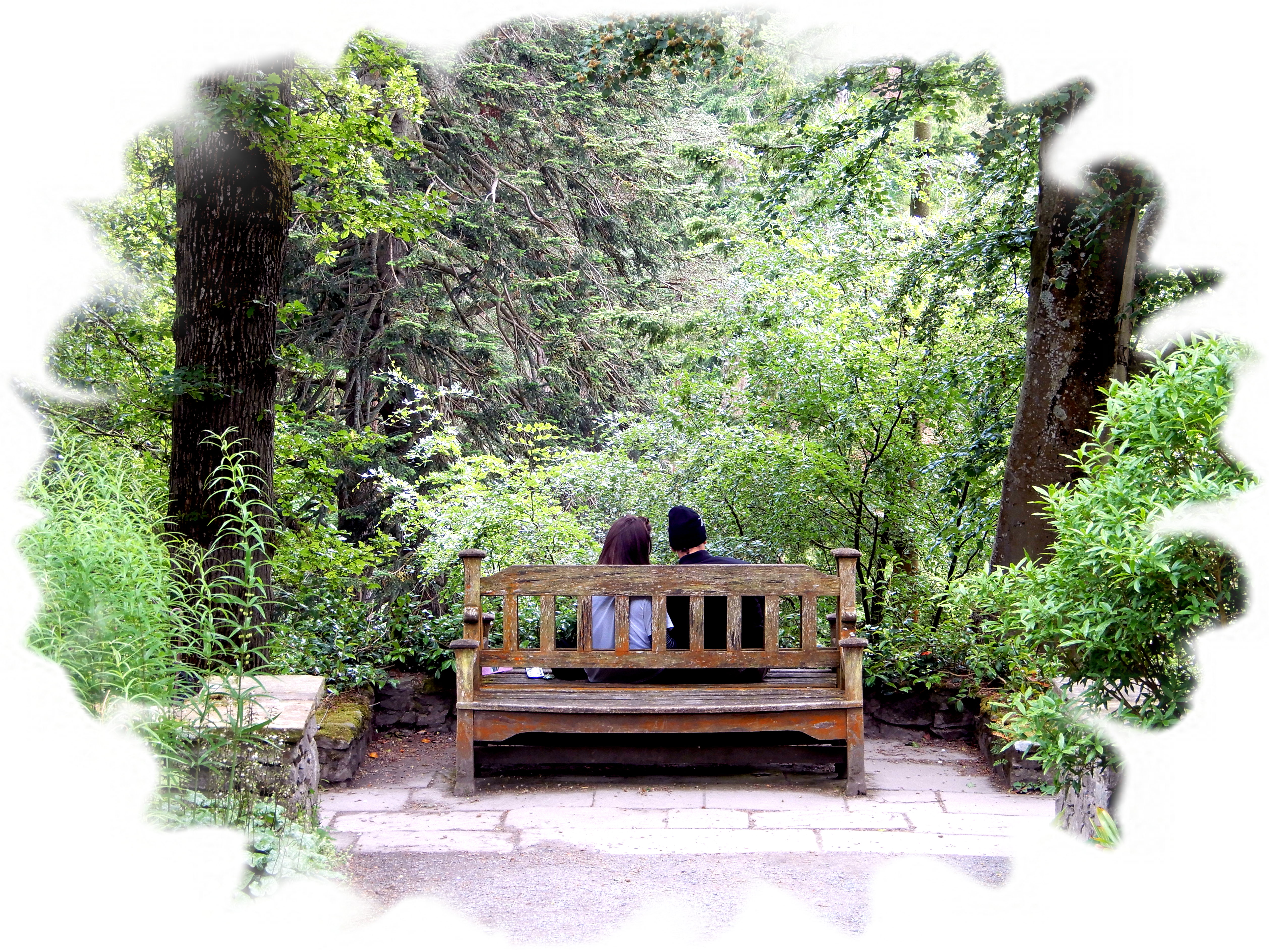
Seemed to be a lot of locals enjoying a Sunday afternoon in the garden. Bodnant Garden, Wales. June 2026.
The couple above were gazing into the gully (when not gazing into each other’s eyes, I presume). If they had turned around they would have seen…
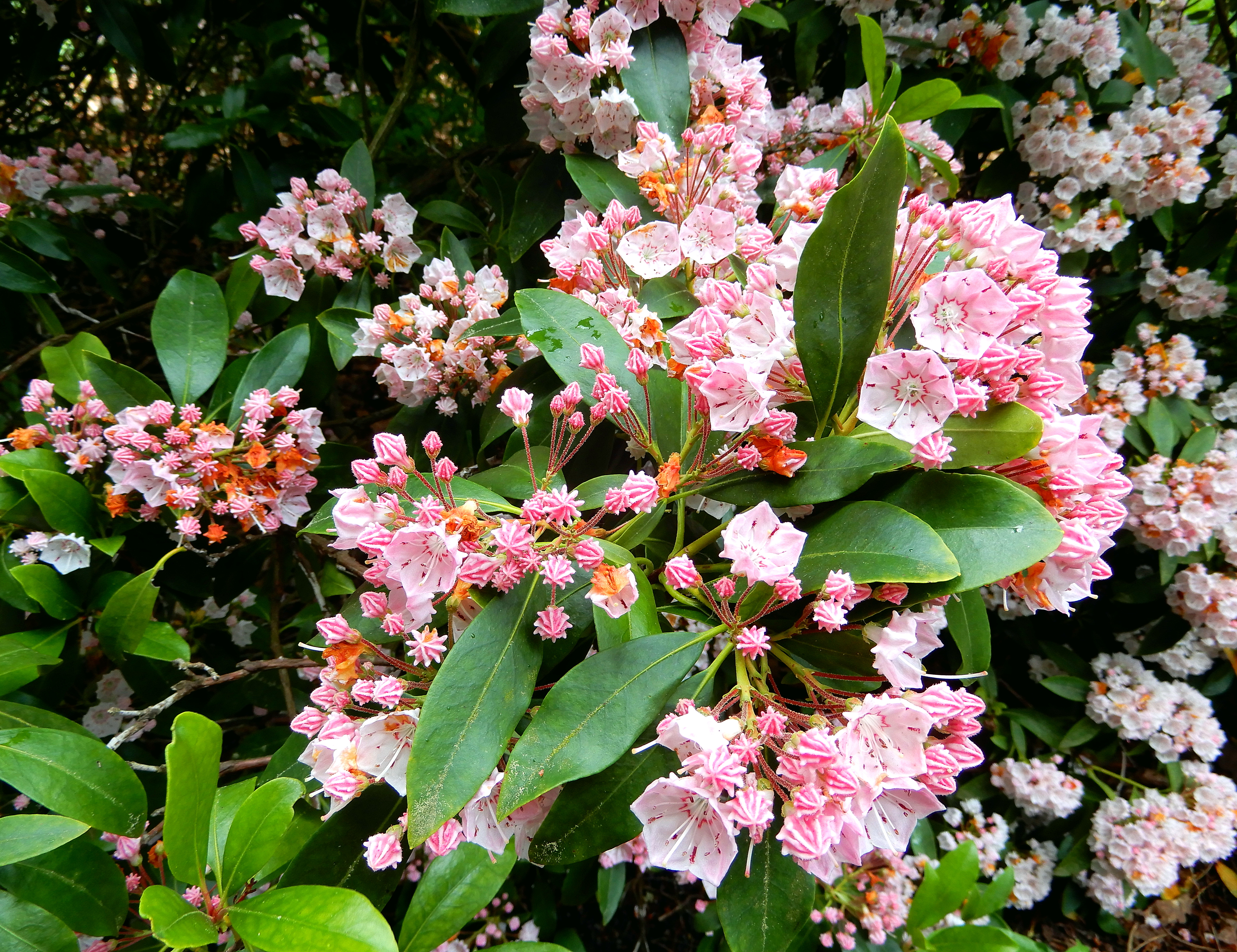
Bodnant Garden, Wales. June 2026.
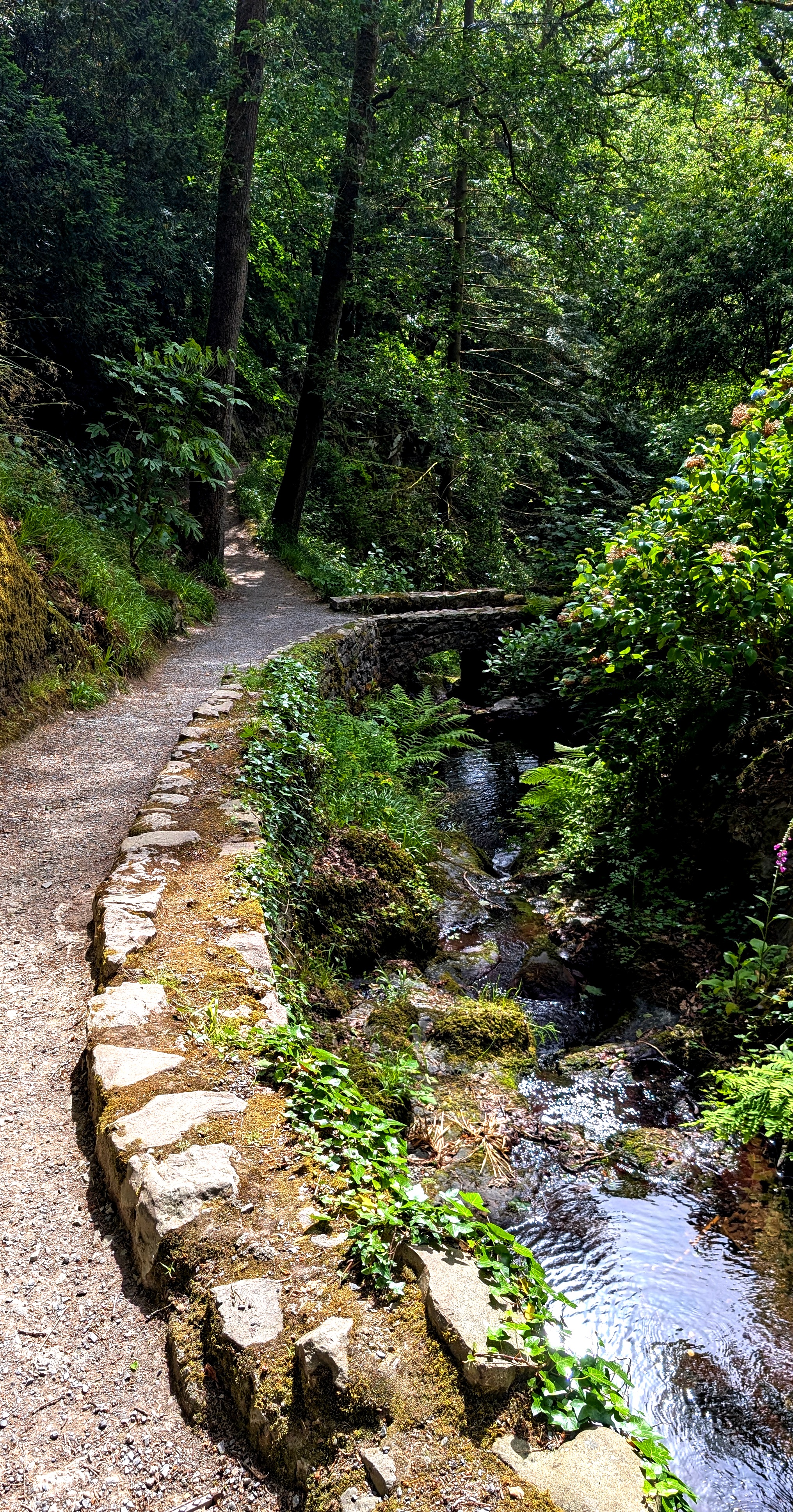
The light varied. As we descended into the gully, cut by a fast-moving stream, it grew dark—not because the clouds had obscured the sun, but because the foliage had. As we walked along the stream, it got lighter. We found some old stone buildings, repurposed into a refreshment center. We however needed to head back to our bus and Llandudno.
Thoughts upon waking in my own bed again on June 17, 2026
As Jules Verne pointed out fictionally in 1872, travel over any distance isn’t just spatial, it’s temporal. In this age of electronic connectivity, this gets thrown in our face every time we realize our friend lies many time zones to the west: “I can’t send that text! My buddy’s gone to bed!” Or maybe he’s hours away from waking. Phileas Fogg’s seemingly lost wager reminds us we must consider how we’ve slipped through time as we’ve traversed any significant part of this globe.
Less than 24 hours ago we re-entered America’s Eastern time zone, which currently runs it clocks on the hijacking concept of “daylight savings” time (as if one could just pocket a bit of sunshine for a rainy day). Twelve hours previously we’d been delivered to the front of Heathrow airport’s Terminal 3 and just a few hours before that we had walked to St. James’s Square for a bit of air, exercise, and an attempt to distract my wife. She became quite agitated upon waking when she learned our flight’s departure to America had been delayed by 2.5 hours. The square is not spectacular in London terms: many areas exceed it in acreage and beauty. Yet the square offered a lovely little distraction and glimpse into the morning working world of London. Within it a very small area of peace existed. Few, if any, used it as a shortcut, no doubt due to its strategic gate locations. Had they been on the corners the story might have been different.
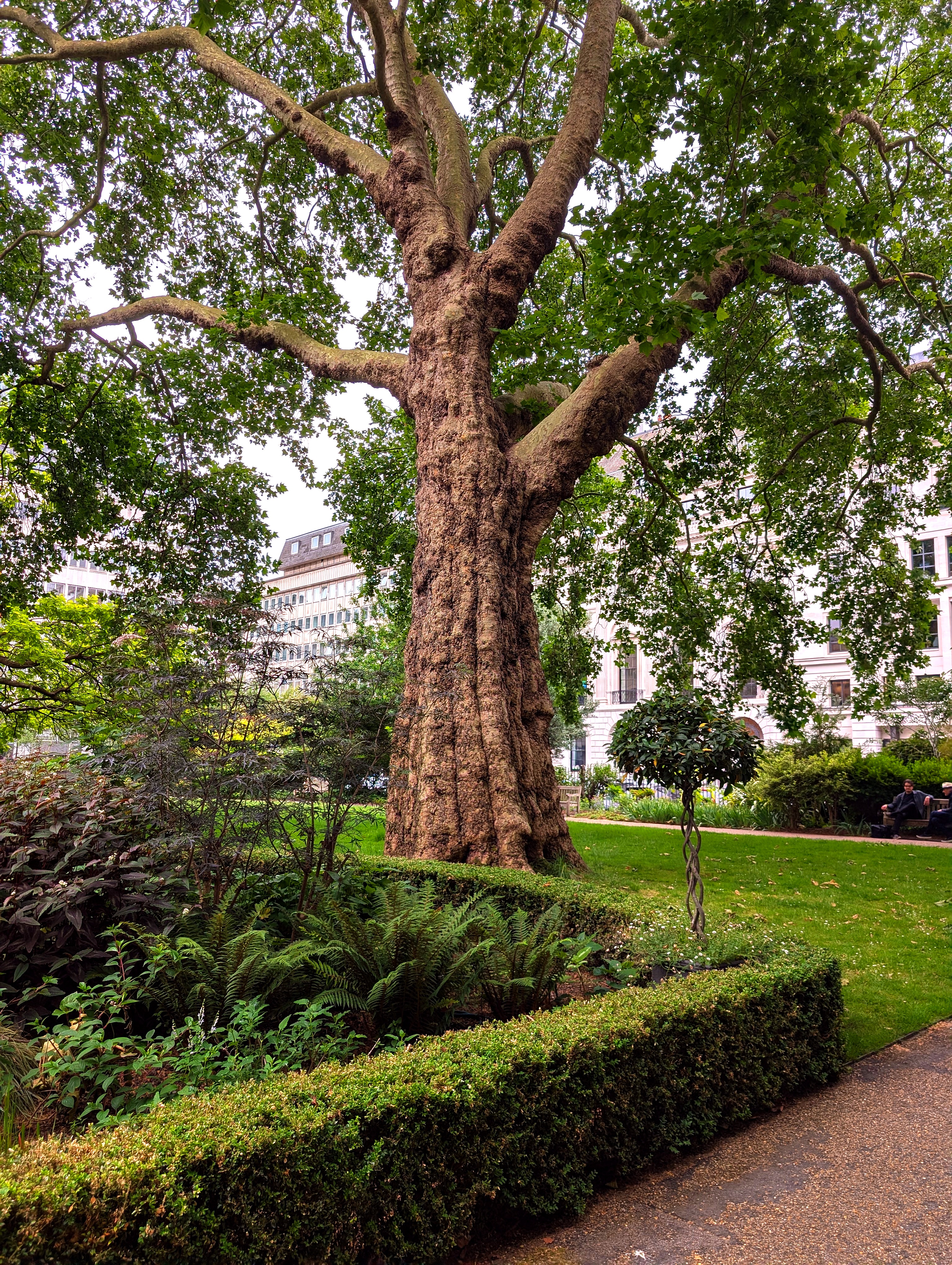
Not for the first time on our two-week sojourn I marveled at what I believe are plane trees. (I will happily consider being corrected.) I’m attempting to learn if the way the trees’ massive trunks (compared to each tree’s canopy) is natural or produced by extensive pruning over the years. Regardless, it’s striking.
Plane tree in St. James’s Square. June 2026.
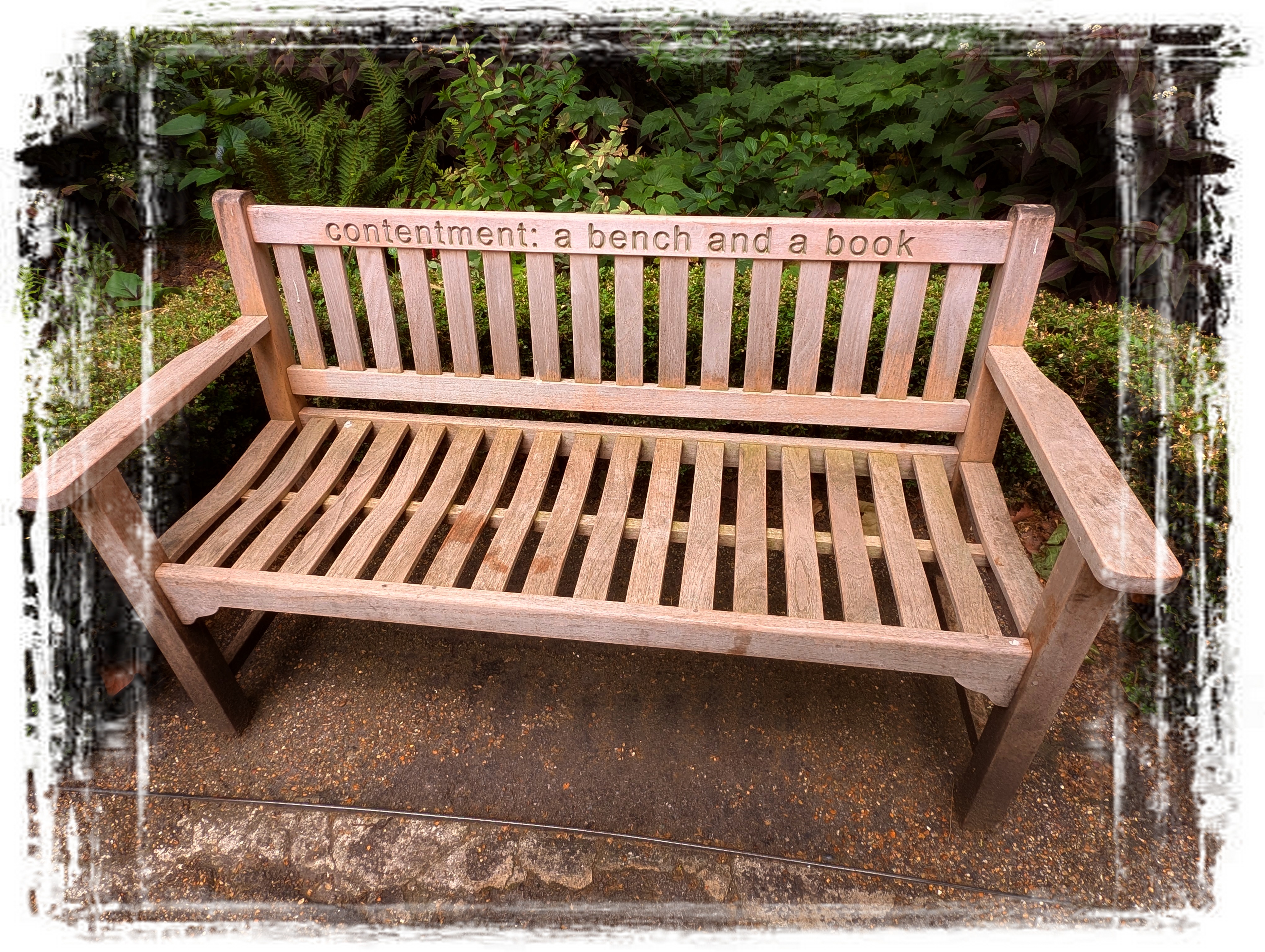
By the time of our walk we were experiencing our 14th day of wandering the island, our 14th day of experiencing how 2000 years of history permeates this land. Or perhaps the British/Scots/Welsh just hang onto it more. I never felt France or Germany along the Rhine River held onto their historical tropes the way these Celtic, Anglo-Saxon, Gaelic, Viking, Norman descendants do. Thus this bench brought me up short. I don’t read a physical book but maybe once per year and only then because I have a Luddite friend who insists on buying me one for my birthday. If this is the definition of contentment, I will be hard-pressed. Additionally, I received the reminder that my particular method of e-reading doesn’t work well in direct sunlight.
Bench in St. James’s Square. June 2026.
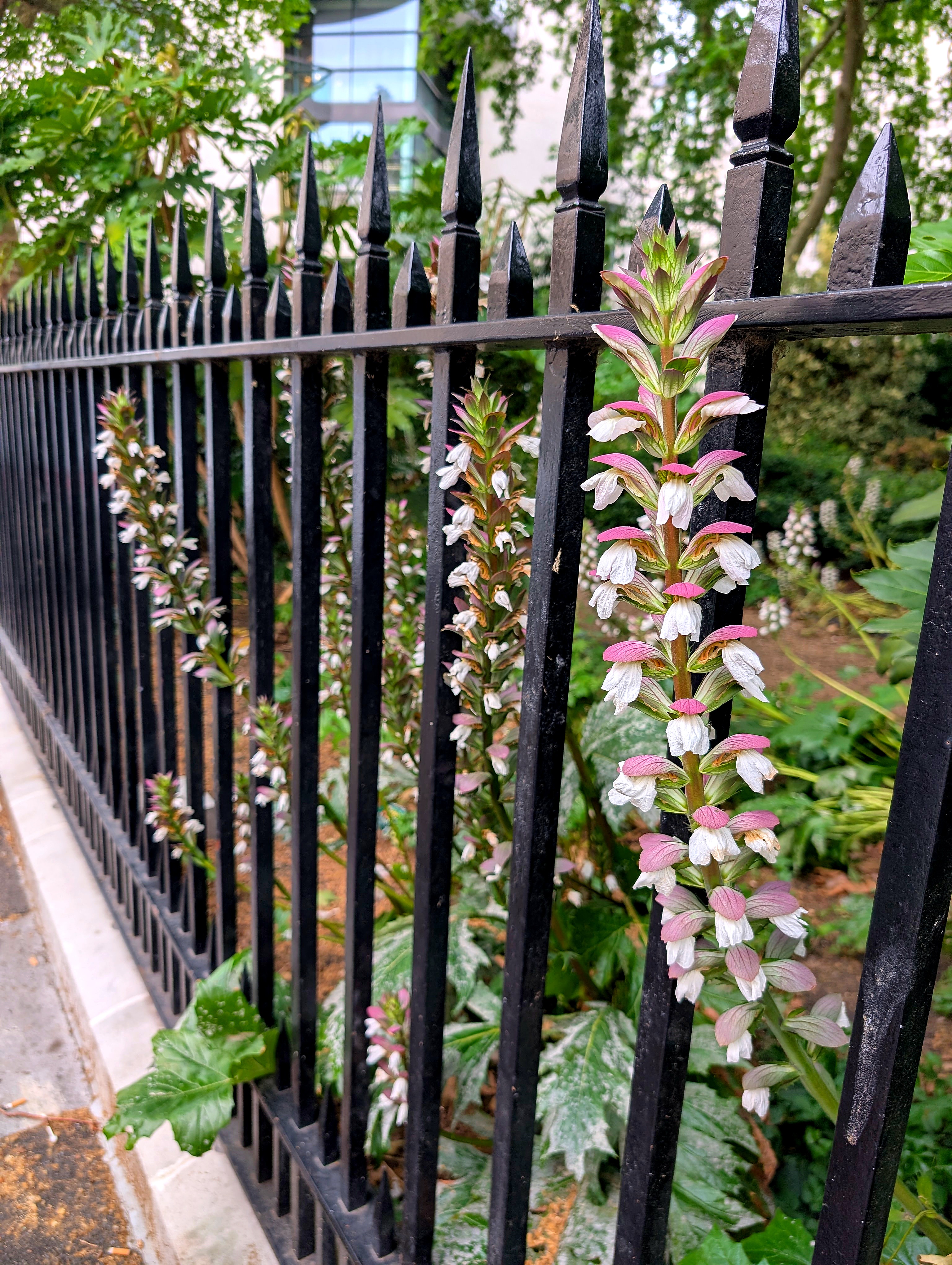
We wandered out. As we left I captured this photo showing how the natural world attempts to insinuate itself into the busy metro-life of London. Then again, how natural is it when every branch, stem, flower, even the plants, are artificially formed, planted, pruned, moved, replaced, and trained? The English do seem to love their carefully manicured gardens, at least within the historical districts of London.
Leaving St. James’s Square. June 2026.
Other elements for the returning traveler: an odd disjointedness associated with returning to one’s home country, but fearful about proving one belongs (via passport); having a distinctive experience of how different countries are…different countries, not just a place where “hey, people are people”; looking forward to the first time in two weeks that temperatures will actually align with “the summer months” of June/July/August; using toilets which aren’t square; drinking American beer which doesn’t hold a candle to the ones available around every corner in Great Britain; and realizing the myriad little ways a country founded on liberty has innate limits, wonderful as that liberty might be.
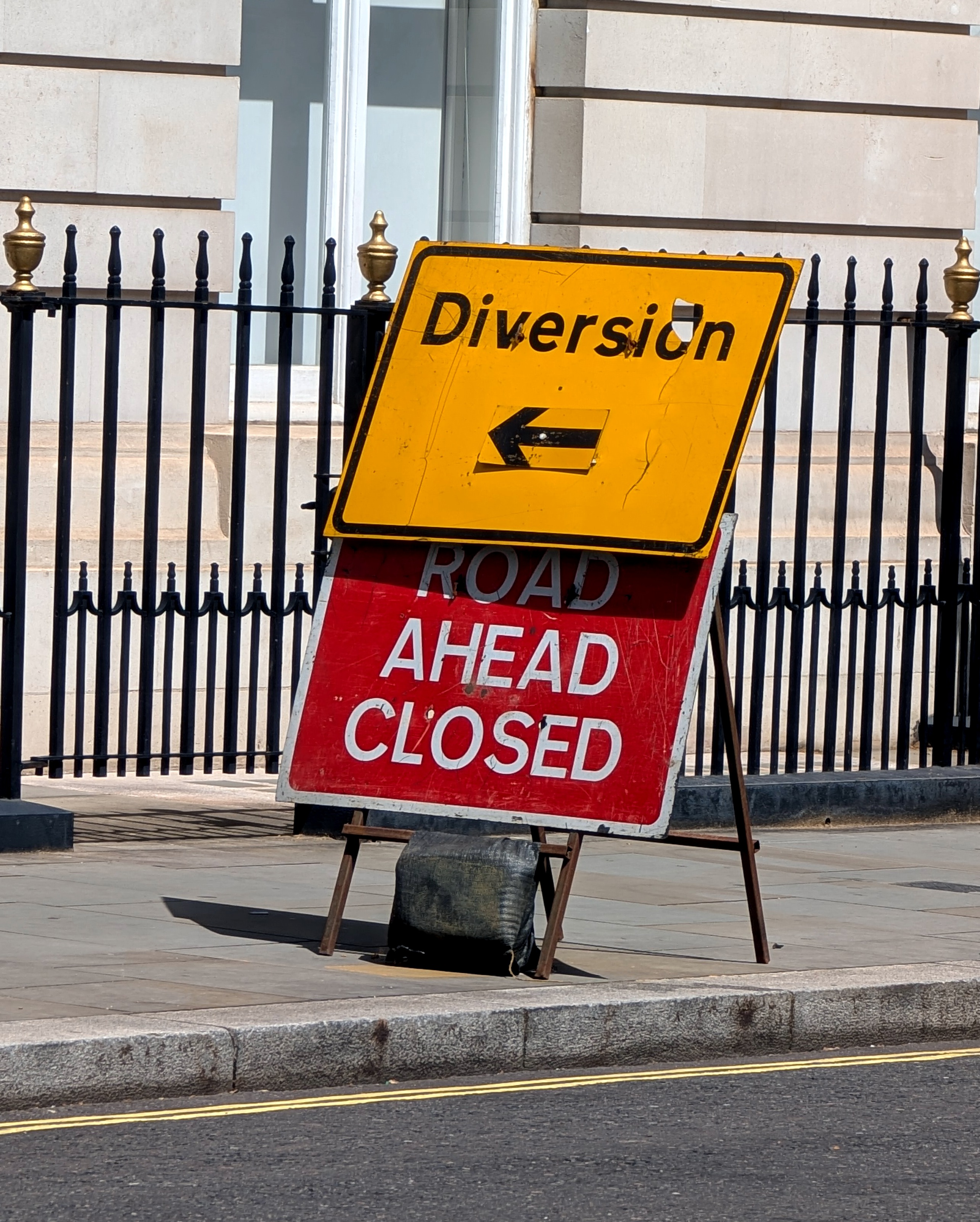
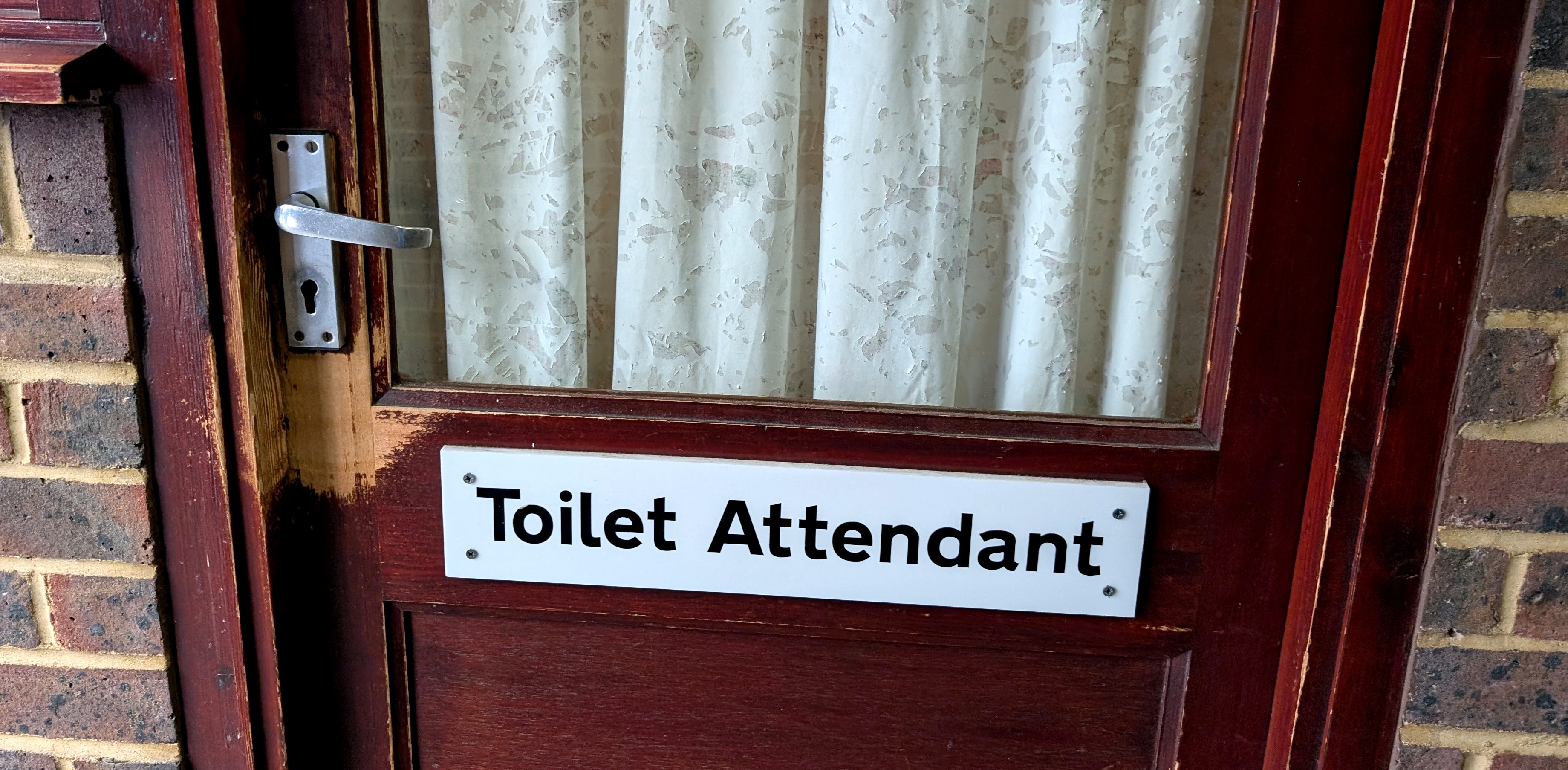
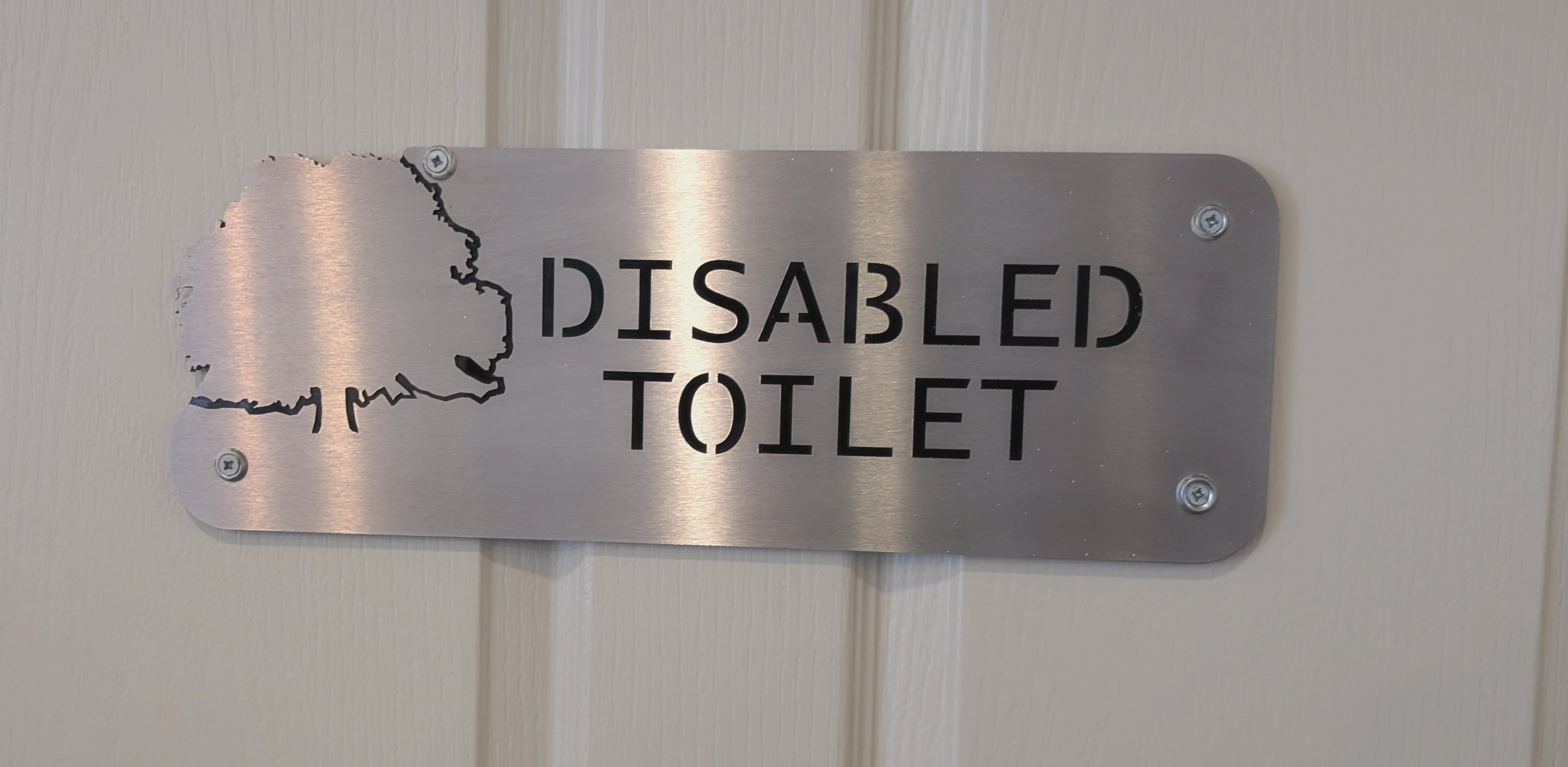
Removing oneself from the group grants both perspective and a desire (usually) to return to the group, the familiarity. Thus it was with us. All the little ways the United Kingdom differs from America brought our usually habitual daily habits into focus. Several hotels had Nespresso machines. One didn’t re-stock the capsules, however, despite our four-night stay. The simple act of looking right for oncoming traffic when crossing a street. (And on controlled-access highways, never getting used to the passing lane being on the right.) Marveling at how green everything was, everywhere. Sunrise occurring prior to 5 a.m. preceded by a leisurely pre-dawn that started around 4. On occasion, paying to use a toilet. Calling them toilets instead of restrooms. And the simple expressions of everyday life, turned sideways by a different culture despite ostensibly speaking the same language:
Not a “detour”. London, June 2026.
We don’t have these in America. Windsor, June 2026.
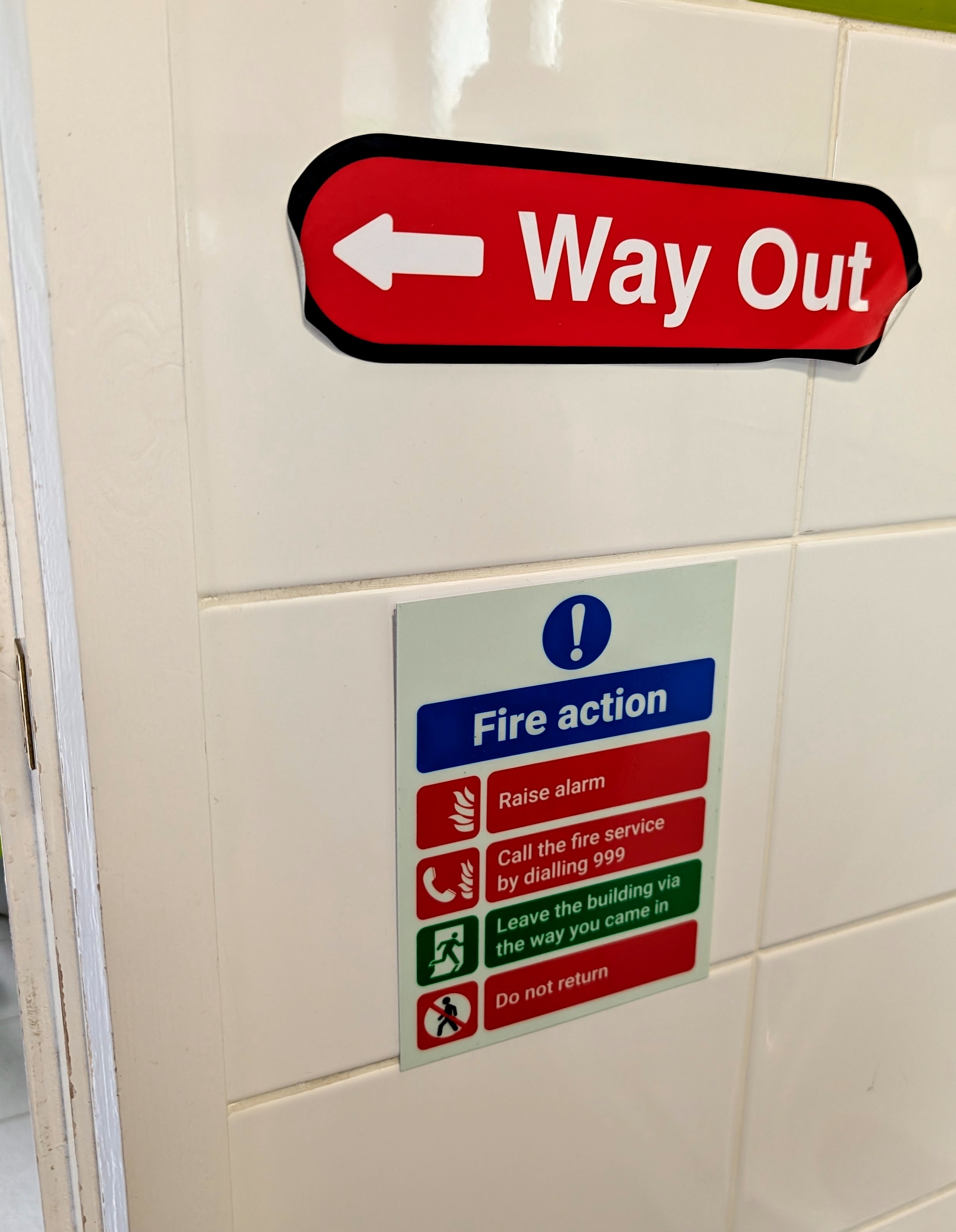
A double-dose: Top, the indication of the exit; bottom, how to take “fire action”. Chipping Campden, June 2026.
I prefer toilets that work, but that’s just me, I guess. Stratford-upon-Avon, June 2026.
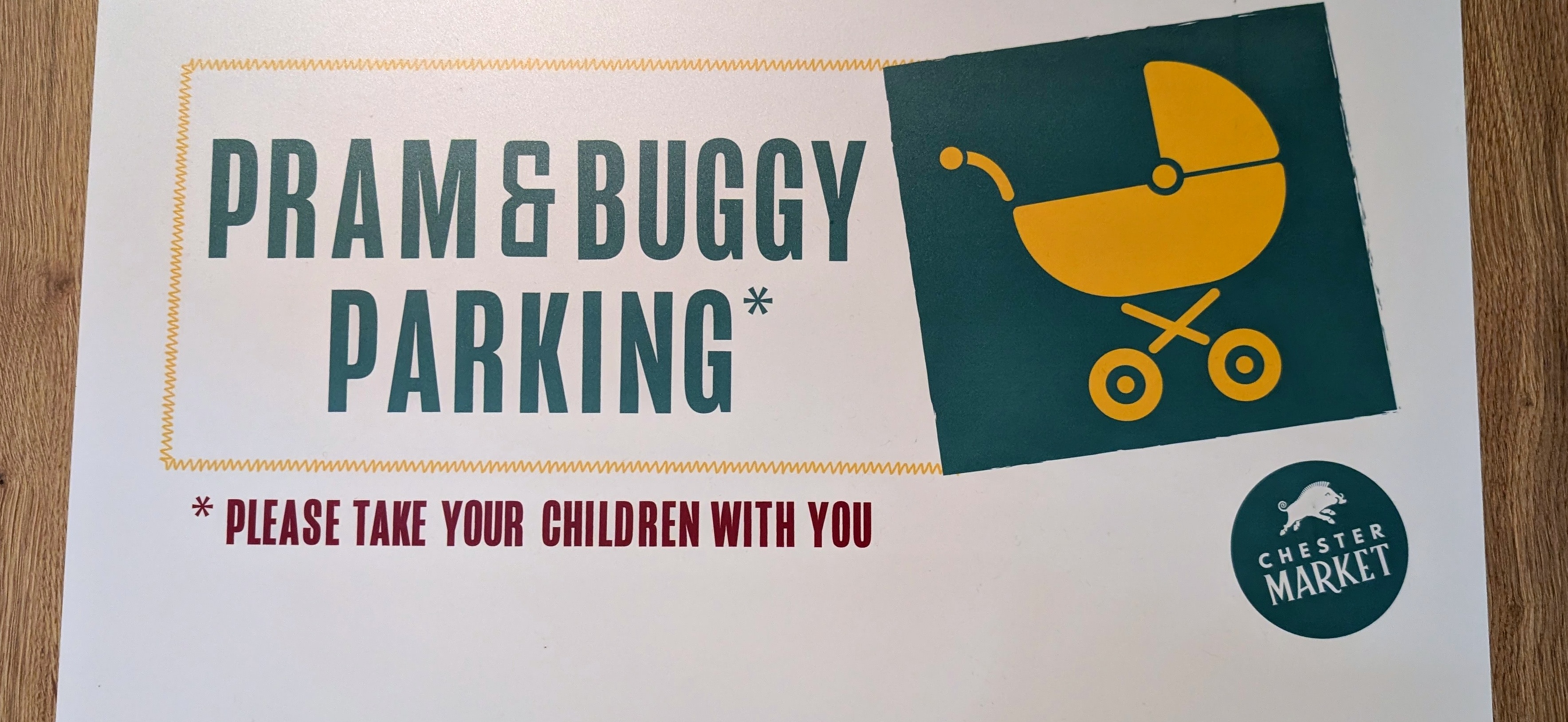
…but some things remain the same, such as stating what should be obvious. Chester, England. June 2026.
I’ve decided not to publish an itinerary-based series of posts about our two-week tour of Scotland, Wales, and England. This partially is based on the fact I’ve never completed the Rhine River cruise series which we experienced in August 2025! Mostly it’s based on the fact I have over 1000 photographs of far too many locations to handle it adequately in the time I have for writing. Instead, I’ll drop in from time to time on a particular excursion: Conwy Castle on the edge of Llandudno; the Royal Mile in Edinburgh; the Lake District of England; and all that touristy stuff from London. Hope you’ll join me.
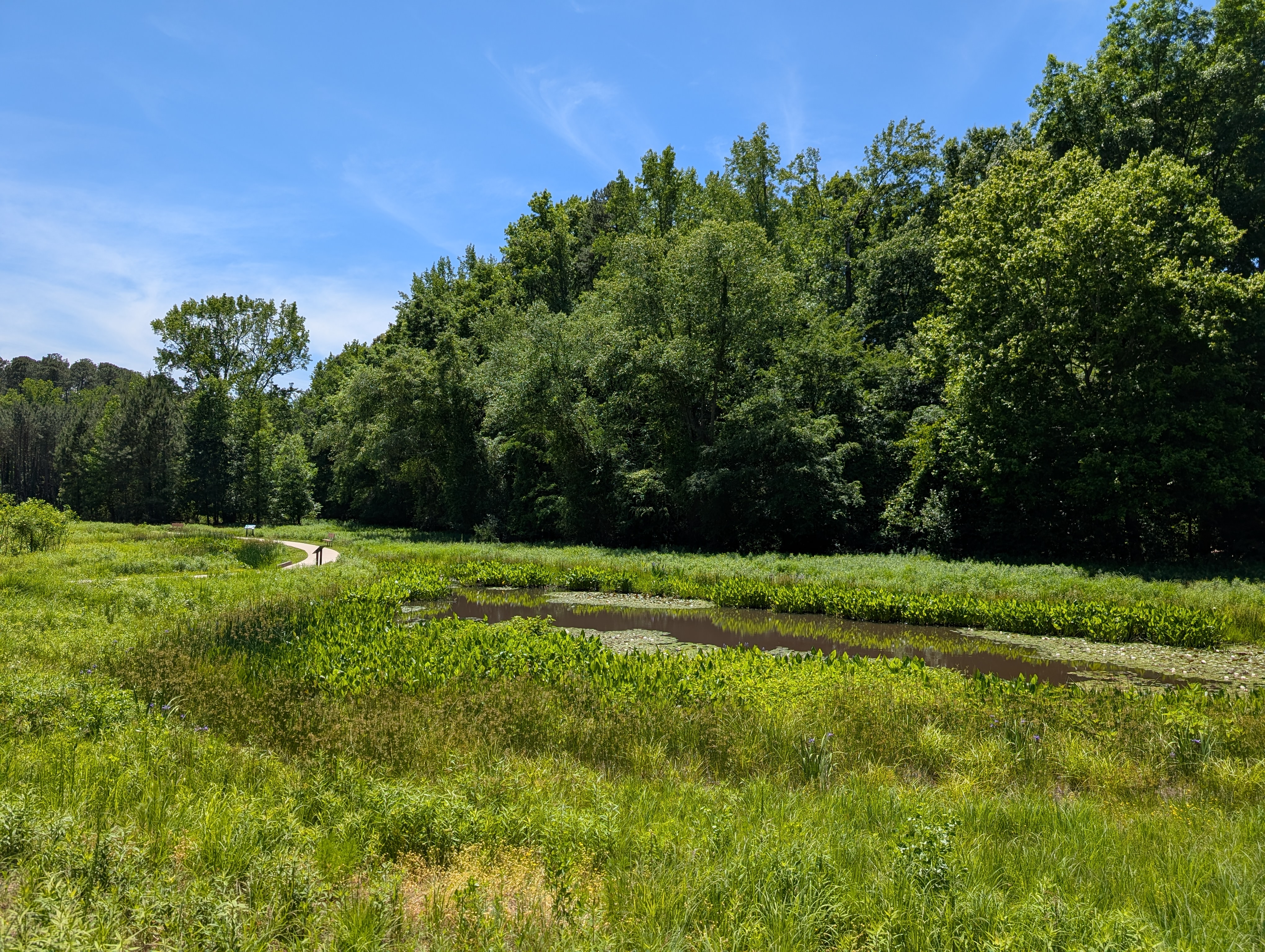
In the past 50 years or so, a “walk around the block” has a different meaning. Streets meander, dead end, and lead to yet another meandering street, not to the nearest arterial. Thus, a walk around the block entails much more walking! With my brother in town, I chose to walk to a nearby park, Wooten Meadow. If my measurements are correct, the around-the-block part equaled roughly two miles. Add in the stroll through the park to make it 2.5 or so. Regardless, we had a fine time in this very small park which locals once knew as a horse pasture, according to my friend who grew up here.
Tucked alongside a bustling arterial, one sees the remnants of the horse pasture:
Wooten Meadow Park, Raleigh, NC. May 2026.
Half of the open area of the park is shown above. It’s not a large park. A figure-eight path leads one beside ponds which serve to handle high water during heavy rainfall when Hare Snipe Creek overflows its banks.
Wooten Meadow Park, Raleigh, NC. May 2026.
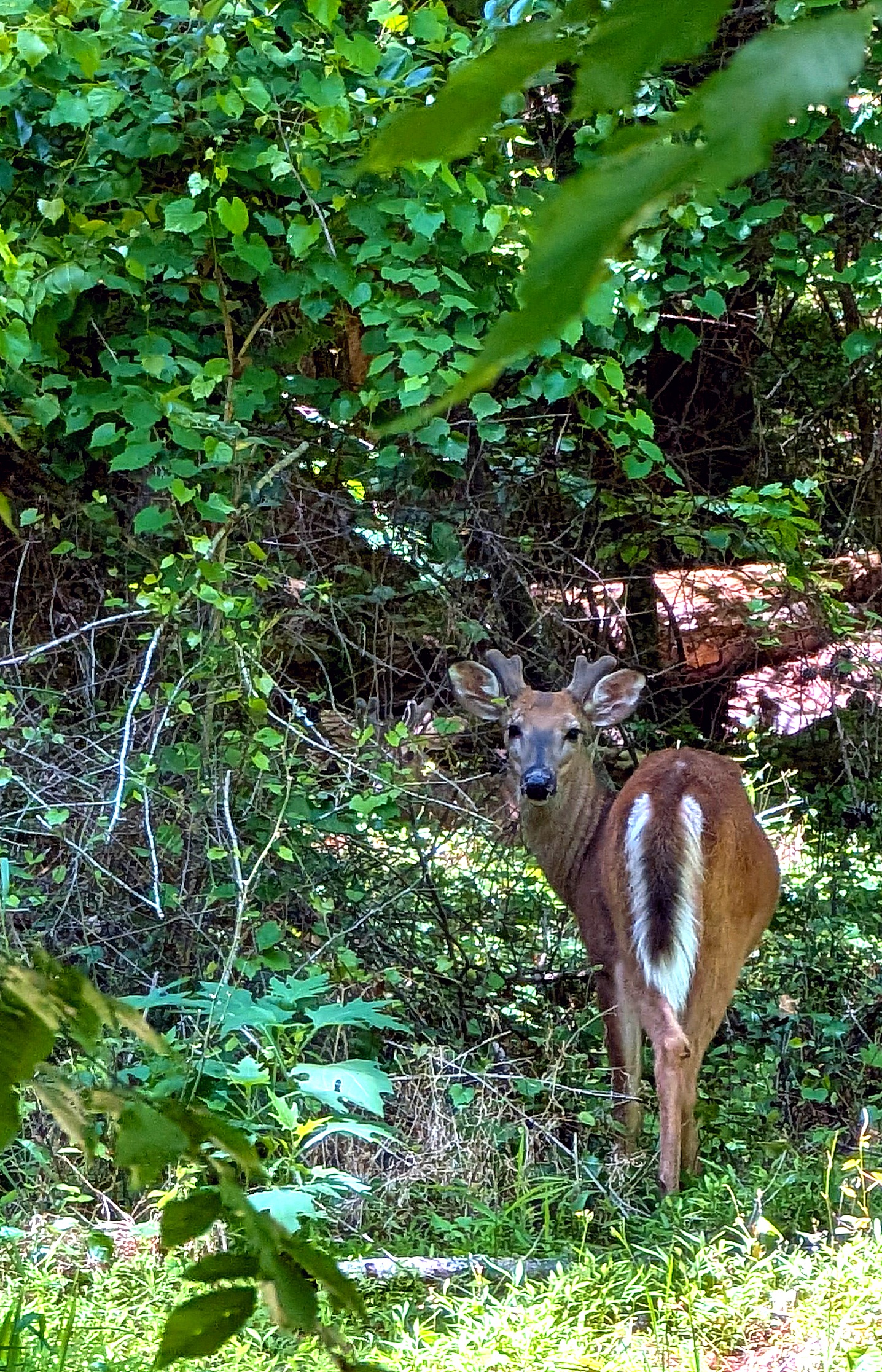
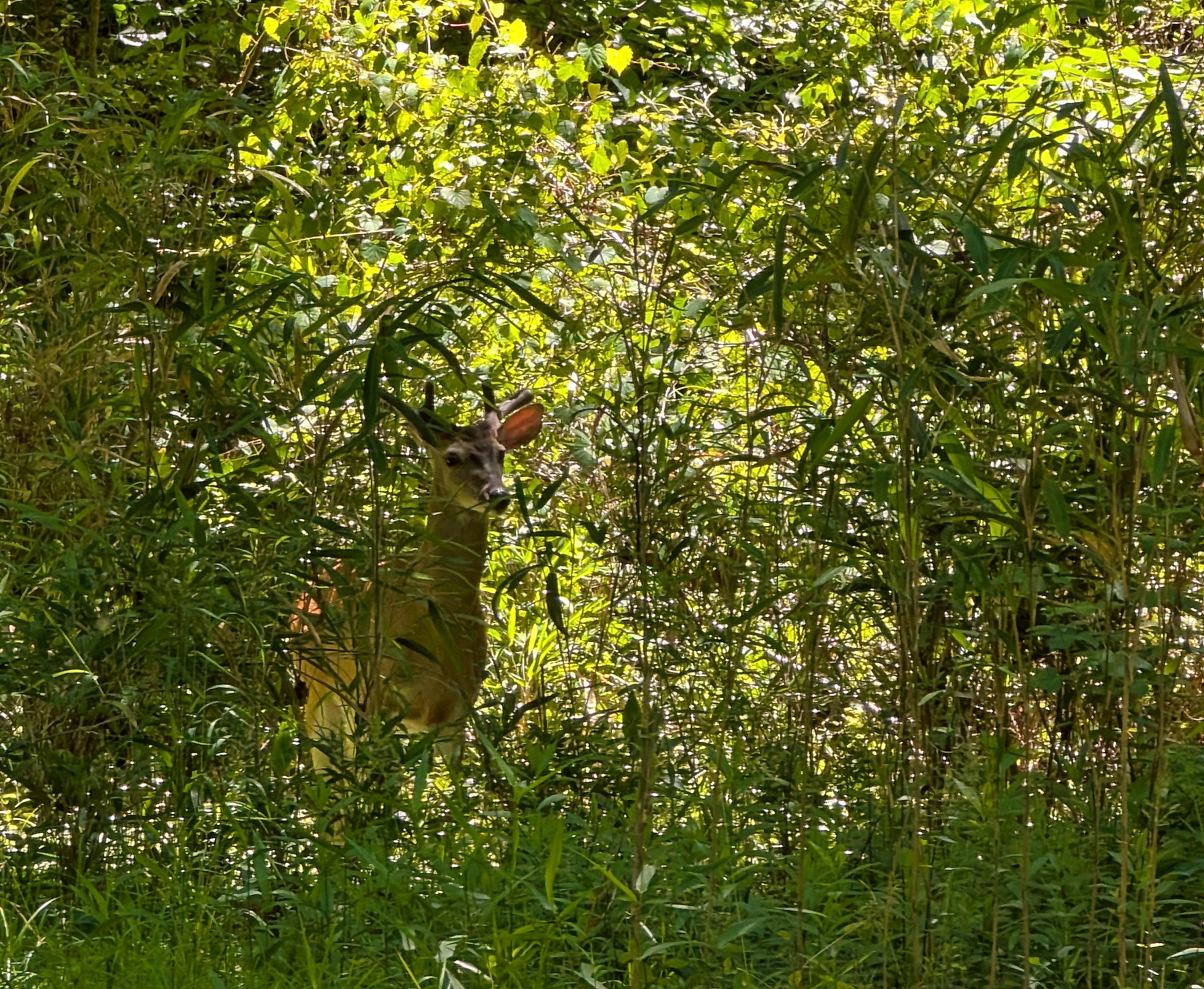
At the back of the meadow (middle left in the first photo) we discovered an unpaved trail which led into the woods. Spying a park bench, we gained assurance we were allowed to be there. No other people followed us, nor did we see any ahead of us. We saw instead several bucks sprouting antlers.
A non-concerned buck across Hare Snipe Creek. Wooten Meadow Park, Raleigh, NC. May 2026.
Further into the brush away from Hare Snipe Creek. Wooten Meadow Park, Raleigh, NC. May 2026.
Half of “the block” remained, so we headed toward home.
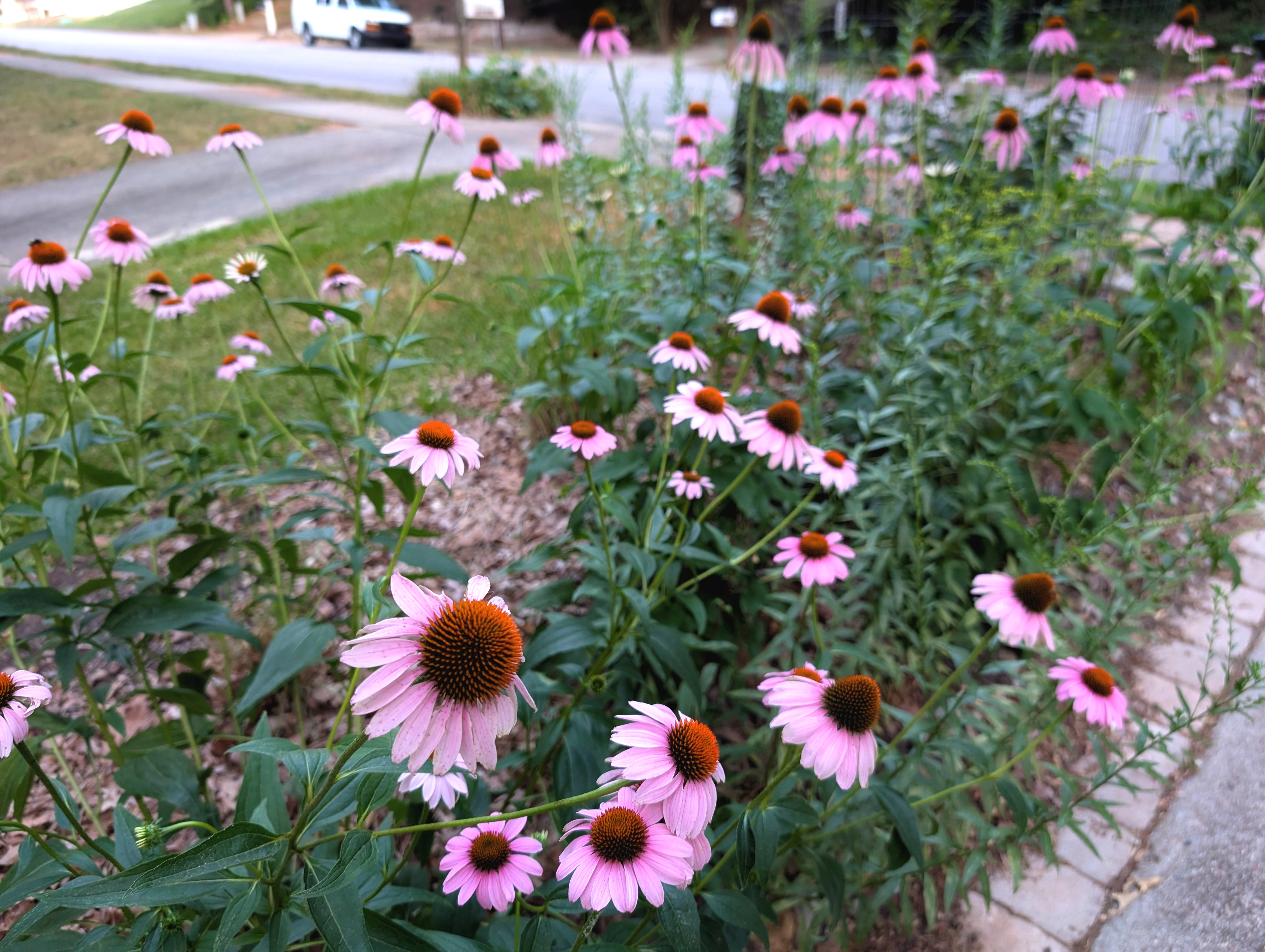
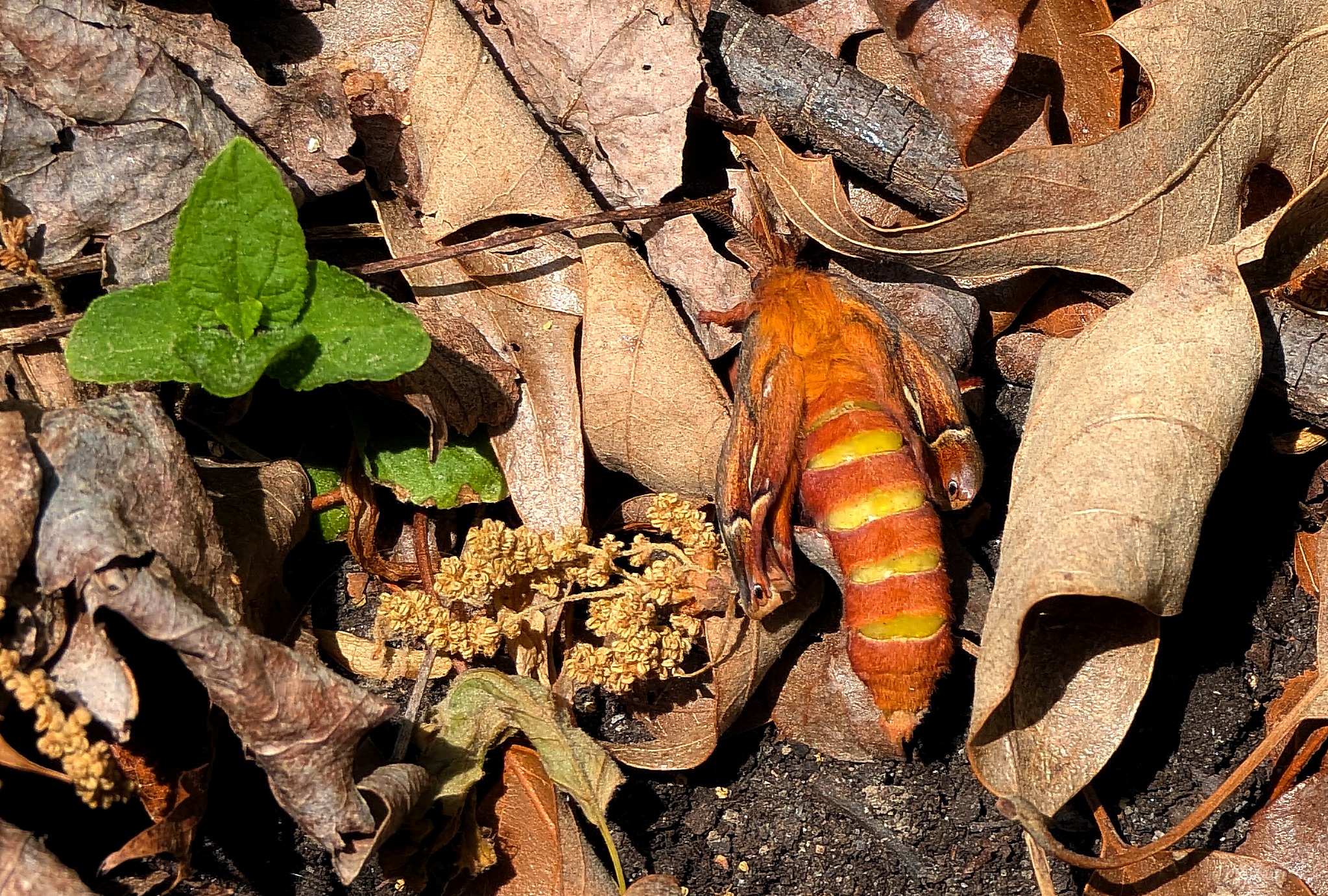
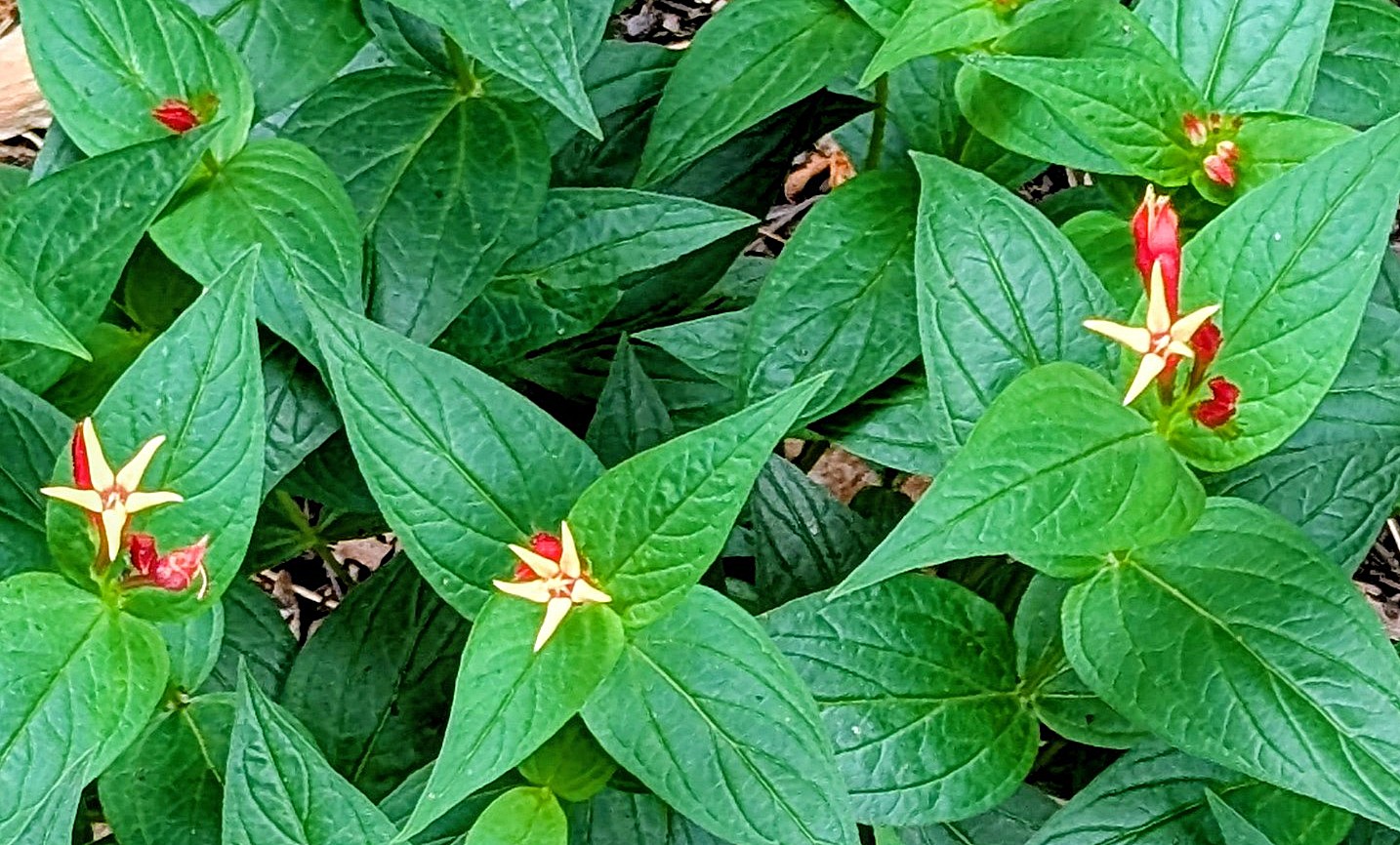
What I believe is a Regal Moth becoming… Next to a Blue Mistflower “becoming”. April 2026.
Two weeks ago I’m walking the path along the front of our house when movement in the dead leaves caught my eye. I saw an amazing insect squirming around, kind of walking in little circles. Examining the photo, I figured it to be a moth with wings not yet dry and fully erect. Regal Moth was the closest I could come (only having a photo of a female). The wing markings don’t seem to be correct, but they might change when they are fully deployed.
I have come to regard with some suspicion those who claim that the Bible never troubles them. I can only assume this means they haven’t actually read it.
Rachel Held Evans, (1981-2019)
I came across this quote in my morning devotions which for me are structured by Give Us This Day a publication of The Liturgical Press. The LP is “an apostolate of St. John’s Abbey” which is a Benedictine order of Catholic monks. They skew to the liberal end of the spectrum and therefore highlight people who aren’t necessarily Catholics in the daily “Blessed Among Us” profile which appears at the end of the morning devotions. (The devotional schedule is built upon the Order of the Hours, a monastic tradition.)
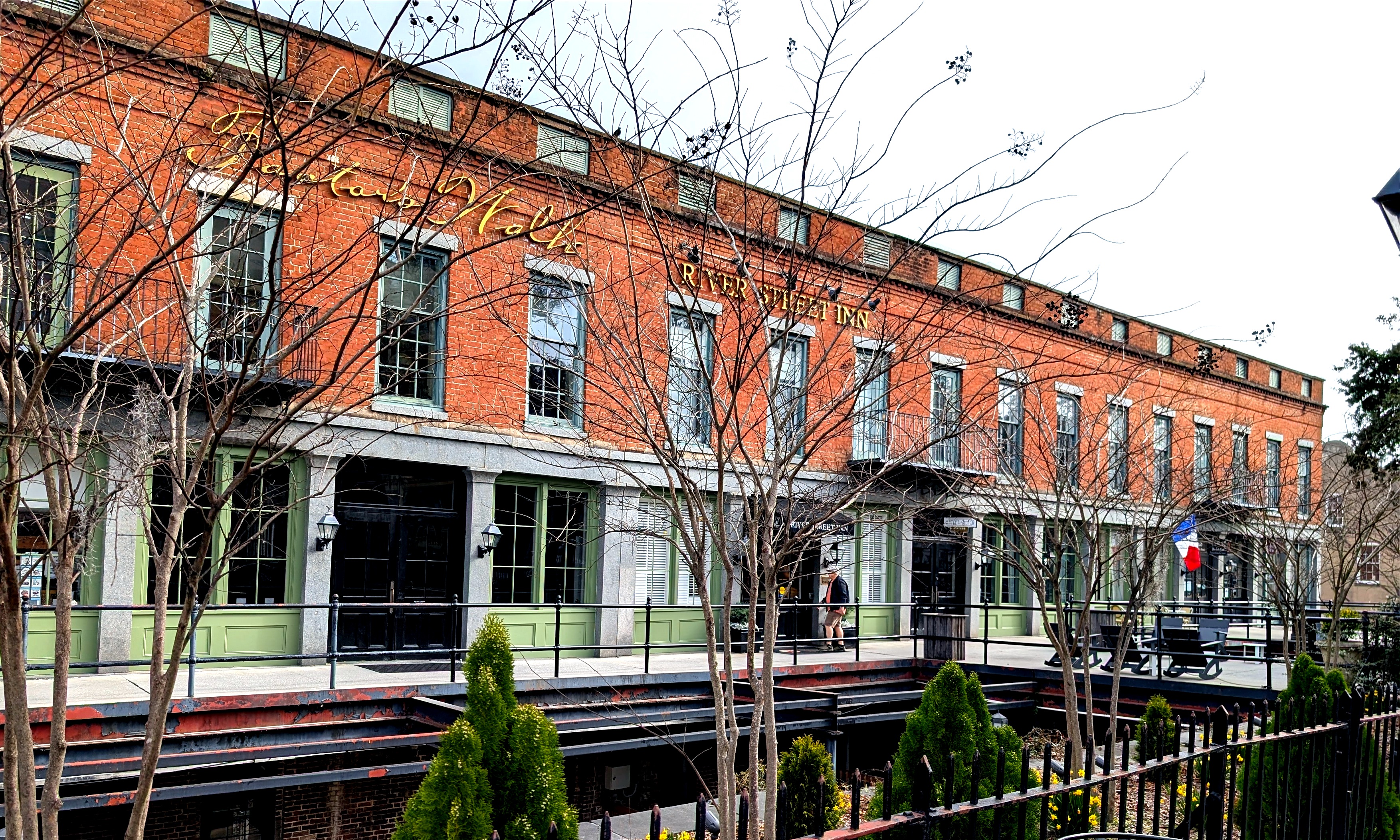
We’ve been to Savannah several times, at least twice directly on the riverside waterfront. I had forgotten how steeply the banks rise from the Savannah River. Our hotel is pictured (badly) below.
River Street Inn, Savannah, GA. March 2026.
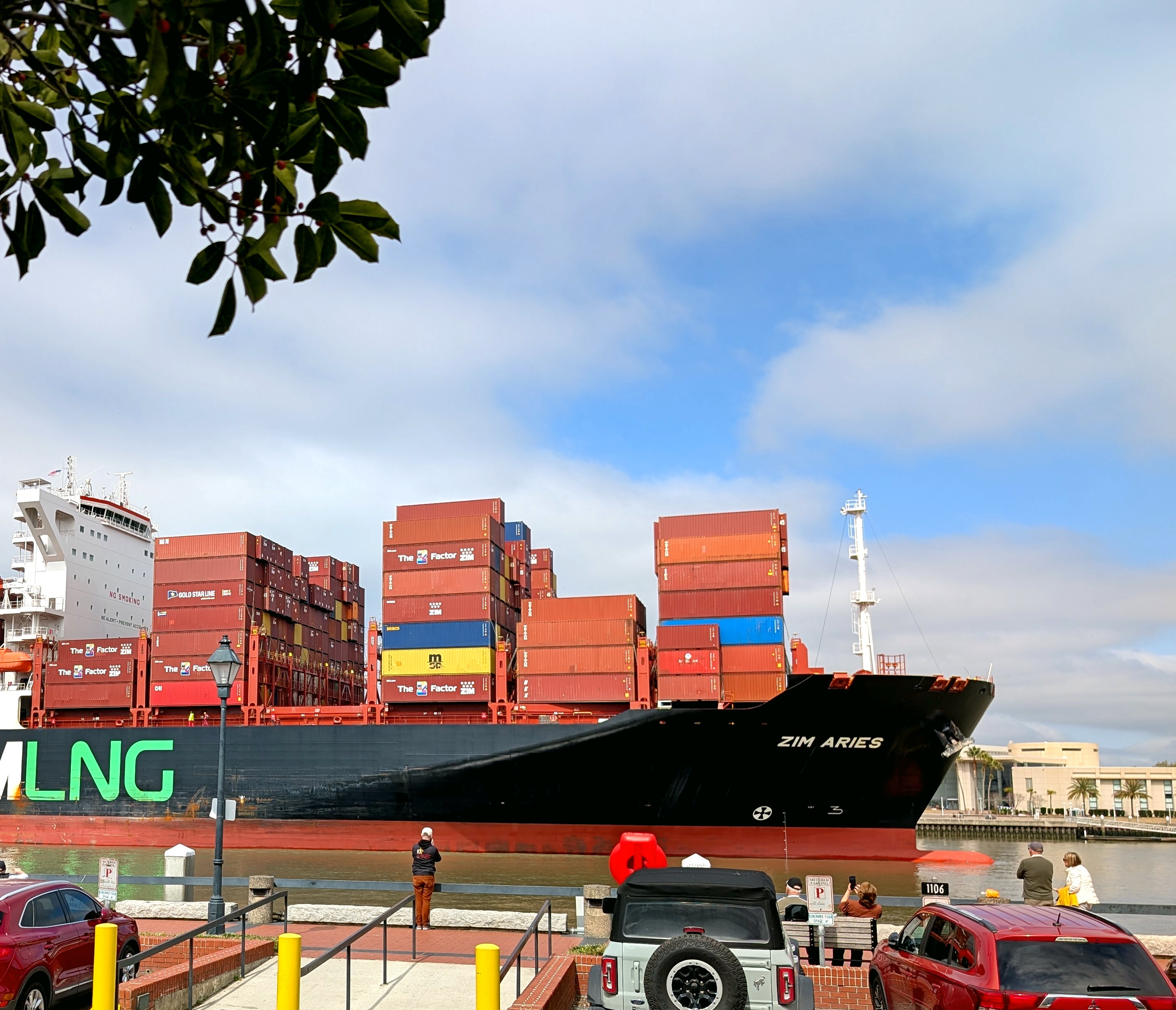
The green-painted storefronts are street level on this, the south side of the building. This however is the 4th floor because it is numbered from the north side where ships sail up the Savannah River to unload their containers and/or pick up new ones.
The Zim Aires on the Savannah River. March 2026.
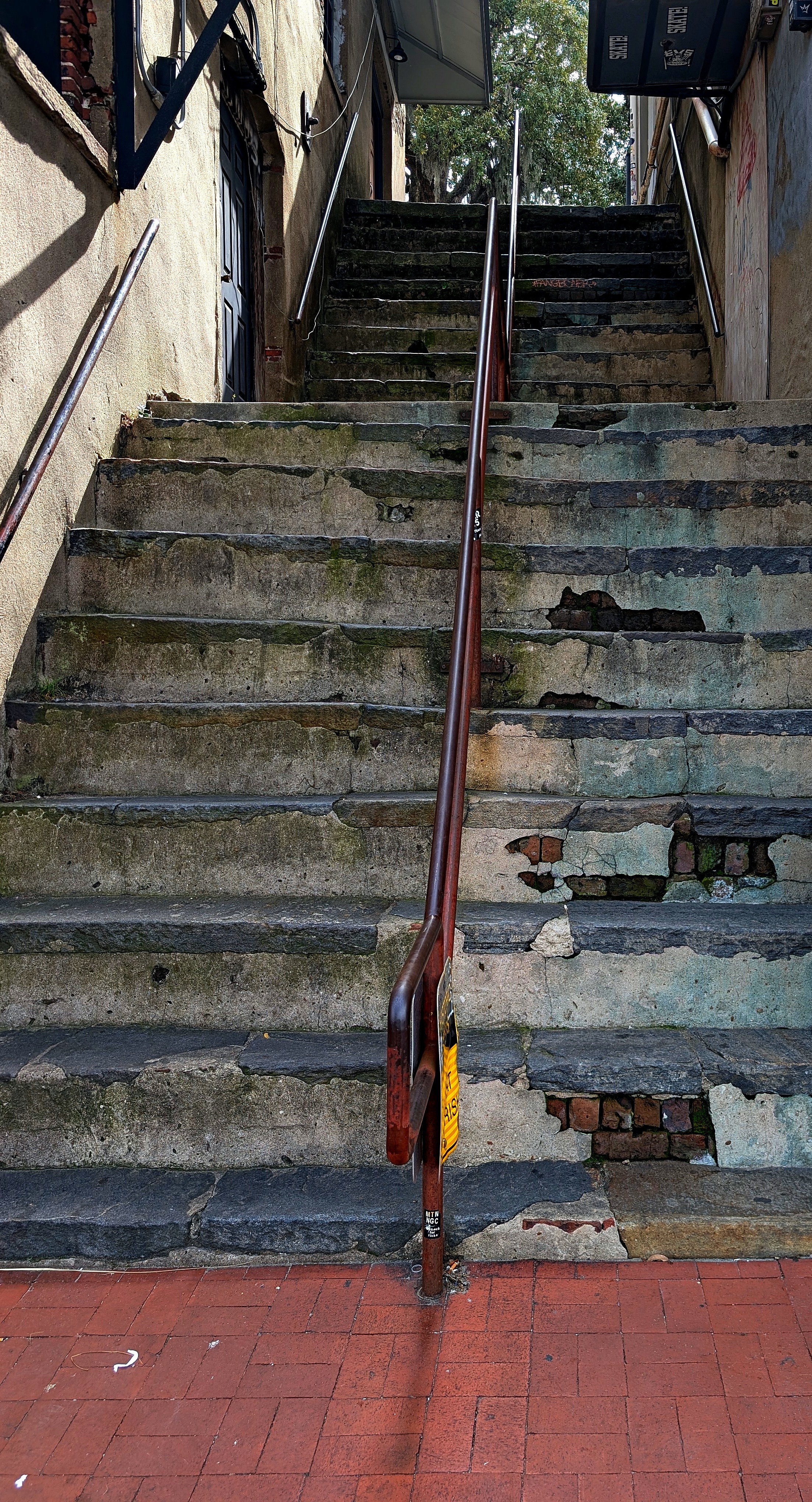
Indoors, one reaches street level by elevator. Outdoors? The steps are described as “historical” because I guess the tourism bureau vetoed “dangerous”.
Historical steps in Savannah, GA. March 2026.
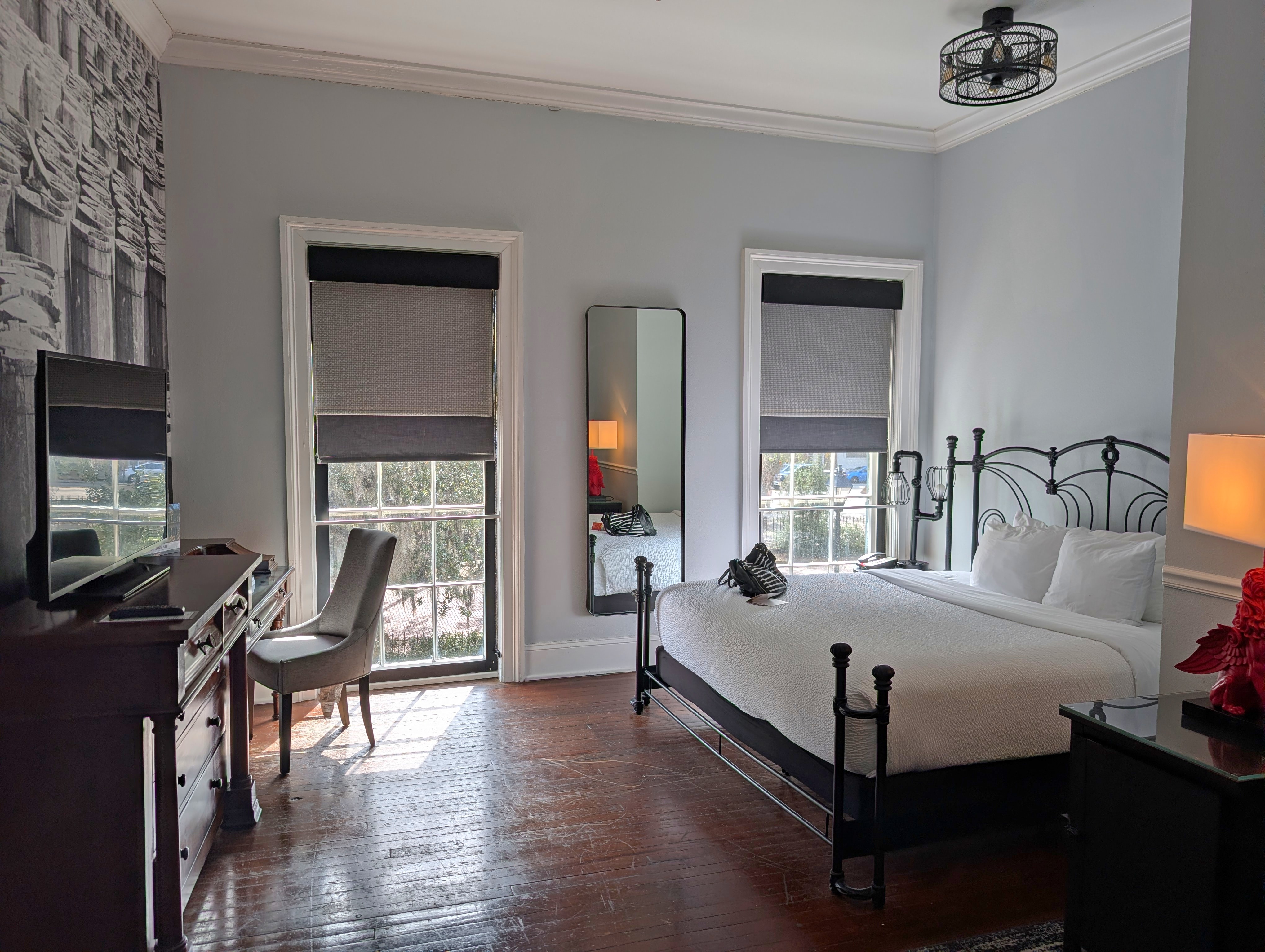
I like to splurge the last night out, and The River Inn didn’t disappoint (unlike the places we ate). The Manager’s Reception with open bar proved especially nice! The rooms have been carved out of what was an old warehouse.
Inside The River Inn in Savannah, GA. March 2026.
A crummy breakfast (from a restaurant related to but not managed by the hotel) sent us on our way through the Carolinas to home. A wonderfully satisfying and varied trip!
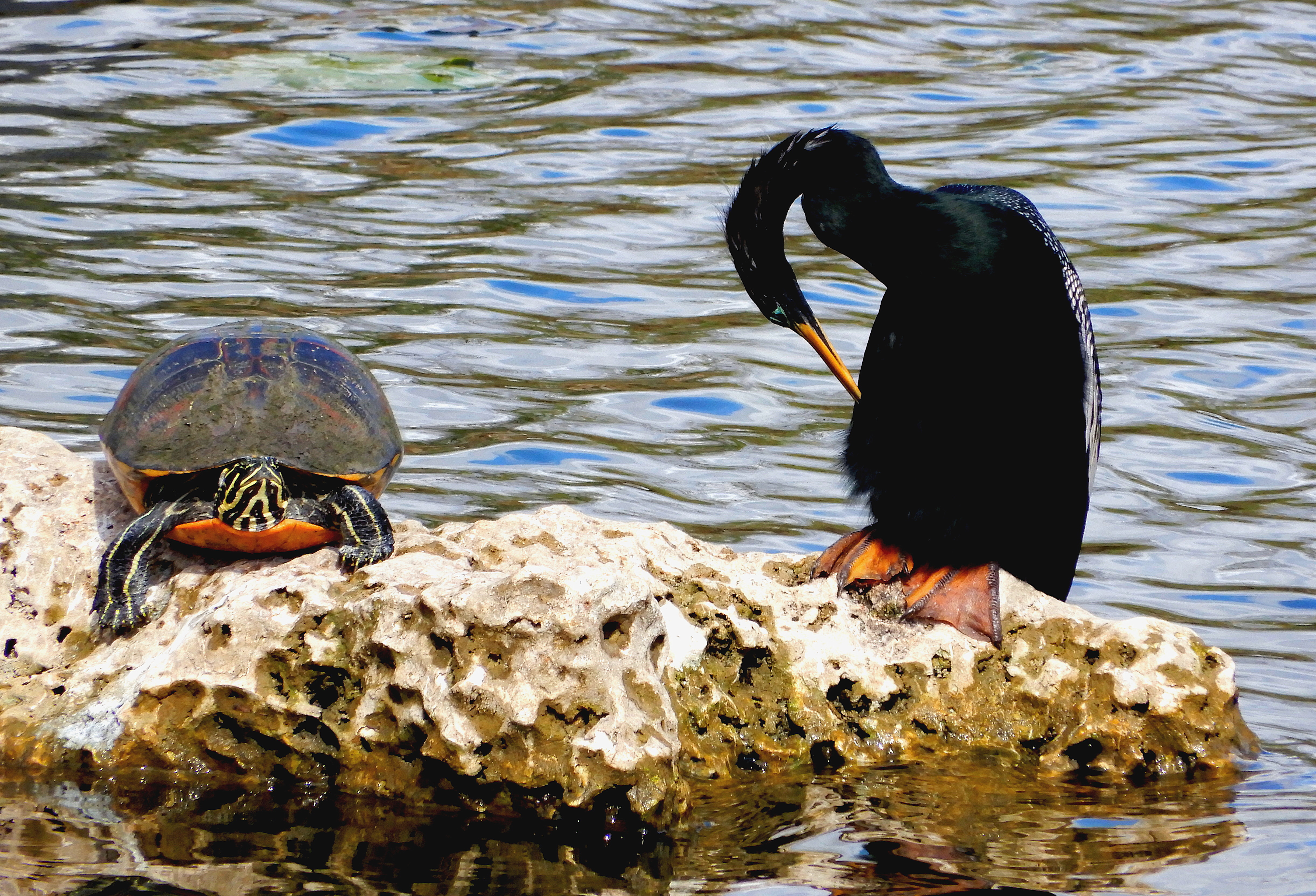
Florida Red-bellied Turtle (or Red-bellied Cooter?) with male Anhinga. February 2026.
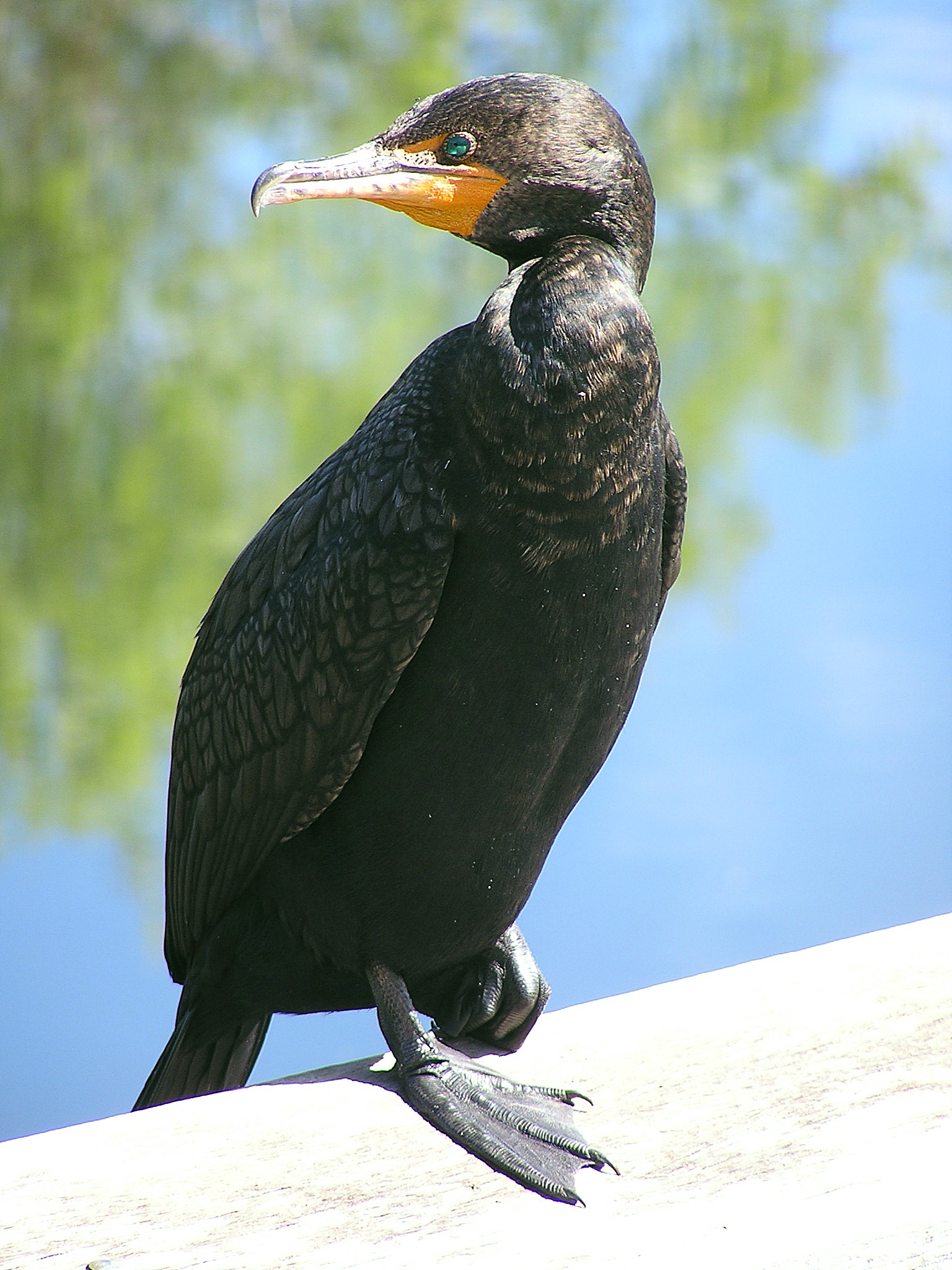
When I think of the Everglades National Park’s Royal Palm Visitor Center I immediately see two visions in my mind: a parking lot full of vultures and Anhingas. The first vision includes a non-identified carcass suspended from a lamp pole which supposedly kept the Black Vultures from eating the rubber off of your car’s windshield wipers. The second one looks like this:
Male Anhinga at Royal Palm Visitor Center. March 2010.
I snapped this photo on our previous visit to the ‘Glades in 2010, printed it out when we got home, and admired it for some years after. It represents what I like about southern Florida in general and the Royal Palm Visitor Center in particular: a person can get very close to many remarkable birds, reptiles, and amphibians. Here are some from our recent trip, which like the first one, didn’t disappoint…
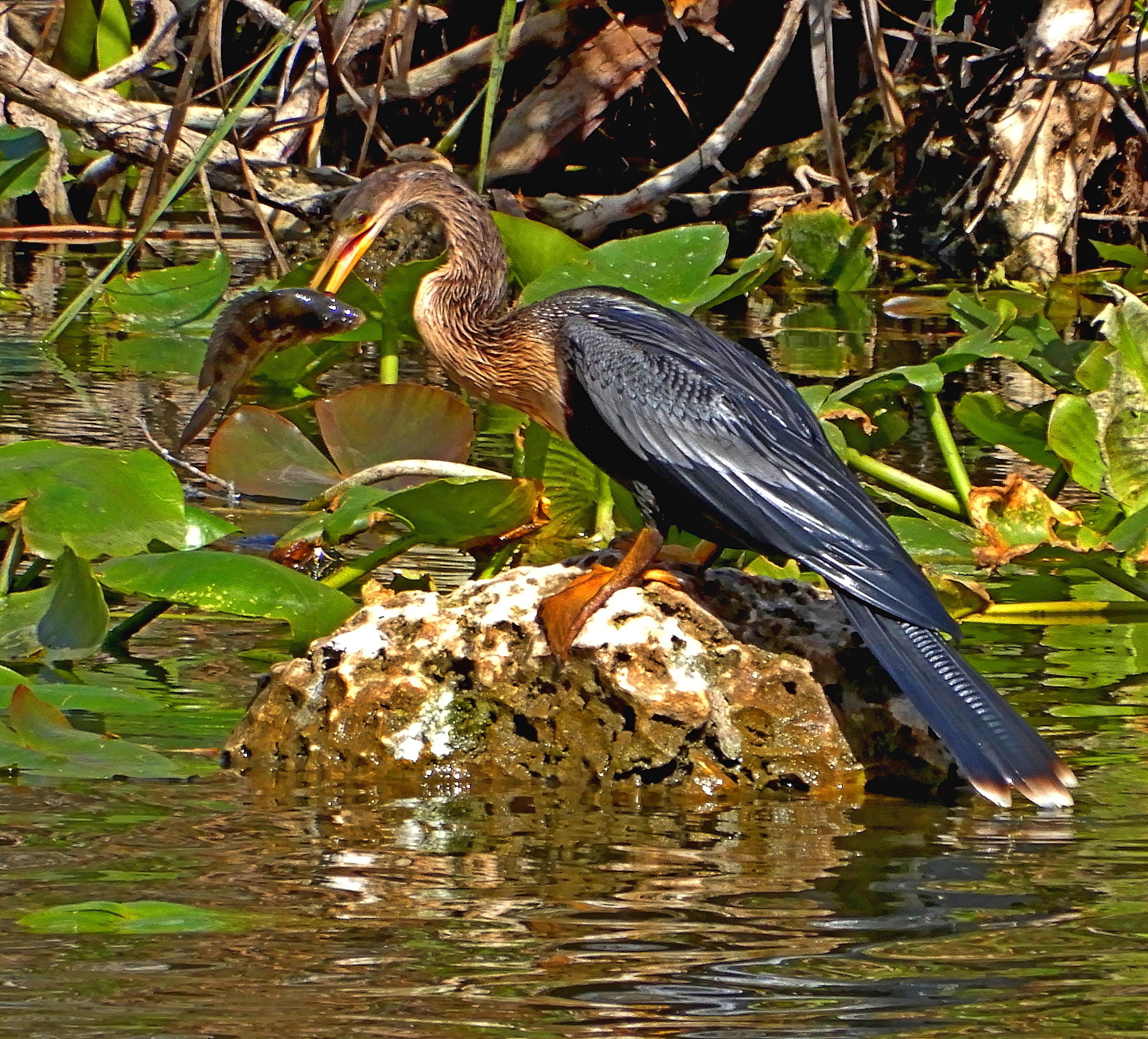
Female Anhinga with fish. February 2026.
We had barely arrived to the center when we watched a female Anhinga stab a fish. She then spent five minutes or more attempting to figure out how to get it off of her beak without losing the fish altogether. She did eventually succeed. The photo looks strangely colored because I heavily tweaked the contrast parameters to bring out the fish.
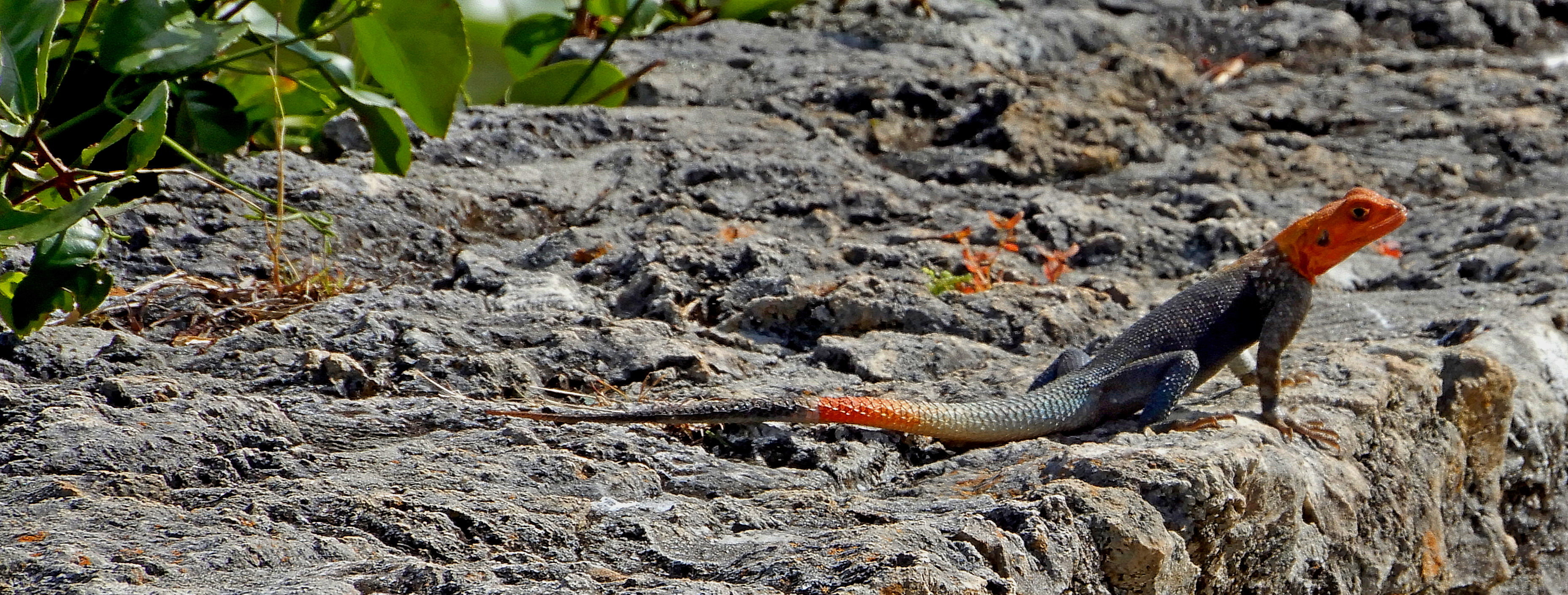
A beautiful Peters’s Rock Agama. February 2026.
Sadly, the photo above shows a gorgeous male Peters’s Rock Agama. Sad because it’s an invasive species from Africa that’s out-competing local lizards. Yes, there are two S’s because it’s named after a biologist named Peters. He’s perched atop a rock wall bordering the walking area outside the center itself. In other words, it only took a bit of telephoto and my being ready to snap the shot when he stopped for a second. They’re skittish.
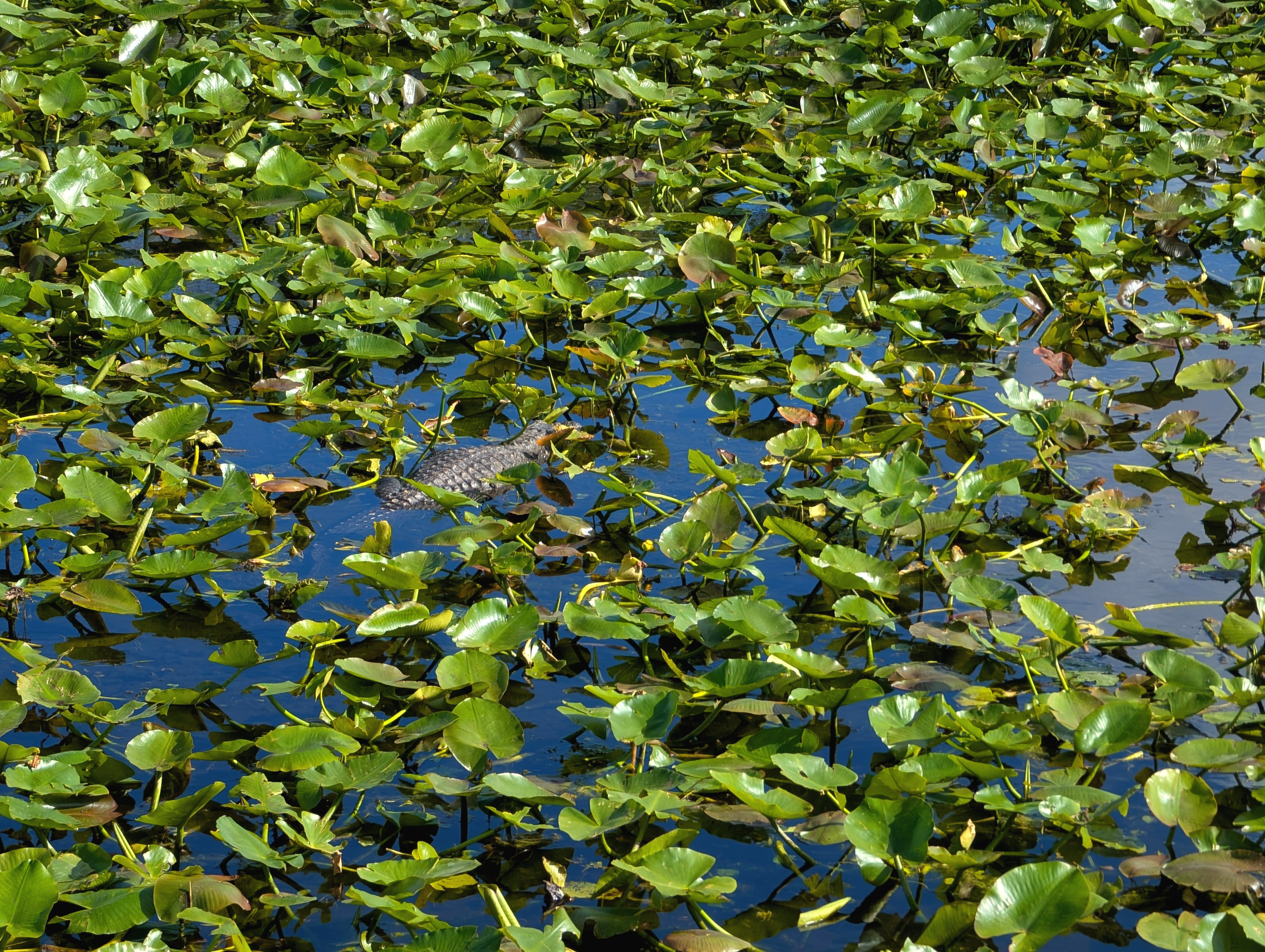
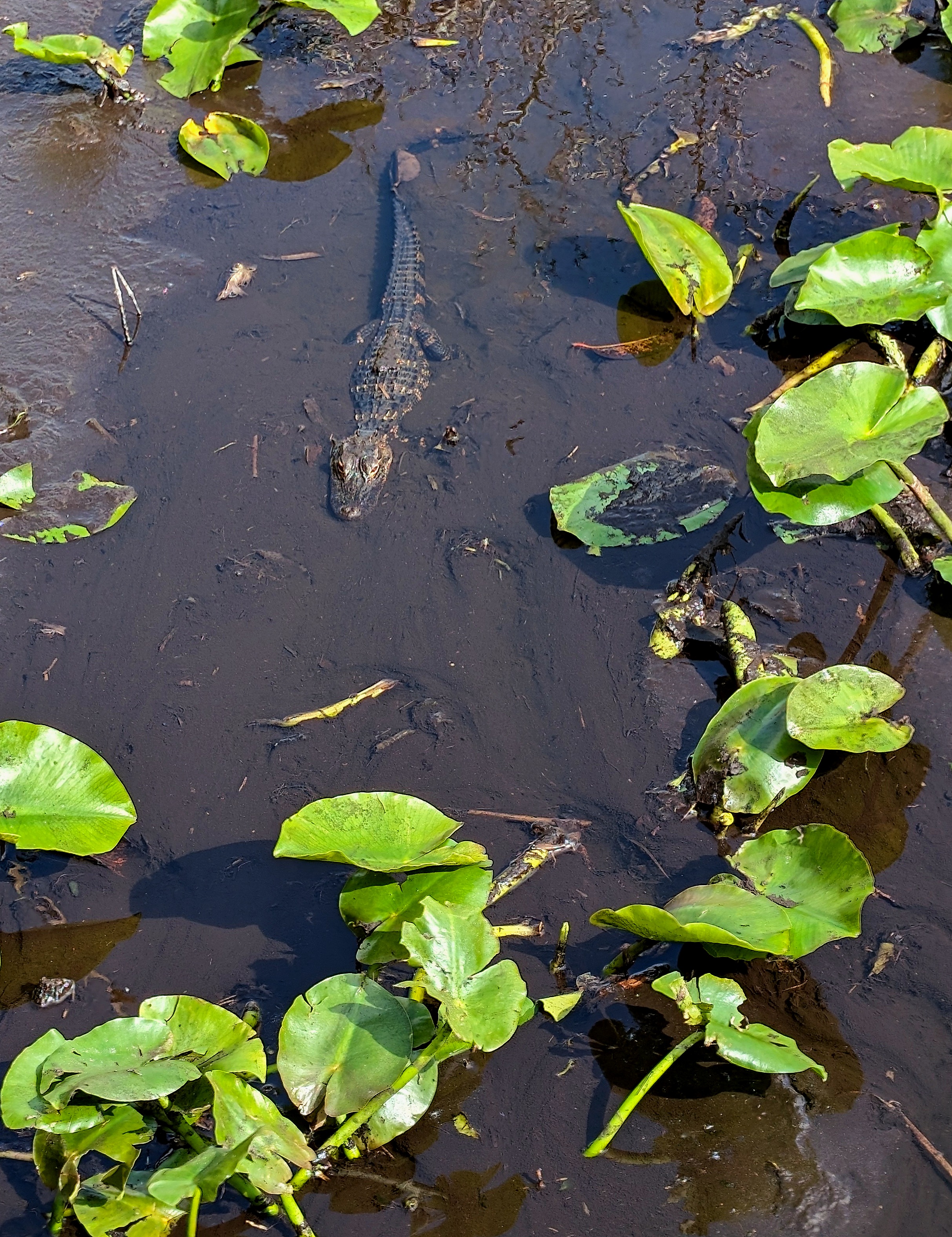
In the center of the walk visitors can access several viewpoints around a large, lily pad-choked pond. Surveying the pond, one can pick out alligators here and there…
Lily pads with gator. Royal Palm Visitor Center, Everglades National Park. February 2026.
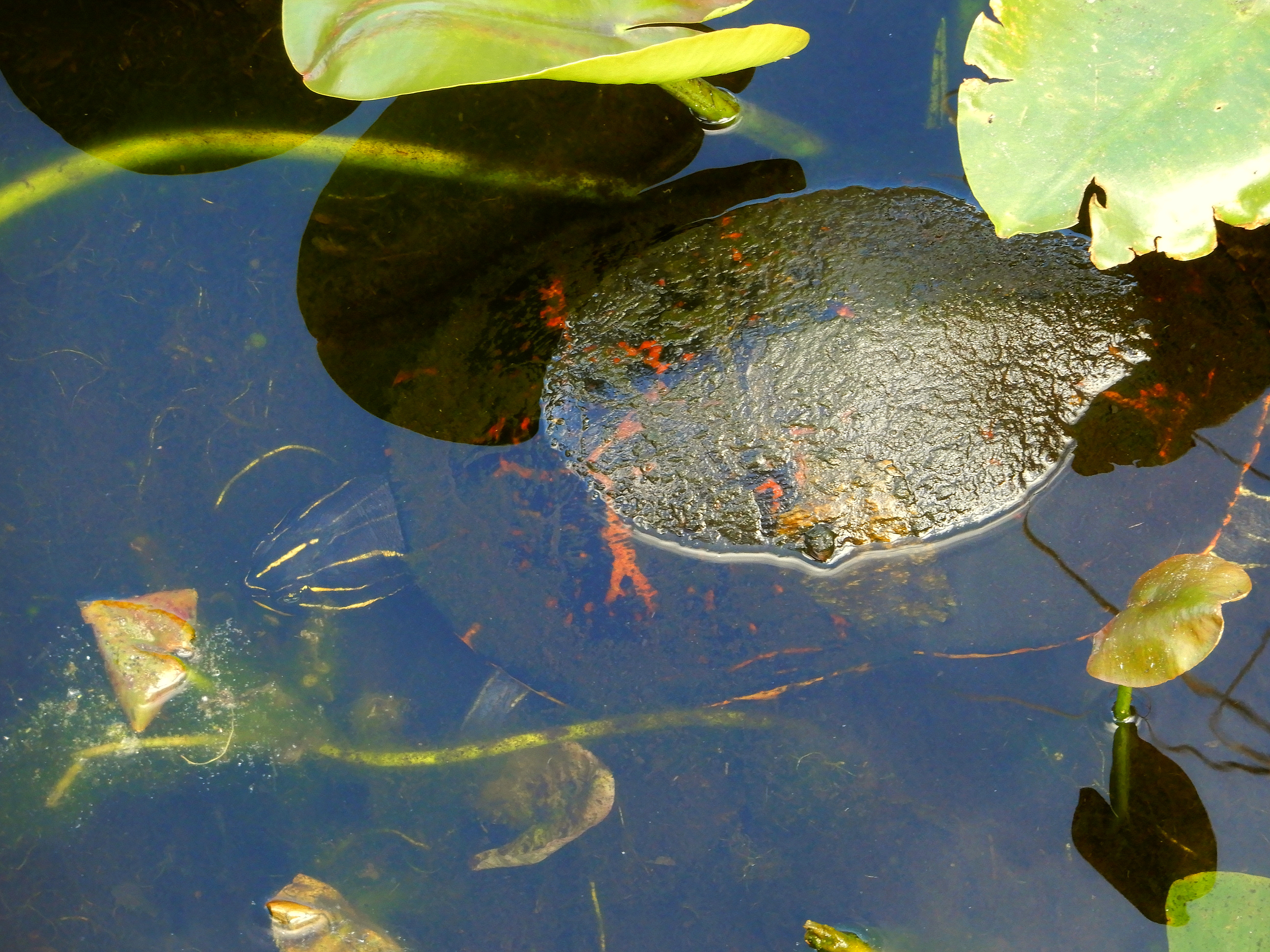
Sharper eyes spot turtles…
Everglades National Park. February 2026.
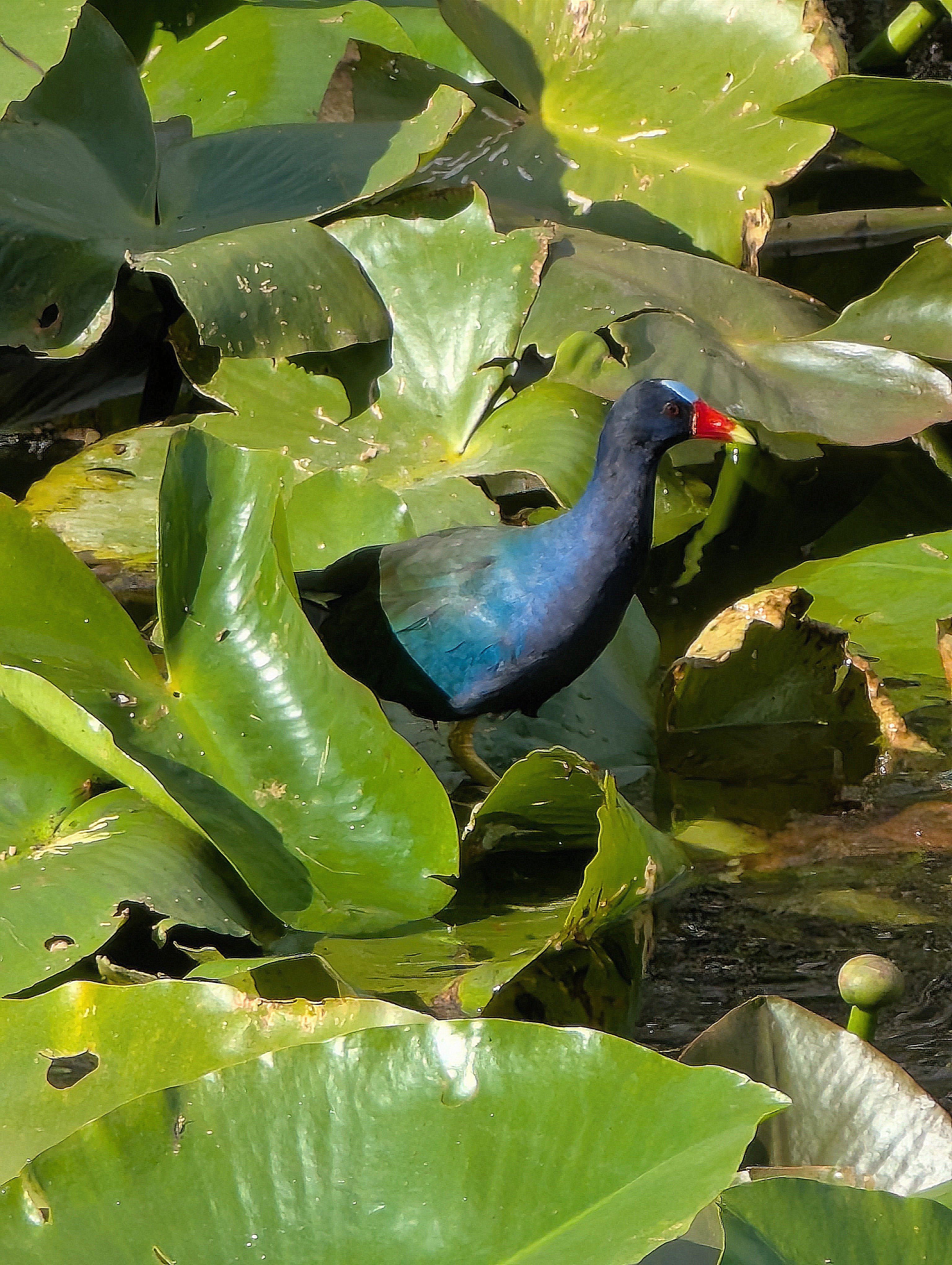
And running across the lily pads are the most striking little birds! Behold, the Purple Gallinule:
Purple Gallinule (adult). Bright yellow legs not shown. Everglades National Park. February 2026.
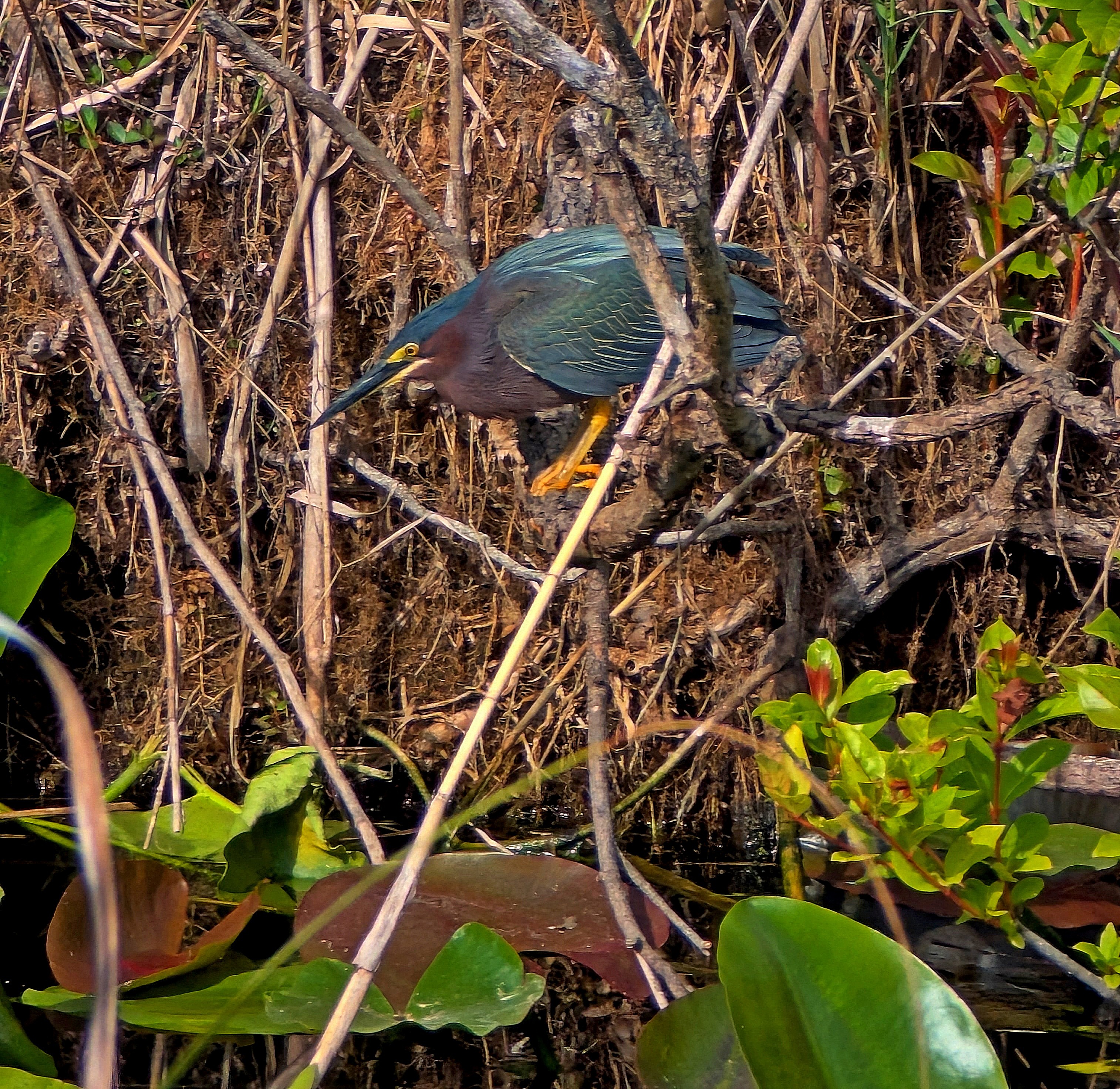
When birds abound I tend to ignore the rest of my photographic subjects. I apologize to myself, and I promise to make something of a few of those photos which haven’t made the cut this time. To carry on, though: I had a good time “stalking” this Green Heron in an attempt to get a shot where it held still.
Green heron. Everglades National Park. February 2026.
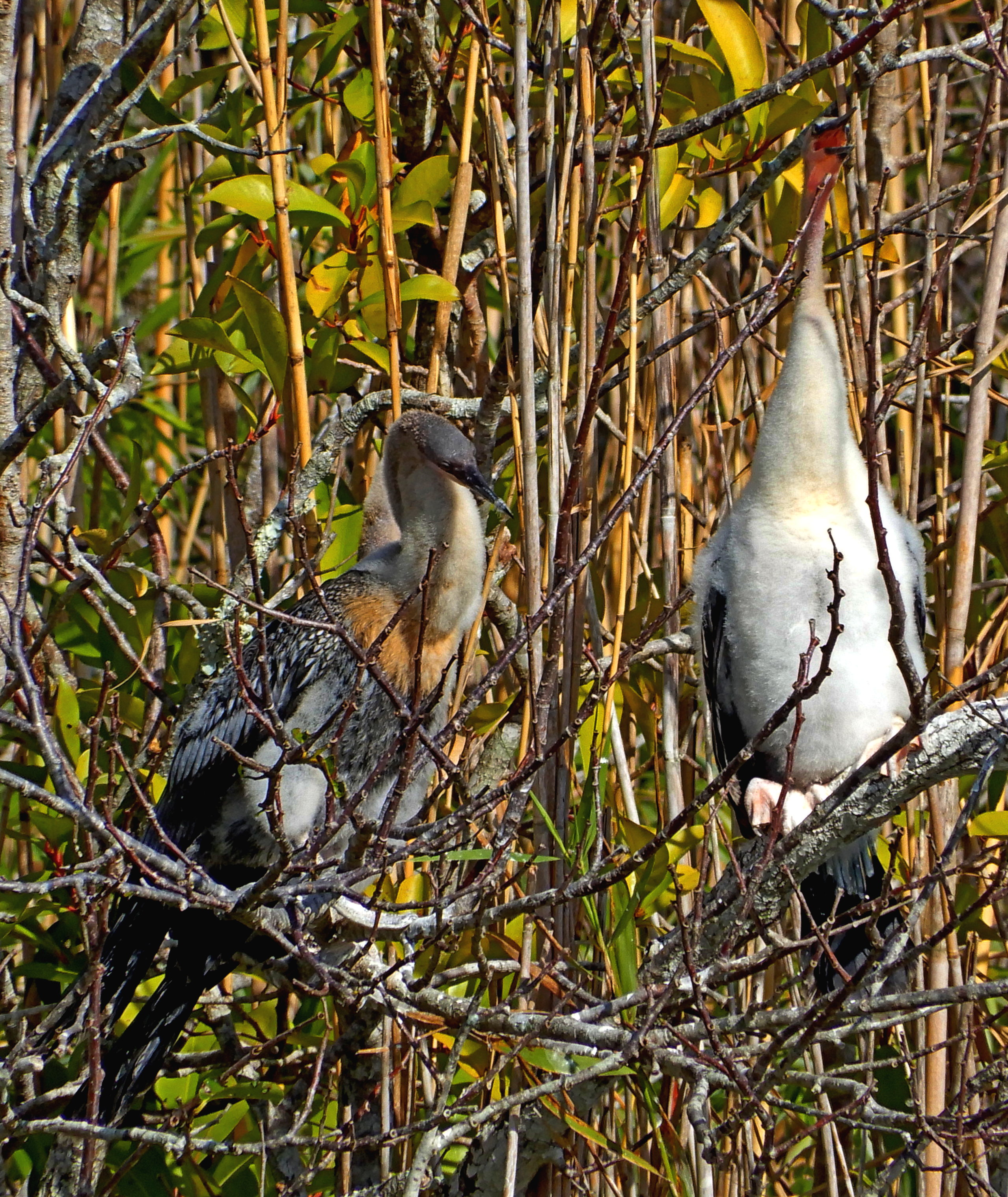
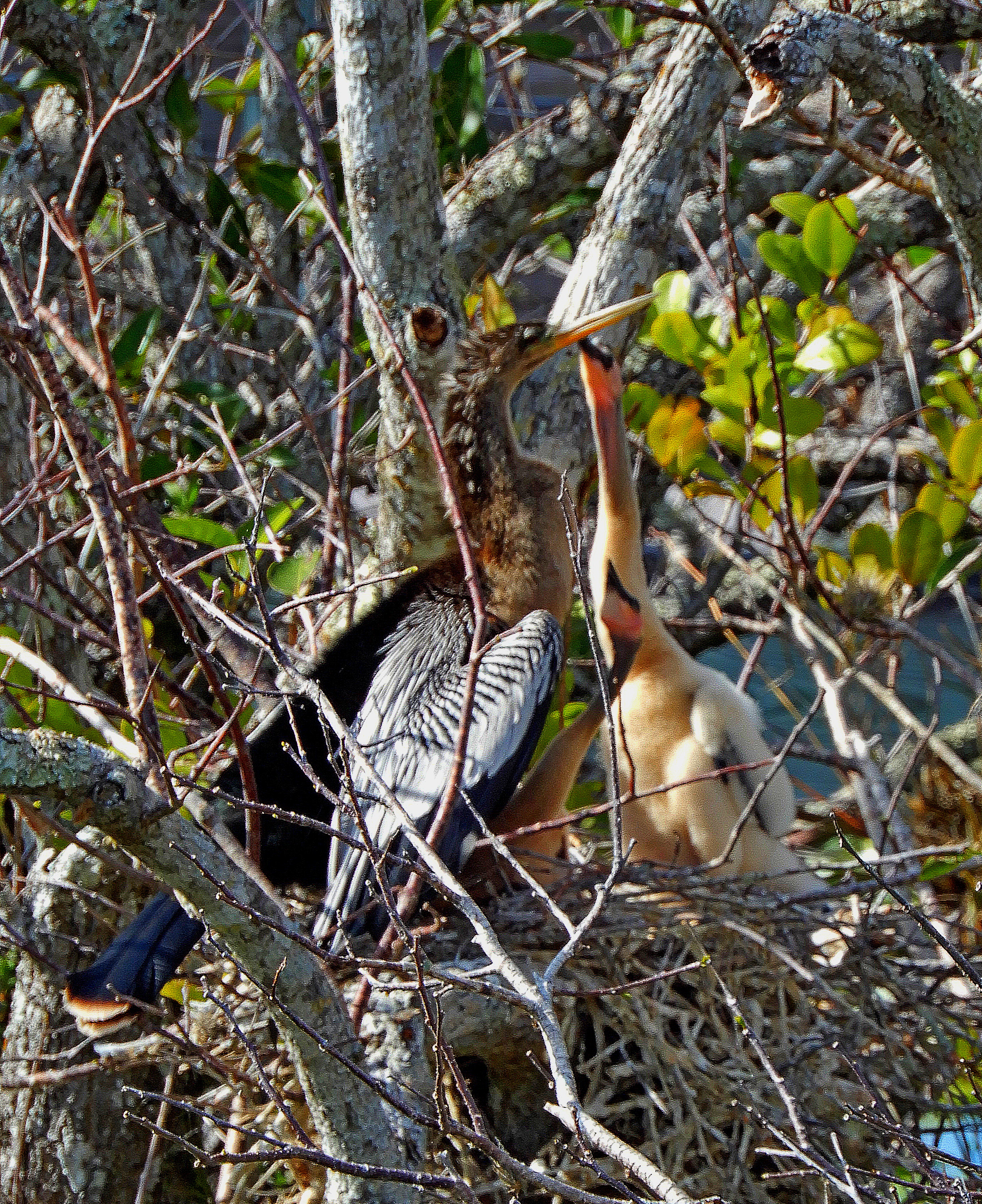
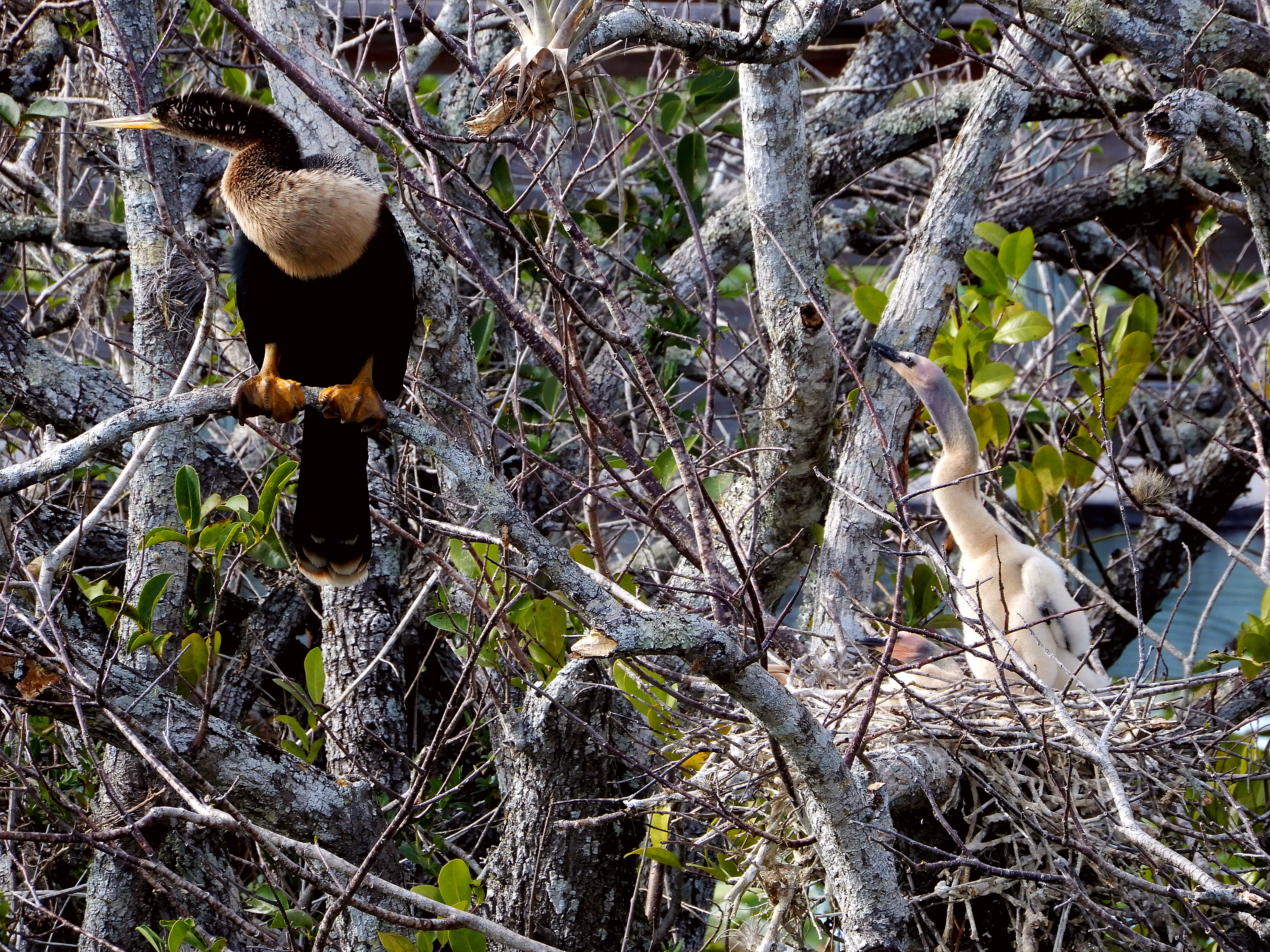
One benefits in several ways when a visit to the Everglades occurs in the so-called winter months. It’s usually warm enough for shirt sleeves; mosquitoes have disappeared; manatees congregate in the warmer waters near the shore where people can see them (sorry, no good photos of those, I’m afraid); and in late February and March young fledglings have been born. This striking set of shots caught me by surprise. I’ve never seen a family of Anhingas before. Frustratingly, they were located across the pond and partially hidden in the branches of the trees. I don’t usually publish out-of-focus photos but this old man couldn’t get the shot at that zoom level with no tripod/monopod or grip.
Female Anhinga with juvenile. Everglades National Park. February 2026.Female Anhinga with two fledglings. Everglades National Park. February 2026.Female Anhinga and juvenile. Everglades National Park. February 2026.
As we left the pond and headed back to the parking lot, I looked for the little gator we’d seen on our way out. Only three to four feet long, it had found refuge in a shallow bit of water no large alligator would deign to look at. It had disappeared, found its way elsewhere just as we planned to do. Will I visit again? Unsure. There are so many places to go in the world. It had been 16 years since our previous visit; 16 more years and I’ll be looking at my 88th birthday (Lord willing). Tough to say.
Small alligator in a few inches of water. Everglades National Park. February 2026.
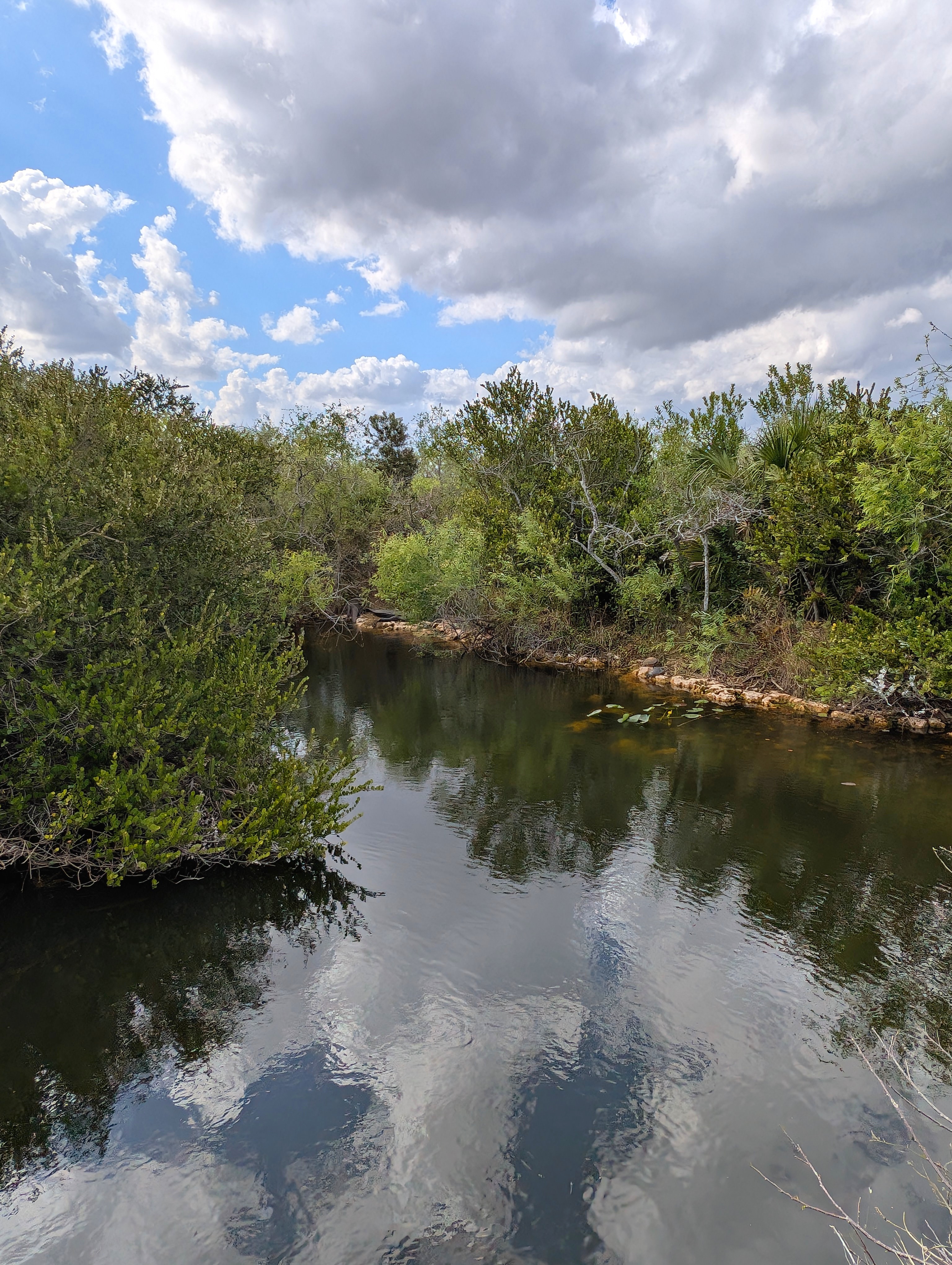
View from Shark Valley Visitors Center, Everglades National Park. There are two alligators in this photo. February 2026.
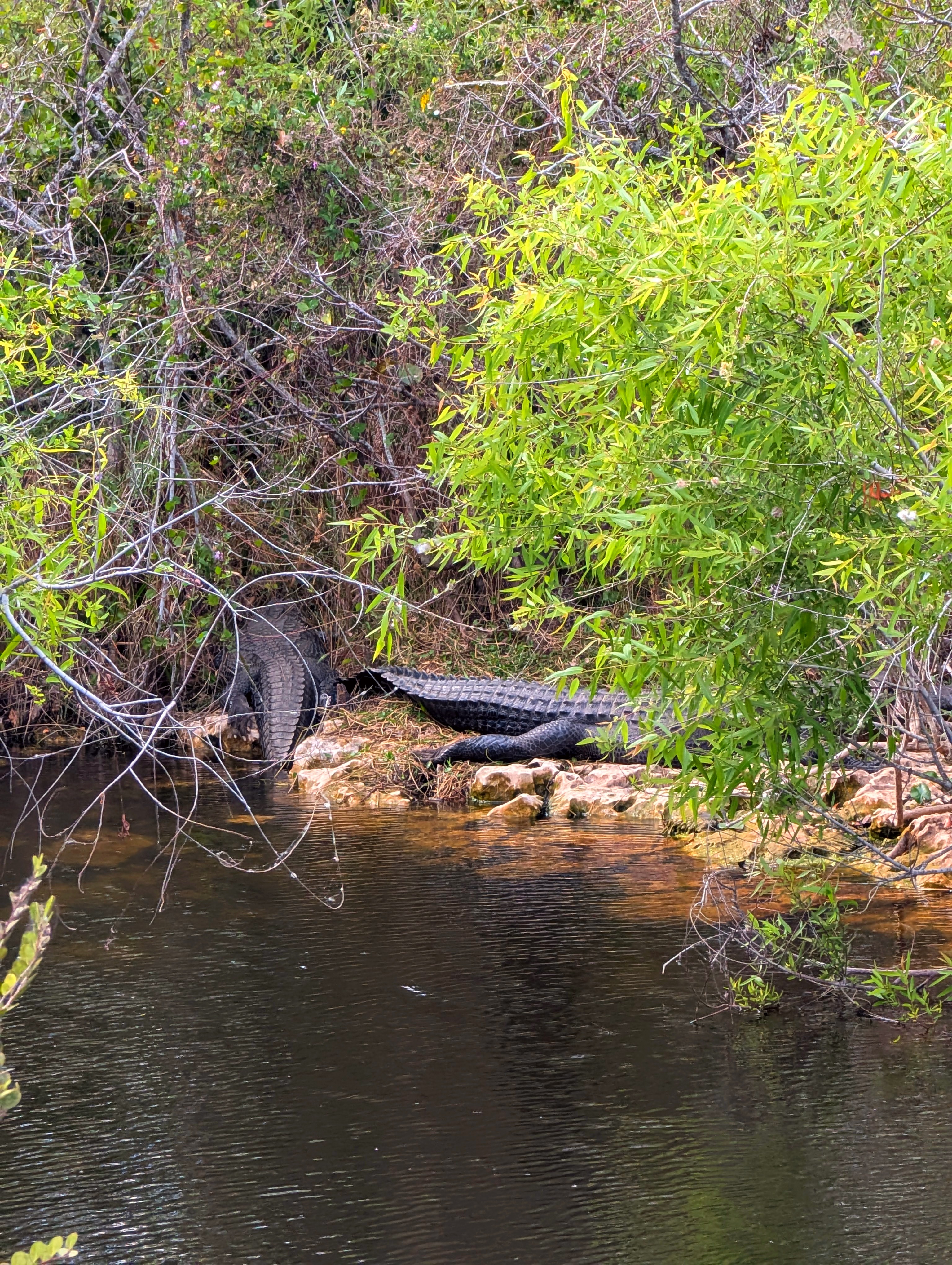
Technically we re-entered the Everglades National Park at the end of our day in the Big Cypress National Preserve, stopping at the Shark Valley Visitors Center at the end of the afternoon. We didn’t want to take the tram ride to the actual Shark Valley viewing tower, which left us little to do there. Another hour brought us to Homestead, FL. I discovered a Cuban restaurant next door which delighted me a great deal. But first, where are those alligators in the photo above? Look up that slough in the center of the photo. On the far bank? Just above the light-colored shoreline? Here’s a zoomed in photo:
Alligators at Shark Valley Visitors Center. February 2026.
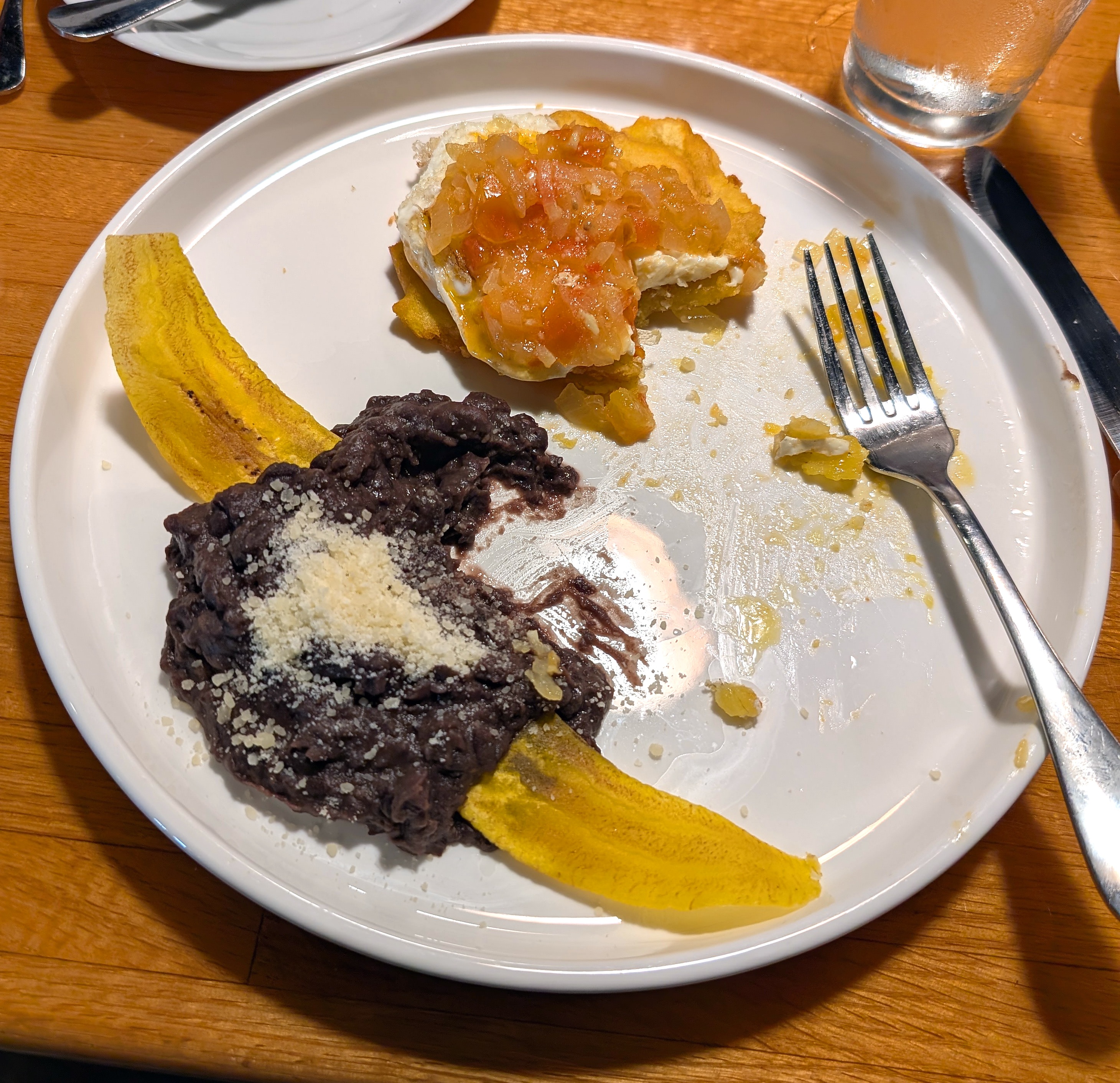
We hit up the Cuban restaurant for breakfast, easily besting the hotel’s “continental” offering, then headed to what I still regard as the heart of the Everglades—the Ernest F. Coe and Royal Palm Visitor Centers and the road which leads deeply through the park until it reaches Flamingo where one can stare southward at the Florida Keys. We arrived just as the Coe center opened then headed southward.
Huevos rancheros, Cuban-style: plantain pancake under the egg and a fruited salsa atop. February 2026.
After spotting a half dozen or so school buses in parking lot, we decided to visit Royal Palm at the end of our day, on the way back out of the park. Quietly spotting wildlife with a hundred or so elementary students alongside (we checked) seemed to be mutually exclusive. We stopped at some of the major sights on the way south, a few on the back out.
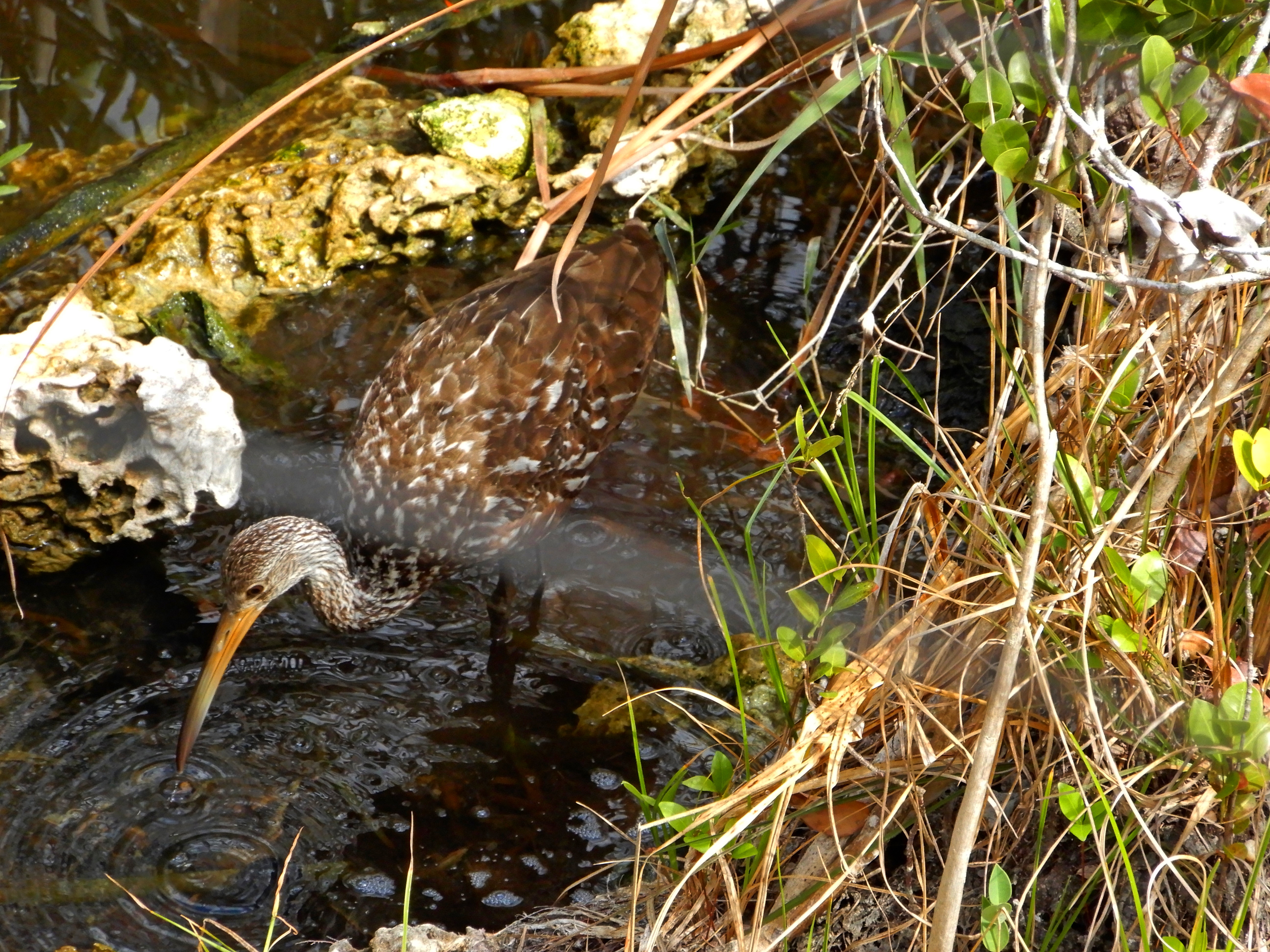
A juvenile heron. Not sure which one. Looks like a Black-crowned Night Heron, but those don’t have the yellow/orange beak. Closest I can come would be a Tricolored Heron but it doesn’t seem to be quite like this patterned brown. February 2026.
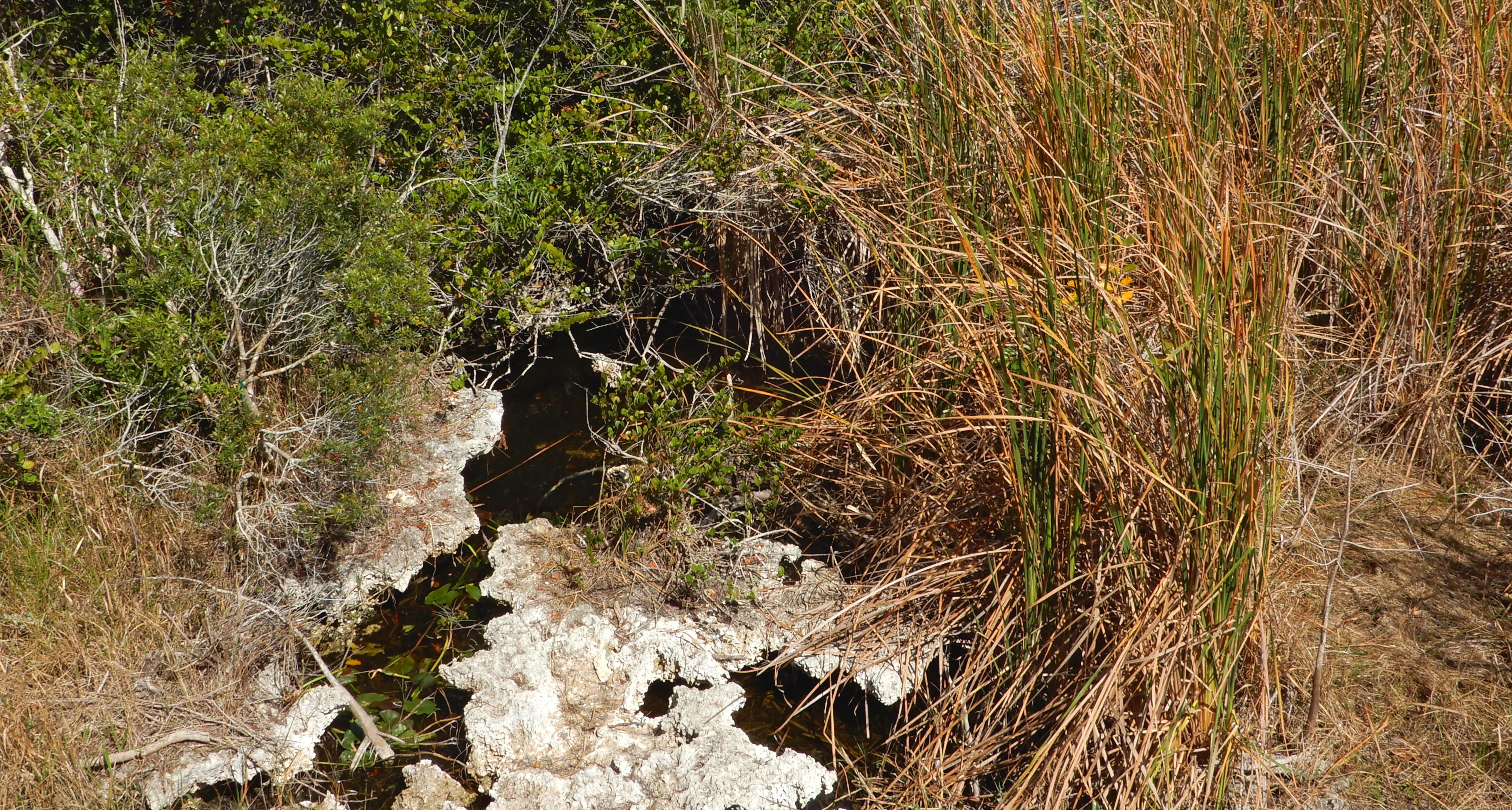
Small drainage creek at the Pa-Hay-Okee Lookout Tower, Everglades. February 2026.
My wife spotted a heron jumping in and out of the darkness of a creek at Pa-Hay-Okee Lookout (left and above). I needed a telephoto to see what she was talking about!
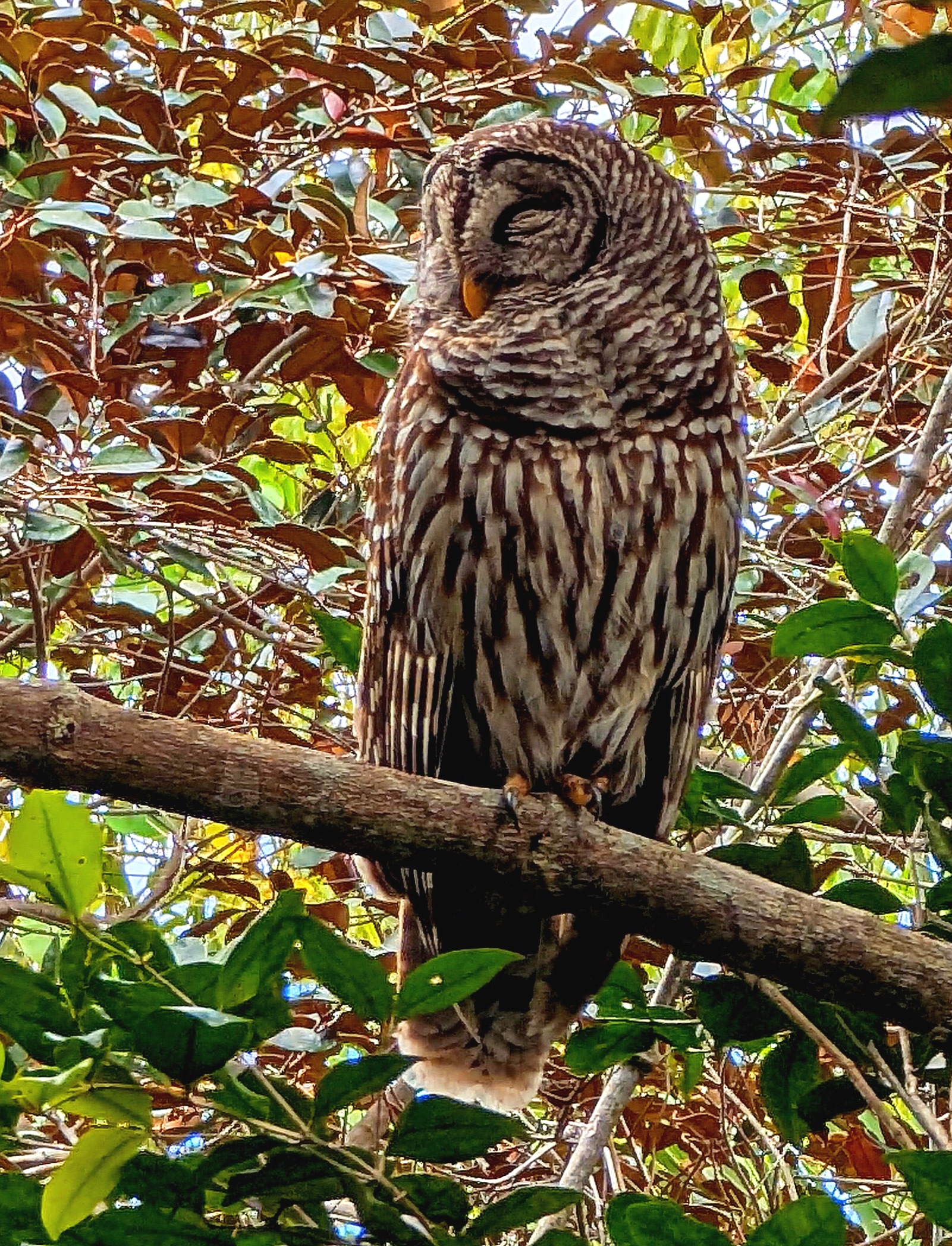
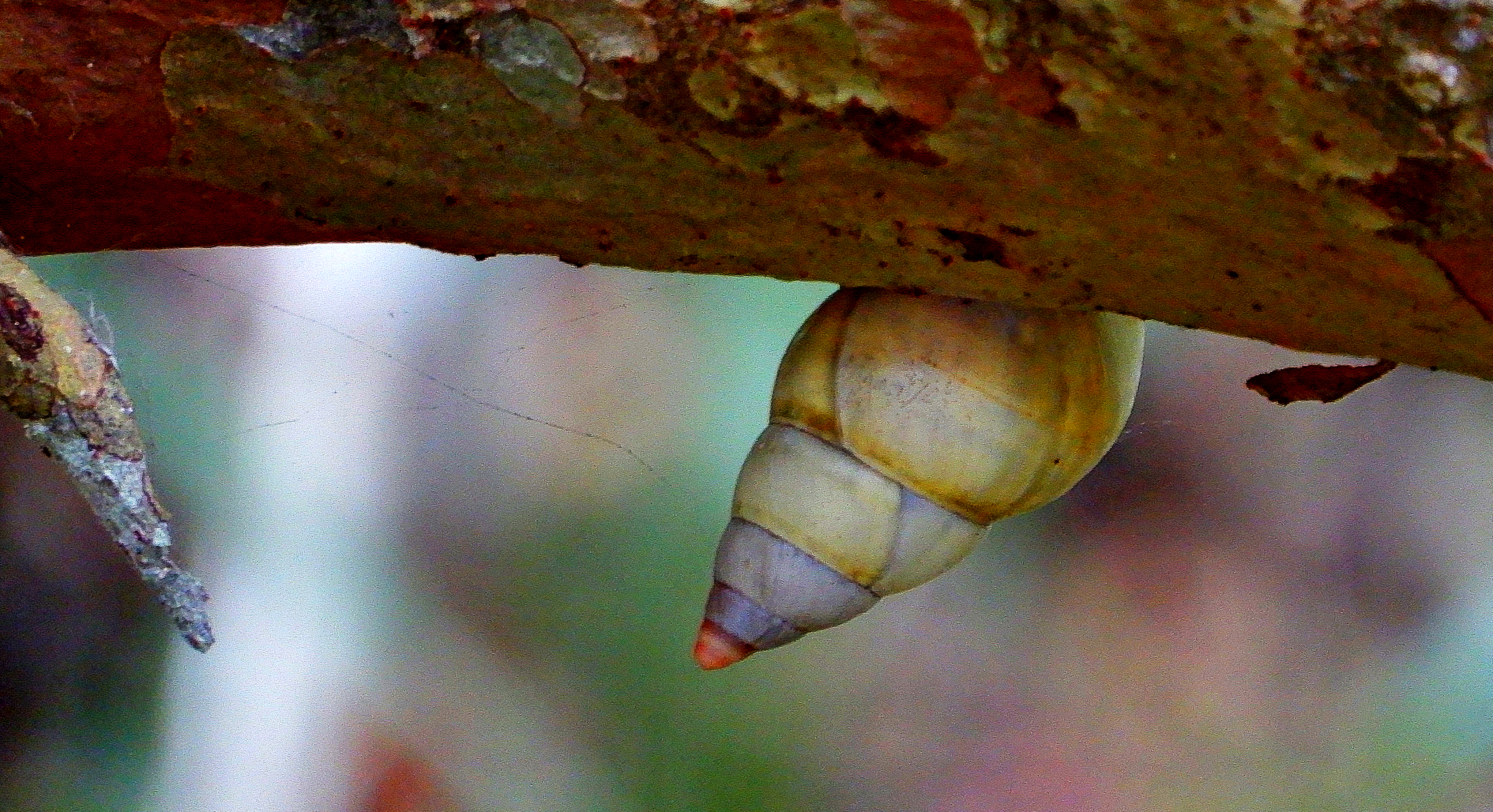
We spotted a barred owl at the Mahogany Hammock walk. While watching him (nearly positive this was a male), we were treated to a call-and-response with an owl we couldn’t locate. This apparently is classic barred owl behavior between a male and female. A sharp-eyed teenager pointed out a snail which I had difficulty locating even after she had described the location. Other attractions at this stop included huge root systems seen from underneath because hurricanes had blown them over in the past.
Barred owl at Mahogany Hammock. February 2026.
Tree snail at Mahogany Hammock. Approximately two inches. Everglades, February 2026.
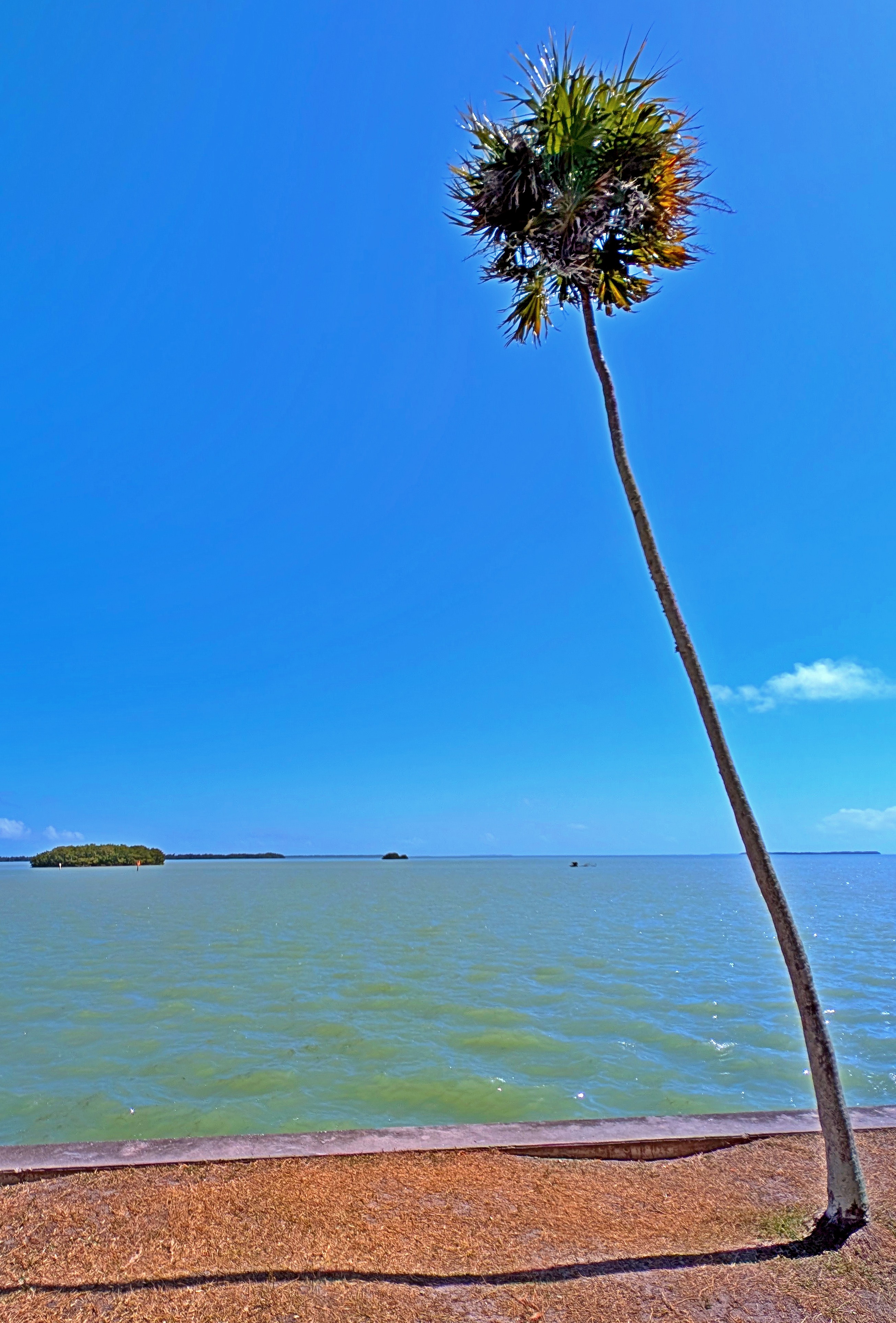
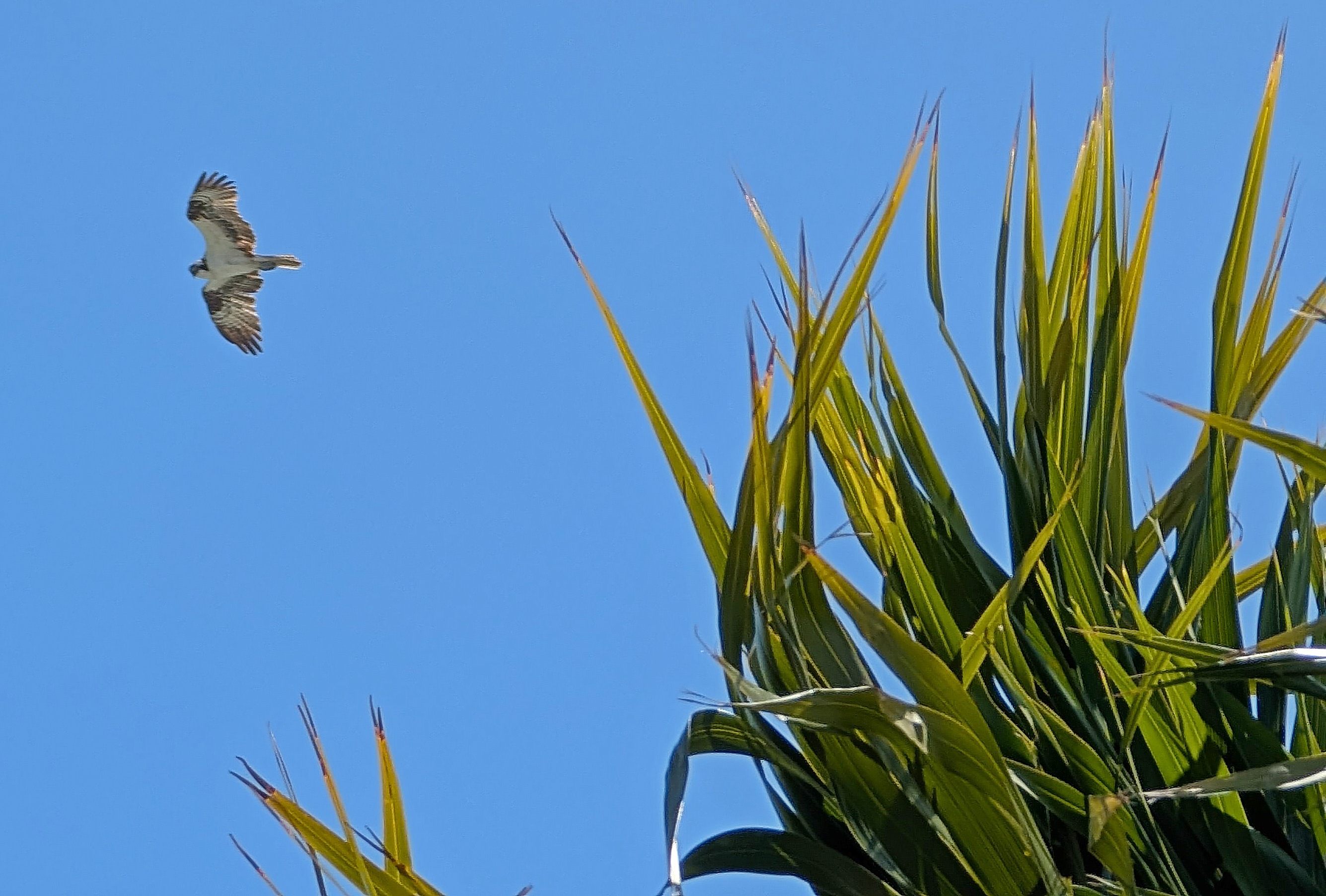
We arrived at Flamingo a bit tired. Thankfully the best thing to do there involved sitting and staring at the shallow waters leading out to the Keys—unless you wanted to take a boat charter which we had done in the past. We spotted an osprey flying back and forth over the shoreline waters, and we saw the near-ubiquitous flock of White Ibises. Then we drove north again.
A stylized view of the Keys. Flamingo, Everglades. February 2026.
Osprey at Flamingo, Everglades. February 2026.
We turned around and drove north toward the Royal Palm Visitors Center, hopefully now without the youngsters. Royal Palm deserves its own post, however, so we’ll bring this to a close.