Mild

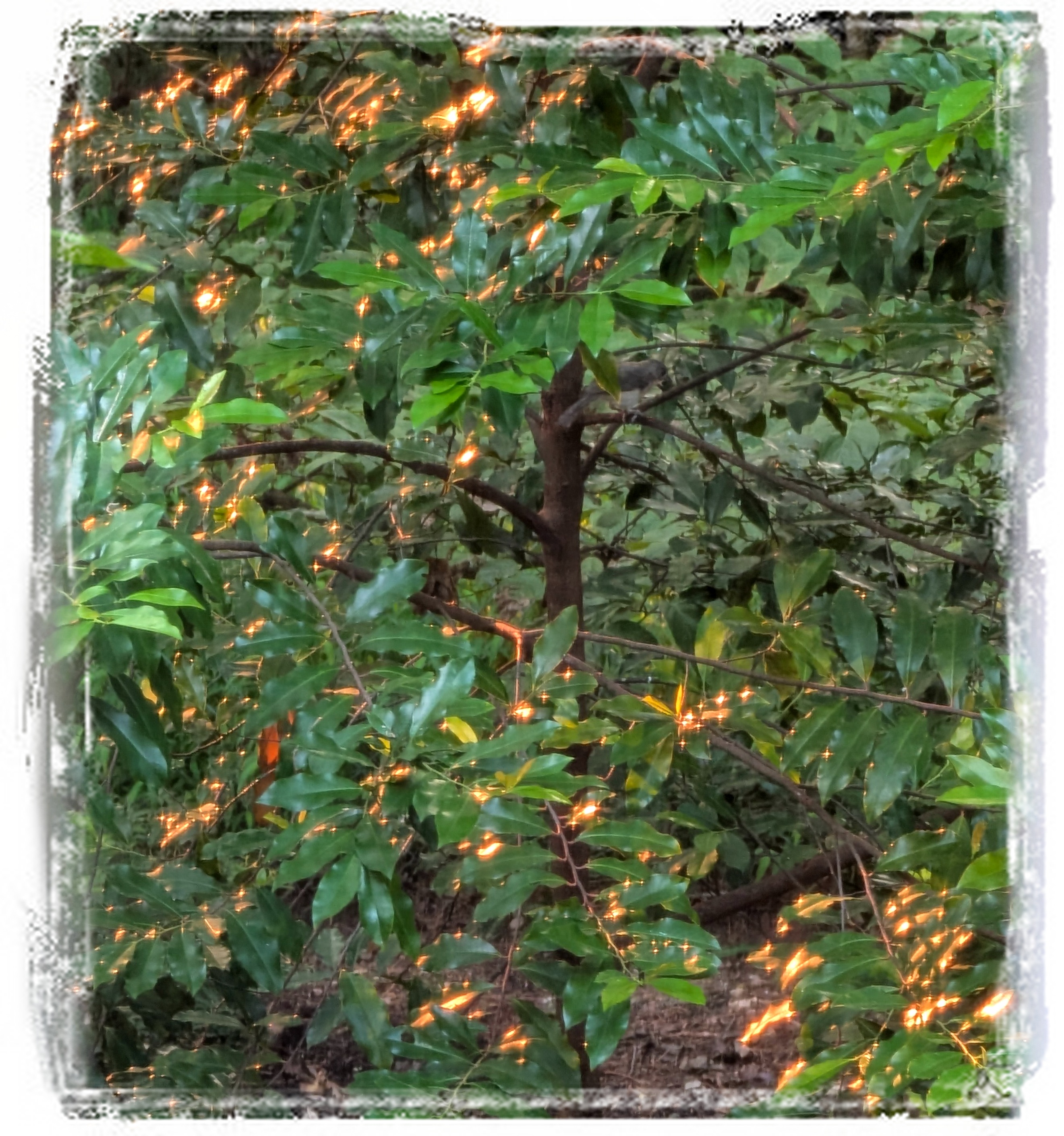
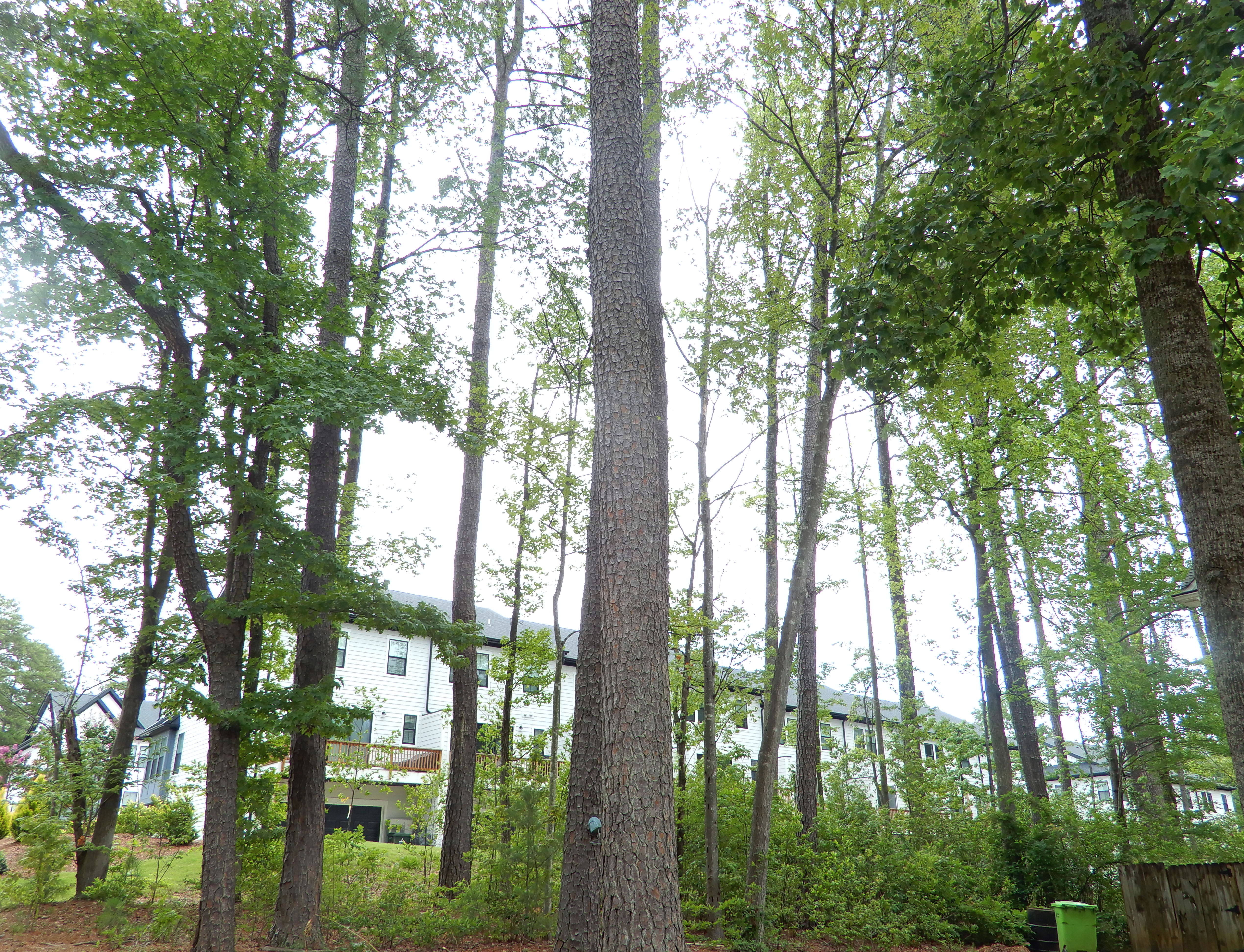
Morning sun strikes leaves of American (Carolina) beech–at least that’s what my plant ID app says. The temp was cool but not brisk around 8:00 a.m. September 2025.

Our weather this summer has been a bit topsy-turvy to me. June’s usual onslaught of highly humid, hot days which normally starts after my birthday on the 8th, arrived instead in the final days of May. July, a month that has seen weeks-long streaks above 100 was hot again but avoided the triple-digits. The official high temps, nevertheless, hit the 90’s every day but two, and we started to collect our normal rainfall (in fact, a little extra).

August, though, should have continued the hot weather and brought some brushes with tropical storms. Instead, the month opened with a high or 86, then 79, and high temps stayed in the 70’s six more days after that. We collected over 5.33 inches of rain in the first 11 days. The entire month easily bested our normal rainfall total 7.99 inches versus 4.71 inches. We saw the 90’s only once, on the 17th, when the thermometer got to 92 while we were in Belgium. The weirdness continued when the humidity broke weeks early—usually it’s the second week of September—and overnight lows descended into the 60’s and 50’s never to rise above 70 again as I write this on the 12th.

As mentioned, September normally sees the departure of high humidity and the extension of lovely days in the 80-85 degree range. Instead, we started with lows in the 50’s and high’s in the 70’s except for a four-day streak of 84-94. Things dry out in the rainfall department normally, too, with the usual rainfall being about two inches. We’re on pace for that.

Even the tulip poplars think it’s weirder. Normally they start to get stressed in July and drop a lot of yellowed leaves. This year, only a smattering fell then and continued through August. When the way cooler temps of September came, they acted as if we’d crossed the equinox, nights were getting crisper, and large numbers began to fall: not yellowed this time but a leathery brown. IT’S NOT FALL YET, I want to scream at them, but by most measures we are crossing that threshold now, not in early to mid-October per my observation of usual.

I had thought the broad strokes of climate changes meant an accented version of our normal curve: hot months would be hotter, cold months would be a little more mild, and we would see more rainfall here in the American Southeast. I did NOT expect we would just take all the normal readings, throw them in a hat marked “Your Weather,” and pull them out randomly!

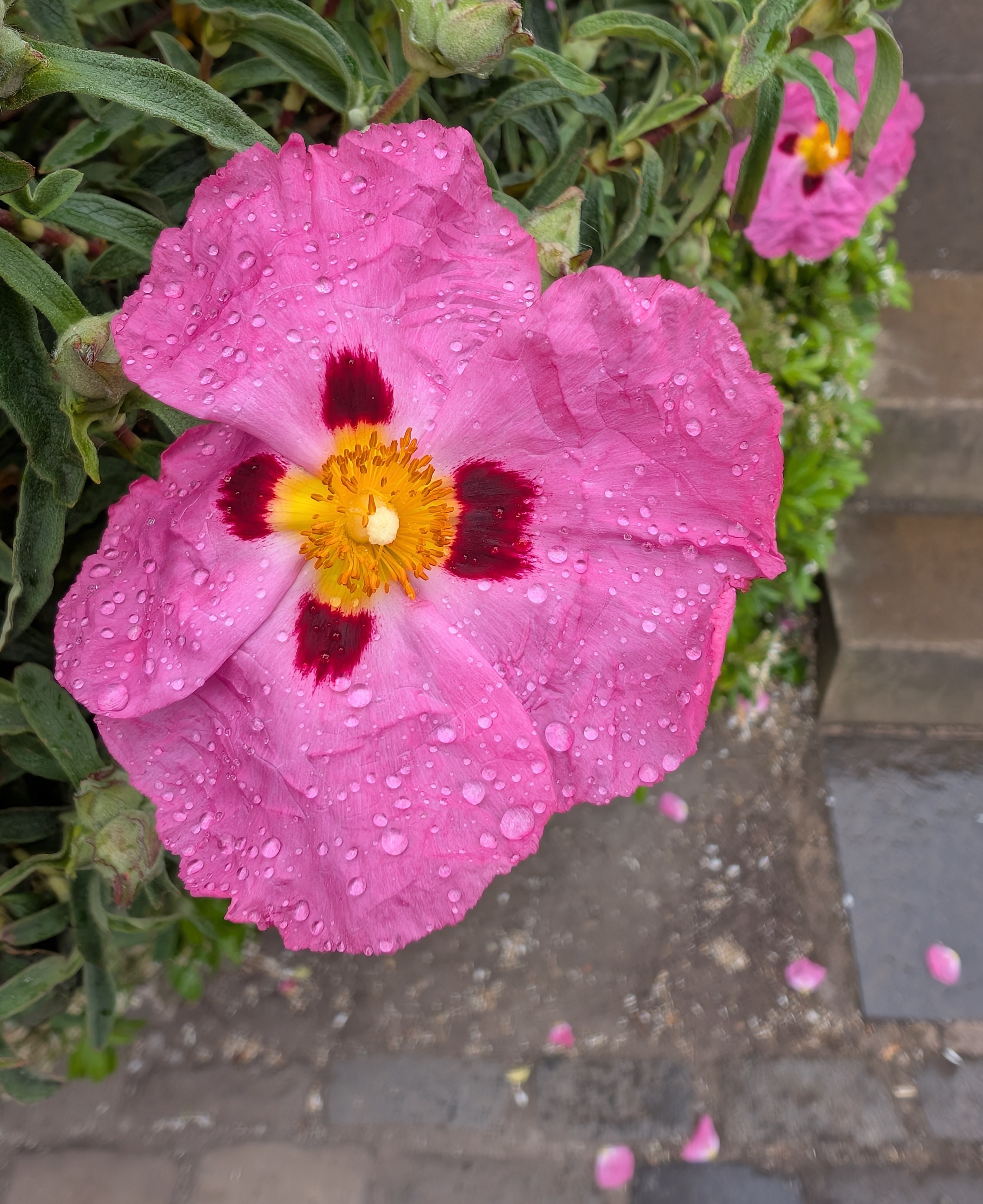
At least the blossoms have come out on the roses of Sharon, but they are later this year. Contrary to the wishes of my native plants landscaper, I will not be removing all of these beauties, aggressive invaders though they be. (Honestly, they’re growing under a porch, behind the garbage bins, anywhere and everywhere.)

Rose of Sharon. September 2025.

Breisach

Good morning, France! (From the German side of the Rhine River). August 2025.

Our first morning aboard the Viking Hlin, I woke early. Apparently three evenings of my patented jet lag adjustment routine (copious amounts of beer, large amounts of food, and moderate exercise) had done the trick. I left my barely awake wife in the stateroom and wandered the early dawn on the top deck. Something about boats and trains indulges the romantic. He wakes happy that someone else has navigated the vessel to a new location while he slept. His sleepy dreams continue when the curtains are drawn: what will I see? Where am I? This occurs in a manner no plane will ever match with its tube-through-time approach to travel.

Turning to the starboard side of the deck, the barely risen sun illuminated a nice cathedral in Breisach, still mostly in shadows.

Breisacher Münster St. Stephan Roman Catholic Church. August 2025.

After realizing our definition of ‘breakfast’ would forever be altered by our onboard experience, we headed out on a bus ride to and through the Black Forest. Its history was narrated capably by our erudite and dryly humorous guide, Johannes, raised in the Black Forest. It reminded me of certain challenging terrains in North America where high foothills exist prior to the Rocky Mountains or the North Cascades (primarily on the lee side of the mountains). Unfortunately, the polarized windows of the bus, and the fact my wife sat in the window seat, made photography impossible.

Next post: a ‘typical’ Black Forest village.

Frolicking

Lap number…I dunno…I lost count. Fawn feeling frolicky, Raleigh, NC. July 2025.

I almost feel embarrassed to post this photo of such poor quality. In my defense, the fawn zipped by so quickly, this represents my best. Much like a swimmer in a lap pool, the fawn ran back and forth, taking about 100 yards for each lap. The crashing of the brush is what grabbed my attention. It had rained for hours the previous night, which caused me to attribute the crashing sound to a falling branch at first. I tried to pan with the fawn, but you can see how difficult that was. Additionally, I shot the photo through the screen of my screened-in porch. Meanwhile, mama calmly moved from yard to yard sampling the greenery.

Potted greens for a doe. Raleigh, NC, July 2025.

Our sunflower

Eastern honeybee (?) on just opened sunflower. July 2025.

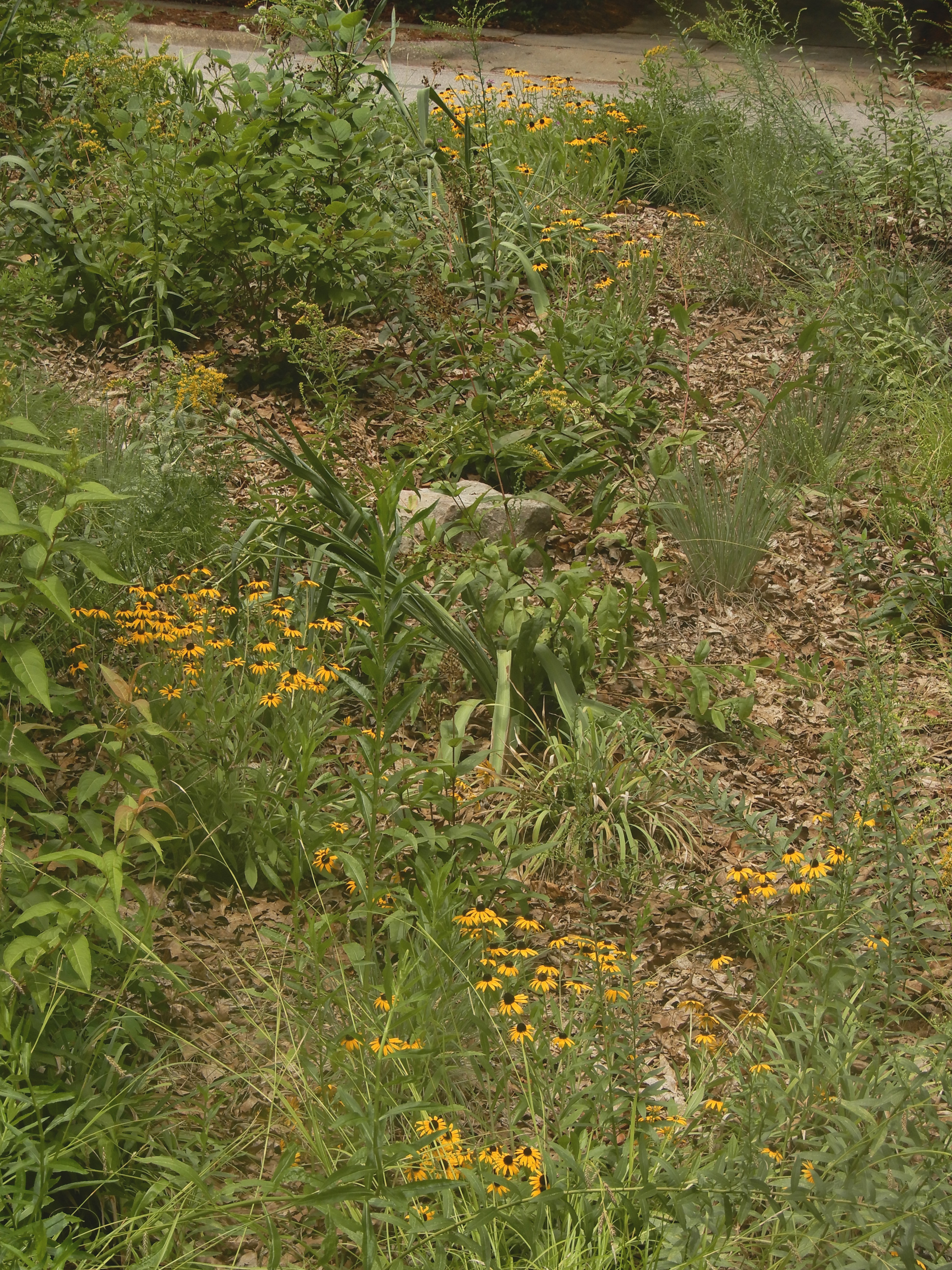
I feed birds, mostly black-oil sunflower seeds. This year it looks like I’ll through about 400 pounds of them. Apparently one got planted in our newly landscaped front yard, and there amid many of the similar-spiky Obedient plants was this lone sunflower. I love sunflowers. Therefore, I got pretty irritated when something, probably a deer, nipped off the top where a bud had been forming. The joke’s on the deer, though. By trimming the plant, it put up TWO stalks from where it had been lopped, each of which had buds…until one burst open on Independence Day.

Crape myrtles…

…or crepe myrtles if you prefer…seem ubiquitous here in Raleigh, NC. From what I read and hear they’re throughout the South, though I haven’t paid enough attention while driving through our neighbor states. Crape myrtles take their time, slowly becoming substantial trees of a type called thicket trees. They can be well-tended and trained, as this one is:

With care, the trunks grow together. Raleigh, NC. July 2025.

Usual care involves letting them grow as they will, but pruning suckers and sometimes trimming the tops to shape them:

Crape myrtle with usual thicket look and showing white blooms. Raleigh, NC. July 2025.

Crape myrtles are everywhere here. The photo above is across the street from the first photo. The thicket-trunked myrtle in the foreground has a substantial myrtle right to its left, the one with a more substantial trunk. Follow the sidewalk and you’ll see two more, smaller (younger) crape myrtles flowering. These last two demonstrate the variety of the approximately 50 species of crape myrtle (or are a particular cultivar of one):

Younger, different crape myrtles. Raleigh, NC. July 2025.

Crape myrtle are maintained by the City of Raleigh in the decorative medians:

Three “City” crape myrtles at the end of my street. Raleigh, NC. July 2025.

To me the Ultimate Crape Myrtle lives in my neighbor’s yard. Its branches extend from the edge of the sidewalk and tower over her house. It’s at least 30 feet tall. Someone appears to have pruned a few suckers in its youth, but mostly it’s been left to its own.

Crape myrtle in neighbor’s yard. Our white car and yard in the background. Raleigh, NC. July 2025.

And then there are our crape myrtles. Ours were planted sometime between 2007 and 2014 (using Google Maps Street View), with the most likely time frame being 2010-2012, a period when the former owners rapidly changed the landscaping and interior of the house. The myrtles probably were purchased as saplings, and have doubled in height for the eight years we’ve lived here. For reasons I suspect have to do with amount of sunlight and my utter lack of any care beyond occasional pruning, they flower very late. I suspect sunlight because my other neighbor has three, also near the sidewalk, which haven’t bloomed yet either. In the photos above you might have noticed most of the myrtles nearing the end of their blooming period. Ours?

Our two crape myrtles, either side of the driveway, not blooming. July 2025.

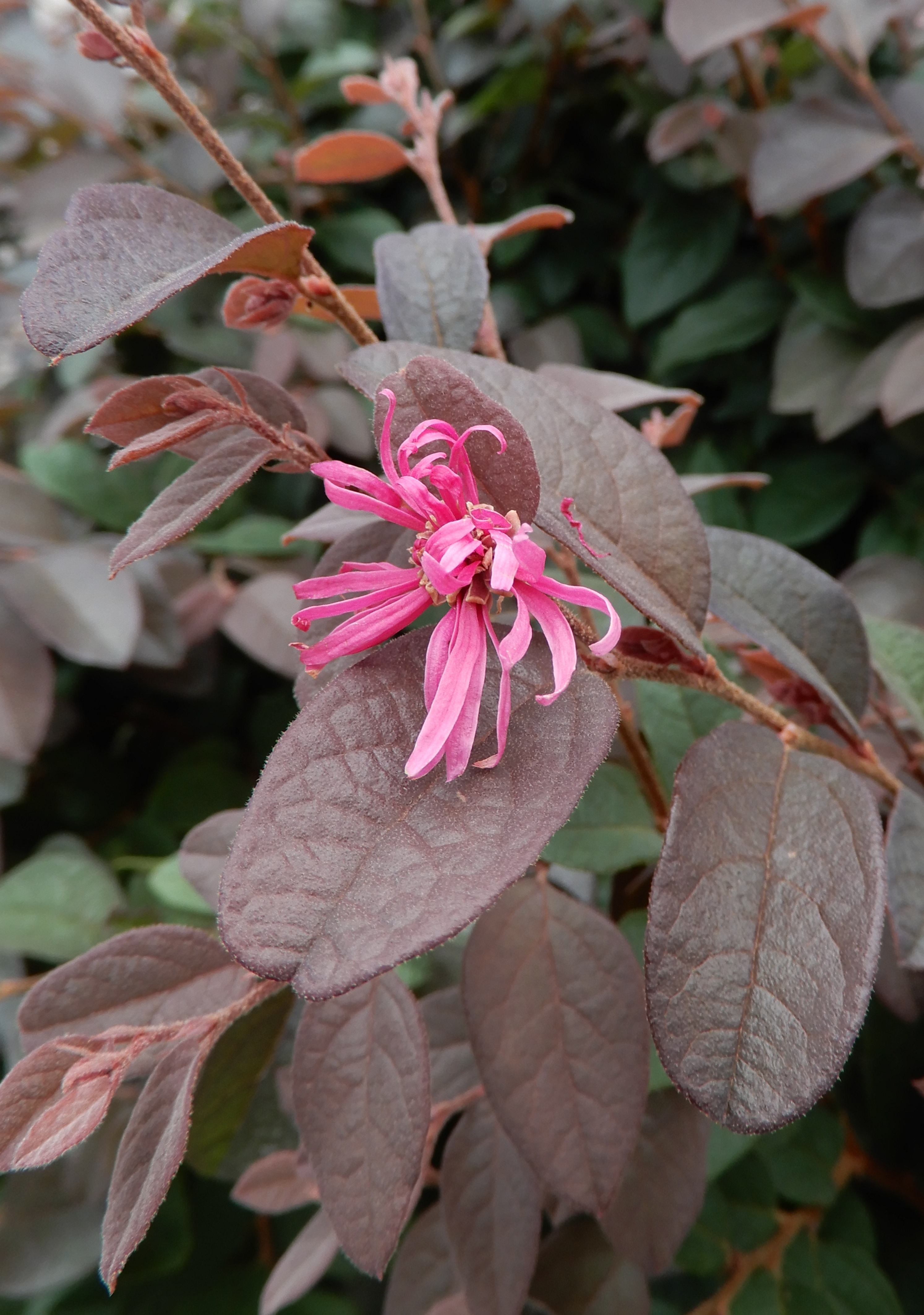
But here’s the thing: though closely identified with the American South, they are not native to it. To quote the NC State University’s Extension Gardener website, “[Crape myrtle] is native to the Philippines, Japan and central Himalayas to southern China and Indochina.” Our whole move the past 12 months has been to replace everything in the front yard with native plants. (note that in the photo above) After a year of debate, and many years of saying, “Maybe they will bloom better when they get bigger,” we’ve decided to replace them. (Sorry, former owners. Consider it payback for removing that big tree in the front yard and not properly having the stump ground. I nearly broke my ankle in that mess many a time.) On one side will be an ‘Amethyst’ witch hazel which blooms in winter and very early spring. (Photo here.) On the other side will be a serviceberry. It mimics the look of a crape myrtle with the multi-trunk growth, but it will provide berries for birds and other critters.

All right, I’m craped out.

July surprise

Eight-point buck meandering through our trees. July 2025.

Our street, above, regularly sees traffic of 35 mph and above now that a lot of drivers have discovered it’s a better-than-nothing shortcut from one arterial to another. (Raleigh arterials commonly have a 45 mph speed limit.) It amazed us therefore to see this buck come down the slope of the yard across our street, then cross the street around 9 a.m. and continue downhill between our houses. Here’s a lower-resolution close-up from the photo above:

Eight points!. July 2025.

We lost sight of him for a minute, then my wife spotted him in the back corner of the neighbor’s yard. He was in no hurry. He’s eating some leaves there…

Mid-morning snack. Feeling cocky. July 2025.

Goodbye, June

Eastern carpenter bee working the beebalm. June 2025.

I opened the month shooting photos of the beebalm with a swallowtail butterfly on it. This photo is from the same set. The swallowtails, bumblebees, and little tiny bees I haven’t identified yet all had to work around the behemoths of the flowers, the carpenter bees. At 1.25-1.50 inches (or more!) they pretty much go where they want to. Now the beebalm has slowly dropped all those fuchsia-colored petals. (Or are they petals? I don’t know much about plants.) All that remains are the ball in the center, still suspended on those long stems. Our new visitors love these: goldfinches. They flit from flower to flower, their nearly weightless bodies hardly making the stems bend at all. It seems too soon for seeds, but what do I know?

Summer temperatures, documented a few days back, will continue for the near term future. Americans look forward to celebrating Independence Day on Friday, the 249th of our country’s existence. In these muddled times, I wonder what that will bring. Meanwhile, the business of life marches on, from the mundane (it’s Gather the Garbage Day) to the inconvenient (workers coming to work on the leak in the bathroom shower) to the calm and simple (my wife returned from a coastal sojourn yesterday afternoon; this day will be our first together in a week).

Have a truly blessed day, y’all!

Carpenter bees

Eastern carpenter bee on scarlet beebalm. June 2025.

For a good handful of years I fought a war against carpenter bees. These large bees (1.0-1.5 inches long) bored perfectly symmetrical holes in the decking of our house. First I attempted to plug all the holes with caulk, twigs, anything that came to hand. Then I bought horrendously over-priced traps, only one of which did its job and for only one year. This year I gave up, waved the white flag, said, “you win.” They are vigorous pollinators: that beebalm looks long past its prime, but they keep working the blossoms for that last speck of pollen. They’re only antagonistic to each other, although they’re scary in the spring: imagine a bee as big as your eye and flying right toward it. They still leave little piles of sawdust around my deck here and there in the spring.

And I still have the trap up. It’s a sign of self-respect. I don’t want to appear as if I’ve cravenly capitulated to them. Call it a fighting retreat.