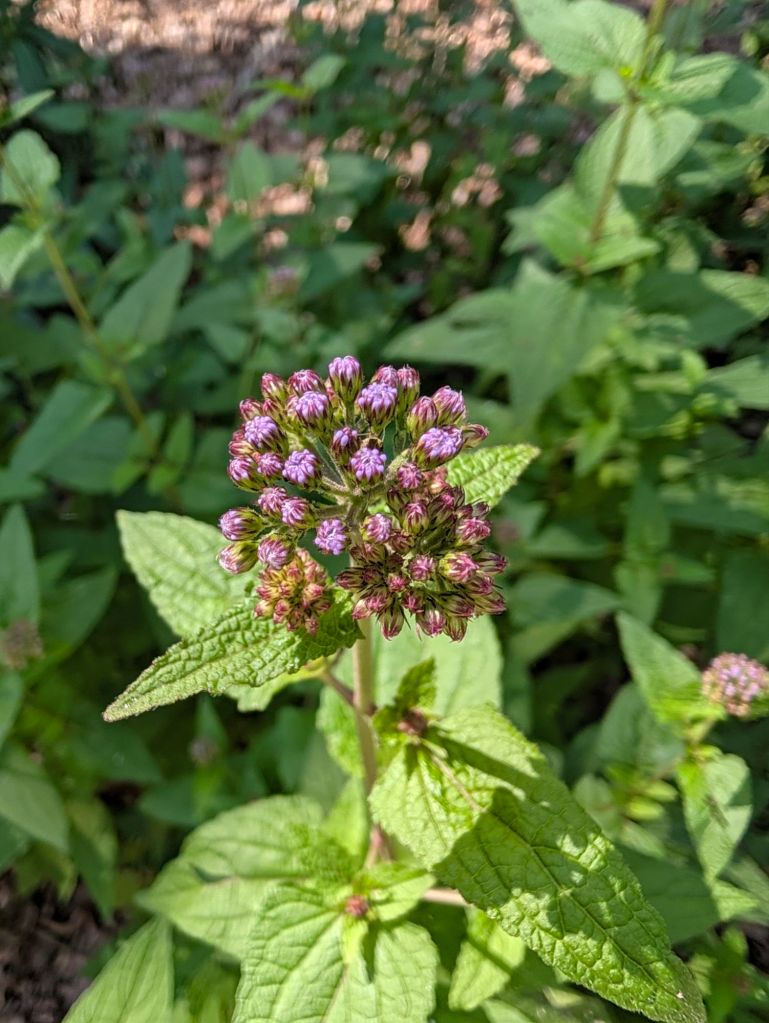
Yes, I know, I keep going on about mistflowers. They’re just so amazing. They show up for free. They’re native. Pollinators like them. They sow seeds everywhere because the seeds are small, lightweight, carry well in soft breezes. I’ve yet to put together the panel I took, and I’m too tired right now to do more than publish this barely-needed-editing photo I took this morning.
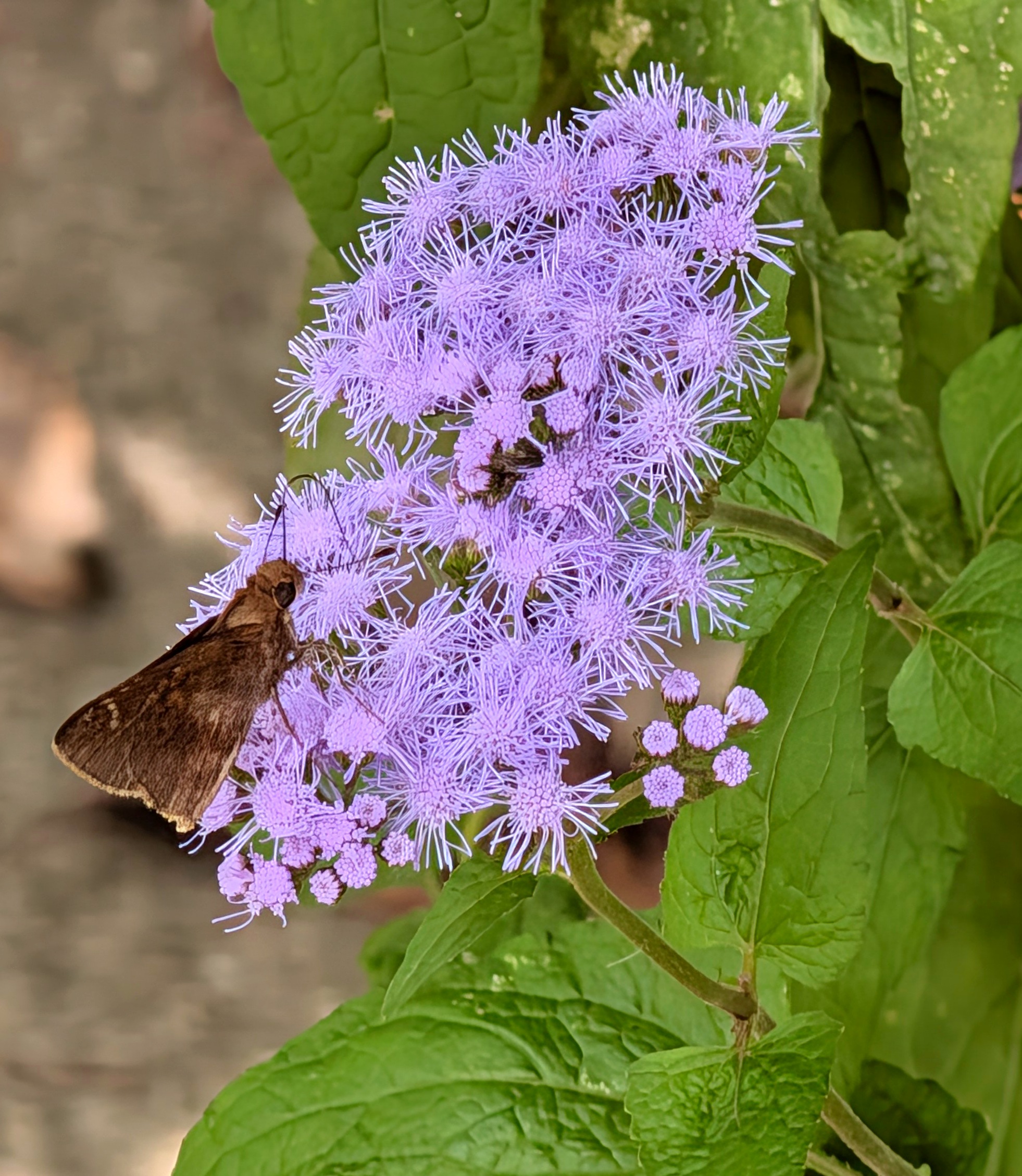
Unidentified moth on a blue mistflower smorgasbord. The moth is about 1.25 inches long. September 2026.
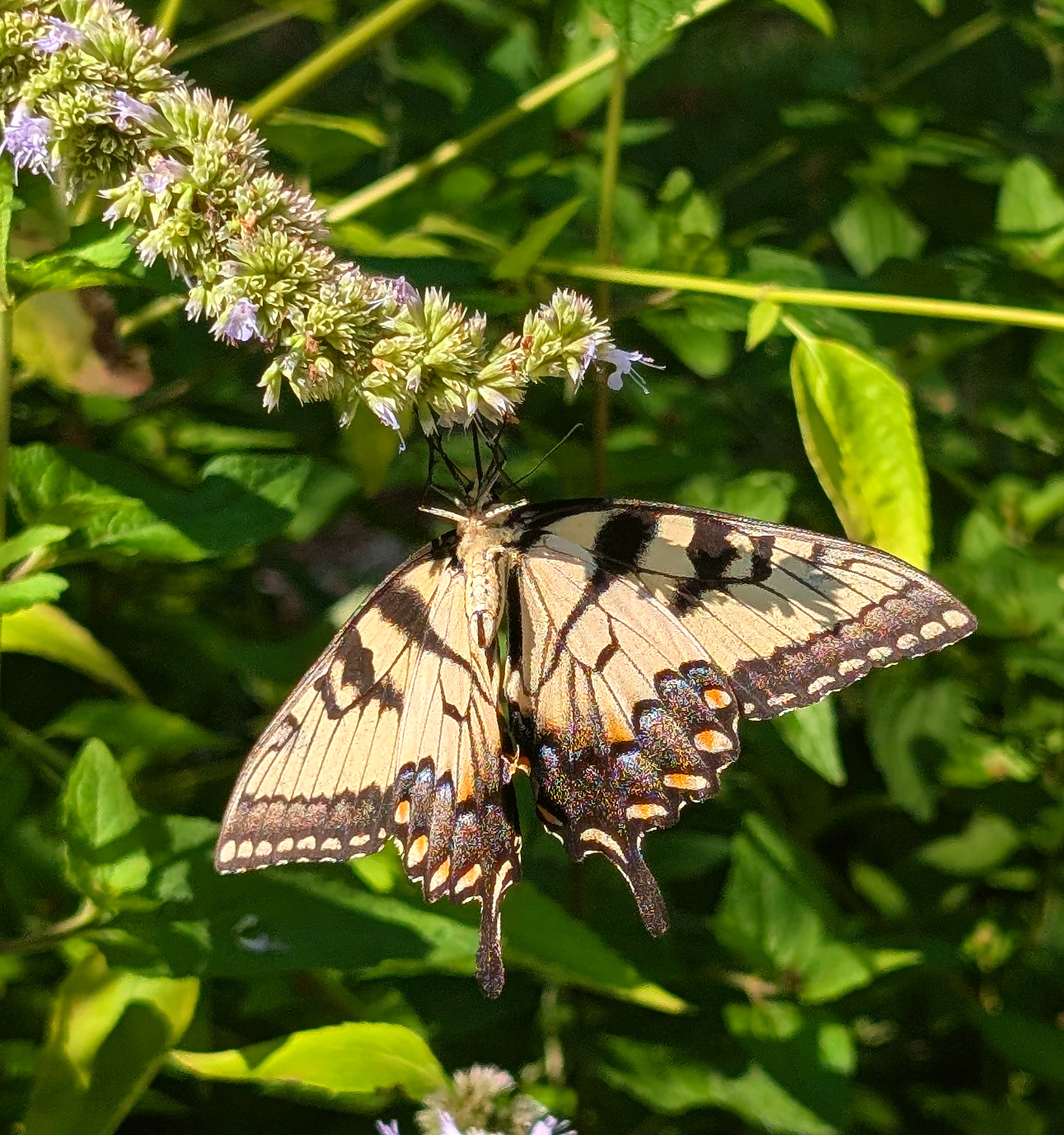
Eastern Tiger Swallowtail butterfly, likely female, on Anise Hyssop. September 2026.
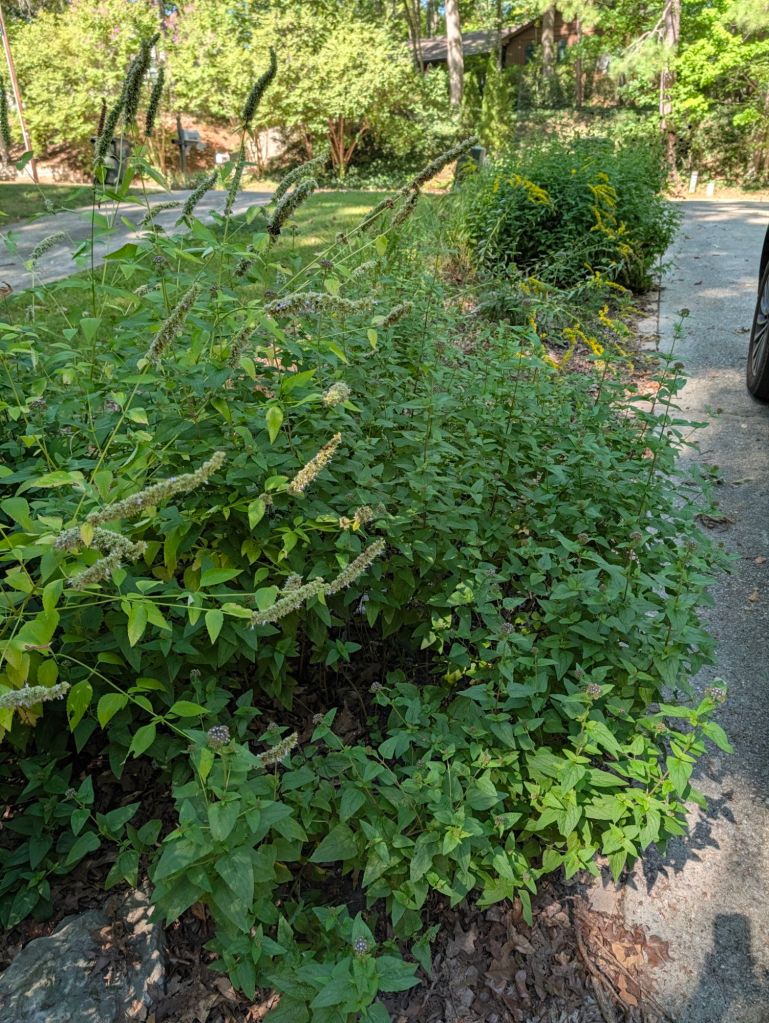
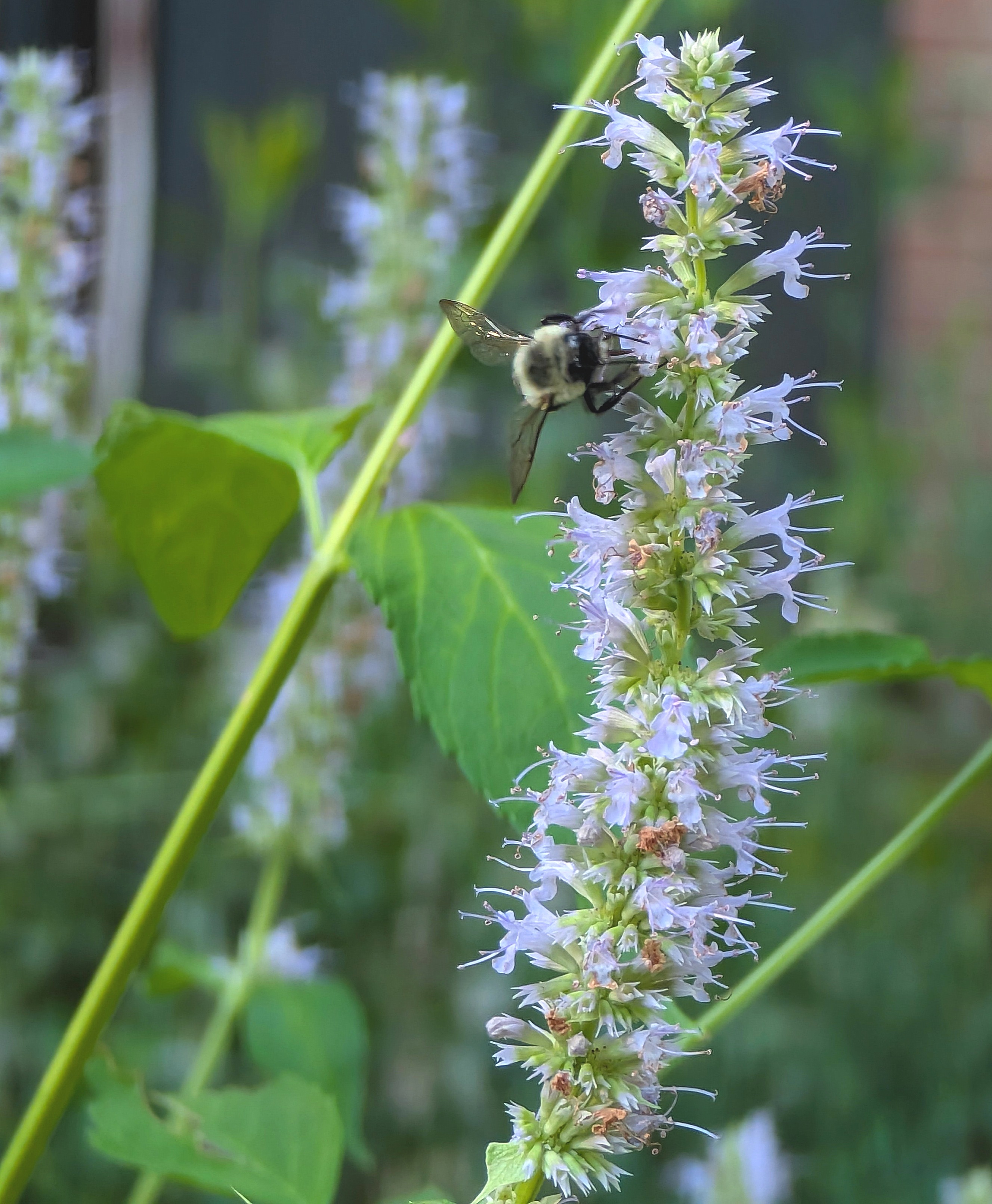
One of my new favorite plants is the anise hyssop. Anise hyssop grows to about four feet with long flower clusters at the end of each upward branch. These clusters each have what looks like about 100 flowers. The large one in the photo above has approximately 50 clusters. (I had to count them for a pollinator study I participated in.) The weight and height of the branches causes them to bend a bit, making them look like a flower arrangement to me. The flowers don’t bloom all at the same time, but over the past two seasons ours has peaked in late June through mid-July, after which some of the flowers begin to do whatever propagation chores the plant must do.
Same bee, different photo from July’s. Note more flower clusters in the background. July 2026.
The hyssop attracts many pollinators. I participated in the Great Southeastern Pollinator Count two weeks ago, choosing this plant because it had so many flowers. I counted mostly Eastern bumblebees and a little wasp about a half inch in length. Others included a very small bee, ants, another kind of insect I’ll just call a beetle, and the biggest dang wasp I’ve ever seen! I looked it up, and I’m sure I saw a Great Black Wasp. I’ve seen three different maximum lengths ranging from 1.4-2.0 inches. I swear it was about 2.0 inches in length. Absolutely huge.
Yesterday I saw our lone species of hummingbird here in the SE United States, a ruby-throated one, also checking out the hyssop. It seemed to prefer the similar-looking flowers of the obedient plant quite near me. And both yesterday and today the several hyssop plants in our yard have been caught the attention of Eastern Tiger Swallowtail butterflies.
When I began the census count, I lamented to my wife that most of flowers have long past their peak. I expected to find few pollinators compared to June-July. The purple coneflowers have lost all their petals; the spiky centers remains, attracting goldfinches to the seeds, not pollinators to the pollen. Similarly, the black-eyed Susans and Indian blanket flowers have mostly disappeared.
But strangely (to me), the hyssop seems to have popped out more flowers! Over the past three days bees, most of the Eastern carpenter variety, have been madly jumping on the hyssop flower clusters. From a distance they’re visible by watching the ends of the stalks bouncing up and down in a non-existent breeze. And then there’s the apparent delight some butterflies have taken in finding yet more flowers on the hyssops.
We need to keep trying, keep putting out those flowers of attraction. It makes a difference. Perhaps “carpenter bees” aren’t your thing. Perhaps you dislike benign-but-huge “wasps”. No matter. Our purpose is to flower. Let the rest take care of itself.
Every day a poem:
Dawn's introductory stanza
Sets me up—better, worse, or
In-between. By Breakfast's lines
Attitude starts setting, casting
Today's foundation. Theme, style,
music, tone, harmony, dissonance,
all proscribed by this early start.
Takes composer's interference to
Change this line, this development.
Afternoon either resolves all notes,
or abandons them to dissipate into
"well there's always tomorrow."
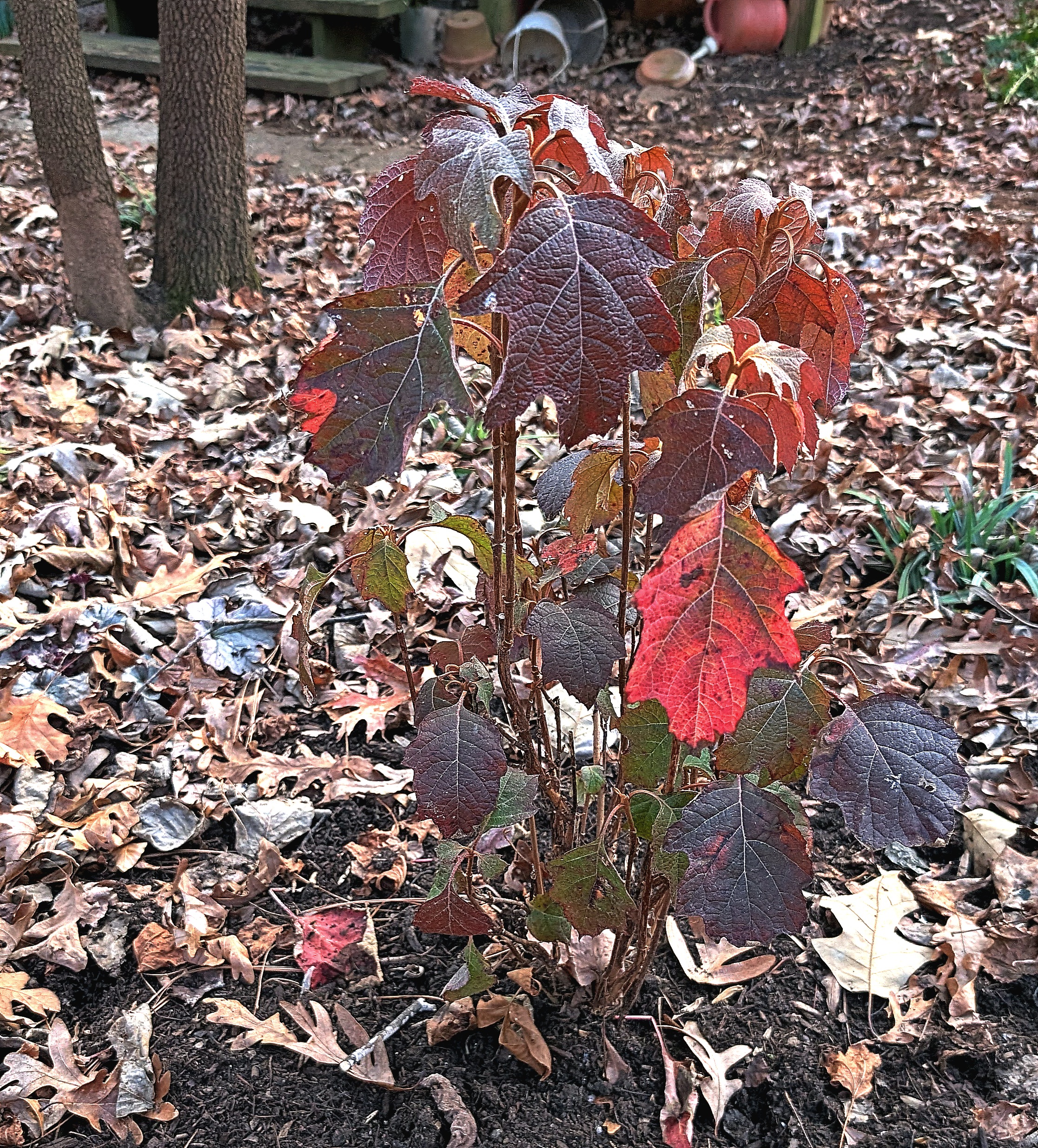
One of my favorite plants: an oak leaf hydrangea. We had several of these planted in our backyard to replace the one killed by the squirrels. It sat under our bird feeder, and the squirrels used it to attempt an ascent to said feeder. Though a hydrangea, the leaves resemble the shape of oak leaves and turn such glorious colors in the fall. January 2026.
My spiritual development received a boost, oddly enough, when my friend Dennis died in December and his passing was memorialized in mid-January. Every Sunday morning our choir rehearses in a small chapel off of our narthex, and in that chapel are lovely stained glass windows. We attempt to do more than sing; we attempt to listen to the words and the intent of the music so as to impart an inspiring message to the congregants. January 2026.
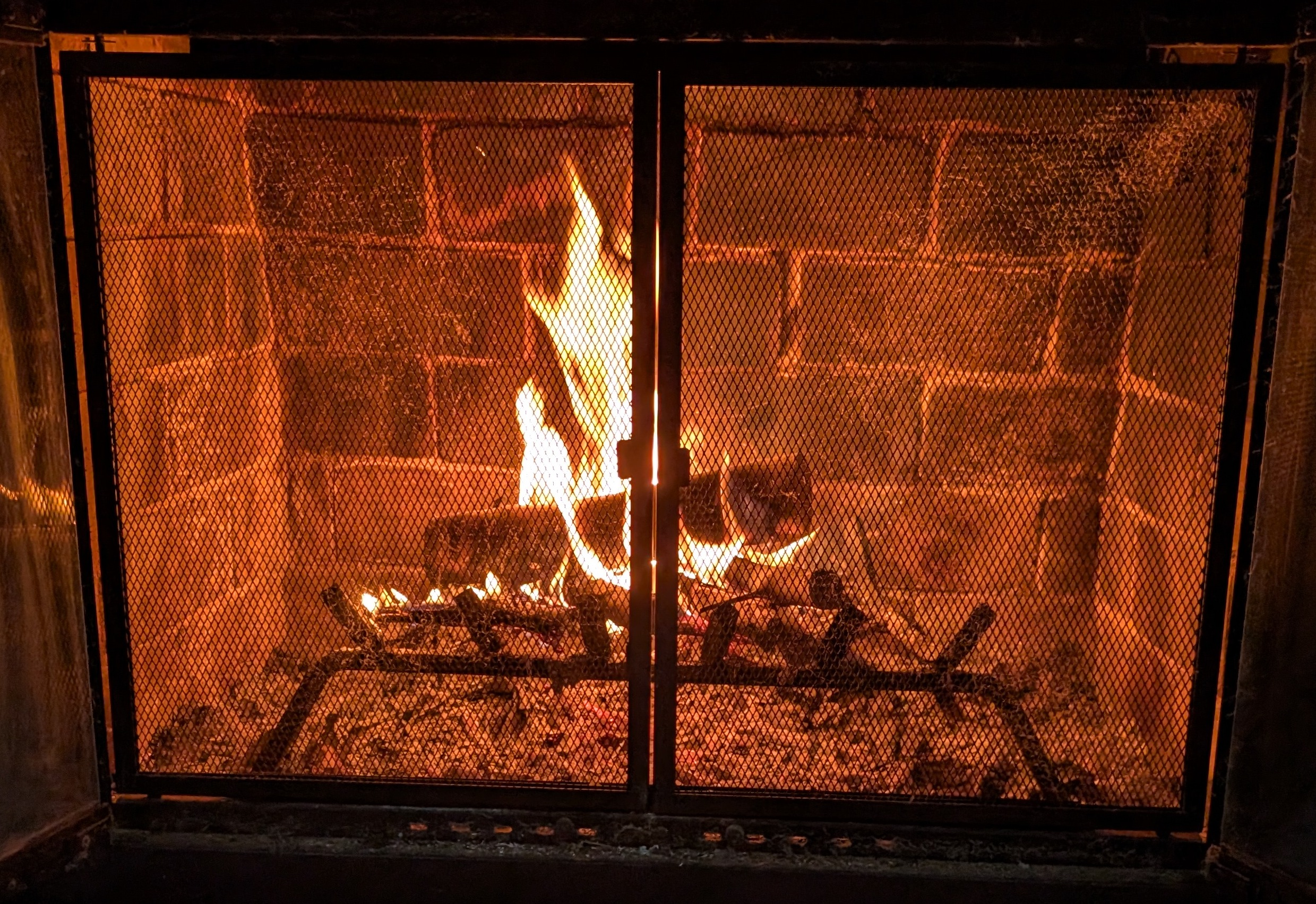
January (and February!) brought some pretty cold temps to North Carolina, and we warmed many a time to fires. An ‘illuminating’ moment with a friend informed me that I could be using the TWIGS IN MY YARD to start fires! I had laboriously been shaving slivers of tinder off of oak quarters, and the oak was running out. What a great life lesson! January 2026.
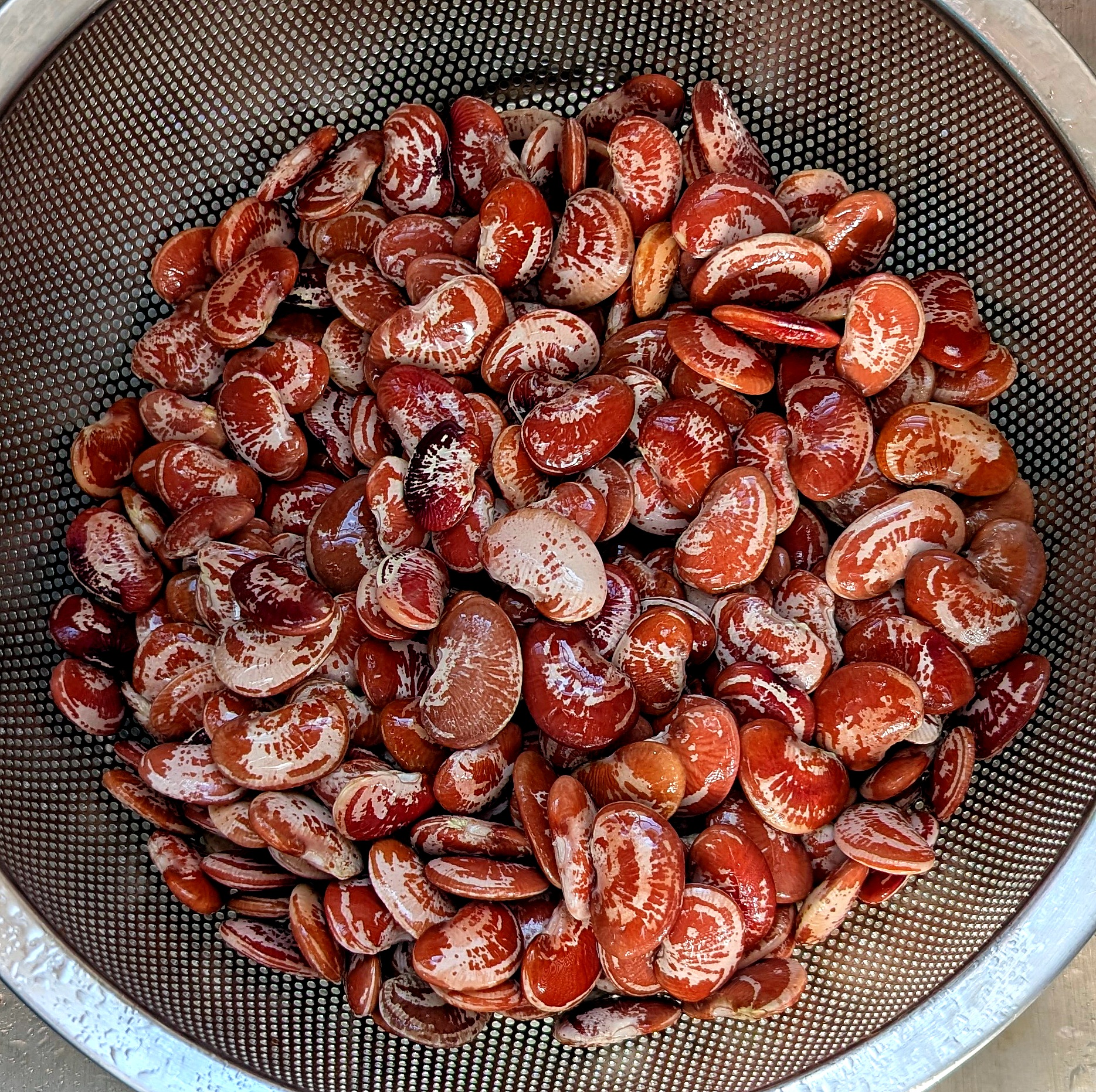
A spontaneous purchase from Rancho Gordo (please check it out if you like the taste of good legumes) led me to Christmas Lima beans. I cooked them on January 20th despite being in a fever from some weird viral thing that was neither Covid nor flu. When you soak the beans, you have to cook them. They found their way into a cabbage and bean soup, and more uses are planned. January 2026.
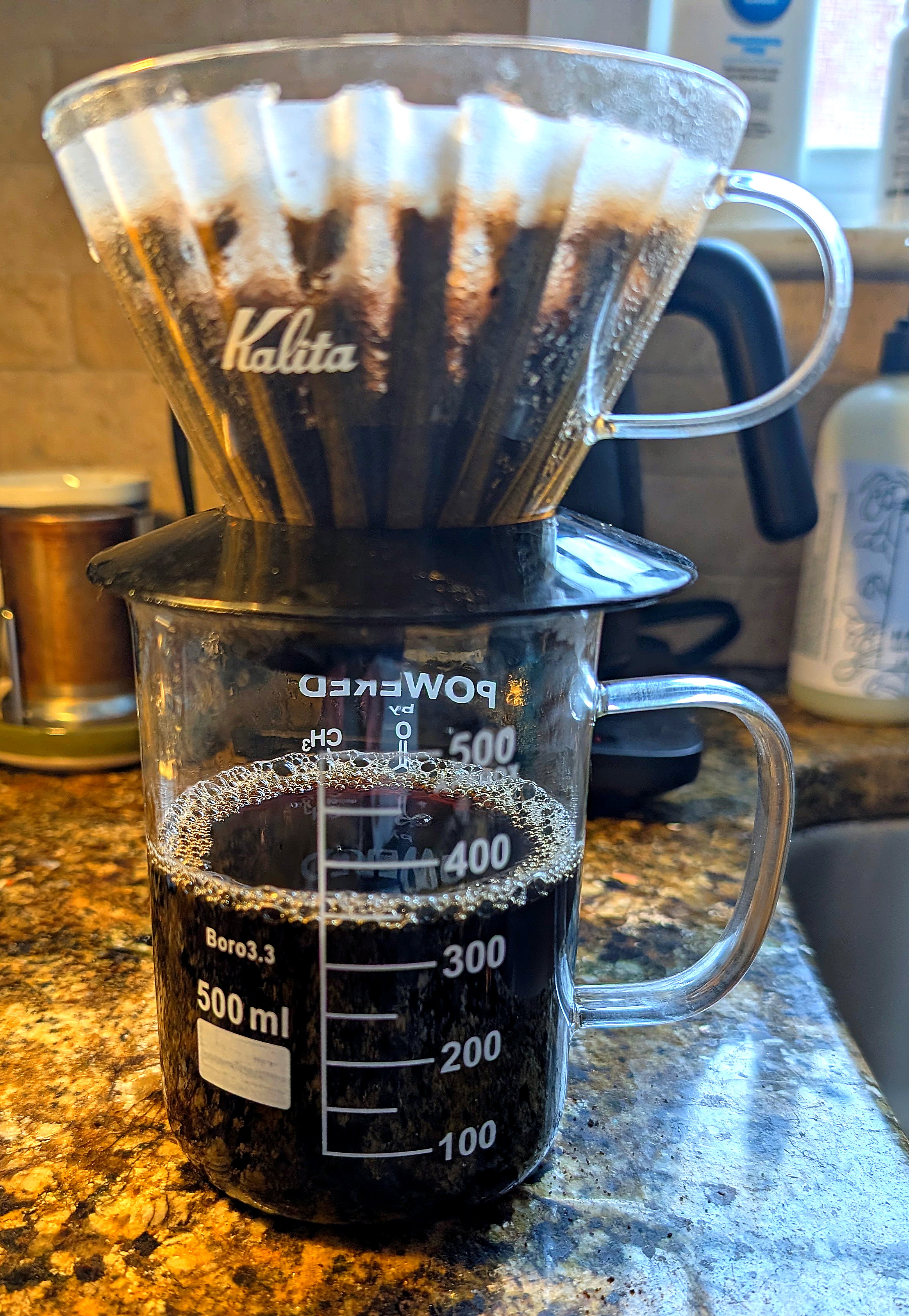
When the going gets cold, the cold get caffeinated: the morning ritual captured. Once in a while I use a more automated version (a Nespresso machine) but this is the normal routine. After being gifted this mug, I now have an accurate scale to tell me when I should stop letting the water drip through the coffee grounds. January 2026.
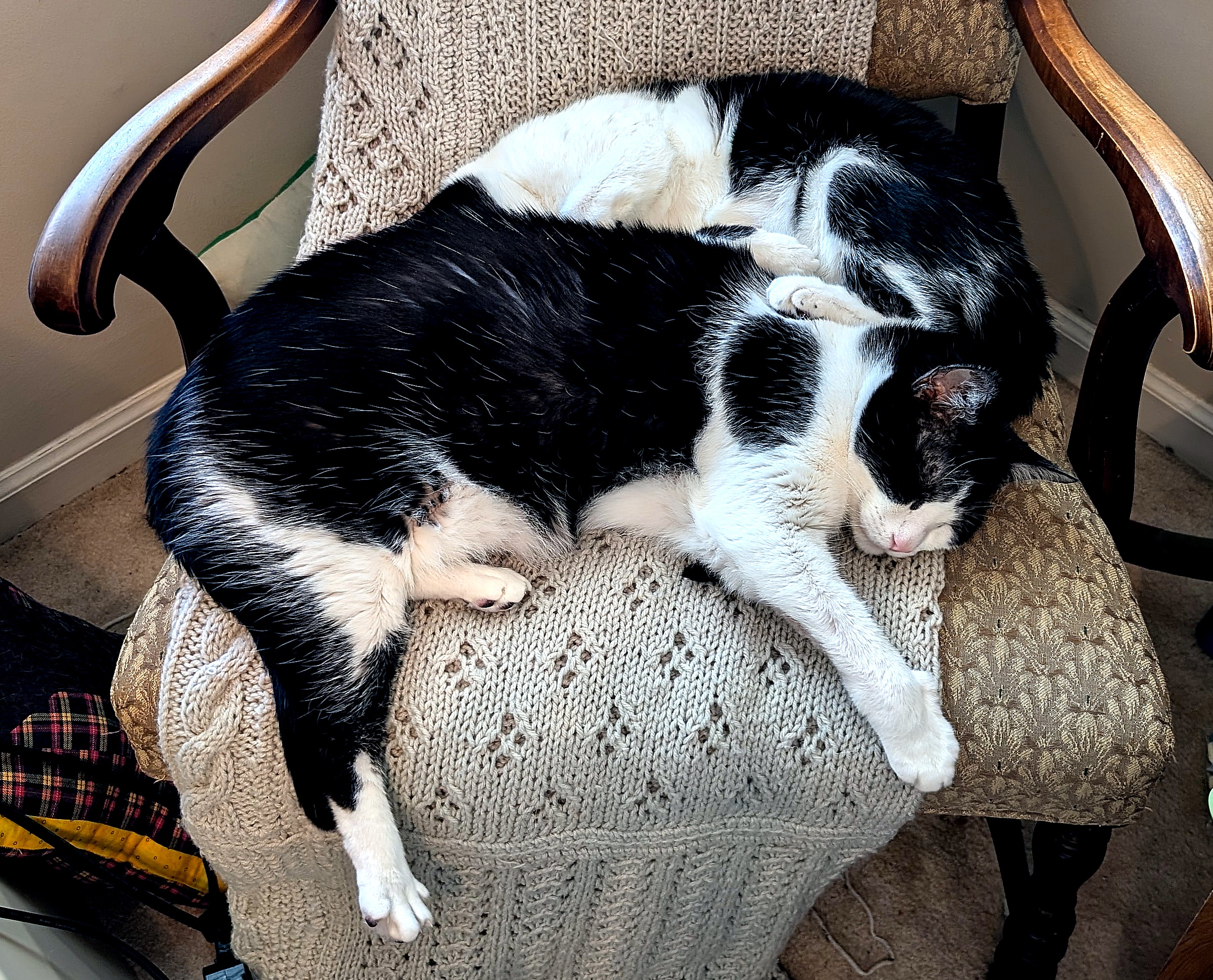
As always, cats know best. Hunker down and wait for spring. Benny might have thought he had the chair to himself (that’s him in the rear) but Charlie had other ideas. January 2026.
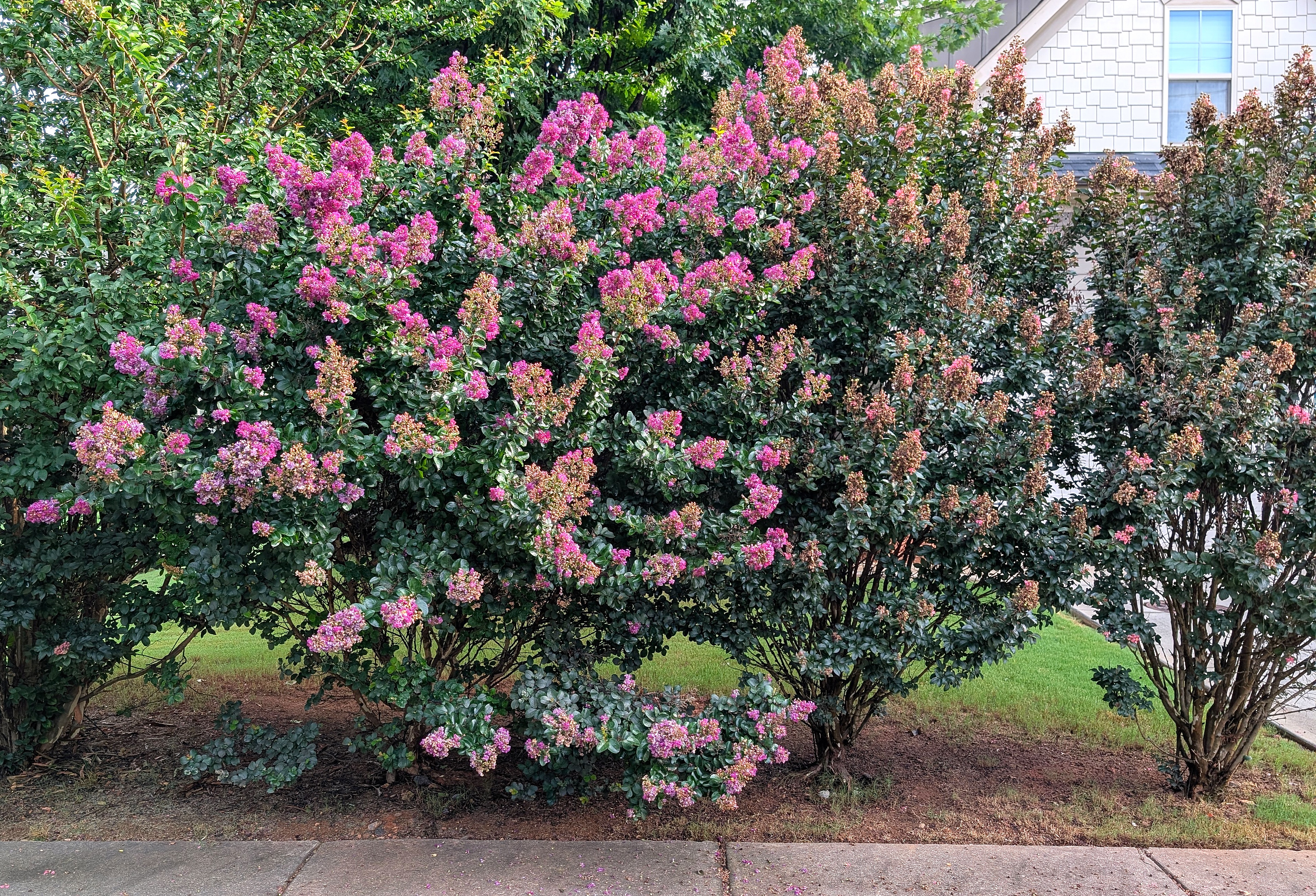
Our yard on the left, neighbor’s on the right. Photo is unretouched. January 2026.
Last October we paid to have our back yard replanted with plants native to North Carolina, the American Southeast, and the Atlantic seaboard. As in colder climes, the vast majority of native plants drop their leaves and enter dormancy for the colder winter months. We also “leave the leaves” which allows them to decompose into the soil as they should, creates cover for the little creatures to stay warm (and avoid hawks), and supports the lives of little bugs which in turn provide food for the ground-feeding birds. Thus, the predominant color of our back yard and our front yard is brown.
Our neighbor’s yard represents most yards around us. The green of English ivy covers the ground and the trunks of the trees. Saplings of non-natives take advantage of the warmer winter weather much as sunbirds head for Arizona or the coast of the Gulf of Mexico. Some keep their summer foliage—no need to drop leaves and protect a plant conditioned to far colder climes. It’s not that leaves fall only in our yard; there’s an oak or two and some poplars over there. It’s that the ivy manages to conceal somewhat the leaves in my neighbor’s yard.
In winter, therefore, brown is good, and green is at best questionable. (Before my southern readers chime in, yes, there are plenty of Southern evergreens, but not many around here consciously cover their yard with them.)
Our natives, once established, should have staying power also. It’s kind of defined by the word “native” is it not? I will need to wage constant war, though, on the ivy, the Virginia creeper, the japonica, and the various saplings which will inevitably attempt to broach the property line. It’s a battle I freely take up. For the time I live on this speck of the Earth, it will bring forth those plants which grew here naturally and nurtured the birds, mammals, insects, reptiles, and amphibians which depend on them for healthy populations.
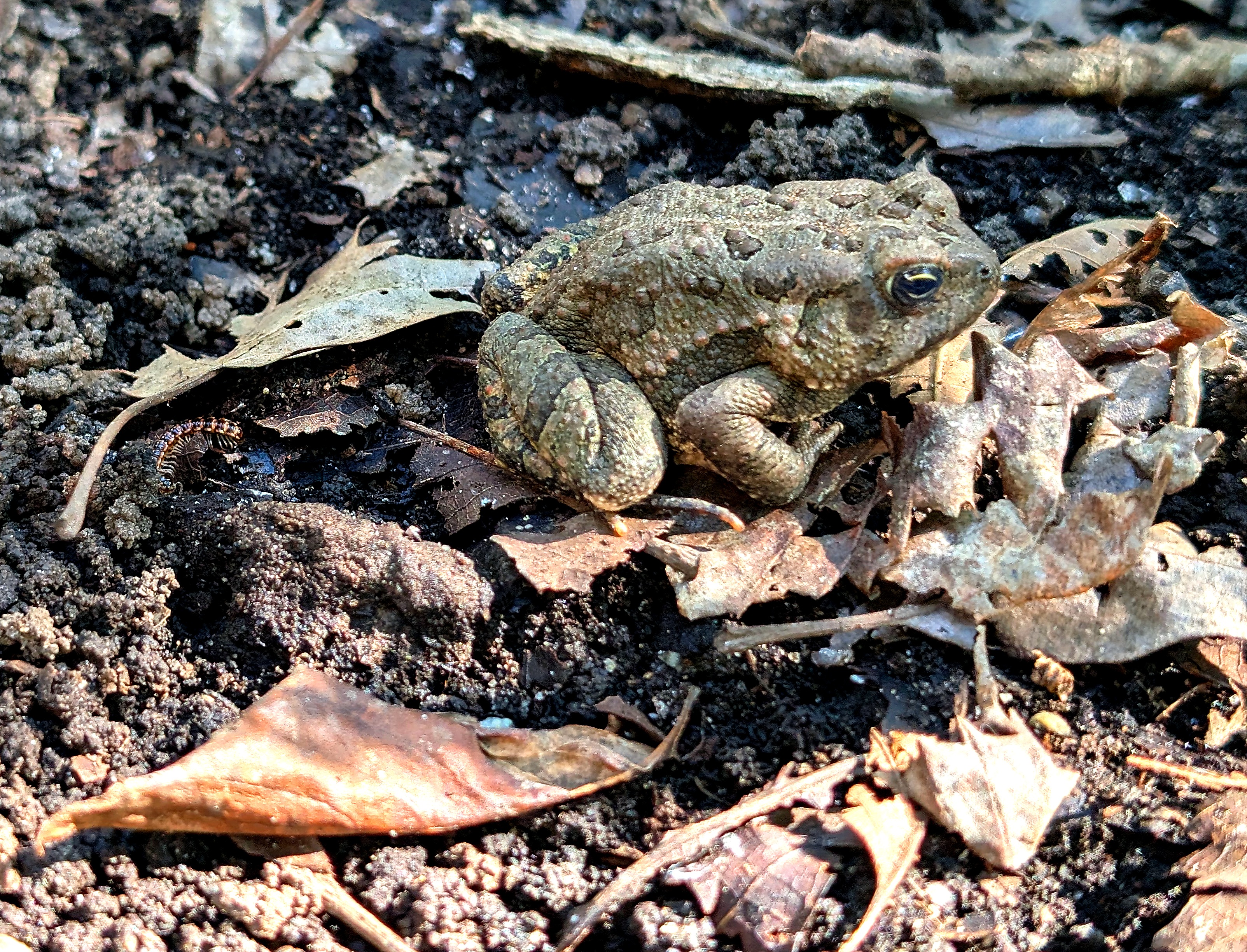
While weeding something moved, just a bit, and I spied this Southern toad. I haven’t seen one around this house since we moved in over 8 years ago, but saw them regularly at our former house on a pond. Pretty lethargic—it’s a nocturnal creature. September 2025.
One month ago today we woke in our own bed after flying in from Belgium the night before. Only now am I catching up to yardwork, which these days consists of staying ahead of the interlopers in our all-natives garden covering the front yard and hacking away at plants in the back before they can seed. Their days are numbered: two weeks from now we hope to start the replanting of the backyard. I question, at times, why we paid so much to plant perennials which should natively grow here but there ya go. A complete and pleasant shock has been seeing the blue mistflowers explode in size and coverage. These beautiful and late-blooming plants had for years volunteered amid the purple coneflowers I’ve showcased many times on this blog. Most of them were taken out to facilitate the new landscaping plan, but the architect of that plan instructed his crew to transplant as many as possible. Given that it was a week into October, he also sprinkled any seed heads he encountered. I think the much better soil helped them out a little bit:
This bank of blue mistflowers looked reasonably modest in size when we left for Europe on August 7, 2025. They’ve now taken over this segment of the yard, overwhelming several plants underneath them. September 2025.Detail from a much larger photo of another bank of the blue mistflowers, showing how small flowers form much larger clusters. This photo is unretouched except for a slight amount of sharpening I added to see the flower petals better. September 2025.
I had to transplant two which ‘volunteered’ at the edge of the walkway to our front door and by doing so, obstructed most of the sidewalk. One withstood the shock and has many buds on it. The other has stood with severely wilted (but green!) leaves for almost four weeks. I keep telling it, “hang in there! You don’t need to bloom! Just live!”
…or crepe myrtles if you prefer…seem ubiquitous here in Raleigh, NC. From what I read and hear they’re throughout the South, though I haven’t paid enough attention while driving through our neighbor states. Crape myrtles take their time, slowly becoming substantial trees of a type called thicket trees. They can be well-tended and trained, as this one is:
With care, the trunks grow together. Raleigh, NC. July 2025.
Usual care involves letting them grow as they will, but pruning suckers and sometimes trimming the tops to shape them:
Crape myrtle with usual thicket look and showing white blooms. Raleigh, NC. July 2025.
Crape myrtles are everywhere here. The photo above is across the street from the first photo. The thicket-trunked myrtle in the foreground has a substantial myrtle right to its left, the one with a more substantial trunk. Follow the sidewalk and you’ll see two more, smaller (younger) crape myrtles flowering. These last two demonstrate the variety of the approximately 50 species of crape myrtle (or are a particular cultivar of one):
Younger, different crape myrtles. Raleigh, NC. July 2025.
Crape myrtle are maintained by the City of Raleigh in the decorative medians:
Three “City” crape myrtles at the end of my street. Raleigh, NC. July 2025.
To me the Ultimate Crape Myrtle lives in my neighbor’s yard. Its branches extend from the edge of the sidewalk and tower over her house. It’s at least 30 feet tall. Someone appears to have pruned a few suckers in its youth, but mostly it’s been left to its own.
Crape myrtle in neighbor’s yard. Our white car and yard in the background. Raleigh, NC. July 2025.
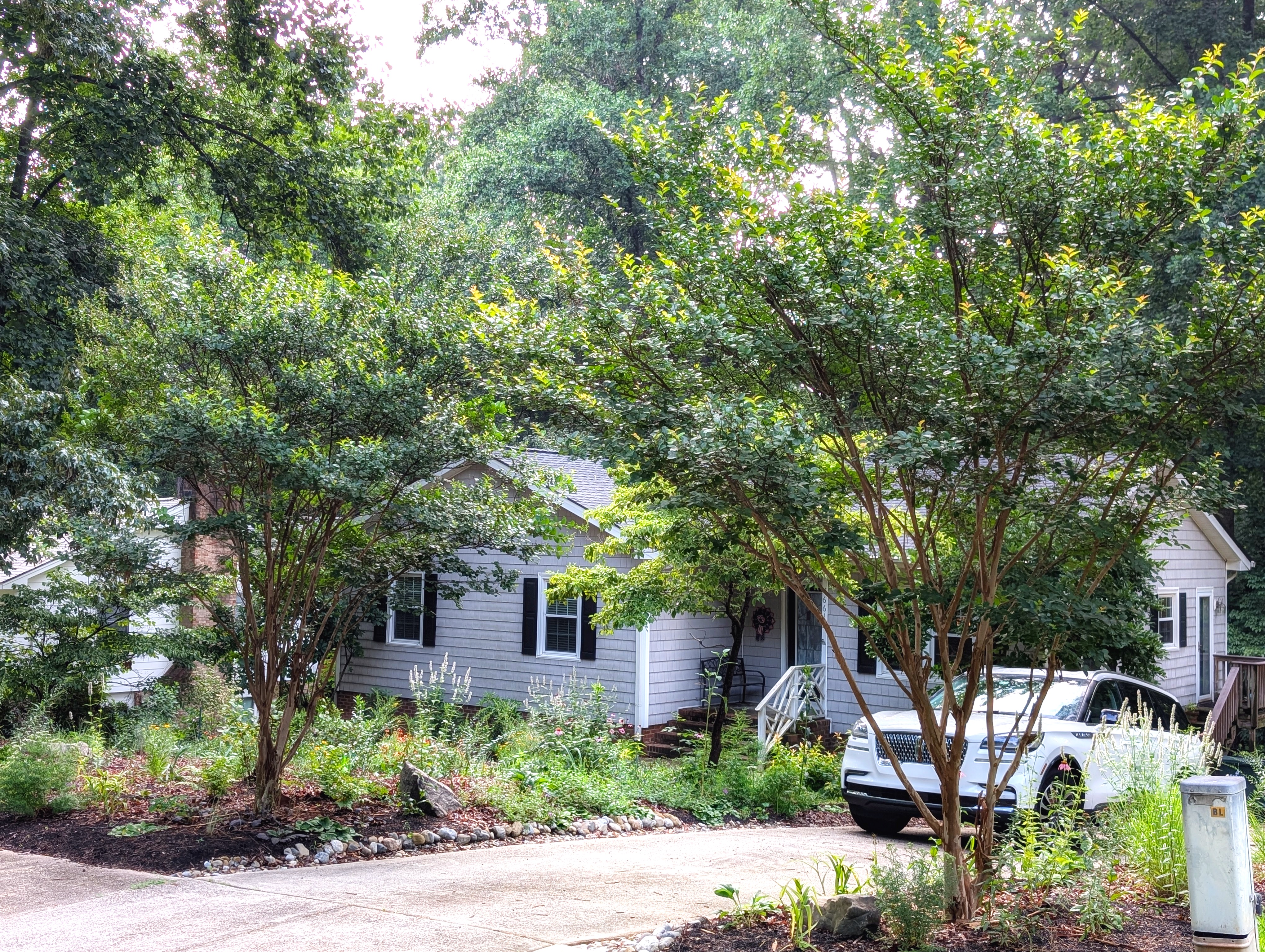
And then there are our crape myrtles. Ours were planted sometime between 2007 and 2014 (using Google Maps Street View), with the most likely time frame being 2010-2012, a period when the former owners rapidly changed the landscaping and interior of the house. The myrtles probably were purchased as saplings, and have doubled in height for the eight years we’ve lived here. For reasons I suspect have to do with amount of sunlight and my utter lack of any care beyond occasional pruning, they flower very late. I suspect sunlight because my other neighbor has three, also near the sidewalk, which haven’t bloomed yet either. In the photos above you might have noticed most of the myrtles nearing the end of their blooming period. Ours?
Our two crape myrtles, either side of the driveway, not blooming. July 2025.
But here’s the thing: though closely identified with the American South, they are not native to it. To quote the NC State University’s Extension Gardener website, “[Crape myrtle] is native to the Philippines, Japan and central Himalayas to southern China and Indochina.” Our whole move the past 12 months has been to replace everything in the front yard with native plants. (note that in the photo above) After a year of debate, and many years of saying, “Maybe they will bloom better when they get bigger,” we’ve decided to replace them. (Sorry, former owners. Consider it payback for removing that big tree in the front yard and not properly having the stump ground. I nearly broke my ankle in that mess many a time.) On one side will be an ‘Amethyst’ witch hazel which blooms in winter and very early spring. (Photo here.) On the other side will be a serviceberry. It mimics the look of a crape myrtle with the multi-trunk growth, but it will provide berries for birds and other critters.