It appeared in late July! I bought some in late-late September. Given the devastation in the Asheville area, it seemed appropriate. The Highland Brewery sits way up on a hill, so flooding was not an issue. How did they fare from the landslides? Don’t know.
Word of Mouth by Mike + The Mechanics. (A truly melancholy album, mostly filled with songs about the break-up of a relationship/marriage. It happened into my life just as my marriage ended.)
Be The Love You Want by Southern Avenue. (Many people will like this. Me? Meh. I really like their first album though.)
Instores & Outtakes by the North Mississippi Allstars. (Good combo of roots rock, blues, and that weirdness that says “Delta music”.)
Happiness Bastards by The Black Crowes. (What happened to them after the first album or two? Apparently a shift toward the center.)
16me. Paris Jazz Festival 1er. Novembre 1969 [Restauración 2022] Duke Ellington and the Newport All Stars
Twentyfour Al Di Meola
NYT Amplifier suggested playlist of Kris Kristofferson covers*
16 Biggest Hits Kris Kristofferson
*The New York Times has many newsletters for its subscribers. The Amplifier emails on Tuesdays and Fridays with a suggested playlist of 7-12 songs unified by some theme: songs of summer 2024; best songs from the movies of 1999; the “ultimate” outlaw country primer; and this one themed on Kristofferson because of his recent demise. Many are a bit too modern for my taste, but Kristofferson’s songs changed Nashville, according to none other than Bob Dylan. The suggested covers were:
“Help Me Make It Through the Night” by Gladys Knight & the Pips
“For the Good Times” by Al Green
“Sunday Morning Coming Down” by Johnny Cash
“To Beat the Devil” by Waylon Jennings
“Why Me” by Merle Haggard
“They Killed Him” by Bob Dylan
“Nobody Wins” by Rita Coolidge
“Loving Her Was Easier (Than Anything I’ll Ever Do Again)” by Willie Nelson
Based on the title to this morning’s post, we started with Harpers Bizarre singing “I Love You, Alice B. Toklas” (the eponymous title to the movie) and “59th Street Bridge Song (Feelin’ Groovy)” plus a compilation album. We followed with:
Bookends by Simon & Garfunkel
Tribute To Steve Goodman (Live) by various guys like John Prine, Ed Holstein, John Harford, Arlo Guthrie, Richie Havens, and the Nitty Gritty Dirt Band
Let me apologize in advance for this post. It’s self-serving and of little interest to anyone but me. My excuse for posting it (besides narcissistic vainglory) rests in the reactions some readers will have when they get a snapshot of things that have faded away: newspapers, particularly as arbiters of culture; purchasing music instead of streaming it and on vinyl; a picture of the music industry as older people knew it–record labels pressing LP’s right and left, when any band with long hair could get a contract; and sending those LP’s to newspapers, radio stations, magazines, etc., to get a hopefully-positive review; and most of all, a snapshot of three months in 1972 when certain labels pushed certain artists and released certain albums.
In 1972 I graduated high school. A close family friend happened to be the City Editor for the Spokesman-Review, one of the two daily newspapers in my hometown. The S-R came out in the morning, the Daily Chronicle in the afternoon/evening. He stopped by shortly before my graduation to offer me a copyboy position for the summer. Their current copyboy planned to move on to college or a newspaper, I frankly don’t remember.
I should have paid attention to how little pleasure I derived from the job. It would’ve saved me years of study and employment. Ah well. One pleasure I did derive stemmed from the fact my desk butted up against the desk of the S-R music and arts critic. In those days no mainstream newspaper would accord rock and pop music any serious stature, but the marketing trends being what they were, someone must have told them, “Listen, these kids buy stuff. You at least had to review these dratted things.” On the S-R, that guy turned out to be Ed Coker. Ed, I hope somehow you know how much those three months meant to me because of working beside you. You were young then, but obviously a dedicated reporter/writer. You were nice to me. I appreciated that. I saw you decades later, and you seemed to have risen in stature on the Spokane cultural scene.
No matter. Back then record companies would send free copies of records (LP’s, younglings) to a newspaper and hope someone would review it positively. Ed had a policy: he would listen to a record, and if he didn’t want to keep it for himself, he would put it on top of his out box. Lord, most of you don’t know what those are either, do you? When everything was paper, a person had an inbox (hence the email term, younglings) and an outbox to facilitate the movement of said paper. People like me, the copyboy, would move the paper around. It was a real job, okay? One more thing: Ed seemed to listen to records on and off all week, but he would just accumulate them and drop a stack on the basket around Thursday. I became attuned to that.
The copyboy shows up before most of the reporters. They had to work through about 11 p.m. to revise copy for the final edition of the paper whereas I got to leave shortly after the first edition got distributed, somewhere around 8:30, 9 p.m. Reporters didn’t show up until 2 p.m. at the earliest, and 3 p.m. was perfectly acceptable. I, however, showed up about noon as I recall, maybe 12:30, and therefore got first dibs on the records! Over the course of that short summer I nabbed ten records. They are, in no particular order…
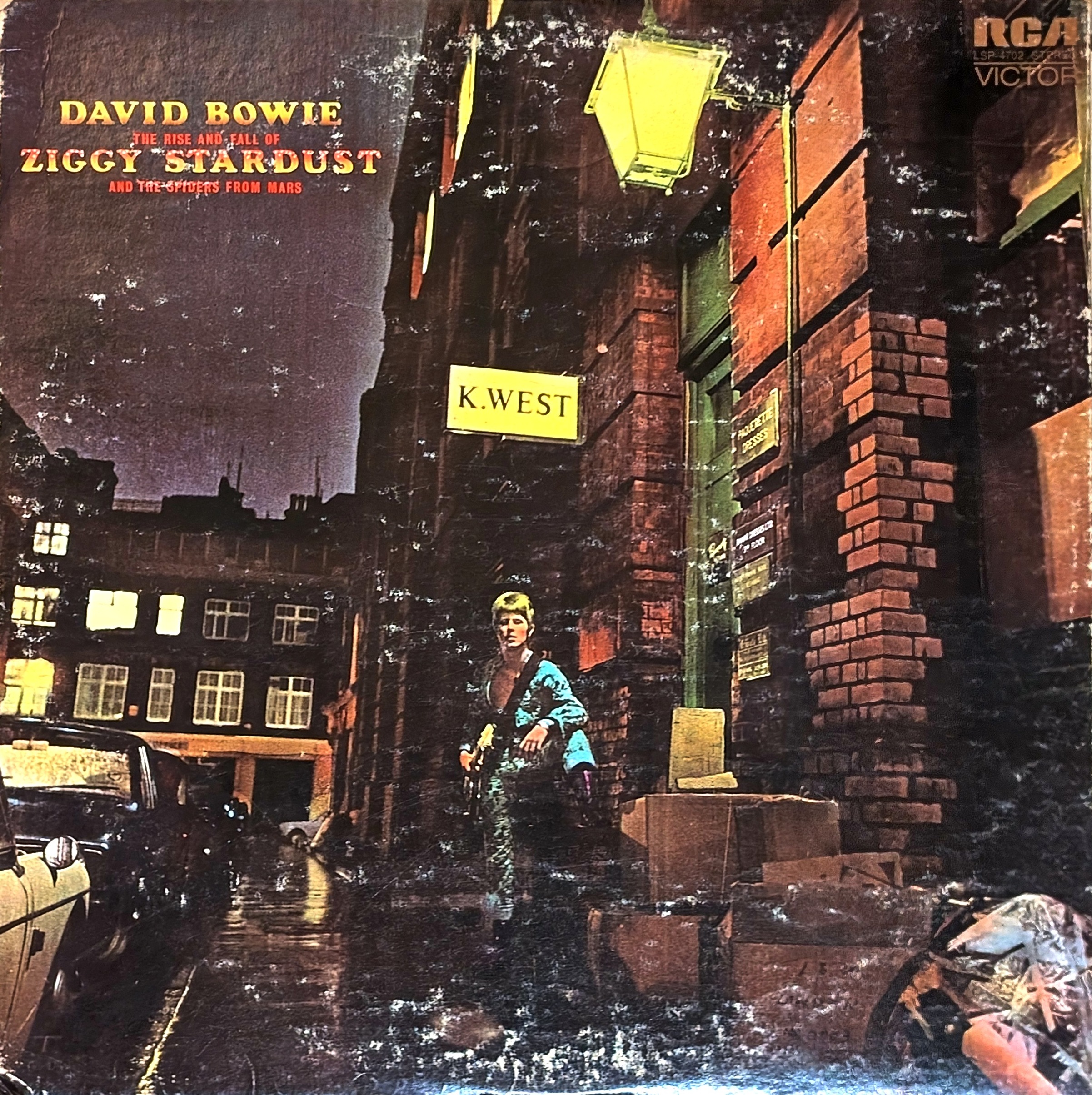
David Bowie
The Rise and Fall of Ziggy Stardust and the Spiders from Mars
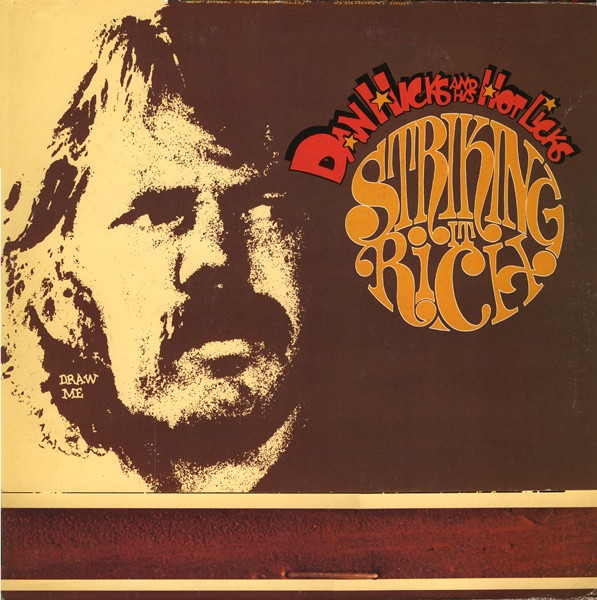
Dan Hicks & His Hot Licks
Striking It Rich
Great White Cane
Great White Cane
Bob Seger
Smokin’ O.P.’s
Highway Robbery
For Love Or Money
Heavy Cruiser
Heavy Cruiser
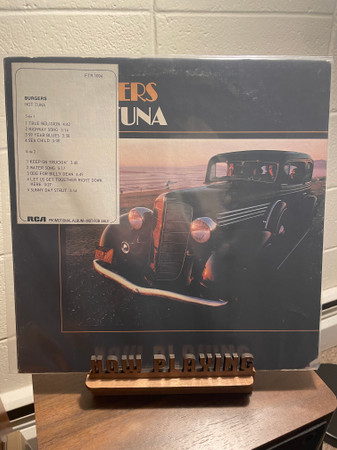
Hot Tuna
Burgers
Peter Kaukonen
Black Kangaroo
Glass Harp
It Makes Me Glad
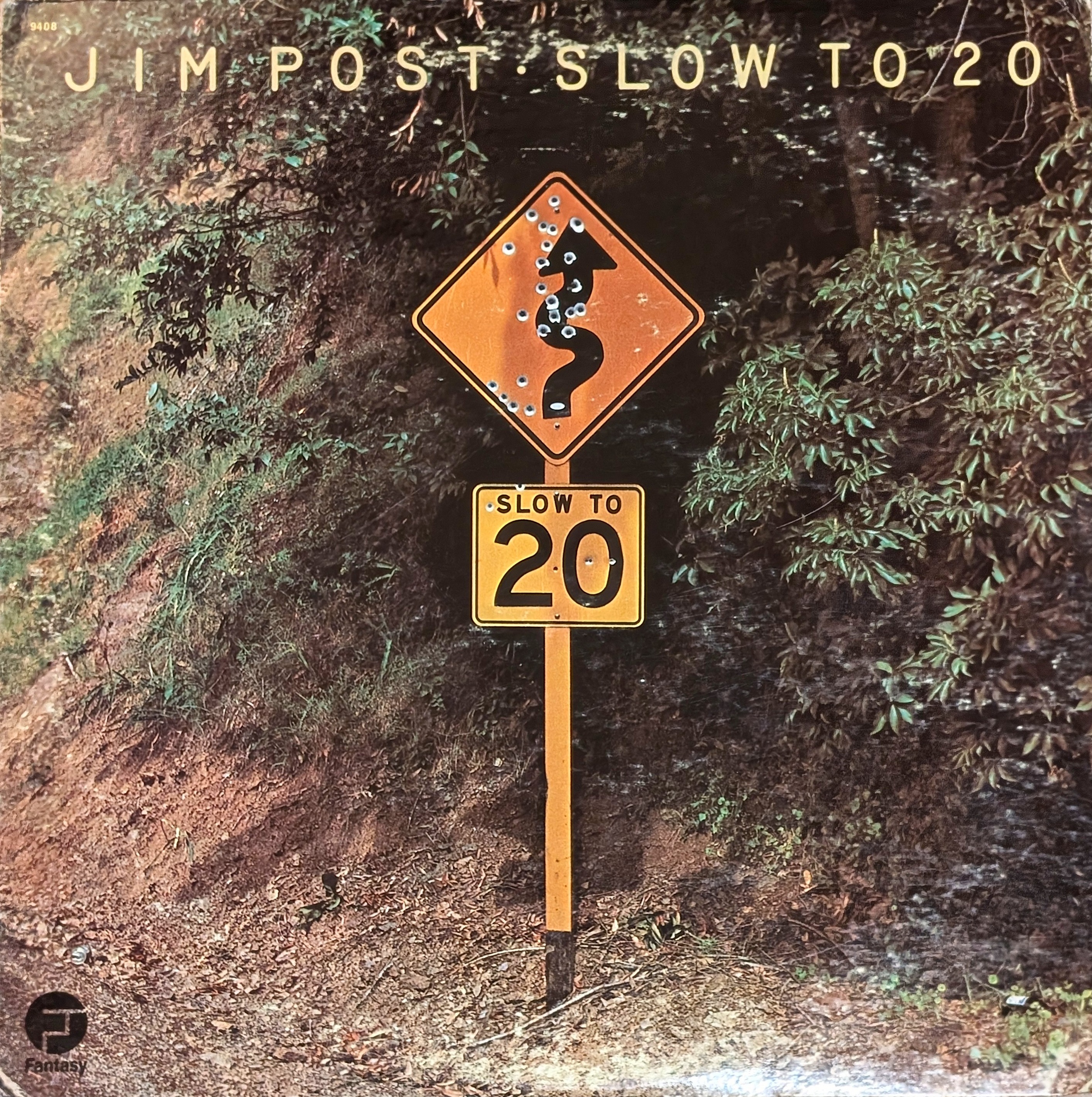
Jim Post
Slow To 20
My S-R 10 from 1972
The (Almost) Total Losers
I had to insert the “(Almost)” because the total losers went back to the editorial room of the S-R, so I must’ve heard something worth listening to in these albums…
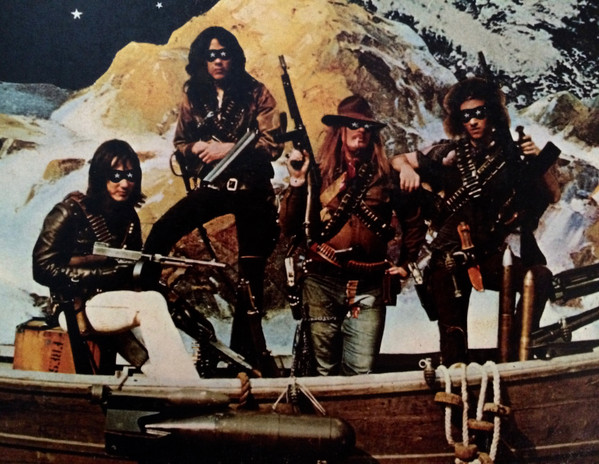
Heavy Cruiser by Heavy Cruiser
Photo credit: Discogs.com
All I remember from this album is a snatch from “Wonder Wheel” and I’m surprised in looking at the track listing that this album had “Louie Louie” on it. In reading today about the band I learned that it seems to have been an offshoot from some group named Mama Lion, and the driving force in the former didn’t want band members’ names on this album because he felt they would detract from Mama Lion. Although I digitized most of my albums, this one never made the cut…and it was a low bar.
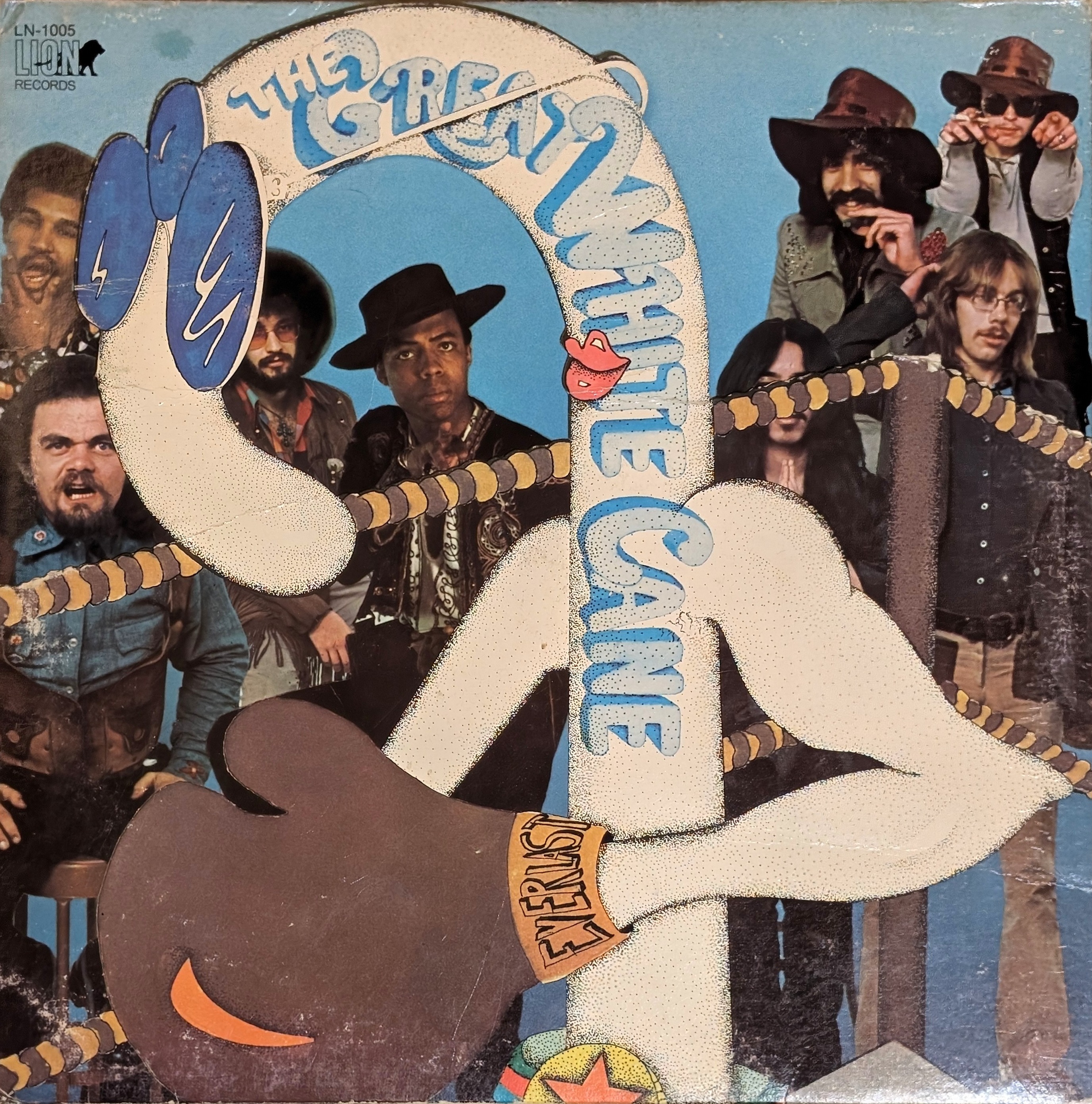
The Great White Cane by The Great White Cane
The cane and fighting ring fold down to reveal the band. Collection of K. Pilcher, June 2024.
The best thing about this album was that the White Cane image above folded down. It overlaid the image of the band. The second-best thing I didn’t even realize until about 40 years later: the lead singer was Rick James who wrote or co-wrote all of the songs. Nevertheless, it sucked. Where the Heavy Cruiser album at least hit a rock ‘n’ roll hot spot for me, this combined “rock, funk, and soul” as described by Discogs and that wasn’t my groove at the time. My interests expanded over time–my interest in this album did not. Bad funk really isn’t very good. Bad rock will be better than bad funk, every time.
The ‘Meh’ Group
I acknowledge the talent of these releases, but they never really grabbed me. I gave them a listen once in a while. I’m not sure they’re available on streaming services or not.
It Makes Me Glad by Glass Harp
Yes, long hair. Everyone, pretty much. Collection of K. Pilcher, June 2024.
This album still resides in my digital library. It has a Christian overtone to it. “Do Lord” is a traditional tune, but most of it is a mostly folk album. Pretty but not compelling. It’s good, but band turmoil/churn apparently led to a different lineup after this album which took off into the King Crimson/Moody Blues universe. Too bad. They might’ve become something if they had stuck with what they were.
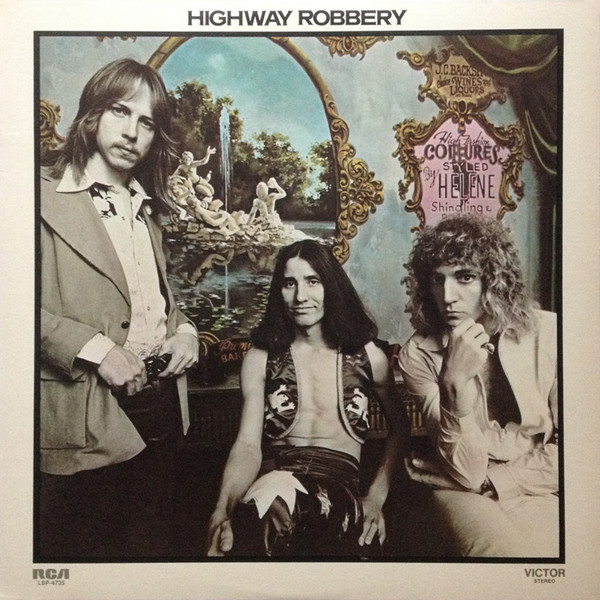
For Love Or Money by Highway Robbery
Photo credit: Discogs.com
The band’s only album. They made a minor ripple in the pool of public perception with “Mystery Rider” a song which demonstrates what a lot of bands were attempting to do at the time. The latter half of Grand Funk’s career, Uriah Heep, and other power rock groups heavily influenced Highway Robbery. If you let the “Mystery Rider” track play out on YouTube, it segues into “Promotion Man” which grabs my attention more. Another good one was “Ain’t Gonna Take No More”, a song I sang many a times as a young lad.
The Hey-This-Sounds-Good Group
Mathematically-inclined readers have realized that six albums remain, so I made out pretty good with these freebies. I knew little of these acts, and that’s a statement I want you to keep in mind as you encounter them. I’ve listed them in reverse order to my (limited) knowledge of them at that time…
Slow To 20 by Jim Post
Collection of K. Pilcher, June 2024.
Artists and music labels can block certain albums from appearing on streaming services which remains one of my biggest disappointments with those services and explains why I still use a digital audio player (DAP), a jukebox program (MediaMonkey), and my digital library of nearly 20,000 tracks (1680 albums). I learned just within the past few years that Jim Post came from the upper Midwest folk scene which included John Prine, Steve Goodman, and others whose names I don’t recognize. He charted a song “Reach Out of the Darkness” in 1968 which I’ll need to search out–right now, this album is all I know of him, sonically. He’s got a rambunctious, jazzy infusion to his folk, similar in energy but not style to Jackson Browne. I find myself singing many of his songs more than fifty years later. But…he later recorded a lot of children’s music. Whether this is the reason none of this early stuff appears on Tidal or whether it’s a music-rights issue, I don’t know. It’s disappointing though. This is a good album.
Black Kangaroo by Peter Kaukonen
Kaudonen presumably in Australia. Not shown: big black kangaroo. Collection of K. Pilcher, June 2024.
It’s a tossup whether I knew this guy or the next one less (more?). I dimly recognized the last name. Peter is Jorma’s brother, and Jorma had a pretty good career in Jefferson Airplane, Hot Tuna, and then as a solo artist. I discovered just today that Peter played in Hot Tuna in an early incarnation of the band but he apparently left to do a bit different music than their bent toward traditional country blues. The music on this album is decidedly different. Peter leans into the electric side of blues-rock-pop and indulges several sci-fi type topics. “Billy’s Tune” tells about Billy who has given most of his body parts away and lives in jar. I still think of “Barking Dog Blues” every time I listen to the three hunting dogs in the lot behind me race up and down their fence line snarling at the German shepherd in the next yard over. Peter played with Jefferson Airplane a bit, too, I learned on Wikipedia, and with Johnny Winter, and with Link Wray. Black Kangaroo is actually the name of his band. The inside of the album cover features a black kangaroo flipping everyone the bird. Real listenable music, but not as good creatively-speaking as the Jim Post album.
Striking It Rich by Dan Hicks & His Hot Licks
Photo credit: Discogs.com
Had I vaguely heard of Dan Hicks before landing this album? I doubt it. And if you haven’t heard of him either, you owe it to yourself to listen at least once. My personal favorites on this album are “O’Reilly At The Bar,” “Canned Music,” “I’m An Old Cowhand (From the Rio Grande),” and “I Scare Myself”. As Wikipedia puts it, “His idiosyncratic style combined elements of cowboy folk, jazz, country, swing, bluegrass, pop, and gypsy music.” Two of his best-known songs are in those four I just listed. He’s the guy who wrote “How Can I Miss You When You Won’t Go Away?” Basically he channels the swing vibe of Django Reinhardt and others. This was his third album. Here, listen to this. The play of violin, that weird background from the Lickettes (yeah, that’s their other name), and the minor key juxtaposed against his lyrics…man, that’s just great!
Smokin’ O.P.’s by Bob Seger
Photo credit: Discogs.com
Despite the one-eighth inch chunk missing from the edge of the record when I pulled it out, this became one of my favorite rock ‘n’ roll albums. I didn’t ditch the LP until I switched over to taped versions of all my records in the mid- to late-80s. My college roommate Motorhead, a smoker, provided the insight that “O.P.’s” are other people’s cigarettes. “Smokin’ O.P.’s” means you’re bumming smokes from everyone. The album is made to look like a pack of Lucky Strikes. And the extra meaning comes from all of the songs coming from other composers instead of Seger. At the time I snagged this one, I had heard of Seger and The Bob Seger System, but I hadn’t heard him–he was still a regional act at the beginning of the 70’s. [I must correct that: “Ramblin’ Gamblin’ Man” charted up to #17 in 1969–a national hit.] A great version of “Bo Diddley” opens the record, and it’s followed by “Love The One You’re With,” “If I Were A Carpenter,” which reached #76 in the US, and “Hummin’ Bird”, plus a re-release of “Heavy Music”. Seger’s music is still rocking the Hammond organ on this LP. I lament that Tidal (and previously Spotify) doesn’t have this record. Too many royalties to pay?
Burgers by Hot Tuna
Photo credit: Discogs
Yep, that’s a crap photograph–but it’s the only one I could find which looks like the one I got with the Radio DJ label slapped on it. While some of these records had small stickers that said “Promotional Copy” or somesuch, this was the only record which put the entire track list on a 3×5 label right over the name of the record and the act! This is the band Jorma Kaukonen started. He remained a country-blues artist even though he let Marty Balin convince him to play with Jefferson Airplane. All of the songs are good–I sing them regularly. I particularly like the opening of “99 Year Blues”: Well now bring me my pistol, I said three round balls. I’m gonna shoot everybody I don’tlike at all. I take it glass-half-full, that there are only three persons who piss him off! “Keep On Truckin'” and others just really hit a musical sweet spot.
The Rise and Fall of Ziggy Stardust and the Spiders from Marsby David Bowie
You can tell this album was handled a lot. Collection of K. Pilcher, June 2024.
Looking back, there occur wondrous moments when you first tripped over a famous artist before he/she/it/they became known. In the summer of 1972 the single “Starman” had been released, but it had yet to hit the Top 100. Bowie had only had one charting single at that time, “Changes”, which I don’t remember having heard while still in high school. (As I’ve stated, our insular market didn’t always hear the top music.) I therefore had no idea who this strange-looking guy was, and I didn’t know what to make of that voice! But I’ve never forgotten how despite my skepticism, I found myself humming the tunes from this album. I listened again. And again. And again. You couldn’t deny David Bowie, then and now. And I got it free because the music critic didn’t think enough of it to hang onto it. Sweet.
As I prepared to graduate high school in 1972, the recent months had been kind, musically speaking. Eric Clapton as Derek & The Dominos had just clocked in with “Layla”. Graham Nash and David Crosby posted “Immigration Man”. The armed service brats who formed America had popped out two hits, “I Need You” and “A Horse With No Name”. (Name the damn horse! He’s taking you across a desert for crying out loud!) Paul Simon had a “Mother and Child Reunion” while “Sylvia’s Mother” was being pestered by Dr. Hook and his Medicine Show. Some newish guys–Elton John, David Bowie, Kenny Loggins, and Todd Rundgren–were starting to establish themselves.
Some songs make my playlist for personal history reasons, not so much because I really, really like them, but because I liked them enough that they were the background music to my life at that time: “Conquistador” by Procol Harem; “How Do You Do?” by Mouth & MacNeal; “I’m Movin’ On” by John Kay and Steppenwolf; “Sugaree” by Jerry Garcia; “Family Affair” by Sly & The Family Stone. Others I don’t remember having heard back then, but they sum up that time quite well: “Hallelujah” by Sweathog; “Baby Won’t You Let Me Rock n’ Roll You” by Ten Years After; “Move ‘Em Out” by Delaney & Bonnie; “In A Broken Dream” by Python Lee Jackson, an Australian group with Rod Stewart sitting in on the vocals; and Roberta Flack’s version of “Will You Still Love Me Tomorrow” (hauntingly slow and soft).
I’d like to go on and on, but it’s just some old guy talking about why he likes certain pieces of music. I remember the uncle of my ex-wife who had tables of old records in his barn. Every garage sale and estate sale he went to he would scoop up all the records. We’re talking stuff from the 1920’s through 1940’s mostly. He and I would “shoot the shit” for hours as he talked about “Minnie the Mooch” and all the other great music from back then. It’s fun to appreciate music through someone else’s love of it. Should anyone think there’s something worthwhile like that here, let me know. I don’t want to bore ya.
Meanwhile, here’s a mirror image of what I looked like when I was listening to those tunes, and the other 80 I didn’t mention:
Selfies were more difficult back then… Taken with my newly purchased Honeywell Pentax SP 500 SLR. Boy, I wish I could hold a camera that steady these days. May 1972.
From YouTube track for The Spiders. Note the composers’ names. Vince Furnier anyone?
Not long ago I waxed on about the songs of 1966 when I left 6th grade and pre-pubescence at the same time. In high school and college I listened to Alice Cooper, never knowing I could’ve been listening to proto-A.C. when I was MUCH younger! (Link to YouTube pictured above.) Extra special weirdness: every band member on this recording (except maybe the drummer) didn’t just come from the same high school, they were all on the cross country team as seniors! I know from peripheral experience that long distance runners are a wacky, different breed, but…really?
After moving to Los Angeles, renaming themselves Nazz and then because Todd Rundgren already had taken that name, to Alice Cooper, they were still capable of emptying a paying establishment in ten minutes. That’s when a middleman more or less said to himself, “boy, Frank Zappa would love these guys,” and routed them to Zappa. He turned them into the Alice Cooper we know and love. Of course, they had to move to Pontiac, Michigan, to gain acceptance. “L.A. just didn’t get it,” Cooper said at the time. “They were on the wrong drug for us. They were on acid and we were basically drinking beer.” [info and quotes courtesy of Wikipedia]
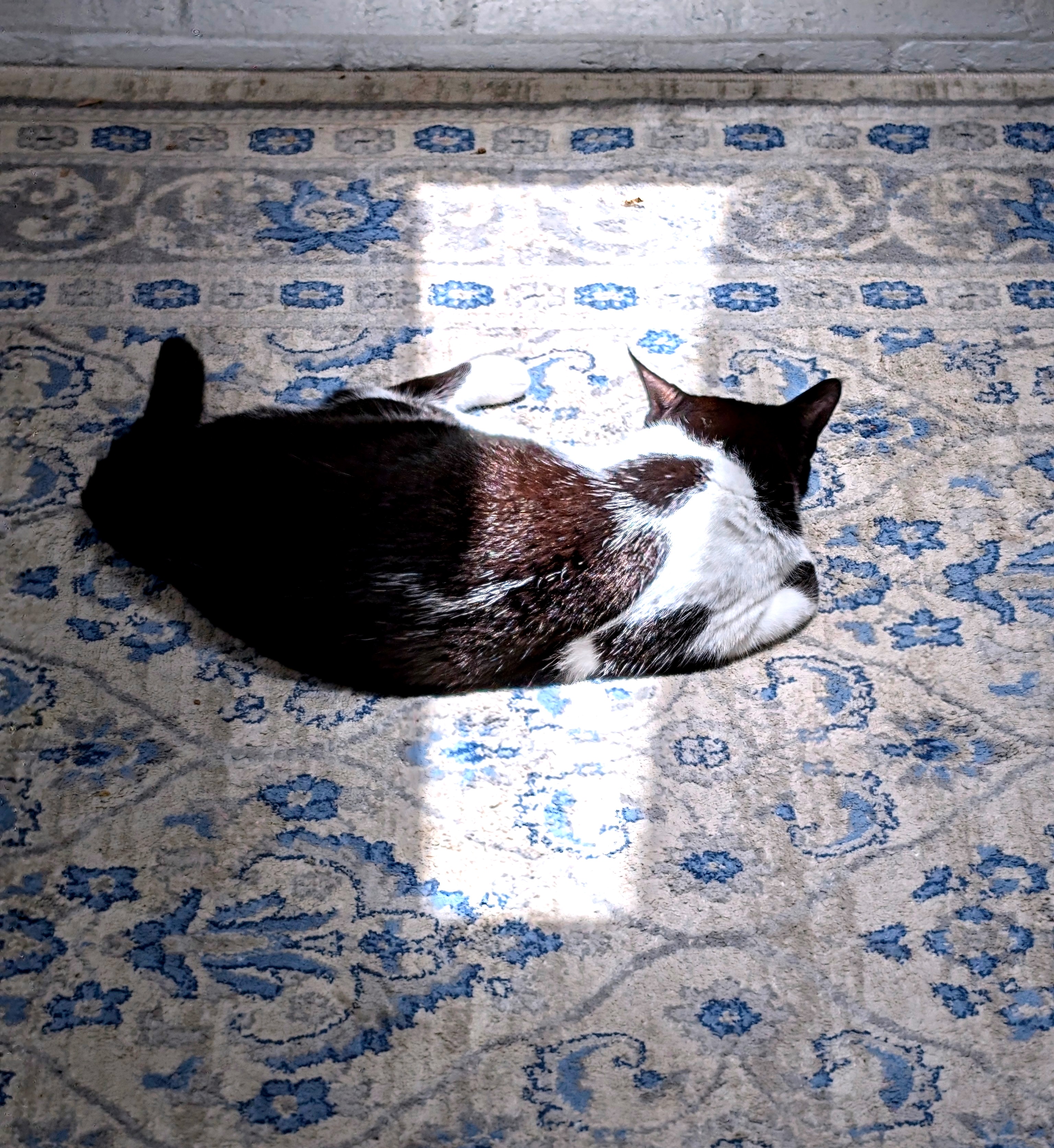
I attempted to explain that turning 90 degrees would align his body with the patch of sunlight, but Benny was having none of it. Either he’s indifferent or simply doesn’t understand geometry. I’m going with indifferent. July 2024.
6th grade was better…
About a month ago I posted about how 1966 proved seminal in my life for appreciating music, a year when I ‘woke up’ musically. Virtually every song in the Top Ten made me smile and say, “yeah…” and almost every one of them wound up on a 1966 playlist. Today I thought, “let’s see what 1972 held for me as I approached graduation from high school.” Holy. Crap. No wonder I felt adrift for much of the year–and I had thought it could be chalked up to teenaged ennui. In the Top Ten for the first week of January I encountered artists I still don’t like more than 50 years later: the really young Michael Jackson; David Cassidy; Donny Osmond. One song I had never heard before today: “Scorpio” by Dennis Coffey and the Detroit Guitar Band. I did get to add the top four songs to my new list: “Brand New Key” by Melanie; “American Pie (Parts 1 and 2) by Don McLean; “Family Affair” by Sly and the Family Stone; and “An Old Fashioned Love Song” by Three Dog Night.
By the second week of January the Top 40 contained two versions of “I’d Like To Teach The World To Sing (In Perfect Harmony)” now known forevermore as The Coke Song. A last gasp Sonny and Cher song, “All I Ever Need Is You” didn’t make the cut. Likewise anything by The Stylistics, Al Green, and who the heck is Betty Wright? Thankfully other artists were riding high or coming into their own: Van Morrison, Rod Stewart, Rare Earth, Three Dog Night, Bread, Grand Funk, The Who, T. Rex, and Elton John. Oh, yeah, and this group called Led Zeppelin put out its fourth album. “Black Dog” hit the January 8th chart.
It will be interesting to continue through the year. I distinctly remember Alice Cooper put out “I’m Eighteen” when I turned 18 myself. Just after graduation I picked up a free copy of The Rise and Fall of Ziggy Stardust and the Spiders from Mars wondering who the heck this David Bowie guy was. At least there’s that to look forward too. Oh, and Neil Young…and Humble Pie…hmmm…maybe this won’t be so sad after all.
The annual lily surprise
Every year this lily pops out in the middle of a row of azaleas, bringing a surprised smile. July 2024.
I’ve been thinking about Pop Music a bit the past week or two, prompted by being forced to listen to my wife’s choice of music in our car one day. It’s some “hits of the 70’s, 80’s, and 90’s” piece of something-or-other…unless you like that sort of thing, then it’s a wonderful FM station which plays all the greatest songs you know and love. I’ve assiduously avoided listening to radio from the first opportunity I had to not listen to it, sometime in my late teens or early 20’s. I suppose some readers don’t understand what I’m talking about. Through high school we listened to music in two places, basically: cars and our bedrooms. We had AM radio in the cars and vinyl records in our bedrooms. If you really got into it and had deep pockets, you bought a big Wollensak reel-to-reel tape machine, but if you were a wannabe like my brother and me, you bought a cheap little portable recorder and stuck the painfully crappy microphone in front of a tiny transistor radio speaker to record “off the air”.
In small-market Spokane only two radio stations catered to young people and their shocking tastes in music: KNEW (neé KJRB by the time I left high school), and KXLY. All popular music of whatever genre mixed freely on these stations. No FM station played popular music until around the time I entered college when KREM-FM suddenly started an “underground” playlist. Underground radio featured stoned out DJ’s: “Hi, I’m John. Yeah. We’ll be playing some heavy tunes for a while. I hope you like them.” We programmed the buttons on the radio–oh Lord, do I have to explain how car radios worked back then? Those too?–to the two AM stations and became adept at punching the button for whichever one wasn’t playing a song we loathed, which happened frequently. You’ll understand in another paragraph.
But back to that moment a week ago when I listened to many songs I hadn’t heard in years. The one which sticks in my head is “If This Is It” by Huey Lewis and the News. I’m going to hate myself for looking that up and reminding my brain about it: I had a viral ear-worm for days after hearing that song. It’s not that I don’t appreciate Mr Lewis, it’s that I don’t particularly like that specific song. “I Wanna New Drug” has sentiment I can get behind. “The Heart of Rock & Roll” zips along quite nicely. But a slow near-ballad which basically says, “do you see this going where I think it’s going” struck me then and continues to as ridiculously mundane. Maybe you like it. Fine, you’re entitled because we all ask music to deliver different things and if the song delivers, great…for you. I like absolutely stupid songs because of a bass line or because the singer’s voice seems to mock the very words being sung, or because it has a frenetic beat, or a multitude of other reasons. I’m not going to mention two extremely popular groups which demographics say I should love, and I can’t stand them. I lost a friend over that once.
Listening to my wife’s radio station, I had a startling realization. I had been getting pretty egotistic about how broad my musical horizons are. I like country, blues, rock, blues-rock, folk, world/ethnic, jazz of various ilks, classical, a little bit of hip-hop and…pop. My enforced listening session in the car showed me I don’t really like pop per se, I like it very selectively. I protested to myself about all that pop music I liked from my youth. That’s when it hit me: we like all those songs which formed us as we left childhood, negotiated adolescence, and became adults. After that? Not so much. We went in different directions. Some folks I’ve met never went anywhere. They only listen to songs from the oeuvre when they were 10-25.
Today proves my point. Yesterday I finished chores and declared it to be Birthday Week. I’ve decided one day isn’t big enough to handle 70 years. Until Tuesday June 11th, I’m celebrating. Today unfolded at a leisurely pace, pointed toward some music listening, writing, and a Phillies game. I decided to listen to music from the beginning of my listening life, and then realized “the beginning” eludes definition. I settled for the year my pre-teen fan-tasy grew into musical appreciation: 1966. Until then I’d focused on whatever TV and radio served up: The Beatles, early The Rolling Stones, The Monkees. In 1965 my brother and I began buying a few different bands on 45rpm records, and in 1966 I got my first 33rpm LP, The Young Rascals. It coincided with my birthday and the end of the school year. I ran out of the schoolroom never to return to elementary school, and I ran into adolescence with a newfound appreciation for the melding of pop, soul, and rock which had started to occur.
I decided to re-introduce myself to 1966 by looking at the Top 40 lists for the year and selecting songs to listen to from it. Locating a wonderful site called Top 40 Weekly, I selected 1966 to be presented with the Top 40 chart for every single week in 1966! Wow. Here’s the beginning of the first one from January of that year:
Top 40 Weekly’s chart for the beginning of 1966.
This proves my point. (Of course, it’s self-referential, but nevermind.) I look at the first song and start singing the lyrics. I look at the second one and smile and hear Paul singing the title words. Likewise with #3 and #4. I’ll admit #5 threw me for a minute–I’m more familiar with “Catch Us If You Can” by that group, as heard on the Lloyd Thaxton show. Giving it a play, though, it came back to mind. How about #6? Check. And #7? Check. Not until #8 did I say to myself, “punch the button.” I like a few Righteous Brothers songs, but they carried a crooning 50’s style of music into the 60’s, and it didn’t play well. But who can’t smile listening to #9?
Then we hit #10. Lord knows how Eddy Arnold managed to get a charting song out of that number. I felt the revulsion rise up. Today’s form of button-pushing, the skip-track button on the streaming service came into play quickly. The remaining songs? I smiled again at #11; sang the lyrics to #12 with my wife; and wondered how #’s 13 and 14 got on the list. I don’t recall ever hearing them. The Shangri-Las managed to push out a charting song in 1966? You gotta admire that, even if the song was horrible. (I never heard that one either.) Gary Lewis’s song typified his talentless group, but made me remember “This Diamond Ring” so it wasn’t worthless. I couldn’t find #17 on Tidal, and then a relaxed wide smile–the Beatles again. Before there were LP’s in my life, there were 45’s:
Both songs in the top 20 starting January 1966.
I couldn’t find Ramsey Lewis Trio’s version of “Hang On Sloopy” and wonder what the heck a jazz trio could’ve done with The McCoys’ big hit. The Beach Boys were a selective thing for me, and #20 didn’t hit the spot. I continued through the list until I hit #40. It kinda made the whole journey worthwhile: “Lies” by The Knickerbockers. I loved that song; still do. They had another great one as shown at the top of this post.
The final 45 I bought occurred in 1976. I bought it only because I knew I would never like the album, but I wanted the song for posterity’s sake:
“The king is dead but not forgotten…this is a song about Johnny Rotten” –from “My My, Hey Hey” by Neil Young.
Our musical likes have more to do with where we grew up and what we listened to at the time, than anything objectively wonderful about the music. We like what we like, and we don’t what we don’t. Objective criticism fails precisely because it rejects subjectivity. Do I like “bad” songs? You bet. Do I dislike “good” ones? True. Are you totally inexplicable to me because you like “A White Shade Of Pale”? Abso-effing-lutely.
A very happy Epiphany to y’all. I’ll refer you to many other sources online which will explain all the nuances of the day–suffice to say it generally is associated with the Three Wise Men/Three Kings who visited the Christ Child a bit after his birth. Think gold, frankincense, and myrrh. For me it means I listen to Amahl and the Night Visitors, a one-act opera by Gian Carlo Menotti. In it, Amahl is a young boy, lame, who no longer watches sheep because his mother and he are so poor that she has sold the sheep to buy food. There is no father. They are visited by the three wise men who are on their way to Bethlehem. Amahl’s mother is unable to withstand temptation with all that gold, and she takes a piece whereupon she is caught. All is quickly forgiven, Amahl experiences a miracle healing, and he receives his mother’s permission to accompany the three kings on the rest of their journey so that he can pay homage to Jesus (and presumably give thanks for being healed).
This opera amazes me, not because of its performance (which I love) but because in 1951 NBC commissioned it, by the “director of NBC’s new opera programming” no less! Imagine that. Today reality TV masquerades as intentional, thoughtful programming; 70 years ago, NBC not only telecast an opera but commissioned it. I have listened to this on or around Epiphany every year for more than 30 years after I purchased it from the Musical Heritage Society in the late 80’s. My version is the 1986 London production which occurred under Menotti’s supervision, and which I digitized during the Great Musical Digitization Project I performed on my music from 2006-2014. (Eight years? In my defense there was a lot of music, and I kept buying more. In fact, I have a few hundred recordings which never made it, mostly jazz and classical.) Imagine my distress when I couldn’t locate this file on my computer today. Something must have happened–files do corrupt for various reasons–and I deleted it? I had to ‘make do’ with the version I found on Tidal which featured the original cast of the NBC telecast shown on Christmas Eve in 1951. I couldn’t determine if it was the actual broadcast or just “featured” those performers. If you go looking for it, the director of this recording was Thomas Schippers. It was very good, but not as good as the one I purchased in 1987 or 1988 from MHS. The latter has clearer vocals which make the words easier to understand. In my opinion, it also features a bit more drama in the performances.
This is an opera for children because it tries to recapture my own childhood. You see, when I was a child I lived in Italy, and in Italy we have no Santa Claus. I suppose that Santa Claus is much too busy with American children to be able to handle Italian children as well. Our gifts were brought to us by the Three Kings, instead.
I actually never met the Three Kings—it didn’t matter how hard my little brother and I tried to keep awake at night to catch a glimpse of the Three Royal Visitors, we would always fall asleep just before they arrived. But I do remember hearing them. I remember the weird cadence of their song in the dark distance; I remember the brittle sound of the camel’s hooves crushing the frozen snow; and I remember the mysterious tinkling of their silver bridles.
Gian-Carlo Menotti, from the liner notes to the original cast recording (Wikipedia)
I miss MHS. It would usually take obscure or under-appreciated (but very decent) recordings, add its own liner notes, and press them. In addition to Amahl and the Night Visitors I purchased many wonderful albums of Christmas music alone: A Tapestry of Carols by Maddy Prior and the Carnival Band, listed first because it is my absolute favorite Christmas album; Christmas Carols by the Scottish National Orchestra, rated by several critics as one of the best Christmas albums ever; Christmas Now Is Drawing Nigh by Sneaks Noyse, an attempt to recreate what the carols sounded like centuries ago; Carols from New College by the Choir of New College, Oxford; Merry Christmas by the Vienna Boys Choir; and A Festival of Christmas which appears to be a combination of two commercial albums, one by the Huddersfield Choral Society and one by The Royal Liverpool Philharmonic Orchestra and Choir.
And so we bid goodbye to Christmastide and Epiphany. In a moment, I shall pray for all those who enter our house and chalk that blessing on the lintel of our front door. I’m not worried about getting the decorations down before sundown: they will start to come down tomorrow. And we will segue into Ordinary Time, an odd naming for the time which is neither Lent/Easter- or Advent/Christmas-oriented. Bless you all who come through the virtual doorway to this blog.
…gave to me…we’re going with drummers drumming which have occupied ninth through twelfth places in all versions of the past century. In 1980 I attended a Japanese Festival at the Seattle Center. The highlight for me occurred with a show of taiko drumming which had been preceded with a film about the religious origins of the drumming-based music. It’s impossible to describe it other than to say it was a lot of drumming.
Small and medium-sized taiko drums with drummers. Seattle, 1980.Largest taiko drum with two drummers who do not always beat the same rhythm if I recall correctly. Seattle 1980.