
Our final full day on The Big Island, we drove west across the island to the Kona Coast. It didn’t totally waste our time, but it validated our decision to stay in Hilo. In our short taste of it, the Kona Coast appeals to people who aren’t us–hence they’re nuts: Kona Nuts. Near as I can figure out, the west side of The Big Island appeals to people who like:
- Swimming, surfing, snorkling, and scuba diving
- Deep sea fishing
- Parasailing and its variants
- Boating
- Lots of physical exercise (running, cycling, and the like)
- Shopping in malls, strip and otherwise
- Renting AirBnB’s, condos, and vacation houses crammed side by side up the hillsides facing the ocean
We don’t like any of that. Okay, we’ll take an occasional hike, and we’ll poke into those small shops catering to tourists (but they’re better when they don’t). We’re not the physically active types. I’m not at 70, and haven’t been since I flipped the dial past 40.
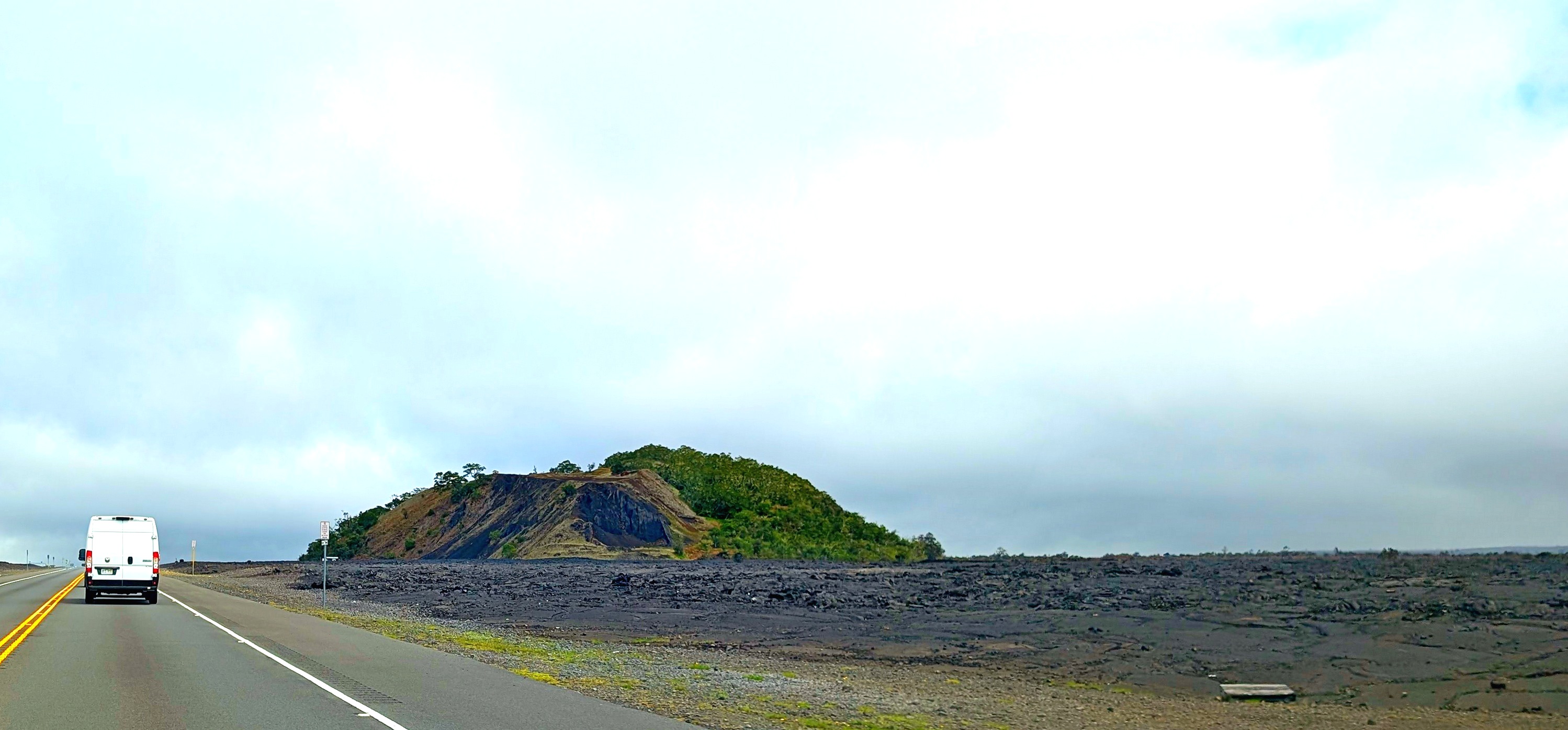
On top of that, we found the western side of the island to be hot, dry, a bit desiccated. Our first inkling occurred driving across the the caldera of Mauna Kea. We had left rain in Hilo, low wispy clouds misting us, sprinkling us with life-encouraging water. Once we climbed to the center of the island, things looked quite a bit different. (Photos are from our return drive to the east.)
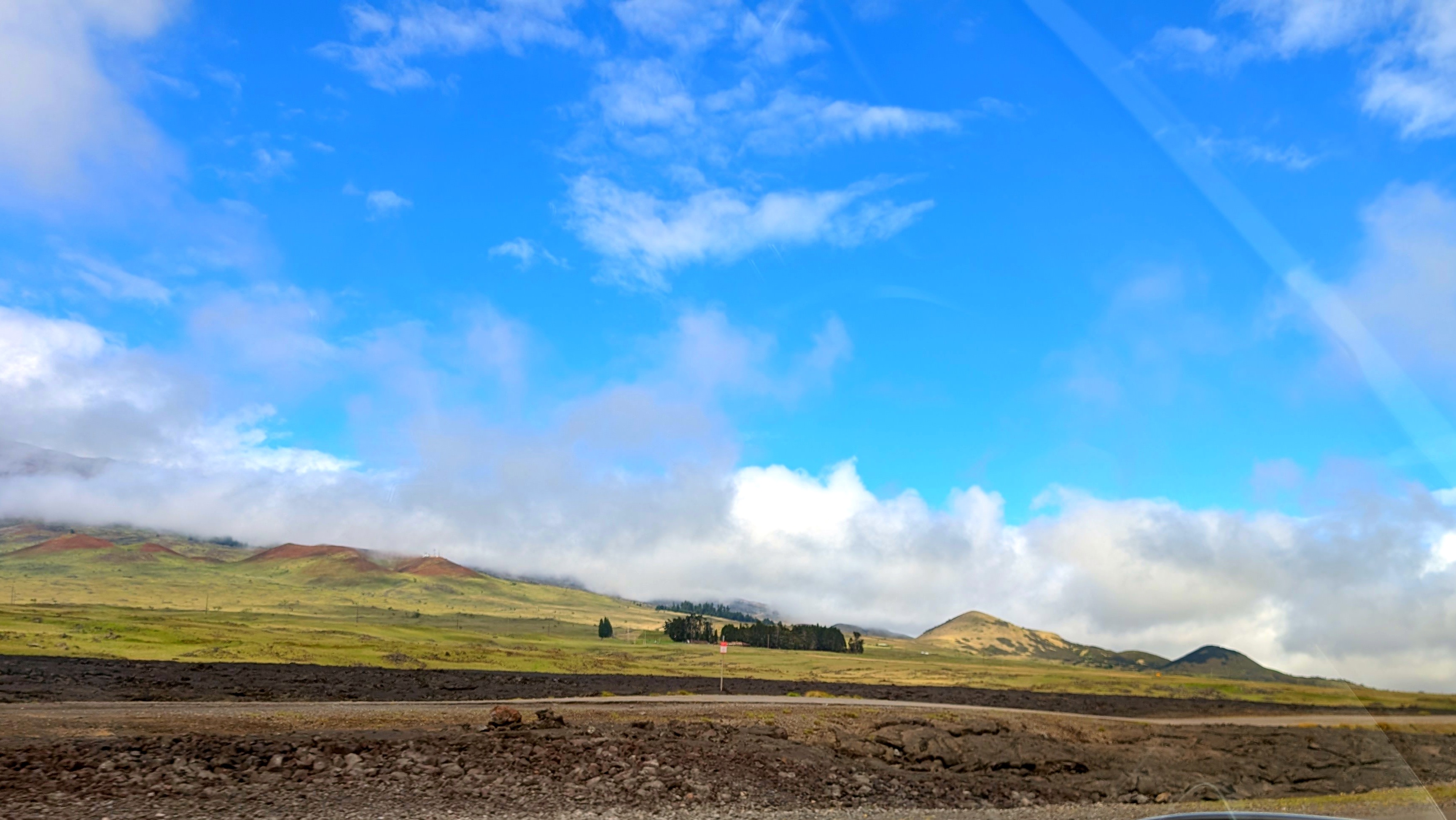
I grew up in eastern Washington State where lava flows poke like basalt bones through a grass-covered skin of dirt. It looked a lot like the western half the Big Island. If you told me this next photo was the interstate exchange just west of Spokane where students head south to Eastern Washington University, I would believe you:

Once we descended the steep slopes to Kona coast–an oddity to me; shouldn’t the leeward side be more gently sloped?–we found a whole lotta nothing…which isn’t really fair, but our first stop gave us that impression. The Kaloko-Honokohau National Historic Park starts out looking like this:
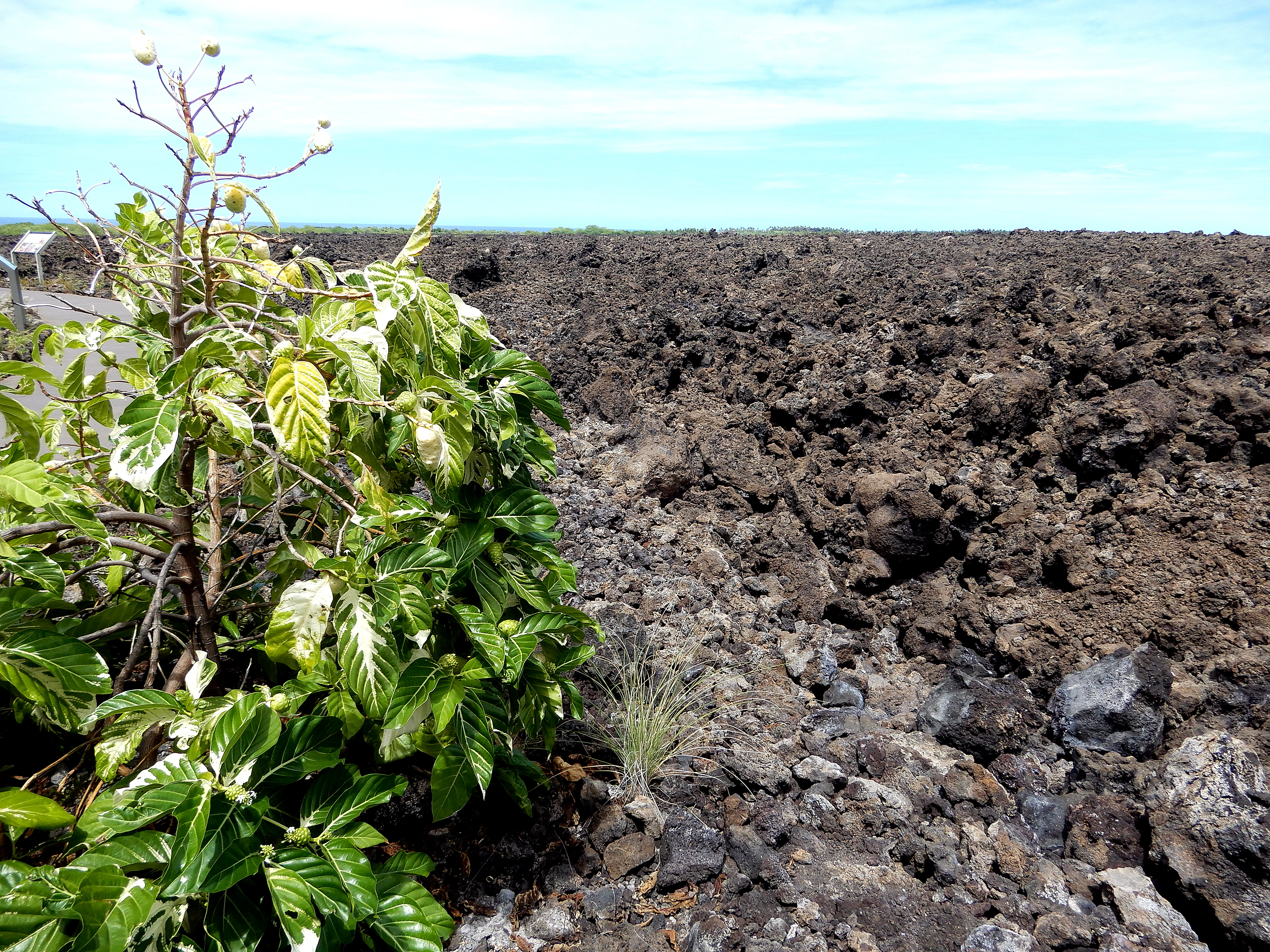
Although bleak, this stop proved informative. Indigenous peoples used these coasts to trap fish and perform other ocean-related activities (I think they got salt also–can’t remember). Families owned narrow parcels of land stretching from the shore up the slopes. Those members who lived at higher elevations would farm and bring their harvests to the shore to trade for fish and seafood. We chose not to walk the mile-long trail to a recreated site about the coastal folks, primarily because the 90+ degrees and lava fields intimidated us. Finding the entrance to that area of the park proved elusive, hidden and nearly unmarked as it was in the backmost corner of a parking lot for various marina businesses.
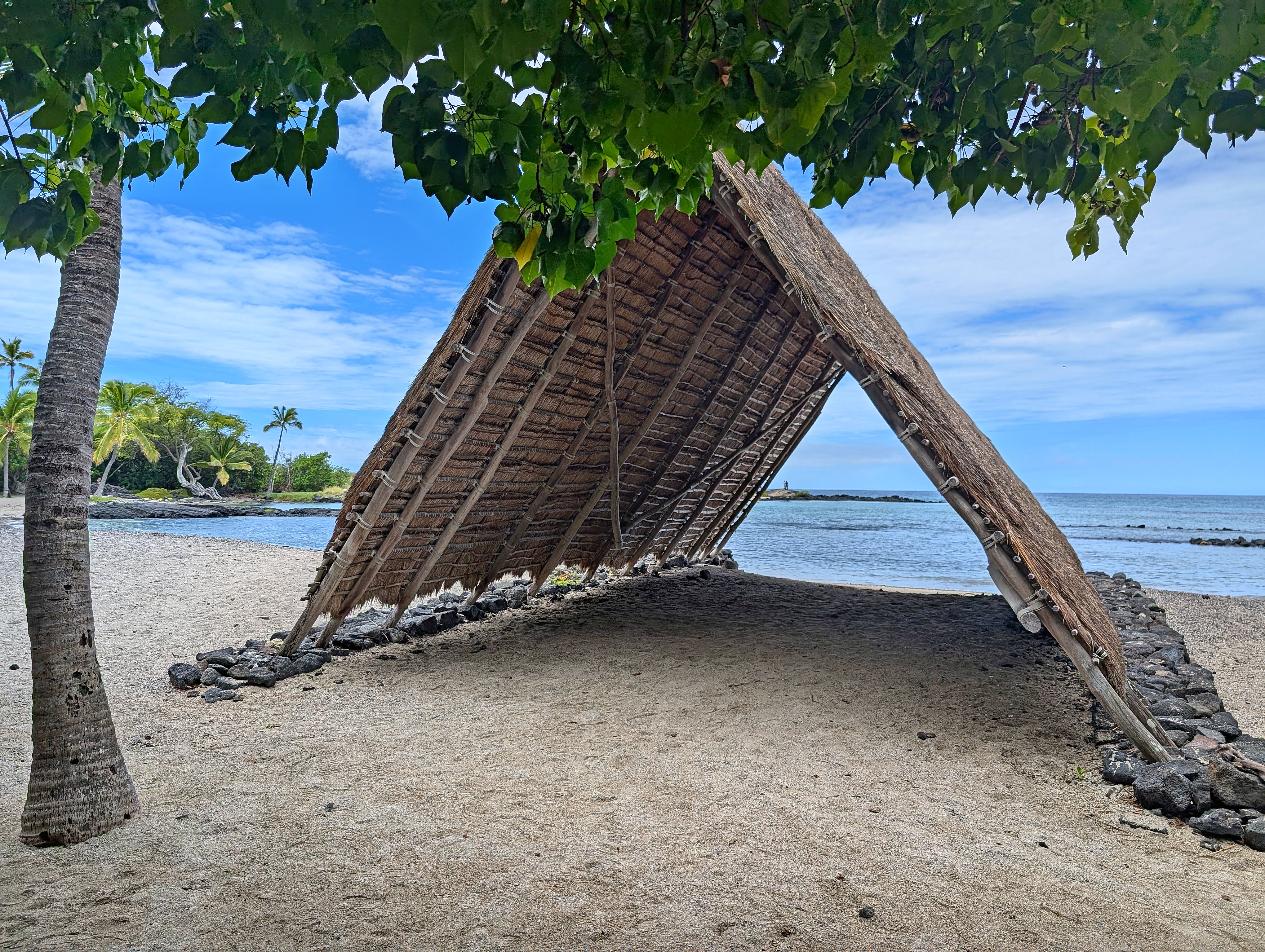
After this we drove south into Kailua-Kona proper. We found nothing but strip malls, hotels, gas stations, various support businesses, and the airport where virtually every airline flies except for Southwest Airlines (explaining why we flew into Hilo). We found restrooms and beat feet to the east side of the island. We had great views on our climb out of Kona: foregrounds of all the roofs of the vacation homes, backgrounds of the ocean. Yay.
 all the voices in my head