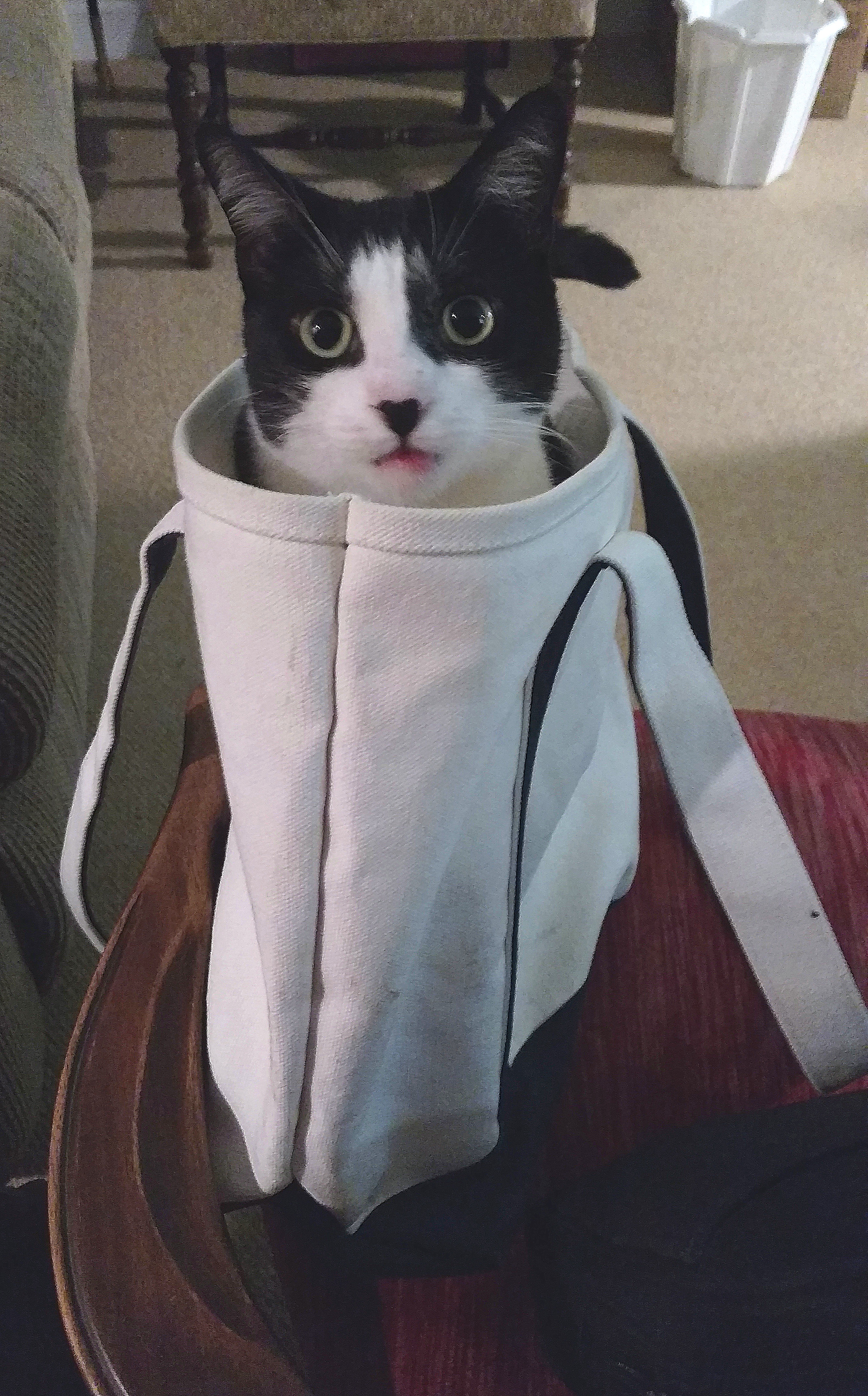
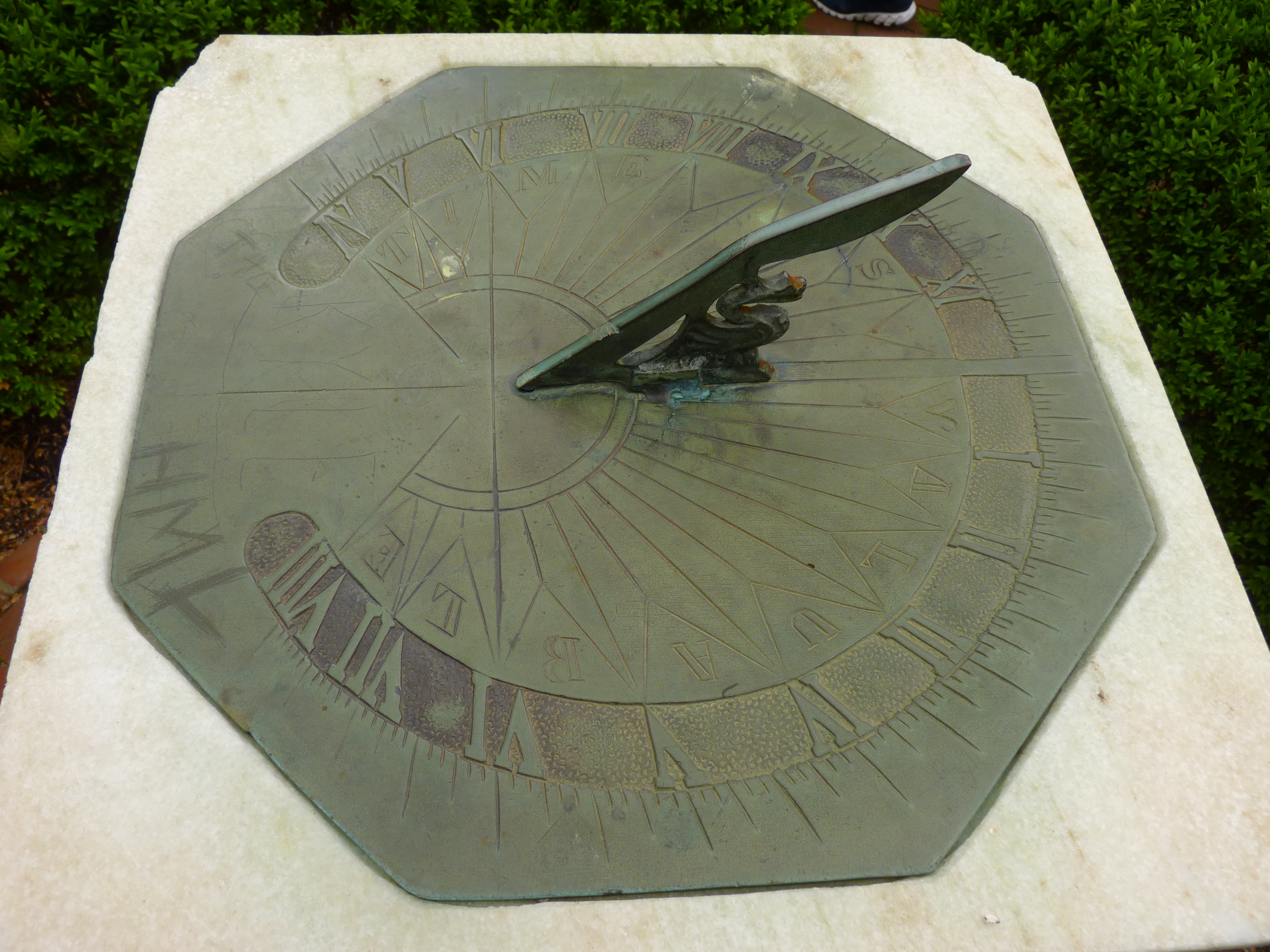
Cannonballs at the Tryon Palace, New Bern, NC. May 2009.
or, “To all who run toward the open field”
Not all are called to priesthood;
...to teach,
...to heal,
...to defend,
...to right wrongs,
...to lead,
...to agitate,
...to write
The Great American Novel.

Some of us pursue
not purpose but
meaning in being,
in "job well done",
in talents exercised,
in immediate
gratification for
problems solved,
purposes fulfilled, in
greasing wheels for
others, serving those
we do not know to
accomplish what we also
do not know. To add one
rock to the pyramid
being built by us all.
This isn’t the opening to a 12-step, I’m-so-ashamed program. The act of quitting bandages the abrasions earned by scraping your metaphorical knees as you learn what you shouldn’t do. Bandages shouldn’t be applied unnecessarily; so too don’t apply quitting without need. At best it looks stupid; at worst, it hampers your movement, just as an elaborate bandage hobbles you and can lead to permanent restriction.
We’re conditioned to abhor quitting. “Don’t be a quitter!” and “Winners never quit and quitters never win!” But what if you’re not in the right contest? Quitters may never win, but the untalented never win either, and there is no shame in realizing you’re in the wrong game: a five-foot body isn’t going to cut it in the NBA.
I’ve quit many a race. I regret few. I much more regret the months and months of anguishing about whether I should quit as I languished in a situation going nowhere. After the fact, I realized that I perversely reversed the thinking process, making the decision (without consciously acknowledging it) then searching for a rationalization to get to it.
Quitting can force itself on you. What blessed relief when something like an emergency appendectomy absolves you of all personal responsibility! Just lie there and let others administer to you! Or maybe a Tyrant-Disguised-As-Your-New-Boss suddenly makes the exit look exceedingly attractive. Or the ultimate quit occurs–your significant other stabs your heart by quitting the relationship. Take a moment to cry, then notice all the windows that opened when the door was slammed shut.
I can’t remember all the times I’ve quit, but I do still remember clearly one of the first when the 13-year-old version of me spent a couple weeks on the track team in junior high, a very round peg in a very square hole. I talked myself into a poor 880-yard run performance by saying things like, “don’t worry if you’re losing; someone has to finish last.” No surprise then when the last-place runner passed me and gasped, “why are we doing this?” before he made me the last-place runner! That was a Friday. I quit Monday. Sorry, Coach Skilstead, but I’m sure 57 years later that I made the right decision. Before I got out of high school I had quit vocal music, despite the fact I was good at it and it comprised one-third of all my classes as a sophomore. As I entered my senior year, I quit taking math classes despite being one of the best students in every class I took to that point. I mentally quit thinking I would be a journalist when I returned to creative writing as a senior. (But then I “quit” on that idea when I realized I needed the discipline of a deadline to get myself to the typewriter. [Typewriter! Look it up younglings!]
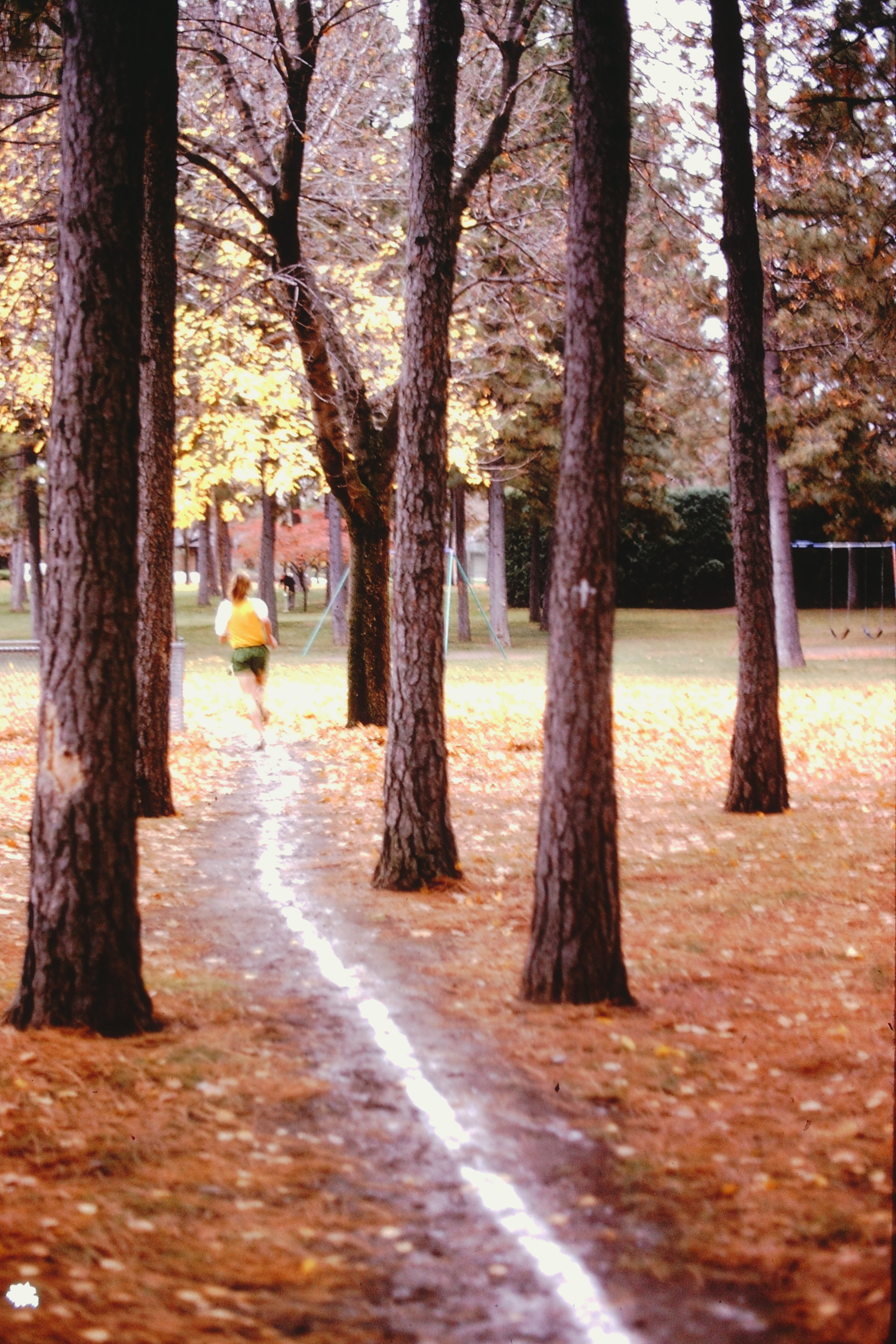
A good runner, way out front. Not me. This is my brother. Fall 1973. Spokane, WA.
Once upon a time I quit a college class called Introduction to Political Science. I sat down for the mid-term examination and found I couldn’t answer any of the questions–a Friday again, naturally. I caught up with the professor the following week and told him I wanted to withdraw from the class. He whipped out his gradebook, registered surprise, and said, “But you’ve got a B at this point and that’s one of the highest marks in the class!” I referenced the midterm and insisted.
I’ve quit church choirs. I’ve quit jobs, sometimes even without having another job to go to. I tried to quit a job for over a year in 2004 and 2005, but the company laid me off before I could line up something else. I indulged in The Big Quit, a.k.a. Retirement at the end of 2019, answering firmly the question, “What would you do if you won/inherited a million dollars?” I had always equivocated when the question seemed theoretical. I told my co-workers I would keep working “unless I felt I was depriving someone who needed a job”. Yeah, it wasn’t a million dollars, but that didn’t matter. I was outta there…but that’s another story for another day.
Recently a person whose work I admire here on WordPress said something about quitting, subtly invoking the tropes our society attempts to get all of us to believe in. Apologetic notes crept in. I hurt for this person, yes, but I enjoyed seeing the acceptance of quitting and the benefits it could bring.
Lately my brother ran into a mental wall which made him abandon his plan to visit us today (April 22). These enforced ‘quits’ don’t always sit well with a person, but I hope he can embrace the possibilities quitting can bring. I hope he can become a Good Quitter.
Meanwhile, I’ll continue to absolve myself when I set aside books which fail to engage me. I’ll feel little remorse for giving up on all the gardening I thought I would do when retired. I’ll try to let myself off the hook for all the home repairs which haven’t been completed. I’ll give myself the freedom to pursue what I want when I want to. It’s been about seven decades–I’m still learning how to do this quitting thing. I’ll let you know how it works out.
People telling you about their pet cats and dogs can bore one more efficiently than even those who haul out photos of their grandchildren, worn from months of friction in back pocket wallets. Singular tales do exist, however. John Steinbeck’s Travels With Charley leaps to mind, and of course Jack London made his name with a tale about a dog, though certainly not his pet dog. More recently I choked up when I read Gwen Cooper’s Homer’s Odyssey very accurately subtitled A Fearless Feline Tale, Or How I Learned About Love and Life with a Blind Wonder Cat.
With this in mind, I viewed a recent comment on this blog with trepidation. It can be summed up as “more cat photos!” and my initial reaction somewhat remains: this space isn’t for memes, political screaming, or cute cat photos. But there was one singular cat…and so the author succumbs…
This is a story about Wolf the Cat, as different from most cats as her name: companion, roommate, best friend, zen master, and a being who made the most of a physical challenge for most of her life.
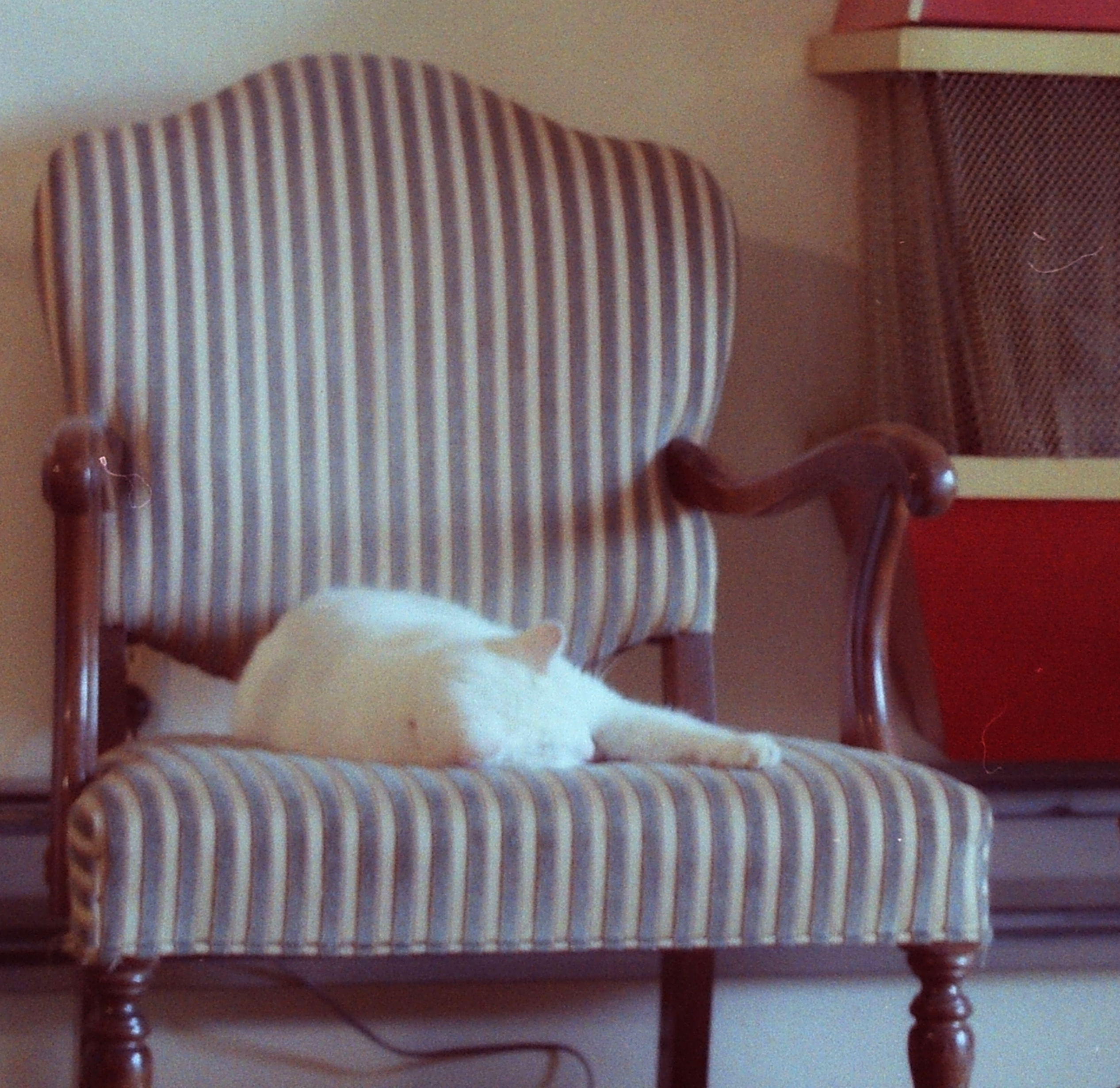
At the beginning of 1978, having pried a degree from the dons at the University of Washington and snagged a newspaper reporter/editor/photographer job in the foothills of the North Cascades, I began to live in responsible society. Two months in, I adopted a gorgeous white cat with blue eyes. Natasha’s pelt could have been marketed in a high fashion boutique. She demonstrated an independent nature, spending large amounts of time outside. (Times were different then; most cats went outdoors.)
Natasha at rest. Sometime in 1978, probably April-June. Monroe, WA.
Natasha, or Tasha as I came to call her, only sets our stage for the true star, her daughter Wolf. After a few months of frequent sorties to who-knows-where, Tasha began to show the swelling belly of pregnancy. Six months after she arrived to live with me, she littered. She obviously had consorted with a similar solidly-colored cat, but black. Three of the five kittens were white like their mother, with one black smudge on the tops of their heads in varying amounts: one had just a few hairs, one had a small fingertip’s worth, and one had more of an adult’s thumbprint. The most purely white one was delivered three months later to a friend in Walla Walla, who called her Powder…because, well, The 70s. Of the final two, one was all black, striking, and mischievous. I called him Shiva the Destroyer based on his habits, and gave him to my brother about a half year later. Shiva promptly revealed he was a she, littered on the middle of my brother’s matrimonial bed, and Shiva soon found herself and her litter at the local animal shelter.
And then there was this nondescript gray tabby, a commoner among the gorgeous and highly born. Because this kitten had a fuzzy overcoat of lighter gray and looked a little jowly, it reminded me of a wolf, so I called her Wolfrydda, a completely made-up attempt at Norski-ness. It was Wolf on the vet records and in my mouth–so what indeed was her name? Wolf showed a precociousness that captivated me. She always wanted to be with me, climbing up the side of my couch to get to me even though she could barely walk.
Wolf and her siblings deeply annoyed Tasha, whose maternal instincts were minimal. When Tasha had weaned her progeny, they didn’t leave–so Tasha did. I saw Natasha every four or five days until I found her weeks later, dead on the side of our country road.
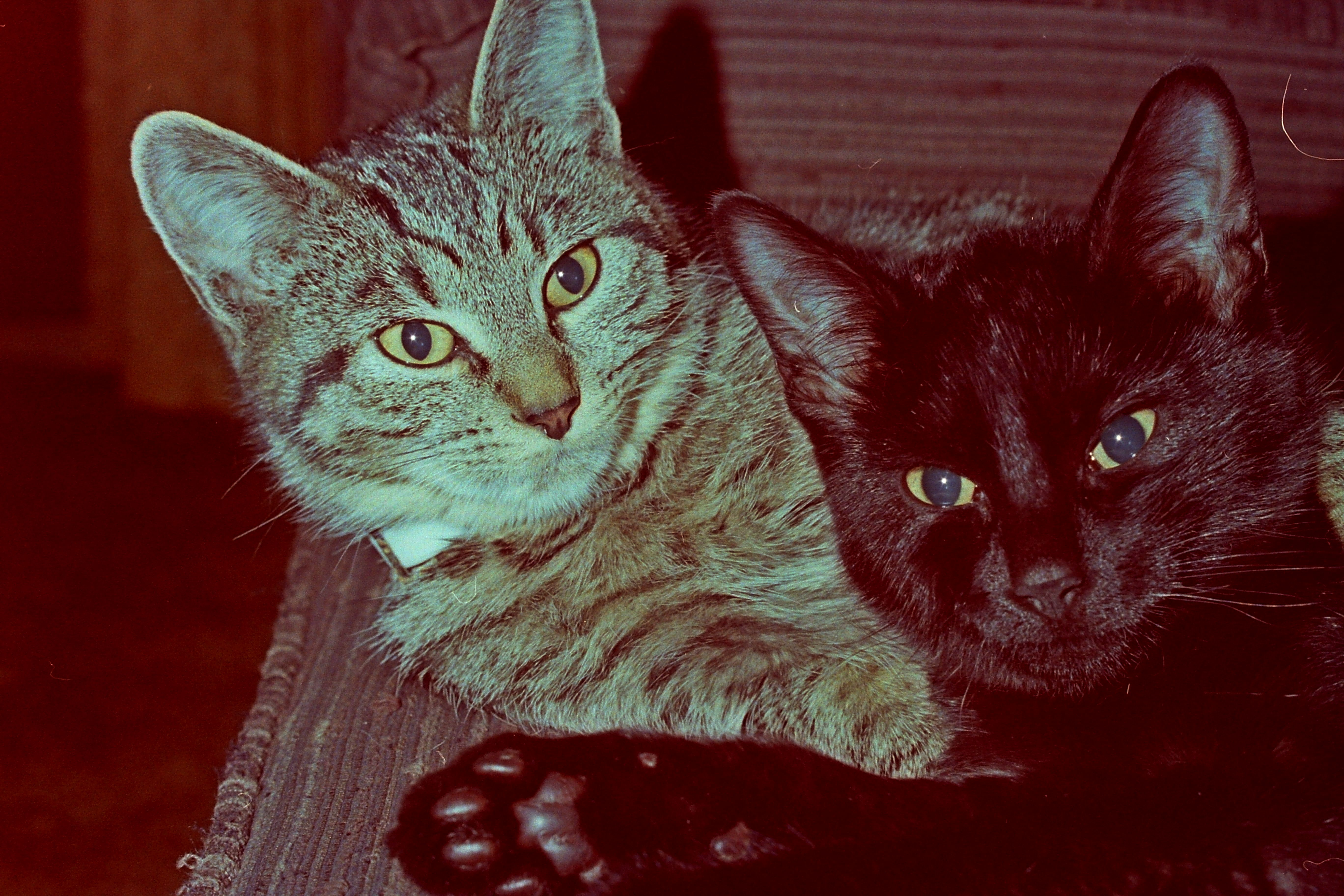
Wolf and Shiva, Fall of 1978. Monroe, WA.
Wolf proved every bit as companionable as she first indicated. By the time she died almost 20 years later, we had been through a lot together. She had advised me, entertained me, put up with me, and shown me through her quiet approach to life how I probably should have lived myself. But I’m getting ahead of myself. Wolf calmly accepted life as it came at her, much like the zen masters I read about later. If a chest of drawers had one left open, she slept there. Or the waterbed was good, and being covered up seemed even better:
Always aware, always calm. Wolf the Zen Master. January 1980, Monroe, WA.
At one year she gave birth to a litter of four anemic kittens who all died. Wolf spent the week crying in the bathroom where I had put the kittens in a box directly under the ceiling heat lamp. By February 1980 she had littered again, four again, a black one, two gray tabbies, and an odd beige one with caramel-colored tabby markings. The two tabbies stayed, but one, Noko Marie, died. I suspected the vet who had spayed her. (Hold that thought; we’ll return to it momentarily.) The other tabby grew into a big lug and into his name: Frank N. Stein.
About six months later Wolf disappeared for three days. I spent mornings, lunchtimes, and after work hours standing on my apartment’s little patio, whistling the special Wolf whistle, and scouring the large rocks a few feet beyond the edge of that patio which prevented erosion on the steep slope lying below. On the third day I saw her, hopping oddly from rock to rock as she laboriously climbed the hill with what turned out to be a broken right rear leg. She had gone across the road at the bottom of the hill, perhaps to get to the creek on the other side. Her luck ran better than her mother’s, and with a cast on her leg a few hours later, I headed back to work. That night I couldn’t find her until I looked on the top of the refrigerator. Somehow, with a newly applied cast on one of her jumping legs, Wolf had climbed onto the seat of a kitchen chair, then to its back, balanced herself there and leapt to the counter (three to four feet). Once on the counter she had dragged herself past the sink to where the refrigerator rose and again had leapt with only the one leg to get to the top of the fridge.
Two weeks later I took her to the vet to check on the leg. He unwrapped the cast, examined her, and rewrapped the garish pink stretch tape over the casting material. In a couple of more weeks I noticed the tip of the cast was wet. Back to the vet we went. The vet discovered a gangrenous leg and admitted he had likely wrapped the cast too loosely in a mistaken effort to give her a little more comfort. The cast had turned and cut off the blood supply to the leg. The leg would have to be amputated or Wolf would need to be put down. It didn’t seem to be much of a decision. Wolf was barely over two years old, and had demonstrated over the past four to five weeks she could get around quite well dragging her right leg behind her. I figured it would be easier for her at that point not to have the leg versus the cast. The vet said he felt badly about it and wouldn’t charge for the amputation! Back then I was naïve; I would not be as nice today. Since he wasn’t getting any money for the operation, he said he was going to do it after hours and did I want to watch and/or assist? I said “sure” and found myself that evening holding up a furless leg that looked remarkably like a chicken leg/thigh you buy at the grocer’s while the vet used a large pair of side-cutters to snap through the bone.
Wolf educated me over the next year with what was possible. We moved across the state only two months later, and Wolf discovered a new favorite spot in a tree beside the driveway. This tree grew as one trunk to approximately five feet and then shot many branches straight up from there. It thus formed a natural nest. One night I came home from work and found her there, staring at me eye to eye, five to six feet up. I figured at that point she could ramble around outdoors without too much fear. She had taken to sticking close to home after the accident, and she always spent the night indoors. Smart cat. I wish I had listened to her more.
In mid-1981, six months after our move, I met a woman allergic to cats. She gave herself shots which seemed to work a bit, but extended time around my two cats (Frank was still in the picture), and she would start suffering. Wolf neither hated nor liked her–tolerated would be more accurate. Within two months this woman helped me decide to quit being a reporter/editor, go back to college, earn a teaching degree, and join her in the teaching ranks. I found a cheap apartment in Spokane, WA, but it didn’t allow pets. Pressed for time, I convinced my parents (who also lived in Spokane, just ten minutes from the apartment) to take in Wolf for a year. They had never had cats in their adult lives, and they had a dog, something Wolf hadn’t encountered before. Despite this, they agreed, and a few weeks later–after living in my car for a day while I attended classes–Wolf went to her new, temporary home. To get away from the dog she learned within the first hour to jump with that one rear leg to a small basement window four or five feet above the tallest furniture. The dog was lazy, and after his initial curiosity, he let her be. (Frank is another tale for another time, when I feel like confessing a poor decision.)
Enduring my parents and their dog. Sometime between Sept 1981 and August 1982. Spokane, WA.
After ten months I earned a degree in English Education, August 1982, grabbed Wolf, and moved in with my woman friend now living in a small lake cabin with a small dog. We married in 1983, moved to a small city in the mountains of Washington, and over eight years we welcomed four more cats into our house. In 1990 we moved to a new, bigger house, dropping Dolly with a friend. Three days after the move, Cooper disappeared. Suddenly we weren’t a 5-cat family, but only a 3-cat one. My wife laid down a new rule: cats in the basement at night. The rule lasted until she moved out ten months later, taking the dog and Petunia with her.
Four years and counting. Livin’ the lake life. Late 1982. Diamond Lake, WA
Wolf, Calvin, and I spent a year rattling around the 4000 square foot house. I met a different woman which gave me the pretext I needed to upend my life. The cats and I moved to a Philadelphia suburb.
Nearing 14 years: supervising the mover (me). June 1992. Colville, WA.
Wolf spent her time, per usual, under the seat of the Ryder rental truck I had procured for the move. Calvin ate tranquilizers and sat in a cat carrier the whole time we were in the truck. Occasionally Wolf would perform recon, hopping across the dash and then spending just enough time on top of Calvin’s carrier to annoy him, before she retreated to her under-seat abode. In Philly I intended “to become a freelance writer”. Such was not to be. I did, however, let my fling die away and in 1994 met a lovely woman who to this day keeps sticking around for no good reason I can fathom. Wolf liked her. Calvin spent most of his time outdoors and didn’t care.
Shortly after our marriage in 1995, we lost Calvin in the middle of an overnight December snowstorm when he insisted he needed to go outside exploring. (Another sin on my cat balance sheet.) My focus on the missing Calvin prevented me from noticing Wolf’s increasing lethargy. A Friday trip to the vet didn’t net much of a diagnosis; on Monday morning she couldn’t hold her head up while sitting on my wife’s lap. A second trip to the vet (and a diagnosis from a more competent vet) revealed a bad failure of her kidneys. They were flushed with large infusions of saline water twice that week, and Wolf The Miracle Cat bounced back as good as ever.
Eventually I convinced my new wife to move back to Spokane. Wolf joined us on a pillow on the middle console. We moved into a rented house complete with swimming pool. By this time, nearing her 19th birthday, she spent most of her time at the new house on top of a stack of deconstructed cardboard boxes from our move. The sun shone there most of the day.
In May 1998 we moved her one last time to a house we bought there. Wolf had been complaining of something for a week or so before the move. She worsened just a week or two after the move, and we learned her kidneys were failing again. A few tries at jump-starting them with fluids failed, and we decided to stop the pain in mid-June, just a couple months short of her 20th birthday.
Along the way I appreciated this cat more and more. She benefited by being my first real feline companion–Natasha had disappeared far too quickly and been too standoffish to claim that role. She liked rock and roll: playing one of my favorite albums, The Who Live At Leeds, at full volume not only didn’t disturb her, it caused her to climb up in my lap and enjoy the tunes! She enjoyed sleeping right on top of me (or my bed partner), which made me thankful for her light weight. She had a two-toned purr, with a high-pitched note above the customary low, growly one. When purringly happy she would drool, just one drop which would sit at the tip of her muzzle. She exhibited calm, patience, and live-in-the-moment wisdom. (I once watched her sit at the corner of the house waiting for a couple sparrows to work their way down the side of house toward her. She knew this was the only way a three-legged cat could hunt them. She missed anyway.) After losing her leg at the age of two, we moved five times from 1981-1990. I moved her five more times from 1992 until her death almost exactly six years later. She took it in stride, so much so that I’ve been shocked since then to have a cat stress out over moving. Throughout it all I never felt I was in charge; I felt I had a roommate who just happened to keep moving with me.
If I had listened to this cat, I would not have married when I did in 1983. I would have become far less upset about life’s tribulations. I would have accepted the bad with the good, and learned to not grasp either. To this date, almost 25 years since Wolf died, no other cat has quite captured her spot in my heart. I doubt that one will. I’m nearing 69. The years run together now. First time events, like meeting such a cat, become less and less prevalent. No matter how much I try, I can’t quite connect with my cats like I did this one. Maybe the right one just hasn’t appeared. Maybe they just don’t come but once in a life.
This profile seems abysmally truncated to me, long as it must have seemed to the reader. I covered a decade in one paragraph! (1982-1992) I had thought, “hey, from time to time I’ll tell tales of the others, but I’m not sure how I could. Everything would seem downhill after Wolf.
One of the nicest things about retirement occurs every morning. The alarm doesn’t go off–not that it sounded much in the past 25 years–and I lie in bed debating about getting up or rolling over for a bit more ‘driftology’ (the study of drifting through my inner time and space). Usually five minutes proves I won’t be dropping back into sleep. I quietly slide out of bed; leave my sleeping wife to her dreams; grab some clothes, my cellphone, my glasses, and the glass of water sitting on my bedside stand; and I walk to the kitchen to start the morning ritual. I avoid the weakening spot on the bedroom floor near my side of the bed, the one which squeaks loudly. Similarly, I walk closely to the wall as I pass the living room, again avoiding the creaking spots in the floor. In the kitchen I put on my morning clothes in the dark. They’re a completely inappropriate fashion statement proclaiming “hey, it’s warm.”
Sometimes Benny, one of our two nearly-identical black-and-white cats, accompanies me. The rest of the time he trots out a few minutes into my routine. I’m made aware of his presence by a gentle body slam against my calves. Despite having started the morning coffee ritual, I’ll stop and feed him. He likely isn’t hungry but why not? Returning to the ritual: coffee filter wetted, cup warmed, grounds measured, and when the water boils, a gentle dribble coaxes the coffee’s blooming. Then a steady pour fills the filter holder. After years of this I usually pour just the correct amount of water to fill the cup.
While these steps play out I’ve downed a glass of water to quench dehydrated cells, and I’ve opened kitchen blinds to prepare for the day. Regardless of standard or “daylight saving” time, very little light comes in these now-opened blinds, unless we’re near the summer solstice: on Retired Saving Time I wake at the slight lightening of the pre-dawn sky regardless the time. Birds will have just started their chirping in the spring. The sun will have become more insistently bright near the summer solstice. Nearing the winter solstice I might beat the sun to rising.
How to convey the calm of living rhythmically? Of waking at first light? Of eating a midday meal when hungry, regardless if it’s 11:30 a.m. or 2:30 p.m.? Of going to bed when tired, never caring if it’s 8:30 p.m. or 11 p.m.? The day becomes a physical meditation. Divorced from it, I can turn into a snarly bear, but being in tune with it resembles breathing at the steady, resonating rate synchronous with All Being.
In 1995 or 1996 I removed the watch from my wrist and never returned it. I turned off the morning alarm. Though I benefitted from a corporate job back then which allowed a laissez-faire approach to the start of the workday, I’m pretty sure I would have done this even had I been a shift worker. The slight tension induced in knowing there’s no alarm served to wake me with plenty of time to tackle morning matters; it proved far preferable to waking 25 minutes before the alarm was due to go off only to lie there cursing because I couldn’t get back to sleep and “why bother anyway”. In retirement this natural rhythm has extended to the whole day, but the slight tension doesn’t wake me anymore.
Coffee in hand, my day officially begins with reading. It may be the Morning Briefing from the New York Times. It might be the comics. It might be baseball, more specifically anything written overnight about the Phillies. Recently, during Lent, my morning read has been The Sign of Jonas, the journals of the Trappist monk Thomas Merton. This last requires turning on a light since it is a physical book, not something on my tablet or cellphone. For that reason my reading necessarily takes place downstairs where a light can illumine without bothering my sleeping wife. Benny benefits too: when I comfortably settle in front of a fire downstairs or in an old wing-backed chair in our library, Benny gets to jump up for a morning petting session. (If I’ve happened to have decided on reading material on my computer, he’ll happily claim my lap there, too.) Reading becomes a bit challenging with a cat squirming around, kneading and delivering headbutts. Soon he settles down and allows me to continue my study of Merton, my inquisitive plunge through data at my computer, or the latest take on This Stuff Really Matters (Today).
Henry Clay Mansion, KY. July 2014.
Because I’ve moved to the rhythm of the day for nearly 30 years, I alternate between chuckling or muttering in irritation when people rant about jumping forward to Daylight Saving Time or falling back to Standard Time. Time–being but a mental ruler imposed by humans upon our perception of past, present, and future–doesn’t exist. Every day we are reminded how a group of people living through the same events do not experience it in the same way, do not remember it in the same way, and will sometimes seek to rewrite those events to suit a particular purpose. To put it in someone else’s words:
What usually happens is that, once scientists have worked out their equations [for a Grand Unification Theory], time is nowhere to be found. And if it’s not part of the fundamental fabric of the universe, how do we know it’s not something we’ve invented to explain what we don’t understand?
In most senses I don’t care if it exists or not. Hours, minutes, and the clocks which measure them indisputably resemble rulers, nothing more. Just as that tree on the hill doesn’t get any closer if I declare I’m a foot closer to it (while not moving my feet), I don’t perceive time appearing or disappearing because we move to DST. Just as retirement has brought a detached view of the working world (and many other matters), so too has it altered my perception of time. (Time as a malleable substance?) Stereotyped jokes show us older folks forgetting the day of the week with regularity. Is this any wonder when time doesn’t exist? If I stop using a tape measure to measure how far I travel, am I assailed when I lose touch of my sense of distance? I can still walk from Here to There, can’t I?
[Which sparks a possible and humorous but too truthful dialog:
“Do you know what day it is, Mr. Pilcher?”
“Yes.”
“Would you tell me?”
“Yes.”
“What day is it Mr. Pilcher?” (a bit of exasperation now)
“It’s today.”
“And what day is ‘today’, Mr. Pilcher?” (more than a bit of exasperation now)
“It’s always today. I don’t understand your question.”
“What DAY of the WEEK is it, Mr. Pilcher?”
“Gee, I’m sorry if I annoyed you. I have no idea what day of the week it is. It’s a day between Sunday and Sunday; I go to church on Sunday, and I didn’t go to church today.”
(lengthy pause while Mr. Pilcher’s treatment plan is revised to indicate he is losing his marbles)]
My paternal grandfather spent many minutes and hours staring out of windows in his later years. He at times seem befuddled. He also showed he was sharp as a tack when it came to philosophical and existential questions. He had studied theology and led congregations for decades. Staring out of a window came with the territory, especially when composing this week’s sermon. While the need to write sermons disappeared in retirement, the window-staring did not. Did this indicate a dissociative mind? Doubtful. More likely old habits outlived their usefulness. So too my need to keep track of every hour of the day, every day of the week. I never did, much. Why should I be punished for that? I wouldn’t be punished for a deteriorating sense of distance; why a deteriorating sense of time?
I would argue my rising with the predawn light, moving through the day totally in touch with what needs to be done Now, whether it be eating, my taxes, planning meals, pruning shrubs, reading books, attending a doctor appointment on time, or going to bed when tired keeps me in a meditative state. Retirement provides extra incentive to be in touch with the here and now. I shouldn’t be penalized because I’ve approached a more natural state of being, I should be admired or at the very least respected. Instead, I feel the need to document how my memory of many things has been tenuous throughout my supposedly ‘with it’ years. I have never been able to tell you what I have to do today. As a reporter in my late 20s, I would drive to work oblivious of what stories I had to run down that day. As a teacher in the years that followed, I had only a fuzzy idea of what I had to teach that day, usually because I had planted the seed in my brain the night before: “you have to get to school quickly to print that test you’re giving today.” Ask me on Monday what the lesson plan for Thursday will be, and you would have received a panicked look. In the corporate world where each day’s list of to-do’s varied quite a bit, I had no idea what I would do that day until I looked at the task list. (Bless you Franklin planners for focusing me the idea of A, B, and C tasks.)
And now? How do I prove to those who will judge my mental competence that I have never been able to remember what I have to do today? That I’ve marched through many a day thinking it was Thursday, only to be reminded continuously “no, it’s Wednesday”? When my mother neared the end of her life, she was subjected to many a judgement like this. When she microwaved a throw pillow because she thought she could warm it up and use it on her sore neck, her dramatically shocked visiting nurse felt that Mom was ‘losing it’. Well, somewhat, yes, I concurred. “But Mom has always had a tenuous grasp of the physical sciences including those which govern a microwave. Just because it wasn’t marked “microwavable” on the throw pillow shouldn’t totally count against her. After all, she had several microwaveable neck pillows which she did put in the microwave each night–and they didn’t have “microwavable” on some tag attached to them, because they were handmade by the good ladies at her church. Should she have responded to the smoke filling the room? Yeah, probably. Then again, my wife should have reacted to the smoke filling our house that night in midwinter 2002 when the furnace’s chimney had decomposed, and I came home to a house filled with smoke and a wife merrily preparing my dinner. Losing your marbles doesn’t occur when you misplace the bag of marbles. You lose one here, one there, never noticing the slightly lighter bag you’re holding.
Our perception of time varies from person to person, and time’s but a human construct. Our perception of reality–whatever reality is according to the popular philosophers of the day–varies even more. We should be judged on who we are and who we were, not on who someone wants us to be. Want to scare yourself? Pretend you’re the plaintiff in a court hearing to prove that you are mentally incompetent. My guess? You can’t prove you’re competent right now! Good luck when you’re 80.
God forbid I should be denied my mornings with Benny, coffee, and reading material simply because someone says I need to stay in bed longer, or get into a shower, or do anything else I don’t want to do. “Oh Lord, I pray my ability to perceive how I’m being treated matches how I’m being treated.”
Part of the Spokane Falls on the Spokane River, Spokane, WA. March 1993?
My father was notorious for finding a way to muck up a photograph. Favored methods:
Using a wide angle Instamatic (pause while he shudders), take a photo of an animal or bird you see in the mid-distance. Photo has a brownish dot in the center (maybe) that can be anything.
Shoot a portrait-type shot of people looking directly into the sun, squinting. Cut off only their feet. Alternately, shoot from too far away and make sure photographer’s shadow is prominently displayed in foreground.
Line up your group shot in front of a window, glass-fronted artwork, or better yet, a mirror. Shoot with a flash.
That’s just a minor list. I’ve tackled sorting through the photos I brought home in mid-2020 when we cleared out my parents’ house in late July. I’m primarily interested in photographic proof of them, their sons (me and my brother), and the relatives and friends who they encountered during their lives. Every once in a while, though, I come across a photo which makes me wonder how it ever happened, such as the one above.
The photo above is unretouched except I blurred out a few white spots in the dark sky where the cheap photo developer couldn’t be bothered with blowing off dust on the negative. This is a natural light photo and the falls are not lit. It appears to have been shot from a restaurant currently called Anthony’s at Spokane Falls. The shot is looking due east to the kind of clouds which Spokane seldom sees as the sun sets. That’s Canada Island on the left which splits the Spokane River. The cataracts on the north side of the island are approximately the same. I unfortunately mislabeled the photo, so I’m not entirely sure of the date, but I recall it was in March, and it sits between a photo from June 1992 and one from July 1993.
Some day I may try to retouch it and see if I can make it look better, but there’s not a lot you can do with the photos taken back then. I don’t have the negatives; I had to scan this from the print. I’ll likely just leave it and remember that my father could take a good photo now and then. And I can tell you for certain that he never stopped trying! I’ve four or five storage boxes full of prints to attest to that!
In October 2011 my wife and I rented a house just outside Newport, OR, where we vacationed with my brother, his daughter, and our parents. Our last night there an amazing set of conditions created one different sunset after another. (I’ve posted other photos of it here and here.) For more than twenty minutes I stood on the bluff outside the house snapping photos as the rest of my family waited to go to dinner. We might have had reservations, I don’t remember. I ignored their growing impatience to capture these photos. Thus, the photos have an undercurrent of discontent, though I don’t regret taking them. It represented the self-centeredness they would say I’ve had all my life. I’ll have to explore this later.
Ocean Isle Beach, North Carolina. Still there in November 2007.
A little bit ago I wrote about the longevity of clothes in my closet and how they mark the march of time in reverse. I’ve realized lately that they have staked out the future too. Today I wore a fleece top purchased when we took a Thanksgiving getaway to Ocean Isle Beach, NC, in 2007. It’s none the worse for wear (the fleece top, not Ocean Isle Beach which might very well be the worse for wear). It dawned on me today that a heavy flannel shirt/jacket, the aforementioned fleece top, the sweatshirt I wore last week which was given to me by my employer in 2003 or 2004, etcetera, etcetera, will possibly be in my closet when I die.
Recently I’ve tried to lengthen my time between Now and Death. “It’s likely twenty-plus years, you fool,” I tell myself. Retirement planning forces one to focus on ‘how long do I have’ and then hope the money lasts that long. It fosters looking toward the end instead of the path toward the end–instead of focusing on where you are right now. And lately, I’ve been successful in realizing where I am relative to my likely End. I accomplished this by looking backward the same amount of time I can expect to live. Today it means focusing on where I was twenty years ago. “Goodness, I thought things were grand back in 2003!” he thinks. It feels many years ago when looking backward. Then why not many years ahead when looking forward?
These darn clothes tell a different tale, or at least they have their own tale to tell. “We’ll still be there in your closet. This is your wardrobe for the rest of your life.” It’s weirdly depressing and freeing at the same time.
Clearwater Beach on the Gulf of Mexico. February 13, 2013.
Sure, flowers are nice–especially the two dozen roses I handed my wife a few hours ago. But warmth, white sand, palm trees, the Gulf, and a previous visit to the Phillies Spring Training Camp? Priceless. “Bouquet” is a fluid term.
What if sunsets were blue? What if
they resembled my recollections:
how I broke upon your hardness, how you
ran from my insensitive cutting
remarks, lasers which severed whatever
tied us together those few years? Would I
ever have experienced solar reds, oranges,
pink-tinged magic? Known this reality?

Turned from unreal shadows dancing on
Plato's cave wall, pushed into dwelling
among well-lit shadow-makers,
my memories hold
only blue shadows
watching blue sunsets.
Great Smoky Mountains National Park, western slope. May 2004.
At the beginning of May 2004, we headed to Gatlinburg, Tennessee, primarily to visit the Great Smoky Mountains National Park. I’ve searched in vain for a photo taken around that time near our home in Grafton, New York, where Spring still fought Winter’s grip on our weather. Two days later we entered Spring’s glory, Smoky Mountains-style. I’ve posted other photos (here and here) which display the explosion of green we encountered. I said to my wife as we drove through undergrowth with leaves as large as my hand–some kind of berry, I suspect–and kept an eye out for black bears newly emerged for the Spring, “You know, I think I could live here.” Two winters later, as I cursed the snows again, an opportunity beckoned to test that conjecture, and I took it. North Carolina pleased us even more than Tennessee. Recently, I’ve posted several photos from that time because late January reminds me of the move, and the approach of Spring always makes me thankful I get to experience a long, lingering one here below the Mason-Dixon Line. I’m thinkin’ I need to put on my travelin’ shoes again…