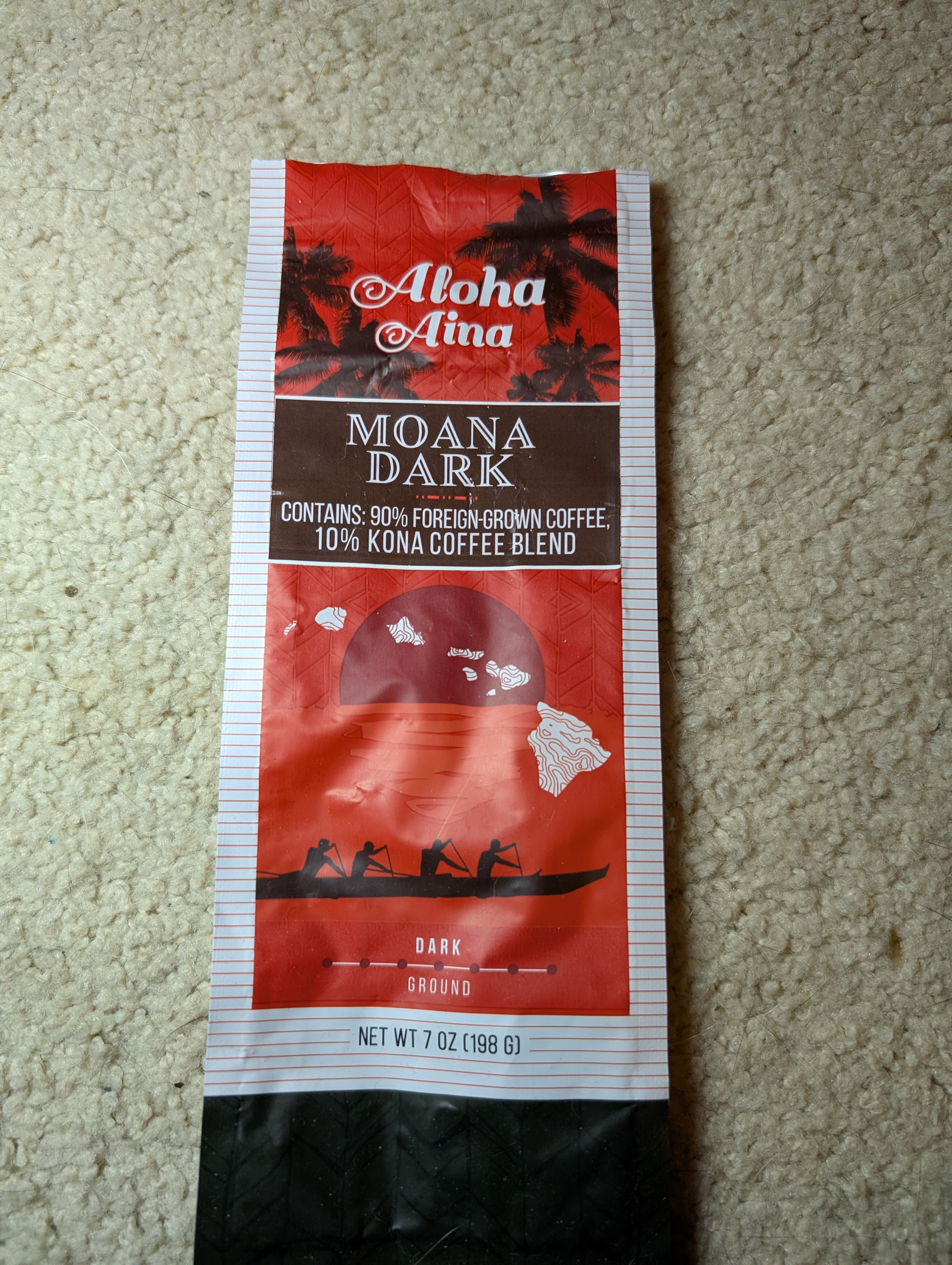
100% Kona coffee. Purchased in Maui, September 2024.
Our first full day on Maui consisted of settling in to a condo (“we need food” we realized). Then, we rendezvoused with one of my few cousins after more than 50 years. While spending the afternoon with them, we wandered an upscale mall. I spied a coffee shop and within, some ground Kona coffee. I needed coffee. I grabbed the package pictured above. At check-out the clerk said, “That will be forty-three dollars” and change. A mixture of shock and avoidance of embarrassment made me extend my credit card, tap the terminal, and commit to one of the most foolish purchases I’ve made in my life. You’ll note the package is only 7 ounces. As in barely-more-than-half-a-pound. Unfortunately, I can’t resist doing the math, and that’s more than $98/pound. Ouch.
I don’t like Kona coffee. I’ve had it off and on (mostly off) over 45 years of fine coffee drinking. I therefore didn’t think too much about buying something that purportedly was a lot less well-positioned on the ladder of quality. Because I absentmindedly left the package in my cousin’s car, I therefore needed coffee still. I purchased this:
Note–only 10% actual Kona coffee in this package. September 2024.
The pound above cost around $12-13. Same amount of ounces. Tasted…not quite as good, but really it wasn’t a three-fold difference. I felt stupid. And there you go.
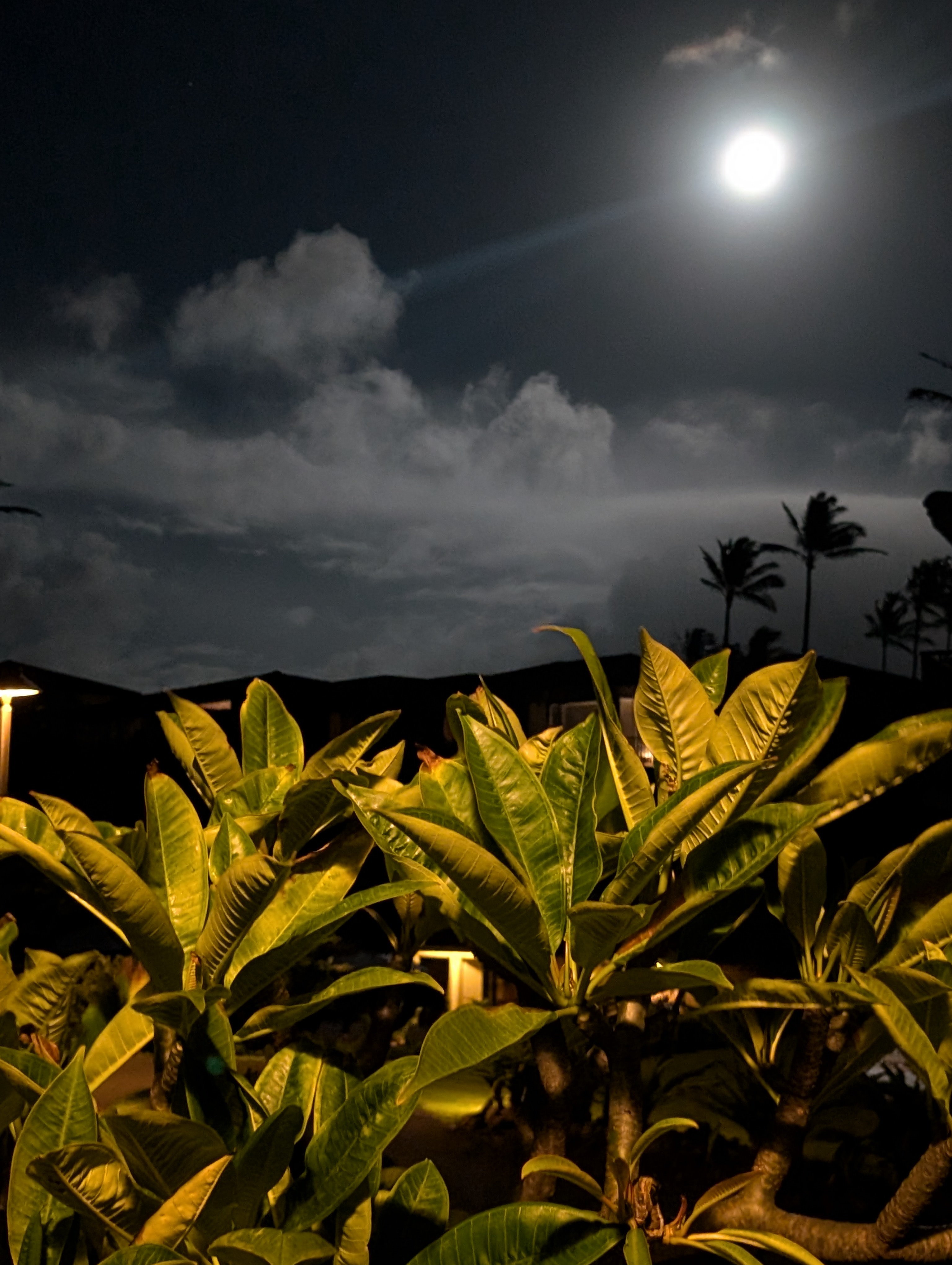
Our first night view from our Maui condo (unretouched). September 2024.
[written on January 3rd, but subjected to the Don’t-Post-Anything-After-The-First-Beer rule.]
At the end of September 2024 I mused on boring y’all with 100 Days of Hawaii, my poor-taste humor suggesting I would post every day through the end of the year something about Hawaii, thereby driving away the few visitors who swing by this little neck of the Interweb. Today, 96 days since then, I find 100 days will not be enough owing to my typical lack of focus. (“Oh, look! Something shiny!”) I’ve only posted through our arrival on Maui, barely more than halfway into our trip. And I’ve made myself a mockery for eagerly anticipating the 12 Days of Christmas and all of the writing which would spring to life from my keyboard. (See link for last year’s procession through the Christmastide.) Therefore, on this Tenth Day of Christmas, and just past the turning of the civil calendar from 2024 to 2025, I pause to reflect, to resolve, to anticipate, to evaluate, and to pontificate. I guess I should apologize in advance. I’ll try to return to better stuff soon.
Most obviously, Hawaii remains unfinished. I therefore resolve to complete my reminiscence by the end of January. Given that we lazed out in Maui, did very little, and that I took the same few photographs over and over and over, this likely won’t prove difficult.
I anticipate a medical march through the month. I had a doctor consultation today. Coming up I’ve got a blood draw, a procedure I would name but for the fear I bring to its table, a semi-annual physical, and one or more appointments with those who keep my legs from collapsing. That last item melodramatically addresses ankle and feet issues which would take a lengthy post of little interest to address.
At 70, health becomes ever more preoccupying. I’m trying to change my instinct to live in front of this keyboard when I’m not in the kitchen, the choir loft, or in front of the TV. We’ll see. This intent has been issued many times before, apparently to the void for all the good it did.
I’m ditching Reader’s Horror. It intimidates rather than educates. I think I’ve made my point. Just as with several other things important to me–music reproduction, technology, cars that do what they’re supposed to do–the masses happily settle every day for a lower level of quality, all in the name of convenience. My parents’ and my generation bear some responsibility for thinking TV dinners freed us from cooking; polyester and “wrinkle-free” represented a step forward from cotton; plastic and just-throw-it-away moved us away from the repetitive chores of cleaning our glass and metal containers (can you say disposable diaper?); and gosh darn it, anything digital must be better. This mindset surprisingly (?) led to the demise of institutional journalism and the important publishing houses of my youth. Predictable, maybe, but we’ve tossed too much out with that bathwater: copyeditors, proofreaders, and those who function as guardrails and protect us from the mental cockroaches who crawl out in the absence of intellectual light. Thus sayeth me: When all voices equal each other, rationale thought dies.
I miss my decades-long foray into poetry. In pushing to publish, I’ve lost that time for stewing in my juices which engenders my poetic thoughts. I can’t make this a resolution, but I acknowledge it to myself, if only to start writing down the thoughts when they occur, even if I’m heading for bed! Just this past week I lost two pretty good poems.
I’ve read too few books and too much news. I ditched one digital subscription at the beginning of December, and I’m ditching another in the next week. If it weren’t for the depth of its offerings, I would ditch the New York Times.
There you have it. Nothing earth-shaking. Except, hopefully, for me!
Twenty-five years ago I purchased the book A Home for the Soul: A Guide for Dwelling with Spirit and Imagination by Anthony Lawlor. It featured beautiful photos and promised to address that point where functions meet features and both bow to the soul. Unfortunately Lawlor’s book, though gorgeously printed, never connected with me–it remained a beauty with no brains. I mention this because the idea has long played out in my head and heart that we are drawn to some places on Earth more than others, despite our innate interest in almost all of them. I’ve mostly thought this gets imprinted on our psyches during the formative years of our childhoods, much as ducklings will imprint on their mother. (I wonder how this would work with children of military personnel and others who move their families frequently to vastly different geographies?)
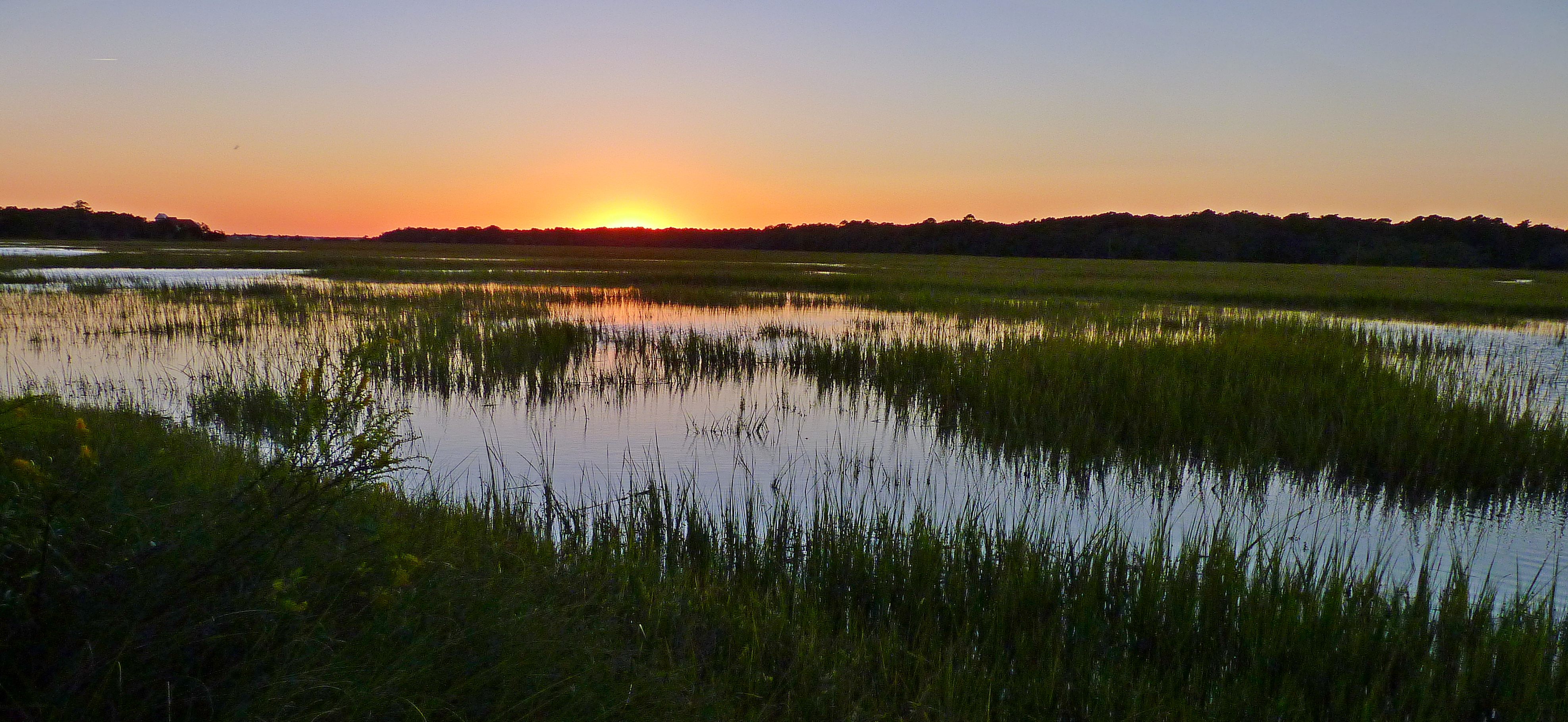
Recently a friend of mine quoted author Pat Conroy who made his mark writing books set in coastal South Carolina, including The Citadel in Charleston. In this particular quote, Conroy described how the Low Country spoke to his soul. This returned me to my
South Carolina Low Country. Edisto Island, October 2014.
ideas of place. Much as I like the coastline of Eastern America, and the distinctive features of it from Chesapeake Bay south, it never ‘grabs’ me. Intellectually, I love its nooks and crannies, its sultry feeling which exudes relaxation, its birds, the novelty (to me) of its marsh grasses, and the soul-satisfying feeling brought on by its mostly horizontal nature.
In Hawai’i, though, I found my heart beating in sync with its coastline as if I had found a long-lost sibling. I suspect this has something to do with being taught at an early age that “coast” means “what it looks like around Puget Sound” and to a lesser extent the Pacific Coast of Washington State: volcanic rocks to the coastline; cliffs of sand, sedimentary rock, and mountaintops which send their flanks plunging through the intertidal zone to significant depths in mere meters. But could it be more genetic? As far as I know, my ancestors all came from either Norway or that island divided into England/Scotland/Wales. From photos it seems a rocky coastline, lashed by pounding waves, much of it featuring knobby cliffs which prohibit dipping one’s toes in the water–and this water is crystal clear.
A lovely day in the Pacific Northwest–it’s not raining! North of Newport, OR. October 2011.Compare and contrast: another west-facing Pacific Ocean shoreline. Maui, HI, September 2024.
A counter-argument: what to make of the three centuries my patrilineal line spent in the mountains located at the Virginia/North Carolina border? Of my matrilineal line descending from the hollers of Kentucky to live along the Ohio River? Do I counter that with my father’s mother, whose parents stepped off the boat straight from Norway? Or the suspected similar condition for my mother’s father who was put up for adoption by a Swedish lass?
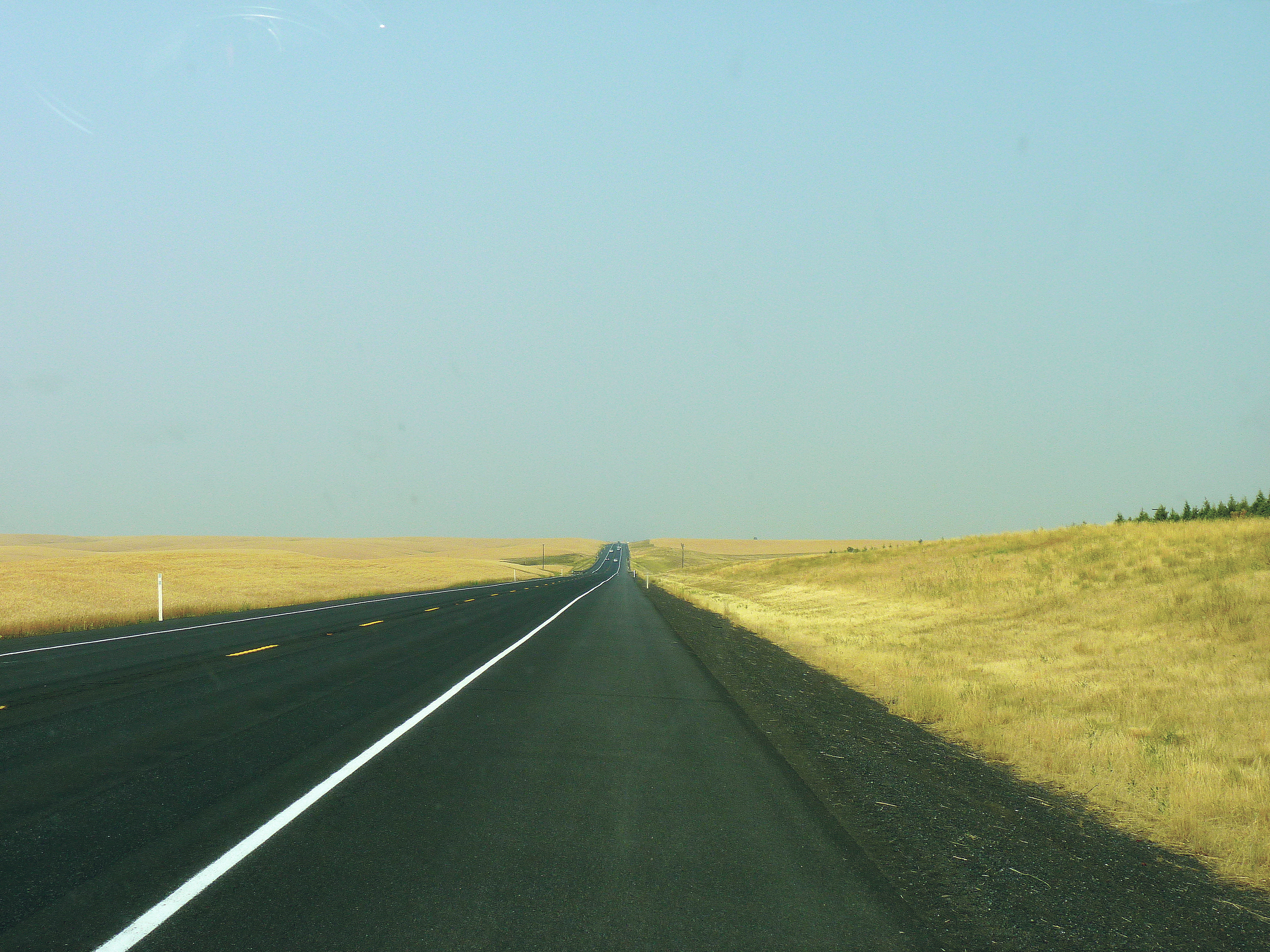
I land on nurture more than nature. I believe my father preferred eastern Washington with its undulating surface of grains and grasses because he had been raised in a similar grassy, agricultural flatness outside Minneapolis and later, in Havre, Montana. My friend associates the North Carolina coast with meaningful times in his life, not least of which was refurbishing a getaway house on the Intracoastal waterway with his father. My brother and I experienced a semi-dry climate through high school. Perhaps this explains why, after decades spent in rainy and cloudy western Washington, he retired to Santa Fe?
The rolling wheat lands 40 miles west of Spokane, WA, where I grew up. See also Havre, MT, and the breadbasket swath of Middle America. August 2017.
Unless…unless… I must admit, I like rain. I discovered this when I moved to the Philadelphia area in 1992. In 1997 I returned to Spokane, WA, a semi-arid part of the country. Four years later I could barely get out of town quick enough, and the dry, dusty summers played a large role in that attitude. I found I did like rain, just not the rain of Puget Sound which I experienced on and off during my childhood and lived in from 1976-1981. Rain on the east coast of America doesn’t resemble rain in the Puget Sound area, despite both regions receiving similar amounts annually. (Philadelphia–41.45in; Seattle–37.13in, both according to WorldClimate.com.) Rain clouds on the east coast bring rain, and then they go away. Rain clouds in Puget Sound just hang around seemingly forever, misting you once in a while to remind you they carry moisture. Where, then, does this love of rain come from? Why don’t I like snow? I experienced it every winter of my childhood, and I continued to do so through my 47th year. Is it my North Carolina ancestors calling to me through our shared genes, reminding me that for centuries we Pilchers have enjoyed warmer, less snowy climes? If so, would they in turn find the wind- and surf-lashed cliffs of western England and Wales instantly familiar and soothing? It’s a confusing amalgamation of influences.
Maybe we just like what we like, inexplicable as it may be. A postcard I have reads: “Every traveler knows it is possible to be homesick for a place one has never seen.”
Saturday sunrise, Kuhio Bay, Hilo, HI. September 2024.
As I type this the sun is peeking over the horizon here in Raleigh. I won’t see it due to trees and ridges…and because I’m sitting in a windowless room in the basement. Nine weeks ago our first Saturday in Hilo brought an orange glow as the sun peeked over the industrial buildings at the port of Hilo (located east of Hilo proper). I never tired of this. I think people who live where they can see to the horizon unimpeded by anything must have a different outlook on life or at least on the natural world. I know it has that effect on me.
[In our continuing series, Cranky Old Man Yells At Clouds, today we again tackle the tough Time issue. For other time-rants, see here and here.]
“Upon This Altar” — manipulated photograph. October 2024.
This morning, November 3rd, 2024, I rose at 6:16 a.m. according to our two bedside clocks. Dressing and walking to the kitchen, I noted the analog kitchen clock concurred, as did the digital clock on the stove (except when the now-failed crossbar made an “8” look like a “0”). For some reason the microwave got confused and reported the time actually was two hours and 50 minutes prior. All of these timepieces and presumably the clock on the deck, the clock in the guest bedroom, and the clock on the fireplace mantel backed the majority opinion: 6:16 a.m.
My cellphone, however, said I had risen earlier–it was still prior to 5:30 a.m. It reflected the common and legal opinion that an extra hour had appeared overnight during which no time passed. For the rest of 2024, time would be measured on Standard Time.
This clock conflict didn’t bother me. It’s been dark for weeks when I rise. The sun rose today approximately 90 minutes after I did, and it did the same yesterday. My wife and I ate breakfast about an hour later than we usually do on a Sunday, but our breakfast times are flexible these days, and we’re not going to church because we’re still quarantining due to Covid. My day so far has run its course normally, and the only effect of this time change will be making sure we tune into our church services at a specific time which the kitchen clocks would say is 11:30 a.m., but my connected clocks (phone, desktop computer, etc.) will say is 10:30 a.m.
You could argue my cavalier approach to this time change results from my retired state, and you would be partially correct. Few things happen at set times in my day anymore. But even when my day revolved around “getting to work” and “catching a plane,” I’ve looked at time as a voluntary measurement. I don’t need to order my life by it. For nearly 30 years I have rarely used an alarm clock to make myself get up at a certain time. They exist primarily as safety nets to make sure I don’t oversleep, and usually the mere act of setting a morning alarm will suffice to wake me just prior to the nasty thing interrupting my sleep. I mention all of this not to brag about how wonderfully I deal with time, but to explain a relationship to it which causes me to blow a few gaskets twice a year.
Each year about this time we’re subjected to some of the lamest reportage, critical thinking, and general common sense that we see all year–except for the commensurate period in late winter/early spring when it rears its foolish head and reverses its so-called logic (sometimes). I’m talking about all the nonsense you’ll read about Leaping Forward in time when we go to Daylight Saving Time, and when we Fall Back to Standard Time on the first weekend in November.
“Fall” — manipulated photograph. October 2024.
I’m not talking about the ill effects many people report from the shift in timekeeping. These effects align with everything we know about a body’s rhythms and the general circadian rhythms of most creatures on this planet. One shouldn’t wonder that attempting to stick to a personal schedule which has been artificially shifted an hour would have an impact on the person attempting it. No, what I’m talking about are all the inane things said about Time when earnest people lose their literary way. Here’s an example written by a presumably respected reporter for the New York Times on November 2, 2024, in a morning newsletter I received:
I know, it’s just one hour. How one spends it or doesn’t is hardly determinative of whether they’re making the most of their time on earth. But the scarcity of daylight this time of year does make every hour feel that much more valuable.
from the New York Times Morning Brief — author’s name omitted for decency’s sake
Making the most of your time means you’re looking at Time as a Real Thing, something which can be rationed like oats or good whisky or the chocolates in a one-pound sampler. You’re looking into the future and saying, in essence, “this hour coming up is a gift and I have to be sure to spend it wisely.” Okay, let’s just set aside the easily demonstrable fact that none of us lives in the future. “Now” is now, it’s always now, and focusing on the future remains an efficient method for not living mindfully in the present. Regardless, most of do make plans. We’ll give Ms. Kirsch a pass on this one. We’ll also let her unpack with her therapist this need to do something with that extra hour. Perhaps her parents raised her to “make something of herself”? I’ve succumbed to this state of mind many a time, but I’ve found great satisfaction in being what I am.
Instead, let’s consider the statement at the end, the one about daylight’s scarcity making each hour feel more valuable. Huh. Daylight hours are valuable, nighttime’s aren’t? I was unaware I cannot do anything when the sun sets. I guess overachievers everywhere violate some social norm when we rise 90 minutes prior to the sun and write things like this. More seriously, you can perhaps feel a certain pressure to use this extra hour for some purpose, but predicating that pressure on the sun’s daily appearance ties two things together which have nothing to do with each other. In New York City, where I believe she lives from other things she has written, the sun will be in the sky ten hours and 19 minutes today. Yesterday it lingered for three more minutes. This process has been happening so gradually, one wonders exactly when this “scarcity of daylight” made its presence known. After the vernal equinox? When the author realized in late August that sun shone for only twelve minutes more than half the day, but in June it had done so for more than three hours? (All measurements here are based on Manhattan in 2024 as recorded on timeanddate.com.) This so-called scarcity of daylight doesn’t seem to have bothered her too much a week ago when it was all of about 20-25 minutes more than it will be today.
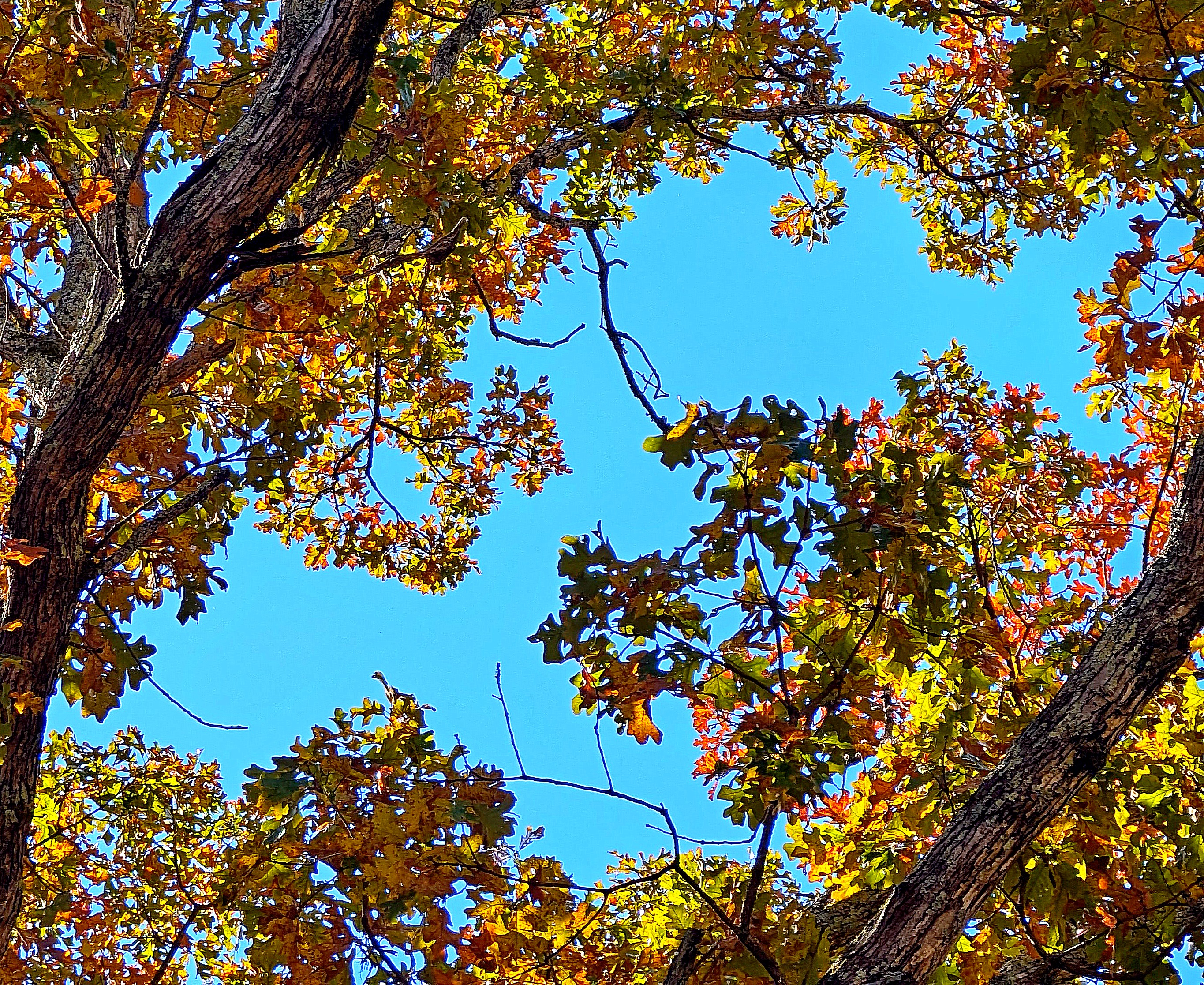
White oak in fall. October 2024.
No, I have little empathy for a person who feels this extra hour represents something mildly momentous and not to be taken lightly. She opens with the idea of just sleeping an extra hour–“sleep as much as you need to!” I want to shout–adding that as she sets her clocks back on Saturday evening, she will anticipate “that brief moment of confused excitement tomorrow when I wake and check the time: It’s 7, no wait, it’s actually 6!” Putting aside the fact that this undercuts the beginning of the very same sentence–you just said you’re setting the clocks back, so you can’t look at 7 and think it’s 6!–I will grant her the idea of an extra hour on this weekend motivates me too, but not as if it represents some life-changing moment. Rather it’s analogous to the feeling I get when a surprise rain shower eliminates a plan to work in the yard and thereby grants me an hour or two to do something unplanned. But immediately after the quote above, she writes a sentence which buried within it contains what I think might be a common belief which is just plain wrong:
As we enter the final two months of the year, thoughts naturally turn to how we’re filling our days. [same source]
I hope I’m reading that incorrectly. Why do one’s thoughts turn “naturally” to this? (Mine don’t.) Has it something to do with the End of the Year, another silly time construct? Is it because we’re approaching Christmas and other holidays, many of which have an element of self-examination? It seems to imply our author thinks November and December are the darkest months, coming as it does on the heels of lamenting the scarcity of daylight. No, no, you poor, benighted columnist. Today, Nov. 3, 2024, is 48 days prior to the winter solstice. Another 48 days after the solstice will be February 7, 2025. Ignoring that the solstice really isn’t the shortest amount of daylight in the year all the time–that’s intermediate temporal mechanics; we’ll get to that in our next course–you won’t see a speck more daylight for 96 days! That’s a lot more scarcity than just two months. It’s three with a handful of days left over.
Buried in another paragraph, our writer brings out one of the bigger fallacies about changing the clocks: that somehow having an hour “moved” to the evening or morning will have a meaningful impact on one’s life. See if you can spot it:
“Every first Sunday in November, I contemplate becoming a different, better person, one who gets up one hour earlier to meditate or exercise or meal-prep. I could be the person who spends an hour journaling, or fixing a large, healthy breakfast or taking the dog for a brisk walk in the cold dark. ” [same source]
If you get up one hour earlier, it’s just one hour earlier in the same day. It’s coming from somewhere. Are you going to bed earlier in the evening? Or are you cheating yourself out of an hour’s sleep? Are you going to tell your employer you’ll be in the office one hour less so that you can have a full evening, a decent night’s sleep, and still start a meditation practice before breakfast each day? I suspect, however, our author thinks that somehow an extra hour has ‘appeared’ in the morning. “Look, y’all, I used to get up right now according to the clock, but right now is only 5:30 a.m., not 6:30 a.m. I’ve got an extra hour! Yippee!” (Insert reference to Spinal Tap and “turning it up to 11.”)
Let’s bring this diatribe to a close. Let’s all try to realize daylight lessens from summer solstice to winter solstice, and that each day’s length mirrors another on either side of the solstice (either solstice, it doesn’t matter). Every day, every moment, moves the same: the length of the sun’s presence above the horizon added to the length of its absence always runs about 24 hours (if you absolutely must measure it). When we live artificially in the Timescape instead of the reality of the Dayscape, we suddenly think “Oh, I’ve lost an hour,” in March and “Oh, I’ve gained an hour,” in November, but really, truly nothing has changed. Let go of that desperate grip on Time. It’s okay. You won’t fall. You’ll still be here…just like always.
I ‘shoulda’ been on the outside of the screened in porch to take this photo yesterday. August 2024.
For the past 35 years, well….pretty much for my whole adult life, I’ve tried to use a few words very consciously: can’t, had to/have to (and variants), and should have/shoulda. The last breaks down into me telling you that you should do or say something. More insidiously we say this to ourselves.
In that vein, I realized I’m again spending far too much time on reading things I think I should, and not enough on what I like. This occurred right after I subscribed to a newsletter from the New York Times which twice a week will highlight some songs that are pretty salient and should be listened to, a topic I really care about. Yes, I appreciate the irony. Instead I spend several hours making sure I’m on top of geo-politics, cultural developments, science and technology, and all sorts of sociological things like economics and psychology.
In the past couple weeks a few things happened, but I don’t even have photos to show for it because most aren’t fun and some are ideas, not physical things lending themselves to the snap of a shutter: an impending death in our family; a friend having serious surgery; discovering that a minor roof leak isn’t so minor after all and requires a complete re-roofing from the rafters on up; and learning today that quite possibly an incredible amount of our personal data may have been stolen because of some third party company I’ve never heard of but which inexplicably has our complete health records including diagnoses, our complete financial stuff like credit cards and account numbers, and oh yeah, our Social Security numbers. Apparently health insurance companies use this company to do what they can’t because they’re too busy counting my money.
Sigh. I shoulda just posted a photo…
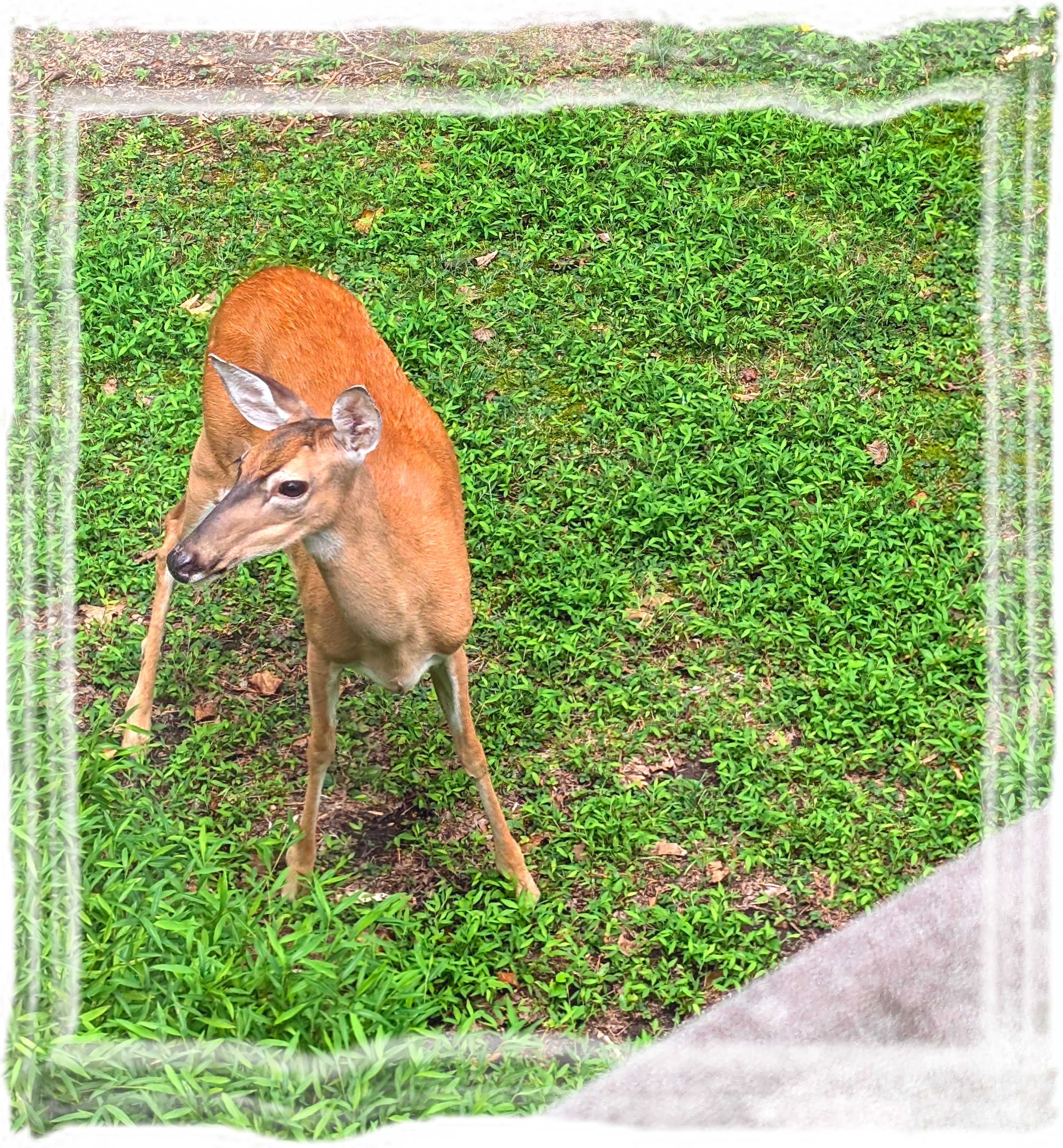
That doe up there has been hanging around for weeks. Deer aren’t that remarkable in the city’s right-of-way in back of lots, but they don’t often venture into our yards or bed down there like this one has on several occasions. That’s the deck railing, lower right, showing how close to the house she was. July 2024.
It’s 86 with a “feels like” of 93, and I’ve been home from a trip of errands for about 30 minutes. After I couldn’t find a third of what I wanted at the Lowe’s gardening center and finding out that the prescription I needed to pick up had been filled at my old pharmacy instead of my new one, I negotiated a ridiculous traffic pattern to cross the street to a grocery store. Parking halfway up one aisle, this is what I observed as I got closer to the store:
You know those handicapped parking spaces with the extra wide ‘stripey section’ to assist those who need more room getting out of a vehicle? A nondescript sedan, an older Chevy or something, swung in front of me quickly and parked haphazardly in that space such that it was half in the parking space and half in the stripey section. Sensitive to these things both because my late mother and father both needed handicapped parking, and because one of our closest friends now seriously needs it, I noted it had no handicapped license plate, nor did I see a placard hanging from the rear-view mirror. I saw only a driver, a 25-35 year-old. She popped out of the car without any obvious ambulatory issues, left the car running, and zipped into the store ahead of me. “Oh, probably an employee picking up a paycheck or something,” I thought. A bit cheeky, but at least just a minute or so. Nope. She pulled out a shopping cart and took off into the store.
Seriously? I felt like going back to her car and seeing if I could move it to a different parking space. (No, I didn’t, but it sounds good. People pack lethal force in this state.)
I’m reading Constance by Lawrence Durrell, set in the years immediately prior to and at the beginnings of World War II. It’s the third book of Durrell’s Avignon Quintet. Last night Constance has returned to Avignon as a Red Cross liaison to the Vichy French. In the passage I read last night, she is shocked when she realizes that the Germans stationed there (who in actuality run everything) aren’t embarrassed by their actions in executing 20 villagers because someone fired on a tank; are not embarrassed by collecting all bicycles in the area and destroying them with two tanks because now no one can take messages to the supposed resistance in the hills; are not embarrassed by seriously discussing the processing of Jews for the camps in Vichy.
This lack of embarrassment, exemplified by the young woman this afternoon, continues to defy my brain’s ability to parse many behaviors of the past ten years, mostly political ones. I eschew politics on this blog. I merely will say how disappointed I am that a large majority of centrist politicians have capitulated to their respective fringe elements, and worse, so have voters. The arena of civil discourse demands recognition of differing opinions. It demands certain social niceties.
Whatever. The Curmudgeon has an appointment with the Old Fogey Police. Apparently I need an OF license now that I’m 70.
A few hours ago I surpassed seven decades upon the planet. My first memories occur somewhere around three to four years of age; make that six and a half decades of consciousness. I rode tricycles and bicycles with playing cards clothes-pinned into the spokes for noise. I saw the first television come into our house, the advent of easily available color TV’s, and the beginnings of data processing centers (long before personal computers became a thing). I celebrated the first humans going into space. I cowered under my desk as I practiced “what to do in the event of a nuclear attack.”
I entered my teens as we kicked off the Summer of Love (“we” being a rather generous term for my inclusion in it). I protested the Vietnam War in a lukewarm manner. I wore strange clothes, even considering what teens normally do.
I campaigned with my father in 1960 for presidential candidate Barry Goldwater. I voted for the first time in 1972 for George McGovern. I watched as Nixon resigned rather than face impeachment. (Imagine that, Bill. Donald.) I jump aboard the personal computing “thing” in 1982 and never looked back. I became a newshound; a teacher; a cog in corporate America; a consulting ‘expert’; and a retired, lazy bum.
So what? Every single person born before 1960 can pretty much say the same. It’s because looking back shocks one. My grandparents saw the advent of cars which radically changed society, and they knew grandparents or great-grandparents which served in America’s Civil War. My parents watched as first radio and then TV made changes almost as radical. And those of us of a certain age have witnessed computers do the same as the automobile. I cannot convey the visceral feeling of being the head of this time-worm, with a tail stretching back to days which did not know any color of T-shirt but white, which never saw a man wear hair which touched or covered his ears, which had just completed two significant wars in a little over 15 years.
You’ll have to experience it yourself. It’s a trip.