Retirement, reality, time, and other important things

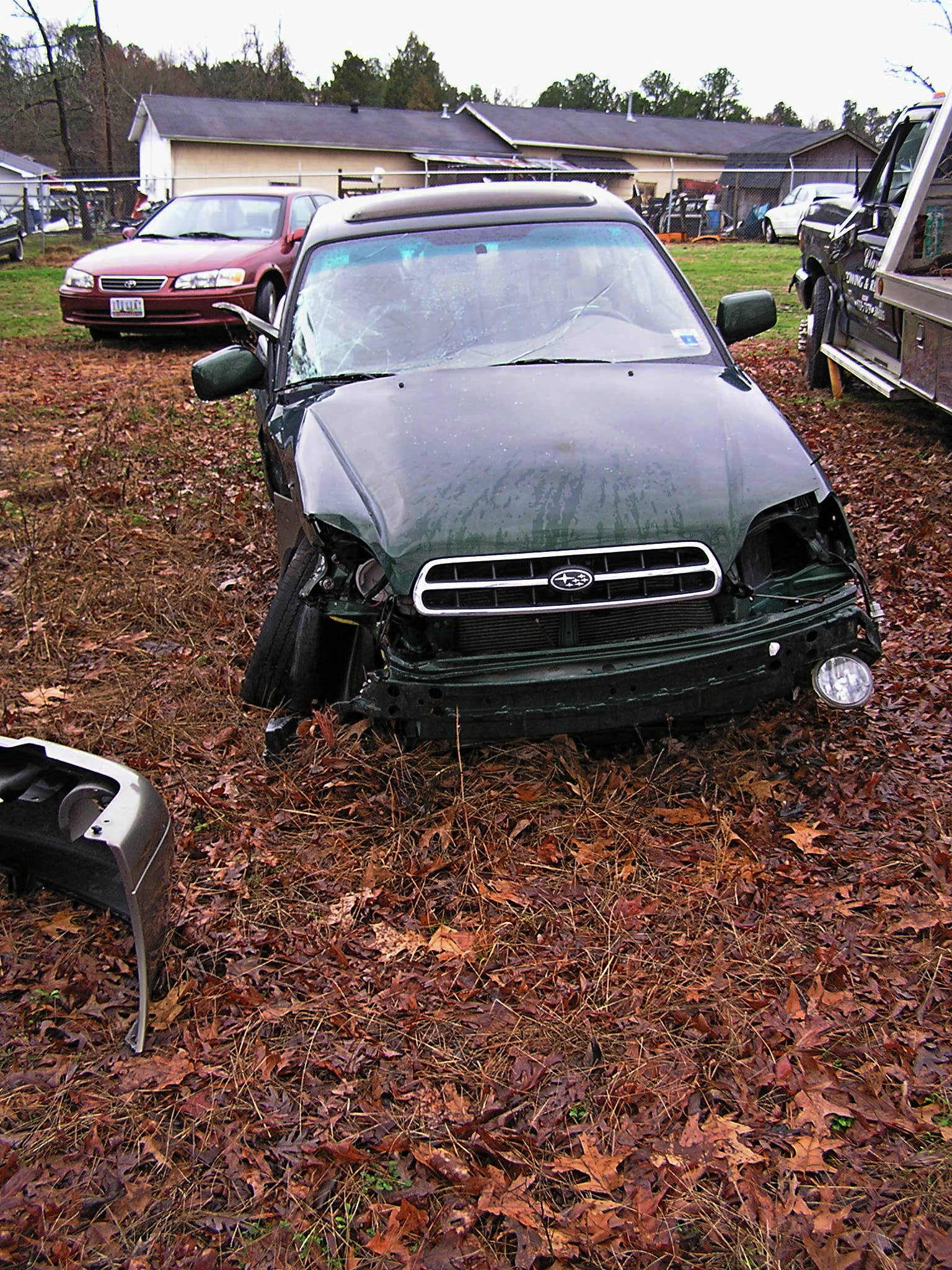
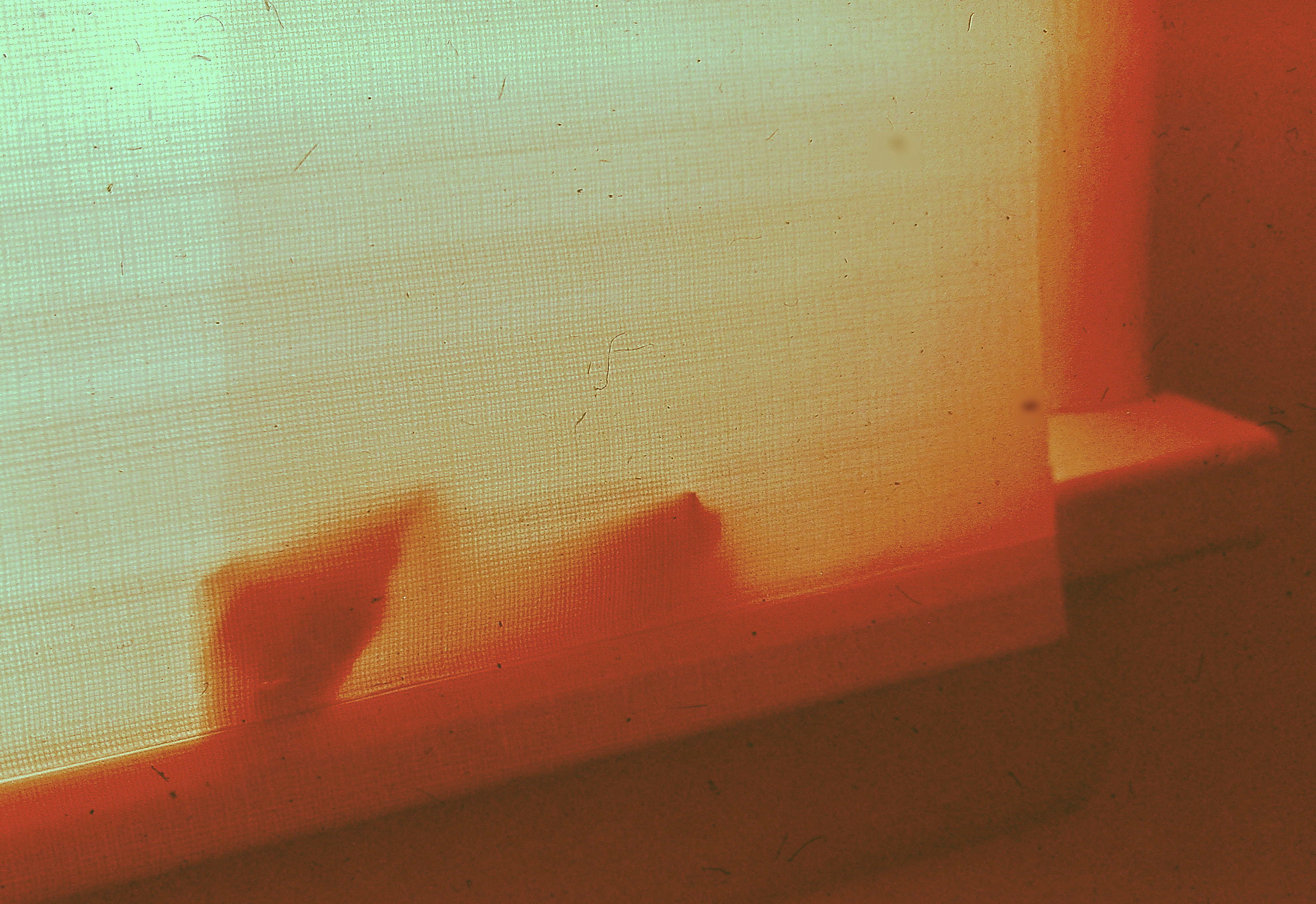
Window treatment. Chester, MT. April 1977.

One of the nicest things about retirement occurs every morning. The alarm doesn’t go off–not that it sounded much in the past 25 years–and I lie in bed debating about getting up or rolling over for a bit more ‘driftology’ (the study of drifting through my inner time and space). Usually five minutes proves I won’t be dropping back into sleep. I quietly slide out of bed; leave my sleeping wife to her dreams; grab some clothes, my cellphone, my glasses, and the glass of water sitting on my bedside stand; and I walk to the kitchen to start the morning ritual. I avoid the weakening spot on the bedroom floor near my side of the bed, the one which squeaks loudly. Similarly, I walk closely to the wall as I pass the living room, again avoiding the creaking spots in the floor. In the kitchen I put on my morning clothes in the dark. They’re a completely inappropriate fashion statement proclaiming “hey, it’s warm.”
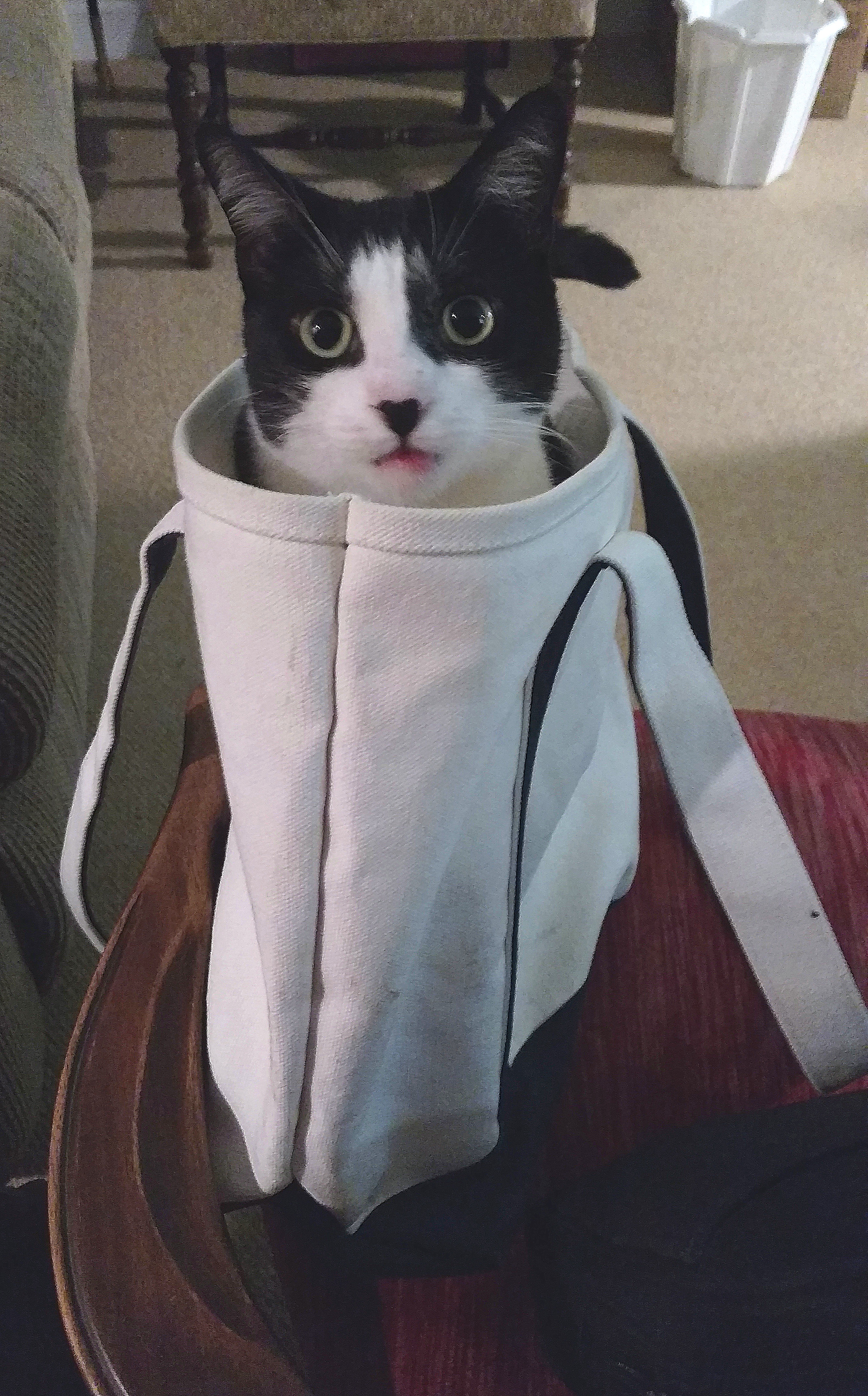
Sometimes Benny, one of our two nearly-identical black-and-white cats, accompanies me. The rest of the time he trots out a few minutes into my routine. I’m made aware of his presence by a gentle body slam against my calves. Despite having started the morning coffee ritual, I’ll stop and feed him. He likely isn’t hungry but why not? Returning to the ritual: coffee filter wetted, cup warmed, grounds measured, and when the water boils, a gentle dribble coaxes the coffee’s blooming. Then a steady pour fills the filter holder. After years of this I usually pour just the correct amount of water to fill the cup.

While these steps play out I’ve downed a glass of water to quench dehydrated cells, and I’ve opened kitchen blinds to prepare for the day. Regardless of standard or “daylight saving” time, very little light comes in these now-opened blinds, unless we’re near the summer solstice: on Retired Saving Time I wake at the slight lightening of the pre-dawn sky regardless the time. Birds will have just started their chirping in the spring. The sun will have become more insistently bright near the summer solstice. Nearing the winter solstice I might beat the sun to rising.

How to convey the calm of living rhythmically? Of waking at first light? Of eating a midday meal when hungry, regardless if it’s 11:30 a.m. or 2:30 p.m.? Of going to bed when tired, never caring if it’s 8:30 p.m. or 11 p.m.? The day becomes a physical meditation. Divorced from it, I can turn into a snarly bear, but being in tune with it resembles breathing at the steady, resonating rate synchronous with All Being.

In 1995 or 1996 I removed the watch from my wrist and never returned it. I turned off the morning alarm. Though I benefitted from a corporate job back then which allowed a laissez-faire approach to the start of the workday, I’m pretty sure I would have done this even had I been a shift worker. The slight tension induced in knowing there’s no alarm served to wake me with plenty of time to tackle morning matters; it proved far preferable to waking 25 minutes before the alarm was due to go off only to lie there cursing because I couldn’t get back to sleep and “why bother anyway”. In retirement this natural rhythm has extended to the whole day, but the slight tension doesn’t wake me anymore.

Coffee in hand, my day officially begins with reading. It may be the Morning Briefing from the New York Times. It might be the comics. It might be baseball, more specifically anything written overnight about the Phillies. Recently, during Lent, my morning read has been The Sign of Jonas, the journals of the Trappist monk Thomas Merton. This last requires turning on a light since it is a physical book, not something on my tablet or cellphone. For that reason my reading necessarily takes place downstairs where a light can illumine without bothering my sleeping wife. Benny benefits too: when I comfortably settle in front of a fire downstairs or in an old wing-backed chair in our library, Benny gets to jump up for a morning petting session. (If I’ve happened to have decided on reading material on my computer, he’ll happily claim my lap there, too.) Reading becomes a bit challenging with a cat squirming around, kneading and delivering headbutts. Soon he settles down and allows me to continue my study of Merton, my inquisitive plunge through data at my computer, or the latest take on This Stuff Really Matters (Today).
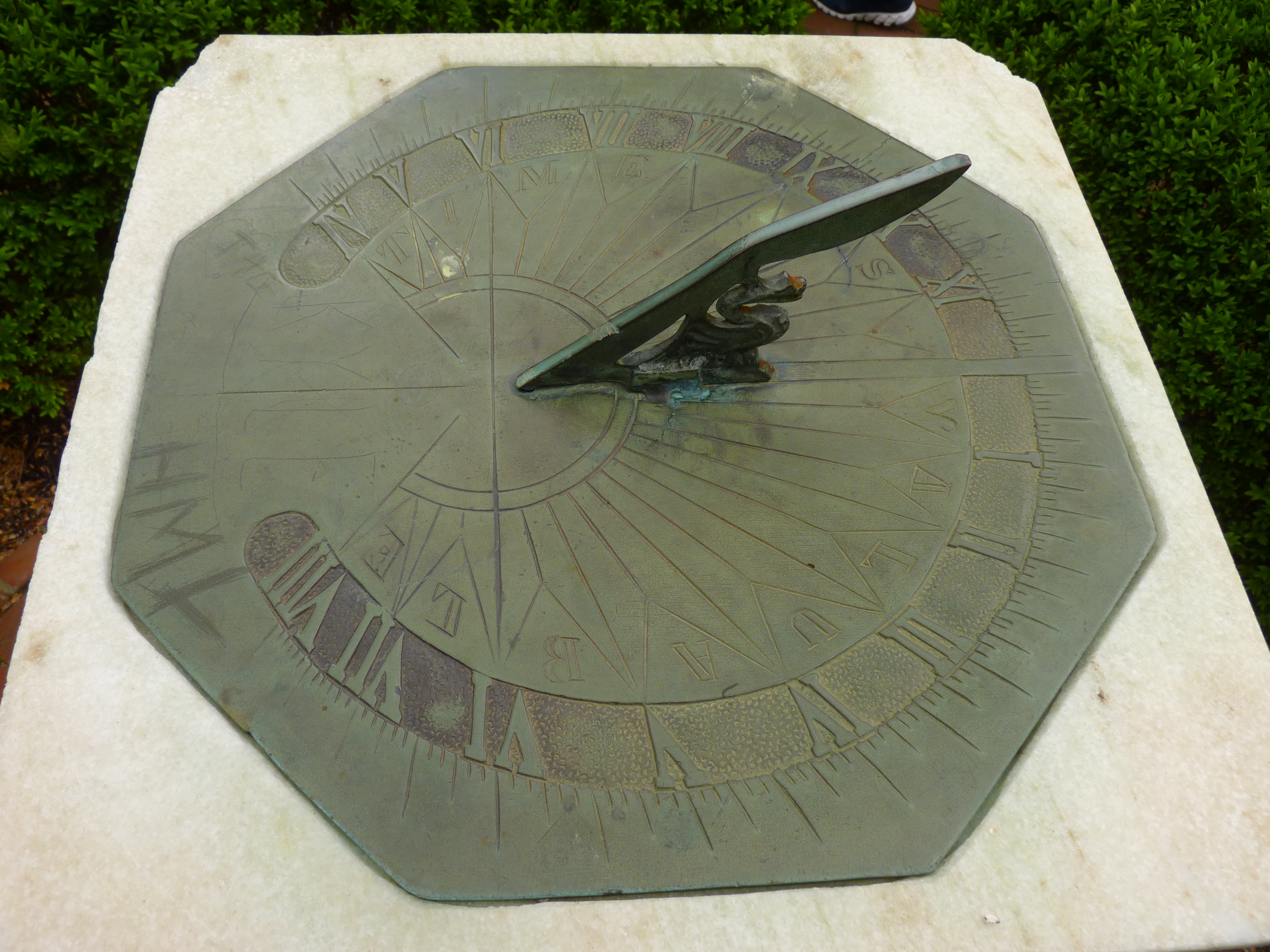
Henry Clay Mansion, KY. July 2014.

Because I’ve moved to the rhythm of the day for nearly 30 years, I alternate between chuckling or muttering in irritation when people rant about jumping forward to Daylight Saving Time or falling back to Standard Time. Time–being but a mental ruler imposed by humans upon our perception of past, present, and future–doesn’t exist. Every day we are reminded how a group of people living through the same events do not experience it in the same way, do not remember it in the same way, and will sometimes seek to rewrite those events to suit a particular purpose. To put it in someone else’s words:

What usually happens is that, once scientists have worked out their equations [for a Grand Unification Theory], time is nowhere to be found. And if it’s not part of the fundamental fabric of the universe, how do we know it’s not something we’ve invented to explain what we don’t understand?

Javier Yanes on BBVA OpenMind

In most senses I don’t care if it exists or not. Hours, minutes, and the clocks which measure them indisputably resemble rulers, nothing more. Just as that tree on the hill doesn’t get any closer if I declare I’m a foot closer to it (while not moving my feet), I don’t perceive time appearing or disappearing because we move to DST. Just as retirement has brought a detached view of the working world (and many other matters), so too has it altered my perception of time. (Time as a malleable substance?) Stereotyped jokes show us older folks forgetting the day of the week with regularity. Is this any wonder when time doesn’t exist? If I stop using a tape measure to measure how far I travel, am I assailed when I lose touch of my sense of distance? I can still walk from Here to There, can’t I?

[Which sparks a possible and humorous but too truthful dialog:

“Do you know what day it is, Mr. Pilcher?”

“Yes.”

“Would you tell me?”

“Yes.”

“What day is it Mr. Pilcher?” (a bit of exasperation now)

“It’s today.”

“And what day is ‘today’, Mr. Pilcher?” (more than a bit of exasperation now)

“It’s always today. I don’t understand your question.”

“What DAY of the WEEK is it, Mr. Pilcher?”

“Gee, I’m sorry if I annoyed you. I have no idea what day of the week it is. It’s a day between Sunday and Sunday; I go to church on Sunday, and I didn’t go to church today.”

(lengthy pause while Mr. Pilcher’s treatment plan is revised to indicate he is losing his marbles)]

My paternal grandfather spent many minutes and hours staring out of windows in his later years. He at times seem befuddled. He also showed he was sharp as a tack when it came to philosophical and existential questions. He had studied theology and led congregations for decades. Staring out of a window came with the territory, especially when composing this week’s sermon. While the need to write sermons disappeared in retirement, the window-staring did not. Did this indicate a dissociative mind? Doubtful. More likely old habits outlived their usefulness. So too my need to keep track of every hour of the day, every day of the week. I never did, much. Why should I be punished for that? I wouldn’t be punished for a deteriorating sense of distance; why a deteriorating sense of time?

I would argue my rising with the predawn light, moving through the day totally in touch with what needs to be done Now, whether it be eating, my taxes, planning meals, pruning shrubs, reading books, attending a doctor appointment on time, or going to bed when tired keeps me in a meditative state. Retirement provides extra incentive to be in touch with the here and now. I shouldn’t be penalized because I’ve approached a more natural state of being, I should be admired or at the very least respected. Instead, I feel the need to document how my memory of many things has been tenuous throughout my supposedly ‘with it’ years. I have never  been able to tell you what I have to do today. As a reporter in my late 20s, I would drive to work oblivious of what stories I had to run down that day. As a teacher in the years that followed, I had only a fuzzy idea of what I had to teach that day, usually because I had planted the seed in my brain the night before: “you have to get to school quickly to print that test you’re giving today.” Ask me on Monday what the lesson plan for Thursday will be, and you would have received a panicked look. In the corporate world where each day’s list of to-do’s varied quite a bit, I had no idea what I would do that day until I looked at the task list. (Bless you Franklin planners for focusing me the idea of A, B, and C tasks.)

And now? How do I prove to those who will judge my mental competence that I have never been able to remember what I have to do today? That I’ve marched through many a day thinking it was Thursday, only to be reminded continuously “no, it’s Wednesday”? When my mother neared the end of her life, she was subjected to many a judgement like this. When she microwaved a throw pillow because she thought she could warm it up and use it on her sore neck, her dramatically shocked visiting nurse felt that Mom was ‘losing it’. Well, somewhat, yes, I concurred. “But Mom has always had a tenuous grasp of the physical sciences including those which govern a microwave. Just because it wasn’t marked “microwavable” on the throw pillow shouldn’t totally count against her. After all, she had several microwaveable neck pillows which she did put in the microwave each night–and they didn’t have “microwavable” on some tag attached to them, because they were handmade by the good ladies at her church. Should she have responded to the smoke filling the room? Yeah, probably. Then again, my wife should have reacted to the smoke filling our house that night in midwinter 2002 when the furnace’s chimney had decomposed, and I came home to a house filled with smoke and a wife merrily preparing my dinner. Losing your marbles doesn’t occur when you misplace the bag of marbles. You lose one here, one there, never noticing the slightly lighter bag you’re holding.

Our perception of time varies from person to person, and time’s but a human construct. Our perception of reality–whatever reality is according to the popular philosophers of the day–varies even more. We should be judged on who we are and who we were, not on who someone wants us to be. Want to scare yourself? Pretend you’re the plaintiff in a court hearing to prove that you are mentally incompetent. My guess? You can’t prove you’re competent right now! Good luck when you’re 80.

God forbid I should be denied my mornings with Benny, coffee, and reading material simply because someone says I need to stay in bed longer, or get into a shower, or do anything else I don’t want to do. “Oh Lord, I pray my ability to perceive how I’m being treated matches how I’m being treated.”


blind pig finds acorn

Part of the Spokane Falls on the Spokane River, Spokane, WA. March 1993?

My father was notorious for finding a way to muck up a photograph. Favored methods:

  • Using a wide angle Instamatic (pause while he shudders), take a photo of an animal or bird you see in the mid-distance. Photo has a brownish dot in the center (maybe) that can be anything.
  • Shoot a portrait-type shot of people looking directly into the sun, squinting. Cut off only their feet. Alternately, shoot from too far away and make sure photographer’s shadow is prominently displayed in foreground.
  • Line up your group shot in front of a window, glass-fronted artwork, or better yet, a mirror. Shoot with a flash.

That’s just a minor list. I’ve tackled sorting through the photos I brought home in mid-2020 when we cleared out my parents’ house in late July. I’m primarily interested in photographic proof of them, their sons (me and my brother), and the relatives and friends who they encountered during their lives. Every once in a while, though, I come across a photo which makes me wonder how it ever happened, such as the one above.

The photo above is unretouched except I blurred out a few white spots in the dark sky where the cheap photo developer couldn’t be bothered with blowing off dust on the negative. This is a natural light photo and the falls are not lit. It appears to have been shot from a restaurant currently called Anthony’s at Spokane Falls. The shot is looking due east to the kind of clouds which Spokane seldom sees as the sun sets. That’s Canada Island on the left which splits the Spokane River. The cataracts on the north side of the island are approximately the same. I unfortunately mislabeled the photo, so I’m not entirely sure of the date, but I recall it was in March, and it sits between a photo from June 1992 and one from July 1993.

Some day I may try to retouch it and see if I can make it look better, but there’s not a lot you can do with the photos taken back then. I don’t have the negatives; I had to scan this from the print. I’ll likely just leave it and remember that my father could take a good photo now and then. And I can tell you for certain that he never stopped trying! I’ve four or five storage boxes full of prints to attest to that!

Golden times

Oregon Coast. October 2011.

In October 2011 my wife and I rented a house just outside Newport, OR, where we vacationed with my brother, his daughter, and our parents. Our last night there an amazing set of conditions created one different sunset after another. (I’ve posted other photos of it here and here.) For more than twenty minutes I stood on the bluff outside the house snapping photos as the rest of my family waited to go to dinner. We might have had reservations, I don’t remember. I ignored their growing impatience to capture these photos. Thus, the photos have an undercurrent of discontent, though I don’t regret taking them. It represented the self-centeredness they would say I’ve had all my life. I’ll have to explore this later.

A follow-on about clothes

Ocean Isle Beach, North Carolina. Still there in November 2007.

A little bit ago I wrote about the longevity of clothes in my closet and how they mark the march of time in reverse. I’ve realized lately that they have staked out the future too. Today I wore a fleece top purchased when we took a Thanksgiving getaway to Ocean Isle Beach, NC, in 2007. It’s none the worse for wear (the fleece top, not Ocean Isle Beach which might very well be the worse for wear). It dawned on me today that a heavy flannel shirt/jacket, the aforementioned fleece top, the sweatshirt I wore last week which was given to me by my employer in 2003 or 2004, etcetera, etcetera, will possibly be in my closet when I die.

Recently I’ve tried to lengthen my time between Now and Death. “It’s likely twenty-plus years, you fool,” I tell myself. Retirement planning forces one to focus on ‘how long do I have’ and then hope the money lasts that long. It fosters looking toward the end instead of the path toward the end–instead of focusing on where you are right now. And lately, I’ve been successful in realizing where I am relative to my likely End. I accomplished this by looking backward the same amount of time I can expect to live. Today it means focusing on where I was twenty years ago. “Goodness, I thought things were grand back in 2003!” he thinks. It feels many years ago when looking backward. Then why not many years ahead when looking forward?

These darn clothes tell a different tale, or at least they have their own tale to tell. “We’ll still be there in your closet. This is your wardrobe for the rest of your life.” It’s weirdly depressing and freeing at the same time.

A better Valentines Day

Clearwater Beach on the Gulf of Mexico. February 13, 2013.

Sure, flowers are nice–especially the two dozen roses I handed my wife a few hours ago. But warmth, white sand, palm trees, the Gulf, and a previous visit to the Phillies Spring Training Camp? Priceless. “Bouquet” is a fluid term.

blue sunsets

What if sunsets were blue? What if
they resembled my recollections:
how I broke upon your hardness, how you
ran from my insensitive cutting
remarks, lasers which severed whatever
tied us together those few years? Would I
ever have experienced solar reds, oranges,
pink-tinged magic? Known this reality?

Turned from unreal shadows dancing on 
Plato's cave wall, pushed into dwelling
among well-lit shadow-makers,
my memories hold
only blue shadows
watching blue sunsets.
when a memory plays you tricks

Smoke in the Smokies

Great Smoky Mountains National Park, western slope. May 2004.

At the beginning of May 2004, we headed to Gatlinburg, Tennessee, primarily to visit the Great Smoky Mountains National Park. I’ve searched in vain for a photo taken around that time near our home in Grafton, New York, where Spring still fought Winter’s grip on our weather. Two days later we entered Spring’s glory, Smoky Mountains-style. I’ve posted other photos (here and here) which display the explosion of green we encountered. I said to my wife as we drove through undergrowth with leaves as large as my hand–some kind of berry, I suspect–and kept an eye out for black bears newly emerged for the Spring, “You know, I think I could live here.” Two winters later, as I cursed the snows again, an opportunity beckoned to test that conjecture, and I took it. North Carolina pleased us even more than Tennessee. Recently, I’ve posted several photos from that time because late January reminds me of the move, and the approach of Spring always makes me thankful I get to experience a long, lingering one here below the Mason-Dixon Line. I’m thinkin’ I need to put on my travelin’ shoes again…

Me stuff

When I tossed my 1968 J. C. Penney’s Towncraft wool coat, it was older than about half my co-workers. Its brown, blanket-thick fabric had kept me warm for 38 winters. It arrived in my life as I began my freshman year for high school (still to be served in a junior high school), when my mother decided my brother and I needed new coats. We both came home with nearly identical wool coats, cut at the hips, and lined with polyester faux fur. They cost $20. According to the website in2013dollars their purchase price would be $170 or so today. That’s a little difficult to believe, because I know Mom wouldn’t have spent $170 in today’s marketplace to buy me a coat, but not everything remains the same today as it was then. A gallon of gas should cost about $2.90 based on 1968, but I’m paying more than that and only briefly did I see it below $3 at all in the past twelve months.

But back to the coats. In January 2006, more than 37 years later, I threw that coat away. It had hung in our basement, only coming out when I took walks in the woods behind our house, and the coat had developed a green sheen indicating some type of moss which I couldn’t see individually had taken over the wool. I promised my wife I wouldn’t try to save it when we moved south to North Carolina.

Moments before it went into the dumpster: the 37-year-old coat. Grafton, New York, January, 2006.

I still hear my parents saying you wear clothes until you outgrow them or they wear out. Before I reached 30, I realized I wouldn’t be throwing many clothes away for the latter reason because I just didn’t wear clothes out much for reasons I still don’t understand. Sadly, I do outgrow them still, but these days it has to do with an expanding waistline. I absolutely love buying clothes. The fact that they will take years to wear out frustrates the consummation of that desire. I prod myself to ‘just give them away–if they don’t bring joy…’ but it’s a lost cause. Most of them still bring joy. A few bring sweet pain:

  • There’s a wool Pendleton wool shirt I just took off two days ago. My father wore it in the last years before he died at the end of 2013. The shirt shows absolutely no wear, and I would bequeath it to my son except I don’t have one. I’ve donated most of the shirts I took from his closet, but a fleece pullover remains for reasons which elude me: I dislike it and wear it little, thus ensuring it will be good enough to bury me in, or at least keep me warm in the nursing home.
  • Look up at my avatar photo. Though difficult to see, I’m wearing a robin’s-egg blue sweater. The photo was taken at Christmas 2009. There are several other sweaters in my closet purchased at the same time, since I tend to buy several things at once but only once or twice a year.
  • Yesterday I wore a pair of sneakers which I distinctly remember purchasing when we lived in New York. We left New York in January 2006 as mentioned above.
  • I’ve lucked out more with t-shirts. The oldest one (I think) appears to be one purchased while on vacation in Boone, NC. We took that vacation in May 2013. The T-shirt looks fine; I’m sure it has years ahead of it given that I’ll only wear it in certain circumstances because it’s not 100% cotton, and I dislike such shirts. (“Why don’t you throw it or donate it?” “Because…”)

In the room two doors down from this office, a leaf-green down jacket is draped over a plastic lawn chair. I purchased three items in the summer of 1972 to keep me warm while camping in the Rocky Mountains. Recently graduated from high school, I had never camped in my life, and in the fall of that year I would enroll at the University of Montana in a program featuring frequent camping trips. My new advisor recommended two things for camping: a down jacket and a wool sweater. More precisely, he recommended buying two wool sweaters at Goodwill, cutting the bottom six-to-eight inches off of one and sewing them on to the other to make a wool tunic. I bought the jacket and the two sweaters as directed, paying $1.99 for one sweater and 99-cents for a second. My mother made the necessary alterations. (The more expensive sweater fell to her shears.) When camping ended a year later, I removed the add-on, and kept the 99-cent sweater until it joined the mossy wool coat from 1968 in the commercial dumpster in my front driveway. Mostly I tossed it to appease my wife, but I admitted to myself that the high neck on the coarse wool sweater irritated my skin. The green down jacket sports a two-inch square of green plastic tape on one elbow where a spark from a campfire fell and melted a hole. It’s the original tape from 40 years ago. I wore the jacket just a few weeks ago during a cold snap when temps lived in the teens and twenties. Come to think of it, I’m wearing it in the photo above as I toss its older brother into the dumpster!

My first real camping trip with Woolco, a group of us leaning in to the message of our faculty advisor: “you gotta wear wool if you wanna stay warm”. Arrowhead Lake, Glacier National Park, Montana. October 1972.

I’ll toss expired food as if it insulted my mother. I’ll throw away half of our Christmas decorations because I don’t like putting it all up in early December only to take it down as January begins. I once sold off virtually every piece of furniture from a 4000 square foot house prior to a cross-country move. I don’t hoard in general; I hoard specifically. To wit:

  • While working in New York I picked up the habit of using scratch paper for most computer printouts. From that point forward I routinely brought home scratch paper from work once I moved to North Carolina at the beginning of 2006. I still run across paper from those years. We’ve moved three times since then.
  • I recently forced myself to ‘designate for assignment’ most of the old computers I’ve clung to. Those which remain able to perform at an acceptable speed sit around waiting for a purpose in their sad little electronic lives. Until I joined the ranks of music streamers a year ago, an old laptop from 2012 sat on my downstairs bar to serve up our digitized music. Though it’s slipped into retirement again, it sits on the bar still. Perhaps it will become a photo display.
  • But for a divorce, I would still own a Yamaha amplifier and its matching cassette tape deck, purchased in 1986. (Well, not the latter. I’ve not needed a cassette deck for a decade.) I still cart around the Boston Acoustic speakers which they powered; these speakers were in use through 2009 when I discovered the woofer in one had shredded. I still plan to fix it, more than a dozen years later.

I want to think my distinction involves the usefulness for the tools in my life: the clothes which keep me warm, the computers which enable me to work and communicate, the audio/video equipment which entertains me. If so, how to explain all the memorabilia, the extensive library, the suits I will never fit into again, or, frankly, the pool table which came with the house and hasn’t heard the crack of a cue stick on the white cue ball in years? Perhaps the memorabilia serves as a tool for memory, and I can rationalize the books because every few months I want to look something up in them, but the suits? The pool table?

We’re all biologic collections at war with ourselves: laziness versus industriousness versus mindfulness versus purpose; emotion versus analytical thinking versus empathy versus pragmatism; habit versus creativity versus spontaneity versus thoughtful planning; childlike wonder versus mature knowledge versus arrogant authority. Those things around us, be they physical or metaphysical, play the part of a charcoal rubbing of our psyches, of who we are. I’m going to look a bit more closely at this “stuff”. It seems to want to tell me something.

Smasho! Bango!

My beloved Subaru sedan shortly after its death. January 2007.

I have no favorite vehicles but some were certainly better than others. My special edition Subaru Outback sedan was a lifesaver when we lived in snowy New York from 2001 to the beginning of 2006. One year later, it was dead, the victim of my ill-considered decision to turn left in front of an oncoming car doing about 60mph. That’s the bumper on the left. It’s amazing how many micro-seconds are still in my mind about that day. Believe it or not, I received no ticket for this because the guy was 10-20mph over the speed limit and ran a red light (it had just turned when he entered the intersection).

I thought to have a post today on possessions, started yesterday, but no…

Comin’ into Lost Anjeleez

On approach to Raleigh-Durham airport. January 2020.

About three years ago today, as we ignorantly assumed nothing like Covid-19 lay on the horizon, I returned to Raleigh, North Carolina, from my boyhood home of Spokane, Washington. I had spent two weeks sorting two lifetimes’ worth of goods my parents stashed into their house. Raleigh never looked so good to me: I carried the deep satisfaction from accomplishing a complete journey through the whole household, and I had left the cold, snowy north to the lovely near-spring weather pictured above. My retirement might have officially begun 50 days prior, but it didn’t really begin until this moment of coming home. One month later we returned through the same airport from New Orleans, unknowingly passing Patient Zero who brought The Covid to our area, and we spent all of March sitting on our butts wondering what had kicked them so soundly!