Howard Bliss Pilcher: an introduction

Howard, 11 weeks; with his mother, Esther Dahl Pilcher. Lansing, MI, August 1925.

Howard Bliss Pilcher entered the world on this date 100 years ago. He died toward the end of 2013. In those 88 years, like most of us, he did nothing to affect the globe or any large portion of it. His impact, again like most us, accrued from those individuals he knew and perhaps from patrons of the two entities which employed him for 39 years. He most affected his wife and sons, Steven (my brother) and Kenneth (me). Seventy years later, to me he remains both enigmatic yet an apparently open book. Whether nature or nurture, his traits run through my being. Whether you knew him matters not. He might have subtly affected you too: every one of us amplifies his presence on humanity simply by interacting with more than one person and making an impression them; it ripples out to touch people we never knew.

Howard Bliss Pilcher—technically a Junior though never named as such—came into the world in Lansing, MI, on June 22, 1925. He moved with his brother and parents from city to city as his father, an American Baptist minister, moved from church to church. The younger HBP served in World War II, completed college, started his career, married, procreated, retired, traveled, and died December 16, 2013. He resembled thousands, millions of other men born around the same time. We each are unique, though, and this unique man fathered and raised me. If we are constituted from our roots, our times, and our experiences, then exploring those roots isn’t so much recounting their life as it is exploring our own. Therefore, we can’t call this biography. I haven’t the time or desire to research the nuances of his history, let alone the history of the times and regions through which he passed. (And thanks for that, too, Dad.) But there will be biographical elements to it, just as there will be aspects of memoir stemming from his inescapable impact on my life, and how the two remain intertwined even after his death. Perhaps reminiscence remains as the most accurate term.

A confession before we start: I’ve procrastinated all my life—a trait which will be explored through the telling of this tale—and this procrastination has left me too little time to complete this piece prior to deadline. My vision for it looms at far too many words to dash off in one or two sessions. Unlike the great gonzo journalist Hunter S. Thompson, I cannot lock myself in a hotel room for a few days, wire myself on pharmaceutical grade crank, and pound out a semblance of the piece this subject deserves. My physique won’t handle it, my psyche won’t handle, my marriage won’t withstand it, and I don’t see why after seven decades I should start caring about deadlines now. Okay. Let us begin. We’ll start with the thumbnail bio:

The senior Howard Bliss Pilcher, my grandfather, the one my grandmother called “Bliss,” came into the world in 1894 in Urbana, Illinois. The Pilchers traditionally lived in north central North Carolina in Yadkin and Surrey counties, up by the Virginia state line, but the “movin’ bug” ran through our branch of the family as far back as the early 1800’s. Bliss’s father, Wiley Pilcher (1861-1935), moved to Illinois where he fathered all three of his children. Wiley later moved to Fargo, ND, and finally to Libby, MT. All of this perhaps explains why, when he heard the call and enrolled in seminary, he became an American Baptist minister. American Baptists were at one time called Northern Baptists and trace church lineage through the Triennial Convention, the first Baptist convention in the United States of America. In 1845 a pro-slavery faction split off from the Triennial Convention to uphold the institution of slavery. It came to be known as the Southern Baptists. Without researching the topic, we may surmise that many Pilchers would not have been happy with my grandfather’s choice, particularly the majority of them still living in North Carolina. The decision to minister in that denomination reflects the equanimity which characterized my father’s upbringing, and which he instilled in me.

One year after my grandfather married Esther Dahl, my father was born. Lansing, the capital of Michigan, had nearly quadrupled in growth from 1900-1920. Not only were these the Roaring Twenties but this sizeable city (about 67,000) boasted all the activity inherent to a state capital. Thus, he started life in the thick of it: the capitol building stood about a half mile from their house. Not that this would have had much of an impact since by age 3 the family moved to Edina, MN, a suburb of Minneapolis. In between was a short stint in Dover, ID, an unfathomably small and remote place for a minister to travel, perhaps explained because Bliss stepped up from being a youth minister in Lansing to having his own church in Dover. The family lived in Edina for ten years more. At the threshold of my father’s entrance to high school in 1938, his father accepted a call to Havre, MT. (I’ve started to wonder if the “calls” were based more on wanting to stay reasonably close to his father, Wiley. Edina lies less than 250 miles east of Fargo; Havre is 350 twisting miles east of Libby.) Four years later my father graduated from high school. He attended the local college, Northern Montana, for at least a semester, but the reality of World War II loomed. The U.S. Army drafted him, placed him in the Quartermaster Corps, and sent him back and forth across the Pacific guarding supplies.
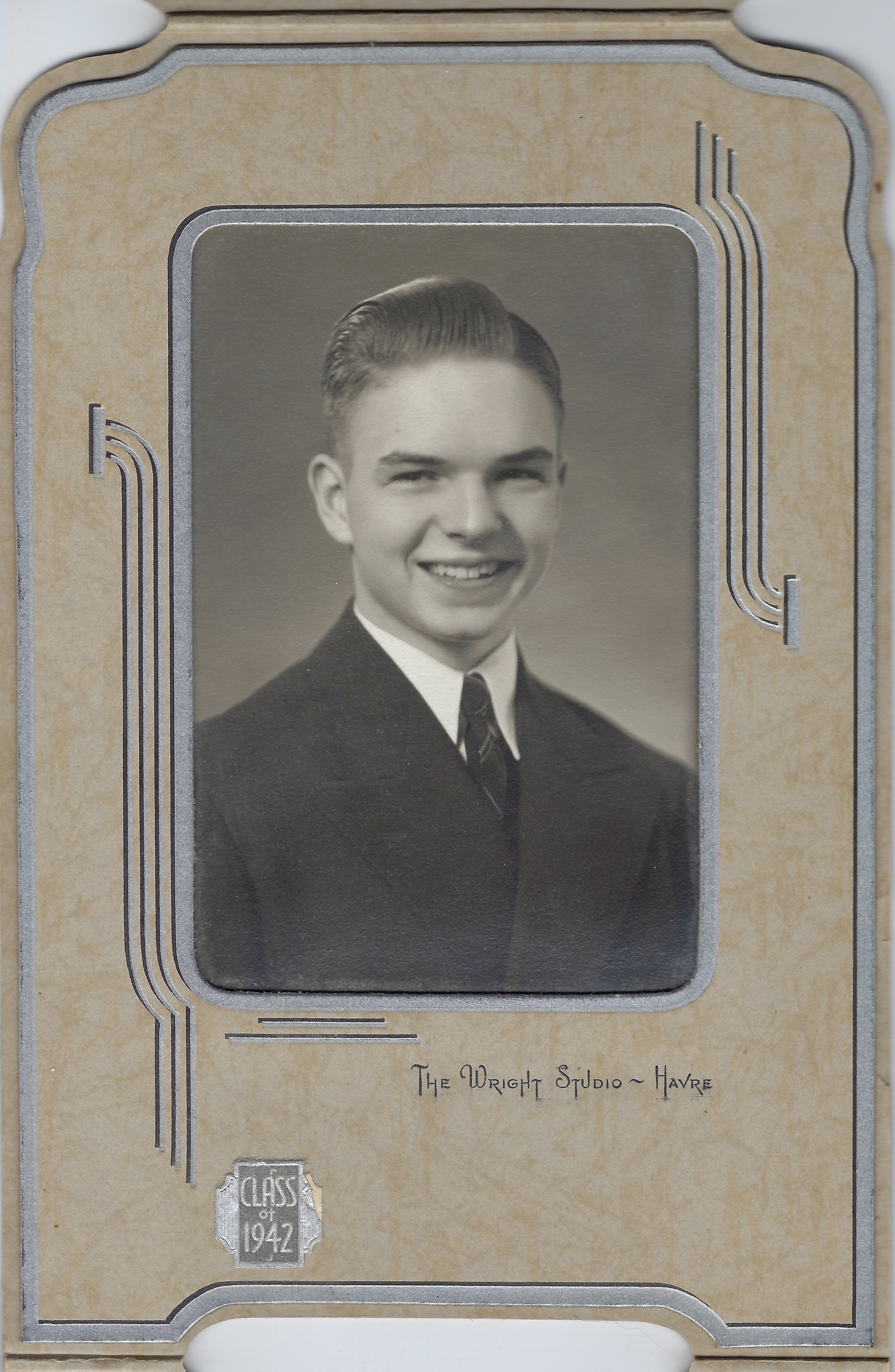
Howard’s senior photo from Havre High School. 1942.

At least, that’s what I surmise. My father didn’t want to talk about his time in the service at all. We did learn he made some grade of sergeant, but I only called him Sarge once. Let’s just say he made it very clear it would be the last time I called him that.

Howard mustered out of the service, enrolled at Washington State College (now WSU), hired on with the Carnation Milk Company in Seattle, married Louise Bach there in 1952, and they had a baby in 1954…me. We moved to Spokane, WA, when the Carnation Company transferred him soon after my first birthday. My brother was born there. My father accepted transfers back to Seattle (fall of 1962) then to Los Angeles (the beginning of 1964) before he made his dislike of Los Angeles and corporate life known. The company allowed him to go back to the same job he had left in Spokane just two years prior. We will revisit that career-killing decision. Four to five years later, as I approached high school age, he went through a personal crisis, quit Carnation, emptied out his profit sharing account, and maintained the family on that while he searched for a new career path. When a close family friend needed to fill a comptroller position at Sacred Heart Medical Center, he thought of my father who then began a very nice career managing financial matters for the hospital. As his mentor ascended the ladder of responsibility, so too did my father, eventually boasting the title Director of Fiscal Services. He retired after about 20 years of service to this medical center founded by the Sisters of Providence, a Catholic order of nuns.

In retirement he tended roses and indulged the Pilcher penchant for wandering by undertaking numerous road trips with our mother. There were a handful of trips by plane, but he fought claustrophobia for much of his adult life and those weren’t comfortable trips for him. Two trips abroad (England and Spain), a cruise package to Alaska, and near-annual trips to Hawai’i for a while rounded out the travel. They celebrated 50 years of marriage in 2002, quietly marked 60 in 2012, and he died after a sudden trip to the hospital in 2013 which saw him enter the hospital on a Tuesday and pass on the following Monday morning.

What did people think of my father? “That weirdo”? A “super nice guy”? “Honest as the day is long”? I know that he was loved. I know he withdrew toward the end of his life, and one by one most of the people he knew and loved died before he did. I know he worshiped my mother yet had a condescending tone toward her (which I adopted to my detriment). I know many, many superficial things. What I don’t know is the man he truly was, and what force ultimately took over the final five years of his life, making him mentally miserable at times. I know, too, it lurks within me and whispers that it just may do the same when my time nears.

This has been but a snippet, a dry telling of mostly factual matters, an introduction as stated in the title. To explore the man through reminiscence requires setting the stage. Much like reading your playbill before the curtain rises, you’ve now gained the background to enjoy the show (hopefully). In subsequent posts we’ll explore in no particular order and perhaps not under these self-same titles:

  • Ebullience, Positive Thought, and the Eleemosynary Ethic
  • Accruing Guilt: Understanding What Your Father Meant
  • On Humility and Perfectionism
  • Math versus Arithmetic, or Why I Skipped the CPA
  • How To Raise Two Merciless, Teasing Sons
  • …and others which do not yet leap to mind…

Life as a track event

Spokane, WA. Fall 1973.

I thought to make an extended metaphor about how life resembled a track event or maybe cross-country, how most of us spend the first 18 years getting in shape. When the gun sounds at 18, though, I ran into trouble because not all of us have those lovely first splits where the race seems to be a breeze and you think you could run forever. By 21, when I envisioned the first little twinge of pain, I realized that many couldn’t say that—for them the race becomes an endless drudge to be run, not at the front of the pack, but at the end of that solid bunch of runners who know they’ll never come close to winning this thing. And then I saw it isn’t a race anyway, and the metaphor petered out. If I apply this metaphor to myself I…

  • changed my event almost as soon as I signed up for it…
  • sat out the second lap…
  • signed up for a different event and changed that one twice before quitting the race again…
  • entered the original event chosen by 17-year-old me…
  • ran that race until I realized I just wasn’t suited for it…
  • trained for a different event and ran that one for a decade…
  • left that race, dreaming of the Perfect Event…
  • and fell into a nondescript event only to find my innate talents bloom

And that’s just the metaphorical telling of my career. What about love? Family? The experience of life? No matter. It was fun playing with that photo of my brother running cross-country when we both were young and naïve.

Fathers Day musings

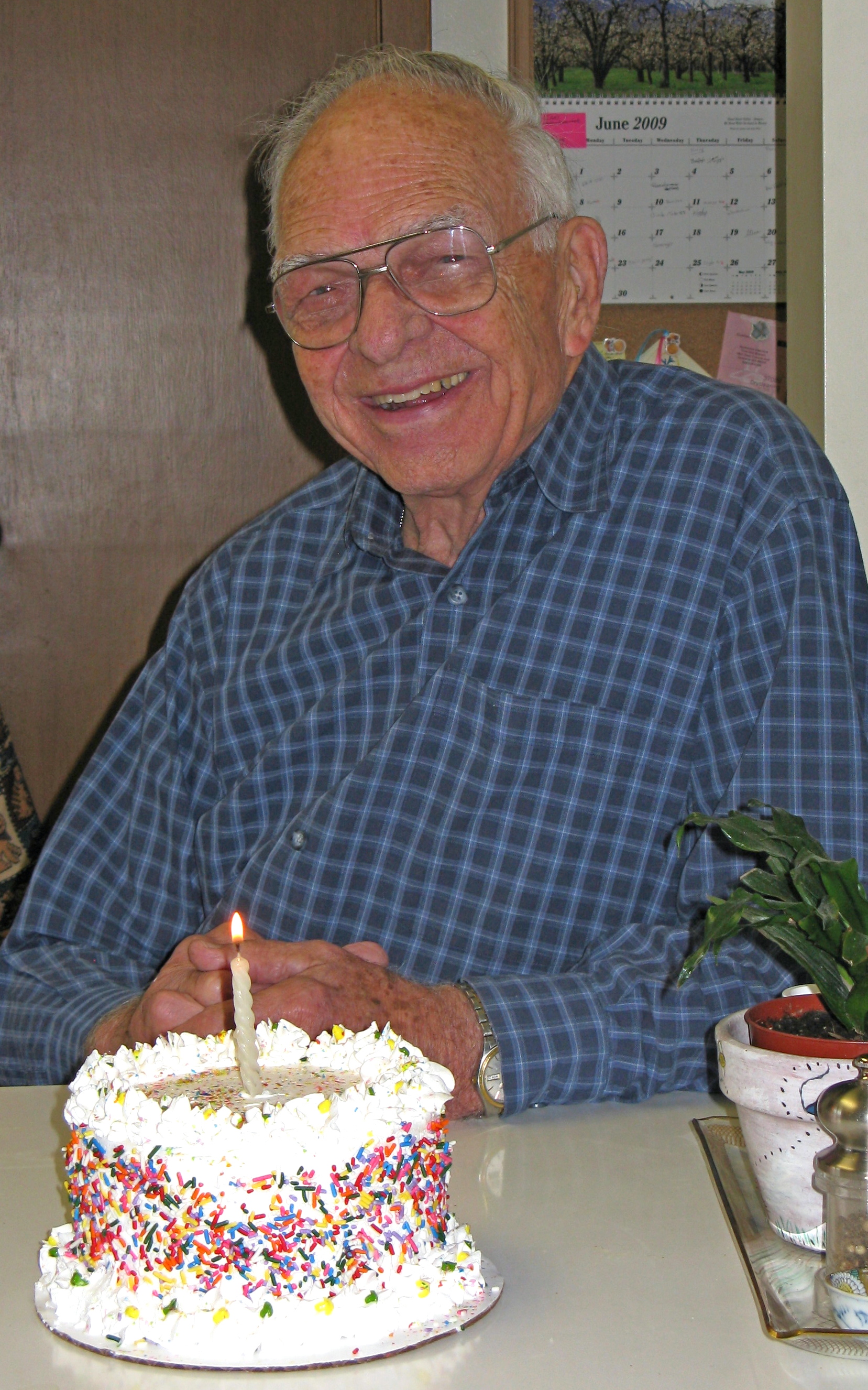
Happy 85th birthday, Dad! Spokane, WA, June 2009.

Father’s Day means less to me than many. My only children have been and are being cats. My relationship to the day runs one direction only, upward, to my progenitor. He left this mortal world more than a decade ago, but the memories remain vivid, accentuated by the passing of my father-in-law ten months ago. Life’s little irony, its bitter dessert: with every one of my years I understand him better; but this understanding always was for the Father in the past never for the Father of the now. Then he’s gone, and only the past exists. Unfairness salts this wound which never heals.

Growing up with this man my feelings differed, of course. How could they not? Once I became self-aware, our similar make-up combined with my contrarianism to make the sparks fly. This isn’t a truism. We argued and disagreed about everything. I remember these actual, real arguments, all of which went on for 20, 30 minutes, perhaps for an hour or more:

  • Does a body get colder or warmer immediately after eating? (I said colder, but neither of us had more than theoretical knowledge, and there was no Internet to solve things back then.)
  • If you learn a job applicant will be the second income for a family, should you favor the person who needs this job as the primary breadwinner? (He said yes, I said no. Back then the secondary income likely would be a woman’s, so the argument carried a deeper discussion about feminism and Women’s Lib.)
  • And one of my favorites: a yard should be allowed to go natural (said I); “you just don’t want to mow the lawn,” he said.

Father’s Day got diluted for him by the fluke of his birth date and the vagaries of politicians: it always occurred within eight days of his birthday. Take a look at that calendar over his shoulder. I used to hate Junes like that one. The third Sunday (and therefore Father’s Day) falls on the 21st. His birthday occurred on the 22nd. Two presents and two consecutive days I had to be nice to him. A year like this one, 2025, provided the maximum eight days of distance.

I used to commiserate with my brother (who took the photo above, I believe) about the monetary hit of birthdays and ‘parental recognition days’ in our family. Starting with his birthday on April 21st we ran through all the birthdays plus Mother’s Day and Father’s Day all by July 10th. In those 11 weeks he and I would buy five presents, an average of a present every other week. He especially hated June when my birthday (the 8th) smacked into Father’s Day (between the 15th and the 21st) and Dad’s birthday on the 22nd. And 18 days later came Mom’s birthday on July 10th. “The parade of presents, the meandering of money, the draining of dollars,…” —you get the idea. We didn’t have a lot of money back then; we bought our own presents, no help from Mom and Dad.

Despite this being my absolute favorite time of year with its leap into summer as the advent of June brings warm weather, the end of school and all the seasonal activities associated with it, and the chance to relax to a degree not permitted September through May, I run into these thoughts a bit more too. So many things become bittersweet with age. This continual discovery of more love for a man who’s gone remains one of the most important.

Another day older

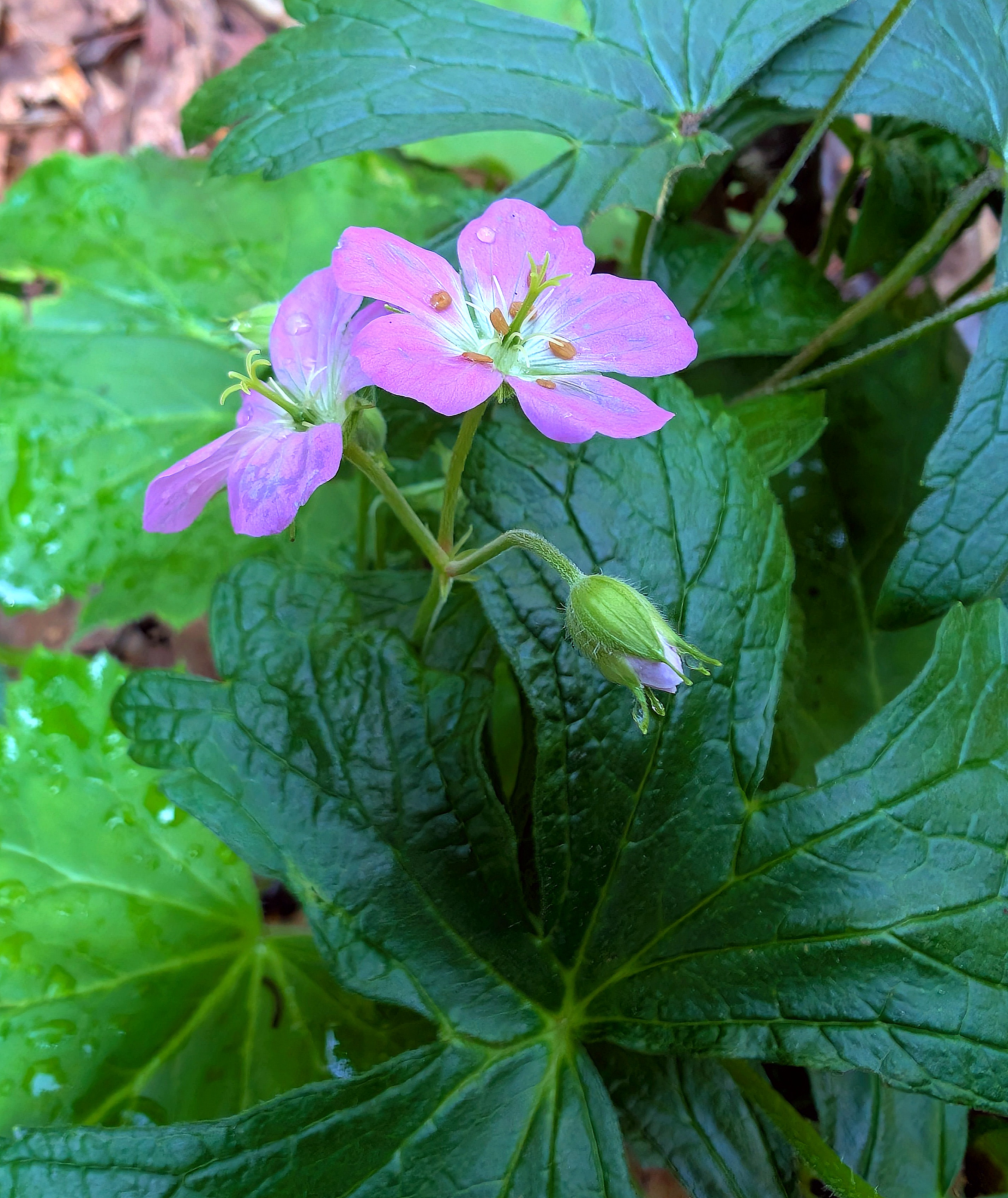
Wild geranium. June 2025.

Every minute and every day you’re older. Any time you wish to, shout accurately, “Hey! I’m another year older!” to passersby. Their strange looks betray their misunderstanding: you are another year older from this same time one year ago.

Even so, humans seek meaning like water seeks its level. Today as I write this marks the time 71 years ago my mother labored to get me out into the world. It’s about an hour and a handful of minutes until that moment in the Pacific time zone where I was born. I’ve been pleased she did so about 99% of the time, which given its +/- 1% accuracy should be good enough for anyone. You can search this blog for the tag “aging” to see how I feel about these so-called twilight years. If death is sundown, then I don’t think I’m actually in twilight yet, but the sun has lowered itself toward my horizon of being. Despite attempting to live in the moment, I’m aware each day of the end of my life nearing, something which seemed nebulous just ten years ago. Perhaps I’m just seeking my level also.

Like the wild geranium which promises big things with those hand-sized leaves, then proffers flowers barely bigger than a 25-cent piece, we burst onto the scene, become self-aware, and agitate to “get out there” in our late teens, to make our marks on the world. What things we’ll accomplish! We flower, most of us, with little blossoms of achievement then spend the time between fruitfulness and the killing frost just…being big, green, and leafy, secure in our memories of having flowered at all.

My (not) National Holiday

Baycare Ballpark aka the Spring Training home of the Philadelphia Phillies. Empty equals “good” because that means the Phillies are playing Games That Count.
February 2023. [photo courtesy of my wife]

My mid-life crisis, hastened by my restlessness and a divorce at 37, manifested itself in a return to religion–the religions of Roman Catholicism, baseball, and a writing practice. Lead back to baseball via my love of sports photography (in the form of baseball cards), I recaptured the romanticism of the game at the same time my marriage unraveled. Two years later I followed the ’93 Phillies as they improbably ran the National League table only to lose a heartbreaker of game and the World Series to the Toronto Blue Jays. (Curse you, Joe Carter.) By then I had been initiated in the superstitions of a very superstitious sport which is why I’ve today laid in a full case of Yuengling beers, official beer of the Phillies. No more feeling a personal responsibility for the team’s abrupt departure from last year’s postseason.

I’ve said it here before, but in truncated form: it’s a travesty that the National Pastime isn’t recognized with a National Holiday on Opening Day. I kinda think it should be a federal requirement to give employees mandatory personal days if they want to watch a deciding game of the World Series, but these days all the games are held in the evening.

Once again the pre-season prognosticators have dissed the Phillies by predicting far fewer wins than last year and a second or third place finish. Last year they predicted the Phillies would finish third, despite having all players back healthy for the entire season, most notably Bryce Harper who opened the season on the Injured List and played only 2.5 months in the field. Here’s how their chances to win (a subjective measurement for sure) changed over the season:

Spurious statistics department: note when pundits woke up, smelled the coffee, and quickly started pumping up the Phillies’ chances to advance to the postseason. Not only did they, the team won the National League East, dumping the other two teams shown here. (Of course, the Mets thumped them in the NL Division Series.) Source: ESPN broadcast, obviously.

Folks who have followed my baseball posts for a few years will know I get ticked off at the knee-jerk comments made without looking at historical facts and statistics. The chart above is based on historical averages for all teams (I think) and adds in the “strength” of the teams to be played. (The determination of strong versus weak schedules will be another rant for another day.) No one can make more than general predictions on this first day of the season: the White Sox have little chance of making the postseason; the Dodgers would have to suffer multiple injuries to not make the postseason; the Rockies fans should demand a better a team.

Why I love baseball and the Phillies is delineated in a three-part post here.

Count me in

Counting pills, the final year. April 2018.

Every week I count out three different prescription pills and one over-the-counter drug into a one-week pill minder. Every week I think of my mother doing the same.

My brother and I traded exasperated texts when one of us witnessed this. By the time I shot the photo above, Mom had only eight months until others would count out the pills for her, and she had but 18 months left with us. She’s closer to 89 than 88 in that photo. Never strong in linear thought and simple arithmetic progressions, aging had taken a bit more away from what once was there. Our exasperation hid our anguish at several things: who in their right mind would think it’s a great idea to make tiny little white pills which will be taken mostly by old people with arthritic hands? And shouldn’t it be a regulation that no pill can look exactly like another? And how can a person not just look inside the pill minder partitions to see if there’s a pill in there before you start? Which of course left us with the question, how can one not notice when a pill isn’t taken one day of the week?

Having worked in pharmaceutical manufacturing, I have a formalized method for dispensing my pills, and for taking them.

  • Open the container and flip out all ‘leftovers’. (I sometimes elect not to take the decongestant so I have leftovers.)
  • Take prescription blood pressure medicine #1. Drop one into each partition. Double-check that it’s just one-per-cell. Close that pill bottle. Turn it upside down.
  • Take prescription #2. Cut a tab in half. Drop one half each into the first two cells. Work left to right and repeat for cells 3-4 and 5-6. Drop another half tab into the seventh day’s cell. Close that bottle. Turn it upside down.
  • Start the same for prescription #3, dropping two tabs in each cell.
  • Cut seven tabs of the OTC drug in half, dropping the split tab each time into a cell.
  • When it comes time to take the day’s pills, flip out the day’s cell into a little pill cup I have, then put one half OTC tab back in. At the end of my breakfast, dump the contents of the pill cup into my palm. Stop. Stare at the pills to be sure I know each of them and that there are the right number of each. Swallow them down.

“Rigidity for the things which should be rigid,” is my motto. Otherwise I don’t care. (Okay, yeah I do, but that’s a lengthier post about borderline OCD-ness.) Yet…when I dispense my pills each week, I think of how difficult this was for my mother when she was but 15 or so years older than I am now. I don’t believe she had nearly as much trouble when she was 70. What’s coming down the road? Why couldn’t I see that being 88 is not like being 64?

Next week: how to torture yourself about any trivial thing for the rest of your life. Please prepare by reflecting on your teenaged years and the relationship you had with your parents.

Marching

Leaves accumulate whether we notice them or not.

To those who face the frailties of life and to those who have transitioned elsewhere…

We're marching to our deaths at birth
Then unaware of Life's propose.
Plans made, plans dashed, let's laugh with mirth
As march we must to last repose.

When first we view our life's true end,
Made real by year, yet not by day,
We vow to hoard, vow not to spend
More time in idleness, in play.

Not 'til our bodies tell us true,
Our end looms close, looms real,
Do we admit, "I wish I knew–
Please, one more spin around your wheel."

This knowledge brings its own reward,
Knits us to others suff'ring too.
As I face down my ailments hard,
I understand how so do you.

In the past month one of my blogosphere contacts has died, and another faces a tough cancer battle. Here in the physical world a good friend struggles to walk, a second puts on a good face as her husband remisses into cancer, a third breathes slightly easier that her sister didn’t die last week, and our closest friends both battle mystery ailments. On a personal note, sciatica has said, “Remember me? I think I’m gonna stick around this time,” and my blood pressure has decided to ignore all my meds. I really can’t think of one good reason for the fact I want to grab every single person between 40 and 60 and declare insistently to their startled face, “WAKE UP! QUIT WASTING YOUR TIME! DO WHAT YOU WANT, DO WHAT YOU MUST, BUT FOR GOD’S SAKE QUIT DOING WHAT YOU DON’T WANT, WHAT YOU KNOW IS WRONG FOR YOU!!” Yeah, I wouldn’t have listened to me either. I don’t really have regrets. It’s just the shock with how quickly it changed in the past five years. There’s no way to prepare for it–but for some reason, perhaps the shock, I want to turn around a tell someone how I never realized what this was going to be like. Sure, I’ve seen folks navigate these years, but for some reason I never saw the road that connects I’m Okay Right Now with I Am Really Old And About To Die. And I really wish I had.

A Kona Konundrum

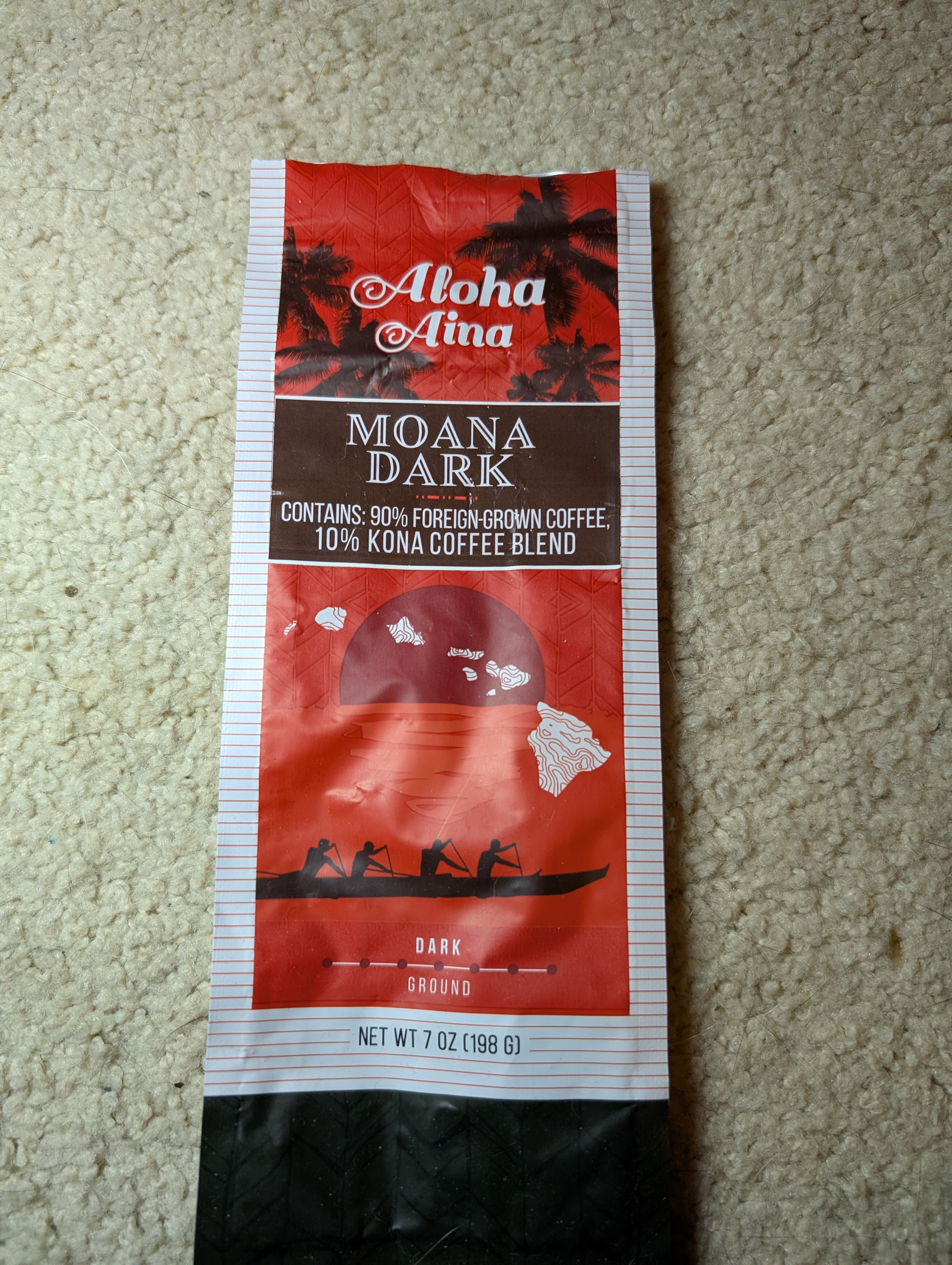
100% Kona coffee. Purchased in Maui, September 2024.

Our first full day on Maui consisted of settling in to a condo (“we need food” we realized). Then, we rendezvoused with one of my few cousins after more than 50 years. While spending the afternoon with them, we wandered an upscale mall. I spied a coffee shop and within, some ground Kona coffee. I needed coffee. I grabbed the package pictured above. At check-out the clerk said, “That will be forty-three dollars” and change. A mixture of shock and avoidance of embarrassment made me extend my credit card, tap the terminal, and commit to one of the most foolish purchases I’ve made in my life. You’ll note the package is only 7 ounces. As in barely-more-than-half-a-pound. Unfortunately, I can’t resist doing the math, and that’s more than $98/pound. Ouch.

I don’t like Kona coffee. I’ve had it off and on (mostly off) over 45 years of fine coffee drinking. I therefore didn’t think too much about buying something that purportedly was a lot less well-positioned on the ladder of quality. Because I absentmindedly left the package in my cousin’s car, I therefore needed coffee still. I purchased this:

Note–only 10% actual Kona coffee in this package. September 2024.

The pound above cost around $12-13. Same amount of ounces. Tasted…not quite as good, but really it wasn’t a three-fold difference. I felt stupid. And there you go.

Intentions

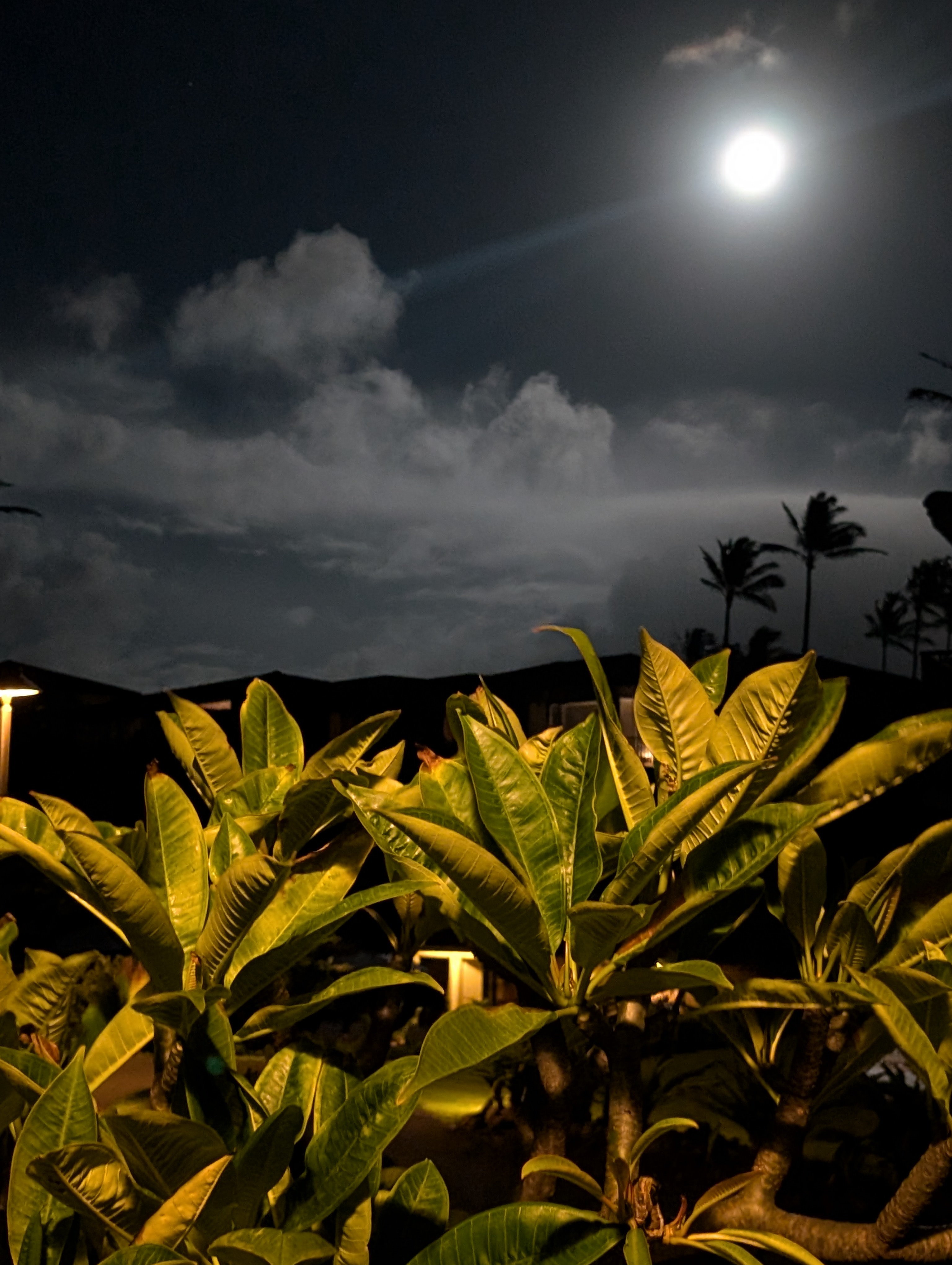
Our first night view from our Maui condo (unretouched). September 2024.

[written on January 3rd, but subjected to the Don’t-Post-Anything-After-The-First-Beer rule.]

At the end of September 2024 I mused on boring y’all with 100 Days of Hawaii, my poor-taste humor suggesting I would post every day through the end of the year something about Hawaii, thereby driving away the few visitors who swing by this little neck of the Interweb. Today, 96 days since then, I find 100 days will not be enough owing to my typical lack of focus. (“Oh, look! Something shiny!”) I’ve only posted through our arrival on Maui, barely more than halfway into our trip. And I’ve made myself a mockery for eagerly anticipating the 12 Days of Christmas and all of the writing which would spring to life from my keyboard. (See link for last year’s procession through the Christmastide.) Therefore, on this Tenth Day of Christmas, and just past the turning of the civil calendar from 2024 to 2025, I pause to reflect, to resolve, to anticipate, to evaluate, and to pontificate. I guess I should apologize in advance. I’ll try to return to better stuff soon.

  • Most obviously, Hawaii remains unfinished. I therefore resolve to complete my reminiscence by the end of January. Given that we lazed out in Maui, did very little, and that I took the same few photographs over and over and over, this likely won’t prove difficult.
  • I anticipate a medical march through the month. I had a doctor consultation today. Coming up I’ve got a blood draw, a procedure I would name but for the fear I bring to its table, a semi-annual physical, and one or more appointments with those who keep my legs from collapsing. That last item melodramatically addresses ankle and feet issues which would take a lengthy post of little interest to address.
  • At 70, health becomes ever more preoccupying. I’m trying to change my instinct to live in front of this keyboard when I’m not in the kitchen, the choir loft, or in front of the TV. We’ll see. This intent has been issued many times before, apparently to the void for all the good it did.
  • I’m ditching Reader’s Horror. It intimidates rather than educates. I think I’ve made my point. Just as with several other things important to me–music reproduction, technology, cars that do what they’re supposed to do–the masses happily settle every day for a lower level of quality, all in the name of convenience. My parents’ and my generation bear some responsibility for thinking TV dinners freed us from cooking; polyester and “wrinkle-free” represented a step forward from cotton; plastic and just-throw-it-away moved us away from the repetitive chores of cleaning our glass and metal containers (can you say disposable diaper?); and gosh darn it, anything digital must be better. This mindset surprisingly (?) led to the demise of institutional journalism and the important publishing houses of my youth. Predictable, maybe, but we’ve tossed too much out with that bathwater: copyeditors, proofreaders, and those who function as guardrails and protect us from the mental cockroaches who crawl out in the absence of intellectual light. Thus sayeth me: When all voices equal each other, rationale thought dies.
  • I miss my decades-long foray into poetry. In pushing to publish, I’ve lost that time for stewing in my juices which engenders my poetic thoughts. I can’t make this a resolution, but I acknowledge it to myself, if only to start writing down the thoughts when they occur, even if I’m heading for bed! Just this past week I lost two pretty good poems.
  • I’ve read too few books and too much news. I ditched one digital subscription at the beginning of December, and I’m ditching another in the next week. If it weren’t for the depth of its offerings, I would ditch the New York Times.

There you have it. Nothing earth-shaking. Except, hopefully, for me!

A soul’s place

Twenty-five years ago I purchased the book A Home for the Soul: A Guide for Dwelling with Spirit and Imagination by Anthony Lawlor. It featured beautiful photos and promised to address that point where functions meet features and both bow to the soul. Unfortunately Lawlor’s book, though gorgeously printed, never connected with me–it remained a beauty with no brains. I mention this because the idea has long played out in my head and heart that we are drawn to some places on Earth more than others, despite our innate interest in almost all of them. I’ve mostly thought this gets imprinted on our psyches during the formative years of our childhoods, much as ducklings will imprint on their mother. (I wonder how this would work with children of military personnel and others who move their families frequently to vastly different geographies?)

Recently a friend of mine quoted author Pat Conroy who made his mark writing books set in coastal South Carolina, including The Citadel in Charleston. In this particular quote, Conroy described how the Low Country spoke to his soul. This returned me to my

South Carolina Low Country. Edisto Island, October 2014.

ideas of place. Much as I like the coastline of Eastern America, and the distinctive features of it from Chesapeake Bay south, it never ‘grabs’ me. Intellectually, I love its nooks and crannies, its sultry feeling which exudes relaxation, its birds, the novelty (to me) of its marsh grasses, and the soul-satisfying feeling brought on by its mostly horizontal nature.

In Hawai’i, though, I found my heart beating in sync with its coastline as if I had found a long-lost sibling. I suspect this has something to do with being taught at an early age that “coast” means “what it looks like around Puget Sound” and to a lesser extent the Pacific Coast of Washington State: volcanic rocks to the coastline; cliffs of sand, sedimentary rock, and mountaintops which send their flanks plunging through the intertidal zone to significant depths in mere meters. But could it be more genetic? As far as I know, my ancestors all came from either Norway or that island divided into England/Scotland/Wales. From photos it seems a rocky coastline, lashed by pounding waves, much of it featuring knobby cliffs which prohibit dipping one’s toes in the water–and this water is crystal clear.

A lovely day in the Pacific Northwest–it’s not raining! North of Newport, OR. October 2011.
Compare and contrast: another west-facing Pacific Ocean shoreline. Maui, HI, September 2024.

A counter-argument: what to make of the three centuries my patrilineal line spent in the mountains located at the Virginia/North Carolina border? Of my matrilineal line descending from the hollers of Kentucky to live along the Ohio River? Do I counter that with my father’s mother, whose parents stepped off the boat straight from Norway? Or the suspected similar condition for my mother’s father who was put up for adoption by a Swedish lass?

I land on nurture more than nature. I believe my father preferred eastern Washington with its undulating surface of grains and grasses because he had been raised in a similar grassy, agricultural flatness outside Minneapolis and later, in Havre, Montana. My friend associates the North Carolina coast with meaningful times in his life, not least of which was refurbishing a getaway house on the Intracoastal waterway with his father. My brother and I experienced a semi-dry climate through high school. Perhaps this explains why, after decades spent in rainy and cloudy western Washington, he retired to Santa Fe?

The rolling wheat lands 40 miles west of Spokane, WA, where I grew up. See also Havre, MT, and the breadbasket swath of Middle America. August 2017.

Unless…unless… I must admit, I like rain. I discovered this when I moved to the Philadelphia area in 1992. In 1997 I returned to Spokane, WA, a semi-arid part of the country. Four years later I could barely get out of town quick enough, and the dry, dusty summers played a large role in that attitude. I found I did like rain, just not the rain of Puget Sound which I experienced on and off during my childhood and lived in from 1976-1981. Rain on the east coast of America doesn’t resemble rain in the Puget Sound area, despite both regions receiving similar amounts annually. (Philadelphia–41.45in; Seattle–37.13in, both according to WorldClimate.com.) Rain clouds on the east coast bring rain, and then they go away. Rain clouds in Puget Sound just hang around seemingly forever, misting you once in a while to remind you they carry moisture. Where, then, does this love of rain come from? Why don’t I like snow? I experienced it every winter of my childhood, and I continued to do so through my 47th year. Is it my North Carolina ancestors calling to me through our shared genes, reminding me that for centuries we Pilchers have enjoyed warmer, less snowy climes? If so, would they in turn find the wind- and surf-lashed cliffs of western England and Wales instantly familiar and soothing? It’s a confusing amalgamation of influences.

Maybe we just like what we like, inexplicable as it may be. A postcard I have reads: “Every traveler knows it is possible to be homesick for a place one has never seen.”