A soul’s place

Twenty-five years ago I purchased the book A Home for the Soul: A Guide for Dwelling with Spirit and Imagination by Anthony Lawlor. It featured beautiful photos and promised to address that point where functions meet features and both bow to the soul. Unfortunately Lawlor’s book, though gorgeously printed, never connected with me–it remained a beauty with no brains. I mention this because the idea has long played out in my head and heart that we are drawn to some places on Earth more than others, despite our innate interest in almost all of them. I’ve mostly thought this gets imprinted on our psyches during the formative years of our childhoods, much as ducklings will imprint on their mother. (I wonder how this would work with children of military personnel and others who move their families frequently to vastly different geographies?)

Recently a friend of mine quoted author Pat Conroy who made his mark writing books set in coastal South Carolina, including The Citadel in Charleston. In this particular quote, Conroy described how the Low Country spoke to his soul. This returned me to my
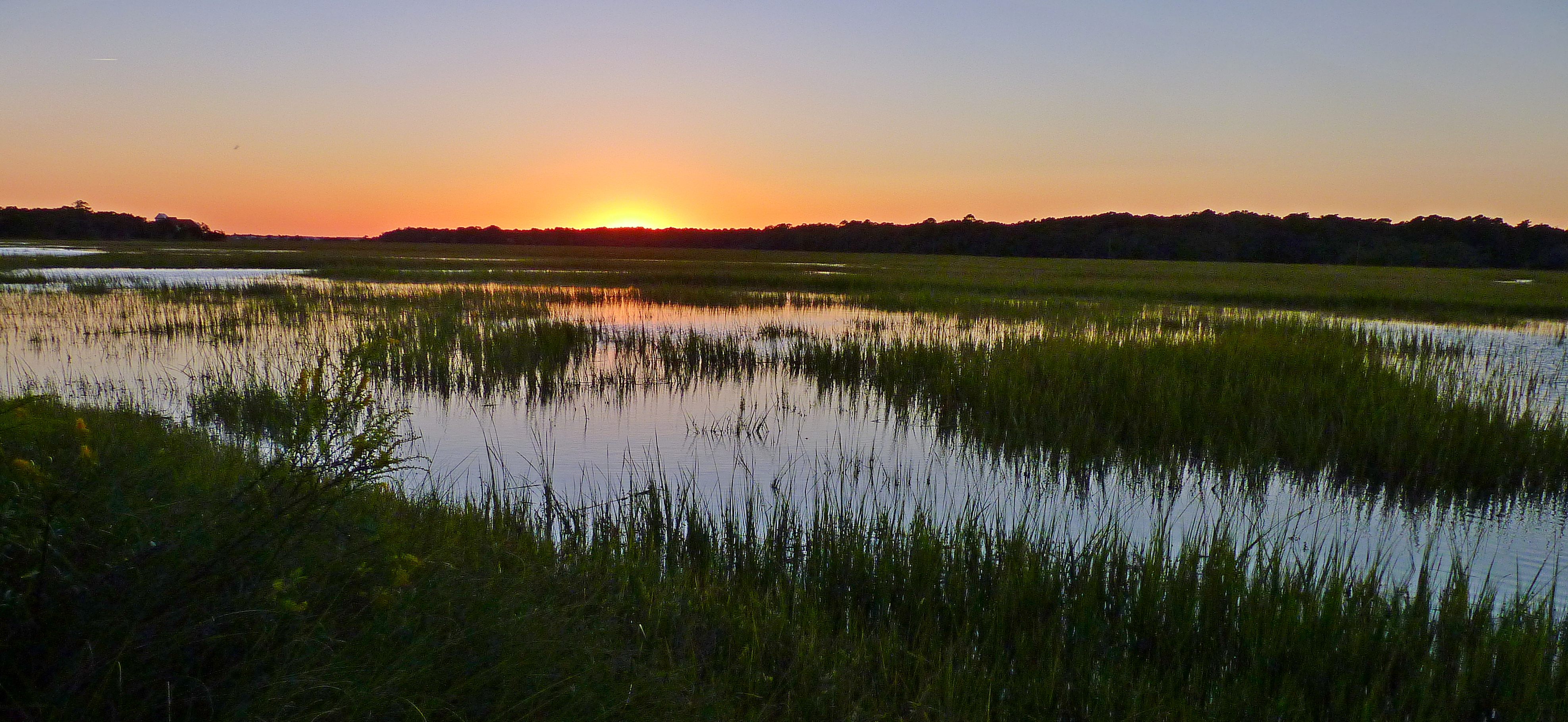
South Carolina Low Country. Edisto Island, October 2014.

ideas of place. Much as I like the coastline of Eastern America, and the distinctive features of it from Chesapeake Bay south, it never ‘grabs’ me. Intellectually, I love its nooks and crannies, its sultry feeling which exudes relaxation, its birds, the novelty (to me) of its marsh grasses, and the soul-satisfying feeling brought on by its mostly horizontal nature.

In Hawai’i, though, I found my heart beating in sync with its coastline as if I had found a long-lost sibling. I suspect this has something to do with being taught at an early age that “coast” means “what it looks like around Puget Sound” and to a lesser extent the Pacific Coast of Washington State: volcanic rocks to the coastline; cliffs of sand, sedimentary rock, and mountaintops which send their flanks plunging through the intertidal zone to significant depths in mere meters. But could it be more genetic? As far as I know, my ancestors all came from either Norway or that island divided into England/Scotland/Wales. From photos it seems a rocky coastline, lashed by pounding waves, much of it featuring knobby cliffs which prohibit dipping one’s toes in the water–and this water is crystal clear.

A lovely day in the Pacific Northwest–it’s not raining! North of Newport, OR. October 2011.
Compare and contrast: another west-facing Pacific Ocean shoreline. Maui, HI, September 2024.

A counter-argument: what to make of the three centuries my patrilineal line spent in the mountains located at the Virginia/North Carolina border? Of my matrilineal line descending from the hollers of Kentucky to live along the Ohio River? Do I counter that with my father’s mother, whose parents stepped off the boat straight from Norway? Or the suspected similar condition for my mother’s father who was put up for adoption by a Swedish lass?

I land on nurture more than nature. I believe my father preferred eastern Washington with its undulating surface of grains and grasses because he had been raised in a similar grassy, agricultural flatness outside Minneapolis and later, in Havre, Montana. My friend associates the North Carolina coast with meaningful times in his life, not least of which was refurbishing a getaway house on the Intracoastal waterway with his father. My brother and I experienced a semi-dry climate through high school. Perhaps this explains why, after decades spent in rainy and cloudy western Washington, he retired to Santa Fe?
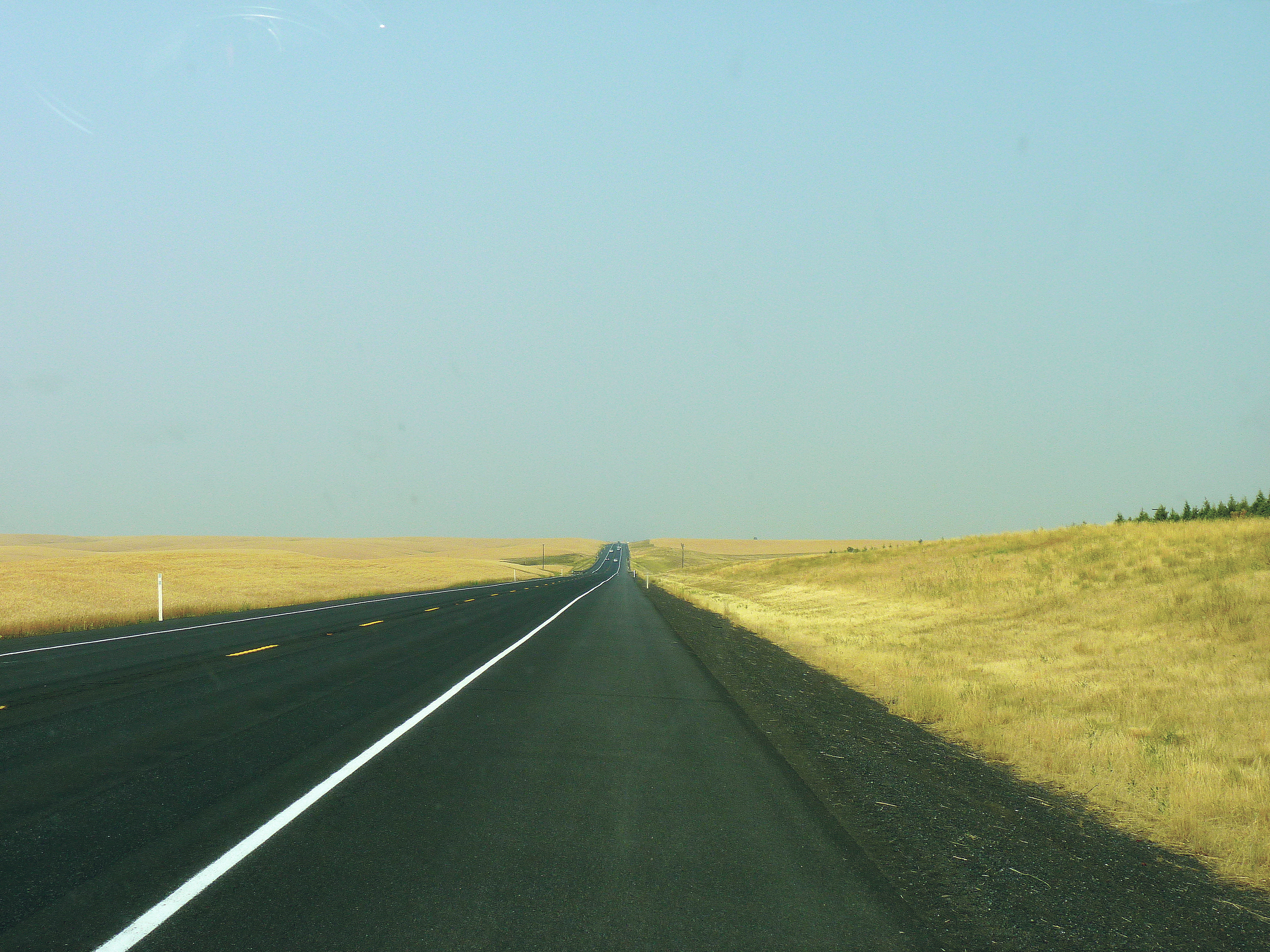
The rolling wheat lands 40 miles west of Spokane, WA, where I grew up. See also Havre, MT, and the breadbasket swath of Middle America. August 2017.

Unless…unless… I must admit, I like rain. I discovered this when I moved to the Philadelphia area in 1992. In 1997 I returned to Spokane, WA, a semi-arid part of the country. Four years later I could barely get out of town quick enough, and the dry, dusty summers played a large role in that attitude. I found I did like rain, just not the rain of Puget Sound which I experienced on and off during my childhood and lived in from 1976-1981. Rain on the east coast of America doesn’t resemble rain in the Puget Sound area, despite both regions receiving similar amounts annually. (Philadelphia–41.45in; Seattle–37.13in, both according to WorldClimate.com.) Rain clouds on the east coast bring rain, and then they go away. Rain clouds in Puget Sound just hang around seemingly forever, misting you once in a while to remind you they carry moisture. Where, then, does this love of rain come from? Why don’t I like snow? I experienced it every winter of my childhood, and I continued to do so through my 47th year. Is it my North Carolina ancestors calling to me through our shared genes, reminding me that for centuries we Pilchers have enjoyed warmer, less snowy climes? If so, would they in turn find the wind- and surf-lashed cliffs of western England and Wales instantly familiar and soothing? It’s a confusing amalgamation of influences.

Maybe we just like what we like, inexplicable as it may be. A postcard I have reads: “Every traveler knows it is possible to be homesick for a place one has never seen.”
Downtown Hilo

Farmers Market, Hilo, HI. September 2024.

By our fourth full day in Hilo, the island attitude had taken over. Friday’s meandering around town (waterfall, museum, brewery, dinner) could’ve been followed by something energetic. Instead we took our time before heading downtown to visit the Farmers Market (photo above) and an equally large area where local crafters sold their wares. A few souvenirs were purchased, always with an eye to the minimal space in our luggage. (We pack light. A carry-on suitcase each, a large purse/bag for my wife, a soft attaché-style bag for me.)

After the market we wandered the downtown area. Hilo manages to look like my childhood of the late 50s and the 60s, except for the modern cars:

Downtown Hilo looking northeast toward Hilo Bay. Turn left from this position and one is smack dab in front of the KTA Superstore mentioned in the post about our first day on the Big Island. September 2024.
Downtown Hilo, nearing the beachfront. In the foreground is Turn the Page, a bookstore. Like many of the merchants, it has no glass in the windows–those openings let the breezes (and birds) into the store. In the background and through the palms one can see the hotels on the peninsulas where our hotel stands. September 2024.
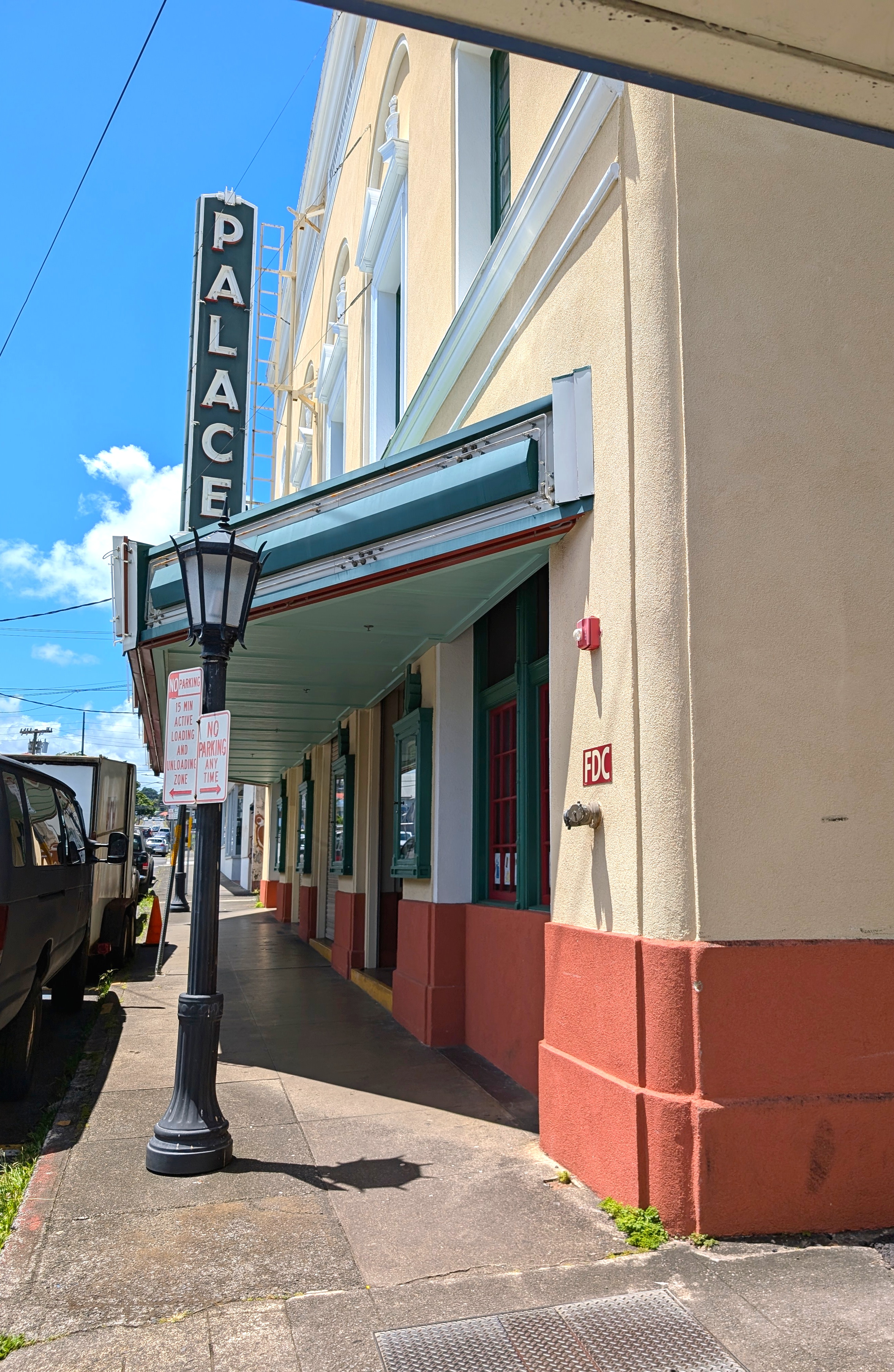
The Palace Theatre. Google shows it delightfully lit up at night. Hilo, HI, September 2024.

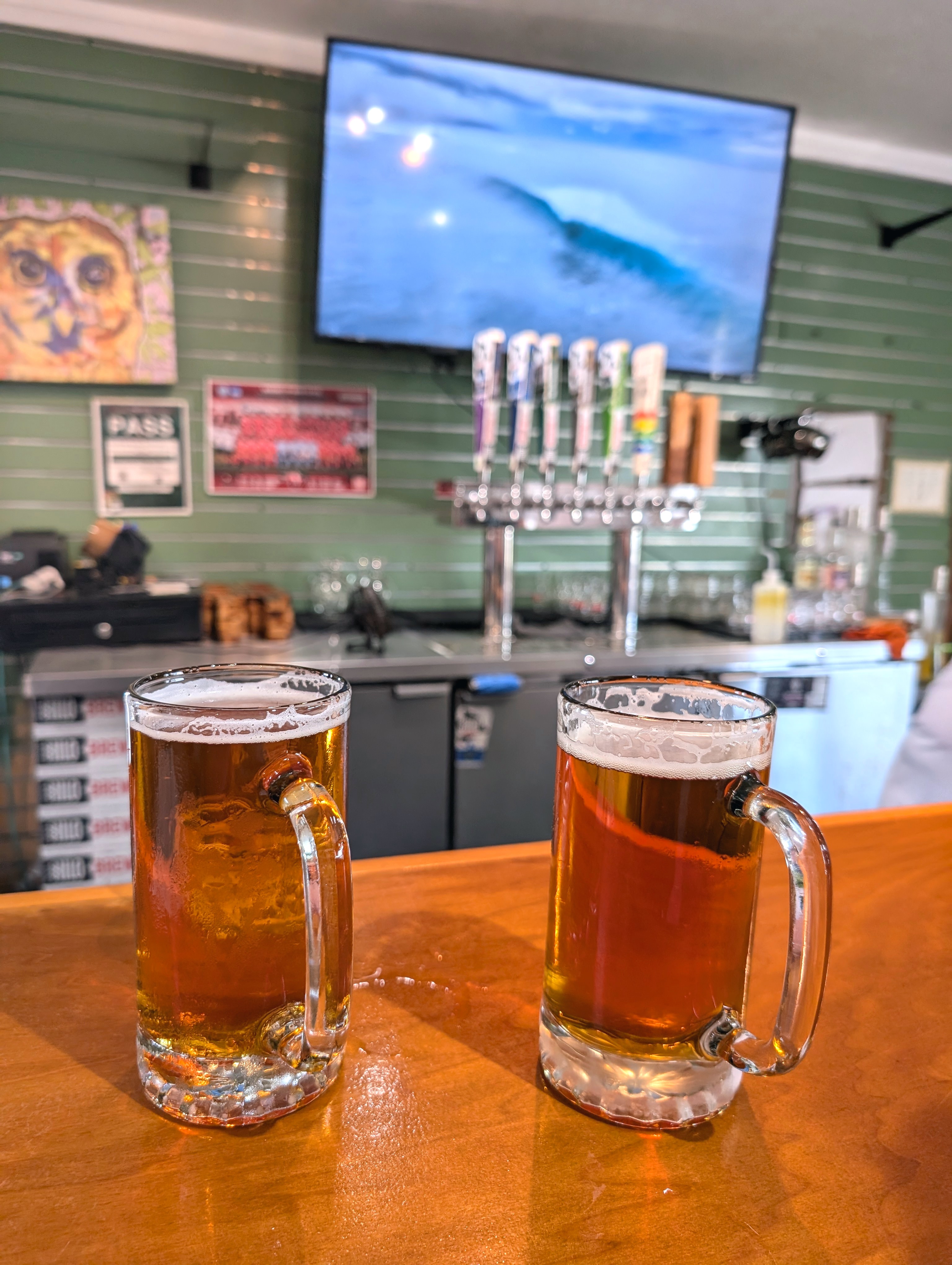
Eventually we ended up at Hilo Brewing Company which sits about a mile from the beaches of city center. It reminded us of the rough-looking ones around Raleigh and in San Diego County where all the work goes into the beer, all 4-6 kinds of it. We like that.

On the way to the restroom, aided by yellow footprints painted on the concrete and surrounded by brewing accoutrement. I’m sure this is up to code, right? Right? Hilo, HI, September 2024.
A short wooden bar seating about six to eight. Surf documentary on the TV. Eight taps, several of which were tapped out. Through the open rollup door we gazed at other patrons talking and laughing at picnic tables. The brewer sits in a mixed industrial area. Think cyclone fences, cracked pavement with grasses growing in them, a kind of Quonset Chic vibe. Hilo, HI, September 2024.

Saturday begins

Saturday sunrise, Kuhio Bay, Hilo, HI. September 2024.

As I type this the sun is peeking over the horizon here in Raleigh. I won’t see it due to trees and ridges…and because I’m sitting in a windowless room in the basement. Nine weeks ago our first Saturday in Hilo brought an orange glow as the sun peeked over the industrial buildings at the port of Hilo (located east of Hilo proper). I never tired of this. I think people who live where they can see to the horizon unimpeded by anything must have a different outlook on life or at least on the natural world. I know it has that effect on me.

Rainbow Falls

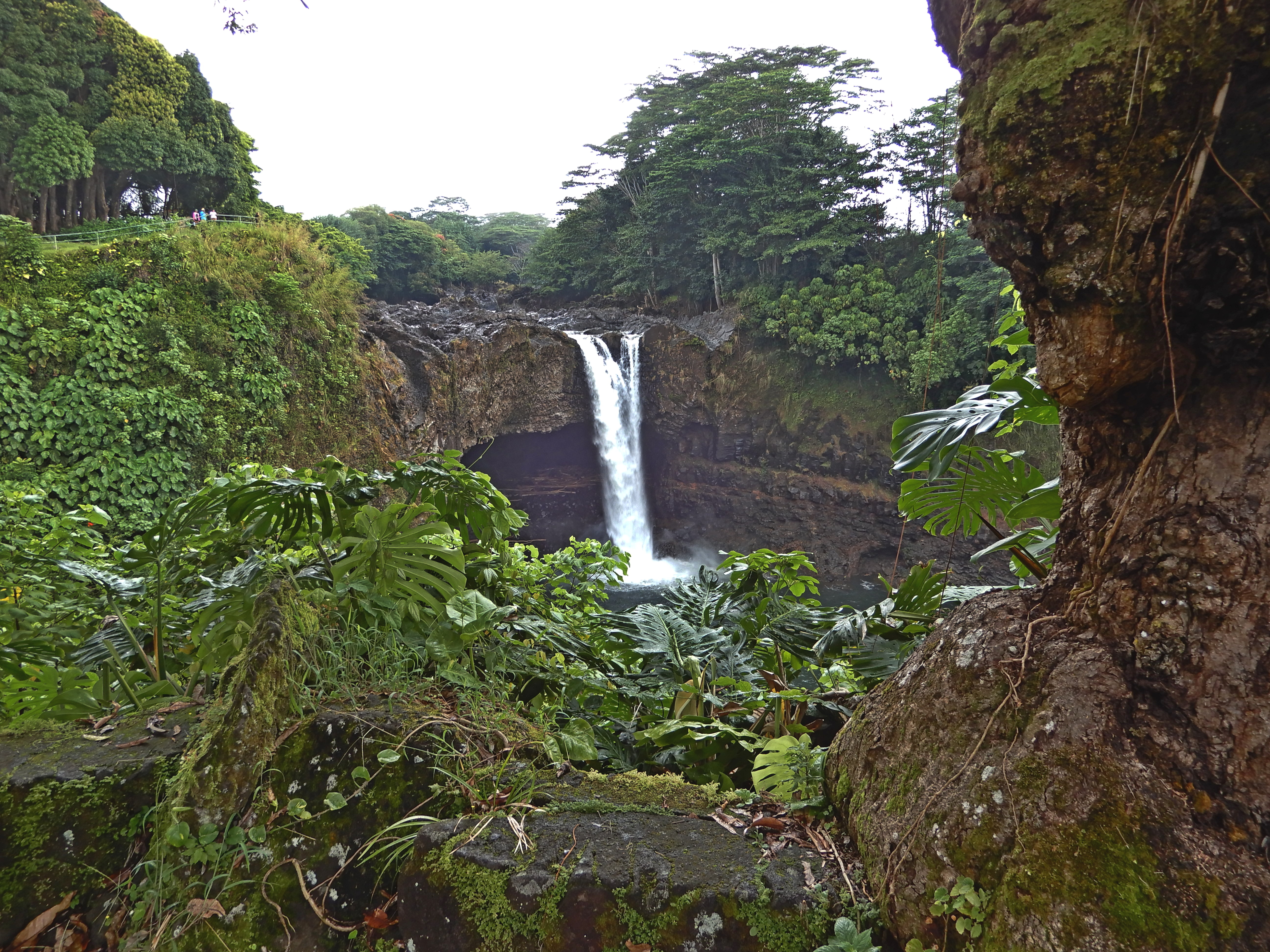
Rainbow Falls, Wailuku River State Park. Hilo, HI. September 2024.

Gray skies colored all of Friday the 13th, as promised by the dawn. After a lazy start, and feeling the effects of our up-and-down trek to ‘Akaka Falls the previous day, we drove all of 3.5 miles or so across Hilo to Rainbow Falls in Wailuku River State Park. A gentle, sporadic spitting of raindrops punctuated our first view of Rainbow Falls (above). They continued as we climbed under the trees for a closer look.

Rainbow Falls, Wailuku River State Park. Hilo, HI. September 2024.

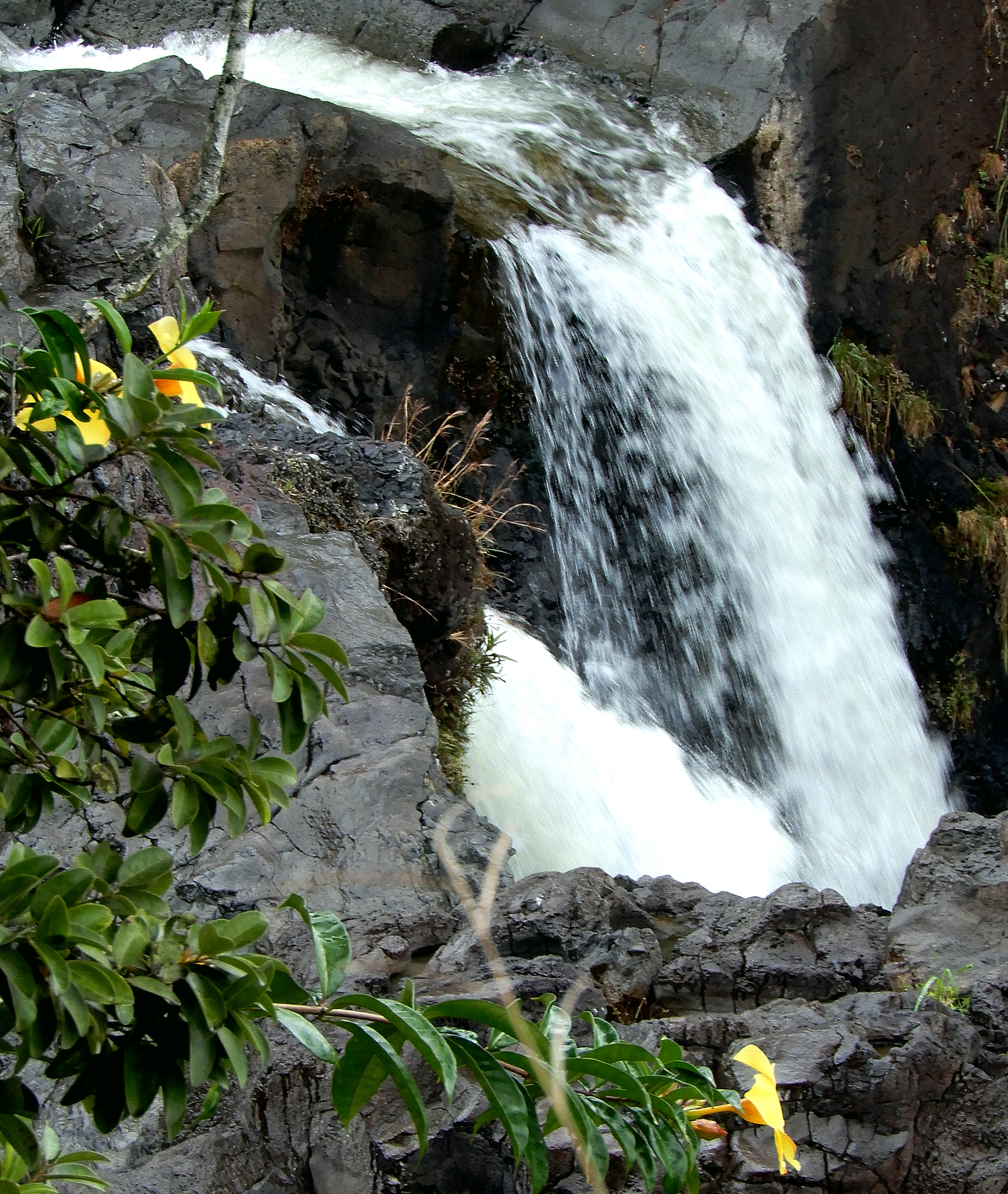
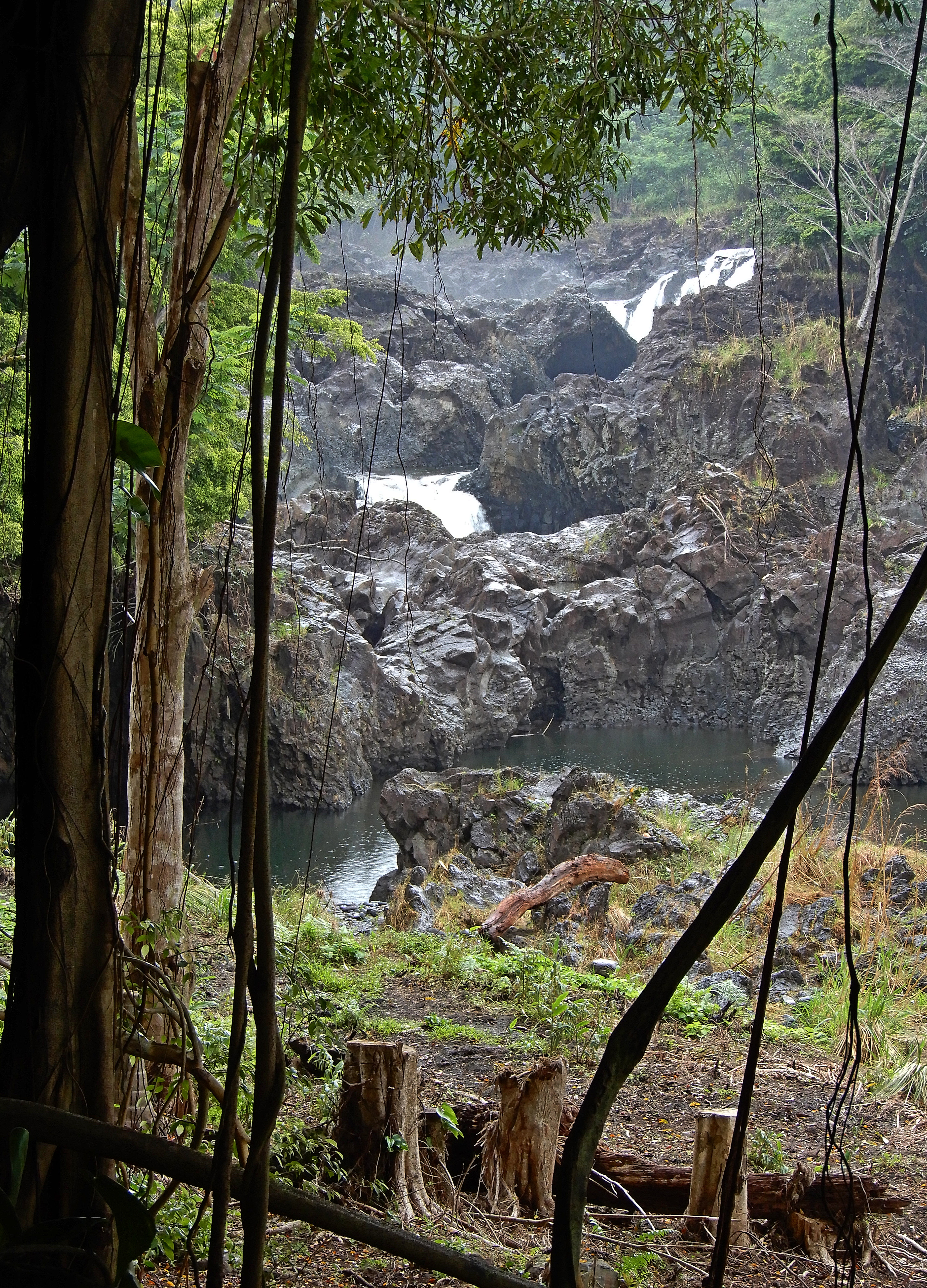
Volcanic rocks made slippery with rain didn’t appeal to us. We stayed under the trees and gazed upriver, unaware another set of falls existed just a short distance away.

The Wailuku River above Rainbow Falls. Wailuku River State Park, Hilo, HI. September 2024.

Weather dictated indoor activities, so we headed to the Lyman Museum (recommended). Ravenous afterward, we grabbed fried plantains and beer at Ola Brewing.

“You chose the rainy side…”

Ominous clouds at dawn. Hilo, HI. September 2024.

Dawn over Hilo and Kuhio Bays delivered colorful dawns because of the clouds. Waking on our third morning, however, the clouds were thicker and more ominous. Weather generally arrives from the east, after all. Outdoor activities seemed like a bad idea. By this time I’d learned the clouds keep moving; one hour’s clouds do not the day’s weather make. We did collect a few drops later in the day, but the gnarly-looking cloud in the photo here passed by dryly.

More to come for Day 3.

Palms at sunset

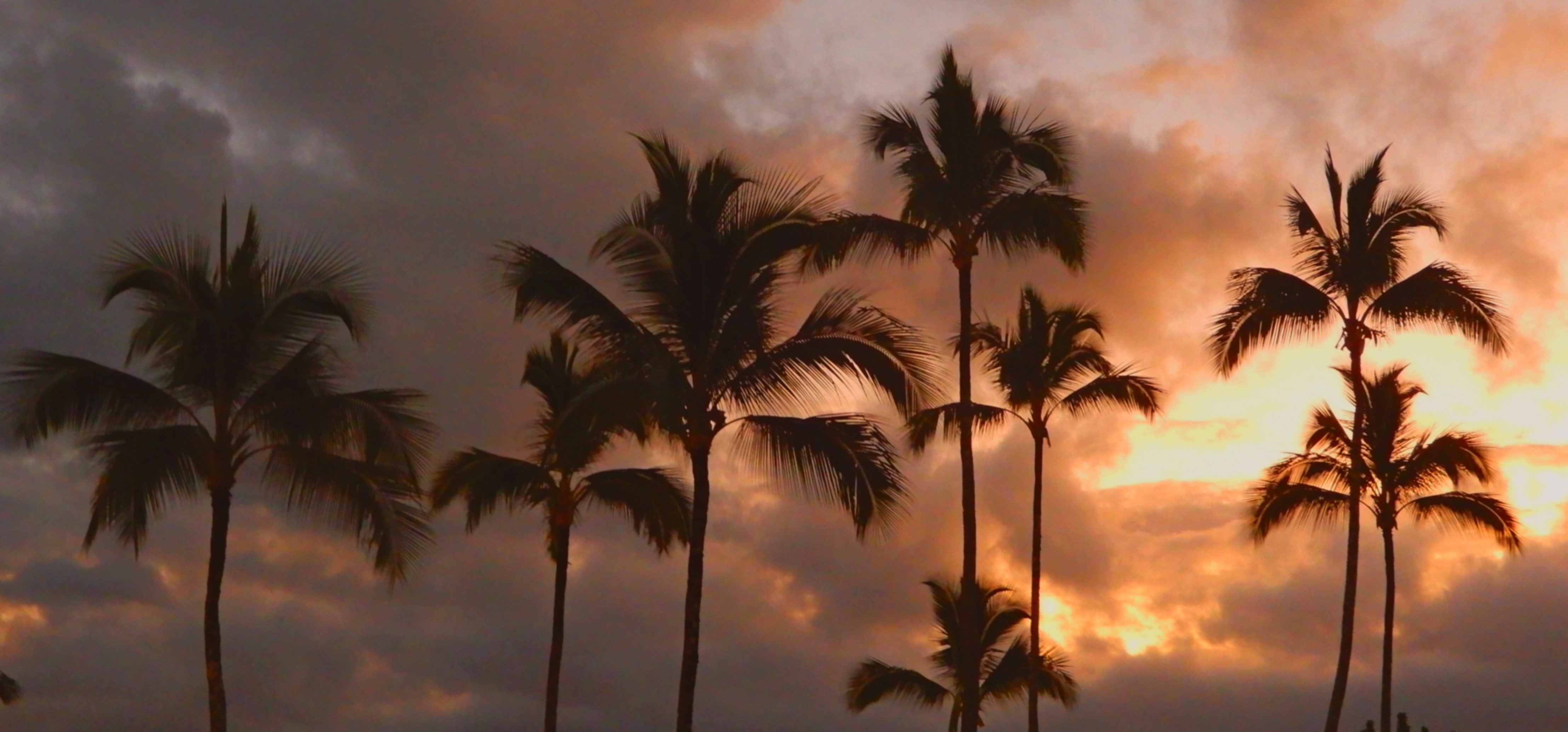
Palms over Hilo Bay at sunset. Hilo, HI, September 2024.

After visiting ‘Akaka Falls, we drove northward (which actually is northwestward) along the coast until we came to Waimea where we admired true free-range chickens and had lunch. I marveled at how dry it had become. The fields as we approached were pastures with cattle at times. Upon our return to Hilo, a day’s-end beer and sunset awaited us.

‘Akaka Falls

‘Akaka Falls. It really is this green. September 2024.

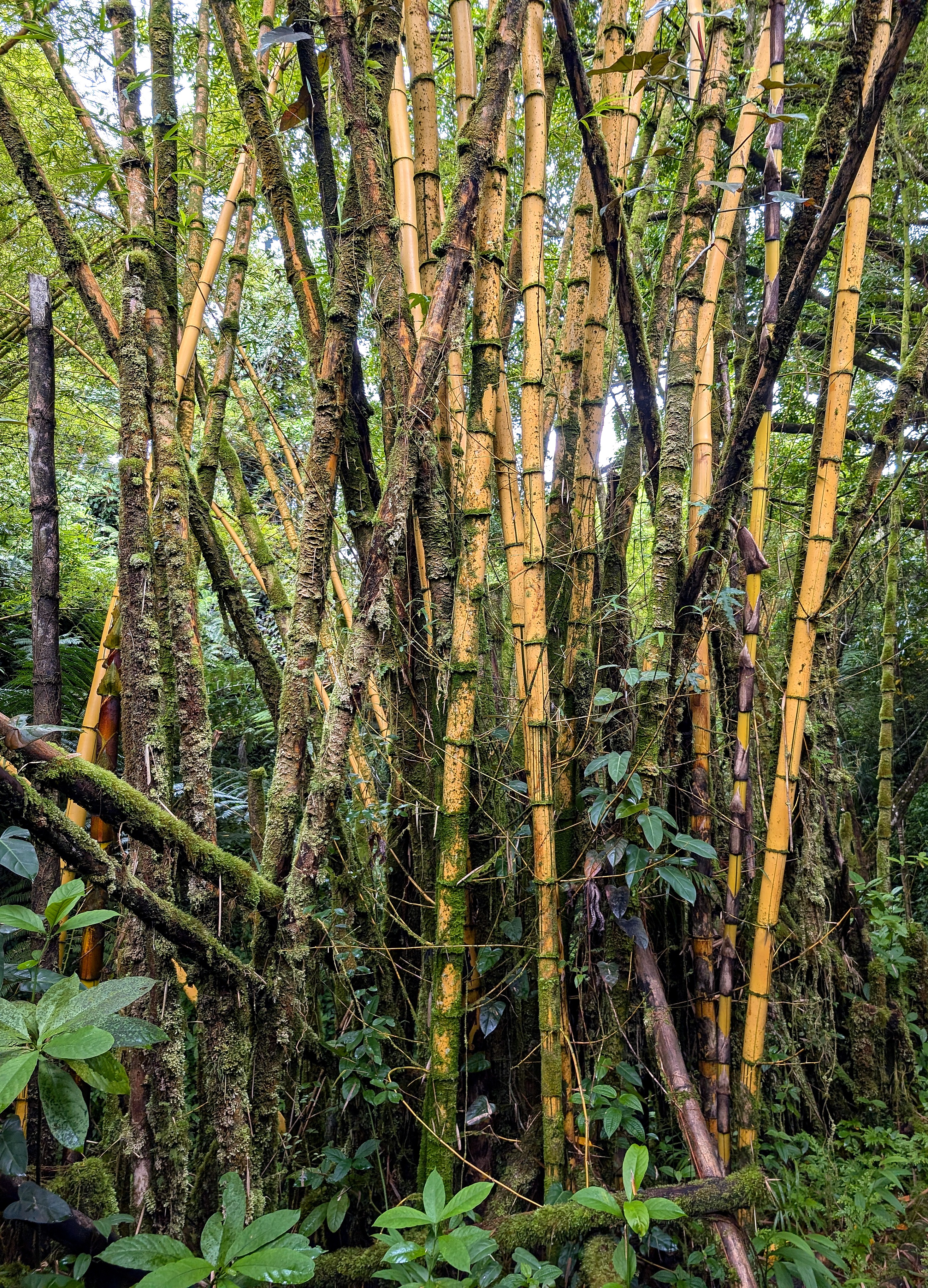
On our second full day in Hawai’i, we arrived to ‘Akaka Falls State Park near midday. We paid to park in front of the entrance rather than along the road as some did, paid for entrance, and received a warning from a woman there that the trail required one to go up and down more than 600 steps. Her warning wasn’t an empty one: for nearly a month after our visit I experienced a sharp pain in my left knee when I went up or down stairs. I later learned construction on the path forced us to take the long way around a loop trail, in essence covering three times the normal distance. This trail descends to a stream, crosses it, climbs again on the other side, basically cresting a ridge obliquely to be above Kolekole Stream which plunges 442 feet at ‘Akaka Falls. One hears but does not see a variety of birds. Foliage is lush, a result of the near-constant rain (measured best in feet). It sprinkled on and off while we visited.

Bamboo stand in ‘Akaka Falls State Park, Big Island, HI. September 2024.

Old Mamalahoa Highway

Our rental car, trees, vines, and a curve on the Old Mamalahoa Highway. The Big Island, HI. September 2024.

If you find yourself on the Big Island, and most especially if you stay on the east side in or near Hilo, a must stop (for the physically fit) is Akaka Falls State Park. As you head north to that park–only 15 miles distant, a very easy drive–just past Paukaa you’ll see a typically yellow/orange/ochre, diamond-shaped highway sign telling you that to your right is a “Scenic Highway” with a little sign beneath that says it’s four miles in length. Hopefully someone in your car (perhaps you?) will say as my wife did, “Let’s take that!” When you jerk the steering wheel to the right in the Papaikou census area (pop 1314), you’ll be on the Old Mamalahoa Highway.

These aren’t my best photos. Skies were overcast. Dense tropical foliage made it dark everywhere. Green predominates. The road twists, turns, offers few places to just pull over to grab a photo.

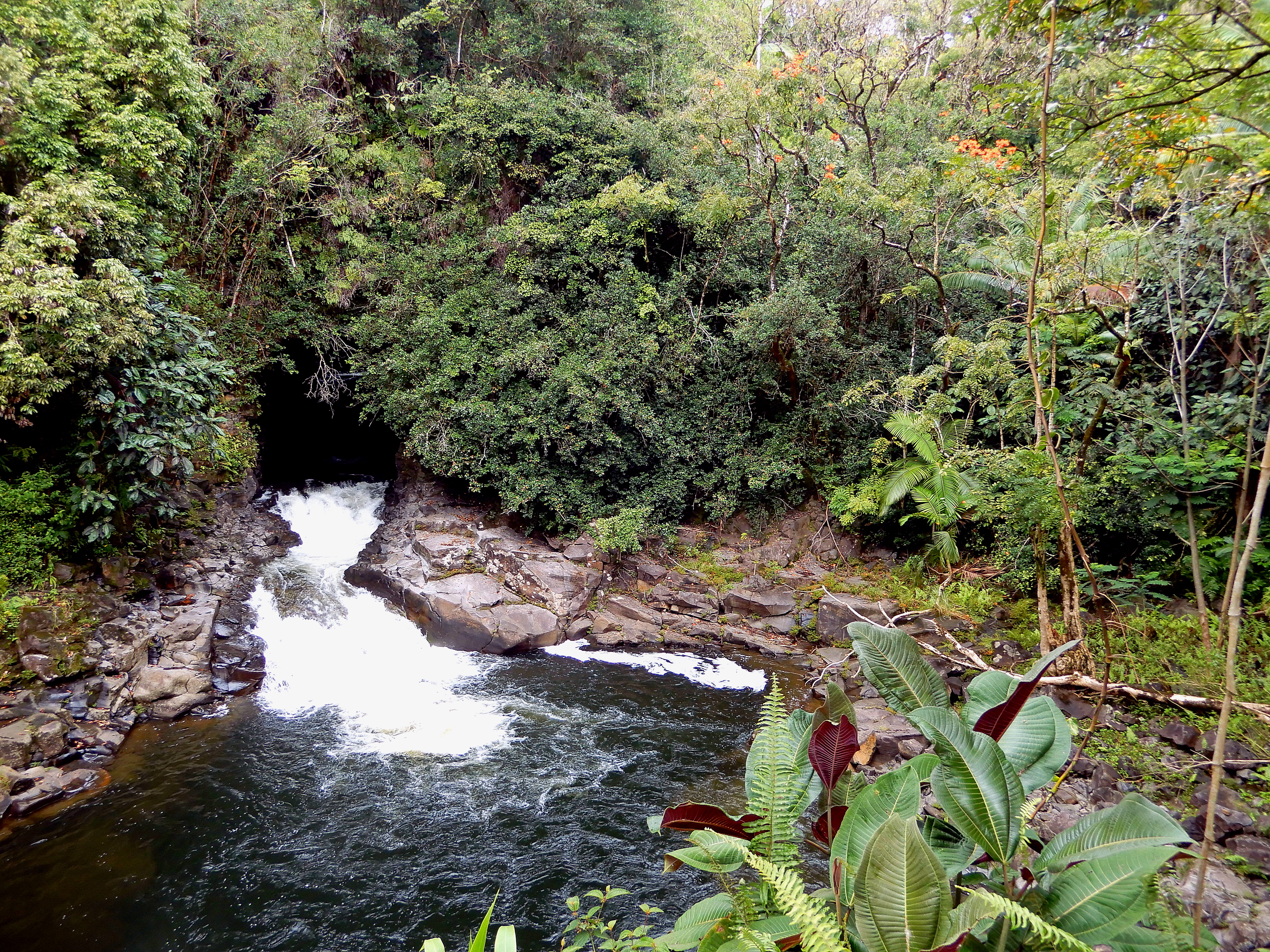
Halfway in we stopped at the Hawai’i Tropical Botanical Garden. It looked interesting, and it had restrooms. Our interest waned when faced with admission prices of $30/each and the prominent display of mosquito repellant for sale right beside the register. Translated from “customer-eze”, the signs basically said, “You’re a fool if you don’t apply repellant.” I’m sure it’s a wonderful point of interest: it features a valley down to the ocean with 2,500 species of plants. Nevertheless, we drove on. We stopped soon after when we found a bridge and a wide spot to pull off the road.

Kawainui Stream, Big Island, HI. September 2024.

I had become fascinated by a orange-red flower growing high in the canopy. At this stop we found ourselves above some of these trees, permitting me to photograph them:

Big Island, HI. September 2024

Driving north as we did, one suddenly pops out of the dense foliage and into a grassy pasture area on the edge of Pepeekeo. Joining the main highway, we drove on to Akaka Falls.

Ships

The Pride of America (Norwegian Cruise Lines) leaving Hilo Harbor, having just sailed through the opening in the breakwater. September 2024.

Our room at our Hilo hotel afforded me a delightful perk because it faced Hilo bay and its breakwater. I hadn’t realized only the larger rooms faced this direction–just a lucky pick, I guess. I’ve always had a curiosity about boats and ships, but especially commercial ships. I’ve never had a desire to work on a ship–heck, I barely want to be on one at all. Maybe that’s what makes it intriguing to see ships plying their trade in coastal waters.

After checking in to the Grand Naniloa hotel on a Tuesday, we witnessed a Norwegian Cruise Lines ship leaving the bay at dusk (above). By Wednesday morning I realized the passage in the breakwater lay to the west of us, but moorage lay to the east. Therefore, all of the ships passed our balcony in a leisurely fashion, guided by two tugs. (Astute readers will note the commercial docks in all my sunrise photos posted to date.) Within 24 hours I learned this would be a frequent feature of our visit.

Guiding her out; our first full day. September 2024.
Dawn, our second full day. The Pasha Hawaii and a tug-guided barge of containers. September 2024.

I never did figure out the exact roles of the two tugs. One always headed out after the first one, and one always peeled off and headed back to the dock as they guided the ship in–leaving the other tug to finish the job.

Tug #2, heading out to catch up with the job at hand. Day #3. September 2024.
Still catching up! September 2024.

They worked at night too….

Bringing in a container ship. Day #5. September 2024.

Getting ready to leave, again on a Tuesday, we managed to complete the cycle: the Pride of America returned to stay docked all day before heading out again on a Tuesday evening. We left a few hours later, but I still see it as I write these words, magical perhaps to no one but me.

The Pride of America, guided once again by The Tug That Remained. Day #7. September 2024.