
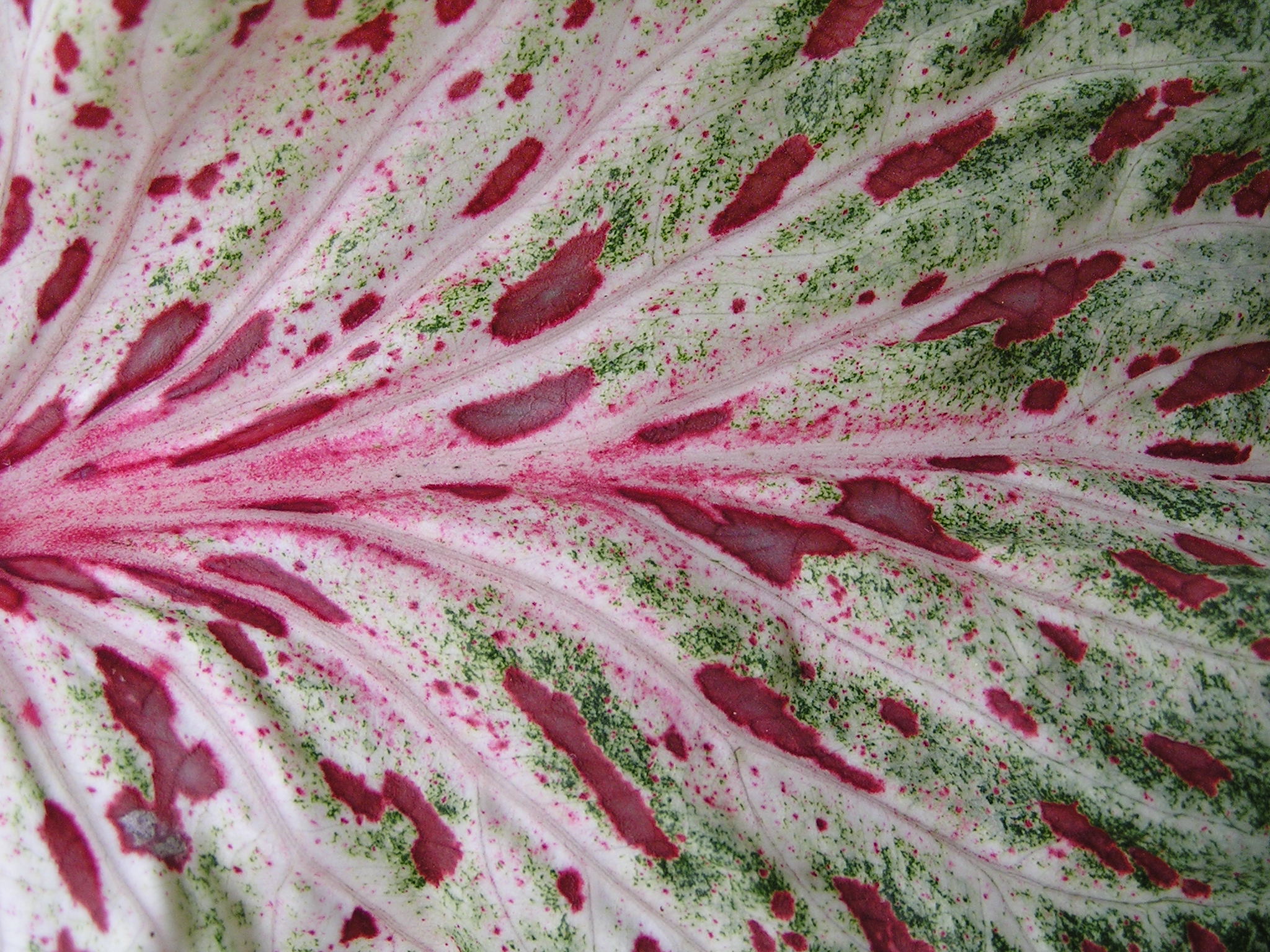
Today’s photograph has about nothing to do with today’s topic, but I’ll try: some folks think (or rather don’t think) about how some things don’t belong together in all cases. Red and green for instance. On this plant it’s a natural thing. At Christmas it evokes the symbolism of holly and green leaves and all that. In July it says, “Who’s this freak that thinks it’s Christmas?” Today we’re going to talk about people putting words together which don’t belong together.
For newcomers to this blog: Once upon a time I taught English to 8th graders. Once upon a time I took a graduate-level course in grammar, most of which consisted of diagramming sentences. I killed that class–most of my fellow students were returning teachers who clustered around me after the final to learn how I had diagrammed the sentences on the test, even though these were sentences which we’d already diagrammed in homework assignments. I’m not bragging, merely establishing my credentials for the next paragraph.
There’s a grammatical distance between “on to” and “onto”. The latter one is a preposition. The first one, however, is an adverb followed by a preposition. Or some would say it’s a compound preposition. I disagree, but it’s debatable. What’s not debatable is when you put them together as if they’re one word but they shouldn’t be. Here:
- Ken wants to turn his audience on to prepositions.
- The turtle hauled himself onto the log.
“Onto” indicates position. In the first sentence you can see I am not trying to physically turn my audience and put them “onto” a preposition. Children, pets, and occasionally a frisky adult will get onto the furniture. A lace hem might be sewn onto a dress.
Prepositional phrases usually come in a three-word format of preposition-article-object/noun, and they’re often strung together one after the other. Here’s one: Susan got out of the bed, put her pajamas in the clothes hamper, and made her way to the shower. I boldfaced the prepositions. (If you’re really into the stuff, that’s a compound predicate where the subject “Susan” has three verbs to go with it, “got”, “put”, and “made”. It has direct objects, “pajamas” for the first verb phrase and “way” for the third. This looks really cool when you diagram it, but let’s hold that thought for now.)
Why am I doing this? Who gives a rodent’s rear? Here’s the deal: I see at least one writer who doesn’t know how to use prepositions, homophones, or those tricky complement/compliment words every morning when I read my news. I read (in this sequence) MLB.com to see if there are Phillies stories; The Athletic for Phillies stories and general baseball news; the Washington Post, primarily for the comics, but some headline always snags my attention; and the New York Times. All of these sites command highly respected writers. One assumes there are editors, at least a few. How is it something as basic as this can’t be understood by some of the top writers in the country? To wit:
She turned her father into the police. Perhaps she did, but only in her mind (parents behaving like cops sometimes). Dad never joined the force, though, and she has no magic wand to turn him into the police. She turned him in. To the police. See? Separate words.
Note to grammarians: yeah, I know this isn’t grammar. It’s not even usage. It’s mechanics and those are a slippery thing. Fifty years from now what I’m saying will be as anachronistic as railing against tomorrow because it’s supposed to be to-morrow indicating the link to its linguistic past, to the morrow. I don’t care. I will hasten e-mail by typing email wherever I can, which I did in the 1990s and 2000s. I will type awhile even when the algorithms in the software says “no-o-o-o!” I’ll even type alright because I think it’s alright. (And I wonder if anyone under 50 or 60 wonders what the heck I’m talking about.)
I will not give in to compound prepositions. (See what I did there?) There is meaning contained in the words the heathen are stringing together, and those meanings change when you join the two into one. I hope you’re turned into frogs. Or is it turned in, to frogs? I hope the latter, and that said frogs will thwwpt! your face with their tongues for eternity.
Look, I’m all about breaking rules. You need to know the rules before you can break them, though. Picasso said that, more or less. If you just ignore the fact rules exist, you’re just a hellion-without-a-clue.
And now for that diagramming I promised. I’m afraid that nearly 42 years later I have not kept every assignment but I kept the quizzes and the final. Below is the last page of the final. It’s a ditto, so the questions are faded quite a bit. (“Ditto”–look it up. They were as much fun to make as it was typing on a manual typewriter: every mistake basically was uncorrectable.) We can discuss this below in the comments. The little blue zero means no mistakes. Grant Smith, the chair of the department and teacher of the course (Eastern Washington University) graded this stuff like golf is scored: mistakes were 0.5, 1.0, and 1.5 point mistakes, and the more you got, the lower your grade. Thus, the highest score possible was “0”. (And another day, children, we’ll discuss why I put the period outside of the quotation marks. You may background yourselves by reading William Safire.) By the way, at 28 years of age I already exhibited the anal qualities which now circumscribe my life. Those lines look nice and straight because I used a 6-inch ruler on all of my assignments and on my quizzes and tests.

 all the voices in my head