
I planned our cruise on the Rhine River to celebrate our 30th wedding anniversary, and redeem the ruination of our 25th. I purposefully reserved a cruise which docked at Strasbourg on our anniversary, looking forward to all it promised. The Year 2020 had teamed up with my back to scuttle our (limited) plans for our 25th. As that day dawned, I experienced a spasm in my back which necessitated taking an emergency muscle relaxant I keep on hand for these occasional problems. A fine dinner which we had planned to cook for each other became a take-out pizza, and for my wife, some wine. I crawled into bed early. Therefore, 2025 promised to atone for all of that. The pandemic had subsided, we had our health, and, well, what could go wrong? The trip had far exceeded our expectations for four days.
The day promised much: Strasbourg with its cathedral and its amazing clock where I planned to walk inside of it and marvel. Then my wife croaked from bed, “I don’t feel well.” We traded our anniversary cards, and she dragged herself out to breakfast. I chose to forego the group tour of Strasbourg on the French side of the river. “I can catch the afternoon shuttle back into the city,” I told myself. “At least I can see the cathedral and that famous clock.” I tucked my wife into a deck chaise to soak up some sunshine and spent a few minutes observing the begging swans and a heron across the river…

Finally I decided to go wandering. I stopped first to admire the mooring strategy of our ship, the Hlin, wondering still why the woman at the guest services desk couldn’t explain to me why our ship’s bow pointed southward when we were cruising northward. Later I learned from our “hotel manager” that the captain turns the ship around when docking so that the bow points upstream whenever the river runs high and the current proves strong.

I watched river ships carrying freight along the Rhine. Gases, coal, cars, and livestock all sailed past me. As I walked south, the river to my right and the park to my left, I saw a strange tree not far ahead. It proved to be a manmade thing, demonstrating the Germans’ ingenuity while reinforcing stereotypes about their precision and exactitude. The ‘tree’ looked real enough, and the whimsy of opening a neighborhood for sociable birds seemed admirable, but I couldn’t help noticing how the houses spiraled around the trunk in a near-perfect corkscrew. Other pedestrians paid it no mind, apparently inured to its presence.
I reversed course and headed north. The children’s waterpark to my left had become a bit too boisterous for me.

I soon encountered a small marker in the ground, its painted message cracked from the sun’s rays and the weather, modestly announced, “Biblischer Garten/Jardin bibliqu” the remainder of the French title cut off by the sign’s erosion. I intuited it announced a Bible Garden and intrigued, set off on the graveled path. I learned at the end of the path its plan had been for residents to approach the river from land not vice versa; I had walked it backward. It made little difference. Each stop along the path—there were 17—announced an important aspect of the Judeo-Christian Bible, and not entirely the ones I expected. Yes, The Resurrection received a marker, and so too Pentecost but The Field of the Dead? And some I didn’t understand until I could translate them. (I didn’t think to use my smartphone.) Here are a few:

I especially like how The Last Supper rose up out of the shadows in my photo and how wheat had been planted in support of the marker.


The marker for Paradise evoked humankind’s ignorance of what is to come: it consisted only of a shiny cylinder rising out of a simple terra cotta marker similar to the others. A separate, hexagonal marker had the names of six different churches on it of varying denominations. I realized they had paid for the installation and marveled how such a thing could be placed in what seemed to be a public park, given the “separation of church and state” we have in America.
I returned to the Hlin and my wife, took her to lunch on board, and then tucked her into bed because she felt even worse than before. For my part, I planned to catch the 2 p.m. shuttle to Strasbourg. One learns to be prompt on board, so I gathered in the ‘lobby’ of the ship at 1:55 to walk with the other guests to the bus which we had been told would take 15 minutes. Remember that pedestrian bridge in the background of the photo above? That was the first bridge. The bus would be parked at the next bridge downriver. When I arrived at the gathering point, I surmised something might be amiss when I found myself alone with the guest services representative. She informed me the bus left at 2 p.m., not the group of guests walking to it. “But you still might be able to make it,” said the chipper (and overly optimistic) young lady. Google Maps tells me the hike should take twelve minutes; I had five. The distance (900 meters) equates to more than a half mile. I tried, really I did, but I simply can’t walk six miles per hour, and at my age and physical shape running isn’t an option. I missed the bus. I watched it/them drive across the bridge when I still needed about two more minutes.
Dejected, I attempted to see the upside. Yes, I had just force-marched myself through 92+ degree weather (Fahrenheit), but my wife might appreciate some medicines, right? And the steward for our deck had mentioned a pharmacy very close to the ship. I walked toward the center of Kehl. Along the way, I encountered a very, very strange sign:
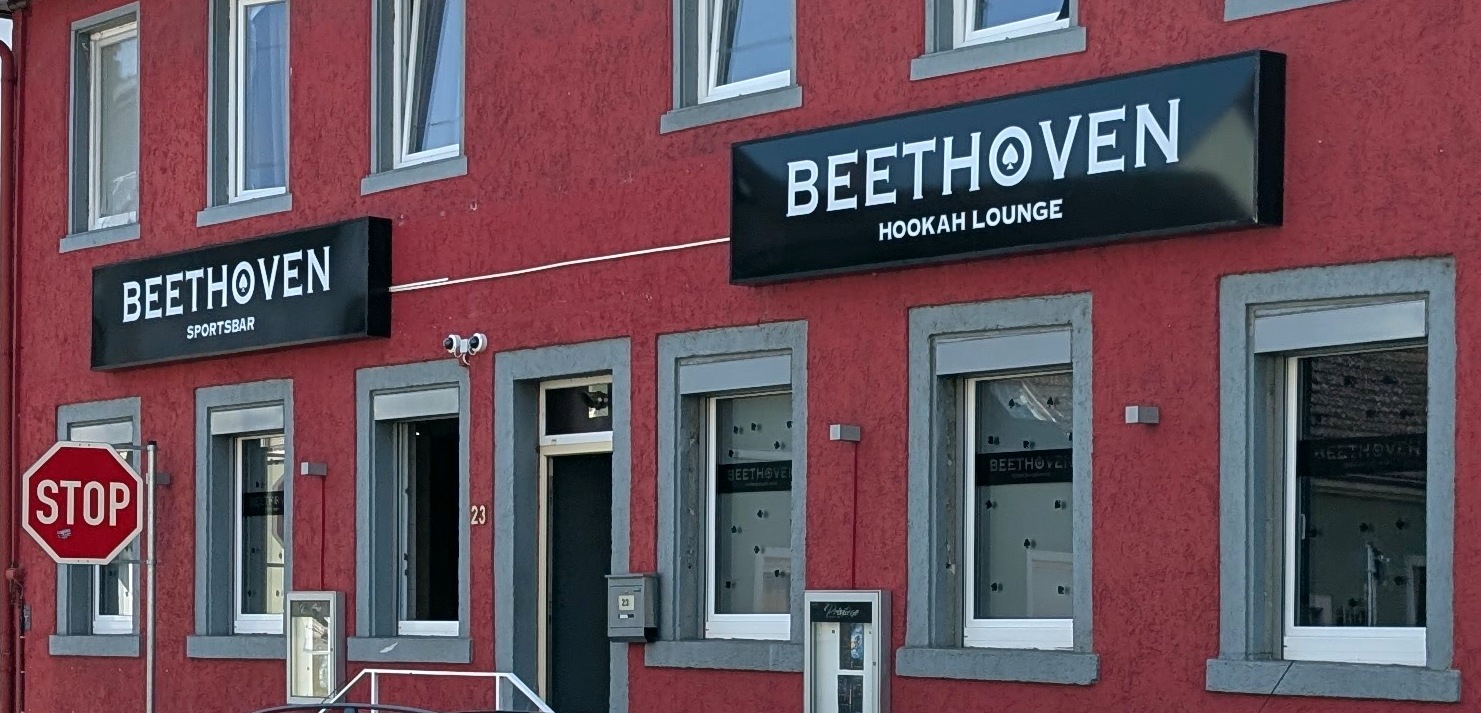
I located the pharmacy. Kehl is charmingly small (38,000), similar to so many small cities in America. Its downtown proved easily negotiable, and my first encounter with a European pharmacy enlightening. The ability to get a physician’s assistant-grade consult from the clerk impressed me. I returned with aspirin and throat lozenges. As I walked back to the ship, not sure exactly where I needed to go, I realized I would need to drop off the meds, turn around, and immediately march my way back across the park again to catch the final bus shuttle at 3 p.m. My first exercise session in mid-90’s weather had caused my shirt to stick to my back and chest. I realized some things are not to be. My wife and I would need to return, together, to experience Strasbourg as we had intended. Meds delivered, I grabbed my tablet, retired to the lounge for my first beer, and fired up an eBook. Later, the setting sun seemed to say, “You did alright today, sir.”




 all the voices in my head