Back to the ‘Glades

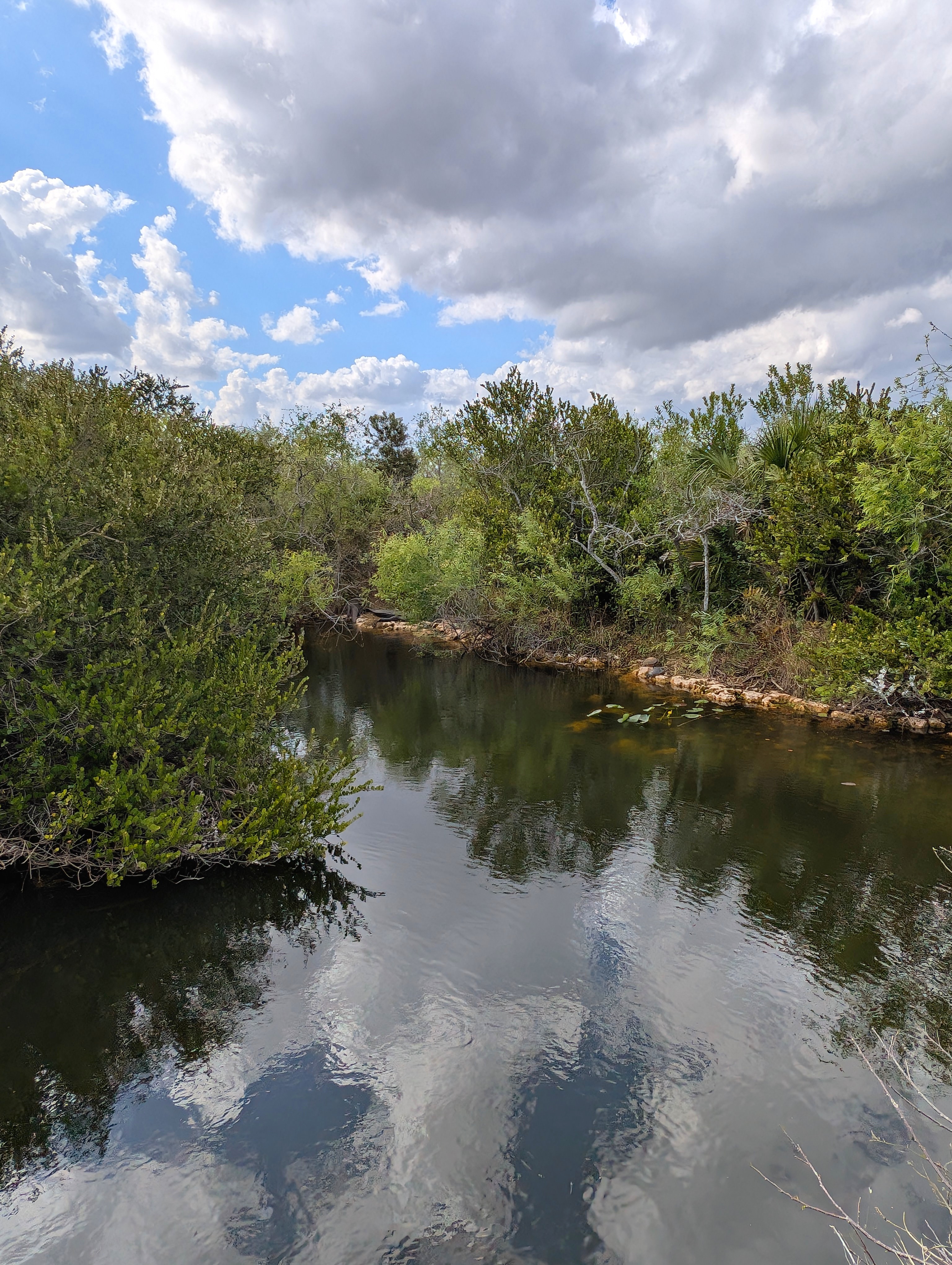
View from Shark Valley Visitors Center, Everglades National Park. There are two alligators in this photo. February 2026.

Technically we re-entered the Everglades National Park at the end of our day in the Big Cypress National Preserve, stopping at the Shark Valley Visitors Center at the end of the afternoon. We didn’t want to take the tram ride to the actual Shark Valley viewing tower, which left us little to do there. Another hour brought us to Homestead, FL. I discovered a Cuban restaurant next door which delighted me a great deal. But first, where are those alligators in the photo above? Look up that slough in the center of the photo. On the far bank? Just above the light-colored shoreline? Here’s a zoomed in photo:
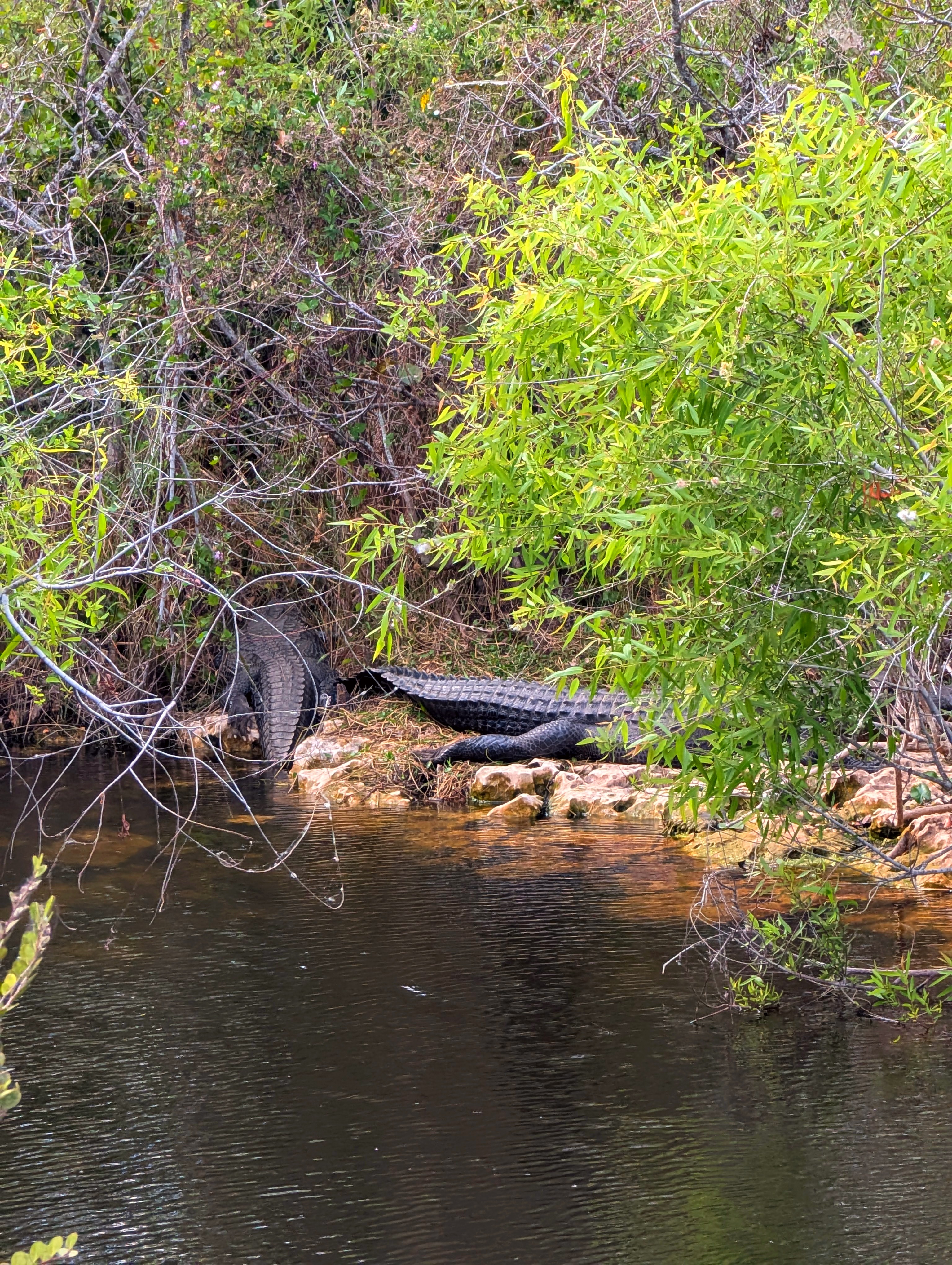
Alligators at Shark Valley Visitors Center. February 2026.

We hit up the Cuban restaurant for breakfast, easily besting the hotel’s “continental” offering, then headed to what I still regard as the heart of the Everglades—the Ernest F. Coe and Royal Palm Visitor Centers and the road which leads deeply through the park until it reaches Flamingo where one can stare southward at the Florida Keys. We arrived just as the Coe center opened then headed southward.
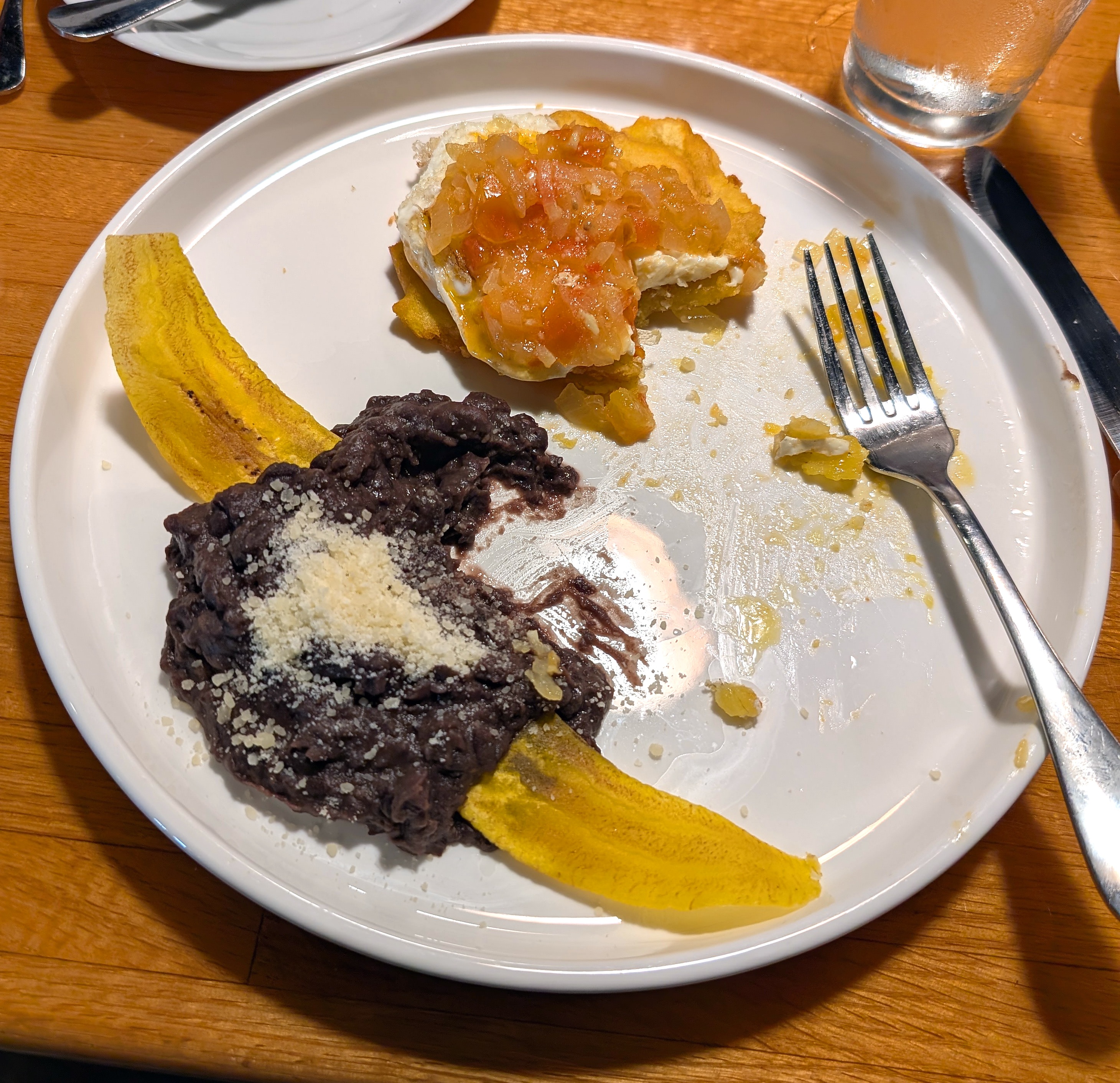
Huevos rancheros, Cuban-style: plantain pancake under the egg and a fruited salsa atop. February 2026.

After spotting a half dozen or so school buses in parking lot, we decided to visit Royal Palm at the end of our day, on the way back out of the park. Quietly spotting wildlife with a hundred or so elementary students alongside (we checked) seemed to be mutually exclusive. We stopped at some of the major sights on the way south, a few on the back out.
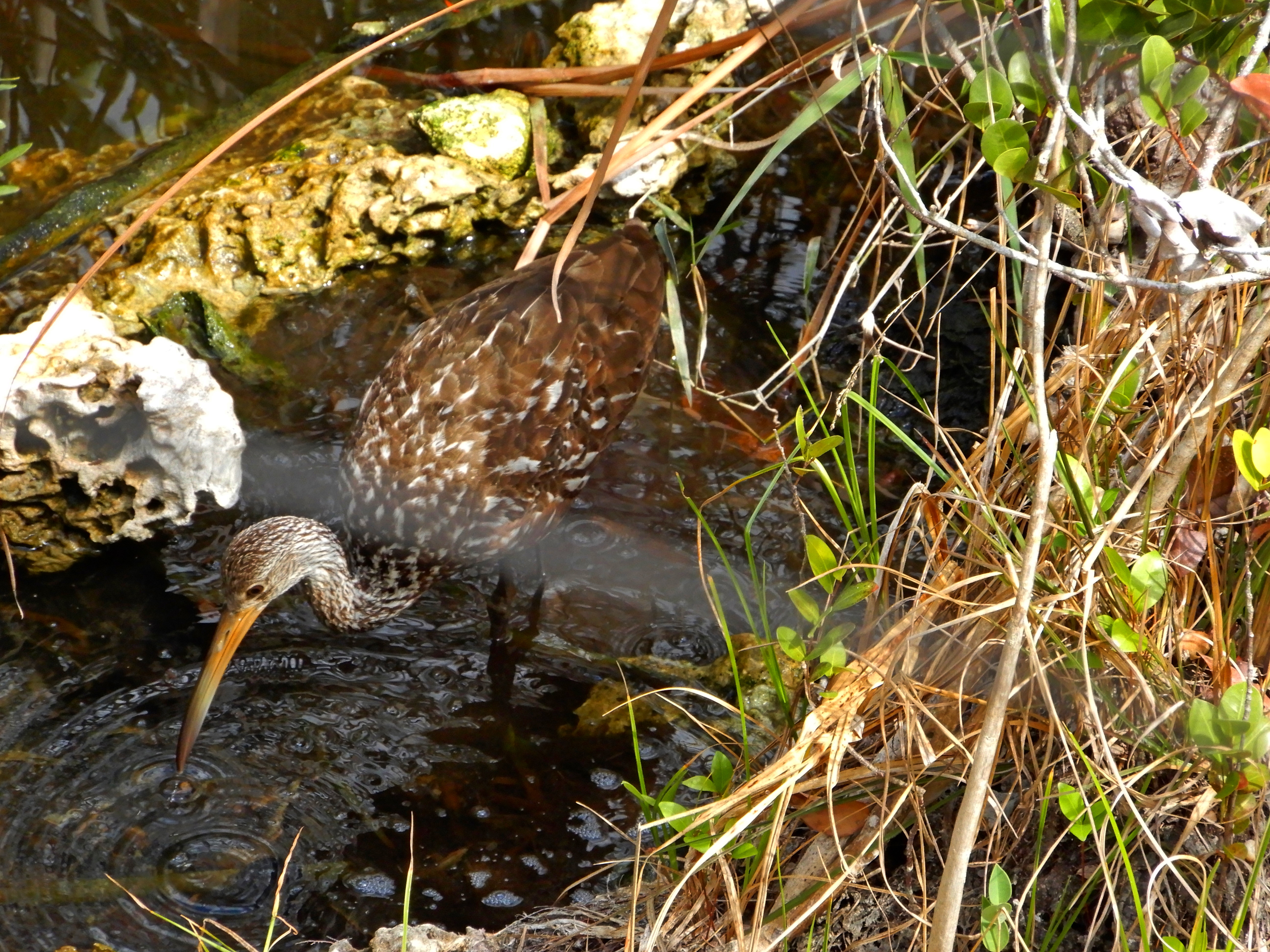
A juvenile heron. Not sure which one. Looks like a Black-crowned Night Heron, but those don’t have the yellow/orange beak. Closest I can come would be a Tricolored Heron but it doesn’t seem to be quite like this patterned brown. February 2026.
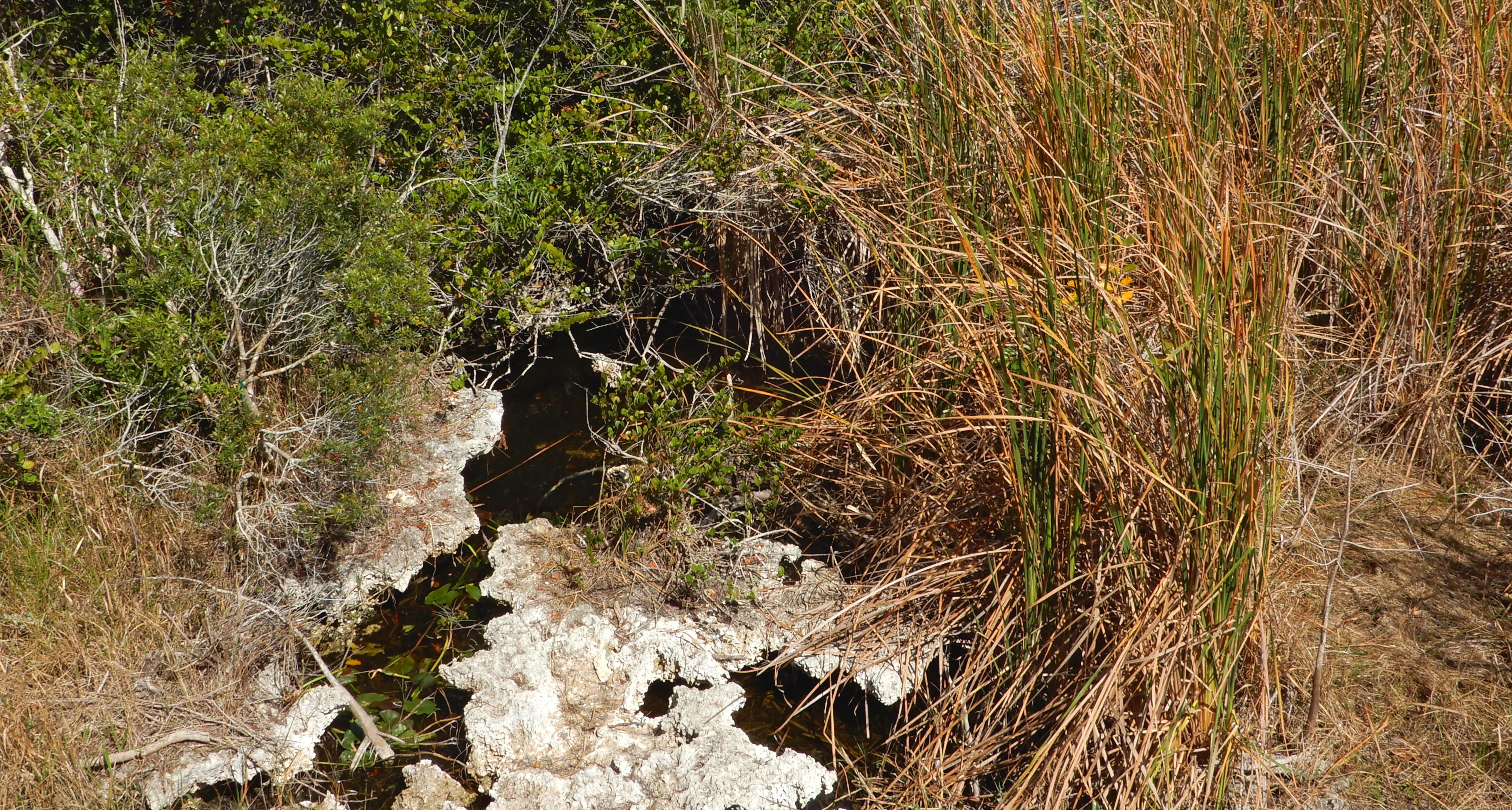
Small drainage creek at the Pa-Hay-Okee Lookout Tower, Everglades. February 2026.

My wife spotted a heron jumping in and out of the darkness of a creek at Pa-Hay-Okee Lookout (left and above). I needed a telephoto to see what she was talking about!

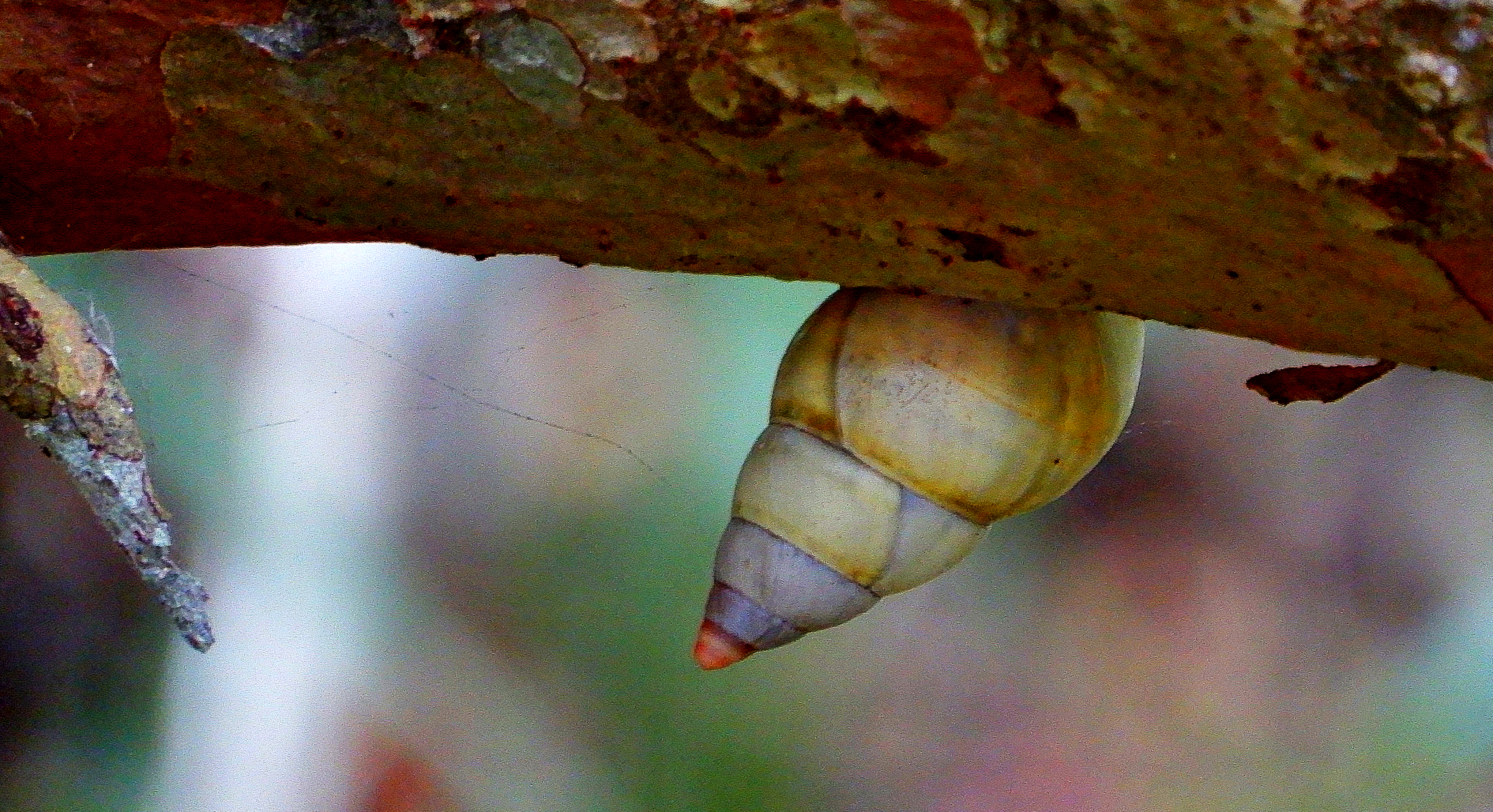
We spotted a barred owl at the Mahogany Hammock walk. While watching him (nearly positive this was a male), we were treated to a call-and-response with an owl we couldn’t locate. This apparently is classic barred owl behavior between a male and female. A sharp-eyed teenager pointed out a snail which I had difficulty locating even after she had described the location. Other attractions at this stop included huge root systems seen from underneath because hurricanes had blown them over in the past.
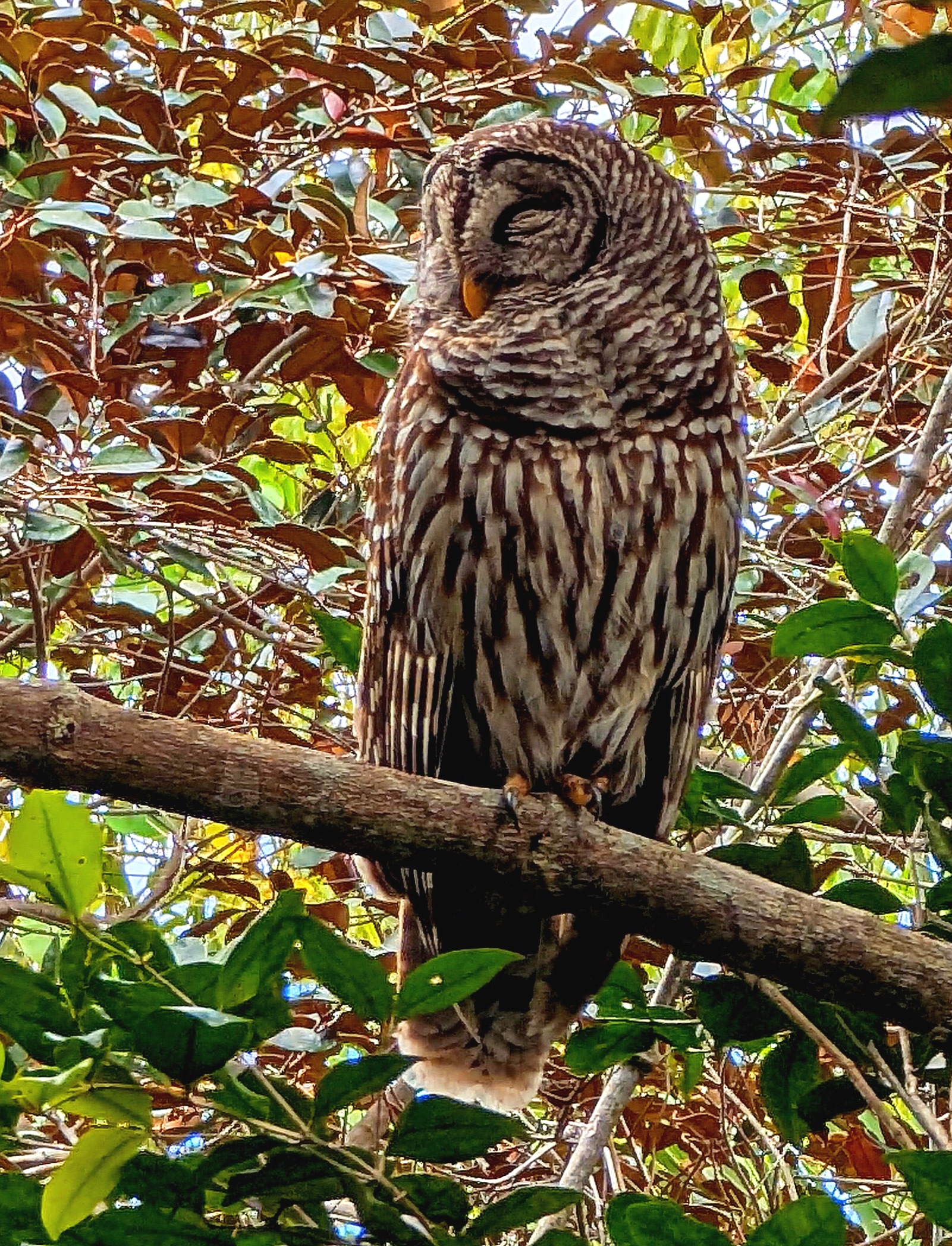
Barred owl at Mahogany Hammock. February 2026.
Tree snail at Mahogany Hammock. Approximately two inches. Everglades, February 2026.

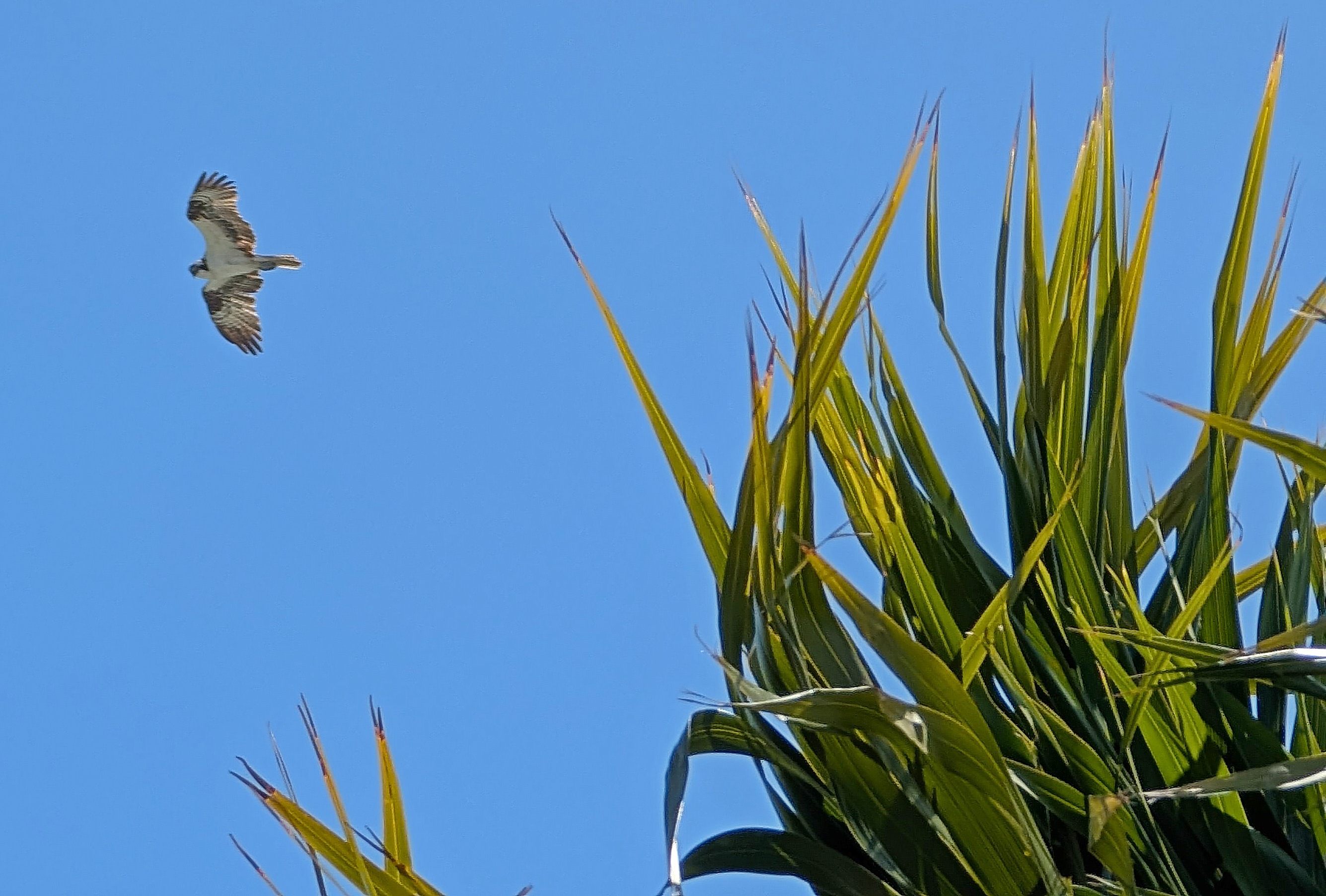
We arrived at Flamingo a bit tired. Thankfully the best thing to do there involved sitting and staring at the shallow waters leading out to the Keys—unless you wanted to take a boat charter which we had done in the past. We spotted an osprey flying back and forth over the shoreline waters, and we saw the near-ubiquitous flock of White Ibises. Then we drove north again.
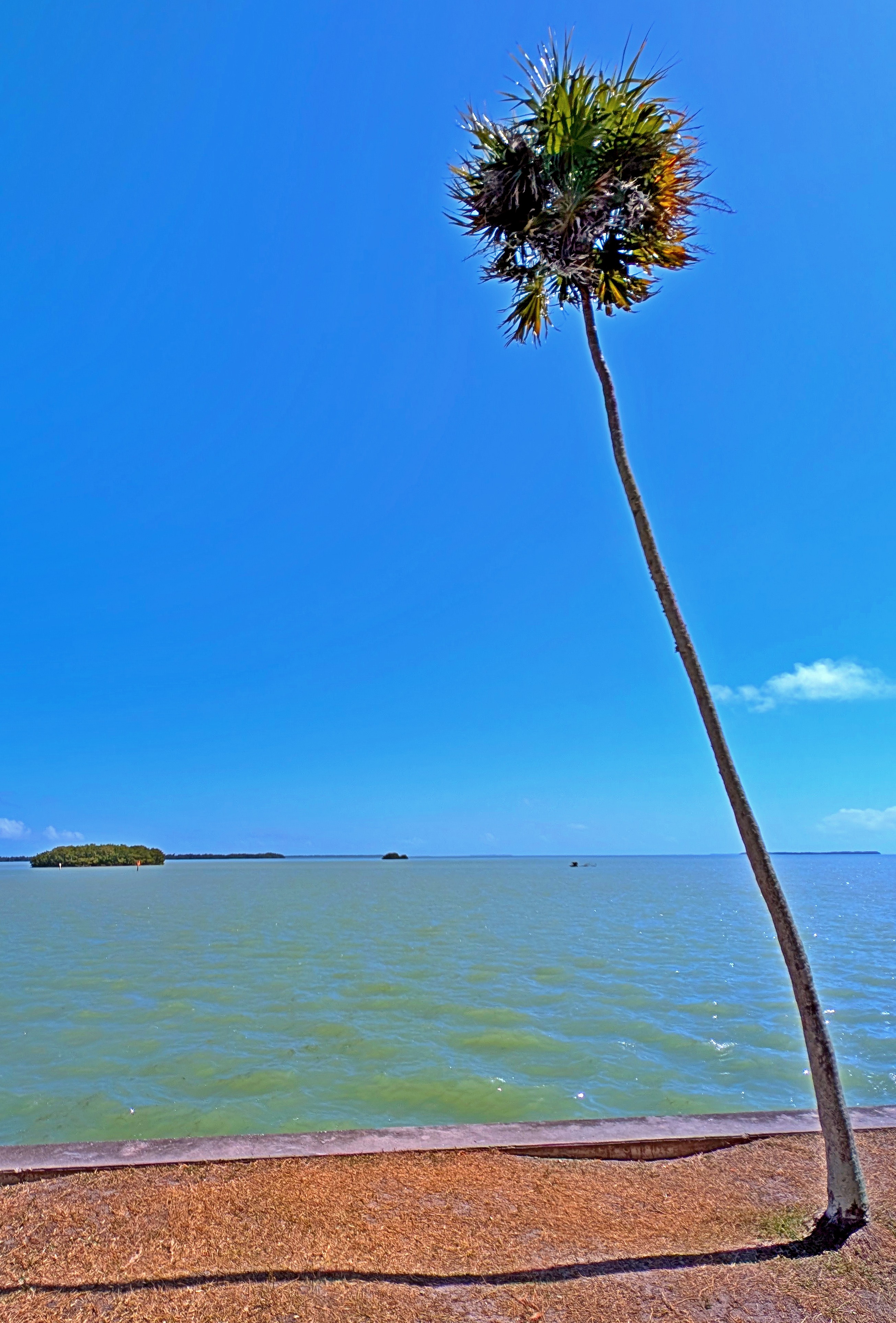
A stylized view of the Keys. Flamingo, Everglades. February 2026.
Osprey at Flamingo, Everglades. February 2026.

We turned around and drove north toward the Royal Palm Visitors Center, hopefully now without the youngsters. Royal Palm deserves its own post, however, so we’ll bring this to a close.
To the Everglades

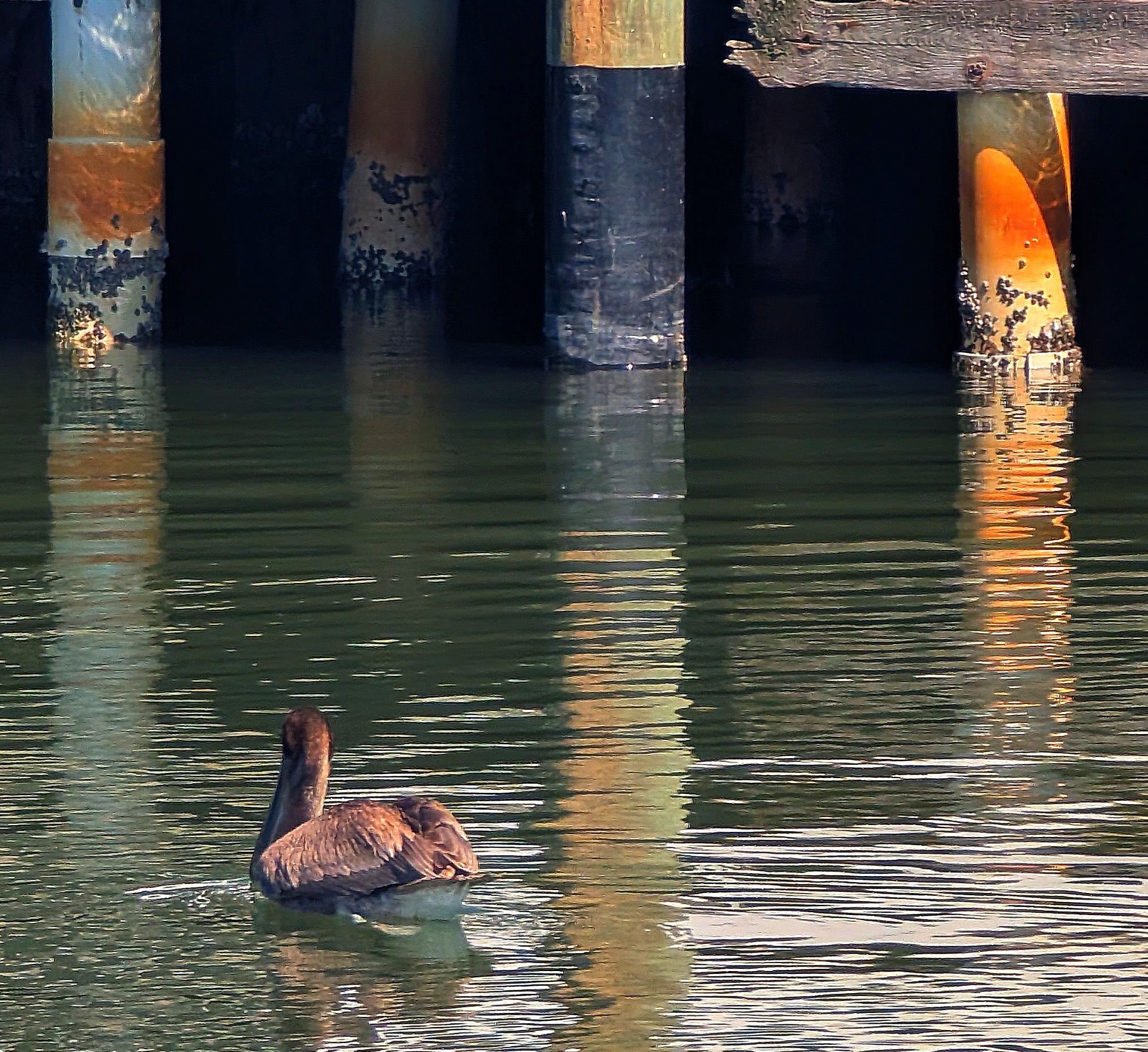
One of a good-sized group of brown pelicans we watched while we ate lunch in Tin City, a group of shops located in old tin buildings on Naples Bay. Naples, FL, February 2026.

We had brought the frigid temps of the Carolinas and Georgia with us to Tampa, and my wife’s sister lamented the loss of her typical 70’s and 80’s. It warmed a bit on our second day there. I bundled up in the warmest things I’d packed and walked to a nearby reservoir to see what bird life I could find. Driving south the next day, we arrived at the Tin City shopping mecca early afternoon, and tucked into a late lunch. The food and the bird life entertained; the shops did not. Tin City seemed a poor and miniscule version of Seattle’s Pike Street Market. Most shops sold typical tourist trinkets which said “made in China” on the bottom. Combined with the exorbitant hotel rates—$300+ for a Springhill Suites on the outskirts of greater Naples?—I doubt we’ll be back in Naples. One saving grace? We’re not exactly foodies but we’re kissin’ close, and discovering that the Cracklin’ Jack’s just up the road from the hotel had recently been featured on Diners, Drive-Ins, and Dives sure put a fine end to the day. Best fried catfish I’ve ever had! We looked forward a bit more eagerly to entering the Everglades and surrounds the next day.

Although the westernmost entry to the Everglades National Park, the Marjory Stoneman Douglas Visitor Center, purported to not be open until the end of February, we decided to chance it on the 26th. We were rewarded with an open, brand-spanking-refurbished center….but not much else because it’s a jump-off point for visitors who want to boaters and to those who want to hike/camp in the Ten Thousand Islands. We are neither of those types. We traveled east on US-41, a.k.a. the Tamiami Trail, the southern route across the Florida peninsula which parallels I-75 a.k.a. “Alligator Alley”. I planned the US-41 route; it became a wise decision when a fire broke out between the two and officials closed sections of the interstate. (It also precluded driving very far north from the US-41.) The southern tip of Florida is a patchwork of state parks, state forests, national preserves, and the national park. We stopped first at the Big Cypress Swamp Welcome Center in the Big Cypress National Preserve. After that, a stop at the H.P. Williams Roadside Park gave us our first good glimpse of alligators, and some nice views of the bird denizens.

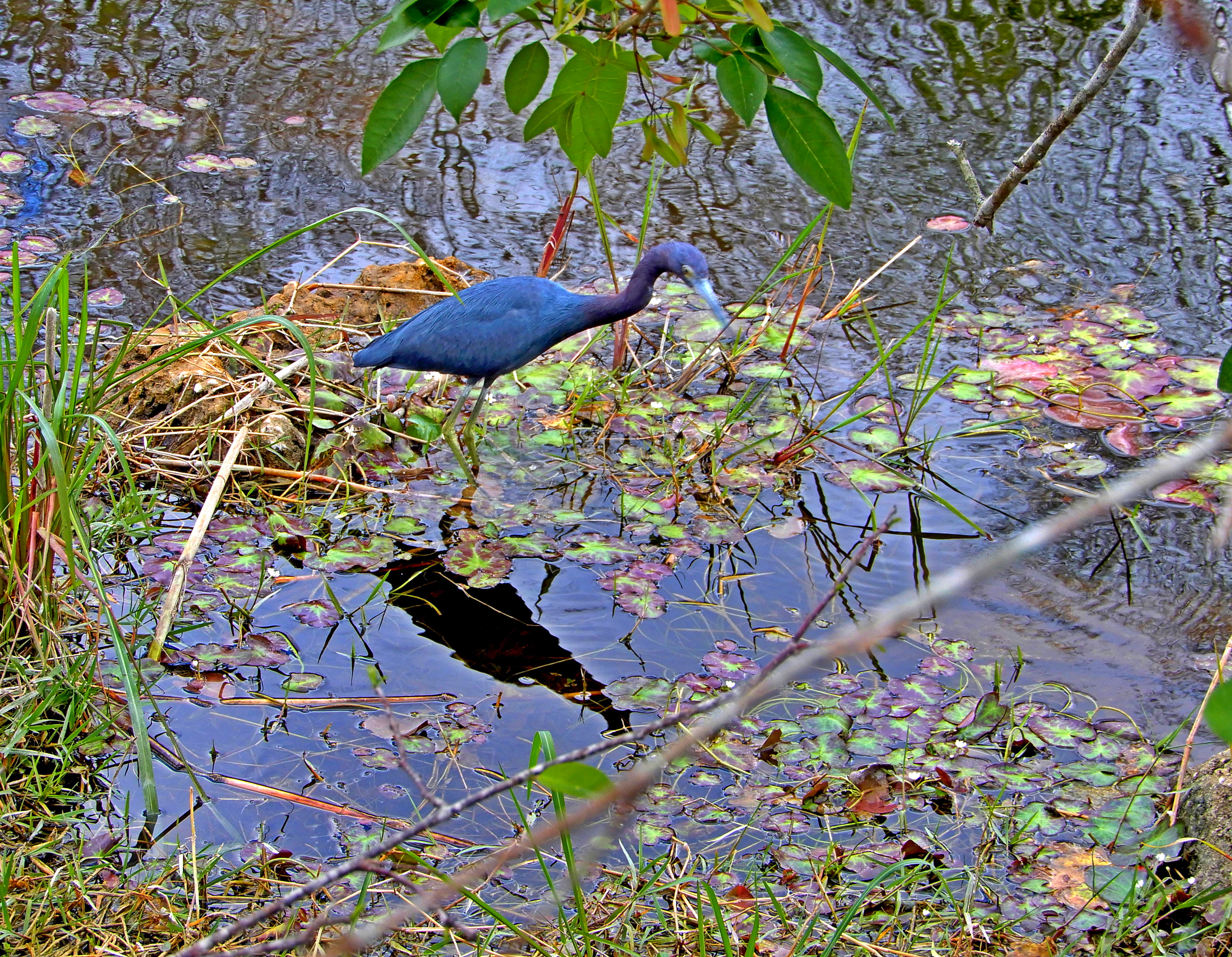
A Tri-Colored Heron stalks its prey. Big Cypress National Preserve, February 2026.
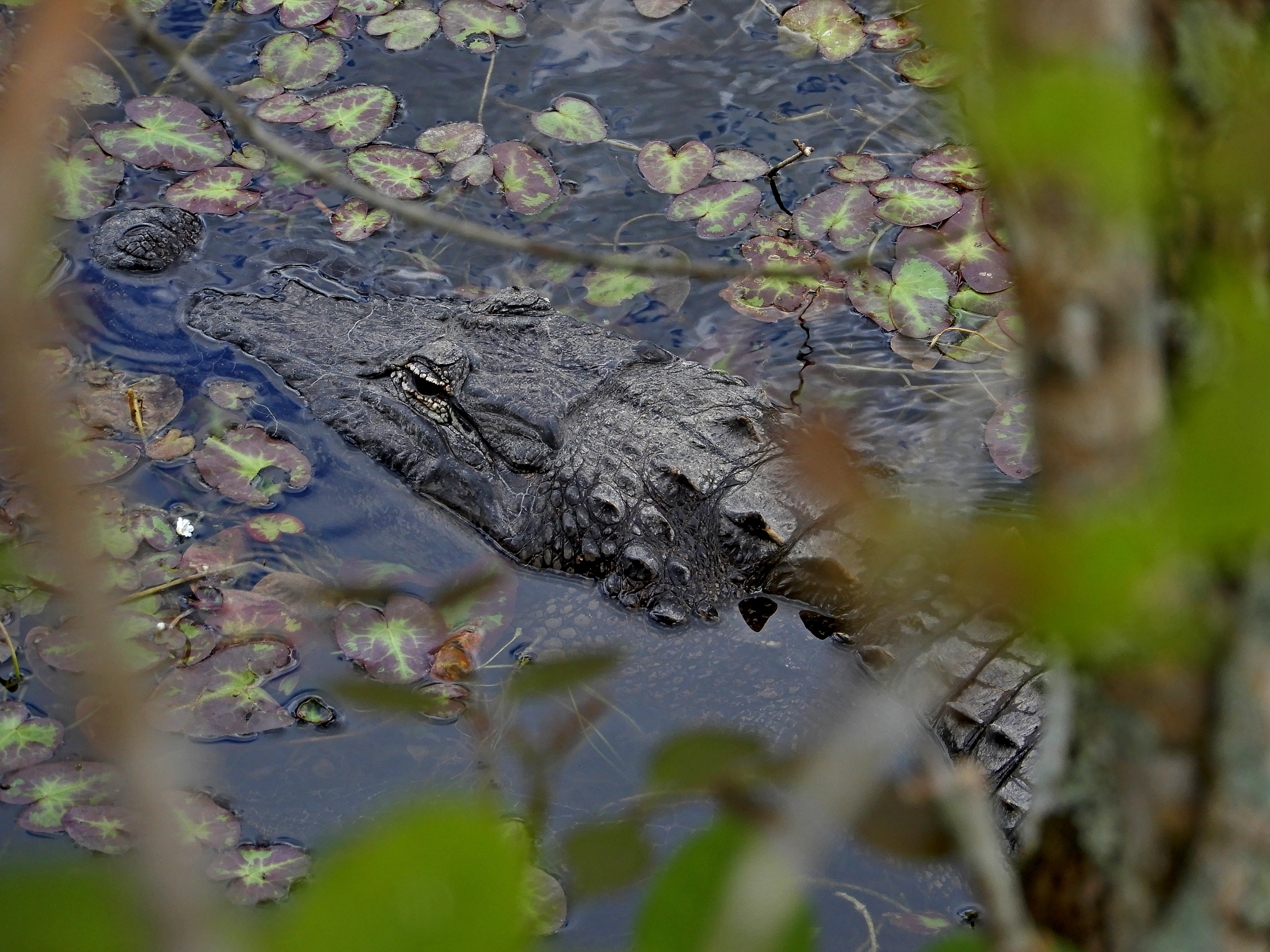
It’s not “oh, look, there’s a gator.” It’s more a find-the-gator experience. Sure they’re swimming up and down the minor canal you’re looking at. Can you spot the one hanging out under your nose? Big Cypress National Preserve, February 2026.
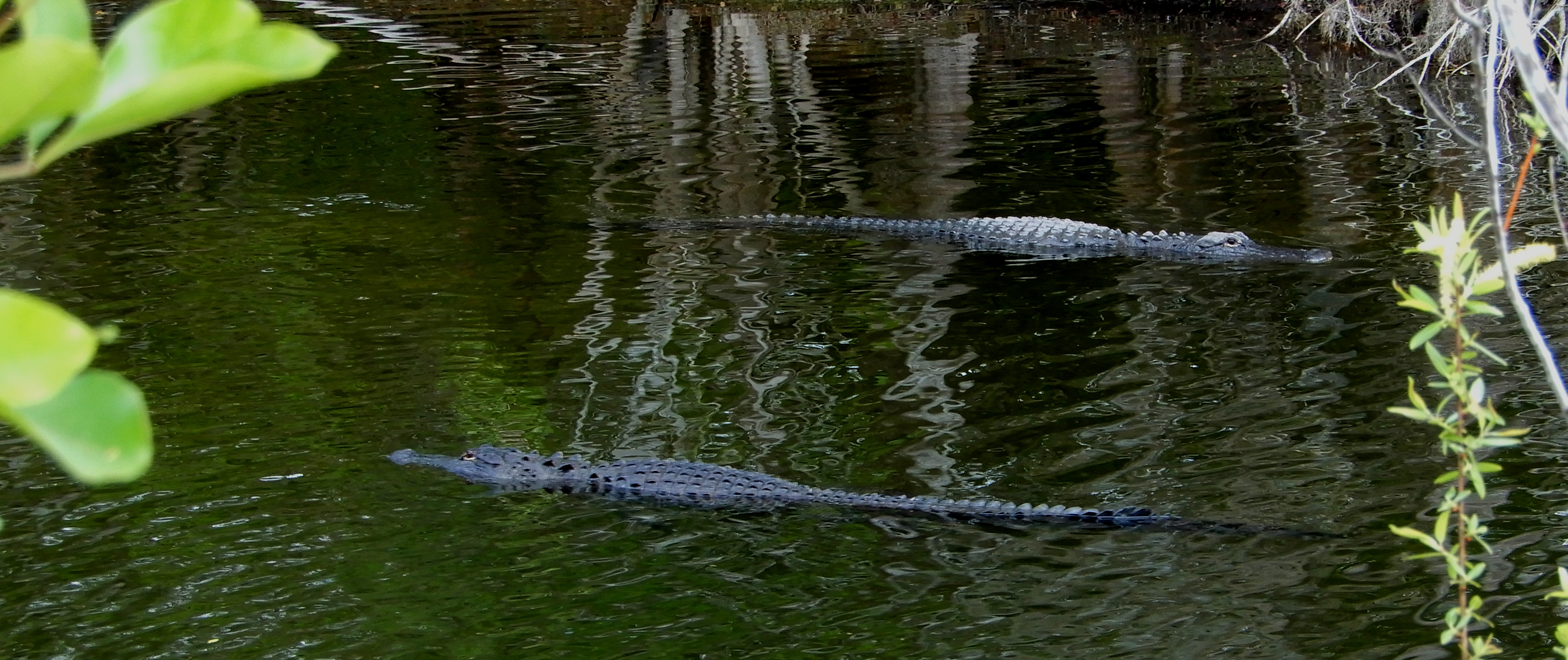
“like ships passing in the night…” Some gators were easier to spot. Big Cypress National Preserve, February 2026.

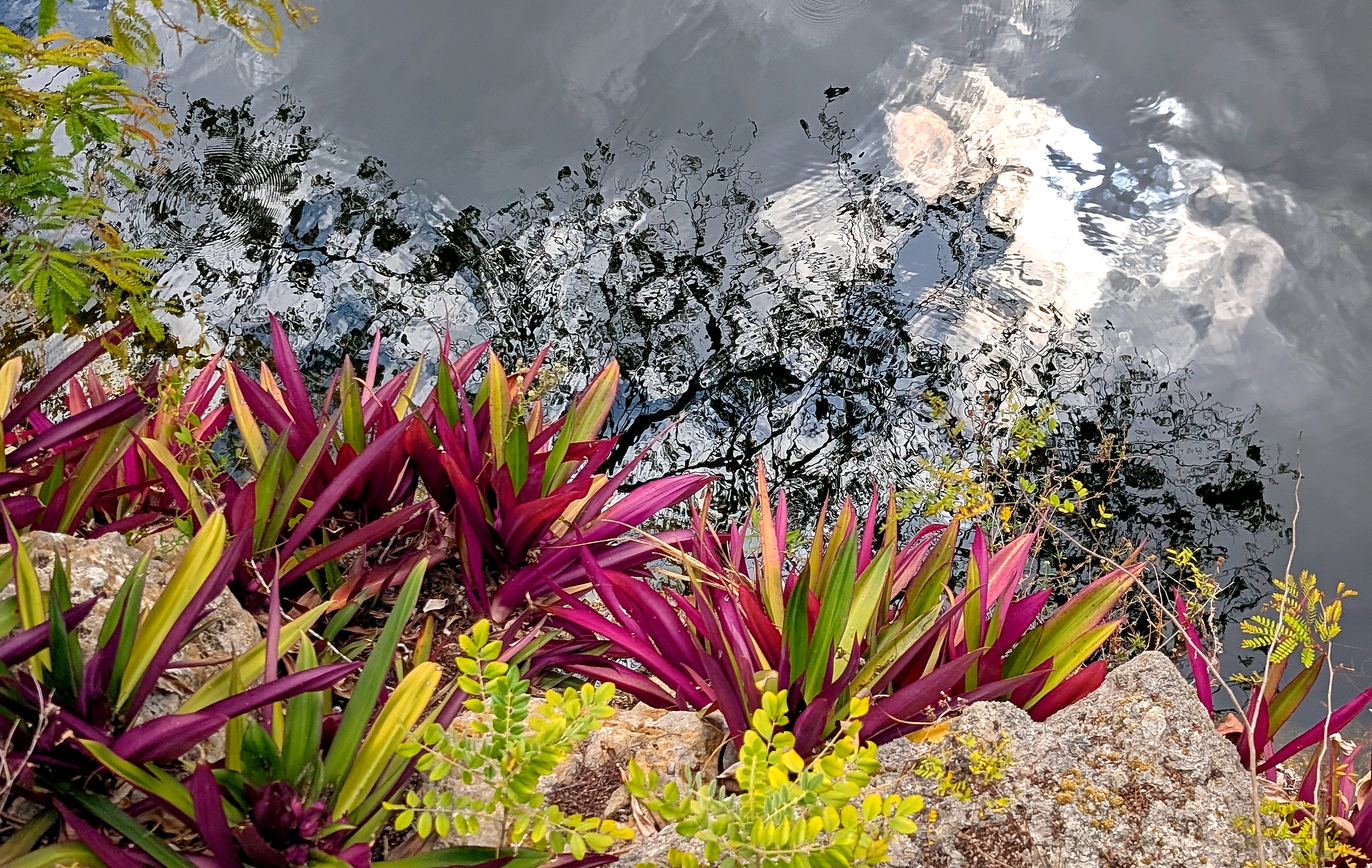
Sometimes, though, the subtropical plants grab one’s attention…

“Moses-in-the-cradle”??? That’s what my plant ID program says, but it seems doubtful. Regardless, it created a stark contrast to the water’s edge. Big Cypress National Preserve, February 2026.

Technically, the final photo of the plants was taken at the Oasis Visitor Center for the Big Cypress National Preserve. If you’re traveling “to see the Everglades,” I would highly recommend US-41 and the Big Cypress route, because it’s basically the northern environs of the Everglades. When one leaves the eastern boundary of the preserve, it’s less than a mile before the Everglades’ Shark Valley Visitor Center. As good as our day’s beginning had been, we had much to look forward to, it turned out.