

Last October we paid to have our back yard replanted with plants native to North Carolina, the American Southeast, and the Atlantic seaboard. As in colder climes, the vast majority of native plants drop their leaves and enter dormancy for the colder winter months. We also “leave the leaves” which allows them to decompose into the soil as they should, creates cover for the little creatures to stay warm (and avoid hawks), and supports the lives of little bugs which in turn provide food for the ground-feeding birds. Thus, the predominant color of our back yard and our front yard is brown.
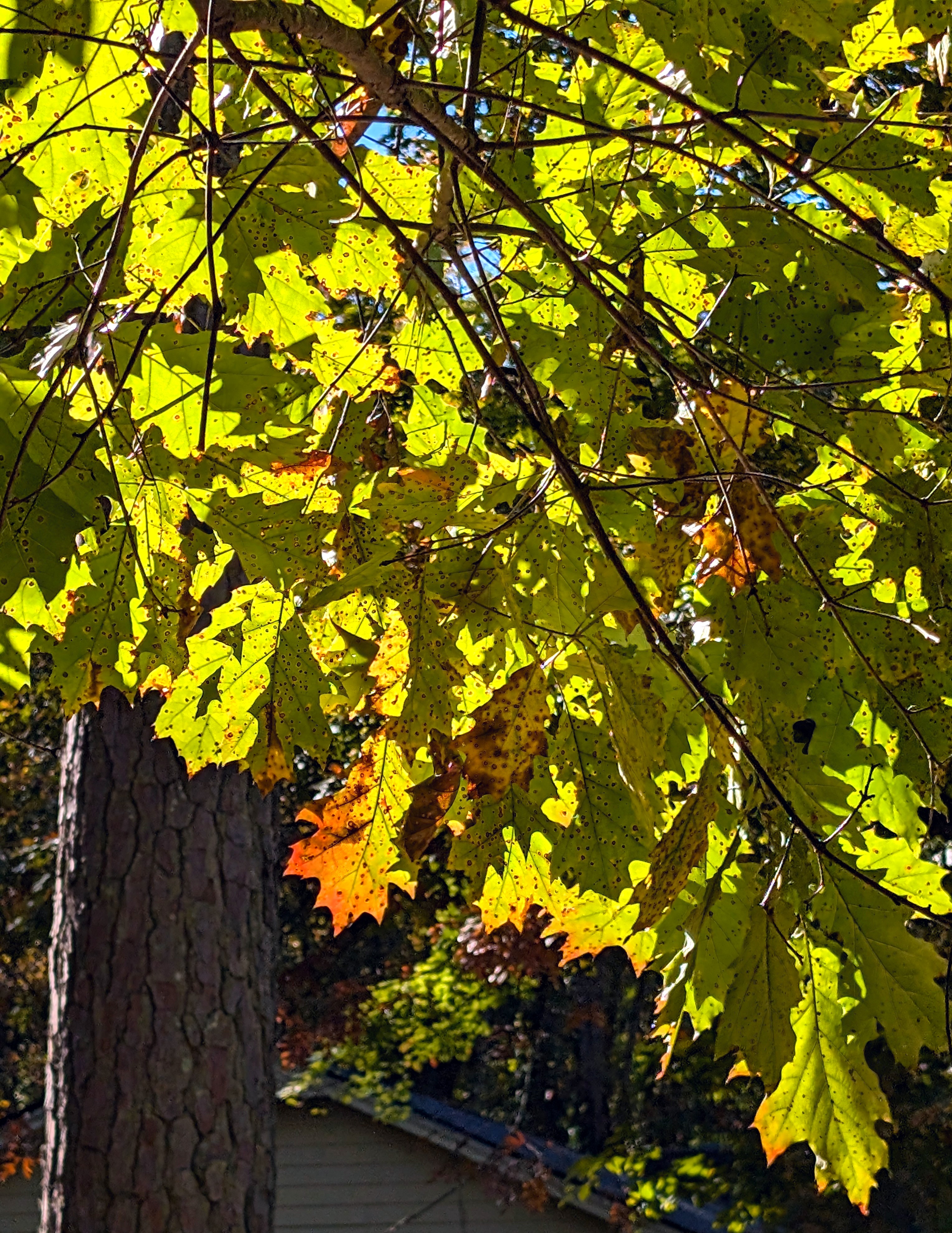
Our neighbor’s yard represents most yards around us. The green of English ivy covers the ground and the trunks of the trees. Saplings of non-natives take advantage of the warmer winter weather much as sunbirds head for Arizona or the coast of the Gulf of Mexico. Some keep their summer foliage—no need to drop leaves and protect a plant conditioned to far colder climes. It’s not that leaves fall only in our yard; there’s an oak or two and some poplars over there. It’s that the ivy manages to conceal somewhat the leaves in my neighbor’s yard.
In winter, therefore, brown is good, and green is at best questionable. (Before my southern readers chime in, yes, there are plenty of Southern evergreens, but not many around here consciously cover their yard with them.)
Our natives, once established, should have staying power also. It’s kind of defined by the word “native” is it not? I will need to wage constant war, though, on the ivy, the Virginia creeper, the japonica, and the various saplings which will inevitably attempt to broach the property line. It’s a battle I freely take up. For the time I live on this speck of the Earth, it will bring forth those plants which grew here naturally and nurtured the birds, mammals, insects, reptiles, and amphibians which depend on them for healthy populations.

 all the voices in my head