Kona nuts

Our final full day on The Big Island, we drove west across the island to the Kona Coast. It didn’t totally waste our time, but it validated our decision to stay in Hilo. In our short taste of it, the Kona Coast appeals to people who aren’t us–hence they’re nuts: Kona Nuts. Near as I can figure out, the west side of The Big Island appeals to people who like:

  • Swimming, surfing, snorkling, and scuba diving
  • Deep sea fishing
  • Parasailing and its variants
  • Boating
  • Lots of physical exercise (running, cycling, and the like)
  • Shopping in malls, strip and otherwise
  • Renting AirBnB’s, condos, and vacation houses crammed side by side up the hillsides facing the ocean

We don’t like any of that. Okay, we’ll take an occasional hike, and we’ll poke into those small shops catering to tourists (but they’re better when they don’t). We’re not the physically active types. I’m not at 70, and haven’t been since I flipped the dial past 40.

On top of that, we found the western side of the island to be hot, dry, a bit desiccated. Our first inkling occurred driving across the the caldera of Mauna Kea. We had left rain in Hilo, low wispy clouds misting us, sprinkling us with life-encouraging water. Once we climbed to the center of the island, things looked quite a bit different. (Photos are from our return drive to the east.)
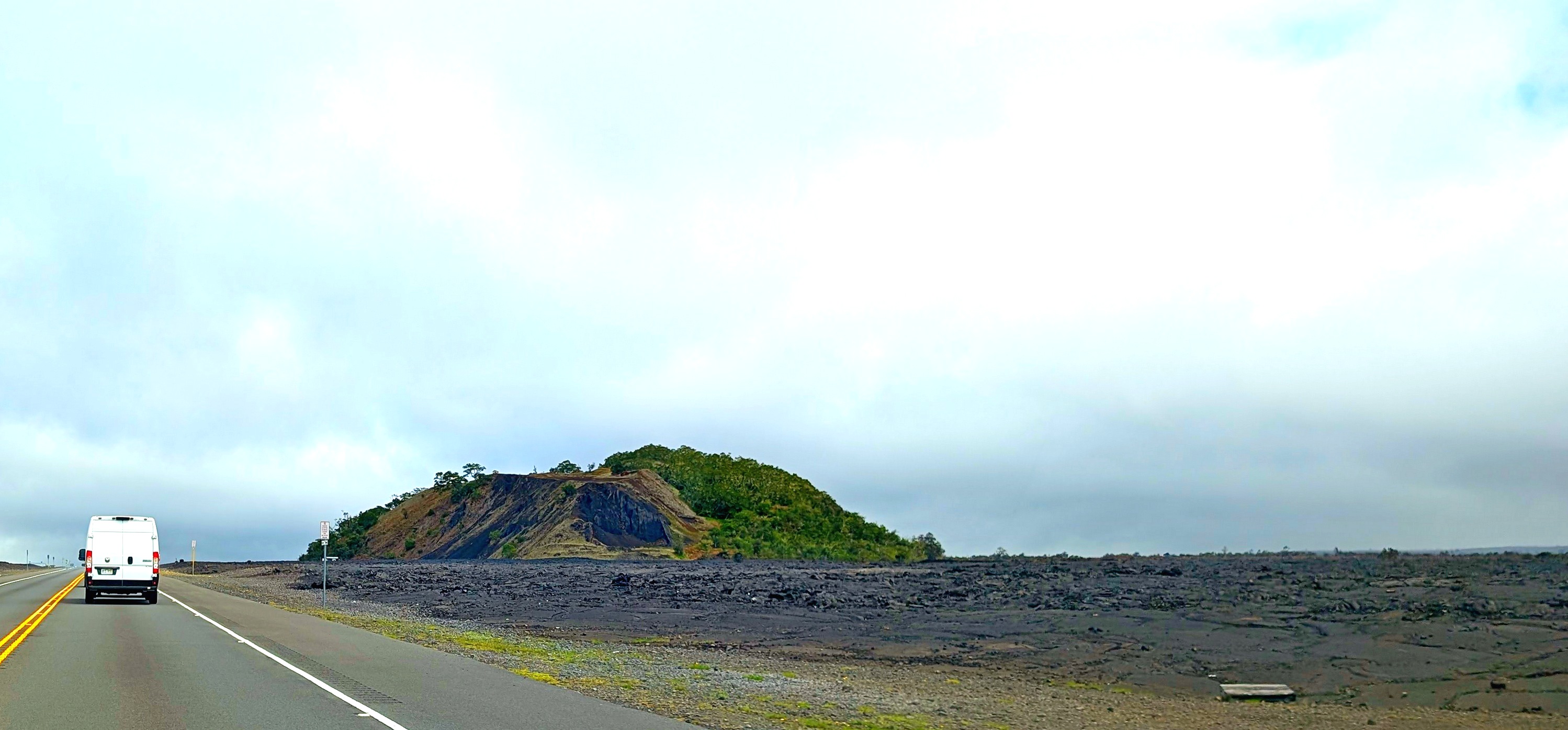
Driving east, back to the rain clouds of Hilo. Looked good to us! September 2024.

I grew up in eastern Washington State where lava flows poke like basalt bones through a grass-covered skin of dirt. It looked a lot like the western half the Big Island. If you told me this next photo was the interstate exchange just west of Spokane where students head south to Eastern Washington University, I would believe you:
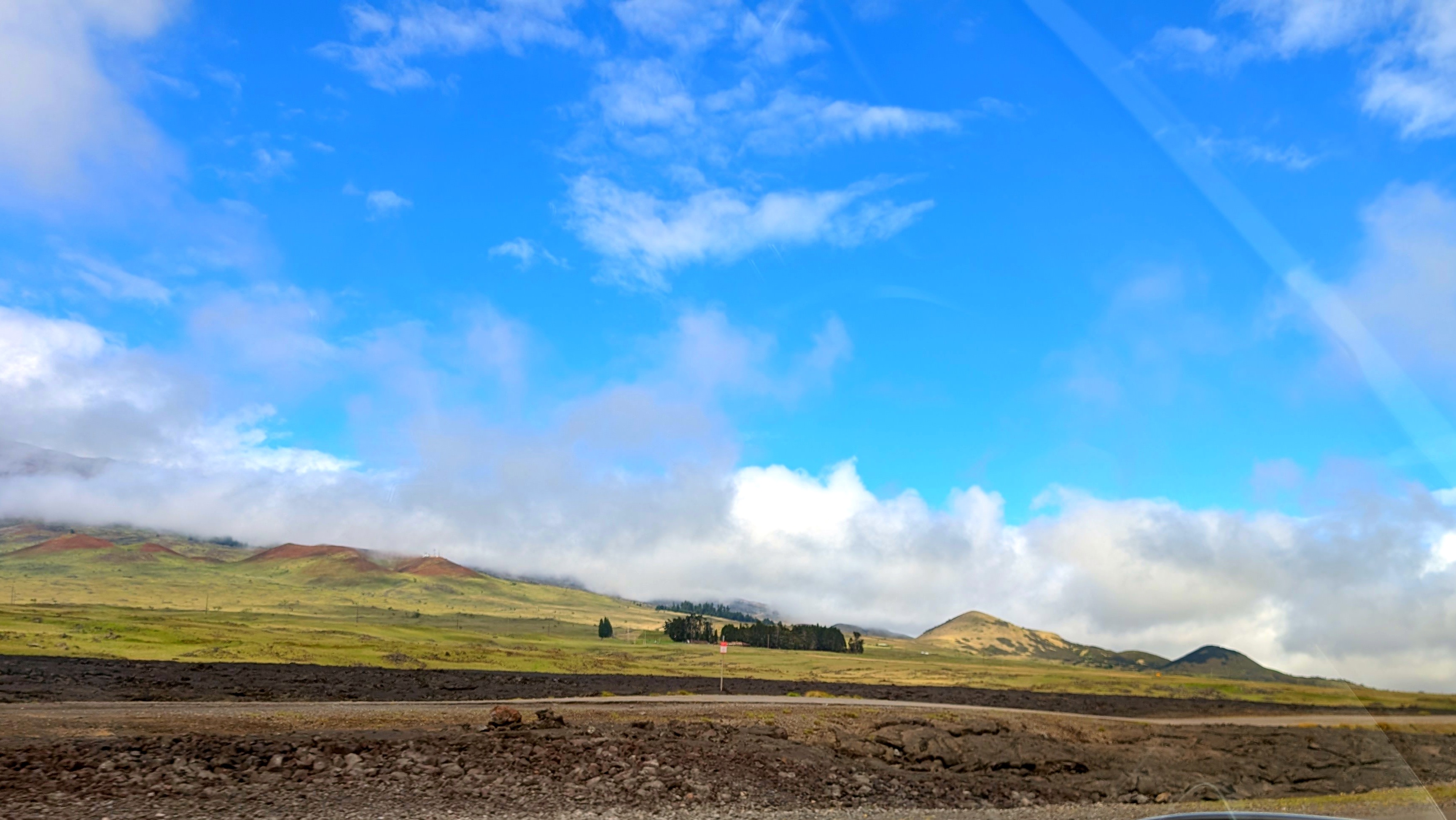
Mauna Kea caldera looking northeast from its approximate center. September 2024.
The grass-covered lava of Mauna Kea. September 2024.

Once we descended the steep slopes to Kona coast–an oddity to me; shouldn’t the leeward side be more gently sloped?–we found a whole lotta nothing…which isn’t really fair, but our first stop gave us that impression. The Kaloko-Honokohau National Historic Park starts out looking like this:
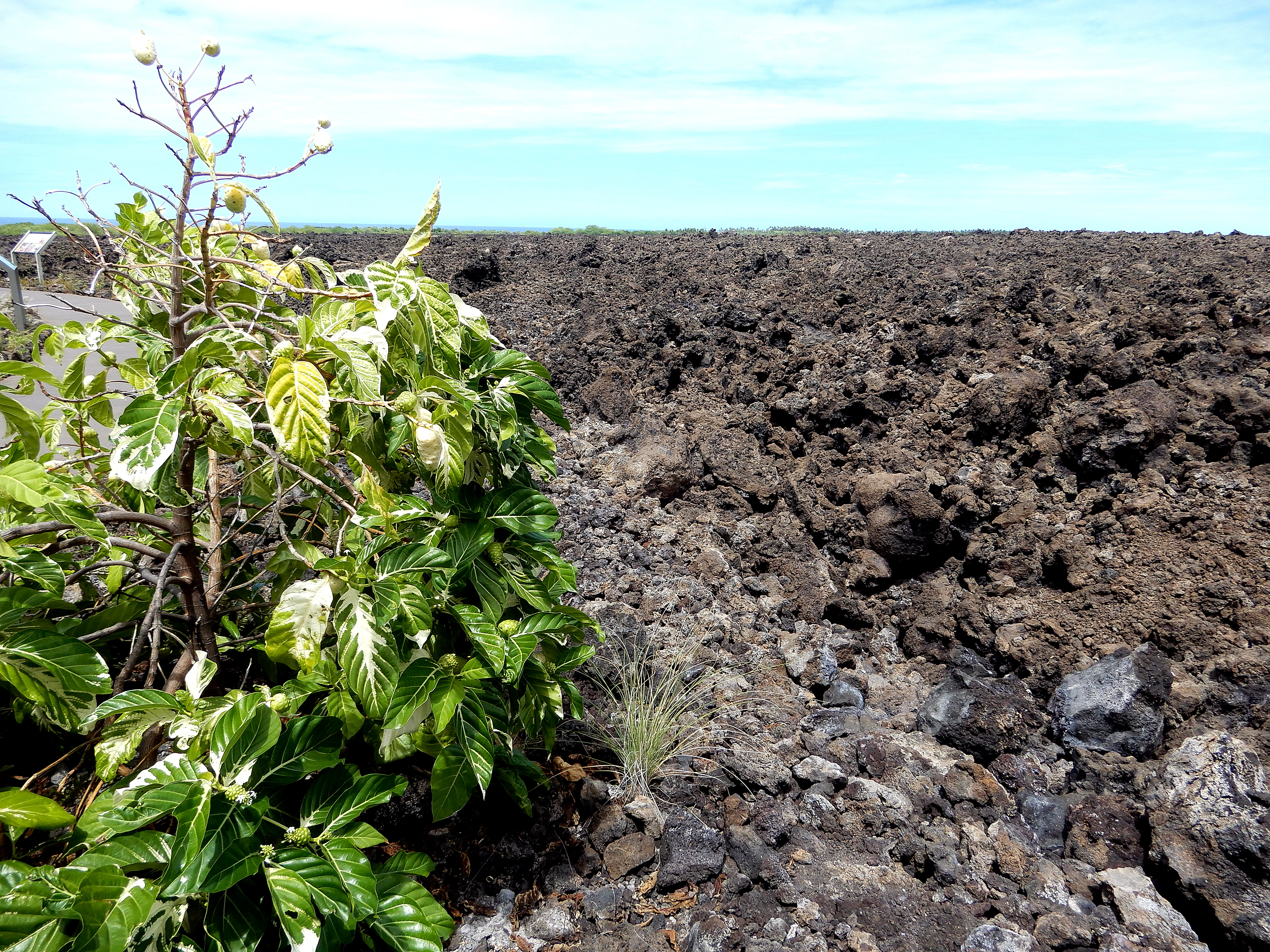
Kaloko-Honokohau Nat’l Historic Park, looking toward the ocean. The edge of the “visitor center” visible at left edge of the photo. September 2024.

Although bleak, this stop proved informative. Indigenous peoples used these coasts to trap fish and perform other ocean-related activities (I think they got salt also–can’t remember). Families owned narrow parcels of land stretching from the shore up the slopes. Those members who lived at higher elevations would farm and bring their harvests to the shore to trade for fish and seafood. We chose not to walk the mile-long trail to a recreated site about the coastal folks, primarily because the 90+ degrees and lava fields intimidated us. Finding the entrance to that area of the park proved elusive, hidden and nearly unmarked as it was in the backmost corner of a parking lot for various marina businesses.
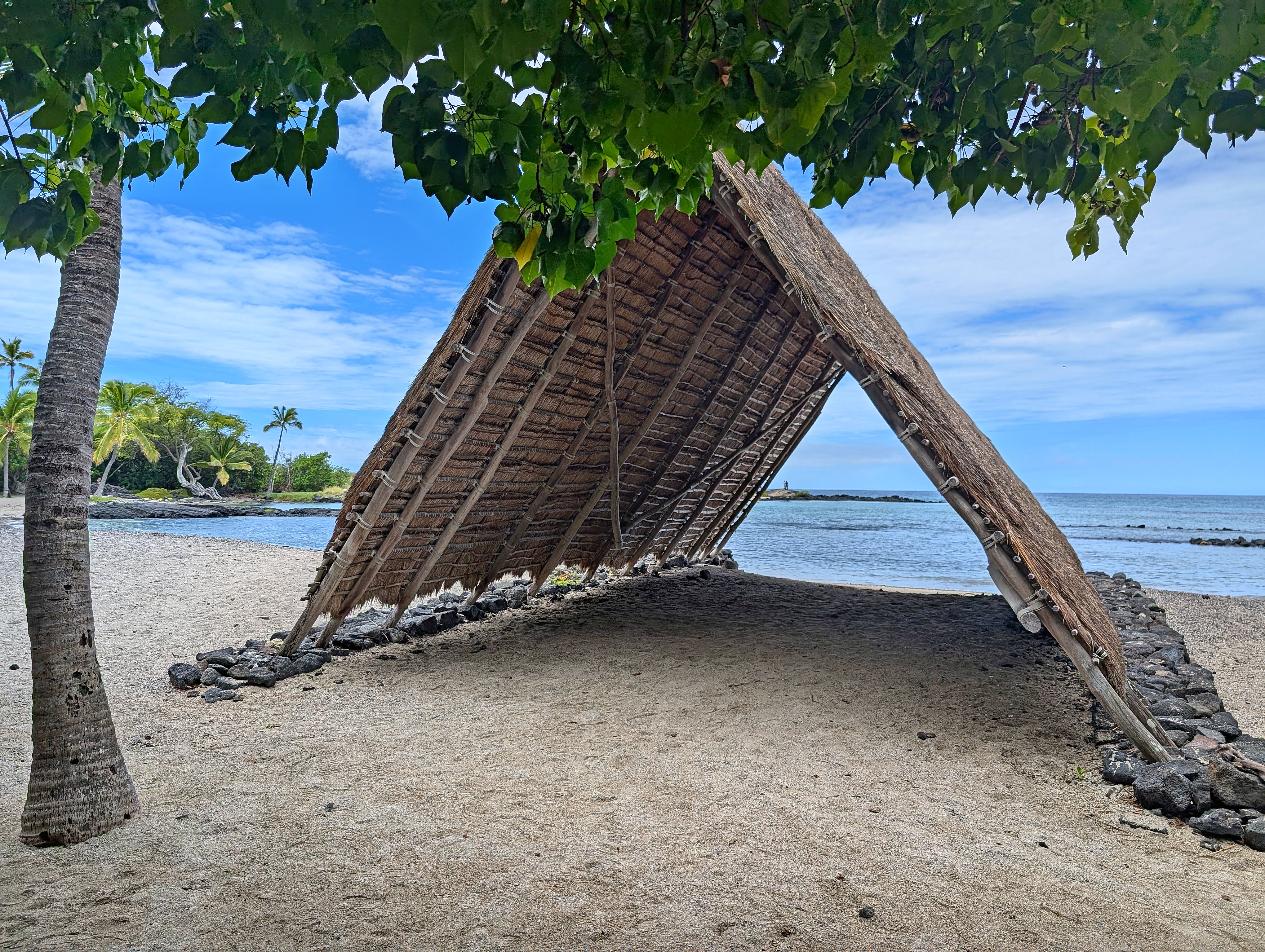
A recreated shelter of the indigenous peoples. Kaloko-Honokohau Nat’l Historic Park, September 2024.

After this we drove south into Kailua-Kona proper. We found nothing but strip malls, hotels, gas stations, various support businesses, and the airport where virtually every airline flies except for Southwest Airlines (explaining why we flew into Hilo). We found restrooms and beat feet to the east side of the island. We had great views on our climb out of Kona: foregrounds of all the roofs of the vacation homes, backgrounds of the ocean. Yay.

Clouds from the ground

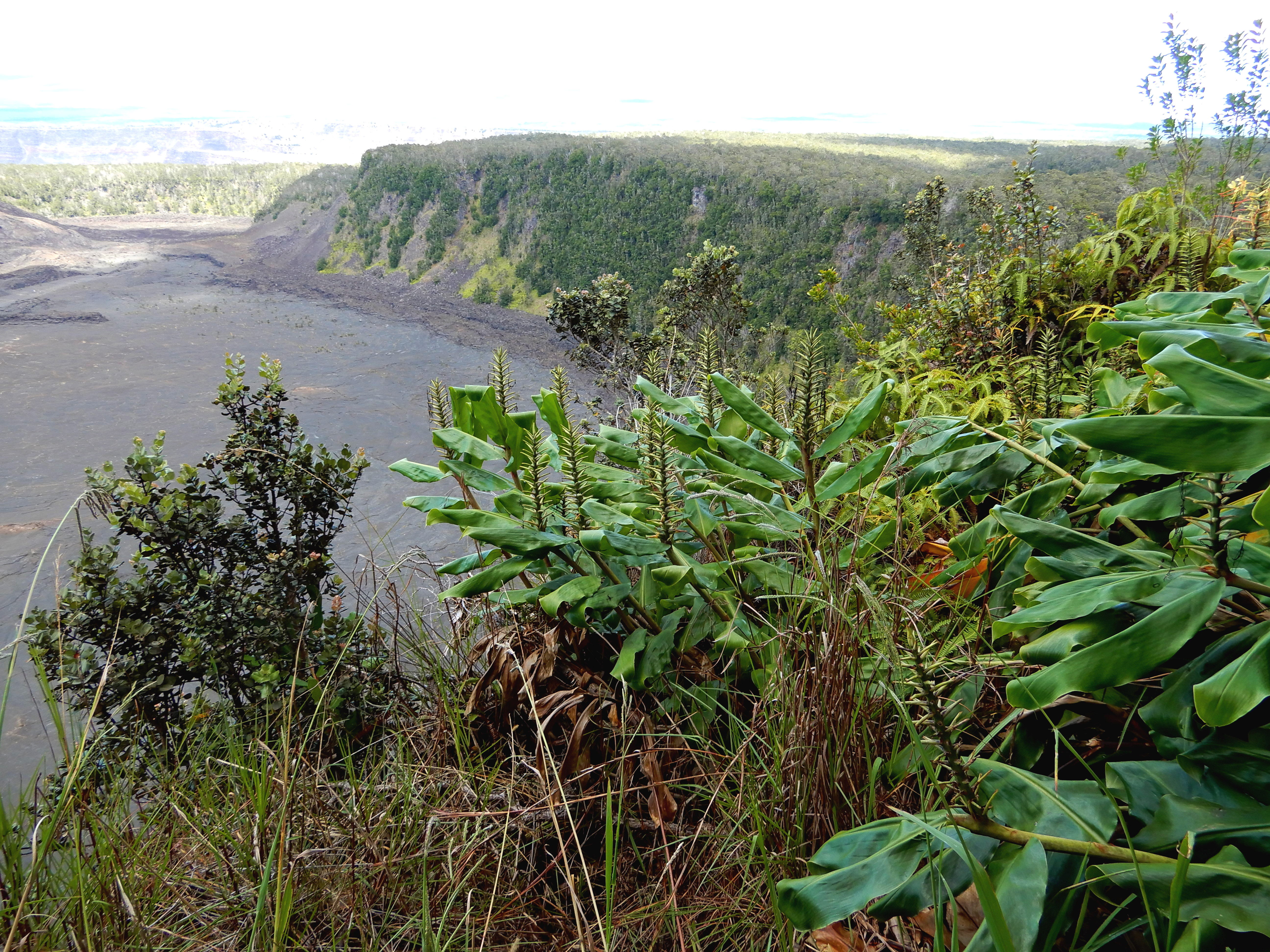
My first photo at Volcanoes National Park: a steam vent on the edge of the Kilauea crater. September 2024.

The island of Hawai’i could be called triangular. The west coast roughly runs north to south. From its northern tip, though, the coast runs northwest to southeast. Then from that easternmost point it runs northeast to southwest to join up with the west coast. Situated inland from the southeast-facing coastline lies Volcanoes National Park. Volcanoes presents much more than just dormant craters. Its most active feature (inland) turned out to be the first thing we saw: steam vents. Craters? I found their vastness difficult to comprehend.

Kilauea from steam vents on north rim, looking southwest. September 2024.

I’m not even sure the photo above shows only Kilauea. I see “Hale Ma’uma’u Crater” on the ol’ Google Maps. Lava flowed in 1919, 1921, 1954, 1959, and on and on I would guess. I paid little attention to information, so I’ve only myself to blame! Seeing it seemed more important than reading about it on signs, the internet, pamphlets, and the like.

Trade winds blow northeasterly toward the park. There are dry plains inland, but plenty of slopes catch the moisture. Plant life abounds there. Even in this dryness:

On the edge of the steam vents. Volcanoes National Park, September 2024.

Where the rain can fall, things change rapidly. Just a few miles away from the photos above…

Kilauea Iki Overlook trail. Volcanoes National Park, September 2024.

Eventually I realized this incredibly wide circle we were tracing surrounded a ‘family’ of volcano craters. We continued past many tantalizing side trips, acknowledging our (a) laziness, (b) general physical un-fitness, and (c) certain time constraints. Turning off of the Crater Rim Drive where it intersected Chain of Craters Road–further westward travel was blocked–we traced the path of lava flows to the ocean.

Approaching the coast in Volcanoes National Park. September 2024.
Where lava meets the sea: Holei Sea Arch. Volcanoes National Park, September 2024.

Now that I know more about this park, I would go back to look into lava tubes, to hike a bit here and there, to see if some of the roads had opened up, and to maybe hike down into a crater…maybe. It looked kinda boring to be truthful.

‘Yep, the rock looks just as black down here. Why did we hike down here again?’ Volcanoes National Park, September 2024.

It all impressed this guy who grew up with the volcanoes of the North Cascades, a far different kind of thing.

A perfect day for…

…volcanoes! We forced the agendas for our final two Big Island sightseeing days, simply by allowing our lazy natures free reign. Sunday received its designation, Volcanoes Day, and promptly rewarded us with an atmospheric eruption.

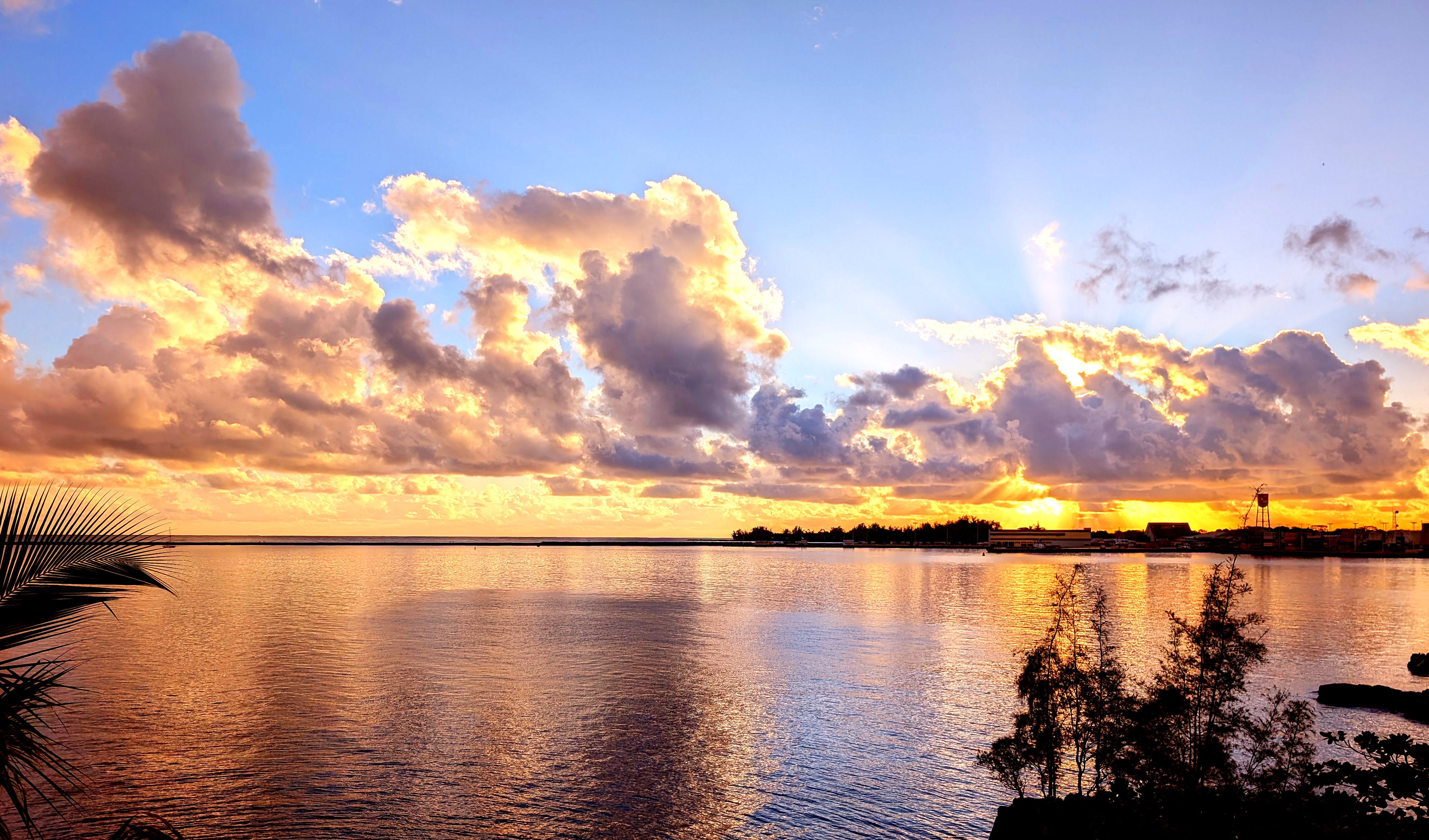
Yes, the colors are emphasized. Reality always seems more dramatic than can be captured photographically.
Sunrise over Kuhio Bay. September 2024.

Downtown Hilo

Farmers Market, Hilo, HI. September 2024.

By our fourth full day in Hilo, the island attitude had taken over. Friday’s meandering around town (waterfall, museum, brewery, dinner) could’ve been followed by something energetic. Instead we took our time before heading downtown to visit the Farmers Market (photo above) and an equally large area where local crafters sold their wares. A few souvenirs were purchased, always with an eye to the minimal space in our luggage. (We pack light. A carry-on suitcase each, a large purse/bag for my wife, a soft attaché-style bag for me.)

After the market we wandered the downtown area. Hilo manages to look like my childhood of the late 50s and the 60s, except for the modern cars:

Downtown Hilo looking northeast toward Hilo Bay. Turn left from this position and one is smack dab in front of the KTA Superstore mentioned in the post about our first day on the Big Island. September 2024.
Downtown Hilo, nearing the beachfront. In the foreground is Turn the Page, a bookstore. Like many of the merchants, it has no glass in the windows–those openings let the breezes (and birds) into the store. In the background and through the palms one can see the hotels on the peninsulas where our hotel stands. September 2024.
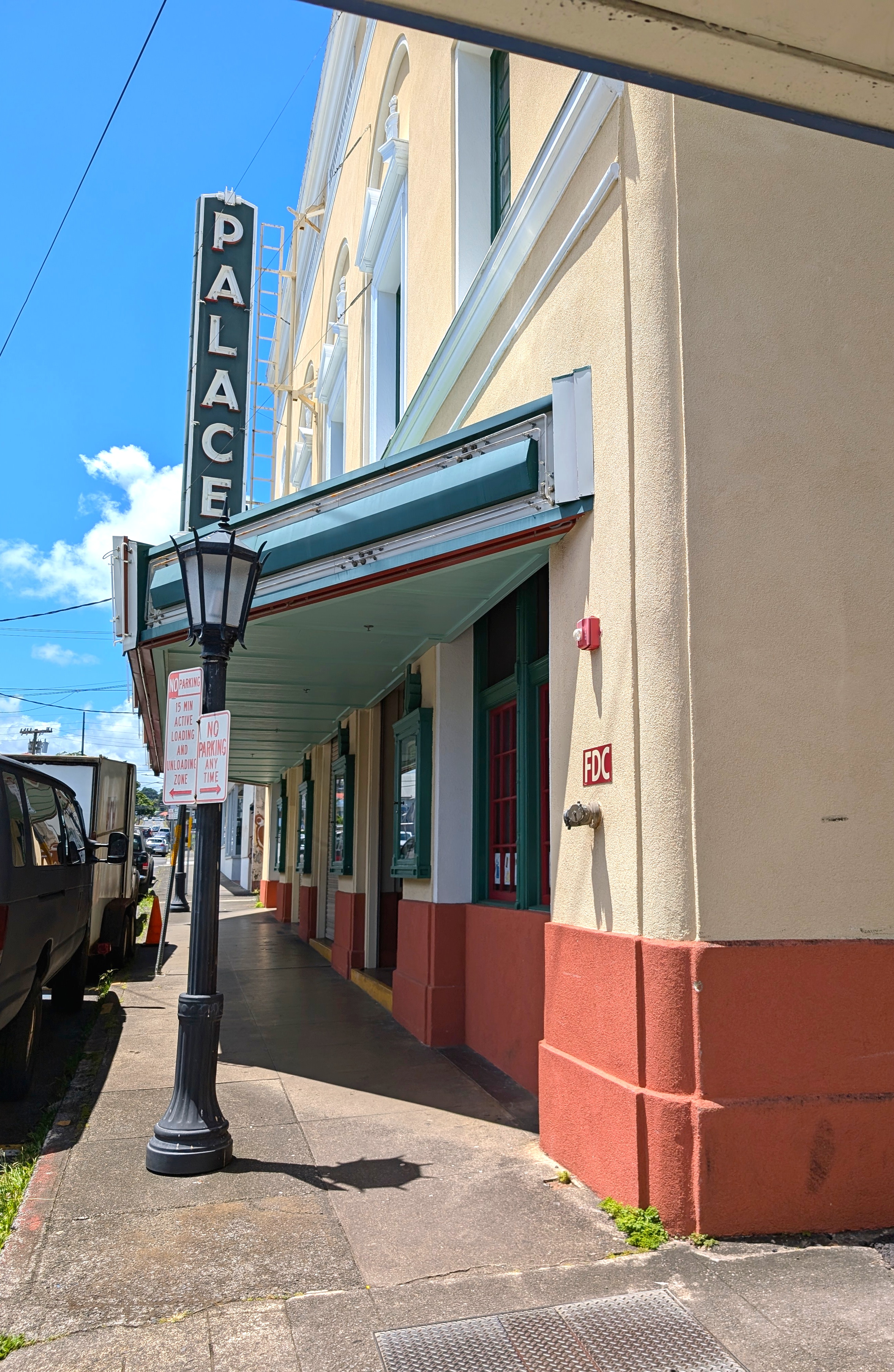
The Palace Theatre. Google shows it delightfully lit up at night. Hilo, HI, September 2024.

Eventually we ended up at Hilo Brewing Company which sits about a mile from the beaches of city center. It reminded us of the rough-looking ones around Raleigh and in San Diego County where all the work goes into the beer, all 4-6 kinds of it. We like that.

On the way to the restroom, aided by yellow footprints painted on the concrete and surrounded by brewing accoutrement. I’m sure this is up to code, right? Right? Hilo, HI, September 2024.
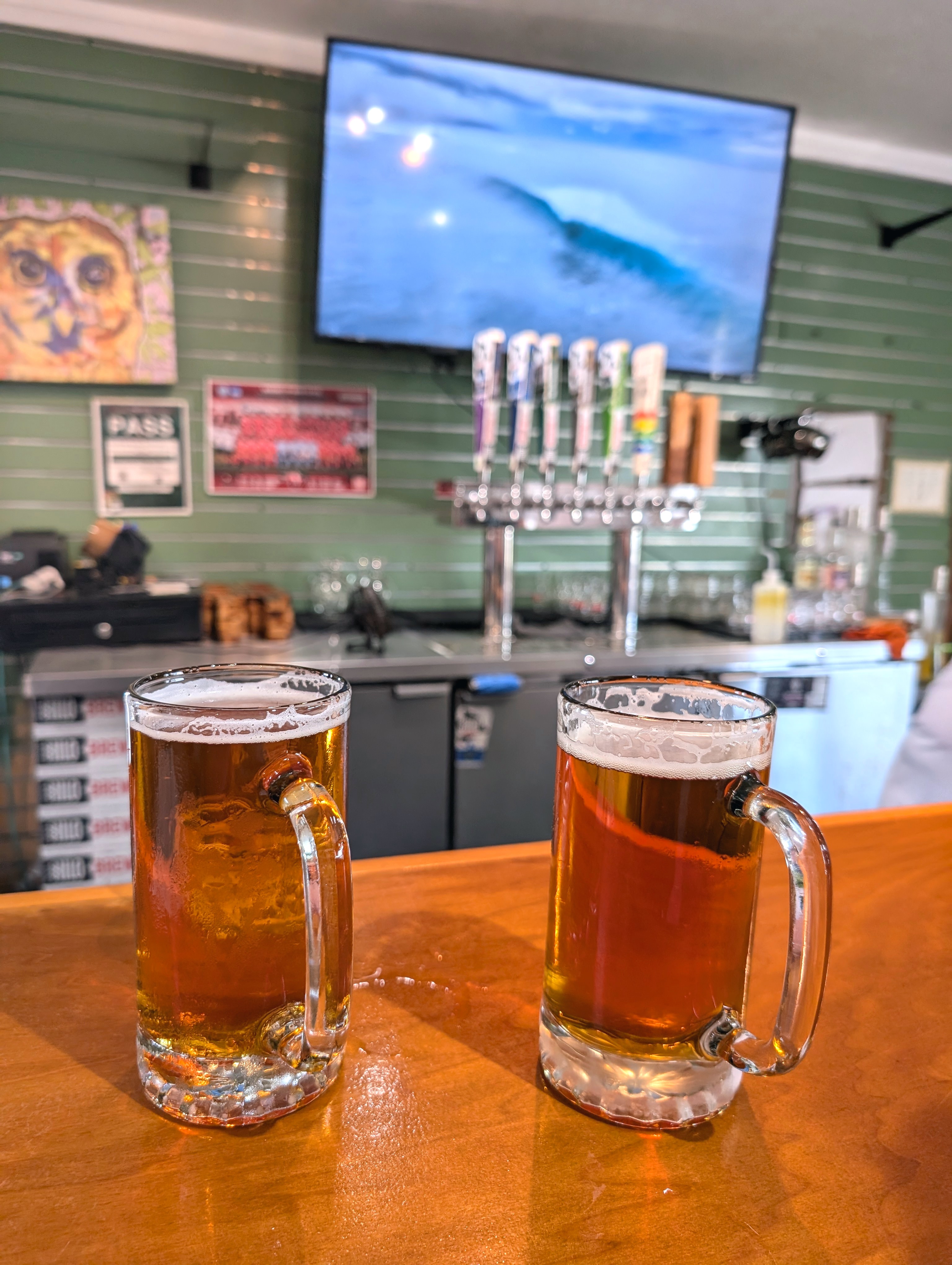
A short wooden bar seating about six to eight. Surf documentary on the TV. Eight taps, several of which were tapped out. Through the open rollup door we gazed at other patrons talking and laughing at picnic tables. The brewer sits in a mixed industrial area. Think cyclone fences, cracked pavement with grasses growing in them, a kind of Quonset Chic vibe. Hilo, HI, September 2024.

Saturday begins

Saturday sunrise, Kuhio Bay, Hilo, HI. September 2024.

As I type this the sun is peeking over the horizon here in Raleigh. I won’t see it due to trees and ridges…and because I’m sitting in a windowless room in the basement. Nine weeks ago our first Saturday in Hilo brought an orange glow as the sun peeked over the industrial buildings at the port of Hilo (located east of Hilo proper). I never tired of this. I think people who live where they can see to the horizon unimpeded by anything must have a different outlook on life or at least on the natural world. I know it has that effect on me.

Rainbow Falls

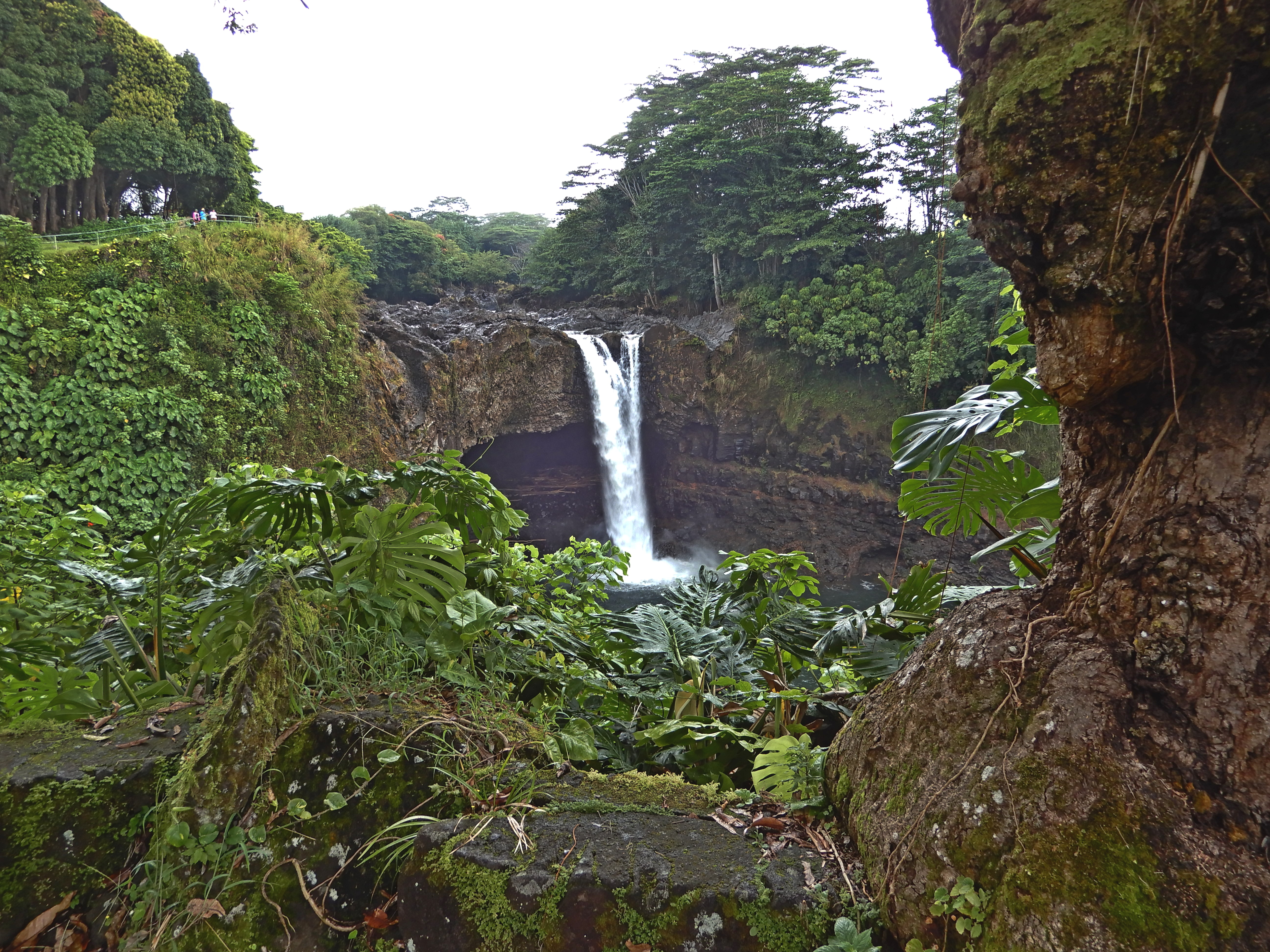
Rainbow Falls, Wailuku River State Park. Hilo, HI. September 2024.

Gray skies colored all of Friday the 13th, as promised by the dawn. After a lazy start, and feeling the effects of our up-and-down trek to ‘Akaka Falls the previous day, we drove all of 3.5 miles or so across Hilo to Rainbow Falls in Wailuku River State Park. A gentle, sporadic spitting of raindrops punctuated our first view of Rainbow Falls (above). They continued as we climbed under the trees for a closer look.

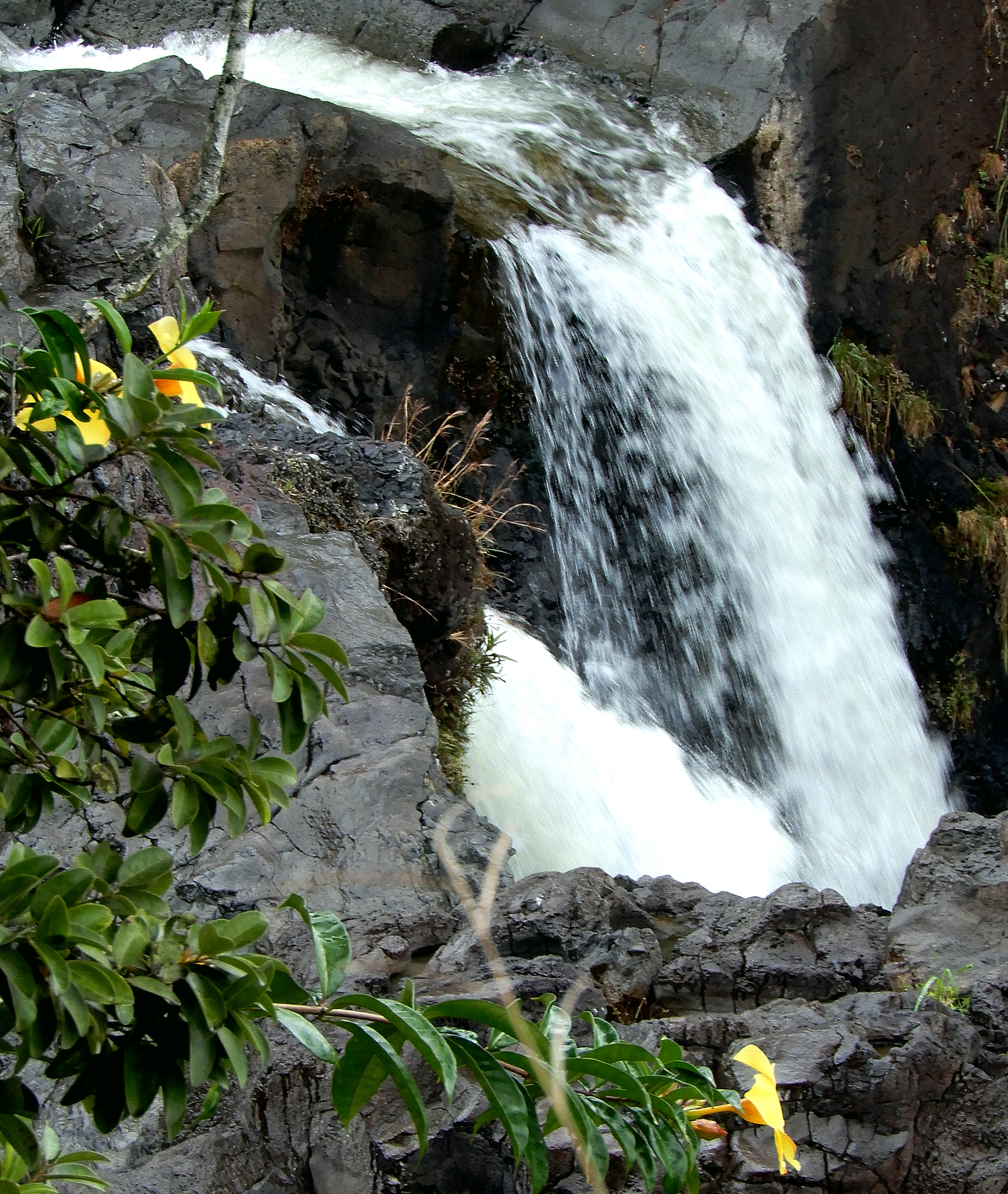
Rainbow Falls, Wailuku River State Park. Hilo, HI. September 2024.

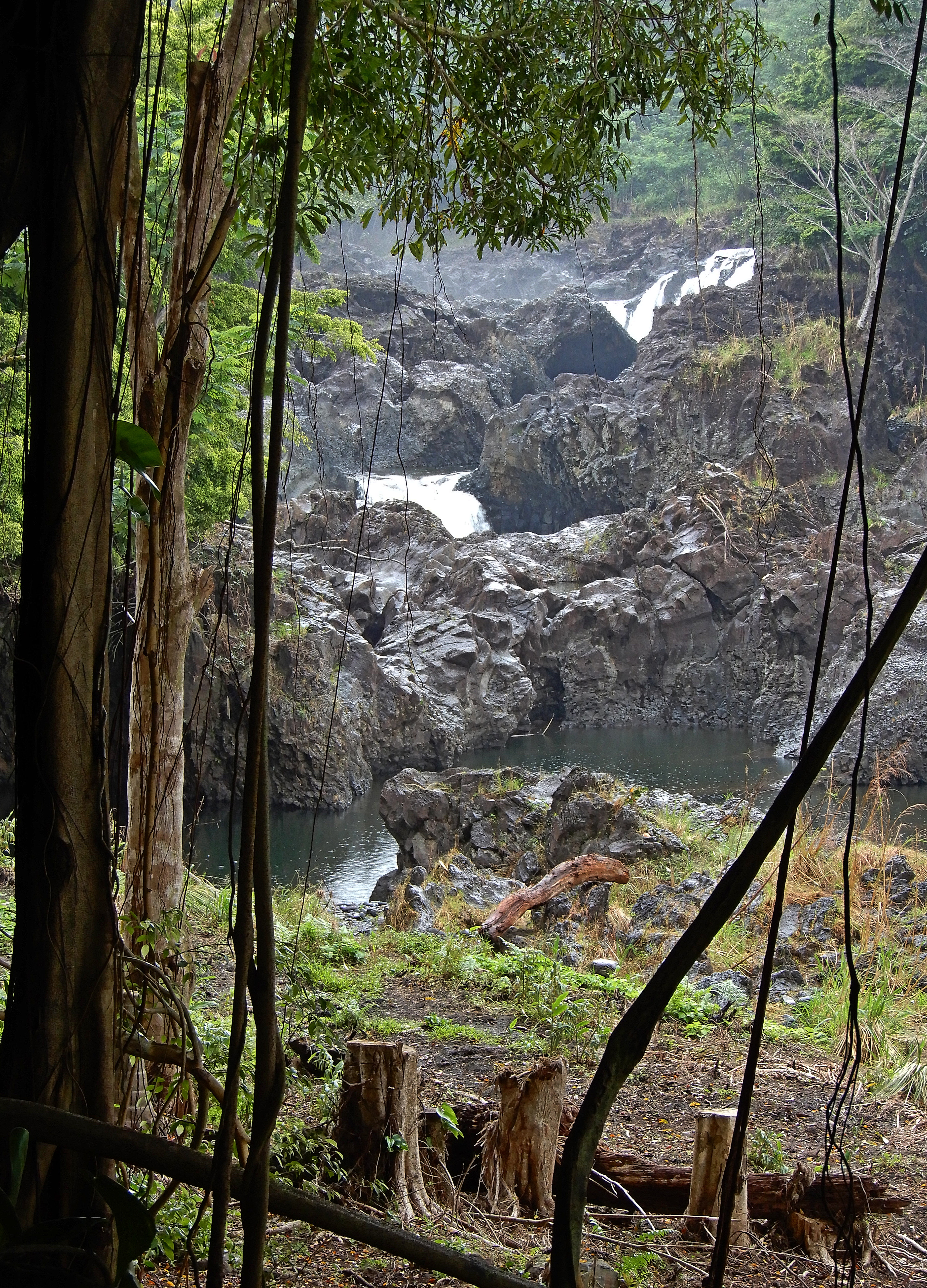
Volcanic rocks made slippery with rain didn’t appeal to us. We stayed under the trees and gazed upriver, unaware another set of falls existed just a short distance away.

The Wailuku River above Rainbow Falls. Wailuku River State Park, Hilo, HI. September 2024.

Weather dictated indoor activities, so we headed to the Lyman Museum (recommended). Ravenous afterward, we grabbed fried plantains and beer at Ola Brewing.

“You chose the rainy side…”

Ominous clouds at dawn. Hilo, HI. September 2024.

Dawn over Hilo and Kuhio Bays delivered colorful dawns because of the clouds. Waking on our third morning, however, the clouds were thicker and more ominous. Weather generally arrives from the east, after all. Outdoor activities seemed like a bad idea. By this time I’d learned the clouds keep moving; one hour’s clouds do not the day’s weather make. We did collect a few drops later in the day, but the gnarly-looking cloud in the photo here passed by dryly.

More to come for Day 3.

Palms at sunset

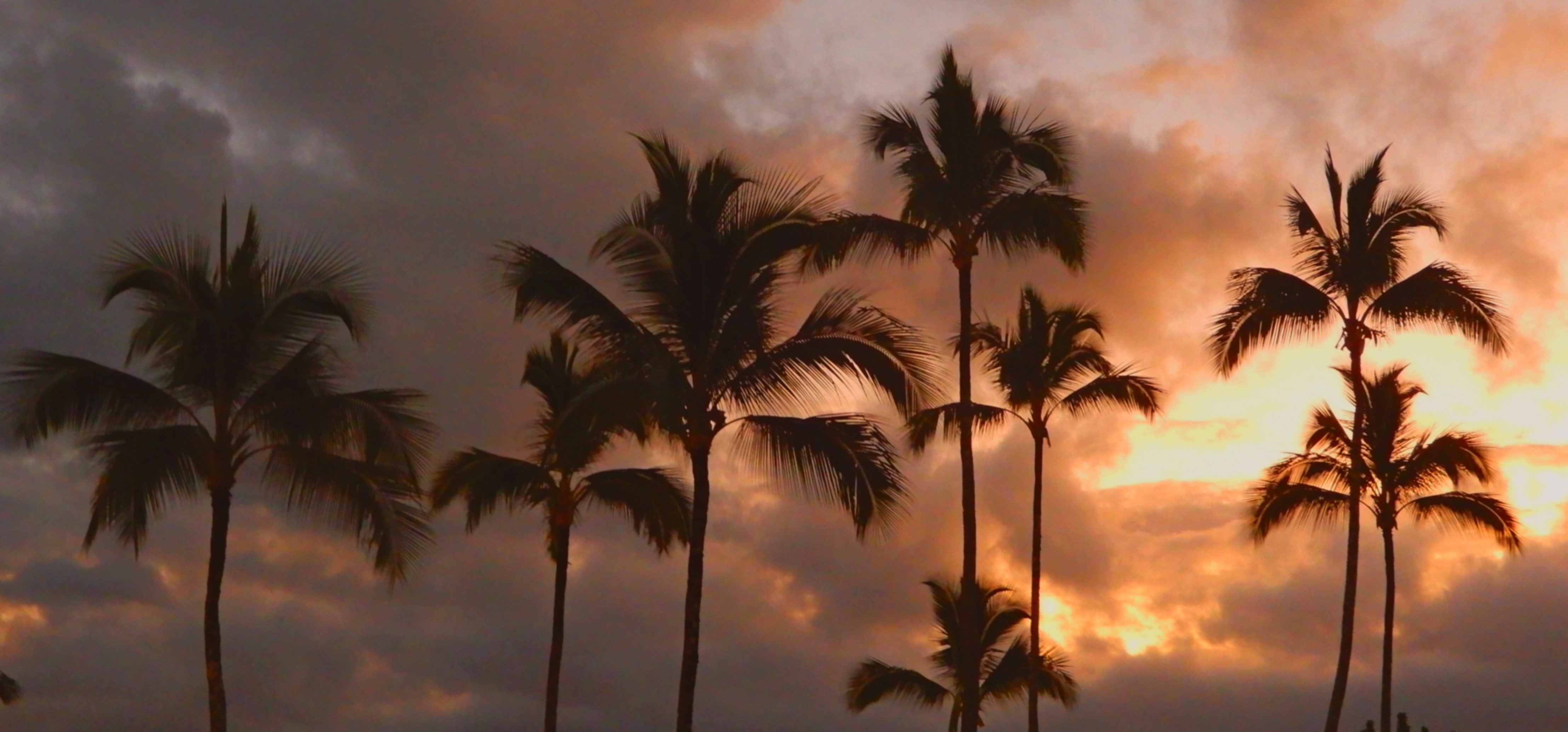
Palms over Hilo Bay at sunset. Hilo, HI, September 2024.

After visiting ‘Akaka Falls, we drove northward (which actually is northwestward) along the coast until we came to Waimea where we admired true free-range chickens and had lunch. I marveled at how dry it had become. The fields as we approached were pastures with cattle at times. Upon our return to Hilo, a day’s-end beer and sunset awaited us.

‘Akaka Falls

‘Akaka Falls. It really is this green. September 2024.

On our second full day in Hawai’i, we arrived to ‘Akaka Falls State Park near midday. We paid to park in front of the entrance rather than along the road as some did, paid for entrance, and received a warning from a woman there that the trail required one to go up and down more than 600 steps. Her warning wasn’t an empty one: for nearly a month after our visit I experienced a sharp pain in my left knee when I went up or down stairs. I later learned construction on the path forced us to take the long way around a loop trail, in essence covering three times the normal distance. This trail descends to a stream, crosses it, climbs again on the other side, basically cresting a ridge obliquely to be above Kolekole Stream which plunges 442 feet at ‘Akaka Falls. One hears but does not see a variety of birds. Foliage is lush, a result of the near-constant rain (measured best in feet). It sprinkled on and off while we visited.

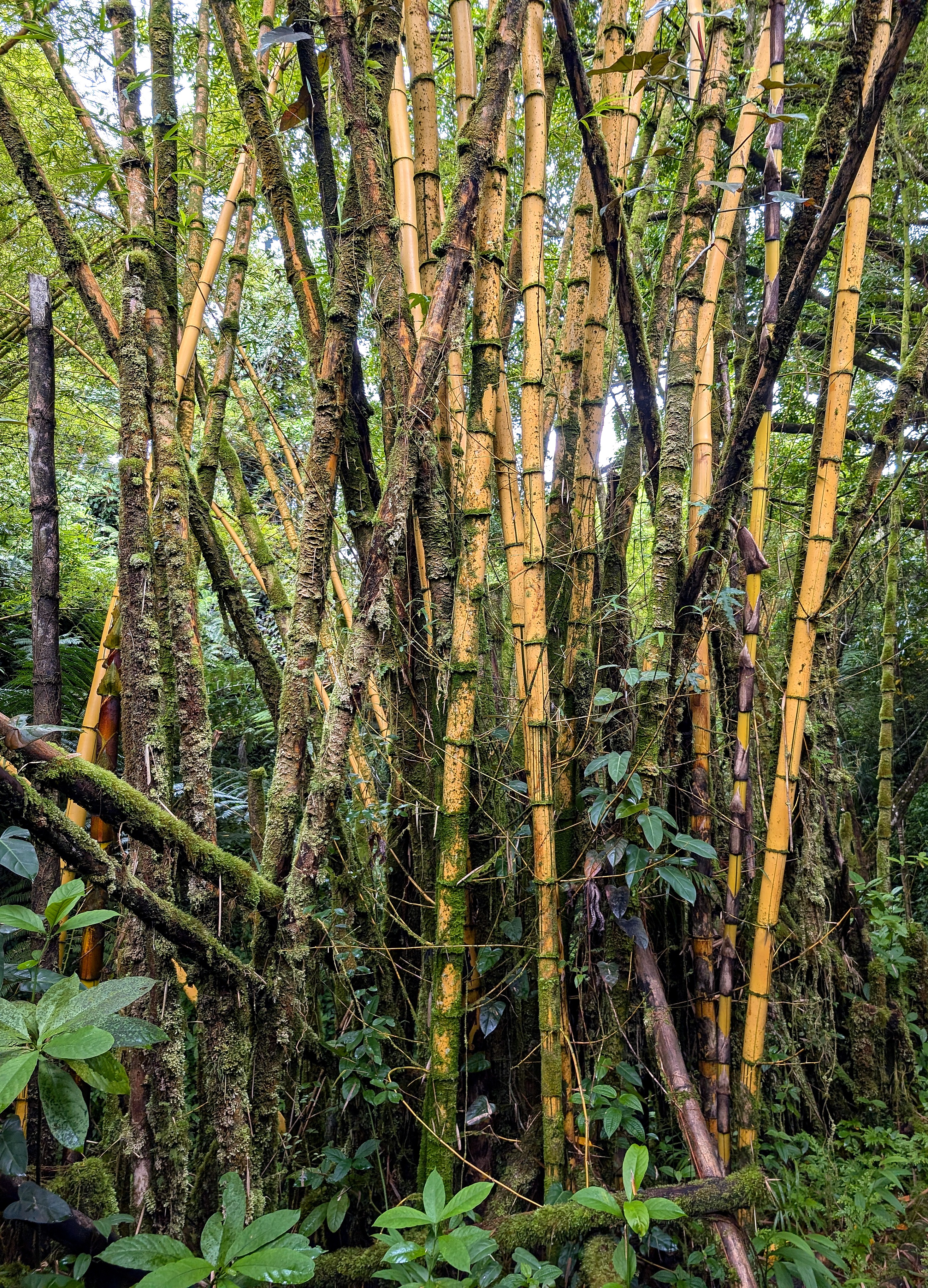
Bamboo stand in ‘Akaka Falls State Park, Big Island, HI. September 2024.