Big Cypress National Preserve

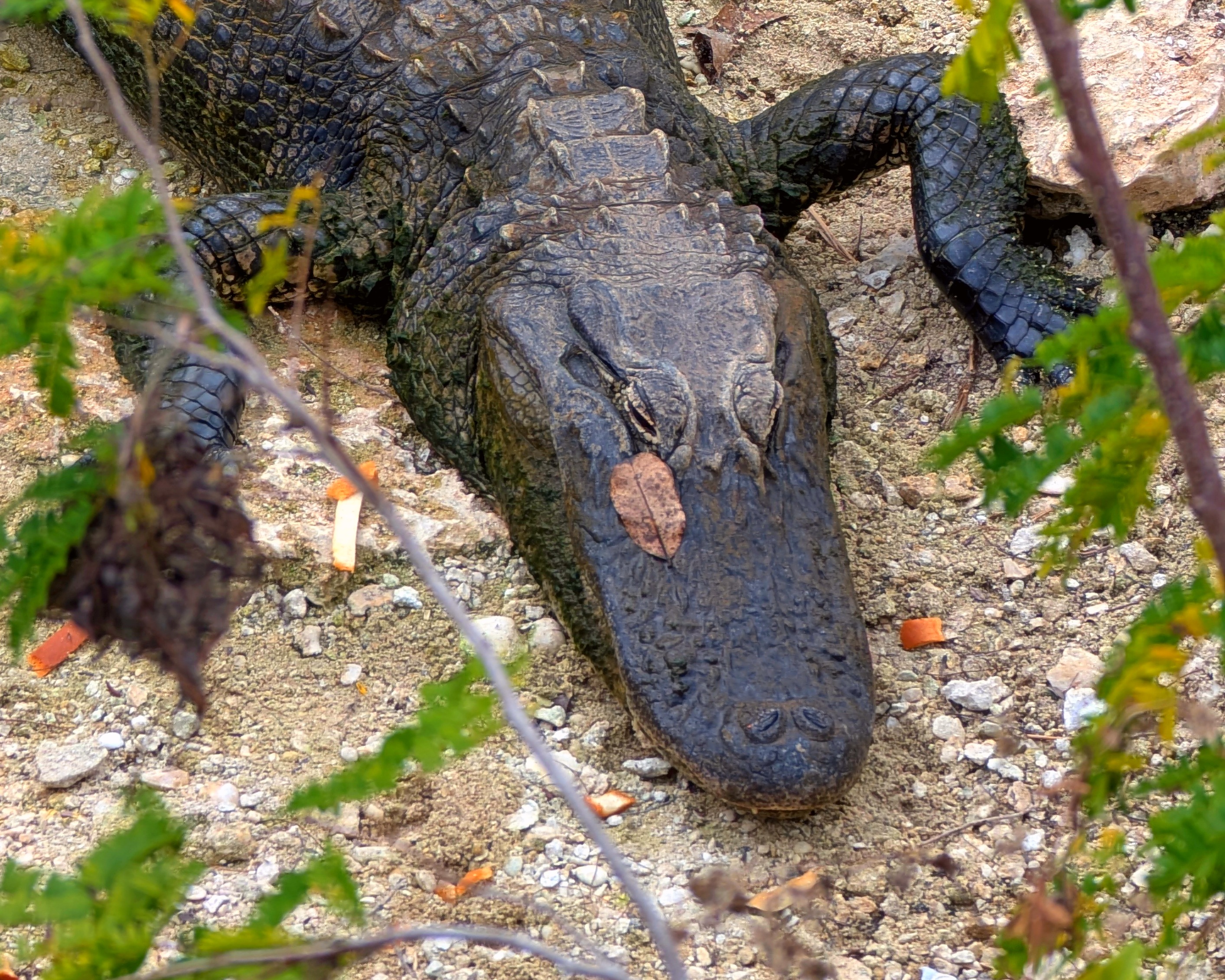
Ever had a day when it’s too damned much trouble to brush a leaf off of your face? (Yeah, I’m having one today.) Oasis Visitor Center, Big Cypress National Preserve. February 2026.

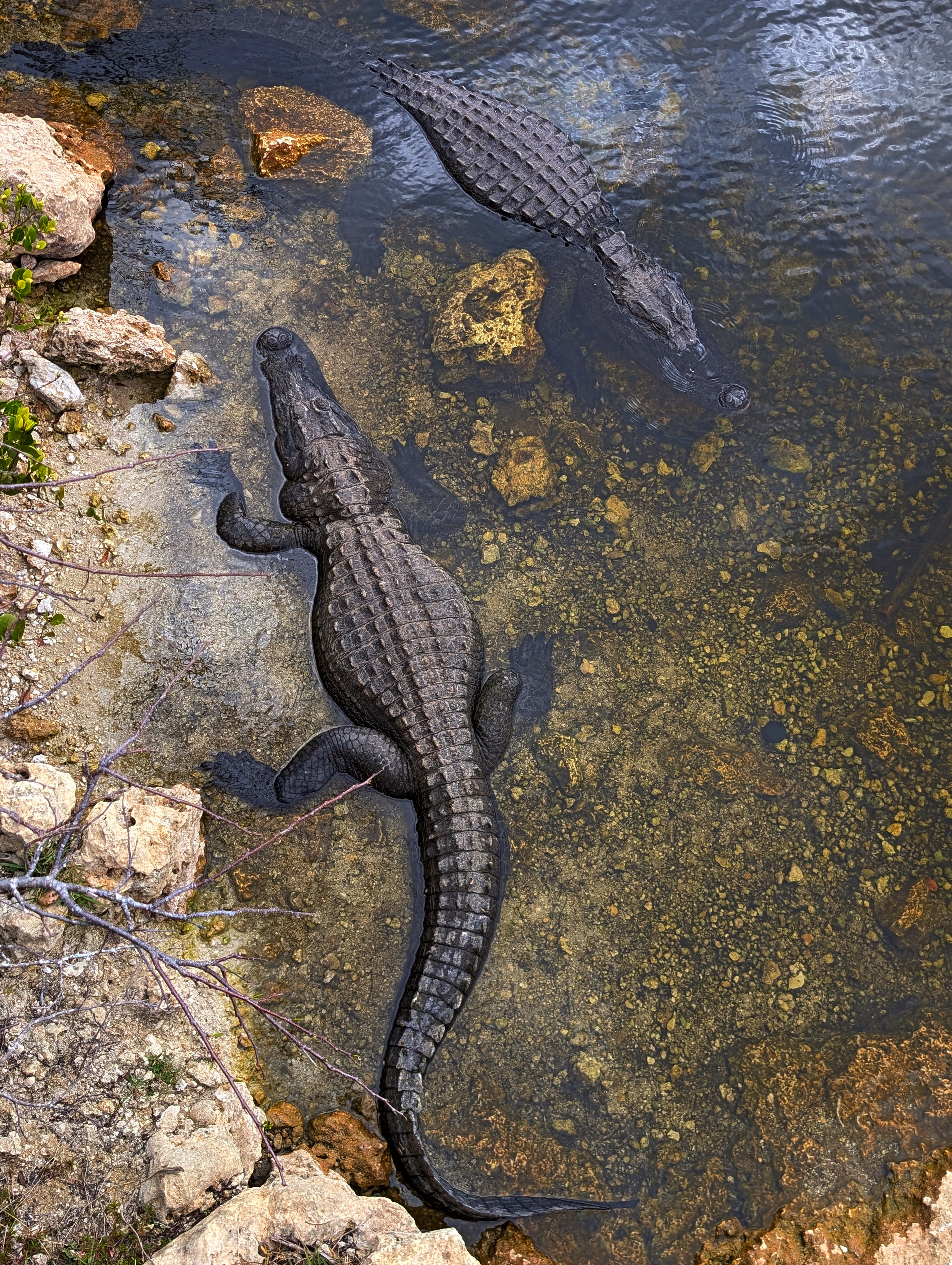
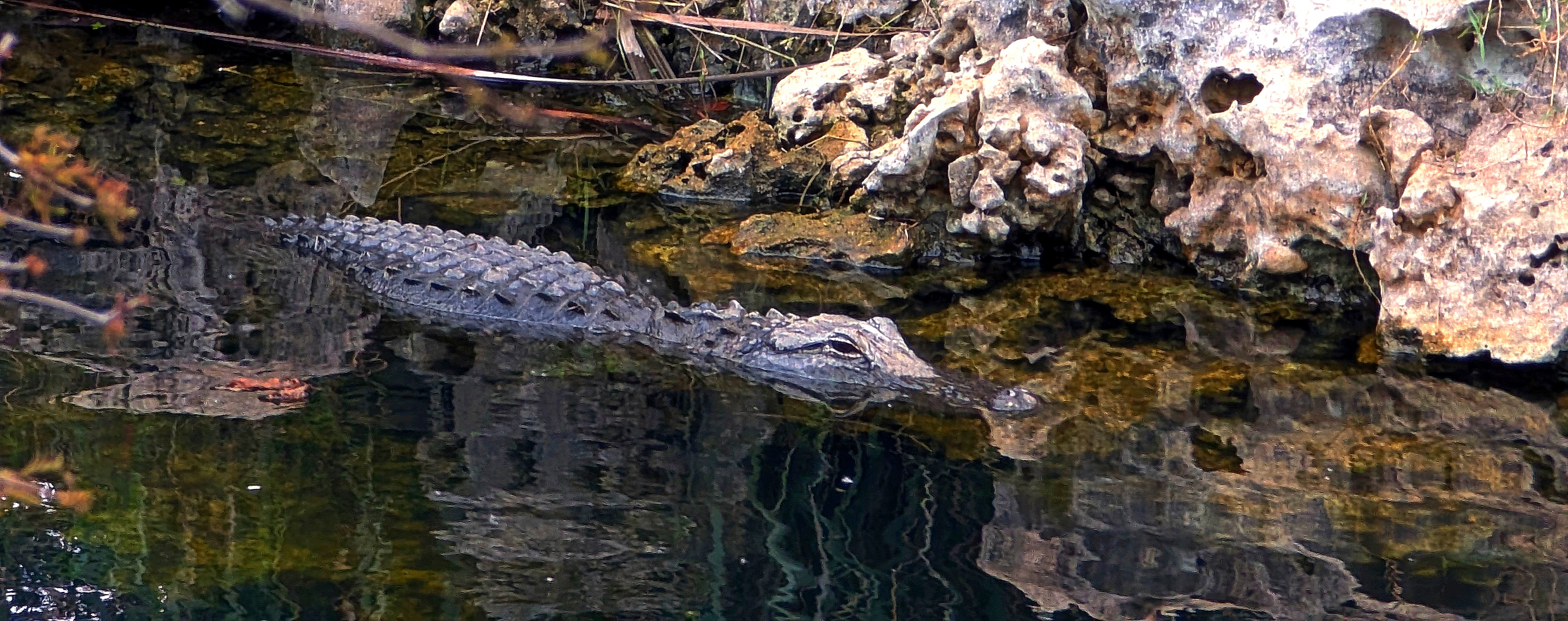
One of oddities about some of the Everglades-area areas for observing nature lies in the feeling one isn’t so much looking at Nature but more that one is looking at a ditch into which some Nature just happened to fall. The Oasis Visitor Center to the Big Cypress National Preserve on US-41 has a largish ditch running parallel to the highway. No more than 15 feet wide and likely much less, it delights the gator-gapers and folks like me who don’t mind looking at big reptilian laze-abouts who don’t offer much of a challenge to the person seeking them out. Here are a few to illustrate my point:
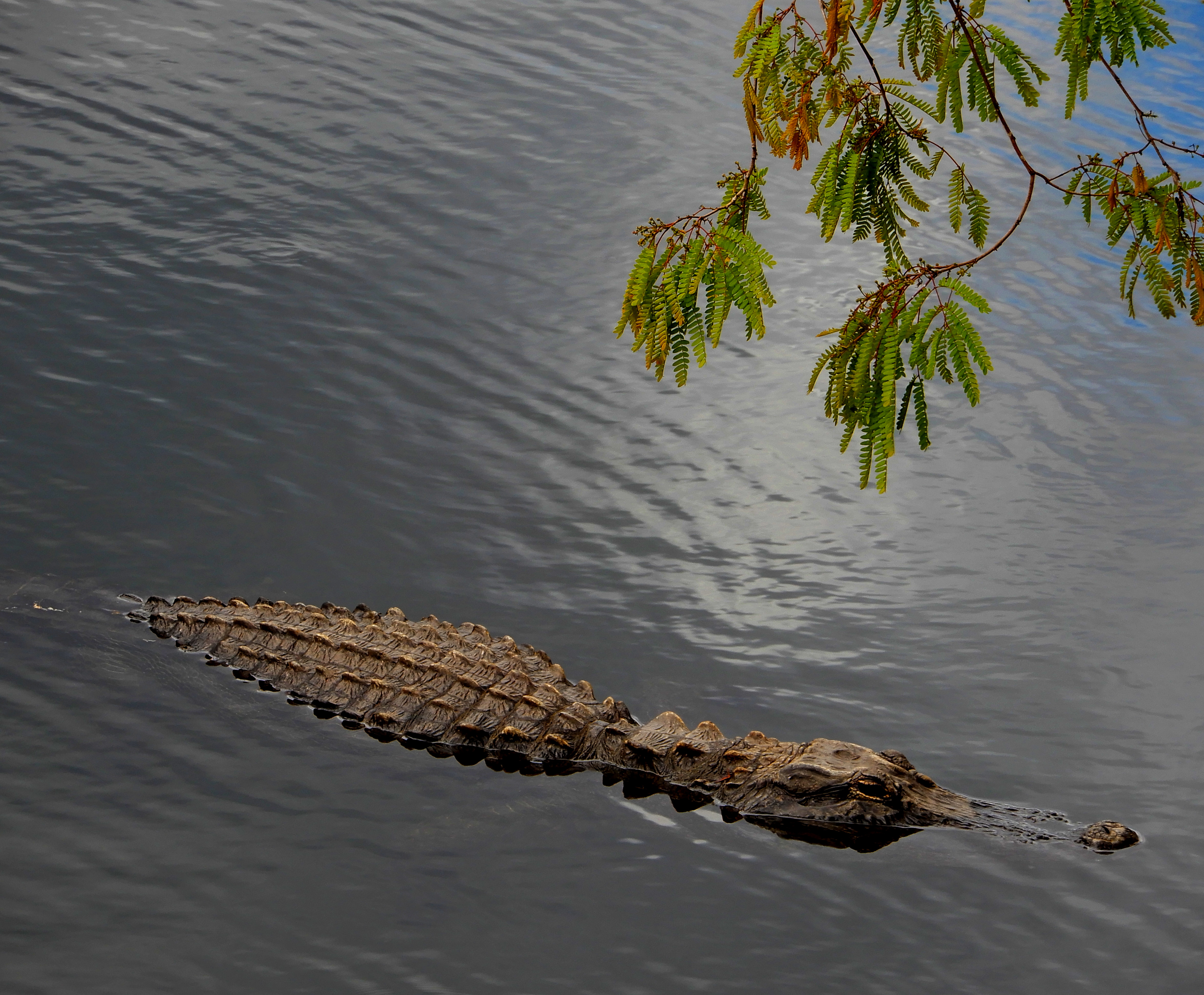
“I don’t care if you can see me. I’m just judging how close you are…and how slowly you move.” Oasis Visitor Center, Big Cypress National Preserve. February 2026.

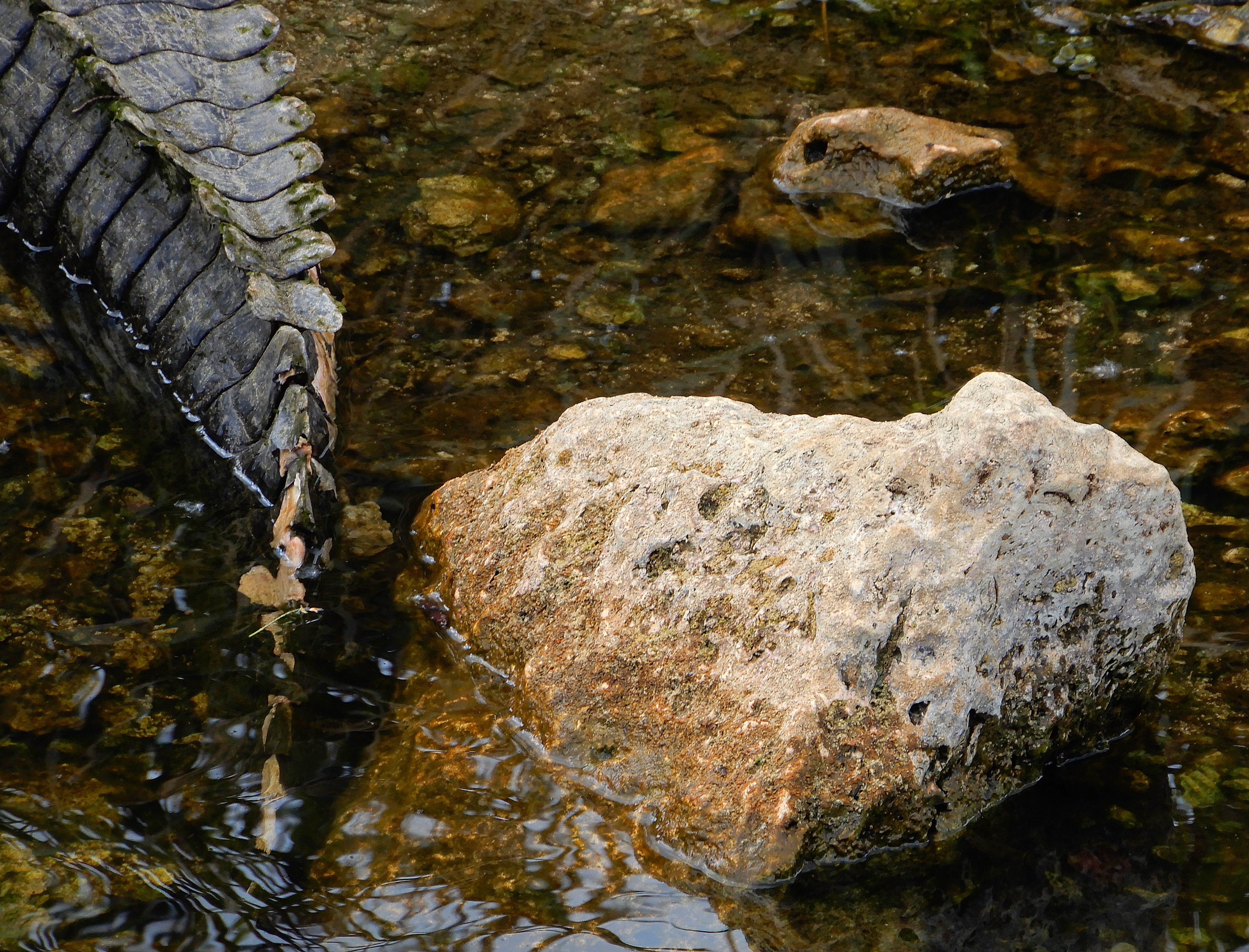
Alligator with rocks. Oasis Visitor Center, Big Cypress National Preserve. February 2026.

Stilllife with gators. (Redundant.) Oasis Visitor Center, Big Cypress National Preserve. February 2026.
Implication. Oasis Visitor Center, Big Cypress National Preserve. February 2026.

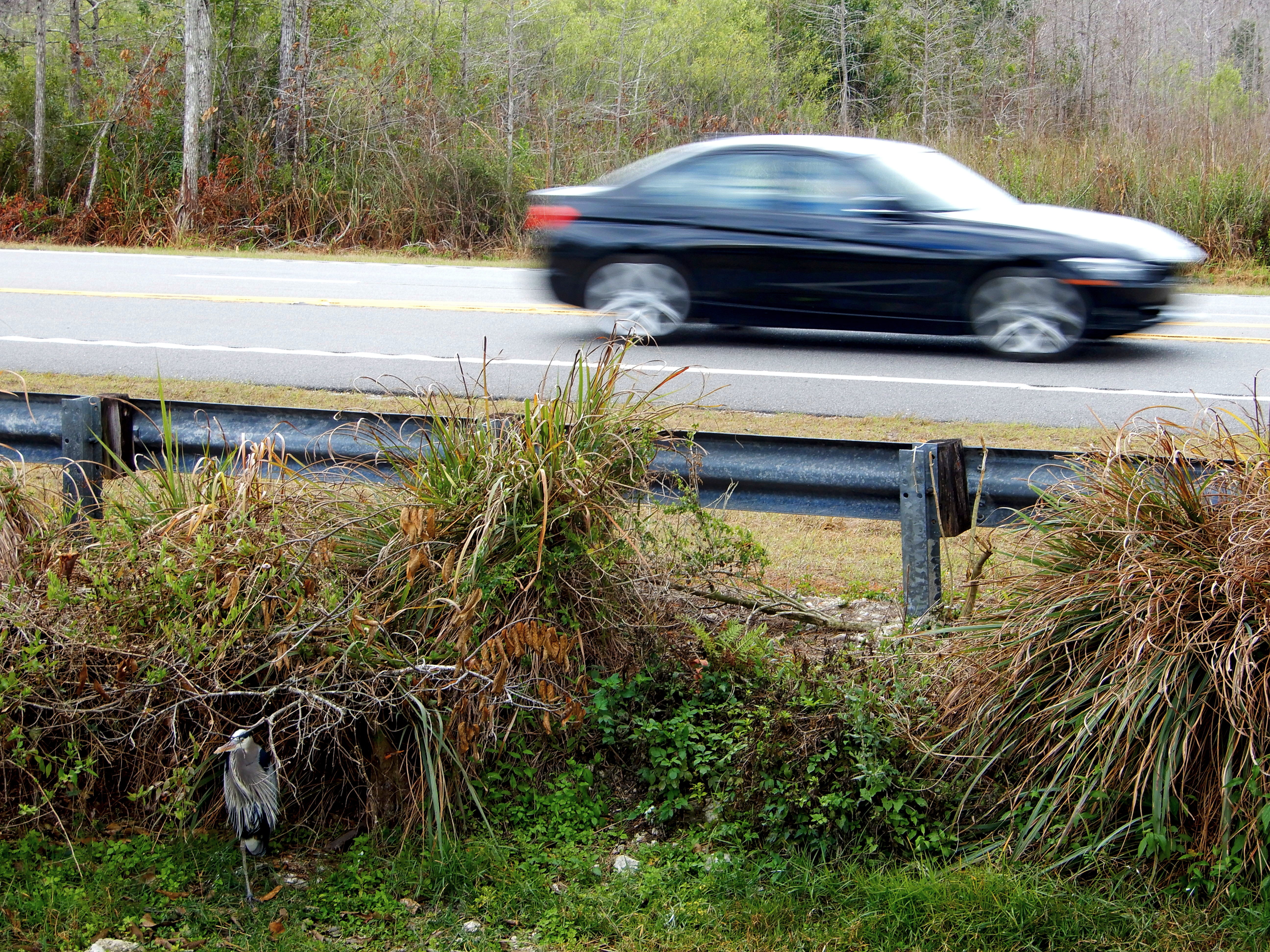
Lest one think the only denizens of this ditch were the alligators, I present some other residents. On the far side of said ditch stood a Great Blue Heron in full breeding plumage. He didn’t seem to mind the nearby highway.
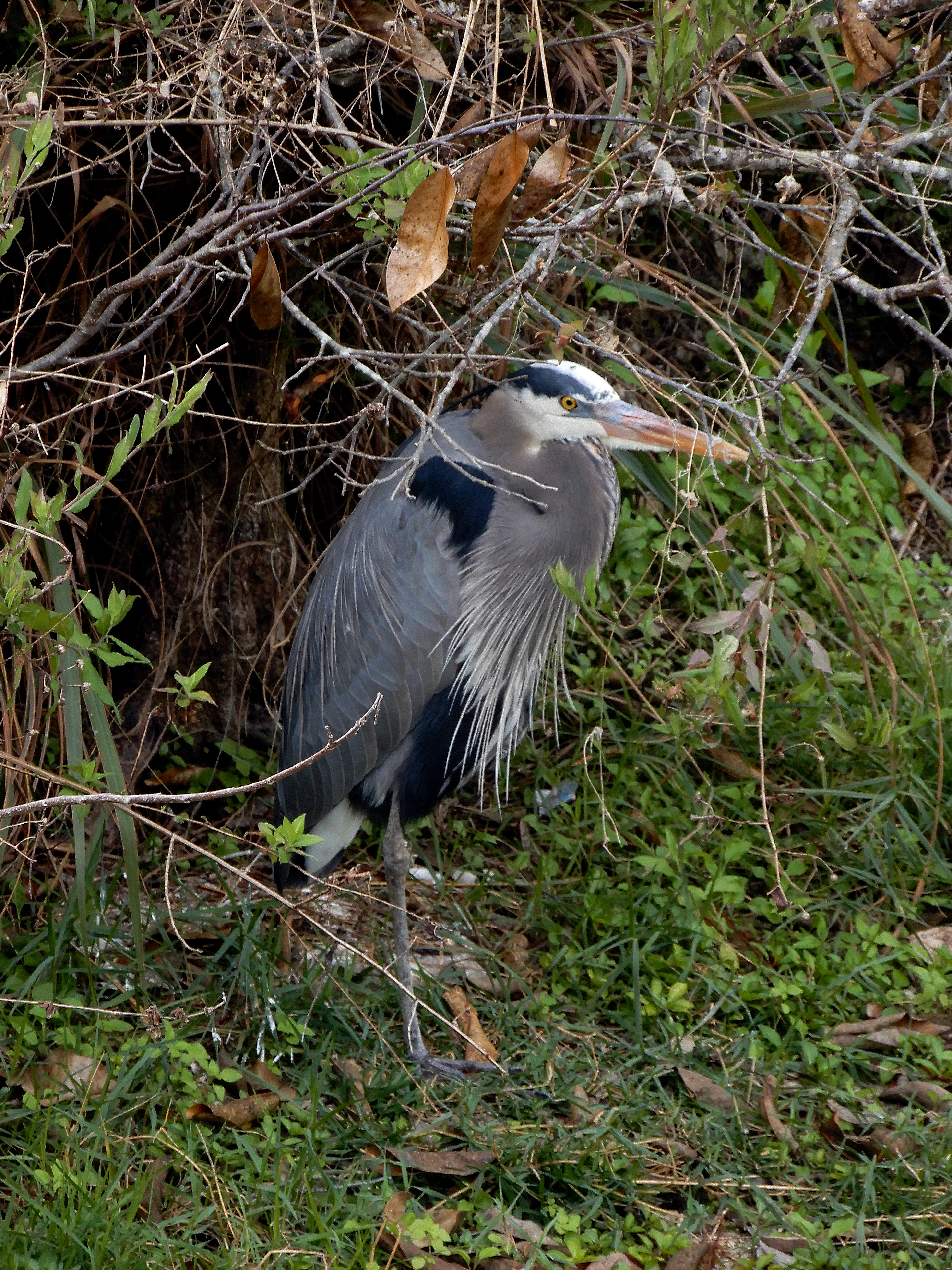
Great Blue Heron. Oasis Visitor Center, Big Cypress National Preserve. February 2026.
I trust guardrails less than this heron. Oasis Visitor Center, Big Cypress National Preserve. February 2026.

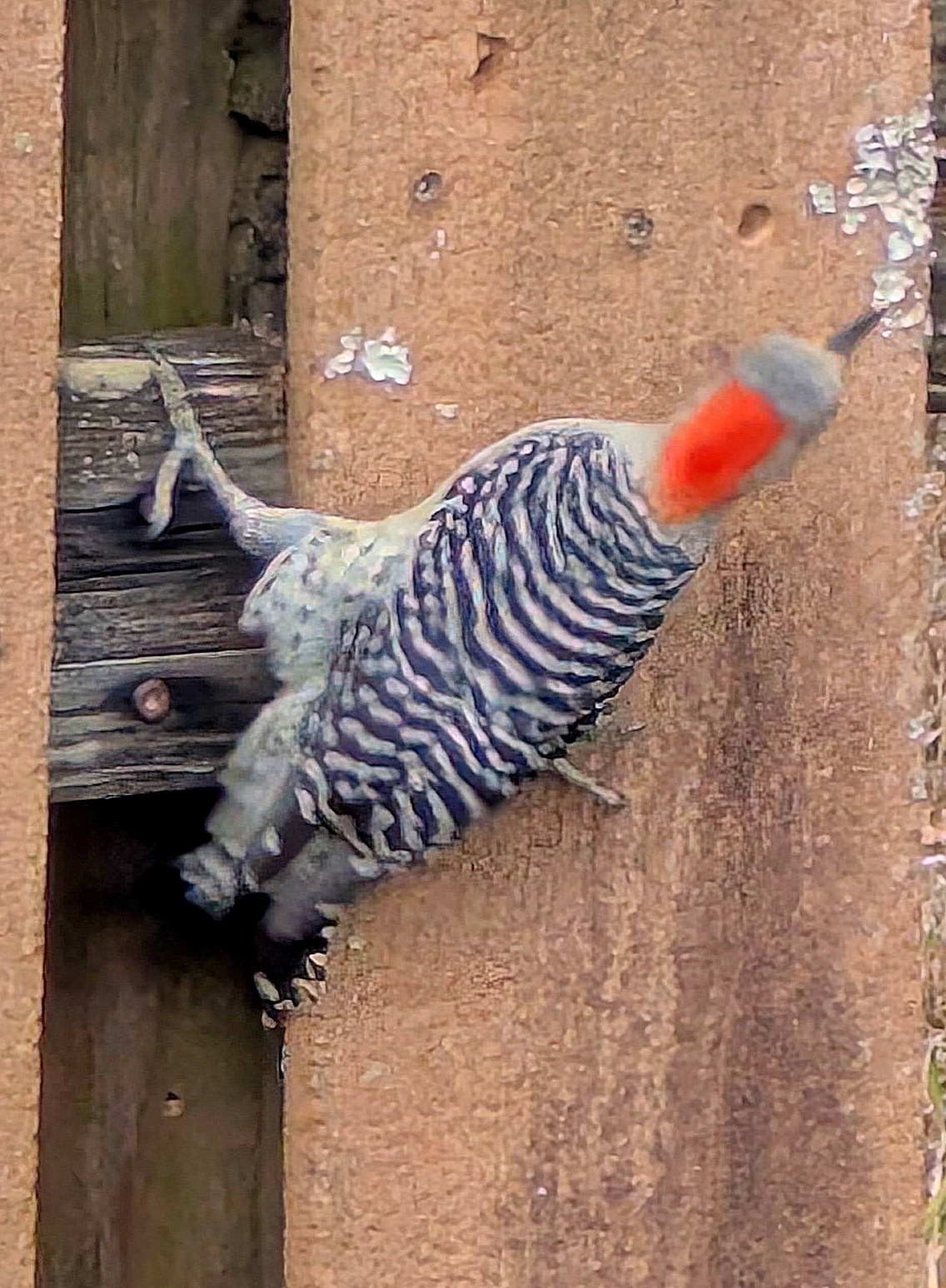
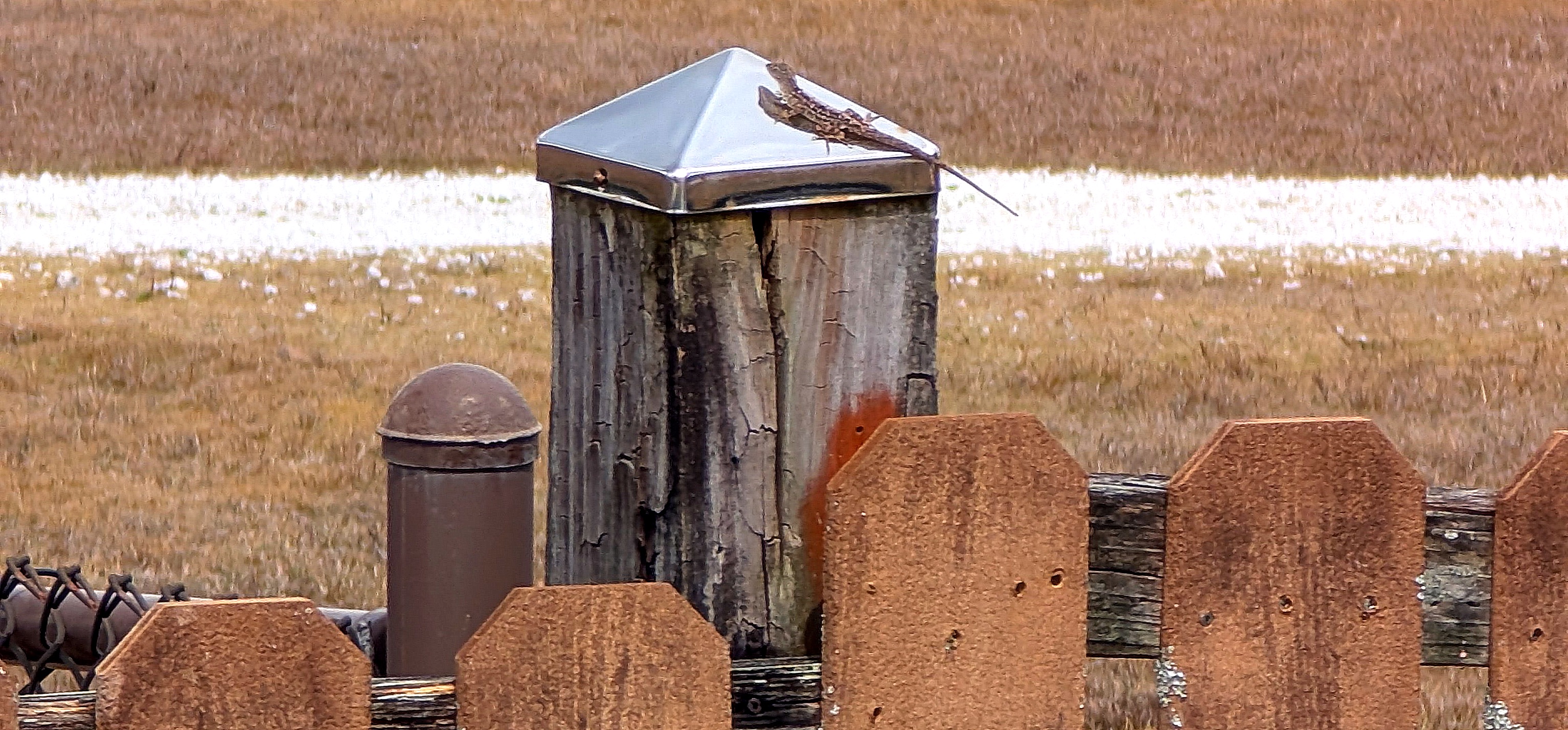
Turning back toward the Visitors Center proper, another birding couple pointed out a Red-bellied Woodpecker which frustratingly couldn’t locate a lizard. Said lizard had moments before been on the fence but had since retreated to the top of the fencepole.
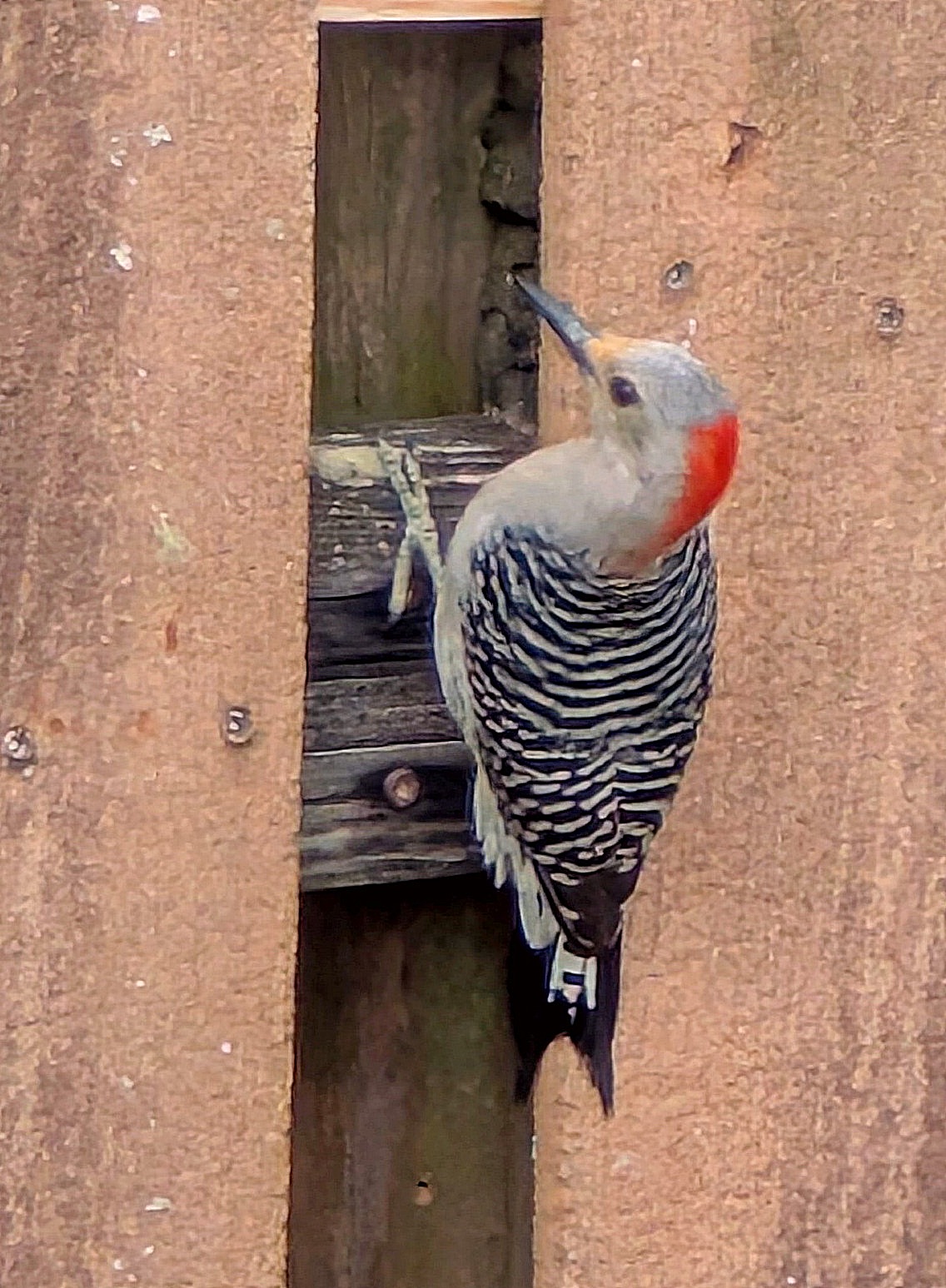
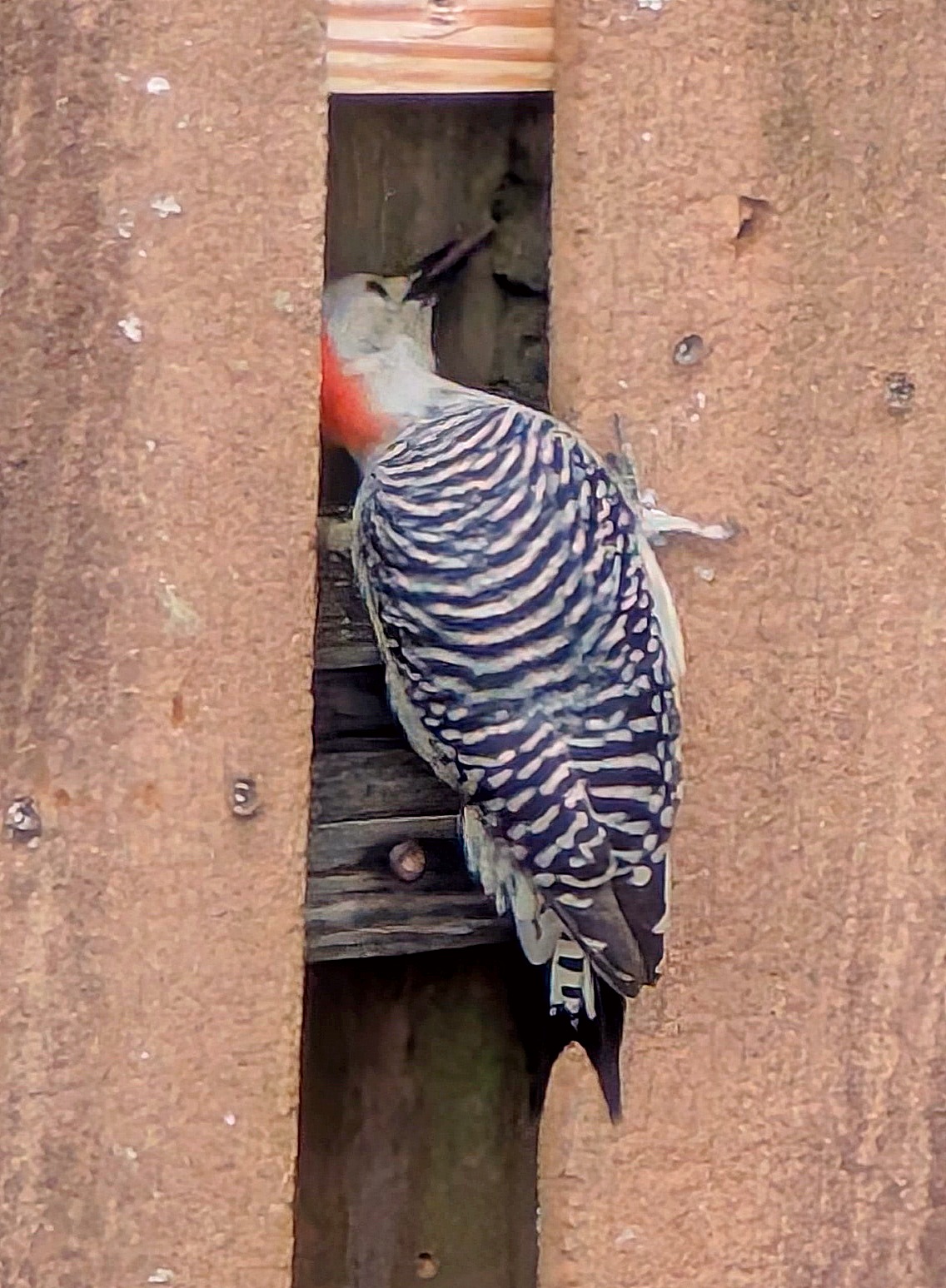
I wonder how a lizard knows it’s much safer at the top of the pole? He waited until the woodpecker finally left, then returned to his original position.
Leaving the Oasis Visitors Center, we backtracked four miles to the turnoff for the Big Cypress Loop Road Scenic Drive. We’d been told the road was rough “but you’ll be okay in your SUV” but really any vehicle could take this road except for perhaps a tiny thing like a Fiat or Smart Car. Suspension would be the main issue here, since the road consists of hard-packed dirt, rocks, and a LOT of dust. Driving slowly through the first miles, we had watery land on either side of the raised roadway. This boded well:
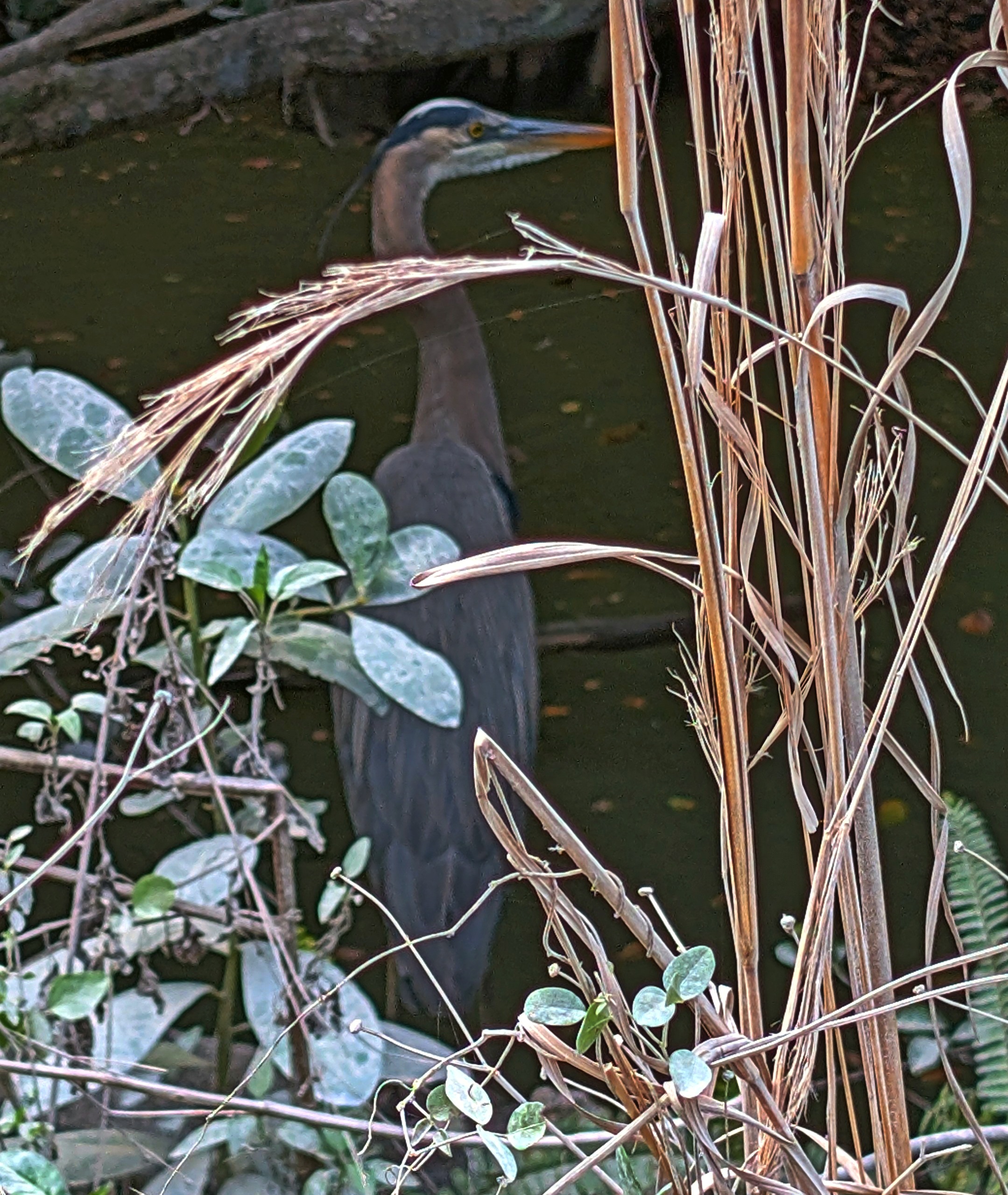
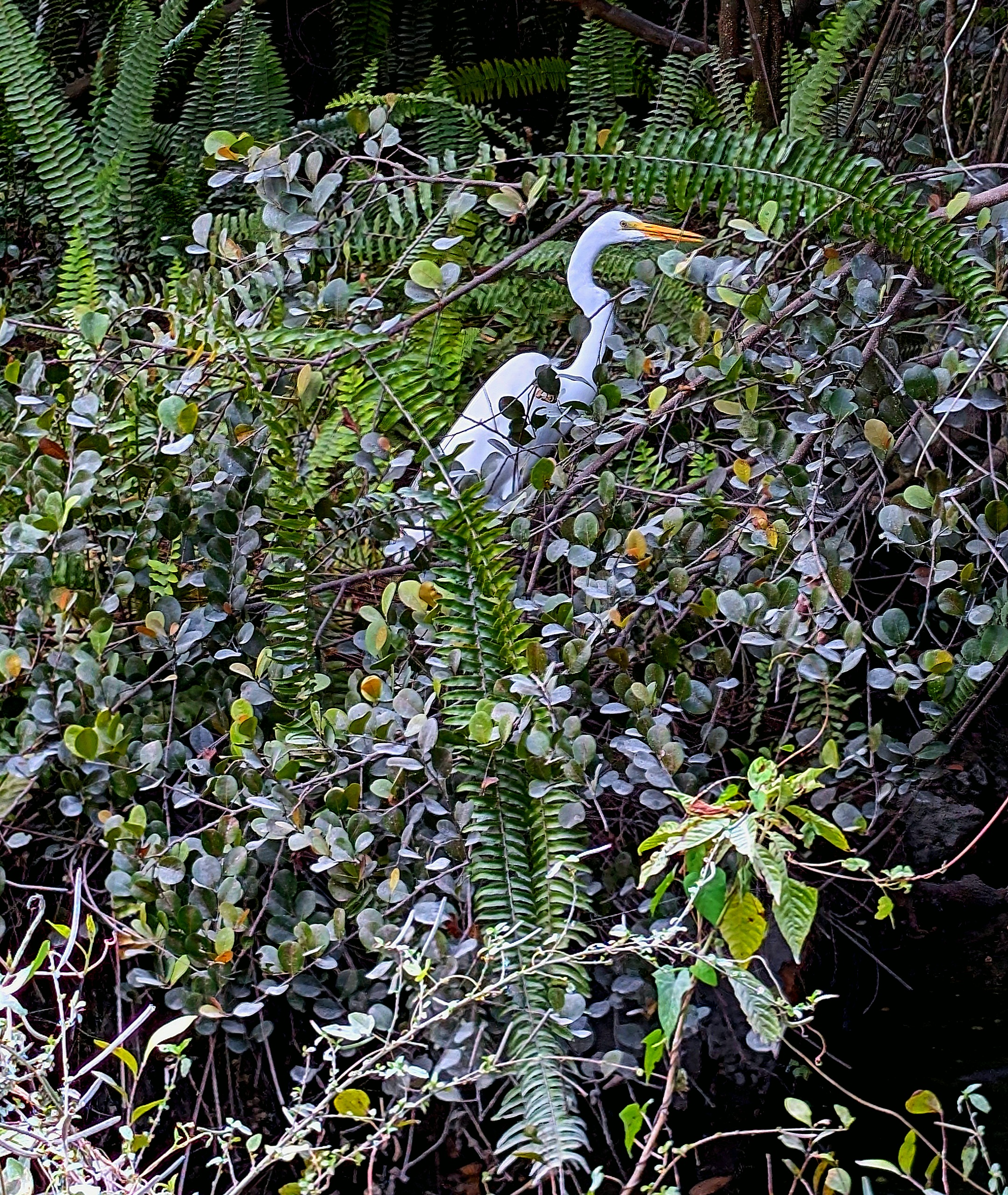
Great Blue Heron. Big Cypress National Preserve. February 2026.
Great Egret. Big Cypress National Preserve. February 2026.

…and then we hit the birding jackpot…a waterway on both sides of the road, darkened by overhanging limbs from a variety of trees and such. Numerous birds congregated there.
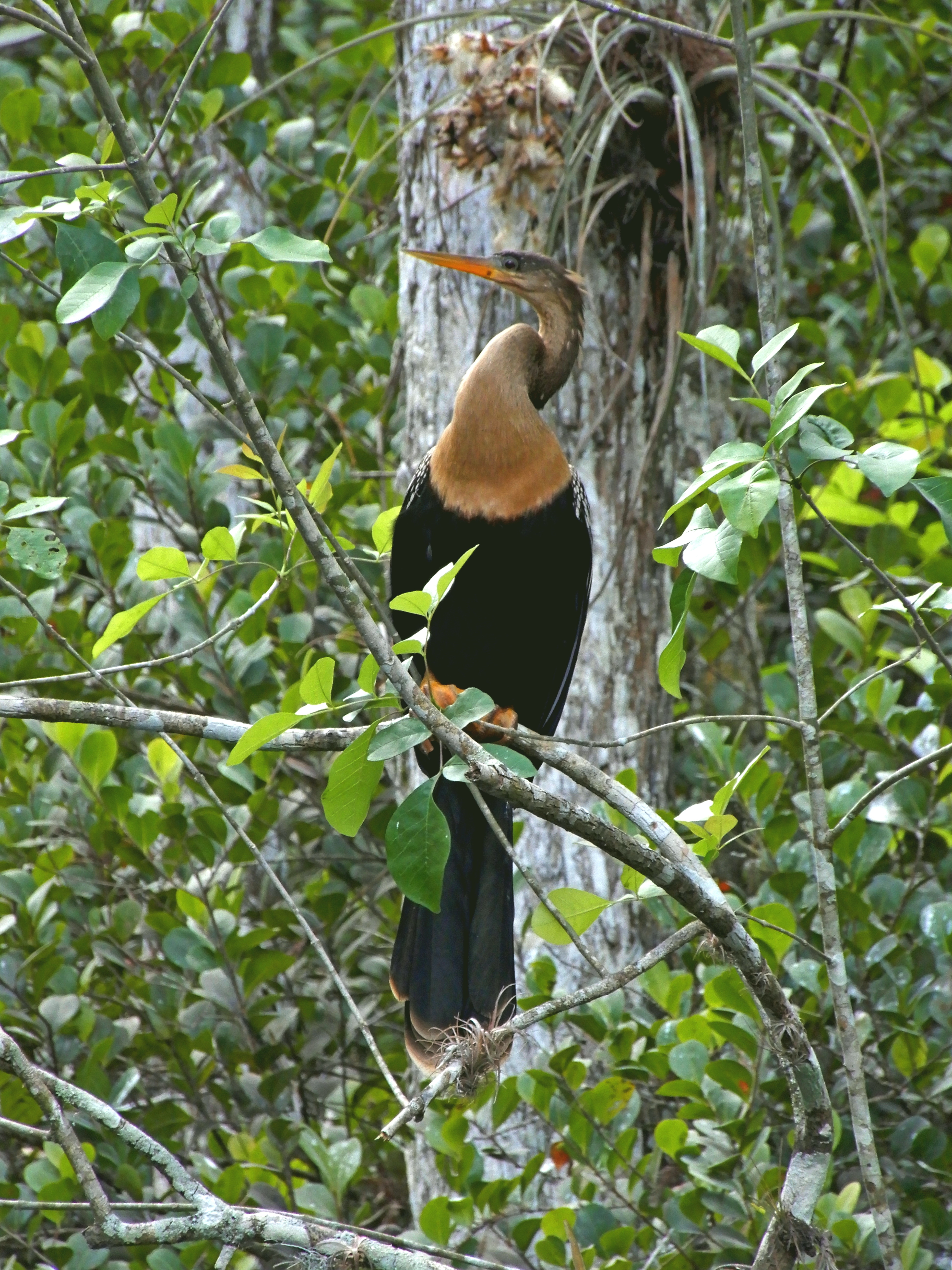
A female Anhinga surveys the swamp…or maybe the nearby males? Big Cypress National Preserve. February 2026.

The wetlands stretched into the distance on the right side of the road where we spotted the Anhinga. We saw several male Anhingas, two or three species of egrets, and tri-colored herons.
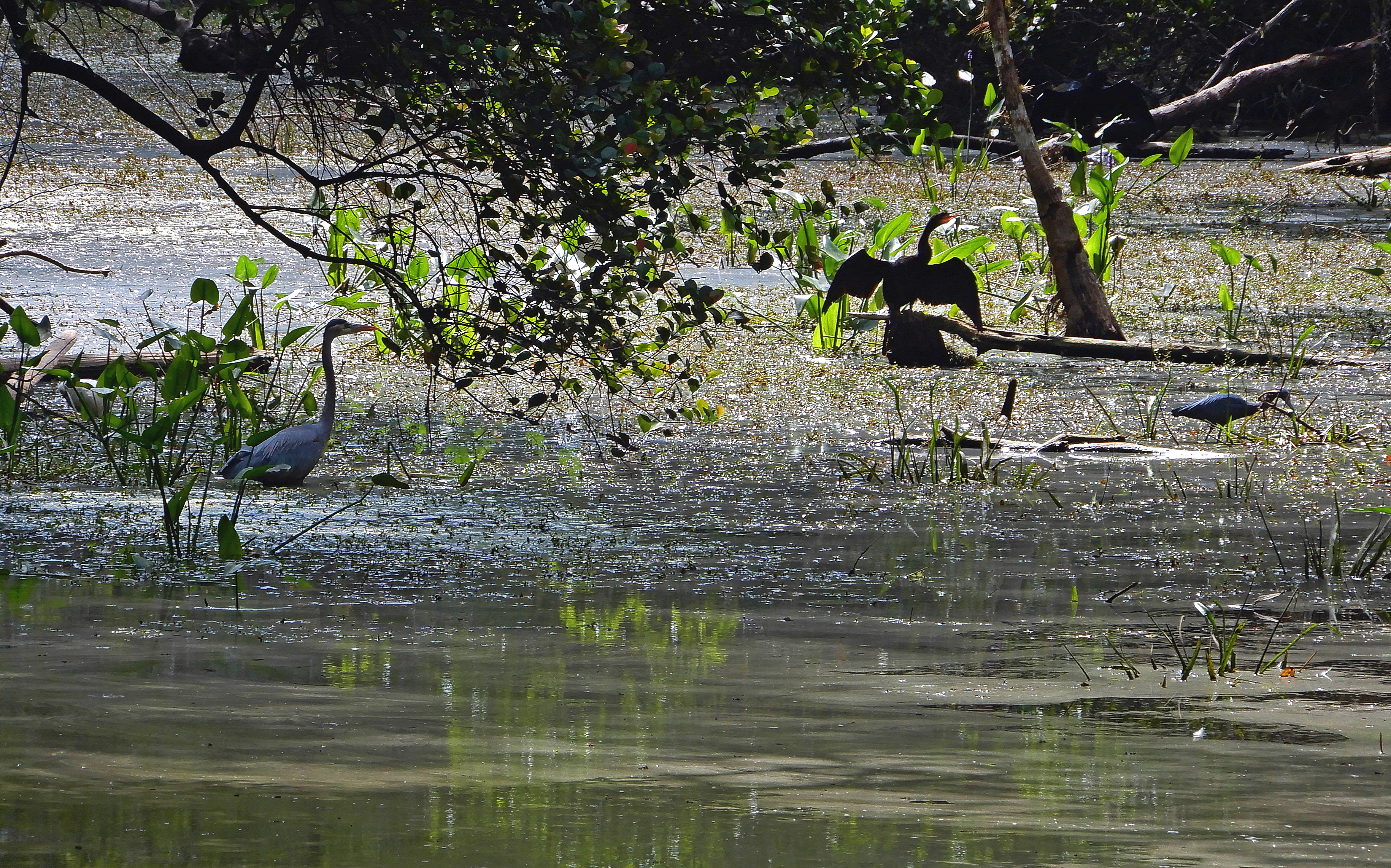
An Anhinga dries its wings in the center while two Tri-colored Herons, left and right, work the shallow waters for prey. Big Cypress National Preserve. February 2026.

Turning to the left side of the road, a largish bit of standing water showed many birds. The Wood Stork eluded a sharply focused photo, but the others cooperated.
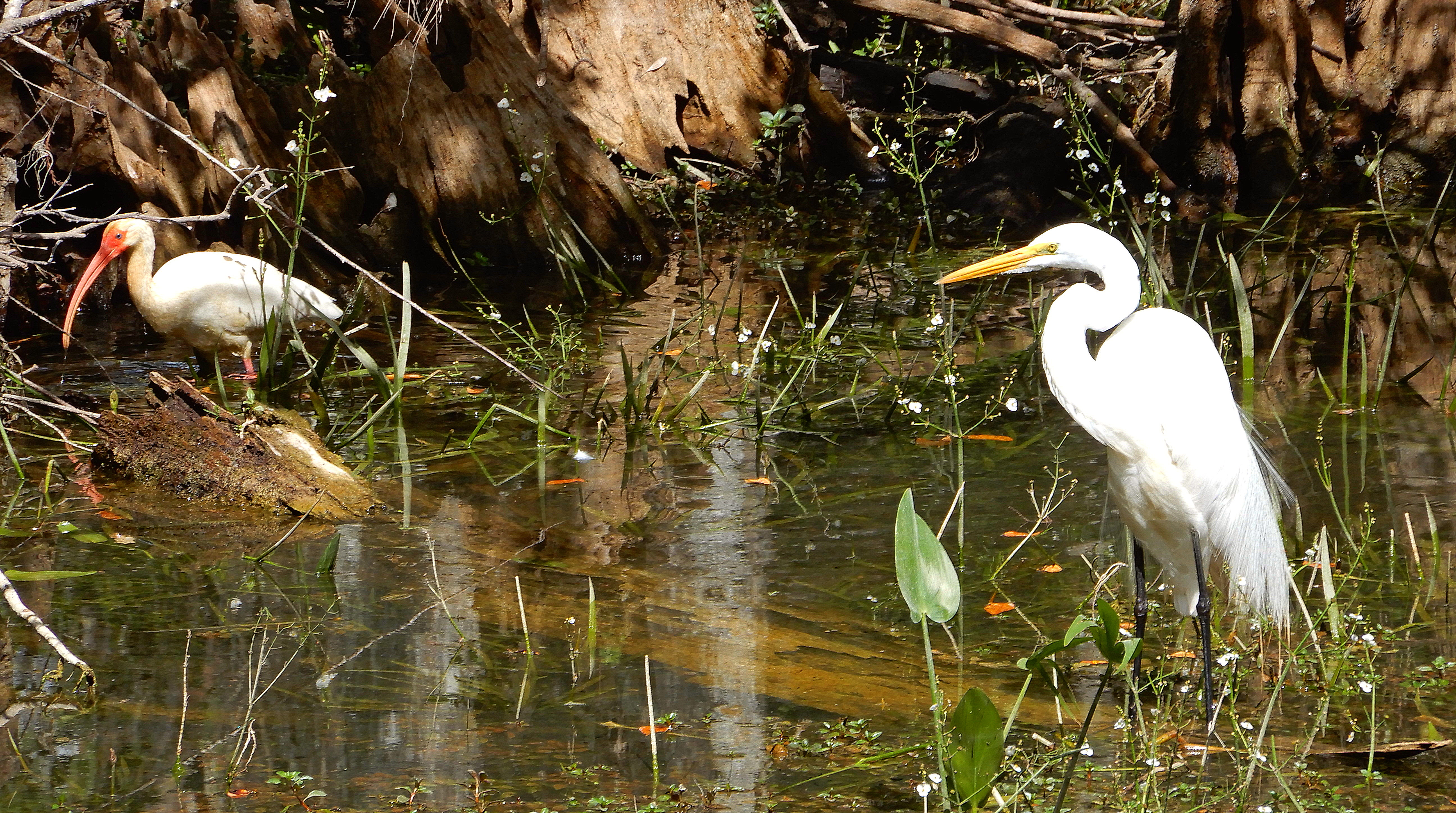
A Great Egret watches a White Ibis. Big Cypress National Preserve. February 2026.

Ultimately my impressions far exceeded my ability to capture them….
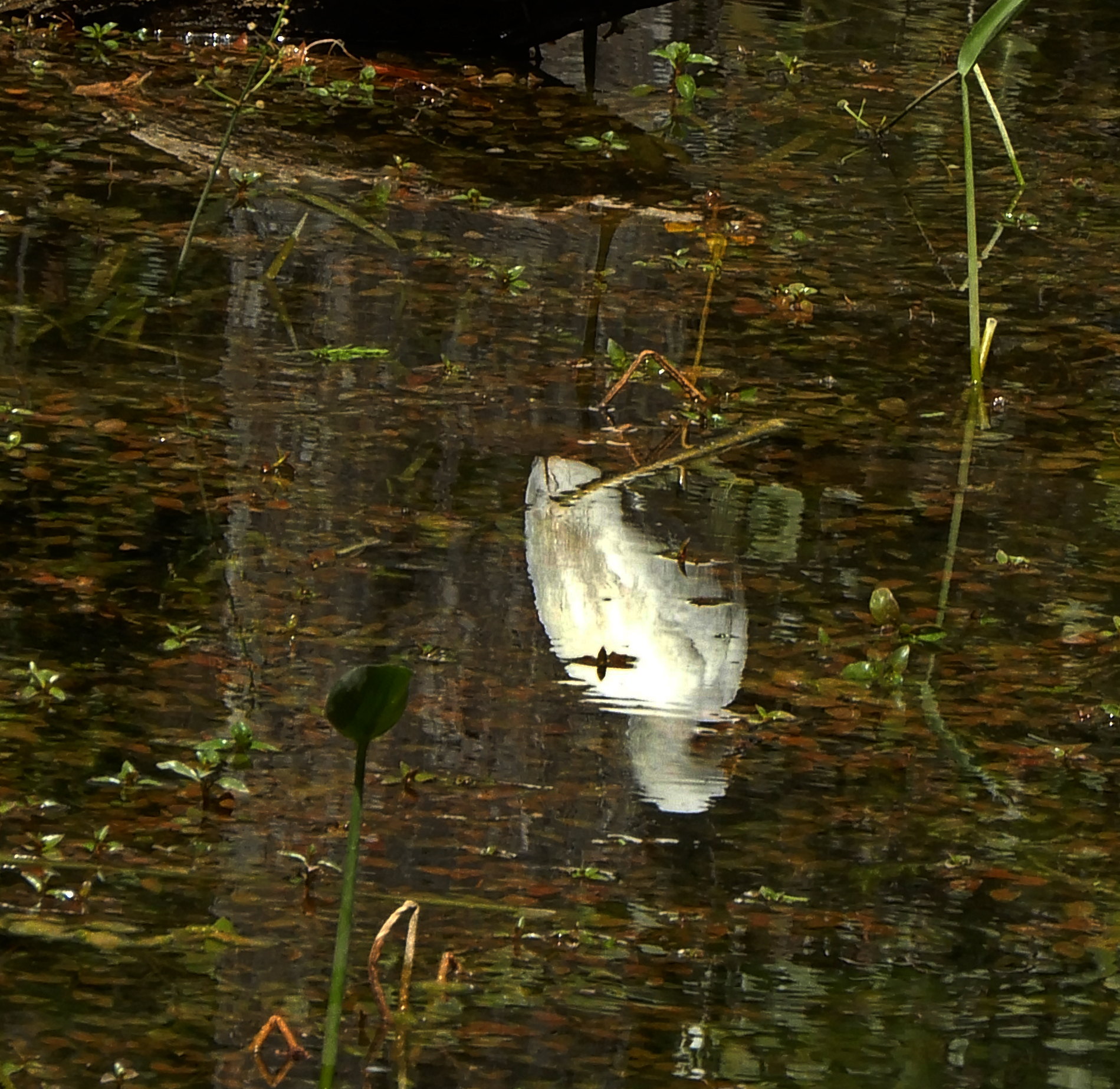
White Ibis, reflected. Big Cypress National Preserve. February 2026.

While two other cars of bird-loving folks like us spent time photographing and watching these avian wonders, a large vehicle pulled up and stopped. It seemed the driver wanted something so I walked over. I cannot remember what the vehicle was, but I had to look up, and I mean UP! Either a jacked 4-wheeler or something in its ballpark. The driver lowered his window and asked what we were looking at. “Gators?” he said emphatically. I replied that no, we were looking at birds. He said, “oh” in a disappointed way, raised his window and pulled around us, heading up the road to find “gators”. I wondered why he took this out-of-the-way road when gators hung around the ditches of every road in southern Florida. They jump out of pools and eat pet dogs, and they loll in copious numbers on slopes of I-75 where anyone driving through Alligator Alley could see several hundred. Then again, to be fair, the birds I thought were so interesting mostly could be seen at any reservoir in any typical Florida housing development. Who’s the idiot? As we left the scenic loop, I hoped the guy managed to stop and look around as he left Big Cypress. If he had, he might have seen the “elusive” alligator:
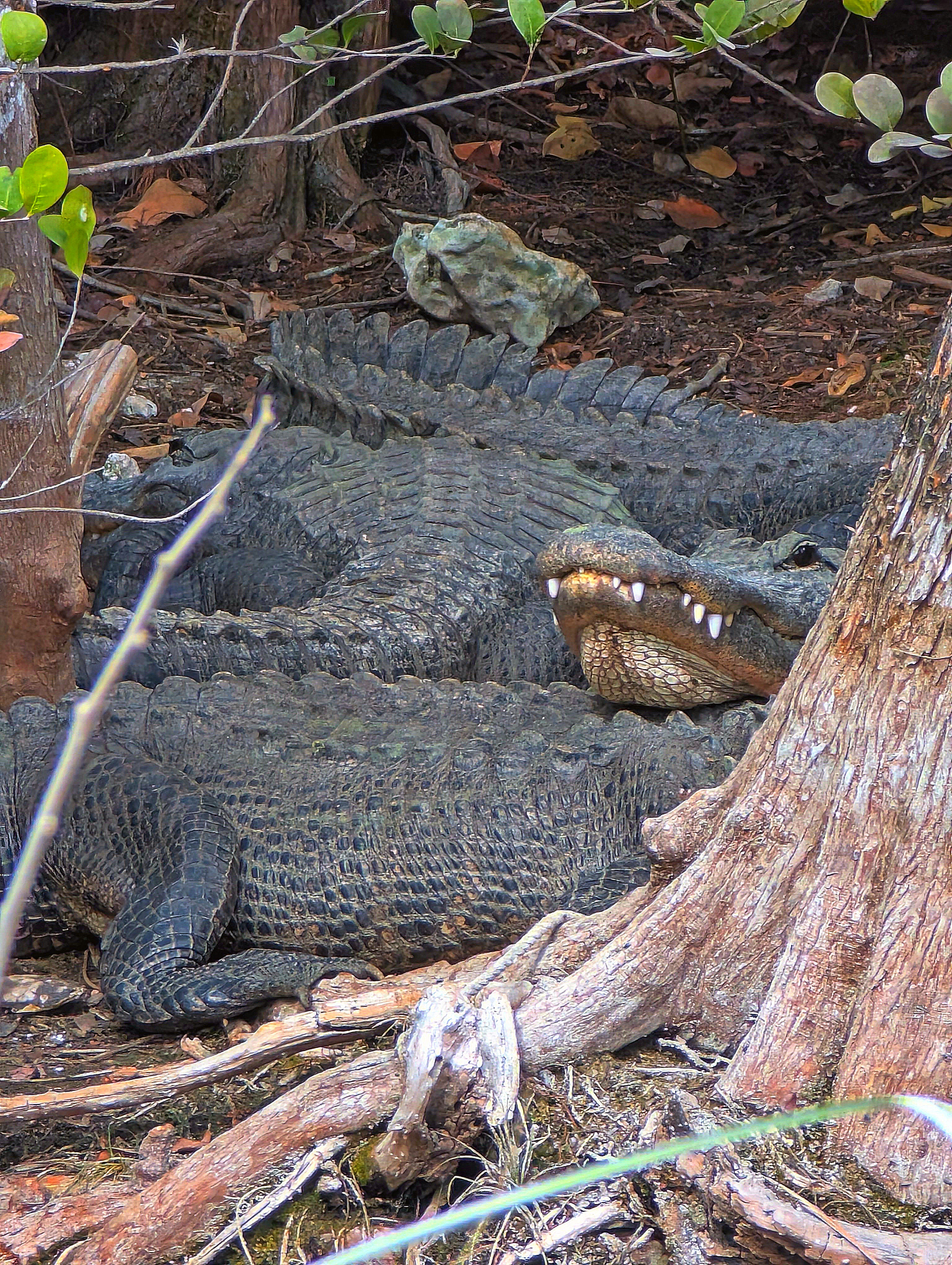
They’re just so gosh-darned difficult to spot! “Wish I could see me some ‘gators!” Big Cypress National Preserve. February 2026.

To the Everglades

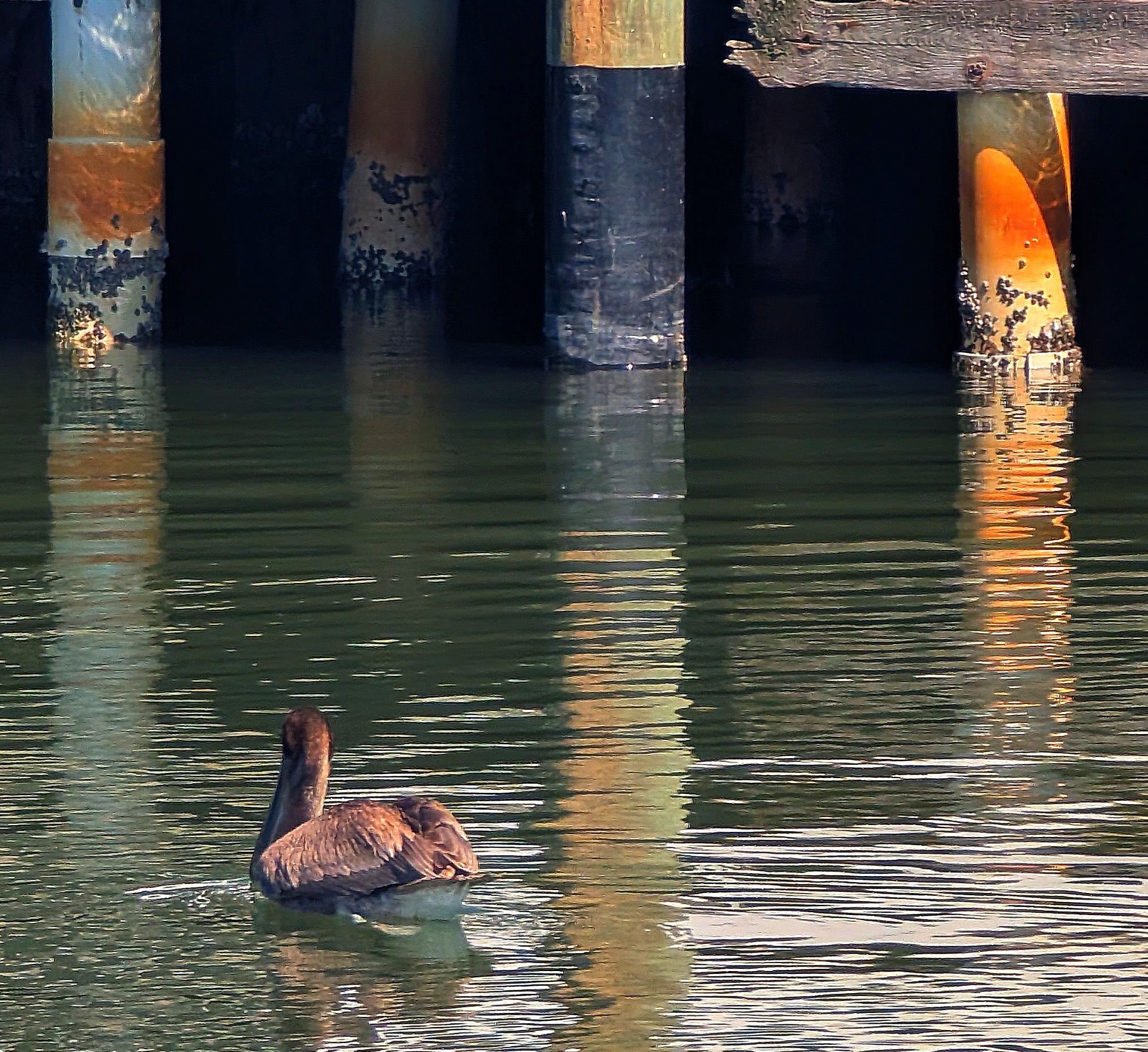
One of a good-sized group of brown pelicans we watched while we ate lunch in Tin City, a group of shops located in old tin buildings on Naples Bay. Naples, FL, February 2026.

We had brought the frigid temps of the Carolinas and Georgia with us to Tampa, and my wife’s sister lamented the loss of her typical 70’s and 80’s. It warmed a bit on our second day there. I bundled up in the warmest things I’d packed and walked to a nearby reservoir to see what bird life I could find. Driving south the next day, we arrived at the Tin City shopping mecca early afternoon, and tucked into a late lunch. The food and the bird life entertained; the shops did not. Tin City seemed a poor and miniscule version of Seattle’s Pike Street Market. Most shops sold typical tourist trinkets which said “made in China” on the bottom. Combined with the exorbitant hotel rates—$300+ for a Springhill Suites on the outskirts of greater Naples?—I doubt we’ll be back in Naples. One saving grace? We’re not exactly foodies but we’re kissin’ close, and discovering that the Cracklin’ Jack’s just up the road from the hotel had recently been featured on Diners, Drive-Ins, and Dives sure put a fine end to the day. Best fried catfish I’ve ever had! We looked forward a bit more eagerly to entering the Everglades and surrounds the next day.

Although the westernmost entry to the Everglades National Park, the Marjory Stoneman Douglas Visitor Center, purported to not be open until the end of February, we decided to chance it on the 26th. We were rewarded with an open, brand-spanking-refurbished center….but not much else because it’s a jump-off point for visitors who want to boaters and to those who want to hike/camp in the Ten Thousand Islands. We are neither of those types. We traveled east on US-41, a.k.a. the Tamiami Trail, the southern route across the Florida peninsula which parallels I-75 a.k.a. “Alligator Alley”. I planned the US-41 route; it became a wise decision when a fire broke out between the two and officials closed sections of the interstate. (It also precluded driving very far north from the US-41.) The southern tip of Florida is a patchwork of state parks, state forests, national preserves, and the national park. We stopped first at the Big Cypress Swamp Welcome Center in the Big Cypress National Preserve. After that, a stop at the H.P. Williams Roadside Park gave us our first good glimpse of alligators, and some nice views of the bird denizens.

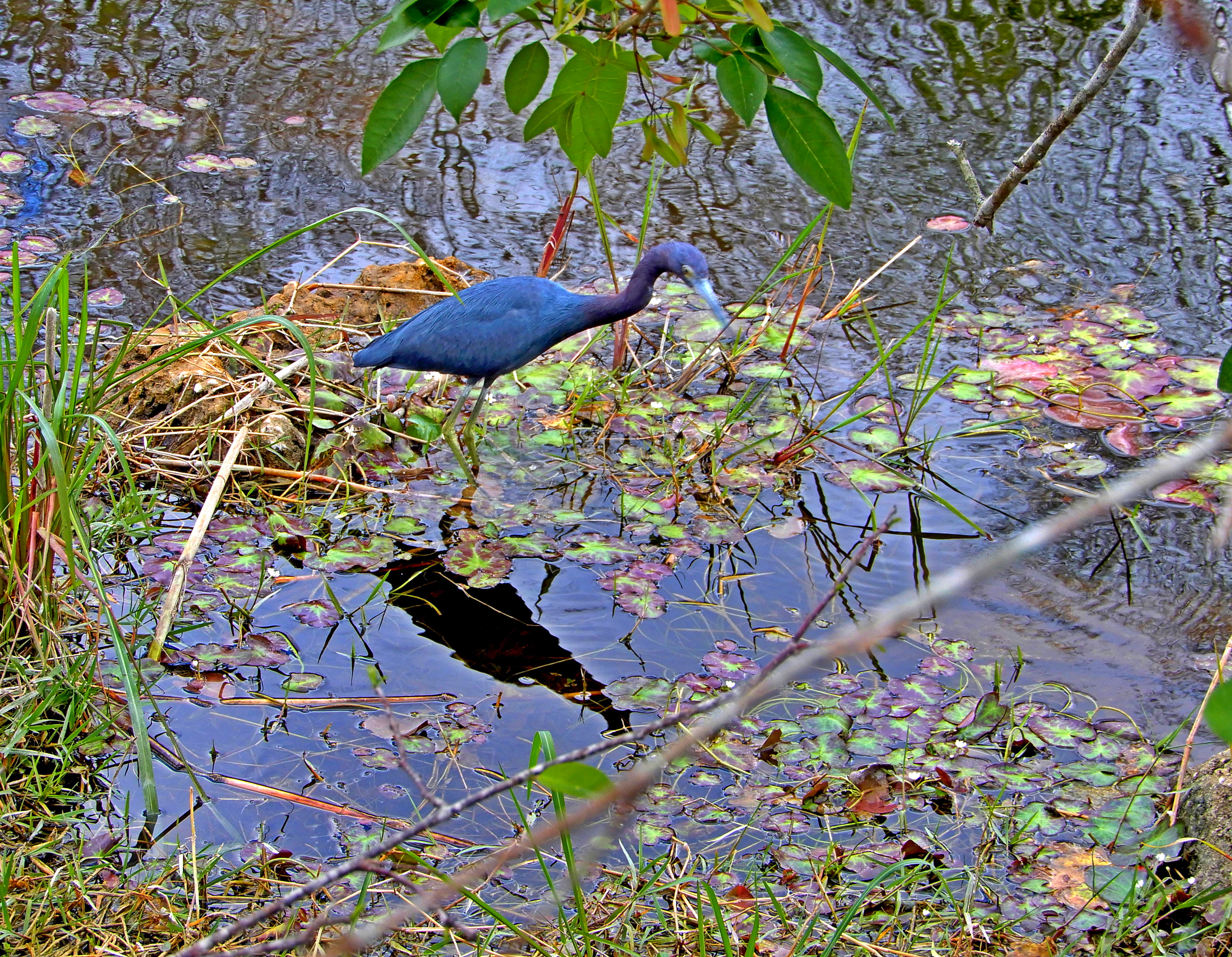
A Tri-Colored Heron stalks its prey. Big Cypress National Preserve, February 2026.
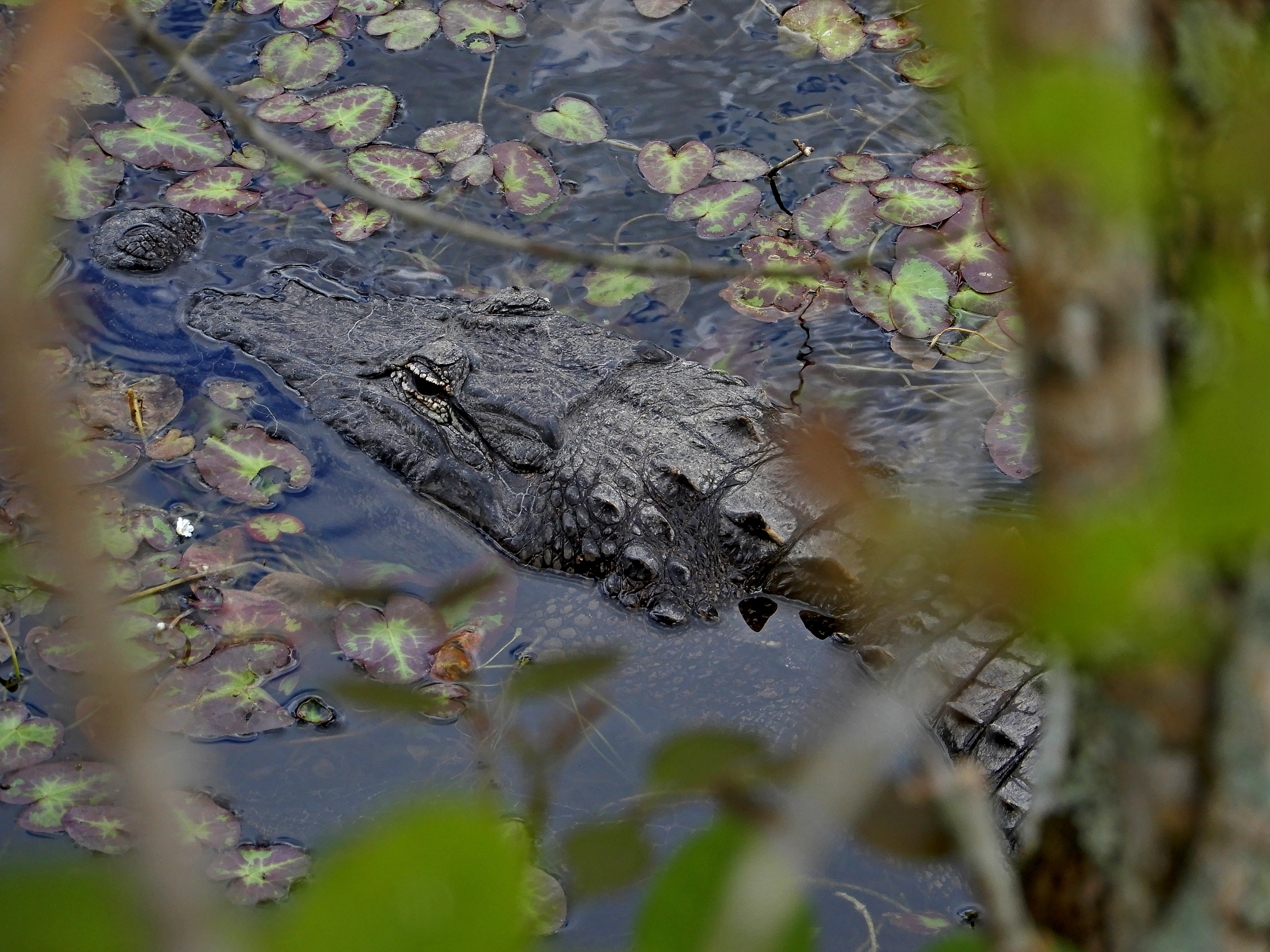
It’s not “oh, look, there’s a gator.” It’s more a find-the-gator experience. Sure they’re swimming up and down the minor canal you’re looking at. Can you spot the one hanging out under your nose? Big Cypress National Preserve, February 2026.
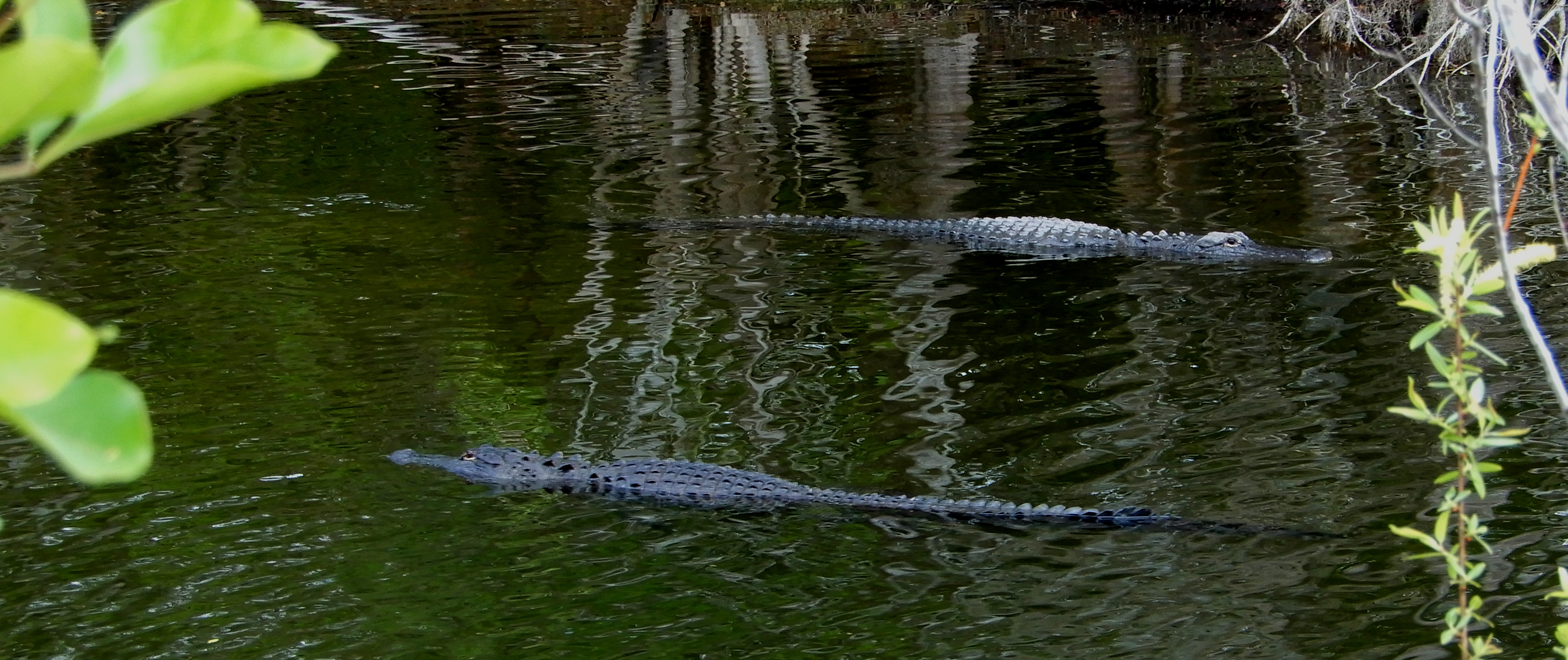
“like ships passing in the night…” Some gators were easier to spot. Big Cypress National Preserve, February 2026.

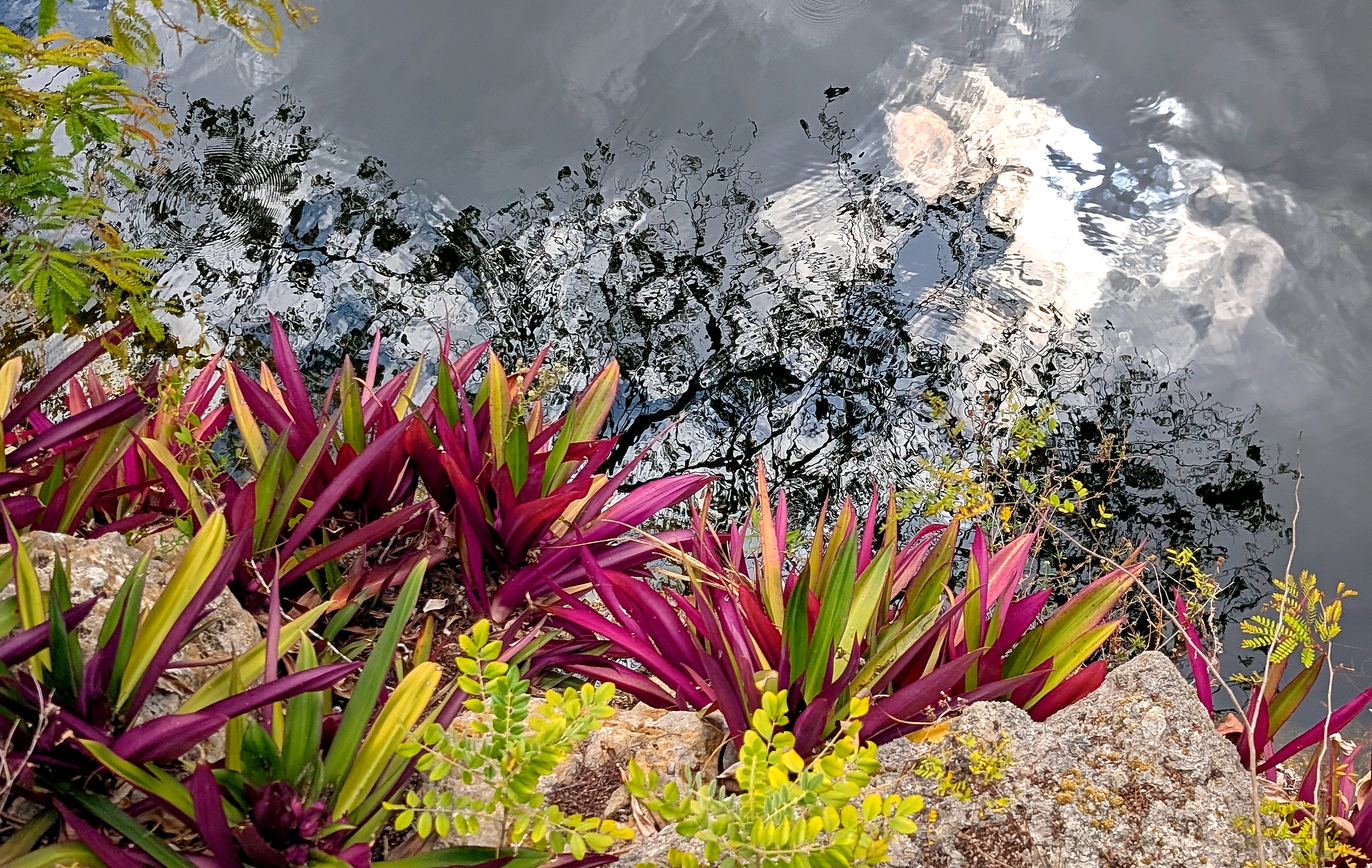
Sometimes, though, the subtropical plants grab one’s attention…

“Moses-in-the-cradle”??? That’s what my plant ID program says, but it seems doubtful. Regardless, it created a stark contrast to the water’s edge. Big Cypress National Preserve, February 2026.

Technically, the final photo of the plants was taken at the Oasis Visitor Center for the Big Cypress National Preserve. If you’re traveling “to see the Everglades,” I would highly recommend US-41 and the Big Cypress route, because it’s basically the northern environs of the Everglades. When one leaves the eastern boundary of the preserve, it’s less than a mile before the Everglades’ Shark Valley Visitor Center. As good as our day’s beginning had been, we had much to look forward to, it turned out.