One of my new favorite plants is the anise hyssop. Anise hyssop grows to about four feet with long flower clusters at the end of each upward branch. These clusters each have what looks like about 100 flowers. The large one in the photo above has approximately 50 clusters. (I had to count them for a pollinator study I participated in.) The weight and height of the branches causes them to bend a bit, making them look like a flower arrangement to me. The flowers don’t bloom all at the same time, but over the past two seasons ours has peaked in late June through mid-July, after which some of the flowers begin to do whatever propagation chores the plant must do.
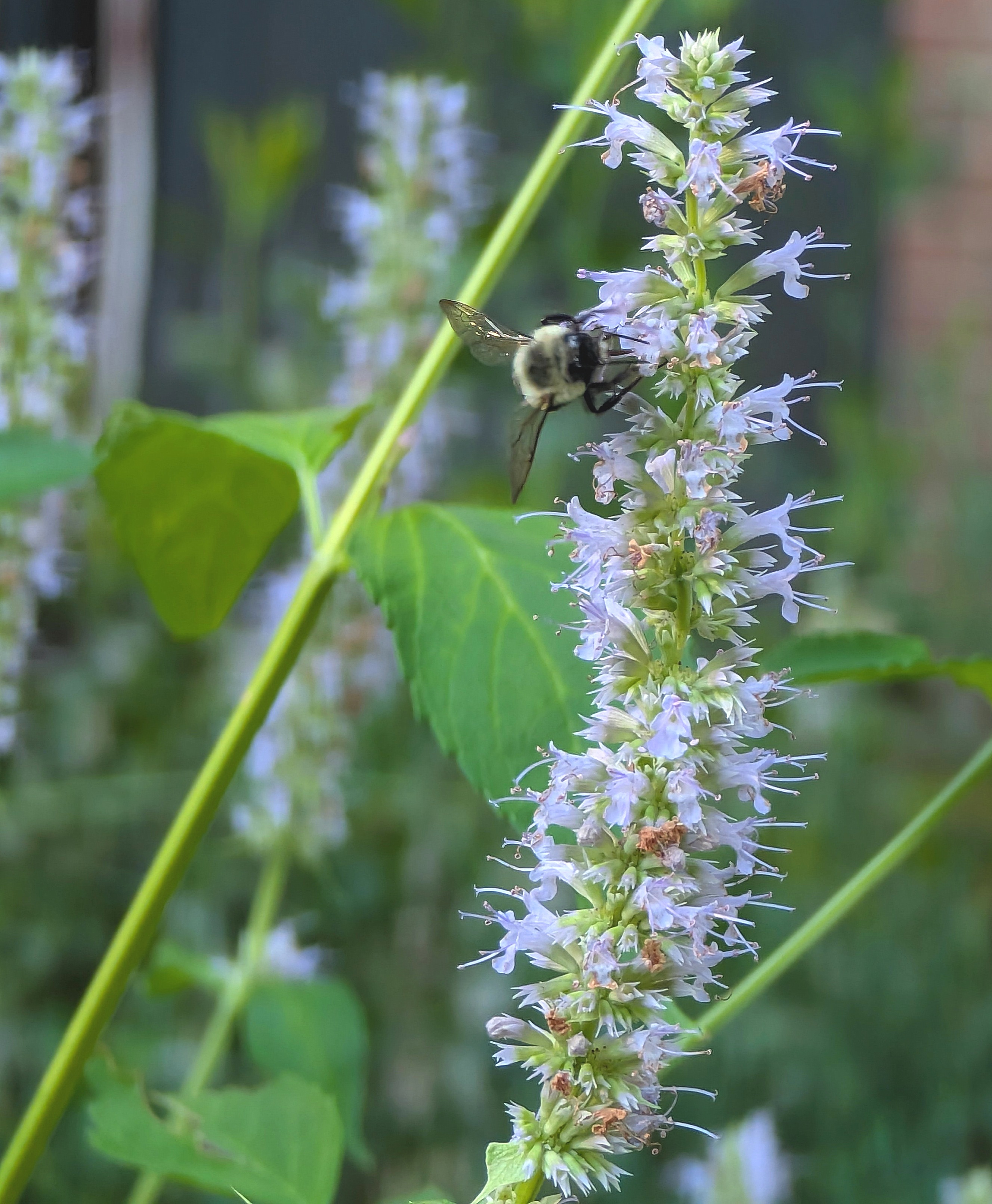
The hyssop attracts many pollinators. I participated in the Great Southeastern Pollinator Count two weeks ago, choosing this plant because it had so many flowers. I counted mostly Eastern bumblebees and a little wasp about a half inch in length. Others included a very small bee, ants, another kind of insect I’ll just call a beetle, and the biggest dang wasp I’ve ever seen! I looked it up, and I’m sure I saw a Great Black Wasp. I’ve seen three different maximum lengths ranging from 1.4-2.0 inches. I swear it was about 2.0 inches in length. Absolutely huge.
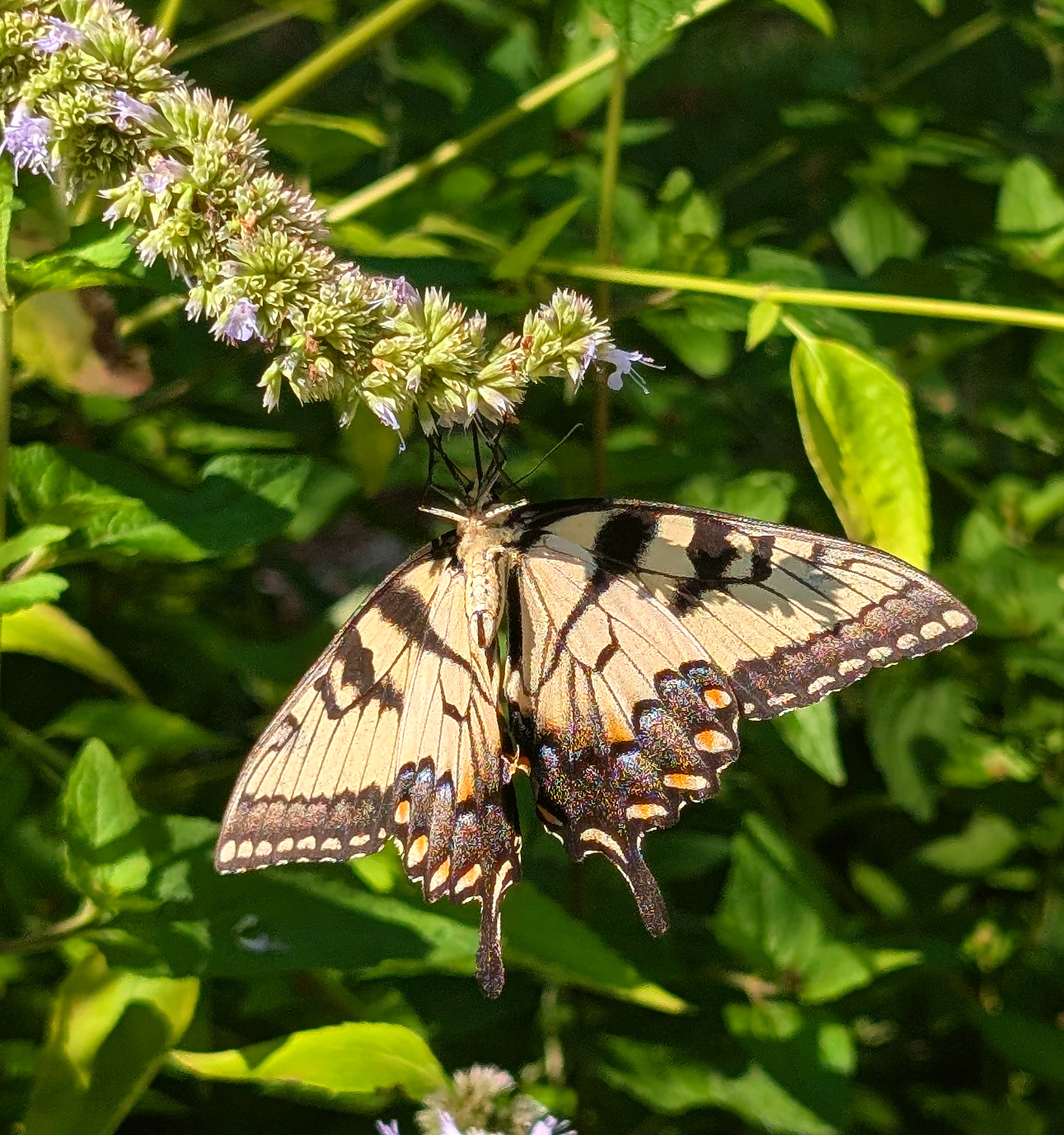
Yesterday I saw our lone species of hummingbird here in the SE United States, a ruby-throated one, also checking out the hyssop. It seemed to prefer the similar-looking flowers of the obedient plant quite near me. And both yesterday and today the several hyssop plants in our yard have been caught the attention of Eastern Tiger Swallowtail butterflies.
When I began the census count, I lamented to my wife that most of flowers have long passed their peak. I expected to find few pollinators compared to June-July. The purple coneflowers have lost all their petals; the spiky centers remains, attracting goldfinches to the seeds, not pollinators to the pollen. Similarly, the black-eyed Susans and Indian blanket flowers have mostly disappeared.
But strangely (to me), the hyssop seems to have popped out more flowers! Over the past three days bees, most of the Eastern carpenter variety, have been madly jumping on the hyssop flower clusters. From a distance they’re visible by watching the ends of the stalks bouncing up and down in a non-existent breeze. And then there’s the apparent delight some butterflies have taken in finding yet more flowers on the hyssops.
We need to keep trying, keep putting out those flowers of attraction. It makes a difference. Perhaps “carpenter bees” aren’t your thing. Perhaps you dislike benign-but-huge “wasps”. No matter. Our purpose is to flower. Let the rest take care of itself.