Goodbye, June

Eastern carpenter bee working the beebalm. June 2025.

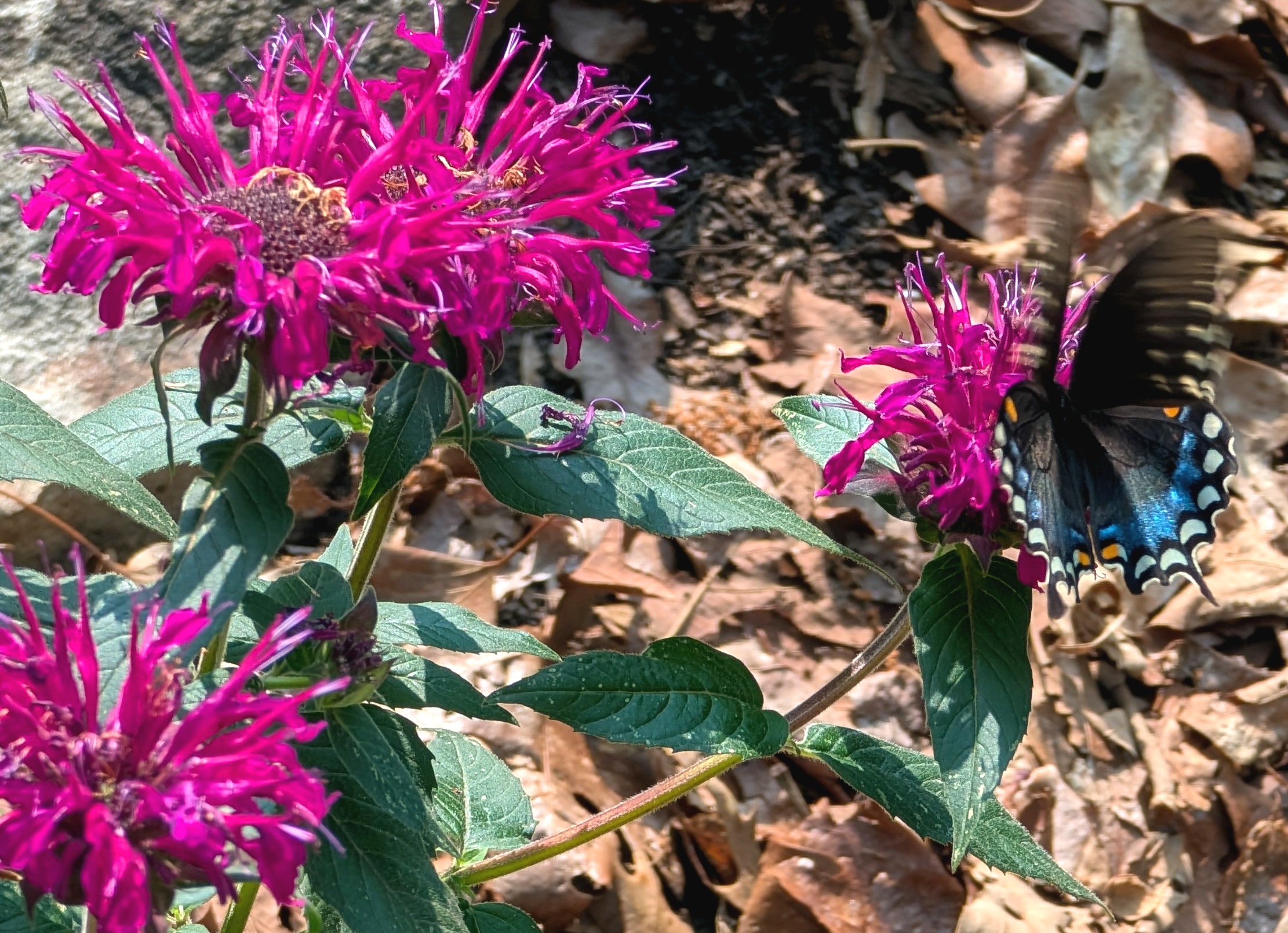
I opened the month shooting photos of the beebalm with a swallowtail butterfly on it. This photo is from the same set. The swallowtails, bumblebees, and little tiny bees I haven’t identified yet all had to work around the behemoths of the flowers, the carpenter bees. At 1.25-1.50 inches (or more!) they pretty much go where they want to. Now the beebalm has slowly dropped all those fuchsia-colored petals. (Or are they petals? I don’t know much about plants.) All that remains are the ball in the center, still suspended on those long stems. Our new visitors love these: goldfinches. They flit from flower to flower, their nearly weightless bodies hardly making the stems bend at all. It seems too soon for seeds, but what do I know?

Summer temperatures, documented a few days back, will continue for the near term future. Americans look forward to celebrating Independence Day on Friday, the 249th of our country’s existence. In these muddled times, I wonder what that will bring. Meanwhile, the business of life marches on, from the mundane (it’s Gather the Garbage Day) to the inconvenient (workers coming to work on the leak in the bathroom shower) to the calm and simple (my wife returned from a coastal sojourn yesterday afternoon; this day will be our first together in a week).

Have a truly blessed day, y’all!

Carpenter bees

Eastern carpenter bee on scarlet beebalm. June 2025.

For a good handful of years I fought a war against carpenter bees. These large bees (1.0-1.5 inches long) bored perfectly symmetrical holes in the decking of our house. First I attempted to plug all the holes with caulk, twigs, anything that came to hand. Then I bought horrendously over-priced traps, only one of which did its job and for only one year. This year I gave up, waved the white flag, said, “you win.” They are vigorous pollinators: that beebalm looks long past its prime, but they keep working the blossoms for that last speck of pollen. They’re only antagonistic to each other, although they’re scary in the spring: imagine a bee as big as your eye and flying right toward it. They still leave little piles of sawdust around my deck here and there in the spring.

And I still have the trap up. It’s a sign of self-respect. I don’t want to appear as if I’ve cravenly capitulated to them. Call it a fighting retreat.

Swallowtail

Spicebush swallowtail butterfly. June 2025.

Watching our newly landscaped front yard has become one of my particular joys this year. Where once there existed a lackluster lawn, pockmarked with chipmunk burrows—which I had to continually mow—now new plants take turns proffering flowers for the pollinators. The spicebush swallowtail butterfly shown above would have shown up better were not its wings fluttering madly as it sampled the scarlet beebalm flowers. Sharing the butterfly’s zeal were bees of all sizes: little ones that looked like flying sugar ants about a quarter-inch long to bumblebees and something larger which I haven’t identified yet.

As May ended and turned to June, fireflies appear at dusk to illuminate the plants. Shrubby St. John’s wort, below, seems to be a favorite of the Easter honeybee.

Shrubby St. John’s wort. June 2025.