
S-R Ten turns Fourteen! Or Fifteen! Who knows?
I must make some corrections, regarding a post I made mid-2024 when I wrote a post called The S-R Ten, regarding some free and, in some cases, important albums I picked up as a new high school graduate at the local newspaper. I’ve since discovered there were more than ten, and at this point having gone from 13 to 14 in the space of just days, I’ve decided to just admit it, and edit this post as is warranted. It’s a completely narcissistic endeavor anyway, of interest only to folks who might get entertainment value from seeing what kinds of albums were being picked up for free back in the day (David Bowie? Really?) or what crazy bands thought they would get somewhere back in the days before the music industry collapsed in only pushing The Next Sure Thing.
Here’s one I can’t believe I forgot to include:
Homespun by Richard Supa
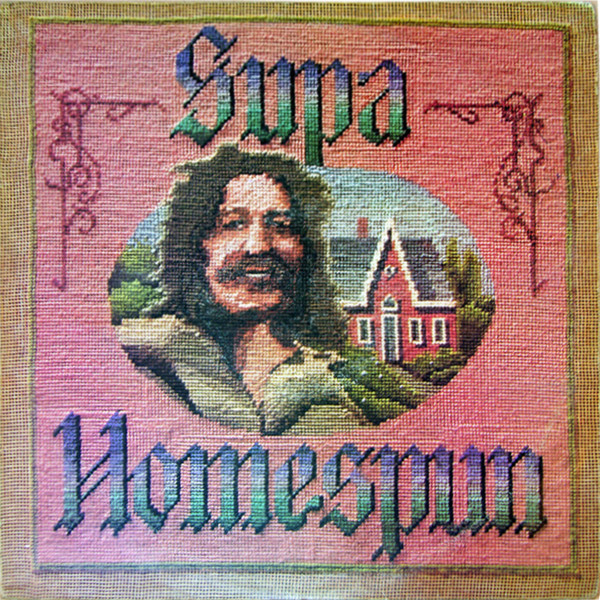
Richard Supa hit my radar only because of this album. When I used Wikipedia a few years back to find out about him, I was surprised to see he worked with Aerosmith, The Rascals, Richie Sambora, Mika, and Ozzy Osbourne. Though he released four albums, he never got popular acclaim. He’s most closely associated with Aerosmith for filling in at guitar and co-writing some of the band’s songs, including the hits “Chip Away the Stone”, Lightning Strikes”, “Amazing”, and “Pink”. He also wrote for Johnny Winter. I’m pretty sure I read somewhere else that like many of that period, he had a bit of an tussle with drugs. This perhaps is indicated by the fact he is now director of creative recovery at a treatment center “where he uses music to help addicts in recovery.” [Wikipedia]
As best I’ve been able to tell from a survey of the albums in my digital library (approximately 1700 albums), there were three others:
Don’t It Drag On by Chris Smither
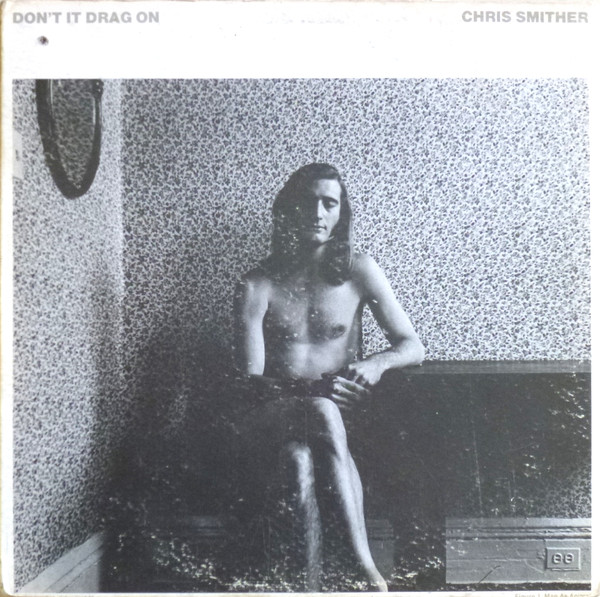
This was Smither’s second album, having joined the 60’s folk scene late, comparatively. Bob Dylan had already “gone electric” to the horror of his purist folk-fans. As an 18-year-old I didn’t quite know what to make of this album. In the past 20 years I learned Smither has risen to quite the stature in the folk/bluegrass/blues world. I’ve wondered at times if his unusual voice with more than a bit of ‘croak’ in it might have helped him along. I’ve found myself humming lines from his songs throughout my life, when circumstances suggested it. “Send me rich ones, and young ones in their twenties…” from “Lonesome Georgia Brown”.
Tenterfield Saddler by Peter Allen
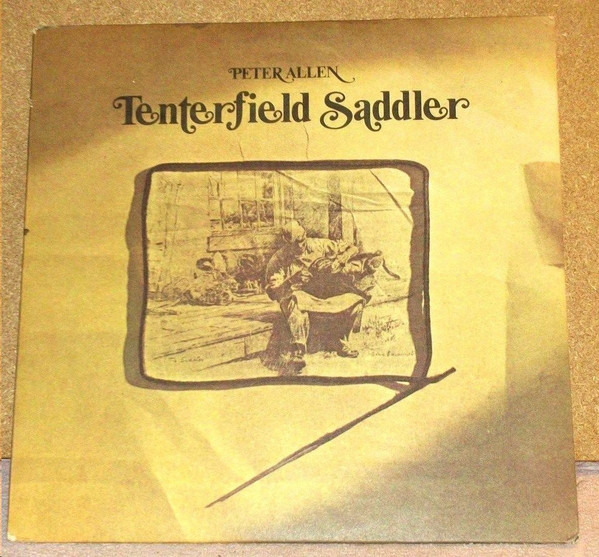
I have a visual memory of watching Peter Allen on some TV special, cranking out his pop songs at a grand piano. He’s wearing one of those weird jumpsuit things that men wore in the mid-1970’s. I cannot say when I watched it, but I’m thinking it was around 1979 or 1980 because of his 1979 Up In One concert tour which I believe aired on Australian TV and therefore could’ve been picked up by PBS here. Regardless, this album has so many quirky pop songs on it, I couldn’t stop humming them. “Somebody Beautiful Just Undid Me”, “I Can Tell A Lie (But I Just Can’t Sing One)”, and the hauntingly sad “Harbour”. Allen did much better with his songwriting than his singing. He wrote Olivia Newton-John’s “I Honestly Love You” and Christopher Cross’s song “Arthur’s Theme (Best That You Can Do)” from the move Arthur. Given that I knew he was gay, I was surprised to learn his first marriage was to Liza Minnelli. (It was her first, also.) And here’s a peculiar little factoid from Wikipedia: “In 1998, a musical about his life, The Boy from Oz, debuted in Australia. It ran on Broadway and earned Hugh Jackman the Tony Award for Best Actor in a Musical.”
Long John’s Blues by Long John Baldry
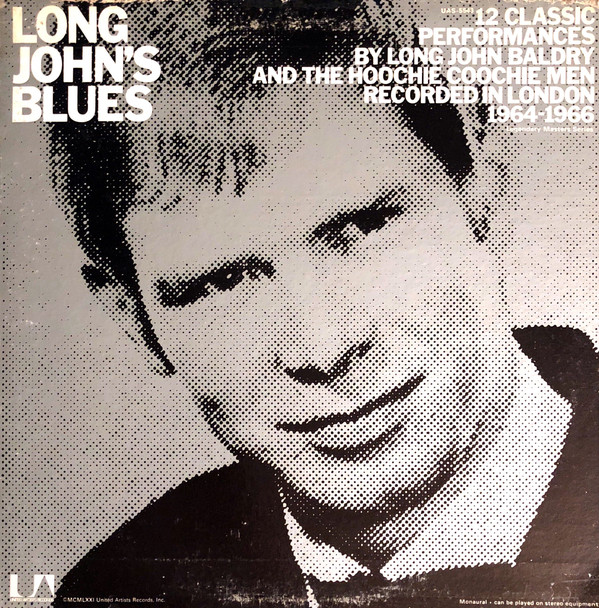
I loved this album and still do but for different reasons. At the time, it opened my mind to how jazz and blues melded and worked their way into rock ‘n’ roll. I also had just started to learn about the melting pot of talent in Britain which had transformed popular music in America just as I started listening to it around 1965. Now I love it because of its place in the history of rock and blues, because of the songs themselves, and because I just like his musicianship.
Baldry joins John Mayall and a couple of other guys (Alexis Korner for one) who were the foundation of the entire British rock scene. Rod Stewart and Elton John were members of bands led by Baldry, and Mick Jagger, Jack Bruce, and Charlie Watts played with Baldry in the Alexis Korner Blues Incorporated band. (Keith Richards and Brian Jones played with them at times.) I love the genealogies of British music at this time. Baldry joined the Cyril Davies R&B All Stars in 1963. Davies died, and Baldry took over the group and renamed it Long John Baldry and his Hoochie Coochie Men. Hence this album. Rod Stewart sang with this band, and Nicky Hopkins played keyboards. These two were in an iteration of the Jeff Beck Group. By 1965 Brian Auger was playing the Hammond organ with them. (Brian Auger’s Oblivion Express anyone? He played with Jimi Hendrix, Eric Burdon, Sonny Boy Williamson, and John McLaughlin, among others.)
It all intertwines. When Baldry decided to return to his edgier blues style, he recorded what became It Ain’t Easy which included his US minor hit, “Don’t Try To Lay No Boogie-Woogie On The King Of Rock and Roll”. By that time Stewart had a semi-successful thing going with The Faces and had launched a solo career; soon he would issue Every Picture Tells A Story. Stewart came on board to produce the record. When he encountered Elton John at a party, the guy he and Baldry had played with before, John came on board to produce also, plus he contributed a lot of the piano work. Ronnie Wood (Jeff Beck Group, Faces, and The Rolling Stones) played guitar. This is becoming like an episode of Connections. We’ll stop.
Although the record I grabbed in that pressroom long ago was released at the end of 1971, apparently, it didn’t hit Spokane until the summer of 1972. On it one can hear how those steeped in the British music hall tradition (Paul McCartney, anyone?) listened to American blues and bluesy jazz and molded it into something a bit different. Oddly the Wikipedia article’s lead paragraph doesn’t mention Baldry’s minor hit from It Ain’t Easy. It also doesn’t specifically recognize this album that I’ve highlighted, the closest being Looking at Long John Baldry: The UA Years 1964-1966 which was issued in 2006. I’m guessing it’s the same album?

