
…volcanoes! We forced the agendas for our final two Big Island sightseeing days, simply by allowing our lazy natures free reign. Sunday received its designation, Volcanoes Day, and promptly rewarded us with an atmospheric eruption.

…volcanoes! We forced the agendas for our final two Big Island sightseeing days, simply by allowing our lazy natures free reign. Sunday received its designation, Volcanoes Day, and promptly rewarded us with an atmospheric eruption.
A few days ago my Daily Discovery playlist on Tidal offered up a track by Robben Ford, “Talk To Your Daughter” from 1987. It was pretty good, good enough to click through and see what else he’s done. Holy crap. The guy’s been around for 45 years and he’s still playing it hard? How the heck have I gone all those years and never heard of this guy?
After listening to that entire album, I listened to his newest recording available on Tidal, Live At Montreux 1993 released in 2024. Okay, now I’m really intrigued. He’s playing blues sometimes, jazz other times, and he’s echoing Jeff Beck, Kenny Wayne Shepherd, John McLaughlin, Al DiMeola, and a bit of Eric Clapton? His vocals sound like JW-Jones (another great guitarist)?
I’ve since listened to Night In The City (Live) partially; Schizophonic (again, partially); and Lost in Paris Blues Band a perfectly excellent recording with six other musicians I don’t know. In the discography I see he’s played with Bill Evans for an album released in 2019. If that’s the jazz pianist, I’m intrigued. He’s played with Charlie Musselwhite and Jimmy Witherspoon before turning 25. His first solo album in 1976, Schizophonic, resulted in the Yellowjackets, a well-known American jazz-fusion band. He’s release 30 albums, either as a solo act or with a partner or two. He’s played as a session musician in so many sessions it’s difficult to count. Let’s just throw a few names in: Miles Davis; Jing Chi; Little Feat; Tommy Emmanuel; Barry Manilow; Michael McDonald; Bob Dylan; Joni Mitchell; and gosh, we better stop or I’ll just be pasting in the Wikipedia article. Let’s just add this: five Grammy nominations and named one of the “100 Greatest Guitarists of the 20th century” by Musician magazine.
Additionally, we watched Elvis Costello and T-Bone Burnett appear on The Late Show with Stephen Colbert which prompted a bit of listening of tracks from my favorite (and only) Burnett album, The Criminal Under My Own Hat.
In other listening news:
“Remember when Trea was the shiny new thing we were all exited about, back before we kneeled beside our bed each night?”
The above was posted on The Good Phight, a semi-professional blog about the Philadelphia Phillies hosted on SBNation. In case your eyes zipped over it, the error is “exited” for the intended word “excited”.
Author’s role: This is an author who has a day job. Writing never danced on stage for him as a possible role in his adult life. We therefore rate this a 2.
Egregiousness of the error: This is either a typo or an autocorrect error the author missed. (I doubt any editing occurs on this site.) A plain typo rates a 1, an autocorrect a 2. I’m going with the benefit of the doubt here that he just plain forgot to hit the “C” key. It’s a 1.
My personal reaction rating: I like this site. I willingly suffer the numerous run-on sentences, the failed verb tenses, the just plain “WTF did he mean there” writing. This is more mild than mild for this site. I’m giving this a 0.
Final rating: 3.
Twenty-five years ago I purchased the book A Home for the Soul: A Guide for Dwelling with Spirit and Imagination by Anthony Lawlor. It featured beautiful photos and promised to address that point where functions meet features and both bow to the soul. Unfortunately Lawlor’s book, though gorgeously printed, never connected with me–it remained a beauty with no brains. I mention this because the idea has long played out in my head and heart that we are drawn to some places on Earth more than others, despite our innate interest in almost all of them. I’ve mostly thought this gets imprinted on our psyches during the formative years of our childhoods, much as ducklings will imprint on their mother. (I wonder how this would work with children of military personnel and others who move their families frequently to vastly different geographies?)
Recently a friend of mine quoted author Pat Conroy who made his mark writing books set in coastal South Carolina, including The Citadel in Charleston. In this particular quote, Conroy described how the Low Country spoke to his soul. This returned me to my
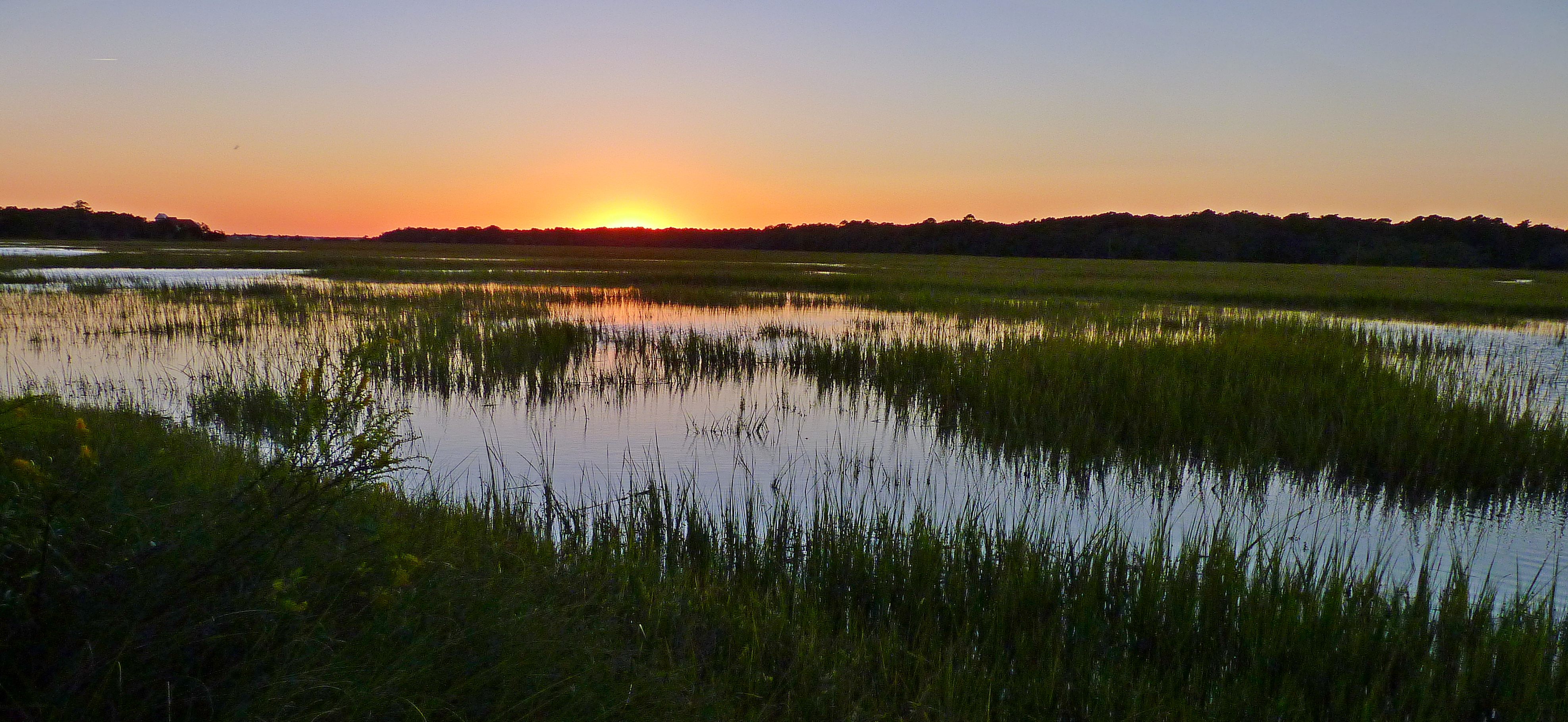
ideas of place. Much as I like the coastline of Eastern America, and the distinctive features of it from Chesapeake Bay south, it never ‘grabs’ me. Intellectually, I love its nooks and crannies, its sultry feeling which exudes relaxation, its birds, the novelty (to me) of its marsh grasses, and the soul-satisfying feeling brought on by its mostly horizontal nature.
In Hawai’i, though, I found my heart beating in sync with its coastline as if I had found a long-lost sibling. I suspect this has something to do with being taught at an early age that “coast” means “what it looks like around Puget Sound” and to a lesser extent the Pacific Coast of Washington State: volcanic rocks to the coastline; cliffs of sand, sedimentary rock, and mountaintops which send their flanks plunging through the intertidal zone to significant depths in mere meters. But could it be more genetic? As far as I know, my ancestors all came from either Norway or that island divided into England/Scotland/Wales. From photos it seems a rocky coastline, lashed by pounding waves, much of it featuring knobby cliffs which prohibit dipping one’s toes in the water–and this water is crystal clear.


A counter-argument: what to make of the three centuries my patrilineal line spent in the mountains located at the Virginia/North Carolina border? Of my matrilineal line descending from the hollers of Kentucky to live along the Ohio River? Do I counter that with my father’s mother, whose parents stepped off the boat straight from Norway? Or the suspected similar condition for my mother’s father who was put up for adoption by a Swedish lass?
I land on nurture more than nature. I believe my father preferred eastern Washington with its undulating surface of grains and grasses because he had been raised in a similar grassy, agricultural flatness outside Minneapolis and later, in Havre, Montana. My friend associates the North Carolina coast with meaningful times in his life, not least of which was refurbishing a getaway house on the Intracoastal waterway with his father. My brother and I experienced a semi-dry climate through high school. Perhaps this explains why, after decades spent in rainy and cloudy western Washington, he retired to Santa Fe?
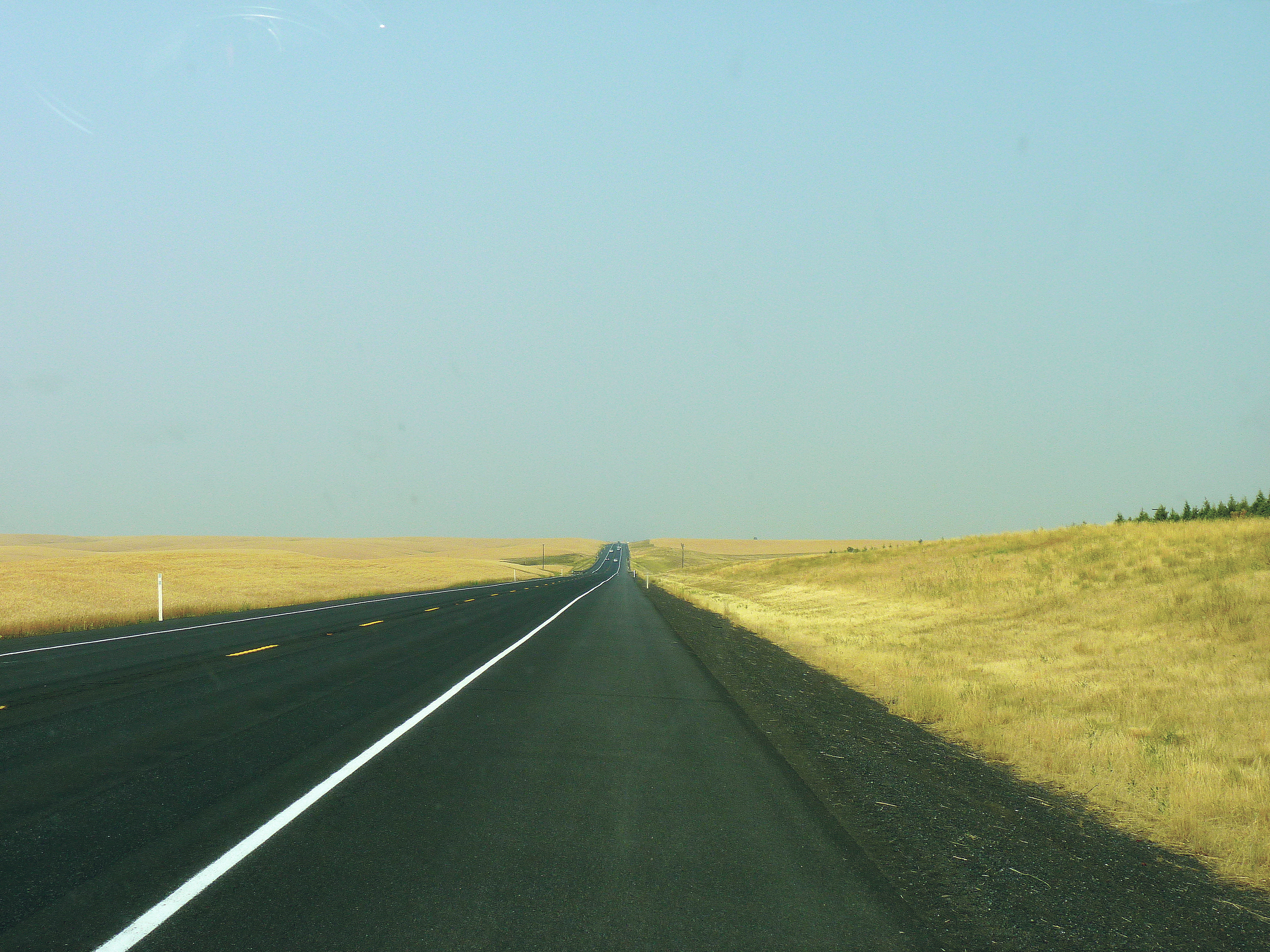
Unless…unless… I must admit, I like rain. I discovered this when I moved to the Philadelphia area in 1992. In 1997 I returned to Spokane, WA, a semi-arid part of the country. Four years later I could barely get out of town quick enough, and the dry, dusty summers played a large role in that attitude. I found I did like rain, just not the rain of Puget Sound which I experienced on and off during my childhood and lived in from 1976-1981. Rain on the east coast of America doesn’t resemble rain in the Puget Sound area, despite both regions receiving similar amounts annually. (Philadelphia–41.45in; Seattle–37.13in, both according to WorldClimate.com.) Rain clouds on the east coast bring rain, and then they go away. Rain clouds in Puget Sound just hang around seemingly forever, misting you once in a while to remind you they carry moisture. Where, then, does this love of rain come from? Why don’t I like snow? I experienced it every winter of my childhood, and I continued to do so through my 47th year. Is it my North Carolina ancestors calling to me through our shared genes, reminding me that for centuries we Pilchers have enjoyed warmer, less snowy climes? If so, would they in turn find the wind- and surf-lashed cliffs of western England and Wales instantly familiar and soothing? It’s a confusing amalgamation of influences.
Maybe we just like what we like, inexplicable as it may be. A postcard I have reads: “Every traveler knows it is possible to be homesick for a place one has never seen.”

Thus ended our day-to-market. My usual procrastinating nature had combined with Hawai’i’s induced laziness to leave two journeys for the final two days on this island. To be continued…

By our fourth full day in Hilo, the island attitude had taken over. Friday’s meandering around town (waterfall, museum, brewery, dinner) could’ve been followed by something energetic. Instead we took our time before heading downtown to visit the Farmers Market (photo above) and an equally large area where local crafters sold their wares. A few souvenirs were purchased, always with an eye to the minimal space in our luggage. (We pack light. A carry-on suitcase each, a large purse/bag for my wife, a soft attaché-style bag for me.)
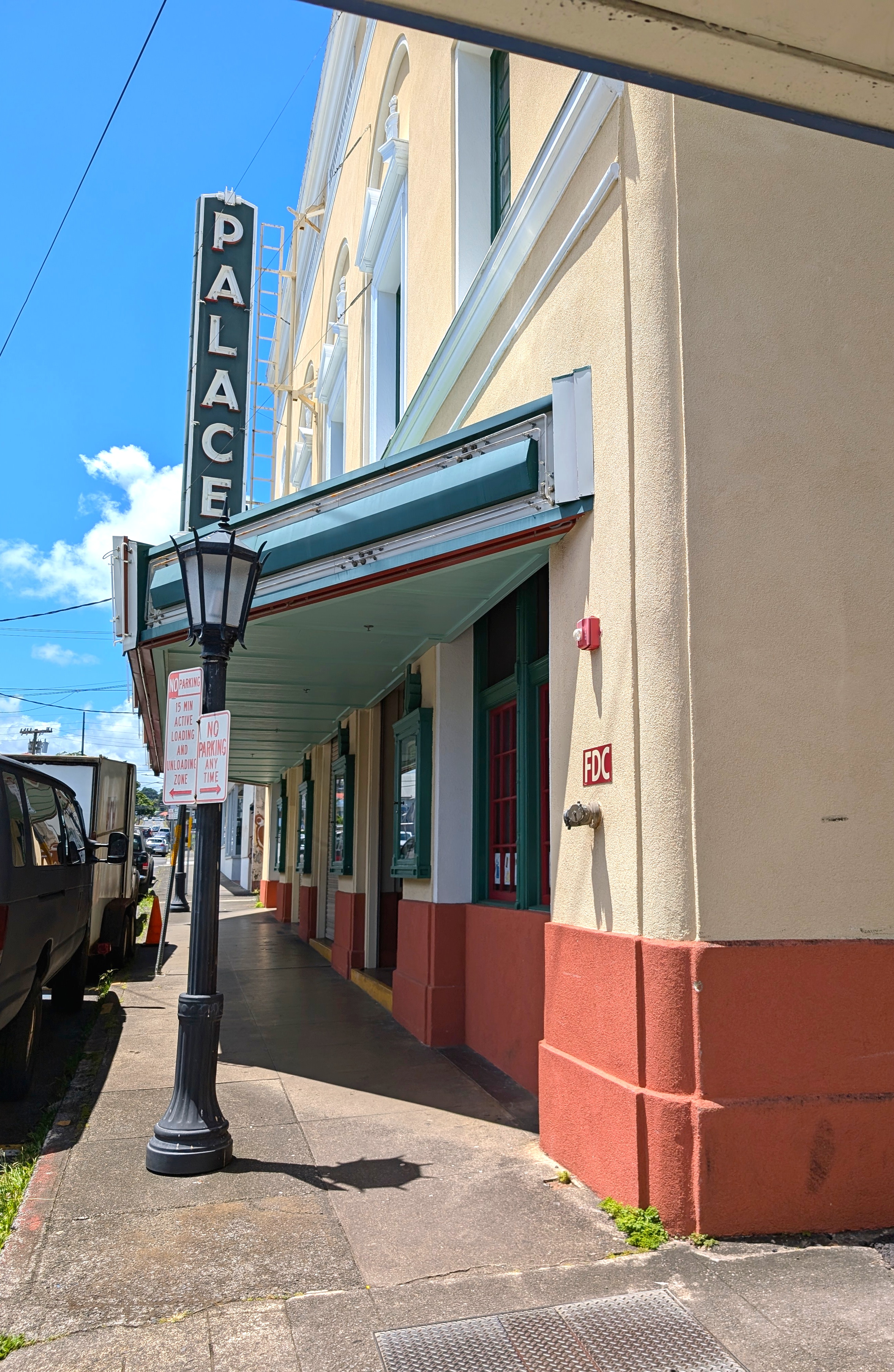
After the market we wandered the downtown area. Hilo manages to look like my childhood of the late 50s and the 60s, except for the modern cars:


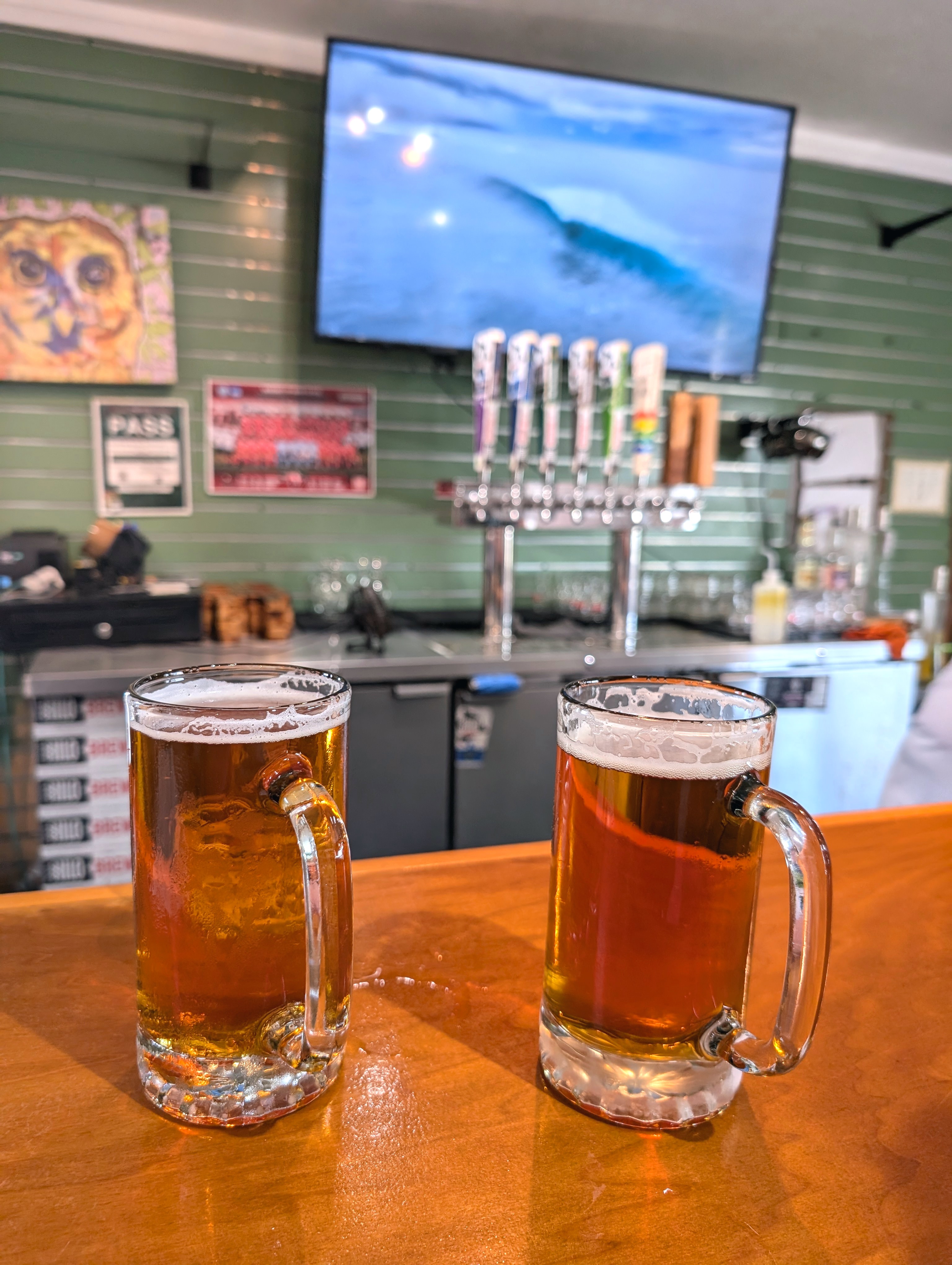
Eventually we ended up at Hilo Brewing Company which sits about a mile from the beaches of city center. It reminded us of the rough-looking ones around Raleigh and in San Diego County where all the work goes into the beer, all 4-6 kinds of it. We like that.

From a story in today’s New York Times describing a veteran who was court-martialed for shooting an Iraqi in 2004.
Mr. Richmond shot the herder in the back of the head from six feet away as the man, who has handcuffed, stumbled.
—from “Veteran Who Was Court Martialed Gets 4 Years in Prison for Jan. 6 Attack”, New York Times, November 18, 2024
Error: “…, who has handcuffed,…” instead of “…, who was handcuffed,…”
Type of error rating: 2, because this seems to be a typo which wasn’t caught. (Although we should note the H key isn’t near the W key. Actually this is more a brain-fart than a typo.)
Author/editor rating: 4, because regardless of the minor level of error, a reader of the Times has a right to expect the author (or an editor) actually reads the copy prior to its being published, and even if it slipped by everyone on Nov. 18, it would be noted by somebody and corrected by the time I read it midday on the 19th.
Personal reaction rating: 1…It neither entertained or enraged. It jarred me a little, but my blood pressure stayed constant.
Bottom line: This error rates a 2/4/1 for a 7 out of 10 on the Reader’s Horror scale.
Discussion:
[I wish there were a photo here. There isn’t because all the good photos I have about poor usage of written English are owned by someone else who likely would sue me. But, hey, we’ve illustrated the use of the subjunctive verb conjugation! That’s cool, right?]
In my email every day I receive a list of books which can be purchased in electronic format from Amazon for $1-$4. Each book is described in only two or three sentences, just enough to hopefully entice you to read the full description on Amazon and then buy the book. [See Caveats below regarding split infinitives.] Today a description of the book Girl by Alona Frankel contained this opening sentence:
In this “impressionistic memoir,” a world-renowned children’s author and illustrator offers a “truly moving and bravely rendered” account of her time as a Polish Jewish girl hiding as a Gentle in Nazi-occupied Poland (Kirkus Reviews).
A “Gentle”? Surely you meant “Gentile”?
Every day–not everyday as may be written ignorantly–I read something where the author and/or the author’s editor have recorded their ignorance of the written English language. After noting for several years how these blemishes have crept into what I consider to be prestigious sources–New York Times anyone?–I’ve decided to record all of the offenses, rating them similar to a fact-checking site. Not all offenses are equal. We will consider the source and the egregiousness of the error.
Time out for my GUM Guidelines. Grammar is how we know words mean something. “Ball he red the threw,” confuses a speaker of English because it’s out of order: “He threw the red ball.” Don’t go all Noam Chomsky on me. My definition will suffice for our purposes. Grammar is not class-based. Usage refers to the accepted way of saying something. People who say “don’t nobody know nuttin’ but me!” are deemed ignorant by the people who say “nobody knows anything except for me!” Usage is class-based. Mechanics refers to how spoken language is rendered in print. It’s a convention, neither class-based nor non-class-based. As a society we have come to an agreement that words will be written a certain way…until they aren’t. As such, mechanics change over time. Mechanics refer to punctuation, capitalization, spelling, and the like. Okay, back to our tirade of the day.
Me
At the bottom of the heap I will place graffiti, notes from friends and relatives, and other signs posted in haste. Everyone of us and every one of these examples have been written on the fly, often by persons who somehow passed through school while they regarded English classes as the scheduling version of a roulette wheel. Who knows where the ball will land? Maybe they were lucky on a certain day when final exams were given. Maybe the teachers just didn’t want to try teaching them one more time. Regardless, we can hardly damn ignorance when it’s being spray-painted on the side of a building or dashed off in haste on the back of a grocery store sales receipt. Occasionally one of these haste-lays-waste mistakes will crop up in what we read. We will sigh and rate these a 1.
Next up we encounter those who labor with the English language–and I want to emphasize “labor”. [See Caveats below for punctuating quotation marks.] People with only a passing knowledge of how to write English can find themselves employed in jobs demanding continual use of those non-existent/woefully lacking talents. In these days of electronic word processing, I suspect they often don’t write the English, they just copy and paste it from somewhere else. This copy-and-paste existence demands editing skills but ultimately the failure to catch errors, i.e., to edit your own writing or someone else’s is exactly what we’re concerned with here. We’re not dissing people for not measuring up to Shakespeare, Hemingway, or the adroit use of language we read in the work of so many fine authors. We’re taking these writers to task for how they symbolically render their thoughts into print. At this level, one up from the ignorant, they should know better–but they don’t. That’s why we will rate these a 2 and not higher.
Unlike the previous group, many persons do write professionally. They might not consider it the defining talent for their profession, but it commands an integral part in it. I’m thinking of the people who design and render web pages, paralegals who draft documents all day, people who work in advertising or real estate, and those who write blogs or newsletters or for small town newspapers (to name only a few). These people generally should know better. At the very least, they should know when they don’t know better and take the time to figure out whatever is perplexing them. (Actually, I’m probably kidding myself. They likely think they do know how that particular phrase should be written, that particular word spelled. It never crosses their mind to check it.) Perhaps most egregious, these are the people who ought to be able to question the suggestions from autocorrect, check the spelling of the underlined words, and turn on grammar checkers to parse their work. When they don’t, we must hold them more accountable. We will rate the lazy and purposefully ignorant a 3.
Finally, we come to the no-excuses group. These folks have climbed to the top of the writing pyramid. They write for the most prestigious news organizations, for literary reviews, for think tanks, for professional journals. They write books. They edit books. These people not only represent the best writers of English, they are monitored by those who set the standards of the language itself. The more frequently intelligent writers spell the word gel as “jell,” the more dictionaries will list it as an acceptable spelling. Although this is how the mechanics of written language change, it should happen slowly, and it should happen with intent. In the first years of this century I started writing “e-mail” as “email” because I figured it was headed thataway and wanted to hurry it along. I argued with co-worker and fellow purist, citing the words such as to-morrow to bolster my position. He served a useful purpose by objecting. If we unilaterally accept new spellings when one or two people obstinately use them, we start heading toward spelling chaos. Therefore, those who speed up the pace of change through sheer ignorance should not be rewarded with the support of dictionaries. At the top of the heap we should demand better. We will rate these erring standard-bearers with a 4, our highest rating.
We’re only halfway. Not all errors are equal. We can sum these up more rapidly.
We’ll deliver a gentle admonishment for missing apostrophes (some of them), plain typos, and mistakes which indicate the writer/editor willingly caved to the masses even when those masses don’t know what they’re talking about. We’ll rate them 1.
Mix-ups which appear to be a general miss by the autocorrect, those which don’t change the meaning of the writing (much), those which generally seem to be based more on haste than ignorance get a slap on the wrist and the advice to “slow down!” We rate these errors with a 2.
Ignorant errors which change or obfuscate the intended meaning must result in stronger reactions, but in the face of the difficult we need to be flexible. In writing about an online class did the author say the learners “tuned into learn”? I won’t go into details why it should be “tuned in to learn” because this error has become ubiquitous and I’ll have plenty of opportunities to explain it later. And I’m willing to admit I might deserve to be put in this group for the previous paragraph where I didn’t capitalize the S when I wrote “slow down!” My defense is that I didn’t think it appropriate to put a comma after the word “to,” and commas before quotations indicate they’re being used to set off independent clauses…so if this isn’t an independent clause but only a phrase…eh, that’s where my mind takes me. I have a reason, and I hope, nay, believe I’m right. However, I can see the argument that says the two word imperative does represent an independent clause. You see how complex this can be? Let’s not condemn these ignorant mistakes made in the face of English’s complexity with our full force. We’ll rate these errors a 3 only.
Some errors provoke the response, “That’s just wrong! How could THAT get into print?” Setting aside the skill level of the writer, we look at the error and evaluate it from a standpoint of how easy it would be to get it right, presuming the writer knew enough to figure it out. Sadly, these are the ones I see more and more. I would like to say that a 4 isn’t nearly as common as a 2 or a 3, just as most writers will fall into the 2 and 3 level in our first set of standards. No, errors seem to be at best evenly distributed from 1 to 4. Too many are grievous and demand a 4.
While the above rating scales for the actor and the act will be applied somewhat subjectively, the final scale will be totally, purely subjective. I’m going to add 0, 1, or 2 points for how much it pisses me off! A good example would be this screenshot from a local TV station’s newscast a number of years ago:

This one would get a “0” because it amuses me. We live in North Carolina, so of course it’s withDRAWL instead of withDRAWAL! (And by the way, I had to check how to spell withdrawal–it’s what responsible writers do.) Most of the time this type of error in all caps and prominently displayed on the screen of a TV station in the 41st largest city in the USA would rate a “2” because at the time I captured this photo, they routinely were making horrible typographical errors like this. The station broadcasts to the Cary-Durham-Raleigh area which contains more than 1.5 million people. Apparently they fired the person who kept making these errors because they became few and then disappeared altogether.
Which brings us back to the email which set me off this morning. Clicking through to Amazon, I note that the word Gentile is spelled correctly at the top of the book’s description. Therefore I presume some low-level clerk hurriedly typed the description directly from the Amazon page. Much less likely but plausible: it was copied and pasted from Amazon, then Amazon corrected its mistake afterward. The clerk-level role is a 2. The error is grievous, though, one which should have been caught by all but the most ignorant person–apparently no one ever looked at what had been typed. The error is a 4. And because it’s so obviously wrong, it pissed me off a great deal, so I’m throwing a 2 at it. This error rates a total level of 8 out of 10 on the Reader’s Horror scale.
The Caveats:

As I type this the sun is peeking over the horizon here in Raleigh. I won’t see it due to trees and ridges…and because I’m sitting in a windowless room in the basement. Nine weeks ago our first Saturday in Hilo brought an orange glow as the sun peeked over the industrial buildings at the port of Hilo (located east of Hilo proper). I never tired of this. I think people who live where they can see to the horizon unimpeded by anything must have a different outlook on life or at least on the natural world. I know it has that effect on me.

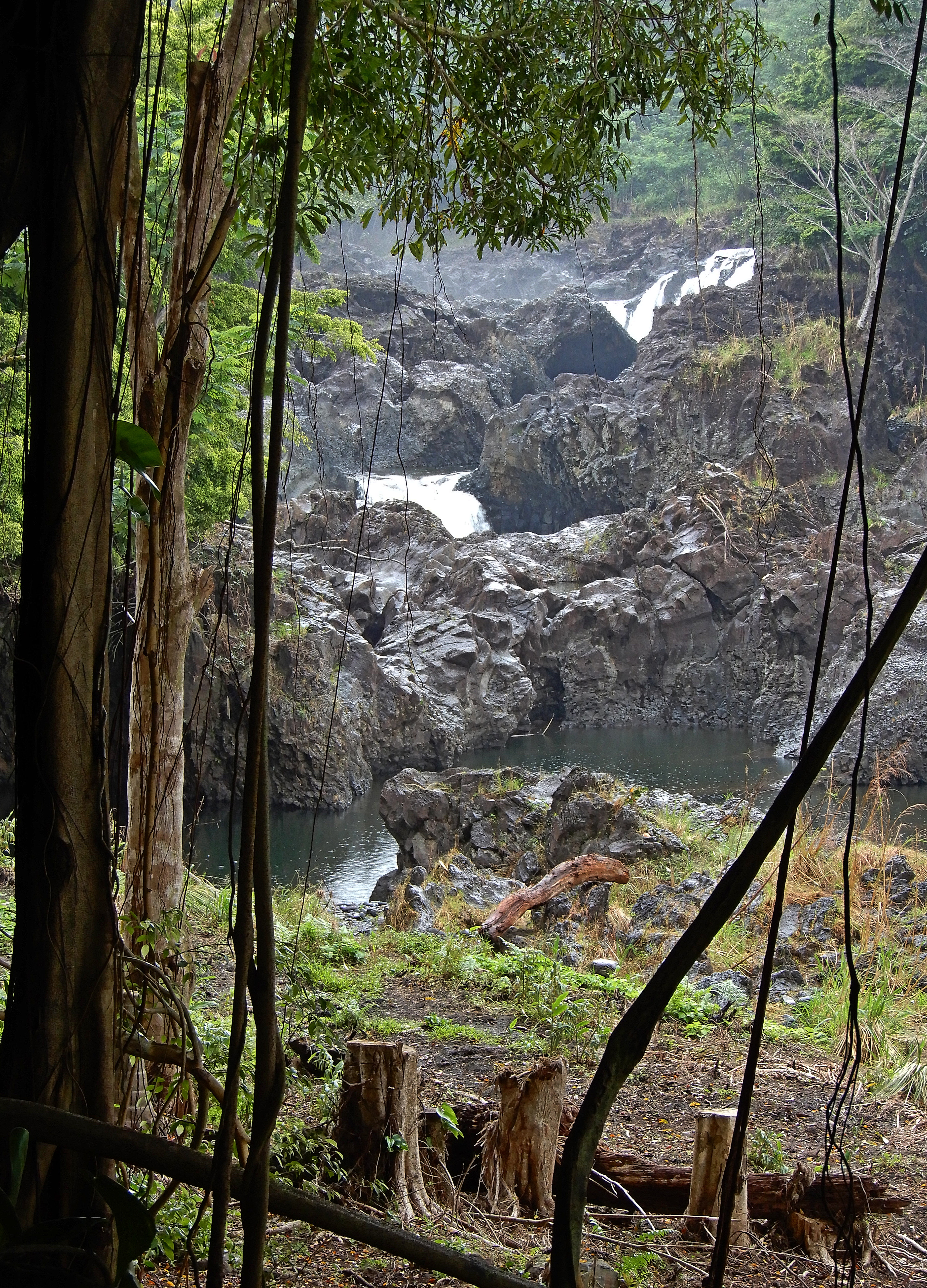
Gray skies colored all of Friday the 13th, as promised by the dawn. After a lazy start, and feeling the effects of our up-and-down trek to ‘Akaka Falls the previous day, we drove all of 3.5 miles or so across Hilo to Rainbow Falls in Wailuku River State Park. A gentle, sporadic spitting of raindrops punctuated our first view of Rainbow Falls (above). They continued as we climbed under the trees for a closer look.

Volcanic rocks made slippery with rain didn’t appeal to us. We stayed under the trees and gazed upriver, unaware another set of falls existed just a short distance away.
Weather dictated indoor activities, so we headed to the Lyman Museum (recommended). Ravenous afterward, we grabbed fried plantains and beer at Ola Brewing.
 all the voices in my head