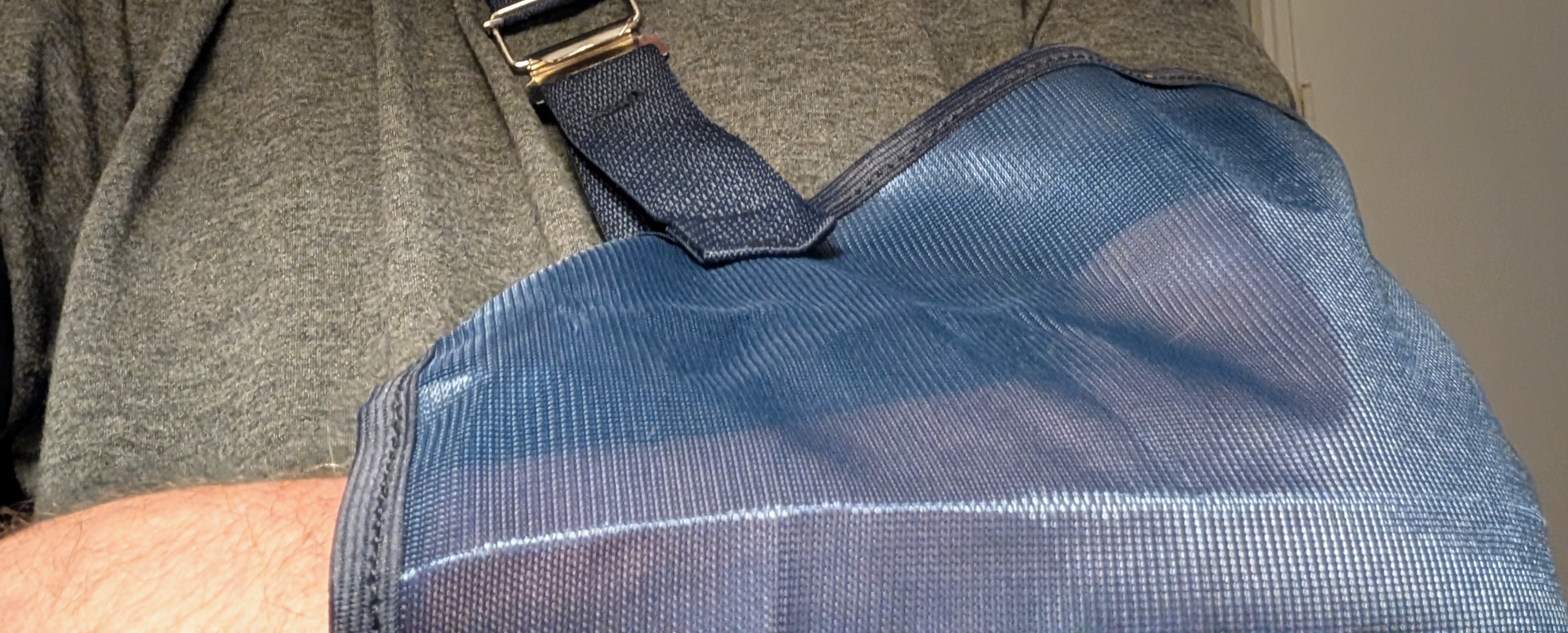
Every day I’m posting one poem for 100 days…or attempting to. August will tell the tale. So far I’ve navigated a couple of things which could have derailed me, including a broken arm last Tuesday evening. I’m reminded of the supposed Jerry Seinfeld mantra: “Don’t Break The Chain.” Seinfeld claimed it wasn’t his idea, but oddly, the show Seinfeld had an episode about it. The legend is that Seinfeld was at something (it’s been attributed to an open mike night/interview type of thing) and was asked what advice he would give to an aspiring comedian. His supposed answer was, “Every day write one joke. And don’t…break…the…chain!”
BAROMETER HEAD
Tunes atmosphere
Hears what no one
else can. Predicts
rain. Suffers through
hurricanes, his
head poundingly
painful. Displays
unnatural giddiness
during sunny
high pressure domes.
Can't leap tall buildings,
Can't stop bullets,
(but his sinuses
sometimes feel as
if they've done so).
His kryptonite?
Nasal sprays which
would destroy his
power, inure him
to those swirly
times when colors
speak, spoken words
seem tangible,
when he walks inside
his waking dreams.
A funny thing happened when I started writing my poem for today. Halfway through a different poem said, “No, write me instead!”
A true tale….
I once read a book
where every distinct idea
received its own line,
prose as poem,
purposefully presenting them
in bite-sized pieces.

I remember it because
at sixteen years
I learned about infinity
this way, how
one infinity can be bigger than another.
Before this, I had thought
"Infinity is just Infinity,"
never dreaming
"it" should be "they,"
never considering
they could be quantified
(kind of).

"Think of all the numbers on a number line,
how they go on to Infinity.
Call it Set A.
What if we add one to Set A?
Call it Set B.
Set B must be bigger!"

"Think how a number line goes from Zero to One.
If you go halfway from One to Zero,
then halfway again,
and so on:
obviously you'll never get to Zero.
It's an Infinity, but...
since it's contained between Zero and One,
just as obviously it's smaller
than the infinities we discussed with Sets A and B."

My mind was blown. No
wonder I took psychotropics.
What else could I do to
fill the spaces it had made?
My wife changes
linens as lunatics do:
four sets, towels,
sheets, rotated through
twenty-eight days.
White as reliably
follows Black as
Waxing follows
Waning.

Occasionally I've
challenged the Tide
by suggesting, "why
don't you wash Thursday
instead of Friday?
We're vacationing
soon. Best to look
forward, balance it."

I've no idea how
my Tides of Time
intersect hers. It
makes things
interesting.
O children of our thoughtless world,
Rise up to claim your prize.
We've left you worthless baubles,
We've left what you despise.
In times long past, when 'things were good'
Rewards fell in our lap.
We now disdain your plaintive cries that
All we've left seems crap.
Times get easy, times get tough,
It's not our fault we won—
We cashed those chips that came to us
As we think you'd have done.
Wonder not why we don't hear
Your cries for fairness' sake.
All we want lies in our graves
Where we'll be when things break.
We know deep down your reckoning
Will come as in life's past.
You'll wonder as you're winning why
Your children stare aghast.
21/100
Perhaps not everyone will agree with me on this one. Should you disagree, we can discuss in the comments.
20/100 I’m writing a poem a day (sometimes two), and now I’m 20% there. It’s causing me to rethink poetry and my approach to it, when and how I’ve written it in the past.
Every major city seems to have a botanical greenhouse where tropical conditions have been created to foster the growth of orchids, bromeliads, and such—or “July” as a resident of the American South might call it. I left just past noon today for a 25-minute sojourn around the neighborhood. When I returned, our weather gauge reported a temperature of 81.1°F and a relative humidity of 88.8% (now registering an even 89.0% 30 minutes later). Lighting was poor: completely overcast, the sun approaching its zenith. That’s okay. My poetry attempts have been poor today, also. This is my second try, the first being filed in the “maybe-it-can-be-saved” bin. This really isn’t poetry, more poetic prose, artfully arranged—unless it’s true what a friend said, that poetry is what I say it is!
Every Southerner learns gradual
acceptance of sweat, wears loose
garments, overlooks each other's
spreading stains. "Only mad dogs"
indeed. Why walk now? Surely
my Fitbit will multiply steps
taken in such weather?

Escaping my climate-
controlled cocoon,
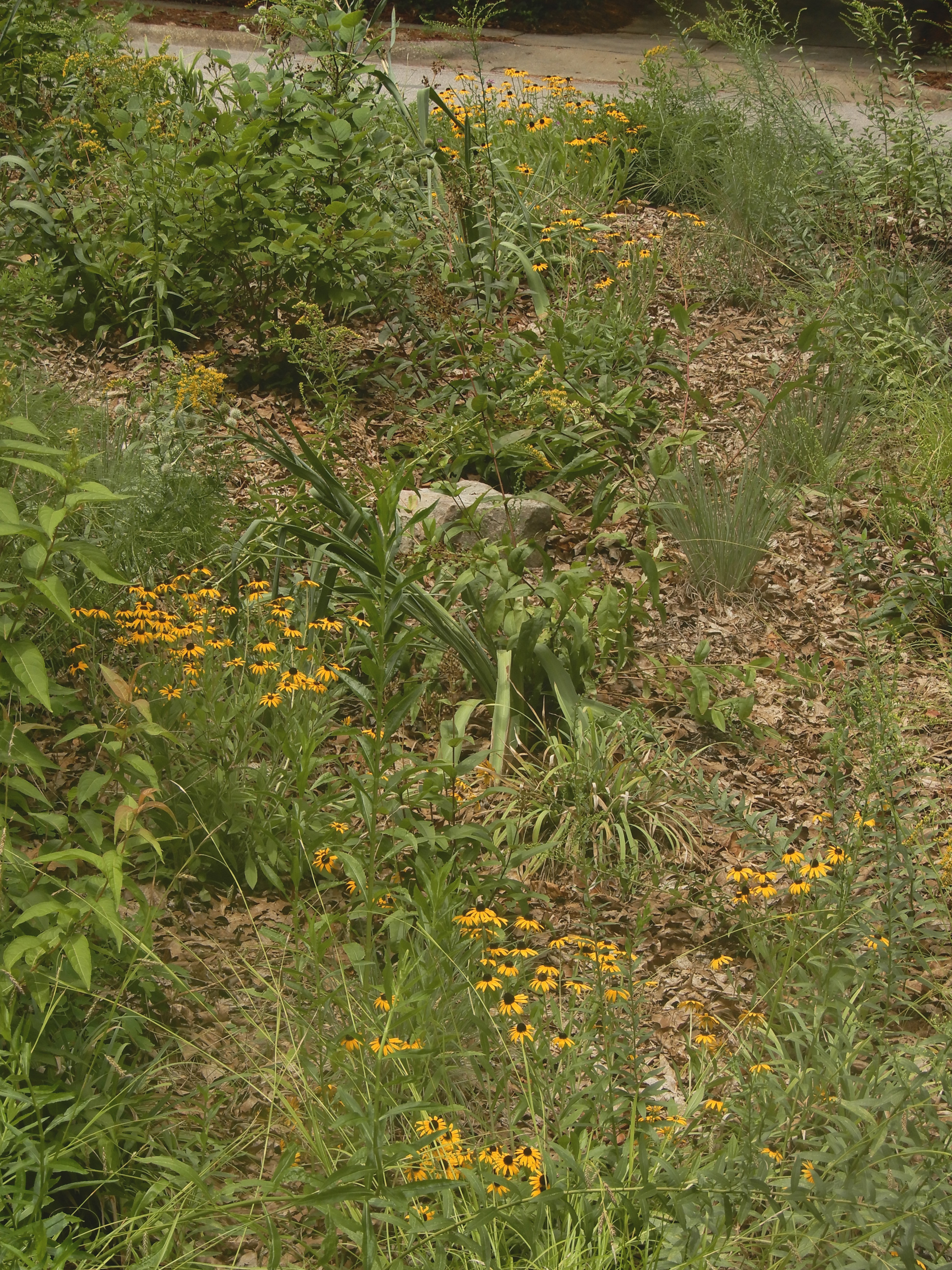
black-eyed susans cry
welcome. They're sprinkled
beside rattlesnake master,
goldenrod, butterfly
weed. Abiding our warmth,
humidity humbly, they
suggest I follow their lead.
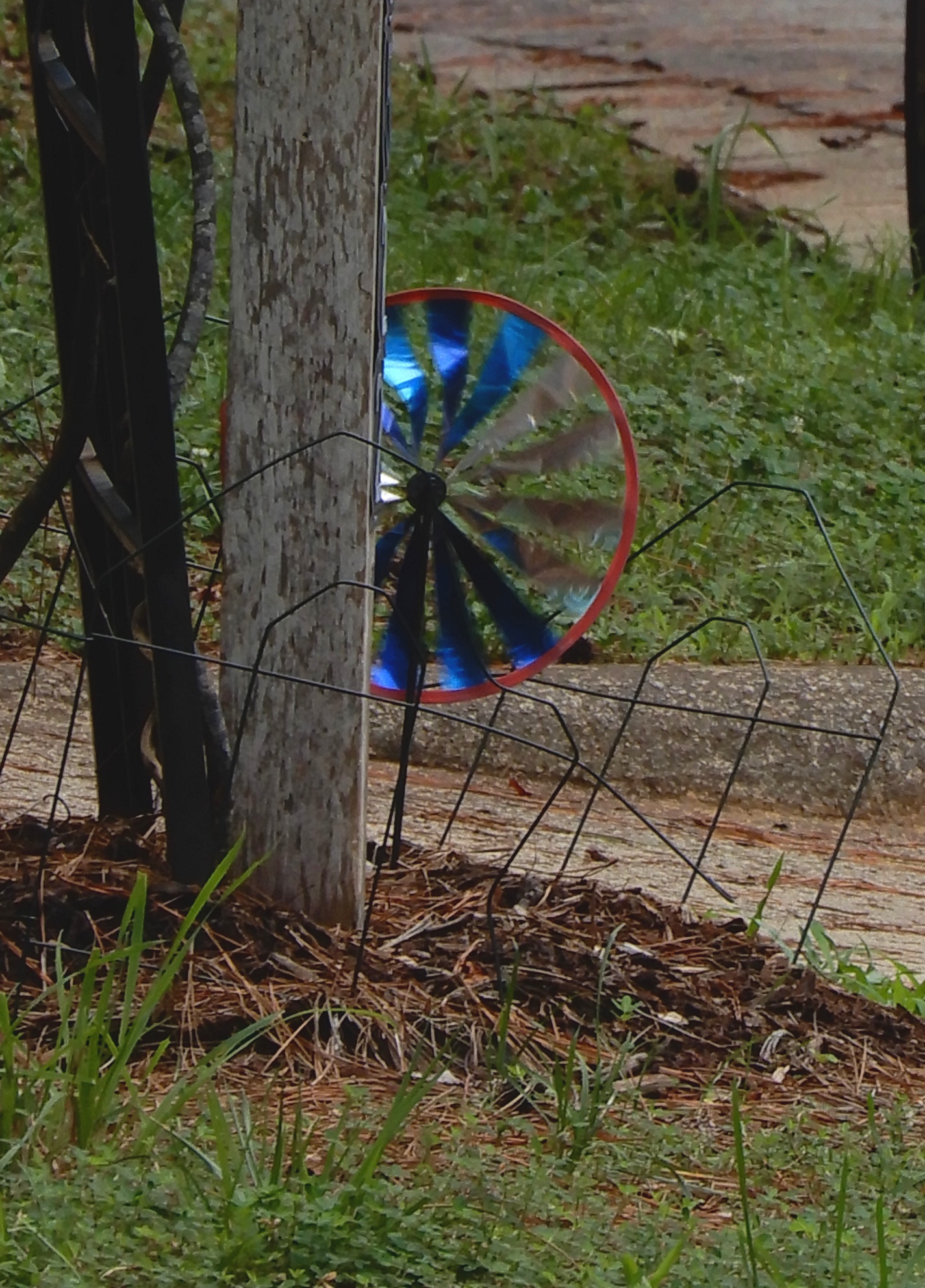
Minutes later brings one
patriotically-colored
whirligig, neglected,
spinning madly with each
new breath of hot air,
much like my country
does these days. Inured
to these new great divides,
I just see [whirligig;
patriotic] as I pass.
One neighbor's mailbox
decoration swings madly
with each puff of air. Its
caretaker keeps it small:
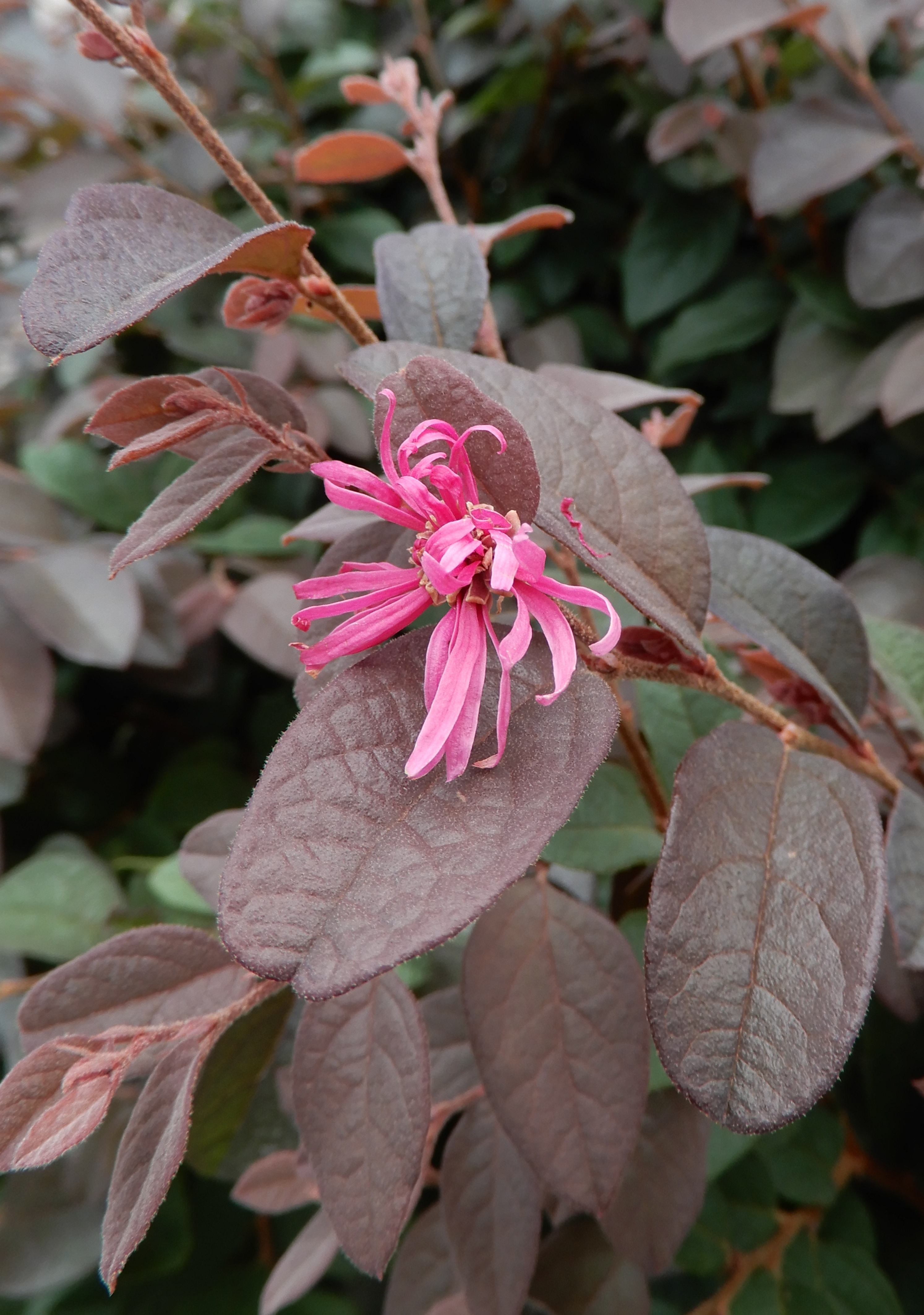
Chinese fringe flower
usually towers twenty feet.
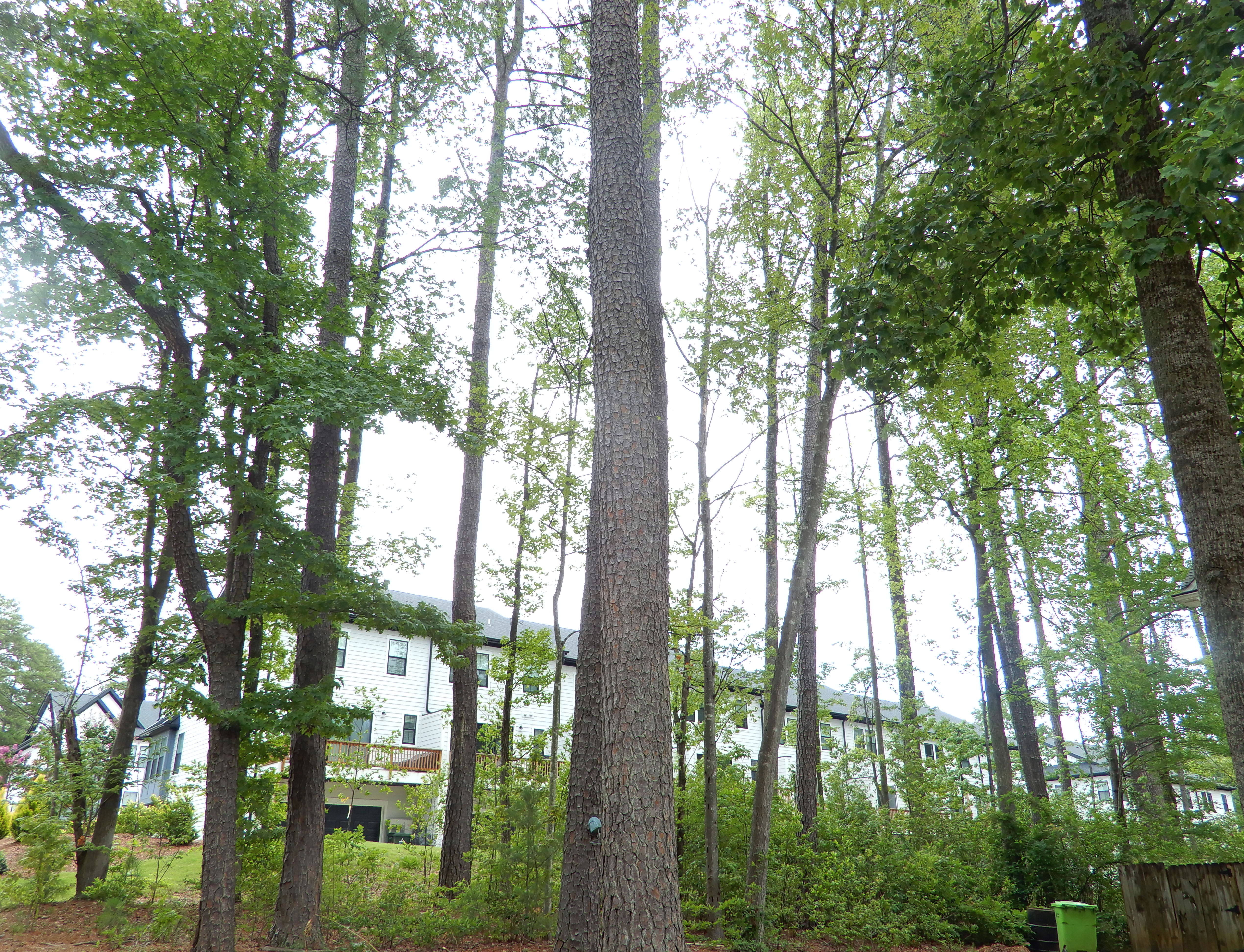
Where once I wandered scrub
woods (leftover nature long
subdued), newer years brought
townhouses, all units clad
in ubiquitous white,
(accented with charcoal trim!)
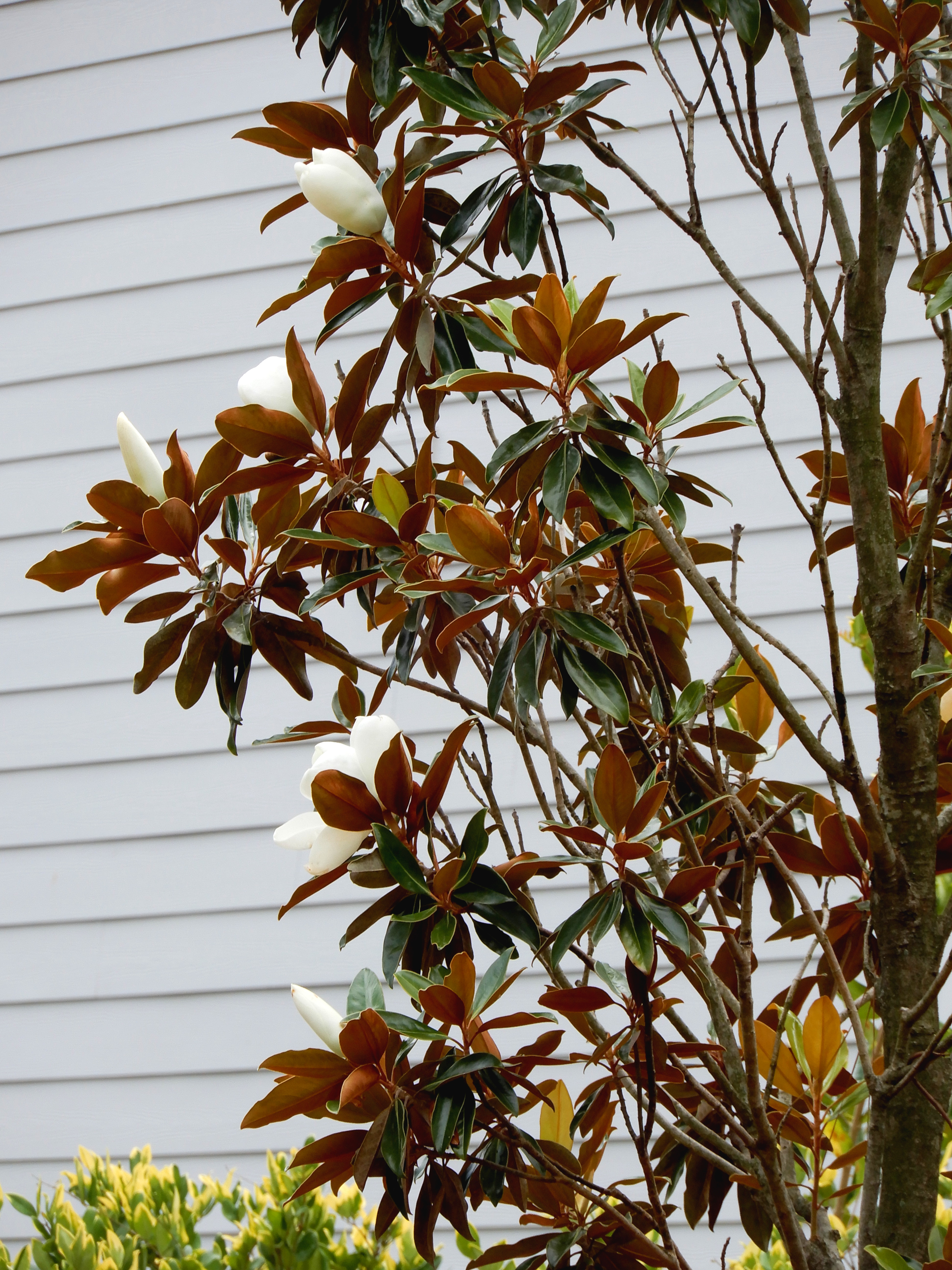
Townhouses get
young magnolias,
crafted ever-so-
perfectly by your
local nursery, while
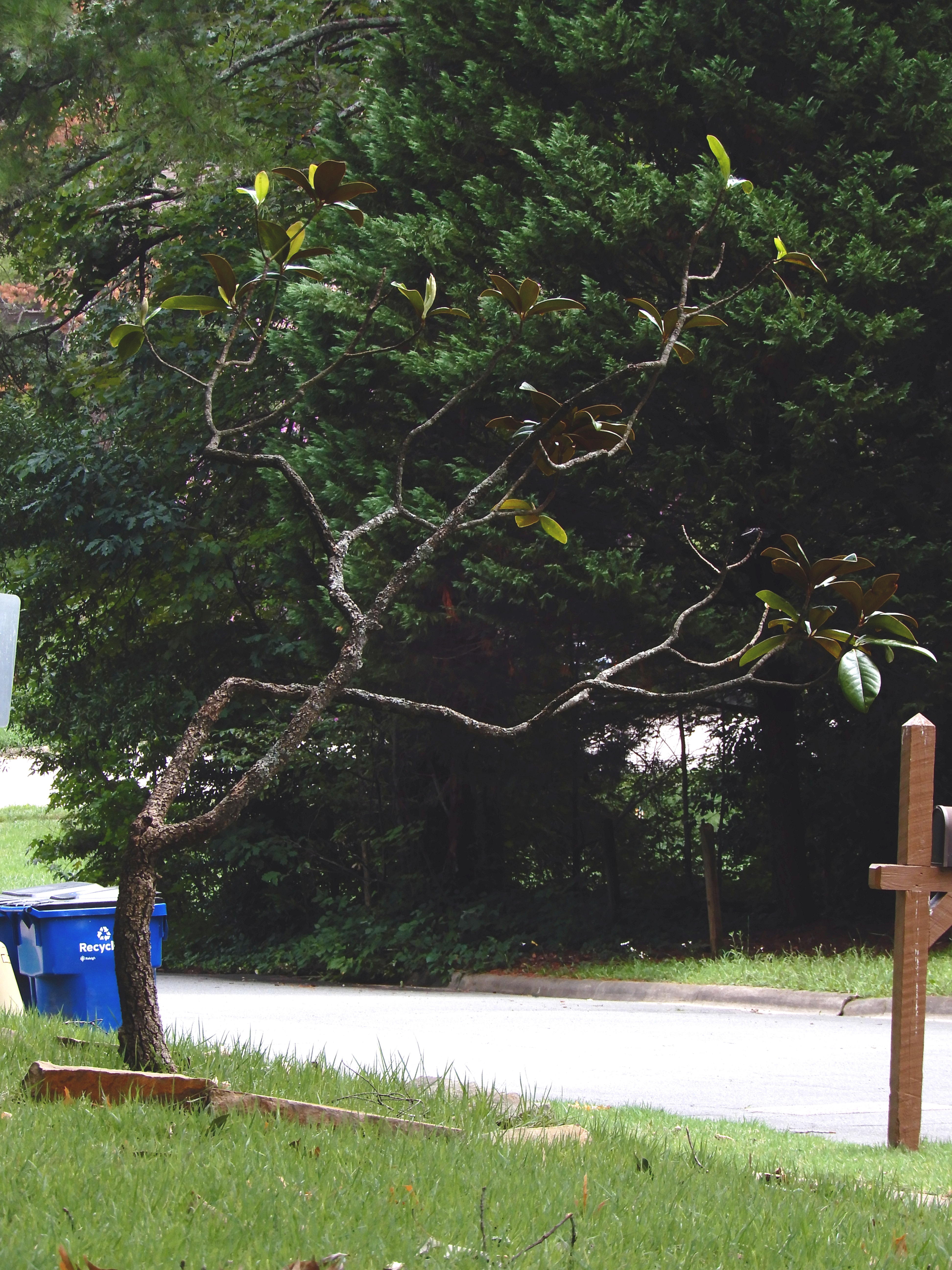
everyone else
nurtures what
such abnormal
specimens become.
Headed homeward I give
friend Crow midday greetings,
reflect upon our tree-bound need
for vegetables in front
(sunlight dictates placement),
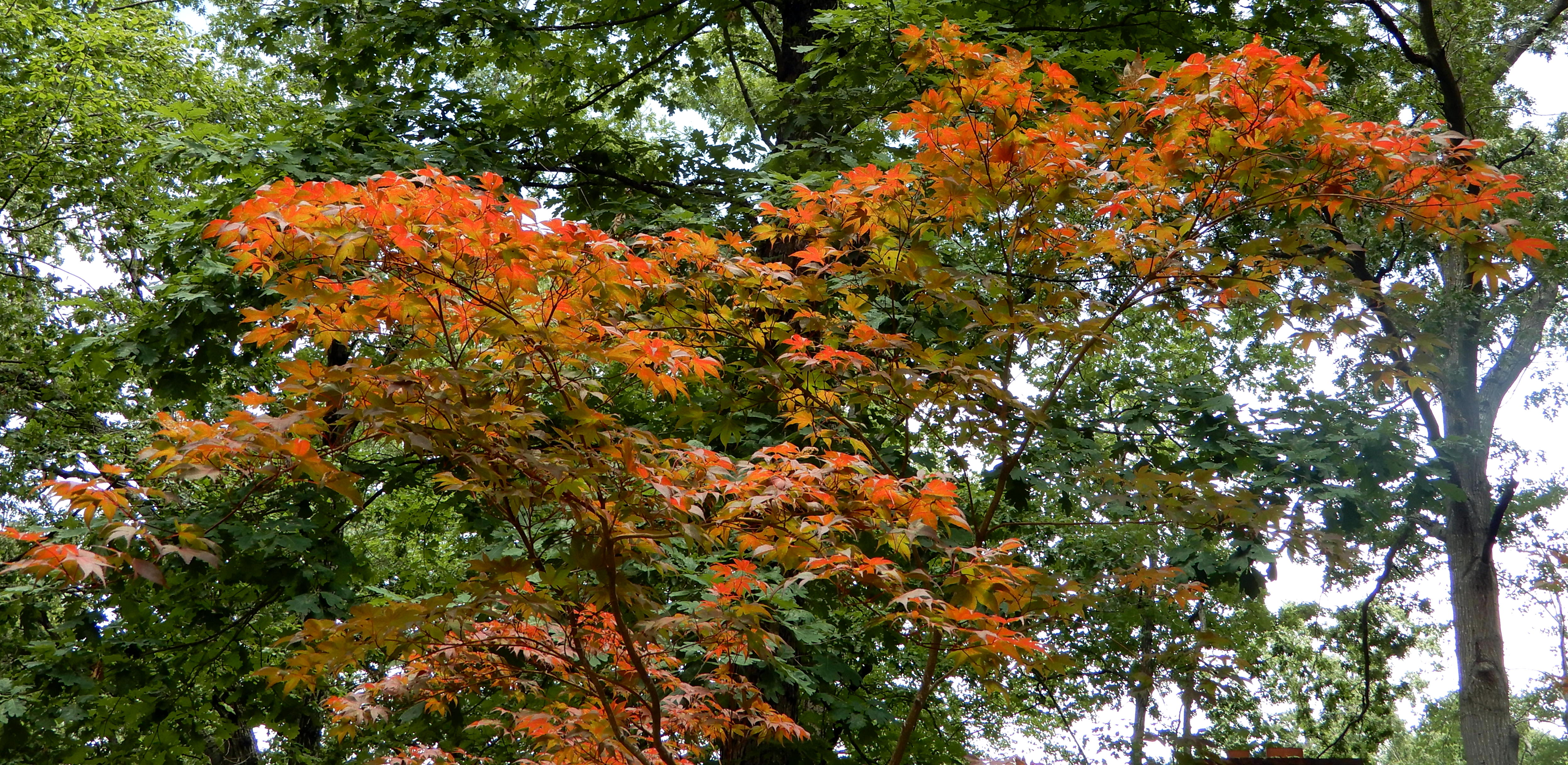
admire still-red maple leaves,
register my soaked T-shirt:
its limit of three-quarters mile,
exceeded by my four.
I’ve heard a writer should never apologize for his work. If I didn’t feel the compulsion to put a poem up here, I would work on this more. As may be: like a little boy who’s never quite clean enough for company, “it’ll do.”
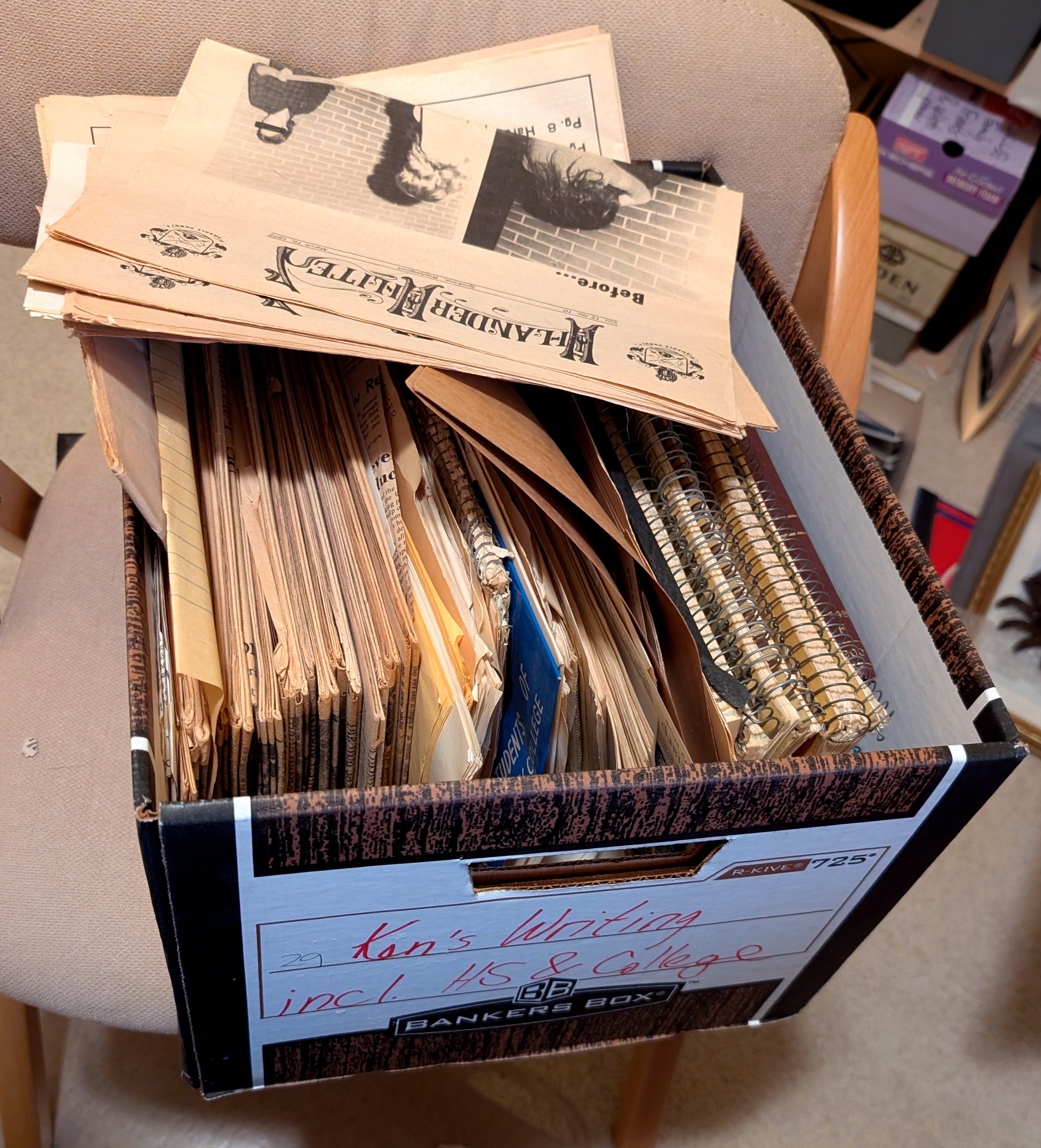
for fifty years plus five or six
he carried words he wrote. they
traveled in one banker's box:
to everywhere he'd stay.
they seldom saw much light.

he carried dreams for less than that—
they died in his mid-life. he feared
his will, lost hope, discerned no path.
life handed him ways he found weird,
brought a future bright.

throughout bright hopeless times he wrote
to capture what he felt. his
prose earned bread but poems' notes
sustained his soul—it is
what kept dull paths away.

electrons now contain his thoughts,
self-published at his whim.
without his dreams he found he'd bought
release from what trapped him.
dreams died but words found day.
One to conceptualize it, Three to interpret it (in three different ways), Five to be too busy composing, and One food-poet to cook the meal.
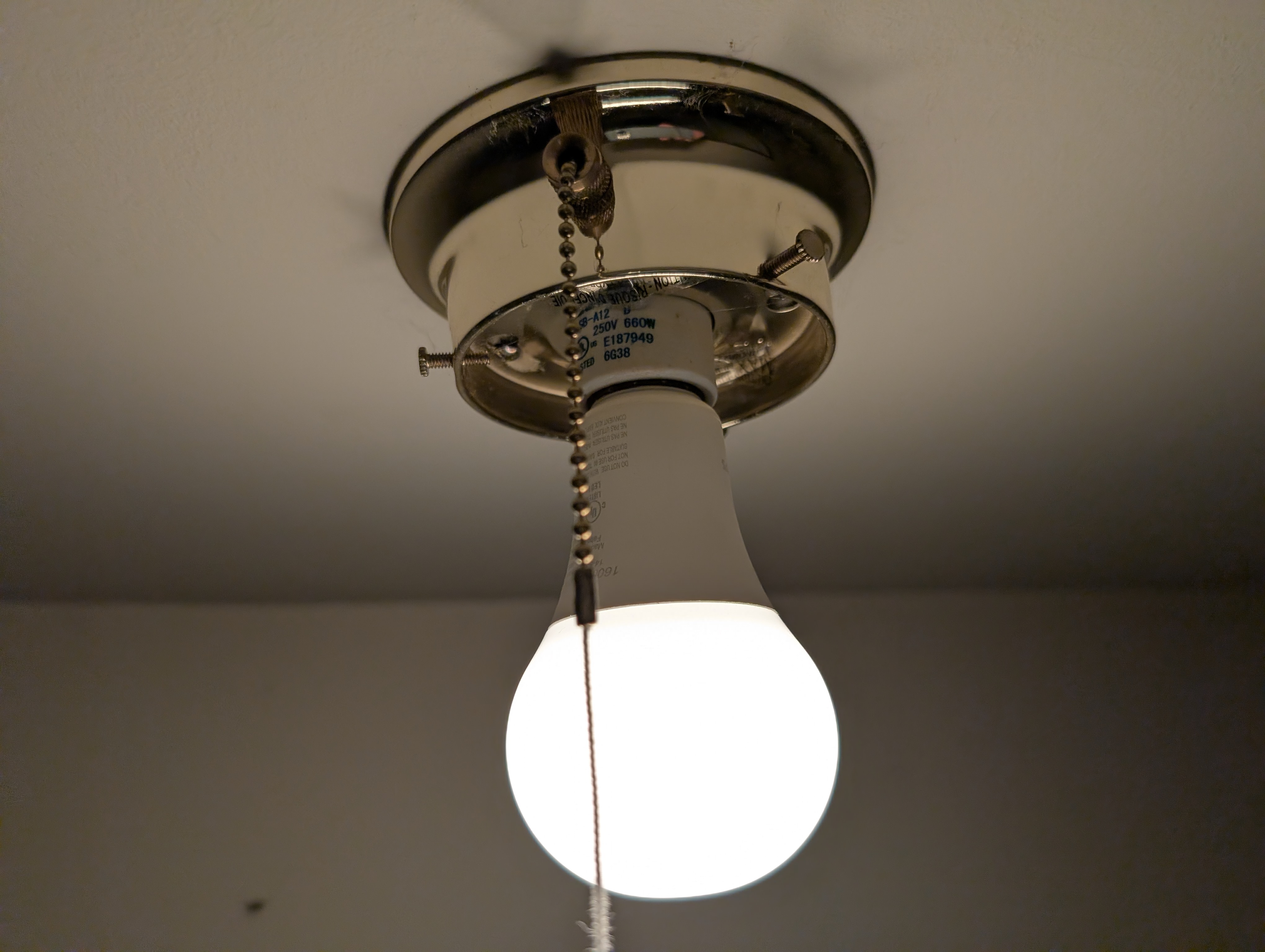
How many poets does it take to screw in a lightbulb?
Two to perform scansion of each turn of the bulb (and argue about it), One to comment on bringing light to the darkness, One to rail against Man's innate desire to alter reality, Five to demonstrate ignorance of basic threaded objects, and One mechanical-poet to screw it in.
How many cooks and janitors does it take to describe grief as relayed in the robin's song at dawn which promises another empty day? How many paint their pain with words, plain for all persons to see? How many read to the last line of a silly poem about cooking dinners and changing lightbulbs?
16/100
Today I discovered I had numbered two poems #9. Yay! This so-called 15th poem is the 16th!
I had thought the poems I dragged out of notebooks and polished would garner more comments and better ‘reviews’ than those dashed out on the fly, but this isn’t the case. For the record, poems 1 and 2 were openly declared as poems written in June while traveling in Scotland, Wales, and England. I just hadn’t got around to posting before I started this 100-day challenge. Poem #3, “Business Poetry 101,” was written approximately 2004 or 2005, edited moderately and posted. Poem #7, “Between the Boards,” also received moderate editing; the biggest change occurred when I moved the final lines down one to signify they occurred at the same spacing as the boldfaced ones above them, and eventually they became boldfaced as they composed a new set of boundaries. The haiku written as #9 but in reality was #10 sprang from an opening line to a haiku which I then re-wrote for lines two and three. The most recent recycle job was #11,”Dova,” which had a final, three-line stanza added to it. I’m pretty sure I’ve run out of poems worthy of being recycled, 16% of the way into this challenge, the training wheels come off, the water wings disappear, and I need to keep the plates spinning by myself now. After that my next biggest challenge will be in two weeks when I need to write a poem each day while on a two-week vacation. (I might just stockpile them.)
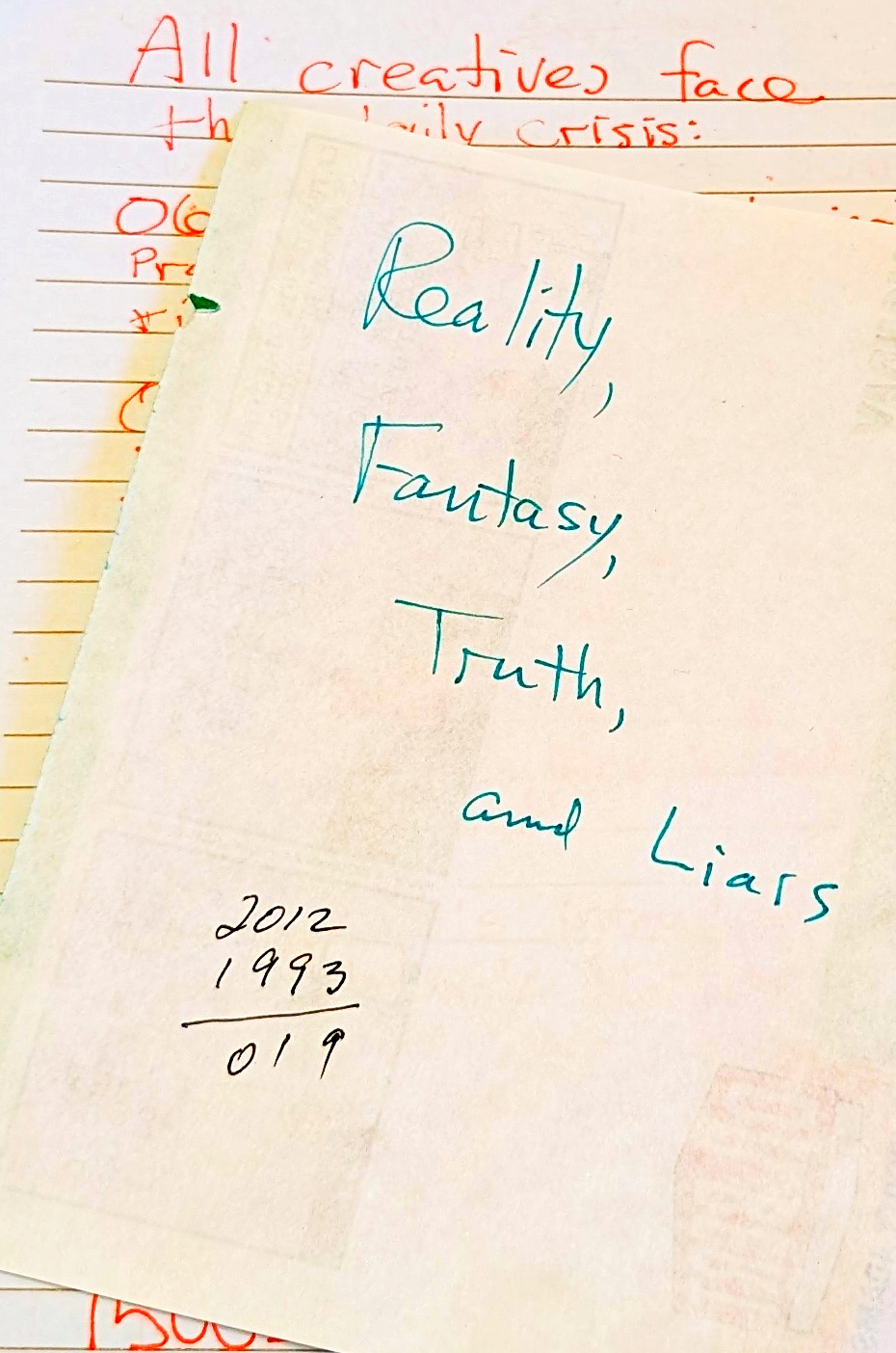
Nighttime scribbles. Wish I could remember what that great title goes with.
One: did words just
pop into your head?
Dressed for success?
Silently shouting,
"Look. At. Me."
Well? What will you
write in response?

Two: did last night's
"Tah-dah!" moment,
captured scribblingly,
profess any worth when
illuminated by morning sun?
Or did beer think itself
scholarly? Well?

Three: has this image
squatted in your mind,
vagrantly occupying
your attention, its
presence exciting but
annoying? Evict it by
describing it?

Four: if Image
brings her friend,
Emotion, accompanying
your nighttime scribbles,
party troika promising
trouble plus fun—
you've got poetry.

Good luck, sucker,
hanging on to your
sense of control. See
ya after your eyeballs
roll back, you forget
your agenda, you
forget your promises.