
I have posted one or two screeds in the past few weeks about poetry that I read online. By way of explanation, I will do something I have so far (to the best of my knowledge) refrained from doing. I recommend reading this blog: Ephemeral Elegies. Tiffany Renee Harmon re-publishes the poets who are being published online and in physical print. At least 80% of it is good (my opinion only), and all of it is better than anything I can write. The times I’ve written this and this, I’ve been speaking to poems read on her blog. This is what decent, modern poetry looks and reads like. This is the standard to which I hold myself and everyone I read.
Category: poetry
why I poetry
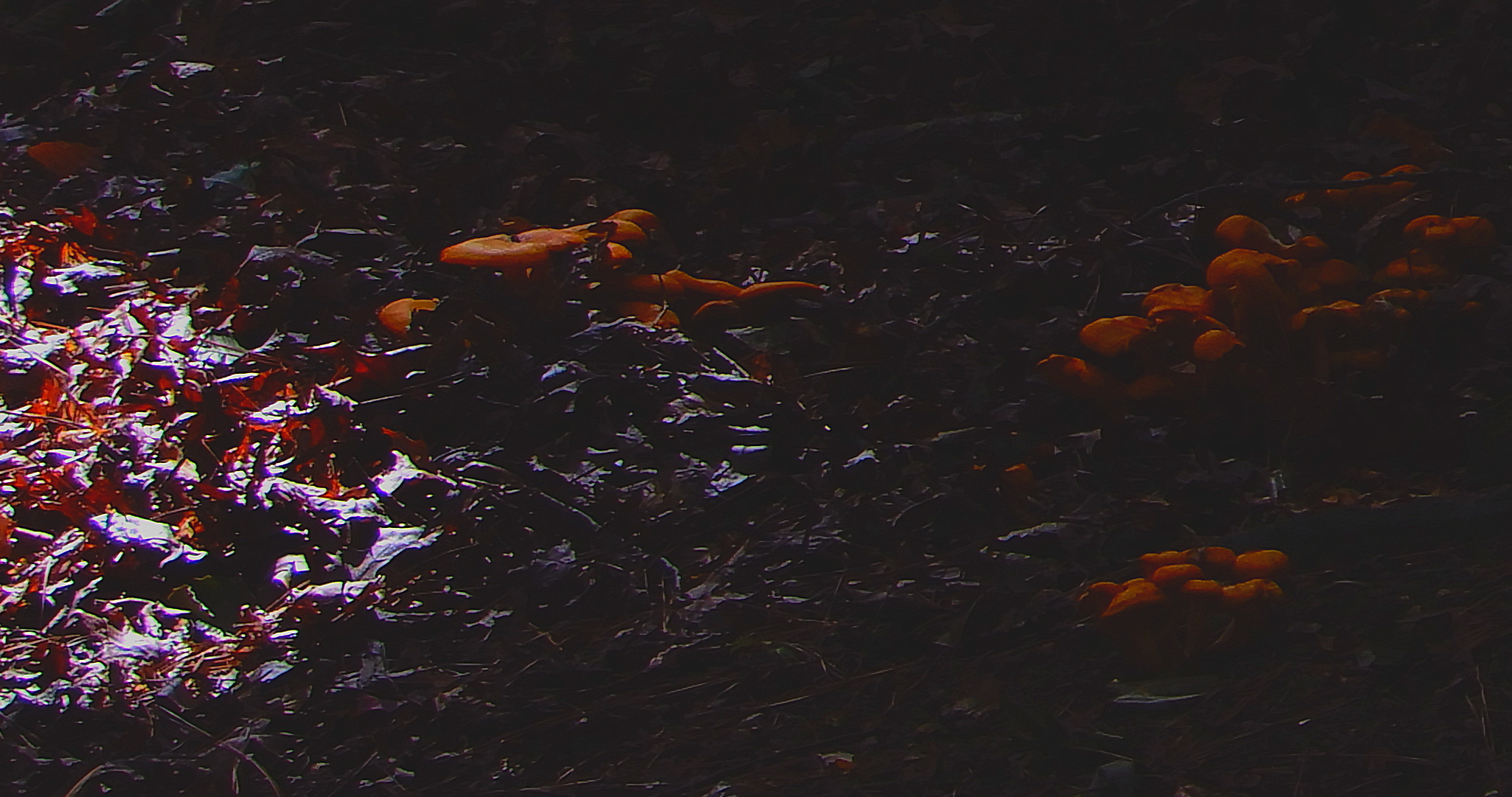
"You know why I poetry?"

[Excuse me?]

"I poetry because only there
unclamps my scheming, planning,
anal-fixated Self. It can't get
Here, this Here where I poetry.
It doesn't like it though, when
I'm Here. Can you
hear the screaming?"
an optimist’s view

Universe beneath my feet surreal:
optimistically colored.
When we lost Lokisson

We watched, sadly horrified
when little human-things
took down Lokisson--one fine
oak with humors unusual.
"I lean over their rock-paths,
put down by these silly
human-things: they look up
fearful, ignorant of my
deep-rooted stability."
He would laugh at his humor.
If only he were stable
as his roots! No.
Humor's ultimate end:
fearful, weak-full, they attack
first. Angry, snarling chainsaws
bit from all sides, ganged up,
velociraptors hunting
arboreal prey. We knew
their type from so long ago.
Elephant-bellows issued
from metal contraptions which
looked vaguely tree-like, screaming
their masters' fears skyward, their
cries sometimes oddly resembling
bugling elks we heard in times
before. Lokisson's beautiful
limbs disappeared first, fed
into hungry maws, exiting
pulverized to bits. Metal
sheets rang thunder to our sky.
Then...section by section...his
segments fell, crashing, loudly
cutting off his jokes forever.
We cannot laugh through our hurt,
perhaps won't for many seasons.

For two days afterward our
living sky cried and grumbled.
Trains, hunger, and ghosts
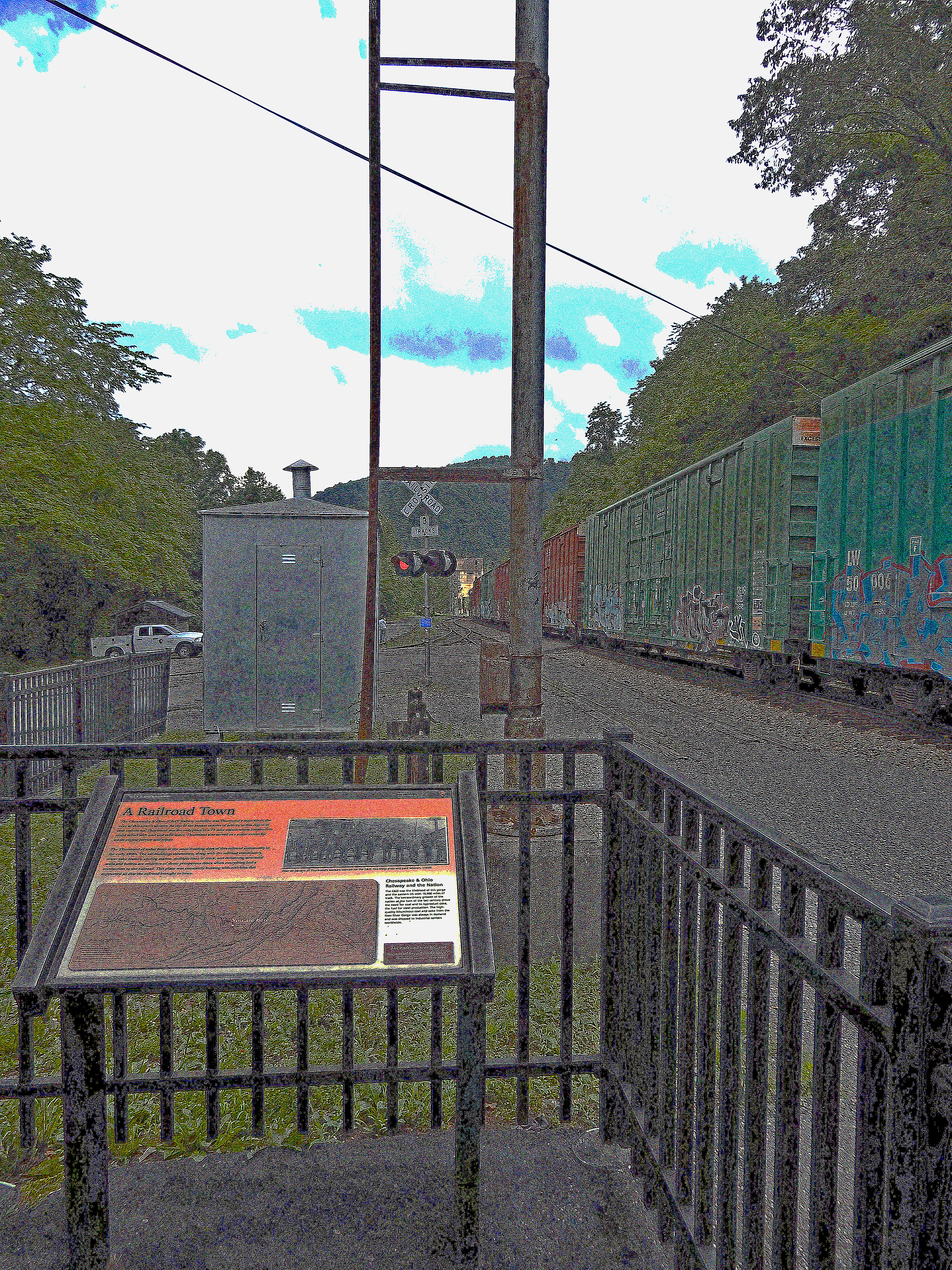
Today trains run down
Thurmond's rails laid with
promises we thought
included us, made
us integral to
those trains, controlling them.
Those trains controlled us.

Today, trains still run
through Thurmond, still
sound horns at crossings
where tourists gape their
tourist-gapes, where grass
reclaims what we wrested
from this steep slope.

Us? We melted into
America: most to
nearby towns, some to
Cincy or places
far-flung like bits of coal
escaping from tenders
serving locomotives.

Stocks dove mortally,
banks failed. Ours held on:
two years, five years...
then closed or left. Our
hotels burned, fell down.
Yet tightly we clung
to traditions learned.

Progress ushered steam
engines into history.
Their coal waited uselessly
beside steel tracks. It
heated our homes, true,
but offered nothing more:
we couldn't eat coal.

We sought regular
meals elsewhere, hungry.
Federals bought up what
we never owned anyway.
Thurmond's landed stayed,
profited, found new cows
from which to milk money.


(All photographs were taken in Thurmond, WV, July 2023. Though Thurmond dried up after steam engines ceased to ply the lines–the last one in the early 1950’s–a few persons hung on. In 2020, the population was five.)
We are not called

or, “To all who run toward the open field”
Not all are called to priesthood;
...to teach,
...to heal,
...to defend,
...to right wrongs,
...to lead,
...to agitate,
...to write
The Great American Novel.

Some of us pursue
not purpose but
meaning in being,
in "job well done",
in talents exercised,
in immediate
gratification for
problems solved,
purposes fulfilled, in
greasing wheels for
others, serving those
we do not know to
accomplish what we also
do not know. To add one
rock to the pyramid
being built by us all.
i sing the keyboard Selectric
(a first draft with apologies to Whitman lovers everywhere)
I sing the keyboard Selectric,
The keyboards which I loved and those few which loved me,
They will not keep up with my fingers nor respond to them,
But IBM corrupted me, charged me full of longing for the charge of the ball.

Who could doubt that once corrupted, we would conceal ourselves?
If once defiled, we would not attempt to defile others?
If the up-and-back could not salve our soul?
If the jittering ball were not our soul itself?

The love of its inky black nothingness of a ribbon, we scarcely balk to account,
That of the ball is perfect, and that of the ribbon is perfect.

The expression of its typeface balks account,
But the expression of a well-made page appears not only on the paper,
It is in the slight indentations felt on the paper's reverse, it is curiously in the non-smearing type left by supple wrists,
It is in the ball's walk, the absence of carriage, respondent to flex of wrists and fingers; cover does not hide it.
The strong black strokes jump from the rag cotton carrier,
To see it conveys the best poem, perhaps more,
You linger to see what life it might bring back to dead prose.

Bridge from Underwood to cathode ray tube, to green dots pointillistically imbuing meaning in blackness,
The thin dark lines of letters stringing meaning, the meaning within you and me,
The exquisite realization of print;
O I say these are not the parts of prose only, but of the writer's soul,
O I say now these black lines are that soul, meaning.
sucked dry
Did I say,
"nailed by meaning?"

Sometimes
your lines suck
my lungs dry,
replacing my
oxygen with
amniotic,
fluidic meaning,
sustaining me
more than I
knew I needed.
blue sunsets
What if sunsets were blue? What if
they resembled my recollections:
how I broke upon your hardness, how you
ran from my insensitive cutting
remarks, lasers which severed whatever
tied us together those few years? Would I
ever have experienced solar reds, oranges,
pink-tinged magic? Known this reality?

Turned from unreal shadows dancing on
Plato's cave wall, pushed into dwelling
among well-lit shadow-makers,
my memories hold
only blue shadows
watching blue sunsets.

collecting

Some comb beaches
pocketing striking shells,
attempting time's arrest.
I, rather, snatch sun's
rays from morning and
evening skies, saving
moments too fleeting for
memory--tweaking my
specimens to resemble
what my minds-eye says
actually occurred.

 all the voices in my head