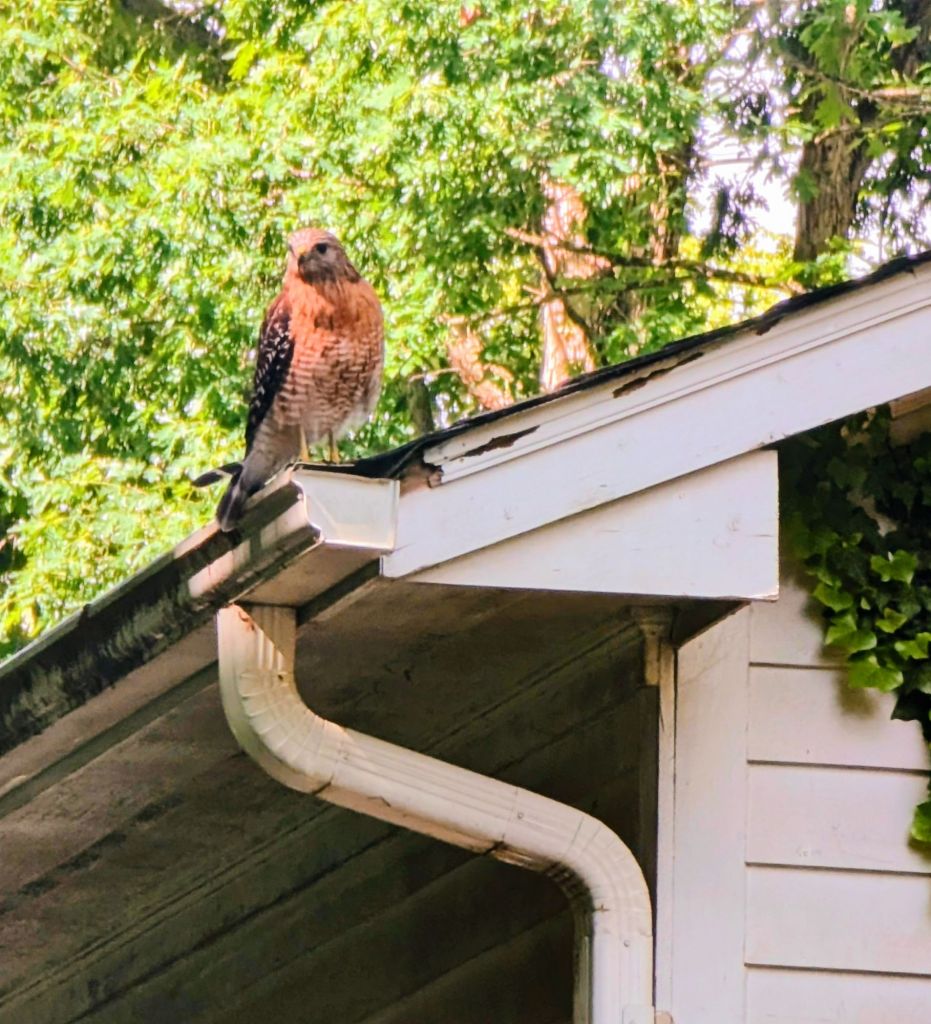
This is not a laurel, but don’t rest on this either.
How to rest on one's laurels?
Lie down gently, carefully, not disturbing
Leaves painstakingly crafted long ago?
Stare lovingly into one's past, enamored,
About as useful as Lot's wife leaving Sodom? Or,
Drop this poem onto them as one
Eagerly pushes a new lover onto covers
Which right now don't mean a damn thing?
Listen,
We strategists need trends,
Data telling us where we stand.
Then you'll require our touch.
Without pictures, we're flying blind.
We cannot simply adhere to "The
Way We Did It Before"—that's
Corporate death, corporate
Deafness.

Right
Equals a certain point in
Space and Time. Standing
In place, in Space, without
Consideration of Time
Will make us
Wrong.

Therefore
We're desperate! Quick! Give
Us data, our picture for
Where Everything's At,
So we can tell you
Where Everything's Going.
Wherefore...

That's why we're bugging you.
If we can get that,
Our Archimedean Place To Stand
Will have arrived, and
We will move the world.
Nearing a week together, our band of 15 travelers, one guide (Jacky), and one bus driver (Janos), drove country lanes wide enough (maybe) for our medium-sized bus. Unfortunately, these were two-way lanes which couldn’t accommodate on oncoming car plus our bus. A lot of jockeying around occurred, leading many of us to marvel at the driving prowess of our driver. Guide Jacky asked us all to participate in a limerick contest. I did not win, a travesty I’m still wounded o’er, but I console myself that the judging was lax. (The winner claimed the top prize because he totally ignored the rhyme scheme of a limerick!)
R.O.C.K. in the ol’ U.K.
The Beatles had nothing on us Nor The Who with its Magic Bus. Led on by guide Jacky, We’ve grown rather wacky, As we’re driven by the good kind Janos!
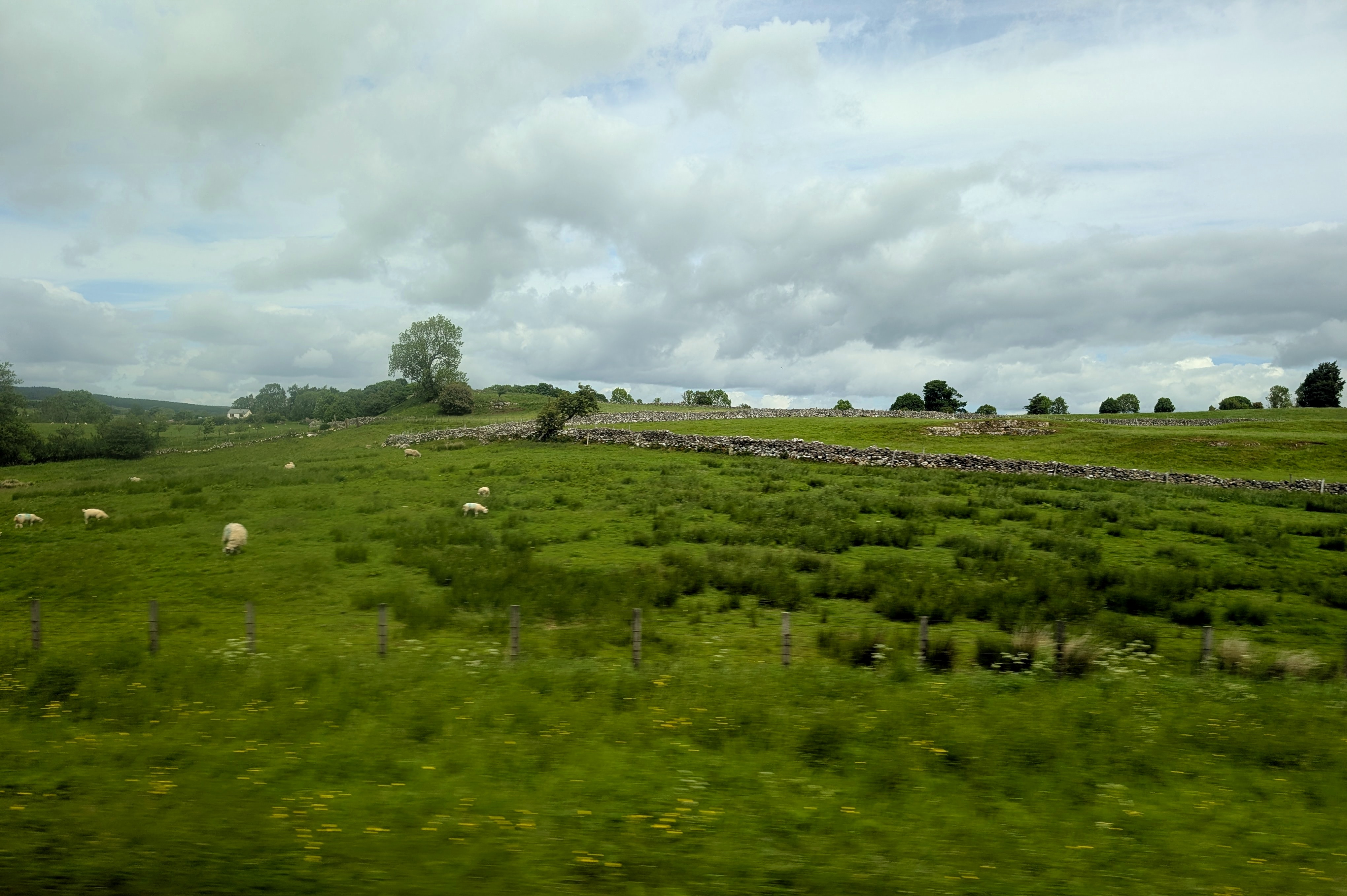
A friend from the blogosphere is publishing 100 poems in 100 days. I’ve decided to at least try to do that, and I’m going to try to catch up with her by publishing multiple poems per day for a week or so. While in Scotland just about 30 days ago, riding along in a tour bus, I marveled at the ubiquitous sheep and the beautiful landscape out the window.
In Southern Scotland
Sheep dot grassy fields,
Their sides shagging wool.
Clouds scud through skies,
Like inverted sheep, woolly
sides down. Dark ones
Sprinkle naturally holy water:
Priests of nature, they
Remind all—sheep, cows,
Tourists in buses—of our
Divine brotherhood.
Tonight
Our cheap Monet poster
mounted on Styrofoam--
bowed, faded, purchased for
$2 at a garage sale,
displayed for three years,
neglected for eight—
finally found purpose again
covering Ethernet cabling
which carries premium network
signals from one room to another.
As I walked across it, I said,
"Sorry, Claude. Such becomes of genius."
Charlie, seen here two weeks into his stay with us, and letting us know that warm laundry out of the dryer is for sleeping and nothing else. January 2016.
A MOTHERS DAY GREETING
by Susan Pilcher

The cat blinked once,
The cat blinked twice,
'I love you, Mom.
That should suffice.'
Benny adds, “…and luggage…luggage is for sleeping also.” May 2021.
To those who face the frailties of life and to those who have transitioned elsewhere…
We're marching to our deaths at birth
Then unaware of Life's propose.
Plans made, plans dashed, let's laugh with mirth
As march we must to last repose.

When first we view our life's true end,
Made real by year, yet not by day,
We vow to hoard, vow not to spend
More time in idleness, in play.

Not 'til our bodies tell us true,
Our end looms close, looms real,
Do we admit, "I wish I knew–
Please, one more spin around your wheel."

This knowledge brings its own reward,
Knits us to others suff'ring too.
As I face down my ailments hard,
I understand how so do you.
In the past month one of my blogosphere contacts has died, and another faces a tough cancer battle. Here in the physical world a good friend struggles to walk, a second puts on a good face as her husband remisses into cancer, a third breathes slightly easier that her sister didn’t die last week, and our closest friends both battle mystery ailments. On a personal note, sciatica has said, “Remember me? I think I’m gonna stick around this time,” and my blood pressure has decided to ignore all my meds. I really can’t think of one good reason for the fact I want to grab every single person between 40 and 60 and declare insistently to their startled face, “WAKE UP! QUIT WASTING YOUR TIME! DO WHAT YOU WANT, DO WHAT YOU MUST, BUT FOR GOD’S SAKE QUIT DOING WHAT YOU DON’T WANT, WHAT YOU KNOW IS WRONG FOR YOU!!” Yeah, I wouldn’t have listened to me either. I don’t really have regrets. It’s just the shock with how quickly it changed in the past five years. There’s no way to prepare for it–but for some reason, perhaps the shock, I want to turn around a tell someonehow I never realized what this was going to be like. Sure, I’ve seen folks navigate these years, but for some reason I never saw the road that connects I’m Okay Right Now with I Am Really Old And About To Die. And I really wish I had.
I’ve come to believe everyone thinks in pictures, even if they don’t know it. By adulthood some of us go on autopilot, our connection to the pictures, images, emotion-movies cemented so far in the foundation-concrete of our makeup that we know only words anymore.
Creativity demands turning away from the words and toward the pictures. Visual creatives, you live here. Connect your hands to your pictures. We wordsmiths, though, must act as our own interpreters, must turn our backs on the pictures while remembering them, must translate the pictures into words.
At least, that’s how it works for me. When it works for me. (The rest of the time I just wander among the pictures and say to myself, “sure, I’ll remember this for later.”)