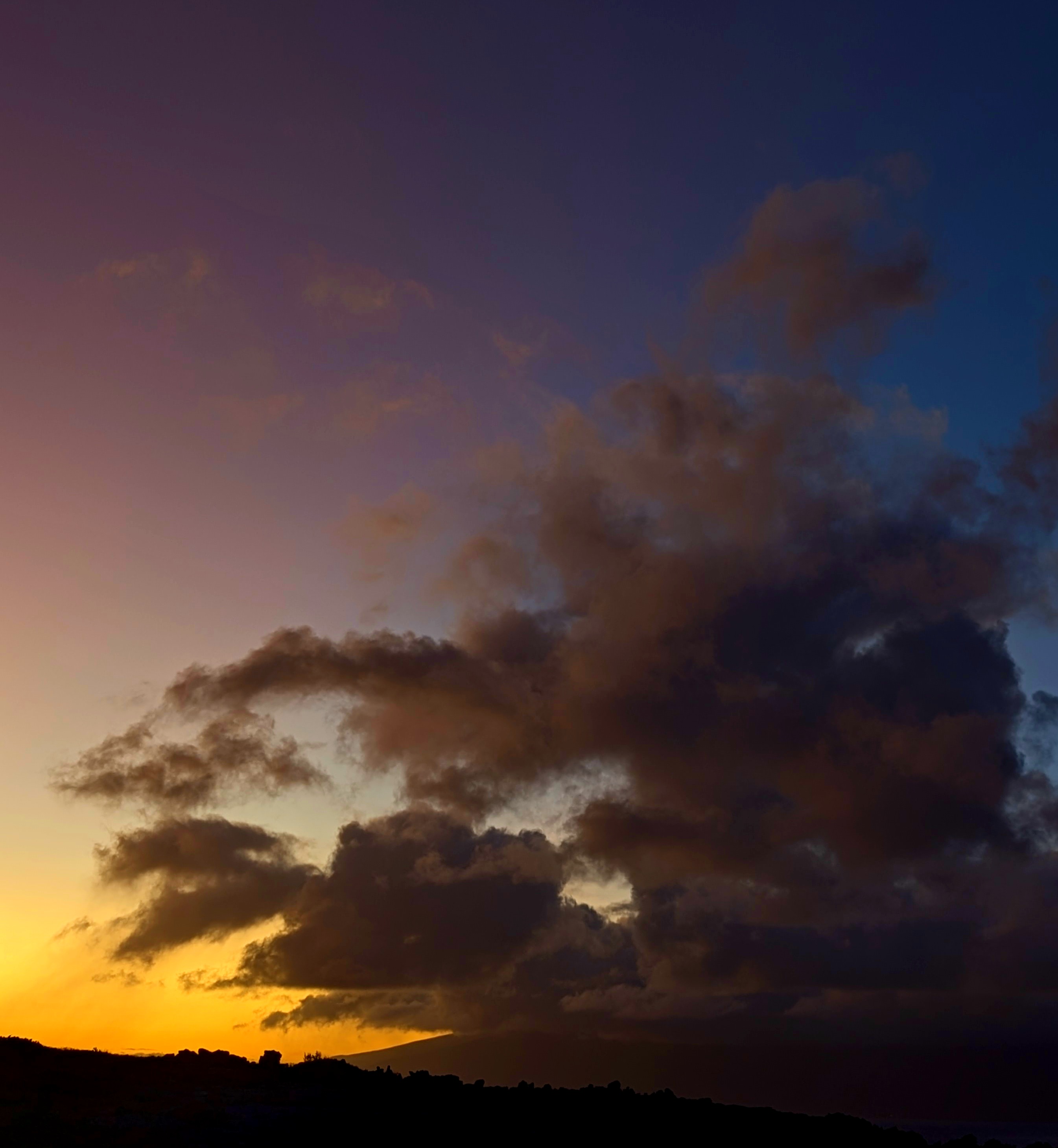
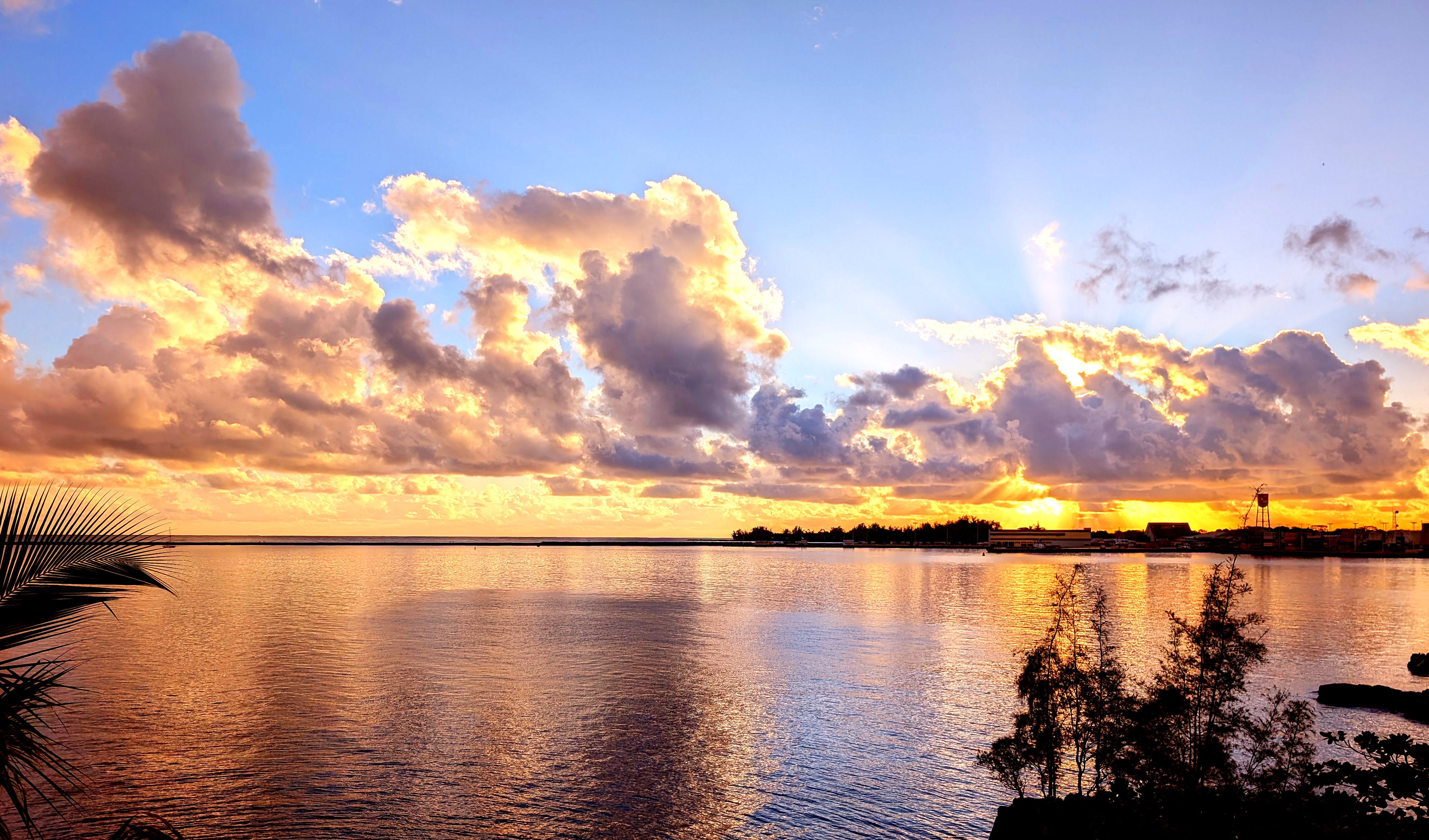
First sunset, with Molokai in background. September 2024.
Apologies, everyone. I’m going full Grandpa Mode in this one. It needs to be done.
After passing through three airports ranging from nice to delightful (see I Love You Hilo B. Airport), renting a car, and driving around the western lobe of Maui, we negotiated the contactless check-in process to our condo (another post for another day), unpacked, and stepped outside just as the sun set. Apologies for posting yet another sunset photo! It fits and I love ’em!
By the time our first full day in Maui dawned, we had made the decision we wouldn’t be driving around much. That drive from Kahului Airport to our condo at Kapalua Bay had taken nearly an hour. With little of interest in the miles and miles of condos stretching south of us to Lahaina, which itself offered much less after the 2023 fire wiped out half of its center, we realized going to any of the attractions mid-island would mean a two-hour roundtrip drive…every day. Attractions on the eastern part of the island (Haleakala National Park, for example) would be even further. If this had been our first few days in Hawai’i….but they were not.
We did drive back that very first day, however, so I could connect with my cousin whom I had not seen in 40-50 years. I grew up with only three cousins, all girls, who lived many hundreds of miles distant by the time I entered school (especially when they moved to Hawai’i for a few years). I gained a fourth when she was born as I finished high school and college, but the cousin one year older than me passed away about 20 years ago. With only three surviving cousins, and only two I actually knew growing up, seeing my Maui cousin qualified as a Big Deal. We met at the Maui Brewing Company in Kihei. After a delightfully long meal full of laughter, reminiscences, and plenty of beer, we toured the gated community where my cousin’s husband works as head of security. It’s a sweet gig: he works but two or three days each week and rubs shoulders with The Rich. He dropped some names, but I’m not allowed to pass them on to you. Suffice to say, when one of them purchases a home there, they promptly drop about a million to remodel it.
At the end of the afternoon we faced that one-hour drive back. We stopped in Lahaina at a Safeway for supplies, representing the first time I’ve ever seen a wine cellar in a Safeway.
Wine Cellar at Lahaina Safeway. September 2024.
That night the sun dutifully set, and I just as dutifully captured it photographically with twenty shots.
Sunset over palm. Maui, HI, September 2024.
The final dregs of sunset. Maui, HI, September 2024.
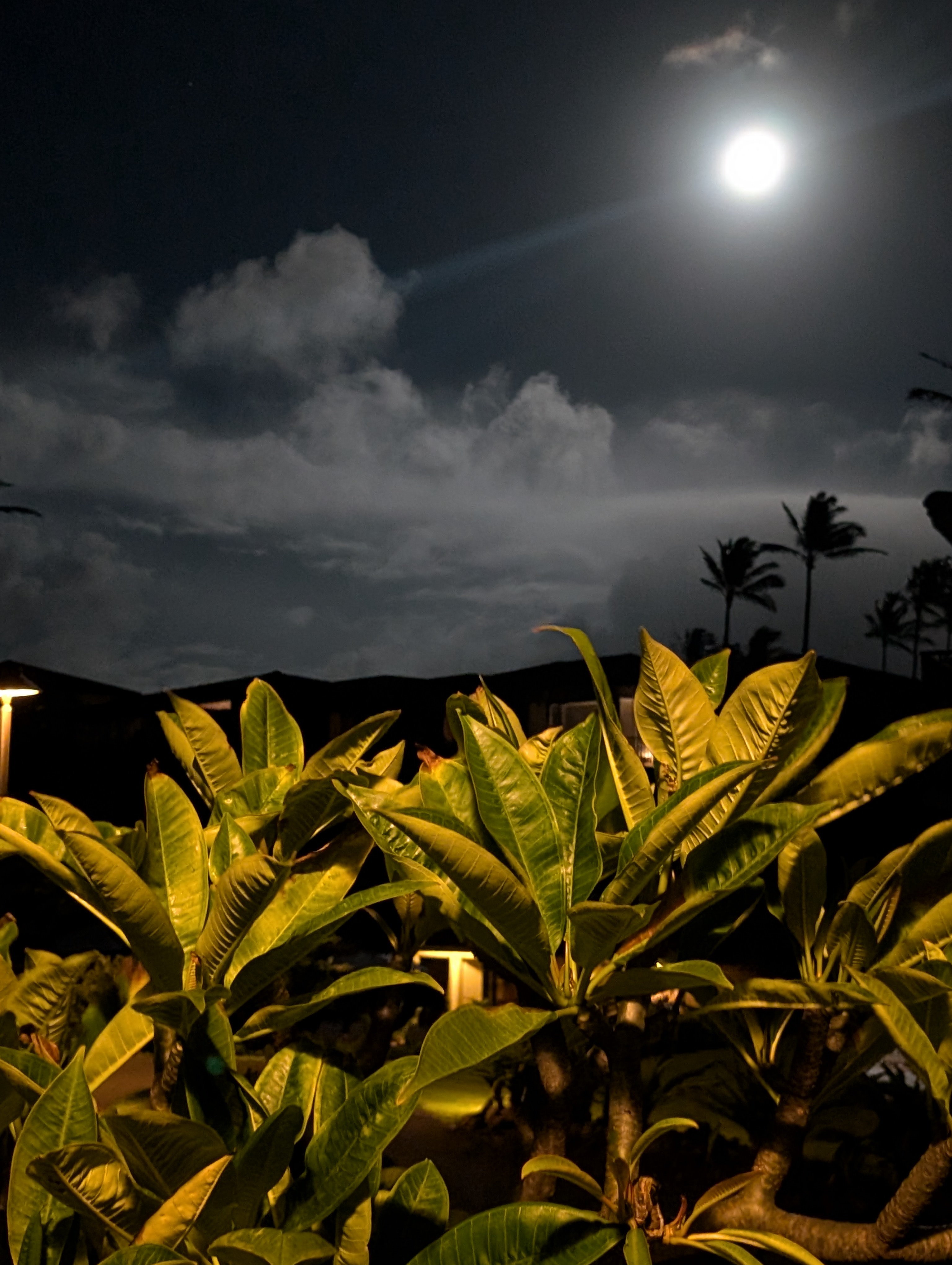
Our first night view from our Maui condo (unretouched). September 2024.
[written on January 3rd, but subjected to the Don’t-Post-Anything-After-The-First-Beer rule.]
At the end of September 2024 I mused on boring y’all with 100 Days of Hawaii, my poor-taste humor suggesting I would post every day through the end of the year something about Hawaii, thereby driving away the few visitors who swing by this little neck of the Interweb. Today, 96 days since then, I find 100 days will not be enough owing to my typical lack of focus. (“Oh, look! Something shiny!”) I’ve only posted through our arrival on Maui, barely more than halfway into our trip. And I’ve made myself a mockery for eagerly anticipating the 12 Days of Christmas and all of the writing which would spring to life from my keyboard. (See link for last year’s procession through the Christmastide.) Therefore, on this Tenth Day of Christmas, and just past the turning of the civil calendar from 2024 to 2025, I pause to reflect, to resolve, to anticipate, to evaluate, and to pontificate. I guess I should apologize in advance. I’ll try to return to better stuff soon.
Most obviously, Hawaii remains unfinished. I therefore resolve to complete my reminiscence by the end of January. Given that we lazed out in Maui, did very little, and that I took the same few photographs over and over and over, this likely won’t prove difficult.
I anticipate a medical march through the month. I had a doctor consultation today. Coming up I’ve got a blood draw, a procedure I would name but for the fear I bring to its table, a semi-annual physical, and one or more appointments with those who keep my legs from collapsing. That last item melodramatically addresses ankle and feet issues which would take a lengthy post of little interest to address.
At 70, health becomes ever more preoccupying. I’m trying to change my instinct to live in front of this keyboard when I’m not in the kitchen, the choir loft, or in front of the TV. We’ll see. This intent has been issued many times before, apparently to the void for all the good it did.
I’m ditching Reader’s Horror. It intimidates rather than educates. I think I’ve made my point. Just as with several other things important to me–music reproduction, technology, cars that do what they’re supposed to do–the masses happily settle every day for a lower level of quality, all in the name of convenience. My parents’ and my generation bear some responsibility for thinking TV dinners freed us from cooking; polyester and “wrinkle-free” represented a step forward from cotton; plastic and just-throw-it-away moved us away from the repetitive chores of cleaning our glass and metal containers (can you say disposable diaper?); and gosh darn it, anything digital must be better. This mindset surprisingly (?) led to the demise of institutional journalism and the important publishing houses of my youth. Predictable, maybe, but we’ve tossed too much out with that bathwater: copyeditors, proofreaders, and those who function as guardrails and protect us from the mental cockroaches who crawl out in the absence of intellectual light. Thus sayeth me: When all voices equal each other, rationale thought dies.
I miss my decades-long foray into poetry. In pushing to publish, I’ve lost that time for stewing in my juices which engenders my poetic thoughts. I can’t make this a resolution, but I acknowledge it to myself, if only to start writing down the thoughts when they occur, even if I’m heading for bed! Just this past week I lost two pretty good poems.
I’ve read too few books and too much news. I ditched one digital subscription at the beginning of December, and I’m ditching another in the next week. If it weren’t for the depth of its offerings, I would ditch the New York Times.
There you have it. Nothing earth-shaking. Except, hopefully, for me!
Our final full day on The Big Island, we drove west across the island to the Kona Coast. It didn’t totally waste our time, but it validated our decision to stay in Hilo. In our short taste of it, the Kona Coast appeals to people who aren’t us–hence they’re nuts: Kona Nuts. Near as I can figure out, the west side of The Big Island appeals to people who like:
Swimming, surfing, snorkling, and scuba diving
Deep sea fishing
Parasailing and its variants
Boating
Lots of physical exercise (running, cycling, and the like)
Shopping in malls, strip and otherwise
Renting AirBnB’s, condos, and vacation houses crammed side by side up the hillsides facing the ocean
We don’t like any of that. Okay, we’ll take an occasional hike, and we’ll poke into those small shops catering to tourists (but they’re better when they don’t). We’re not the physically active types. I’m not at 70, and haven’t been since I flipped the dial past 40.
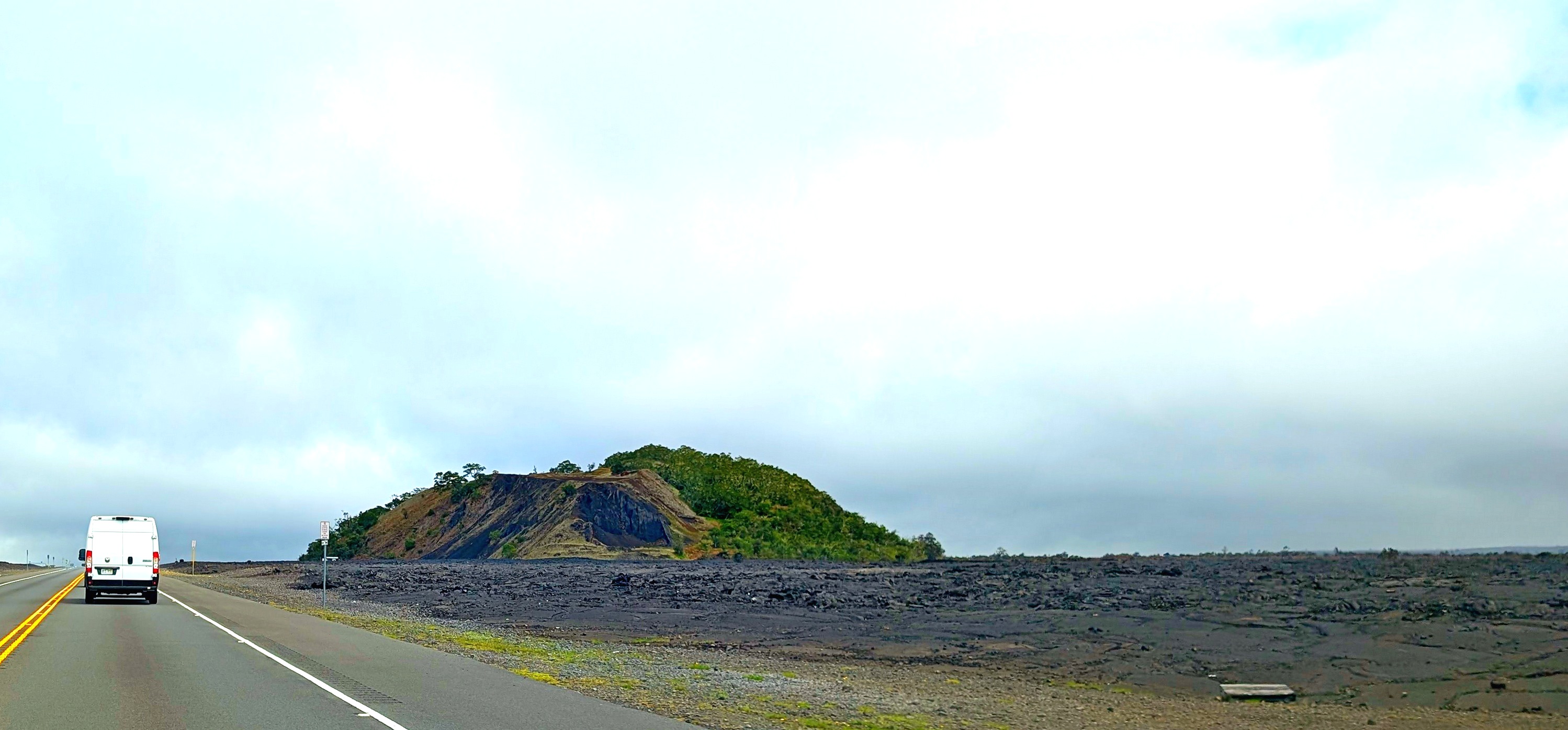
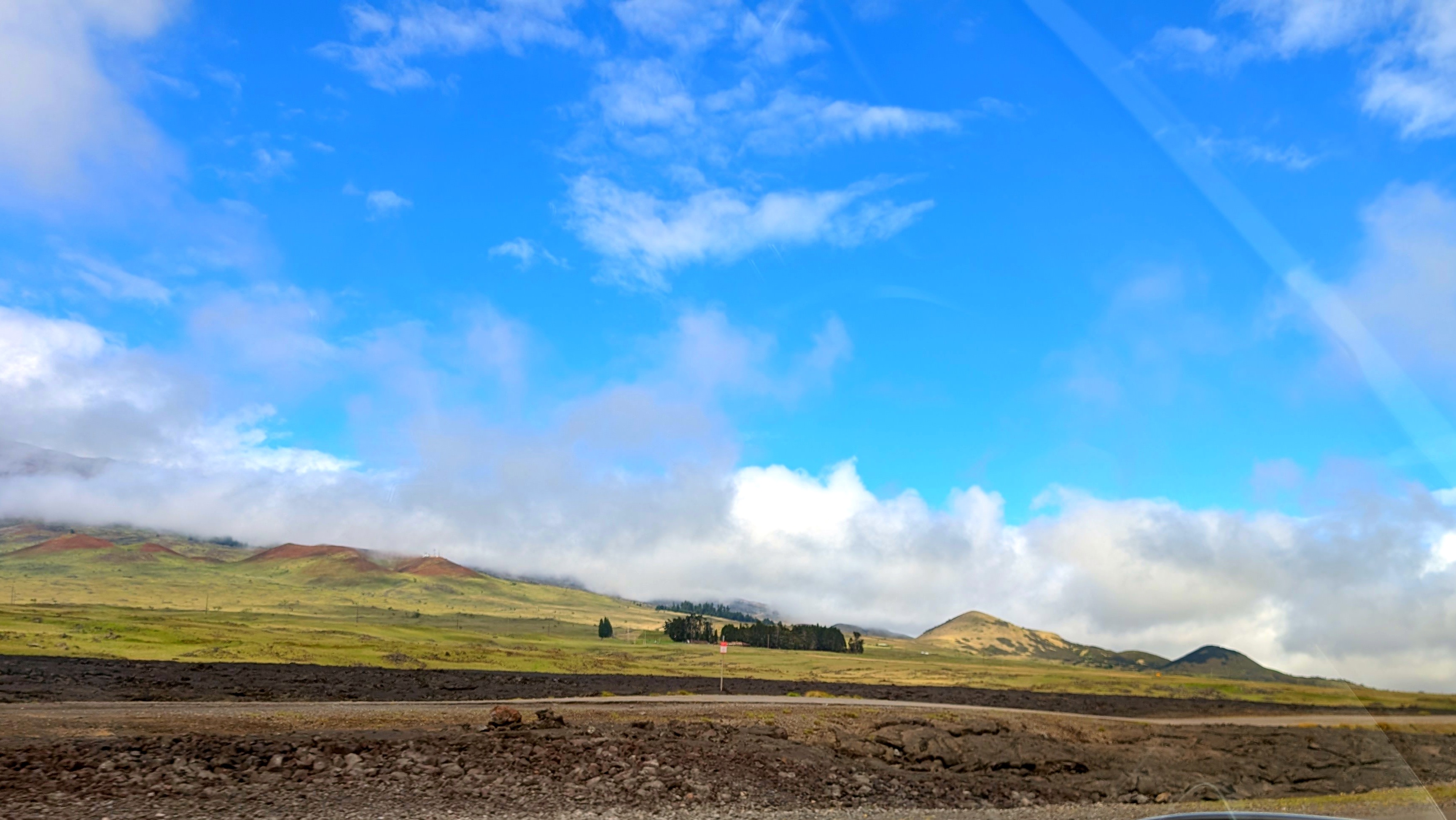
On top of that, we found the western side of the island to be hot, dry, a bit desiccated. Our first inkling occurred driving across the the caldera of Mauna Kea. We had left rain in Hilo, low wispy clouds misting us, sprinkling us with life-encouraging water. Once we climbed to the center of the island, things looked quite a bit different. (Photos are from our return drive to the east.)
Driving east, back to the rain clouds of Hilo. Looked good to us! September 2024.
I grew up in eastern Washington State where lava flows poke like basalt bones through a grass-covered skin of dirt. It looked a lot like the western half the Big Island. If you told me this next photo was the interstate exchange just west of Spokane where students head south to Eastern Washington University, I would believe you:
Mauna Kea caldera looking northeast from its approximate center. September 2024.The grass-covered lava of Mauna Kea. September 2024.
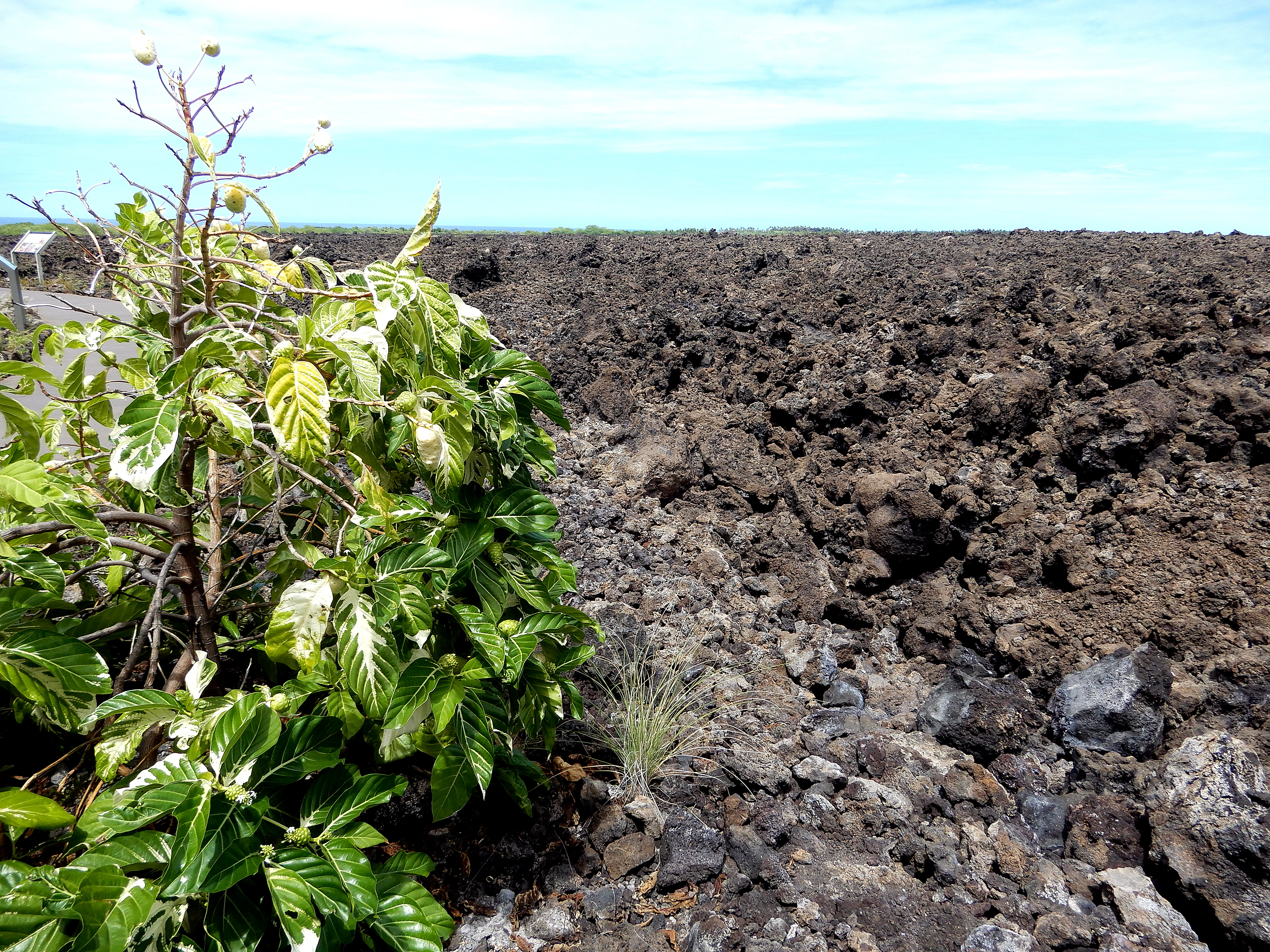
Once we descended the steep slopes to Kona coast–an oddity to me; shouldn’t the leeward side be more gently sloped?–we found a whole lotta nothing…which isn’t really fair, but our first stop gave us that impression. The Kaloko-Honokohau National Historic Park starts out looking like this:
Kaloko-Honokohau Nat’l Historic Park, looking toward the ocean. The edge of the “visitor center” visible at left edge of the photo. September 2024.
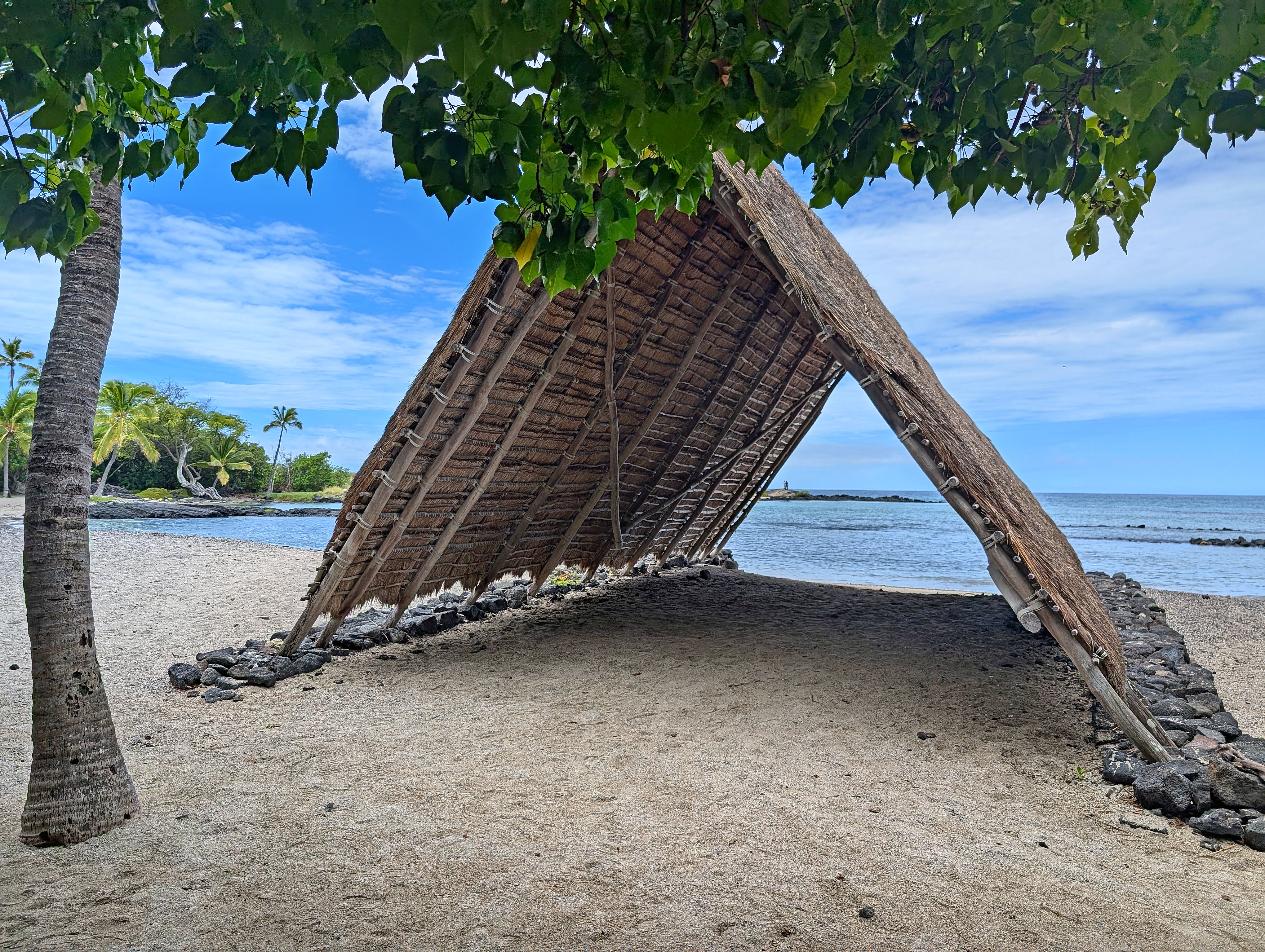
Although bleak, this stop proved informative. Indigenous peoples used these coasts to trap fish and perform other ocean-related activities (I think they got salt also–can’t remember). Families owned narrow parcels of land stretching from the shore up the slopes. Those members who lived at higher elevations would farm and bring their harvests to the shore to trade for fish and seafood. We chose not to walk the mile-long trail to a recreated site about the coastal folks, primarily because the 90+ degrees and lava fields intimidated us. Finding the entrance to that area of the park proved elusive, hidden and nearly unmarked as it was in the backmost corner of a parking lot for various marina businesses.
A recreated shelter of the indigenous peoples. Kaloko-Honokohau Nat’l Historic Park, September 2024.
After this we drove south into Kailua-Kona proper. We found nothing but strip malls, hotels, gas stations, various support businesses, and the airport where virtually every airline flies except for Southwest Airlines (explaining why we flew into Hilo). We found restrooms and beat feet to the east side of the island. We had great views on our climb out of Kona: foregrounds of all the roofs of the vacation homes, backgrounds of the ocean. Yay.
It’s been lots of interlocking activities for me this December 2024.
Nine days since last post, and that one (actually two) appeared from thin air, a gift of a slight lull between printing out our Christmas newsletter and preparing all of the cards for them. I’m still old-fashioned in that way. I believe a pretty card with an appropriate printed message and augmented with a personal one maintains ties of friendship and family better than an email (or worse, a social media post). It shows a commitment to spending time for your recipient, to let them know you still think of them (even if it’s only once per year and due to their inclusion on the Christmas card address list).
One last ‘task’ today: decorate the tree. We had planned to do so Monday and Tuesday, but we were waiting for a new tree-topper which only arrived yesterday evening. We’ll spend a leisurely afternoon doing this, and we’ll end with some delightful liquid Christmas cheer from one of the many special beers I purchased yesterday. From here on it’s preparing to sing for the Midnight Mass in the late evening of Christmas Eve, the drowsy-but-satisfied feeling of Christmas Day, the indulgent-but-hopefully-easy Christmas dinner, and the beginning of Christmastide, otherwise known as the Twelve Days of Christmas. While I may again post daily during this period, I suggest you revisit last year’s which starts here and marches through the twelve days with absolutely no seriousness except for the unintended kind. See ya soon!
My first photo at Volcanoes National Park: a steam vent on the edge of the Kilauea crater. September 2024.
The island of Hawai’i could be called triangular. The west coast roughly runs north to south. From its northern tip, though, the coast runs northwest to southeast. Then from that easternmost point it runs northeast to southwest to join up with the west coast. Situated inland from the southeast-facing coastline lies Volcanoes National Park. Volcanoes presents much more than just dormant craters. Its most active feature (inland) turned out to be the first thing we saw: steam vents. Craters? I found their vastness difficult to comprehend.
Kilauea from steam vents on north rim, looking southwest. September 2024.
I’m not even sure the photo above shows only Kilauea. I see “Hale Ma’uma’u Crater” on the ol’ Google Maps. Lava flowed in 1919, 1921, 1954, 1959, and on and on I would guess. I paid little attention to information, so I’ve only myself to blame! Seeing it seemed more important than reading about it on signs, the internet, pamphlets, and the like.
Trade winds blow northeasterly toward the park. There are dry plains inland, but plenty of slopes catch the moisture. Plant life abounds there. Even in this dryness:
On the edge of the steam vents. Volcanoes National Park, September 2024.
Where the rain can fall, things change rapidly. Just a few miles away from the photos above…
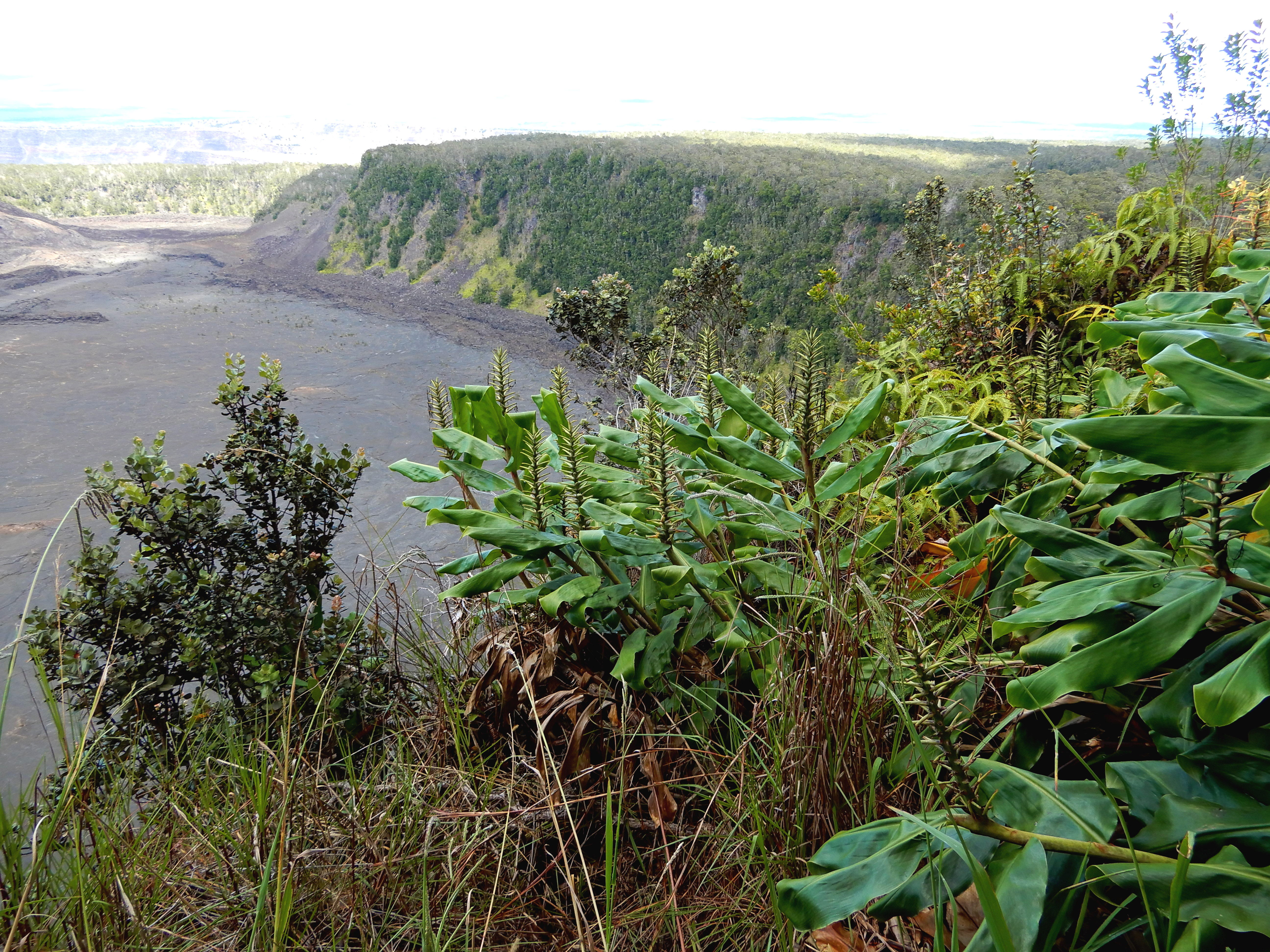
Kilauea Iki Overlook trail. Volcanoes National Park, September 2024.Kilauea Iki Overlook trail. Volcanoes National Park, September 2024.
Eventually I realized this incredibly wide circle we were tracing surrounded a ‘family’ of volcano craters. We continued past many tantalizing side trips, acknowledging our (a) laziness, (b) general physical un-fitness, and (c) certain time constraints. Turning off of the Crater Rim Drive where it intersected Chain of Craters Road–further westward travel was blocked–we traced the path of lava flows to the ocean.
Approaching the coast in Volcanoes National Park. September 2024.Where lava meets the sea: Holei Sea Arch. Volcanoes National Park, September 2024.
Now that I know more about this park, I would go back to look into lava tubes, to hike a bit here and there, to see if some of the roads had opened up, and to maybe hike down into a crater…maybe. It looked kinda boring to be truthful.
‘Yep, the rock looks just as black down here. Why did we hike down here again?’ Volcanoes National Park, September 2024.
It all impressed this guy who grew up with the volcanoes of the North Cascades, a far different kind of thing.
Tatted (and tarted) snowflake in a window. November 2024.
I discovered 30 minutes in my day! Our holiday newsletter has reached 50% completion. For the first time in several years, I am “on schedule”—I dare not say “ahead” both due to the Law of Jinxing and because I see little time to work on it during the next two days. My Sunday deadline approaches, just as Tuesdays did decades ago when I worked on weeklies. Let me tell you, there’s nothing like starting a Tuesday knowing you don’t have enough copy to fill the empty pages! It really gets the creative juices flowing! I used the same approach as a teacher, walking in some days only clutching a topic in my mind. Lesson plans? Hah!
We kicked Covid out for good this week, but like with any unwanted guest there’s a bit of cleaning up to do. Last night’s choir rehearsal—my first in four weeks, my second in two months—did a number on my throat, partly because I had to violate the “sing from your diaphragm” rule on several pieces. My muscles ache from weeks spent primarily sitting in this office chair. The cough hasn’t completely disappeared either, small but annoying.
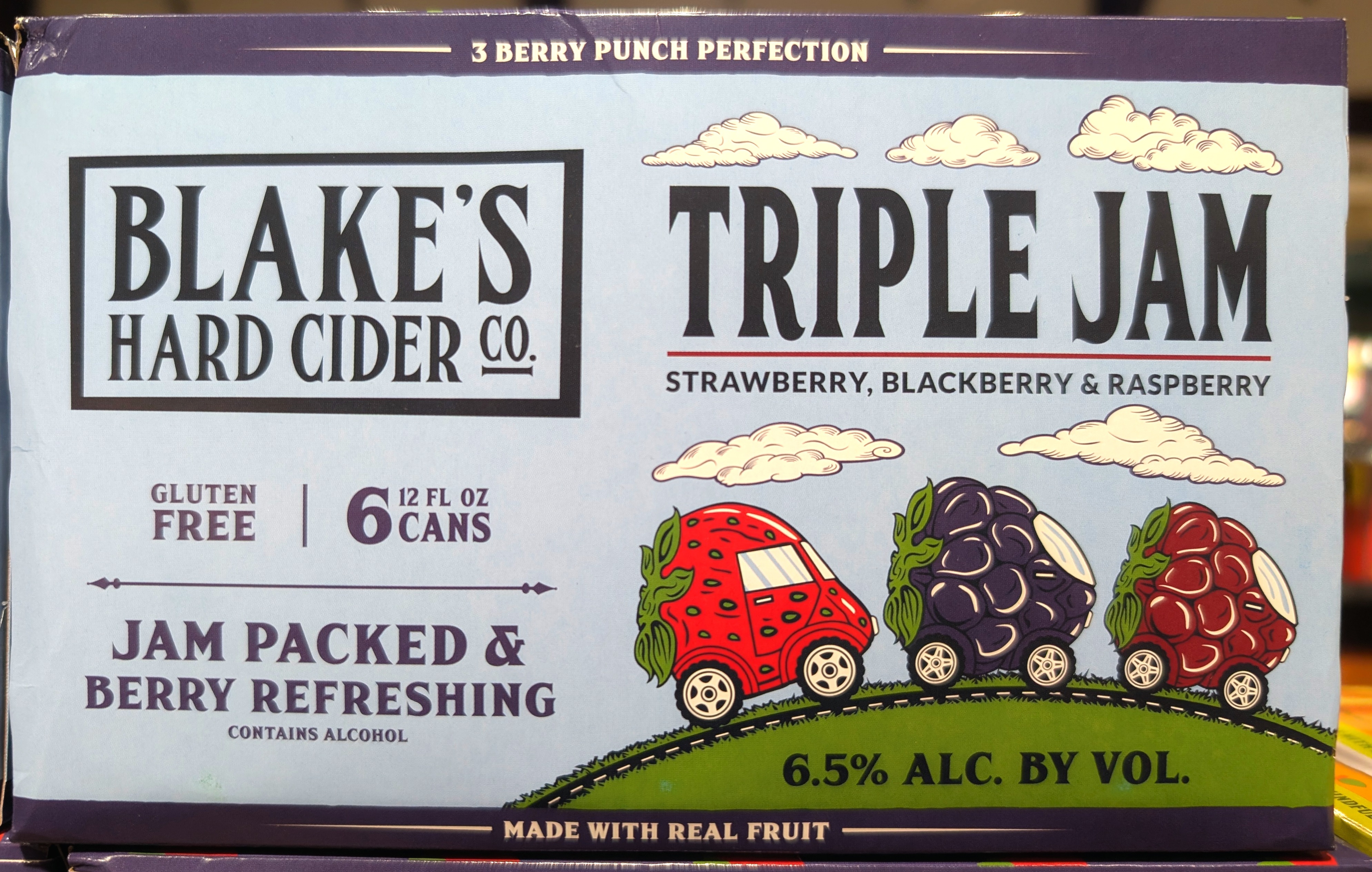
And lastly, one of the readers of this site and the one who partly inspired a trip to Michigan in 2023, may be amused by the photo below. I’m not a cider drinker, but I think this is being newly distributed here in NC:
From the exurbs of Detroit! Spotted in a Raleigh, NC, grocery store. November 2024.
I’ve reached the Thanksgiving through who-knows-when-it-all-will-get-done time of the year. My current project, the annual Christmas newsletter, occupies virtually all of my writing bandwidth because it’s a true news letter. This old journalist packages it as a four-page newspaper complete with individual stories, headlines, a masthead, photos, captions, all of it written in the third person. It takes 40 to 80 hours depending how much I agonize over it. (I’m lying: it takes at least 80 hours.)
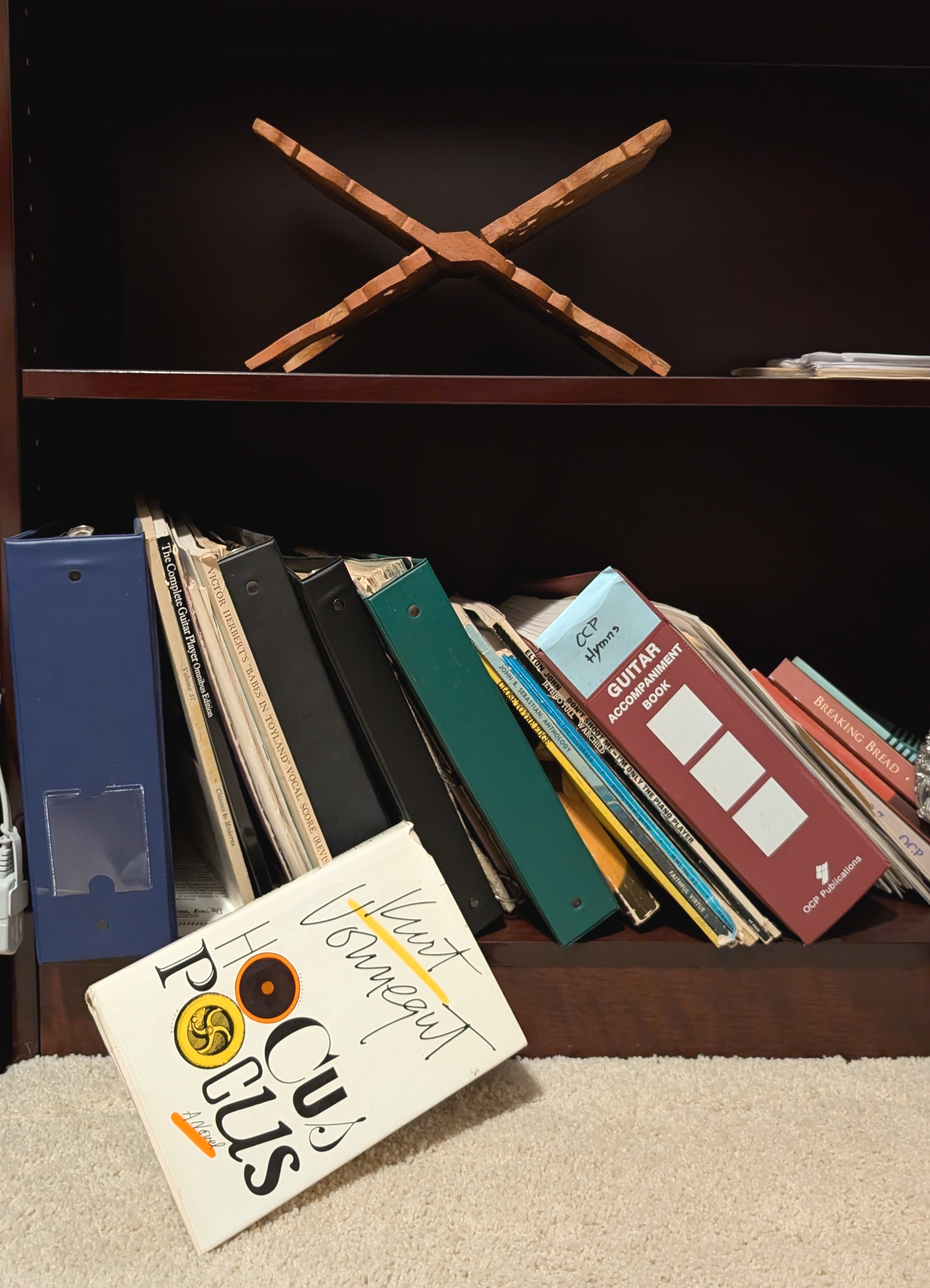
Meanwhile, one of our cats decided to get his paws on some Vonnegut, but apparently became disgusted it wasn’t Cat’s Cradle.
The original shelf for this book is the next one up from the bookstand in the photo. I didn’t even know they could read. December 2024.
…volcanoes! We forced the agendas for our final two Big Island sightseeing days, simply by allowing our lazy natures free reign. Sunday received its designation, Volcanoes Day, and promptly rewarded us with an atmospheric eruption.
Twenty-five years ago I purchased the book A Home for the Soul: A Guide for Dwelling with Spirit and Imagination by Anthony Lawlor. It featured beautiful photos and promised to address that point where functions meet features and both bow to the soul. Unfortunately Lawlor’s book, though gorgeously printed, never connected with me–it remained a beauty with no brains. I mention this because the idea has long played out in my head and heart that we are drawn to some places on Earth more than others, despite our innate interest in almost all of them. I’ve mostly thought this gets imprinted on our psyches during the formative years of our childhoods, much as ducklings will imprint on their mother. (I wonder how this would work with children of military personnel and others who move their families frequently to vastly different geographies?)
Recently a friend of mine quoted author Pat Conroy who made his mark writing books set in coastal South Carolina, including The Citadel in Charleston. In this particular quote, Conroy described how the Low Country spoke to his soul. This returned me to my
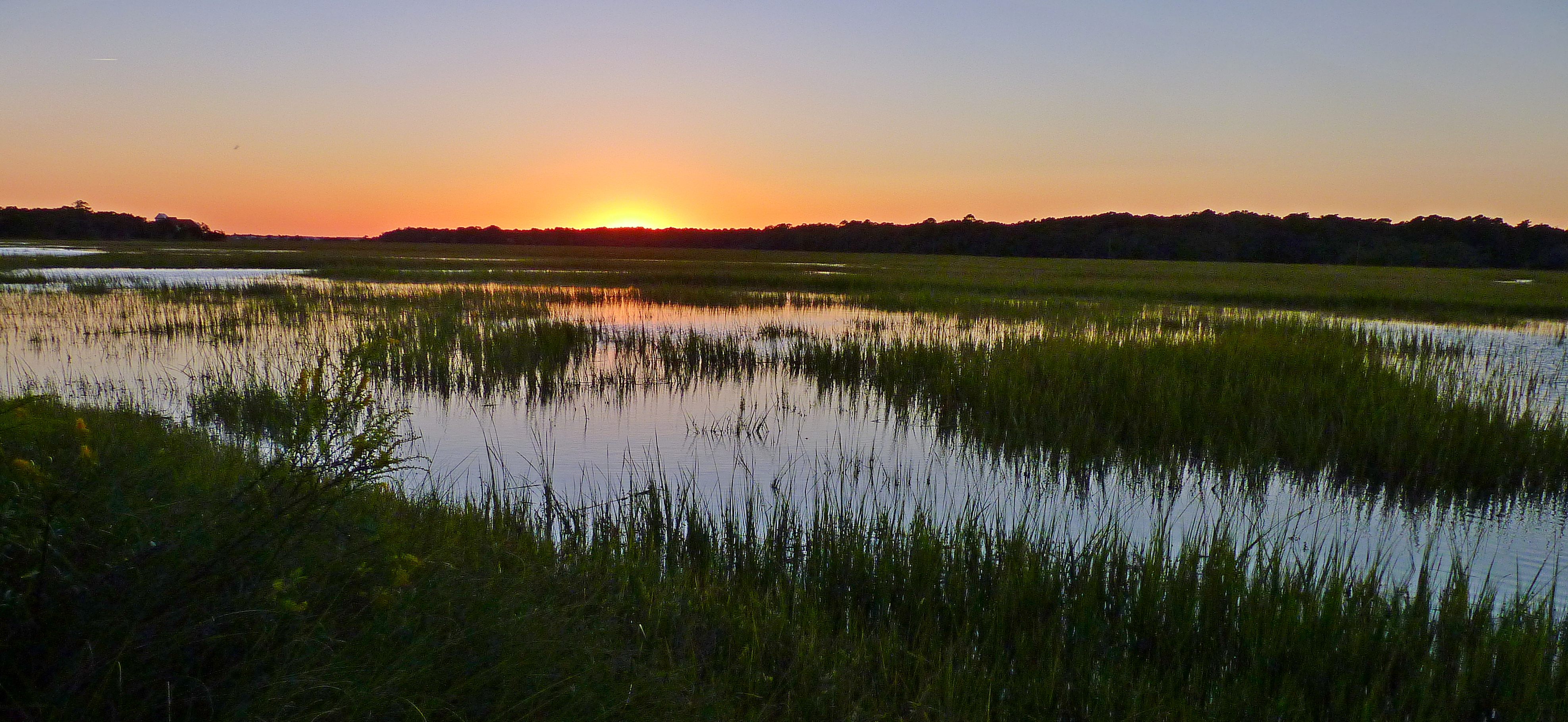
South Carolina Low Country. Edisto Island, October 2014.
ideas of place. Much as I like the coastline of Eastern America, and the distinctive features of it from Chesapeake Bay south, it never ‘grabs’ me. Intellectually, I love its nooks and crannies, its sultry feeling which exudes relaxation, its birds, the novelty (to me) of its marsh grasses, and the soul-satisfying feeling brought on by its mostly horizontal nature.
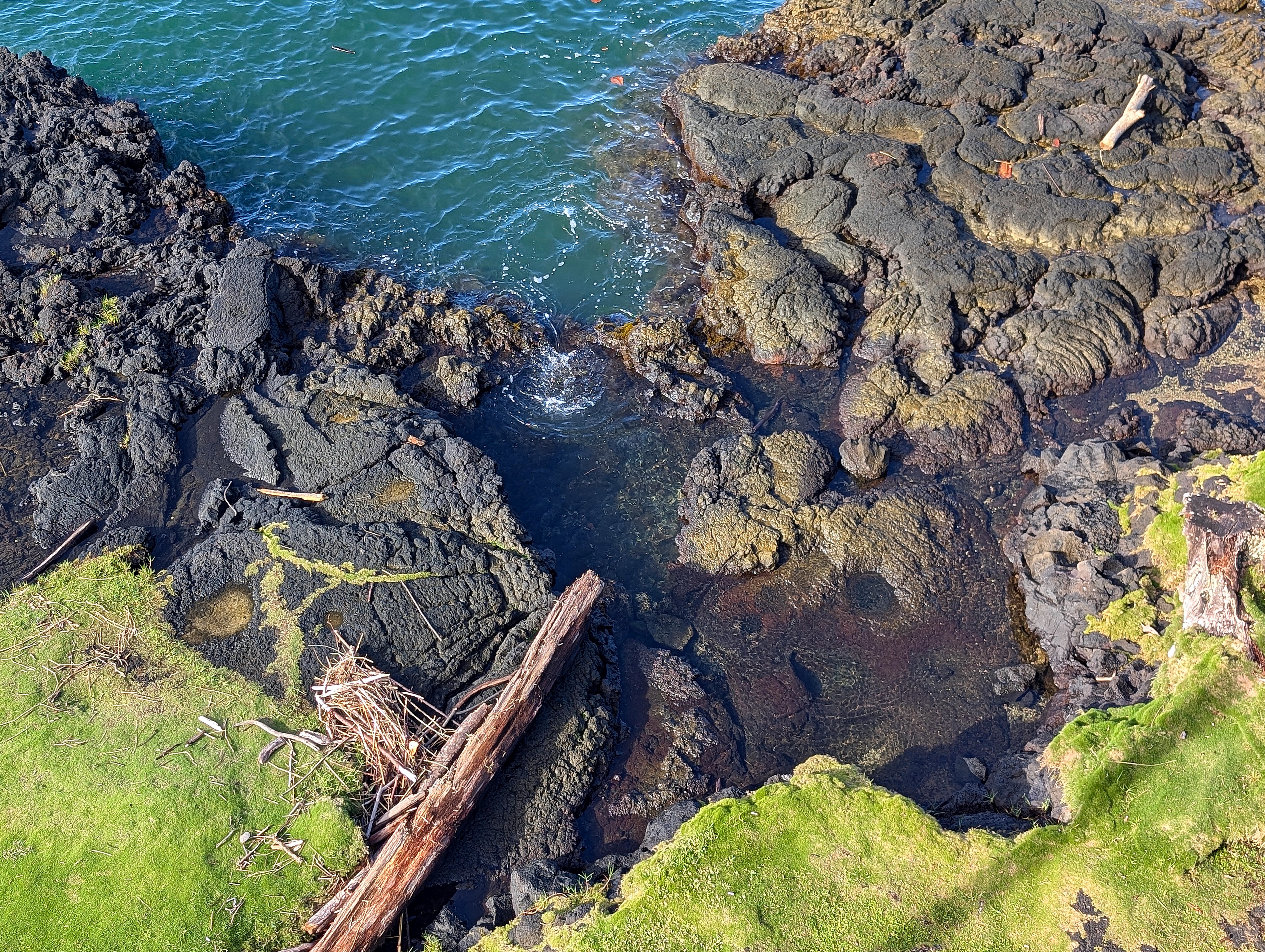
In Hawai’i, though, I found my heart beating in sync with its coastline as if I had found a long-lost sibling. I suspect this has something to do with being taught at an early age that “coast” means “what it looks like around Puget Sound” and to a lesser extent the Pacific Coast of Washington State: volcanic rocks to the coastline; cliffs of sand, sedimentary rock, and mountaintops which send their flanks plunging through the intertidal zone to significant depths in mere meters. But could it be more genetic? As far as I know, my ancestors all came from either Norway or that island divided into England/Scotland/Wales. From photos it seems a rocky coastline, lashed by pounding waves, much of it featuring knobby cliffs which prohibit dipping one’s toes in the water–and this water is crystal clear.
A lovely day in the Pacific Northwest–it’s not raining! North of Newport, OR. October 2011.Compare and contrast: another west-facing Pacific Ocean shoreline. Maui, HI, September 2024.
A counter-argument: what to make of the three centuries my patrilineal line spent in the mountains located at the Virginia/North Carolina border? Of my matrilineal line descending from the hollers of Kentucky to live along the Ohio River? Do I counter that with my father’s mother, whose parents stepped off the boat straight from Norway? Or the suspected similar condition for my mother’s father who was put up for adoption by a Swedish lass?
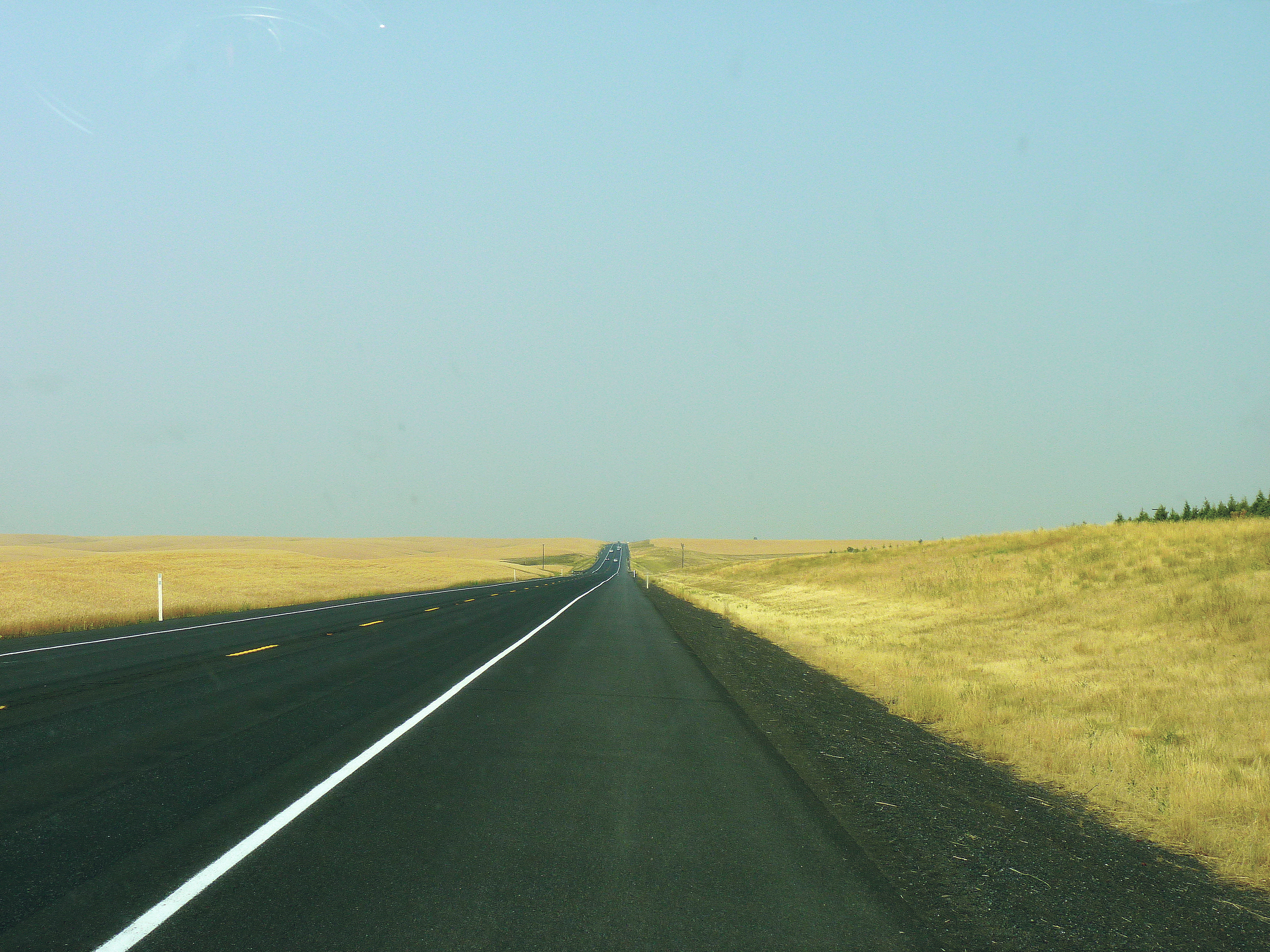
I land on nurture more than nature. I believe my father preferred eastern Washington with its undulating surface of grains and grasses because he had been raised in a similar grassy, agricultural flatness outside Minneapolis and later, in Havre, Montana. My friend associates the North Carolina coast with meaningful times in his life, not least of which was refurbishing a getaway house on the Intracoastal waterway with his father. My brother and I experienced a semi-dry climate through high school. Perhaps this explains why, after decades spent in rainy and cloudy western Washington, he retired to Santa Fe?
The rolling wheat lands 40 miles west of Spokane, WA, where I grew up. See also Havre, MT, and the breadbasket swath of Middle America. August 2017.
Unless…unless… I must admit, I like rain. I discovered this when I moved to the Philadelphia area in 1992. In 1997 I returned to Spokane, WA, a semi-arid part of the country. Four years later I could barely get out of town quick enough, and the dry, dusty summers played a large role in that attitude. I found I did like rain, just not the rain of Puget Sound which I experienced on and off during my childhood and lived in from 1976-1981. Rain on the east coast of America doesn’t resemble rain in the Puget Sound area, despite both regions receiving similar amounts annually. (Philadelphia–41.45in; Seattle–37.13in, both according to WorldClimate.com.) Rain clouds on the east coast bring rain, and then they go away. Rain clouds in Puget Sound just hang around seemingly forever, misting you once in a while to remind you they carry moisture. Where, then, does this love of rain come from? Why don’t I like snow? I experienced it every winter of my childhood, and I continued to do so through my 47th year. Is it my North Carolina ancestors calling to me through our shared genes, reminding me that for centuries we Pilchers have enjoyed warmer, less snowy climes? If so, would they in turn find the wind- and surf-lashed cliffs of western England and Wales instantly familiar and soothing? It’s a confusing amalgamation of influences.
Maybe we just like what we like, inexplicable as it may be. A postcard I have reads: “Every traveler knows it is possible to be homesick for a place one has never seen.”
Thus ended our day-to-market. My usual procrastinating nature had combined with Hawai’i’s induced laziness to leave two journeys for the final two days on this island. To be continued…









 all the voices in my head