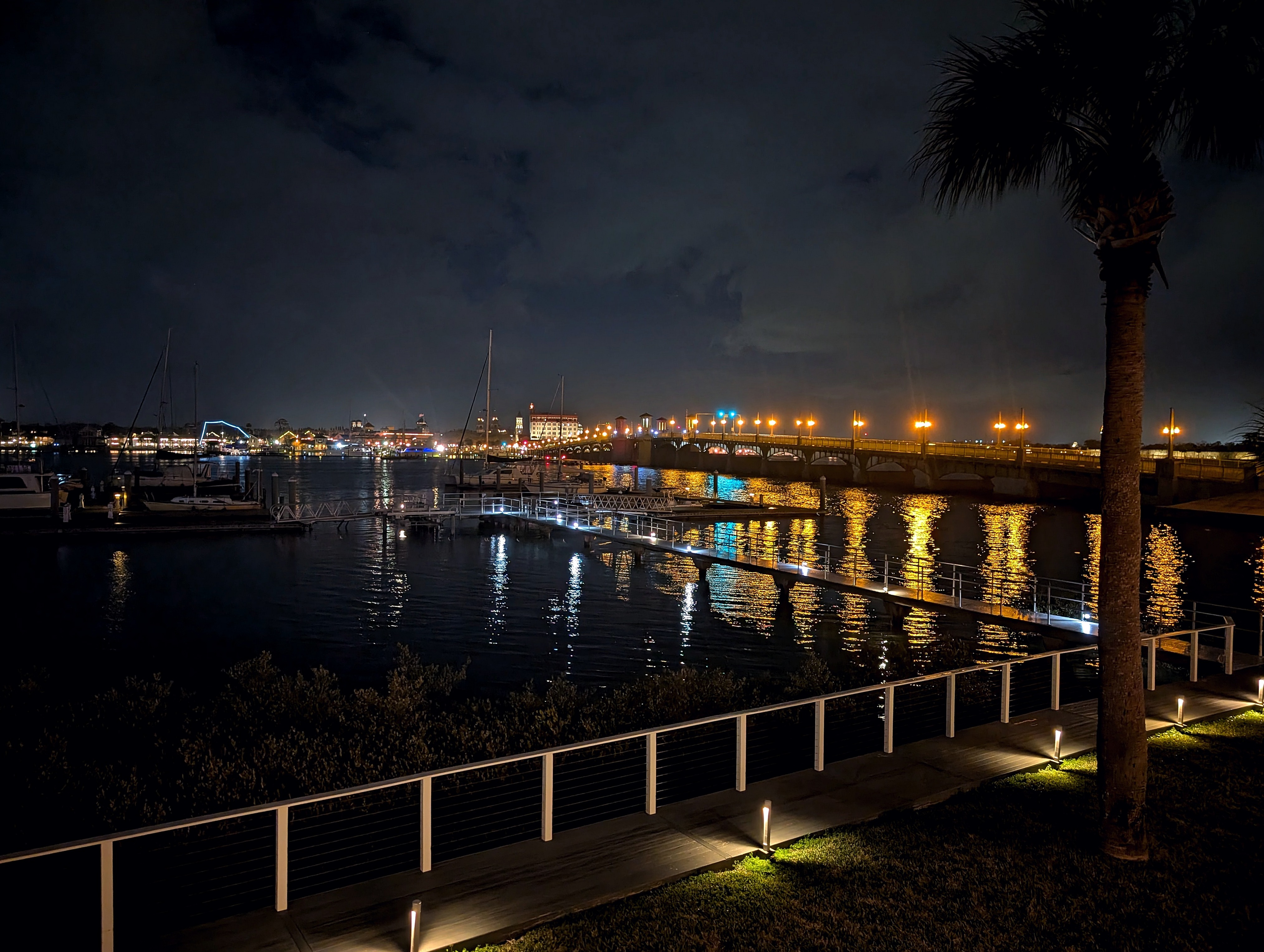
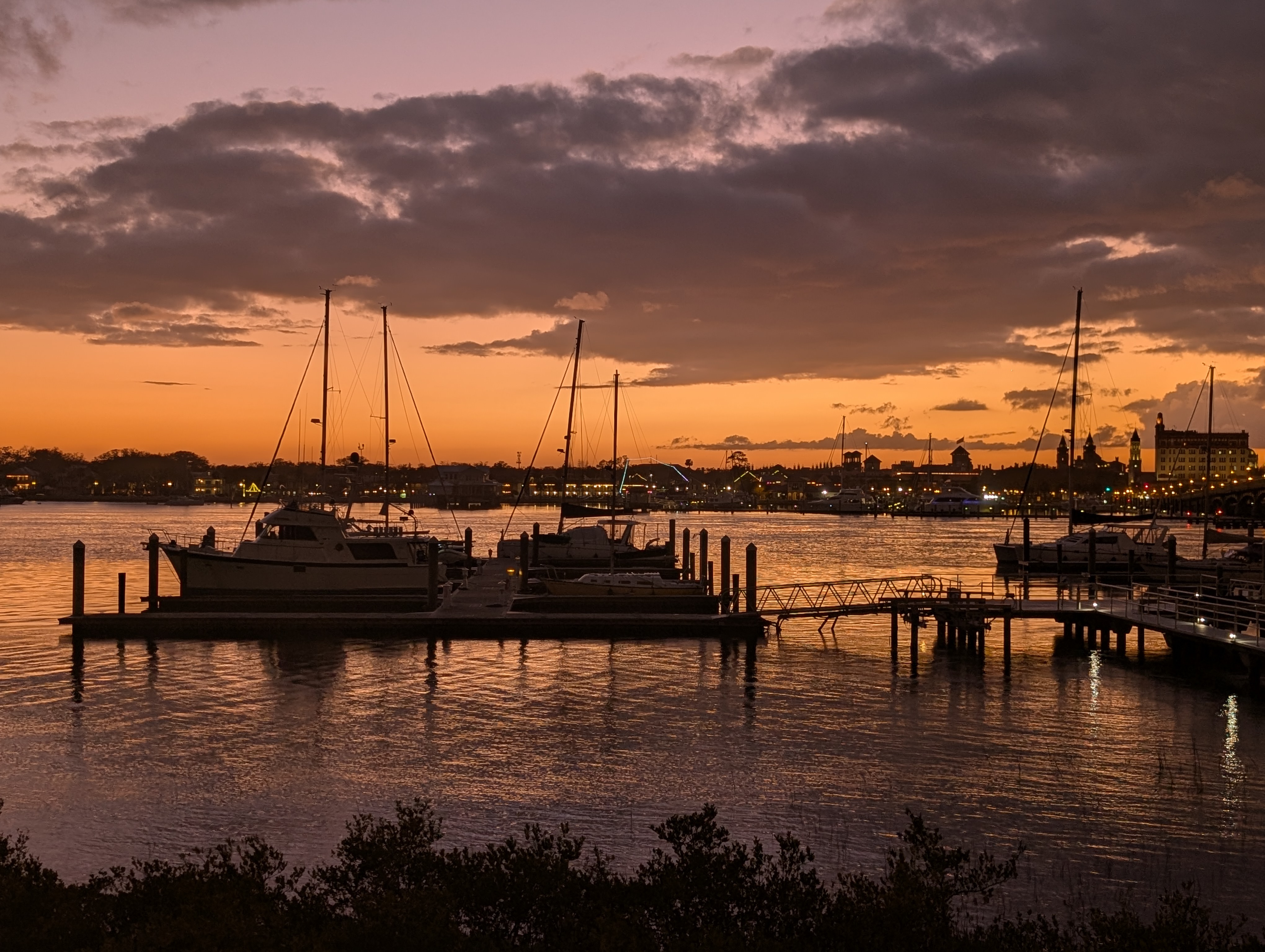
Help me out. I’m jumping the gun on our Southern Florida trip. I should be discussing Miami, our drive up to St. Augustine, and our first day there. But…I’m curious about this photo I took that evening. After downloading and performing minor editing of the photo, it looked like this:
Mickler Oconnel Bridge looking at the historic center of St. Augustine. March 2026.
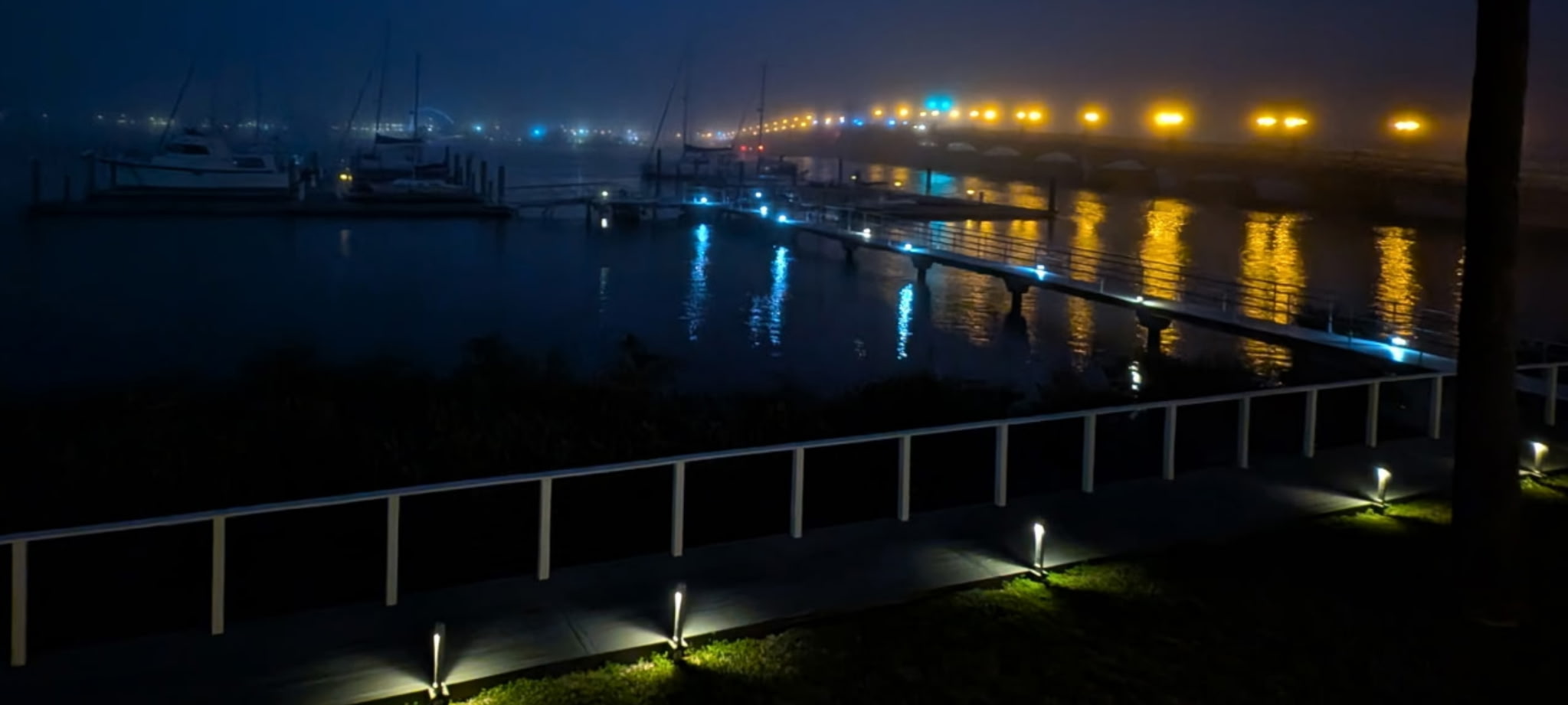
The photo above hasn’t been cropped other than the amount shaved off when I straightened it 0.2 degrees (because I never hold a camera level, it seems). I was very happy with this photo. I don’t often crop appropriately in the viewfinder, especially when shooting with my Pixel phone. I sent it to my buddy who loved it, but said he would crop it like this:
My friend’s cropping of the photo above (minus the straightening). March 2026.
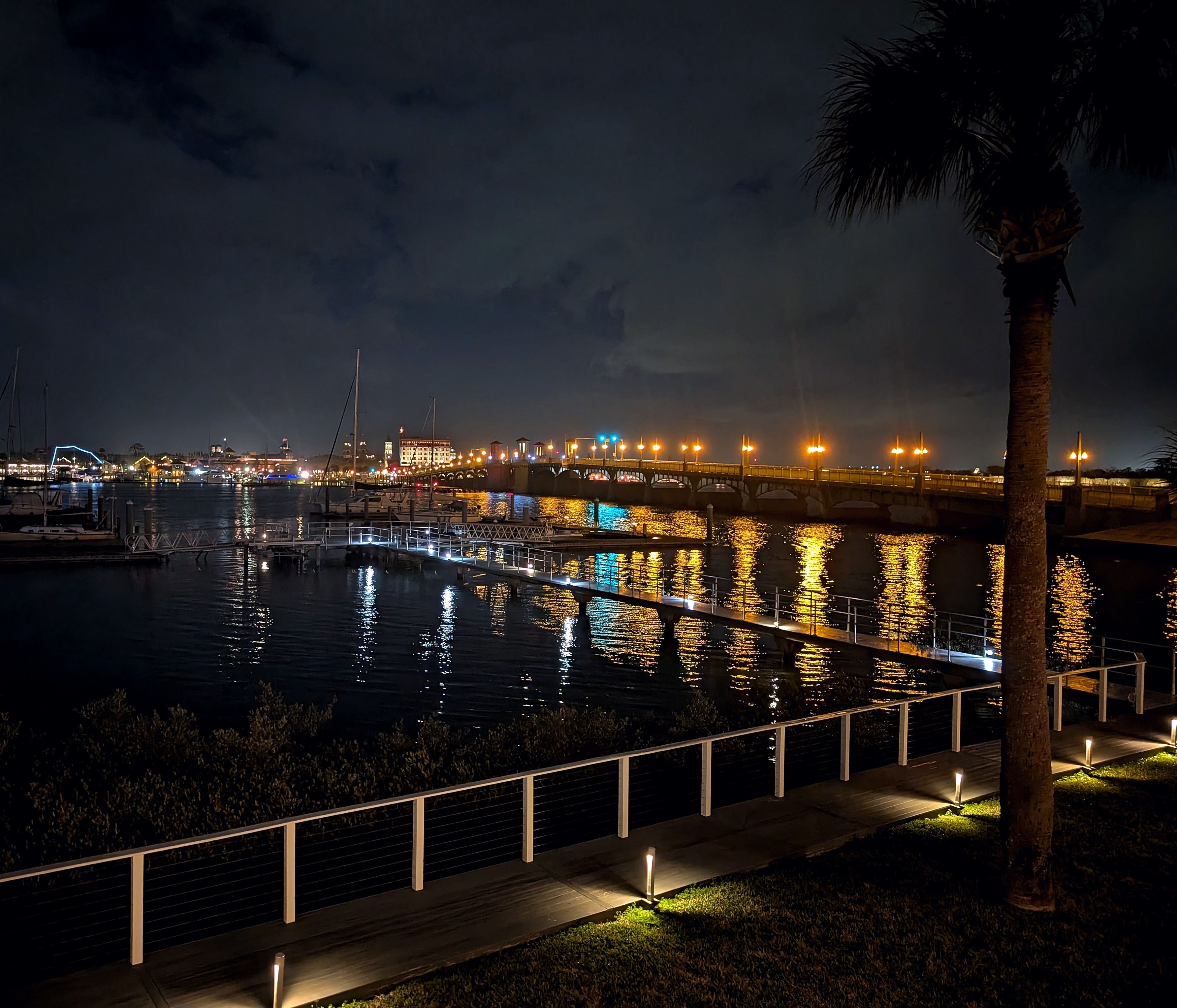
…and I think I see one of the issues. I don’t believe he purposefully fogged/blurred it, but it obviously looks different than the original. I like the mystery of it, perhaps more than my original. I think all in all, I would crop it like this:
Not much detail lost by cropping it on the left. March 2026.
It’s not often I feel pulled in several directions on a landscape shot like this. Critters, oh absolutely! Flowers present so many ways to go. And then all the artistic shots one can take with the simple everyday patterns presented by Nature and Humans. But….weigh in if you would. Constructive comments appreciated.
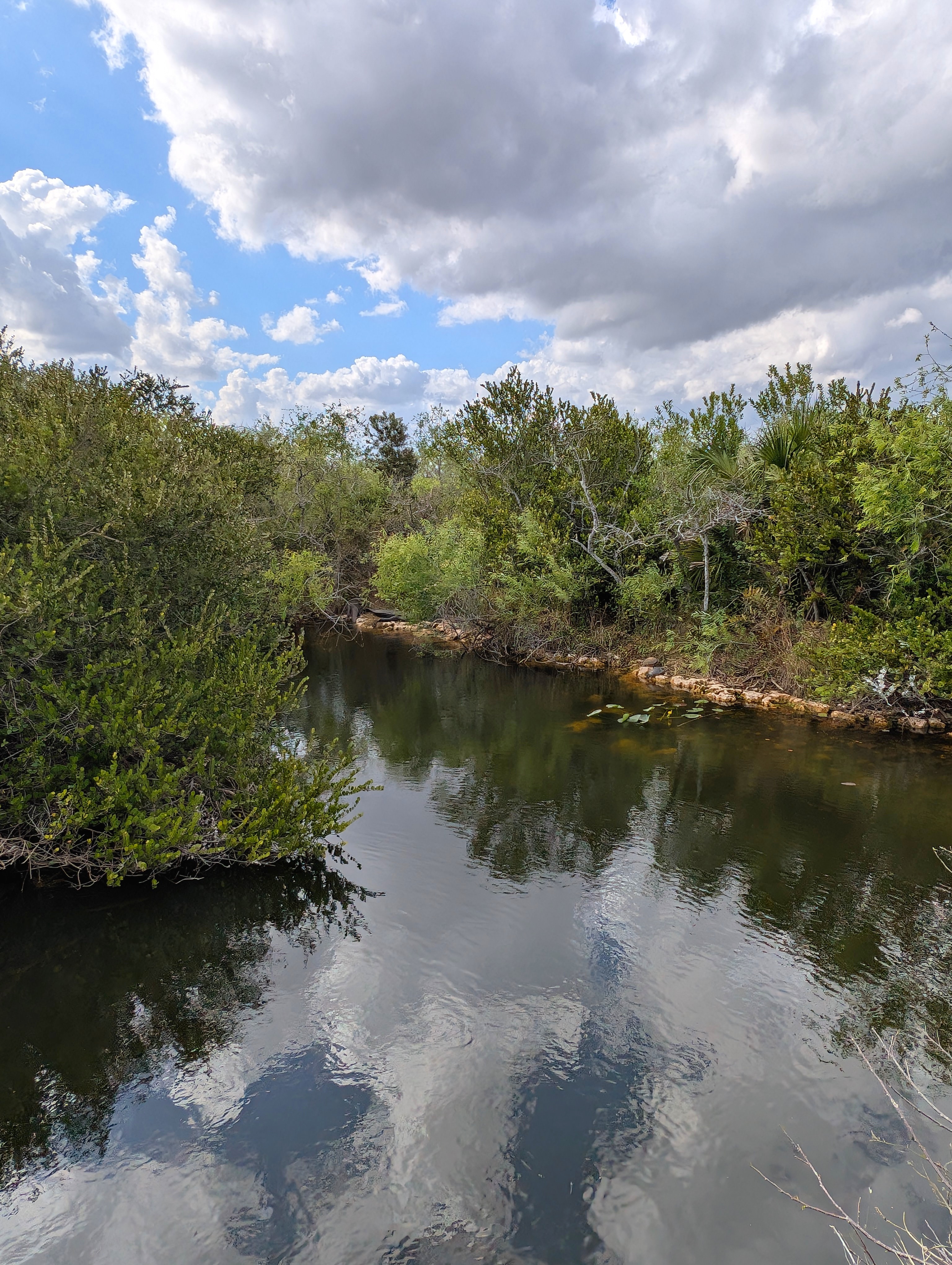
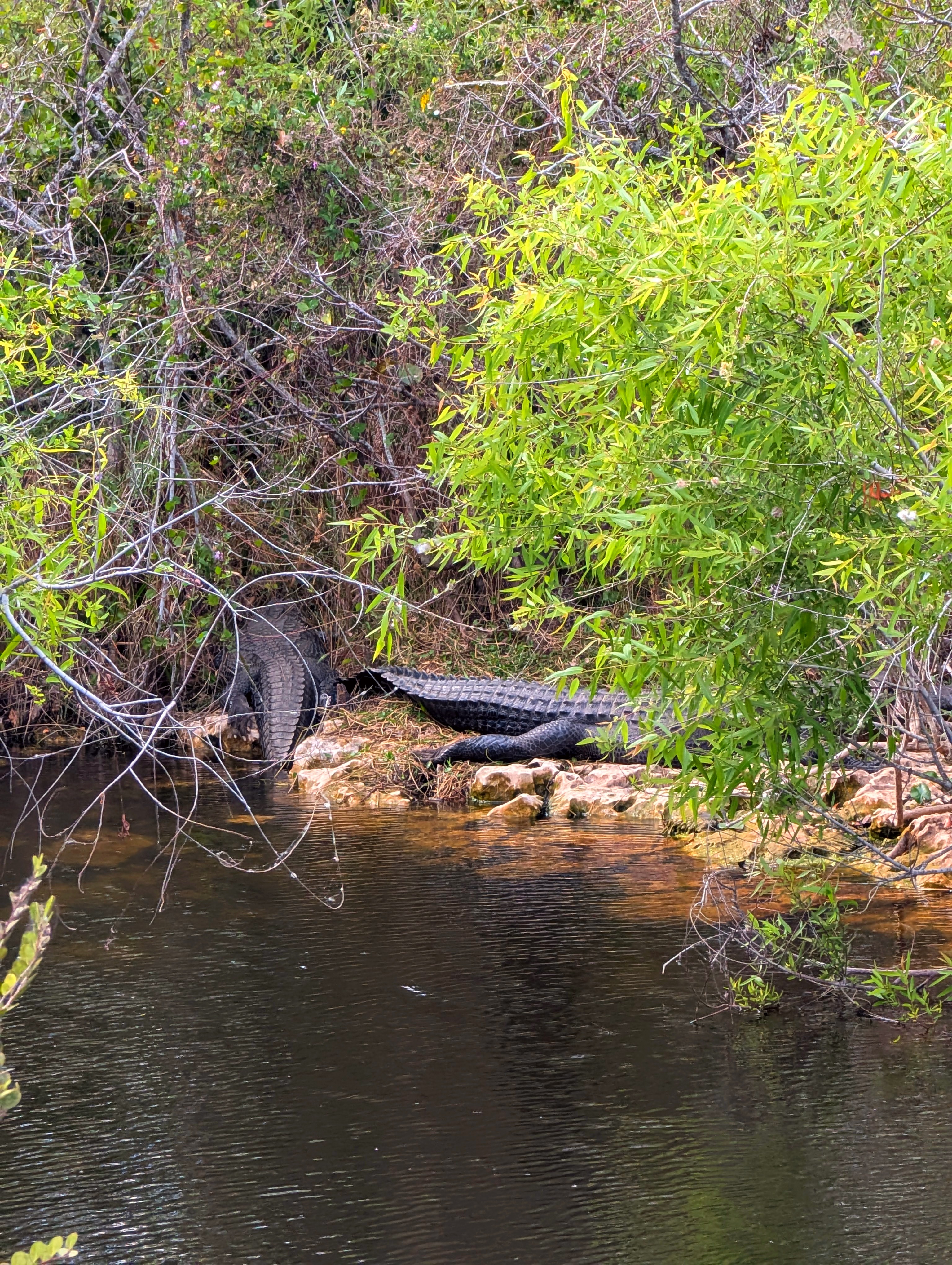
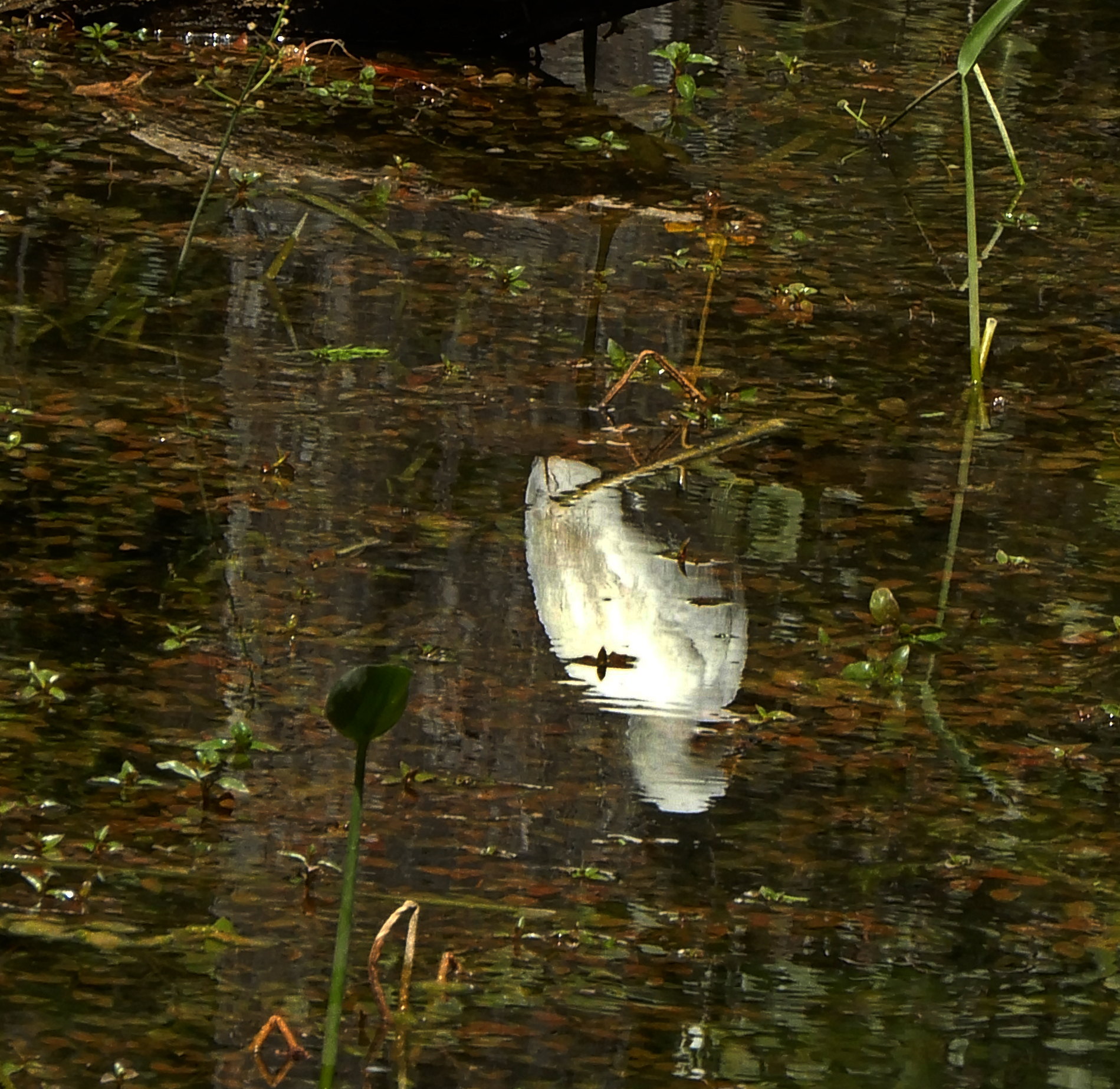
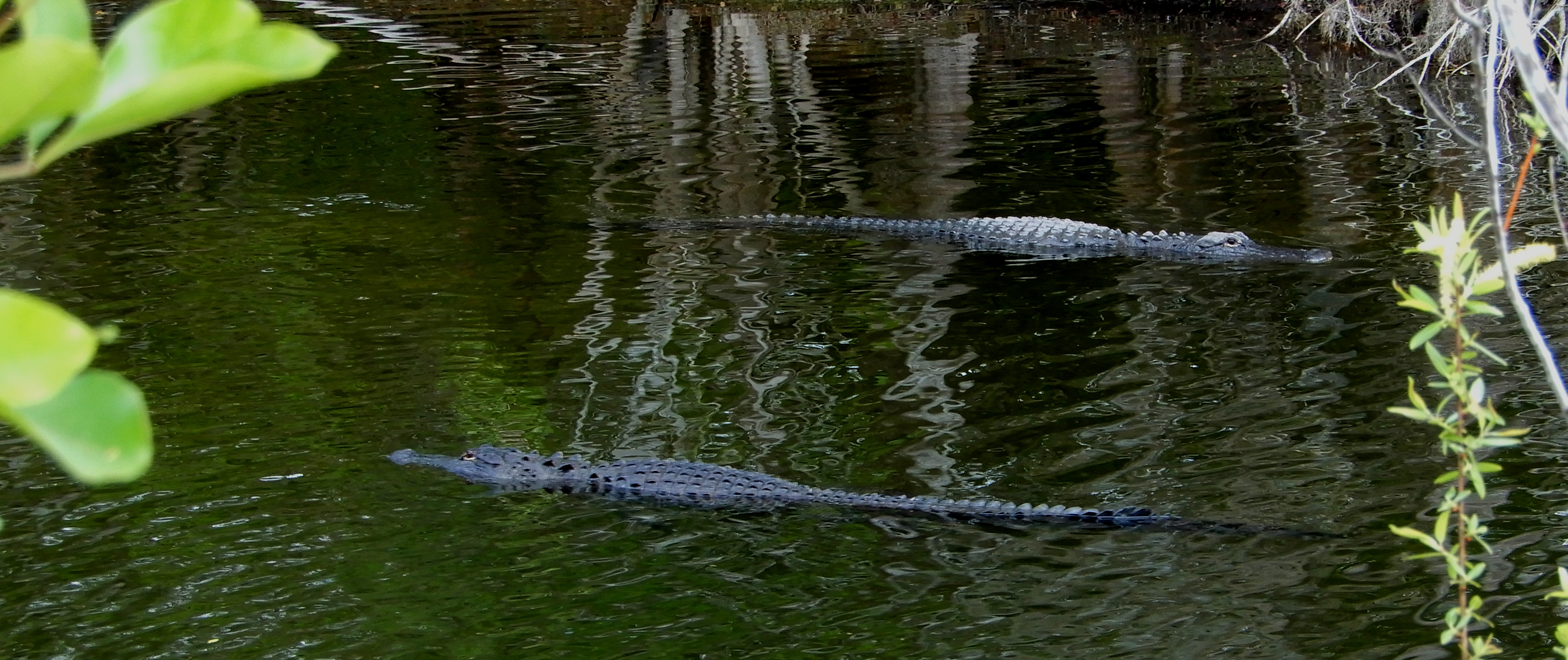
View from Shark Valley Visitors Center, Everglades National Park. There are two alligators in this photo. February 2026.
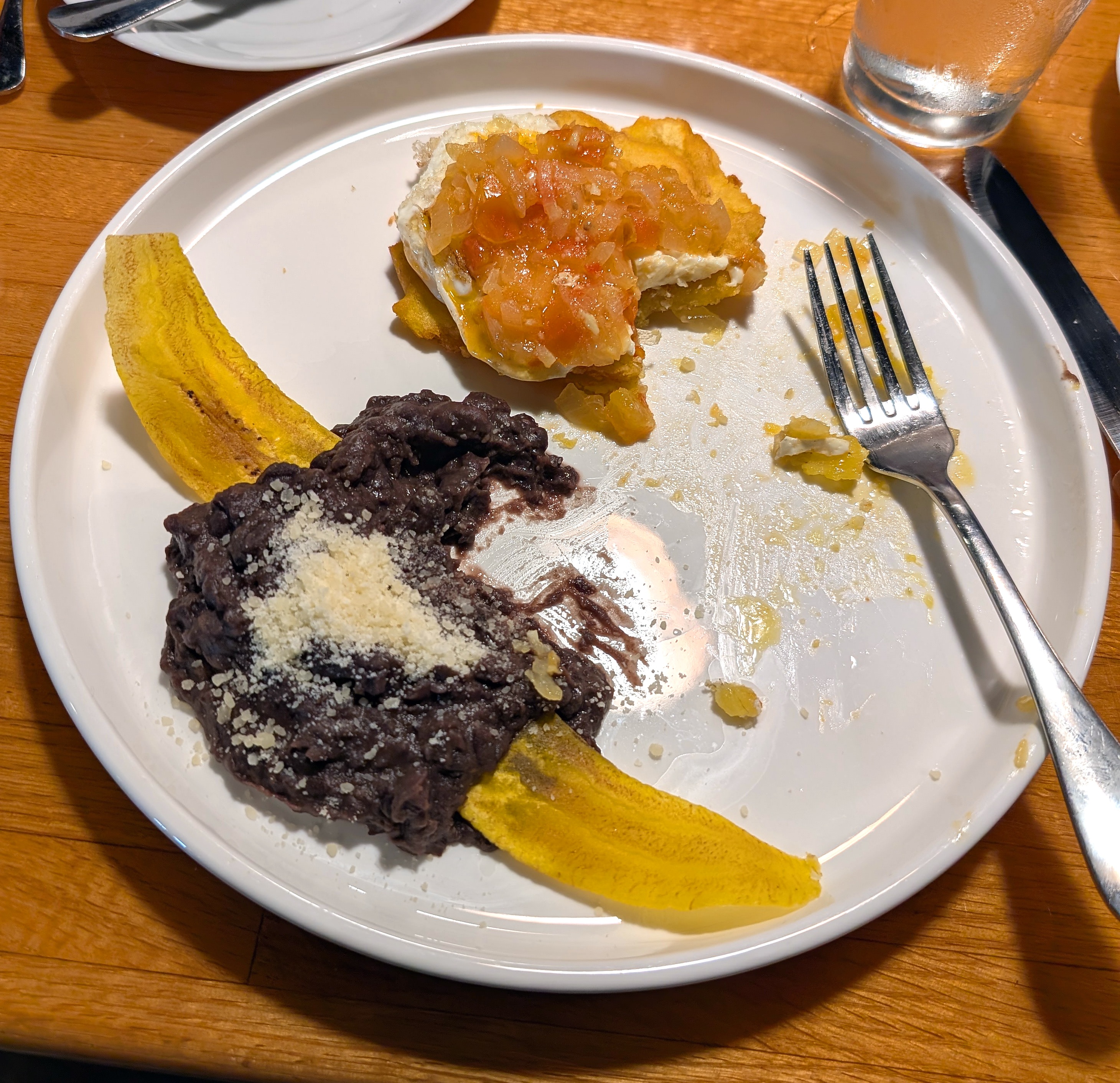
Technically we re-entered the Everglades National Park at the end of our day in the Big Cypress National Preserve, stopping at the Shark Valley Visitors Center at the end of the afternoon. We didn’t want to take the tram ride to the actual Shark Valley viewing tower, which left us little to do there. Another hour brought us to Homestead, FL. I discovered a Cuban restaurant next door which delighted me a great deal. But first, where are those alligators in the photo above? Look up that slough in the center of the photo. On the far bank? Just above the light-colored shoreline? Here’s a zoomed in photo:
Alligators at Shark Valley Visitors Center. February 2026.
We hit up the Cuban restaurant for breakfast, easily besting the hotel’s “continental” offering, then headed to what I still regard as the heart of the Everglades—the Ernest F. Coe and Royal Palm Visitor Centers and the road which leads deeply through the park until it reaches Flamingo where one can stare southward at the Florida Keys. We arrived just as the Coe center opened then headed southward.
Huevos rancheros, Cuban-style: plantain pancake under the egg and a fruited salsa atop. February 2026.
After spotting a half dozen or so school buses in parking lot, we decided to visit Royal Palm at the end of our day, on the way back out of the park. Quietly spotting wildlife with a hundred or so elementary students alongside (we checked) seemed to be mutually exclusive. We stopped at some of the major sights on the way south, a few on the back out.
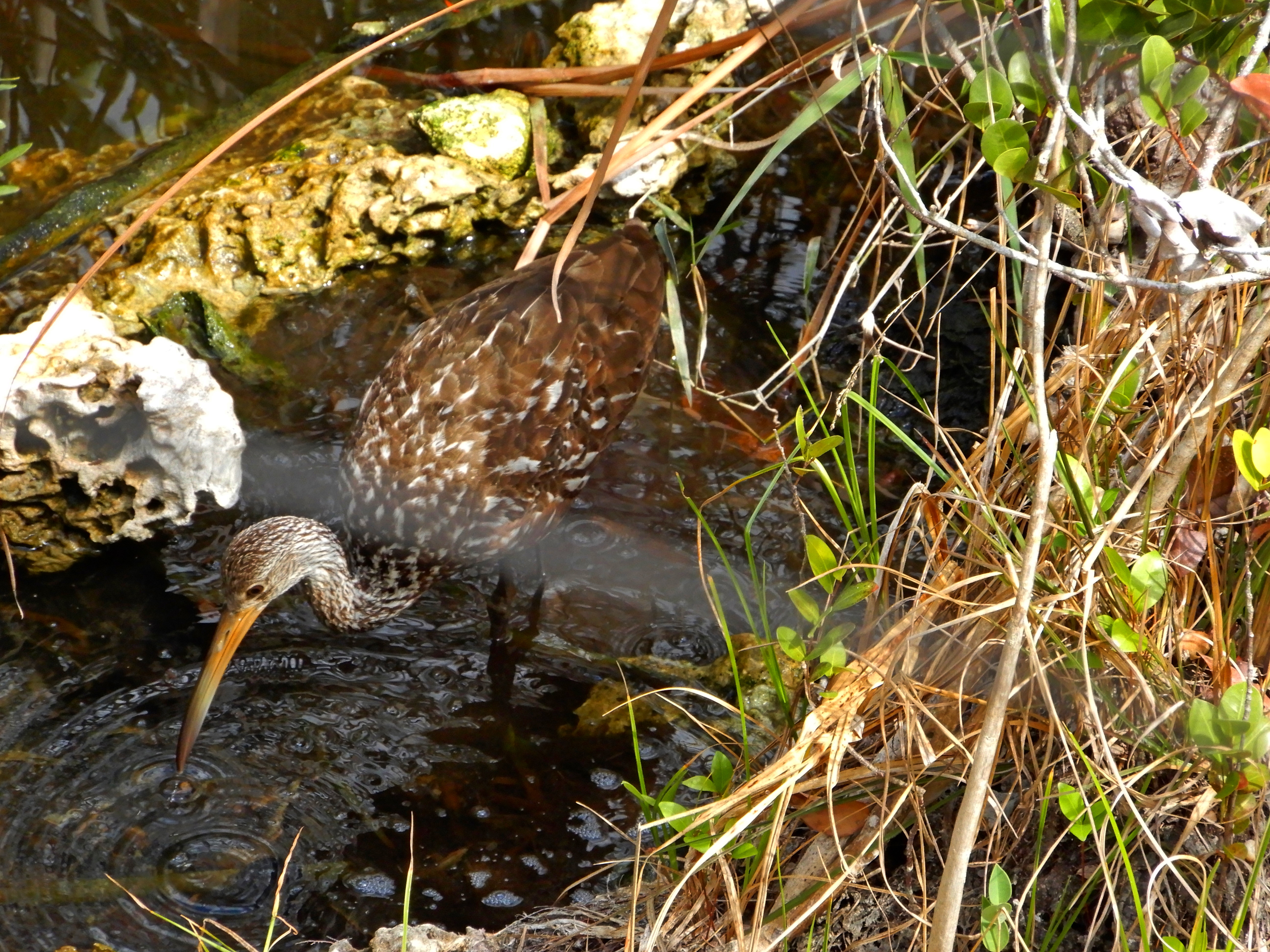
A juvenile heron. Not sure which one. Looks like a Black-crowned Night Heron, but those don’t have the yellow/orange beak. Closest I can come would be a Tricolored Heron but it doesn’t seem to be quite like this patterned brown. February 2026.
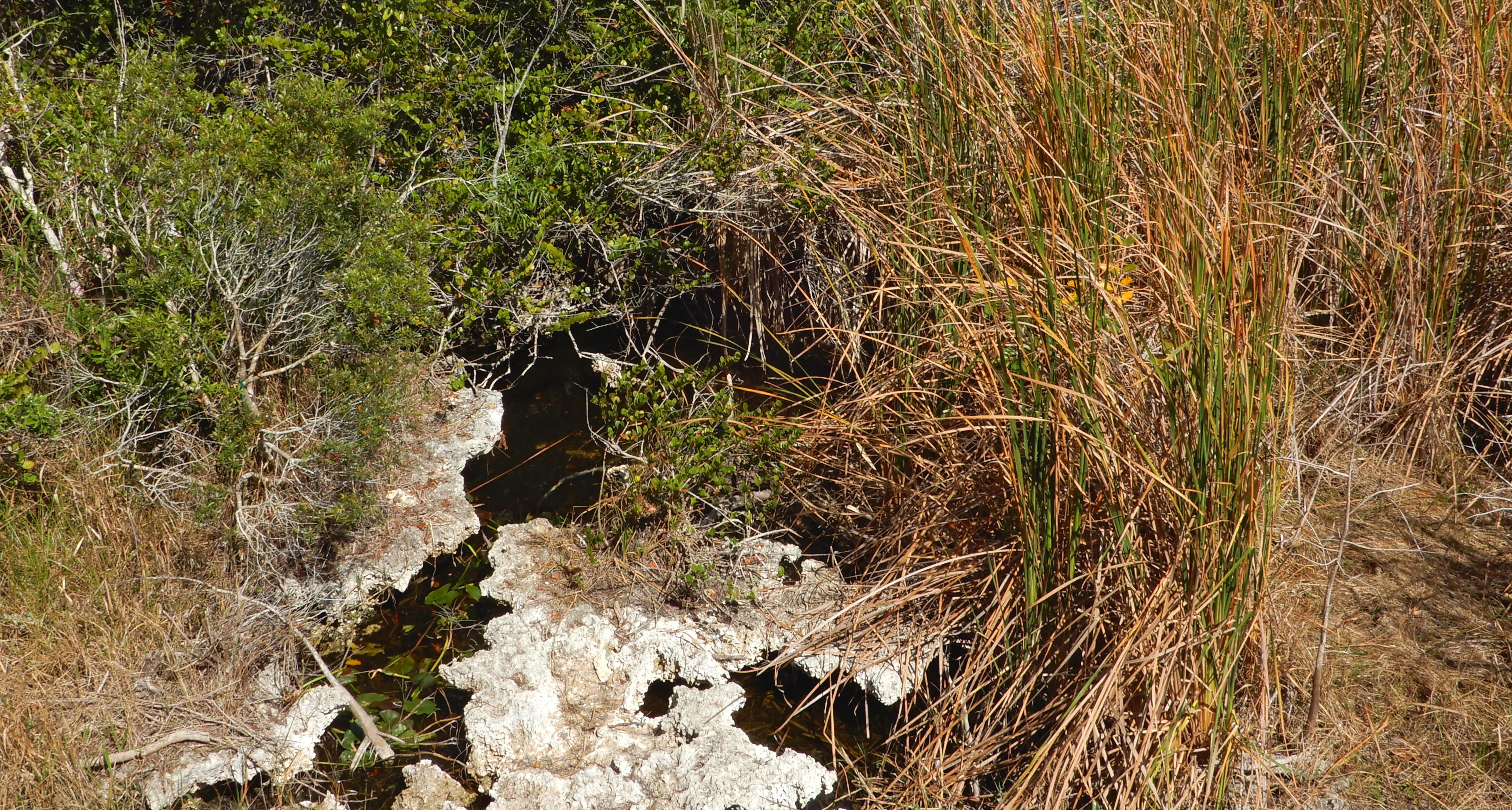
Small drainage creek at the Pa-Hay-Okee Lookout Tower, Everglades. February 2026.
My wife spotted a heron jumping in and out of the darkness of a creek at Pa-Hay-Okee Lookout (left and above). I needed a telephoto to see what she was talking about!
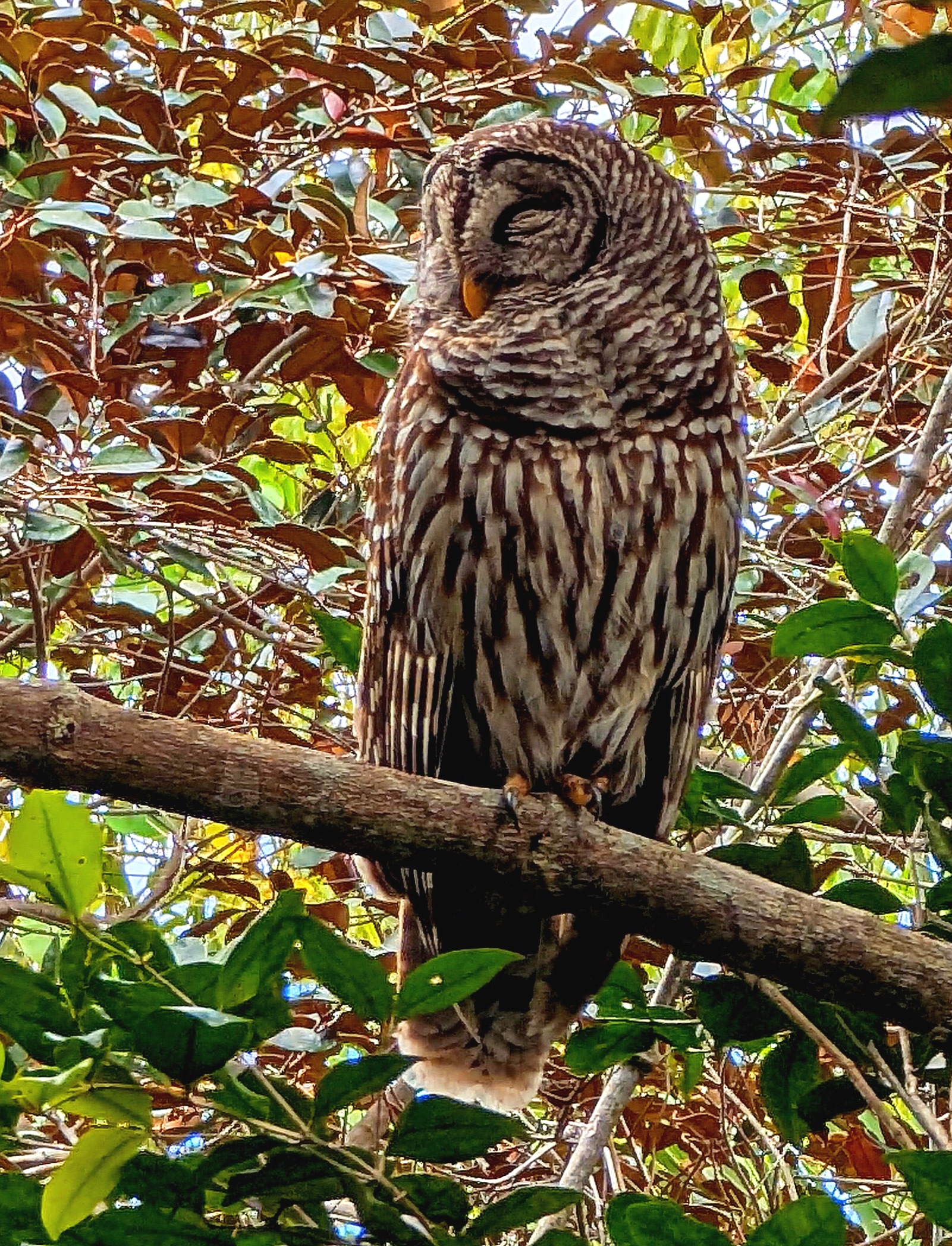
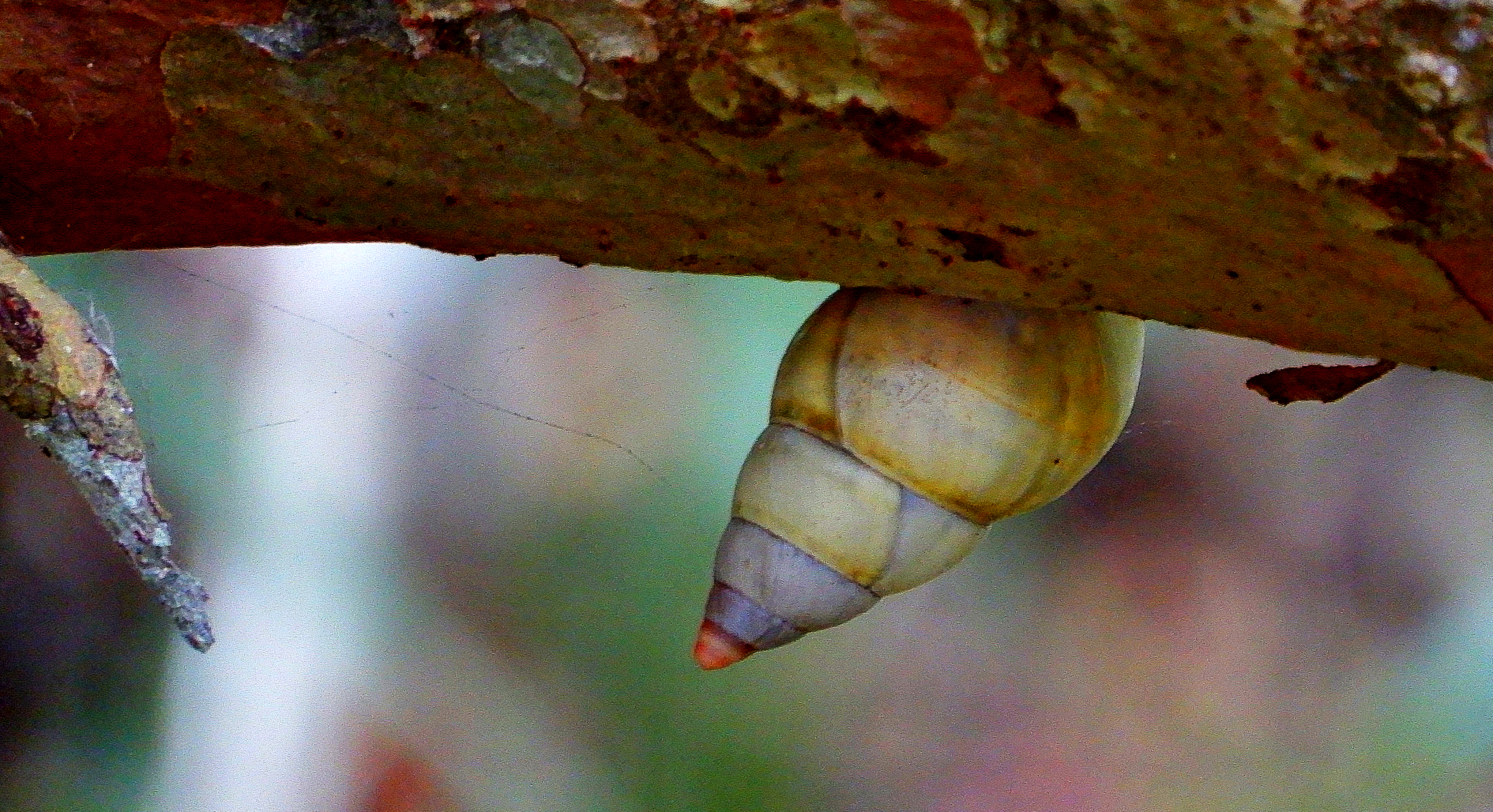
We spotted a barred owl at the Mahogany Hammock walk. While watching him (nearly positive this was a male), we were treated to a call-and-response with an owl we couldn’t locate. This apparently is classic barred owl behavior between a male and female. A sharp-eyed teenager pointed out a snail which I had difficulty locating even after she had described the location. Other attractions at this stop included huge root systems seen from underneath because hurricanes had blown them over in the past.
Barred owl at Mahogany Hammock. February 2026.
Tree snail at Mahogany Hammock. Approximately two inches. Everglades, February 2026.
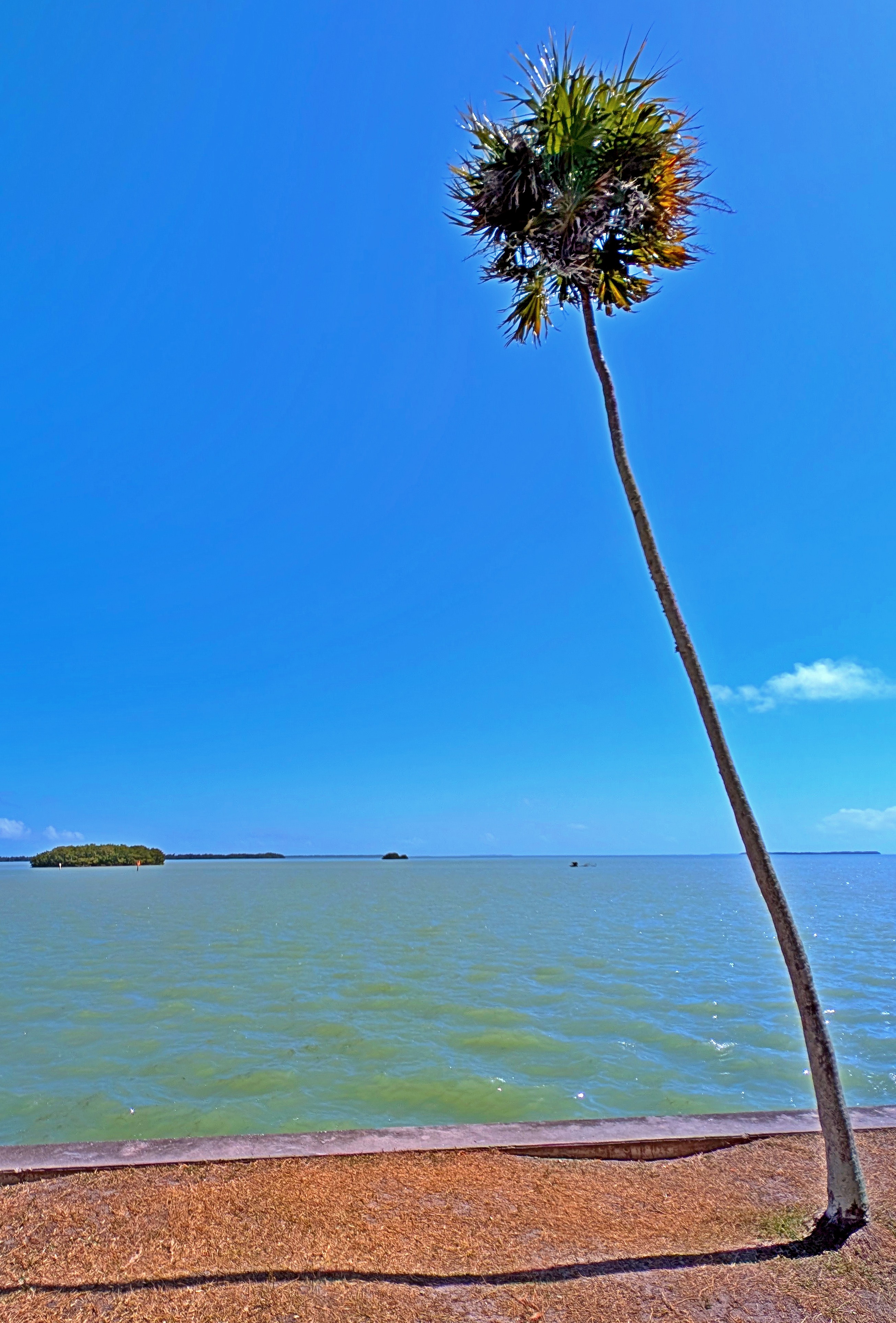
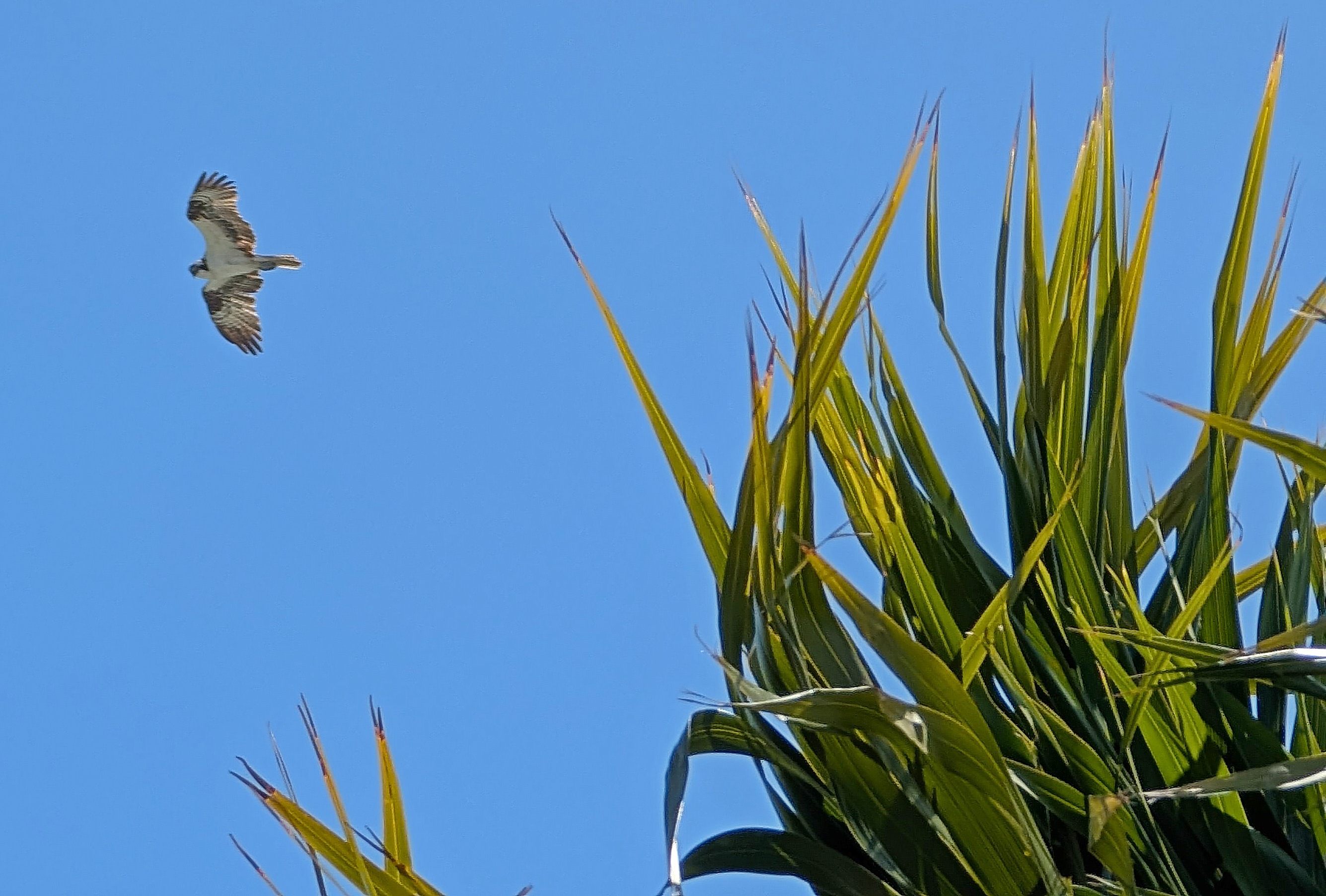
We arrived at Flamingo a bit tired. Thankfully the best thing to do there involved sitting and staring at the shallow waters leading out to the Keys—unless you wanted to take a boat charter which we had done in the past. We spotted an osprey flying back and forth over the shoreline waters, and we saw the near-ubiquitous flock of White Ibises. Then we drove north again.
A stylized view of the Keys. Flamingo, Everglades. February 2026.
Osprey at Flamingo, Everglades. February 2026.
We turned around and drove north toward the Royal Palm Visitors Center, hopefully now without the youngsters. Royal Palm deserves its own post, however, so we’ll bring this to a close.
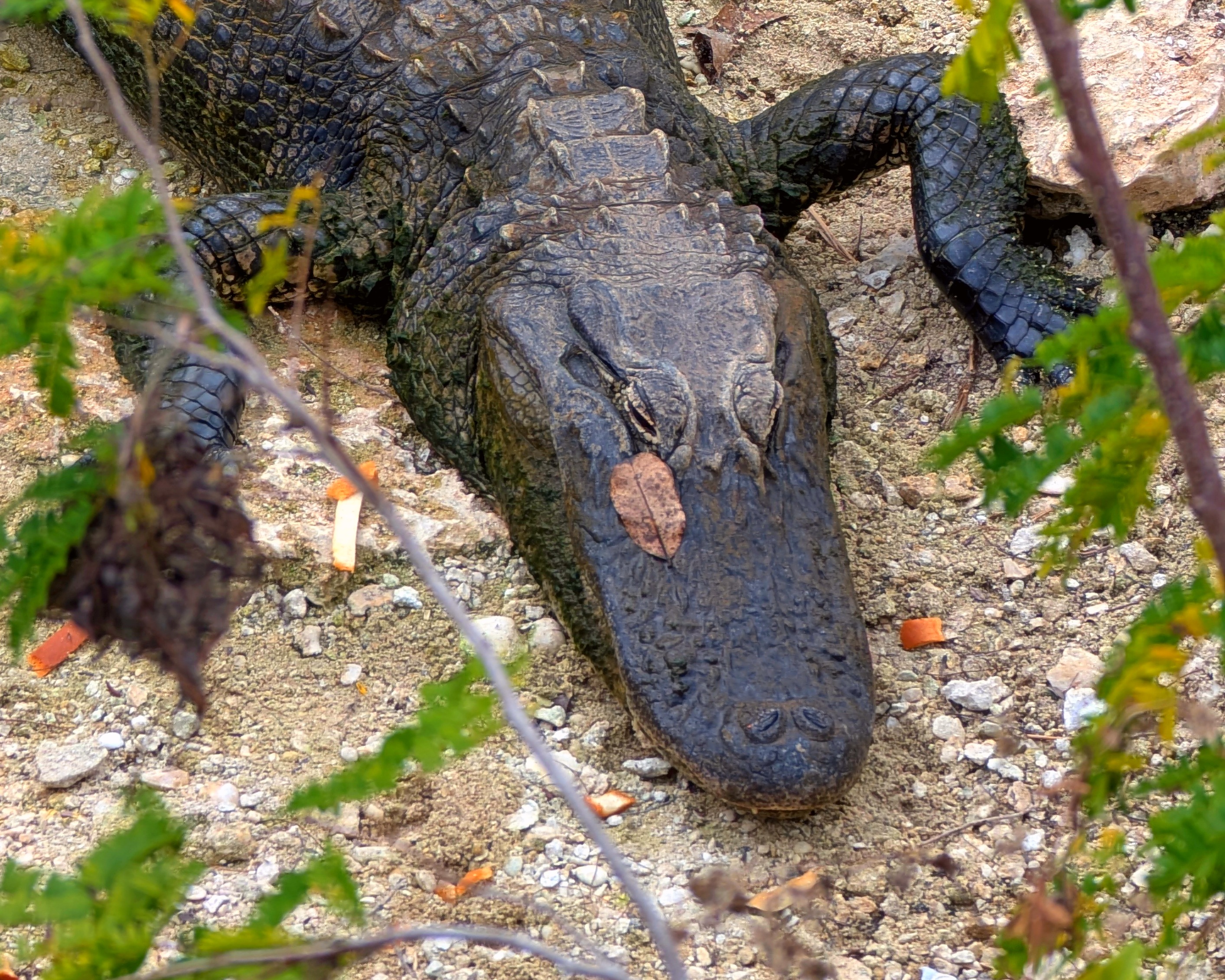
Ever had a day when it’s too damned much trouble to brush a leaf off of your face? (Yeah, I’m having one today.) Oasis Visitor Center, Big Cypress National Preserve. February 2026.
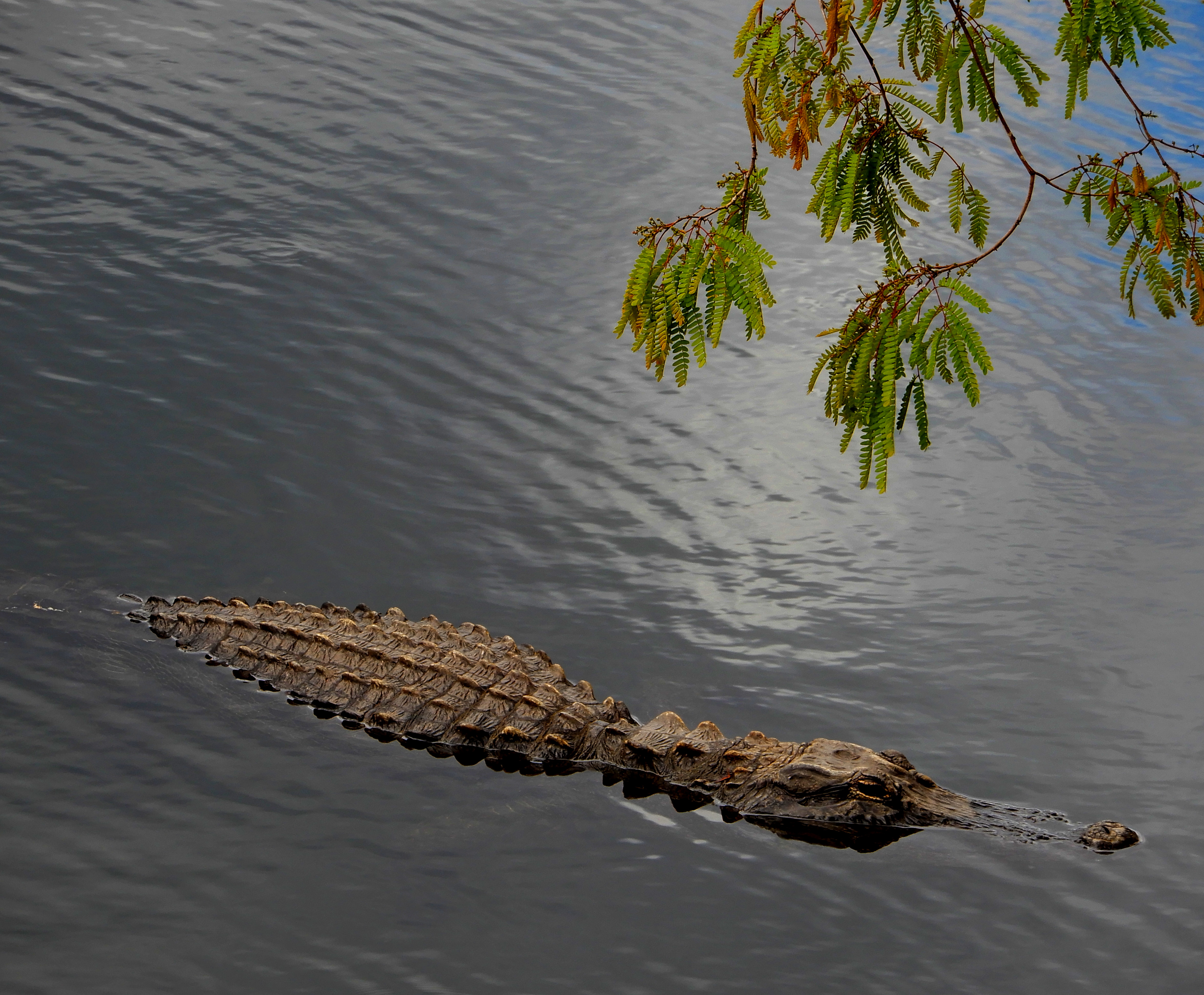
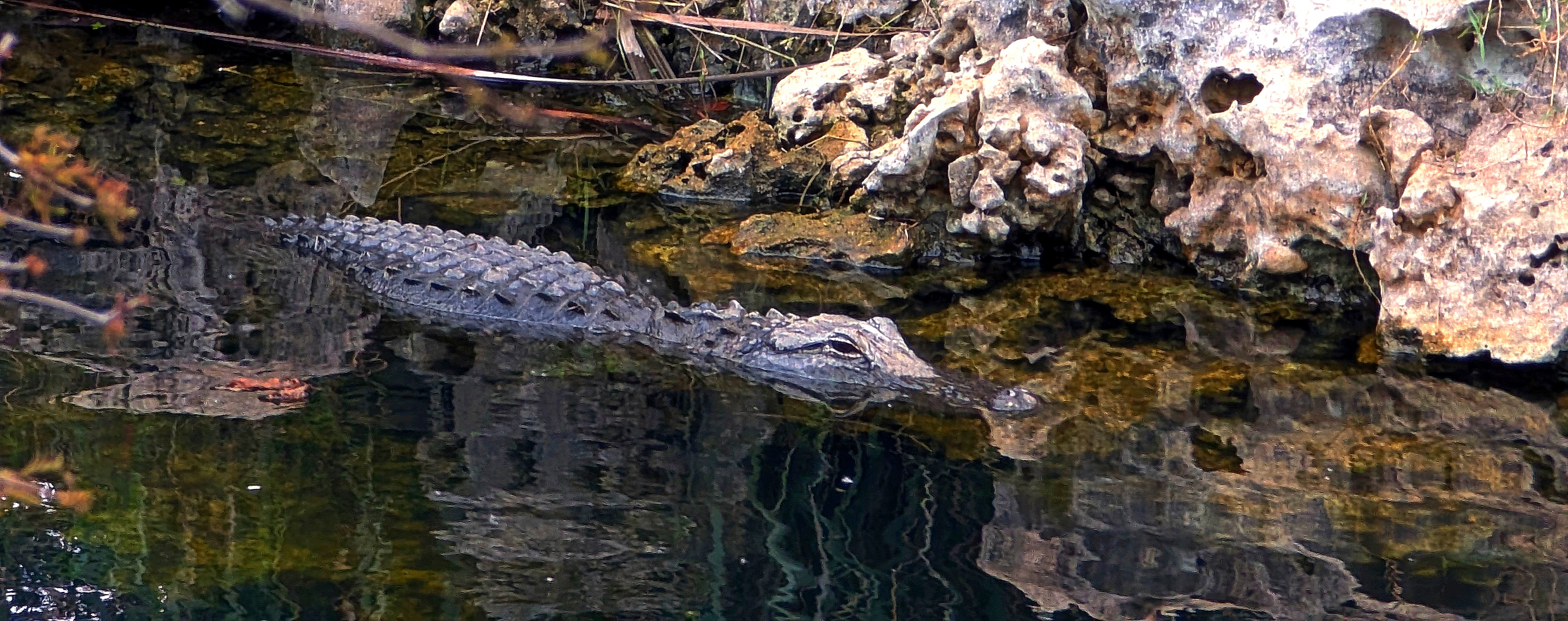
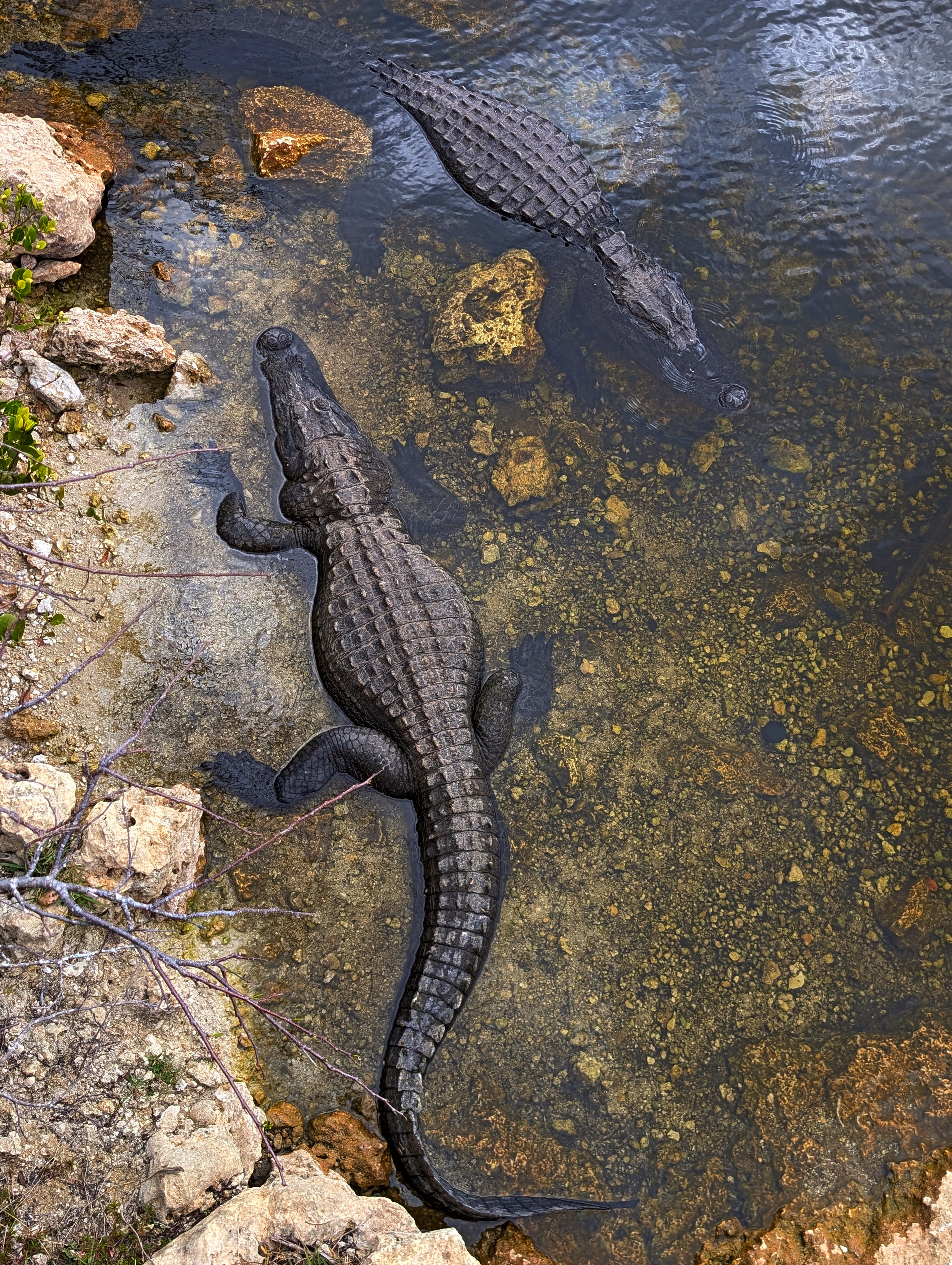
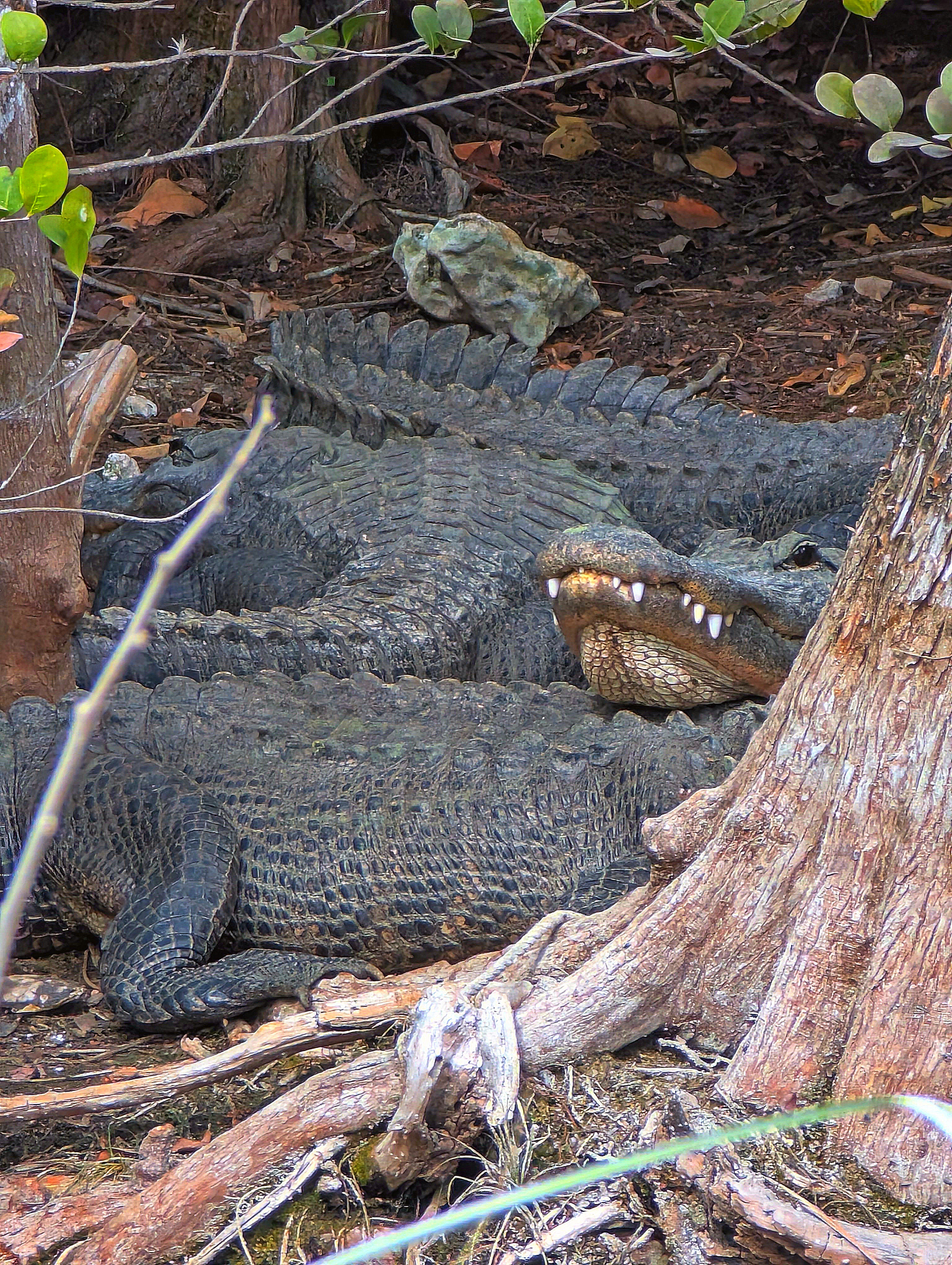
One of oddities about some of the Everglades-area areas for observing nature lies in the feeling one isn’t so much looking at Nature but more that one is looking at a ditch into which some Nature just happened to fall. The Oasis Visitor Center to the Big Cypress National Preserve on US-41 has a largish ditch running parallel to the highway. No more than 15 feet wide and likely much less, it delights the gator-gapers and folks like me who don’t mind looking at big reptilian laze-abouts who don’t offer much of a challenge to the person seeking them out. Here are a few to illustrate my point:
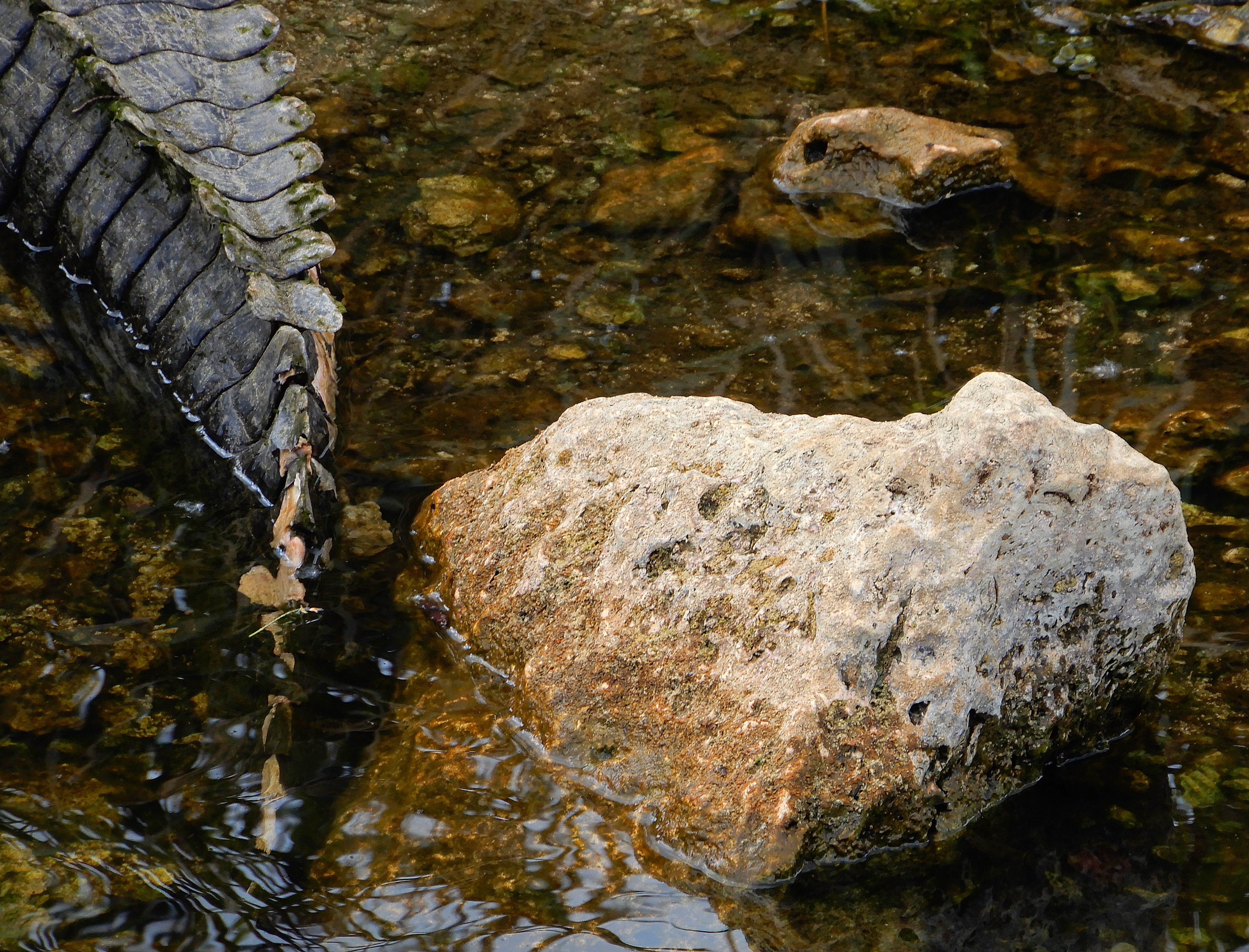
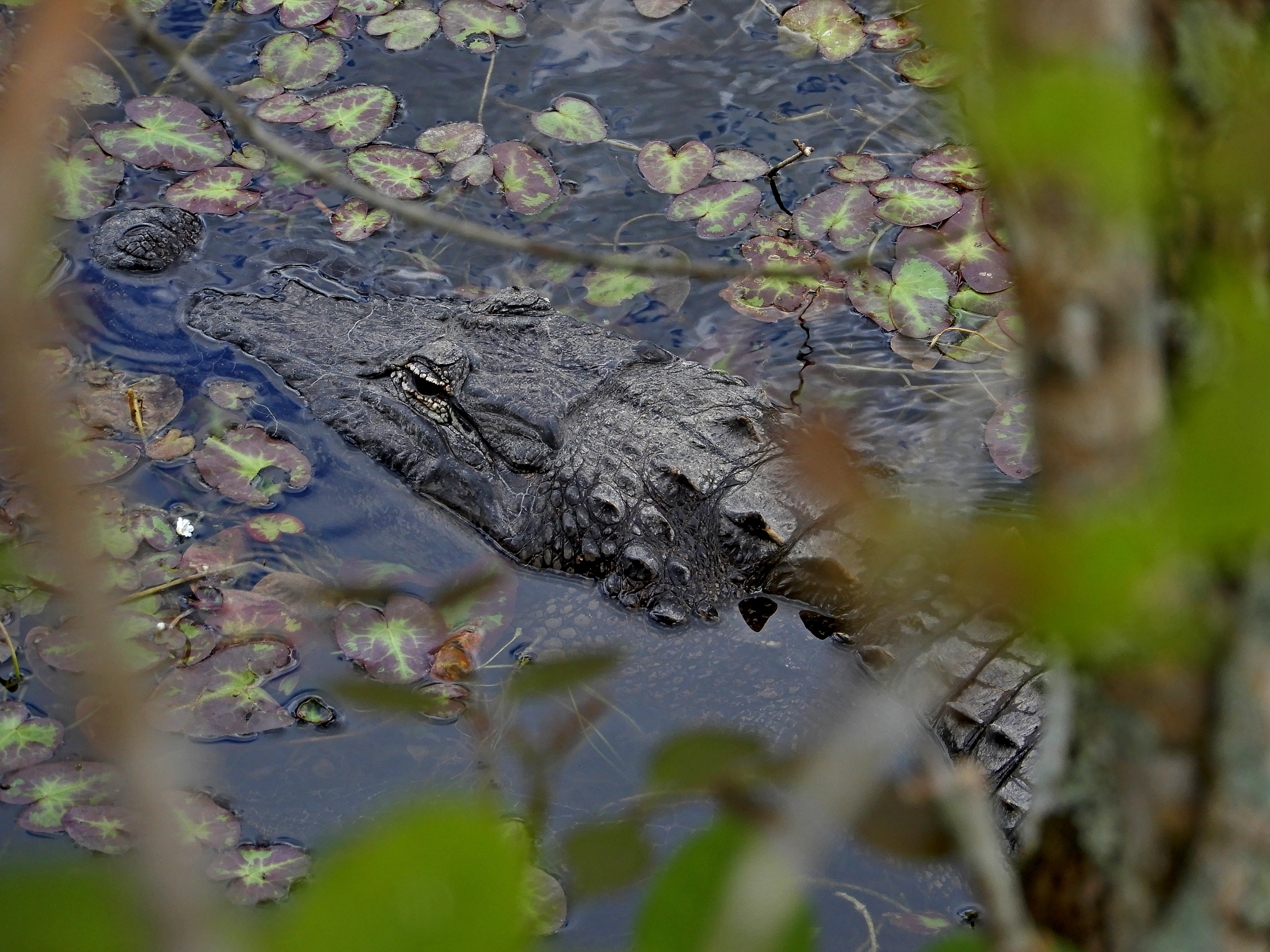
“I don’t care if you can see me. I’m just judging how close you are…and how slowly you move.” Oasis Visitor Center, Big Cypress National Preserve. February 2026.Alligator with rocks. Oasis Visitor Center, Big Cypress National Preserve. February 2026.Stilllife with gators. (Redundant.) Oasis Visitor Center, Big Cypress National Preserve. February 2026.Implication. Oasis Visitor Center, Big Cypress National Preserve. February 2026.
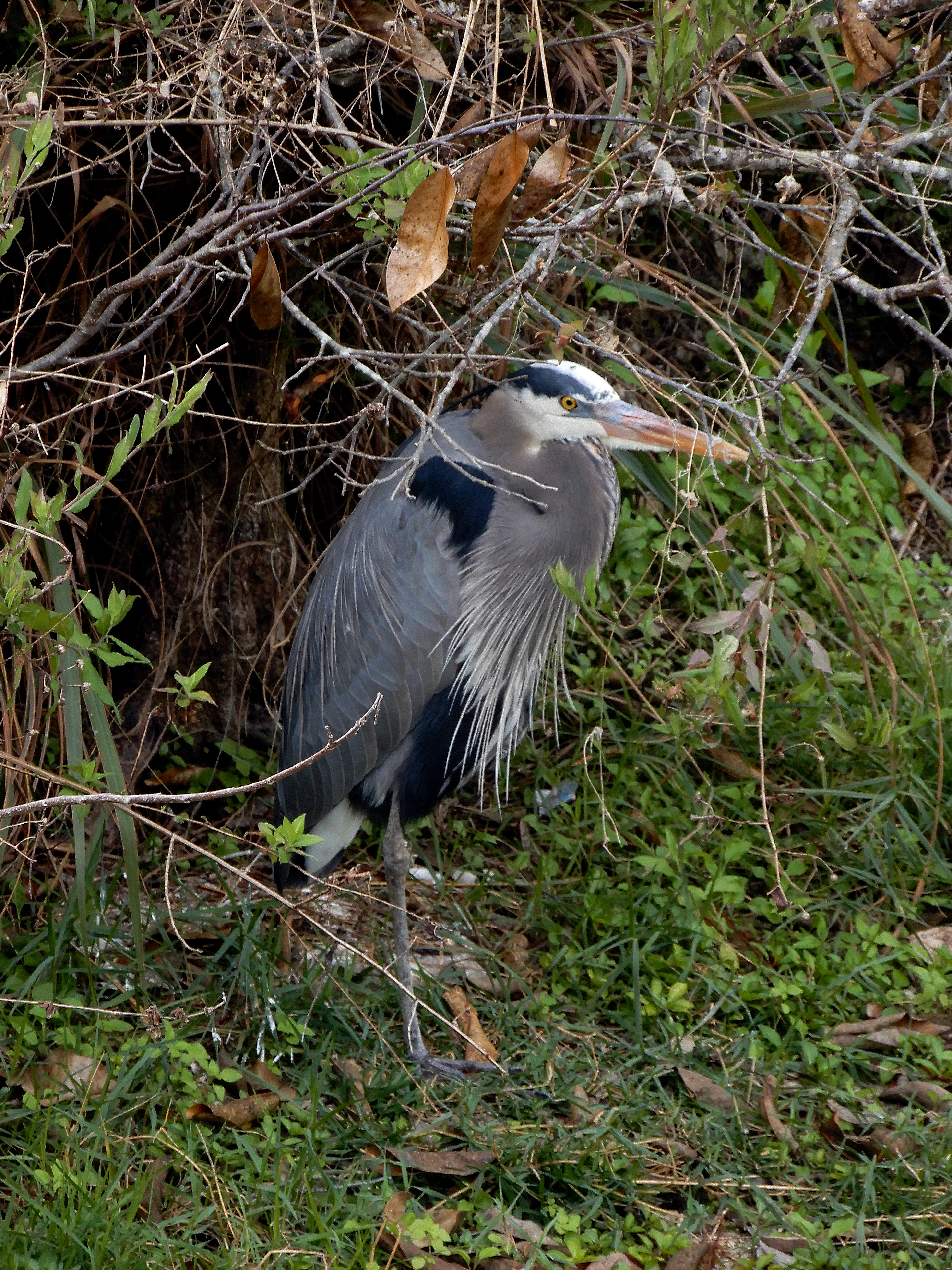
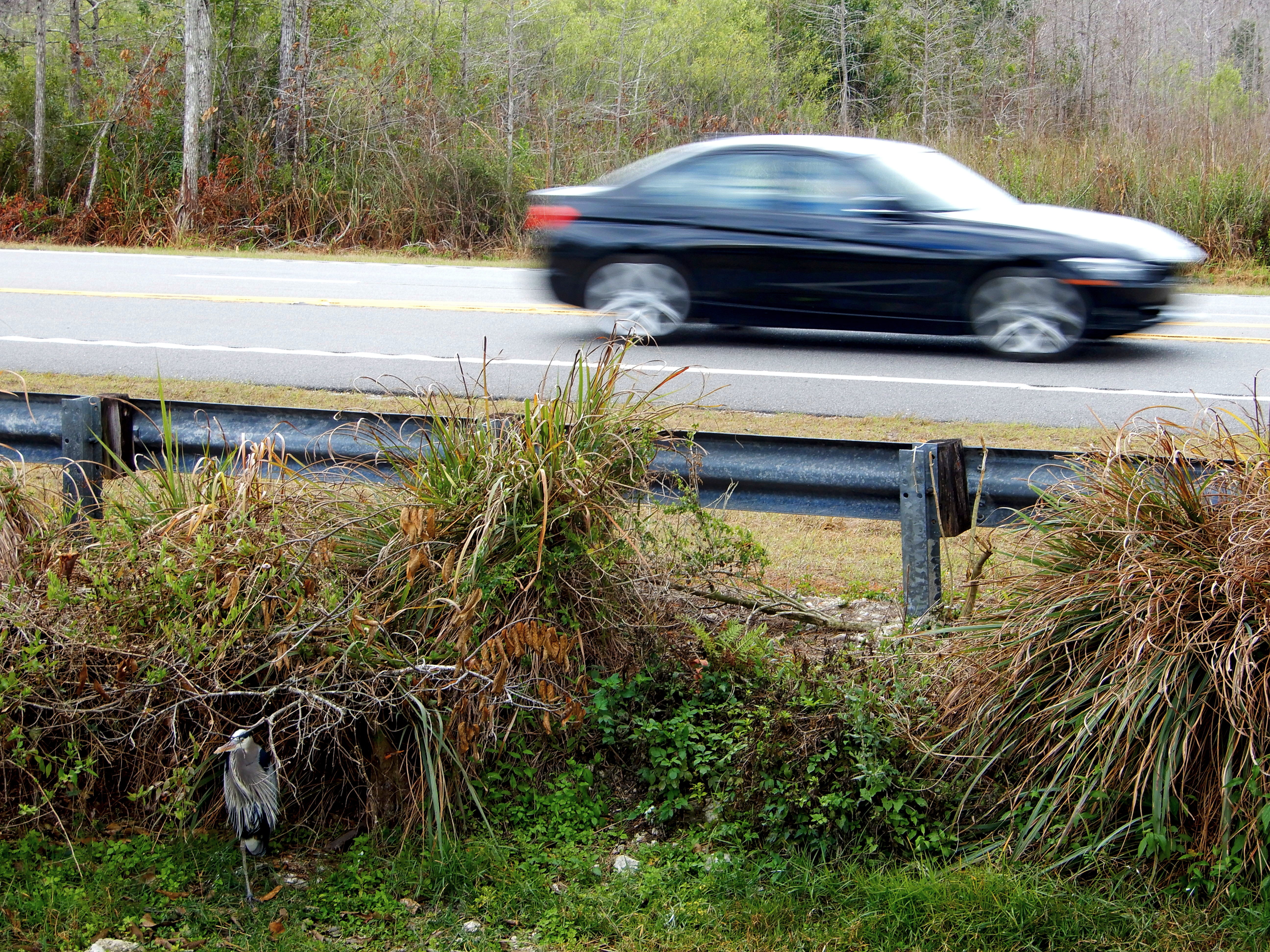
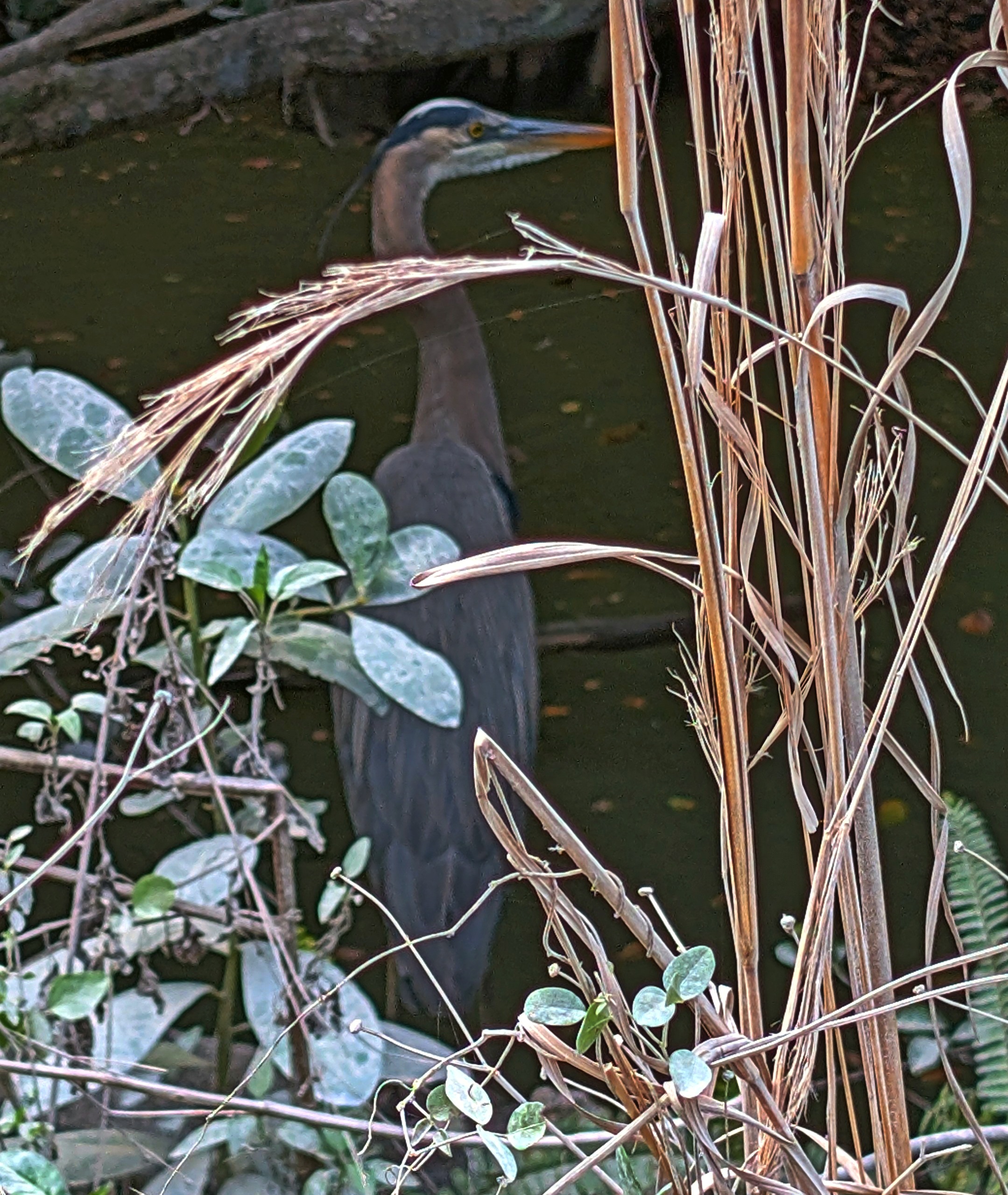
Lest one think the only denizens of this ditch were the alligators, I present some other residents. On the far side of said ditch stood a Great Blue Heron in full breeding plumage. He didn’t seem to mind the nearby highway.
Great Blue Heron. Oasis Visitor Center, Big Cypress National Preserve. February 2026.I trust guardrails less than this heron. Oasis Visitor Center, Big Cypress National Preserve. February 2026.
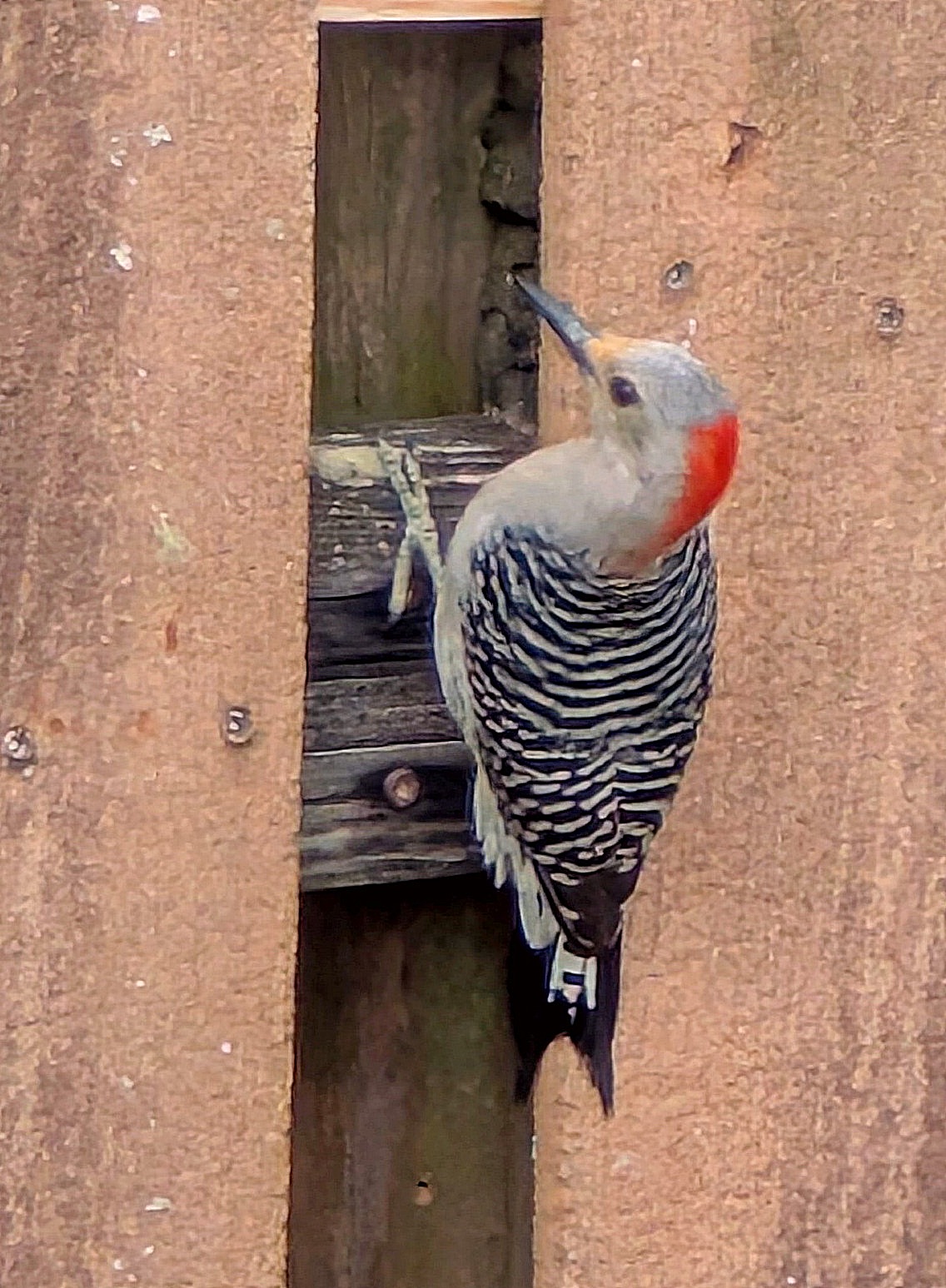
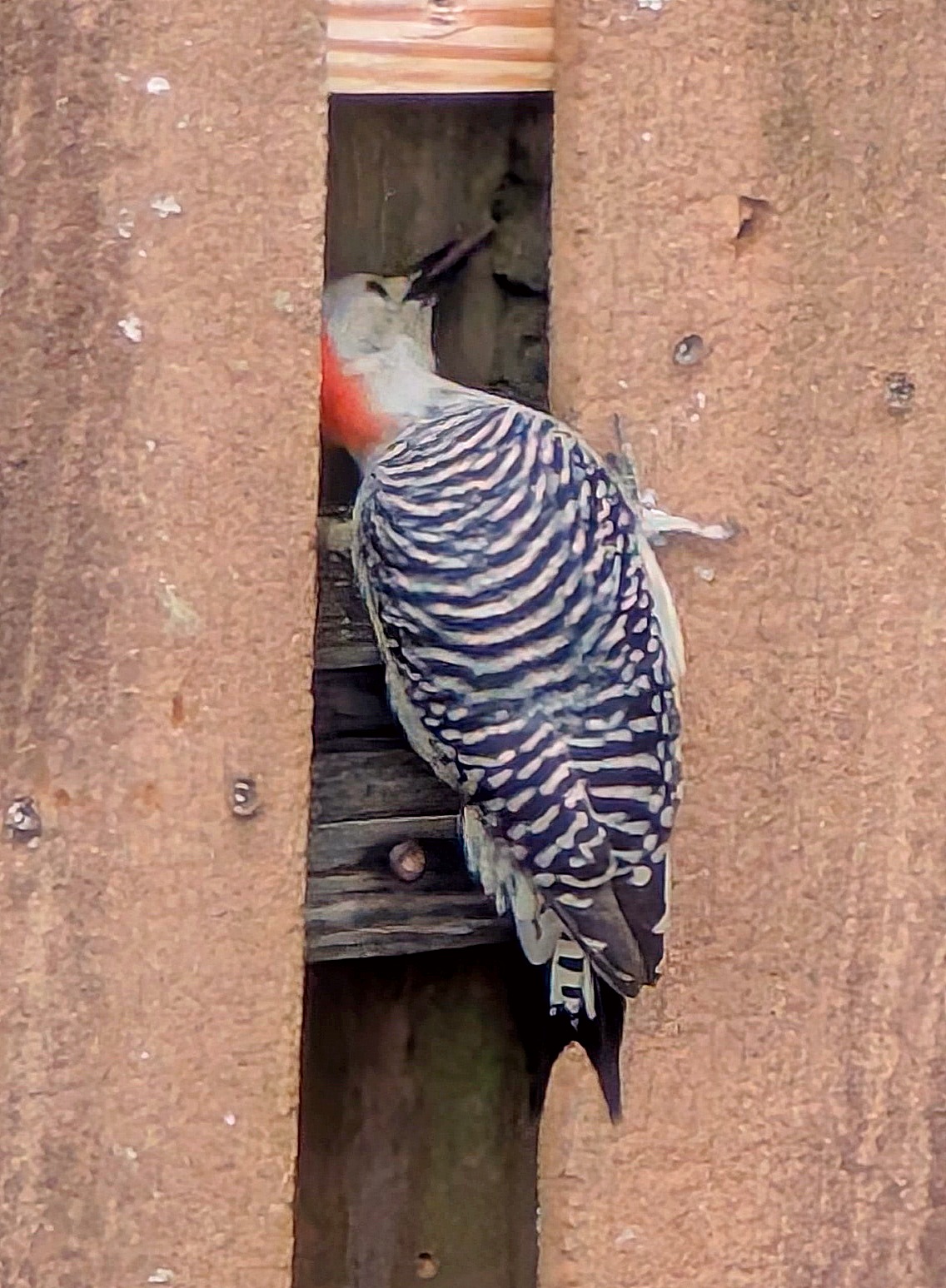
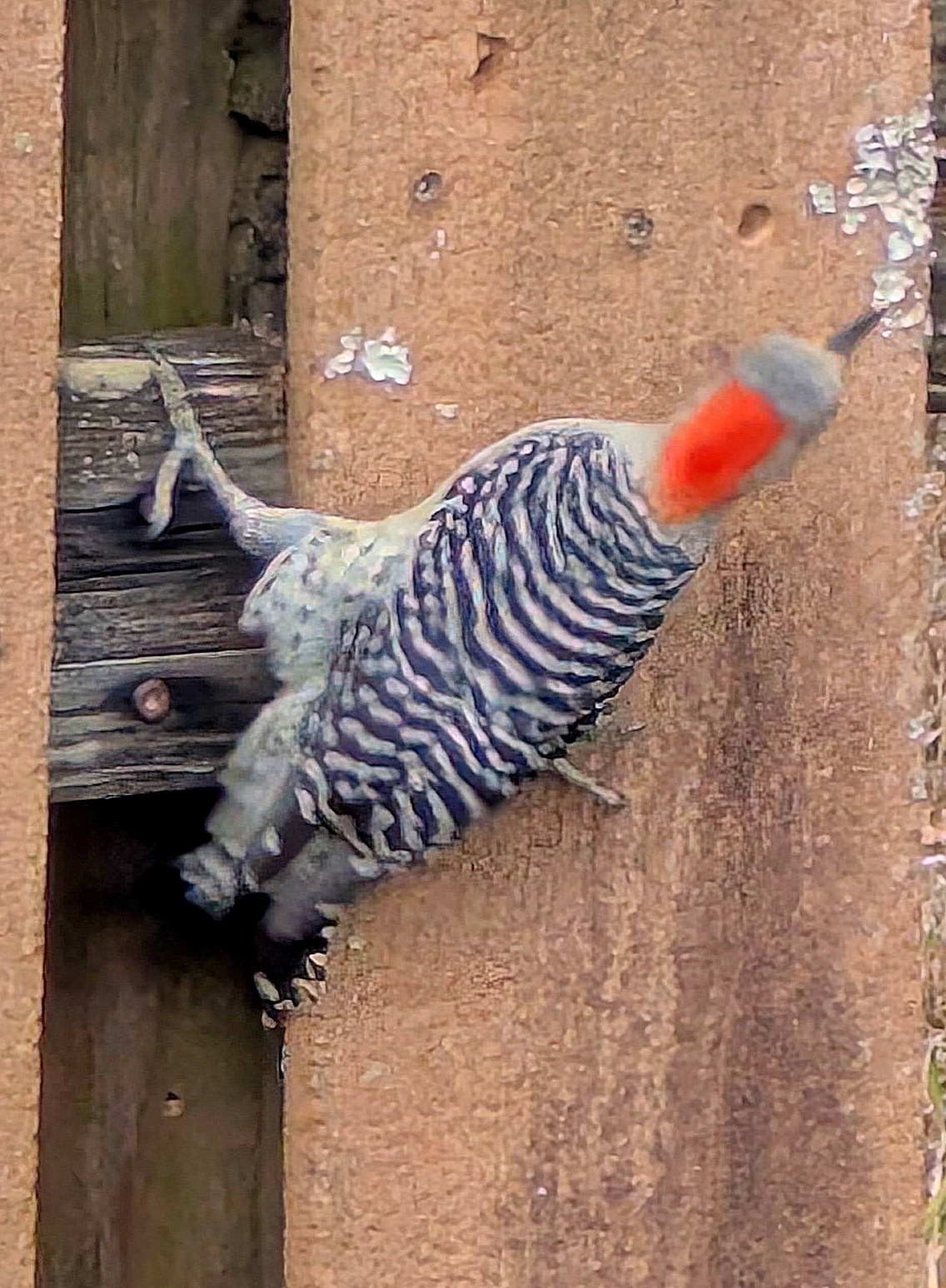
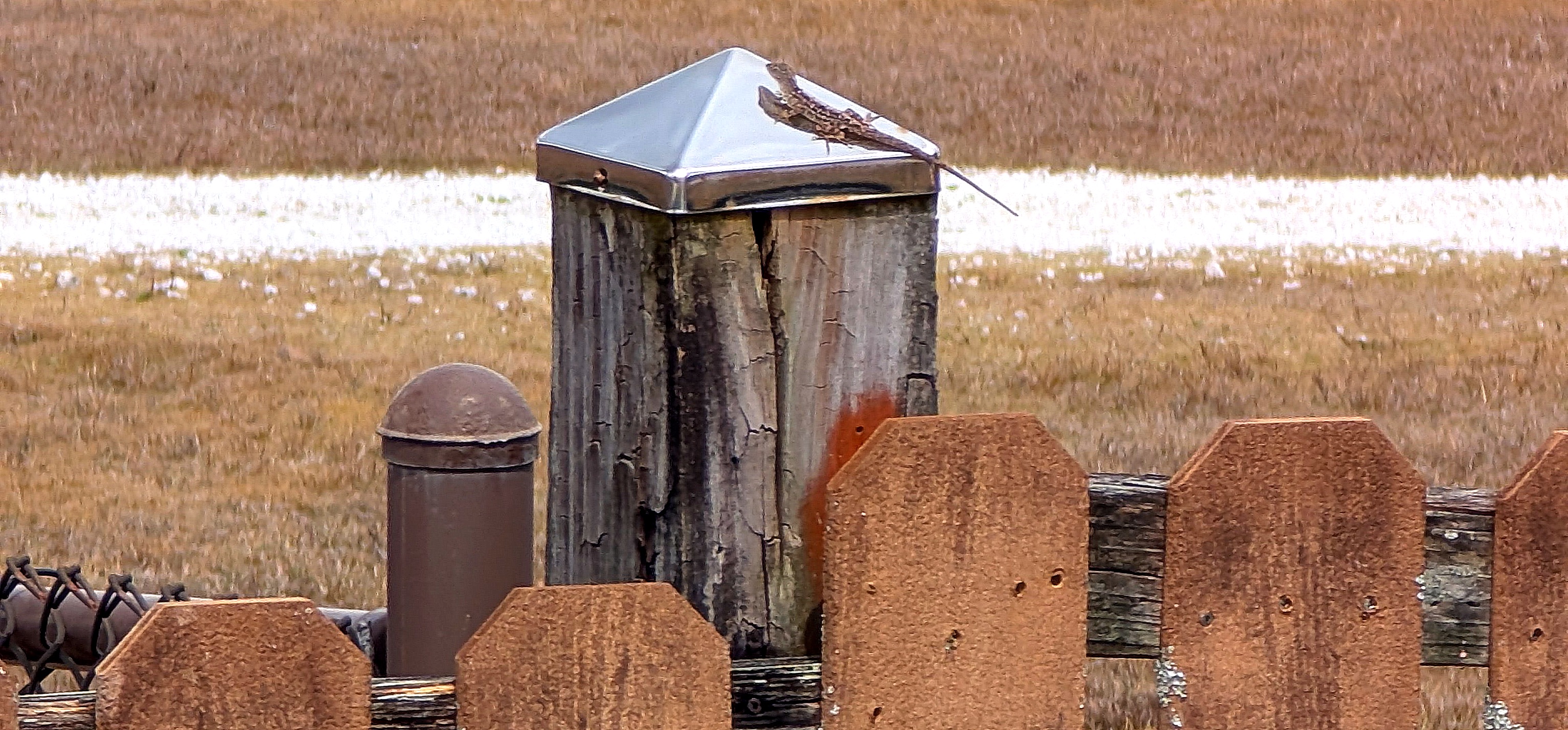
Turning back toward the Visitors Center proper, another birding couple pointed out a Red-bellied Woodpecker which frustratingly couldn’t locate a lizard. Said lizard had moments before been on the fence but had since retreated to the top of the fencepole.
I wonder how a lizard knows it’s much safer at the top of the pole? He waited until the woodpecker finally left, then returned to his original position.
Leaving the Oasis Visitors Center, we backtracked four miles to the turnoff for the Big Cypress Loop Road Scenic Drive. We’d been told the road was rough “but you’ll be okay in your SUV” but really any vehicle could take this road except for perhaps a tiny thing like a Fiat or Smart Car. Suspension would be the main issue here, since the road consists of hard-packed dirt, rocks, and a LOT of dust. Driving slowly through the first miles, we had watery land on either side of the raised roadway. This boded well:
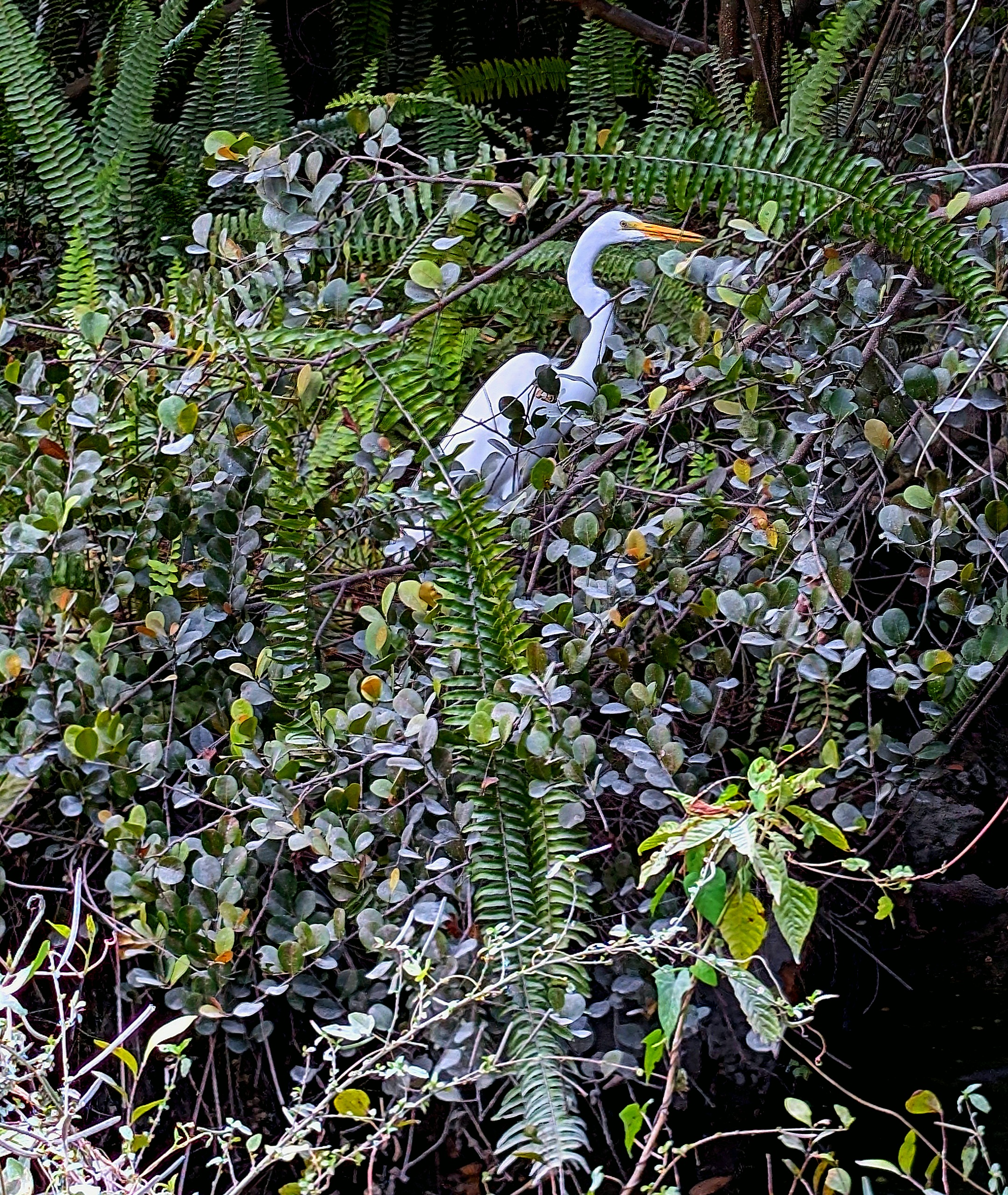
Great Blue Heron. Big Cypress National Preserve. February 2026.
Great Egret. Big Cypress National Preserve. February 2026.
…and then we hit the birding jackpot…a waterway on both sides of the road, darkened by overhanging limbs from a variety of trees and such. Numerous birds congregated there.
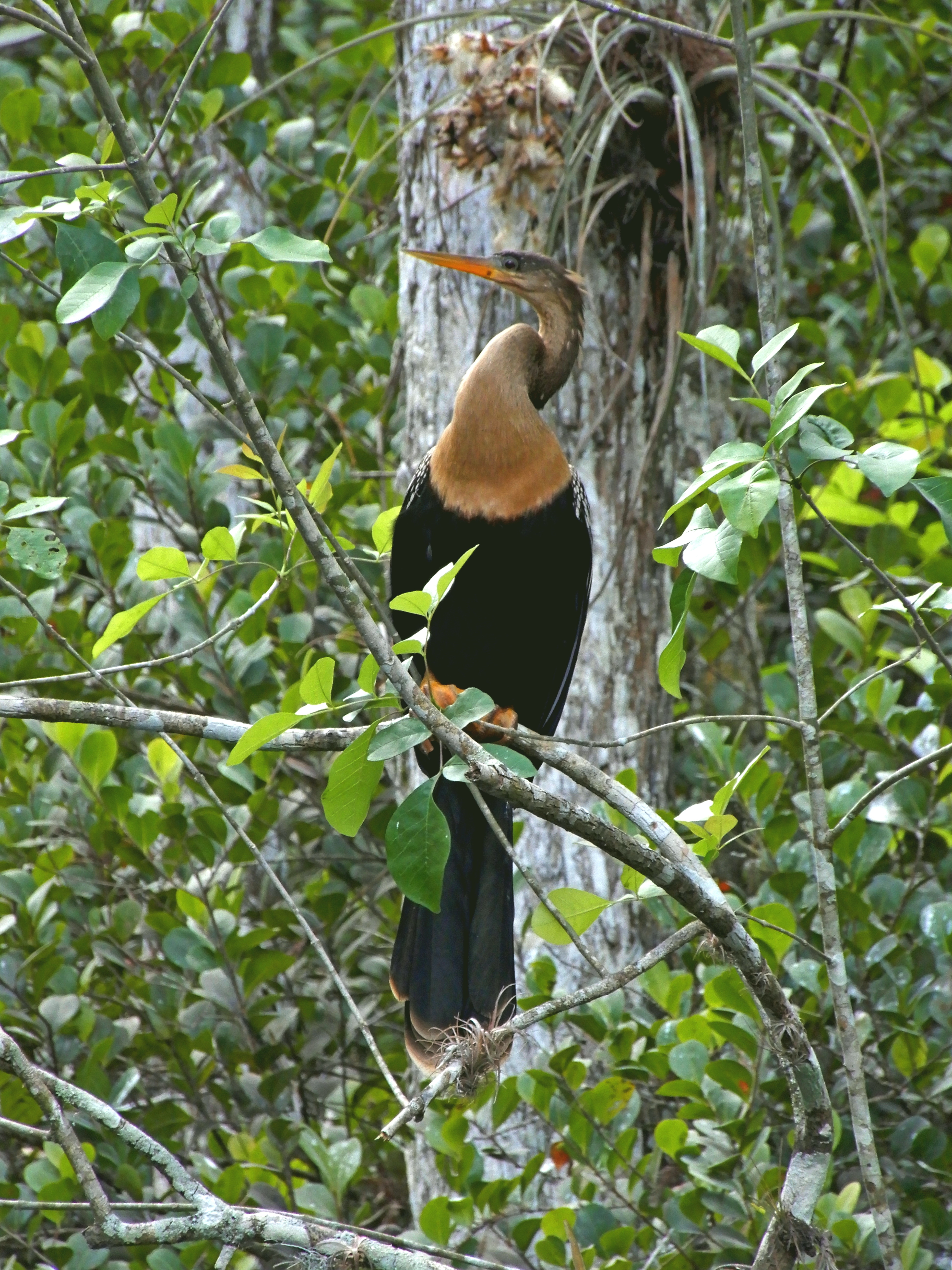
A female Anhinga surveys the swamp…or maybe the nearby males? Big Cypress National Preserve. February 2026.
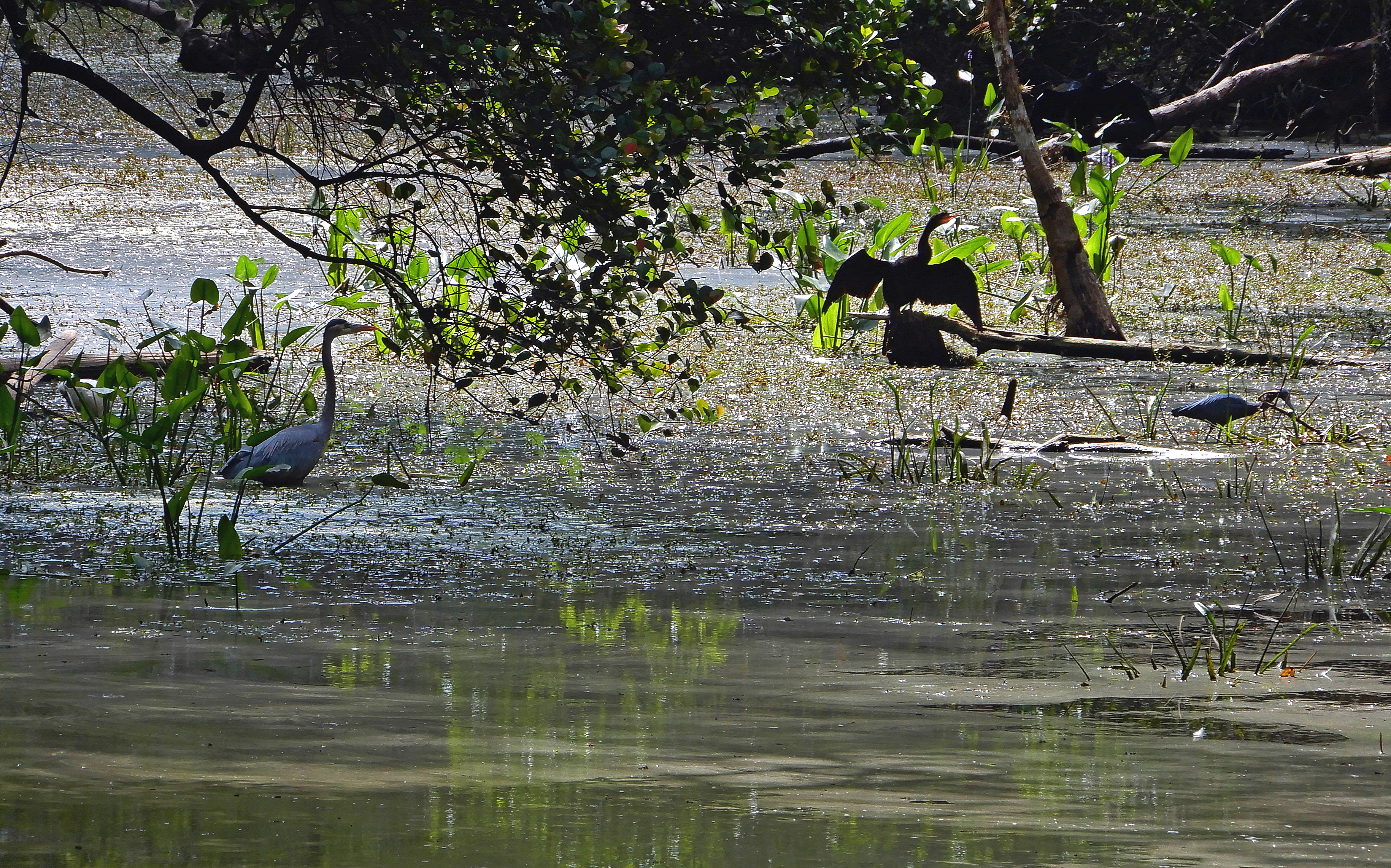
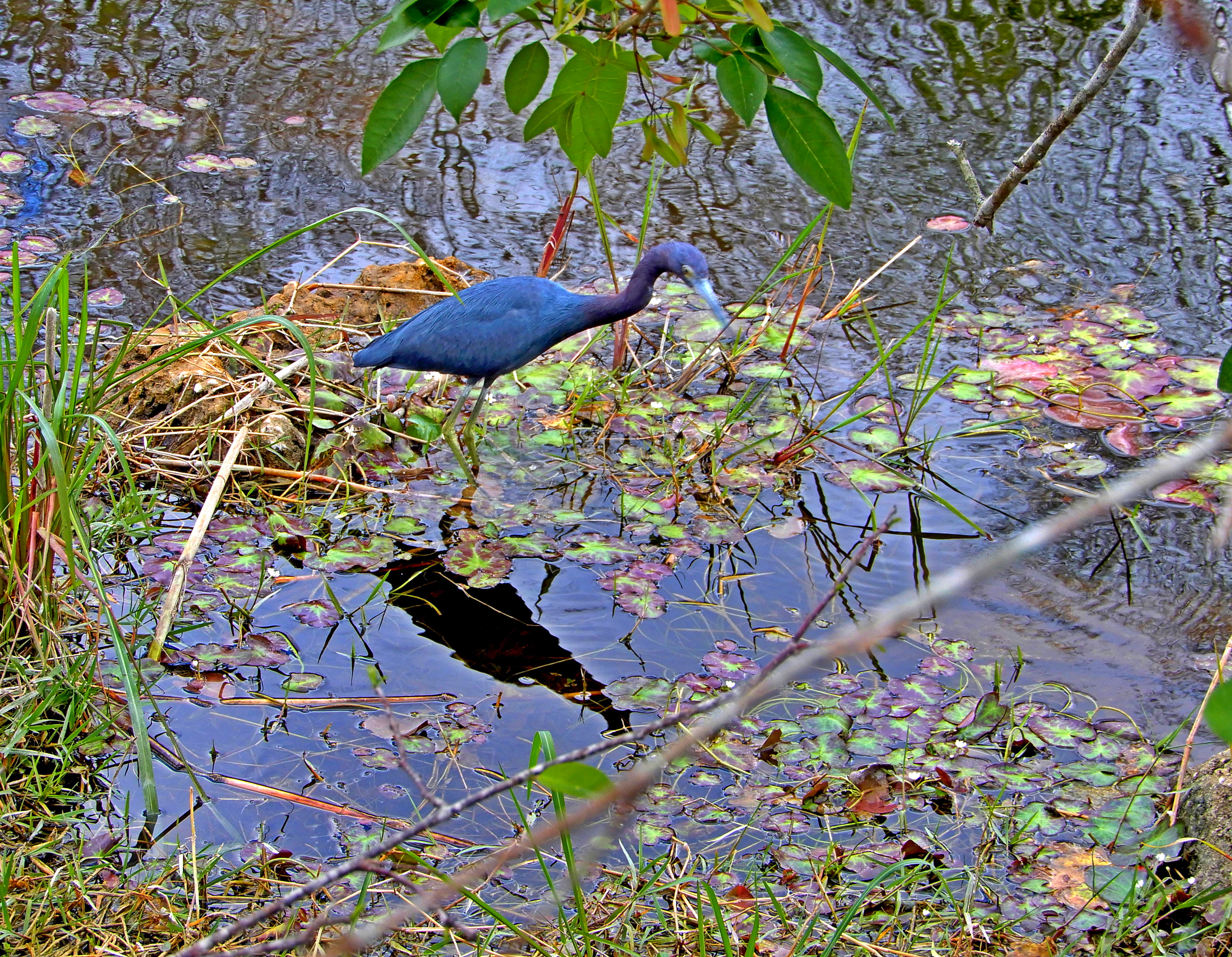
The wetlands stretched into the distance on the right side of the road where we spotted the Anhinga. We saw several male Anhingas, two or three species of egrets, and tri-colored herons.
An Anhinga dries its wings in the center while two Tri-colored Herons, left and right, work the shallow waters for prey. Big Cypress National Preserve. February 2026.
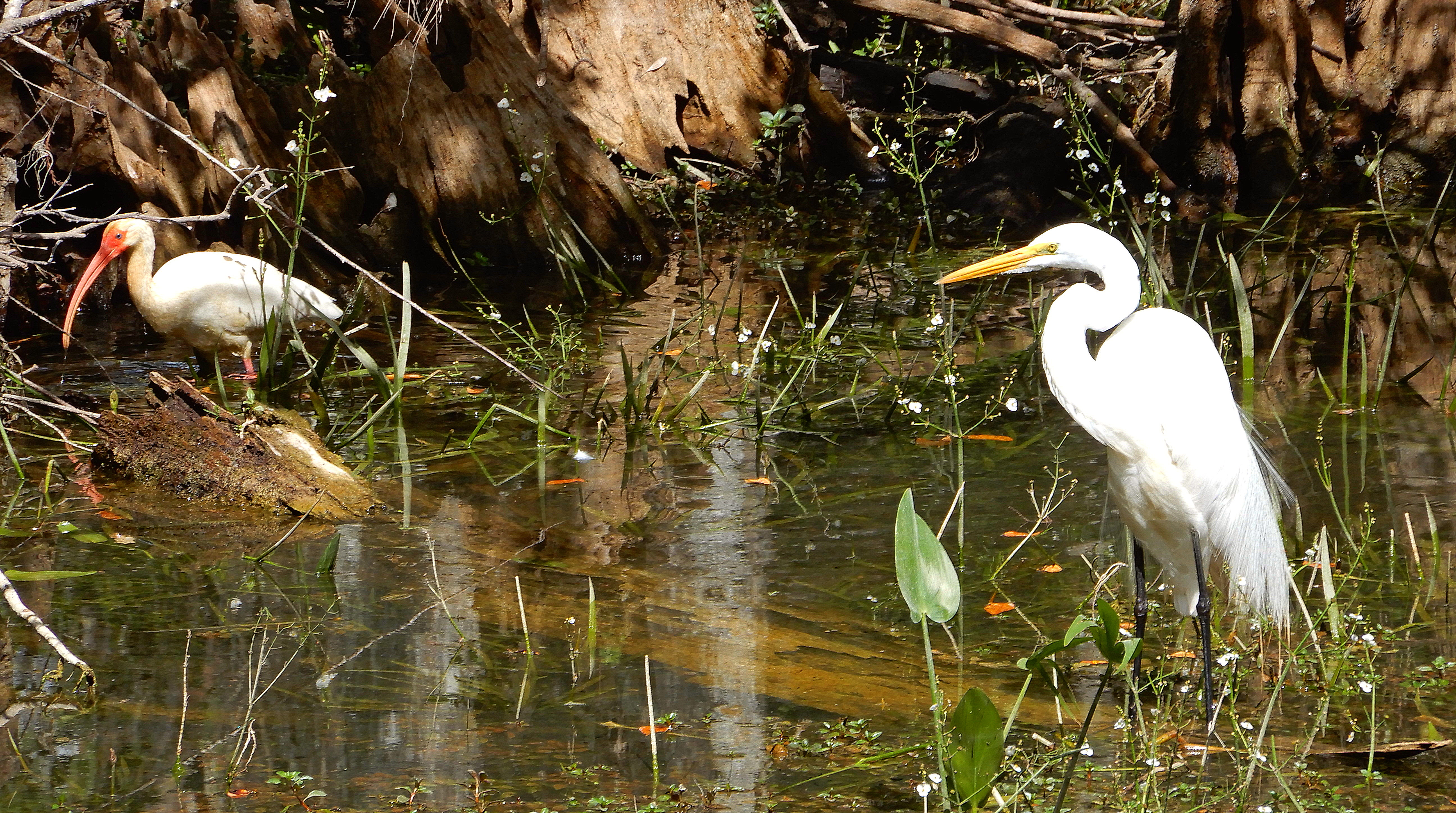
Turning to the left side of the road, a largish bit of standing water showed many birds. The Wood Stork eluded a sharply focused photo, but the others cooperated.
A Great Egret watches a White Ibis. Big Cypress National Preserve. February 2026.
Ultimately my impressions far exceeded my ability to capture them….
White Ibis, reflected. Big Cypress National Preserve. February 2026.
While two other cars of bird-loving folks like us spent time photographing and watching these avian wonders, a large vehicle pulled up and stopped. It seemed the driver wanted something so I walked over. I cannot remember what the vehicle was, but I had to look up, and I mean UP! Either a jacked 4-wheeler or something in its ballpark. The driver lowered his window and asked what we were looking at. “Gators?” he said emphatically. I replied that no, we were looking at birds. He said, “oh” in a disappointed way, raised his window and pulled around us, heading up the road to find “gators”. I wondered why he took this out-of-the-way road when gators hung around the ditches of every road in southern Florida. They jump out of pools and eat pet dogs, and they loll in copious numbers on slopes of I-75 where anyone driving through Alligator Alley could see several hundred. Then again, to be fair, the birds I thought were so interesting mostly could be seen at any reservoir in any typical Florida housing development. Who’s the idiot? As we left the scenic loop, I hoped the guy managed to stop and look around as he left Big Cypress. If he had, he might have seen the “elusive” alligator:
They’re just so gosh-darned difficult to spot! “Wish I could see me some ‘gators!” Big Cypress National Preserve. February 2026.
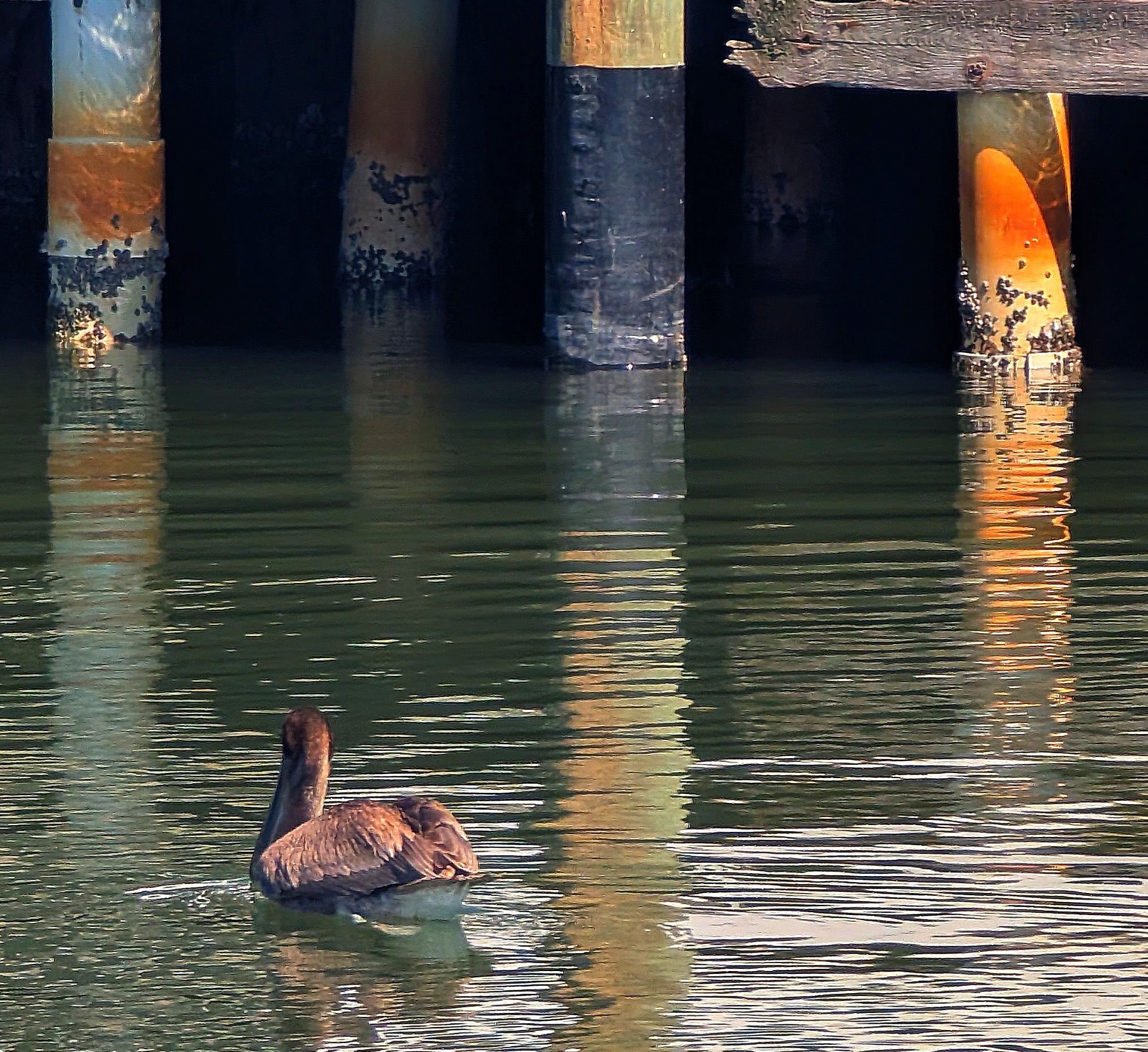
One of a good-sized group of brown pelicans we watched while we ate lunch in Tin City, a group of shops located in old tin buildings on Naples Bay. Naples, FL, February 2026.
We had brought the frigid temps of the Carolinas and Georgia with us to Tampa, and my wife’s sister lamented the loss of her typical 70’s and 80’s. It warmed a bit on our second day there. I bundled up in the warmest things I’d packed and walked to a nearby reservoir to see what bird life I could find. Driving south the next day, we arrived at the Tin City shopping mecca early afternoon, and tucked into a late lunch. The food and the bird life entertained; the shops did not. Tin City seemed a poor and miniscule version of Seattle’s Pike Street Market. Most shops sold typical tourist trinkets which said “made in China” on the bottom. Combined with the exorbitant hotel rates—$300+ for a Springhill Suites on the outskirts of greater Naples?—I doubt we’ll be back in Naples. One saving grace? We’re not exactly foodies but we’re kissin’ close, and discovering that the Cracklin’ Jack’s just up the road from the hotel had recently been featured on Diners, Drive-Ins, and Dives sure put a fine end to the day. Best fried catfish I’ve ever had! We looked forward a bit more eagerly to entering the Everglades and surrounds the next day.
Although the westernmost entry to the Everglades National Park, the Marjory Stoneman Douglas Visitor Center, purported to not be open until the end of February, we decided to chance it on the 26th. We were rewarded with an open, brand-spanking-refurbished center….but not much else because it’s a jump-off point for visitors who want to boaters and to those who want to hike/camp in the Ten Thousand Islands. We are neither of those types. We traveled east on US-41, a.k.a. the Tamiami Trail, the southern route across the Florida peninsula which parallels I-75 a.k.a. “Alligator Alley”. I planned the US-41 route; it became a wise decision when a fire broke out between the two and officials closed sections of the interstate. (It also precluded driving very far north from the US-41.) The southern tip of Florida is a patchwork of state parks, state forests, national preserves, and the national park. We stopped first at the Big Cypress Swamp Welcome Center in the Big Cypress National Preserve. After that, a stop at the H.P. Williams Roadside Park gave us our first good glimpse of alligators, and some nice views of the bird denizens.
A Tri-Colored Heron stalks its prey. Big Cypress National Preserve, February 2026.It’s not “oh, look, there’s a gator.” It’s more a find-the-gator experience. Sure they’re swimming up and down the minor canal you’re looking at. Can you spot the one hanging out under your nose? Big Cypress National Preserve, February 2026.“like ships passing in the night…” Some gators were easier to spot. Big Cypress National Preserve, February 2026.
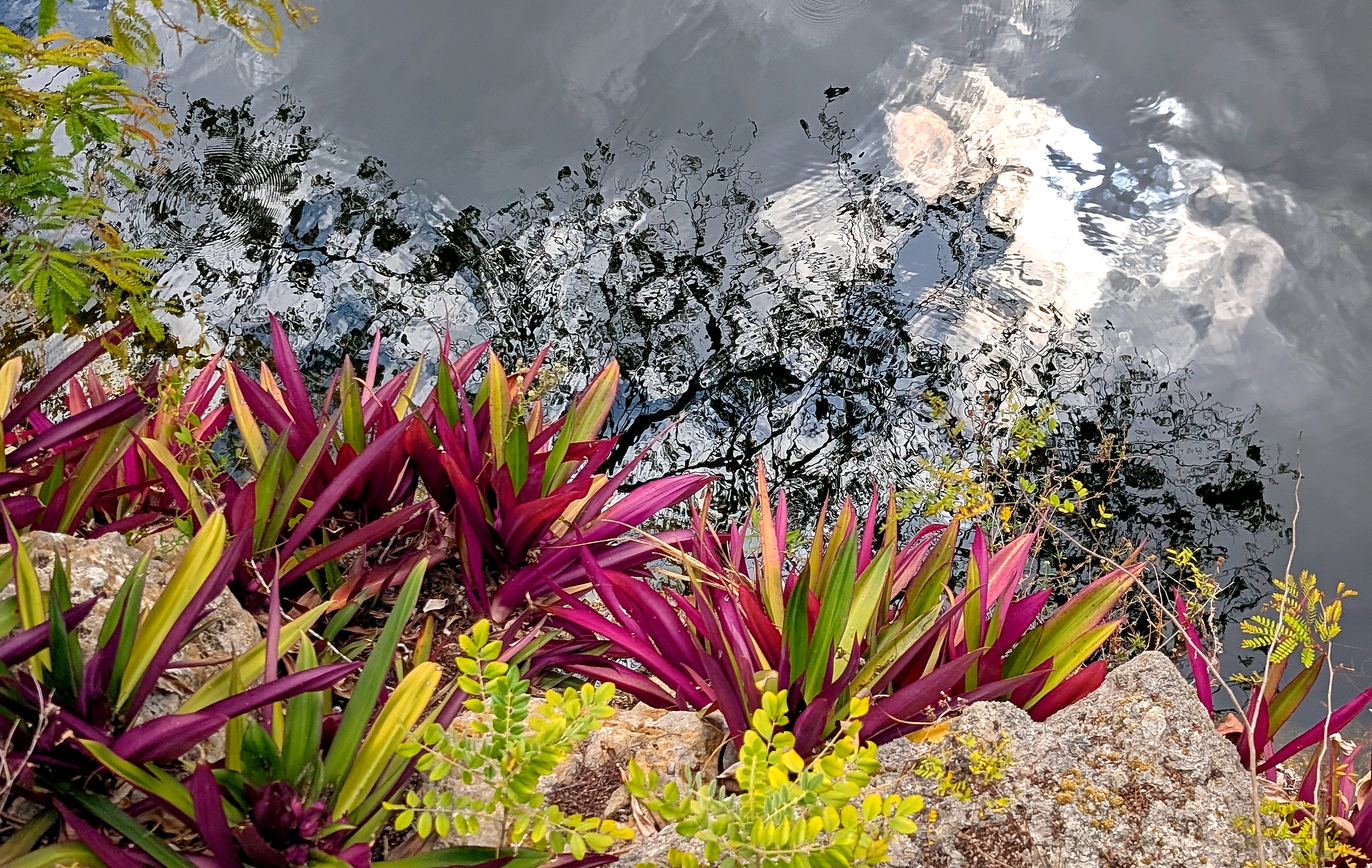
Sometimes, though, the subtropical plants grab one’s attention…
“Moses-in-the-cradle”??? That’s what my plant ID program says, but it seems doubtful. Regardless, it created a stark contrast to the water’s edge. Big Cypress National Preserve, February 2026.
Technically, the final photo of the plants was taken at the Oasis Visitor Center for the Big Cypress National Preserve. If you’re traveling “to see the Everglades,” I would highly recommend US-41 and the Big Cypress route, because it’s basically the northern environs of the Everglades. When one leaves the eastern boundary of the preserve, it’s less than a mile before the Everglades’ Shark Valley Visitor Center. As good as our day’s beginning had been, we had much to look forward to, it turned out.
The sun sets over the historic portion of St. Augustine, and our vacation nears its end also. I would retouch this photo, but we’ve had too much fun today which involved drinking beer. I’ll retouch it later, he promised. March 2026.
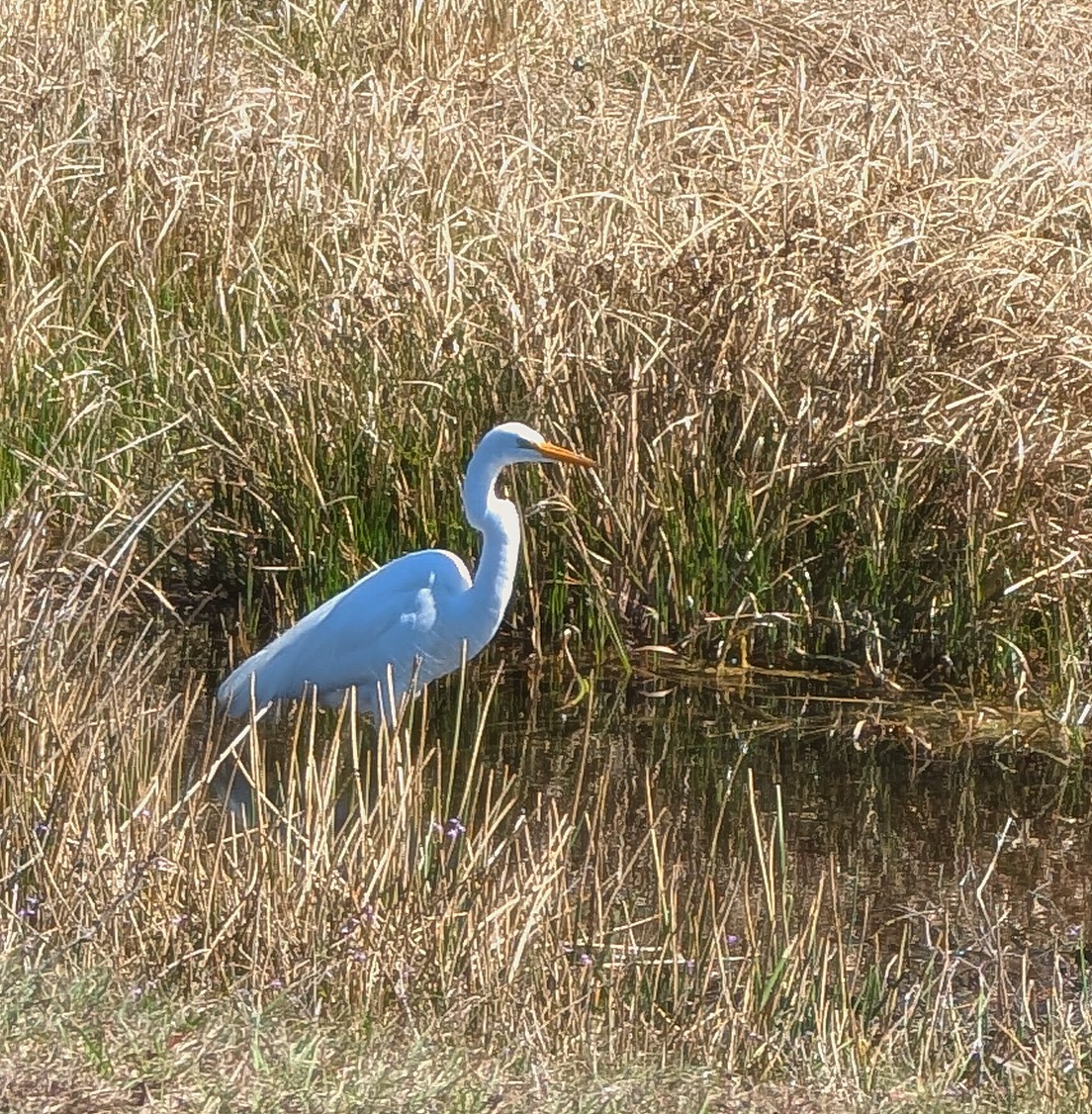
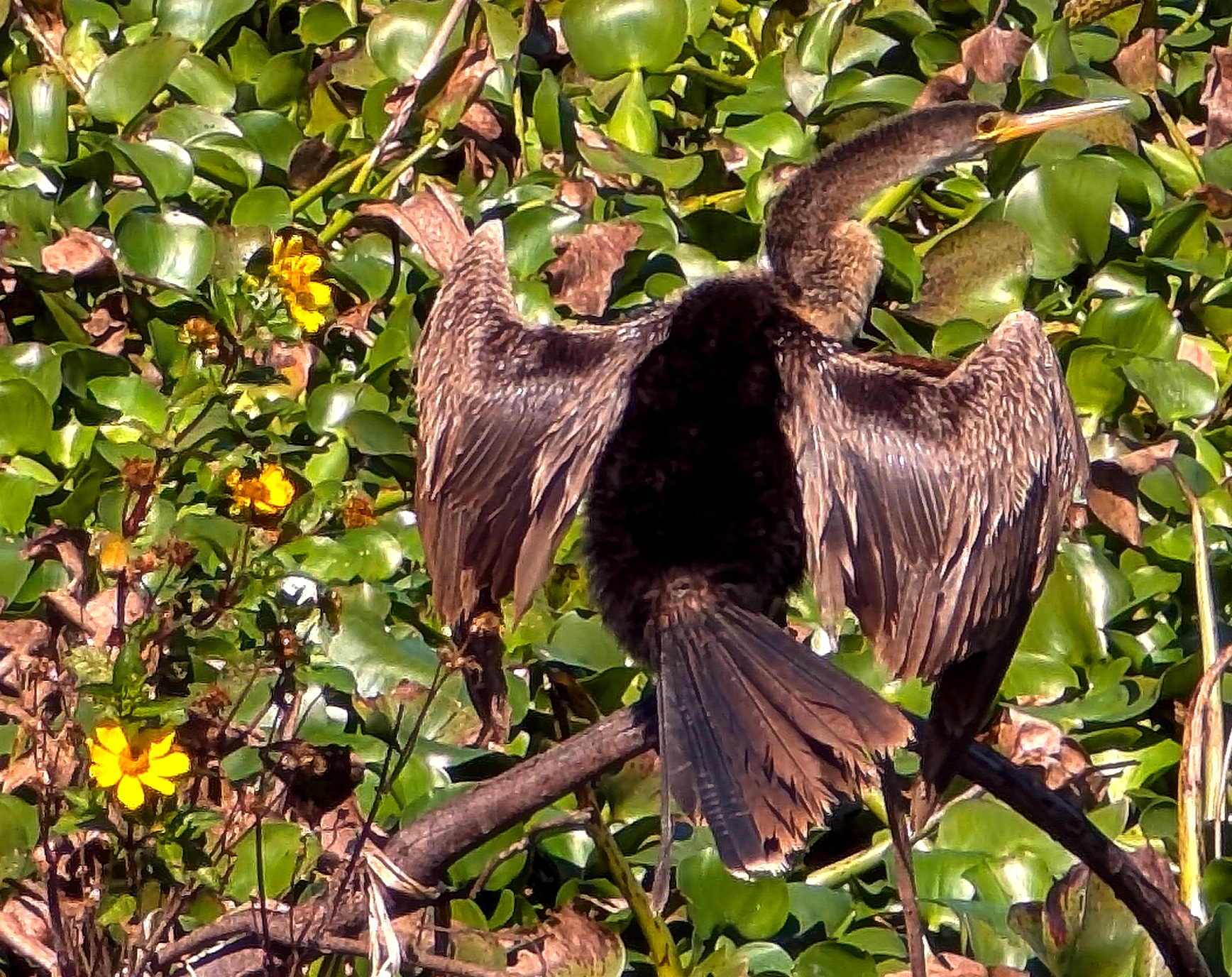
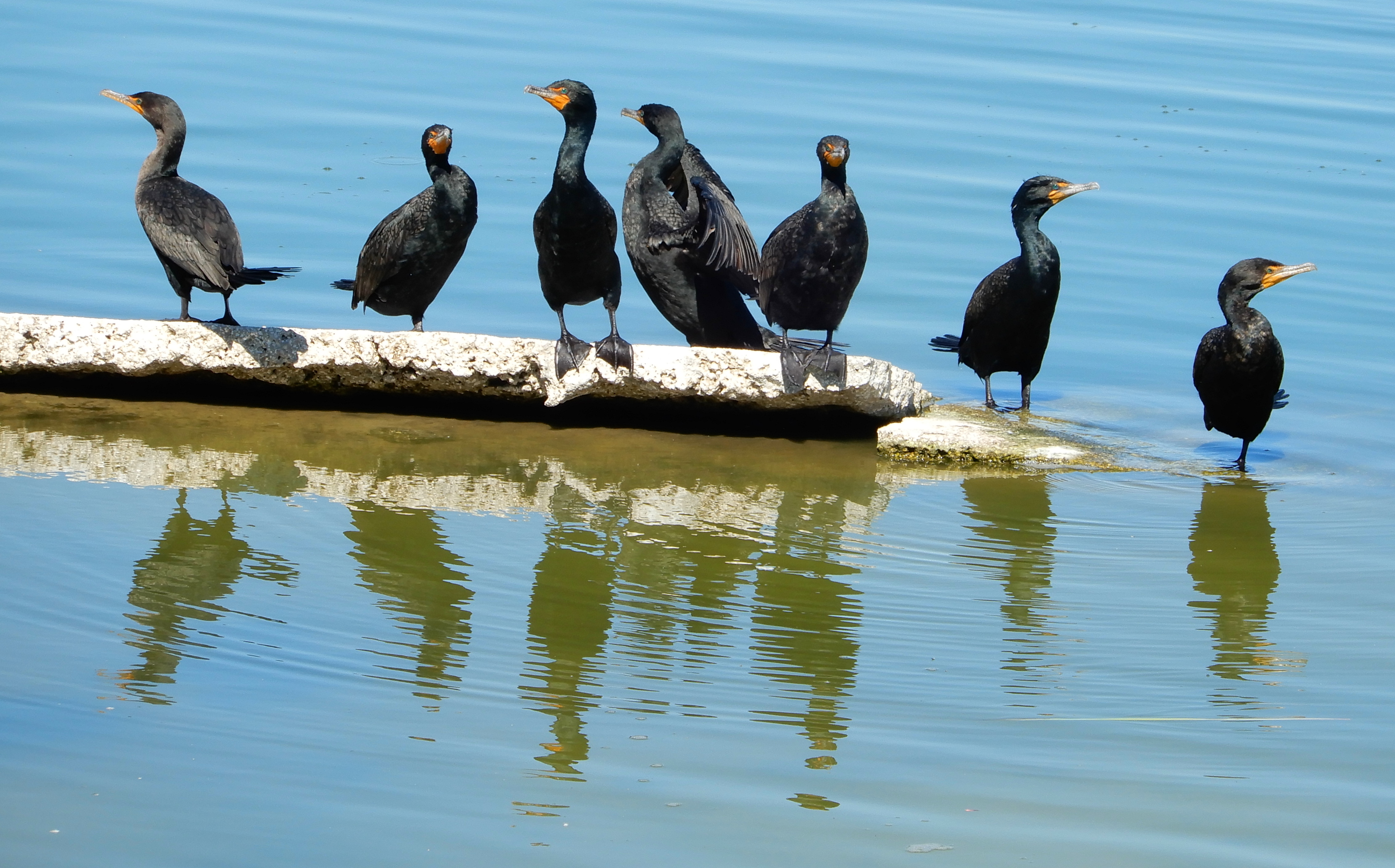
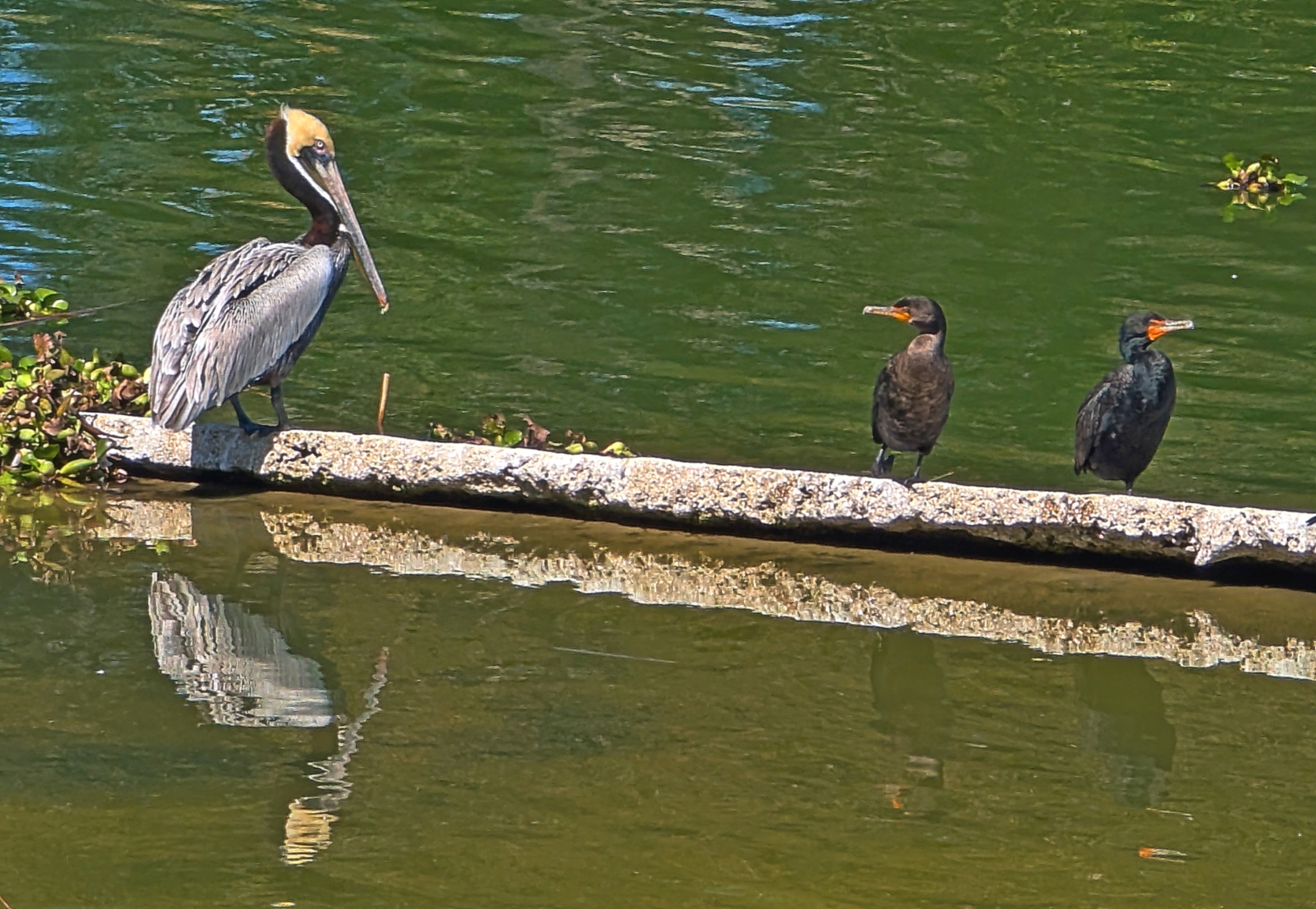
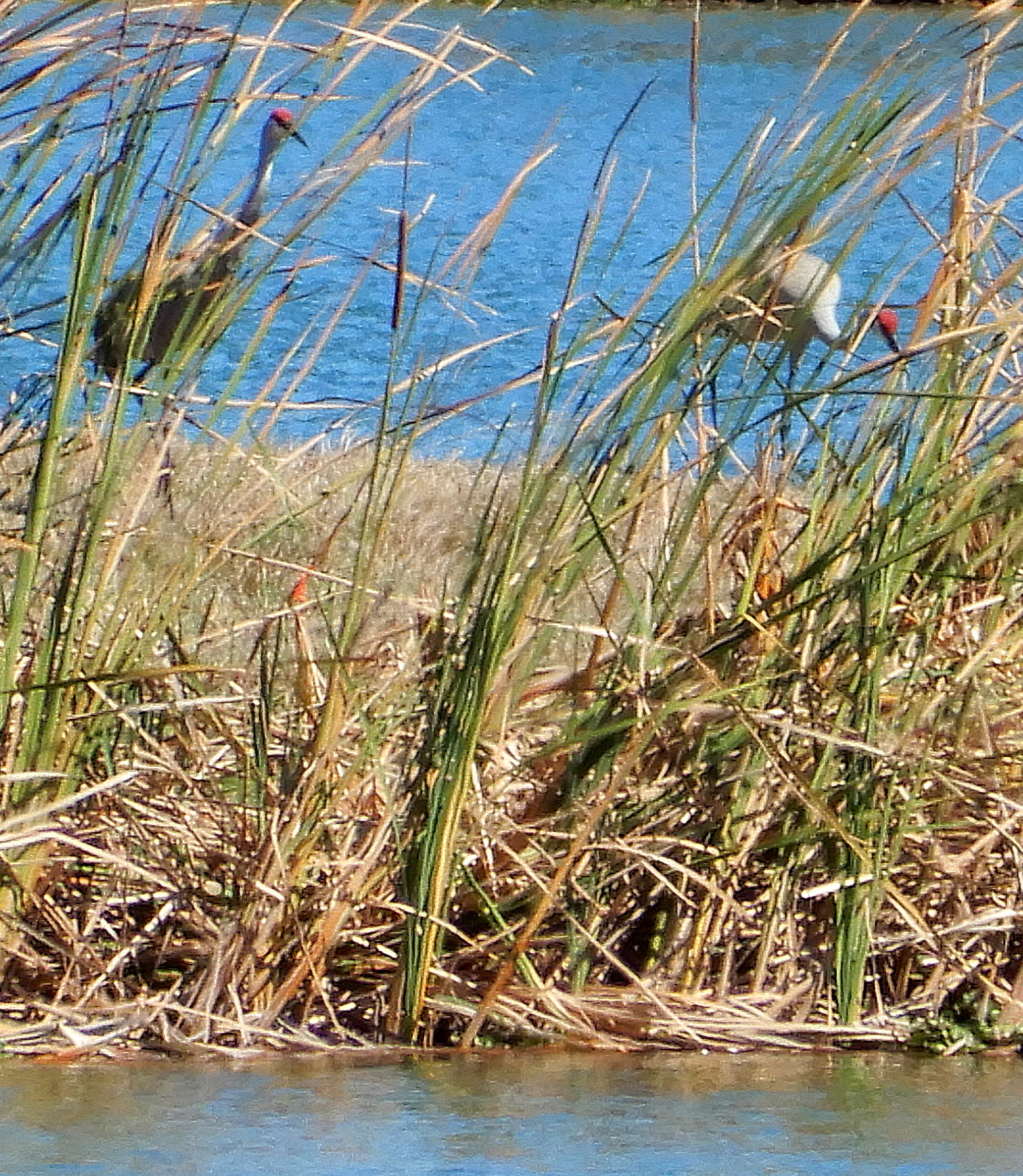
A wrong turn turned right when I spotted this Great Egret. Riverview, FL, February 2026.Arriving at my destination, a reservoir in land known as the Leyke Ranch, I saw an old friend: the Anhinga, seen here in a typical sunning-of-the-wings pose. A strange, almost exotic bird which frequents Florida but gets up to NC only rarely. February 2026.A short distance offshore from the Anhinga were the similar-looking cormorants. These Double-crested Cormorants reminded me of turtles all lined up on their log…even if one end of it was sinking into the water! February 2026.A Brown Pelican flew in to join the cormorants. February 2026.I heard a strange call as I left the reservoir, and turning toward it, I saw two large birds on the island in the middle of the water. I thought they looked like cranes and my sister-in-law identified them as Sandhill Cranes which are nesting out there. Way cool. I’ve seldom seen these birds. February 2026.
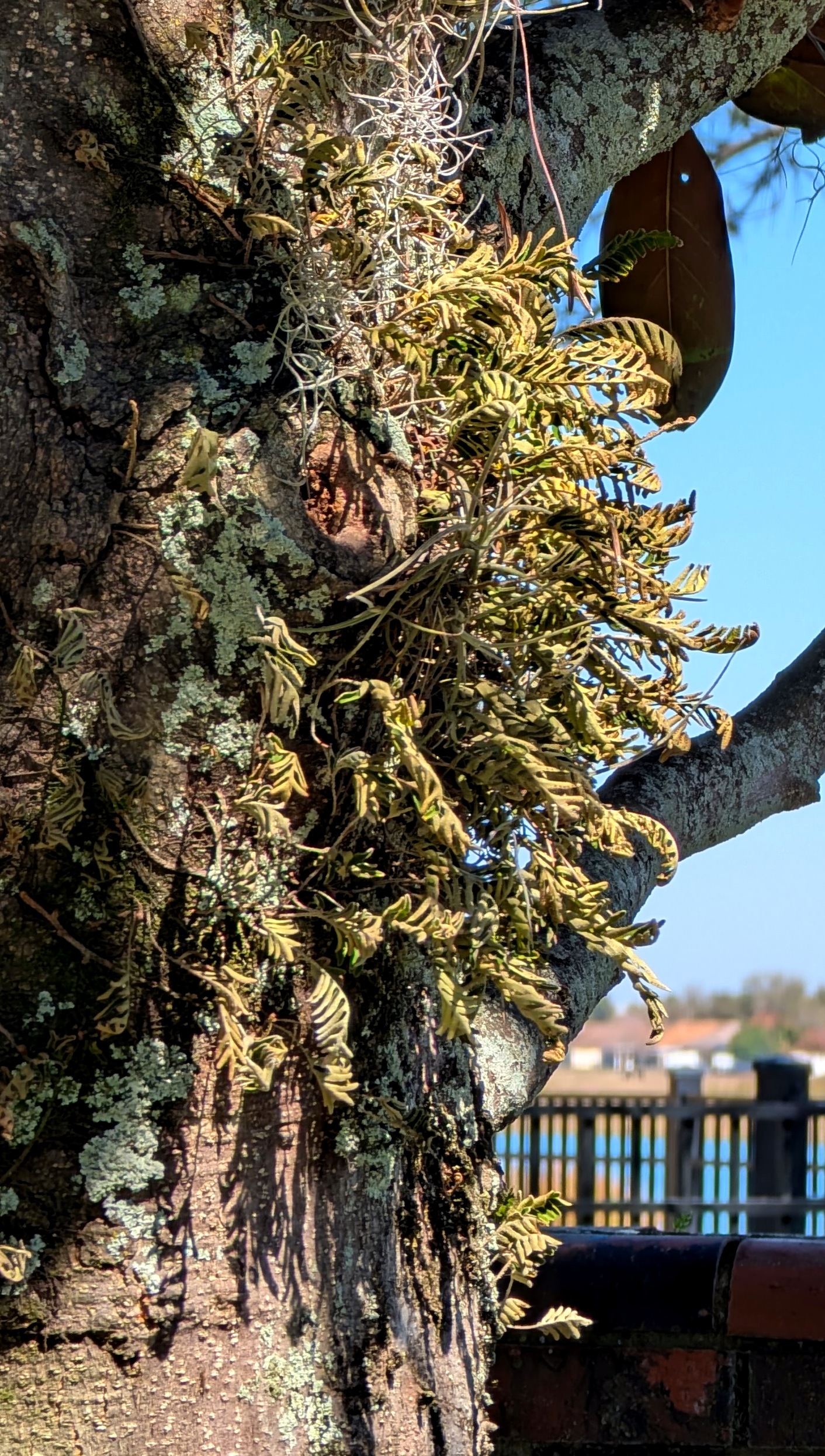
On my return walk I noted several interesting looking plants. Altogether a very nice if cool time of it. (It dipped toward the 30’s here this morning!)
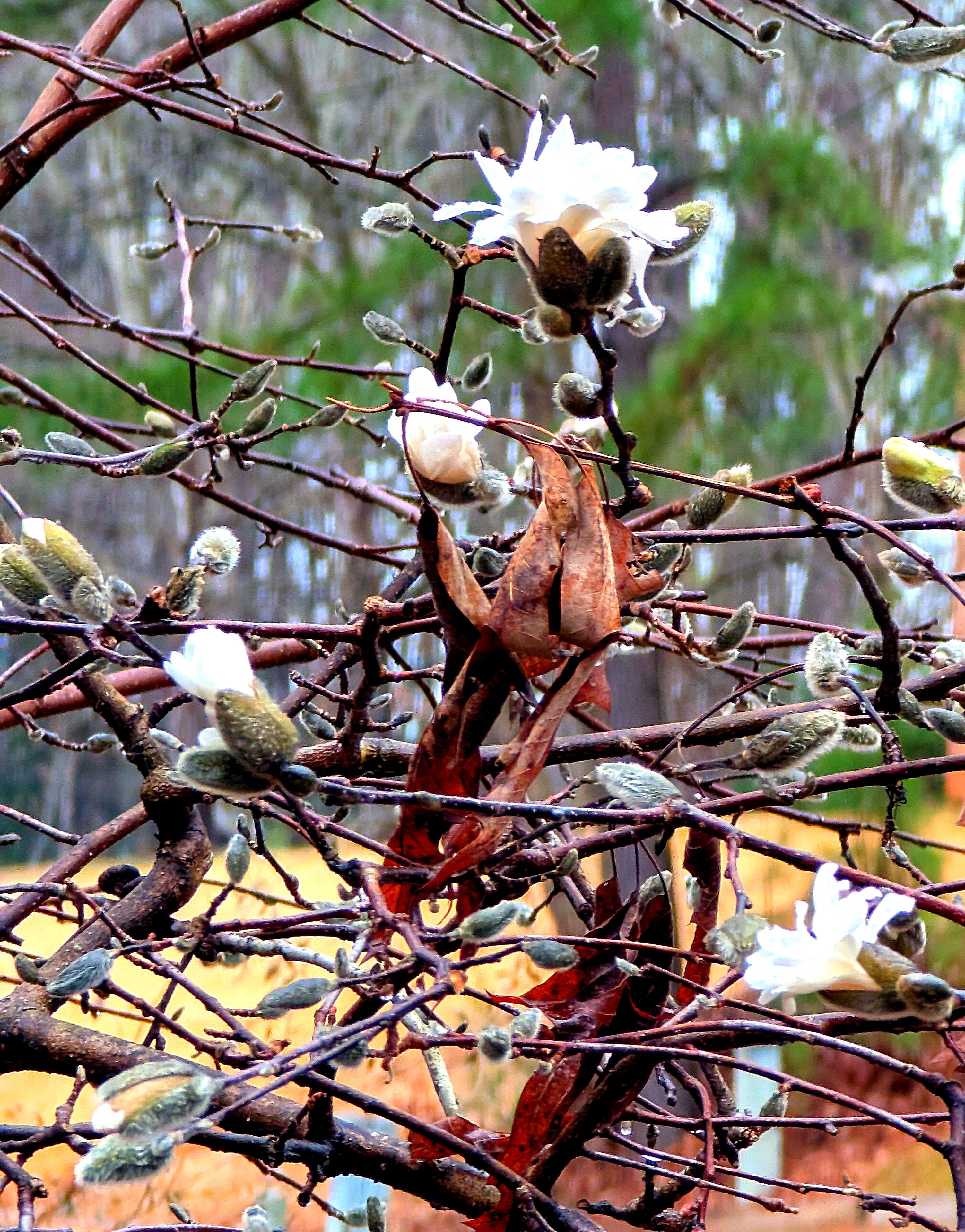
I had thought our late February vacation would preclude being greeted by the first bloomer of the spring, the star magnolia, but no! She bloomed between the 18th and 20th this year, at least with a few of the blossoms toward the top. I will still miss the entire shaggy mass, but the past couple years the ravenous squirrels eat more than half the blossoms before they “hatch”.
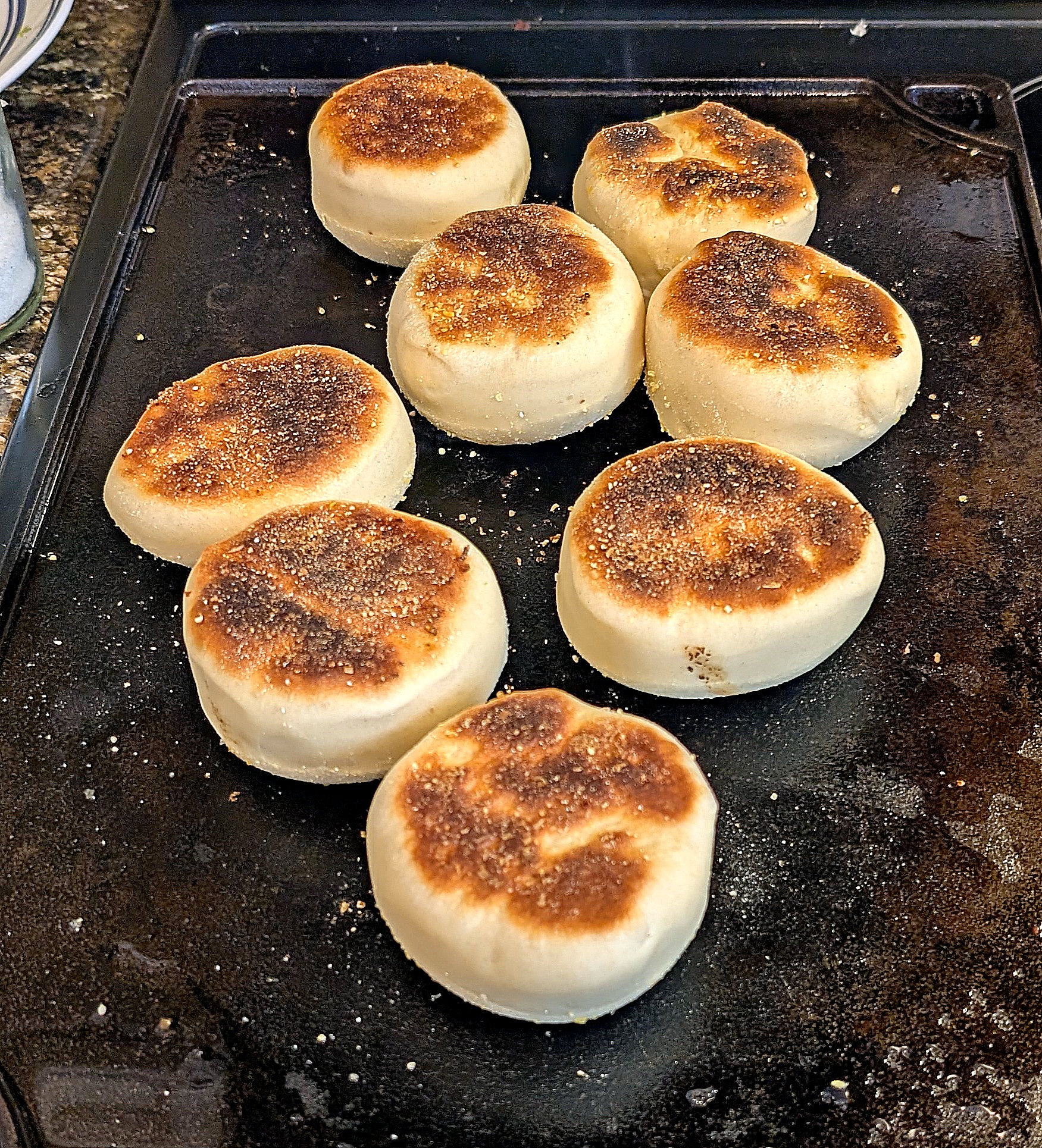
On Tuesday the 10th, as I succumbed to a weird sickness which has visited me every week since January 14th—recurring every Tuesday or Wednesday—I made English muffins for the first time. They turned out…”okay”. They are much more dense than a store-bought, and I long for the large amount of pockets and crevices which make up my definition of an English muffin. But…they did the trick the next day when Canadian bacon, a fine poached egg, and some Hollandaise sauce graced them!
Recently I participated in the funeral mass for a dear choir friend, a fellow bass voice. Dennis marked 85 years, all of them vibrantly alive, until his death on December 7th. I’m not sure why five weeks elapsed before the funeral mass. I surmise the travel logistics of a few participants whom he hoped to have at the mass played a large part: the homilist had attended seminary with Dennis. Likely he wanted everyone to be focused on Christmas, not himself. He was like that. I’m not writing this about Dennis and the funeral, however.
One theme predominated in the mass. Dennis believed with every fiber of his being that being Christian meant fostering community in all its aspects: helping the poor; supporting the rights of those downtrodden; welcoming the immigrant; supporting the abused, the sick, the dying; and being open and unjudging to all with whom he came into contact. “Sounds almost priestly,” you might say, and you would be correct. Dennis trained for the priesthood and in the mid-1960’s he received ordination into the Roman Catholic rite as a priest. Though he left the priesthood soon after joining a parish, he never stopped being a spiritual advisor.
He told me two years ago that in the first years of priesthood he became disillusioned with the elder priests he encountered. They had no regard for their parishioners as equal members of the body of Christ; they spoke condescendingly and disparagingly of them. He left the priesthood, married, worked in human relations and later as a small businessman, fathered children, and retired to the Raleigh area. But this also isn’t why I write these paragraphs.
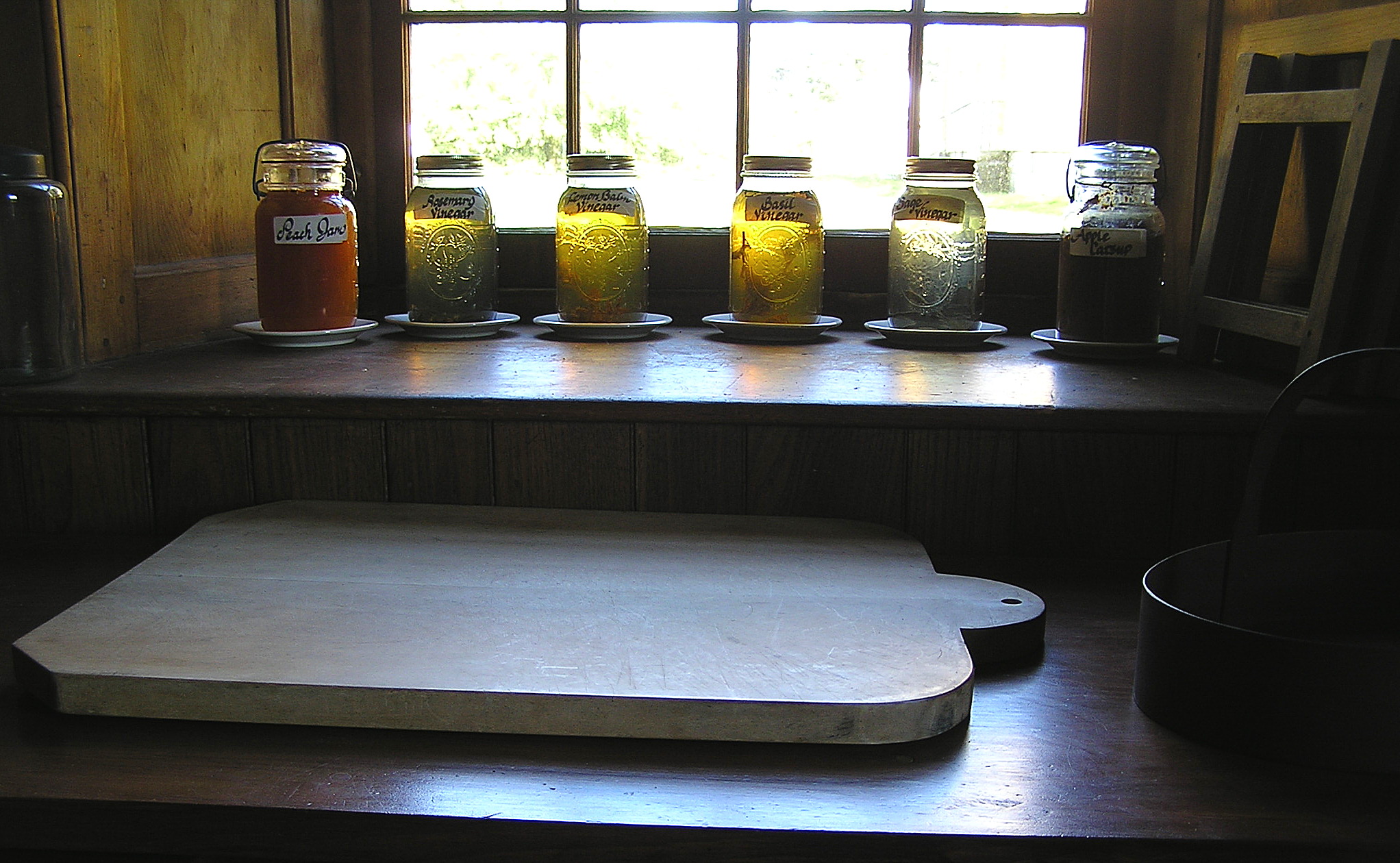
Canning examples at Hancock, MA, Shaker Village. September 2004.
After you buy a specific model of car, you suddenly start noticing the same model seems to be driven by every fourth or fifth driver you meet on the roads. In the weeks surrounding the funeral I keep encountering references to community, descriptions of community, lessons about community, and prayers about community. It’s difficult to convey the import of this. It’s not like hearing the new buzz word of the month on everyone’s lips. The concept of Community is fraught for Christians, I’m realizing. Dennis knew this. His belief in community basically formed the third rail of his life’s train, the one which carries the current. He accepted everyone, although he had a few choice words for those at the altar (the cathedral rector acknowledged in his closing remarks that he heard these choice words more than once from Dennis). This stirs me, agitates me, scares me. If my Final Judgment (in whatever form that may take) will rest on my participation in Community, I’m screwed.
I’m not a “reaching out” kind of person. Introspective might be the wrong word, but I’ll go with it. (Borderline sociopath? Asocial?) I’m quite content left to my own devices, have been since I stood on the threshold of puberty. As a young man I often spent my weekends without uttering any words except to my cat. I can recall needing to prime my lexical pump to talk to people on Monday. My poor wife has learned to her detriment that her husband at times seems to need no one, and has learned to nudge me to do a few things to fulfill her need to be an Actual Social Being. One of the best things to happen to me occurred when I quit being a reporter/editor for weekly newspapers and entered teaching. Teaching requires constant talking and fostering a learning environment. My methods professor likened it to performance—well, technically to being a performer in a circus. I concur. Ultimately I learned playing in outgoing roles does not an Outgoing Person make. Solitary is still solitary; introversion will out.
As I think about the logic of fostering community (the Body of Christ, after all), I contemplate some other close friends and family, wondering about their ability to balance their need for seclusion with the compulsion to reach out to others. My Raleigh compatriot calls himself an introvert, but he’s a different one than I. In restaurants he specifically learns the server’s name and uses it. He makes it a point to engage other patrons at our local watering hole. Where I would banter superficially with a bartender and local barstool denizens—teachers become glib, after all—he engages in Real Conversation. Once we were outside Chef and The Farmer, a restaurant in the small city of Kinston, NC, and made famous to those who watched A Chef’s Life on PBS. A cameraman had his rig set up on the front walk, taking scene shots apparently for the show. In that situation I’m content to observe, “Hey, look, they’re filming for a new episode,” and maybe giving the cameraman a thumb’s up. My buddy walks straight up to the guy to verify he’s shooting for the show and to tell him how much he likes the show. Heck, maybe more, I don’t know. I didn’t accompany him. He traveled to Guatemala several times with a group from our church and rounds them up on a monthly basis for dinner. He makes friends of the people he encounters on his morning walks. I encounter people on my walks too, perhaps the same ones since we live in the same neighborhood. I know them only by face. They know me by my curt nod or an energetic “good morning!” and nothing more.
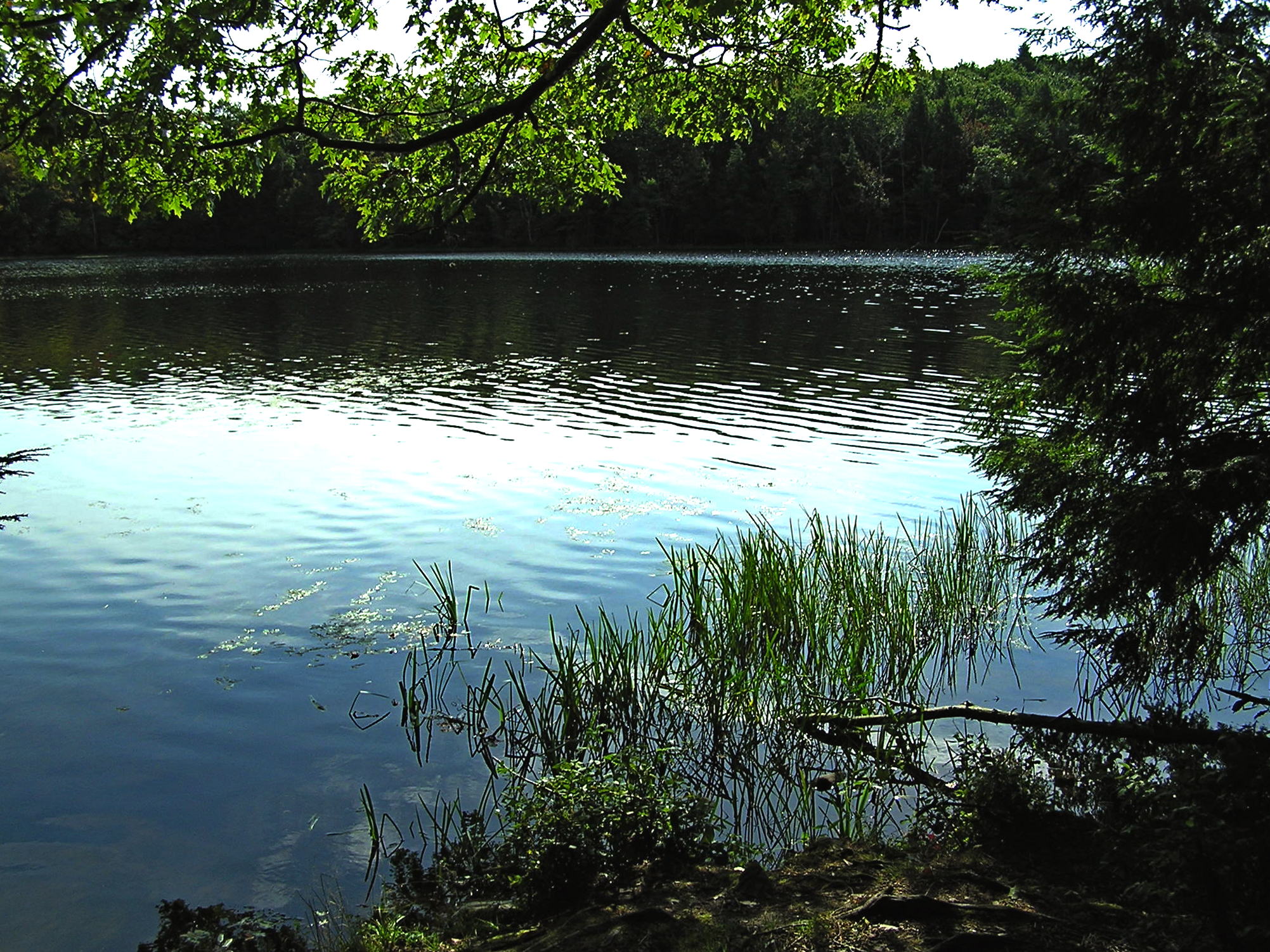
Shaver Pond, Grafton Lakes State Park, Grafton, NY. September 2004.
My father also followed this model. He never said, “I’m an introvert,” but he sure seemed to be happy enough being by himself most evenings. (I’m sure it wasn’t to get away from his two smart-aleck boys or the TV playing shows he didn’t like!) He also made sure to know all of his neighbors and greet them, boisterously, whenever he saw them. He really shone at church on a Sunday. As a PK (preacher’s kid) he truly believed in the community of Christ. He also grew up embarrassed that his father the minister couldn’t remember his parishioners’ names. Apparently he swore to never let that happen to him. Me? It’s almost like I try to not learn a person’s name—they bounce off of me like sleet on a tin roof. As I near eight years in this house, I don’t know the name of my neighbor to the south. The one across the street is named Tom…I think. I’ve only spoken to him once, when we first moved in, and I’m pretty sure he realized I was going to be “one of those” who didn’t interact with his neighbors. My neighbors to the north moved in shortly before the pandemic. I met the husband when he started to take down the fence between our yards. I know his name. We talk at length a few times each year. It helps that he’s open and friendly, plus he’s Roman Catholic also and his wife teaches music in Catholic schools. Obviously, though, I’m not my father.
If I were to compare myself to someone, it would be the talk show host Johnny Carson. I read somewhere he claimed to be an introvert who could interact conversationally quite well, but who preferred being alone. I fear Carson’s notoriety for being a person difficult to be around also applies to me. Me? I’m starting to grapple with the idea I may have to up my game if I want to be called human. I’ve always identified with Sheldon in Big Bang Theory, not because I’m a super-genius but because I tend to think I’m smarter than those around me and I find interacting with people painful at times. Perhaps I should have led with that. I think we can support and grown community in many different ways, but at the same time I’m going to work a bit harder on learning names, being a bit more accessible, reaching out.
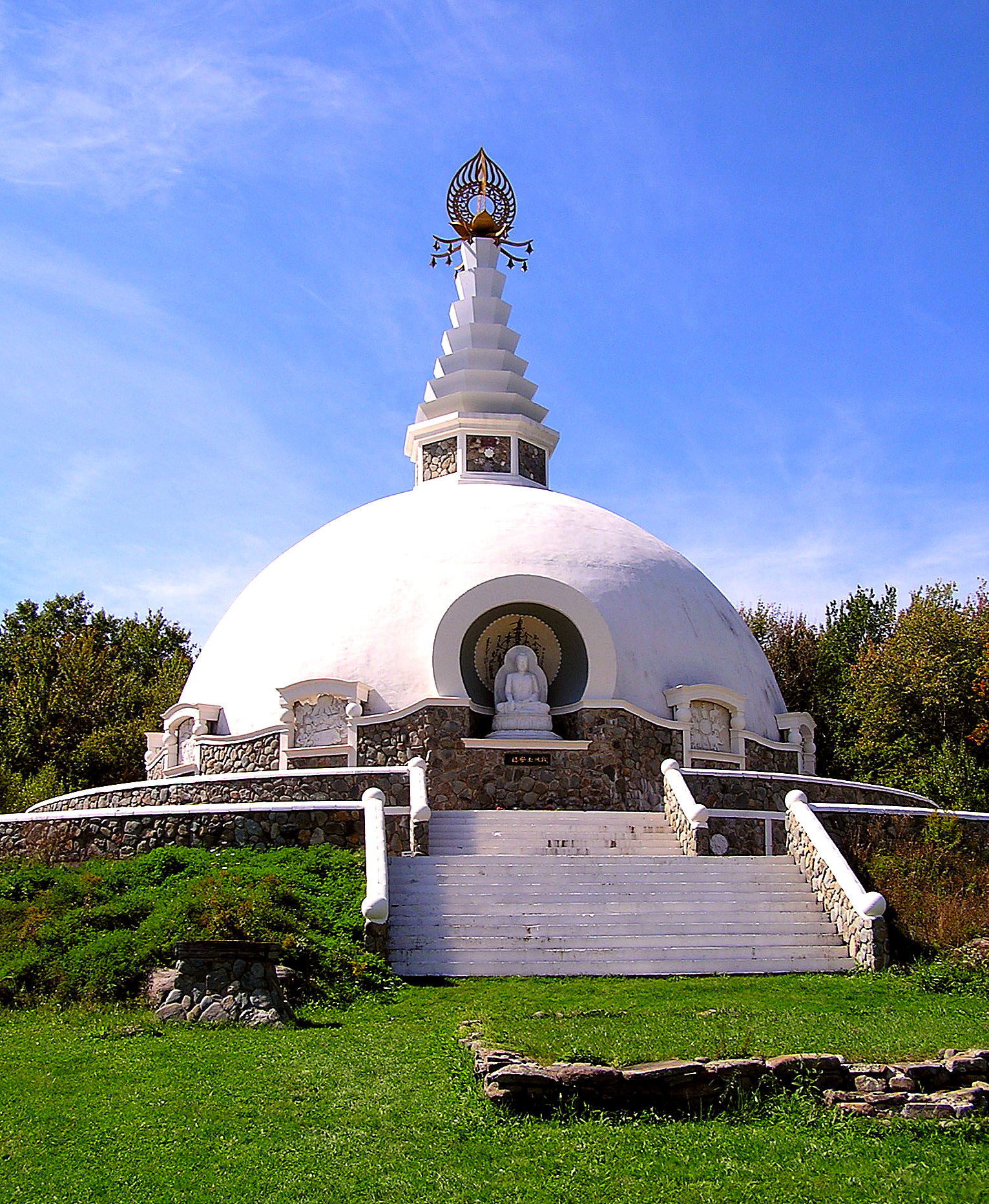
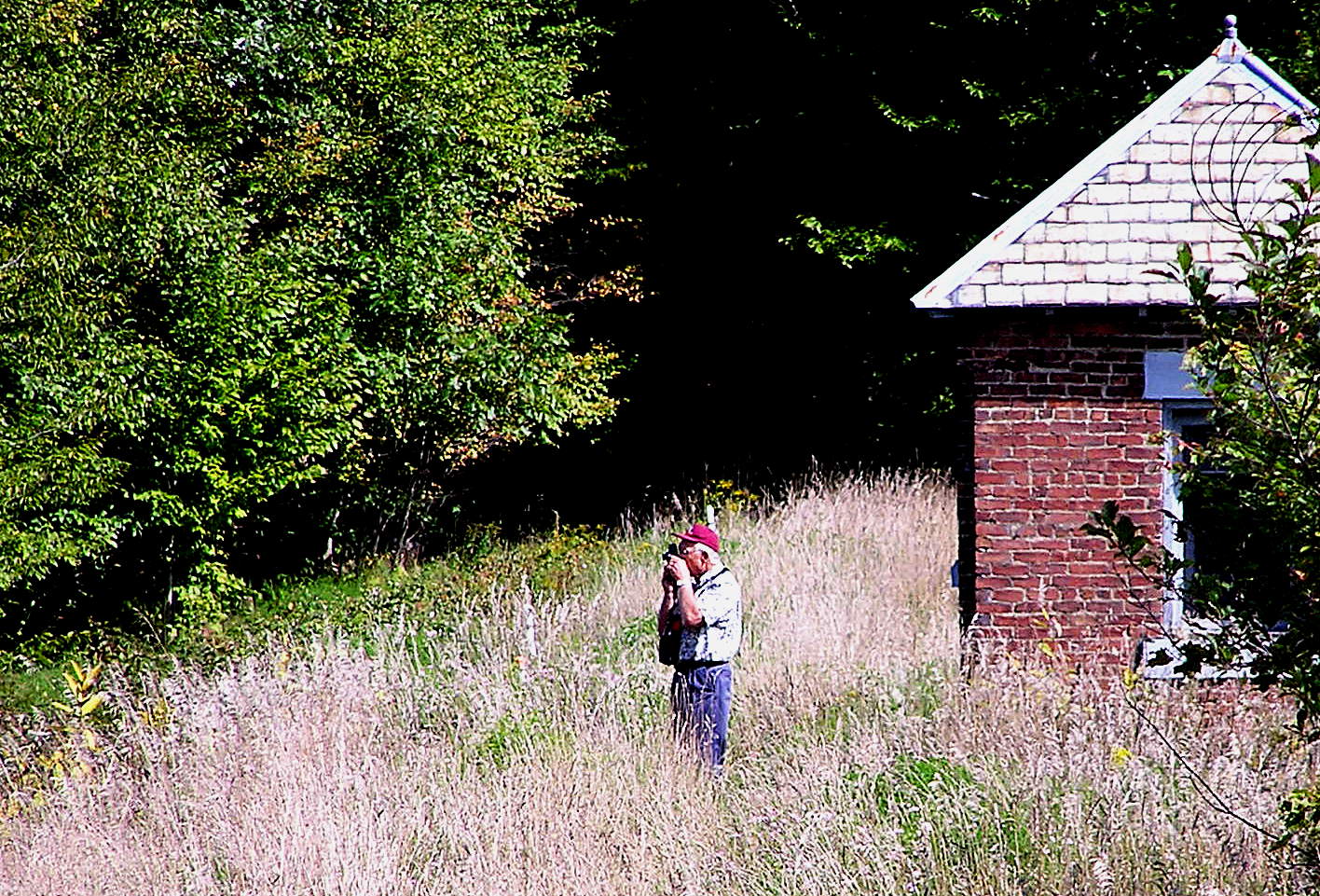
A note about the photos: Community shows in a variety of ways. In September 2004, my parents visited us in upstate New York where we lived east of Troy in the foothills of the Berkshires. Tucked at the end of a long dirt road, a Buddhist nun lived at and attended to a stupa. I’ve no idea how it came to be, but find the juxtaposition interesting: feeling connected to all beings, they built a stupa in a township of fewer than 2000 persons. By contrast, the Shakers may have drawn themselves into a segregated community, but were much more accessible to the general public. Mostly, though, I think on my father who looked constantly for people to connect with. The calm stillness of a pond might represent his interior, but he always made time to foster community and strengthen it…as described above.
My father, Howard Pilcher, taking photos in upstate New York, September 2004.
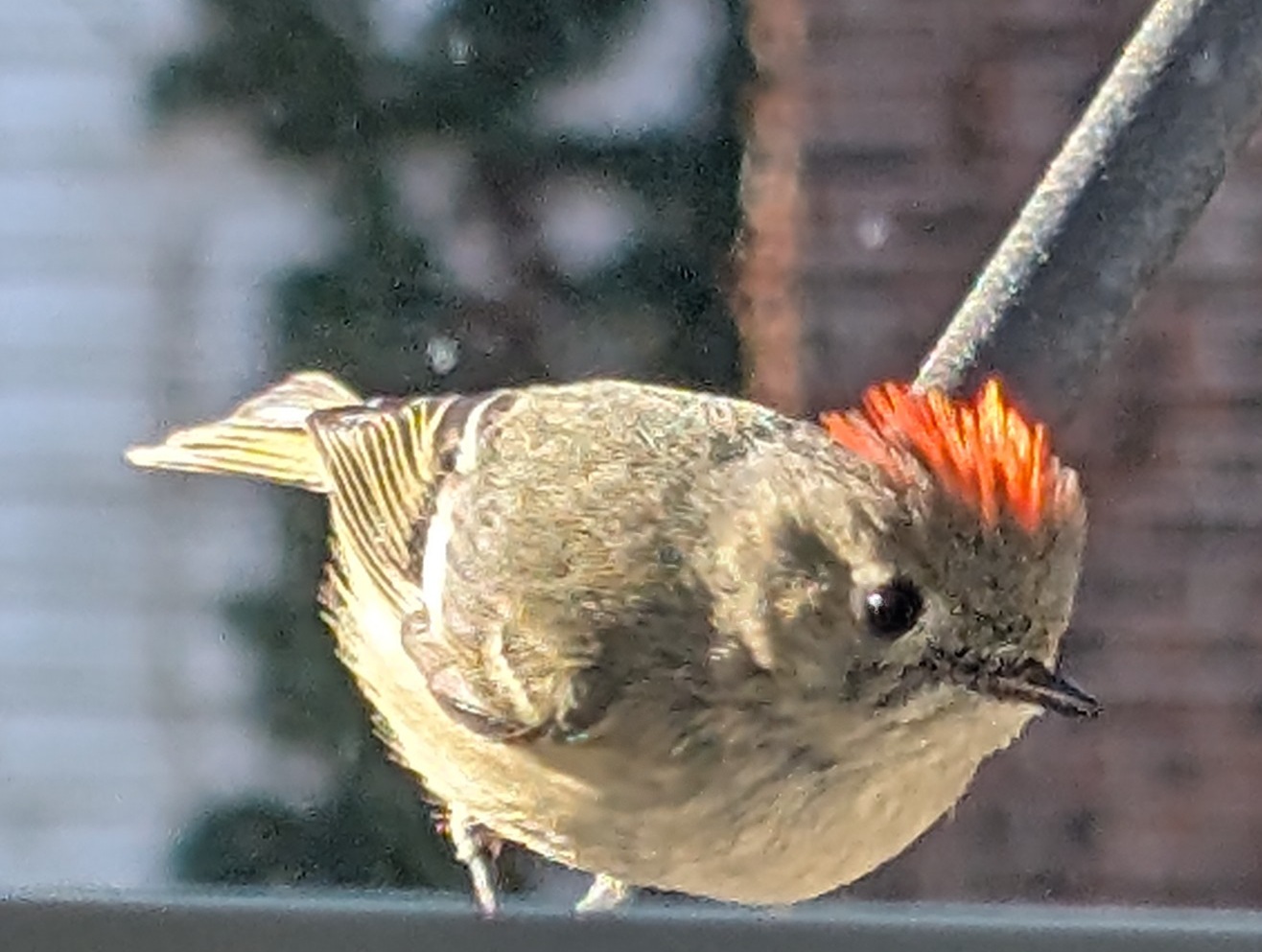
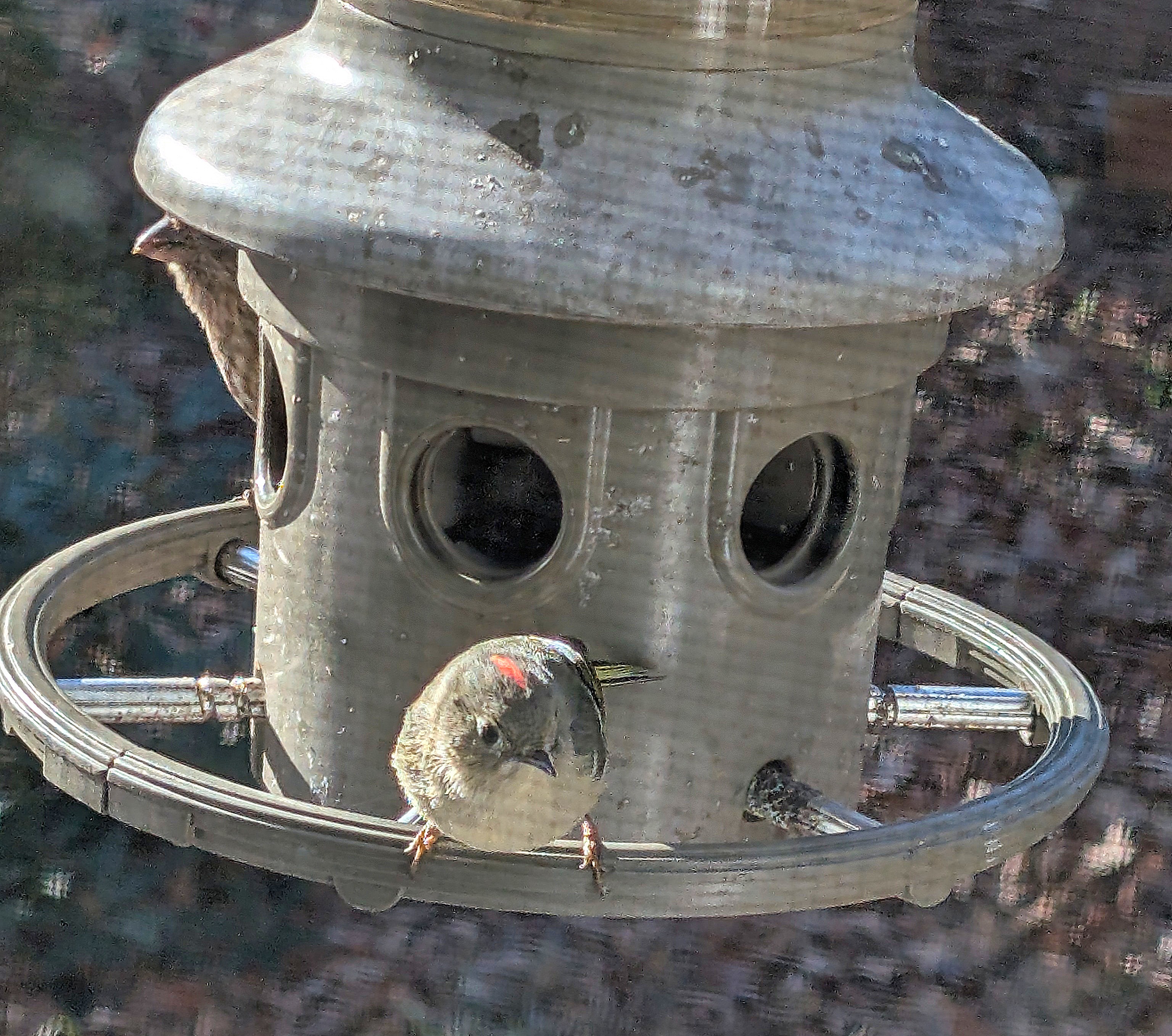
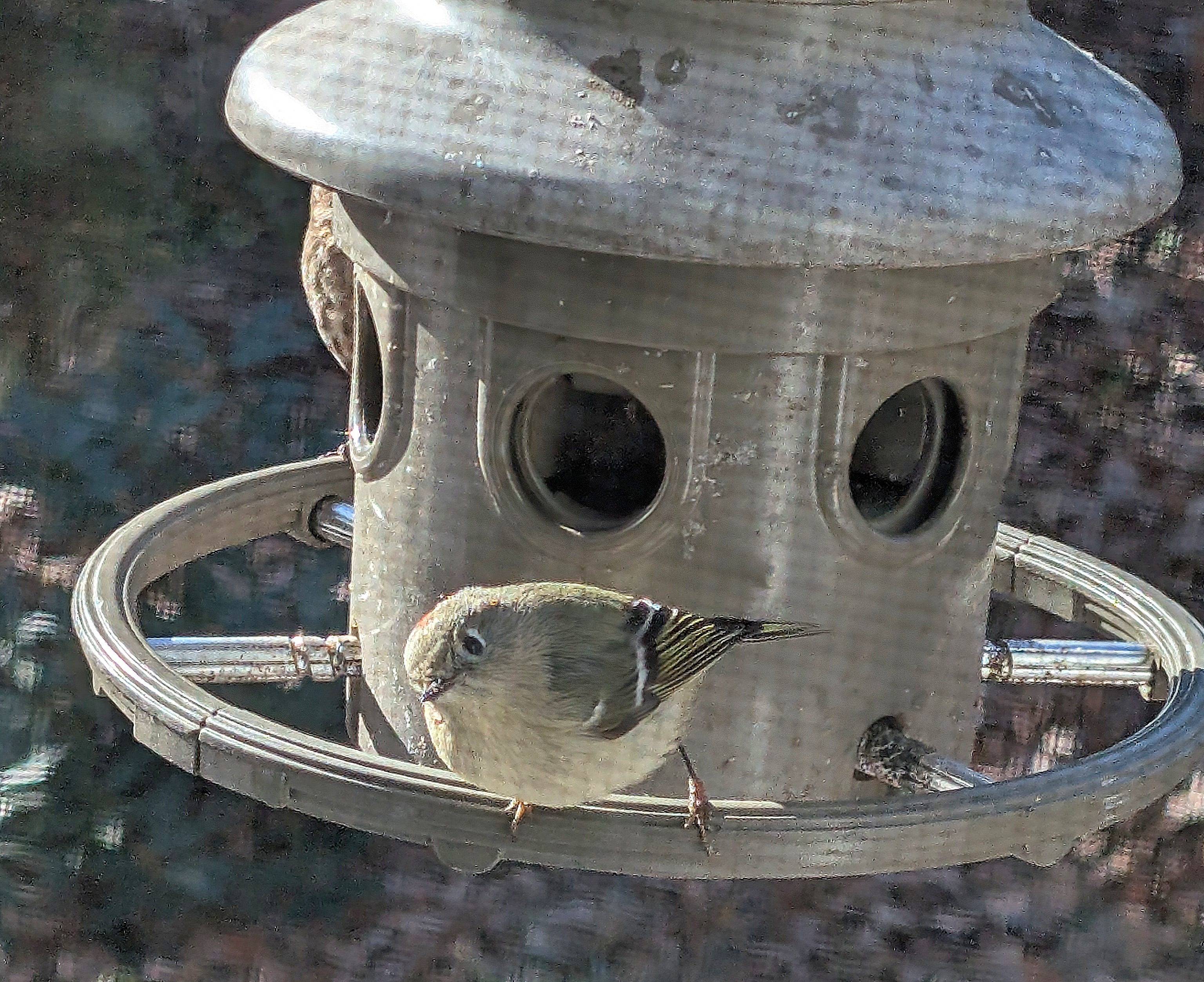
I finally identified a little bird this morning which had been zipping all around our feeder while ignoring it all the same. He mostly seemed interested in getting into our kitchen. The cool thing about him is the crown: when a bit agitated, he flips it up as it is in the photo above. When he’s calmer, it’s down and more difficult to see, as shown below.
Ruby-crowned kinglet with crown feathers in the ‘down’ position. Both photos shot less than 60 seconds apart. Unless you are looking down at the bird, the red crown is very easy to miss. At first I thought I was looking at a warbler. (The bird is barely 4 inches long.) January 2026.

 all the voices in my head