Bibliophilia: the vagaries and joy of English

If my self-defined word bibliophilia means both a love of books and a certain madness about them, what then describes a certain madness about books written by others about that very madness? A madness for madness? Is that a thing? Where and when does it stop? Ever? (Death would be a safe bet.) Of those who love to read, there exists a subset who thrill, not to be reading, but in anticipation of reading. Cue Carly Simon. People in this subset feel a fevered, shaking promise when entering a funky bookstore in the middle of nowhere and the first ten titles they see scream “READ ME! NOW!!” And yet…

Within this subset of bibliphiliacs, a smaller, more exclusive sub-subset exists. These distinct suffers of bibliophilia feel an intimate rush when they espy that one volume probing directly into their literary, book-loving soul, purporting to deliver not just a few hundred finely written pages but promising those pages will satisfy not just their book-lusting souls but will simultaneously glorify the very building blocks which construct the objects of their obsessions. It’s a feedback loop not unlike the pleasure paddles given to rats which OD’ed on opiates. It’s as if one of their objects of desire shed all the clothing of characterization and plot or rhetorical structure and laid themselves bare for the reader’s ultimate satisfaction. No wonder we tingle all over and feel a slight loss of rationale thought when we see these titles.

My, my. Did it suddenly get warm in here? Let’s cover up and move on…

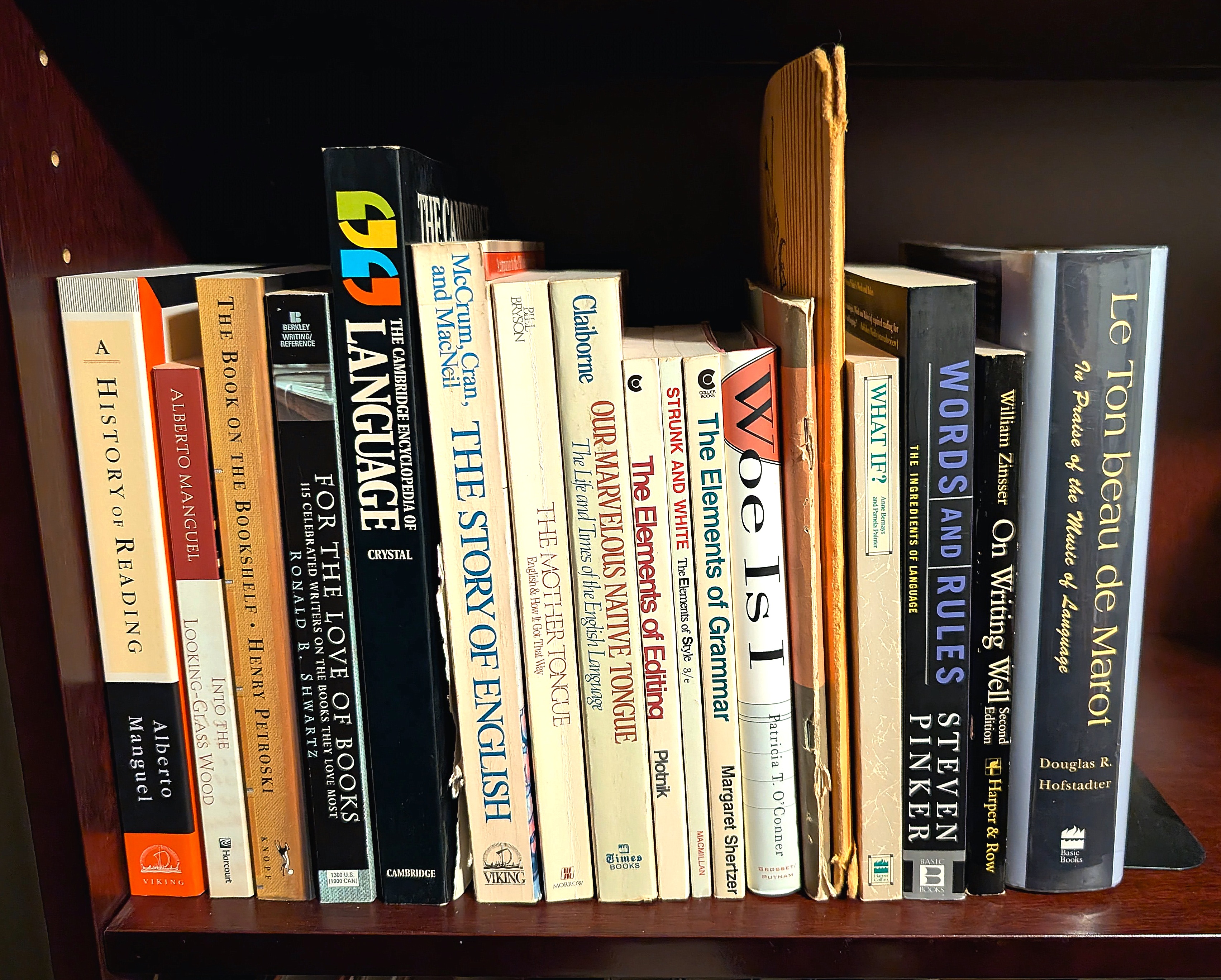
Language books that stood the tests of time and usefulness. July 2025.

Despite having degrees in both Communications and English, I possess a scant half-shelf of books about the language I use. Perhaps this relates to the Communications degree carrying a focus of journalism and the latter one a focus on literature. The English degree also had a few courses pared from it because of the additional classes I had to take to get the “.Ed” added to the end of it. Linguistics interested me until I encountered the arguments for Noam Chomsky’s innate grammar versus the classic thought that grammar remains culturally induced. I suppose this means something important to someone, but who really cares right now? All books I bought for linguistics possessed such rarified, dry prose to make them insufferable the moment I finished the class which required their purchase.

Other books departed for different reasons. Those which all claimed to be about “being a writer” fell victim to The Purge of 2020 when I removed about a third of the library to live in boxes designated for assignment to others…or to the trash. I determined at that time I will never be A Writer although I will write. A freeing decision. Joining those were books which celebrate the language of English and which I found only mildly amusing: volumes by William Safire, Willard Espy, and Richard Lederer all sit waiting to grace someone else’s shelves.

Nine “keepers” don’t appear on the shelf at all because they are points of data in Kindle form. Several lovely books appear in this group: Ella Minnow Pea: A Novel in L:etter [sic] by Mark Dunn, sadly prescient for our time, where a Council decrees the removal of letters one by one from all written and spoken communication; Alex & Me: How a Scientist and a Parrot Discovered a Hidden World of Animal Intelligence—and Formed a Deep Bond in the Process by Irene Pepperberg which I haven’t read yet but which looks great; Our Magnificent Bastard Tongue: The Untold History of English by John McWhorter, a slightly controversial book dealing with how certain aspects of English came into being; and The Professor and the Madman: A Tale of Murder, Insanity, and the Making of the Oxford English Dictionary by Simon Winchester, a true story about a murderer incarcerated due to insanity who nevertheless overwhelms the compilers of the OED with 10,000 entries. I’m looking forward to two more: Empires of the Word: A Language History of the World by Nicholas Ostler; and Kant and the Platypus: Essays on Language and Cognition by Umberto Eco.

Missing from the shelf because I loaned it ten years ago to a friend who I believe is “still getting around to it”: Don’t Sleep, There Are Snakes: Life and Language in the Amazonian Jungle by Daniel Everett. Though some revile him, the book fascinated me. Everett traveled to the Amazonian jungle to proselytize Christianity to the Pirahã mostly by learning their language and then translating the Bible into it. A trained linguist, he discovered the Pirahã have no counting system, no fixed words for color, no concept of war, and no personal property. I seem to recall they didn’t have all the temporal aspects of language (past, present, future and the permutations thereof). The title comes from their belief that evil spirits (and snakes) can only get you when you fall asleep, therefore they attempt to sleep as little as possible. They sleep communally and at all times several will be awake talking to each other.

I decided to take pity on you. Rather than a lengthy bibliologue through the shelf, left to right (because that’s how these things are done), I’m breaking things out for individual treatment. In my subjective view of the shelf, L to R, it breaks into books about books and reading them; books about English, including how to physically present it on the page; a few books I’ve retained which promise advice on writing; and one lovely volume which defies categorization but touches on the meaning of words, poetry, and translation, all while tackling the relationship of cognition to language and adding in the personal pain of losing a spouse to a killer disease.

Or am I delaying and stringing out this series to heighten my pleasure? (It’s getting warm again…)

Colmar

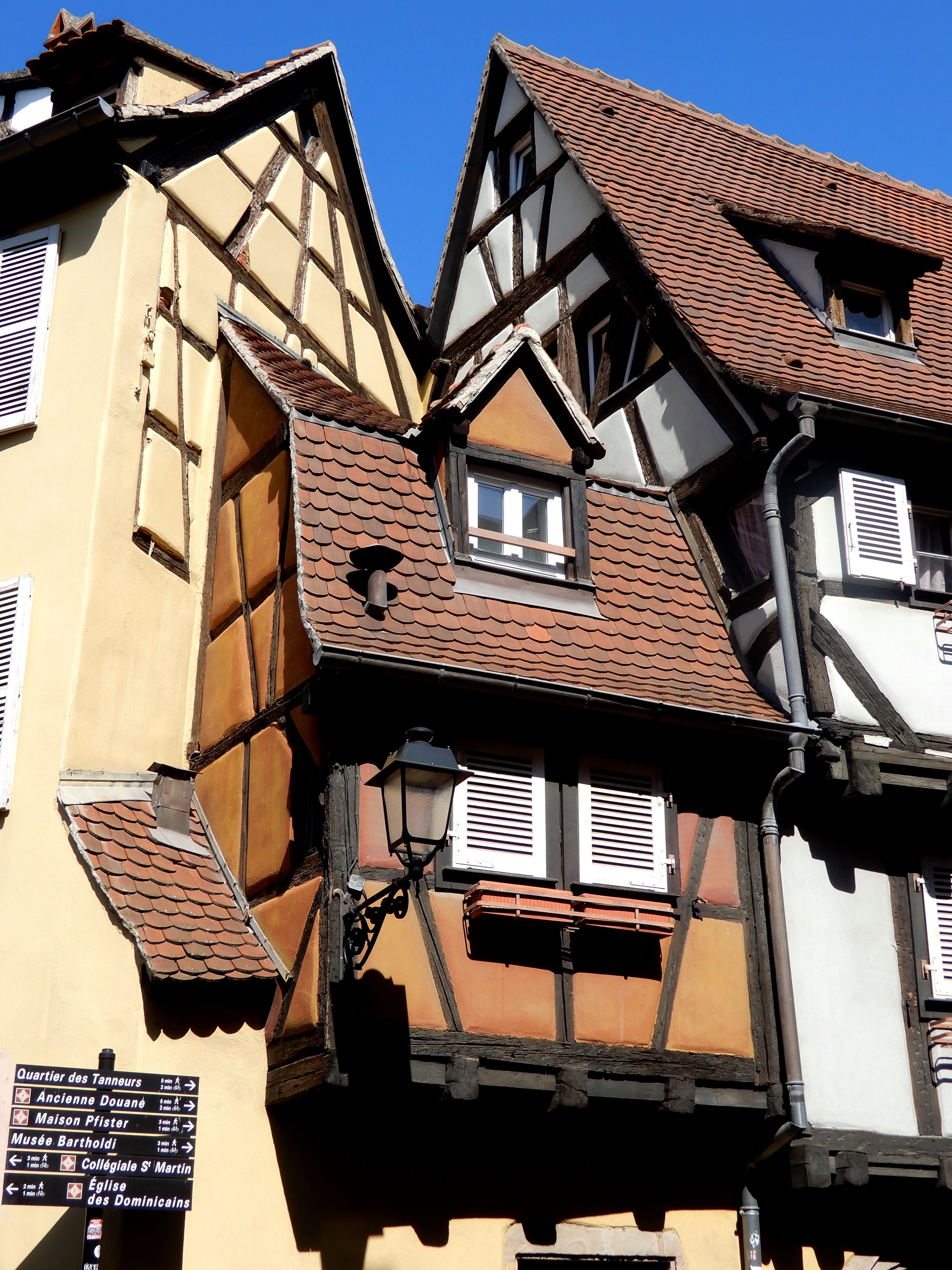
This little thing actually is a very small house. I think our guide said 600 square feet, but that might be overstating it. August 2025.

Monday, August 11, brought our first real step into France. (“Real” because technically the airport we landed at on the 8th, the Basel-Mulhouse-Freiburg Airport, is in France and we were in France a good 10 minutes after we left the airport, too!) Colmar has the historical distinction of holding no military value when the Allies came bombing in World War II. Therefore an important city from the 800’s and a major trading town in the Holy Roman Empire can still show a visitor many historical and undamaged buildings. Being in the Alsace region, Colmar shifted back and forth between France and Germany after the Roman empire broke up. It’s been in France since the end of WWII. I think if we had known it considers itself to be the capital of Alsatian wines, my wife might have taken a different interest in it.

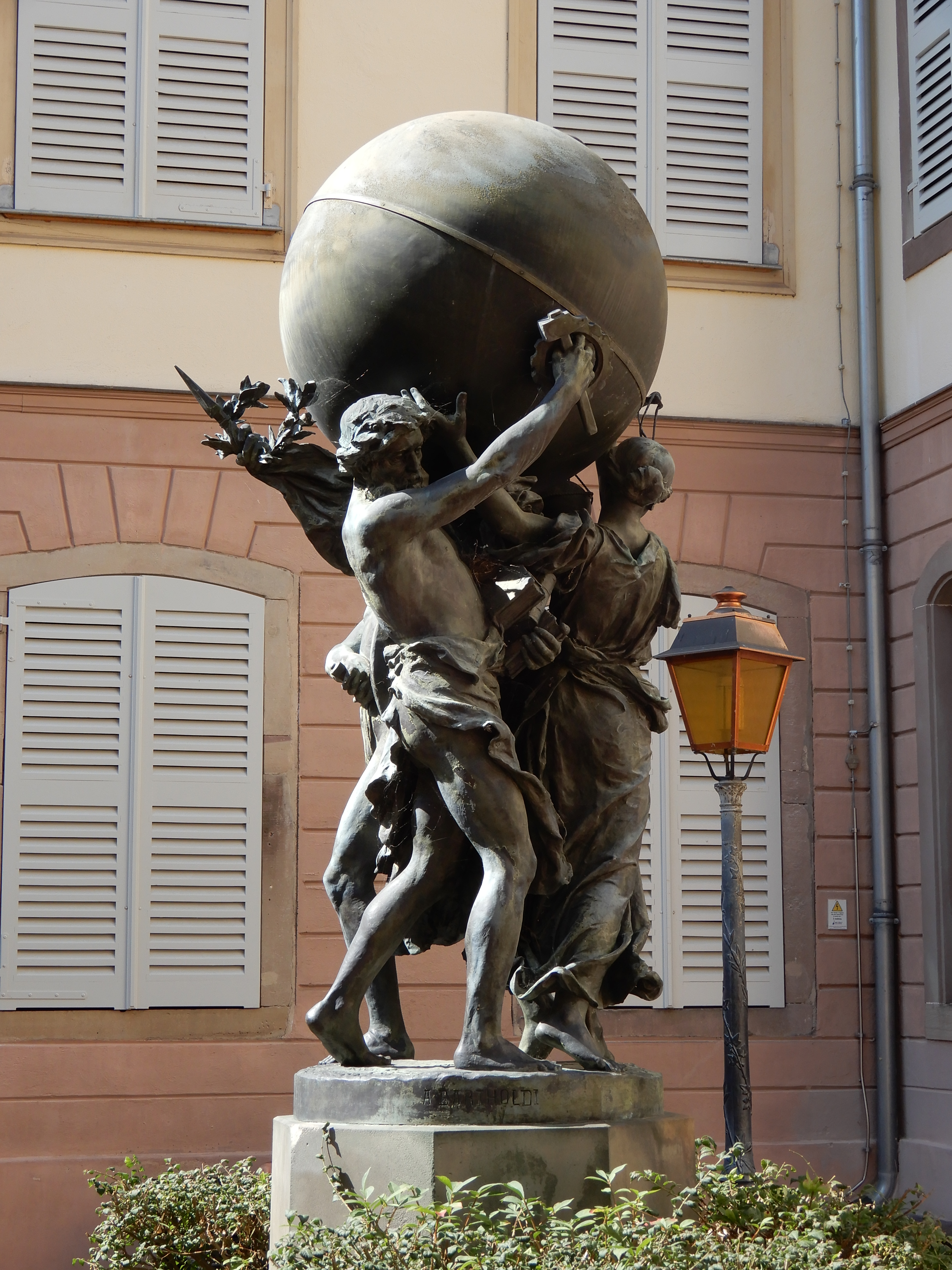
But it was hot. Really, really hot, about 95 degrees F. Having poorly planned my traveling wardrobe (a recently developing habit), I roasted in a collared shirt over a T-shirt. Our guide Johannes had narrated our Black Forest tour in the morning, and he continued his adroit guiding and droll humor in the afternoon. A small but critical step with a guide I learned later: make sure everyone has crossed the street on the light. He performed admirably, and I’m sure he narrated a good tour, but between the heat and the fact it occurred over a month ago, I remember only one thing distinctly (other than the lack of WWII bombing): it’s the birthplace and home of Frédéric Auguste Bartholdi, the sculptor best known for designing Liberty Enlightening The World, known in America simply as The Statue of Liberty. His sculptures appeared in several locations.

In the courtyard of Musée Bartholdi. “Les Grands Soutiens du Monde”. There’s a great deal of symbolism here having to do with the three figures (one hidden) representing Patriotism, Work, and Justice. September 2025.
A different view of Les Grands Soutiens du Monde. September 2025.
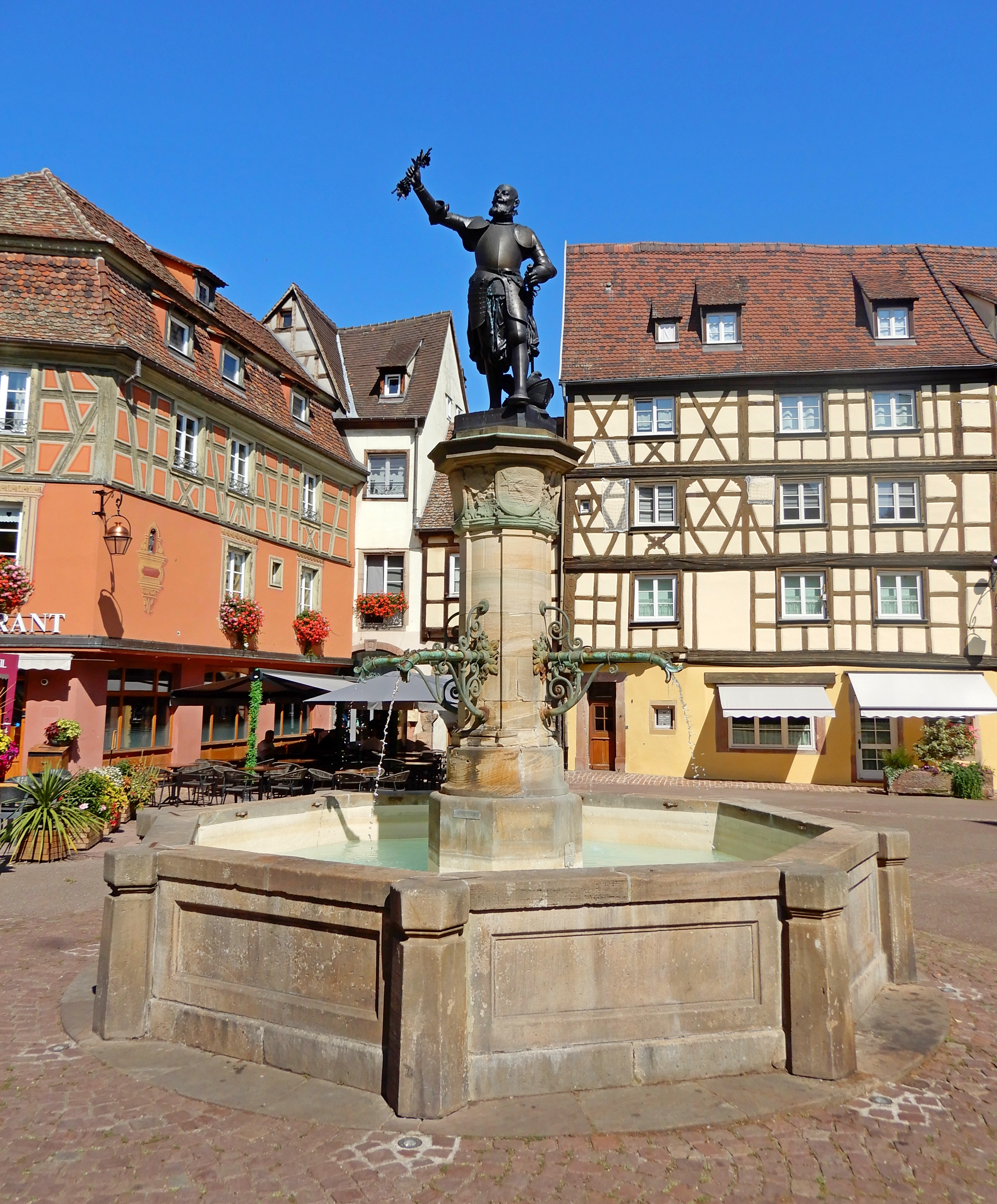
A “pulled back” shot to display how this statue was situated, and the general ambiance of the Old City. I think this is “Fontaine Schwendi” depicting Lazarus von Schwendi who brought a Tokay grape to Alsace from Hungary. This grape became known as Pinot Gris and thus crucial for development of Alsatian wines. September 2025.
This building feature apparently will be recognized by players of some video game, or perhaps some strange streaming thing. I think it was “video game”. Obviously I have no clue. September 2025.

We wandered around the first of a good handful of cathedrals we would encounter during the trip, but ultimately we had to spend some time in what little shade we could find. Despite being a Monday, it also was August when it seems most of France takes a holiday.

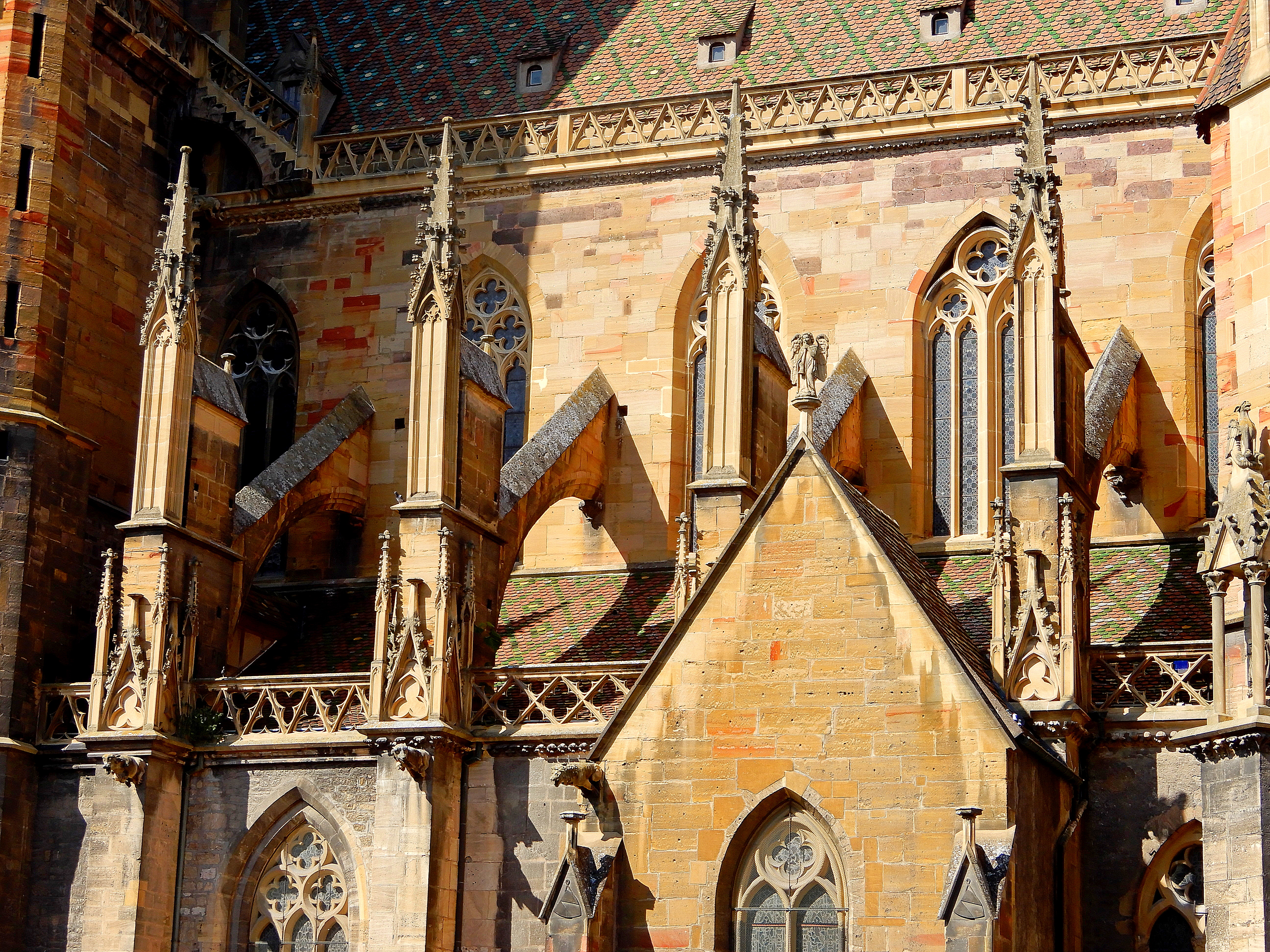
Flying buttresses. I can’t remember if we were allowed inside–I wish we had gone in if the answer is “yes, you were.” Difficult to see are the bullet holes on the façade. Colmar didn’t escape all of the damage from WWII, just the bombing. September 2025.
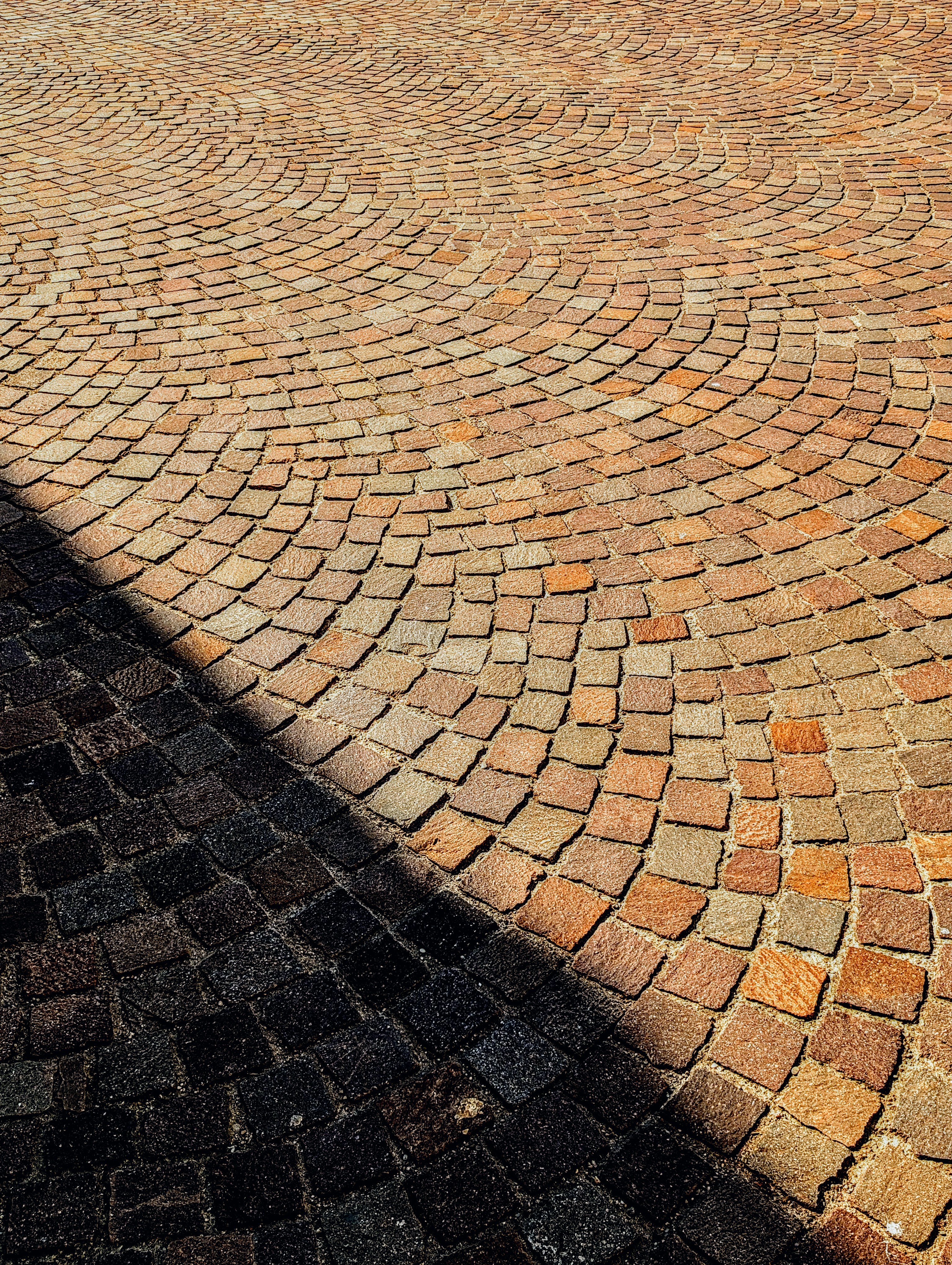
Market Square, Colmar, France. September 2025.
The Colmar Market Square, stylized. September 2025.

Today in the garden

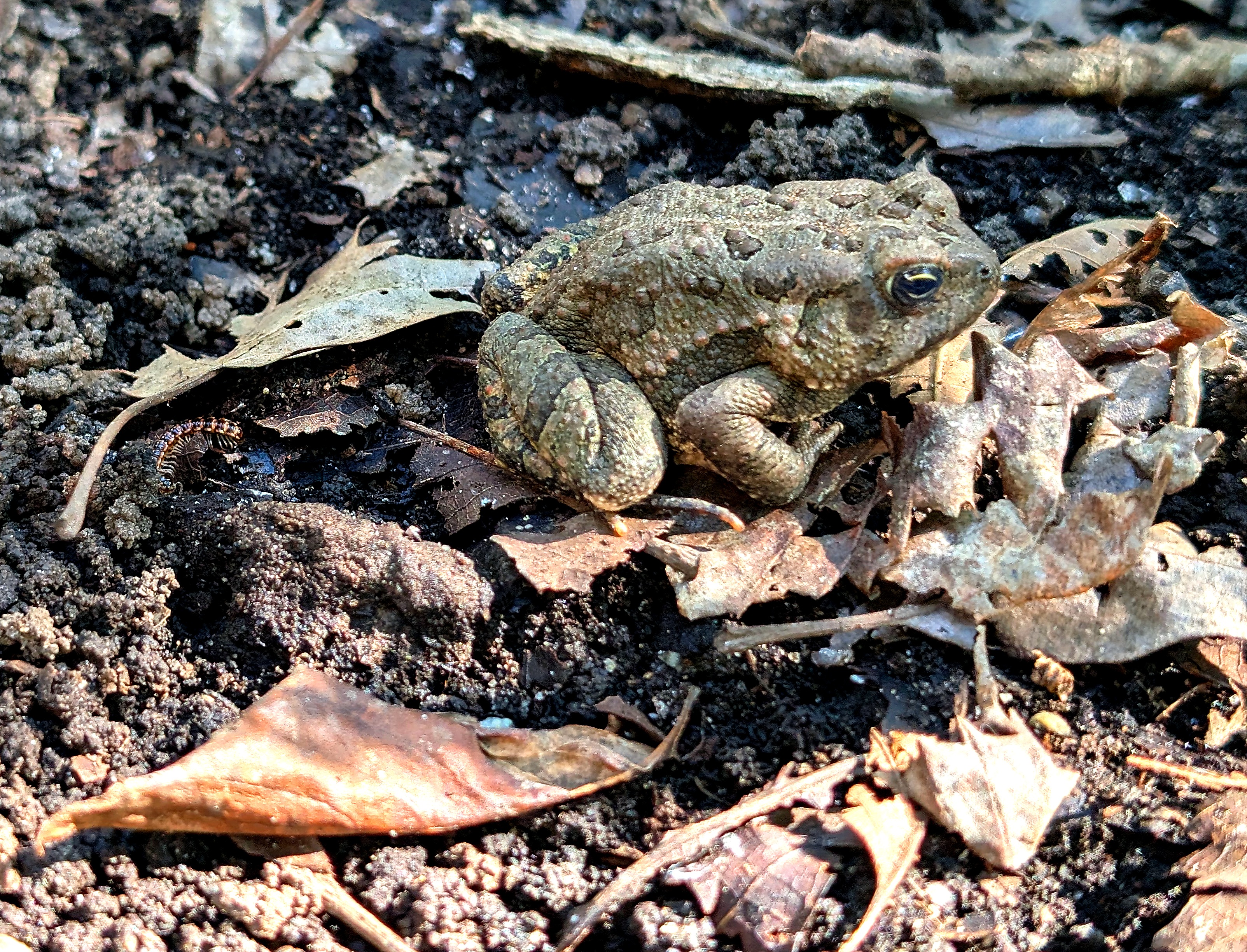
While weeding something moved, just a bit, and I spied this Southern toad. I haven’t seen one around this house since we moved in over 8 years ago, but saw them regularly at our former house on a pond. Pretty lethargic—it’s a nocturnal creature. September 2025.

One month ago today we woke in our own bed after flying in from Belgium the night before. Only now am I catching up to yardwork, which these days consists of staying ahead of the interlopers in our all-natives garden covering the front yard and hacking away at plants in the back before they can seed. Their days are numbered: two weeks from now we hope to start the replanting of the backyard. I question, at times, why we paid so much to plant perennials which should natively grow here but there ya go. A complete and pleasant shock has been seeing the blue mistflowers explode in size and coverage. These beautiful and late-blooming plants had for years volunteered amid the purple coneflowers I’ve showcased many times on this blog. Most of them were taken out to facilitate the new landscaping plan, but the architect of that plan instructed his crew to transplant as many as possible. Given that it was a week into October, he also sprinkled any seed heads he encountered. I think the much better soil helped them out a little bit:

This bank of blue mistflowers looked reasonably modest in size when we left for Europe on August 7, 2025. They’ve now taken over this segment of the yard, overwhelming several plants underneath them. September 2025.
Detail from a much larger photo of another bank of the blue mistflowers, showing how small flowers form much larger clusters. This photo is unretouched except for a slight amount of sharpening I added to see the flower petals better. September 2025.

I had to transplant two which ‘volunteered’ at the edge of the walkway to our front door and by doing so, obstructed most of the sidewalk. One withstood the shock and has many buds on it. The other has stood with severely wilted (but green!) leaves for almost four weeks. I keep telling it, “hang in there! You don’t need to bloom! Just live!”

The Black Forest

Many tales have been told of this forest. I won’t recount them. Our guide said the rugged hills finally became settled when financial incentives were made (“land”). At the end of our mesmerizing ride in a tour bus on winding mountain roads, we were dumped into a created-for-tourists facsimile Black Forest village where seemingly every tour bus stopped. It didn’t engender itself. After starting on the guided tour to the small church on the grounds, it got a little better.

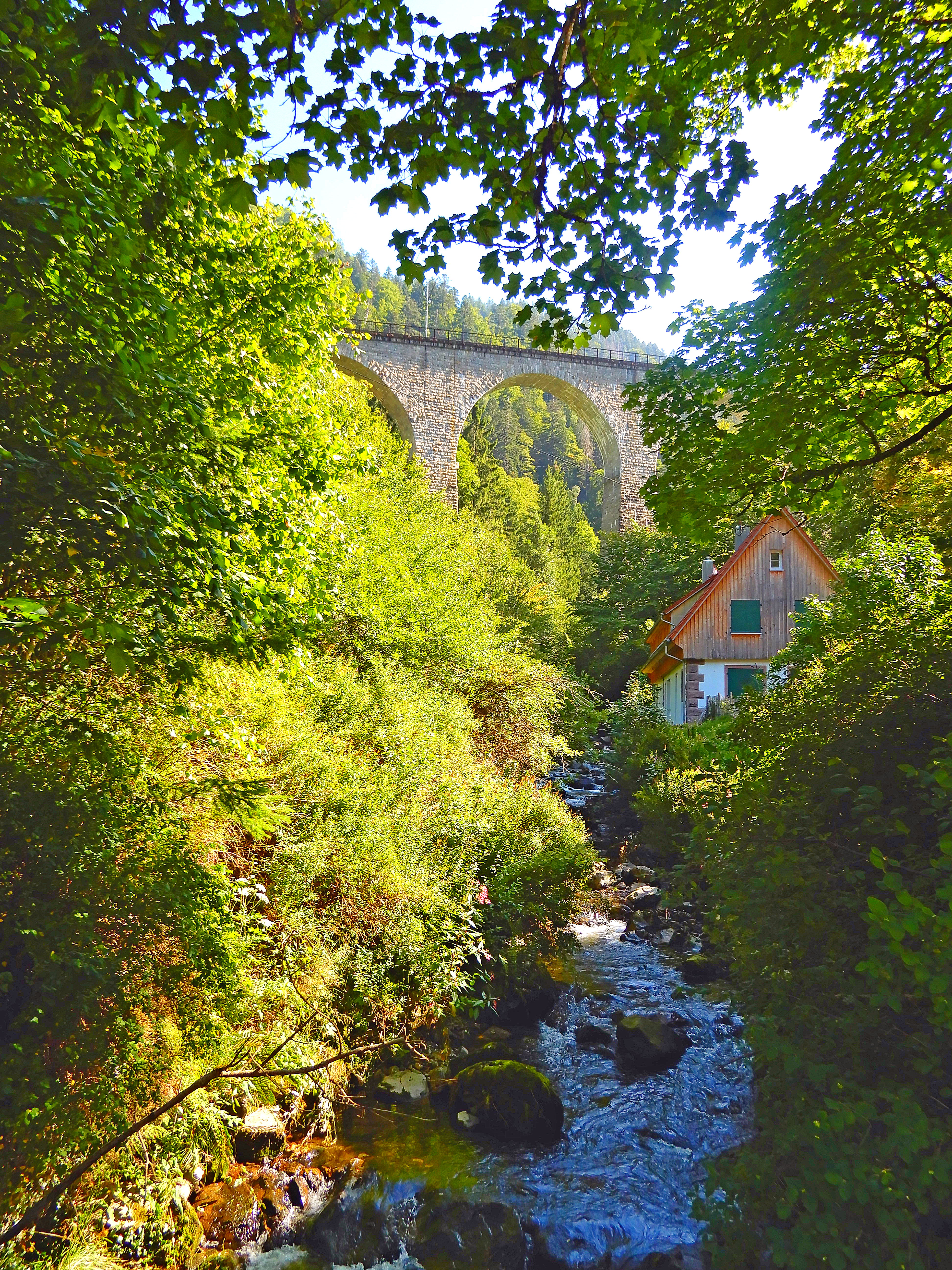
The Black Forest with creek. The bridge in the background is for passenger rail. A train appeared there minutes before this photo. September 2025.

Things were looking up! Until an “elderly” gentleman (i.e., older than me) fell badly on our way to the St. Oswald’s Chapel on the property. He escaped serious injury, thankfully. We meandered past pastures to the little chapel.

Cows outside the chapel. The slope well represents the entire Black Forest. September 2025.

This guided tour yielded one of the two poor guides we had during the six full days of the cruise. (Embarkation and debarkation days don’t have tours.) I remain greatly disturbed that she noted this chapel still saw use—meaning it’s a sacred space to any Christian—yet encouraged our group to grab a convenient rope to ring the church’s bell, all with a conspiratorial tone of “well we really shouldn’t…” The altar area was fenced and locked, but the rope snaked out under the fencing. (I’m also disturbed I didn’t say anything about how it disturbed me.) Annoyed, I went outside where a different kind of disturbance awaited me. When churches consecrate burial grounds and use them for decades and centuries, they fill up. Practically, this requires them to remove the older bones to make room for the new ones! Because these bones still deserve some respect, churches designate a more convenient place to store them, not worrying about whether they mingle. As I left the chapel and walked toward the sanctuary end of it, I saw a small locked grating which accessed a crawl space under the altar-end of the chapel. “Why would this mesh grating have a lock and a crucifix on it?” I wondered. Surprise!

I believe this would be called an ossuary. Black Forest village chapel, August 2025.
A closer look at the ossuary. August 2025.
Detail of framed crucifix on the Black Forest village chapel. August 2025.

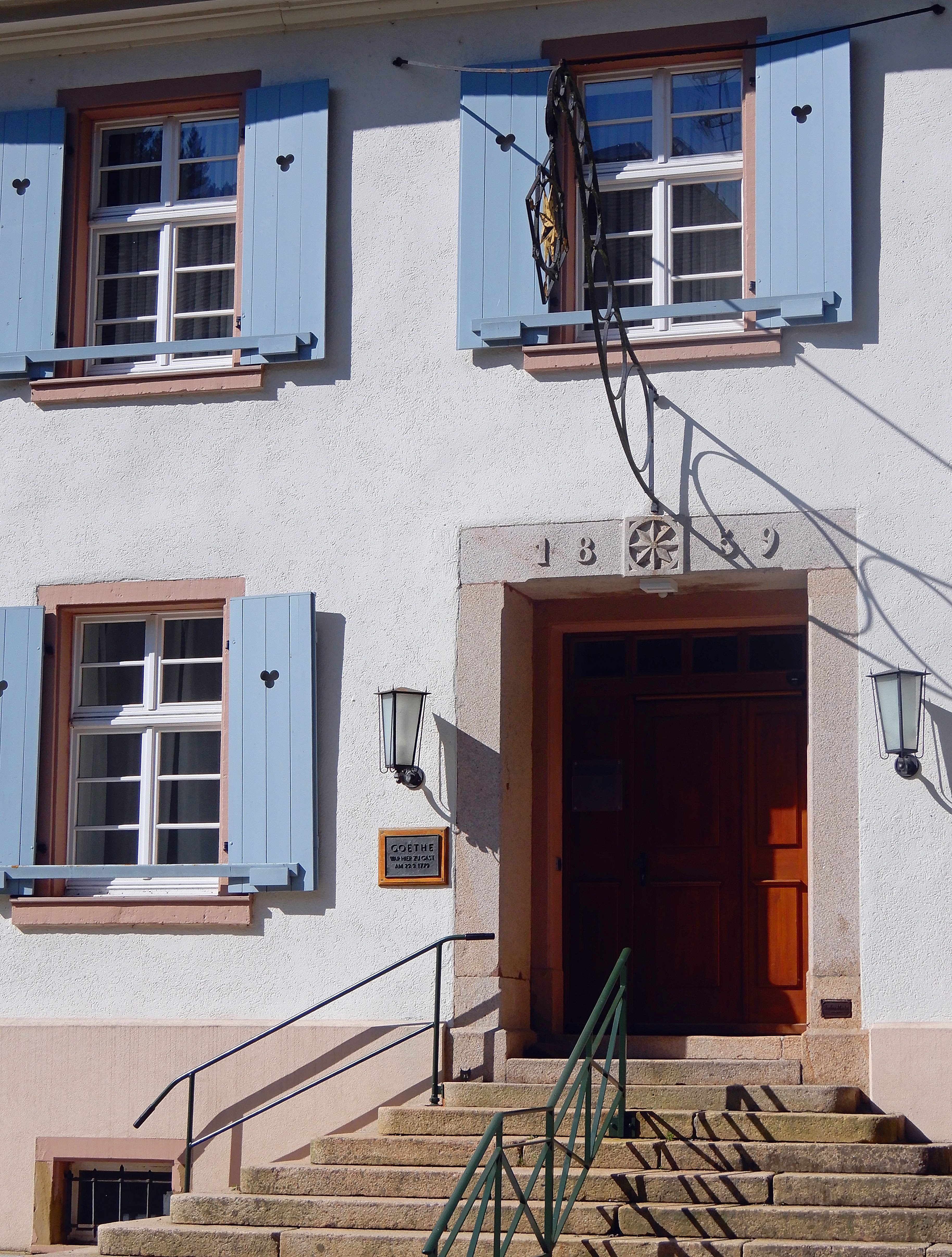
Other buildings were less impressive and/or photogenic to my eye. A building Goethe once slept in (lived in temporarily?) couldn’t be photographed well due to all the intervening people. I had better luck when I got closer.

Goethe House, Black Forest village. August 2025.

Typifying a traditional village in the Black Forest, this made-for-tourists village leaned in to the central reason for such villages: commerce. A quick in-and-out of the glass shop sufficed. I didn’t want to break anything worth hundreds or even thousands of dollars. Another building proved more eclectic: a $5000 bicycle with a handmade frame of spruce or fir; steins taller than my wife; cooking utensils of all sorts; knives; Christmas decorations; and fine spirits. We purchased a set of nice flat Christmas decorations which could transport home easily.

Upon our return to the ship for lunch, we discovered a second Viking ship had docked to ours, and now our veranda literally had only four inches between it and the other ship’s veranda. We had known this could happen, and I wonder if a person could book to avoid it. I’ll detail the considerations in case others might be considering a cruise like this:

  • Our voyage started at Basel and ended (supposedly; more later) at Amsterdam. Thus, we were traveling downstream.
  • Other than this first docking, our captain turned the ship around every time it docked. Significant rain had fallen in the weeks before our cruise; the Rhine therefore had risen much higher than normal and the current was particularly strong. Pointing the bow into the current meant the ship wouldn’t be knocked around as it would if the basically flat stern were facing the current.
  • The ship always docked on the east/north side of the river. Even the stop labeled “Strasbourg” in the brochures actually occurred at Kehl, Germany.
  • Our ship always docked first. Whenever two Viking ships were docked in tandem, the other ship was the one on the outside, furthest from the shore—not ours.
  • Putting the previous bullets together, our cabin on the port (left) side of the ship meant we always faced the shore with no other ships in our way…except the first stop. We only were docked two (or was it three) times with another ship en tandem meaning we were unlucky the first docking, but lucky all the dockings thereafter, and the ship docked more than once per day sometimes.

Your mileage may vary: we likely would have faced the river all the time if the water flow had been low. If rains haven’t fallen, it’s possible the ship cannot clear the bottom of the river when it comes to certain sections. In those cases one must re-pack all the suitcases, get bused to a different ship, and carry on with the cruise. That would be extremely time-consuming and eat into a leisurely but short and expensive cruise. The same can occur if too much rain has fallen, and the river runs so high the ship cannot clear the bridges it must go under. It’s a crap shoot and a fairly expensive one. We were affected by one of these unplanned events. It should have been planned, and I’m glad it worked out okay. Stay tuned for the end of the cruise.

Mild

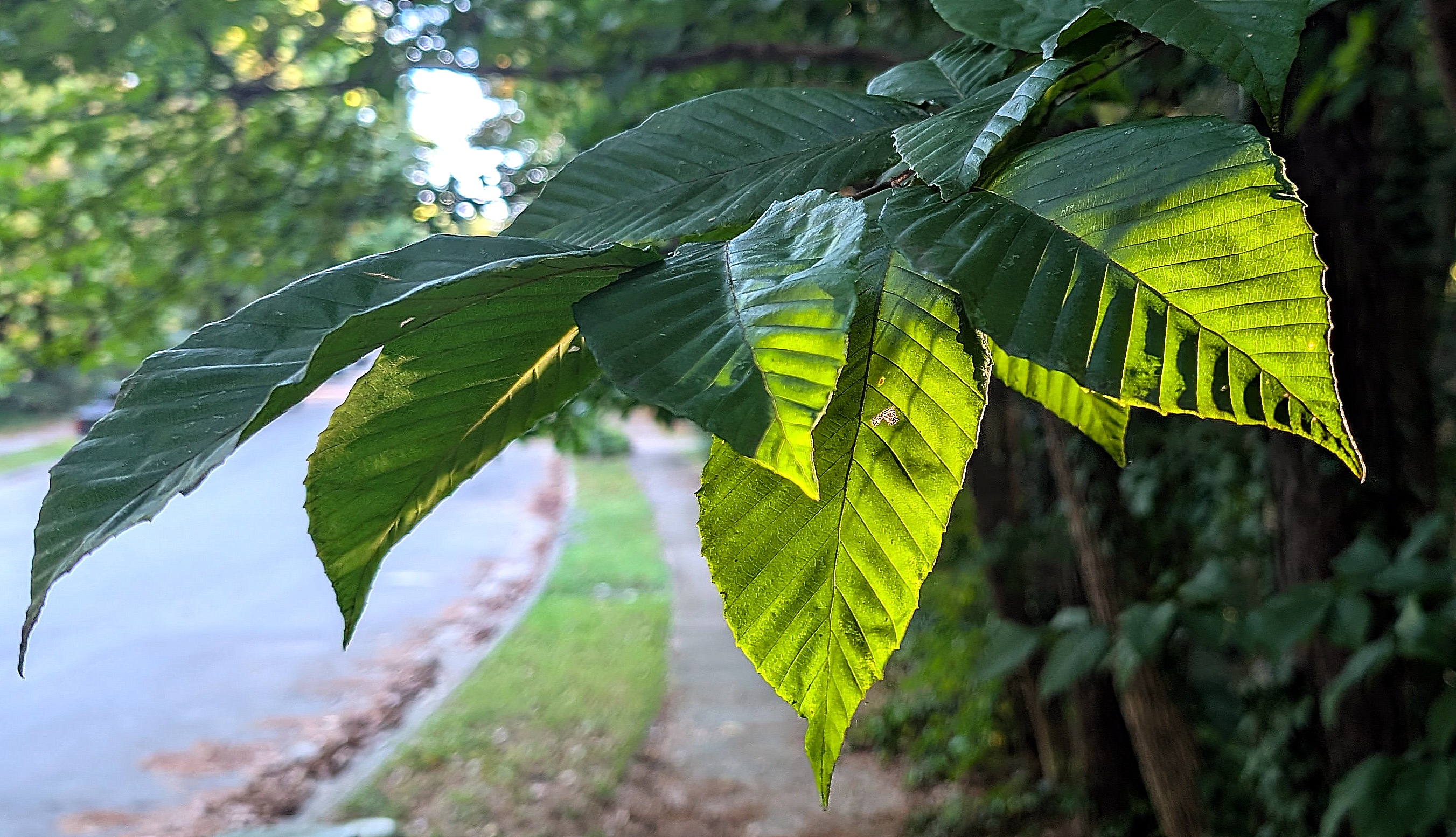
Morning sun strikes leaves of American (Carolina) beech–at least that’s what my plant ID app says. The temp was cool but not brisk around 8:00 a.m. September 2025.

Our weather this summer has been a bit topsy-turvy to me. June’s usual onslaught of highly humid, hot days which normally starts after my birthday on the 8th, arrived instead in the final days of May. July, a month that has seen weeks-long streaks above 100 was hot again but avoided the triple-digits. The official high temps, nevertheless, hit the 90’s every day but two, and we started to collect our normal rainfall (in fact, a little extra).

August, though, should have continued the hot weather and brought some brushes with tropical storms. Instead, the month opened with a high or 86, then 79, and high temps stayed in the 70’s six more days after that. We collected over 5.33 inches of rain in the first 11 days. The entire month easily bested our normal rainfall total 7.99 inches versus 4.71 inches. We saw the 90’s only once, on the 17th, when the thermometer got to 92 while we were in Belgium. The weirdness continued when the humidity broke weeks early—usually it’s the second week of September—and overnight lows descended into the 60’s and 50’s never to rise above 70 again as I write this on the 12th.

As mentioned, September normally sees the departure of high humidity and the extension of lovely days in the 80-85 degree range. Instead, we started with lows in the 50’s and high’s in the 70’s except for a four-day streak of 84-94. Things dry out in the rainfall department normally, too, with the usual rainfall being about two inches. We’re on pace for that.

Even the tulip poplars think it’s weirder. Normally they start to get stressed in July and drop a lot of yellowed leaves. This year, only a smattering fell then and continued through August. When the way cooler temps of September came, they acted as if we’d crossed the equinox, nights were getting crisper, and large numbers began to fall: not yellowed this time but a leathery brown. IT’S NOT FALL YET, I want to scream at them, but by most measures we are crossing that threshold now, not in early to mid-October per my observation of usual.

I had thought the broad strokes of climate changes meant an accented version of our normal curve: hot months would be hotter, cold months would be a little more mild, and we would see more rainfall here in the American Southeast. I did NOT expect we would just take all the normal readings, throw them in a hat marked “Your Weather,” and pull them out randomly!

At least the blossoms have come out on the roses of Sharon, but they are later this year. Contrary to the wishes of my native plants landscaper, I will not be removing all of these beauties, aggressive invaders though they be. (Honestly, they’re growing under a porch, behind the garbage bins, anywhere and everywhere.)

Rose of Sharon. September 2025.

Breisach

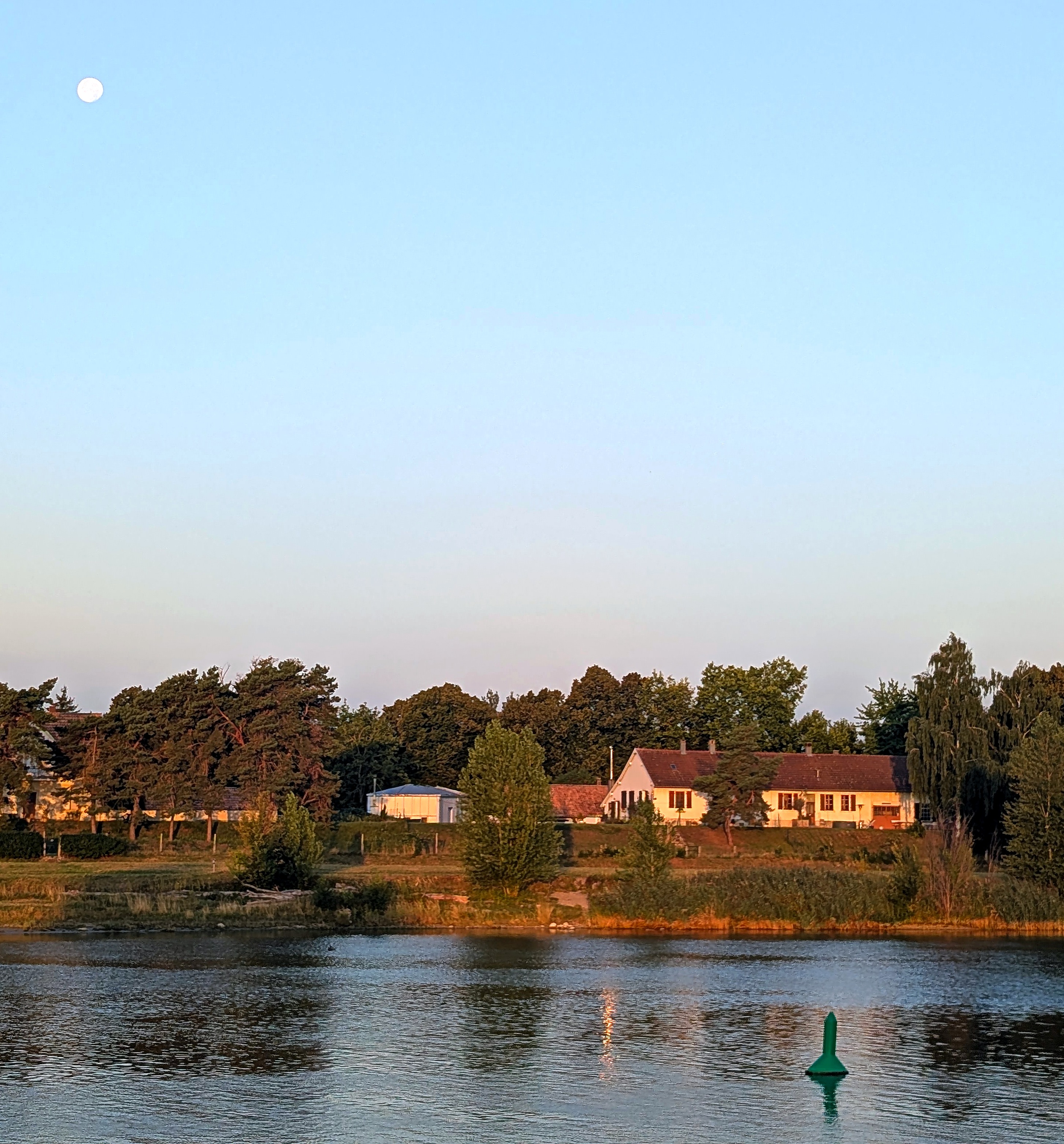
Good morning, France! (From the German side of the Rhine River). August 2025.

Our first morning aboard the Viking Hlin, I woke early. Apparently three evenings of my patented jet lag adjustment routine (copious amounts of beer, large amounts of food, and moderate exercise) had done the trick. I left my barely awake wife in the stateroom and wandered the early dawn on the top deck. Something about boats and trains indulges the romantic. He wakes happy that someone else has navigated the vessel to a new location while he slept. His sleepy dreams continue when the curtains are drawn: what will I see? Where am I? This occurs in a manner no plane will ever match with its tube-through-time approach to travel.

Turning to the starboard side of the deck, the barely risen sun illuminated a nice cathedral in Breisach, still mostly in shadows.

Breisacher Münster St. Stephan Roman Catholic Church. August 2025.

After realizing our definition of ‘breakfast’ would forever be altered by our onboard experience, we headed out on a bus ride to and through the Black Forest. Its history was narrated capably by our erudite and dryly humorous guide, Johannes, raised in the Black Forest. It reminded me of certain challenging terrains in North America where high foothills exist prior to the Rocky Mountains or the North Cascades (primarily on the lee side of the mountains). Unfortunately, the polarized windows of the bus, and the fact my wife sat in the window seat, made photography impossible.

Next post: a ‘typical’ Black Forest village.

Inspiration

The valiant yellow rose on my daily walk. September 2025.

My daily walks haven’t been very “daily” since we returned from our Rhine River cruise. Today a familiar friend caught my eye. For the several years now when I’ve been walking regularly, a forlorn yellow rose has bloomed where it’s been planted next to a mailbox. Every year it shows little foliage, yet it always has one beautiful yellow blossom. I don’t recall ever seeing more than one at a time. I don’t know if someone strips the leaves purposefully, if deer or something else eat the leaves, or if this just represents the nature of this variety of rose. I do know, however, that it seems almost defiant to me to bloom that lustily when surrounded by bare, thorny stalks.

Even though we may be mostly thorns and difficult to handle, remember to blossom at least once today.

Locked…and loaded

Lock on the Rhine River at night. August 2025.

Our first night on the Viking Hlin, we went through a series of locks en route to Breisach, Germany. Having started with beer prior to our shuttle ride to the Hlin before 3 p.m., by nighttime I could properly be called “loaded.” I had, after all, discovered what selections would be available on board, sampling most. By the time we were going through the locks, I snapped a few photos and collapsed happily into bed. (Our stateroom more than met our standards: a decent-sized bathroom and plenty of storage; very surprising.)

You’re officially old

And you know that you’re over the hill
When your mind makes a promise that your body can’t fill.

“Old Folks Boogie” by Little Feat

I’m sure someone got excited when they received this offer in the mail from AARP. September 2025.

The American Association of Retired Persons (which only wants to go by AARP now for fairly obvious reasons) sent a fundraising request to me yesterday. If I send their foundation a paltry $12, I can get that nifty clock/calculator thingy pictured above! Oh, however will I resist? I don’t know what would be handier than to tell someone on the phone, “Just a minute, young man, I’m going to get my calculator to see if that Nigerian property is a good deal! Hold on, I just have to put this phone down. The cord doesn’t reach that far,” and off I’ll shuffle. (We shuffle because of course all old people shuffle.) It will be a long trip because the clock will reside on my nightstand at the other end of the house. Then of course I’ll have to shuffle back, make all those scruffly noises as I fumble the phone up to my ear, drop the receiver again, and while muttering “oh my…” make all those noises again. Presuming the nice young man is still on the phone, we’ll have to start punching the numbers. Oh, I do hope I can hear him okay! It’s such a bother when we have to start all over because I didn’t hear right, or when I accidentally press the Clear button on the calculator.

If only someone would invent something that just had a phone, a clock, and a calculator in it! And while they’re at it, maybe it could be, …oh, I dunno, ….cordless?

[Full disclosure: I’m 71 years old as I write this. How old does someone have to be to think, “wow, that’s a pretty slick lookin’ little calculator-clock!”?]

Doors and windows of Basel

Roofline, Basel, Switzerland. August 2025.

I’m fascinated by doors, windows, and any other portal between Inside and Outside. Part of it’s architectural, but over years I’ve learned I have a near obsession with any door or window which says “different” or “sturdy” or which carry an emotion perhaps symbolic of the wall it pierces. And if our eyes are windows to our soul, what then are a house’s windows?

Our first full day in Basel began with the sumptuous breakfast buffet I’ve come to expect from upscale European hotels. Afterwards we embarked on a walking tour of the historic part of Basel, reached via a short trolley ride from in front of the hotel. Several hours later I had collected six or seven dozen photos. On our second day, we wandered a little park across the street from our hotel, and trolleyed into Basel again where we visited a small but good botanical garden. So many strange doors and windows! (including these…)

Residence, Basel, Switzerland. August 2025.
Converted carriage door to residence entry. Basel, Switzerland. August 2025.
Clashing architecture. Basel, Switzerland. August 2025.
Upscale residence (backs onto the Rhine River). Basel, Switzerland. August 2025.
Overlooking the market square, Basel, Switzerland. August 2025.
Entrance to a cylindrical chapel in a little park across from our hotel. Basel, Switzerland. August 2025.