
Let me apologize in advance for this post. It’s self-serving and of little interest to anyone but me. My excuse for posting it (besides narcissistic vainglory) rests in the reactions some readers will have when they get a snapshot of things that have faded away: newspapers, particularly as arbiters of culture; purchasing music instead of streaming it and on vinyl; a picture of the music industry as older people knew it–record labels pressing LP’s right and left, when any band with long hair could get a contract; and sending those LP’s to newspapers, radio stations, magazines, etc., to get a hopefully-positive review; and most of all, a snapshot of three months in 1972 when certain labels pushed certain artists and released certain albums.
In 1972 I graduated high school. A close family friend happened to be the City Editor for the Spokesman-Review, one of the two daily newspapers in my hometown. The S-R came out in the morning, the Daily Chronicle in the afternoon/evening. He stopped by shortly before my graduation to offer me a copyboy position for the summer. Their current copyboy planned to move on to college or a newspaper, I frankly don’t remember.
I should have paid attention to how little pleasure I derived from the job. It would’ve saved me years of study and employment. Ah well. One pleasure I did derive stemmed from the fact my desk butted up against the desk of the S-R music and arts critic. In those days no mainstream newspaper would accord rock and pop music any serious stature, but the marketing trends being what they were, someone must have told them, “Listen, these kids buy stuff. You at least had to review these dratted things.” On the S-R, that guy turned out to be Ed Coker. Ed, I hope somehow you know how much those three months meant to me because of working beside you. You were young then, but obviously a dedicated reporter/writer. You were nice to me. I appreciated that. I saw you decades later, and you seemed to have risen in stature on the Spokane cultural scene.
No matter. Back then record companies would send free copies of records (LP’s, younglings) to a newspaper and hope someone would review it positively. Ed had a policy: he would listen to a record, and if he didn’t want to keep it for himself, he would put it on top of his out box. Lord, most of you don’t know what those are either, do you? When everything was paper, a person had an inbox (hence the email term, younglings) and an outbox to facilitate the movement of said paper. People like me, the copyboy, would move the paper around. It was a real job, okay? One more thing: Ed seemed to listen to records on and off all week, but he would just accumulate them and drop a stack on the basket around Thursday. I became attuned to that.
The copyboy shows up before most of the reporters. They had to work through about 11 p.m. to revise copy for the final edition of the paper whereas I got to leave shortly after the first edition got distributed, somewhere around 8:30, 9 p.m. Reporters didn’t show up until 2 p.m. at the earliest, and 3 p.m. was perfectly acceptable. I, however, showed up about noon as I recall, maybe 12:30, and therefore got first dibs on the records! Over the course of that short summer I nabbed ten records. They are, in no particular order…
| David Bowie | The Rise and Fall of Ziggy Stardust and the Spiders from Mars |
| Dan Hicks & His Hot Licks | Striking It Rich |
| Great White Cane | Great White Cane |
| Bob Seger | Smokin’ O.P.’s |
| Highway Robbery | For Love Or Money |
| Heavy Cruiser | Heavy Cruiser |
| Hot Tuna | Burgers |
| Peter Kaukonen | Black Kangaroo |
| Glass Harp | It Makes Me Glad |
| Jim Post | Slow To 20 |
The (Almost) Total Losers
I had to insert the “(Almost)” because the total losers went back to the editorial room of the S-R, so I must’ve heard something worth listening to in these albums…
Heavy Cruiser by Heavy Cruiser
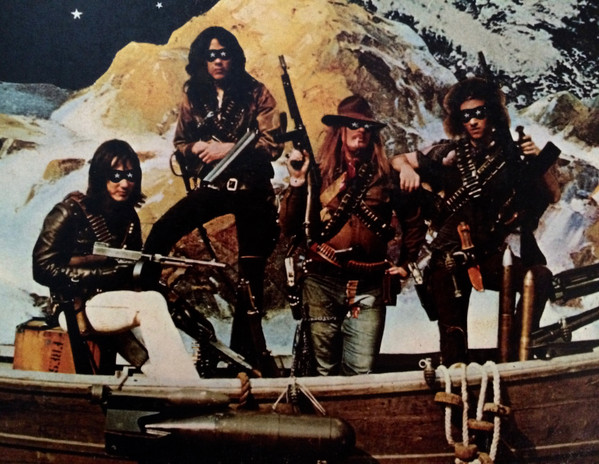
All I remember from this album is a snatch from “Wonder Wheel” and I’m surprised in looking at the track listing that this album had “Louie Louie” on it. In reading today about the band I learned that it seems to have been an offshoot from some group named Mama Lion, and the driving force in the former didn’t want band members’ names on this album because he felt they would detract from Mama Lion. Although I digitized most of my albums, this one never made the cut…and it was a low bar.
The Great White Cane by The Great White Cane
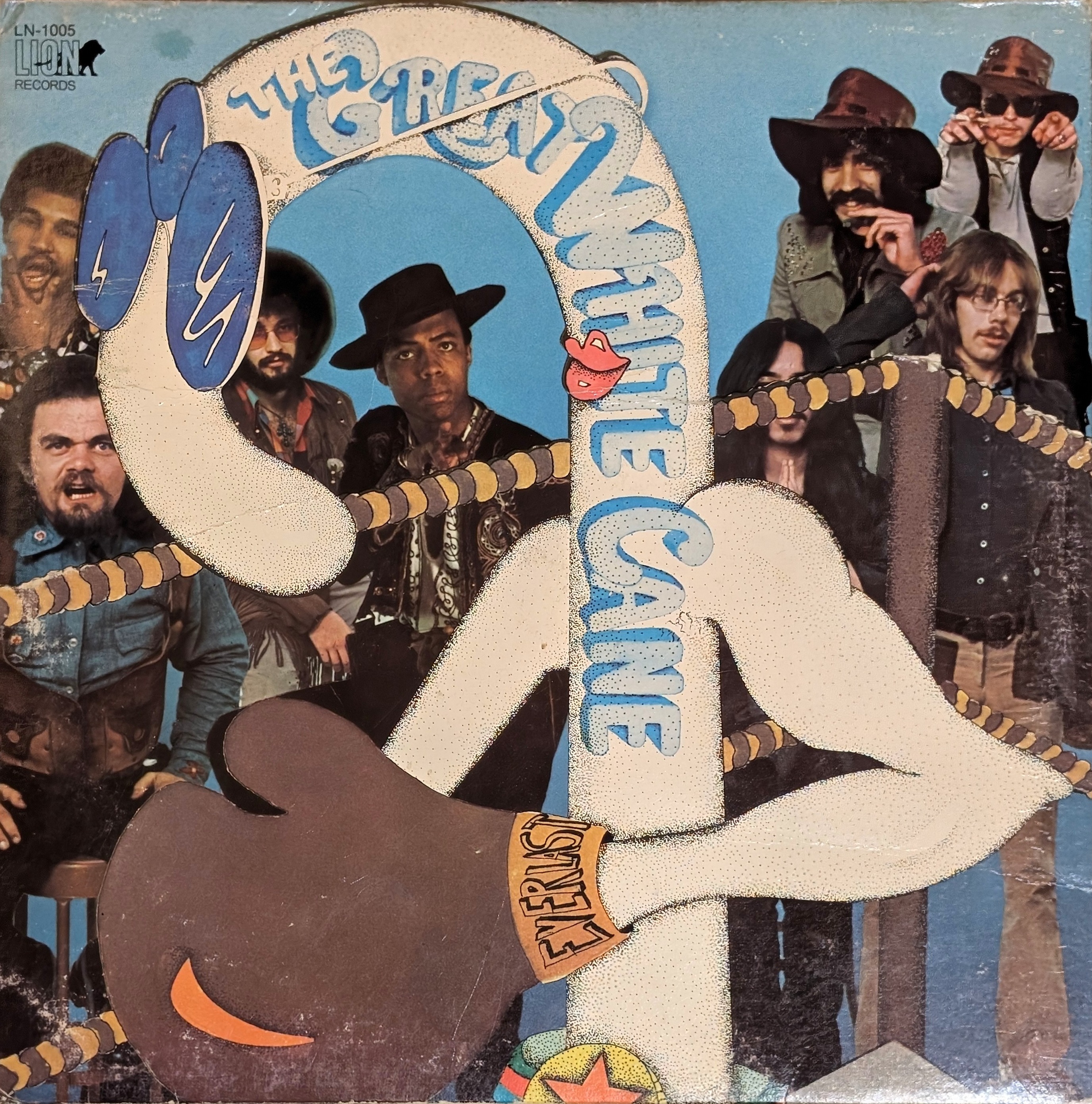
The best thing about this album was that the White Cane image above folded down. It overlaid the image of the band. The second-best thing I didn’t even realize until about 40 years later: the lead singer was Rick James who wrote or co-wrote all of the songs. Nevertheless, it sucked. Where the Heavy Cruiser album at least hit a rock ‘n’ roll hot spot for me, this combined “rock, funk, and soul” as described by Discogs and that wasn’t my groove at the time. My interests expanded over time–my interest in this album did not. Bad funk really isn’t very good. Bad rock will be better than bad funk, every time.
The ‘Meh’ Group
I acknowledge the talent of these releases, but they never really grabbed me. I gave them a listen once in a while. I’m not sure they’re available on streaming services or not.
It Makes Me Glad by Glass Harp

This album still resides in my digital library. It has a Christian overtone to it. “Do Lord” is a traditional tune, but most of it is a mostly folk album. Pretty but not compelling. It’s good, but band turmoil/churn apparently led to a different lineup after this album which took off into the King Crimson/Moody Blues universe. Too bad. They might’ve become something if they had stuck with what they were.
For Love Or Money by Highway Robbery
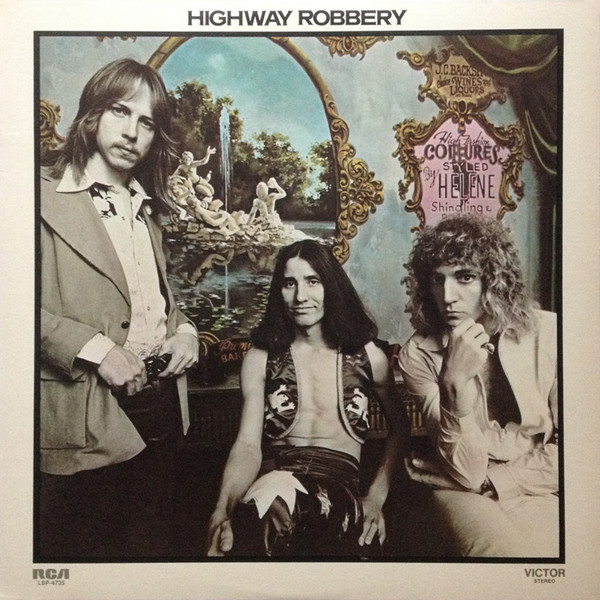
The band’s only album. They made a minor ripple in the pool of public perception with “Mystery Rider” a song which demonstrates what a lot of bands were attempting to do at the time. The latter half of Grand Funk’s career, Uriah Heep, and other power rock groups heavily influenced Highway Robbery. If you let the “Mystery Rider” track play out on YouTube, it segues into “Promotion Man” which grabs my attention more. Another good one was “Ain’t Gonna Take No More”, a song I sang many a times as a young lad.
The Hey-This-Sounds-Good Group
Mathematically-inclined readers have realized that six albums remain, so I made out pretty good with these freebies. I knew little of these acts, and that’s a statement I want you to keep in mind as you encounter them. I’ve listed them in reverse order to my (limited) knowledge of them at that time…
Slow To 20 by Jim Post
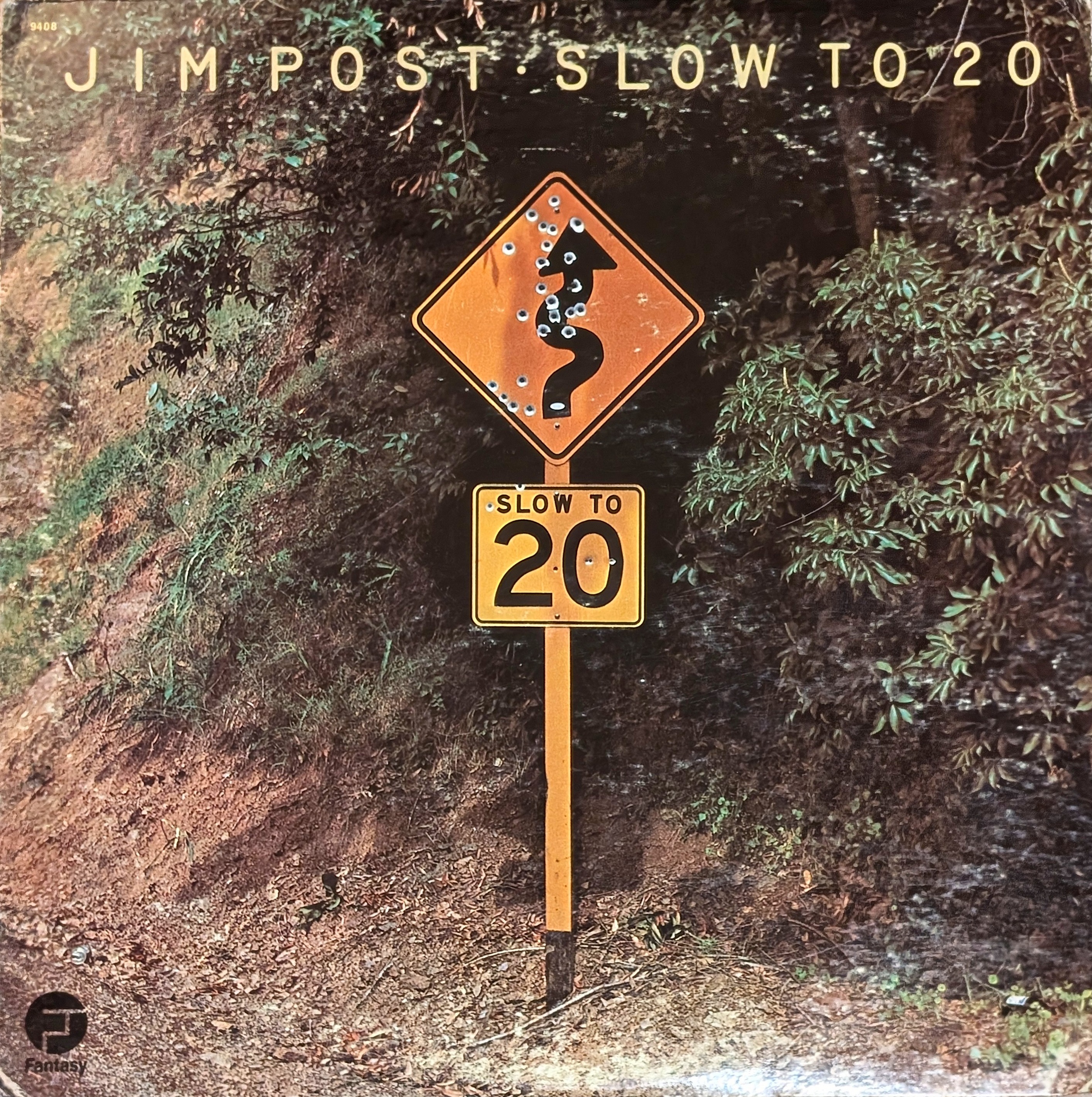
Artists and music labels can block certain albums from appearing on streaming services which remains one of my biggest disappointments with those services and explains why I still use a digital audio player (DAP), a jukebox program (MediaMonkey), and my digital library of nearly 20,000 tracks (1680 albums). I learned just within the past few years that Jim Post came from the upper Midwest folk scene which included John Prine, Steve Goodman, and others whose names I don’t recognize. He charted a song “Reach Out of the Darkness” in 1968 which I’ll need to search out–right now, this album is all I know of him, sonically. He’s got a rambunctious, jazzy infusion to his folk, similar in energy but not style to Jackson Browne. I find myself singing many of his songs more than fifty years later. But…he later recorded a lot of children’s music. Whether this is the reason none of this early stuff appears on Tidal or whether it’s a music-rights issue, I don’t know. It’s disappointing though. This is a good album.
Black Kangaroo by Peter Kaukonen

It’s a tossup whether I knew this guy or the next one less (more?). I dimly recognized the last name. Peter is Jorma’s brother, and Jorma had a pretty good career in Jefferson Airplane, Hot Tuna, and then as a solo artist. I discovered just today that Peter played in Hot Tuna in an early incarnation of the band but he apparently left to do a bit different music than their bent toward traditional country blues. The music on this album is decidedly different. Peter leans into the electric side of blues-rock-pop and indulges several sci-fi type topics. “Billy’s Tune” tells about Billy who has given most of his body parts away and lives in jar. I still think of “Barking Dog Blues” every time I listen to the three hunting dogs in the lot behind me race up and down their fence line snarling at the German shepherd in the next yard over. Peter played with Jefferson Airplane a bit, too, I learned on Wikipedia, and with Johnny Winter, and with Link Wray. Black Kangaroo is actually the name of his band. The inside of the album cover features a black kangaroo flipping everyone the bird. Real listenable music, but not as good creatively-speaking as the Jim Post album.
Striking It Rich by Dan Hicks & His Hot Licks
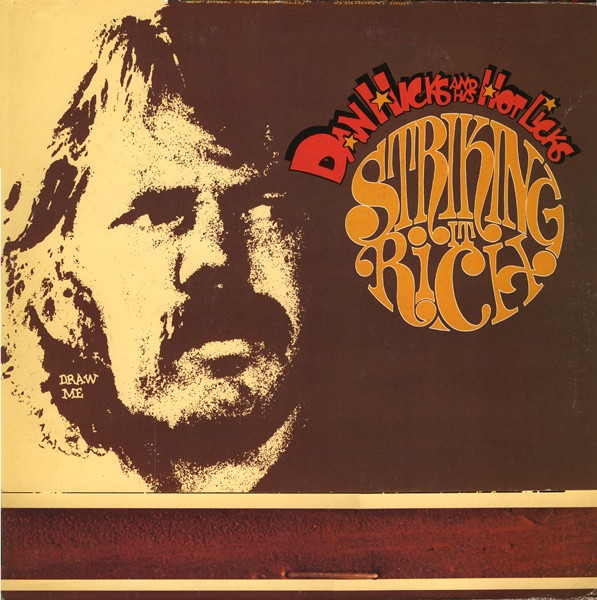
Had I vaguely heard of Dan Hicks before landing this album? I doubt it. And if you haven’t heard of him either, you owe it to yourself to listen at least once. My personal favorites on this album are “O’Reilly At The Bar,” “Canned Music,” “I’m An Old Cowhand (From the Rio Grande),” and “I Scare Myself”. As Wikipedia puts it, “His idiosyncratic style combined elements of cowboy folk, jazz, country, swing, bluegrass, pop, and gypsy music.” Two of his best-known songs are in those four I just listed. He’s the guy who wrote “How Can I Miss You When You Won’t Go Away?” Basically he channels the swing vibe of Django Reinhardt and others. This was his third album. Here, listen to this. The play of violin, that weird background from the Lickettes (yeah, that’s their other name), and the minor key juxtaposed against his lyrics…man, that’s just great!
Smokin’ O.P.’s by Bob Seger

Despite the one-eighth inch chunk missing from the edge of the record when I pulled it out, this became one of my favorite rock ‘n’ roll albums. I didn’t ditch the LP until I switched over to taped versions of all my records in the mid- to late-80s. My college roommate Motorhead, a smoker, provided the insight that “O.P.’s” are other people’s cigarettes. “Smokin’ O.P.’s” means you’re bumming smokes from everyone. The album is made to look like a pack of Lucky Strikes. And the extra meaning comes from all of the songs coming from other composers instead of Seger. At the time I snagged this one, I had heard of Seger and The Bob Seger System, but I hadn’t heard him–he was still a regional act at the beginning of the 70’s. [I must correct that: “Ramblin’ Gamblin’ Man” charted up to #17 in 1969–a national hit.] A great version of “Bo Diddley” opens the record, and it’s followed by “Love The One You’re With,” “If I Were A Carpenter,” which reached #76 in the US, and “Hummin’ Bird”, plus a re-release of “Heavy Music”. Seger’s music is still rocking the Hammond organ on this LP. I lament that Tidal (and previously Spotify) doesn’t have this record. Too many royalties to pay?
Burgers by Hot Tuna
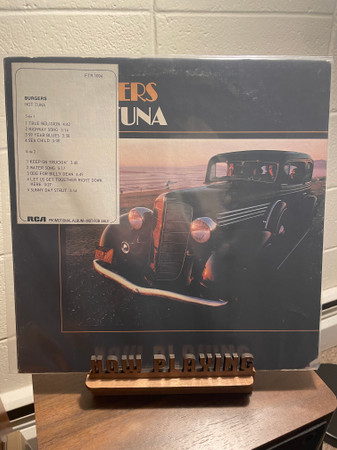
Yep, that’s a crap photograph–but it’s the only one I could find which looks like the one I got with the Radio DJ label slapped on it. While some of these records had small stickers that said “Promotional Copy” or somesuch, this was the only record which put the entire track list on a 3×5 label right over the name of the record and the act! This is the band Jorma Kaukonen started. He remained a country-blues artist even though he let Marty Balin convince him to play with Jefferson Airplane. All of the songs are good–I sing them regularly. I particularly like the opening of “99 Year Blues”: Well now bring me my pistol, I said three round balls. I’m gonna shoot everybody I don’t like at all. I take it glass-half-full, that there are only three persons who piss him off! “Keep On Truckin'” and others just really hit a musical sweet spot.
The Rise and Fall of Ziggy Stardust and the Spiders from Mars by David Bowie
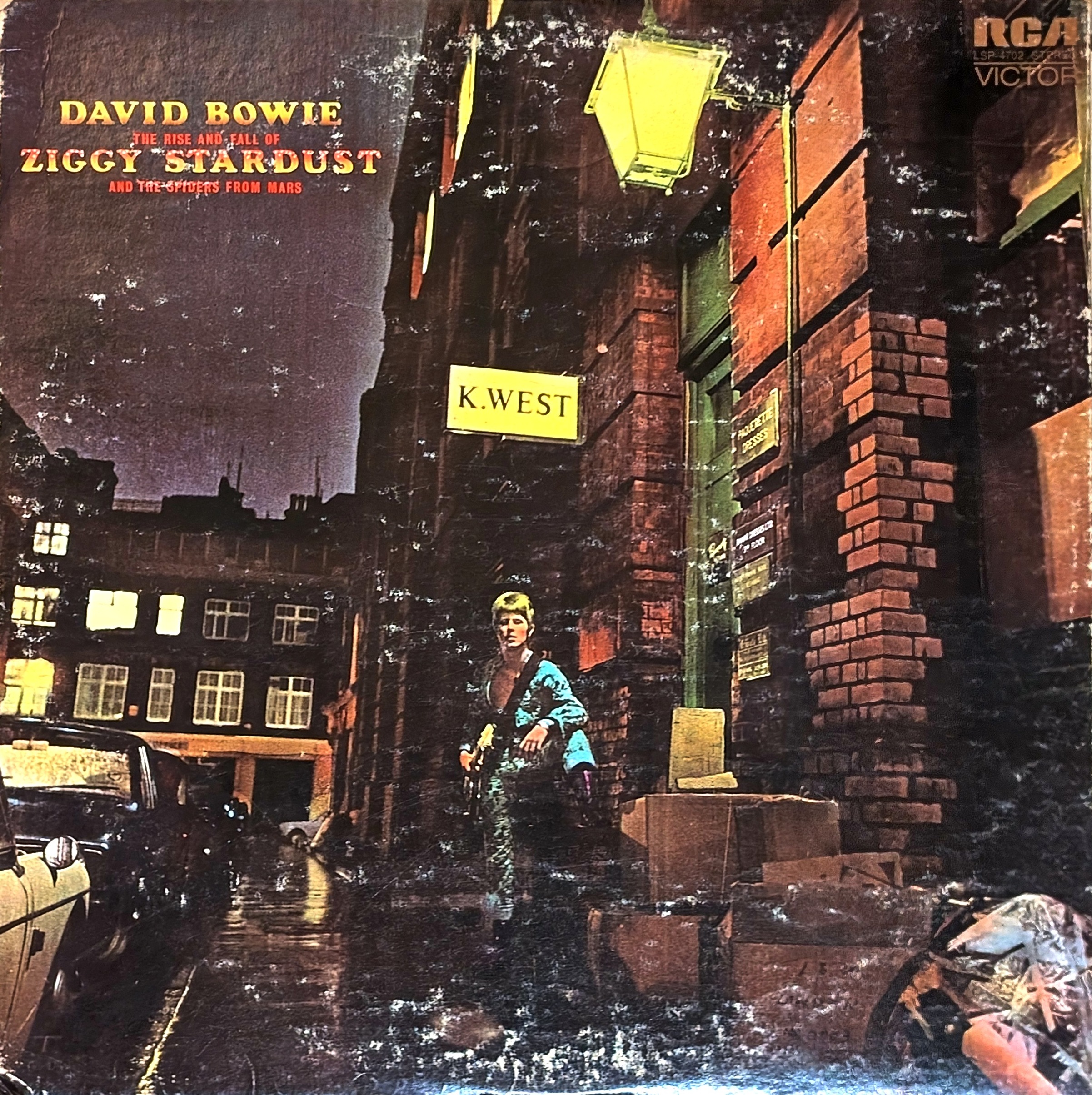
Looking back, there occur wondrous moments when you first tripped over a famous artist before he/she/it/they became known. In the summer of 1972 the single “Starman” had been released, but it had yet to hit the Top 100. Bowie had only had one charting single at that time, “Changes”, which I don’t remember having heard while still in high school. (As I’ve stated, our insular market didn’t always hear the top music.) I therefore had no idea who this strange-looking guy was, and I didn’t know what to make of that voice! But I’ve never forgotten how despite my skepticism, I found myself humming the tunes from this album. I listened again. And again. And again. You couldn’t deny David Bowie, then and now. And I got it free because the music critic didn’t think enough of it to hang onto it. Sweet.
 all the voices in my head